

The DOI matches its Crossref record; 126 of the 126 references it cites were found in a registry or an index.
Tumor-intrinsic signaling pathways: key roles in the regulation of the immunosuppressive tumor microenvironment
Open accessAbstract
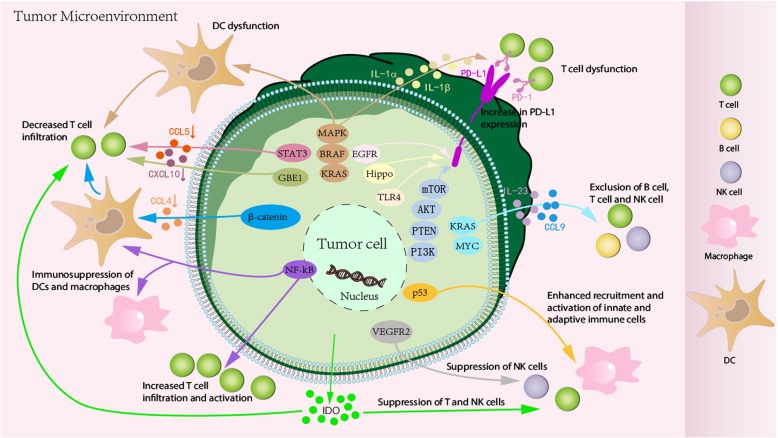
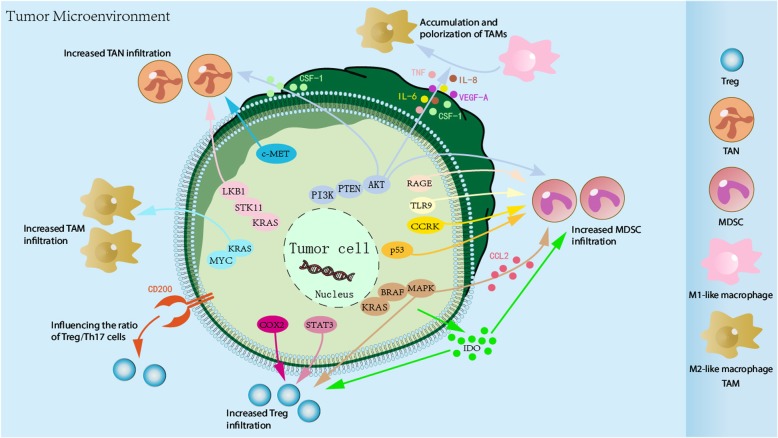
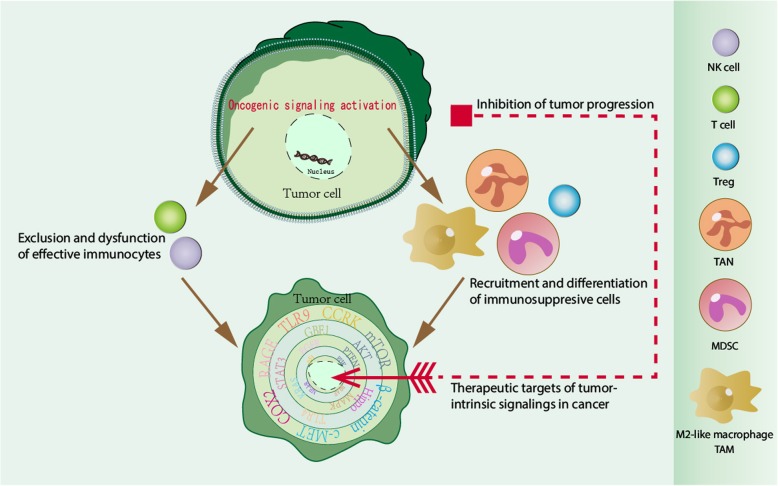
Immunotherapy is a currently popular treatment strategy for cancer patients. Although recent developments in cancer immunotherapy have had significant clinical impact, only a subset of patients exhibits clinical response. Therefore, understanding the molecular mechanisms of immunotherapy resistance is necessary. The mechanisms of immune escape appear to consist of two distinct tumor characteristics: a decrease in effective immunocyte infiltration and function and the accumulation of immunosuppressive cells in the tumor microenvironment. Several host-derived factors may also contribute to immune escape. Moreover, inter-patient heterogeneity predominantly results from differences in somatic mutations between cancers, which has led to the hypothesis that differential activation of specific tumor-intrinsic pathways may explain the phenomenon of immune exclusion in a subset of cancers. Increasing evidence has also shown that tumor-intrinsic signaling plays a key role in regulating the immunosuppressive tumor microenvironment and tumor immune escape. Therefore, understanding the mechanisms underlying immune avoidance mediated by tumor-intrinsic signaling may help identify new therapeutic targets for expanding the efficacy of cancer immunotherapies.
Overview
The claims and statistics of this paper haven’t been checked yet.
Run the check — free, no account needed. It reads the open-access text and checks the sources it cites.
Integrity signals
Registry
Cites
Statistics
Figures
Verification
Claims the paper makes
The claims and statistics of this paper haven’t been checked yet.
Run the check — free, no account needed. It reads the open-access text and checks the sources it cites.
Claims other papers make about this one
Each is checked against this paper’s own text: does it say what the citing paper says it does?
The source backs part of the claim, not all of it — or backs it for a different population, condition or comparison.
In the citing paper
“In the tumor microenvironment, immunosuppression and tumor evasion strategies cause an inability of the immune cells to detect and eliminate with subsequent exhaustion (47).”
From mRNA vaccine with unmodified uridine induces robust type I interferon-dependent anti-tumor immunity in a melanoma model (2022) · cites this paper as [47]
Experimental — accuracy not yet measured
Self-check
Percentages, sums and reported differences re-computed from the paper’s own numbers.
The self-check needs the paper’s full text.
Citations
Cites
PD-1 and PD-L1 Immune Checkpoint Blockade to Treat Breast Cancer
Hartkopf, A. D., Taran, F., Wallwiener, M., Walter, C. B., Krämer, B., Grischke, E., & Brucker, S. Y. (2016) · Breast Care · doi:10.1159/000453569 · Cited by 30,989
Improved Survival with Ipilimumab in Patients with Metastatic Melanoma
Hodi, F. S., O'Day, S. J., McDermott, D. F., Weber, R. W., Sosman, J. A., Haanen, J. B., Gonzalez, R., Robert, C., Schadendorf, D., Hassel, J. C., et al. (2010) · New England Journal of Medicine · doi:10.1056/nejmoa1003466 · Cited by 15,155
Safety, activity, and immune correlates of anti–PD-1 antibody in cancer
Topalian, S. L., Hodi, F. S., Brahmer, J. R., Gettinger, S. N., Smith, D. C., McDermott, D. F., Powderly, J. D., Carvajal, R. D., Sosman, J. A., Atkins, M. B., et al. (2012) · New England Journal of Medicine · doi:10.1056/nejmoa1200690 · Cited by 12,628
Neoantigens in cancer immunotherapy
Schumacher, T. N., & Schreiber, R. D. (2015) · Science · doi:10.1126/science.aaa4971 · Cited by 4,783
Innate and adaptive immune cells in the tumor microenvironment
Gajewski, T. F., Schreiber, H., & Fu, Y.-X. (2013) · Nature Immunology · doi:10.1038/ni.2703 · Cited by 4,148
The complexity of NF-κB signaling in inflammation and cancer
Hoesel, B., & Schmid, J. A. (2013) · Molecular Cancer · doi:10.1186/1476-4598-12-86 · Cited by 3,277
Melanoma-intrinsic β-catenin signalling prevents anti-tumour immunity
Spranger, S., Bao, R., & Gajewski, T. F. (2015) · Nature · doi:10.1038/nature14404 · Cited by 2,830
Improved Overall Survival in Melanoma with Combined Dabrafenib and Trametinib
Robert, C., Karaszewska, B., Schachter, J., Rutkowski, P. L., Mackiewicz, A. A., Stroyakovskiy, D., Lichinitser, M., Dummer, R., Grange, F., Mortier, L., et al. (2014) · New England Journal of Medicine · doi:10.1056/nejmoa1412690 · Cited by 2,763
Senescence and tumour clearance is triggered by p53 restoration in murine liver carcinomas
Xue, W., Zender, L., Miething, C., Dickins, R. A., Hernando, E., Krizhanovsky, V., Cordon-Cardo, C., & Lowe, S. W. (2007) · Nature · doi:10.1038/nature05529 · Cited by 2,473
IKKβ Links Inflammation and Tumorigenesis in a Mouse Model of Colitis-Associated Cancer
Greten, F. R., Eckmann, L., Greten, T. F., Park, J. M., Li, Z.-W., Egan, L. J., Kagnoff, M. F., & Karin, M. (2004) · Cell · doi:10.1016/j.cell.2004.07.013 · Cited by 2,433
The immune contexture in cancer prognosis and treatment
Fridman, W. H., Zitvogel, L., Sautès–Fridman, C., & Kroemer, G. (2017) · Nature Reviews Clinical Oncology · doi:10.1038/nrclinonc.2017.101 · Cited by 2,263
Combined Vemurafenib and Cobimetinib in BRAF -Mutated Melanoma
Larkin, J., Ascierto, P. A., Dréno, B., Atkinson, V. G., Liszkay, G., Maio, M., Mandalà, M., Демидов, Л. В., Stroyakovskiy, D., Thomas, L., et al. (2014) · New England Journal of Medicine · doi:10.1056/nejmoa1408868 · Cited by 2,115
Crosstalk between cancer and immune cells: role of STAT3 in the tumour microenvironment
Yu, H., Kortylewski, M., & Pardoll, D. M. (2006) · Nature reviews. Immunology · doi:10.1038/nri1995 · Cited by 1,841
Spranger, S., Spaapen, R. M., Zha, Y., Williams, J., Meng, Y., Ha, T. T., & Gajewski, T. F. (2013) · Science Translational Medicine · doi:10.1126/scitranslmed.3006504 · Cited by 1,677
Adjuvant Dabrafenib plus Trametinib in Stage III BRAF -Mutated Melanoma
Long, G. V., Hauschild, A., Santinami, M., Atkinson, V. G., Mandalà, M., Chiarion‐Sileni, V., Larkin, J., Nyakas, M., Dutriaux, C., Haydon, A. M., et al. (2017) · New England Journal of Medicine · doi:10.1056/nejmoa1708539 · Cited by 1,538
PD-L1 Expression in Triple-Negative Breast Cancer
Mittendorf, E. A., Philips, A. V., Meric‐Bernstam, F., Qiao, N., Wu, Y., Harrington, S. M., Su, X., Wang, Y., Gonzalez-Angulo, A. M., Akçakanat, A., et al. (2014) · Cancer Immunology Research · doi:10.1158/2326-6066.cir-13-0127 · Cited by 1,420
Planchard, D., Smit, E. F., Groen, H. J. M., Mazières, J., Besse, B., Helland, Å., Giannone, V., D'amelio, A. M., Zhang, P., Mookerjee, B., et al. (2017) · The Lancet Oncology · doi:10.1016/s1470-2045(17)30679-4 · Cited by 1,373
Loss of tumor suppressor PTEN function increases B7-H1 expression and immunoresistance in glioma
Parsa, A. T., Waldron, J. S., Panner, A., Crane, C. A., Parney, I. F., Barry, J. J., Cachola, K. E., Murray, J. C., Tihan, T., Jensen, M. C., et al. (2006) · Nature Medicine · doi:10.1038/nm1517 · Cited by 1,341
Activation of the PD-1 Pathway Contributes to Immune Escape in EGFR-Driven Lung Tumors
Akbay, E. A., Koyama, S., Carretero, J., Altabef, A. B., Tchaicha, J. H., Christensen, C. L., Mikse, O. R., Cherniack, A. D., Beauchamp, E. M., Pugh, T. J., et al. (2013) · Cancer Discovery · doi:10.1158/2159-8290.cd-13-0310 · Cited by 1,250
Fuertes, M. B., Kacha, A. K., Kline, J., Woo, S.-R., Kranz, D. M., Murphy, K. M., & Gajewski, T. F. (2011) · Journal of Experimental Medicine · doi:10.1084/jem.20101159 · Cited by 1,192
Regulation of the innate and adaptive immune responses by Stat-3 signaling in tumor cells
Wang, T., Niu, G., Kortylewski, M., Burdelya, L. G., Shain, K. H., Zhang, S., Bhattacharya, R., Gabrilovich, D. I., Heller, R. F., Coppola, D., et al. (2003) · Nature Medicine · doi:10.1038/nm976 · Cited by 1,182
The lung microenvironment: an important regulator of tumour growth and metastasis
Altorki, N. K., Markowitz, G. J., Gao, D., Port, J. L., Saxena, A., Stiles, B. M., McGraw, T. E., & Mittal, V. (2018) · Nature reviews. Cancer · doi:10.1038/s41568-018-0081-9 · Cited by 1,170
Chemokine expression in melanoma metastases associated with CD8+ T-cell recruitment
Harlin, H., Meng, Y., Peterson, A. C., Zha, Y., Tretiakova, M., Slingluff, C., McKee, M., & Gajewski, T. F. (2009) · Cancer Research · doi:10.1158/0008-5472.can-08-2281 · Cited by 1,121 · cited 1×
“It has been shown that a subset of melanoma patients with metastases exhibits a T cellinflamed tumor microenvironment as evidenced by gene expression profiling [9].”
BackgroundNeutralizing Tumor-Promoting Chronic Inflammation: A Magic Bullet?
Coussens, L. M., Zitvogel, L., & Palucka, A. K. (2013) · Science · doi:10.1126/science.1232227 · Cited by 1,096
Ascierto, P. A., McArthur, G. A., Dréno, B., Atkinson, V. G., Liszkay, G., Giacomo, A. M. D., Mandalà, M., Демидов, Л. В., Stroyakovskiy, D., Thomas, L., et al. (2016) · The Lancet Oncology · doi:10.1016/s1470-2045(16)30122-x · Cited by 1,041
Inhibiting Stat3 signaling in the hematopoietic system elicits multicomponent antitumor immunity
Kortylewski, M., Kujawski, M., Wang, T., Sheng, W., Zhang, S., Pilon‐Thomas, S., Niu, G., Kay, H. D., Mulé, J. J., Kerr, W. G., et al. (2005) · Nature Medicine · doi:10.1038/nm1325 · Cited by 1,026
Tumor-associated macrophages: from basic research to clinical application
Yang, L., & Zhang, Y. (2017) · Journal of Hematology & Oncology · doi:10.1186/s13045-017-0430-2 · Cited by 847
Self-citationNext generation of immune checkpoint therapy in cancer: new developments and challenges
Marin-Acevedo, J. A., Dholaria, B., Soyano, A. E., Knutson, K. L., Chumsri, S., & Lou, Y. (2018) · Journal of Hematology & Oncology · doi:10.1186/s13045-018-0582-8 · Cited by 819
Lastwika, K. J., Wilson, W., Li, Q. K., Norris, J., Xu, H., Ghazarian, S. R., Kitagawa, H., Kawabata, S., Taube, J. M., Yao, S., et al. (2016) · Cancer Research · doi:10.1158/0008-5472.can-14-3362 · Cited by 785
Wnt/beta-catenin pathway: modulating anticancer immune response
Pai, S. G., Carneiro, B. A., Mota, J. M., da Costa, R. B., Leite, C. A., Barroso‐Sousa, R., Kaplan, J. B., Chae, Y. K., & Giles, F. J. (2017) · Journal of Hematology & Oncology · doi:10.1186/s13045-017-0471-6 · Cited by 733
The BRAF–MAPK signaling pathway is essential for cancer-immune evasion in human melanoma cells
Sumimoto, H., Imabayashi, F., Iwata, T., & Kawakami, Y. (2006) · The Journal of Experimental Medicine · doi:10.1084/jem.20051848 · Cited by 696
Long, G. V., Flaherty, K. T., Stroyakovskiy, D., Gogas, H. J., Levchenko, E., de Braud, F., Larkin, J., Garbe, C., Jouary, T., Hauschild, A., et al. (2017) · Annals of Oncology · doi:10.1093/annonc/mdx176 · Cited by 690
Nuclear factor-κB and inhibitor of κB kinase pathways in oncogenic initiation and progression
Bassères, D. S. D. S., & Baldwin, A. S. (2006) · Oncogene · doi:10.1038/sj.onc.1209942 · Cited by 673
Oncogenic RAS Signaling Promotes Tumor Immunoresistance by Stabilizing PD-L1 mRNA
Coelho, M. A., de Carné Trécesson, S., Rana, S., Zecchin, D., Moore, C., Molina-Arcas, M., East, P., Spencer-Dene, B., Nye, E., Barnouin, K., et al. (2017) · Immunity · doi:10.1016/j.immuni.2017.11.016 · Cited by 653
Azuma, K., Ota, K., Kawahara, A., Hattori, S., Iwama, E., Harada, T., Matsumoto, K., Takayama, K., Takamori, S., Kage, M., et al. (2014) · Annals of Oncology · doi:10.1093/annonc/mdu242 · Cited by 649
Koyama, S., Akbay, E. A., Li, Y. Y., Aref, A. R., Skoulidis, F., Herter-Sprie, G. S., Buczkowski, K. A., Liu, Y., Awad, M. M., Denning, W. L., et al. (2016) · Cancer Research · doi:10.1158/0008-5472.can-15-1439 · Cited by 640
Targeting YAP-Dependent MDSC Infiltration Impairs Tumor Progression
Wang, G., Lü, X., Dey, P., Deng, P., Wu, C.-C., Jiang, S., Fang, Z., Zhao, K., Konaparthi, R., Hua, S., et al. (2015) · Cancer Discovery · doi:10.1158/2159-8290.cd-15-0224 · Cited by 566
Myc Cooperates with Ras by Programming Inflammation and Immune Suppression
Kortlever, R. M., Sodir, N. M., Wilson, C. H., Burkhart, D. L., Pellegrinet, L., Brown Swigart, L., Littlewood, T. D., & Evan, G. I. (2017) · Cell · doi:10.1016/j.cell.2017.11.013 · Cited by 553
Indoleamine 2,3-dioxygenase pathways of pathogenic inflammation and immune escape in cancer
Prendergast, G. C., Smith, C., Thomas, S., Mandik‐Nayak, L., Laury‐Kleintop, L. D., Metz, R. A., & Muller, A. J. (2014) · Cancer Immunology Immunotherapy · doi:10.1007/s00262-014-1549-4 · Cited by 491
Cancer and the gut microbiota: An unexpected link
Zitvogel, L., Galluzzi, L., Viaud, S., Vétizou, M., Daillère, R., Merad, M., & Kroemer, G. (2015) · Science Translational Medicine · doi:10.1126/scitranslmed.3010473 · Cited by 465
The Hippo Pathway Kinases LATS1/2 Suppress Cancer Immunity
Moroishi, T., Hayashi, T., Pan, W., Fujita, Y., Holt, M. V., Qin, J., Carson, D. A., & Guan, K. (2016) · Cell · doi:10.1016/j.cell.2016.11.005 · Cited by 441
Toso, A., Revandkar, A., Di Mitri, D., Guccini, I., Proietti, M., Sarti, M., Pinton, S., Zhang, J., Kalathur, M., Civenni, G., et al. (2014) · Cell Reports · doi:10.1016/j.celrep.2014.08.044 · Cited by 418 · cited 1×
“Recent studies have provided additional evidence for this phenomenon via a carcinogeninduced lung cancer model and a genetically-induced prostate cancer model [27, 28].”
BackgroundIndoleamine 2,3‐dioxygenase in T‐cell tolerance and tumoral immune escape
Katz, J. B., Muller, A. J., & Prendergast, G. C. (2008) · Immunological Reviews · doi:10.1111/j.1600-065x.2008.00610.x · Cited by 417
Iannello, A., Thompson, T. W., Ardolino, M., Lowe, S. W., & Raulet, D. H. (2013) · Journal of Experimental Medicine · doi:10.1084/jem.20130783 · Cited by 414
Loss of Lkb1 and Pten Leads to Lung Squamous Cell Carcinoma with Elevated PD-L1 Expression
Xu, C., Brainson, C. F., Koyama, S., Wu, H., Zhao, Y., Chen, Z., Herter-Sprie, G. S., Akbay, E. A., Tchaicha, J. H., Altabef, A. B., et al. (2014) · Cancer Cell · doi:10.1016/j.ccr.2014.03.033 · Cited by 398
The role of stromal cancer-associated fibroblasts in pancreatic cancer
Ahrens, D. V., Bhagat, T. D., Nagrath, D., Maitra, A., & Verma, A. K. (2017) · Journal of Hematology & Oncology · doi:10.1186/s13045-017-0448-5 · Cited by 389
Schmid, M. C., Avraamides, C. J., Dippold, H. C., Franco, I., Foubert, P., Ellies, L. G., Acevedo, L. M., Manglicmot, J. R. E., Song, X., Wrasidlo, W., et al. (2011) · Cancer Cell · doi:10.1016/j.ccr.2011.04.016 · Cited by 378
Zhang, N., Zeng, Y., Du, W., Zhu, J., Shen, D., Liu, Z., & Huang, J.-A. (2016) · International Journal of Oncology · doi:10.3892/ijo.2016.3632 · Cited by 362
Almanzar, G., Schwaiger, S., Jenewein, B., Keller, M., Herndler‐Brandstetter, D., Würzner, R., Schönitzer, D., & Grubeck‐Loebenstein, B. (2005) · Journal of Virology · doi:10.1128/jvi.79.6.3675-3683.2005 · Cited by 356
Dabrafenib, trametinib and pembrolizumab or placebo in BRAF-mutant melanoma
Ascierto, P. A., Ferrucci, P. F., Fisher, R. A., Vecchio, M. D., Atkinson, V. G., Schmidt, H., Schachter, J., Queirolo, P., Long, G. V., Giacomo, A. M. D., et al. (2019) · Nature Medicine · doi:10.1038/s41591-019-0448-9 · Cited by 331
Beatty, G. L., O'Dwyer, P. J., Clark, J., Shi, J. G., Bowman, K. J., Scherle, P. A., Newton, R. C., Schaub, R., Maleski, J., Leopold, L., et al. (2017) · Clinical Cancer Research · doi:10.1158/1078-0432.ccr-16-2272 · Cited by 314
Concha‐Benavente, F., Srivastava, R. M., Trivedi, S., Lei, Y. L., Chandran, U. R., Seethala, R. R., Freeman, G. J., & Ferris, R. L. (2015) · Cancer Research · doi:10.1158/0008-5472.can-15-2001 · Cited by 313
The Hippo Pathway Component TAZ Promotes Immune Evasion in Human Cancer through PD-L1
van Rensburg, H. J. J., Azad, T., Ling, M., Hao, Y., Snetsinger, B., Khanal, P., Minassian, L. M., Graham, C. H., Rauh, M. J., & Yang, X. (2018) · Cancer Research · doi:10.1158/0008-5472.can-17-3139 · Cited by 311
Khalili, J. S., Liu, S., Rodríguez-Cruz, T., Whittington, M., Wardell, S., Liu, C., Zhang, M., Cooper, Z. A., Frederick, D. T., Li, Y., et al. (2012) · Clinical Cancer Research · doi:10.1158/1078-0432.ccr-12-1632 · Cited by 307
Ribas, A., Gonzalez, R. C., Pavlick, A. C., Hamid, O., Gajewski, T. F., DAUD, A. I., Flaherty, L. E., Logan, T. F., Chmielowski, B., Lewis, K. D., et al. (2014) · The Lancet Oncology · doi:10.1016/s1470-2045(14)70301-8 · Cited by 303
KRAS mutation-induced upregulation of PD-L1 mediates immune escape in human lung adenocarcinoma
Chen, N., Fang, W., Zhong, L., Peng, P., Wang, J., Zhan, J., Hong, S., Huang, J., Liu, L., Sheng, J., et al. (2017) · Cancer Immunology Immunotherapy · doi:10.1007/s00262-017-2005-z · Cited by 296
Horwitz, S. M., Koch, R., Porcu, P., Oki, Y., Moskowitz, A., Perez, M., Myskowski, P., Officer, A., Jaffe, J. D., Morrow, S. N., et al. (2018) · Blood · doi:10.1182/blood-2017-08-802470 · Cited by 290
Baldwin, A. S. (2012) · Immunological Reviews · doi:10.1111/j.1600-065x.2012.01095.x · Cited by 287
Wei, J., Barr, J., Kong, L.-Y., Wang, Y., Wu, A., Sharma, A. K., Gumin, J., Henry, V. K., Colman, H., Priebe, W., et al. (2010) · Molecular Cancer Therapeutics · doi:10.1158/1535-7163.mct-09-0734 · Cited by 285
Glodde, N., Bald, T., Konijnenberg, D., Nakamura, K., O’Donnell, J. S., Szczepanski, S., Brandes, M., Eickhoff, S., Das, I., Shridhar, N., et al. (2017) · Immunity · doi:10.1016/j.immuni.2017.09.012 · Cited by 282
Jung, K. H., LoRusso, P. M., Burris, H. A., Gordon, M. S., Bang, Y., Hellmann, M. D., Cervantes, A. M. R., de Olza, M. O., Marabelle, A., Hodi, F. S., et al. (2019) · Clinical Cancer Research · doi:10.1158/1078-0432.ccr-18-2740 · Cited by 281
The role of Nuclear Factor-kappa B signaling in human cervical cancer
Tilborghs, S., Corthouts, J., Verhoeven, Y., Ron, D. A., Rolfo, C. D., Trinh, X. B., & van Dam, P. A. (2017) · Critical Reviews in Oncology/Hematology · doi:10.1016/j.critrevonc.2017.11.001 · Cited by 279
Grob, J., Amonkar, M. M., Karaszewska, B., Schachter, J., Dummer, R., Mackiewicz, A. A., Stroyakovskiy, D., Drucis, K., Grange, F., Chiarion‐Sileni, V., et al. (2015) · The Lancet Oncology · doi:10.1016/s1470-2045(15)00087-x · Cited by 270
Flinn, I. W., O'Brien, S. M., Kahl, B. S., Patel, M. R., Oki, Y., Foss, F. M., Porcu, P., Jones, J. A., Burger, J. A., Jain, N., et al. (2017) · Blood · doi:10.1182/blood-2017-05-786566 · Cited by 266
Li, J., Li, W., Huang, K., Zhang, Y., Kupfer, G. M., & Zhao, Q. (2018) · Journal of Hematology & Oncology · doi:10.1186/s13045-018-0568-6 · Cited by 251
Self-citationCAR T‐cell therapy of solid tumors
Yong, C. S. M., Dardalhon, V., Devaud, C., Taylor, N. N., Darcy, P. K., & Kershaw, M. H. (2016) · Immunology and Cell Biology · doi:10.1038/icb.2016.128 · Cited by 226
Prognostic significance and mechanism of Treg infiltration in human brain tumors
Jacobs, J. F. M., Idema, A. J. S., Bol, K. F., Grotenhuis, J. A., de Vries, I. J. M., Wesseling, P., & Adema, G. J. (2010) · Journal of Neuroimmunology · doi:10.1016/j.jneuroim.2010.05.020 · Cited by 222
Maio, M., Lewis, K., Demidov, L., Mandalà, M., Bondarenko, I., Ascierto, P. A., Herbert, C., Mackiewicz, A. A., Rutkowski, P., Guminski, A. D., et al. (2018) · The Lancet Oncology · doi:10.1016/s1470-2045(18)30106-2 · Cited by 215
Wang, D., Yang, L., Yue, D., Cao, L., Li, L., Wang, D., Ping, Y., Shen, Z., Zheng, Y., Wang, L., et al. (2019) · Cancer Letters · doi:10.1016/j.canlet.2019.03.040 · Cited by 183
Self-citationPI(3) kinase is associated with a mechanism of immunoresistance in breast and prostate cancer
Crane, C. A., Panner, A., Murray, J. C., Wilson, S. P., Xu, H., Chen, L., Simko, J. P., Waldman, F. M., Pieper, R. O., & Parsa, A. T. (2009) · Oncogene · doi:10.1038/onc.2008.384 · Cited by 181
Holtzhausen, A., Zhao, F. L., Evans, K. S., Tsutsui, M., Orabona, C., Tyler, D. S., & Hanks, B. A. (2015) · Cancer Immunology Research · doi:10.1158/2326-6066.cir-14-0167 · Cited by 179
Hennequart, M., Pilotte, L., Canè, S., Hoffmann, D., Stroobant, V., Plaen, E. D., & den Eynde, B. J. V. (2017) · Cancer Immunology Research · doi:10.1158/2326-6066.cir-16-0400 · Cited by 176
Li, Y., Dong, Y., Li, Y., Wang, D., Liu, S., Wang, D., Gao, Q., Ji, S., Chen, X., Lei, Q., et al. (2019) · International Journal of Cancer · doi:10.1002/ijc.32151 · Cited by 175
Self-citationSoliman, H. H., Jackson, E., Neuger, T., Dees, E. C., Harvey, R. D., Han, H., Ismail-Khan, R., Minton, S., Vahanian, N. N., Link, C., et al. (2014) · Oncotarget · doi:10.18632/oncotarget.2357 · Cited by 174
Hsu, H.-H., Chen, M., Baskaran, R., Lin, Y., Day, C. H., Lin, Y., Tu, C., Padma, V. V., Kuo, W., & Huang, C. (2017) · Journal of Cellular Physiology · doi:10.1002/jcp.26406 · Cited by 173
Understanding Local Macrophage Phenotypes In Disease: Modulating macrophage function to treat cancer
Bronte, V., & Murray, P. J. (2015) · Nature Medicine · doi:10.1038/nm.3794 · Cited by 172
Yaguchi, T., Goto, Y., Kido, K., Mochimaru, H., Sakurai, T., Tsukamoto, N., Kudo‐Saito, C., Fujita, T., Sumimoto, H., & Kawakami, Y. (2012) · The Journal of Immunology · doi:10.4049/jimmunol.1102282 · Cited by 169
Guo, G., Yu, M., Xiao, W., Celis, E., & Cui, Y. (2017) · Cancer Research · doi:10.1158/0008-5472.can-16-2832 · Cited by 168
Nayak-Kapoor, A., Hao, Z., Sadek, R., Dobbins, R., Marshall, L., Vahanian, N. N., Ramsey, W. J., Kennedy, E. P., Mautino, M. R., Link, C. J., et al. (2018) · Journal for ImmunoTherapy of Cancer · doi:10.1186/s40425-018-0351-9 · Cited by 163
Zhang, X., Rao, A., Sette, P., Deibert, C., Pomerantz, A., Kim, W. J., Kohanbash, G., Chang, Y., Park, Y., Engh, J. A., et al. (2016) · Neuro-Oncology · doi:10.1093/neuonc/now061 · Cited by 161
Mutant KRAS Conversion of Conventional T Cells into Regulatory T Cells
Zdanov, S., Mandapathil, M., Eid, R. A., Adamson-Fadeyi, S., Wilson, W., Qian, J., Carnie, A., Tarasova, N. I., Mkrtichyan, M., Berzofsky, J. A., et al. (2016) · Cancer Immunology Research · doi:10.1158/2326-6066.cir-15-0241 · Cited by 157
Tumor-intrinsic oncogene pathways mediating immune avoidance
Spranger, S., & Gajewski, T. F. (2015) · OncoImmunology · doi:10.1080/2162402x.2015.1086862 · Cited by 154
Ai, L., Mu, S., Sun, C., Fan, F., Yan, H., Qin, Y., Cui, G., Wang, Y., Guo, T., Mei, H., et al. (2019) · Molecular Cancer · doi:10.1186/s12943-019-1011-5 · Cited by 147
A phase I study of indoximod in patients with advanced malignancies
Soliman, H. H., Minton, S. E., Han, H. S., Ismail-Khan, R. R., Neuger, A. M., Khambati, F. A., Noyes, D. R., Lush, R. M., Chiappori, A., Roberts, J. D., et al. (2016) · Oncotarget · doi:10.18632/oncotarget.8216 · Cited by 145
Garcia, A. J., Ruscetti, M. A., Arenzana, T. L., Tran, L. M., Bianchi-Frias, D., Sybert, E., Priceman, S. J., Wu, L., Nelson, P. S., Smale, S. T., et al. (2014) · Molecular and Cellular Biology · doi:10.1128/mcb.00090-14 · Cited by 144
Muthuswamy, R., Berk, E., Junecko, B. A. F., Zeh, H. J., Zureikat, A. H., Normolle, D. P., Luong, T. M., Reinhart, T. A., Bartlett, D. L., & Kaliński, P. (2012) · Cancer Research · doi:10.1158/0008-5472.can-11-4136 · Cited by 140
Cui, Y. R., & Guo, G. (2016) · International Journal of Molecular Sciences · doi:10.3390/ijms17111942 · Cited by 137
Burdelya, L., Kujawski, M., Niu, G., Zhong, B., Wang, T., Zhang, S., Kortylewski, M., Shain, K., Kay, H., Djeu, J., et al. (2005) · The Journal of Immunology · doi:10.4049/jimmunol.174.7.3925 · Cited by 131
Chang, N., Ahn, S. H., Kong, D., Lee, H. W., & Nam, D. (2017) · Molecular and Cellular Endocrinology · doi:10.1016/j.mce.2017.01.004 · Cited by 117
Oncogenic BRAFV600E Governs Regulatory T-cell Recruitment during Melanoma Tumorigenesis
Shabaneh, T. B., Molodtsov, A. K., Steinberg, S. M., Zhang, P., Torres, G. M., Mohamed, G. A., Boni, A., Curiel, T. J., Angeles, C. V., & Turk, M. J. (2018) · Cancer Research · doi:10.1158/0008-5472.can-18-0365 · Cited by 110
Ott, P. A., Henry, T., Baranda, S. J., Frleta, D., Manches, O., Bogunovic, D., & Bhardwaj, N. (2013) · Cancer Immunology Immunotherapy · doi:10.1007/s00262-012-1389-z · Cited by 106
TLR4 Signaling Induces B7-H1 Expression Through MAPK Pathways in Bladder Cancer Cells
Qian, Y., Deng, J., Geng, L., Xie, H., Jiang, G., Zhou, L., Wang, Y., Yin, S., Feng, X., Liu, J., et al. (2008) · Cancer Investigation · doi:10.1080/07357900801941852 · Cited by 104
Steinberg, S. M., Shabaneh, T. B., Zhang, P., Martyanov, V., Li, Z., Malik, B. T., Wood, T. A., Boni, A., Molodtsov, A. K., Angeles, C. V., et al. (2017) · Cancer Research · doi:10.1158/0008-5472.can-16-1755 · Cited by 102
Kristeleit, R. S., Давиденко, І., Shirinkin, V., El-Khouly, F., Bondarenko, I., Goodheart, M. J., Горбунова, В. А., Penning, C. A., Shi, J. G., Liu, X., et al. (2017) · Gynecologic Oncology · doi:10.1016/j.ygyno.2017.07.005 · Cited by 102
Activation of Akt as a Mechanism for Tumor Immune Evasion
Noh, K. H., Kang, T. H., Kim, J. H., Pai, S. I., Lin, K. Y., Hung, C., Wu, T. ‐., & Kim, T. W. (2008) · Molecular Therapy · doi:10.1038/mt.2008.255 · Cited by 98
Sun, H., Yang, W., Tian, Y., Zeng, X., Zhou, J., Mok, M. T. S., Tang, W., Feng, Y., Xu, L., Chan, A. W. H., et al. (2018) · Nature Communications · doi:10.1038/s41467-018-07402-8 · Cited by 93
Tryptophan Catabolism and Cancer Immunotherapy Targeting IDO Mediated Immune Suppression
Amobi, A. E., Qian, F., Lugade, A. A., & Odunsi, K. O. (2017) · Advances in experimental medicine and biology · doi:10.1007/978-3-319-67577-0_9 · Cited by 90
CD200R signaling in tumor tolerance and inflammation: A tricky balance
Rygiel, T. P., & Meyaard, L. (2012) · Current Opinion in Immunology · doi:10.1016/j.coi.2012.01.002 · Cited by 88
Rygiel, T. P., Karnam, G., Goverse, G., van der Marel, A. P. J., Greuter, M., van Schaarenburg, R. A., Visser, W. F., Brenkman, A. B., Molenaar, R., Hoek, R. M., et al. (2011) · Oncogene · doi:10.1038/onc.2011.477 · Cited by 80
BRAF inhibition improves tumor recognition by the immune system
Donia, M., Fagone, P., Nicoletti, F., Andersen, R. S., Høgdall, E. V. S., Straten, P. T., Andersen, M. H., & Svane, I. M. (2012) · OncoImmunology · doi:10.4161/onci.21940 · Cited by 78
Lung adenocarcinoma-intrinsic GBE1 signaling inhibits anti-tumor immunity
Li, L., Li, Y., Cheng, S., Fan, Z., Shen, Z., Xue, W., Zheng, Y., Li, F., Wang, D., Zhang, K., et al. (2019) · Molecular Cancer · doi:10.1186/s12943-019-1027-x · Cited by 78
Self-citationNishio, H., Yaguchi, T., Sugiyama, J., Sumimoto, H., Umezawa, K., Iwata, T., Susumu, N., Fujii, T., Kawamura, N., Kobayashi, A., et al. (2014) · British Journal of Cancer · doi:10.1038/bjc.2014.251 · Cited by 74
Stattic and metformin inhibit brain tumor initiating cells by reducing STAT3-phosphorylation
Leidgens, V., Proske, J., Rauer, L., Moeckel, S., Renner, K., Bogdahn, U., Riemenschneider, M. J., Proescholdt, M. A., Vollmann‐Zwerenz, A., Hau, P., et al. (2016) · Oncotarget · doi:10.18632/oncotarget.14159 · Cited by 73
Guo, G., Marrero, L., Rodrı́guez, P. C., Valle, L. D., Ochoa, A. C., & Cui, Y. R. (2013) · Cancer Research · doi:10.1158/0008-5472.can-12-3810 · Cited by 69
TTK Inhibitors as a Targeted Therapy for CTNNB1 ( β -catenin) Mutant Cancers
Zaman, G. J. R., de Roos, J. A. D. M., Libouban, M. A. A., Prinsen, M. B. W., de Man, J., Buijsman, R. C., & Uitdehaag, J. C. M. (2017) · Molecular Cancer Therapeutics · doi:10.1158/1535-7163.mct-17-0342 · Cited by 65
Cheng, X., Li, D., Sun, M., He, L., Zheng, Y., Wang, X., & Tang, R. (2019) · Colloids and Surfaces B Biointerfaces · doi:10.1016/j.colsurfb.2019.05.042 · Cited by 63
Won, H., Moreira, D., Gao, C., Duttagupta, P. A., Zhao, X., Manuel, E. R., Diamond, D. J., Yuan, Y., Liu, Z., Jones, J. O., et al. (2017) · Journal of Leukocyte Biology · doi:10.1189/jlb.3ma1016-451rr · Cited by 62
Lymphocyte Invasion in IC10/Basal-Like Breast Tumors Is Associated with Wild-Type TP53
Quigley, D. A., Silwal‐Pandit, L., Dannenfelser, R., Langerød, A., Vollan, H. K. M., Vaske, C. J., Siegel, J. U., Troyanskaya, O. G., Chin, S., Caldas, C., et al. (2014) · Molecular Cancer Research · doi:10.1158/1541-7786.mcr-14-0387 · Cited by 61
Vernon, P. J., Loux, T., Schapiro, N. E., Kang, R., Muthuswamy, R., Kaliński, P., Tang, D., Lotze, M. T., & Zeh, H. J. (2012) · The Journal of Immunology · doi:10.4049/jimmunol.1201151 · Cited by 57
Ihara, S., Kida, H., Arase, H., Tripathi, L. P., Chen, Y., Kimura, T., Yoshida, M., Kashiwa, Y., Hirata, H., Fukamizu, R., et al. (2012) · Cancer Research · doi:10.1158/0008-5472.can-11-4062 · Cited by 56
Sun, Q., Liu, Q., Zheng, Y., & Cao, X. (2008) · Molecular Immunology · doi:10.1016/j.molimm.2008.01.025 · Cited by 55
Uppaluri, R., Winkler, A. E., Lin, T., Law, J. H., Haughey, B. H., Nussenbaum, B. A., Paniello, R. C., Rich, J. T., Diaz, J. A., Michel, L., et al. (2016) · Clinical Cancer Research · doi:10.1158/1078-0432.ccr-16-1469 · Cited by 54
Tkach, M., Coria, L. M., Rosemblit, C., Rivas, M. A., Proietti, C. J., Flaqué, M. C. D., Béguelin, W., Frahm, I., Charreau, E. H., Cassataro, J., et al. (2012) · The Journal of Immunology · doi:10.4049/jimmunol.1102538 · Cited by 50
Maturu, P., Jones, D. E., Ruteshouser, E., Hu, Q.-H., Reynolds, J., Hicks, J., Putluri, N., Ekmekcioglu, S., Grimm, E., Chen, D., et al. (2017) · Neoplasia · doi:10.1016/j.neo.2016.07.009 · Cited by 47
Impact of MAPK Pathway Activation in BRAFV600 Melanoma on T Cell and Dendritic Cell Function
Ott, P. A., & Bhardwaj, N. (2013) · Frontiers in Immunology · doi:10.3389/fimmu.2013.00346 · Cited by 44
Zhang, W., Pang, Q., Yan, C., Wang, Q., Yang, J., Yu, S., Liu, X., Yuan, Z., Wang, P., & Xiao, Z. (2017) · OncoTargets and Therapy · doi:10.2147/ott.s118982 · Cited by 41
The dual PI3K/mTOR inhibitor dactolisib elicits anti-tumor activity in vitro and in vivo
Shi, F., Zhang, J., Liu, H., Wu, L., Jiang, H., Wu, Q., Liu, T., Lou, M., & Wu, H. (2017) · Oncotarget · doi:10.18632/oncotarget.23091 · Cited by 41
Modeling synovial sarcoma metastasis in the mouse: PI3′-lipid signaling and inflammation
Barrott, J. J., Kafchinski, L. A., Jin, H., Potter, J. W., Kannan, S., Kennedy, R., Mosbruger, T., Wang, W., Tsai, J.-W., Araujo, D. M., et al. (2016) · The Journal of Experimental Medicine · doi:10.1084/jem.20160817 · Cited by 38
Basu, D., Salgado, C. M., Bauer, B. S., Khakoo, Y., Patel, J. R., Hoehl, R. M., Bertolini, D. M., Zabec, J., Brzozowski, M., & Reyes‐Múgica, M. (2018) · Cancer Genomics & Proteomics · doi:10.21873/cgp.20082 · Cited by 26
Moretti, S., Menicali, E., Nucci, N., Voce, P., Colella, R., Melillo, R. M., Liotti, F., Morelli, S., Fallarino, F., Macchiarulo, A., et al. (2016) · Journal of Biological Chemistry · doi:10.1074/jbc.m116.745448 · Cited by 24
Gilot, D., Giudicelli, F., Lagadic‐Gossmann, D., & Fardel, O. (2010) · Chemico-Biological Interactions · doi:10.1016/j.cbi.2010.08.011 · Cited by 22
Zhang, L., Ren, X., Cheng, Y., Liu, X., Allen, J. E., Zhang, Y., Yuan, Y., Huang, S.-Y., Yang, W., Berg, A. S., et al. (2014) · Cancer Biology & Therapy · doi:10.4161/cbt.28158 · Cited by 17
Self-citationDudnik, E., Bar, J., Peled, N., Bshara, E., Kuznetsov, T., Cohen, A. Y., Shochat, T., Nechushtan, H., Onn, A., Agbarya, A., et al. (2019) · Clinical Lung Cancer · doi:10.1016/j.cllc.2019.03.007 · Cited by 16
Indoximod Combo Triggers Responses in Melanoma
(2017) · Cancer Discovery · doi:10.1158/2159-8290.cd-nb2017-056 · Cited by 9
Combinatory effects of vaccinia virus VG9 and the STAT3 inhibitor Stattic on cancer therapy
Yang, R.-L., Wang, L.-Z., Sheng, J., Huang, Q., Pan, D., Xu, Y.-P., Yan, J.-J., Wang, X.-Y., Dong, Z., & Yang, M. (2019) · Archives of Virology · doi:10.1007/s00705-019-04257-2 · Cited by 7
VEGFR2-targeted fusion antibody improved NK cell-mediated immunosurveillance against K562 cells
Ren, X.-Y., Xie, W., Wang, Y.-F., Xu, M., Liu, F., Tang, M., Li, C.-C., Wang, M., & Zhang, J. (2016) · Immunologic research · doi:10.1007/s12026-016-8800-3
Cited by
Sorted by citations
Roles of IFN-γ in tumor progression and regression: A review
Jorgovanovic, D., Song, M., Wang, L., & Zhang, Y. (2020) · Biomarker Research · doi:10.1186/s40364-020-00228-x · Cited by 1,234
Self-citationCancer vaccines as promising immuno-therapeutics: platforms and current progress
Liu, J., Fu, M., Wang, M., Wan, D., Wei, Y., & Wei, X. (2022) · Journal of Hematology & Oncology · doi:10.1186/s13045-022-01247-x · Cited by 762
Signaling pathways involved in colorectal cancer: pathogenesis and targeted therapy
Li, Q., Geng, S., Luo, H., Wang, W., Mo, Y.-Q., Luo, Q., Wang, L., Song, G.-B., Sheng, J.-P., & Xu, B. (2024) · Signal Transduction and Targeted Therapy · doi:10.1038/s41392-024-01953-7 · Cited by 546
Immunosenescence: a key player in cancer development
Lian, J., Yue, Y., Yu, W., & Zhang, Y. (2020) · Journal of Hematology & Oncology · doi:10.1186/s13045-020-00986-z · Cited by 510
Self-citationExosome-based immunotherapy: a promising approach for cancer treatment
Xu, Z., Zeng, S., Gong, Z., & Yan, Y. (2020) · Molecular Cancer · doi:10.1186/s12943-020-01278-3 · Cited by 482
Metadata
- Authors
- Yang, L., Li, A., Lei, Q., & Zhang, Y.
- Affiliations
- First Affiliated Hospital of Zhengzhou University (CN)
- Zhengzhou University (CN)
- Corresponding author
- Zhang, Yi
- Venue
- Journal of Hematology & Oncology
- Published
- 2019-11-27
- Volume
- 12
- Issue
- 1
- Pages
- 125-125
- ISSN
- 1756-8722 (ISSN-L)
- PMC
- PMC6880373
- OpenAlex
- W2990431514
- Cited by
- 215
- References
- 126
- Citations by year
- 2026: 27 · 2025: 40 · 2024: 29 · 2023: 31 · 2022: 39 · 2021: 28 · 2020: 20
- FWCI
- 2.07
- Type
- journal article
- Language
- en
- Open access
- gold
- doi.org
- Locations
- Journal of Hematology & Oncology (publishedVersion, cc-by)
- PubMed Central (publishedVersion, cc-by)
- PubMed (publishedVersion)
- DOAJ (DOAJ: Directory of Open Access Journals) (submittedVersion, cc-by-sa)
- Funders
- National Natural Science Foundation of China (U1804281, 81771781, 81602024)
- Topics
- Health Sciences › Medicine › Oncology › Cancer Immunotherapy and Biomarkers
- Life Sciences › Immunology and Microbiology › Immunology › Immunotherapy and Immune Responses
- Life Sciences › Immunology and Microbiology › Immunology › Immune cells in cancer
- Keywords
- immunosuppressive tumor microenvironment, tumor immune evasion, cancer immunotherapy resistance, immune exclusion, interpatient heterogeneity, somatic mutations, immune cell infiltration, therapeutic target
- MeSH terms
- Antineoplastic Agents, Humans, Immunosuppressive Agents, Immunotherapy, Neoplasms, Signal Transduction, Tumor Escape, Molecular Targeted Therapy, Tumor Microenvironment
About these checks
Registry, retraction, Cites and statistics results are computed, not judged, with one exception: a printed reference that no index lists is read once by a model before it counts as a citation error. Claims are extracted by a model and kept only when their quote appears verbatim in the text; each cited source is then checked, with a model’s help, for whether it says what the claim relies on. Those verdicts can be wrong — read the claim’s quote and the cited source before relying on one.
Statistics and arithmetic are recomputed, not judged.
Confidence bands are shown only for fields calibrated on our annotated test set. None is calibrated yet, so no band is shown.
What counts as a claim ›How we measure confidence ›How we check this ›
Are you an author, or do you see a problem with this page? Request a review
