

The DOI matches its Crossref record; 152 of the 153 references it cites were found in a registry or an index.
The role of cancer-derived microRNAs in cancer immune escape
Open accessAbstract
During malignant transformation, accumulated somatic mutations endow cancer cells with increased invasiveness and immunogenicity. Under selective pressure, these highly immunogenic cancer cells develop multiple strategies to evade immune attack. It has been well established that cancer cells could downregulate the expression of major histocompatibility complex, acquire alterations in interferon pathway, and upregulate the activities of immune checkpoint pathways. Besides, cancer cells secret numerous cytokines, exosomes, and microvesicles to regulate the functions and abundances of components in the tumor microenvironment including immune effector cells and professional antigen presentation cells. As the vital determinant of post-transcriptional regulation, microRNAs (miRNAs) not only participate in cancer initiation and progression but also regulate anti-cancer immune response. For instance, some miRNAs affect cancer immune surveillance and immune escape by interfering the expression of immune attack-associated molecules. A growing body of evidence indicated that cancer-derived immune modulatory miRNAs might be promising targets to counteract cancer immune escape. In this review, we summarized the role of some miRNAs in cancer immune escape and discussed their potential clinical application as treatment targets.
Overview
The claims and statistics of this paper haven’t been checked yet.
Run the check — free, no account needed. It reads the open-access text and checks the sources it cites.
Integrity signals
Registry
Cites
Statistics
Figures
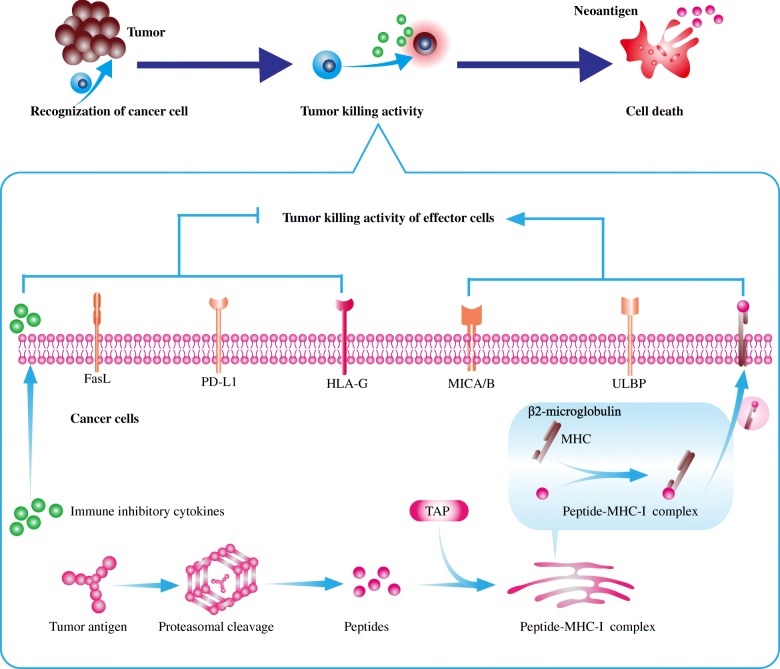
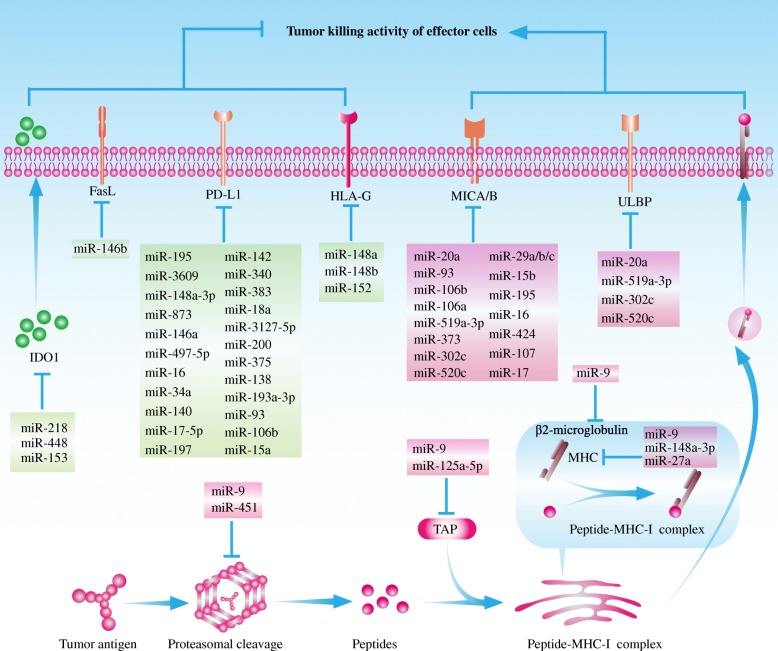
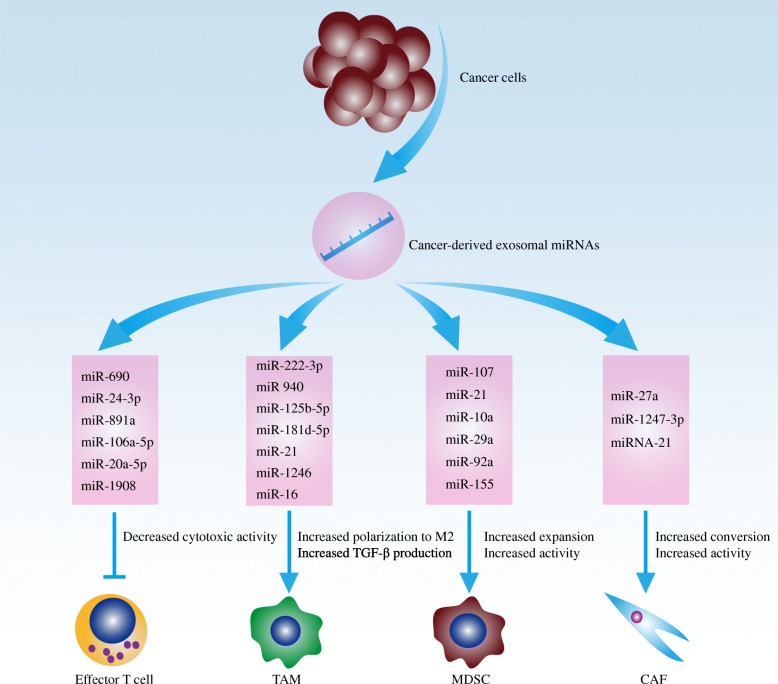
Verification
Claims the paper makes
The claims and statistics of this paper haven’t been checked yet.
Run the check — free, no account needed. It reads the open-access text and checks the sources it cites.
Claims other papers make about this one
Each is checked against this paper’s own text: does it say what the citing paper says it does?
In the citing paper
“Apart from PD-1 signaling, other immune checkpoints, abnormal angiogenesis, immunosuppressive immune cells or cytokines, cancer-associated adipocytes, and hyperactive cancer-associated fibroblasts also modulate cancer-immune set point and promote immune tolerance [15–20].”
From Combination strategies with PD-1/PD-L1 blockade: current advances and future directions (2022) · cites this paper as [19]
Self-check
Percentages, sums and reported differences re-computed from the paper’s own numbers.
The self-check needs the paper’s full text.
Citations
Cites
2 retracted
Wang, Y., & Wang, L. (2017) · Biotechnology Letters · doi:10.1007/s10529-017-2397-z · Cited by 59
Retracted(2019) · European Journal of Immunology · doi:10.1002/eji.201848007 · Cited by 17
RetractedOncology meets immunology: the cancer-immunity cycle.
Chen, D. S., & Mellman, I. (2013) · Immunity · doi:10.1016/j.immuni.2013.07.012 · Cited by 6,929
Myeloid-derived-suppressor cells as regulators of the immune system
Gabrilovich, D. I., & Nagaraj, S. (2009) · Nature Reviews Immunology · doi:10.1038/nri2506 · Cited by 6,753
Cancer Immunoediting: Integrating Immunity’s Roles in Cancer Suppression and Promotion
Schreiber, R. D., Old, L. J., & Smyth, M. J. (2011) · Science · doi:10.1126/science.1203486 · Cited by 6,474
TGFβ attenuates tumour response to PD-L1 blockade by contributing to exclusion of T cells
Mariathasan, S., Turley, S. J., Nickles, D., Castiglioni, A., Yuen, K., Wang, Y., Kadel III, E. E., Koeppen, H., Astarita, J. L., Cubas, R., et al. (2018) · Nature · doi:10.1038/nature25501 · Cited by 5,400
Elements of cancer immunity and the cancer–immune set point
Chen, D. S., & Mellman, I. (2017) · Nature · doi:10.1038/nature21349 · Cited by 5,352
The Immunobiology of Cancer Immunosurveillance and Immunoediting
Dunn, G. P., Old, L. J., & Schreiber, R. D. (2004) · Immunity · doi:10.1016/j.immuni.2004.07.017 · Cited by 3,192
Neoadjuvant PD-1 Blockade in Resectable Lung Cancer
Forde, P. M., Chaft, J. E., Smith, K. N., Anagnostou, V., Cottrell, T. R., Hellmann, M. D., Zahurak, M., Yang, S. C., Jones, D. R., Broderick, S., et al. (2018) · New England Journal of Medicine · doi:10.1056/nejmoa1716078 · Cited by 2,099
Adjuvant pembrolizumab versus placebo in resected stage III melanoma
Eggermont, A. M. M., Blank, C. U., Mandala, M., Long, G. V., Atkinson, V., Dalle, S., Haydon, A., Lichinitser, M., Khattak, A., Carlino, M. S., et al. (2018) · New England Journal of Medicine · doi:10.1056/nejmoa1802357 · Cited by 1,906
Cited by
Sorted by citations
Items 101–101 of 101
The biology of combination immunotherapy in recurrent metastatic head and neck cancer
Yuan, X., Yi, M., Zhang, W., Xu, L., Chu, Q., Luo, S., & Wu, K. (2021) · The International Journal of Biochemistry & Cell Biology · doi:10.1016/j.biocel.2021.106002 · Cited by 13
Self-citation
Metadata
- Authors
- Yi, M., Xu, L., Jiao, Y., Luo, S., Li, A., & Wu, K.
- Affiliations
- Tongji Hospital (CN)
- Zhengzhou University (CN)
- Corresponding author
- Wu, Kongming
- Venue
- Journal of Hematology & Oncology
- Published
- 2020-03-28
- Volume
- 13
- Issue
- 1
- Pages
- 25-25
- ISSN
- 1756-8722 (ISSN-L)
- PMC
- PMC7103070
- OpenAlex
- W3013629088
- Cited by
- 221
- References
- 153
- Citations by year
- 2026: 6 · 2025: 33 · 2024: 24 · 2023: 47 · 2022: 44 · 2021: 47 · 2020: 18
- FWCI
- 4.00
- Type
- journal article
- Language
- en
- Open access
- gold
- doi.org
- Locations
- Journal of Hematology & Oncology (publishedVersion, cc-by)
- PubMed Central (publishedVersion, cc-by)
- PubMed (publishedVersion)
- DOAJ (DOAJ: Directory of Open Access Journals) (submittedVersion, cc-by-sa)
- Funders
- National Natural Science Foundation of China (81874120, 81572608)
- Wuhan Science and Technology Bureau (2017060201010170)
- Henan science and technology open cooperation project (162106000021)
- Topics
- Life Sciences › Biochemistry, Genetics and Molecular Biology › Cancer Research › MicroRNA in disease regulation
- Health Sciences › Medicine › Oncology › Cancer Immunotherapy and Biomarkers
- Life Sciences › Immunology and Microbiology › Immunology › Immune cells in cancer
- Keywords
- tumor immune evasion, tumor microenvironment, immune checkpoint pathways, MHC downregulation, interferon pathway, exosomes, microvesicles, tumor immunogenicity, post-transcriptional regulation, antitumor immunity, therapeutic target
- MeSH terms
- Animals, Antigens, Neoplasm, Humans, Immunotherapy, Neoplasms, Tumor Escape, MicroRNAs, Tumor Microenvironment
About these checks
Registry, retraction, Cites and statistics results are computed, not judged, with one exception: a printed reference that no index lists is read once by a model before it counts as a citation error. Claims are extracted by a model and kept only when their quote appears verbatim in the text; each cited source is then checked, with a model’s help, for whether it says what the claim relies on. Those verdicts can be wrong — read the claim’s quote and the cited source before relying on one.
Statistics and arithmetic are recomputed, not judged.
Confidence bands are shown only for fields calibrated on our annotated test set. None is calibrated yet, so no band is shown.
What counts as a claim ›How we measure confidence ›How we check this ›
Are you an author, or do you see a problem with this page? Request a review
