

The artificial intelligence and machine learning in lung cancer immunotherapy
Open accessThe DOI matches its Crossref record; 81 of the 82 references it cites were found in a registry or an index.
Abstract
Since the past decades, more lung cancer patients have been experiencing lasting benefits from immunotherapy. It is imperative to accurately and intelligently select appropriate patients for immunotherapy or predict the immunotherapy efficacy. In recent years, machine learning (ML)-based artificial intelligence (AI) was developed in the area of medical-industrial convergence. AI can help model and predict medical information. A growing number of studies have combined radiology, pathology, genomics, proteomics data in order to predict the expression levels of programmed death-ligand 1 (PD-L1), tumor mutation burden (TMB) and tumor microenvironment (TME) in cancer patients or predict the likelihood of immunotherapy benefits and side effects. Finally, with the advancement of AI and ML, it is believed that "digital biopsy" can replace the traditional single assessment method to benefit more cancer patients and help clinical decision-making in the future. In this review, the applications of AI in PD-L1/TMB prediction, TME prediction and lung cancer immunotherapy are discussed.
Overview
The claims and statistics of this paper haven’t been checked yet.
Free: it reads the open-access text and checks the first 5 claims that cite a source we can check. Create a free account to check every claim.
Integrity signals
Registry
Cites
Statistics
Figures
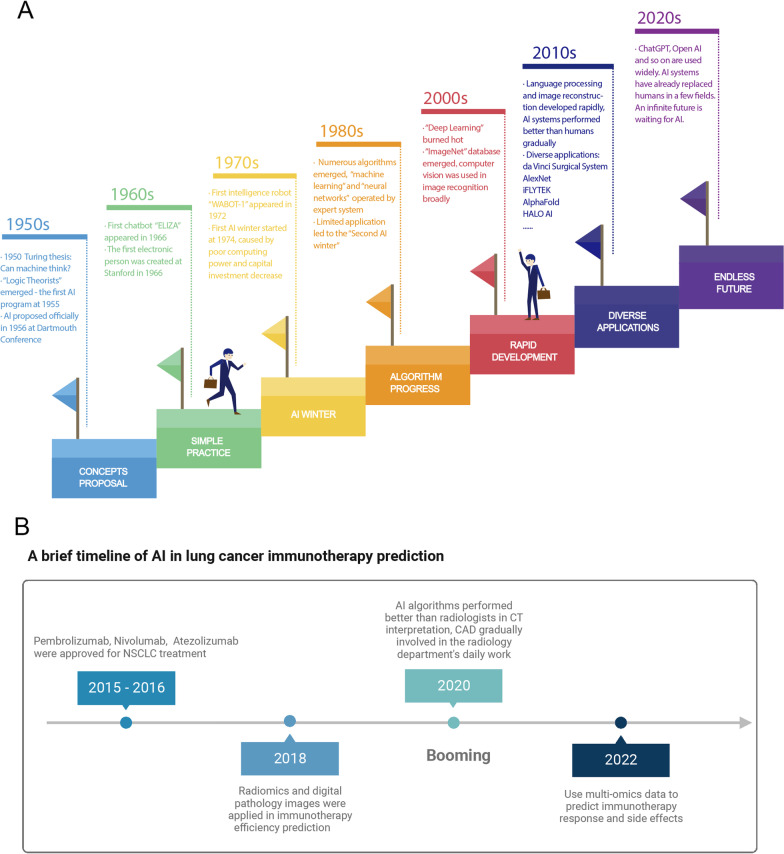
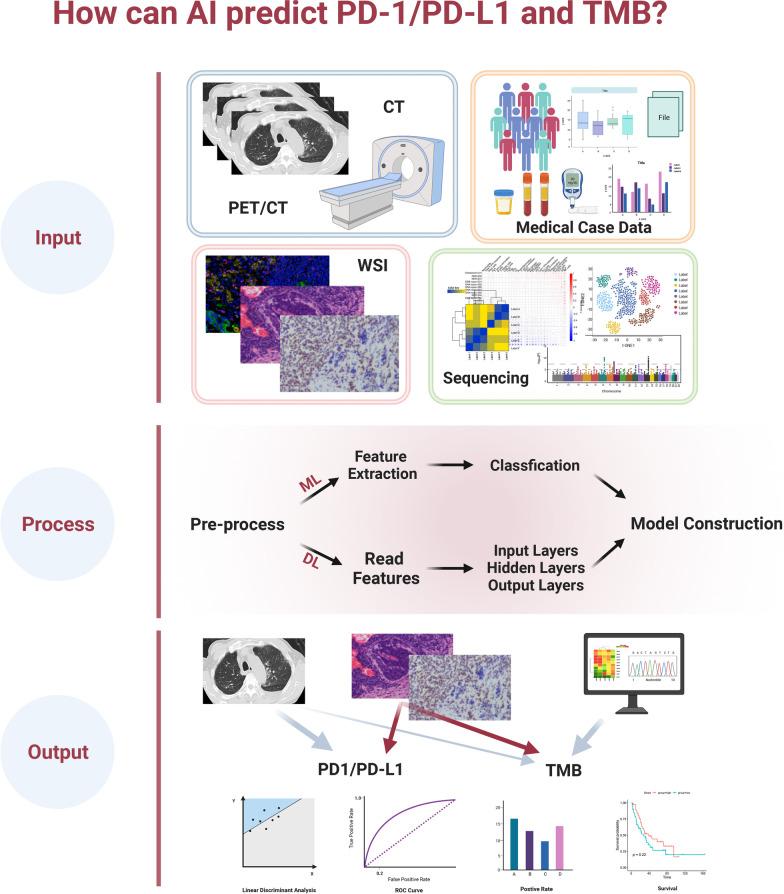
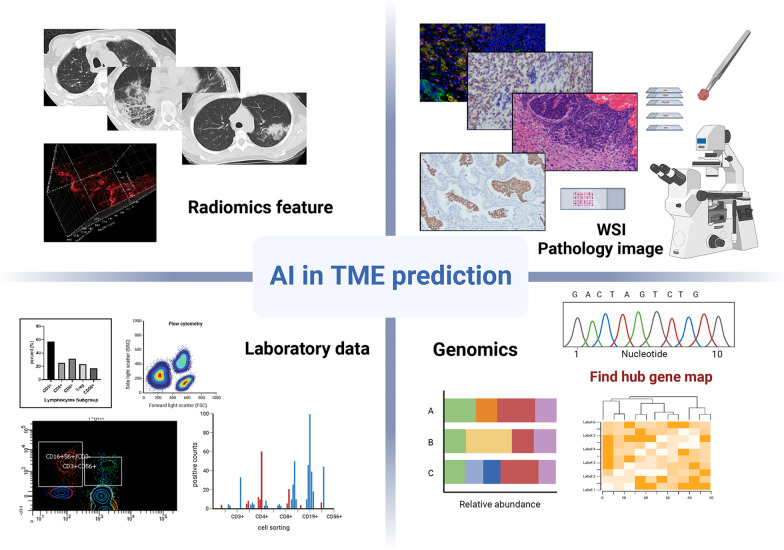
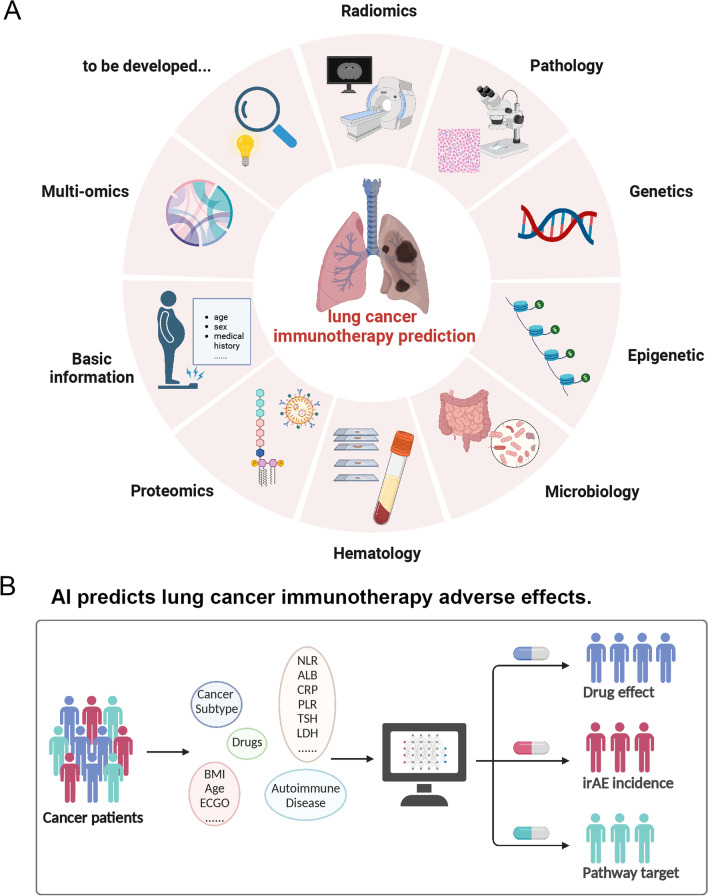
Verification
Claims the paper makes
The claims and statistics of this paper haven’t been checked yet.
Free: it reads the open-access text and checks the first 5 claims that cite a source we can check. Create a free account to check every claim.
Claims other papers make about this one
Each is checked against this paper’s own text: does it say what the citing paper says it does?
The source backs part of the claim, not all of it — or backs it for a different population, condition or comparison.
In the citing paper
“AI agents show significant potential in the realm of personalized treatment by leveraging a variety of patient-specific data, including genetic information, medical history, lifestyle factors, and treatment responses.77,88,89,90,91,92”
From A foundational architecture for AI agents in healthcare (2025) · cites this paper as [88]
Experimental — accuracy not yet measured
Self-check
Percentages, sums and reported differences re-computed from the paper’s own numbers.
The self-check needs the paper’s full text.
Citations
Cites
PD-1 and PD-L1 Immune Checkpoint Blockade to Treat Breast Cancer
Hartkopf, A. D., Taran, F.-A., Wallwiener, M., Walter, C. B., Krämer, B., Grischke, E.-M., & Brucker, S. Y. (2016) · Breast Care · doi:10.1159/000453569 · Cited by 30,845
Siegel, R. L., Miller, K. D., Fuchs, H. E., & Jemal, A. (2022) · CA: A Cancer Journal for Clinicians · doi:10.3322/caac.21708 · Cited by 17,196
The immune contexture in human tumours: impact on clinical outcome
Fridman, W. H., Pagès, F., Sautès-Fridman, C., & Galon, J. (2012) · Nature reviews. Cancer · doi:10.1038/nrc3245 · Cited by 4,981 · cited 1×
“Moreover, there is compelling evidence to suggest that the spatial distribution of lymphocytes in TME (central versus infiltrating margins) is a highly predictive factor of cancer prognosis [36].”
BackgroundAccessories to the Crime: Functions of Cells Recruited to the Tumor Microenvironment
Hanahan, D., & Coussens, L. M. (2012) · Cancer Cell · doi:10.1016/j.ccr.2012.02.022 · Cited by 4,632 · cited 1×
“The immunosuppressive TME in lung cancer has been shown to promote tumorigenesis [34, 35].”
Anaplastic Lymphoma Kinase Inhibition in Non–Small-Cell Lung Cancer
Kwak, E. L., Bang, Y.-J., Camidge, D. R., Shaw, A. T., Solomon, B., Maki, R. G., Ou, S.-H. I., Dezube, B. J., Jänne, P. A., Costa, D. B., et al. (2010) · New England Journal of Medicine · doi:10.1056/nejmoa1006448 · Cited by 4,446
Gooden, M. J. M., de Bock, G. H., Leffers, N., Daemen, T., & Nijman, H. W. (2011) · British Journal of Cancer · doi:10.1038/bjc.2011.189 · Cited by 1,277
Reck, M., Rodríguez-Abreu, D., Robinson, A. G., Hui, R., Csőszi, T., Fülöp, A., Gottfried, M., Peled, N., Tafreshi, A., Cuffe, S., et al. (2021) · Journal of Clinical Oncology · doi:10.1200/jco.21.00174 · Cited by 1,159
Saltz, J., Gupta, R., Hou, L., Kurc, T., Singh, P., Nguyen, V., Samaras, D., Shroyer, K. R., Zhao, T., Batiste, R., et al. (2018) · Cell Reports · doi:10.1016/j.celrep.2018.03.086 · Cited by 1,027
Self-citationHistory of artificial intelligence in medicine
Kaul, V., Enslin, S., & Gross, S. A. (2020) · Gastrointestinal Endoscopy · doi:10.1016/j.gie.2020.06.040 · Cited by 1,011
Dermatologic Reactions to Immune Checkpoint Inhibitors: Skin Toxicities and Immunotherapy
Sibaud, V. (2018) · American Journal of Clinical Dermatology · doi:10.1007/s40257-017-0336-3 · Cited by 626
Cited by
Items 101–148 of 148
A Data-Centric Method to Identify Lung Cancer Using a Variety of Machine Learning Approaches
Amin, I., Al-Amain, Muhammad, T., & Uddin, K. M. M. (2025) · International Conference on Electrical, Computer and Communication Engineering · doi:10.1109/ecce64574.2025.11013866 · Cited by 1
“Immunotherapy continues to demonstrate encouraging outcomes for lung cancer patients [ 6 ].”
Devi, V. R., & Keidar, M. (2023) · Preprints.org · doi:10.20944/preprints202308.1539.v1
An Empowered Transfer Learning Model for Predictive Classification of Lung CancerPreprint
Ahmed, S. T., Satheesha, T. Y., Nagaraja, L. H., Mathivanan, S. K., Sangeetha, R., & Mallik, S. (2025) · medRxiv · doi:10.1101/2025.05.21.25328060 · Cited by 1
“With the inclusion of Artificial Intelligence (AI), the lung-cancer based immunotherapy is proposed in [14] with modern advancement in validating the learning models, whereas the in [15] the TVFx-based COVID-19 diagnosis on the lungs provide a classification using feature thresholding technique.”
Zhang, X., Yin, Z., Chen, X., Zhang, N., Yu, S., Zhu, C., Zhu, L., Shao, L., Jin, R., & Li, H. (2024) · Research Square · doi:10.21203/rs.3.rs-4961128/v1
Self-citationPublic Library Service Transformation Impact on Adult Learning: Evidence from Ningbo Libraries
Al-Safarini, M. Y., & Baashirah, R. (2025) · El Profesional de la Informacion · doi:10.3145/epi.2024.ene.0612 · Cited by 2
Immune Checkpoint Inhibitors in Therapeutics and their Adverse Effect Profile: A Review
Adiga, S., Kishore, B. A., & Vasishta, S. (2025) · The Open Biomedical Engineering Journal · doi:10.2174/0118741207369739250423073032
Towards Efficient and Scalable Ensemble Machine Learning Models for Lung Cancer Diagnosis
Paul, S. P., Purkayastha, A. D., Fatema, K., Akter, S., Hasan, M., & Hossain, M. D. (2025) · International Conference on Electrical, Computer and Communication Engineering · doi:10.1109/ecce64574.2025.11013473
“In another notable study [5], the authors explored a method titled “Artificial Intelligence and ML” for lung cancer prediction using datasets such as NLST, TCGA, CT, and PET/CT.”
Artificial intelligence in thoracic pathology: diagnostic and predictive applications
von der Thüsen, J. H. (2025) · Diagnostic histopathology · doi:10.1016/j.mpdhp.2025.06.008
Role of Artificial Intelligence in Immunology
Kumar, A., & Singh, D. (2025) · Transactions on computer systems and networks · doi:10.1007/978-981-96-6703-1_9
Cao, M., Feng, J., Liu, X., Wen, X., & Ou, S. (2025) · Frontiers in Medicine · doi:10.3389/fmed.2025.1660154 · Cited by 1
Wu, Y., Xie, M., Liu, C., Huang, X., Sang, H., Tian, J., Yao, J., Wang, S., & Xue, X. (2025) · Annual International Conference of the IEEE Engineering in Medicine and Biology Society (EMBC) · doi:10.1109/embc58623.2025.11254610 · Cited by 2
“There is an urgent demand for individualized neoadjuvant immunotherapy efficacy prediction for assisting treatment planning in lung cancer [8].”
Feng, H., Xu, D., Jiang, C., Chen, Y., Wang, J., Ren, Z., Li, X., Zhang, X. D., & Cang, S. (2024) · Figshare · doi:10.6084/m9.figshare.26676902
Feng, H., Xu, D., Jiang, C., Chen, Y., Wang, J., Ren, Z., Li, X., Zhang, X. D., & Cang, S. (2024) · Figshare · doi:10.6084/m9.figshare.26676899
Feng, H., Xu, D., Jiang, C., Chen, Y., Wang, J., Ren, Z., Li, X., Zhang, X. D., & Cang, S. (2024) · Figshare · doi:10.6084/m9.figshare.26676896
Feng, H., Xu, D., Jiang, C., Chen, Y., Wang, J., Ren, Z., Li, X., Zhang, X. D., & Cang, S. (2024) · Figshare · doi:10.6084/m9.figshare.25143618
Feng, H., Xu, D., Jiang, C., Chen, Y., Wang, J., Ren, Z., Li, X., Zhang, X. D., & Cang, S. (2024) · Figshare · doi:10.6084/m9.figshare.25143696
Role of Artificial Intelligence and Machine Learning in the Diagnosis and Treatment of NSCLC
Singh, N., Sharma, V., Thakur, A., Bhalla, S., Verma, N., & Srivastava, R. (2025) · IGI Global eBooks · doi:10.4018/979-8-3373-2096-0.ch009
Yang, X., Zheng, C., Pan, Y., & Wu, S. (2025) · Discover Oncology · doi:10.1007/s12672-025-04318-w
“To ensure a robust and stable selection of MTGs, we implemented a comprehensive framework that combined 10 distinct ML algorithms across 117 configurations [17].”
Systematic Pan-Cancer Analysis Identifies PHF6 as an Immunological and Prognostic Biomarker
Tao, Y., Hu, M., Guo, Z., Xu, Q., Niu, L., Mao, Y., & Yuan, G. (2025) · Diagnostics · doi:10.3390/diagnostics16010110 · Cited by 1
“Tumor mutation burden (TMB) is highly correlated with the efficacy of PD-1/PD-L1 inhibitors, which enables some cancer patients to predict the effectiveness of immunotherapy through TMB markers [14].”
Dey, J., Acharjee, S., Roy, S. P., Pan, P., Ghosh, T., & Roy, D. (2025) · International Conference on Software, Systems and Information Technology (SSITCON) · doi:10.1109/ssitcon66133.2025.11341942
“In the paper by Gao et al. [2], Random Forest is implemented as a supervised learning algorithm to predict treatment outcomes and biomarker expression in lung cancer immunotherapy.”
InfluentialLes limites et le futur des outils d’intelligence artificielle en pathologie thoracique
Hofman, P. M. (2025) · Revue Francophone des Laboratoires · doi:10.1016/s1773-035x(25)76515-6
Artificial intelligence powered drug response prediction against cancer
Ushakiran, Y., & Das, A. B. (2026) · Elsevier eBooks · doi:10.1016/b978-0-443-34059-8.00004-x
The Impact of Artificial Intelligence on Cancer Biomarker Detection and Analysis
Nusratullah, S., Anjankar, A. P., Dhok, A., Basheeruddin, M., Ingole, R. P., & Batulwar, P. S. (2025) · DMIHER International Conference on Artificial Intelligence in Healthcare, Education and Industry (IDICAIHEI) · doi:10.1109/idicaihei65991.2025.11379136
Artificial Intelligence in Lung Cancer Management: Innovations, Challenges, and Clinical Translation
Jiang, Q., Qiu, J., & KarkonShayan, F. (2026) · Neural Processing Letters · doi:10.1007/s11063-026-11836-3 · Cited by 1
Yao, J., Wang, C., Wang, Z., Xiang, S., Sun, W., Chen, H., & Yang, C. (2026) · ACS Omega · doi:10.1021/acsomega.5c12467
Genomics-Driven Immunotherapy: Advancing Cancer Treatment through Personalized Approaches
Kate, A. A., Desai, S. A., Sapkal, S. P., More, M. J., & Patel, V. P. (2026) · Current Genomics · doi:10.2174/0113892029403241260416110923
“These capabilities improve the specificity of immunotherapy by aiding clinicians in selecting candidates who are more likely to respond favorably to specific treatment protocols [157, 158].”
Shi, Q., Lou, N., & Xue, C. (2026) · Frontiers in Cell and Developmental Biology · doi:10.3389/fcell.2026.1769097 · Cited by 2
“Its applications in oncology are broad, spanning the analysis of medical imaging, molecular profiles, and electronic health records (EHRs) for tasks including cancer detection, diagnosis, prognosis prediction, and assessment of treatment response (Gao et al., 2023; Swanson et al., 2023).”
Cancer immunotherapy: Pros, cons, and beyond
Natarajan, K., Natarajan, K., Rajaram, G., Arulsamy, S., & Babu, D. (2026) · Elsevier eBooks · doi:10.1016/b978-0-443-41551-7.00007-2
Peng, J., Guo, W., Yao, J., Lv, H., Wang, B., Wu, X., Cui, S., Chen, S., & Zhang, Z. (2026) · Frontiers in Immunology · doi:10.3389/fimmu.2026.1669766 · Cited by 2
Grant, C. R., Patel, S., & Azenkot, T. (2026) · Cancers · doi:10.3390/cancers18091455
“There is also a potential for the development of algorithms that may analyze interactions between tumor cells, immune infiltrates, and stromal components as predictive biomarker signatures that are otherwise illegible to the human eye [42].”
AI-Driven Lung Cancer Detection Using Based on RF Optimization
Jahan, N., Al-Amain, Saad, M. N., Amin, I., & Ahmed, S. (2025) · IEEE International Conference on Biomedical Engineering, Computer and Information Technology for Health (BECITHCON) · doi:10.1109/becithcon69222.2025.11504214
Revolutionising Early Diagnosis of Lung Cancer: A Deep Learning Framework for Precision Detection
Choudhury, K. R., Dan, S., Sarkar, B., Das, D., & Pal, D. (2026) · National Academy Science Letters · doi:10.1007/s40009-026-02235-2
A Comprehensive Survey on Machine Learning and Deep Learning Approaches for Lung Disease Detection
Sharma, M., & Garg, V. K. (2026) · International Conference on Intelligent Processing, Hardware, Electronics, and Radio Systems (CIPHER) · doi:10.1109/cipher70417.2026.11524042
“Highly accurate classification of CT images with deep CNNs was demonstrated by Shatnawi et al. [28], but at a great computational cost.”
Neural state as a determinant of tumor immunity in lung cancer
Yu, J., Qi, J., Que, Z., Kong, X., & Feng, Y. (2026) · Pharmacological Research · doi:10.1016/j.phrs.2026.108261
Nooreen, Z., Armo, R., Johri, H. V., Babu, R. H., Nehra, P., & Gasmi, A. (2026) · Current pharmacogenomics and personalized medicine (Online)/Current pharmacogenomics and personalized medicine · doi:10.2174/0118756921432491260401063552
Decision Support Systems using AI and OR Models for Cancer Prediction: A Systematic Mapping Study
Oufaska, K., Aabour, A., Belaid, K. A., Hafidi, H., & Yassini, K. E. (2026) · Procedia Computer Science · doi:10.1016/j.procs.2026.04.108
Lin, J., Li, X., Tang, J., Xu, H., Lin, X., He, C., Li, P., Wu, J., Huang, W., & Wu, H. (2026) · Frontiers in Immunology · doi:10.3389/fimmu.2026.1834643 · Cited by 1
Muneer, A., Showkatian, E., Saad, M. B., Hong, L., Li, S.-D., Salehjahromi, M., Aminu, M., Sujit, S., Xu, H., Waqas, M., et al. (2026) · Cancer Letters · doi:10.1016/j.canlet.2026.218687
Wu, C., Lin, Y., Li, Y., Sun, Z. X., Zhou, Y., Liu, Y., Ma, J., Jiang, H., & Shi, L. (2026) · Research Square · doi:10.21203/rs.3.rs-8725945/v1
Xu, Y., Gong, W., Ji, L., Xing, Z., Zhu, Z., Jin, Z., Zhang, J., Wang, X., Qin, S., Yang, J., et al. (2026) · Journal of Translational Medicine · doi:10.1186/s12967-026-08307-7
“Given the broad application of ML in oncology research [15, 16], we used rectal cancer as a clinically relevant case study to demonstrate the proposed pipeline.”
Ospina, A. V., Azkárate, A., Ramírez‐Peinado, S., Rashid, A., Vollan, H. K. M., Jones, S., Menke, S., Martín, R., González, F., Posso, M., et al. (2026) · ESMO Real World Data and Digital Oncology · doi:10.1016/j.esmorw.2026.100716 · Cited by 1
“Our findings align with reviews highlighting the potential of AI in lung cancer research 19 and its potential to enhance diagnosis and treatment outcomes, 20 while addressing unmet needs for standardization and reproducibility.”
Tezel, T. G., Türkan, M., & Sayılgan, E. (2026) · Annals of Biomedical Engineering · doi:10.1007/s10439-026-04289-1
Multi-source data-driven machine learning for lung cancer: diagnosis, treatment, and prognosis
Zou, Y., Zhu, J., Cheng, J., Yan, J., Dai, B., Han, J., & Guo, J. (2026) · Intelligent Opto-Electronics · doi:10.67704/ioe.2026.260006
Sis, İ. M., Yağanoğlu, M., & Maman, A. (2026) · Applied Sciences · doi:10.3390/app16157585
Zhang, W., Luo, Z., Liu, K., Wang, Y., Hou, Y., Su, X., Wu, X., Miao, C., Liu, Q., He, Z., et al. (2026) · 中国科学通报:英文版 · doi:10.1016/j.scib.2026.09.016 · Cited by 1
Uncertainties in Automated Lung Cancer Detection, Classification, and Prognosis Prediction
Prayaga, K., Bintu, A. C., Livinthika, S., Diana, B. L. E., & Winston, J. J. (2026) · International Conference on Inventive Systems and Control (ICISC) · doi:10.1109/icisc69558.2026.11681099
Spagnolo, C. C., Campo, I., Fassi, E., Nucera, F., Ruggeri, P., Muscolino, P., Infurna, C., Ieni, A., Gregorc, V., Lazzari, C., et al. (2026) · Immunotherapy · doi:10.1080/1750743x.2026.2738337
Ding, L., Staskiewicz, A., Kao, J., & Wang, X. (2026) · Frontiers in Pharmacology · doi:10.3389/fphar.2026.1960752
Metadata
- Authors
- Gao, Q., Yang, L., Lu, M., Jin, R., Ye, H., & Ma, T.
- Affiliations
- Capital Medical University (CN)
- Corresponding author
- Ma, Teng
- Venue
- Journal of Hematology & Oncology
- Published
- 2023-05-24
- Volume
- 16
- Issue
- 1
- Pages
- 55-55
- ISSN
- 1756-8722 (ISSN-L)
- PMC
- PMC10207827
- OpenAlex
- W4378172829
- Semantic Scholar
- ef278a4d2d1ea8d640440ee85a9ac4d5de3691f9
- Cited by
- 148
- References
- 82
- Citations by year
- 2026: 37 · 2025: 58 · 2024: 45 · 2023: 8
- FWCI
- 4.79
- Type
- journal article
- Language
- en
- Open access
- gold
- doi.org
- Licence
- cc-by
- creativecommons.org/licenses/by/4.0 (tdm)
- creativecommons.org/licenses/by/4.0 (vor)
- Locations
- Journal of Hematology & Oncology (publishedVersion, cc-by)
- PubMed Central (publishedVersion, cc-by)
- PubMed (publishedVersion)
- DOAJ (DOAJ: Directory of Open Access Journals) (submittedVersion, cc-by-sa)
- Funders
- Beijing Xisike Clinical Oncology Research Foundation
- Topics
- Health Sciences › Medicine › Oncology › Cancer Immunotherapy and Biomarkers
- Health Sciences › Medicine › Radiology, Nuclear Medicine and Imaging › Radiomics and Machine Learning in Medical Imaging
- Physical Sciences › Computer Science › Artificial Intelligence › AI in cancer detection
- Keywords
- lung cancer, cancer immunotherapy, artificial intelligence, machine learning, tumor mutational burden, tumor microenvironment, immunotherapy response prediction, immunotherapy side effects, multi-omics integration
- MeSH terms
- Machine Learning, Artificial Intelligence, Humans, Immunotherapy, Lung Neoplasms, Tumor Microenvironment, B7-H1 Antigen
About these checks
Registry, retraction, Cites and statistics results are computed, not judged, with one exception: a printed reference that no index lists is read once by a model before it counts as a citation error. Claims are extracted by a model and kept only when their quote appears verbatim in the text; each cited source is then checked, with a model’s help, for whether it says what the claim relies on. Those verdicts can be wrong — read the claim’s quote and the cited source before relying on one.
Statistics and arithmetic are recomputed, not judged.
Confidence bands are shown only for fields calibrated on our annotated test set. None is calibrated yet, so no band is shown.
What counts as a claim ›How we measure confidence ›How we check this ›
Are you an author, or do you see a problem with this page? Request a review
Data sources
Bibliographic data: Semantic Scholar, OpenAlex, Crossref.
Contains information from the Semantic Scholar Academic Graph Datasets, made available under the ODC Attribution License (ODC-BY 1.0).
Semantic Scholar’s data is described in: Kinney, R., et al. (2023). The Semantic Scholar Open Data Platform. arXiv:2301.10140.
