

The artificial intelligence and machine learning in lung cancer immunotherapy
Open accessThe DOI matches its Crossref record; 81 of the 82 references it cites were found in a registry or an index.
Abstract
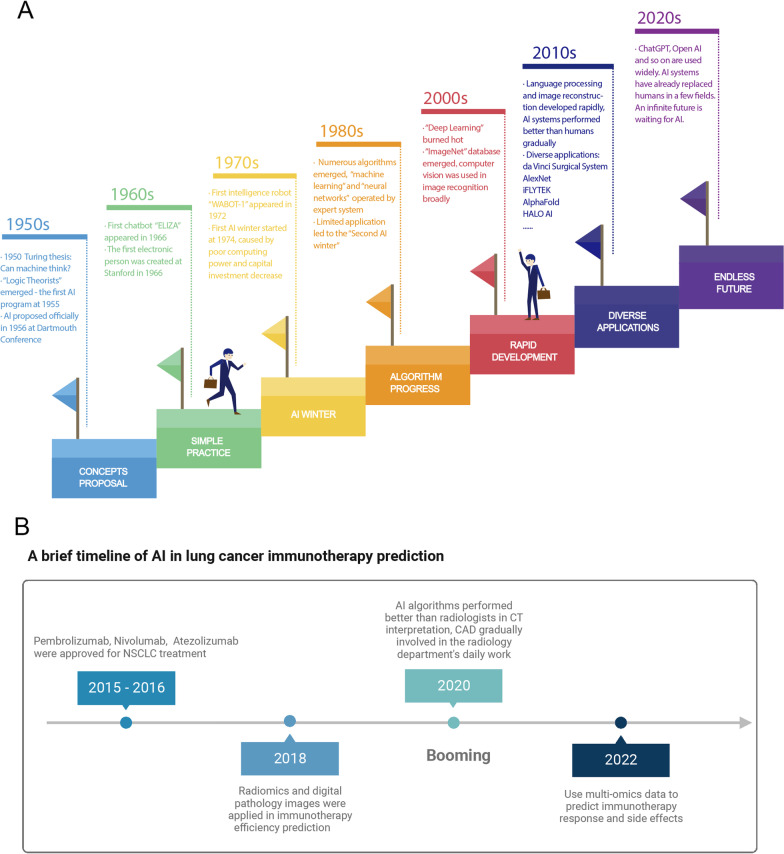
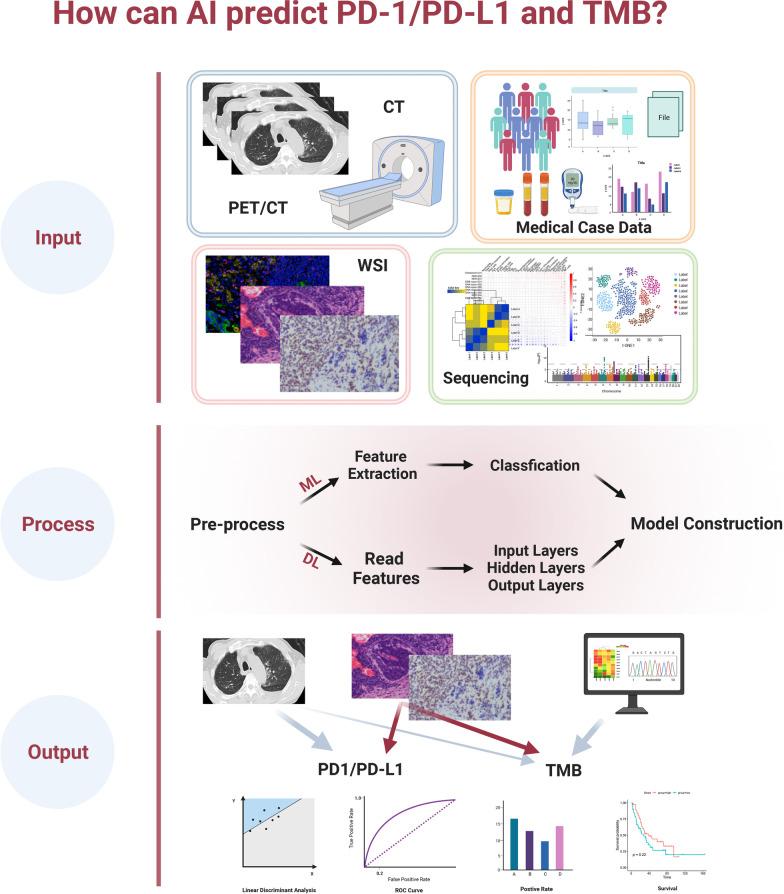
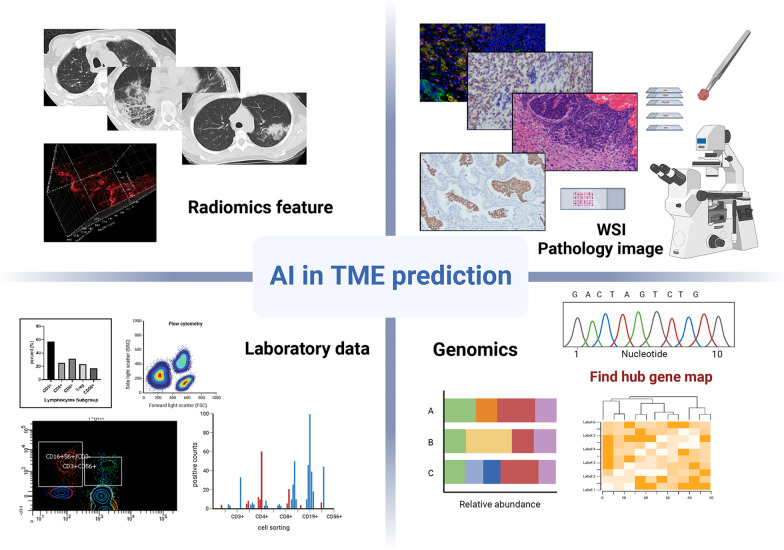
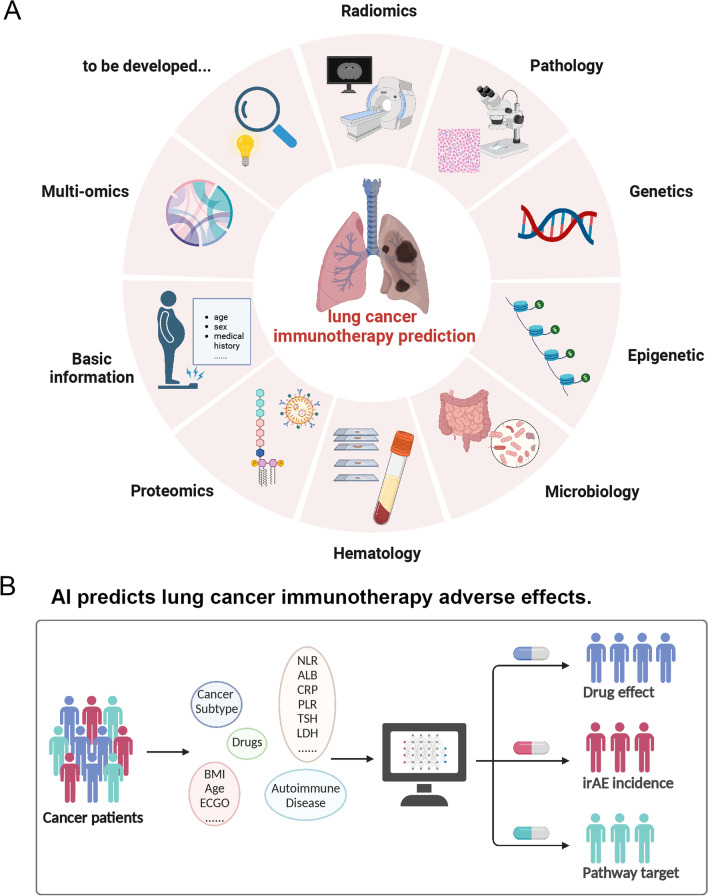
Since the past decades, more lung cancer patients have been experiencing lasting benefits from immunotherapy. It is imperative to accurately and intelligently select appropriate patients for immunotherapy or predict the immunotherapy efficacy. In recent years, machine learning (ML)-based artificial intelligence (AI) was developed in the area of medical-industrial convergence. AI can help model and predict medical information. A growing number of studies have combined radiology, pathology, genomics, proteomics data in order to predict the expression levels of programmed death-ligand 1 (PD-L1), tumor mutation burden (TMB) and tumor microenvironment (TME) in cancer patients or predict the likelihood of immunotherapy benefits and side effects. Finally, with the advancement of AI and ML, it is believed that "digital biopsy" can replace the traditional single assessment method to benefit more cancer patients and help clinical decision-making in the future. In this review, the applications of AI in PD-L1/TMB prediction, TME prediction and lung cancer immunotherapy are discussed.
Overview
The claims and statistics of this paper haven’t been checked yet.
Free: it reads the open-access text and checks the first 5 claims that cite a source we can check. Create a free account to check every claim.
Integrity signals
Registry
Cites
Statistics
Figures
Verification
Claims the paper makes
The claims and statistics of this paper haven’t been checked yet.
Free: it reads the open-access text and checks the first 5 claims that cite a source we can check. Create a free account to check every claim.
Claims other papers make about this one
Each is checked against this paper’s own text: does it say what the citing paper says it does?
The source backs part of the claim, not all of it — or backs it for a different population, condition or comparison.
In the citing paper
“AI agents show significant potential in the realm of personalized treatment by leveraging a variety of patient-specific data, including genetic information, medical history, lifestyle factors, and treatment responses.77,88,89,90,91,92”
From A foundational architecture for AI agents in healthcare (2025) · cites this paper as [88]
Experimental — accuracy not yet measured
Self-check
Percentages, sums and reported differences re-computed from the paper’s own numbers.
The self-check needs the paper’s full text.
Citations
Cites
PD-1 and PD-L1 Immune Checkpoint Blockade to Treat Breast Cancer
Hartkopf, A. D., Taran, F.-A., Wallwiener, M., Walter, C. B., Krämer, B., Grischke, E.-M., & Brucker, S. Y. (2016) · Breast Care · doi:10.1159/000453569 · Cited by 30,845
Siegel, R. L., Miller, K. D., Fuchs, H. E., & Jemal, A. (2022) · CA: A Cancer Journal for Clinicians · doi:10.3322/caac.21708 · Cited by 17,196
The immune contexture in human tumours: impact on clinical outcome
Fridman, W. H., Pagès, F., Sautès-Fridman, C., & Galon, J. (2012) · Nature reviews. Cancer · doi:10.1038/nrc3245 · Cited by 4,981 · cited 1×
“Moreover, there is compelling evidence to suggest that the spatial distribution of lymphocytes in TME (central versus infiltrating margins) is a highly predictive factor of cancer prognosis [36].”
BackgroundAccessories to the Crime: Functions of Cells Recruited to the Tumor Microenvironment
Hanahan, D., & Coussens, L. M. (2012) · Cancer Cell · doi:10.1016/j.ccr.2012.02.022 · Cited by 4,632 · cited 1×
“The immunosuppressive TME in lung cancer has been shown to promote tumorigenesis [34, 35].”
Anaplastic Lymphoma Kinase Inhibition in Non–Small-Cell Lung Cancer
Kwak, E. L., Bang, Y.-J., Camidge, D. R., Shaw, A. T., Solomon, B., Maki, R. G., Ou, S.-H. I., Dezube, B. J., Jänne, P. A., Costa, D. B., et al. (2010) · New England Journal of Medicine · doi:10.1056/nejmoa1006448 · Cited by 4,446
Gooden, M. J. M., de Bock, G. H., Leffers, N., Daemen, T., & Nijman, H. W. (2011) · British Journal of Cancer · doi:10.1038/bjc.2011.189 · Cited by 1,277
Reck, M., Rodríguez-Abreu, D., Robinson, A. G., Hui, R., Csőszi, T., Fülöp, A., Gottfried, M., Peled, N., Tafreshi, A., Cuffe, S., et al. (2021) · Journal of Clinical Oncology · doi:10.1200/jco.21.00174 · Cited by 1,159
Saltz, J., Gupta, R., Hou, L., Kurc, T., Singh, P., Nguyen, V., Samaras, D., Shroyer, K. R., Zhao, T., Batiste, R., et al. (2018) · Cell Reports · doi:10.1016/j.celrep.2018.03.086 · Cited by 1,027
Self-citationHistory of artificial intelligence in medicine
Kaul, V., Enslin, S., & Gross, S. A. (2020) · Gastrointestinal Endoscopy · doi:10.1016/j.gie.2020.06.040 · Cited by 1,011
Dermatologic Reactions to Immune Checkpoint Inhibitors: Skin Toxicities and Immunotherapy
Sibaud, V. (2018) · American Journal of Clinical Dermatology · doi:10.1007/s40257-017-0336-3 · Cited by 626
A new era: artificial intelligence and machine learning in prostate cancer
Goldenberg, S. L., Nir, G., & Salcudean, S. E. (2019) · Nature Reviews Urology · doi:10.1038/s41585-019-0193-3 · Cited by 511
Characterisation and management of dermatologic adverse events to agents targeting the PD-1 receptor
Belum, V. R., Benhuri, B., Postow, M. A., Hellmann, M. D., Lesokhin, A. M., Segal, N. H., Motzer, R. J., Wu, S., Busam, K. J., Wolchok, J. D., et al. (2016) · European Journal of Cancer · doi:10.1016/j.ejca.2016.02.010 · Cited by 418
Tumor Mutational Burden as a Predictor of Immunotherapy Response: Is More Always Better?
Strickler, J. H., Hanks, B. A., & Khasraw, M. (2021) · Clinical Cancer Research · doi:10.1158/1078-0432.ccr-20-3054 · Cited by 418
Huang, S., Yang, J., Shen, N., Xu, Q., & Zhao, Q. (2023) · Seminars in Cancer Biology · doi:10.1016/j.semcancer.2023.01.006 · Cited by 317 · cited 1×
“…AI-based radiomics can not only use images of diagnosed lung cancer patients for curative effect evaluation and survival prediction but also analyze image abnormalities in physical examination populations, thus making a better function in lung cancer’s early screening and early diagnosis [73].”
BackgroundMulti-Scale Deep Reinforcement Learning for Real-Time 3D-Landmark Detection in CT Scans
Ghesu, F.-C., Georgescu, B., Zheng, Y., Grbic, S., Maier, A., Hornegger, J., & Comaniciu, D. (2019) · IEEE Transactions on Pattern Analysis and Machine Intelligence · doi:10.1109/tpami.2017.2782687 · Cited by 310 · cited 1×
“At present, there are a few studies that combined deep learning models with reinforcement learning algorithms to improve and optimize algorithms, using 3D reconstructed images to accurately locate, segment, and classify tumors [72].”
BackgroundNosaki, K., Saka, H., Hosomi, Y., Baas, P., de Castro, G., Reck, M., Wu, Y.-L., Brahmer, J. R., Felip, E., Sawada, T., et al. (2019) · Lung Cancer · doi:10.1016/j.lungcan.2019.07.004 · Cited by 283
Park, S., Ock, C.-Y., Kim, H., Pereira, S., Park, S., Ma, M., Choi, S., Kim, S., Shin, S., Aum, B. J., et al. (2022) · Journal of Clinical Oncology · doi:10.1200/jco.21.02010 · Cited by 280 · cited 1×
“[43] developed the TIL spatial analysis model Lunit SCOPE IO, which can segment and quantify tissue components in WSI images and was successfully utilized to predict the benefit of ICIs in patients with advanced NSCLC. Presently, numerous studies have used pathological image analysis to demonstrate…”
MethodArtificial intelligence in cancer research, diagnosis and therapy
Elemento, O., Leslie, C., Lundin, J., & Tourassi, G. (2021) · Nature Reviews Cancer · doi:10.1038/s41568-021-00399-1 · Cited by 264 · cited 1×
“Additionally, CV has been extensively employed for medical image recognition in areas such as computer tomography (CT), X-ray, positron emission tomography/computer tomography (PET/CT), and immunohistochemistry (IHC) [8].”
MethodImproved prediction of immune checkpoint blockade efficacy across multiple cancer types
Chowell, D., Yoo, S.-K., Valero, C., Pastore, A., Krishna, C., Lee, M., Hoen, D., Shi, H., Kelly, D. W., Patel, N., et al. (2022) · Nature Biotechnology · doi:10.1038/s41587-021-01070-8 · Cited by 260
Han, H., Silverman, J. F., Santucci, T. S., Macherey, R. S., dAmato, T. A., Tung, M. Y., Weyant, R. J., & Landreneau, R. J. (2001) · Annals of Surgical Oncology · doi:10.1007/s10434-001-0072-y · Cited by 213
Mu, W., Jiang, L., Shi, Y., Tunali, I., Gray, J. E., Katsoulakis, E., Tian, J., Gillies, R. J., & Schabath, M. B. (2021) · Journal for ImmunoTherapy of Cancer · doi:10.1136/jitc-2020-002118 · Cited by 207
Mu, W., Tunali, I., Gray, J. E., Qi, J., Schabath, M. B., & Gillies, R. J. (2020) · European Journal of Nuclear Medicine and Molecular Imaging · doi:10.1007/s00259-019-04625-9 · Cited by 194
He, B., Dong, D., She, Y., Zhou, C., Fang, M., Zhu, Y., Zhang, H., Huang, Z., Jiang, T., Tian, J., et al. (2020) · Journal for ImmunoTherapy of Cancer · doi:10.1136/jitc-2020-000550 · Cited by 190
Biomarkers of response to PD-1 pathway blockade
Li, H., van der Merwe, P. A., & Sivakumar, S. (2022) · British Journal of Cancer · doi:10.1038/s41416-022-01743-4 · Cited by 183
Tian, P., He, B., Mu, W., Liu, K., Liu, L., Zeng, H., Liu, Y., Jiang, L., Zhou, P., Huang, Z., et al. (2021) · Theranostics · doi:10.7150/thno.48027 · Cited by 155
Hwang, M., Canzoniero, J. V., Rosner, S., Zhang, G., White, J. R., Belcaid, Z., Cherry, C., Balan, A., Pereira, G., Curry, A., et al. (2022) · Journal for ImmunoTherapy of Cancer · doi:10.1136/jitc-2022-004688 · Cited by 150 · cited 1×
“…due to the highly invasive nature of puncture biopsies or surgical specimens, which are often sampled during a single visit, the results are susceptible to static tumor characteristics and intratumoral heterogeneity making them less effective in predicting the benefit of immunotherapy [20, 21].”
BackgroundComputational Staining of Pathology Images to Study the Tumor Microenvironment in Lung Cancer
Wang, S., Rong, R., Yang, D. M., Fujimoto, J., Yan, S., Cai, L., Yang, L., Luo, D., Behrens, C., Parra, E. R., et al. (2020) · Cancer Research · doi:10.1158/0008-5472.can-19-1629 · Cited by 148
Self-citationRakaee, M., Adib, E., Ricciuti, B., Sholl, L. M., Shi, W., Alessi, J. V., Cortellini, A., Fulgenzi, C. A. M., Viola, P., Pinato, D. J., et al. (2023) · JAMA Oncology · doi:10.1001/jamaoncol.2022.4933 · Cited by 141 · cited 3×
“Pathomics PD-L1/TMB Expression Treatment ML 2023 [29] Extraction of the tumor, mesenchymal, and TIL counts from HE-stained images for modeling and assessment of TMB and PD-L1 expression levels and efficacy prediction”
BackgroundMethodInfluentialJiang, M., Sun, D., Guo, Y., Guo, Y., Xiao, J., Wang, L., & Yao, X. (2019) · Academic Radiology · doi:10.1016/j.acra.2019.04.016 · Cited by 130
Applying artificial intelligence for cancer immunotherapy
Xu, Z., Wang, X., Zeng, S., Ren, X., Yan, Y., & Gong, Z. (2021) · Acta Pharmaceutica Sinica B · doi:10.1016/j.apsb.2021.02.007 · Cited by 126
Tong, H., Sun, J., Fang, J., Zhang, M., Liu, H., Xia, R., Zhou, W., Liu, K., & Chen, X. (2022) · Frontiers in Immunology · doi:10.3389/fimmu.2022.859323 · Cited by 126
Emerging evidence and treatment paradigm of non-small cell lung cancer
Liu, S. M., Zheng, M.-M., Pan, Y., Liu, S. M., Li, Y., & Wu, Y.-L. L. C. (2023) · Journal of Hematology & Oncology · doi:10.1186/s13045-023-01436-2 · Cited by 120
Vaidya, P., Bera, K., Patil, P. D., Gupta, A., Jain, P., Alilou, M., Khorrami, M., Velcheti, V., & Madabhushi, A. (2020) · Journal for ImmunoTherapy of Cancer · doi:10.1136/jitc-2020-001343 · Cited by 117
Machine learning classifies cancer
Wong, D., & Yip, S. S. F. (2018) · Nature · doi:10.1038/d41586-018-02881-7 · Cited by 110
Goo, J. M. (2011) · Korean Journal of Radiology · doi:10.3348/kjr.2011.12.2.145 · Cited by 84
Chen, M., Lu, H., Copley, S. J., Han, Y., Logan, A., Viola, P., Cortellini, A., Pinato, D. J., Power, D., & Aboagye, E. O. (2023) · Journal of Thoracic Oncology · doi:10.1016/j.jtho.2023.01.089 · Cited by 83
Gong, J., Bao, X., Wang, T., Liu, J., Peng, W., Shi, J., Wu, F., & Gu, Y. (2022) · OncoImmunology · doi:10.1080/2162402x.2022.2028962 · Cited by 82
How can artificial neural networks approximate the brain?
Shao, F., & Shen, Z. (2023) · Frontiers in Psychology · doi:10.3389/fpsyg.2022.970214 · Cited by 80
Deep Reinforcement Learning in Medicine
Jonsson, A. (2019) · Kidney Diseases · doi:10.1159/000492670 · Cited by 77
Artificial intelligence for prediction of response to cancer immunotherapy
Yang, Y., Zhao, Y., Liu, X., & Huang, J. (2022) · Seminars in Cancer Biology · doi:10.1016/j.semcancer.2022.11.008 · Cited by 73
Heilbroner, S. P., Few, R., Neilan, T. G., Mueller, J., Chalwa, J., Charest, F., Suryadevara, S., Kratt, C., Gomez‐Caminero, A., & Dreyfus, B. (2021) · Journal for ImmunoTherapy of Cancer · doi:10.1136/jitc-2021-002545 · Cited by 68
Qaiser, T., Lee, C.-Y., Vandenberghe, M. E., Yeh, J., Gavrielides, M. A., Hipp, J., Scott, M. L. J., & Reischl, J. (2022) · npj Precision Oncology · doi:10.1038/s41698-022-00275-7 · Cited by 67
Monaco, L., Bernardi, E. D., Bono, F., Cortinovis, D. L., Crivellaro, C., Elisei, F., L’Imperio, V., Landoni, C., Mathoux, G., Musarra, M., et al. (2022) · European Journal of Nuclear Medicine and Molecular Imaging · doi:10.1007/s00259-022-05783-z · Cited by 65
Wiesweg, M., Mairinger, F. D., Reis, H., Goetz, M., Kollmeier, J., Misch, D., Stephan-Falkenau, S., Mairinger, T., Walter, R. F. H., Hager, T., et al. (2020) · European Journal of Cancer · doi:10.1016/j.ejca.2020.09.015 · Cited by 60
Park, Y., Kim, M. J., Choi, Y., Kim, N. H., Kim, L., Hong, S. P., Cho, H.-G., Yu, E., & Chae, Y. K. (2022) · Journal for ImmunoTherapy of Cancer · doi:10.1136/jitc-2021-003566 · Cited by 60
Accurate detection of tumor-specific gene fusions reveals strongly immunogenic personal neo-antigens
Weber, D., Ibn-Salem, J., Sorn, P., Suchan, M., Holtsträter, C., Lahrmann, U., Vogler, I., Schmoldt, K., Lang, F., Schrörs, B., et al. (2022) · Nature Biotechnology · doi:10.1038/s41587-022-01247-9 · Cited by 59
Patel, A. J., Tan, T.-M., Richter, A. G., Naidu, B. V., Blackburn, J. M., & Middleton, G. (2021) · British Journal of Cancer · doi:10.1038/s41416-021-01572-x · Cited by 56
Liu, J., Zheng, Q., Mu, X., Zuo, Y., Xu, B., Jin, Y., Wang, Y., Tian, H., Yang, Y., Xue, Q., et al. (2021) · Scientific Reports · doi:10.1038/s41598-021-95372-1 · Cited by 49
Hondelink, L. M., Hüyük, M., Postmus, P. E., Smit, V. T. H. B. M., Blom, S., von der Thüsen, J. H., & Cohen, D. (2022) · Histopathology · doi:10.1111/his.14571 · Cited by 49
Benzekry, S., Grangeon, M., Karlsen, M., Alexa, M., Bicalho-Frazeto, I., Chaleat, S., Tomasini, P., Barbolosi, D., Barlési, F., & Greillier, L. (2021) · Cancers · doi:10.3390/cancers13246210 · Cited by 46
Hu, Y. Y., Paris, S., Bertolet, G., Barsoumian, H. B., He, K., Sezen, D., Chen, D., Wasley, M. D., SILVA, J. D., Mitchell, J., et al. (2022) · Journal of Nanobiotechnology · doi:10.1186/s12951-022-01621-4 · Cited by 46
Self-citationChen, N., Xiong, M., Zhou, R., Zhou, Y., Qiu, B., Luo, Y., Su, Z., Chu, C., Li, Q., Wang, B., et al. (2022) · Radiation Oncology · doi:10.1186/s13014-022-02136-w · Cited by 45
Hu, Y., Paris, S., Barsoumian, H., Abana, C. O., He, K., Sezen, D., Wasley, M., Masrorpour, F., Chen, D., Yang, L., et al. (2021) · Journal of Nanobiotechnology · doi:10.1186/s12951-021-01163-1 · Cited by 41
Self-citationPrelaj, A., Galli, E. G., Miskovic, V., Pesenti, M., Viscardi, G., Pedica, B., Mazzeo, L., Bottiglieri, A., Provenzano, L., Spagnoletti, A., et al. (2023) · Frontiers in Oncology · doi:10.3389/fonc.2022.1078822 · Cited by 39 · cited 1×
“Among these, the neutrophil to lymphocyte ratio (NLR) has exhibited predictive value for disease control rate (DCR) and 6-month survival in multiple studies [62, 63].”
BackgroundJiang, Z., Dong, Y., Yang, L., Lv, Y., Dong, S., Yuan, S., Li, D., & Liu, L. (2021) · Journal of Imaging Informatics in Medicine · doi:10.1007/s10278-021-00484-9 · Cited by 37
Self-citationTypical tumor immune microenvironment status determine prognosis in lung adenocarcinoma
Ren, C., Li, J., Zhou, Y., Zhang, S., & Wang, Q. (2022) · Translational Oncology · doi:10.1016/j.tranon.2022.101367 · Cited by 34
Luo, R., Song, J., Xiao, X., Xie, Z., Zhao, Z., Zhang, W., Miao, S., Tang, Y., & Ran, L. (2020) · Aging · doi:10.18632/aging.103517 · Cited by 33
Exploring Gut Microbiome in Predicting the Efficacy of Immunotherapy in Non-Small Cell Lung Cancer
Liu, B., Chau, J., Dai, Q., Zhong, C., & Zhang, J. (2022) · Cancers · doi:10.3390/cancers14215401 · Cited by 33
A novel immune checkpoint siglec-15 antibody inhibits LUAD by modulating mφ polarization in TME
Xiao, X., Peng, Y., Wang, Z., Zhang, L., Yang, T., Sun, Y., Chen, Y., Zhang, W., Chang, X., Huang, W. M., et al. (2022) · Pharmacological Research · doi:10.1016/j.phrs.2022.106269 · Cited by 32
Prelaj, A., Boeri, M., Robuschi, A., Ferrara, R., Proto, C., Lo Russo, G., Galli, G., De Toma, A., Brambilla, M., Occhipinti, M., et al. (2022) · Cancers · doi:10.3390/cancers14020435 · Cited by 31
Zhou, J., Wong, A. H., Wang, H., Tan, F., Chen, X., Jin, S., He, S., Shen, G., Wang, Y., Frey, B., et al. (2022) · Frontiers in Immunology · doi:10.3389/fimmu.2022.862752 · Cited by 26
Xu, Z., Ge, G., Guan, B., Lei, Z., Hao, X., Zhou, Y., Shi, Y. X., Lü, H., Wang, J., Ding, P., et al. (2019) · European Urology · doi:10.1016/j.eururo.2019.11.006 · Cited by 25
Liu, Z., Guo, L., Yan, Z., Li, L., Wu, X., Shi, J., He, J., Zhao, L., Liang, H., & Wang, W. (2022) · Frontiers in Immunology · doi:10.3389/fimmu.2022.989275 · Cited by 24
Wang, L., Zhang, H., Pan, C., Yi, J., Cui, X., Li, N., Wang, J., Gao, Z., Wu, D., Chen, J., et al. (2022) · Frontiers in Immunology · doi:10.3389/fimmu.2022.829634 · Cited by 22
Lewinson, R. T., Meyers, D. E., Vallerand, I. A., Suo, A. E., Dean, M. L., Cheng, T., Bebb, D. G., & Morris, D. G. (2020) · Journal of the American Academy of Dermatology · doi:10.1016/j.jaad.2020.04.069 · Cited by 20
Tang, F. H., Xue, C., Law, M. Y., Wong, C.-Y., Cho, T.-H., & Lai, C.-K. (2023) · Journal of Imaging Informatics in Medicine · doi:10.1007/s10278-022-00770-0 · Cited by 20
Ono, A., Terada, Y., Kawata, T., Serizawa, M., Isaka, M., Kawabata, T., Imai, T., Mori, K. P., Muramatsu, K., Hayashi, I., et al. (2020) · Cancer Medicine · doi:10.1002/cam4.3107 · Cited by 19
Jin, R., Liu, B., Yu, M., Song, L., Gu, M., Wang, Z., Li, X., Zhang, X., Wang, J., & Ma, T. (2021) · Molecular Cancer · doi:10.1186/s12943-021-01432-5 · Cited by 19
Self-citationWang, J., Chen, P., Su, M., Zhong, G., Zhang, S., & Gou, D. (2022) · BioMed Research International · doi:10.1155/2022/2698190 · Cited by 18
Lin, H., Pan, X., Feng, Z., Yan, L., Hua, J., Liang, Y., Han, C., Xu, Z., Wang, Y., Wu, L., et al. (2022) · Journal of Translational Medicine · doi:10.1186/s12967-022-03458-9 · Cited by 17
Zhu, Z., Chen, M., Hu, G., Pan, Z., Han, W., Tan, W., Zhou, Z., Wang, M., Li, M., Li, X., et al. (2022) · European Radiology · doi:10.1007/s00330-022-09337-7 · Cited by 16
Jin, W., & Luo, Q. (2022) · Computers in Biology and Medicine · doi:10.1016/j.compbiomed.2022.105499 · Cited by 15
Applicability analysis of immunotherapy for lung cancer patients based on deep learning
Yan, W., Tang, X., Wang, L., He, C., Cui, X., Yuan, S., & Zhang, H. (2022) · Methods · doi:10.1016/j.ymeth.2022.07.004 · Cited by 15
Wang, H., Lu, X., & Chen, J. (2022) · BMC Medical Genomics · doi:10.1186/s12920-022-01413-7 · Cited by 14
Zhao, Z., Yin, W., Peng, X., Cai, Q., He, B., Shi, S., Peng, W., Tu, G., Li, Y., Li, D., et al. (2022) · Frontiers in Immunology · doi:10.3389/fimmu.2022.872387 · Cited by 9
Lei, M., Luo, C., Zhang, J., Cao, W., Ge, J., & Zhao, M. (2022) · Cellular Oncology · doi:10.1007/s13402-022-00697-2 · Cited by 8
Qiu, S., Wang, Y., Hui, R., Que, Q., Wu, Y., Zhu, R., Feng, X., Chi, J., Lai, W., Sun, Y., et al. (2022) · European journal of medical research · doi:10.1186/s40001-022-00895-6 · Cited by 8
Bigelow, E., Saria, S., Piening, B., Curti, B. D., Dowdell, A. K., Weerasinghe, R. K., Bifulco, C. B., Urba, W. J., Finkelstein, N., Fertig, E. J., et al. (2022) · Cancer Informatics · doi:10.1177/11769351221136081 · Cited by 8
Mueller, A. N., Morrisey, S., Miller, H. A., Hu, X., Kumar, R., Ngo, P., Yan, J., & Frieboes, H. B. (2022) · Cancer Biomarkers · doi:10.3233/cbm-210529 · Cited by 6
Byeon, H.-E., Haam, S., Han, J. H., Lee, H. W., & Koh, Y. W. (2022) · Cancers · doi:10.3390/cancers15010197 · Cited by 5
Zhai, W.-Y., Duan, F., Wang, Y., Wang, J., Zhao, Z.-R., Lin, Y., Rao, B.-Y., Chen, S., Zheng, L., & Long, H. (2022) · American Journal Of Pathology · doi:10.1016/j.ajpath.2022.06.015 · Cited by 4
Cited by
Fahim, Y. A., Hasani, I. W., Kabba, S., & Ragab, W. M. (2025) · European Journal of Medical Research · doi:10.1186/s40001-025-03196-w · Cited by 329
“6 [112].”
Dixon, D., Sattar, H., Moros, N., Kesireddy, S. R., Ahsan, H., Lakkimsetti, M., Fatima, M., Doshi, D., Sadhu, K., & Junaid Hassan, M. (2024) · Cureus · doi:10.7759/cureus.59954 · Cited by 203
Artificial Intelligence and Lung Cancer: Impact on Improving Patient Outcomes
Gandhi, Z., Gurram, P., Amgai, B., Lekkala, S. P., Lokhandwala, A., Manne, S., Mohammed, A. S., Koshiya, H., Dewaswala, N., Desai, R., et al. (2023) · Cancers · doi:10.3390/cancers15215236 · Cited by 165
Parvin, N., Joo, S., Jung, J. H., & Mandal, T. K. (2025) · Nanomaterials · doi:10.3390/nano15120895 · Cited by 154
“…cancer therapeutics, these systems demonstrate a similar value by correlating tumor genomic landscapes with drug sensitivity patterns—as evidenced by recent non-small cell lung cancer research where an AI-guided therapy selection improved outcomes through mutation-specific treatment matching [92].”
Yogesh Kumaran, S., Jeya, J. J., Mahesh, T. R., Bhatia, S., Alzahrani, S., & Alojail, M. (2024) · BMC Medical Imaging · doi:10.1186/s12880-024-01345-x · Cited by 115
“The early detection and accurate classification of these manifestations into benign (non-cancerous) or malignant (cancerous) categories are crucial for effective treatment planning and improved patient outcomes [1, 2].”
Background
Metadata
- Authors
- Gao, Q., Yang, L., Lu, M., Jin, R., Ye, H., & Ma, T.
- Affiliations
- Capital Medical University (CN)
- Corresponding author
- Ma, Teng
- Venue
- Journal of Hematology & Oncology
- Published
- 2023-05-24
- Volume
- 16
- Issue
- 1
- Pages
- 55-55
- ISSN
- 1756-8722 (ISSN-L)
- PMC
- PMC10207827
- OpenAlex
- W4378172829
- Semantic Scholar
- ef278a4d2d1ea8d640440ee85a9ac4d5de3691f9
- Cited by
- 148
- References
- 82
- Citations by year
- 2026: 37 · 2025: 58 · 2024: 45 · 2023: 8
- FWCI
- 4.79
- Type
- journal article
- Language
- en
- Open access
- gold
- doi.org
- Licence
- cc-by
- creativecommons.org/licenses/by/4.0 (tdm)
- creativecommons.org/licenses/by/4.0 (vor)
- Locations
- Journal of Hematology & Oncology (publishedVersion, cc-by)
- PubMed Central (publishedVersion, cc-by)
- PubMed (publishedVersion)
- DOAJ (DOAJ: Directory of Open Access Journals) (submittedVersion, cc-by-sa)
- Funders
- Beijing Xisike Clinical Oncology Research Foundation
- Topics
- Health Sciences › Medicine › Oncology › Cancer Immunotherapy and Biomarkers
- Health Sciences › Medicine › Radiology, Nuclear Medicine and Imaging › Radiomics and Machine Learning in Medical Imaging
- Physical Sciences › Computer Science › Artificial Intelligence › AI in cancer detection
- Keywords
- lung cancer, cancer immunotherapy, artificial intelligence, machine learning, tumor mutational burden, tumor microenvironment, immunotherapy response prediction, immunotherapy side effects, multi-omics integration
- MeSH terms
- Machine Learning, Artificial Intelligence, Humans, Immunotherapy, Lung Neoplasms, Tumor Microenvironment, B7-H1 Antigen
About these checks
Registry, retraction, Cites and statistics results are computed, not judged, with one exception: a printed reference that no index lists is read once by a model before it counts as a citation error. Claims are extracted by a model and kept only when their quote appears verbatim in the text; each cited source is then checked, with a model’s help, for whether it says what the claim relies on. Those verdicts can be wrong — read the claim’s quote and the cited source before relying on one.
Statistics and arithmetic are recomputed, not judged.
Confidence bands are shown only for fields calibrated on our annotated test set. None is calibrated yet, so no band is shown.
What counts as a claim ›How we measure confidence ›How we check this ›
Are you an author, or do you see a problem with this page? Request a review
Data sources
Bibliographic data: Semantic Scholar, OpenAlex, Crossref.
Contains information from the Semantic Scholar Academic Graph Datasets, made available under the ODC Attribution License (ODC-BY 1.0).
Semantic Scholar’s data is described in: Kinney, R., et al. (2023). The Semantic Scholar Open Data Platform. arXiv:2301.10140.
