

The artificial intelligence and machine learning in lung cancer immunotherapy
Open accessThe DOI matches its Crossref record; 81 of the 82 references it cites were found in a registry or an index.
Abstract
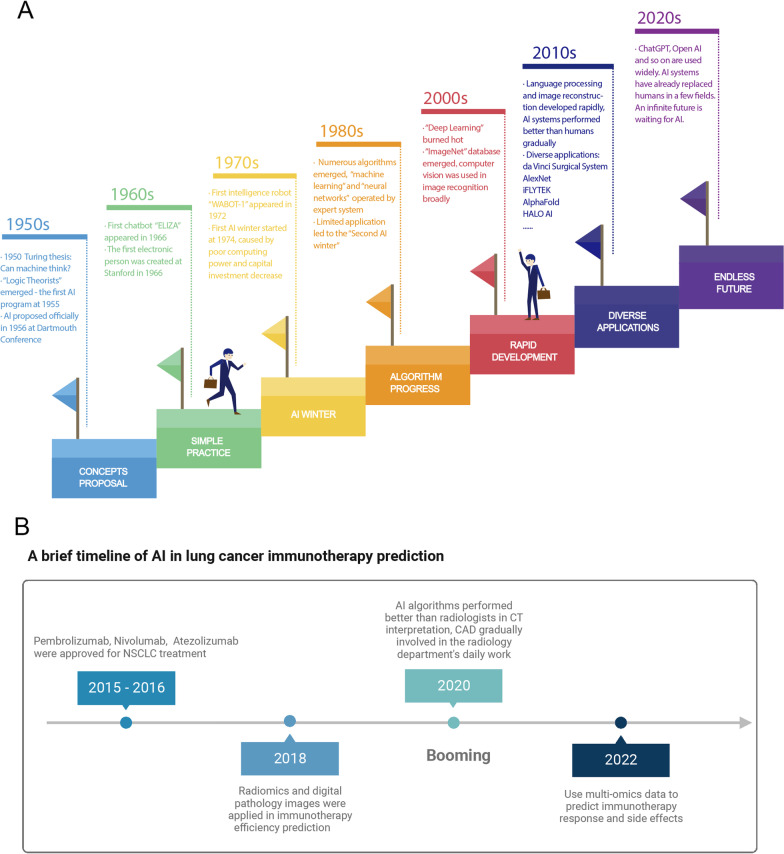
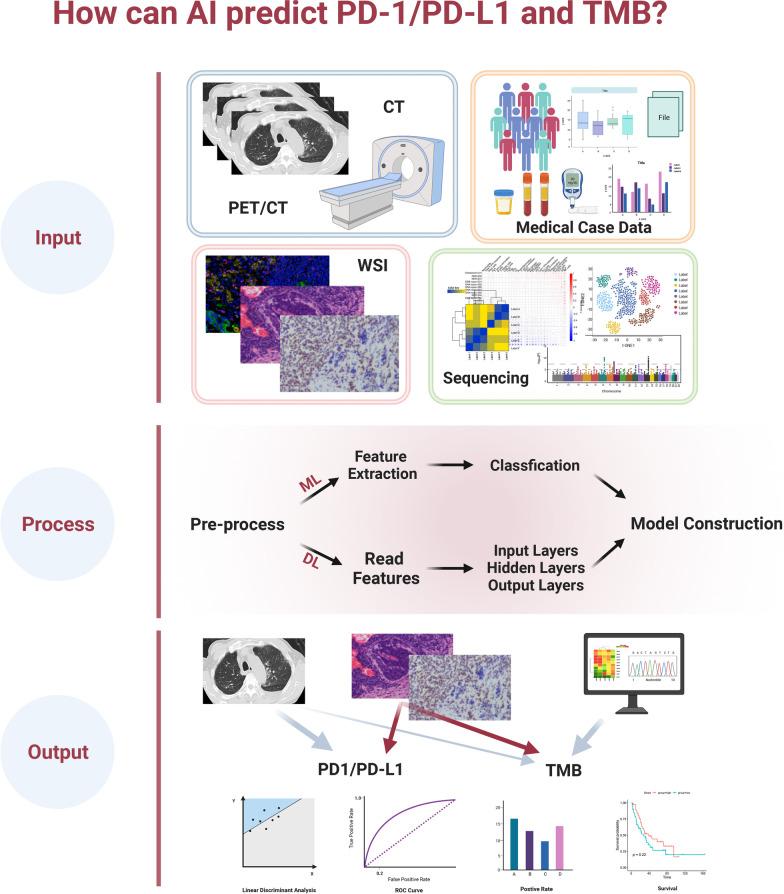
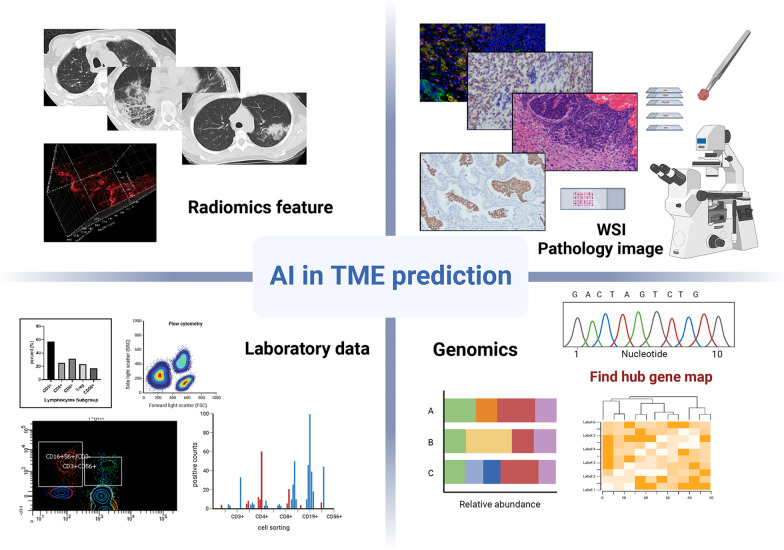
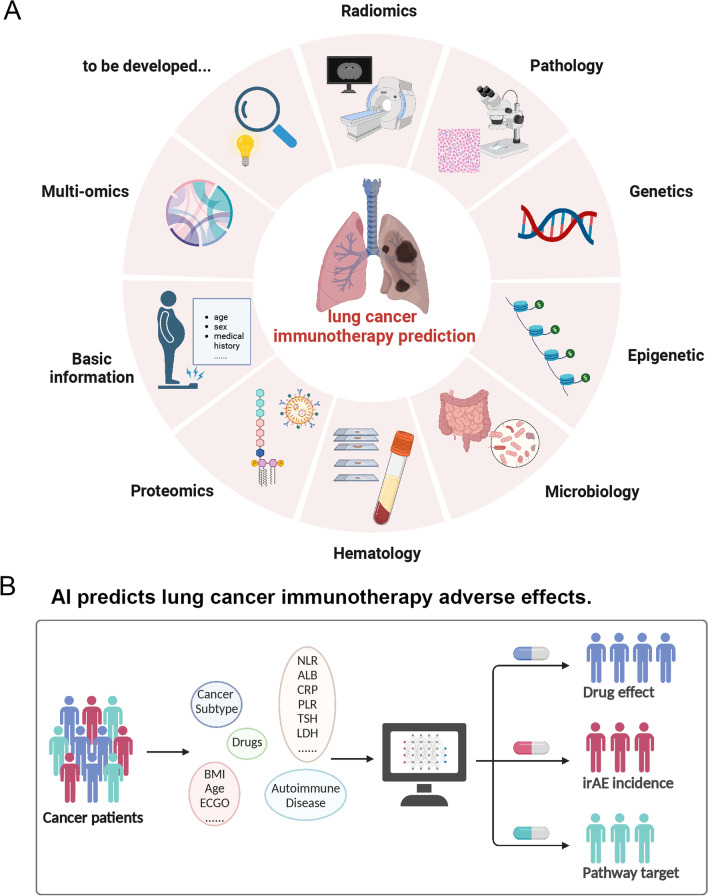
Since the past decades, more lung cancer patients have been experiencing lasting benefits from immunotherapy. It is imperative to accurately and intelligently select appropriate patients for immunotherapy or predict the immunotherapy efficacy. In recent years, machine learning (ML)-based artificial intelligence (AI) was developed in the area of medical-industrial convergence. AI can help model and predict medical information. A growing number of studies have combined radiology, pathology, genomics, proteomics data in order to predict the expression levels of programmed death-ligand 1 (PD-L1), tumor mutation burden (TMB) and tumor microenvironment (TME) in cancer patients or predict the likelihood of immunotherapy benefits and side effects. Finally, with the advancement of AI and ML, it is believed that "digital biopsy" can replace the traditional single assessment method to benefit more cancer patients and help clinical decision-making in the future. In this review, the applications of AI in PD-L1/TMB prediction, TME prediction and lung cancer immunotherapy are discussed.
Overview
The claims and statistics of this paper haven’t been checked yet.
Free: it reads the open-access text and checks the first 5 claims that cite a source we can check. Create a free account to check every claim.
Integrity signals
Registry
Cites
Statistics
Figures
Verification
Claims the paper makes
The claims and statistics of this paper haven’t been checked yet.
Free: it reads the open-access text and checks the first 5 claims that cite a source we can check. Create a free account to check every claim.
Claims other papers make about this one
Each is checked against this paper’s own text: does it say what the citing paper says it does?
The source backs part of the claim, not all of it — or backs it for a different population, condition or comparison.
In the citing paper
“AI agents show significant potential in the realm of personalized treatment by leveraging a variety of patient-specific data, including genetic information, medical history, lifestyle factors, and treatment responses.77,88,89,90,91,92”
From A foundational architecture for AI agents in healthcare (2025) · cites this paper as [88]
Experimental — accuracy not yet measured
Self-check
Percentages, sums and reported differences re-computed from the paper’s own numbers.
The self-check needs the paper’s full text.
Citations
Cites
PD-1 and PD-L1 Immune Checkpoint Blockade to Treat Breast Cancer
Hartkopf, A. D., Taran, F.-A., Wallwiener, M., Walter, C. B., Krämer, B., Grischke, E.-M., & Brucker, S. Y. (2016) · Breast Care · doi:10.1159/000453569 · Cited by 30,845
Siegel, R. L., Miller, K. D., Fuchs, H. E., & Jemal, A. (2022) · CA: A Cancer Journal for Clinicians · doi:10.3322/caac.21708 · Cited by 17,196
The immune contexture in human tumours: impact on clinical outcome
Fridman, W. H., Pagès, F., Sautès-Fridman, C., & Galon, J. (2012) · Nature reviews. Cancer · doi:10.1038/nrc3245 · Cited by 4,981 · cited 1×
“Moreover, there is compelling evidence to suggest that the spatial distribution of lymphocytes in TME (central versus infiltrating margins) is a highly predictive factor of cancer prognosis [36].”
BackgroundAccessories to the Crime: Functions of Cells Recruited to the Tumor Microenvironment
Hanahan, D., & Coussens, L. M. (2012) · Cancer Cell · doi:10.1016/j.ccr.2012.02.022 · Cited by 4,632 · cited 1×
“The immunosuppressive TME in lung cancer has been shown to promote tumorigenesis [34, 35].”
Anaplastic Lymphoma Kinase Inhibition in Non–Small-Cell Lung Cancer
Kwak, E. L., Bang, Y.-J., Camidge, D. R., Shaw, A. T., Solomon, B., Maki, R. G., Ou, S.-H. I., Dezube, B. J., Jänne, P. A., Costa, D. B., et al. (2010) · New England Journal of Medicine · doi:10.1056/nejmoa1006448 · Cited by 4,446
Gooden, M. J. M., de Bock, G. H., Leffers, N., Daemen, T., & Nijman, H. W. (2011) · British Journal of Cancer · doi:10.1038/bjc.2011.189 · Cited by 1,277
Reck, M., Rodríguez-Abreu, D., Robinson, A. G., Hui, R., Csőszi, T., Fülöp, A., Gottfried, M., Peled, N., Tafreshi, A., Cuffe, S., et al. (2021) · Journal of Clinical Oncology · doi:10.1200/jco.21.00174 · Cited by 1,159
Saltz, J., Gupta, R., Hou, L., Kurc, T., Singh, P., Nguyen, V., Samaras, D., Shroyer, K. R., Zhao, T., Batiste, R., et al. (2018) · Cell Reports · doi:10.1016/j.celrep.2018.03.086 · Cited by 1,027
Self-citationHistory of artificial intelligence in medicine
Kaul, V., Enslin, S., & Gross, S. A. (2020) · Gastrointestinal Endoscopy · doi:10.1016/j.gie.2020.06.040 · Cited by 1,011
Dermatologic Reactions to Immune Checkpoint Inhibitors: Skin Toxicities and Immunotherapy
Sibaud, V. (2018) · American Journal of Clinical Dermatology · doi:10.1007/s40257-017-0336-3 · Cited by 626
Cited by
Fahim, Y. A., Hasani, I. W., Kabba, S., & Ragab, W. M. (2025) · European Journal of Medical Research · doi:10.1186/s40001-025-03196-w · Cited by 329
“6 [112].”
Dixon, D., Sattar, H., Moros, N., Kesireddy, S. R., Ahsan, H., Lakkimsetti, M., Fatima, M., Doshi, D., Sadhu, K., & Junaid Hassan, M. (2024) · Cureus · doi:10.7759/cureus.59954 · Cited by 203
Artificial Intelligence and Lung Cancer: Impact on Improving Patient Outcomes
Gandhi, Z., Gurram, P., Amgai, B., Lekkala, S. P., Lokhandwala, A., Manne, S., Mohammed, A. S., Koshiya, H., Dewaswala, N., Desai, R., et al. (2023) · Cancers · doi:10.3390/cancers15215236 · Cited by 165
Parvin, N., Joo, S., Jung, J. H., & Mandal, T. K. (2025) · Nanomaterials · doi:10.3390/nano15120895 · Cited by 154
“…cancer therapeutics, these systems demonstrate a similar value by correlating tumor genomic landscapes with drug sensitivity patterns—as evidenced by recent non-small cell lung cancer research where an AI-guided therapy selection improved outcomes through mutation-specific treatment matching [92].”
Yogesh Kumaran, S., Jeya, J. J., Mahesh, T. R., Bhatia, S., Alzahrani, S., & Alojail, M. (2024) · BMC Medical Imaging · doi:10.1186/s12880-024-01345-x · Cited by 115
“The early detection and accurate classification of these manifestations into benign (non-cancerous) or malignant (cancerous) categories are crucial for effective treatment planning and improved patient outcomes [1, 2].”
BackgroundLeivaditis, V., Maniatopoulos, A. A., Lausberg, H., Mulita, F., Papatriantafyllou, A., Liolis, E., Beltsios, E., Adamou, A., Kontodimopoulos, N., & Dahm, M. (2025) · Journal of Clinical Medicine · doi:10.3390/jcm14082729 · Cited by 76
“…radiomics, deep learning, and artificial neural networks (ANNs), AI improves risk assessment, treatment precision, and outcome prediction for patients undergoing stereotactic body radiation therapy (SBRT), stereotactic ablative radiotherapy (SABR), and postoperative radiotherapy (PORT) [100–104].”
Artificial Intelligence Advancements in Oncology: A Review of Current Trends and Future Directions
Huhulea, E. N., Huang, L., Eng, S., Sumawi, B., Huang, A., Aifuwa, E., Hirani, R., Tiwari, R. K., & Etienne, M. (2025) · Biomedicines · doi:10.3390/biomedicines13040951 · Cited by 74
“Better understanding of these biomarkers is crucial for assessing and predicting immunotherapy responses [107].”
Mandal, K., Barik, G. K., & Santra, M. K. (2025) · Molecular Cancer · doi:10.1186/s12943-025-02400-z · Cited by 78
Enhancing lung cancer diagnosis with data fusion and mobile edge computing using DenseNet and CNN
Zhang, C., Aamir, M., Guan, Y., Al‐Razgan, M., Awwad, E. M., Ullah, R., Bhatti, U. A., & Ghadi, Y. Y. (2024) · Journal of Cloud Computing Advances Systems and Applications · doi:10.1186/s13677-024-00597-w · Cited by 68
Olawade, D. B., David-Olawade, A. C., Adereni, T., Egbon, E., Teke, J., & Boussios, S. (2025) · Diseases · doi:10.3390/diseases13010024 · Cited by 69
Xu, S., Wang, Q., & Ma, W. (2024) · Cytokine & Growth Factor Reviews · doi:10.1016/j.cytogfr.2024.02.003 · Cited by 56
Immunotherapy in breast cancer: current landscape and emerging trends
Ran, R., Chen, X., Yang, J., & Xu, B. (2025) · Experimental Hematology and Oncology · doi:10.1186/s40164-025-00667-y · Cited by 68
A foundational architecture for AI agents in healthcare
Liu, F., Niu, Y., Zhang, Q., Wang, K., Dong, Z., Wong, I. N., Cheng, L., Li, T., Duan, L., Li, K., et al. (2025) · Cell Reports Medicine · doi:10.1016/j.xcrm.2025.102374 · Cited by 41
“87 88–92 With the ability to analyze and integrate this complex data, AI can assist in tailoring individualized treatment plans that optimize therapeutic outcomes.”
Zhang, P., Wu, X., Wang, D., Zhang, M., Zhang, B., & Zhang, Z. (2024) · Environmental Toxicology · doi:10.1002/tox.24230 · Cited by 37
“42,43 Shu et al. employed machine learning to identify 27 immune cell marker genes associated with the prognosis of (LUAD.”
Chen, S., Deng, T., Yang, Q., Jin, L., Shen, J., Xu, L., Tang, J., Zhang, X., Salvador, J. T., & Ma, J. (2025) · EClinicalMedicine · doi:10.1016/j.eclinm.2025.103386 · Cited by 56
“17 To address the ‘black-box’ nature of ML models, the Shapley Additive Explanation (SHAP) method offers a unified approach for interpreting ML outputs, enabling the visualisation of individual variable contributions in predictive models.”
Peng, J., Zou, D., Zhang, X., Ma, H., Han, L., & Yao, B. (2024) · Journal of Translational Medicine · doi:10.1186/s12967-024-04904-6 · Cited by 45
“Meanwhile, a growing number of studies have combined genomics, radiology, proteomics data, and pathology to estimate PD-L1 expression levels, TMB, and tumor microenvironment (TME) or predict the response to immunotherapy and side effects in patients with cancer [18–20].”
BackgroundBiomarkers predicting the efficacy of immune checkpoint inhibitors in hepatocellular carcinoma
Qin, R., Jin, T., & Xu, F. (2023) · Frontiers in Immunology · doi:10.3389/fimmu.2023.1326097 · Cited by 32
Artificial intelligence-guided design of lipid nanoparticles for mRNA delivery
Su, K., Qiu, J., Xu, T., & Liu, S. (2025) · Acta Pharmaceutica Sinica B · doi:10.1016/j.apsb.2025.11.029 · Cited by 49
“With its powerful data extraction and data analysis capabilities, AI has been applied in the field of immunotherapy, enabling the analysis of parameters affecting the immune response 38,163,164 .”
Implantable Biomaterials for Cancer Immunotherapies
Печникова, Н. А., Aggeli, A., Latypova, A., Iaremenko, A. V., Domvri, K., Zubarev, I. V., Chuang, L. I. U., & Yaremenko, A. V. (2024) · Advanced Functional Materials · doi:10.1002/adfm.202416813 · Cited by 28
Nanomaterial-assisted delivery of CpG oligodeoxynucleotides for boosting cancer immunotherapy
Zhang, Z., Yu, L., Liu, W., & Huang, Y. (2024) · Journal of Controlled Release · doi:10.1016/j.jconrel.2024.09.044 · Cited by 21
Toward Interpretable Hybrid AI: Integrating Knowledge Graphs and Symbolic Reasoning in Medicine
Chudasama, Y., Huang, H., Purohit, D., & Vidal, M.-E. (2025) · IEEE Access · doi:10.1109/access.2025.3529133 · Cited by 33
“The implementation of effective AI models to address predictive problems in medicine requires the satisfaction of several key requirements [3], [33], [45]: • Interpretability : Oncologists need to understand the rationale behind AI-driven recommendations.”
Artificial intelligence for radiopharmaceutical and molecular imaging
Tao, J., Liang, L., Hao, S., Chen, Y., Yang, Z., Cai, Y., & Zhu, H. (2025) · Acta Pharmaceutica Sinica B · doi:10.1016/j.apsb.2025.09.039 · Cited by 25
“Due to cost and technical issues of pathological image scanners and analysis software, along with the lack of unified standards and expert consensus 140 , AI analysis of pathological images hasn’t been widely used clinically, suggesting that using AI to replace pathologists for diagnosis needs…”
Current diagnosis and treatment of salivary gland-type tumors of the lung
Horio, Y., Kuroda, H., Masago, K., Matsushita, H., Sasaki, E., & Fujiwara, Y. (2023) · Japanese Journal of Clinical Oncology · doi:10.1093/jjco/hyad160 · Cited by 18
A Thorough Review of the Clinical Applications of Artificial Intelligence in Lung Cancer
Kotoulas, S., Spyratos, D., Porpodis, Κ., Domvri, K., Boutou, A., Kaimakamis, E., Mouratidou, C., Alevroudis, I., Dourliou, V., Tsakiri, K., et al. (2025) · Cancers · doi:10.3390/cancers17050882 · Cited by 20
Wang, R., Liu, Q., You, W., Wang, H., & Chen, Y. (2024) · Briefings in Bioinformatics · doi:10.1093/bib/bbae686 · Cited by 18
A Novel Machine and Deep Learning–Based Ensemble Techniques for Automatic Lung Cancer Detection
Ansari, M. M., Kumar, S., Chola, C., Heyat, M. B. B., Akhtar, F., Hayat, M. A. B., Sayeed, E., Parveen, S., Abbasi, R., & Pomary, D. (2025) · BioMed Research International · doi:10.1155/bmri/6666688 · Cited by 23
Wang, J.-W., Meng, M., Dai, M.-W., Liang, P., & Hou, J. (2025) · Frontiers in Immunology · doi:10.3389/fimmu.2025.1630781 · Cited by 14
Sinha, T., Khan, A., Awan, M., Bokhari, S. F. H., Ali, K., Amir, M., Jadhav, A. N., Bakht, D., Puli, S. T., & Burhanuddin, M. (2024) · Cureus · doi:10.7759/cureus.61220 · Cited by 24
“In the context of NSCLC immunotherapy, AI and ML algorithms can be trained on various data sources, including genomic, transcriptomic, radiologic, and clinical data, to develop predictive models [7].”
A Holistic Approach to Implementing Artificial Intelligence in Lung Cancer
HaghighiKian, S. M., Shirinzadeh-Dastgiri, A., Vakili-Ojarood, M., Naseri, A., Barahman, M., Saberi, A., Rahmani, A., Shiri, A., Masoudi, A., Aghasipour, M., et al. (2024) · Indian Journal of Surgical Oncology · doi:10.1007/s13193-024-02079-6 · Cited by 22
“Another study used a new ML algorithm to forecast responses to different ICI treatments in lung cancer patients based on existing clinical data, yielding promising results [170].”
Artificial intelligence applications in computed tomography in gastric cancer: a narrative review
Ma, T., Wang, H., & Ye, Z. (2023) · Translational Cancer Research · doi:10.21037/tcr-23-201 · Cited by 14
“However, the consistency and accuracy of image interpretation vary largely, which may not improve with training and experience (9).”
BackgroundMethodSelf-citationMolero, A., Hernández, S., Alonso, M., Peressini, M., Curto, D., López‐Ríos, F., & Conde, E. (2024) · Journal of Clinical Pathology · doi:10.1136/jcp-2024-209766 · Cited by 15
Hofman, P. M., Ourailidis, I., Romanovsky, E., Ilié, M., Budczies, J., & Stenzinger, A. (2025) · Lung Cancer · doi:10.1016/j.lungcan.2025.108110 · Cited by 12
Omero, F., Speranza, D., Murdaca, G., Cavaleri, M., Marafioti, M., Cianci, V., Berretta, M., Casciaro, M., Gangemi, S., & Santarpía, M. (2025) · Biomolecules · doi:10.3390/biom15040491 · Cited by 15
“Deep learning (DL) is a powerful subtype of ML that uses artificial neural networks [152].”
Jardali, G., Lawrance, L., Dawi, L., Dupont, J., Gautier, O., Kind, M., Ammari, S., Hadchiti, J., Choucair, A., Bayle, A., et al. (2025) · Diagnostic and Interventional Imaging · doi:10.1016/j.diii.2025.06.002 · Cited by 13
Li, Q., Sun, Y., Zhai, K., Geng, B., Dong, Z., Ji, L., Chen, H., & Cui, Y. (2024) · Physiological Genomics · doi:10.1152/physiolgenomics.00032.2024 · Cited by 11
Li, Y., Cai, Y., Ji, L., Wang, B., Shi, D., & Li, X. (2024) · PeerJ · doi:10.7717/peerj.17746 · Cited by 12
“AI can help model and predict medical information ( Gao et al., 2023 ).”
BackgroundNi, J., Chen, H., Lu, Y., Guo, T., Zhou, Y., Jiang, S., Ye, R., Yang, X., Chu, L., Chu, X., et al. (2024) · International Journal of Radiation Oncology*Biology*Physics · doi:10.1016/j.ijrobp.2024.06.010 · Cited by 12
Prognostic Indicators for Precision Treatment of Non-Small Cell Lung Carcinoma
Ghosh, D. D., McDonald, H. G., Dutta, R., Krishnan, K., Thilakan, J., Paul, M. K., Arya, N., Rao, M., & Rangnekar, V. M. (2024) · Cells · doi:10.3390/cells13211785 · Cited by 13
“AI has the potential to play a substantial role in comprehending and tackling this resistance by using diverse data-specific methodologies, such as genomics, radiomics, proteomics, and histopathological features [131,132].”
BackgroundBhargav, A. L., & Ashokkumar, C. (2024) · International Conference on Automation, Computing and Renewable Systems (ICACRS) · doi:10.1109/icacrs62842.2024.10841728 · Cited by 10
Machine learning in oncological pharmacogenomics: advancing personalized chemotherapy
Avcı, Ç. B., Bağca, B. G., Shademan, B., Takanlou, L. S., Takanlou, M. S., & Nourazarian, A. (2024) · Functional & Integrative Genomics · doi:10.1007/s10142-024-01462-4 · Cited by 16
“ML is essential in cancer treatment, as traditional methods are often limited by variability in tumour biology and patient responses to chemotherapy (Gao et al. 2023 ).”
From darkness to light: Targeting CAFs as a new potential strategy for cancer treatment
Tian, H., Wang, W., Liang, S., Ding, J., & Hua, D. (2024) · International Immunopharmacology · doi:10.1016/j.intimp.2024.113482 · Cited by 11
Song, Z., Wang, Y., Zhu, M., Zhang, P., Li, Z., Geng, X., Cao, X., Zheng, J., Tang, J., & Chen, L. (2025) · Journal of Translational Medicine · doi:10.1186/s12967-025-06489-0 · Cited by 14
“…specifically immune checkpoint blockade (ICB) specifically targeting programmed cell death protein 1 (PD-1) and cytotoxic T-lymphocyte associated antigen 4 (CTLA-4) pathways has emerged prominently, which has revolutionized cancer treatment, bringing hope to advanced-stage LUAD patients [6, 7].”
Just how transformative will AI/ML be for immuno-oncology?
Bottomly, D., & McWeeney, S. K. (2024) · Journal for ImmunoTherapy of Cancer · doi:10.1136/jitc-2023-007841 · Cited by 9
The expanding Pandora’s toolbox of CD8+T cell: from transcriptional control to metabolic firing
Wu, J., Lü, Z., Zhao, H. C., Lu, M., Gao, Q. S., Che, N., Wang, J., & Ma, T. (2023) · Journal of Translational Medicine · doi:10.1186/s12967-023-04775-3 · Cited by 12
“Moreover, integrating multiple cancer model data and advanced computational analysis, including artificial intelligence, has the potential to adopt a comprehensive system level approach about analyzing and integrating all the complexities of TME to identify key nodes [145].”
BackgroundSelf-citationA targeted literature review on the impact of tailored interventions on patient outcomes in oncology
Ferrier, G., Filipović, A., Wasan, H. S., di Pietro, A., Mittal, D., Kamath, G. R., Kharawala, S., & Mehmud, F. (2025) · Oncogene · doi:10.1038/s41388-025-03424-x · Cited by 13
Mitra, J., Ghose, S., & Thawani, R. (2025) · Cancers · doi:10.3390/cancers17162679 · Cited by 14
“Overall, we observed RF classification models had improved accuracy than Bayesian classification as RF models are efficient in handling non-linear relationships between features and target variable [52], while Bayesian classifiers assume feature independence.”
Liu, J., Fu, R., Yang, S., Li, Z., Huang, X., Wang, Q., Shi, Z., & Wei, S. (2025) · Frontiers in Immunology · doi:10.3389/fimmu.2025.1676112 · Cited by 17
Arshad, M. F., Chowdhury, A. T., Sharif, Z., Islam, M. S. B., Sumon, M. S. I., Mohammedkasim, A., Chowdhury, M. E. H., & Pedersen, S. (2025) · Cancers · doi:10.3390/cancers17243985 · Cited by 17
“These themes repeat in malignancy-risk classification, in survival modeling, and in surrogate outcome settings around the peri-operative pathway [33,34].”
Tumor-on-chip’s alliance with molecular pathology against metastatic disease
Carlo, E. D. (2026) · Journal of Biomedical Science · doi:10.1186/s12929-025-01209-8 · Cited by 11
“ML can predict experimental outcomes [107], reducing the need for trial-and-error approaches; (c) drug discovery and screening: AI can suggest compounds likely to be effective against specific tumor types based on data provided by TOC and bioprinted tumors.”
Zhu, R., Yu, X., Zhang, Y., Zhang, J., Li, S., Li, D., & Ma, Y. (2026) · Chemical Engineering Journal · doi:10.1016/j.cej.2026.175025 · Cited by 9
Ng, A. M., MacKinnon, K. M., Cook, A., D’Alonzo, R. A., Rowshanfarzad, P., Nowak, A. K., Gill, S., & Ebert, M. A. (2024) · Physical and Engineering Sciences in Medicine · doi:10.1007/s13246-024-01458-1 · Cited by 7
Cui, S., Liu, Q., Wang, H., Li, H., Li, W., Li, C., Bi, L., Mu, Y., Guo, W., Yao, J., et al. (2025) · Frontiers in Oncology · doi:10.3389/fonc.2025.1543020 · Cited by 8
Obeagu, E. I. (2025) · Annals of Medicine and Surgery · doi:10.1097/ms9.0000000000003719 · Cited by 7
“Additionally, neoantigen-based therapies, such as neoantigen-directed T cell therapies, are being explored as next-generation immunotherapies [ 84 , 85 ] .”
Muhammad, S., Zhai, J., Zhong, W., Siddiqui, H., Wang, J., & Zhao, Y. (2026) · Critical Reviews in Oncology/Hematology · doi:10.1016/j.critrevonc.2026.105291 · Cited by 6
LINC01559 promotes lung adenocarcinoma metastasis by disrupting the ubiquitination of vimentin
Feng, H., Xu, D., Jiang, C., Chen, Y., Wang, J., Ren, Z., Li, X., Zhang, X. D., & Cang, S. (2024) · Biomarker Research · doi:10.1186/s40364-024-00571-3 · Cited by 10
“Lung cancer is one of the most frequently diagnosed cancers and the leading cause of cancer-related death worldwide [1–3], with lung adenocarcinoma (LUAD) representing the most common subtype of all diagnoses [4, 5].”
BackgroundPokhriyal, S. C., Shukla, A., Gupta, U., Al-Ghuraibawi, M. M. H., Yadav, R., & Panigrahi, K. (2024) · Cureus · doi:10.7759/cureus.61012 · Cited by 6
The Application of Artificial Intelligence in Lung Cancer Research
Lei, F. (2024) · Cancer Control · doi:10.1177/10732748241297373 · Cited by 7
Hy_PSO: Hybrid Algorithm for Lung Cancer Diagnosis and Prognosis
Sachi, S., Jain, J., Jain, A., Patel, U. K., Bhatnagar, A., & Jain, A. (2024) · International Conference on Smart Devices (ICSD) · doi:10.1109/icsd60021.2024.10751524 · Cited by 21
“In the medical sector, NLP (Natural Language Processing) has found application in diverse scenarios, such as online AI consultations, extracting information from electronic medical records, and automatically generating case reports [8].”
Li, D., Liu, X., Gao, W., Zhao, W., Ji, S., Wang, S., Yang, J., Li, D., Chang, Z., Chen, Y., et al. (2025) · Cancer Research · doi:10.1158/0008-5472.can-24-2464 · Cited by 9
A narrative review on perioperative systemic therapy in non-small cell lung cancer
Hsu, R. C., Arter, Z., Poei, D., & Benjamin, D. J. (2024) · Exploration of Targeted Anti-tumor Therapy · doi:10.37349/etat.2024.00256 · Cited by 6
Tang, K., Han, L., Li, J., & Li, K. (2025) · npj Precision Oncology · doi:10.1038/s41698-025-01213-z · Cited by 7
Artificial Intelligence in Nursing Education: A Bibliometric Analysis
Yu, X., Wu, W., Ni, J., & Lin, Z. (2026) · Nursing Research and Practice · doi:10.1155/nrp/1538554 · Cited by 5
Nistala, S., Niyonzima, J., Chahal, R., Hasan, A., Ho, E., Janssens, A., Wheeler, L. W., Nichols, M., & Zeeshan, S. (2026) · BMC Medical Research Methodology · doi:10.1186/s12874-026-02821-4 · Cited by 4
“AI and ML have emerged as transformative tools in this context, facilitating the integration and interpretation of multi-dimensional data sets, including genomics, proteomics, advanced imaging, and real-world clinical data [3, 4].”
Cheng, H., Shao, Y., Zhang, A., Li, C., Li, X., Fu, Y., & Ming, J. (2025) · Scientific Reports · doi:10.1038/s41598-025-01868-5 · Cited by 7
“Studies have shown that the immune microenvironment plays a central role in the occurrence and development of primary lung cancer and affects the treatment and prognosis of lung cancer 29 .”
Barioni, C. T. S., Wandresen, R. P. D. B., Pereira, L. F., Coimbra, A. F., Kubo, B. B. D. A. O., & da Cunha, R. C. (2024) · Revista Brasileira de Cancerologia · doi:10.32635/2176-9745.rbc.2024v70n2.4692 · Cited by 8
“For example, a study reviewed the applications of AI in predicting PD-L1/TMB, TME, and immunotherapy in lung cancer and concluded that this tool shows great promise in the predictive application of cancer immunotherapy through data combination, disassembly, and analysis 21 .”
BackgroundDaye, D., Parker, R., Tripathi, S., Cox, M., Orama, S. B., Valentin, L. I., Bridge, C. P., & Uppot, R. N. (2024) · Cancers · doi:10.3390/cancers16111975 · Cited by 5
“These models use data from imaging studies, clinical parameters, and molecular markers to predict which patients are likely to respond to treatment [30–35].”
MethodHu, S., Duan, B., Xu, L. X., Huang, D., Liu, X., Gou, S., Zhao, X., Hou, J., Tan, S., He, L., et al. (2024) · Endoscopy International Open · doi:10.1055/a-2422-9214 · Cited by 4
Li, F., Zhao, M., Cao, L., & Qie, S. (2025) · Frontiers in Oncology · doi:10.3389/fonc.2025.1633635 · Cited by 3
Liu, N., Han, G., Gu, Q., Zhang, Y., & Chen, M. M. (2026) · Cell Death and Disease · doi:10.1038/s41419-026-08769-z · Cited by 5
Xu, X., Liu, B., Su, Y. R., Dong, P., Wang, S., Deng, J., Lin, Z., Huang, L., Li, S., Gu, J., et al. (2024) · Journal of Thoracic Disease · doi:10.21037/jtd-23-1927 · Cited by 3
Quantum and AI-Enhanced Digital Twin Systems
Braga, D. M., & Rawal, B. S. (2024) · International Conference on Computing, Communication and Networking Technologies (ICCCNT) · doi:10.1109/icccnt61001.2024.10724642 · Cited by 4
Chadha, S., Mukherjee, S., & Sanyal, S. (2025) · Seminars in Oncology · doi:10.1016/j.seminoncol.2025.152349 · Cited by 8
Leveraging Ensembles of Pre-trained CNNs for Improved Lung Cancer Detection and Classification
Bhulakshmi, D., & Rajput, D. S. (2025) · Procedia Computer Science · doi:10.1016/j.procs.2025.03.188 · Cited by 3
Xie, Y., Xiang, X., Fan, M., Li, H., Du, L., Gao, W., Chen, T., Shi, Z., Yu, X., & Liu, F. (2025) · International Journal of Medical Informatics · doi:10.1016/j.ijmedinf.2025.106025 · Cited by 4
Wu, Y., Wang, X., Yang, L., Kang, S., Yan, G., Han, Y., Fang, H., & Sun, H. (2023) · Biomedicine & Pharmacotherapy · doi:10.1016/j.biopha.2023.115722 · Cited by 3
Self-citationEditorial: Application of multi-omics analysis in thoracic cancer immunotherapy
Xie, J., Cai, T., Szöllősi, A. G., Yuan, L., & Tang, H. (2024) · Frontiers in Immunology · doi:10.3389/fimmu.2024.1508723 · Cited by 3
The potential of artificial intelligence and machine learning in precision oncology
Alzaabi, A. A., Bouchareb, Y., & Mula‐Hussain, L. (2024) · Elsevier eBooks · doi:10.1016/b978-0-443-21598-8.00003-8 · Cited by 2
Hu, Z., Zhou, Y., Xie, L., Zhang, W., & Rao, H. (2025) · Clinical and Experimental Medicine · doi:10.1007/s10238-025-01925-3 · Cited by 2
“Furthermore, integrating scRNA-seq with bulk transcriptomic data makes it possible to construct more precise and interpretable prognostic tools in oncology [35, 36].”
Application of artificial intelligence in head and neck squamous cell carcinoma
Wang, P., Tian, J., Zheng, G., Chen, Y., & Ren, X. (2026) · Annals of Medicine · doi:10.1080/07853890.2026.2620191 · Cited by 4
“Moreover, AI can standardize assessments across institutions, mitigating the subjective variability inherent in clinician interpretations [25].”
Sivaprakash, P., Subhashini, K., Shajin, F. H., & Rajesh, P. (2026) · Expert Systems with Applications · doi:10.1016/j.eswa.2026.132007 · Cited by 2
A visual analysis of the research dynamics of biomarkers for lung cancer screening
Zhu, H., Li, B., Kong, R., Yang, J., Guo, Z., & Yin, J. (2026) · Clinical Epigenetics · doi:10.1186/s13148-026-02084-2 · Cited by 2
“In recent years, the rapid development of multi-omics integration, liquid biopsy, and AI-assisted diagnosis has significantly advanced the field towards precision medicine [35–37].”
Harnessing artificial intelligence for transpathology advancements
Liu, Z., Dong, S., Zhang, L., & Shi, K. (2024) · Elsevier eBooks · doi:10.1016/b978-0-323-95223-1.00022-9 · Cited by 2
Is Cancer Our Equal or Our Better? Artificial Intelligence in Cancer Drug Discovery
Sanmukh, S. G., Krzykawska-Serda, M., Dragan, P., Baron, S., Lobaccaro, J. A., & Latek, D. (2024) · Interdisciplinary cancer research · doi:10.1007/16833_2024_326 · Cited by 2
Shuang, Z., Xiong, X., Cheng, Y., & Yu, M. (2024) · The Clinical Respiratory Journal · doi:10.1111/crj.70044 · Cited by 2
Chitta, S., Yandrapalli, V. K., & Sharma, S. (2025) · Lecture notes in networks and systems · doi:10.1007/978-981-96-3381-4_12 · Cited by 2
Henriksen, M. B., Hilberg, O., Juul, C., Thomsen, R. H., Wen, S. W. C., Borg, M. H., Fanø, A., Lanyado, A., & Menuhin-Gruman, I. (2025) · Clinical Lung Cancer · doi:10.1016/j.cllc.2025.05.017 · Cited by 2
Artificial Intelligence in Immunology: Predictive Models for Immune System Disorders
Basha, S. K. A., & Hanirex, D. K. (2024) · Global Conference on Communications and Information Technologies (GCCIT) · doi:10.1109/gccit63234.2024.10862665 · Cited by 1
“The present article discusses the use of AI in lung cancer immunotherapy, which is TME forecasting, and PD-L1/TMB prognosis [15].”
Decoding the tumor microenvironment: insights into immunotherapy and beyond
Xu, W., Lu, J., Zhang, H., & Ye, D. (2025) · Journal of the National Cancer Center · doi:10.1016/j.jncc.2025.04.003 · Cited by 8
Zhang, P., Chen, W., Chen, K., Ye, Y., & Wu, W. (2025) · Discover Oncology · doi:10.1007/s12672-025-03114-w · Cited by 1
“Gao et al. demonstrated that immune checkpoint inhibitors, such as the selective expression of PD-L1, exhibit dominant immunosuppressive activity in the TME and can restore their anti-tumor activity [27].”
A Data-Centric Approach to Detect Lung Cancer Using Diverse Machine Learning Algorithms
Amin, I., Al-Amain, & Uddin, K. M. M. (2025) · Lecture notes in networks and systems · doi:10.1007/978-981-96-2721-9_8 · Cited by 1
Artificial Intelligence and Cancer Immunotherapy
Shah, A., Bhat, A. A., Bhat, M. R., Assad, A., & Macha, M. A. (2025) · Springer eBooks · doi:10.1007/978-981-96-8176-1_16 · Cited by 1
Predicting Immunotherapy Outcomes in NSCLC Using RNA and Pathology from Multicenter Clinical Trials
Wang, Z., Fang, Y., Huang, X., Ma, G., Mao, Q., Lu, X., Rong, G., Yu, Y., Wang, Y., Huang, Z., et al. (2025) · Advanced Science · doi:10.1002/advs.202502037 · Cited by 1
Unlocking the Immune System: Advances in Next-generation Immunotherapy for Lung Cancer
Choudhary, F., Safdar, A., Abdin, M. Z., & Farooqi, H. (2025) · Mini-Reviews in Medicinal Chemistry · doi:10.2174/0113895575415429251007093531 · Cited by 1
Lung Cancer in the New Era: Trends, Innovations, and Future Recommendations
Ansari, M. M., Kumar, S., Heyat, M. B. B., Tariq, U., Akhtar, F., Parveen, S., Saeed, S. H., & Li, Y. (2026) · Wiley Interdisciplinary Reviews Data Mining and Knowledge Discovery · doi:10.1002/widm.70061 · Cited by 1
Recent progresses of AI-assisted SERS in biomedicine
Yang, S., Ma, Y., Chen, W. J., & Zhang, J. (2026) · Applied Spectroscopy Reviews · doi:10.1080/05704928.2026.2668387 · Cited by 2
Kumari, R., Kushwaha, J. M., Sharma, V. K., Shrivastav, D., & Singh, S. (2026) · Critical Reviews in Oncology/Hematology · doi:10.1016/j.critrevonc.2026.105436 · Cited by 2
Molecular Profiling and Data Analysis of Lung Adenocarcinoma
Das, M., & Kumari, U. (2023) · International Journal for Research in Applied Science and Engineering Technology · doi:10.22214/ijraset.2023.55657 · Cited by 1
Application of artificial intelligence in immuno-oncology
Monfort‐Lanzas, P., Gronauer, R., Balaz, M., Floriani, G., & Hackl, H. (2024) · Elsevier eBooks · doi:10.1016/b978-0-443-14064-8.00017-5 · Cited by 1
Aguilar-Blas, N., Chairez, I., & Cabrera, A. (2024) · Applied Soft Computing · doi:10.1016/j.asoc.2024.112368 · Cited by 1
Promptable segmentation of CT lung lesions based on improved U-Net and Segment Anything model (SAM)
Yan, W., Xu, Y., & Yan, S. (2025) · Journal of X-Ray Science and Technology · doi:10.1177/08953996251333364 · Cited by 1
Metadata
- Authors
- Gao, Q., Yang, L., Lu, M., Jin, R., Ye, H., & Ma, T.
- Affiliations
- Capital Medical University (CN)
- Corresponding author
- Ma, Teng
- Venue
- Journal of Hematology & Oncology
- Published
- 2023-05-24
- Volume
- 16
- Issue
- 1
- Pages
- 55-55
- ISSN
- 1756-8722 (ISSN-L)
- PMC
- PMC10207827
- OpenAlex
- W4378172829
- Cited by
- 148
- References
- 82
- Citations by year
- 2026: 37 · 2025: 58 · 2024: 45 · 2023: 8
- FWCI
- 4.79
- Type
- journal article
- Language
- en
- Open access
- gold
- doi.org
- Licence
- cc-by
- creativecommons.org/licenses/by/4.0 (tdm)
- creativecommons.org/licenses/by/4.0 (vor)
- Locations
- Journal of Hematology & Oncology (publishedVersion, cc-by)
- PubMed Central (publishedVersion, cc-by)
- PubMed (publishedVersion)
- DOAJ (DOAJ: Directory of Open Access Journals) (submittedVersion, cc-by-sa)
- Funders
- Beijing Xisike Clinical Oncology Research Foundation
- Topics
- Health Sciences › Medicine › Oncology › Cancer Immunotherapy and Biomarkers
- Health Sciences › Medicine › Radiology, Nuclear Medicine and Imaging › Radiomics and Machine Learning in Medical Imaging
- Physical Sciences › Computer Science › Artificial Intelligence › AI in cancer detection
- Keywords
- lung cancer, cancer immunotherapy, artificial intelligence, machine learning, tumor mutational burden, tumor microenvironment, immunotherapy response prediction, immunotherapy side effects, multi-omics integration
- MeSH terms
- Machine Learning, Artificial Intelligence, Humans, Immunotherapy, Lung Neoplasms, Tumor Microenvironment, B7-H1 Antigen
About these checks
Registry, retraction, Cites and statistics results are computed, not judged, with one exception: a printed reference that no index lists is read once by a model before it counts as a citation error. Claims are extracted by a model and kept only when their quote appears verbatim in the text; each cited source is then checked, with a model’s help, for whether it says what the claim relies on. Those verdicts can be wrong — read the claim’s quote and the cited source before relying on one.
Statistics and arithmetic are recomputed, not judged.
Confidence bands are shown only for fields calibrated on our annotated test set. None is calibrated yet, so no band is shown.
What counts as a claim ›How we measure confidence ›How we check this ›
Are you an author, or do you see a problem with this page? Request a review
Data sources
Bibliographic data: Semantic Scholar, OpenAlex, Crossref.
Contains information from the Semantic Scholar Academic Graph Datasets, made available under the ODC Attribution License (ODC-BY 1.0).
Semantic Scholar’s data is described in: Kinney, R., et al. (2023). The Semantic Scholar Open Data Platform. arXiv:2301.10140.
