

Y-box binding protein 1 enhances DNA topoisomerase 1 activity and sensitivity to camptothecin via direct interaction
Open accessThe DOI matches its Crossref record; 59 of the 59 references it cites were found in a registry or an index.
Abstract
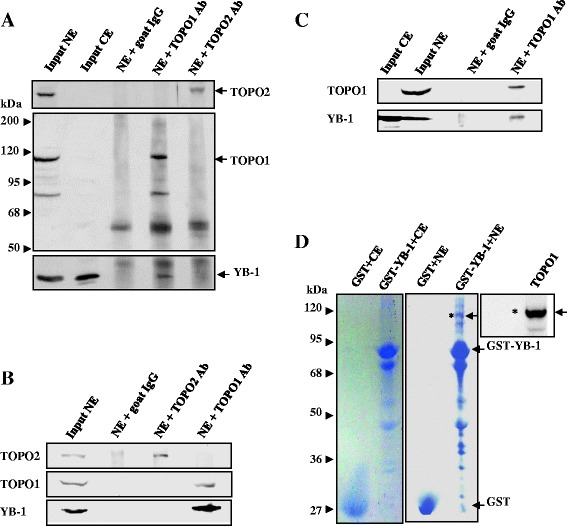
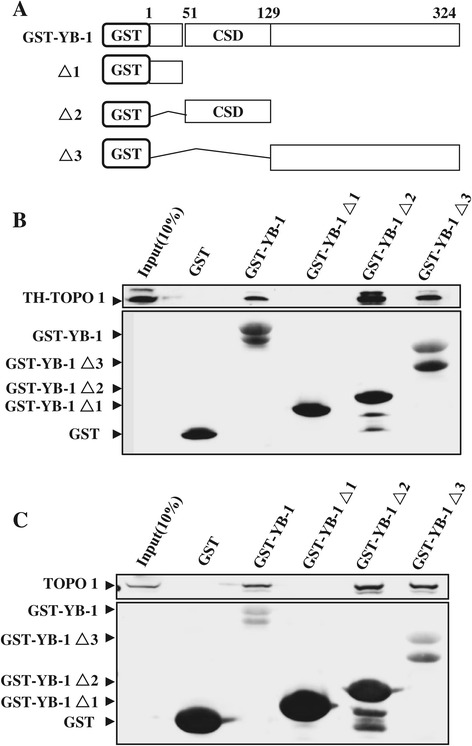
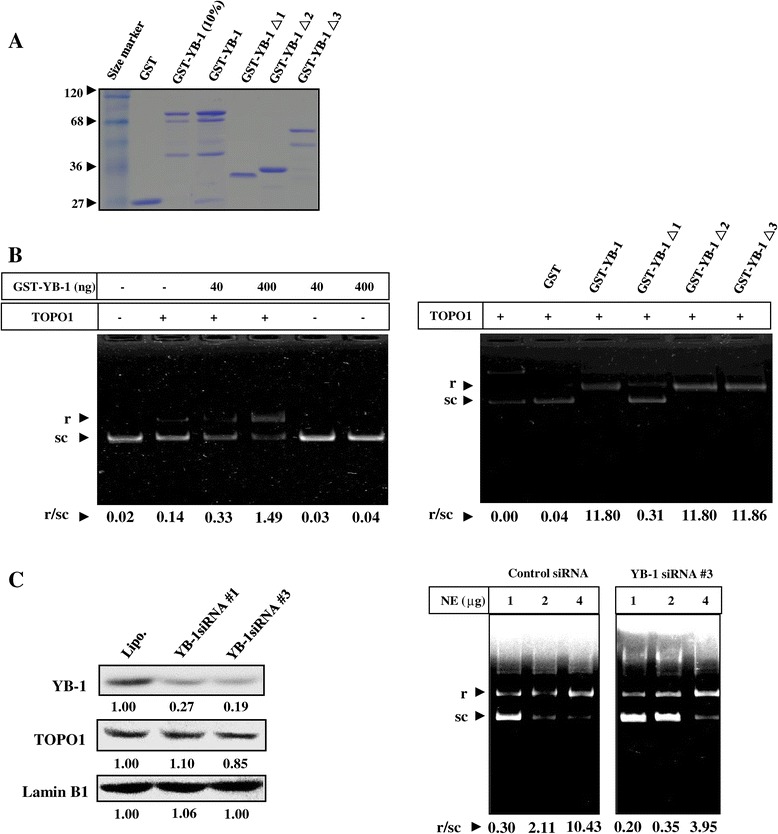
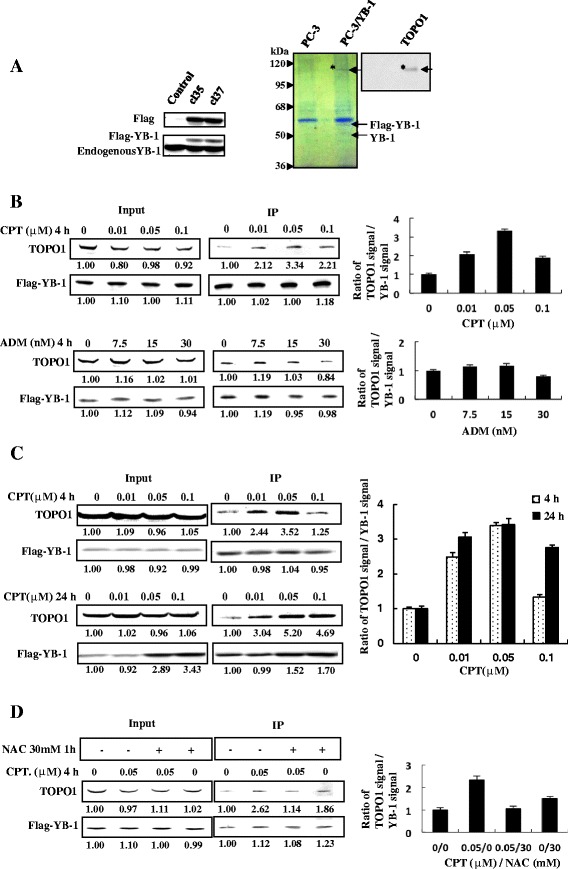
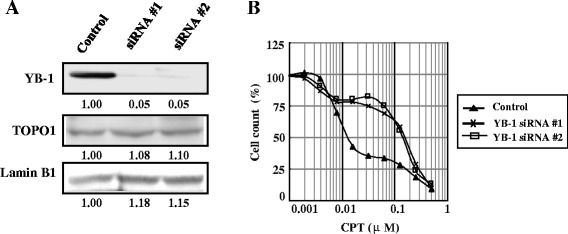
BACKGROUND: The Y-box binding protein 1 (YB-1) possesses pleiotropic functions through its interactions with various cellular proteins, and its high expression levels make it a potential useful prognostic biomarker for cancer cells. Eukaryotic DNA topoisomerases, such as DNA topoisomerase 1 (TOPO1) and DNA topoisomerase 2 (TOPO2), are the essential DNA metabolism regulators that usually overexpressed in cancer cells, and multiple proteins have been reported to regulate the enzyme activity and the clinical efficacy of their inhibitors. The present study unraveled the interaction of YB-1 with TOPO1, and further investigated the related function and potential mechanisms during the interaction. METHODS: The direct association of TOPO1 with specific domain of YB-1 was explored by co-immunoprecipitation and GST pull-down assays. The interaction function was further clarified by DNA relaxation assays, co-immunoprecipitation and WST-8 assays with in vitro gain- and loss- of function models. RESULTS: We found that YB-1 interacts directly with TOPO1 (but not with TOPO2) and promotes TOPO1 catalytic activity. Interactions between YB-1 and TOPO1 increased when cancer cells were treated with the TOPO1 inhibitor, camptothecin (CPT), but not with the TOPO2 inhibitor, adriamycin (ADM). Furthermore, we found that the interaction is prevented by pretreatment with the antioxidant agent, N-acetyl cysteine, and that YB-1 downregulation renders cells resistant to CPT. CONCLUSIONS: Our findings suggest that nuclear YB-1 serves as an intracellular promoter of TOPO1 catalytic activity that enhances CPT sensitivity through its direct interaction with TOPO1.
Overview
The claims and statistics of this paper haven’t been checked yet.
Free: it reads the open-access text and checks the first 5 claims that cite a source we can check. Create a free account to check every claim.
Integrity signals
Registry
Cites
Statistics
Figures
Verification
Claims the paper makes
The claims and statistics of this paper haven’t been checked yet.
Free: it reads the open-access text and checks the first 5 claims that cite a source we can check. Create a free account to check every claim.
Claims other papers make about this one
Each is checked against this paper’s own text: does it say what the citing paper says it does?
In the citing paper
“Y-box binding protein 1 (YB-1), as a promoter of intracellular TOP-1 catalytic activity, can improve the sensitivity of irinotecan by directly interacting with TOP-1 [17].”
From Drug Resistance in Colorectal Cancer: From Mechanism to Clinic (2022) · cites this paper as [17]
Self-check
Percentages, sums and reported differences re-computed from the paper’s own numbers.
The self-check needs the paper’s full text.
Citations
Cites
DNA Topoisomerases: Structure, Function, and Mechanism
Champoux, J. J. (2001) · Annual Review of Biochemistry · doi:10.1146/annurev.biochem.70.1.369 · Cited by 2,743 · cited 3×
“Moreover, TOPO1 and TOPO2 functionally are never acting in the replicative complex area at the same time, and it seems that monomer TOPO1 catalyzes a break in one strand of DNA duplex and involves in origin firing, while homodimer TOPO2 forms pre-replicative complex and generates a double-stranded gap in a DNA [53,56].”
BackgroundMethodTopoisomerase I inhibitors: camptothecins and beyond
Pommier, Y. (2006) · Nature Reviews Cancer · doi:10.1038/nrc1977 · Cited by 2,277 · cited 8×
“Second, CPT induces cytotoxicity by specifically trapping and stabilizing drug-induced cleavable complexes [13,48].”
BackgroundResultInfluentialDNA topoisomerase II and its growing repertoire of biological functions
Nitiss, J. L. (2009) · Nature Reviews Cancer · doi:10.1038/nrc2608 · Cited by 885 · cited 1×
“N-terminal and core domains of TOPO1 [54] and C-terminal domain of TOPO2 [55] are, respectively, considered important platforms for interaction with other proteins, and there is no sequence homology between the involved domains [53].”
BackgroundDoxorubicin Induces Apoptosis in Normal and Tumor Cells via Distinctly Different Mechanisms
Wang, S., Konorev, E. A., Kotamraju, S., Joseph, J., Kalivendi, S., & Kalyanaraman, B. (2004) · Journal of Biological Chemistry · doi:10.1074/jbc.m400944200 · Cited by 611 · cited 1×
“Different with CPT, which targets TOPO1 and induces DNA damage in cancer [28,35,36] by increasing cellular ROS [37-39], ADM targets TOPO2 and its cytotoxicity towards cancer cells does not originate from oxidative stress, as demonstrated by the fact that antioxidant treatment can not decrease ADM-induced apoptosis in…”
BackgroundROS, stress‐activated kinases and stress signaling in cancer
Benhar, M., Engelberg, D., & Levitzki, A. (2002) · The EMBO Reports · doi:10.1093/embo-reports/kvf094 · Cited by 600 · cited 1×
“Different with CPT, which targets TOPO1 and induces DNA damage in cancer [28,35,36] by increasing cellular ROS [37-39], ADM targets TOPO2 and its cytotoxicity towards cancer cells does not originate from oxidative stress, as demonstrated by the fact that antioxidant treatment can not decrease ADM-induced apoptosis in…”
BackgroundThe pleiotropic functions of the Y‐box‐binding protein, YB‐1
Kohno, K., Izumi, H., Uchiumi, T., Ashizuka, M., & Kuwano, M. (2003) · BioEssays · doi:10.1002/bies.10300 · Cited by 502 · cited 2×
“Background The Y-box-binding protein-1 (YB-1) plays pleotropic roles in DNA replication, transcription, and repair [1-3].”
BackgroundSelf-citationY-box-binding protein 1 (YB-1) and its functions
Eliseeva, I. A., Kim, E. R., Guryanov, S. G., Ovchinnikov, L. P., & Lyabin, D. N. (2011) · Biochemistry (Moscow) · doi:10.1134/s0006297911130049 · Cited by 389
Wolffe, A. P. (1994) · BioEssays · doi:10.1002/bies.950160407 · Cited by 381 · cited 1×
“Of the three domains YB-1 comprises [4,30], the N-terminal domain (amino acid (aa) 1–50) is critical for transcriptional regulation [31], the central cold shock domain (CSD: aa 51–129) has been recently revealed as the binding site for DNA repair proteins [2,29], and the carboxy-tail domain (aa 130-C-terminus) is thou…”
BackgroundSingh, A., Boldin-Adamsky, S., Thimmulappa, R. K., Rath, S. K., Ashush, H., Coulter, J., Blackford, A., Goodman, S. N., Bunz, F., Watson, W. H., et al. (2008) · Cancer Research · doi:10.1158/0008-5472.can-08-1401 · Cited by 367 · cited 3×
“Furthermore, pretreatment of PC-3 cells with N-acetyl-cysteine (NAC), which can inhibit reactive oxygen species (ROS) generation [27,28], prevented the CPT-induced increase in YB-1-TOPO1 complexes (Figure 4D).”
BackgroundTherapeutic strategies in epithelial ovarian cancer
Kim, A., Ueda, Y., Naka, T., & Enomoto, T. (2012) · Journal of Experimental & Clinical Cancer Research · doi:10.1186/1756-9966-31-14 · Cited by 319 · cited 1×
“Given that CPT is usually combined with cisplatin, and some other drugs for anticancer treatment [51,52], the opposite effect of YB-1 on cellular sensitivity to CPT and other anticancer drugs indicates the necessity to check YB-1 levels in patients’ cancer specimens before applying CPT-containing combination strategie…”
BackgroundRepair of Topoisomerase I‐Mediated DNA Damage
Pommier, Y., Barcelo, J. M., Rao, V. A., Sordet, O., Jobson, A. G., Thibaut, L., Miao, Z., Seiler, J. A., Zhang, H., Marchand, C., et al. (2006) · Progress in Nucleic Acid Research and Molecular Biology · doi:10.1016/s0079-6603(06)81005-6 · Cited by 291 · cited 1×
“The accumulation of drug-induced cleavable complexes may be cytotoxic [17-19].”
BackgroundHusain, I., Mohler, J. L., Seigler, H. F., & Besterman, J. M. (1994) · PubMed · Cited by 282
Ohga, T., Koike, K., Ono, M., Makino, Y., Itagaki, Y., Tanimoto, M., Kuwano, M., & Kohno, K. (1996) · PubMed · Cited by 243
Self-citationSen, N., Das, B. B., Ganguly, A., Mukherjee, T., Tripathi, G., Bandyopadhyay, S., Rakshit, S., Sen, T., & Majumder, H. K. (2004) · Cell Death & Differentiation · doi:10.1038/sj.cdd.4401435 · Cited by 234 · cited 3×
“Furthermore, pretreatment of PC-3 cells with N-acetyl-cysteine (NAC), which can inhibit reactive oxygen species (ROS) generation [27,28], prevented the CPT-induced increase in YB-1-TOPO1 complexes (Figure 4D).”
BackgroundOhga, T., Uchiumi, T., Makino, Y., Koike, K., Wada, M., Kuwano, M., & Kohno, K. (1998) · Journal of Biological Chemistry · doi:10.1074/jbc.273.11.5997 · Cited by 233 · cited 3×
“Th Commons Attribution License (http://creativec reproduction in any medium, provided the or Dedication waiver (http://creativecommons.or unless otherwise stated. cellular resistance to anticancer drugs such as cisplatin, adriamycin (ADM), paclitaxel, and etoposide (VP-16) [1,6,7,9-11].”
BackgroundSelf-citationIse, T., Nagatani, G., Imamura, T., Kato, K., Takano, H., Nomoto, M., Izumi, H., Ohmori, H., Okamoto, T., Ohga, T., et al. (1999) · PubMed · Cited by 217
Self-citationTopoisomerase I-mediated DNA damage
(2001) · Advances in Cancer Research · doi:10.1016/s0065-230x(01)80016-6 · Cited by 215 · cited 1×
“The accumulation of drug-induced cleavable complexes may be cytotoxic [17-19].”
BackgroundOkamoto, T., Izumi, H., Imamura, T., Takano, H., Ise, T., Uchiumi, T., Kuwano, M., & Kohno, K. (2000) · Oncogene · doi:10.1038/sj.onc.1204029 · Cited by 199 · cited 6×
“Discussion YB-1 plays an important role in genome stability and cellular stress responses through interaction with multiple proteins involved in DNA transcription, translation, and repair [1,4,5,29].”
BackgroundMethodInfluentialSelf-citationCancer Chemotherapy and Antioxidants
Conklin, K. A. (2004) · The Journal of Nutrition · doi:10.1093/jn/134.11.3201s · Cited by 181 · cited 2×
“Furthermore, pretreatment of PC-3 cells with N-acetyl-cysteine (NAC), which can inhibit reactive oxygen species (ROS) generation [27,28], prevented the CPT-induced increase in YB-1-TOPO1 complexes (Figure 4D).”
BackgroundDNA-damaging reagents induce apoptosis through reactive oxygen species-dependent Fas aggregation
Huang, H.-L., Fang, L., Lu, S.-P., Chou, C., Luh, T., & Lai, M. (2003) · Oncogene · doi:10.1038/sj.onc.1206979 · Cited by 168 · cited 1×
“Different with CPT, which targets TOPO1 and induces DNA damage in cancer [28,35,36] by increasing cellular ROS [37-39], ADM targets TOPO2 and its cytotoxicity towards cancer cells does not originate from oxidative stress, as demonstrated by the fact that antioxidant treatment can not decrease ADM-induced apoptosis in…”
BackgroundGaudreault, I. (2004) · Nucleic Acids Research · doi:10.1093/nar/gkh170 · Cited by 154 · cited 6×
“although it also exhibited weak nuclease activity [2,24].”
BackgroundInfluentialHydrogen Peroxide Induces Topoisomerase I-mediated DNA Damage and Cell Death
Daroui, P., Desai, S. D., Li, T.-K., Liu, A. A., & Liu, L. F. (2004) · Journal of Biological Chemistry · doi:10.1074/jbc.m311370200 · Cited by 138 · cited 1×
“The accumulation of drug-induced cleavable complexes may be cytotoxic [17-19].”
BackgroundDas, S., Chattopadhyay, R., Bhakat, K. K., Boldogh, I., Kohno, K., Prasad, R., Wilson, S. H., & Hazra, T. K. (2007) · Journal of Biological Chemistry · doi:10.1074/jbc.m704672200 · Cited by 135 · cited 3×
“Previous studies have shown that YB-1 enhances cellular resistance to genotoxic stress through its direct or indirect interactions with several DNA replication and repair proteins [2,4], and that oxidative DNA damage plays an important part in initiation of the repair process [5].”
BackgroundSelf-citationShiota, M., Izumi, H., Tanimoto, A., Takahashi, M., Miyamoto, N., Kashiwagi, E., Kidani, A., Hirano, G., Masubuchi, D., Fukunaka, Y., et al. (2009) · Cancer Research · doi:10.1158/0008-5472.can-08-2334 · Cited by 134
Self-citationPark, M.-T., Kim, M.-J., Kang, Y.-H., Choi, S.-Y., Lee, J.-H., Choi, J.-A., Kang, C.-M., Cho, C.-K., Kang, S., Bae, S., et al. (2005) · Blood · doi:10.1182/blood-2004-07-2938 · Cited by 131 · cited 1×
“Furthermore, pretreatment of PC-3 cells with N-acetyl-cysteine (NAC), which can inhibit reactive oxygen species (ROS) generation [27,28], prevented the CPT-induced increase in YB-1-TOPO1 complexes (Figure 4D).”
BackgroundThe role of nuclear Y-box binding protein 1 as a global marker in drug resistance
Kuwano, M., Oda, Y., Izumi, H., Yang, S.-J., Uchiumi, T., Iwamoto, Y., Toi, M., Fujii, T., Yamana, H., Kinoshita, H., et al. (2004) · Molecular Cancer Therapeutics · doi:10.1158/1535-7163.1485.3.11 · Cited by 130 · cited 5×
“There are many reports that YB-1 is a predictor of clinical outcome in cancer patients [6,12].”
BackgroundInfluentialSelf-citationTwist and p53 reciprocally regulate target genes via direct interaction
Shiota, M., Izumi, H., Onitsuka, T., Miyamoto, N., Kashiwagi, E., Kidani, A., Hirano, G., Takahashi, M., Naito, S., & Kohno, K. (2008) · Oncogene · doi:10.1038/onc.2008.176 · Cited by 128 · cited 1×
“blot analysis As described previously [22,23], aliquots of 4 × 10(3) and 1 × 10(6) PC-3 cells transfected with specific YB-1 siRNAs (Invitrogen; YB-1 siRNA #1, 5-AAAGCAAGCACUUU AGGUCUUCAGC-3 (sense) and 5-GCUGAAGACCUA AAGUGCUUGCUUU-3 (antisense); and YB-1 siRNA #2, 5-UUUGCUGGUAAUUGCGUGGAGGACC-3 (sense) and 5-GGUCCUCCA…”
MethodSelf-citationZhou, Y. F., Gwadry, F. G., Reinhold, W. C., Miller, L. D., Smith, L. H., Scherf, U., Liu, E. T., Kohn, K. W., Pommier, Y. G., & Weinstein, J. N. (2002) · PubMed · Cited by 124
Some p53-binding proteins that can function as arbiters of life and death
Braithwaite, A. W., Sal, G. D., & Lü, X. (2006) · Cell Death and Differentiation · doi:10.1038/sj.cdd.4401924 · Cited by 121 · cited 4×
“Th Commons Attribution License (http://creativec reproduction in any medium, provided the or Dedication waiver (http://creativecommons.or unless otherwise stated. cellular resistance to anticancer drugs such as cisplatin, adriamycin (ADM), paclitaxel, and etoposide (VP-16) [1,6,7,9-11].”
BackgroundInfluentialTopoisomerase I inhibition in colorectal cancer: biomarkers and therapeutic targets
Gilbert, D. C., Chalmers, A. J., & El-Khamisy, S. F. (2012) · British Journal of Cancer · doi:10.1038/bjc.2011.498 · Cited by 118 · cited 3×
“First, resistance to CPT seems to be partly caused by low TOPO1 activity [13,14,48], a finding that is consistent with our own YB-1 depletion experiments.”
BackgroundResultp73 Interacts with c-Myc to Regulate Y-box-binding Protein-1 Expression
Uramoto, H., Izumi, H., Ise, T., Tada, M., Uchiumi, T., Kuwano, M., Yasumoto, K., Funa, K., & Kohno, K. (2002) · Journal of Biological Chemistry · doi:10.1074/jbc.m200266200 · Cited by 118 · cited 1×
“Expression of ThioHis-TOPO1, GST-YB-1, and serial deletion mutants of GST-YB-1 in bacteria and the GST pull-down assays were carried out using glutathione-sepharose 4B (GE Healthcare), as described in our previous reports [4,25,26] and the current figure legends.”
MethodSelf-citationSen, N., Banerjee, B., Das, B. B., Ganguly, A., Sen, T., Pramanik, S. K., Mukhopadhyay, S., & Majumder, H. K. (2006) · Cell Death and Differentiation · doi:10.1038/sj.cdd.4402002 · Cited by 117 · cited 1×
“promotes TOPO1 DNA binding and cleavable complexes formation [13,41-43], or induces multiple interactions between YB-1 and various DNA repair proteins [2,4,5].”
BackgroundIzumi, H. (2001) · Nucleic Acids Research · doi:10.1093/nar/29.5.1200 · Cited by 116
Self-citationKuwano, M., Uchiumi, T., Hayakawa, H., Ono, M., Wada, M., Izumi, H., & Kohno, K. (2003) · Cancer Science · doi:10.1111/j.1349-7006.2003.tb01344.x · Cited by 106 · cited 3×
“Th Commons Attribution License (http://creativec reproduction in any medium, provided the or Dedication waiver (http://creativecommons.or unless otherwise stated. cellular resistance to anticancer drugs such as cisplatin, adriamycin (ADM), paclitaxel, and etoposide (VP-16) [1,6,7,9-11].”
BackgroundSelf-citationTonini, G., Imperatori, M., Vincenzi, B., Frezza, A. M., & Santini, D. (2013) · Journal of Experimental & Clinical Cancer Research · doi:10.1186/1756-9966-32-92 · Cited by 105 · cited 1×
“Given that CPT is usually combined with cisplatin, and some other drugs for anticancer treatment [51,52], the opposite effect of YB-1 on cellular sensitivity to CPT and other anticancer drugs indicates the necessity to check YB-1 levels in patients’ cancer specimens before applying CPT-containing combination strategie…”
BackgroundChen, N. N., Chang, C., Gallia, G. L., Kerr, D. A., Johnson, E. M., Krachmarov, C. P., Barr, S., Frisque, R. J., Bollag, B., & Khalili, K. (1995) · Proceedings of the National Academy of Sciences · doi:10.1073/pnas.92.4.1087 · Cited by 105 · cited 1×
“YB-1 has been reported to interact with the origin of single stranded DNA and its binding proteins for DNA regulation [57,58].”
BackgroundAlagöz, M., Gilbert, D. C., El‐Khamisy, S. F., & Chalmers, A. J. (2012) · Current Medicinal Chemistry · doi:10.2174/092986712802002590 · Cited by 98 · cited 4×
“First, resistance to CPT seems to be partly caused by low TOPO1 activity [13,14,48], a finding that is consistent with our own YB-1 depletion experiments.”
BackgroundResultInfluentialChen, N.-N., & Khalili, K. (1995) · Journal of Virology · doi:10.1128/jvi.69.9.5843-5848.1995 · Cited by 94 · cited 1×
“YB-1 has been reported to interact with the origin of single stranded DNA and its binding proteins for DNA regulation [57,58].”
BackgroundGanguly, A., Das, B., Roy, A., Sen, N., Dasgupta, S. B., Mukhopadhayay, S., & Majumder, H. K. (2007) · Cancer Research · doi:10.1158/0008-5472.can-07-1615 · Cited by 91 · cited 3×
“Furthermore, pretreatment of PC-3 cells with N-acetyl-cysteine (NAC), which can inhibit reactive oxygen species (ROS) generation [27,28], prevented the CPT-induced increase in YB-1-TOPO1 complexes (Figure 4D).”
BackgroundGobert, C., Skladanowski, A., & Larsen, A. K. (1999) · Proceedings of the National Academy of Sciences · doi:10.1073/pnas.96.18.10355 · Cited by 90 · cited 1×
“TOPO1 activity is affected by variety of cellular proteins through direct associations [33,34].”
BackgroundBasaki, Y., Taguchi, K., Izumi, H., Murakami, Y., Kubo, T., Hosoi, F., Watari, K., Nakano, K., Kawaguchi, H., Ohno, S., et al. (2010) · European Journal of Cancer · doi:10.1016/j.ejca.2009.12.024 · Cited by 87 · cited 1×
“Third, YB-1 silencing specifically reduced S-phase contents of cells [49], which are most sensitive to CPT treatment [50], therefore results in decreased CPT toxicity.”
BackgroundSelf-citationFerrara, L., & Kmiec, E. B. (2004) · Nucleic Acids Research · doi:10.1093/nar/gkh822 · Cited by 87 · cited 1×
“Under distinct concentration of CPT treatment, the reversible cellular changes were attributed to gene repair induced by mild DNA damage, whereas permanent changes related with apoptosis by extensive DNA damage [44,46].”
BackgroundDNA topoisomerase-targeting antitumor agents and drug resistance
Takano, H., Kohno, K., Matsuo, K., Matsuda, T., & Kuwano, M. (1992) · Anti-Cancer Drugs · doi:10.1097/00001813-199208000-00002 · Cited by 73
Self-citationFunctional interactions of DNA topoisomerases with a human replication origin
Abdurashidova, G., Radulescu, S., Sandoval, O., Zahariev, S., Danailov, M. B., Demidovich, A. A., Santamaria, L., Biamonti, G., Riva, S., & Falaschi, A. (2007) · The EMBO Journal · doi:10.1038/sj.emboj.7601578 · Cited by 70 · cited 1×
“Moreover, TOPO1 and TOPO2 functionally are never acting in the replicative complex area at the same time, and it seems that monomer TOPO1 catalyzes a break in one strand of DNA duplex and involves in origin firing, while homodimer TOPO2 forms pre-replicative complex and generates a double-stranded gap in a DNA [53,56].”
BackgroundWu, Y., Yamada, S., Izumi, H., Li, Z., Shimajiri, S., Wang, K., Liu, Y., Kohno, K., & Sasaguri, Y. (2012) · Journal of Surgical Oncology · doi:10.1002/jso.23030 · Cited by 67 · cited 1×
“There are many reports that YB-1 is a predictor of clinical outcome in cancer patients [6,12].”
BackgroundSelf-citationProteomic analysis of complexes formed by human topoisomerase I
Czubaty, A., Girstun, A., Kowalska‐Loth, B., Trzcińska, A. M., Purta, E., Winczura, A., Grajkowski, W., & Staroń, K. (2005) · Biochimica et Biophysica Acta (BBA) - Proteins and Proteomics · doi:10.1016/j.bbapap.2005.03.007 · Cited by 63 · cited 1×
“N-terminal and core domains of TOPO1 [54] and C-terminal domain of TOPO2 [55] are, respectively, considered important platforms for interaction with other proteins, and there is no sequence homology between the involved domains [53].”
BackgroundJohnson, N., Ng, T., & Parkin, J. (1997) · Leukemia Research · doi:10.1016/s0145-2126(97)00077-5 · Cited by 59 · cited 1×
“1 μM) ones caused irreversible cell cycle arrest followed by apoptosis [44,45].”
BackgroundThe effect of Topotecan on oxidative stress in MCF-7 human breast cancer cell line.
Timur, M., Akbaş, S. H., & Özben, T. (2005) · Acta Biochimica Polonica · doi:10.18388/abp.2005_3404 · Cited by 55 · cited 1×
“promotes TOPO1 DNA binding and cleavable complexes formation [13,41-43], or induces multiple interactions between YB-1 and various DNA repair proteins [2,4,5].”
BackgroundKishida, O., Miyazaki, Y., Murayama, Y., Ogasa, M., Miyazaki, T., Yamamoto, T., Watabe, K., Tsutsui, S., Kiyohara, T., Shimomura, I., et al. (2005) · Cancer Chemotherapy and Pharmacology · doi:10.1007/s00280-004-0959-y · Cited by 53
Par-4 Binds to Topoisomerase 1 and Attenuates Its DNA Relaxation Activity
Goswami, A., Qiu, S. G., Dexheimer, T. S., Ranganathan, P., Burikhanov, R., Pommier, Y. G., & Rangnekar, V. M. (2008) · Cancer Research · doi:10.1158/0008-5472.can-08-0831 · Cited by 52 · cited 3×
“TOPO1 activity is affected by variety of cellular proteins through direct associations [33,34].”
BackgroundStructural and functional analysis of the human Y-box binding protein (YB-1) gene promoter
槙野好成, Ohga, T., Toh, S., Koike, K., Okumura, K., Wada, M., Kuwano, M., & Kohno, K. (1996) · Nucleic Acids Research · doi:10.1093/nar/24.10.1873 · Cited by 50 · cited 1×
“Of the three domains YB-1 comprises [4,30], the N-terminal domain (amino acid (aa) 1–50) is critical for transcriptional regulation [31], the central cold shock domain (CSD: aa 51–129) has been recently revealed as the binding site for DNA repair proteins [2,29], and the carboxy-tail domain (aa 130-C-terminus) is thou…”
BackgroundSelf-citationY‐box binding protein‐1 is a novel molecular target for tumor vessels
Takahashi, M., Shimajiri, S., Izumi, H., Hirano, G., Kashiwagi, E., Yasuniwa, Y., Wu, Y., Han, B., Akiyama, M., Nishizawa, S., et al. (2010) · Cancer Science · doi:10.1111/j.1349-7006.2010.01534.x · Cited by 45 · cited 1×
“As an important tumor-related protein [1,6-8], YB-1 mediates”
BackgroundSelf-citationGuay, D. R. P., Garand, C., Reddy, S., Schmütte, C., & Lebel, M. (2008) · Cancer Science · doi:10.1111/j.1349-7006.2008.00739.x · Cited by 41 · cited 2×
“Of the three domains YB-1 comprises [4,30], the N-terminal domain (amino acid (aa) 1–50) is critical for transcriptional regulation [31], the central cold shock domain (CSD: aa 51–129) has been recently revealed as the binding site for DNA repair proteins [2,29], and the carboxy-tail domain (aa 130-C-terminus) is thou…”
BackgroundBiroccio, A., Porru, M., Rizzo, A., Salvati, E., D’Angelo, C., Orlandi, A., Passeri, D., Franceschin, M., Stevens, M. F. G., Gilson, É., et al. (2011) · Clinical Cancer Research · doi:10.1158/1078-0432.ccr-10-3033 · Cited by 39 · cited 1×
“An important question, therefore, is how cellular sensitivity to topoisomerasetargeting drugs is controlled [14,20].”
BackgroundInvolvement of riboflavin kinase expression in cellular sensitivity against cisplatin
Kohno (2011) · International Journal of Oncology · doi:10.3892/ijo.2011.938 · Cited by 33 · cited 1×
“blot analysis As described previously [22,23], aliquots of 4 × 10(3) and 1 × 10(6) PC-3 cells transfected with specific YB-1 siRNAs (Invitrogen; YB-1 siRNA #1, 5-AAAGCAAGCACUUU AGGUCUUCAGC-3 (sense) and 5-GCUGAAGACCUA AAGUGCUUGCUUU-3 (antisense); and YB-1 siRNA #2, 5-UUUGCUGGUAAUUGCGUGGAGGACC-3 (sense) and 5-GGUCCUCCA…”
MethodE2F-1 overexpression sensitizes colorectal cancer cells to camptothecin
Dong, Y., Yang, H. L., & McMasters, K. M. (2003) · Cancer Gene Therapy · doi:10.1038/sj.cgt.7700565 · Cited by 29 · cited 1×
“Third, YB-1 silencing specifically reduced S-phase contents of cells [49], which are most sensitive to CPT treatment [50], therefore results in decreased CPT toxicity.”
BackgroundGenomic organization of the human Y-box protein (YB-1) gene
Toh, S., Nakamura, T., Ohga, T., Koike, K., Uchiumi, T., Wada, M., Kuwano, M., & Kohno, K. (1998) · Gene · doi:10.1016/s0378-1119(97)00570-2 · Cited by 28 · cited 1×
“Of the three domains YB-1 comprises [4,30], the N-terminal domain (amino acid (aa) 1–50) is critical for transcriptional regulation [31], the central cold shock domain (CSD: aa 51–129) has been recently revealed as the binding site for DNA repair proteins [2,29], and the carboxy-tail domain (aa 130-C-terminus) is thou…”
BackgroundSelf-citationTesauro, C., Graziani, G., Arnò, B., Zuccaro, L., Muzi, A., D’Annessa, I., Santori, E., Tentori, L., Leonetti, C., Fiorani, P., et al. (2014) · Journal of Experimental & Clinical Cancer Research · doi:10.1186/s13046-014-0071-z · Cited by 4 · cited 2×
“Various factors have been found to regulate cellular sensitivity to these compounds and affect their clinical application [13,14,47,48].”
Background
Cited by
Li, F., Jiang, T., Li, Q., & Ling, X. (2017) · PubMed Central · Cited by 322
Drug Resistance in Colorectal Cancer: From Mechanism to Clinic
Wang, Q., Shen, X., Chen, G., & Du, J. (2022) · Cancers · doi:10.3390/cancers14122928 · Cited by 160
Sangermano, F., Delicato, A., & Calabrò, V. (2020) · Biochimie · doi:10.1016/j.biochi.2020.10.004 · Cited by 49
Zhang, W., Chen, Y. X., Li, M., Cao, S., Wang, N., Zhang, Y., & Wang, Y.-T. (2023) · Advanced Science · doi:10.1002/advs.202302855 · Cited by 33
Kohno, K., Wang, K., Takahashi, M., Kurita, T., Yoshida, Y., Hirakawa, M., Harada, Y., Kuma, A., Izumi, H., & Matsumoto, S. (2015) · International Journal of Molecular Sciences · doi:10.3390/ijms160819836 · Cited by 31
Self-citation
Metadata
- Authors
- Wu, Y., Wang, K.-Y., Li, Z., Liu, Y.-P., Izumi, H., Uramoto, H., Nakayama, Y., Ito, K.-I., & Kohno, K.
- Affiliations
- University of Occupational and Environmental Health Japan (JP)
- First Hospital of China Medical University (CN)
- Shinshu University (JP)
- Corresponding author
- Kohno, Kimitoshi
- Venue
- Journal of Experimental & Clinical Cancer Research
- Published
- 2014-12
- Volume
- 33
- Issue
- 1
- Pages
- 112-112
- ISSN
- 0392-9078 (ISSN-L)
- 1756-9966
- PMC
- PMC4308875
- OpenAlex
- W2153817817
- Cited by
- 17
- References
- 59
- Citations by year
- 2026: 1 · 2025: 1 · 2023: 2 · 2022: 3 · 2021: 1 · 2020: 4 · 2019: 1 · 2017: 2 · 2016: 1 · 2015: 1
- FWCI
- 0.55
- Type
- journal article
- Language
- en
- Open access
- gold
- doi.org
- Locations
- Journal of Experimental & Clinical Cancer Research (publishedVersion, cc-by)
- Europe PMC (PubMed Central) (publishedVersion, cc-by)
- PubMed Central (publishedVersion, cc-by)
- PubMed (publishedVersion)
- Funders
- National Natural Science Foundation of China (81201801)
- Japan Society for the Promotion of Science (24501323)
- Topics
- Life Sciences › Biochemistry, Genetics and Molecular Biology › Molecular Biology › Cancer therapeutics and mechanisms
- Life Sciences › Pharmacology, Toxicology and Pharmaceutics › Toxicology › Bioactive Compounds and Antitumor Agents
- Health Sciences › Medicine › Oncology › Metal complexes synthesis and properties
- Keywords
- YB-1, camptothecin, drug sensitivity, protein-protein interaction, N-acetylcysteine, doxorubicin, topoisomerase II, DNA relaxation, chemoresistance, antioxidants
- MeSH terms
- Acetylcysteine, Antioxidants, Binding Sites, Camptothecin, Catalysis, DNA Topoisomerases, Type I, Enzyme Activation, Humans, Nucleic Acid Conformation, Protein Binding, Transfection, Down-Regulation, Gene Expression Regulation, Neoplastic, Oxidative Stress, Drug Resistance, Neoplasm, RNA Interference, Cell Line, Tumor, Y-Box-Binding Protein 1, Protein Interaction Domains and Motifs, Topoisomerase I Inhibitors
About these checks
Registry, retraction, Cites and statistics results are computed, not judged, with one exception: a printed reference that no index lists is read once by a model before it counts as a citation error. Claims are extracted by a model and kept only when their quote appears verbatim in the text; each cited source is then checked, with a model’s help, for whether it says what the claim relies on. Those verdicts can be wrong — read the claim’s quote and the cited source before relying on one.
Statistics and arithmetic are recomputed, not judged.
Confidence bands are shown only for fields calibrated on our annotated test set. None is calibrated yet, so no band is shown.
What counts as a claim ›How we measure confidence ›How we check this ›
Are you an author, or do you see a problem with this page? Request a review
Data sources
Bibliographic data: Semantic Scholar, OpenAlex, Crossref.
Contains information from the Semantic Scholar Academic Graph Datasets, made available under the ODC Attribution License (ODC-BY 1.0).
Semantic Scholar’s data is described in: Kinney, R., et al. (2023). The Semantic Scholar Open Data Platform. arXiv:2301.10140.
