

Receptor tyrosine kinase-dependent PI3K activation is an escape mechanism to vertical suppression of the EGFR/RAS/MAPK pathway in KRAS-mutated human colorectal cancer cell lines
Open accessThe DOI matches its Crossref record; 33 of the 33 references it cites were found in a registry or an index; none of the 38 sources its claims cite is checked for support yet.
Abstract
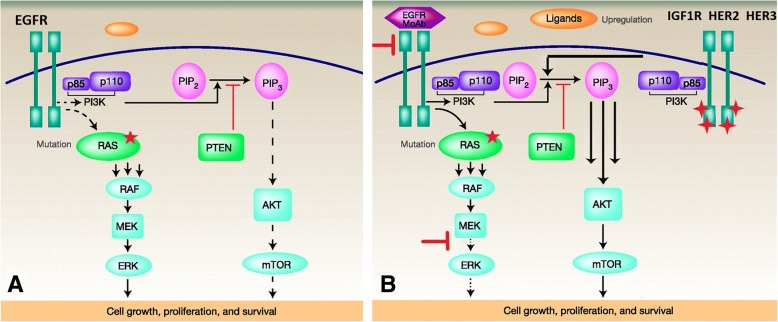
BACKGROUND: Previous studies showed that the combination of an anti-Epidermal growth factor (EGFR) and a MEK-inhibitor is able to prevent the onset of resistance to anti-EGFR monoclonal antibodies in KRAS-wild type colorectal cancer (CRC), while the same combination reverts anti-EGFR primary resistance in KRAS mutated CRC cell lines. However, rapid onset of resistance is a limit to combination therapies in KRAS mutated CRC. METHODS: We generated four different KRAS mutated CRC cell lines resistant to a combination of cetuximab (an anti-EGFR antibody) and refametinib (a selective MEK-inhibitor) after continuous exposure to increasing concentration of the drugs. We characterized these resistant cell lines by evaluating the expression and activation status of a panel of receptor tyrosine kinases (RTKs) and intracellular transducers by immunoblot and qRT-PCR. Oncomine comprehensive assay and microarray analysis were carried out to investigate new acquired mutations or transcriptomic adaptation, respectively, in the resistant cell lines. Immunofluorescence assay was used to show the localization of RTKs in resistant and parental clones. RESULTS: We found that PI3K-AKT pathway activation acts as an escape mechanism in cell lines with acquired resistance to combined inhibition of EGFR and MEK. AKT pathway activation is coupled to the activation of multiple RTKs such as HER2, HER3 and IGF1R, though its pharmacological inhibition is not sufficient to revert the resistant phenotype. PI3K pathway activation is mediated by autocrine loops and by heterodimerization of multiple receptors. CONCLUSIONS: PI3K activation plays a central role in the acquired resistance to the combination of anti-EGFR and MEK-inhibitor in KRAS mutated colorectal cancer cell lines. PI3K activation is cooperatively achieved through the activation of multiple RTKs such as HER2, HER3 and IGF1R.
Overview
CoChat Summary
TL;DR
In KRAS-mutated colorectal cancer cell lines, acquired resistance to combined EGFR/MEK inhibition is driven by PI3K/AKT pathway activation rather than new genetic mutations. This escape mechanism involves cooperative RTK upregulation/activation—especially HER2, HER3, IGF1R, and EGFR—plus autocrine ligand loops and receptor heterodimerization.
Key findings
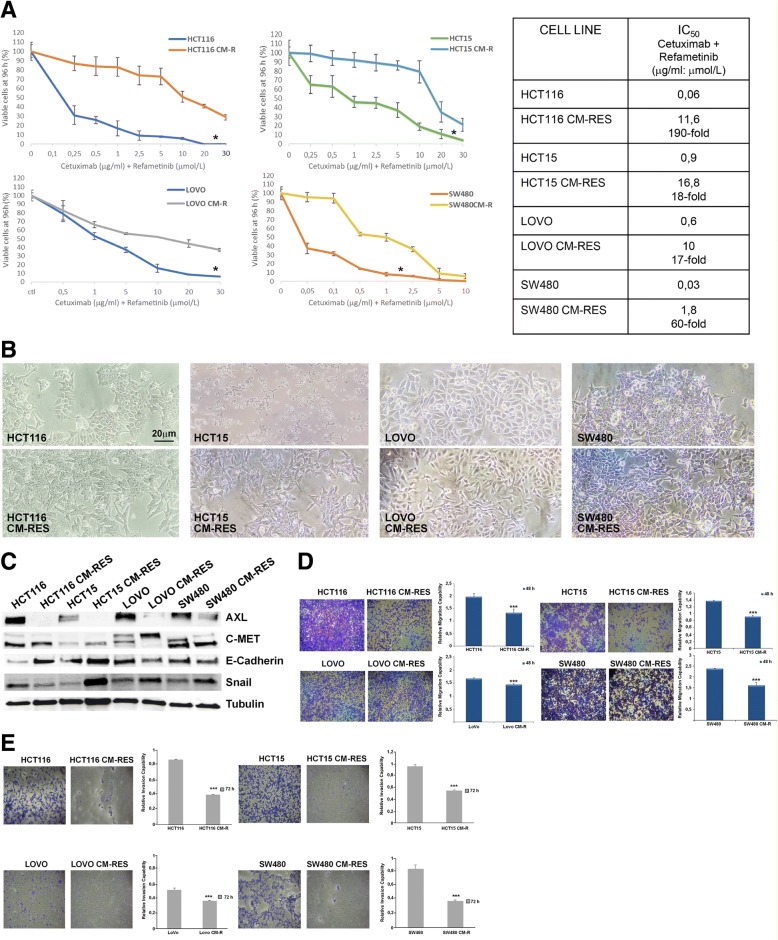
- Four KRAS-mutated CRC cell lines (HCT116, HCT15, LOVO, SW480) made resistant to cetuximab plus refametinib showed IC50 increases of 17–190-fold versus parental cells.
- Oncomine Comprehensive Assay found no new genetic events and no significant mutational frequency differences in resistant versus parental cells.
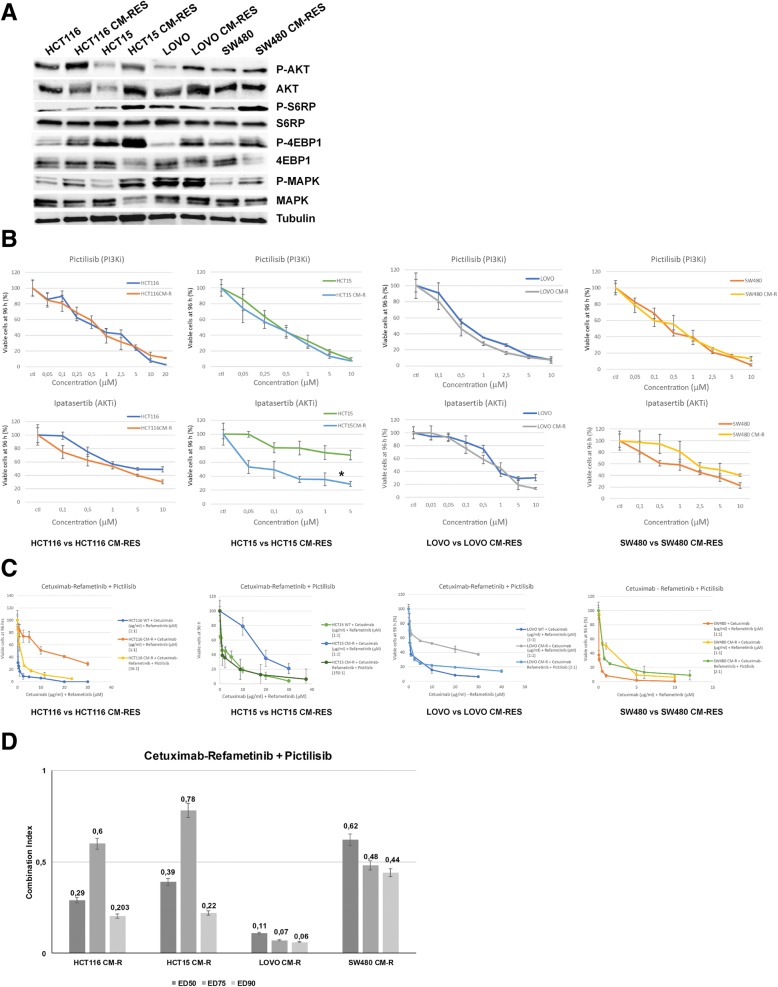
- PI3K/AKT pathway activation was consistent across resistant clones, with AKT and downstream effectors S6RP and 4EBP1 activated. Pictilisib plus cetuximab/refametinib reverted resistance and was synergistic by combination index, while single-agent PI3K/AKT inhibition was not sufficient to revert the resistant phenotype.
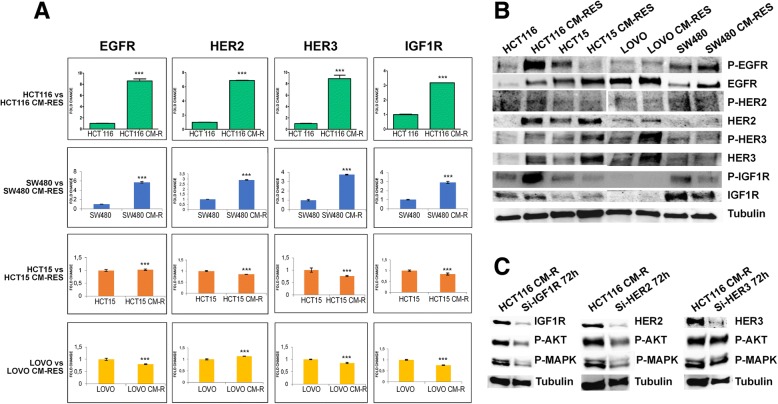
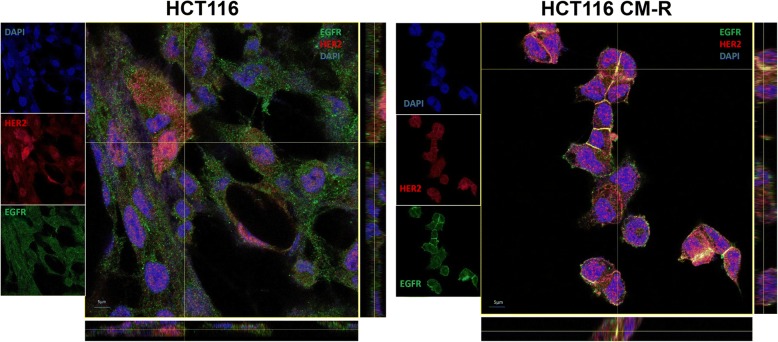
- EGFR, HER2, HER3, and IGF1R were transcriptionally upregulated in HCT116 and SW480 resistant clones, with increased phosphorylation especially in HCT116 CM-R. HER2 or IGF1R knockdown decreased AKT and MAPK activation, whereas HER3 knockdown did not. Ligands TGFα, epiregulin, and amphiregulin were also upregulated, and EGFR/HER2 co-localization on cell membranes was observed.
Methods
- Resistant subclones were generated by continuous exposure of HCT116, HCT15, LOVO, and SW480 cells to increasing cetuximab and BAY-879766 (refametinib) at a fixed 1 μg/ml:1 μmol/L ratio for 6–9 months.
- Characterization used MTT proliferation assays, IC50 and combination index analysis, immunoblot, qRT-PCR, Oncomine Comprehensive Assay, microarray, siRNA knockdown, indirect immunofluorescence, and migration/invasion assays.
- Statistical analysis used Student’s t test with p < 0.05; microarray data used t test with Benjamini–Hochberg correction and >2-fold change thresholds, with Fisher’s exact test for pathway association.
Limitations
- The paper does not state a formal limitations section. Evident from the text: this is a preclinical cell-line-only study with no in vivo or clinical validation.
- Only four KRAS-mutated CRC cell lines were studied, and two also carried PIK3CA mutations (HCT116 H1047R, HCT15 E545K).
- Microarray transcriptomic analysis was limited to HCT116 and LOVO parental/resistant pairs, and resistance was generated by prolonged in vitro drug exposure, which may not fully model clinical acquired resistance.
Model-written summary. Check it against the paper before relying on it.
Integrity signals
Registry
Cites
Statistics
Figures
Verification
Claims the paper makes
0 Valid · 0 Not valid · 28 Not checked · 54 Own results and interpretations
A result the paper reports from its own data — it cites no other source for it, so there is none to check. The quote shows it is in the paper.
In the paper
“pharmacologic inhibition of either PI3Kα or AKT1/2 using pictilisib and ipatasertib, respectively, is able to revert the resistance phenotype in our model”
§ Receptor tyrosine kinase-dependent PI3K activation is an escape mechanism to vertical suppression of the EGFR/RAS/MAPK pathway in KRAS-mutated human colorectal cancer cell lines > Discussion
plainstates a causen = 4- Asserted: passes — The authors put it forward as true.
- Checkable: passes — It can be checked against evidence.
- Load-bearing: passes — The paper’s conclusions depend on it.
- Based: passes — The paper gives a reason why it holds.
A result the paper reports from its own data — it cites no other source for it, so there is none to check. The quote shows it is in the paper.
In the paper
“its pharmacological inhibition is not sufficient to revert the resistant phenotype”
§ Receptor tyrosine kinase-dependent PI3K activation is an escape mechanism to vertical suppression of the EGFR/RAS/MAPK pathway in KRAS-mutated human colorectal cancer cell lines > Abstract > Results
plain- Asserted: passes — The authors put it forward as true.
- Checkable: passes — It can be checked against evidence.
- Load-bearing: passes — The paper’s conclusions depend on it.
- Based: passes — The paper gives a reason why it holds.
A result the paper states — it cites no source for it, so there is none to check. The quote shows it is in the paper.
In the paper
“In our model, cell lines that become resistant to the combination of anti-EGFR and MEK-inhibitor display increased epithelial features when compared to parental cell lines.”
§ Receptor tyrosine kinase-dependent PI3K activation is an escape mechanism to vertical suppression of the EGFR/RAS/MAPK pathway in KRAS-mutated human colorectal cancer cell lines > Discussion
plainstates an association- Asserted: passes — The authors put it forward as true.
- Checkable: passes — It can be checked against evidence.
- Load-bearing: unclear — It is unclear whether the paper’s conclusions depend on it.
- Based: passes — The paper gives a reason why it holds.
A result the paper reports from its own data — it cites no other source for it, so there is none to check. The quote shows it is in the paper.
In the paper
“Migration capability at 48 h is homogenously decreased across the 4 resistant clones when compared to parental cell lines (Fig. 1d)”
§ Receptor tyrosine kinase-dependent PI3K activation is an escape mechanism to vertical suppression of the EGFR/RAS/MAPK pathway in KRAS-mutated human colorectal cancer cell lines > Results > Establishment and characterization of human KRAS-mutant CRC cell lines resistant to combined treatment with cetuximab and refametinib
plain- Asserted: passes — The authors put it forward as true.
- Checkable: passes — It can be checked against evidence.
- Load-bearing: unclear — It is unclear whether the paper’s conclusions depend on it.
- Based: passes — The paper gives a reason why it holds.
A result the paper reports from its own data — it cites no other source for it, so there is none to check. The quote shows it is in the paper.
In the paper
“Upregulation of HER family receptors and IGF1R is a common event in resistant clones, albeit with several differences.”
§ Receptor tyrosine kinase-dependent PI3K activation is an escape mechanism to vertical suppression of the EGFR/RAS/MAPK pathway in KRAS-mutated human colorectal cancer cell lines > Results > Role of receptor tyrosine kinases (RTK) upregulation and transcriptional adaptation in resistant cell lines
plainstates an association- Asserted: passes — The authors put it forward as true.
- Checkable: passes — It can be checked against evidence.
- Load-bearing: passes — The paper’s conclusions depend on it.
- Based: passes — The paper gives a reason why it holds.
42 more claims
Create a free account to see all 82 claims and to verify the 38 references still open.
- It may state two separate claims as one. 17
- Probably not a substantial claim. 22
Claims other papers make about this one
Each is checked against this paper’s own text: does it say what the citing paper says it does?
The source backs part of the claim, not all of it — or backs it for a different population, condition or comparison.
In the citing paper
“PI3K/AKT signaling plays a particularly important role in the intrinsic resistance to targeted therapy in CRC.”
From Differential Response and Resistance to KRAS-Targeted Therapy (2025) · cites this paper as [115]
Experimental — accuracy not yet measuredThe cited source says what the claim attributes to it.
In the citing paper
“Previous studies have established that PI3K/AKT signaling is a key mediator of resistance to anti-EGFR and MEK targeted therapy in KRAS-mutant CRC [113–115].”
From Differential Response and Resistance to KRAS-Targeted Therapy (2025) · cites this paper as [115]
Self-check
Percentages, sums and reported differences re-computed from the paper’s own numbers.
Each contradiction between two passages listed here was confirmed by an independent check.
Rated minor: it would not touch a result — a value no result rests on, a p-value that stays on the same side of the significance level, or a conflict that is clerical, resolved elsewhere in the paper, or outside its own findings.
In the paper
§ Receptor tyrosine kinase-dependent PI3K activation is an escape mechanism to vertical suppression of the EGFR/RAS/MAPK pathway in KRAS-mutated human colorectal cancer cell lines > Materials and methods > Drugs and chemicals
“The MEK1/2 inhibitor BAY-869766 (Refametinib)”
§ Receptor tyrosine kinase-dependent PI3K activation is an escape mechanism to vertical suppression of the EGFR/RAS/MAPK pathway in KRAS-mutated human colorectal cancer cell lines > Results > Establishment and characterization of human KRAS-mutant CRC cell lines resistant to combined treatment with cetuximab and refametinib
“the selective MEK1/2 kinase inhibitor BAY-879766 (refametinib)”
Rated minor: it would not touch a result — a value no result rests on, a p-value that stays on the same side of the significance level, or a conflict that is clerical, resolved elsewhere in the paper, or outside its own findings.
In the paper
§ Receptor tyrosine kinase-dependent PI3K activation is an escape mechanism to vertical suppression of the EGFR/RAS/MAPK pathway in KRAS-mutated human colorectal cancer cell lines > Materials and methods > Oncomine comprehensive assay
“40 copy number aberrations”
§ Receptor tyrosine kinase-dependent PI3K activation is an escape mechanism to vertical suppression of the EGFR/RAS/MAPK pathway in KRAS-mutated human colorectal cancer cell lines > Results > Establishment and characterization of human KRAS-mutant CRC cell lines resistant to combined treatment with cetuximab and refametinib
“The analysis of 148 single nucleotide variants, 49 copy number variations and 22 fusion drivers”
Rated minor: it would not touch a result — a value no result rests on, a p-value that stays on the same side of the significance level, or a conflict that is clerical, resolved elsewhere in the paper, or outside its own findings.
In the paper
§ Receptor tyrosine kinase-dependent PI3K activation is an escape mechanism to vertical suppression of the EGFR/RAS/MAPK pathway in KRAS-mutated human colorectal cancer cell lines > Abstract > Results
“though its pharmacological inhibition is not sufficient to revert the resistant phenotype.”
§ Receptor tyrosine kinase-dependent PI3K activation is an escape mechanism to vertical suppression of the EGFR/RAS/MAPK pathway in KRAS-mutated human colorectal cancer cell lines > Discussion
“though pharmacologic inhibition of either PI3Kα or AKT1/2 using pictilisib and ipatasertib, respectively, is able to revert the resistance phenotype in our model.”
Rated minor: it would not touch a result — a value no result rests on, a p-value that stays on the same side of the significance level, or a conflict that is clerical, resolved elsewhere in the paper, or outside its own findings.
In the paper
§ Receptor tyrosine kinase-dependent PI3K activation is an escape mechanism to vertical suppression of the EGFR/RAS/MAPK pathway in KRAS-mutated human colorectal cancer cell lines > Materials and methods > Proliferation assay and combination index
“Results represent the median of the three experiments, each performed in quadruplicate.”
§ Receptor tyrosine kinase-dependent PI3K activation is an escape mechanism to vertical suppression of the EGFR/RAS/MAPK pathway in KRAS-mutated human colorectal cancer cell lines > Results > Establishment and characterization of human KRAS-mutant CRC cell lines resistant to combined treatment with cetuximab and refametinib
“All the results are average ± SD of 3 independent experiments, each done in triplicate.”
Citations
Cites
Jemal, A., Bray, F., Center, M. M., Ferlay, J., Ward, E., & Forman, D. (2011) · CA: A Cancer Journal for Clinicians · doi:10.3322/caac.20107 · Cited by 54,679
Drug combination studies and their synergy quantification using the Chou-Talalay method
Chou, T.-C. (2010) · Cancer Research · doi:10.1158/0008-5472.can-09-1947 · Cited by 5,739 · cited 1×
“nib according to IC50 ratio, as described in the Chou-Talalay model [24] (Fig.”
MethodSiegel, R., Ward, E., Brawley, O., & Jemal, A. (2011) · CA: A Cancer Journal for Clinicians · doi:10.3322/caac.20121 · Cited by 4,070
ESMO consensus guidelines for the management of patients with metastatic colorectal cancer
Van Cutsem, E., Cervantes, A., Adam, R., Sobrero, A., Van Krieken, J. H., Aderka, D., Aranda Aguilar, E., Bardelli, A., Benson, A., Bodoky, G., et al. (2016) · Annals of Oncology · doi:10.1093/annonc/mdw235 · Cited by 3,421
Self-citationTargeting the phosphoinositide 3-kinase pathway in cancer
Liu, P., Cheng, H., Roberts, T. M., & Zhao, J. J. (2009) · Nature Reviews Drug Discovery · doi:10.1038/nrd2926 · Cited by 2,721
De Roock, W., Claes, B., Bernasconi, D., De Schutter, J., Biesmans, B., Fountzilas, G., Kalogeras, K. T., Kotoula, V., Papamichael, D., Laurent-Puig, P., et al. (2010) · The Lancet Oncology · doi:10.1016/s1470-2045(10)70130-3 · Cited by 2,144
Self-citationEGFR Antagonists in Cancer Treatment
Ciardiello, F., & Tortora, G. (2008) · New England Journal of Medicine · doi:10.1056/nejmra0707704 · Cited by 2,058
Self-citationRAS oncogenes: the first 30 years
Malumbres, M., & Barbacid, M. (2003) · Nature Reviews Cancer · doi:10.1038/nrc1097 · Cited by 1,902
The EGF receptor family as targets for cancer therapy
Mendelsohn, J., & Baselga, J. (2000) · Oncogene · doi:10.1038/sj.onc.1204082 · Cited by 1,340
Van Cutsem, E., Lenz, H.-J., Köhne, C.-H., Heinemann, V., Tejpar, S., Melezínek, I., Beier, F., Stroh, C., Rougier, P., van Krieken, J. H., et al. (2015) · Journal of Clinical Oncology · doi:10.1200/jco.2014.59.4812 · Cited by 789
Self-citation
Cited by
MAPK/ERK Signaling Pathway in Hepatocellular Carcinoma
Moon, H., & Ro, S. W. (2021) · Cancers · doi:10.3390/cancers13123026 · Cited by 326
“In particular, activation of the PI3K/AKT and yes-associated protein (YAP) signaling pathways stand out as the bypass mechanisms for resistance to therapeutic interventions of the MAPK/ERK signaling [141].”
BackgroundInfluentialHua, H., Kong, Q., Yin, J., Zhang, J., & Jiang, Y. (2020) · Journal of Hematology & Oncology · doi:10.1186/s13045-020-00904-3 · Cited by 273
Methods and biomarkers for early detection, prediction, and diagnosis of colorectal cancer
Zhang, Y., Wang, Y., Zhang, B., Li, P., & Zhao, Y. (2023) · Biomedicine & Pharmacotherapy · doi:10.1016/j.biopha.2023.114786 · Cited by 190
MEK inhibitor resistance mechanisms and recent developments in combination trials
Kun, E., Tsang, Y. T. M., Ng, C. W., Gershenson, D. M., & Wong, K. K. (2021) · Cancer Treatment Reviews · doi:10.1016/j.ctrv.2020.102137 · Cited by 184
Yuan, C., Wang, M.-H., Wang, F., Chen, P.-Y., Ke, X.-G., Yu, B., Yang, Y.-F., You, P.-T., & Wu, H.-Z. (2021) · Life Sciences · doi:10.1016/j.lfs.2021.119105 · Cited by 177
Updated Insights on EGFR Signaling Pathways in Glioma
Oprita, A., Baloi, S.-C., Staicu, G.-A., Alexandru, O., Tache, D. E., Danoiu, S., Micu, E. S., & Sevastre, A.-S. (2021) · International Journal of Molecular Sciences · doi:10.3390/ijms22020587 · Cited by 160
The Importance of Being PI3K in the RAS Signaling Network
Cuesta, C., Arévalo-Alameda, C., & Castellano, E. (2021) · Genes · doi:10.3390/genes12071094 · Cited by 138
Li, Q.-H., Wang, Y.-Z., Tu, J., Liu, C.-W., Yuan, Y.-J., Lin, R., He, W.-L., Cai, S.-R., He, Y.-L., & Ye, J.-N. (2020) · Gastroenterology Report · doi:10.1093/gastro/goaa026 · Cited by 119
PROTAC’ing oncoproteins: targeted protein degradation for cancer therapy
Kelm, J. M., Pandey, D. S., Malin, E., Kansou, H., Arora, S., Kumar, R., & Gavande, N. S. (2023) · Molecular Cancer · doi:10.1186/s12943-022-01707-5 · Cited by 110
PI3K–AKT-Targeting Breast Cancer Treatments: Natural Products and Synthetic Compounds
Yuan, Y., Long, H., Zhou, Z., Fu, Y., & Jiang, B. (2023) · Biomolecules · doi:10.3390/biom13010093 · Cited by 112
Signaling pathways of oxidative stress response: the potential therapeutic targets in gastric cancer
Liu, Y., Shi, Y., Han, R., Liu, C., Qin, X., Li, P., & Gu, R. (2023) · Frontiers in Immunology · doi:10.3389/fimmu.2023.1139589 · Cited by 77
Multiomics Analysis Provides Novel Pathways Related to Progression of Heart Failure
Ouwerkerk, W., Pereira, J. P. B., Maasland, T., Emmens, J. E., Figarska, S. M., Tromp, J., Koekemoer, A. L., Nelson, C. P., Nath, M., Romaine, S. P. R., et al. (2023) · Journal of the American College of Cardiology · doi:10.1016/j.jacc.2023.08.053 · Cited by 66
Targeting Colorectal Cancer Stem Cells as an Effective Treatment for Colorectal Cancer
Ma, Y., Li, W., Liu, Y., Shi, Y., Lin, Q., & Fu, D. (2020) · Technology in Cancer Research & Treatment · doi:10.1177/1533033819892261 · Cited by 64
Tang, R., Chen, J., Tang, M., Liao, Z., Zhou, L., Jiang, J., Hu, Y., Liao, Q., Xiong, W., Tang, Y., et al. (2019) · International Journal of Biological Sciences · doi:10.7150/ijbs.38041 · Cited by 60
Liu, X., Baer, J. M., Stone, M. L., Knolhoff, B. L., Hogg, G. D., Turner, M. C., Kao, Y., Weinstein, A. G., Ahmad, F. F., Chen, J., et al. (2024) · Science Translational Medicine · doi:10.1126/scitranslmed.ado2402 · Cited by 57
Comprehensive characterization of PTEN mutational profile in a series of 34,129 colorectal cancers
Serebriiskii, I. G., Pavlov, V., Tricarico, R., Andrianov, G., Nicolas, E., Parker, M. I., Newberg, J., Frampton, G., Meyer, J. E., & Golemis, E. A. (2022) · Nature Communications · doi:10.1038/s41467-022-29227-2 · Cited by 55
Immune Resistance and EGFR Antagonists in Colorectal Cancer
Giordano, G., Remo, A., Porras, A., & Pancione, M. (2019) · Cancers · doi:10.3390/cancers11081089 · Cited by 54
The importance of Ras in drug resistance in cancer
Healy, F. M., Prior, I. A., & MacEwan, D. J. (2021) · British Journal of Pharmacology · doi:10.1111/bph.15420 · Cited by 53
Lymphatic disorders caused by mosaic, activating KRAS variants respond to MEK inhibition
Sheppard, S. E., March, M., Seiler, C., Matsuoka, L. S., Kim, S. E., Kao, C., Rubin, A. I., Battig, M. R., Khalek, N., Schindewolf, E. M., et al. (2023) · JCI Insight · doi:10.1172/jci.insight.155888 · Cited by 46
Zhang, J., Chen, Y., Lin, J., Jia, R., An, T., Dong, T., Zhang, Y., & Yang, X. (2020) · DNA and Cell Biology · doi:10.1089/dna.2019.4990 · Cited by 39
Methylglyoxal Scavengers Resensitize KRAS-Mutated Colorectal Tumors to Cetuximab
Bellier, J., Nokin, M.-J., Caprasse, M., Tiamiou, A., Blomme, A., Scheijen, J. L., Koopmansch, B., MacKay, G. M., Chiavarina, B., Costanza, B., et al. (2020) · Cell Reports · doi:10.1016/j.celrep.2020.01.012 · Cited by 38
Novoplansky, O., Shnerb, A. B., Marripati, D., Jagadeeshan, S., Shareb, R. A., Conde‐López, C., Zorea, J., Prasad, M., Lulu, T. B., Yegodayev, K. M., et al. (2023) · Molecular Oncology · doi:10.1002/1878-0261.13500 · Cited by 37
Selumetinib: a selective MEK1 inhibitor for solid tumor treatment
Hedayat, M., Jafari, R., & Zolbanin, N. M. (2022) · Clinical and Experimental Medicine · doi:10.1007/s10238-021-00783-z · Cited by 36
How cells sense and integrate information from different sources
Ullo, M. F., & Case, L. B. (2023) · WIREs Mechanisms of Disease · doi:10.1002/wsbm.1604 · Cited by 34
Tardito, S., Matis, S., Zocchi, M. R., Benelli, R., & Poggi, A. D. (2024) · International Journal of Molecular Sciences · doi:10.3390/ijms25137131 · Cited by 34
Strategic Combinations to Prevent and Overcome Resistance to Targeted Therapies in Oncology
Gümüşay, Ö., Vitiello, P. P., Wabl, C. A., Corcoran, R. B., Bardelli, A., & Rugo, H. S. (2020) · American Society of Clinical Oncology Educational Book · doi:10.1200/edbk_280845 · Cited by 33
Self-citationEmerging actionable targets to treat therapy-resistant colorectal cancers
Grassilli, E., & Cerrito, M. G. (2022) · Cancer Drug Resistance · doi:10.20517/cdr.2021.96 · Cited by 33
Phase 1 study of M2698, a p70S6K/AKT dual inhibitor, in patients with advanced cancer
Tsimberidou, A. M., Shaw, J. V., Juric, D., Verschraegen, C. F., Weise, A. M., Sarantopoulos, J., Junior, G. L. L., Nemunaitis, J. J., Mita, M. M., Park, H., et al. (2021) · Journal of Hematology & Oncology · doi:10.1186/s13045-021-01132-z · Cited by 32
Wei, S., Hu, W., Feng, J., & Geng, Y. (2022) · Cell Communication and Signaling · doi:10.1186/s12964-022-00960-x · Cited by 32
Georgiou, A., Stewart, A., Cunningham, D., Banerji, U., & Whittaker, S. R. (2020) · Molecular Cancer Research · doi:10.1158/1541-7786.mcr-19-1201 · Cited by 32
Sui, X., Chen, Y., Liu, B., Li, L., Huang, X., Wang, M., Wang, G., Gao, X., Zhang, L., Bao, X., et al. (2020) · Annals of Translational Medicine · doi:10.21037/atm-20-5622 · Cited by 31
Dilmaghani, N. A., Safaroghli‐Azar, A., Pourbagheri‐Sigaroodi, A., & Bashash, D. (2021) · IUBMB Life · doi:10.1002/iub.2446 · Cited by 31
Power and Promise of Next-Generation Sequencing in Liquid Biopsies and Cancer Control
Wu, T., Liu, J., Liu, Y., Shi, Y., Li, W., Wang, G.-R., Ma, Y., & Fu, D. (2020) · Cancer Control · doi:10.1177/1073274820934805 · Cited by 30
Li, Y., Yuan, Y., Zhang, F., Guo, A., Cao, F., Song, M., Fu, Y., Xu, X., Shen, H., Zheng, S., et al. (2021) · Frontiers in Pharmacology · doi:10.3389/fphar.2021.739501 · Cited by 30
Baicalein Ameliorates Epilepsy Symptoms in a Pilocarpine-Induced Rat Model by Regulation of IGF1R
Fu, P., Yuan, Q., Sun, Y., Wu, X., Du, Z., Li, Z., Yu, J. M., Lv, K., & Hu, J. (2020) · Neurochemical Research · doi:10.1007/s11064-020-03150-8 · Cited by 23
Lee, H., Son, E., Lee, K., Lee, Y., Kim, Y., Lee, J.-C., Lim, Y., Hur, M., Kim, D., & Nam, D.-H. (2019) · International Journal of Molecular Sciences · doi:10.3390/ijms20235894 · Cited by 22
Combined targeting of PI3K and MEK effector pathways via CED for DIPG therapy
Chang, R. Y., Tosi, U., Voronina, J. C., Adeuyan, O. O., Wu, L. Y., Schweitzer, M. E., Pisapia, D. J., Becher, O. J., Souweidane, M. M., & Maachani, U. B. (2019) · Neuro-Oncology Advances · doi:10.1093/noajnl/vdz004 · Cited by 22
MEK inhibitors: a promising targeted therapy for cardiovascular disease
Mohammed, K. A. K., Madeddu, P. R., & Avolio, E. (2024) · Frontiers in Cardiovascular Medicine · doi:10.3389/fcvm.2024.1404253 · Cited by 20
Protein post-translational modifications: A key factor in colorectal cancer resistance mechanisms
Bi, B., Qiu, M., Liu, P. F., Wang, Q., Wen, Y., Li, Y., Li, B., Li, Y., He, Y., & Zhao, J. (2023) · Biochimica et Biophysica Acta (BBA) - Gene Regulatory Mechanisms · doi:10.1016/j.bbagrm.2023.194977 · Cited by 19
Yeoh, Y., Low, T. Y., Abu, N., & Lee, P. Y. (2021) · PeerJ · doi:10.7717/peerj.12338 · Cited by 19
Targeting the PI3K pathway in myeloproliferative neoplasms
Gerds, A. T., Bartalucci, N., Assad, A., & Yacoub, A. (2022) · Expert Review of Anticancer Therapy · doi:10.1080/14737140.2022.2093192 · Cited by 18
Colorectal cancer pathogenesis, oncogenic signaling networks and targeted therapeutic advances
Chen, Y., Zhang, J., Ding, Y., Zhu, F., & Chen, Y. (2026) · Molecular Biomedicine · doi:10.1186/s43556-026-00433-4 · Cited by 17
Chouni, A., Hajra, D., Ray, R., & Paul, S. (2024) · Pharmacological Research - Modern Chinese Medicine · doi:10.1016/j.prmcm.2024.100367 · Cited by 16
Precision medicine in colorectal cancer: genomics profiling and targeted treatment
Muhar, A. M., Velaro, A. J., Prananda, A. T., Nugraha, S. E., Halim, P., & Syahputra, R. A. (2025) · Frontiers in Pharmacology · doi:10.3389/fphar.2025.1532971 · Cited by 15
KRAS G12V mutation-selective requirement for ACSS2 in colorectal adenoma formation
Budagyan, K., Cannon, A. C., Chatoff, A. G., Benton, D., Kurimchak, A., Araiza‐Olivera, D., Gerasimova, A., Snyder, N. W., Duncan, J. S., Uribe‐Alvarez, C., et al. (2025) · Cell Reports · doi:10.1016/j.celrep.2025.115444 · Cited by 15
Wang, Z., Kang, B., Gao, Q., Huang, L., Di, J., Fan, Y., Yu, J., Jiang, B., Gao, F., Wang, D., et al. (2021) · Cancer Science · doi:10.1111/cas.15049 · Cited by 15
KRASG12C inhibitor: combing for combination
Chakraborty, A. (2020) · Biochemical Society Transactions · doi:10.1042/bst20200473 · Cited by 15
Novel Therapeutic Approaches for Colorectal Cancer Treatment
Papavassiliou, A. G., & Cave, D. D. (2024) · International Journal of Molecular Sciences · doi:10.3390/ijms25042228 · Cited by 15
Hon, K. W., Nag, S., Stany, B. K., Mishra, S., & Naidu, R. (2025) · Food Bioscience · doi:10.1016/j.fbio.2025.106313 · Cited by 15
Huey, A. K. S., Uwishema, O., Mshaymesh, S., Choudhary, K., Salem, F. K., Sengar, A. S., Patel, R. P., Kazan, Z., & Wellington, J. (2025) · Annals of Medicine and Surgery · doi:10.1097/ms9.0000000000002830 · Cited by 13
Basic approaches, challenges and opportunities for the discovery of small molecule anti-tumor drugs.
Ma, Y., Liu, J., Yang, X., Xin, R., Shi, Y., Zhang, D., Wang, H., Wang, P., Lin, Q., Li, W., et al. (2021) · American Journal of Cancer Research · Cited by 13
Zhang, G., Zhou, B., An, X.-C., An, F., & Li, S. (2021) · OncoTargets and Therapy · doi:10.2147/ott.s265591 · Cited by 13
Tan, Y. Q., Sun, B., Zhang, X., Zhang, S., Guo, H., Basappa, B., Zhu, T., Sethi, G., Lobie, P. E., & Pandey, V. (2024) · Cell Death and Disease · doi:10.1038/s41419-024-06551-7 · Cited by 11
Mushtaq, H., Zarlashat, Y., Ambreen, A., Mujahid, M., & Shafqat4, S. K. A. D. (2024) · Agrobiological Records · doi:10.47278/journal.abr/2024.004 · Cited by 11
Kundu, R., Kumar, S., Chandra, A., & Datta, A. (2024) · JACS Au · doi:10.1021/jacsau.3c00738 · Cited by 11
Patra, R., Chakraborty, J., Das, N. C., & Mukherjee, S. (2023) · Human Gene · doi:10.1016/j.humgen.2023.201189 · Cited by 11
Yang, X., Huang, W., Wu, H., He, R., Ma, J., Liu, A., & Chen, G. (2019) · Oncology Reports · doi:10.3892/or.2019.7033 · Cited by 10
Metastatic Colorectal Cancer: Prognostic and Predictive Factors
Nappi, A. G., Nasti, G., Romano, C., Berretta, M., & Ottaiano, A. (2019) · Current Medicinal Chemistry · doi:10.2174/0929867326666190620110732 · Cited by 10
Liu, Y., Liu, L., Liu, L., Wang, T., Guo, L. Y., Wang, Y., Gao, Z., & Shu, Y. (2020) · Cancer Chemotherapy and Pharmacology · doi:10.1007/s00280-020-04062-8 · Cited by 10
Tomesz, A., Szabó, L. G., Molnár, R., Deutsch, A., Darago, R., Raposa, B. L., Nowrasteh, G., Varjas, T., Németh, B., Orsós, Z., et al. (2022) · Cells · doi:10.3390/cells11061020 · Cited by 10
Inhibition of PRMT5-mediated regulation of DKK1 sensitizes colorectal cancer cells to chemotherapy
Abumustafa, W., Castven, D., Becker, D., Salih, S. S., Manzoor, S., Zamer, B. A., Talaat, I., Hamad, M. A., Marquardt, J. U., & Muhammad, J. S. (2024) · Cellular Signalling · doi:10.1016/j.cellsig.2024.111166 · Cited by 9
Zamanian, M. Y., Darmadi, D., Darabi, R., Al-Aouadi, R. F. A., Ivraghi, M. S., & Akkol, E. K. (2025) · Bioimpacts · doi:10.34172/bi.31211 · Cited by 8
Yin, Y., Yao, S., Li, C., Ma, Y., Kang, Z.-J., Zhang, J., Jia, C., Hou, L., Qin, S., Fan, X., et al. (2021) · Europe PMC (PubMed Central) · Cited by 8
Dai, W., Wang, Z., Liang, X., Wang, M., Ni, W., Ye, Y., & Zang, Y. (2022) · Journal of Gastrointestinal Oncology · doi:10.21037/jgo-22-968 · Cited by 8
Differential Response and Resistance to KRAS-Targeted Therapy
Liu, Z., Lenz, H., Yu, J., & Zhang, L. (2025) · Molecular Carcinogenesis · doi:10.1002/mc.23908 · Cited by 7
“PI3K/AKT signaling plays a particularly important role in the intrinsic resistance to targeted therapy in CRC. Previous studies have established that PI3K/AKT signaling is a key mediator of resistance to anti ‐ EGFR and MEK ‐ targeted therapy in KRAS ‐ mutant CRC [116 – 118].”
Zhang, Y., Xu, M., Sun, Y., Chen, Y., Chi, P., Xu, Z., & Lu, X. (2021) · Frontiers in Cell and Developmental Biology · doi:10.3389/fcell.2020.609832 · Cited by 7
Bufalin serves as a pharmaceutic that mitigates drug resistance
Miao, L., Liu, Y., Ali, N. M., Dong, Y., Zhang, B., & Cui, X. (2023) · Drug Metabolism Reviews · doi:10.1080/03602532.2023.2206065 · Cited by 7
Yuan, Y., Sun, X., Liu, M., Li, S., Dong, Y., Hu, K., Zhang, J., Xu, B., Ma, S., Jiang, H., et al. (2023) · Acta Biochimica et Biophysica Sinica · doi:10.3724/abbs.2023111 · Cited by 6
Carr, A., Coulter, J. A., Workman, J. A., Fay, J., Farrelly, A. M., Eustace, A. J., Bennie, L. A., Grogan, L., Breathnach, O. S., Morris, P. G., et al. (2025) · Cancer Treatment and Research Communications · doi:10.1016/j.ctarc.2025.100926 · Cited by 5
Bispecific antibody–drug conjugates: a modular blueprint for next-generation cancer therapeutics
Bai, Y., Lei, H., Gou, S., Lan, J., Cai, D., Zheng, X., Shen, J., Chen, Y., Zhao, Y., Deng, S., et al. (2026) · Archives of Pharmacal Research · doi:10.1007/s12272-026-01595-z · Cited by 5
Qiu, M., Xie, Y., Tu, L., Zhao, M., Yang, M., Fang, L., & Gu, J. (2023) · Acta Biochimica Polonica · doi:10.18388/abp.2020_5971 · Cited by 5
Jafri, H. S. M. O., Mushtaq, S., Baig, S., Bhatty, A., & Siraj, S. (2023) · Saudi Journal of Gastroenterology · doi:10.4103/sjg.sjg_85_23 · Cited by 5
Liu, Y., Wang, Q.-P., Liu, F., Zhu, H., & He, Q. (2021) · Journal of B.U.ON. : official journal of the Balkan Union of Oncology · Cited by 5
Mateo-Victoriano, B., Samaranayake, G. J., Pokharel, S. P., Sahayanathan, G. J., Jayaraj, C. J., Troccoli, C. I., Watson, D. C., Mohsen, M. G., Guo, Y., Kool, E. T., et al. (2025) · Redox Biology · doi:10.1016/j.redox.2025.103610 · Cited by 4
Yang, P., Pei, Z., Zhou, Y., & Pei, H. (2025) · Scientific Reports · doi:10.1038/s41598-025-28263-4 · Cited by 4
Gene Mutations and Related Molecular Events in Distant Metastasis of Cervical Cancer: A Review
Guo, Y., Li, S., Liu, T., Chang, X., Qin, P., Wang, N., Jiang, Y., Lv, N., Li, N., & Hao, F. (2026) · International Journal of Medical Sciences · doi:10.7150/ijms.123727 · Cited by 3
Targeting cell death: a promising approach for colorectal cancer therapy
Xiao, C., Oyang, L., Jiang, X., Li, S., & Peng, Q. (2026) · Cancer Cell International · doi:10.1186/s12935-026-04261-y · Cited by 3
Su, H., Wang, T., & Chen, C. (2026) · Frontiers in Cell and Developmental Biology · doi:10.3389/fcell.2026.1797221 · Cited by 3
Wang, N., Shi, B., Man, X.-H., Wu, W., & Cao, J. (2024) · PubMed Central · doi:10.12122/j.issn.1673-4254.2024.05.10 · Cited by 3
Cao, K., Zhang, D., Bai, L., Yan, T., Chen, Y., Jiang, Y., & Jiang, Z. (2024) · Non-coding RNA Research · doi:10.1016/j.ncrna.2024.11.002 · Cited by 2
Lee, A. Q., Konishi, H., Ijiri, M., Li, Y., Panigrahi, A. R., CHIEN, J. R., & Satake, N. (2024) · Pediatric Hematology and Oncology · doi:10.1080/08880018.2024.2343688 · Cited by 2
Xue, J., Liao, J., Ju, H., & Lu, Y. (2025) · PharmaNutrition · doi:10.1016/j.phanu.2025.100447 · Cited by 2
Pakhira, S., Samanta, P., Ghosh, R., Mondal, M., Biswas, S., Sarkar, R., Bhowmik, A., Saha, P., & Hajra, S. (2024) · Journal of Current Oncological Trends · doi:10.4103/jcot.jcot_3_24 · Cited by 1
Lebedeva, A. A., Kavun, A., Belova, E. V., Antonova, T. G., & Semenova, A. B. (2025) · RESEARCH RESULTS IN BIOMEDICINE · doi:10.18413/2658-6533-2025-11-1-0-1 · Cited by 1
Li, Y., & Zeng, Y. (2025) · International Journal of General Medicine · doi:10.2147/ijgm.s541575 · Cited by 1
Bresam, S. (2024) · Egyptian Journal of Basic and Applied Sciences · doi:10.1080/2314808x.2024.2375091 · Cited by 1
Analysis of the Dynamics and Composition of Lipid Droplets During Viral Infection
Monson, E. A. (2021) · Figshare · doi:10.26181/60348006d3b07 · Cited by 1
Comparison of KRAS Mutation Status with Clinical Parameters in Colon Adenocarcinoma
BOYLU, B., & Türkmen, M. (2021) · Karadeniz Fen Bilimleri Dergisi · doi:10.31466/kfbd.981849
Wang, Z., Kang, B., Gao, Q., Huang, L., Fan, Y., Yu, J., Di, J., Jiang, B., Gao, F., Wang, D., et al. (2021) · Research Square · doi:10.21203/rs.3.rs-230629/v1
Systematic analysis of the novel effectors PITPNC1 and HMGCS1 in mutant KRAS tumours
Entrialgo‐Cadierno, R. (2022) · Depósito Académico Digital Universidad de Navarra (University of Navarra) · doi:10.15581/10171/65498
Pathogenicity of p.Phe147del in RET in familial Hirschsprung's disease.
Wu, W. D., Tan, K., Xu, W., Liu, J., & Lv, Z. (2023) · PubMed Central
Exploring allelic differences in KRAS mutant CRC
Budagyan, K., & Chernoff, J. (2023) · iDEA - Drexel University Institutional Repository · doi:10.17918/00001573
Theranostics in gastric and colorectal cancer
Basak, S., Chakrabarty, S., Bhattacharya, J., Dutta, K., Dhar, A. K., & Palei, N. N. (2025) · Elsevier eBooks · doi:10.1016/b978-0-443-34199-1.00009-0
Tsimberidou, A.-M., Shaw, J. V., Juric, D., Verschraegen, C. F., Weise, A. M., Sarantopoulos, J., Lopes, G., Nemunaitis, J. J., Mita, M. M., Park, H., et al. (2021) · Figshare · doi:10.6084/m9.figshare.15253443
MODELING ANTI-CANCER DRUG RESISTANCE USING TUMOR SPHEROIDS
Shahi Thakuri, P. (2019) · OhioLink ETD Center (Ohio Library and Information Network)
Lima, A. M. A. (2024) · LA Referencia (Red Federada de Repositorios Institucionales de Publicaciones Científicas)
Long non-coding RNAs as regulators, biomarkers, and therapeutic targets in colorectal cancerPreprint
El-Kady, H. A., Mashhour, R. A., Mohammad, B. T., Elhendy, B. M., Elsamalouty, A. S., Abdelgilil, M. E., Sayed, A. O., Ibrahim, O. O., AlAshry, L. M., Fahmy, S. S. M., et al. (2026) · Research Square · doi:10.21203/rs.3.rs-8608330/v1
ADVANCED IMAGING OF COLO-RECTAL CANCER: A REVIEW STUDY
Gommsani, R. E., Al-Ghamdi, M. A., Abousada, H. J., Obstetric and Gynaecology, K., Albadrani, R. Z., Asiry, F. H., Almaqaleh, Y. A., Alamoudi, N. A., Alzahrani, T. A., Almasskin, A. H., et al. (2025) · International Journal of Advanced Research · doi:10.21474/ijar01/22584
Dissecting KRAS Functional Heterogeneity in Patient-Derived Lung Adenocarcinoma Models
Rosen, J. C. (2025) · TSpace (University of Toronto)
Lozano, A. (2021) · theses.fr (ABES) · doi:10.70675/a2b1195ez9acdz4848za284z48d03d642274 · Cited by 1
Metadata
- Authors
- Vitiello, P. P., Cardone, C., Martini, G., Ciardiello, D., Belli, V., Matrone, N., Barra, G., Napolitano, S., Della Corte, C., Turano, M., Furia, M., Troiani, T., Morgillo, F., De Vita, F., Ciardiello, F., & Martinelli, E.
- Affiliations
- University of Campania "Luigi Vanvitelli" (IT)
- The University of Texas MD Anderson Cancer Center (US)
- University of Naples Federico II (IT)
- Corresponding author
- Martinelli, Erika
- ORCID
- Venue
- Journal of Experimental & Clinical Cancer Research
- Published
- 2019-01-28
- Volume
- 38
- Issue
- 1
- Pages
- 41-41
- ISSN
- 0392-9078 (ISSN-L)
- 1756-9966
- PMC
- PMC6350302
- OpenAlex
- W2947357138
- Semantic Scholar
- ee2d6b3659b8d3596baa598f7d75109158b9a9d5
- Cited by
- 96
- References
- 33
- Citations by year
- 2026: 8 · 2025: 11 · 2024: 16 · 2023: 15 · 2022: 7 · 2021: 20 · 2020: 13 · 2019: 6
- FWCI
- 4.81
- Type
- journal article
- Language
- en
- Open access
- gold
- doi.org
- Licence
- cc-by
- creativecommons.org/licenses/by/4.0/ (tdm)
- Locations
- Journal of Experimental & Clinical Cancer Research (publishedVersion, cc-by)
- Europe PMC (PubMed Central) (publishedVersion, other-oa)
- PubMed Central (publishedVersion, cc-by)
- PubMed (publishedVersion)
- Institutional Research Information System University of Turin (University of Turin) (submittedVersion, other-oa)
- DOAJ (DOAJ: Directory of Open Access Journals) (submittedVersion, cc-by-sa)
- Archivio Istituzionale della Ricerca - Università degli Studi della Campania "Luigi Vanvitelli" (submittedVersion)
- RECERCAT (Consorci de Serveis Universitaris de Catalunya) (submittedVersion, cc-by-nc-nd)
- Funders
- Associazione Italiana per la Ricerca sul Cancro (MFAG-2015-ID:7778, IG-2013-ID:14800)
- Topics
- Health Sciences › Medicine › Oncology › Colorectal Cancer Treatments and Studies
- Life Sciences › Biochemistry, Genetics and Molecular Biology › Molecular Biology › PI3K/AKT/mTOR signaling in cancer
- Life Sciences › Biochemistry, Genetics and Molecular Biology › Molecular Biology › Protein Kinase Regulation and GTPase Signaling
- Keywords
- acquired drug resistance, cetuximab, refametinib, PI3K/Akt signaling, receptor tyrosine kinase, HER2, HER3, IGF-1 receptor, autocrine signaling, receptor heterodimerization, anti-EGFR antibody resistance
- MeSH terms
- Cell Movement, Humans, Mutation, Phosphorylation, Tumor Cells, Cultured, Biomarkers, Tumor, Colorectal Neoplasms, Proto-Oncogene Proteins p21(ras), Apoptosis, Drug Resistance, Neoplasm, Phosphatidylinositol 3-Kinases, MAP Kinase Signaling System, Protein Kinase Inhibitors, Cell Proliferation, ErbB Receptors
About these checks
Registry, retraction, Cites and statistics results are computed, not judged, with one exception: a printed reference that no index lists is read once by a model before it counts as a citation error. Claims are extracted by a model and kept only when their quote appears verbatim in the text; each cited source is then checked, with a model’s help, for whether it says what the claim relies on. Those verdicts can be wrong — read the claim’s quote and the cited source before relying on one.
A language model drew the claims from the paper on 2026-11-20, under version 3 of the claim definition (model deepseek-v4.1-flash, prompt extract-v3).
A second model labelled each claim on 2026-11-20 (model jev-1.13-20260917, definition revision gold-guideline-v0.2).
Statistics and arithmetic are recomputed, not judged.
Confidence bands are shown only for fields calibrated on our annotated test set. None is calibrated yet, so no band is shown.
What counts as a claim ›How we measure confidence ›How we check this ›
Are you an author, or do you see a problem with this page? Request a review
Data sources
Bibliographic data: Semantic Scholar, OpenAlex, Crossref.
Contains information from the Semantic Scholar Academic Graph Datasets, made available under the ODC Attribution License (ODC-BY 1.0).
Semantic Scholar’s data is described in: Kinney, R., et al. (2023). The Semantic Scholar Open Data Platform. arXiv:2301.10140.
