

Anti-CD166/4-1BB chimeric antigen receptor T cell therapy for the treatment of osteosarcoma
Open accessThe DOI matches its Crossref record; 47 of the 50 references it cites were found in a registry or an index.
Abstract
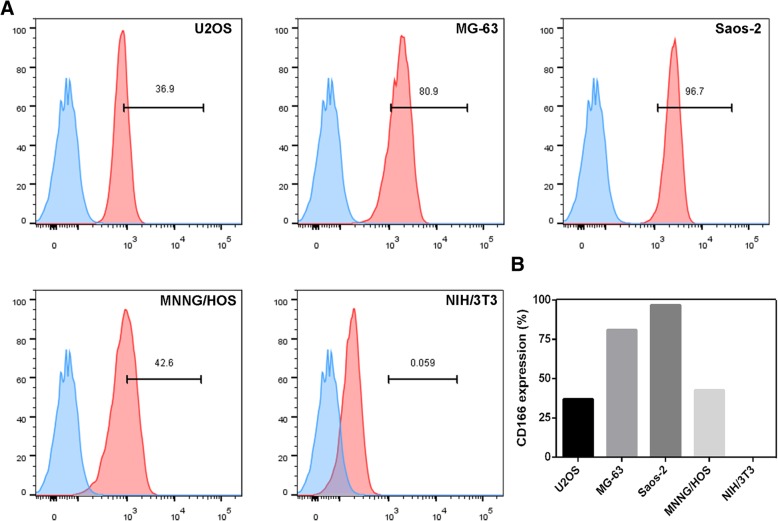
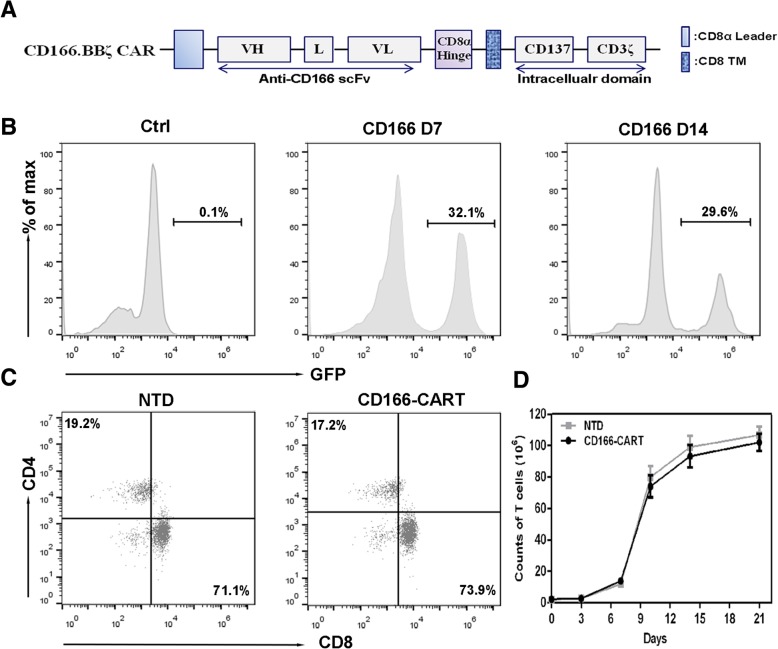
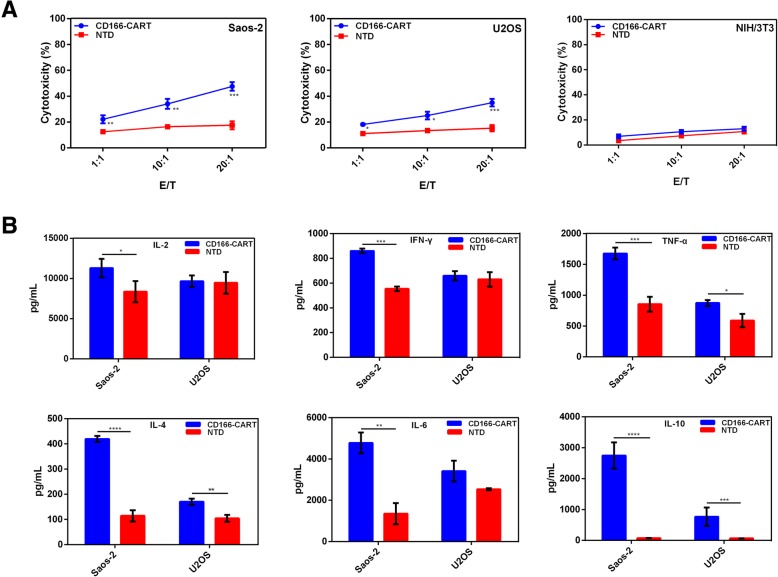
Chimeric antigen receptor (CAR)-engineered T cells have displayed outstanding performance in the treatment of patients with hematological malignancies. However, their efficacy against solid tumors has been largely limited. In this study, human osteosarcoma cell lines were prepared, flow cytometry using antibodies against CD166 was performed on different cell samples. CD166-specific T cells were obtained by viral gene transfer of corresponding DNA plasmids and selectively expanded using IL-2 and IL-15. The ability of CD166.BBζ CAR-T cells to kill CD166 + osteosarcoma cells was evaluated in vitro and in vivo. CD166 was selectively expressed on four different human osteosarcoma cell lines, indicating its role as the novel target for CAR-T cell therapy. CD166.BBζ CAR-T cells killed osteosarcoma cell lines in vitro; the cytotoxicity correlated with the level of CD166 expression on the tumor cells. Intravenous injection of CD166.BBζ CAR-T cells into mice resulted in the regression of the tumor with no obvious toxicity. Together, the data suggest that CD166.BBζ CAR-T cells may serve as a new therapeutic strategy in the future clinical practice for the treatment of osteosarcoma.
Overview
The claims and statistics of this paper haven’t been checked yet.
Free: it reads the open-access text and checks the first 5 claims that cite a source we can check. Create a free account to check every claim.
Integrity signals
Registry
Cites
Statistics
Figures
Verification
Claims the paper makes
The claims and statistics of this paper haven’t been checked yet.
Free: it reads the open-access text and checks the first 5 claims that cite a source we can check. Create a free account to check every claim.
Claims other papers make about this one
Each is checked against this paper’s own text: does it say what the citing paper says it does?
The cited source says what the claim attributes to it.
In the citing paper
“In murine models, ALCAM-CAR-T cells inhibited the tumor growth with no obvious toxicity [112].”
From Advances on immunotherapy for osteosarcoma (2024) · cites this paper as [112]
The cited source says what the claim attributes to it.
In the citing paper
“ALCAM-CAR-T cells exhibited specific and potent cytotoxicity against human osteosarcoma cells in vitro”
From Advances on immunotherapy for osteosarcoma (2024) · cites this paper as [112]
The cited source says what the claim attributes to it.
In the citing paper
“the cytotoxicity was positively correlated with the level of ALCAM expression on the osteosarcoma cells”
From Advances on immunotherapy for osteosarcoma (2024) · cites this paper as [112]
Self-check
Percentages, sums and reported differences re-computed from the paper’s own numbers.
The self-check needs the paper’s full text.
Citations
Cites
Chimeric Antigen Receptor–Modified T Cells for Acute Lymphoid Leukemia
Grupp, S. A., Kalos, M., Barrett, D., Aplenc, R., Porter, D. L., Rheingold, S. R., Teachey, D. T., Chew, A., Hauck, B., Wright, J. F., et al. (2013) · New England Journal of Medicine · doi:10.1056/nejmoa1215134 · Cited by 3,509
Lee, D. W., Kochenderfer, J. N., Stetler-Stevenson, M., Cui, Y. K., Delbrook, C., Feldman, S. A., Fry, T. J., Orentas, R., Sabatino, M., Shah, N. N., et al. (2015) · The Lancet · doi:10.1016/s0140-6736(14)61403-3 · Cited by 2,898
Brentjens, R. J., Davila, M. L., Riviere, I., Park, J., Wang, X., Cowell, L. G., Bartido, S., Stefanski, J., Taylor, C., Olszewska, M., et al. (2013) · Science Translational Medicine · doi:10.1126/scitranslmed.3005930 · Cited by 2,063
Long, A. H., Haso, W. M., Shern, J. F., Wanhainen, K. M., Murgai, M., Ingaramo, M., Smith, J. P., Walker, A. J., Kohler, M. E., Venkateshwara, V. R., et al. (2015) · Nature Medicine · doi:10.1038/nm.3838 · Cited by 1,815
Robbins, P. F., Morgan, R. A., Feldman, S. A., Yang, J. C., Sherry, R. M., Dudley, M. E., Wunderlich, J. R., Nahvi, A. V., Helman, L. J., Mackall, C. L., et al. (2011) · Journal of Clinical Oncology · doi:10.1200/jco.2010.32.2537 · Cited by 1,632
Osteosarcoma: Current Treatment and a Collaborative Pathway to Success
Isakoff, M. S., Bielack, S. S., Meltzer, P., & Gorlick, R. (2015) · Journal of Clinical Oncology · doi:10.1200/jco.2014.59.4895 · Cited by 1,567
Tawbi, H. A., Burgess, M., Bolejack, V., Van Tine, B. A., Schuetze, S. M., Hu, J., D'Angelo, S., Attia, S., Riedel, R. F., Priebat, D. A., et al. (2017) · The Lancet Oncology · doi:10.1016/s1470-2045(17)30624-1 · Cited by 1,452
Kochenderfer, J. N., Dudley, M. E., Feldman, S. A., Wilson, W. H., Spaner, D. E., Maric, I., Stetler-Stevenson, M., Phan, G. Q., Hughes, M. S., Sherry, R. M., et al. (2012) · Blood · doi:10.1182/blood-2011-10-384388 · Cited by 1,440
Antitumour actions of interferons: implications for cancer therapy
Parker, B. S., Rautela, J., & Hertzog, P. J. (2016) · Nature Reviews Cancer · doi:10.1038/nrc.2016.14 · Cited by 907
Therapeutic T cell engineering
Sadelain, M., Rivière, I., & Riddell, S. (2017) · Nature · doi:10.1038/nature22395 · Cited by 879
Comprehensive Analysis of Hypermutation in Human Cancer
Campbell, B. B., Light, N., Fabrizio, D., Zatzman, M., Fuligni, F., de Borja, R., Davidson, S., Edwards, M., Elvin, J. A., Hodel, K. P., et al. (2017) · Cell · doi:10.1016/j.cell.2017.09.048 · Cited by 765
Meyers, P. A., Schwartz, C. L., Krailo, M., Kleinerman, E. S., Betcher, D., Bernstein, M. L., Conrad, E., Ferguson, W., Gebhardt, M., Goorin, A. M., et al. (2005) · Journal of Clinical Oncology · doi:10.1200/jco.2005.06.031 · Cited by 717
Bielack, S. S., Smeland, S., Whelan, J. S., Marina, N., Jovic, G., Hook, J. M., Krailo, M. D., Gebhardt, M., Pápai, Z., Meyer, J., et al. (2015) · Journal of Clinical Oncology · doi:10.1200/jco.2014.60.0734 · Cited by 422
A Meta-Analysis of Osteosarcoma Outcomes in the Modern Medical Era
Allison, D. C., Carney, S. C., Ahlmann, E. R., Hendifar, A., Chawla, S., Fedenko, A., Angeles, C., & Menendez, L. R. (2012) · Sarcoma · doi:10.1155/2012/704872 · Cited by 404
Priceman, S. J., Tilakawardane, D., Jeang, B., Aguilar, B., Murad, J. P., Park, A. K., Chang, W.-C., Ostberg, J. R., Neman, J., Jandial, R., et al. (2018) · Clinical Cancer Research · doi:10.1158/1078-0432.ccr-17-2041 · Cited by 327
New targets and approaches in osteosarcoma
Gill, J., Ahluwalia, M. K., Geller, D., & Gorlick, R. (2013) · Pharmacology & Therapeutics · doi:10.1016/j.pharmthera.2012.09.003 · Cited by 273
Swart, G. W. M. (2002) · European Journal of Cell Biology · doi:10.1078/0171-9335-00256 · Cited by 251
Heymann, M.-F., Lézot, F., & Heymann, D. (2019) · Cellular Immunology · doi:10.1016/j.cellimm.2017.10.011 · Cited by 233 · cited 1×
“OS is an aggressive malignancy of bone characterized by surrounding calcified osteoid extracellular matrix and frequent lung metastases [17].”
BackgroundAhmed, N., Salsman, V. S., Yvon, E., Louis, C. U., Perlaky, L., Wels, W. S., Dishop, M. K., Kleinerman, E. E., Pule, M., Rooney, C. M., et al. (2009) · Molecular Therapy · doi:10.1038/mt.2009.133 · Cited by 215
Jiang, Z., Jiang, X., Chen, S., Lai, Y., Wei, X., Li, B., Lin, S., Wang, S., Wu, Q., Liang, Q., et al. (2017) · Frontiers in Immunology · doi:10.3389/fimmu.2016.00690 · Cited by 207 · cited 1×
“Herein, the efficacy to kill tumor cell lines in xenografts were modest compared with other CAR-T regimens [42, 43].”
ResultLussier, D. M., Johnson, J. L., Hingorani, P., & Blattman, J. N. (2015) · Journal for ImmunoTherapy of Cancer · doi:10.1186/s40425-015-0067-z · Cited by 206
van Kempen, L. C. L. T., van den Oord, J. J., van Muijen, G. N. P., Weidle, U. H., Bloemers, H. P. J., & Swart, G. W. M. (2000) · The American Journal of Pathology · doi:10.1016/s0002-9440(10)64943-7 · Cited by 204
Yu, J., Wu, X., Yan, J., Yu, H., Xu, L., Chi, Z., Sheng, X., Si, L., Cui, C., Dai, J., et al. (2018) · Journal of Hematology & Oncology · doi:10.1186/s13045-017-0548-2 · Cited by 184
Advances in osteosarcoma stem cell research and opportunities for novel therapeutic targets
Yan, G.-N., Lv, Y.-F., & Guo, Q.-N. (2016) · Cancer Letters · doi:10.1016/j.canlet.2015.11.003 · Cited by 173
Frontline: Optimal T cell activation requires the engagement of CD6 and CD166
Hassan, N. J., Barclay, A. N., & Brown, M. H. (2004) · European Journal of Immunology · doi:10.1002/eji.200424856 · Cited by 155
Kristiansen, G., Pilarsky, C., Wissmann, C., Stephan, C., Weissbach, L., Loy, V., Loening, S., Dietel, M., & Rosenthal, A. (2003) · The Prostate · doi:10.1002/pros.10161 · Cited by 136
Activated leukocyte cell adhesion molecule: a new paradox in cancer
Ofori-Acquah, S. F., & KING, J. A. C. (2007) · Translational research · doi:10.1016/j.trsl.2007.09.006 · Cited by 132
Huang, G., Yu, L., Cooper, L. J. N., Hollomon, M., Huls, H., & Kleinerman, E. S. (2012) · Cancer Research · doi:10.1158/0008-5472.can-11-2778 · Cited by 127
Activated leukocyte cell adhesion molecule in breast cancer: prognostic indicator
KING, J. A. C., Ofori-Acquah, S. F., Stevens, T., Al‐Mehdi, A. B., Fodstad, Ø., & Jiang, W. G. (2004) · Breast Cancer Research · doi:10.1186/bcr815 · Cited by 126
Zhao, Z., Wu, M.-S., Zou, C., Tang, Q., Lu, J., Liu, D., Wu, Y., Yin, J., Xie, X., Shen, J., et al. (2013) · Cancer Letters · doi:10.1016/j.canlet.2013.08.042 · Cited by 126
Self-citationLi, H., Huang, Y. Q., Jiang, D., Cui, L., He, Z., Wang, C., Zhang, Z., Zhu, H., Ding, Y., Li, L., et al. (2018) · Cell Death and Disease · doi:10.1038/s41419-017-0238-6 · Cited by 120
DACH1 antagonizes CXCL8 to repress tumorigenesis of lung adenocarcinoma and improve prognosis
Liu, Q., Li, A., Yu, S., Qin, S., Han, N., Pestell, R. G., Han, X., & Wu, K. (2018) · Journal of Hematology & Oncology · doi:10.1186/s13045-018-0597-1 · Cited by 116
Development of CAR T cells designed to improve antitumor efficacy and safety
Jaspers, J. E., & Brentjens, R. J. (2017) · Pharmacology & Therapeutics · doi:10.1016/j.pharmthera.2017.03.012 · Cited by 107
Li, W., Guo, L., Rathi, P., Marinova, E., Gao, X., Wu, M.-F., Liu, H., Dotti, G., Gottschalk, S., Metelitsa, L. S., et al. (2017) · Human Gene Therapy · doi:10.1089/hum.2016.025 · Cited by 106
Ikeda, K., & Quertermous, T. (2004) · Journal of Biological Chemistry · doi:10.1074/jbc.m407776200 · Cited by 90
Bowen, M. A., Bajorath, J., DʼEgidio, M., Whitney, G. S., Palmer, D., Kobarg, J., Starling, G. C., Siadak, A. W., & Aruffo, A. A. (1997) · European Journal of Immunology · doi:10.1002/eji.1830270625 · Cited by 89
Roth, A., Drummond, D. C., Conrad, F., Hayes, M. E., Kirpotin, D. B., Benz, C. C., Marks, J. D., & Liu, B. (2007) · Molecular Cancer Therapeutics · doi:10.1158/1535-7163.mct-07-0140 · Cited by 80
T-Cell-Based Immunotherapy for Osteosarcoma: Challenges and Opportunities
Wang, Z., Li, B., Ren, Y., & Ye, Z. (2016) · Frontiers in Immunology · doi:10.3389/fimmu.2016.00353 · Cited by 73 · cited 1×
“In contrast, the single-chain variable fragment from the CAR-T cells enables them to bind and recognize targeting antigens in an MHC-independent way, thus overcoming barriers such as HLA downmodulation-related tumor escape and low epitope density-related T cell inactivation [25].”
BackgroundHuman placental trophoblasts express the immunosuppressive cytokine IL-35
Mao, H., Gao, W., Ma, C., Sun, J., Liu, J., Shao, Q., Song, B., & Qu, X. (2013) · Human Immunology · doi:10.1016/j.humimm.2013.04.010 · Cited by 70
Li, B., Zhu, X., Sun, L., Yuan, L., Zhang, J., Li, H., & Ye, Z. (2014) · Oncotarget · doi:10.18632/oncotarget.2505 · Cited by 60
Jiang, X., Hu, J., Diraviyam, T., & Zhang, X. (2016) · Frontiers in Immunology · doi:10.3389/fimmu.2016.00214 · Cited by 53
Federman, N., Chan, J., Nagy, J. O., Landaw, E. M., McCabe, K., Wu, A. M., Triche, T., Kang, H., Liu, B., Marks, J. D., et al. (2012) · Sarcoma · doi:10.1155/2012/126906 · Cited by 44
Sensitization of human osteosarcoma cells to Vγ9Vδ2 T‐cell‐mediated cytotoxicity by zoledronate
Li, Z., Peng, H., Xu, Q., & Ye, Z. (2012) · Journal of Orthopaedic Research · doi:10.1002/jor.21579 · Cited by 40
Saifullah, M., Fox, D. A., Sarkar, S., Abidi, S. M. A., Endres, J., Piktel, J. S., Haqqi, T. M., & Singer, N. G. (2004) · The Journal of Immunology · doi:10.4049/jimmunol.173.10.6125 · Cited by 39
Cellular Immunotherapy for Carcinoma Using Genetically Modified EGFR-Specific T Lymphocytes
Zhou, X., Li, J., Wang, Z., Chen, Z., Qiu, J., Zhang, Y., Wang, W., Ma, Y., Huang, N., Cui, K., et al. (2013) · Neoplasia · doi:10.1593/neo.13168 · Cited by 38
Hombach, A. A., Holzinger, A., & Abken, H. (2013) · Current Molecular Medicine · doi:10.2174/1566524011313070003 · Cited by 34
Han, S., Yang, W., Zong, S., Li, H., Liu, S., Li, W., Shi, Q., & Hou, F. (2017) · Oncotarget · doi:10.18632/oncotarget.17442 · Cited by 30
Brentjens, R. J. (2013) · Cited by 29
Depending on Its Nano-Spacing, ALCAM Promotes Cell Attachment and Axon Growth
Thelen, K., Jaehrling, S., Spatz, J. P., & Pollerberg, G. E. (2012) · PLoS ONE · doi:10.1371/journal.pone.0040493 · Cited by 24
Cited by
Immunotherapy for osteosarcoma: Fundamental mechanism, rationale, and recent breakthroughs
Chen, C., Xie, L., Ren, T., Huang, Y., Xu, J., & Guo, W. (2021) · Cancer Letters · doi:10.1016/j.canlet.2020.12.024 · Cited by 569
Advances on immunotherapy for osteosarcoma
Yu, S., & Yao, X. (2024) · Molecular Cancer · doi:10.1186/s12943-024-02105-9 · Cited by 270
“In murine models, ALCAM-CAR-T cells inhibited the tumor growth with no obvious toxicity [112].”
BackgroundManaging the immune microenvironment of osteosarcoma: the outlook for osteosarcoma treatment
Tian, H., Cao, J., Li, B., Nice, E. C., Mao, H., Zhang, Y., & Huang, C. (2023) · Bone Research · doi:10.1038/s41413-023-00246-z · Cited by 232
“BBζ CAR-T cells into mice caused tumor regression with no obvious toxicity.(361) These successful in vivo studies support further exploration, especially with regard to improving the outcomes of CD166-related therapies.”
BackgroundBelayneh, R., Fourman, M. S., Bhogal, S., & Weiss, K. R. (2021) · Current Oncology Reports · doi:10.1007/s11912-021-01053-7 · Cited by 223
Molecular Aspects and Future Perspectives of Cytokine-Based Anti-cancer Immunotherapy
Chulpanova, D. S., Kitaeva, K. V., Green, A. R., Rizvanov, A. A., & Solovyeva, V. V. (2020) · Frontiers in Cell and Developmental Biology · doi:10.3389/fcell.2020.00402 · Cited by 114
“…actively used to activate and expand NK cells, which are then transplanted to patients with leukemia (Vela et al., 2018) or solid tumors (Perez-Martinez et al., 2015), as well as to stimulate the proliferation of chimeric antigen receptor (CAR) T-cells in combination with IL2 (Wang et al., 2019).”
Background
Metadata
- Authors
- Wang, Y., Yu, W., Zhu, J., Wang, J., Xia, K., Liang, C., & Tao, H.
- Affiliations
- Second Affiliated Hospital of Zhejiang University (CN)
- Corresponding author
- Tao, Huimin
- Venue
- Journal of Experimental & Clinical Cancer Research
- Published
- 2019-04-17
- Volume
- 38
- Issue
- 1
- Pages
- 168-168
- ISSN
- 0392-9078 (ISSN-L)
- 1756-9966
- PMC
- PMC6471997
- OpenAlex
- W2946233185
- Cited by
- 75
- References
- 50
- Citations by year
- 2026: 6 · 2025: 5 · 2024: 11 · 2023: 15 · 2022: 14 · 2021: 10 · 2020: 9 · 2019: 5
- FWCI
- 3.97
- Type
- journal article
- Language
- en
- Open access
- gold
- doi.org
- Licence
- cc-by
- creativecommons.org/licenses/by/4.0/ (tdm)
- Locations
- Journal of Experimental & Clinical Cancer Research (publishedVersion, cc-by)
- PubMed Central (publishedVersion, cc-by)
- PubMed (publishedVersion)
- DOAJ (DOAJ: Directory of Open Access Journals) (submittedVersion, cc-by-sa)
- Funders
- National Natural Science Foundation of China (81472504)
- Topics
- Health Sciences › Medicine › Oncology › CAR-T cell therapy research
- Life Sciences › Immunology and Microbiology › Immunology › Immunotherapy and Immune Responses
- Life Sciences › Biochemistry, Genetics and Molecular Biology › Biotechnology › Bacterial Cancer Therapy
- Keywords
- osteosarcoma, chimeric antigen receptor T cells, CD166, 4-1BB, CAR T-cell therapy, solid tumor immunotherapy, tumor cell killing, tumor regression, viral gene delivery
- MeSH terms
- Receptors, Chimeric Antigen, Animals, Fetal Proteins, Flow Cytometry, Humans, Interleukin-2, Receptors, Antigen, T-Cell, Osteosarcoma, T-Lymphocytes, Signal Transduction, Antigens, CD, Cell Adhesion Molecules, Neuronal, Gene Expression Regulation, Neoplastic, Immunotherapy, Adoptive, Interleukin-15, Activated-Leukocyte Cell Adhesion Molecule, Xenograft Model Antitumor Assays, Cell Line, Tumor, Cell Proliferation, Mice, 4-1BB Ligand
About these checks
Registry, retraction, Cites and statistics results are computed, not judged, with one exception: a printed reference that no index lists is read once by a model before it counts as a citation error. Claims are extracted by a model and kept only when their quote appears verbatim in the text; each cited source is then checked, with a model’s help, for whether it says what the claim relies on. Those verdicts can be wrong — read the claim’s quote and the cited source before relying on one.
Statistics and arithmetic are recomputed, not judged.
Confidence bands are shown only for fields calibrated on our annotated test set. None is calibrated yet, so no band is shown.
What counts as a claim ›How we measure confidence ›How we check this ›
Are you an author, or do you see a problem with this page? Request a review
Data sources
Bibliographic data: Semantic Scholar, OpenAlex, Crossref.
Contains information from the Semantic Scholar Academic Graph Datasets, made available under the ODC Attribution License (ODC-BY 1.0).
Semantic Scholar’s data is described in: Kinney, R., et al. (2023). The Semantic Scholar Open Data Platform. arXiv:2301.10140.
