

Up-regulation of IGF2BP2 by multiple mechanisms in pancreatic cancer promotes cancer proliferation by activating the PI3K/Akt signaling pathway
Open accessThe DOI matches its Crossref record; 25 of the 25 references it cites were found in a registry or an index.
Abstract
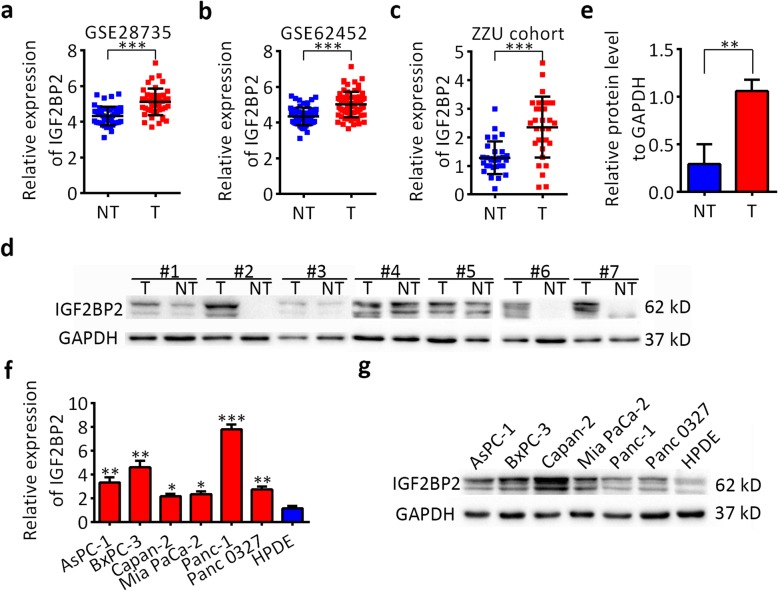
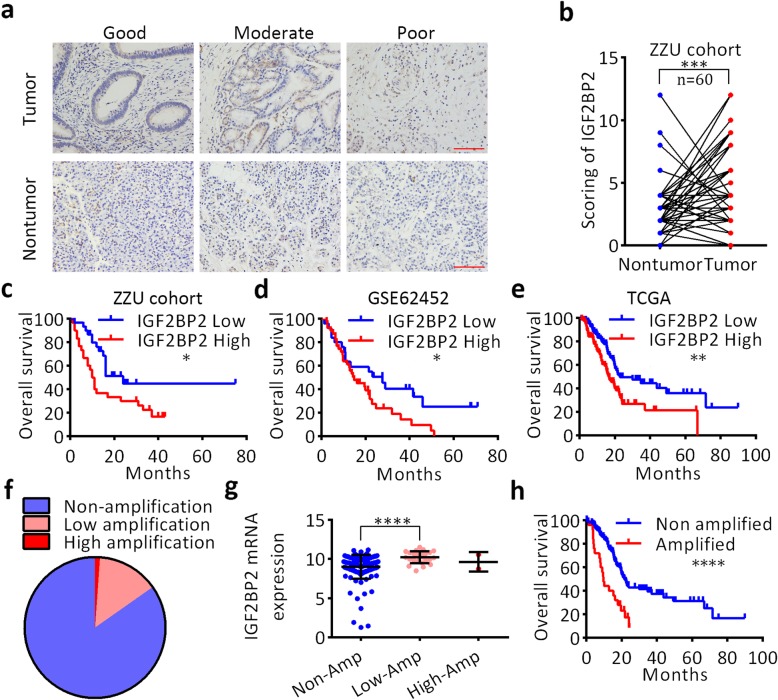
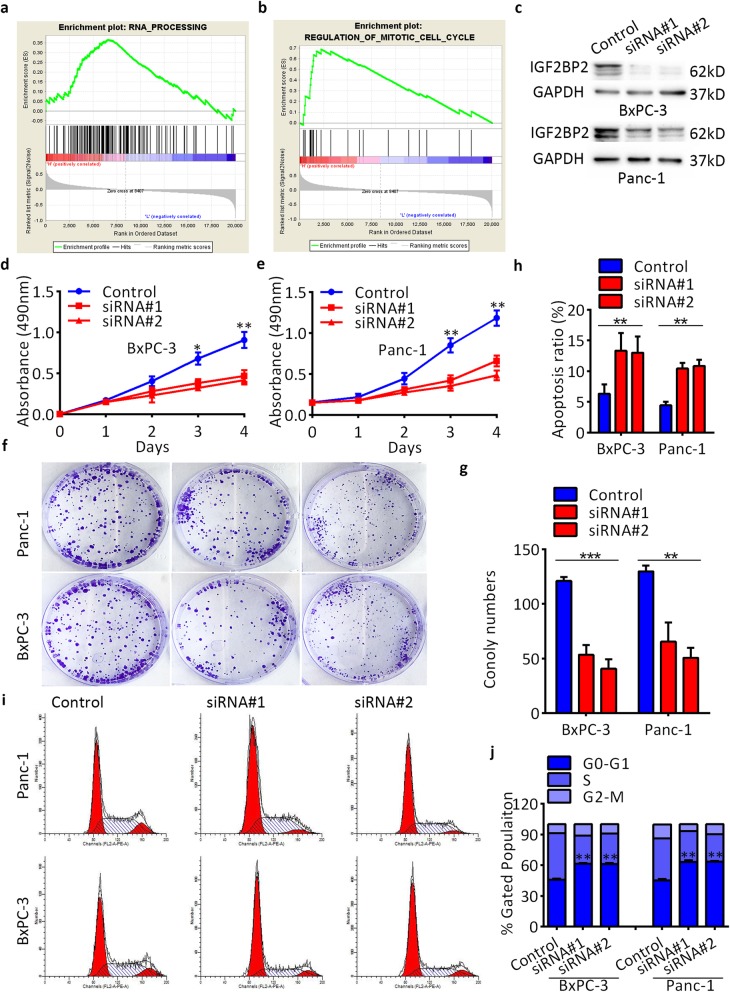
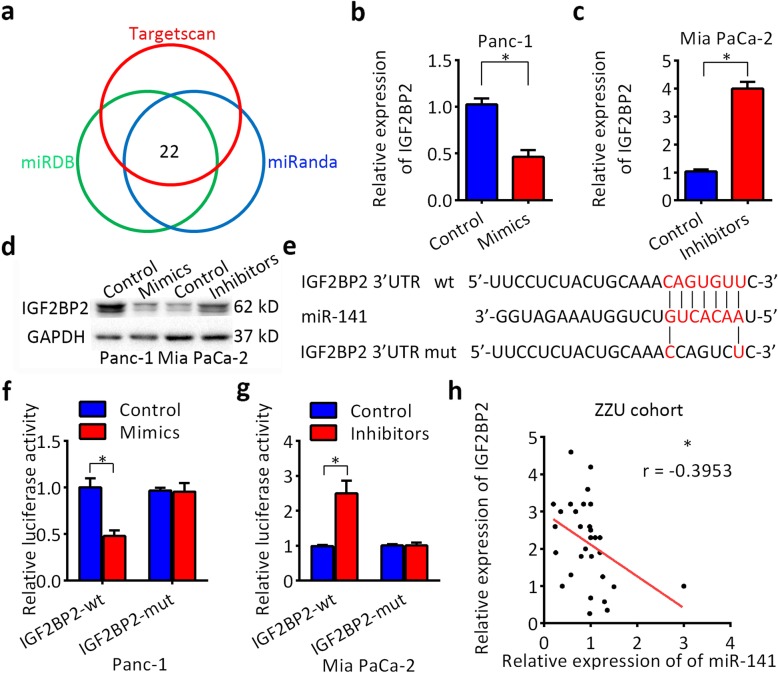
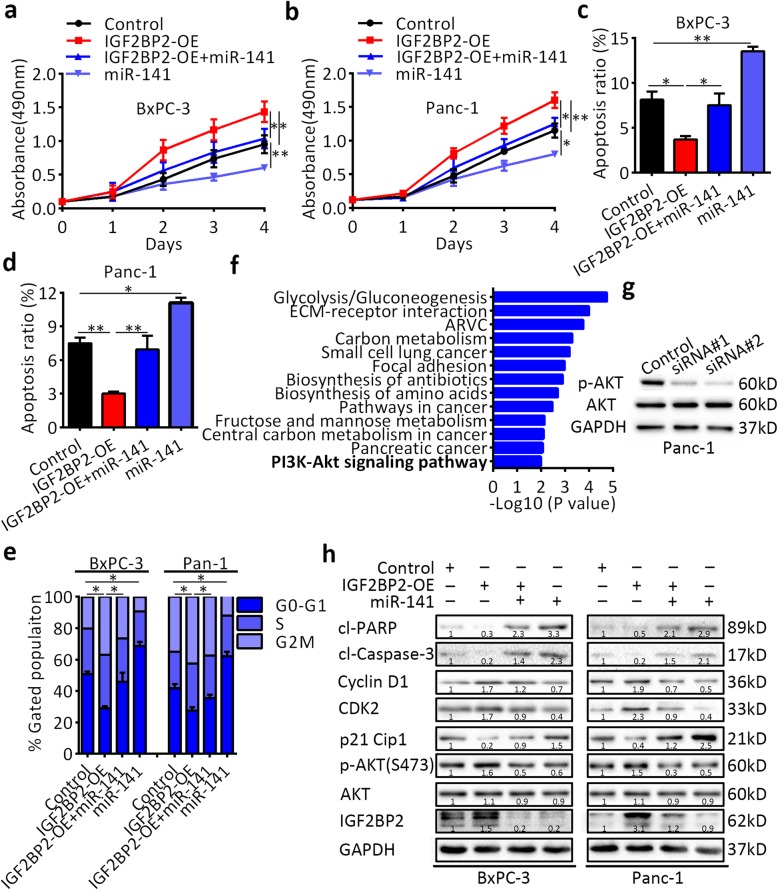
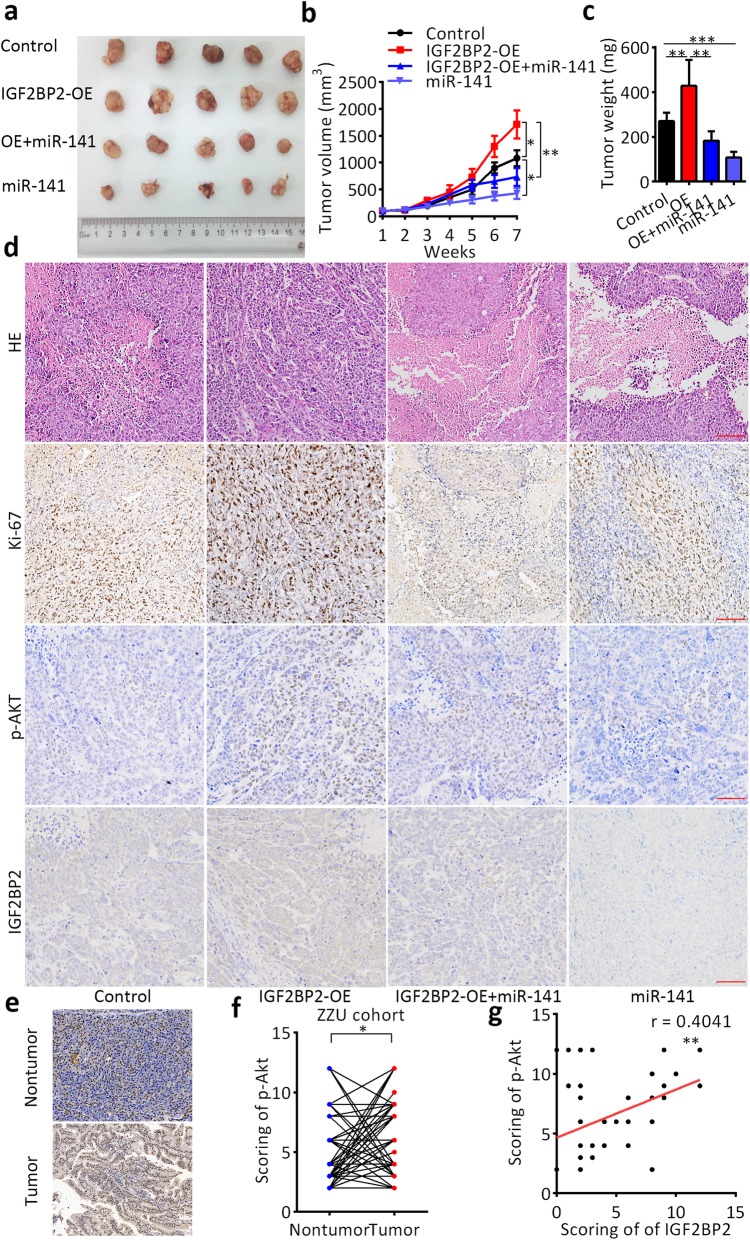
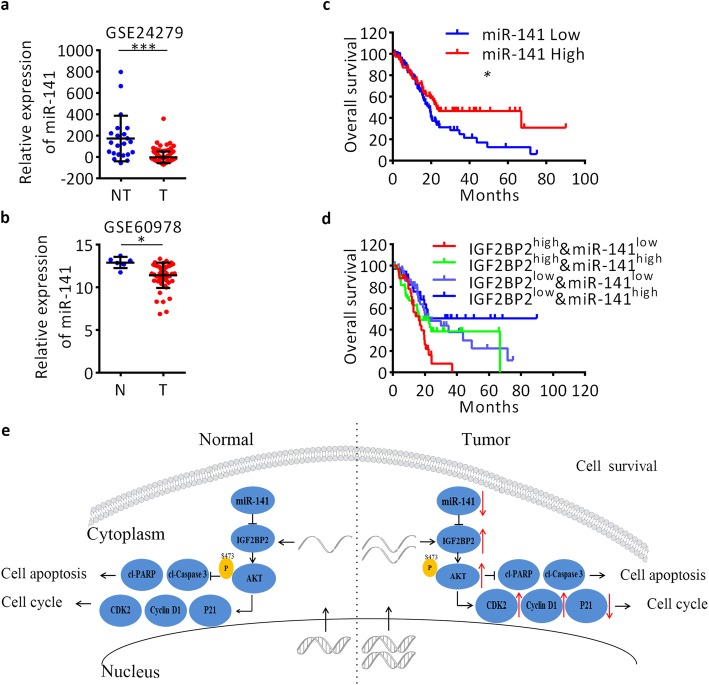
Background: The survival of pancreatic cancer patients remains poor. However, the underlying molecular mechanism and new therapeutic target of pancreatic cancer are still needed to be found. Many studies have shown that the IGF2 mRNA-binding protein 2 (IGF2BP2) plays oncogenic roles in cancers. However, the clinical significance, role and molecular mechanisms of IGF2BP2 in pancreatic cancer remain unclear. Methods: The expression of IGF2BP2 and miR-141 was detected in pancreatic cancer, and clinical significances were analyzed by statistical analysis. The function of IGF2BP2 and miR-141 was determined in vitro and in vivo, and the underlying mechanism was investigated. The gene copy number variation (CNV) of IGF2BP2 was analyzed based on The Cancer Genome Atlas (TCGA) dataset. microRNAs (miRNAs) regulating IGF2BP2 were predicted by online tools and confirmed by experiments. Results: IGF2BP2 is overexpressed in pancreatic cancer tissues compared with control tissues. Upregulation of IGF2BP2 predicts shorter overall survival (OS) in pancreatic cancer patients by statistical analysis. IGF2BP2 overexpression is partially due to genomic amplification. Bioinformatics analyses and validation experiments showed that IGF2BP2 is a direct target of miR-141. A negative correlation between IGF2BP2 mRNA expression and the expression of miR-141 was observed in pancreatic cancer tissues and more importantly, reexpression of miR-141 rescued the oncogenic role of IGF2BP2. Moreover, upregulating IGF2BP2 expression promotes pancreatic cancer cell growth by activating the PI3K/Akt signaling pathway in vitro and in vivo. Conclusions: We comprehensively reveal the oncogenic role of IGF2BP2 in pancreatic cancer carcinogenesis and confirm that genomic amplification and the silencing of miR-141 contribute to its activation. Our findings highlight that IGF2BP2 may be a promising molecular target for the treatment of pancreatic cancer.
Overview
The claims and statistics of this paper haven’t been checked yet.
Free: it reads the open-access text and checks the first 5 claims that cite a source we can check. Create a free account to check every claim.
Integrity signals
Registry
Cites
Statistics
Figures
Verification
Claims the paper makes
The claims and statistics of this paper haven’t been checked yet.
Free: it reads the open-access text and checks the first 5 claims that cite a source we can check. Create a free account to check every claim.
Claims other papers make about this one
Each is checked against this paper’s own text: does it say what the citing paper says it does?
The source backs part of the claim, not all of it — or backs it for a different population, condition or comparison.
In the citing paper
“Multiple microRNAs act as negative regulators of IMP2 across a variety of biological processes and diseases, including breast, pancreatic, and hepatocellular carcinoma, as well as keratinocyte migration, demonstrating the extensive regulatory network controlling its activity [55,56,57,58,59,60,61].”
From IMPlications of IMP2 in RNA Biology and Disease (2025) · cites this paper as [57]
Experimental — accuracy not yet measured
Self-check
Percentages, sums and reported differences re-computed from the paper’s own numbers.
The self-check needs the paper’s full text.
Citations
Cites
1 retracted
miR-141-3p is a key negative regulator of the EGFR pathway in osteosarcoma
Wang, J., Wang, G., Li, B., Qiu, C., & He, M. (2018) · OncoTargets and Therapy · doi:10.2147/ott.s171304 · Cited by 28
RetractedSiegel, R. L., Miller, K. D., & Jemal, A. (2016) · CA: A Cancer Journal for Clinicians · doi:10.3322/caac.21332 · Cited by 16,003
Bell, J. L., Wächter, K., Mühleck, B., Pazaitis, N., Köhn, M., Lederer, M., & Hüttelmaier, S. (2013) · Cellular and Molecular Life Sciences · doi:10.1007/s00018-012-1186-z · Cited by 783
Ren, J., Ding, L., Zhang, D., Shi, G., Xu, Q., Shen, S., Wang, Y., Wang, T., & Hou, Y. (2018) · Theranostics · doi:10.7150/thno.25541 · Cited by 698
IGF2 mRNA-binding protein 2: biological function and putative role in type 2 diabetes
Christiansen, J., Kolte, A. M., Hansen, T. V. O., & Nielsen, F. C. (2009) · Journal of Molecular Endocrinology · doi:10.1677/jme-09-0016 · Cited by 182
Huang, S., Wa, Q., Pan, J., Peng, X., Ren, D., Huang, Y., Chen, X., & Tang, Y. (2017) · Journal of Experimental & Clinical Cancer Research · doi:10.1186/s13046-017-0645-7 · Cited by 118
Gao, S., Sun, Y. K., Zhang, X., Hu, L., Liu, Y., Chua, C. Y. X., Phillips, L. M., Ren, H., Fleming, J. B., Wang, H., et al. (2016) · Cancer Research · doi:10.1158/0008-5472.can-16-0438 · Cited by 116 · cited 1×
“1 Jianshe east Road, Zhengzhou 450000, China Full list of author information is available at the end of the article are frequently found in pancreatic cancer and associated with the aberrant activation of tumor driver genes [6, 7].”
BackgroundRegulation of tumor angiogenesis by microRNAs: State of the art
Goradel, N. H., Mohammadi, N., Haghi‐Aminjan, H., Farhood, B., Negahdari, B., & Sahebkar, A. (2018) · Journal of Cellular Physiology · doi:10.1002/jcp.27051 · Cited by 113
Zheng, L., Xu, M., Xu, J., Wu, K., Fang, Q., Liang, Y., Zhou, S., Cen, D., Ji, L., Han, W., et al. (2018) · Cell Death & Disease · doi:10.1038/s41419-018-0399-y · Cited by 106
Dai, N., Ji, F., Wright, J., Minichiello, L., Sadreyev, R., & Avruch, J. (2017) · eLife · doi:10.7554/elife.27155 · Cited by 103
Cited by
Items 101–200 of 215
Zheng, S., Liu, D., Wang, F., Jin, Y., Zhao, S., Sun, S., & Wang, S. (2022) · Frontiers in Genetics · doi:10.3389/fgene.2022.906326 · Cited by 12
The role of ALDH1A1 in glioblastoma proliferation and invasion
Huang, Y.-K., Wang, T., Chen, C.-Y., Li, C., Wang, S., Irshad, K., Pan, Y., & Chang, K. (2024) · Chemico-Biological Interactions · doi:10.1016/j.cbi.2024.111202 · Cited by 11
Ding, J., Huang, M., Huang, B., Peng, X., Wu, G., Peng, C., Zhang, H., Mao, C., & Wu, X. (2022) · Environmental and Molecular Mutagenesis · doi:10.1002/em.22509 · Cited by 10
“9 in normal and deletion groups. upregulation activates PI3K/Akt signaling pathway to facilitate pancreatic cancer cell growth (Xu et al., 2019).”
BackgroundZheng, X., Wu, J., Song, L., & Huang, B. (2023) · Experimental and Therapeutic Medicine · doi:10.3892/etm.2023.11876 · Cited by 10
“Moreover, Xu et al (20) revealed that IGF2BP2 plays an oncogenic role in pancreatic cancer carcinogenesis.”
BackgroundImportant players in carcinogenesis as potential targets in cancer therapy: an update
Hermanowicz, J. M., Kwiatkowska, I., & Pawlak, D. (2020) · Oncotarget · doi:10.18632/oncotarget.27689 · Cited by 9
The Emerging Role of m6A Modification in Endocrine Cancer
Ji, X., Wang, Z., Sun, W., & Zhang, H. (2023) · Cancers · doi:10.3390/cancers15041033 · Cited by 9
“[99] confirmed that the miR-141 genome amplification and silencing resulted in IGF2BP2 activation.”
BackgroundSystematic analysis of IGF2BP family members in non-small-cell lung cancer
Gong, L., Liu, Q., Jia, M., & Sun, X. (2024) · Human Genomics · doi:10.1186/s40246-024-00632-6 · Cited by 9
“In pancreatic cancer, upregulation of IGF2BP2 promotes cell proliferation via the PI3K/Akt signaling pathway [23].”
BackgroundSaini, T., Srivastava, D., Raut, R. D., Mishra, P., & Misra, A. (2025) · Cancer Reports · doi:10.1002/cnr2.70096 · Cited by 10
IGF2BP2 serves as a core m6A regulator in head and neck squamous cell carcinoma
Hu, Y., Chen, J., Liu, M., Feng, Q., & Peng, H. (2022) · Bioscience Reports · doi:10.1042/bsr20221311 · Cited by 9
HNF4G stimulates the development of pancreatic cancer by promoting IGF2BP2 transcription
Jian, Z., Zhang, Q., Tong, X., Liu, X., & Zhao, C. (2023) · Clinical & Translational Oncology · doi:10.1007/s12094-022-03048-7 · Cited by 9
“Furthermore, IGF2BP2 may act as an optimistic molecular target for pancreatic cancer therapy [16].”
BackgroundPan, L., She, H., Wang, K., Xia, W., Tang, H., Fan, Y., & Ye, J. (2023) · Scientific Reports · doi:10.1038/s41598-023-33891-9 · Cited by 9
Chanda, S., Lepikhov, K., Dahlem, C., Schymik, H. S., Hoppstädter, J., Geber, A.-K., Wagner, K., Kessler, S. M., Empting, M., & Kiemer, A. K. (2024) · Frontiers in Bioscience-Landmark · doi:10.31083/j.fbl2901041 · Cited by 8
LncRNA TMEM99 Complexes with IGF2BP2 to Inhibit Autophagy in Lung Adenocarcinoma
Wu, Z., Zhao, Y., Peng, Y., Liu, P., Huang, Q., Wo, Y., Pan, Y., Zheng, D., Yuan, C., Shang, Y., et al. (2025) · Advanced Science · doi:10.1002/advs.202507871 · Cited by 8
Regulation of m6A (N6-Methyladenosine) methylation modifiers in solid cancers
Singh, S., Gupta, S., Abhishek, R., & Sachan, M. (2024) · Functional & Integrative Genomics · doi:10.1007/s10142-024-01467-z · Cited by 8
“IGF2BP1 and IGF2BP2 promote the cancer progression, cancer cell stemness, and tumor metastasis by stabilizing several mRNAs, as shown in some solid cancers via activation of the PI3K/Akt signalling pathway, especially in prostate cancer (Xu X et al. 2019).”
Roles of Major RNA Adenosine Modifications in Head and Neck Squamous Cell Carcinoma
Huo, X., Wang, S., Song, H., Li, M., Yu, H., Wang, M., Gong, H.-X., Qiu, X., Zhu, Y., & Zhang, J. (2021) · Frontiers in Pharmacology · doi:10.3389/fphar.2021.779779 · Cited by 8
Ge, F., Zhu, H., Liu, X., Li, Y., Guo, R., Zeng, C., Yuan, T., Yang, L., Dong, X., Wu, Y., et al. (2025) · Cell Reports · doi:10.1016/j.celrep.2025.116476 · Cited by 7
IGF2BP2 promotes lung adenocarcinoma progression by regulating LOX1 and tumor-associated neutrophils
Qian, L., Ji, Z., Mei, L., & Zhao, J. (2024) · Immunologic Research · doi:10.1007/s12026-024-09563-9 · Cited by 7
Knockdown of IGF2BP2 overcomes cisplatin-resistance in lung cancer through downregulating Spon2 gene
Zhang, S., Dou, T., Li, H., Yu, H., Zhang, W., Sun, L., Yang, J., Wang, Z., & Yang, H. (2024) · Hereditas · doi:10.1186/s41065-024-00360-w · Cited by 7
“IGF2BP2 has been identified as having oncogenic roles in human cancers [33].”
Lu, J., Yang, P., Yu, L., Xie, N., Wu, Y., & Li, B. (2023) · Diagnostics · doi:10.3390/diagnostics13101697 · Cited by 7
Ye, X., Zheng, X., & Zhu, L. (2025) · PubMed · doi:10.14670/hh-18-871 · Cited by 7
Zhang, T., Zhang, S., Zhang, S.-Y., & Ma, Q. (2022) · Methods · doi:10.1016/j.ymeth.2022.03.008 · Cited by 7
Chen, D., & Jiang, L. (2022) · Computational and Mathematical Methods in Medicine · doi:10.1155/2022/9351921 · Cited by 7
IGF2BP2 regulates gastric cancer radiotherapy resistance through HIF1α-mediated glycolysis
Zhang, Q., Liu, X., Chen, Y., Wang, R., Zhao, S., Tian, Y., Li, S., & Liu, X. (2025) · Frontiers in Oncology · doi:10.3389/fonc.2025.1512177 · Cited by 7
Role of m6A RNA methylation regulators in pancreatic cancer: interactions and potential implications
Liao, L., Xu, X., Cao, Y. J., Tang, K., & Xu, Q. (2025) · Cancer Cell International · doi:10.1186/s12935-025-03922-8 · Cited by 6
“Another study confirmed IGF2BP2 was upregulated by miR-141 to promotes PC growth via activating the PI3K-Akt signaling pathway [107].”
Self-citationWu, C., Huang, X., Mao, L., Wang, Z., Zhang, Y., & Tian, B. (2022) · Future Oncology · doi:10.2217/fon-2022-0429 · Cited by 6
Huang, M. X., Wu, Z., Jia, L., Wang, Y., Gao, S., Liu, Y., Zhang, Y., & Li, J. (2023) · Toxicology and Applied Pharmacology · doi:10.1016/j.taap.2023.116615 · Cited by 6
Zhao, B., Zhang, B., Chenzhang, M., Jiang, K., Wang, D., & Chen, J. (2025) · The International Journal of Biochemistry & Cell Biology · doi:10.1016/j.biocel.2025.106740 · Cited by 5
Tian, S., Liu, J., Yang, X., & Guo, J. (2026) · Frontiers in Immunology · doi:10.3389/fimmu.2026.1783222 · Cited by 5
“In pancreatic cancer and renal cell carcinoma, the rapid proliferation and metastasis of cancer cells are closely linked to this signaling pathway (117, 118).”
Insights into N6-methyladenosine (m6A) modification of noncoding RNA in tumor microenvironment
Zhang, Y., Zhan, L., Li, J., Jiang, X., & Li, Y. (2023) · Aging · doi:10.18632/aging.204679 · Cited by 5
Yu, D., Xiao, Z., Zou, Z., Lin, L., Li, J., Tan, J., & Chen, W. (2023) · Frontiers in Oncology · doi:10.3389/fonc.2023.1252999 · Cited by 5
“It was suggested that IGF2BP2 might contribute to the pathogenesis and development of various tumors (20, 21).”
BackgroundBroholm, M., Degett, T. H., Furbo, S., Fiehn, A. K., Bulut, M., Litman, T., Eriksen, J. O., Troelsen, J. T., Gjerdrum, L. M. R., & Gögenür, I. (2021) · Annals of Surgical Oncology · doi:10.1245/s10434-021-10226-4 · Cited by 6
Yuan, B., Liu, W., Huo, M., Zhang, J., Yang, Y., Gao, T., Yin, X., Yang, T., Teng, X., Huang, W., et al. (2022) · Breast Cancer · doi:10.1007/s12282-022-01341-5 · Cited by 5
“In pancreatic cancer, elevated expression of IGF2BP2 could promote cancer proliferation via activating the PI3K/Akt signaling pathway [37].”
BackgroundNNMT suppresses H3K9me3 to facilitate malignant progression and drug resistance in gastric cancer
Wang, B., & Wu, T. (2025) · Arab Journal of Gastroenterology · doi:10.1016/j.ajg.2024.12.004 · Cited by 4
Long Non-Coding RNAs and RNA-Binding Proteins in Pancreatic Cancer Development and Progression
Preckwinkel, P., Mir, K. U. I., Otto, F. W., Elrewany, H., Sinz, A., Hüttelmaier, S., Bley, N., & Gutschner, T. (2025) · Cancers · doi:10.3390/cancers17101601 · Cited by 4
“Its regulatory impact on LCN2 and IDO1 expression highlights its potential as a therapeutic target to overcome VEGF inhibitor resistance and improve responses to chemotherapy in PDAC.”
Gallbladder Cancer: Epigenetic Landscape, Targeted Therapy, and Prospect of Epitherapy
Sharma, N., Tomar, A., & Tiwari, P. K. (2023) · Springer eBooks · doi:10.1007/978-981-19-6442-8_12 · Cited by 4
Wang, L., Zheng, Z., Zheng, J., Zhang, G., & Wang, Z. (2024) · Cancer Management and Research · doi:10.2147/cmar.s463694 · Cited by 4
Yang, X., Sun, L., Guo, J., Zheng, Y., Ren, T., Liu, Y., Zheng, L., & Ma, J. (2025) · British Journal of Cancer · doi:10.1038/s41416-025-03062-w · Cited by 4
“For instance, in pancreatic cancer (PC), IGF2BP2 is upregulated through multiple mechanisms and promotes tumour cell proliferation by activating the PI3K/Akt signalling pathway [10].”
Role of IGF2 in the Study of Development and Evolution of Prostate Cancer
Porras-Quesada, P. M., González-Cabezuelo, J. M., Sánchez-Conde, V., Sanz, I. P., Arenas-Rodríguez, V., García-López, C., Flores-Martín, J. F., Molina-Hernández, J., Álvarez-Cubero, M., Martínez-González, L. J., et al. (2022) · Frontiers in Genetics · doi:10.3389/fgene.2021.740641 · Cited by 4
“Genomic amplification and silencing of miR-141 also contribute to IGF2BP2 activation; opening promise molecular targets in pancreatic tumors (Xu et al., 2019).”
BackgroundProspective of Pancreatic Cancer Diagnosis Using Cardiac Sensing
Singh, M., Anvekar, P., Baraskar, B., Pallipamu, N., Gadam, S., Cherukuri, A. S. S., Damani, D. N., Kulkarni, K., & Arunachalam, S. P. (2023) · Journal of Imaging · doi:10.3390/jimaging9080149 · Cited by 4
“Patients with pancreatic ductal adenocarcinoma were shown to have excessive levels of IGFBP-1, 3, IGF2BP-2, IGF-1, and IGF1R in their blood and pancreatic cells [42,43].”
BackgroundRegulatory role of RNA modifications in the treatment of pancreatic ductal adenocarcinoma (PDAC)
Chen, H., Luo, W., Lu, X., & Zhang, T. (2023) · Heliyon · doi:10.1016/j.heliyon.2023.e20969 · Cited by 4
“Elevated levels of IGF2BP2 have been observed in both pancreatic intraepithelial neoplasia (PanIN) and pancreatic cancer tissues, indicating more rapid tumor progression and shorter overall survival [123 – 125].”
BackgroundWang, Y., Xu, L., Tapu, M. S. R., Jiao, T., Lin, X., Song, W., Wang, L., Nie, L., Cheng, J., Xing, L., et al. (2024) · Combinatorial Chemistry & High Throughput Screening · doi:10.2174/0113862073316437240426071022 · Cited by 4
Zhang, M., Zhang, C., Zhou, F., Yang, R., Feng, Y., Ji, Y., Ren, H., & Ming, L. (2025) · Molecular Carcinogenesis · doi:10.1002/mc.23903 · Cited by 4
IMPlications of IMP2 in RNA Biology and Disease
Das, J., Busia-Bourdain, O., Khan, K. M., & Wolfe, A. L. (2025) · International Journal of Molecular Sciences · doi:10.3390/ijms26062415 · Cited by 3
Xiang, Z., Yu, S., Xu, Y., Xiong, H., Hu, D., Li, Q., & Wu, Z. (2024) · Cancer Medicine · doi:10.1002/cam4.70312 · Cited by 3
Yu, H., Zhang, Y., Yang, R., Xie, C., Liao, Z., & Zhou, T. (2024) · Oncology Letters · doi:10.3892/ol.2024.14858 · Cited by 3
Lu, S., Hua, J., Liu, J., Wei, M., Liang, C., Meng, Q., Zhang, B., Yu, X., Wang, W., Xu, J., et al. (2023) · Computational and Structural Biotechnology Journal · doi:10.1016/j.csbj.2023.03.037 · Cited by 3
Comprehensive Investigation of m6A Regulators for Prognosis in Head and Neck Squamous Cell Carcinoma
Cheng, J., Lyu, Y., & Cheng, Z. (2023) · Journal of Environmental Pathology Toxicology and Oncology · doi:10.1615/jenvironpatholtoxicoloncol.2023047701 · Cited by 3
Shi, X. X., Sheng, Y., Fei, H., Wei, B., Zhang, Z., Xia, X., Mao, C., & Si, X. (2024) · Breast Cancer Research and Treatment · doi:10.1007/s10549-024-07355-1 · Cited by 3
“In addition, some identified co-expressed genes, including ANXA1, KRT5, EGFR, IGF2BP2, PLOD2, ITGA, NDUFA4, and SLC9A3R1, have been linked to various cancers as predictive biomarkers [12–19].”
Wu, N., Zhou, C., Xu, Y., Liu, Z., Jiang, R., Luo, Y., Jiang, P., Mu, Y., Xiao, S., Huang, X., et al. (2025) · International Journal of Molecular Sciences · doi:10.3390/ijms26115105 · Cited by 2
“We also enriched the PI3K-AKT signaling pathway, which is strongly associated with malignant phenotypes of PAAD [24–26].”
Li, K., Qin, K., Li, D., Wu, Z., Ma, Y., Zhao, S., Chen, P., Jiang, Y., Cao, Y., Luo, J., et al. (2026) · International Journal of Biological Macromolecules · doi:10.1016/j.ijbiomac.2026.150088 · Cited by 2
Pan-cancer analysis identified IGF2BP2 as a potential prognostic biomarker for multiple tumor types
Zhou, H.-L., Chen, D.-D., & Li, X.-L. (2024) · Egyptian Journal of Medical Human Genetics · doi:10.1186/s43042-023-00468-0 · Cited by 2
“Aligned with prior research, similar results were observed in cases of COAD, ESCA, GBM, HNSC, LAML, LIHC, and PAAD [9, 11, 12, 14, 36–39].”
BackgroundResultLoss of miR-634 contributes to the formation FOXA1-positive triple negative breast cancer subtype
Ren, F., Rui, X., & Xiao, X. (2024) · Discover Oncology · doi:10.1007/s12672-024-01472-5 · Cited by 2
“An important mechanism by which PI3K promotes tumor development is dependent on facilitating rapid cell cycle transitions [26, 27].”
BackgroundXia, C., Chen, D., Wang, G., Sun, H., Lin, J.-R., Chen, C., Shen, T., Cheng, H., Pan, C., Xu, D., et al. (2022) · Computational and Mathematical Methods in Medicine · doi:10.1155/2022/4640849 · Cited by 2
“Aberrant activation of these pathways are involved in cell survival, cell cycle progression, and cell apoptosis [29, 30].”
BackgroundRetractedWei, Y., Zhong, W., Bi, Y., Liu, X., Zhou, Q., Liu, J., Wang, M., Zhang, H., & Chen, M. (2023) · Current Medicinal Chemistry · doi:10.2174/0929867331666230914151943 · Cited by 2
Lu, F., Gao, G. F., Zhang, H., & Zhang, W. (2024) · Nucleosides Nucleotides & Nucleic Acids · doi:10.1080/15257770.2024.2333036 · Cited by 2
“[15,23] This meta-analysis included seven published research articles on the relevance between the rs4402960 G > T variant and carcinoma risk.”
Zhou, W., Gao, Q., He, C., Wang, L., Wang, Y., Feng, L., Li, W., Liu, W., Ma, R., & Liu, L. (2023) · Clinical Medicine Insights Oncology · doi:10.1177/11795549231201128 · Cited by 2
“14 Furthermore, the knockdown of the IGF2BP2 gene significantly reduced the invasion and migration of gastric cancer cells.”
BackgroundChen, W., Lin, T., Wang, Z., Zeng, L., Lin, H., Yang, G., & Huang, W. (2024) · Journal of Cancer Metastasis and Treatment · doi:10.20517/2394-4722.2024.43 · Cited by 1
Zhao, Y., Zhang, D., Zheng, H., Chen, X., & Xu, L. (2026) · Translational Cancer Research · doi:10.21037/tcr-2025-1417 · Cited by 1
“Upregulation of the IGF2BP2 protein was also related to promoting HCC cell growth, proliferation, and metastasis by promoting the PI3K/Akt pathway (49).”
Shu, W.-B., Lin, Y., Yan, Y., Sun, Y., Wu, X., & Cao, Q. (2021) · Research Square · doi:10.21203/rs.3.rs-711778/v1 · Cited by 1
Wang, X., Kong, W., Guo, F., Sha, R., Zhao, G., Qiao, W., Xu, K., Feng, Y., Sun, W. Y., & Ma, X. (2021) · Research Square · doi:10.21203/rs.3.rs-962889/v1 · Cited by 1
Pinin promotes tumor progression via PI3K/AKT/CREB signaling pathway in prostate cancerPreprint
Meng, X.-Y., Zhang, H., Ren, Y., Wang, K., Chen, J., Su, R., Jiang, J., Wang, P., & Ma, Q. (2020) · doi:10.21203/rs.3.rs-40235/v1
“Because PI3K/AKT signaling pathway is one of the most important pathways which regulates cell survival, proliferation, metabolism as well as cytoskeletal reorganization in human cancers including prostate cancer [29-31], we determined the effects of PNN on PI3K/AKT signaling pathway.”
BackgroundEditorial: Perturbation of RNA Binding Protein Regulation in Cancer
Li, Y., & Xu, J. (2021) · Frontiers in Genetics · doi:10.3389/fgene.2021.693766
METTL3 Promotes Pancreatic Tumor Progression Through Regulating the miR-196a/CPEB3 AxisPreprint
Ge, P., Fan, D., He, L., Wu, Q., Sun, J. G., Xu, L., & Xie, G. W. (2020) · doi:10.21203/rs.3.rs-101231/v1
“Although numerous research focused on the molecular pathogenesis of pancreatic cancer development and progression [4, 5], the speci c mechanism of pancreatic progression remains unclear.”
BackgroundWu, X. Y., Sheng, H., Xia, P., Wang, Y., Li, Y., Lv, W., & Hu, J. (2020) · Research Square · doi:10.21203/rs.3.rs-60079/v1
“Furthermore, the up-regulated IGF2BP2 expression promoted tumor cell growth by activating the PI3K/Akt signaling pathway [62].”
BackgroundSUMOylation of IGF2BP2 Promotes Vasculogenic Mimicry of Glioma Via Regulating OIP5-AS1/miR-495-3pPreprint
Li, H. R., Wang, D., Yi, B., Cai, H., Wang, Y., Lou, X., Xi, Z., & Li, Z. (2021) · Research Square · doi:10.21203/rs.3.rs-152465/v1
Yang, C., Xiao, S., Lu, Y., Lei, Y., Li, M., Li, X., Wang, B., Sun, P., & Zhu, Y. (2022) · SSRN Electronic Journal · doi:10.2139/ssrn.4047874
LINC01137 facilitate pancreatic cancer stemness via the miR-7155-5p/KLF12/AKT axisPreprint
Li, K., Feng, Z., Qin, K., Ma, Y., Zhao, S., Chen, P., Lin, J., Jiang, Y., Han, L., Cao, Y., et al. (2022) · Research Square · doi:10.21203/rs.3.rs-2065916/v1
LINC01137 facilitates pancreatic cancer stemness via the miR-7155-5p/KLF12/AKT axisPreprint
Peng, C., Li, K., Feng, Z., Qin, K., Luo, J., Ma, Y., Zhao, S., Chen, P., Lin, J., Jiang, Y., et al. (2023) · Research Square · doi:10.21203/rs.3.rs-2411868/v1
Liu, L., Liu, J., Wang, K., & Zhu, Y. (2023) · Science of Advanced Materials · doi:10.1166/sam.2023.4532
Liu, Y., Shi, M., He, X., Cao, Y., Liu, P., Li, F., Zou, S., Wen, C., Zhan, Q., Xu, Z., et al. (2022) · Figshare · doi:10.6084/m9.figshare.19728745
Liu, Y., Shi, M., He, X., Cao, Y., Liu, P., Li, F., Zou, S., Wen, C., Zhan, Q., Xu, Z., et al. (2022) · Figshare · doi:10.6084/m9.figshare.19728742
Liu, Y., Shi, M., He, X., Cao, Y., Liu, P., Li, F., Zou, S., Wen, C., Zhan, Q., Xu, Z., et al. (2022) · Figshare · doi:10.6084/m9.figshare.19728739
He, C., Huang, F., Zhang, K., Wei, J., Hu, K., & Liang, M. (2021) · Figshare · doi:10.6084/m9.figshare.13728514
Wang, L., Zhang, S., Li, H., Xu, Y., Wu, Q., Shen, J., Li, T., & Xu, Y. (2021) · Figshare · doi:10.6084/m9.figshare.15087343
Importance of miRNAs in Cancer Therapy and Therapeutic Delivery Approaches
Gültekin, E. S., & Maraklı, S. (2024) · International Journal of Pioneering Technology and Engineering · doi:10.56158/jpte.2024.71.3.02
Zhang, X., Liang, J., Deng, Z., Chen, J., & Gong, L. (2025) · Current Science · doi:10.18520/cs/v129/i8/682-690
Pu, Z., Duda, D. G., Zhu, Y., Pei, S., Wang, X., Huang, Y., Yi, P., Huang, Z., Peng, F., Hu, X., et al. (2022) · Figshare · doi:10.6084/m9.figshare.19766202
Liu, Y., Shi, M., He, X., Cao, Y., Liu, P., Li, F., Zou, S., Wen, C., Zhan, Q., Xu, Z., et al. (2022) · Figshare · doi:10.6084/m9.figshare.19728754
Zhang, Z., Yu, H., Yao, W., Zhu, N., Miao, R., Liu, Z., Song, X., Xue, C., Cai, C., Cheng, M., et al. (2022) · Figshare · doi:10.6084/m9.figshare.21629124
Zhang, Z., Yu, H., Yao, W., Zhu, N., Miao, R., Liu, Z., Song, X., Xue, C., Cai, C., Cheng, M., et al. (2022) · Figshare · doi:10.6084/m9.figshare.21629133
Additional file 1 of Systematic analysis of IGF2BP family members in non-small-cell lung cancer
Gong, L., Liu, Q., Jia, M., & Sun, X. (2024) · Figshare · doi:10.6084/m9.figshare.26027461
Liu, Y., Shi, M., He, X., Cao, Y., Liu, P., Li, F., Zou, S., Wen, C., Zhan, Q., Xu, Z., et al. (2022) · Figshare · doi:10.6084/m9.figshare.19728733
Pu, Z., Duda, D. G., Zhu, Y., Pei, S., Wang, X., Huang, Y., Yi, P., Huang, Z., Peng, F., Hu, X., et al. (2022) · Figshare · doi:10.6084/m9.figshare.19766196
Pu, Z., Duda, D. G., Zhu, Y., Pei, S., Wang, X., Huang, Y., Yi, P., Huang, Z., Peng, F., Hu, X., et al. (2022) · Figshare · doi:10.6084/m9.figshare.19766208
Wang, L., Zhang, S., Li, H., Xu, Y., Wu, Q., Shen, J., Li, T., & Xu, Y. (2021) · Figshare · doi:10.6084/m9.figshare.15087346
Pu, Z., Duda, D. G., Zhu, Y., Pei, S., Wang, X., Huang, Y., Yi, P., Huang, Z., Peng, F., Hu, X., et al. (2022) · Figshare · doi:10.6084/m9.figshare.19766190
Li, Y., Xiao, Z., Wang, Y., Zhang, D., & Chen, Z. (2024) · Figshare · doi:10.6084/m9.figshare.25792872
Liu, Y., Shi, M., He, X., Cao, Y., Liu, P., Li, F., Zou, S., Wen, C., Zhan, Q., Xu, Z., et al. (2022) · Figshare · doi:10.6084/m9.figshare.19728748
He, C., Huang, F., Zhang, K., Wei, J., Hu, K., & Liang, M. (2021) · Figshare · doi:10.6084/m9.figshare.13728505
He, C., Huang, F., Zhang, K., Wei, J., Hu, K., & Liang, M. (2021) · Figshare · doi:10.6084/m9.figshare.13728511
Pu, Z., Duda, D. G., Zhu, Y., Pei, S., Wang, X., Huang, Y., Yi, P., Huang, Z., Peng, F., Hu, X., et al. (2022) · Figshare · doi:10.6084/m9.figshare.19766181
Pu, Z., Duda, D. G., Zhu, Y., Pei, S., Wang, X., Huang, Y., Yi, P., Huang, Z., Peng, F., Hu, X., et al. (2022) · Figshare · doi:10.6084/m9.figshare.19766205
Pu, Z., Duda, D. G., Zhu, Y., Pei, S., Wang, X., Huang, Y., Yi, P., Huang, Z., Peng, F., Hu, X., et al. (2022) · Figshare · doi:10.6084/m9.figshare.19766199
Pu, Z., Duda, D. G., Zhu, Y., Pei, S., Wang, X., Huang, Y., Yi, P., Huang, Z., Peng, F., Hu, X., et al. (2022) · Figshare · doi:10.6084/m9.figshare.19766187
Pu, Z., Duda, D. G., Zhu, Y., Pei, S., Wang, X., Huang, Y., Yi, P., Huang, Z., Peng, F., Hu, X., et al. (2022) · Figshare · doi:10.6084/m9.figshare.19766184
Li, Y., Xiao, Z., Wang, Y., Zhang, D., & Chen, Z. (2024) · Figshare · doi:10.6084/m9.figshare.25792763
He, C., Huang, F., Zhang, K., Wei, J., Hu, K., & Liang, M. (2021) · Figshare · doi:10.6084/m9.figshare.13728508
Liu, Y., Shi, M., He, X., Cao, Y., Liu, P., Li, F., Zou, S., Wen, C., Zhan, Q., Xu, Z., et al. (2022) · Figshare · doi:10.6084/m9.figshare.19728757
Zhang, Z., Yu, H., Yao, W., Zhu, N., Miao, R., Liu, Z., Song, X., Xue, C., Cai, C., Cheng, M., et al. (2022) · Figshare · doi:10.6084/m9.figshare.21629130
Liu, Y., Shi, M., He, X., Cao, Y., Liu, P., Li, F., Zou, S., Wen, C., Zhan, Q., Xu, Z., et al. (2022) · Figshare · doi:10.6084/m9.figshare.19728736
Metadata
- Authors
- Xu, X., Yu, Y., Zong, K., Lv, P., & Gu, Y.
- Affiliations
- First Affiliated Hospital of Zhengzhou University (CN)
- Corresponding author
- Lv, Pengwei
- ORCID
- Venue
- Journal of Experimental & Clinical Cancer Research
- Published
- 2019-12
- Volume
- 38
- Issue
- 1
- Pages
- 497-497
- ISSN
- 0392-9078 (ISSN-L)
- 1756-9966
- PMC
- PMC6921559
- OpenAlex
- W2995202505
- Semantic Scholar
- 9dd058402ff10a8166b316f18d526a76c4a87743
- Cited by
- 203
- References
- 25
- Citations by year
- 2026: 9 · 2025: 17 · 2024: 27 · 2023: 28 · 2022: 68 · 2021: 42 · 2020: 12
- FWCI
- 13.27
- Type
- journal article
- Language
- en
- Open access
- gold
- doi.org
- Licence
- cc-by
- creativecommons.org/licenses/by/4.0/ (tdm)
- creativecommons.org/licenses/by/4.0/ (vor, 17 d)
- Locations
- Journal of Experimental & Clinical Cancer Research (publishedVersion, cc-by)
- PubMed Central (publishedVersion, cc-by)
- PubMed (publishedVersion)
- DOAJ (DOAJ: Directory of Open Access Journals) (submittedVersion)
- Topics
- Health Sciences › Medicine › Oncology › Pancreatic and Hepatic Oncology Research
- Life Sciences › Biochemistry, Genetics and Molecular Biology › Cancer Research › MicroRNA in disease regulation
- Life Sciences › Biochemistry, Genetics and Molecular Biology › Cancer Research › Cancer-related molecular mechanisms research
- Keywords
- IGF2BP2, pancreatic cancer, miR-141, PI3K/Akt signaling, gene amplification, oncogenes, tumor cell proliferation, overall survival, microRNA regulation, therapeutic target
- MeSH terms
- Aged, Aged, 80 and over, Animals, Cell Cycle, Cell Movement, Disease Models, Animal, Female, Gene Amplification, Humans, Middle Aged, Models, Biological, Pancreatic Neoplasms, Prognosis, Biomarkers, Tumor, Signal Transduction, Gene Expression Regulation, Neoplastic, RNA-Binding Proteins, Apoptosis, Phosphatidylinositol 3-Kinases, RNA Interference, MicroRNAs, Cell Line, Tumor, Cell Proliferation, Proto-Oncogene Proteins c-akt, Mice, Heterografts
About these checks
Registry, retraction, Cites and statistics results are computed, not judged, with one exception: a printed reference that no index lists is read once by a model before it counts as a citation error. Claims are extracted by a model and kept only when their quote appears verbatim in the text; each cited source is then checked, with a model’s help, for whether it says what the claim relies on. Those verdicts can be wrong — read the claim’s quote and the cited source before relying on one.
Statistics and arithmetic are recomputed, not judged.
Confidence bands are shown only for fields calibrated on our annotated test set. None is calibrated yet, so no band is shown.
What counts as a claim ›How we measure confidence ›How we check this ›
Are you an author, or do you see a problem with this page? Request a review
Data sources
Bibliographic data: Semantic Scholar, OpenAlex, Crossref.
Contains information from the Semantic Scholar Academic Graph Datasets, made available under the ODC Attribution License (ODC-BY 1.0).
Semantic Scholar’s data is described in: Kinney, R., et al. (2023). The Semantic Scholar Open Data Platform. arXiv:2301.10140.
