

Targeting hypoxia in the tumor microenvironment: a potential strategy to improve cancer immunotherapy
Open accessThe DOI matches its Crossref record; 111 of the 111 references it cites were found in a registry or an index.
Abstract
With the success of immune checkpoint inhibitors (ICIs), significant progress has been made in the field of cancer immunotherapy. Despite the long-lasting outcomes in responders, the majority of patients with cancer still do not benefit from this revolutionary therapy. Increasing evidence suggests that one of the major barriers limiting the efficacy of immunotherapy seems to coalesce with the hypoxic tumor microenvironment (TME), which is an intrinsic property of all solid tumors. In addition to its impact on shaping tumor invasion and metastasis, the hypoxic TME plays an essential role in inducing immune suppression and resistance though fostering diverse changes in stromal cell biology. Therefore, targeting hypoxia may provide a means to enhance the efficacy of immunotherapy. In this review, the potential impact of hypoxia within the TME, in terms of key immune cell populations, and the contribution to immune suppression are discussed. In addition, we outline how hypoxia can be manipulated to tailor the immune response and provide a promising combinational therapeutic strategy to improve immunotherapy.
Overview
The claims and statistics of this paper haven’t been checked yet.
Free: it reads the open-access text and checks the first 5 claims that cite a source we can check. Create a free account to check every claim.
Integrity signals
Registry
Cites
Statistics
Figures
Verification
Claims the paper makes
The claims and statistics of this paper haven’t been checked yet.
Free: it reads the open-access text and checks the first 5 claims that cite a source we can check. Create a free account to check every claim.
Claims other papers make about this one
Each is checked against this paper’s own text: does it say what the citing paper says it does?
The source backs part of the claim, not all of it — or backs it for a different population, condition or comparison.
In the citing paper
“MICA is the ligand for Natural killer group 2 member D (NKG2D), the activating receptor that promotes tumor elimination by NK and CD8+ T cells.”
From Revisiting the HIF switch in the tumor and its immune microenvironment. (2022) · cites this paper as [83]
Experimental — accuracy not yet measuredThe cited source says what the claim attributes to it.
In the citing paper
“Soluble MICA downregulates the NKG2D activating receptor on NK and T cells, facilitating tumor cell escape (Fig. 2C) [83].”
From Revisiting the HIF switch in the tumor and its immune microenvironment. (2022) · cites this paper as [83]
The check wasn’t confident either way, so it gives no verdict — never disputed.
In the citing paper
“In addition, HIF-1α upregulates a disintegrin and metalloproteinase domain-containing protein 10 (ADAM10) in tumor cells, which promotes the shedding of Major histocompatibility complex class I chain related molecule (MICA) from the surface of tumor cells.”
From Revisiting the HIF switch in the tumor and its immune microenvironment. (2022) · cites this paper as [83]
Experimental — accuracy not yet measured
Self-check
Percentages, sums and reported differences re-computed from the paper’s own numbers.
The self-check needs the paper’s full text.
Citations
Cites
Cancer immunotherapy using checkpoint blockade
Ribas, A., & Wolchok, J. D. (2018) · Science · doi:10.1126/science.aar4060 · Cited by 6,791 · cited 1×
“Monoclonal antibodies against cytotoxic T lymphocyte antigen 4 (CTLA4) or programmed cell death protein 1 (PD-1) and its ligand (PD-L1) have achieved never-before-seen clinical benefit and obtained FDA-approval for more than 15 cancer types [2].”
BackgroundMetabolic regulation of gene expression by histone lactylation
Zhang, D., Tang, Z., Huang, H., Zhou, G., Cui, C., Weng, Y., Liu, W., Kim, S., Lee, S., Perez-Neut, M., et al. (2019) · Nature · doi:10.1038/s41586-019-1678-1 · Cited by 4,371 · cited 1×
“kinetics serves as a ‘lactate clock’, which promotes a late-phase switch to a homeostatic phenotype and the expression of genes with M2-like functions after stimulation [61].”
BackgroundFunctional Polarization of Tumour-Associated Macrophages by Tumour-Derived Lactic Acid
Colegio, O. R., Chu, N.-Q., Szabo, A. L., Chu, T., Rhebergen, A. M., Jairam, V., Cyrus, N., Brokowski, C. E., Eisenbarth, S. C., Phillips, G. M., et al. (2014) · Nature · doi:10.1038/nature13490 · Cited by 3,046 · cited 1×
“M2-like polarization of TAMs, which is partly mediated by HIF-1α activation [58].”
BackgroundTop 10 Challenges in Cancer Immunotherapy
Hegde, P. S., & Chen, D. S. (2020) · Immunity · doi:10.1016/j.immuni.2019.12.011 · Cited by 2,238 · cited 2×
“In addition, acquired resistance develops in one-third of patients who initially respond, eventually resulting in disease relapse or progression [3].”
BackgroundNoman, M. Z., Desantis, G., Janji, B., Hasmim, M., Karray, S., Dessen, P., Bronte, V., & Chouaib, S. (2014) · Journal of Experimental Medicine · doi:10.1084/jem.20131916 · Cited by 2,166 · cited 8×
“Under hypoxic conditions, inhibition of PD-L1 promotes MDSCmediated T cell activation along with decreased MDSC production of IL-6 and IL-10 [65].”
BackgroundInfluentialRole of hypoxia in cancer therapy by regulating the tumor microenvironment
Jing, X., Yang, F., Shao, C., Wei, K., Xie, M., Shen, H., & Shu, Y. (2019) · Molecular Cancer · doi:10.1186/s12943-019-1089-9 · Cited by 2,054 · cited 1×
“Substantial cellular stress caused by the hypoxic TME promotes the heterogeneity and plasticity of tumors and contributes to the development of more invasive and therapeutically resistant tumor phenotypes [4].”
BackgroundEnhancing cancer immunotherapy using antiangiogenics: opportunities and challenges
Fukumura, D., Kloepper, J., Amoozgar, Z., Duda, D. G., & Jain, R. K. (2018) · Nature Reviews Clinical Oncology · doi:10.1038/nrclinonc.2018.29 · Cited by 2,027
Macrophages and metabolism in the tumor microenvironment
Vitale, I., Manic, G., Coussens, L. M., Kroemer, G., & Galluzzi, L. (2019) · Cell Metabolism · doi:10.1016/j.cmet.2019.06.001 · Cited by 1,837 · cited 2×
“TAMs constitute the primary immune cell infiltrate in the TME of solid tumors [55].”
BackgroundNormalization of the Vasculature for Treatment of Cancer and Other Diseases
Goel, S., Duda, D. G., Xu, L., Munn, L. L., Boucher, Y., Fukumura, D., & Jain, R. K. (2011) · Physiological Reviews · doi:10.1152/physrev.00038.2010 · Cited by 1,605 · cited 1×
“Some preclinical studies revealed tumor shrinkage after anti-VEGF therapy, others suggesting vascular normalization have been related to increased rates of tumor growth [108].”
BackgroundControl of TH17/Treg Balance by Hypoxia-Inducible Factor 1
Dang, E. V., Barbi, J., Yang, H.-Y., Jinasena, D., Yu, H., Zheng, Y., Bordman, Z., Fu, J., Kim, Y., Yen, H.-R., et al. (2011) · Cell · doi:10.1016/j.cell.2011.07.033 · Cited by 1,595
Cited by
Angiogenic signaling pathways and anti-angiogenic therapy for cancer
Liu, Z.-L., Chen, H.-H., Zheng, L.-L., Sun, L.-P., & Shi, L. (2023) · Signal Transduction and Targeted Therapy · doi:10.1038/s41392-023-01460-1 · Cited by 1,300
Self-citationChallenges in developing personalized neoantigen cancer vaccines
Katsikis, P. D., Ishii, K. J., & Schliehe, C. (2024) · Nature Reviews Immunology · doi:10.1038/s41577-023-00937-y · Cited by 258
“These physical conditions can all impair the activity of neoantigen-specific T cells 170,171 , highlighting the need for novel approaches to manipulate the cancer microenvironment for more efficient T cell responses.”
Revisiting the HIF switch in the tumor and its immune microenvironment.
Cowman, S. J., & Koh, M. Y. (2022) · Trends in Cancer · doi:10.1016/j.trecan.2021.10.004 · Cited by 256
Hypoxia as a driver of resistance to immunotherapy
Kopecka, J., Salaroglio, I. C., Perez-Ruiz, E., Sarmento-Ribeiro, A. B., Saponara, S., De Las Rivas, J., & Riganti, C. (2021) · Drug Resistance Updates · doi:10.1016/j.drup.2021.100787 · Cited by 246
Harnessing Nanomaterials for Cancer Sonodynamic Immunotherapy
Liang, S., Yao, J., Liu, D., Rao, L., Chen, X., & Wang, Z. (2023) · Advanced Materials · doi:10.1002/adma.202211130 · Cited by 243
Resistance mechanisms to immune checkpoint inhibitors: updated insights
Alsaafeen, B. H., Ali, B. R., & Elkord, E. (2025) · Molecular Cancer · doi:10.1186/s12943-024-02212-7 · Cited by 191
“Moreover, role of VEGF in upregulating the expression of inhibitory immune checkpoint molecules, including PD-1, CTLA-4, LAG-3, TIM-3 and PD-L1, on tumor cells and intratumoral immune cells was documented [211–213].”
Interfering with Tumor Hypoxia for Radiotherapy Optimization
Telarovic, I., Wenger, R. H., & Pruschy, M. (2021) · Journal of Experimental & Clinical Cancer Research · doi:10.1186/s13046-021-02000-x · Cited by 185
Insights on functionalized carbon nanotubes for cancer theranostics
Tang, L., Xiao, Q., Mei, Y., He, S., Zhang, Z., Wang, R., & Wang, W. (2021) · Journal of Nanobiotechnology · doi:10.1186/s12951-021-01174-y · Cited by 184
“As hypoxia is one of the most characteristic features of rapidly proliferating solid tumor, which makes them become aggressive and difficult to treat, therefore, tumor hypoxia is regarded as a potential therapeutic target and a lot of researches have already reported that HIF-1α inhibition can suppress tumor growth by…”
BackgroundA comprehensive review of immune checkpoint inhibitors for cancer treatment
Arafat Hossain, M. (2024) · International Immunopharmacology · doi:10.1016/j.intimp.2024.113365 · Cited by 178
Bigos, K. J. A., Quiles, C. G., Lunj, S., Smith, D. J., Krause, M., Troost, E. G. C., West, C., Hoskin, P., & Choudhury, A. (2024) · Frontiers in Oncology · doi:10.3389/fonc.2024.1331355 · Cited by 168
Antiangiogenic–immune-checkpoint inhibitor combinations: lessons from phase III clinical trials
Kuo, H., Khan, K. A., & Kerbel, R. S. (2024) · Nature Reviews Clinical Oncology · doi:10.1038/s41571-024-00886-y · Cited by 151
“Indeed, the efficacy of virtually every therapeutic modality (including not only radiotherapy, chemotherapy and molecularly targeted therapies, but also immunotherapies) can be compromised by hypoxia in the TME 21–23, 60,61 .”
Fu, Z., Mowday, A. M., Smaill, J. B., Hermans, I. F., & Patterson, A. V. (2021) · Cells · doi:10.3390/cells10051006 · Cited by 147
“Moreover, it has been recognised that hypoxia is central to the generation of an immunosuppressive TME, thereby inhibiting the antitumour immune response [16,52,74].”
BackgroundVerma, N. K., Wong, B. H. S., Poh, Z. S., Udayakumar, A., Verma, R., Goh, R. K. J., Duggan, S. P., Shelat, V. G., Chandy, K. G., & Grigoropoulos, N. F. (2022) · EBioMedicine · doi:10.1016/j.ebiom.2022.104216 · Cited by 144
Zhang, F., Liu, H., Duan, M., Wang, G., Zhang, Z., Wang, Y., Qian, Y., Yang, Z., & Jiang, X. (2022) · Journal of Hematology & Oncology · doi:10.1186/s13045-022-01304-5 · Cited by 127
Self-citationTang, Q., Sun, S., Wang, P., Sun, L., Wang, Y., Zhang, L., Xu, M., Chen, J., Wu, R., Zhang, J., et al. (2023) · Advanced Materials · doi:10.1002/adma.202300964 · Cited by 108
The impact of hypoxia on immune state in cancer
Mortezaee, K., & Majidpoor, J. (2021) · Life Sciences · doi:10.1016/j.lfs.2021.120057 · Cited by 107
Hypoxia within the glioblastoma tumor microenvironment: a master saboteur of novel treatments
Feldman, L. A. (2024) · Frontiers in Immunology · doi:10.3389/fimmu.2024.1384249 · Cited by 104
Nanomedicine Strategies in Conquering and Utilizing the Cancer Hypoxia Environment
Pan, Y., Liu, L., Mou, X., & Cai, Y. (2023) · ACS Nano · doi:10.1021/acsnano.3c07763 · Cited by 101
Key Players of the Immunosuppressive Tumor Microenvironment and Emerging Therapeutic Strategies
Park, K., Veena, M. S., & Shin, D. S. (2022) · Frontiers in Cell and Developmental Biology · doi:10.3389/fcell.2022.830208 · Cited by 98
Chen, Z., Zuo, X., Cai, J., Zhang, Y., Han, G., Zhang, L., Ding, W., Wu, J., & Wang, X. (2023) · Experimental Hematology and Oncology · doi:10.1186/s40164-023-00378-2 · Cited by 95
“Hypoxia affects tumor immunity and plays a crucial role in modulating the efficacy of anti-PD-1/PD-L1 treatment in cancers [11].”
BackgroundSelf-citationWang, B., Yin, H., Zhang, Y., Zhao, Q., Wang, H., Wei, J., Meng, L., Xin, Y., & Jiang, X. M. (2023) · Cell & Bioscience · doi:10.1186/s13578-023-01073-9 · Cited by 92
“Hypoxia within the TME is an intrinsic property of all solid malignant tumors, and we have detailed how to target hypoxic TME synergistically with immunotherapy in another review [80].”
BackgroundSelf-citationTumor hypoxia unveiled: insights into microenvironment, detection tools and emerging therapies
Ciepła, J., & Smolarczyk, R. (2024) · Clinical and Experimental Medicine · doi:10.1007/s10238-024-01501-1 · Cited by 94
“Furthermore, combining therapies targeting TAMs with immune check-point inhibitors or other immunomodulatory agents may hold promise for improving treatment outcomes in cancer [148].”
BackgroundTumour hypoxia in driving genomic instability and tumour evolution
Suvac, A., Ashton, J., & Bristow, R. G. (2025) · Nature reviews. Cancer · doi:10.1038/s41568-024-00781-9 · Cited by 142
“Although this would suggest that hypoxic tumours should be sensitive to immune checkpoint inhibition, accumulating evidence in the clinic suggests that the opposite is true as hypoxic tumours are usually refractory to immune checkpoint inhibition 31,152–154 .”
Vascular normalization in immunotherapy: A promising mechanisms combined with radiotherapy
Liu, Z., Zhao, Q., Zheng, Z., Liu, S., Meng, L., Dong, L., & Jiang, X. M. (2021) · Biomedicine & Pharmacotherapy · doi:10.1016/j.biopha.2021.111607 · Cited by 83
Self-citationMissiaen, R., Lesner, N. P., & Simon, M. C. (2023) · The EMBO Journal · doi:10.15252/embj.2022112067 · Cited by 83
“Targeting hypoxia responses in the tumor microenvironment has been proposed as a novel therapeutic strategy to improve anti-cancer immunotherapy (Wang et al , 2021).”
Two-dimensional nanomaterials for tumor microenvironment modulation and anticancer therapy
Wu, M., Niu, X., Zhang, R., & Xu, Z. P. (2022) · Advanced Drug Delivery Reviews · doi:10.1016/j.addr.2022.114360 · Cited by 80
Hypoxia and the endometrium: An indispensable role for HIF-1α as therapeutic strategies
Dai, W., Guo, R., Na, X., Jiang, S., Liang, J., Guo, C., Fang, Y., Na, Z., & Li, D. (2024) · Redox Biology · doi:10.1016/j.redox.2024.103205 · Cited by 74
“First, activated HIF-1 α allows tumor cells to efficiently use energy in the hostile microenvironment, facilitating their survival [99].”
BackgroundSegura-Villalobos, D., Ramírez-Moreno, I. G., Martínez-Aguilar, M., Ibarra-Sánchez, A., Muñoz-Bello, J. O., Anaya‐Rubio, I., Padilla, A., Macías‐Silva, M., Lizano, M., & González‐Espinosa, C. (2022) · Cells · doi:10.3390/cells11030349 · Cited by 78
“It has been well documented that hypoxia is a universal feature of the interior of solid tumors, where O2 concentrations can be as low as 1–2% [162,163].”
BackgroundShao, S., Miao, H., & Ma, W. (2023) · Frontiers in Immunology · doi:10.3389/fimmu.2023.1295684 · Cited by 71
Reeves, K. M., Song, P. N., Angermeier, A., Manna, D. D., Li, Y., Wang, J., Yang, E. S.-H., Sorace, A. G., & Larimer, B. M. (2021) · Clinical Cancer Research · doi:10.1158/1078-0432.ccr-21-2394 · Cited by 69
Hypoxia, a key factor in the immune microenvironment
Hu, J., Li, X., Yang, L., & Li, H. (2022) · Biomedicine & Pharmacotherapy · doi:10.1016/j.biopha.2022.113068 · Cited by 68
Cross talk between autophagy and oncogenic signaling pathways and implications for cancer therapy
Zada, S., Hwang, J. S., Ahmed, M., Lai, T. H., Pham, T. M., Elashkar, O., & Kim, D. R. (2021) · Biochimica et Biophysica Acta (BBA) - Reviews on Cancer · doi:10.1016/j.bbcan.2021.188565 · Cited by 67
TREM1: Activation, signaling, cancer and therapy
Li, C., Cai, C., Xu, D., Chen, X., & Song, J. (2024) · Pharmacological Research · doi:10.1016/j.phrs.2024.107212 · Cited by 68
Modulating cancer mechanopathology to restore vascular function and enhance immunotherapy
Mpekris, F., Panagi, M., Charalambous, A., Voutouri, C., & Stylianopoulos, T. (2024) · Cell Reports Medicine · doi:10.1016/j.xcrm.2024.101626 · Cited by 78
“TAMs constitute the primary immune cell infil-trate in the TME of solid tumors 44 and are generally clas-sified as M1-like macrophages, which have tumor-sup-pressing properties, or M2-like macrophages which have tumor-promoting properties.”
Metabolic Reprogramming in Cancer: Implications for Immunosuppressive Microenvironment
Aden, D., Sureka, N., Zaheer, S., Chaurasia, J. K., & Zaheer, S. (2024) · Immunology · doi:10.1111/imm.13871 · Cited by 69
“Hypoxia impairs the metabolism and function of cytotoxic T lymphocytes (CTLs), reducing their effectiveness in attacking tumour cells, while supporting the survival and function of immunosuppressive cells such as Tregs and myeloid-derived suppressor cells (MDSCs) [249, 250].”
Treatment of NSCLC after chemoimmunotherapy — are we making headway?
Reck, M., Frost, N., Peters, S., Fox, B. A., Ferrara, R., Savai, R., & Barlési, F. (2025) · Nature Reviews Clinical Oncology · doi:10.1038/s41571-025-01061-7 · Cited by 70
“These characteristics reinforce the immunosuppressive state by activating hypoxia-inducible factor 1α (HIF1α), which regulates survival signalling pathways and prevents immune cell infiltration, rendering the TME more resistant to ICIs 83,84 .”
Nanoparticle-based drug delivery systems to enhance cancer immunotherapy in solid tumors
Zhang, J., Wang, S., Zhang, D. D., He, X., Wang, X., Han, H., & Qin, Y. (2023) · Frontiers in Immunology · doi:10.3389/fimmu.2023.1230893 · Cited by 79
“Hypoxia frequently leads to therapeutic resistance, including immunotherapy (163),chemotherapy (164), RT (165), PDT (166) etc.”
Background3D Tumor Spheroid and Organoid to Model Tumor Microenvironment for Cancer Immunotherapy
Zhu, Y., Kang, E., Wilson, M., Basso, T., Chen, E., Yu, Y., & Li, Y.-R. (2022) · Organoids · doi:10.3390/organoids1020012 · Cited by 67
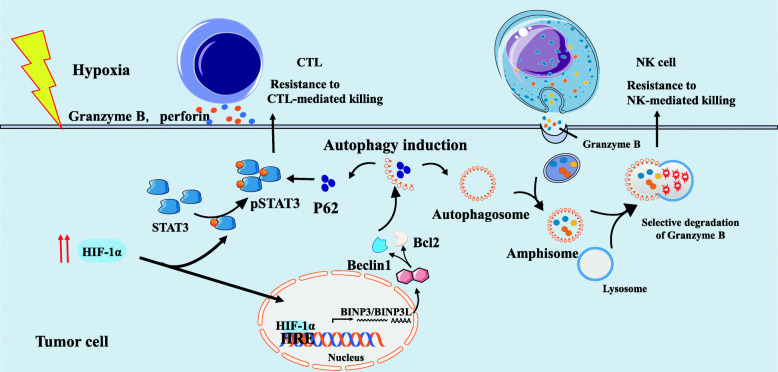
“Stress-induced or cytotoxic drug-induced autophagy, which may be driven by hypoxia, also significantly enhances tumor cell survival inside the TME [35].”
BackgroundHypoxia signaling in hepatocellular carcinoma: Challenges and therapeutic opportunities
Sin, Q. S., Mohan, C. D., Goh, R. M., You, M., Nayak, S. C., Chen, L., Sethi, G., Rangappa, K. S., & Wang, L. (2022) · Cancer and Metastasis Reviews · doi:10.1007/s10555-022-10071-1 · Cited by 62
Ong, C. H. C., Lee, D. Y., Lee, B. T. K., Li, H., Lim, J. C. T., Lim, J. X., Yeong, J. P.-S., Lau, H. Y., Thike, A. A., Tan, P. H., et al. (2022) · Breast Cancer Research · doi:10.1186/s13058-022-01532-0 · Cited by 61
“Since hypoxia is increasingly being studied for being responsible for resistance against radiotherapy and emerging immunotherapy [47], the identification of the seven-genes associated with CAIX could be a step forward to test for hypoxia in”
BackgroundZhou, Z. C., Huang, J., Zhang, Z., Zhang, L., Cao, Y., Xu, Z., Kang, Y., & Xue, P. (2022) · Chemical Engineering Journal · doi:10.1016/j.cej.2022.135085 · Cited by 60
Shen, W., Han, G., Yu, L., Yang, S., Li, X., Zhang, W., & Pei, P. (2022) · International Journal of Nanomedicine · doi:10.2147/ijn.s359156 · Cited by 58
Pan, Y., He, Y., Zhao, X., Pan, Y., Meng, X., Lv, Z., Hu, Z., Mou, X., & Cai, Y. (2022) · Advanced Healthcare Materials · doi:10.1002/adhm.202200962 · Cited by 59
Boosting the Immune Response—Combining Local and Immune Therapy for Prostate Cancer Treatment
Karwacki, J., Kiełbik, A., Szlasa, W., Sauer, N. J., Kowalczyk, K., Krajewski, W. R., Saczko, J., Kulbacka, J., Szydełko, T., & Małkiewicz, B. (2022) · Cells · doi:10.3390/cells11182793 · Cited by 58
Implementing Logic Gates for Safer Immunotherapy of Cancer
Savanur, M. A., Weinstein-Marom, H., & Gross, G. (2021) · Frontiers in Immunology · doi:10.3389/fimmu.2021.780399 · Cited by 57
Debnath, S. K., Debnath, M., Ghosh, A., Srivastava, R., & Omri, A. (2024) · Pharmaceuticals · doi:10.3390/ph17101389 · Cited by 55
“Bacteria can be engineered to produce and disseminate anticancer drugs tailored to therapeutic requirements through genetic modification or synthetic bioengineering.”
BackgroundValproic Acid: A Promising Therapeutic Agent in Glioma Treatment
Han, W., & Guan, W. (2021) · Frontiers in Oncology · doi:10.3389/fonc.2021.687362 · Cited by 54
Fang, T., Cao, X., Wang, L., Chen, M., Deng, Y., & Chen, G. (2023) · Bioactive Materials · doi:10.1016/j.bioactmat.2023.10.023 · Cited by 57
“…as well as the infiltration, survival, and cytotoxic activity of T cells, and promotes the skewing of tumor-associated macrophages (TAM) to the immunosuppressive M2 phenotype, and the accumulation of immunosuppressive regulatory T cells (Treg) and myeloid-derived suppressor cells (MDSC) [21 – 23].”
BackgroundNormalization in tumor ecosystem: Opportunities and challenges
Mortezaee, K. (2021) · Cell Biology International · doi:10.1002/cbin.11655 · Cited by 52
“This along with aberrant angiogenesis are reasons for the establishment of hypoxia | 2019 in TME of solid tumors (B. Wang et al., 2021).”
BackgroundZhang, J., Sun, X., Zhao, X., Yang, C., Shi, M., Zhang, B., Hu, H., Qiao, M., Chen, D., & Zhao, X. (2022) · Acta Pharmaceutica Sinica B · doi:10.1016/j.apsb.2022.05.008 · Cited by 50
Tumor microenvironment reprogramming by nanomedicine to enhance the effect of tumor immunotherapy
Huang, Y., Fan, H., & Ti, H. (2024) · Asian Journal of Pharmaceutical Sciences · doi:10.1016/j.ajps.2024.100902 · Cited by 54
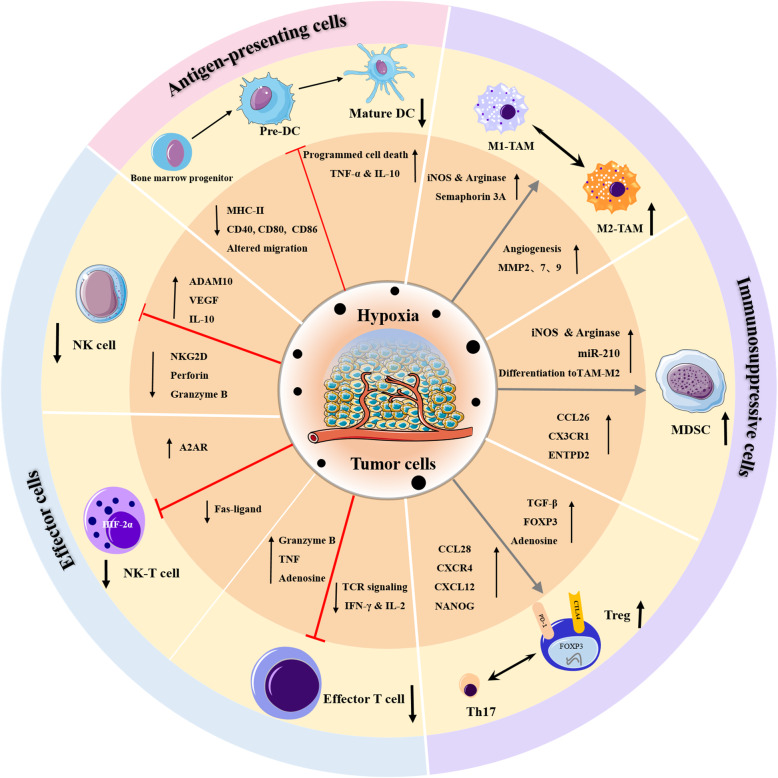
“For example, hypoxia supports the functions of immunosuppressive cells such as Tregs, MDSCs, and TAMs while interfering with the functions of effector T cells, NK-T cells, and NK cells, resulting in increased production of immunosuppressive cytokines and immunosuppression [56] .”
BackgroundProgression of m6A in the tumor microenvironment: hypoxia, immune and metabolic reprogramming
Han, X., Zhu, Y., Ke, J., Zhai, Y., Huang, M., Zhang, X., He, H., Zhang, X., Zhao, X., Guo, K., et al. (2024) · Cell Death Discovery · doi:10.1038/s41420-024-02092-2 · Cited by 46
“It has been reported that the proliferation and activation of T cells and their effector cells are signi fi cantly inhibited by hypoxia, resulting in immune dysfunction [74, 75].”
BackgroundSelf-citationGu, L., Sun, Y., Bai, T., Shao, S., Tang, S., Xue, P., Cai, W., Qin, X., Zeng, X., & Yan, S. (2025) · Journal of Nanobiotechnology · doi:10.1186/s12951-025-03284-3 · Cited by 43
“More critically, the hypoxic microenvironment characteristic of solid tumors further reduces the efficacy of therapies targeting ferrop-tosis and cuproptosis pathways, while also promoting a suppressive immune environment [45–47].”
Stimuli-responsive nanoassemblies for targeted delivery against tumor and its microenvironment
Sia, C. S., Lim, H. P., Tey, B. T., Goh, B. H., & Low, L. E. (2022) · Biochimica et Biophysica Acta (BBA) - Reviews on Cancer · doi:10.1016/j.bbcan.2022.188779 · Cited by 47
Alabrahim, O. A. A., Fahmy, S. A., & Azzazy, H. M. E.-S. (2023) · ACS Applied Nano Materials · doi:10.1021/acsanm.2c05391 · Cited by 41
Role of Tumor Microenvironment in Prostate Cancer Immunometabolism
Wang, Y., Chen, Y., & Wang, J. (2025) · Biomolecules · doi:10.3390/biom15060826 · Cited by 42
Fatty Acids as a Tool to Boost Cancer Immunotherapy Efficacy
Westheim, A. J. F., Stoffels, L. M., Dubois, L. J., van Bergenhenegouwen, J., van Helvoort, A., LANGEN, R. C. J., Shiri‐Sverdlov, R., & Theys, J. (2022) · Frontiers in Nutrition · doi:10.3389/fnut.2022.868436 · Cited by 43
“For instance, a hypoxic TME impairs anti-tumor immunity, induces T cell exhaustion and has been suggested to suppress the efficacy of immunotherapy (17).”
BackgroundLiu, X., Zeng, S., Zhang, M., Jiang, M., Kafuti, Y. S., Shangguan, P., Yu, Y., Chen, Q., Wang, J., Peng, X., et al. (2022) · Chemical Communications · doi:10.1039/d2cc04112j · Cited by 38
Nayak, V., Patra, S., Singh, K. R., Ganguly, B., Kumar, D. N., Panda, D., Maurya, G. K., Singh, J. P., Majhi, S., Sharma, R., et al. (2023) · Environmental Research · doi:10.1016/j.envres.2023.116573 · Cited by 38
Lyu, F., Li, Y., Yan, Z., He, Q., Cheng, L., Chen, L., Zhang, P., Liu, C., Liu, C., Song, Y., et al. (2022) · Journal of Translational Medicine · doi:10.1186/s12967-022-03398-4 · Cited by 38
“Targeting hypoxia to enhance the efficacy of immunotherapy is underway [45].”
BackgroundImmune Cell Migration to Cancer
Ryan, A. T., Kim, M., & Lim, K. (2024) · Cells · doi:10.3390/cells13100844 · Cited by 38
Carbon Nanotubes: A Targeted Drug Delivery against Cancer Cell
Kumar, P., Pandey, S. N., Ahmad, F., Verma, A. K., Sharma, H., Ashique, S., Bhattacharyya, S. P., Bhattacharyya, I., Kumar, S., Mishra, N., et al. (2023) · Current Nanoscience · doi:10.2174/0115734137271865231105070727 · Cited by 44
Hypoxic tumor microenvironment: Destroyer of natural killer cell function
Zhang, Y., Guo, F., & Wang, Y. (2024) · Chinese Journal of Cancer Research · doi:10.21147/j.issn.1000-9604.2024.02.04 · Cited by 36
Self-citationHypoxia in Lung Cancer Management: A Translational Approach
Ancel, J., Perotin, J., Dewolf, M., Launois, C., Mulette, P., Nawrocki‐Raby, B., Dalstein, V., Gilles, C., Deslée, G., Polette, M., et al. (2021) · Cancers · doi:10.3390/cancers13143421 · Cited by 36
Hypoxic Jumbo Spheroids On-A-Chip (HOnAChip): Insights into Treatment Efficacy
Refet-Mollof, E., Najyb, O., Chermat, R., Glory, A., Lafontaine, J., Wong, P., & Gervais, T. (2021) · Cancers · doi:10.3390/cancers13164046 · Cited by 36
Reversible Chemistry for Cancer Therapy and Diagnosis
Xu, H., Hong, H., Kim, C., Lee, Y., Li, Y., Zhang, Y. S., Makvandi, P., Song, G., Zhang, H., Kang, H., et al. (2025) · Chemical Reviews · doi:10.1021/acs.chemrev.5c00549 · Cited by 34
Self-citationHypoxia-activated prodrug derivatives of anti-cancer drugs: a patent review 2006 – 2021
Anduran, E., Dubois, L. J., Lambin, P., & Winum, J. (2021) · Expert Opinion on Therapeutic Patents · doi:10.1080/13543776.2021.1954617 · Cited by 34
“In 2017, Fei et al. disclosed HAP derivatives of lenvatinib (Figure 8), a tyrosine kinase inhibitor (TKI) targeting vascular endothelial growth factor (VEGF) receptors VEGFR1 (FLT1), VEGFR2 (KDR), and VEGFR3 (FLT4).”
BackgroundInfluentialFan, C., Zhu, W., Chen, Y., Zhu, W., & Ding, J. (2025) · MedComm · doi:10.1002/mco2.70415 · Cited by 36
“Preclinical studies in HNSCC mouse models demonstrated that the A2AR antagonist SCH58261 significantly enhances CD8 + T-cell-mediated antitumor responses, suggesting the potential of A2AR pathway inhibition to improve immunotherapy efficacy [226].”
Predictive biomarkers for systemic therapy of hepatocellular carcinoma
Moldogazieva, N. T., Zavadskiy, S. P., Sologova, S. S., Mokhosoev, I. M., & Terentiev, A. A. (2021) · Expert Review of Molecular Diagnostics · doi:10.1080/14737159.2021.1987217 · Cited by 33
Adashek, J. J., Kato, S., Nishizaki, D., Miyashita, H., De, P. K., Lee, S., Pabla, S., Nesline, M., Conroy, J. M., DePietro, P., et al. (2023) · Cancer Medicine · doi:10.1002/cam4.6000 · Cited by 34
Cui, H., Su, Y., Wei, W., Xu, F., Gao, J., & Zhang, W. (2022) · International Journal of Nanomedicine · doi:10.2147/ijn.s368763 · Cited by 32
“This has been exploited in recent years to realize selective therapy and has been smartly used as a therapeutic target.(9) Many studies aimed to minimize tumor hypoxia and increase the sensitivity of the tumor cells to radiotherapy.”
MethodNanotechnology-Enhanced siRNA Delivery: Revolutionizing Cancer Therapy
Esmaeilpour, D., Ghomi, M., Zare, E. N., & Sillanpää, M. E. T. (2025) · ACS Applied Bio Materials · doi:10.1021/acsabm.5c00489 · Cited by 34
The Immune Landscape of Pheochromocytoma and Paraganglioma: Current Advances and Perspectives
Uher, O., Vanova, K. H., Taïeb, D., Calsina, B., Robledo, M., Clifton-Bligh, R. J., & Pacák, K. (2024) · Endocrine Reviews · doi:10.1210/endrev/bnae005 · Cited by 31
Sheng, J., Wu, J., Yin, X., Sun, Z., Wang, X., Zhang, J., Tang, J., Ji, Y., Song, J., Wei, X., et al. (2022) · Chinese Chemical Letters · doi:10.1016/j.cclet.2022.08.018 · Cited by 32
Gao, H., Yao, Y., Li, W., Xu, Z., Hu, W., Luo, K.-W., Chen, P., Shang, W., Luan, S., Shi, G., et al. (2025) · Advanced Science · doi:10.1002/advs.202411375 · Cited by 33
Nguyen, O. T. P., Misun, P. M., Lohasz, C., Lee, J., Wang, W., Schroeder, T., & Hierlemann, A. R. (2021) · Frontiers in Immunology · doi:10.3389/fimmu.2021.781337 · Cited by 30
“Hypoxia induces hypoxia-driven adaptive mechanisms that promote tumor heterogeneity and survival while it imposes an immunosuppressive microenvironment on immune cells (62).”
BackgroundPositron emission tomography imaging sheds new light on hypoxia and antitumor therapies
Fang, H., Wang, X., Lan, X., & Jiang, D. (2023) · Interdisciplinary medicine · doi:10.1002/inmd.20230002 · Cited by 33
Role of circular RNAs in colorectal tumor microenvironment
Ashraf, J. V., Nair, V. S., Saleh, R., & Elkord, E. (2021) · Biomedicine & Pharmacotherapy · doi:10.1016/j.biopha.2021.111351 · Cited by 29
Targeting the Microenvironment in Esophageal Cancer
Wang, L., Han, H., Wang, Z., Shi, L., Yang, M., & Qin, Y. (2021) · Frontiers in Cell and Developmental Biology · doi:10.3389/fcell.2021.684966 · Cited by 31
Impact of cancer cell-intrinsic features on neutrophil behavior
Duits, D. E. M., & de Visser, K. E. (2021) · Seminars in Immunology · doi:10.1016/j.smim.2021.101546 · Cited by 27
Navigating the Immune Maze: Pioneering Strategies for Unshackling Cancer Immunotherapy Resistance
Yao, L., Wang, Q., & Ma, W. (2023) · Cancers · doi:10.3390/cancers15245857 · Cited by 32
“Another pivotal aspect is the TME hypoxia [44,45].”
BackgroundNanomedicines for reversing immunosuppressive microenvironment of hepatocellular carcinoma
Pan, X., Ni, S., & Hu, K. (2024) · Biomaterials · doi:10.1016/j.biomaterials.2024.122481 · Cited by 30
Rodríguez‐Berriguete, G., Puliyadi, R., Machado, N., Barberis, A., Prevo, R., McLaughlin, M., Buffa, F. M., Harrington, K. J., & Higgins, G. S. (2024) · Cell Death and Disease · doi:10.1038/s41419-023-06405-8 · Cited by 26
“…a key factor limiting ICB ef fi cacy, by repressing the cytotoxic activity of NK and T cells, promoting the activity and tumour recruitment of immunosuppressive cells (e.g., myeloid-derived suppressor cells, Tregs), and favouring the establishment of an immunosuppressive tumour microenvironment [2].”
BackgroundLuo, Y., Linghu, M., Luo, X., Li, D., Wang, J., Peng, S., & Ma, Y. (2024) · Acta Pharmaceutica Sinica B · doi:10.1016/j.apsb.2024.12.014 · Cited by 27
Cui, F., Wu, J., Shen, Y., Hu, H., Wang, Q., Mao, Y., Ye, B., & Xiang, M. (2021) · Cancer Medicine · doi:10.1002/cam4.4511 · Cited by 25
Kalyanaraman, B. (2022) · The FASEB Journal · doi:10.1096/fj.202101862r · Cited by 25
Venkatesh, G. H., Khouzam, R. A., El‐Sayed, W., Zeinelabdin, N. A., Terry, S., & Chouaïb, S. (2021) · OncoImmunology · doi:10.1080/2162402x.2021.1974233 · Cited by 25
Maslinic acid exerts anticancer effects by targeting cancer hallmarks
Ooi, K. X., Poo, C. L., Subramaniam, M., Cordell, G. A., & Lim, Y. M. (2022) · Phytomedicine · doi:10.1016/j.phymed.2022.154631 · Cited by 25
Kong, X., He, Z., Zhang, Y., Fang, Y., Liu, D., Wu, H., Ji, J., Xi, Y., Ye, L., Yang, X., et al. (2023) · Chemical Engineering Journal · doi:10.1016/j.cej.2023.143729 · Cited by 24
Self-citationLiu, Z., Lin, Z., Jiang, M., Zhu, G., Xiong, T., Cao, F., Cui, Y., & Niu, Y. (2024) · European Urology · doi:10.1016/s0302-2838(24)01116-3 · Cited by 25
Self-citationRecapitulating Tumor Hypoxia in a Cleanroom-Free, Liquid-Pinning-Based Microfluidic Tumor Model
Oh, J. M., Begum, H. M., Liu, Y. L., Ren, Y., & Shen, K. (2022) · ACS Biomaterials Science & Engineering · doi:10.1021/acsbiomaterials.2c00207 · Cited by 23
Bodalal, Z., Bogveradze, N., ter Beek, L. C., van den Berg, J. G., Sanders, J., Hofland, I., Trebeschi, S., Lipman, K. B. W. G., Storck, K., Hong, E. K., et al. (2023) · Insights into Imaging · doi:10.1186/s13244-023-01474-x · Cited by 25
Salahuddin, M. M., Omran, G. A., Helmy, M. W., & Houssen, M. E. (2021) · Current Issues in Molecular Biology · doi:10.3390/cimb43030154 · Cited by 23
“Hypoxia promotes tumor heterogeneity and plasticity, as well as the development of more invasive and resistant tumor subtypes [6].”
BackgroundZhang, W., Jin, C., Liu, S., Wan, X., Li, Y., Liu, J., Duan, Z., Ma, J., & Gao, Y. (2026) · Frontiers in Immunology · doi:10.3389/fimmu.2026.1757513 · Cited by 22
“Hypoxia, a hallmark of the CRC tumor microenvironment, stabilizes HIF-1 a , which — as detailed in Sections 3.2 and 3.3 — upregulates key immunosuppressive molecules (PD-L1, ARG1, iNOS, CD73) in MDSCs and promotes FoxP3 expression and peripheral Treg differentiation (90 – 93).”
InfluentialSelf-citationLi, D., Yu, H., Hu, J., Li, S., Yan, Y., Li, S., Sun, L., Jiang, G., Hou, L., Zhang, L., et al. (2022) · Journal of Translational Medicine · doi:10.1186/s12967-022-03620-3 · Cited by 23
“LDHA was also an essential enzyme in lactate production, which was reported to create an acidic tumor microenvironment and mediate immunotolerance [35].”
BackgroundMetabolic Changes in Tumor Microenvironment: How Could They Affect γδ T Cells Functions?
Corsale, A. M., Simone, M. D., Presti, E. L., Picone, C., Dieli, F., & Meraviglia, S. (2021) · Cells · doi:10.3390/cells10112896 · Cited by 23
“On the other hand, they impact anti-tumor immune response, resulting in decreased proliferation and effector functions of cytotoxic CD8+ T cells, CD4+ helper T cells, NK cells, M1 macrophages and dendritic cells, and support the recruitment of immunosuppressive cells, such as MDSC, M2 macrophages and Treg cells [95,96…”
BackgroundZaťovičová, M., Kajanová, I., Baráthová, M., Takáčová, M., Labudová, M., Csáderová, L., Jelenska, L., Švastová, E., Pastoreková, S., Harris, A. L., et al. (2022) · Cancer & Metabolism · doi:10.1186/s40170-022-00279-8 · Cited by 23
Expanding the horizon of CAR T cell therapy: from cancer treatment to autoimmune diseases and beyond
Yang, Z., Ha, B., Wu, Q., Ren, F., Yin, Z., & Zhang, H. (2025) · Frontiers in Immunology · doi:10.3389/fimmu.2025.1544532 · Cited by 24
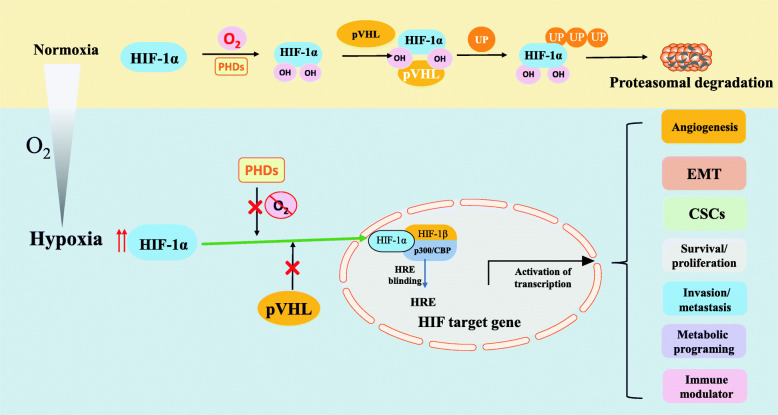
“At the molecular level, the adaptation of tumor cells to the hypoxic TME is largely mediated by the hypoxia inducible factor (HIF) family (107).”
Recent Advancements of Nanotechnology-Based Strategies for Overcoming Tumor Microenvironment Hypoxia
Wu, J., Song, J., Yin, X., Tang, J., Zhang, J., Wang, X., Ji, Y., Zhao, Y., Chen, D., Sheng, J., et al. (2022) · Frontiers in Bioscience-Landmark · doi:10.31083/j.fbl2705145 · Cited by 21
Imaging to predict checkpoint inhibitor outcomes in cancer. A systematic review
ter Maat, L. S., van Duin, I. A. J., Elias, S. G., van Diest, P. J., Pluim, J. P. W., Verhoeff, J. J. C., de Jong, P. A., Leiner, T., Veta, M., & Suijkerbuijk, K. P. M. (2022) · European Journal of Cancer · doi:10.1016/j.ejca.2022.07.034 · Cited by 21
Metadata
- Authors
- Wang, B., Zhao, Q., Zhang, Y., Liu, Z., Zheng, Z., Liu, S., Meng, L., Xin, Y., & Jiang, X.
- Affiliations
- Jilin University (CN)
- Moffitt Cancer Center (US)
- Corresponding author
- Xin, Ying
- Jiang, Xin
- ORCID
- Venue
- Journal of Experimental & Clinical Cancer Research
- Published
- 2021-01-09
- Volume
- 40
- Issue
- 1
- Pages
- 24-24
- ISSN
- 0392-9078 (ISSN-L)
- 1756-9966
- PMC
- PMC7796640
- OpenAlex
- W3118395892
- Semantic Scholar
- eca6d9ec297cd850410f4d6c8325e834f1f6bf62
- Cited by
- 315
- References
- 111
- Citations by year
- 2026: 36 · 2025: 51 · 2024: 70 · 2023: 54 · 2022: 71 · 2021: 33
- FWCI
- 7.33
- Type
- journal article
- Language
- en
- Open access
- gold
- doi.org
- Licence
- cc-by
- creativecommons.org/licenses/by/4.0/ (tdm)
- creativecommons.org/licenses/by/4.0/ (vor)
- Locations
- Journal of Experimental & Clinical Cancer Research (publishedVersion, cc-by)
- PubMed Central (publishedVersion, cc-by)
- PubMed (publishedVersion)
- DOAJ (DOAJ: Directory of Open Access Journals) (submittedVersion, cc-by-sa)
- Funders
- the National Natural Science Foundation of China (81570344)
- National Key R&D Program of China (2017YFC0112100)
- the Education Department Foundation of Jilin Province (JJKH20201036KJ)
- the Health and Family Planning Commission of Jilin Province Foundations (2016Q034 and 2017J11)
- the Norman Bethune Program of Jilin University (2015225 and 2015203)
- Jilin Scientific and Technological Development Program (20180414039GH and 20190201200JC)
- Topics
- Health Sciences › Medicine › Oncology › Cancer Immunotherapy and Biomarkers
- Life Sciences › Biochemistry, Genetics and Molecular Biology › Cancer Research › Cancer, Hypoxia, and Metabolism
- Life Sciences › Immunology and Microbiology › Immunology › Immune cells in cancer
- Keywords
- tumor hypoxia, tumor microenvironment, cancer immunotherapy, immune checkpoint inhibitors, immunosuppression, immune evasion, stromal cells, immune cell subsets, combination therapy, tumor invasion and metastasis
- MeSH terms
- Humans, Immunotherapy, Neoplasms, Cell Hypoxia, Tumor Microenvironment
About these checks
Registry, retraction, Cites and statistics results are computed, not judged, with one exception: a printed reference that no index lists is read once by a model before it counts as a citation error. Claims are extracted by a model and kept only when their quote appears verbatim in the text; each cited source is then checked, with a model’s help, for whether it says what the claim relies on. Those verdicts can be wrong — read the claim’s quote and the cited source before relying on one.
Statistics and arithmetic are recomputed, not judged.
Confidence bands are shown only for fields calibrated on our annotated test set. None is calibrated yet, so no band is shown.
What counts as a claim ›How we measure confidence ›How we check this ›
Are you an author, or do you see a problem with this page? Request a review
Data sources
Bibliographic data: Semantic Scholar, OpenAlex, Crossref.
Contains information from the Semantic Scholar Academic Graph Datasets, made available under the ODC Attribution License (ODC-BY 1.0).
Semantic Scholar’s data is described in: Kinney, R., et al. (2023). The Semantic Scholar Open Data Platform. arXiv:2301.10140.
