

The role of DNA damage repair (DDR) system in response to immune checkpoint inhibitor (ICI) therapy
Open accessThe DOI matches its Crossref record; 253 of the 254 references it cites were found in a registry or an index.
Abstract
As our understanding of the mechanisms of cancer treatment has increased, a growing number of studies demonstrate pathways through which DNA damage repair (DDR) affects the immune system. At the same time, the varied response of patients to immune checkpoint blockade (ICB) therapy has prompted the discovery of various predictive biomarkers and the study of combination therapy. Here, our investigation explores the interactions involved in combination therapy, accompanied by a review that summarizes currently identified and promising predictors of response to immune checkpoint inhibitors (ICIs) that are useful for classifying oncology patients. In addition, this work, which discusses immunogenicity and several components of the tumor immune microenvironment, serves to illustrate the mechanism by which higher response rates and improved efficacy of DDR inhibitors (DDRi) in combination with ICIs are achieved.
Overview
The claims and statistics of this paper haven’t been checked yet.
Free: it reads the open-access text and checks the first 5 claims that cite a source we can check. Create a free account to check every claim.
Integrity signals
Registry
Cites
Statistics
Figures
Verification
Claims the paper makes
The claims and statistics of this paper haven’t been checked yet.
Free: it reads the open-access text and checks the first 5 claims that cite a source we can check. Create a free account to check every claim.
Self-check
Percentages, sums and reported differences re-computed from the paper’s own numbers.
The self-check needs the paper’s full text.
Citations
Cites
Items 201–253 of 253
Caracciolo, D., Riillo, C., Arbitrio, M., Martino, M. T. D., Tagliaferri, P., & Tassone, P. (2020) · International Journal of Cancer · doi:10.1002/ijc.33038 · Cited by 32
Melhem, M. R., Hanze, E., Lu, S. M., Alskär, O., Visser, S. A. G., & Gandhi, Y. (2022) · British Journal of Clinical Pharmacology · doi:10.1111/bcp.15339 · Cited by 31
DNA damage response and PD-1/PD-L1 pathway in ovarian cancer
Zhang, T., Zheng, S., Yang, L., Li, X., Wu, J., Sun, Y., & Liu, G. (2021) · DNA repair · doi:10.1016/j.dnarep.2021.103112 · Cited by 30 · cited 2×
“IFN-α and IFN-β can induce PD-L1 expression in endothelial cells, monocytes, and DC [209].”
BackgroundWayne, J., Brooks, T., Landras, A., & Massey, A. J. (2021) · FEBS Journal · doi:10.1111/febs.15747 · Cited by 29 · cited 3×
“showed that CHK1i increased the phosphorylation of TBK1, but not the activation of IRF or type I interferon responses observed in solid cancer cell lines [131].”
BackgroundHarnessing DNA Repair Defects to Augment Immune-Based Therapies in Triple-Negative Breast Cancer
Clark, C. A., & Yang, E. S.-H. (2021) · Frontiers in Oncology · doi:10.3389/fonc.2021.703802 · Cited by 29 · cited 10×
“NCT03025035 Breast Cancer Olaparib Pembrolizumab PARP+PD-1 Phase 2 ORR, PFS, OS, CBR, DOR Recruiting [93]”
BackgroundInfluentialUnexpected Synergy Reveals New Therapeutic Strategy in SCLC
Drapkin, B. J., & Farago, A. F. (2019) · Trends in Pharmacological Sciences · doi:10.1016/j.tips.2019.03.005 · Cited by 28 · cited 3×
“The genome of small cell lung cancer (SCLC), specifically characterized by the joint deletion of RB1 and TP53, is known to potentially cause inherent genomic instability, which is independent of the mutation burden [121].”
BackgroundMethodHeeke, A. L., Xiu, J., Elliott, A., Korn, W. M., Lynce, F. C., Pohlmann, P. R., Isaacs, C. J., Swain, S. M., Vidal, G. A., Schwartzberg, L. S., et al. (2020) · Breast Cancer Research and Treatment · doi:10.1007/s10549-020-05849-2 · Cited by 28 · cited 2×
“A dMMR/MSI-H tumor or HR-mutated tumor exhibits a strong expression of immune checkpoint ligand [15, 145, 146].”
BackgroundPatient-Level DNA Damage Repair Pathway Profiles and Anti-Tumor Immunity for Gastric Cancer
Lou, S., Wang, Y., Zhang, J., Yin, X., Zhang, Y., Wang, Y., & Xue, Y. (2022) · Frontiers in Immunology · doi:10.3389/fimmu.2021.806324 · Cited by 28 · cited 16×
“An increase of NAL can also lead to active immune stimulation of the TME.”
BackgroundResultInfluentialSelf-citationJoshi, M., Grivas, P. D., Mortazavi, A., Monk, P., Clinton, S. K., Woo, M. S., Holder, S. L., Drabick, J. J., & Yin, M. (2020) · Cancer Medicine · doi:10.1002/cam4.3552 · Cited by 27 · cited 4×
“ID Cancer type DDRtargeted inhibitor ICI Targets Phase Clinical endpoint Status Refs NCT04178460 Gastric Cancer, TNBC, Biliary Tract Carcinoma and Endometrial Carcinoma Niraparib MGD013(Tebotelimab) PARP+ PD-1 + LAG-3 Phase 1 Safety and Validity profiles Terminated [97] NCT02657889 TNBC or Ovarian Cancer Niraparib Pem…”
BackgroundInfluentialZhang, L., Wang, Y., Li, Z., Lin, D., Liu, Y., Zhou, L., Wang, D., Wu, A., & Li, Z. (2021) · Diagnostic Pathology · doi:10.1186/s13000-021-01099-y · Cited by 26 · cited 1×
“Abnormal DDR pathway and immune checkpoint molecules The mutation of the DDR gene in cancer cells is usually associated with the increased expression of PD-1/ PD-L1 genes within the TME [56, 64, 233, 234], such as the DSB repair gene [221], MMR gene [146, 235, 236] and RB1 [171, 237].”
BackgroundDing, L., Dong, H., Zhou, T. R., Wang, Y. H., Yan, T., Li, J. C., Wang, Z. Y., Liang, C., & Liang, C. (2021) · Cancer Medicine · doi:10.1002/cam4.4190 · Cited by 25 · cited 1×
“NCT04779151 Solid Tumors Niraparib Dostarlimab PARP+PD-1 Phase 2 ORR Not yet recruiting [96]”
BackgroundBuglioni, S., Melucci, E., Sperati, F., Pallocca, M., Terrenato, I., Nicola, F. D., Goeman, F., Casini, B., Amoreo, C. A., Gallo, E., et al. (2018) · OncoImmunology · doi:10.1080/2162402x.2018.1457602 · Cited by 23 · cited 1×
“In addition, the clinical significance of PD-L1 in advanced GC depends specifically on the mutation of ARID1A and the level of ATM expression [238].”
BackgroundYing, J., Yang, L., Yin, J.-N. C., Xia, G.-B., Xing, M., Chen, X.-X., Pang, J., Wu, Y., Bao, H., Wu, X., et al. (2021) · Journal for ImmunoTherapy of Cancer · doi:10.1136/jitc-2021-002336 · Cited by 23 · cited 1×
“POLD1/POLE mutation is applicable to multi-tumor states and is a promising target for achieving accurate stratification [59, 64, 65].”
BackgroundComprehensive analysis of DNA damage repair deficiency in 10,284 pan–cancer study
Xiao, Y., Lu, D., Lei, M., Xie, W., Chen, Y., Zheng, Y., Wang, C., Zhao, J., Zhu, Z., Zhao, X., et al. (2021) · Annals of Translational Medicine · doi:10.21037/atm-21-5449 · Cited by 22 · cited 19×
“For example, PARPi promotes CAR-T infiltration in the TME via the cGAS-STING pathway.”
BackgroundInfluentialIn Search of the Long-Desired ‘Copernican Therapeutic Revolution’ in Small-Cell Lung Cancer
Reguart, N., Marín, E., Remón, J., Reyes, R., & Teixidó, C. (2020) · Drugs · doi:10.1007/s40265-019-01240-8 · Cited by 21
Lin, P., Gao, R., Wen, R., He, Y., & Yang, H. (2021) · Frontiers in Immunology · doi:10.3389/fimmu.2021.715460 · Cited by 21 · cited 4×
“In HCC, the subtype of inhibitory DDR showed that mast cells and neutrophils related to ICB drug resistance were significantly enriched [71].”
BackgroundInfluentialWang, H., Deng, L., Li, Y.-Q., Zhang, X., Long, Y., Zhang, X., Feng, Y., He, Y. M., Tang, T., Yang, X., et al. (2021) · Cancer Research and Treatment · doi:10.4143/crt.2020.798 · Cited by 20 · cited 2×
“1) [69, 101, 144], and the intracellular accumulation of DNA fragments furthers induces innate and adaptive immune activation [78].”
BackgroundWen, H., Guo, Q., Zhou, X., Wu, X., & Li, J. (2022) · Frontiers in Oncology · doi:10.3389/fonc.2021.792003 · Cited by 20
Schettini, F., Corona, S. P., Giudici, F., Strina, C., Sirico, M., Bernocchi, O., Milani, M., Ziglioli, N., Aguggini, S., Azzini, C., et al. (2021) · Frontiers in Oncology · doi:10.3389/fonc.2021.686776 · Cited by 19 · cited 1×
“However, olaparib administered in TNBC increases the level of Tregs, thus causing the CD4+/CD8+ ratio to increase [183].”
BackgroundRole of BCLAF‐1 in PD‐L1 stabilization in response to ionizing irradiation
Ma, Z., Wang, H., Meng, F., Han, Y., Chen, Y., Xiao, M., Jiang, H., Yu, Z., & Xu, B. (2021) · Cancer Science · doi:10.1111/cas.15056 · Cited by 19 · cited 1×
“induced by activating IR is carried out through transcription and post-translation mechanisms, while the ATM/BCLAF1/PD-L1 axis regulates the stability of PD-L1 in response to IR [246].”
BackgroundAdvances of DNA Damage Repair-Related Drugs and Combination With Immunotherapy in Tumor Treatment
Wang, Y., Duan, M.-H., Peng, Z., Fan, R., He, Y., Zhang, H., Xiong, W., & Jiang, W. (2022) · Frontiers in Immunology · doi:10.3389/fimmu.2022.854730 · Cited by 19
Chen, T., Tongpeng, S., Lu, Z., Topatana, W., Juengpanich, S., Li, S., Hu, J., Cao, J., Lee, C., Tian, Y., et al. (2022) · Aging and Cancer · doi:10.1002/aac2.12047 · Cited by 19 · cited 2×
“ID Cancer type DDRtargeted inhibitor ICI Targets Phase Clinical endpoint Status Refs NCT03834519 Prostate Cancer Olaparib Pembrolizumab PARP+PD-1 Phase 3 OS, rPFS Active, not recruiting [107] NCT04666740 Metastatic Pancreatic Ductal Adenocarcinoma Olaparib Pembrolizumab PARP+PD-1 Phase 2 PFS, OS Recruiting [108] NCT05…”
BackgroundA dendritic cell multitasks to tackle cancer
Burbage, M., & Amigorena, S. (2020) · Nature · doi:10.1038/d41586-020-02339-9 · Cited by 18 · cited 1×
“The upregulation of innate immunity promotes neoantigen presentation and enhances immune stimulation [185, 186].”
BackgroundProstate Cancer in 2021: Novelties in Prognostic and Therapeutic Biomarker Evaluation
Cimadamore, A., Mazzucchelli, R., López-Beltrán, A., Massari, F., Santoni, M., Scarpelli, M., Cheng, L., & Montironi, R. (2021) · Cancers · doi:10.3390/cancers13143471 · Cited by 18 · cited 1×
“However, clinical observation of the BRCA1/2 mutation has revealed contradictory results [59, 60].”
ResultImmunotherapy: a new era in small-cell lung cancer
Goetze, T. O. (2019) · The Lancet · doi:10.1016/s0140-6736(19)32235-4 · Cited by 17 · cited 1×
“Background Since its development, immunotherapy has played an important role in the treatment of melanoma [1–3], breast cancer [4], prostate cancer [5], small cell lung cancer [6], and many other types of malignancies [7, 8].”
BackgroundZhang, Z., Gu, Y., Su, X., Bai, J., Guan, W., Ma, J., Luo, J., He, J., Zhang, B., Geng, M., et al. (2021) · Frontiers in Oncology · doi:10.3389/fonc.2021.659321 · Cited by 17
Comutations in DDR Pathways Predict Atezolizumab Response in Non-Small Cell Lung Cancer Patients
Xiong, A., Nie, W., Zhou, Y., Li, C., Gu, K., Zhang, D., Chen, S., Wen, F., Zhong, H., Han, B., et al. (2021) · Frontiers in Immunology · doi:10.3389/fimmu.2021.708558 · Cited by 17 · cited 6×
“DDR displays great potential in this regard [249], as the alteration of the DDR pathway in tumors as a predictive marker of ICB presents many advantages [20, 249, 250].”
BackgroundInfluentialXie, H., Wang, W., Qi, W.-C., Jin, W., & Xia, B. (2021) · Frontiers in Immunology · doi:10.3389/fimmu.2021.661115 · Cited by 17 · cited 3×
“(2) It is necessary to determine reliable predictive biomarkers, pay more attention to the prediction results of the DDR pathway co-mutation, and determine the appropriate unified labeling threshold [87, 115].”
BackgroundWang, Y., Jiao, X., Li, S., Chen, H., Wei, X. L., Liu, C. X., Gong, J., Zhang, X., Wang, X., Peng, Z., et al. (2022) · Cancer Biology and Medicine · doi:10.20892/j.issn.2095-3941.2020.0708 · Cited by 16 · cited 21×
“ID Cancer type DDRtargeted inhibitor ICI Targets Phase Clinical endpoint Status Refs NCT04334941 SCLC Talazoparib Atezolizumab PARP+PD-L1 Phase 2 PFS, OS Recruiting [81] NCT04068831 Renal Cell Carcinoma Talazoparib Avelumab PARP+PD-L1 Phase 2 ORR, PFS Recruiting [16] NCT03964532 Advanced Breast Cancer Talazoparib Avel…”
BackgroundInfluentialThe Positive Relationship Between γH2AX and PD-L1 Expression in Lung Squamous Cell Carcinoma
Osoegawa, A., Hiraishi, H., Hashimoto, T., Takumi, Y., Abe, M., Takeuchi, H., Miyawaki, M., Okamoto, T., & Sugio, K. (2018) · In Vivo · doi:10.21873/invivo.11221 · Cited by 15 · cited 4×
“The genome of small cell lung cancer (SCLC), specifically characterized by the joint deletion of RB1 and TP53, is known to potentially cause inherent genomic instability, which is independent of the mutation burden [121].”
BackgroundInfluentialSi, Y., Lin, A., Ding, W., Meng, H., Luo, P., & Zhang, J. (2021) · American Journal of Translational Research · Cited by 14
Self-citationSarantis, P., Dikoglou-Tzanetatou, E., Ioakeimidou, E., Vallilas, C., Ανδρουτσάκος, Θ., Damaskos, C., Garmpis, N., Garmpi, A., Papavassiliou, A. G., & Karamouzis, M. V. (2021) · PubMed · Cited by 14
Verhoeven, Y., Quatannens, D., Trinh, X. B., Wouters, A., Smits, E., Lardon, F., Waele, J. D., & van Dam, P. A. (2021) · International Journal of Molecular Sciences · doi:10.3390/ijms22041807 · Cited by 13 · cited 1×
“NCT04641728 Cervical Cancer Olaparib Pembrolizumab PARP+PD-1 Phase 2 ORR, DOR, DRR, PFS Active, not recruiting [106]”
BackgroundVidula, N., Yau, C. S. F., & Rugo, H. S. (2021) · Breast Cancer Research and Treatment · doi:10.1007/s10549-021-06234-3 · Cited by 13 · cited 17×
“For example, PARPi promotes CAR-T infiltration in the TME via the cGAS-STING pathway.”
BackgroundInfluentialFahmy, O., Alhakamy, N. A., Khairul‐Asri, M. G., Ahmed, O. A. A., Fahmy, U. A., Fresta, C. G., & Caruso, G. (2021) · Journal of Personalized Medicine · doi:10.3390/jpm12010008 · Cited by 13 · cited 13×
“ID Cancer type DDRtargeted inhibitor ICI Targets Phase Clinical endpoint Status Refs NCT04334941 SCLC Talazoparib Atezolizumab PARP+PD-L1 Phase 2 PFS, OS Recruiting [81] NCT04068831 Renal Cell Carcinoma Talazoparib Avelumab PARP+PD-L1 Phase 2 ORR, PFS Recruiting [16] NCT03964532 Advanced Breast Cancer Talazoparib Avel…”
BackgroundInfluentialGong, Z., Yang, Y., Zhang, J., & Guo, W. (2021) · Cancer Biology and Medicine · doi:10.20892/j.issn.2095-3941.2020.0351 · Cited by 12 · cited 4×
“It should be noted that although MSI-H/dMMR is associated with TMB-H, DDR genes are still associated with a high TMB after MSI-H/dMMR is excluded [69].”
BackgroundInfluentialSelf-citationZhang, H., Wang, Y., Ji, Q., Cai, H., Liang, X., Xie, J., Li, H., Wang, J., Zhu, G., Tian, E., et al. (2021) · Oncology Letters · doi:10.3892/ol.2021.12590 · Cited by 11 · cited 1×
“A high TMB can predict MSI-H and vice versa [64, 69, 151].”
BackgroundKeenan, B. P., Loon, K. V., Khilnani, A. D., Fidelman, N. A., Behr, S. C., Atreya, C. E., & Oh, D. Y. (2021) · Anticancer Research · doi:10.21873/anticanres.15080 · Cited by 11 · cited 1×
“Interestingly, DDR mutations have also been identified in microsatellite stable (MSS) patients [56, 57].”
BackgroundLeng, Y., Dang, S., Yin, F., Gao, T., Xiao, X., Zhang, Y., Chen, L., Qin, C., Lai, N., Zhan, X.-Y., et al. (2021) · Frontiers in Oncology · doi:10.3389/fonc.2021.733533 · Cited by 11
Baek, S.-W., Jang, I.-H., Kim, S., Nam, J. K., Leem, S., & Chu, I. (2020) · International Journal of Molecular Sciences · doi:10.3390/ijms21051850 · Cited by 10 · cited 1×
“Other studies have also revealed that high expression of the DDR pathway can predict an improved ICI response in patients with gastric cancer (GC) and advanced UC [79, 80].”
ResultImmune checkpoint inhibitors: a game changer for metastatic non-small-cell lung cancer
Souquet, P.-J., & Couraud, S. (2019) · The Lancet Oncology · doi:10.1016/s1470-2045(19)30508-x · Cited by 9 · cited 1×
“Background Since its development, immunotherapy has played an important role in the treatment of melanoma [1–3], breast cancer [4], prostate cancer [5], small cell lung cancer [6], and many other types of malignancies [7, 8].”
BackgroundEstablishment of a novel gene panel as a biomarker of immune checkpoint inhibitor response
Pan, Y., Wu, C., Wang, Y., Yeh, Y., Lu, M.-L., Hung, Y., Chao, Y., Yeh, D., Lin, C., Hsieh, C., et al. (2020) · Clinical & Translational Immunology · doi:10.1002/cti2.1145 · Cited by 9 · cited 2×
“DDR genes as the defined gene panel and achieved a predicted response rate of about 60% in patients with DDR mutations [73].”
BackgroundRepositioning PARP inhibitors in the treatment of thoracic malignancies
Passiglia, F., Reale, M. L., Cetoretta, V., Parlagreco, E., Jacobs, F., Listì, A., Righi, L., Bironzo, P., Novello, S., & Scagliotti, G. V. (2021) · Cancer Treatment Reviews · doi:10.1016/j.ctrv.2021.102256 · Cited by 9 · cited 2×
“ID Cancer type DDRtargeted inhibitor ICI Targets Phase Clinical endpoint Status Refs NCT04178460 Gastric Cancer, TNBC, Biliary Tract Carcinoma and Endometrial Carcinoma Niraparib MGD013(Tebotelimab) PARP+ PD-1 + LAG-3 Phase 1 Safety and Validity profiles Terminated [97] NCT02657889 TNBC or Ovarian Cancer Niraparib Pem…”
BackgroundAudisio, M., Tucci, M., Stefano, R. F. D., Parlagreco, E., Ungaro, A., Turco, F., Audisio, A., Prima, L. D., Ortega, C., Maïo, M. D., et al. (2022) · Critical Reviews in Oncology/Hematology · doi:10.1016/j.critrevonc.2022.103682 · Cited by 9 · cited 3×
“NCT04678362 Urothelial Carcinoma Talazoparib Avelumab PARP+PD-L1 Phase 2 PFS, OS, DOR Recruiting [82]”
BackgroundPotential predictive value of SCN4A mutation status for immune checkpoint inhibitors in melanoma
Lin, W., Lin, A., Li, Z., Zhou, C., Chen, C., Chen, B., Lyu, Q., Zhang, J., & Luo, P. (2020) · Biomedicine & Pharmacotherapy · doi:10.1016/j.biopha.2020.110633 · Cited by 8
Self-citationKareff, S. A., Samtani, S., Burotto, M., Prasad, V. K., & Kim, C. (2021) · JTO Clinical and Research Reports · doi:10.1016/j.jtocrr.2021.100149 · Cited by 8 · cited 7×
“ID Cancer type DDRtargeted inhibitor ICI Targets Phase Clinical endpoint Status Refs NCT04334941 SCLC Talazoparib Atezolizumab PARP+PD-L1 Phase 2 PFS, OS Recruiting [81] NCT04068831 Renal Cell Carcinoma Talazoparib Avelumab PARP+PD-L1 Phase 2 ORR, PFS Recruiting [16] NCT03964532 Advanced Breast Cancer Talazoparib Avel…”
BackgroundInfluentialNovel Insights into the Immunotherapy of Soft Tissue Sarcomas: Do We Need a Change of Perspective?
Ozaniak, A., Vachtenheim, J., Lischke, R., Bartůňková, J., & Strizova, Z. O. (2021) · Biomedicines · doi:10.3390/biomedicines9080935 · Cited by 8
A near miss for prostate cancer immunotherapy
Parker, C. C. (2014) · The Lancet Oncology · doi:10.1016/s1470-2045(14)70220-7 · Cited by 5 · cited 1×
“Background Since its development, immunotherapy has played an important role in the treatment of melanoma [1–3], breast cancer [4], prostate cancer [5], small cell lung cancer [6], and many other types of malignancies [7, 8].”
BackgroundTarrar, T. A., Anwar, M. Y., Ali, M. A., Saeed, M., Rehman, S., Bajwa, S. F., Ayub, T., Javid, H., Ali, R., Irshad, A., et al. (2022) · Cureus · doi:10.7759/cureus.22942 · Cited by 5 · cited 2×
“ID Cancer type DDRtargeted inhibitor ICI Targets Phase Clinical endpoint Status Refs NCT02882308 Head and Neck Squamous Cell Carcinoma Olaparib Durvalumab PARP+PD-L1 Phase 2 ORR, pCR Completed [84] NCT03772561 Advanced Solid Tumors Olaparib Durvalumab PARP+PD-L1 Phase 1 ORR Recruiting [84] NCT03775486 Lung Cancer Olap…”
BackgroundYu, E. Y., Wu, H., & Schloss, C. (2017) · European Urology Supplements · doi:10.1016/s1569-9056(17)30274-9 · Cited by 3
Mendelian disorders of immunity related to an upregulation of type I interferon
Frémond, M., & Crow, Y. J. (2020) · Elsevier eBooks · doi:10.1016/b978-0-12-816768-7.00032-6 · Cited by 3
Li, J., & Wei, W. (2021) · Annals of Oncology · doi:10.1016/j.annonc.2021.08.1266 · Cited by 1 · cited 2×
“ID Cancer type DDRtargeted inhibitor ICI Targets Phase Clinical endpoint Status Refs NCT04178460 Gastric Cancer, TNBC, Biliary Tract Carcinoma and Endometrial Carcinoma Niraparib MGD013(Tebotelimab) PARP+ PD-1 + LAG-3 Phase 1 Safety and Validity profiles Terminated [97] NCT02657889 TNBC or Ovarian Cancer Niraparib Pem…”
Background(2021) · Journal for ImmunoTherapy of Cancer · doi:10.1136/jitc-2021-002336corr1 · Cited by 1
Research works printed but not linked: 1
- Ahrum M Kyung-Hun L Seock-Ah I Dong-Young N Wonshik H Masakazu T DNA damage repair inhibitor for breast cancer treatment Translational research in breast cancer advances in experimental medicine and biology 2019 163 176
Cited by
Immune checkpoint therapy for solid tumours: clinical dilemmas and future trends
Sun, Q., Hong, Z., Zhang, C., Wang, L., Han, Z., & Ma, D. (2023) · Signal Transduction and Targeted Therapy · doi:10.1038/s41392-023-01522-4 · Cited by 598
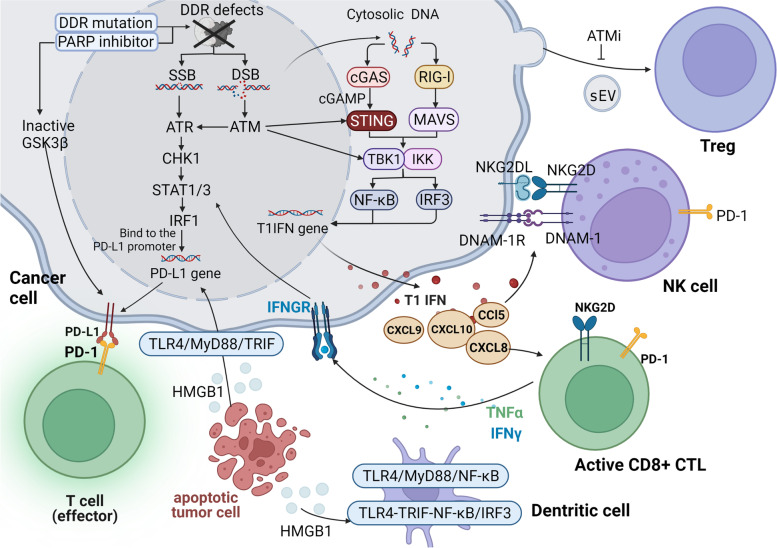
“113,114 Ataxia telangiectasia mutated (ATM) protein participates in Fig.”
BackgroundLin, A., Xiong, M., Jiang, A., Huang, L., Wong, H. Z. H., Feng, S., Zhang, C., Yu, H., Chen, L., Chi, H., et al. (2025) · iMeta · doi:10.1002/imt2.70070 · Cited by 108
Self-citationYap, T. A., Tolcher, A. W., Plummer, R., Mukker, J. K., Enderlin, M., Hicking, C., Grombacher, T., Locatelli, G., Szűcs, Z., Gounaris, I., et al. (2024) · Clinical Cancer Research · doi:10.1158/1078-0432.ccr-23-2409 · Cited by 65
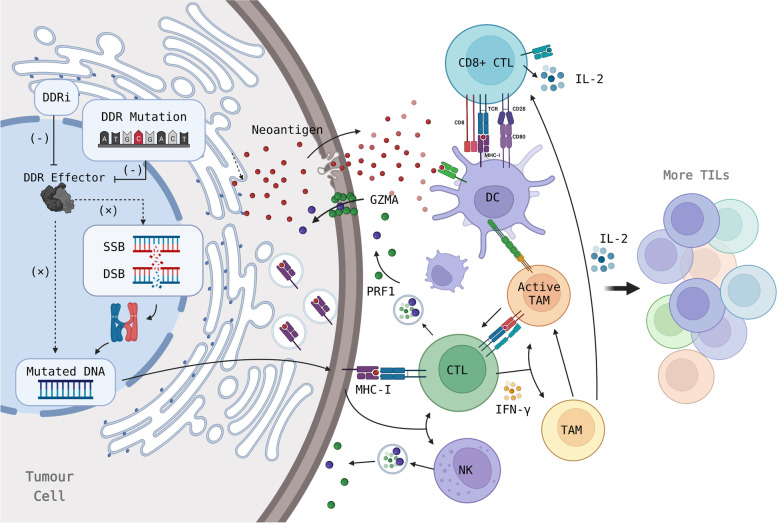
“The DNA damage caused by DDR inhibition results in DNA fragmentation and micronucleation, increasing the expression of neoantigens on the cell surface (45).”
BackgroundCancer Vulnerabilities Through Targeting the ATR/Chk1 and ATM/Chk2 Axes in the Context of DNA Damage
Fernandez, A., Artola, M., Leon, S., Otegui, N., Jimeno, A., Serrano, D., & Calvo, A. (2025) · Cells · doi:10.3390/cells14100748 · Cited by 53
“This activation triggers type I interferon responses and upregulation of inflammatory cytokines and chemokines, enhancing recruitment and activation of immune cells, particularly cytotoxic T cells [140].”
Su, X., Li, J., Xu, X., Ye, Y., Wang, C., Pang, G., Liu, W., Liu, A., Zhao, C., & Hao, X. (2024) · Journal of Translational Medicine · doi:10.1186/s12967-024-05552-6 · Cited by 49
“The ATM/ATR/CHK1 pathway is involved in regulating the cell cycle and could repair cellular damage [391].”
BackgroundInfluential
Metadata
- Authors
- Shi, C., Qin, K., Lin, A., Jiang, A., Cheng, Q., Liu, Z., Zhang, J., & Luo, P.
- Affiliations
- Zhujiang Hospital (CN)
- Second Military Medical University (CN)
- Central South University (CN)
- First Affiliated Hospital of Zhengzhou University (CN)
- Corresponding author
- Zhang, Jian
- Luo, Peng
- Venue
- Journal of Experimental & Clinical Cancer Research
- Published
- 2022-09-07
- Volume
- 41
- Issue
- 1
- Pages
- 268-268
- ISSN
- 0392-9078 (ISSN-L)
- 1756-9966
- PMC
- PMC9450390
- OpenAlex
- W4294991252
- Semantic Scholar
- ca5ccb87af57b388b5d4235e15093eafa3aa4978
- Cited by
- 85
- References
- 254
- Citations by year
- 2026: 20 · 2025: 30 · 2024: 22 · 2023: 12 · 2022: 1
- FWCI
- 1.99
- Type
- journal article
- Language
- en
- Open access
- gold
- doi.org
- Licence
- cc-by
- creativecommons.org/licenses/by/4.0 (tdm)
- creativecommons.org/licenses/by/4.0 (vor)
- Locations
- Journal of Experimental & Clinical Cancer Research (publishedVersion, cc-by)
- PubMed Central (publishedVersion, cc-by)
- PubMed (publishedVersion)
- DOAJ (DOAJ: Directory of Open Access Journals) (submittedVersion, cc-by-sa)
- Funders
- Natural Science Foundation of Guangdong Province (2018A030313846, 2021A1515012593)
- Innovative Research Group Project of the National Natural Science Foundation of China (81802257, 81871859, 81772457, 82172811, 82172750)
- Science and Technology Planning Project of Guangdong Province (2019A030317020)
- Topics
- Health Sciences › Medicine › Oncology › Cancer Immunotherapy and Biomarkers
- Life Sciences › Biochemistry, Genetics and Molecular Biology › Molecular Biology › DNA Repair Mechanisms
- Health Sciences › Medicine › Oncology › PARP inhibition in cancer therapy
- Keywords
- DNA repair, immune checkpoint inhibitors, immune checkpoint blockade, DDR inhibitors, combination therapy, predictive biomarkers, tumor immune microenvironment, immunogenicity, cancer immunotherapy response
- MeSH terms
- Immune Checkpoint Inhibitors, DNA Damage, DNA Repair, Humans, Neoplasms, Tumor Microenvironment
About these checks
Registry, retraction, Cites and statistics results are computed, not judged, with one exception: a printed reference that no index lists is read once by a model before it counts as a citation error. Claims are extracted by a model and kept only when their quote appears verbatim in the text; each cited source is then checked, with a model’s help, for whether it says what the claim relies on. Those verdicts can be wrong — read the claim’s quote and the cited source before relying on one.
Statistics and arithmetic are recomputed, not judged.
Confidence bands are shown only for fields calibrated on our annotated test set. None is calibrated yet, so no band is shown.
What counts as a claim ›How we measure confidence ›How we check this ›
Are you an author, or do you see a problem with this page? Request a review
Data sources
Bibliographic data: Semantic Scholar, OpenAlex, Crossref.
Contains information from the Semantic Scholar Academic Graph Datasets, made available under the ODC Attribution License (ODC-BY 1.0).
Semantic Scholar’s data is described in: Kinney, R., et al. (2023). The Semantic Scholar Open Data Platform. arXiv:2301.10140.
