

The role of DNA damage repair (DDR) system in response to immune checkpoint inhibitor (ICI) therapy
Open accessThe DOI matches its Crossref record; 253 of the 254 references it cites were found in a registry or an index.
Abstract
As our understanding of the mechanisms of cancer treatment has increased, a growing number of studies demonstrate pathways through which DNA damage repair (DDR) affects the immune system. At the same time, the varied response of patients to immune checkpoint blockade (ICB) therapy has prompted the discovery of various predictive biomarkers and the study of combination therapy. Here, our investigation explores the interactions involved in combination therapy, accompanied by a review that summarizes currently identified and promising predictors of response to immune checkpoint inhibitors (ICIs) that are useful for classifying oncology patients. In addition, this work, which discusses immunogenicity and several components of the tumor immune microenvironment, serves to illustrate the mechanism by which higher response rates and improved efficacy of DDR inhibitors (DDRi) in combination with ICIs are achieved.
Overview
The claims and statistics of this paper haven’t been checked yet.
Free: it reads the open-access text and checks the first 5 claims that cite a source we can check. Create a free account to check every claim.
Integrity signals
Registry
Cites
Statistics
Figures
Verification
Claims the paper makes
The claims and statistics of this paper haven’t been checked yet.
Free: it reads the open-access text and checks the first 5 claims that cite a source we can check. Create a free account to check every claim.
Self-check
Percentages, sums and reported differences re-computed from the paper’s own numbers.
The self-check needs the paper’s full text.
Citations
Cites
PD-1 and PD-L1 Immune Checkpoint Blockade to Treat Breast Cancer
Hartkopf, A. D., Taran, F.-A., Wallwiener, M., Walter, C. B., Krämer, B., Grischke, E.-M., & Brucker, S. Y. (2016) · Breast Care · doi:10.1159/000453569 · Cited by 30,845
Safety, activity, and immune correlates of anti–PD-1 antibody in cancer
Topalian, S. L., Hodi, F. S., Brahmer, J. R., Gettinger, S. N., Smith, D. C., McDermott, D. F., Powderly, J. D., Carvajal, R. D., Sosman, J. A., Atkins, M. B., et al. (2012) · New England Journal of Medicine · doi:10.1056/nejmoa1200690 · Cited by 12,628
PD-1 Blockade in Tumors with Mismatch-Repair Deficiency
Le, D. T., Uram, J. N., Wang, H., Bartlett, B. R., Kemberling, H., Eyring, A. D., Skora, A. D., Luber, B. S., Azad, N. S., Laheru, D., et al. (2015) · New England Journal of Medicine · doi:10.1056/nejmoa1500596 · Cited by 9,377
Mutational landscape determines sensitivity to PD-1 blockade in non–small cell lung cancer
Rizvi, N. A., Hellmann, M. D., Snyder, A., Kvistborg, P., Makarov, V., Havel, J. J., Lee, W., Yuan, J., Wong, P., Ho, T. S., et al. (2015) · Science · doi:10.1126/science.aaa1348 · Cited by 7,802
Mismatch repair deficiency predicts response of solid tumors to PD-1 blockade
Le, D. T., Durham, J. N., Smith, K. N., Wang, H., Bartlett, B. R., Aulakh, L. K., Lu, S., Kemberling, H., Wilt, C., Luber, B. S., et al. (2017) · Science · doi:10.1126/science.aan6733 · Cited by 6,645 · cited 1×
“For one, MSI-H/dMMR, which is listed as a predictive biomarker [51, 52], is directly related to greater benefits observed in ICB patients [24, 27, 38, 53].”
BackgroundToll-like receptors and innate immunity
Medzhitov, R. (2001) · Nature Reviews Immunology · doi:10.1038/35100529 · Cited by 4,308 · cited 1×
“DCs express IL-12, which allows Th1 cells to differentiate into Th1 effector cells and ultimately facilitates T-cell immunity [203].”
BackgroundGenetic Basis for Clinical Response to CTLA-4 Blockade in Melanoma
Snyder, A., Makarov, V., Merghoub, T., Yuan, J., Zaretsky, J. M., Desrichard, A., Walsh, L. A., Postow, M. A., Wong, P., Ho, T. S., et al. (2014) · New England Journal of Medicine · doi:10.1056/nejmoa1406498 · Cited by 4,286
Rosenberg, J. E., Hoffman-Censits, J., Powles, T., van der Heijden, M. S., Balar, A. V., Necchi, A., Dawson, N., O'Donnell, P. H., Balmanoukian, A., Loriot, Y., et al. (2016) · The Lancet · doi:10.1016/s0140-6736(16)00561-4 · Cited by 3,669
Genomic and Transcriptomic Features of Response to Anti-PD-1 Therapy in Metastatic Melanoma
Hugo, W., Zaretsky, J. M., Sun, L., Song, C., Moreno, B. H., Hu-Lieskovan, S., Berent-Maoz, B., Pang, J., Chmielowski, B., Cherry, G., et al. (2016) · Cell · doi:10.1016/j.cell.2016.02.065 · Cited by 3,448 · cited 1×
“In an analysis of whole exome sequences recorded in 38 patients diagnosed with melanoma and previously treated with PD-1 inhibitors, the ICB responders expressed augmented states in BRCA2 mutations [61].”
MethodMolecular Mechanisms of Mammalian DNA Repair and the DNA Damage Checkpoints
Sancar, A., Lindsey-Boltz, L. A., Ünsal-Kaçmaz, K., & Linn, S. (2004) · Annual Review of Biochemistry · doi:10.1146/annurev.biochem.73.011303.073723 · Cited by 3,317
Immunogenic Cell Death in Cancer Therapy
Kroemer, G., Galluzzi, L., Kepp, O., & Zitvogel, L. (2013) · Annual Review of Immunology · doi:10.1146/annurev-immunol-032712-100008 · Cited by 3,303 · cited 1×
“Such signals can be delivered to PRRs via the damage-associated molecular patterns (DAMPs) of dead cells [165, 166].”
BackgroundImmunogenic cell death in cancer and infectious disease
Galluzzi, L., Buqué, A., Kepp, O., Zitvogel, L., & Kroemer, G. (2017) · Nature Reviews Immunology · doi:10.1038/nri.2016.107 · Cited by 3,119 · cited 3×
“Furthermore, in addition to the above regarded antigenicity, the adjuvanticity of immunogenic cell death (ICD) induction remains an important feature [165].”
BackgroundApetoh, L., Ghiringhelli, F., Tesniere, A., Obeid, M., Ortiz, C., Criollo, A., Mignot, G., Maiuri, M. C., Ullrich, E., Saulnier, P., et al. (2007) · Nature Medicine · doi:10.1038/nm1622 · Cited by 3,056
Marabelle, A., Le, D. T., Ascierto, P. A., Di Giacomo, A. M., De Jesus-Acosta, A., Delord, J.-P., Geva, R., Gottfried, M., Penel, N., Hansen, A. R., et al. (2020) · Journal of Clinical Oncology · doi:10.1200/jco.19.02105 · Cited by 3,048 · cited 1×
“For one, MSI-H/dMMR, which is listed as a predictive biomarker [51, 52], is directly related to greater benefits observed in ICB patients [24, 27, 38, 53].”
BackgroundPARP inhibitors: Synthetic lethality in the clinic
Lord, C. J., & Ashworth, A. (2017) · Science · doi:10.1126/science.aam7344 · Cited by 2,880
Overman, M. J., McDermott, R., Leach, J. L., Lonardi, S., Lenz, H.-J., Morse, M. A., Desai, J., Hill, A., Axelson, M., Moss, R. A., et al. (2017) · The Lancet Oncology · doi:10.1016/s1470-2045(17)30422-9 · Cited by 2,836 · cited 1×
“dMMR tumors are highly sensitive to ICIs, and the objective response rate in CRC is recorded to be between 30 and 50% [24, 157, 158].”
BackgroundFehrenbacher, L., Spira, A., Ballinger, M., Kowanetz, M., Vansteenkiste, J., Mazieres, J., Park, K., Smith, D., Artal-Cortes, A., Lewanski, C., et al. (2016) · The Lancet · doi:10.1016/s0140-6736(16)00587-0 · Cited by 2,756 · cited 1×
“The mechanism of altered DDR pathway affecting the efficacy of ICIs The success of immunotherapy is based on the characteristics of tumor cells and the ability to initiate an antitumor immune response and, likewise, the efficacy of ICIs is directly related to the functions of the immune microenvironment [134, 135].”
BackgroundLinkage of Early-Onset Familial Breast Cancer to Chromosome 17q21
Hall, J. M., Lee, M. K., Newman, B., Morrow, J. E., Anderson, L. A., Huey, B., & King, M.-C. (1990) · Science · doi:10.1126/science.2270482 · Cited by 2,550
Regulation and function of the cGAS–STING pathway of cytosolic DNA sensing
Chen, Q., Sun, L., & Chen, Z. J. (2016) · Nature Immunology · doi:10.1038/ni.3558 · Cited by 2,333
The immune contexture in cancer prognosis and treatment
Fridman, W. H., Zitvogel, L., Sautès–Fridman, C., & Kroemer, G. (2017) · Nature Reviews Clinical Oncology · doi:10.1038/nrclinonc.2017.101 · Cited by 2,263 · cited 2×
“This transformation promotes chronic inflammation, immunosuppression, and tumor progression [180, 181].”
BackgroundPersistent DNA damage signalling triggers senescence-associated inflammatory cytokine secretion
Rodier, F., Coppé, J.-P., Patil, C. K., Hoeijmakers, W. A. M., Muñoz, D. P., Raza, S. R., Freund, A., Campeau, E., Davalos, A. R., & Campisi, J. (2009) · Nature Cell Biology · doi:10.1038/ncb1909 · Cited by 2,232
Deng, L., Liang, H., Xu, M., Yang, X., Burnette, B., Arina, A., Li, X.-D., Mauceri, H., Beckett, M., Darga, T., et al. (2014) · Immunity · doi:10.1016/j.immuni.2014.10.019 · Cited by 2,182
Overman, M. J., Lonardi, S., Wong, K. Y. M., Lenz, H.-J., Gelsomino, F., Aglietta, M., Morse, M. A., Van Cutsem, E., McDermott, R., Hill, A., et al. (2018) · Journal of Clinical Oncology · doi:10.1200/jco.2017.76.9901 · Cited by 2,079 · cited 1×
“dMMR tumors are highly sensitive to ICIs, and the objective response rate in CRC is recorded to be between 30 and 50% [24, 157, 158].”
BackgroundInterferon Receptor Signaling Pathways Regulating PD-L1 and PD-L2 Expression
Garcia-Diaz, A., Shin, D. S., Moreno, B. H., Saco, J., Escuin-Ordinas, H., Rodriguez, G. A., Zaretsky, J. M., Sun, L., Hugo, W., Wang, X., et al. (2017) · Cell Reports · doi:10.1016/j.celrep.2017.04.031 · Cited by 1,942 · cited 1×
“deficiency upregulates the release of interferons (IFN) by neoantigen-activated T cells, which also promotes the expression of PD-L1 in the tumor environment [162].”
BackgroundcGAS surveillance of micronuclei links genome instability to innate immunity
Mackenzie, K. J., Carroll, P., Martin, C.-A., Murina, O., Fluteau, A., Simpson, D. J., Olova, N., Sutcliffe, H., Rainger, J. K., Leitch, A., et al. (2017) · Nature · doi:10.1038/nature23449 · Cited by 1,752
Reits, E. A., Hodge, J. W., Herberts, C. A., Groothuis, T. A., Chakraborty, M., K.Wansley, E., Camphausen, K., Luiten, R. M., de Ru, A. H., Neijssen, J., et al. (2006) · The Journal of Experimental Medicine · doi:10.1084/jem.20052494 · Cited by 1,737
DNA repair pathways as targets for cancer therapy
Helleday, T., Petermann, E., Lundin, C., Hodgson, B., & Sharma, R. A. (2008) · Nature Reviews Cancer · doi:10.1038/nrc2342 · Cited by 1,666
PD-L1 as a biomarker of response to immune-checkpoint inhibitors
Doroshow, D. B., Bhalla, S., Beasley, M. B., Sholl, L. M., Kerr, K. M., Gnjatic, S., Wistuba, I. I., Rimm, D. L., Tsao, M. S., & Hirsch, F. R. (2021) · Nature Reviews Clinical Oncology · doi:10.1038/s41571-021-00473-5 · Cited by 1,575 · cited 2×
“Apart from the disadvantages associated with the heterogeneity of expression and the uniformities of test platforms [20], evidence has shown that patients may present insensitivity to immunotherapy when PD-L1 expression is high [14, 21, 22].”
BackgroundCellular Stress Responses: Cell Survival and Cell Death
Fulda, S., Gorman, A. M., Hori, O., & Samali, A. (2010) · International Journal of Cell Biology · doi:10.1155/2010/214074 · Cited by 1,519
Mitotic progression following DNA damage enables pattern recognition within micronuclei
Harding, S. M., Benci, J. L., Irianto, J., Discher, D. E., Minn, A. J., & Greenberg, R. A. (2017) · Nature · doi:10.1038/nature23470 · Cited by 1,508
Llosa, N. J., Cruise, M., Tam, A., Wicks, E. C., Hechenbleikner, E. M., Taube, J. M., Blosser, R. L., Fan, H., Wang, H., Luber, B. S., et al. (2015) · Cancer Discovery · doi:10.1158/2159-8290.cd-14-0863 · Cited by 1,487
The Life History of 21 Breast Cancers
Nik-Zainal, S., Van Loo, P., Wedge, D. C., Alexandrov, L. B., Greenman, C. D., Lau, K. W., Raine, K., Jones, D., Marshall, J., Ramakrishna, M., et al. (2012) · Cell · doi:10.1016/j.cell.2012.04.023 · Cited by 1,443
Emerging landscape of oncogenic signatures across human cancers
Ciriello, G., Miller, M. L., Aksoy, B. A., Senbabaoglu, Y., Schultz, N., & Sander, C. (2013) · Nature Genetics · doi:10.1038/ng.2762 · Cited by 1,378 · cited 1×
“appropriately classified cancers into either class C clusters or class M clusters [179].”
BackgroundCytoplasmic chromatin triggers inflammation in senescence and cancer
Dou, Z., Ghosh, K., Vizioli, M. G., Zhu, J., Sen, P., Wangensteen, K. J., Simithy, J., Lan, Y., Lin, Y., Zhou, Z., et al. (2017) · Nature · doi:10.1038/nature24050 · Cited by 1,335
The Cytosolic DNA-Sensing cGAS–STING Pathway in Cancer
Kwon, J., & Bakhoum, S. F. (2020) · Cancer Discovery · doi:10.1158/2159-8290.cd-19-0761 · Cited by 1,293
Exploring the NK cell platform for cancer immunotherapy
Myers, J. A., & Miller, J. S. (2021) · Nature Reviews Clinical Oncology · doi:10.1038/s41571-020-0426-7 · Cited by 1,276 · cited 1×
“In addition to NK cells that kill cancer cells [184, 185], innate immunity is inextricably involved in the antitumor effects associated with adaptive immunity.”
BackgroundDNA breaks and chromosome pulverization from errors in mitosis
Crasta, K., Ganem, N. J., Dagher, R., Lantermann, A. B., Ivanova, E. V., Pan, Y., Nezi, L., Protopopov, A., Chowdhury, D., & Pellman, D. (2012) · Nature · doi:10.1038/nature10802 · Cited by 1,227
NK cells for cancer immunotherapy
Shimasaki, N., Jain, A., & Campana, D. (2020) · Nature Reviews Drug Discovery · doi:10.1038/s41573-019-0052-1 · Cited by 1,222 · cited 2×
“In addition to NK cells that kill cancer cells [184, 185], innate immunity is inextricably involved in the antitumor effects associated with adaptive immunity.”
BackgroundSalmon, H., Idoyaga, J., Rahman, A., Leboeuf, M., Remark, R., Jordan, S., Casanova-Acebes, M., Khudoynazarova, M., Agudo, J., Tung, N., et al. (2016) · Immunity · doi:10.1016/j.immuni.2016.03.012 · Cited by 1,201 · cited 1×
“Moreover, an increase in CD103 + DC in the tumor tissue was observed, which reportedly stimulated effector T cell trafficking and T cell immune initiation [200].”
BackgroundState-of-the-art strategies for targeting the DNA damage response in cancer
Pilié, P. G., Tang, C., Mills, G. B., & Yap, T. A. (2019) · Nature Reviews Clinical Oncology · doi:10.1038/s41571-018-0114-z · Cited by 1,189 · cited 3×
“Indeed, the trapping potency of many PARPi is roughly comparable to their related cytotoxic effects [118, 120].”
BackgroundInflammation and cancer: advances and new agents
Crusz, S. M., & Balkwill, F. R. (2015) · Nature Reviews Clinical Oncology · doi:10.1038/nrclinonc.2015.105 · Cited by 1,184 · cited 1×
“This transformation promotes chronic inflammation, immunosuppression, and tumor progression [180, 181].”
BackgroundChromothripsis from DNA damage in micronuclei
Zhang, C.-Z., Spektor, A., Cornils, H., Francis, J. M., Jackson, E. K., Liu, S., Meyerson, M., & Pellman, D. (2015) · Nature · doi:10.1038/nature14493 · Cited by 1,148
Genomic and Molecular Landscape of DNA Damage Repair Deficiency across The Cancer Genome Atlas
Knijnenburg, T. A., Wang, L., Zimmermann, M. T., Chambwe, N., Gao, G. F., Cherniack, A. D., Fan, H., Shen, H., Way, G. P., Greene, C. S., et al. (2018) · Cell Reports · doi:10.1016/j.celrep.2018.03.076 · Cited by 1,136 · cited 1×
“The high frequency of the DDR gene and pathway alterations exhibited in the samples in the Cancer Genome Atlas (TCGA) PanCanAtlas identifies opportunities to improve cancer therapy [31].”
BackgroundSelf-citationGlycosylation and stabilization of programmed death ligand-1 suppresses T-cell activity
Li, C.-W., Lim, S.-O., Xia, W., Lee, H.-H., Chan, L.-C., Kuo, C.-W., Khoo, K.-H., Chang, S.-S., Cha, J.-H., Kim, T., et al. (2016) · Nature Communications · doi:10.1038/ncomms12632 · Cited by 1,091
Pitt, J. M., Vétizou, M., Daillère, R., Roberti, M. P., Yamazaki, T., Routy, B., Lepage, P., Boneca, I. G., Chamaillard, M., Kroemer, G., et al. (2016) · Immunity · doi:10.1016/j.immuni.2016.06.001 · Cited by 1,041
PARP inhibitor upregulates PD-L1 expression and enhances cancer-associated immunosuppression
Jiao, S., Xia, W., Yamaguchi, H., Wei, Y., Chen, M.-K., Hsu, J.-M., Hsu, J. L., Yu, W.-H., Du, Y., Lee, H.-H., et al. (2017) · Clinical Cancer Research · doi:10.1158/1078-0432.ccr-16-3215 · Cited by 981 · cited 2×
“ATRi/ATR siRNA treatment led to the downregulation of PD-L1 protein expression, while, conversely, olaparib increased the expression of the PD-L1 protein [10, 122].”
BackgroundThe American Association for the Advancement of Science
HAULTAIN, A. (1889) · Nature · doi:10.1038/040556a0 · Cited by 946
Microsatellite Instability as a Biomarker for PD-1 Blockade
Dudley, J. C., Lin, M.-T., Le, D. T., & Eshleman, J. R. (2016) · Clinical Cancer Research · doi:10.1158/1078-0432.ccr-15-1678 · Cited by 931 · cited 2×
“At present, the effect of ICB for cancer patients is primarily predicted by the measurements of programmed cell death 1 ligand 1 (PD-L1) expression levels [14], microsatellite instability (MSI) or mismatch repair-deficient (dMMR) [15], and the tumor mutational burden (TMB) [16–19], to name a few.”
BackgroundSen, T., Rodriguez, B. L., Chen, L., Corte, C. M. D., Morikawa, N., Fujimoto, J., Cristea, S., Nguyen, T., Diao, L., Li, L., et al. (2019) · Cancer Discovery · doi:10.1158/2159-8290.cd-18-1020 · Cited by 902 · cited 6×
“It has been shown that the combination of checkpoint kinase (CHK) inhibition and ICB is effective in the treatment of various cancers [9, 113, 131].”
BackgroundInfluentialHellmann, M. D., Callahan, M. K., Awad, M. M., Calvo, E., Ascierto, P. A., Atmaca, A., Rizvi, N. A., Hirsch, F. R., Selvaggi, G., Szustakowski, J. D., et al. (2018) · Cancer Cell · doi:10.1016/j.ccell.2018.04.001 · Cited by 893 · cited 1×
“In examining tumor tissue, the effective rate of ICB was found to be higher in the TMB-H and MSI-H state than in the TMBlow or MSI-low/MSS state [56, 154].”
ResultPantelidou, C., Sonzogni, O., De Oliveria Taveira, M., Mehta, A. K., Kothari, A., Wang, D., Visal, T., Li, M. K., Pinto, J., Castrillon, J. A., et al. (2019) · Cancer Discovery · doi:10.1158/2159-8290.cd-18-1218 · Cited by 743
The Multifaceted Role of Chromosomal Instability in Cancer and Its Microenvironment
Bakhoum, S. F., & Cantley, L. C. (2018) · Cell · doi:10.1016/j.cell.2018.08.027 · Cited by 717
DNA double-strand break repair pathway regulates PD-L1 expression in cancer cells
Sato, H., Niimi, A., Yasuhara, T., Permata, T. B. M., Hagiwara, Y., Isono, M., Nuryadi, E., Sekine, R., Oike, T., Kakoti, S., et al. (2017) · Nature Communications · doi:10.1038/s41467-017-01883-9 · Cited by 702 · cited 1×
“Abnormal DDR pathway and immune checkpoint molecules The mutation of the DDR gene in cancer cells is usually associated with the increased expression of PD-1/ PD-L1 genes within the TME [56, 64, 233, 234], such as the DSB repair gene [221], MMR gene [146, 235, 236] and RB1 [171, 237].”
BackgroundSiglec-15 as an immune suppressor and potential target for normalization cancer immunotherapy
Wang, J., Sun, J., Liu, L. N., Flies, D. B., Nie, X., Toki, M., Zhang, J., Song, C., Zarr, M., Zhou, X., et al. (2019) · Nature Medicine · doi:10.1038/s41591-019-0374-x · Cited by 679 · cited 1×
“The high expression of BRCA1 in tumor cells is significantly related to the positive expression of the new target Siglec-15 and a favorable prognosis [247, 248].”
BackgroundSelf-citationMechanisms and therapeutic implications of hypermutation in gliomas
Touat, M., Li, Y. Y., Boynton, A. N., Spurr, L. F., Iorgulescu, J. B., Bohrson, C. L., Cortes-Ciriano, I., Birzu, C., Geduldig, J. E., Pelton, K., et al. (2020) · Nature · doi:10.1038/s41586-020-2209-9 · Cited by 677 · cited 1×
“Although the role of the DDR pathway dysfunction in tumor progression and immune regulation is somewhat uncertain [58, 112, 251] and not always useful [58, 83, 110, 115, 181].”
BackgroundA molecular portrait of microsatellite instability across multiple cancers
Cortes-Ciriano, I., Lee, S., Park, W.-Y., Kim, T.-M., & Park, P. J. (2017) · Nature Communications · doi:10.1038/ncomms15180 · Cited by 658
Dunphy, G., Flannery, S. M., Almine, J. F., Connolly, D. J., Paulus, C., Jønsson, K. L., Jakobsen, M. R., Nevels, M. M., Bowie, A. G., & Unterholzner, L. (2018) · Molecular Cell · doi:10.1016/j.molcel.2018.07.034 · Cited by 648 · cited 1×
“2), PARP1, DNA sensor (or DNA binding protein) IFI16, and Tp53 can also activate the STING pathway signal [76, 208, 216].”
BackgroundDNA Damage and Repair Biomarkers of Immunotherapy Response
Mouw, K. W., Goldberg, M. S., Konstantinopoulos, P. A., & D'Andrea, A. D. (2017) · Cancer Discovery · doi:10.1158/2159-8290.cd-17-0226 · Cited by 645 · cited 1×
“Therefore, DDR changes can be used as a reliable biomarker in ICI clinical applications [50].”
BackgroundStrickland, K. C., Howitt, B. E., Shukla, S. A., Rodig, S., Ritterhouse, L. L., Liu, J. F., Garber, J. E., Chowdhury, D., Wu, C. J., D’Andrea, A. D., et al. (2016) · Oncotarget · doi:10.18632/oncotarget.7277 · Cited by 620 · cited 2×
“In breast cancer, BRCA1 inactivation is accompanied by an increase of T cells [4, 147, 152, 163].”
BackgroundResistance to PD1/PDL1 checkpoint inhibition
O'Donnell, J. S., Long, G. V., Scolyer, R. A., Teng, M. W. L., & Smyth, M. J. (2017) · Cancer Treatment Reviews · doi:10.1016/j.ctrv.2016.11.007 · Cited by 572
PARP inhibition elicits STING-dependent antitumor immunity in brca1-deficient ovarian cancer
Ding, L., Kim, H.-J., Wang, Q., Kearns, M., Jiang, T., Ohlson, C. E., Li, B. B., Xie, S., Liu, J. F., Stover, E. H., et al. (2018) · Cell Reports · doi:10.1016/j.celrep.2018.11.054 · Cited by 572 · cited 7×
“While augmented production of IFN-γ and TNF-α by CD8+ T cells was observed in patients after olaparib treatment [170].”
BackgroundResultInfluentialKonstantinopoulos, P. A., Waggoner, S., Vidal, G. A., Mita, M., Moroney, J. W., Holloway, R., Van Le, L., Sachdev, J. C., Chapman-Davis, E., Colon-Otero, G., et al. (2019) · JAMA Oncology · doi:10.1001/jamaoncol.2019.1048 · Cited by 563 · cited 3×
“showed that, for patients who lack a BRCA mutation and have platinum-resistant ovarian carcinoma, the combination of an anti-PD-1 antibody and niraparib (ORR, 19%) appears to improve efficacy when compared with a single-agent PARP inhibitor (ORR, about 5%) or an antiPD-1 antibody (ORR, 4–10%) [125].”
BackgroundInfluentialGarnett, C. T., Palena, C., Chakarborty, M., Tsang, K.-Y., Schlom, J., & Hodge, J. W. (2004) · Cancer Research · doi:10.1158/0008-5472.can-04-1525 · Cited by 557
Teo, M. Y., Seier, K., Ostrovnaya, I., Regazzi, A. M., Kania, B. E., Moran, M. M., Cipolla, C. K., Bluth, M. J., Chaim, J., Al-Ahmadie, H., et al. (2018) · Journal of Clinical Oncology · doi:10.1200/jco.2017.75.7740 · Cited by 544
Patel, A. G., Sarkaria, J. N., & Kaufmann, S. H. (2011) · Proceedings of the National Academy of Sciences · doi:10.1073/pnas.1013715108 · Cited by 541 · cited 1×
“Moreover, PARP activity inhibition can cause the NHEJ repair process to be more error prone [119].”
BackgroundEssential and dispensable roles of ATR in cell cycle arrest and genome maintenance
Brown, E. J., & Baltimore, D. (2003) · Genes & Development · doi:10.1101/gad.1067403 · Cited by 511
Nivolumab Monotherapy for First-Line Treatment of Advanced Non–Small-Cell Lung Cancer
Gettinger, S., Rizvi, N. A., Chow, L. Q., Borghaei, H., Brahmer, J., Ready, N., Gerber, D. E., Shepherd, F. A., Antonia, S., Goldman, J. W., et al. (2016) · Journal of Clinical Oncology · doi:10.1200/jco.2016.66.9929 · Cited by 501 · cited 1×
“Apart from the disadvantages associated with the heterogeneity of expression and the uniformities of test platforms [20], evidence has shown that patients may present insensitivity to immunotherapy when PD-L1 expression is high [14, 21, 22].”
BackgroundParkes, E. E., Walker, S. M., Taggart, L. E., McCabe, N., Knight, L. A., Wilkinson, R., McCloskey, K. D., Buckley, N. E., Savage, K. I., Salto-Tellez, M., et al. (2017) · Journal of the National Cancer Institute · doi:10.1093/jnci/djw199 · Cited by 462 · cited 1×
“These can be assessed through both the DNA damage signaling pathway and the accumulation of cytoplasmic DNA subsequently activating the interferon pathway, which is related to the change of T cell infiltration and programmed cell death protein 1 (PD-1)/PD-L1 expression [9, 36].”
BackgroundDisis, M. L., Taylor, M. H., Kelly, K., Beck, J. T., Gordon, M., Moore, K. M., Patel, M. R., Chaves, J., Park, H., Mita, A. C., et al. (2019) · JAMA Oncology · doi:10.1001/jamaoncol.2018.6258 · Cited by 437 · cited 1×
“However, a large phase 1b study investigating patients with recurrent or refractory ovarian cancer demonstrated that BRCA status was not associated with response to anti-PD-L1 treatment [62].”
BackgroundWang, F., Zhao, Q., Wang, Y.-N., Jin, Y., He, M.-M., Liu, Z.-X., & Xu, R.-H. (2019) · JAMA Oncology · doi:10.1001/jamaoncol.2019.2963 · Cited by 436 · cited 1×
“Further evidence can be obtained from a related Phase II clinical trial (NCT03810339) [66].”
BackgroundSelf-citationSharma, P., Pachynski, R. K., Narayan, V., Fléchon, A., Gravis, G., Galsky, M. D., Mahammedi, H., Patnaik, A., Subudhi, S. K., Ciprotti, M., et al. (2020) · Cancer Cell · doi:10.1016/j.ccell.2020.08.007 · Cited by 406 · cited 1×
“Among the patients treated with ICB, those with homologous recombination deficiency (HRD) or DDR mutation exhibited better response [13, 47].”
BackgroundSantaguida, S., Richardson, A., Iyer, D. R., M'Saad, O., Zasadil, L., Knouse, K. A., Wong, Y. L., Rhind, N., Desai, A., & Amon, A. (2017) · Developmental Cell · doi:10.1016/j.devcel.2017.05.022 · Cited by 364
Prolla, T. A., Baker, S. M., Harris, A. C., Tsao, J.-L., Yao, X., Bronner, C. E., Zheng, B., Gordon, M., Reneker, J., Arnheim, N., et al. (1998) · Nature Genetics · doi:10.1038/ng0398-276 · Cited by 360 · cited 1×
“A well-established close positive relationship between MMR defects and MSI exists [54, 55].”
BackgroundCrosstalk Between the MSI Status and Tumor Microenvironment in Colorectal Cancer
Lin, A., Zhang, J., & Luo, P. (2020) · Frontiers in Immunology · doi:10.3389/fimmu.2020.02039 · Cited by 358
Self-citationPARP Inhibitors: Extending Benefit Beyond BRCA-Mutant Cancers
Pilié, P. G., Gay, C. M., Byers, L. A., O'Connor, M. J., & Yap, T. A. (2019) · Clinical Cancer Research · doi:10.1158/1078-0432.ccr-18-0968 · Cited by 330 · cited 3×
“It is generally understood that PARPi functions by blocking the BER pathway, or other repair factors, through its inhibition of the core DNA damage sensors and signal transducers, PARP1/2 enzymes [84, 116].”
BackgroundJiang, M., Jia, K., Wang, L., Li, W., Chen, B., Liu, Y., Wang, H., Zhao, S., He, Y., & Zhou, C. (2021) · Acta Pharmaceutica Sinica B · doi:10.1016/j.apsb.2021.01.003 · Cited by 320 · cited 5×
“Ultimately, more randomized clinical trials are required to determine whether these combined treatments are superior to ICI alone, which must also be verified in larger clinical cohorts [58, 115].”
BackgroundInfluentialKarzai, F., VanderWeele, D., Madan, R. A., Owens, H., Cordes, L. M., Hankin, A., Couvillon, A., Nichols, E., Bilusic, M., Beshiri, M. L., et al. (2018) · Journal for ImmunoTherapy of Cancer · doi:10.1186/s40425-018-0463-2 · Cited by 309
Coppé, J.-P., Patil, C. K., Rodier, F., Sun, Y., Muñoz, D. P., Goldstein, J., Nelson, P. S., Desprez, P.-Y., & Campisi, J. (2008) · PLoS Biology · doi:10.1371/journal.pbio.0060301 · Cited by 302
Özcan, S., Alessio, N., Acar, M. B., Mert, E., Omerli, F., Peluso, G., & Galderisi, U. (2016) · Aging · doi:10.18632/aging.100971 · Cited by 295
Combined immune checkpoint blockade as a therapeutic strategy for BRCA1 -mutated breast cancer
Nolan, E., Savas, P., Policheni, A. N., Darcy, P. K., Vaillant, F., Mintoff, C. P., Dushyanthen, S., Mansour, M., Pang, J.-M. B., Fox, S. B., et al. (2017) · Science Translational Medicine · doi:10.1126/scitranslmed.aal4922 · Cited by 295
Targeting the DNA damage response in immuno-oncology: developments and opportunities
Chabanon, R. M., Rouanne, M., Lord, C. J., Soria, J.-C., Pasero, P., & Postel-Vinay, S. (2021) · Nature Reviews Cancer · doi:10.1038/s41568-021-00386-6 · Cited by 293
CTLA-4 Blockade Synergizes Therapeutically with PARP Inhibition in BRCA1-Deficient Ovarian Cancer
Higuchi, T., Flies, D. B., Marjon, N. A., Mantia-Smaldone, G., Ronner, L., Gimotty, P. A., & Adams, S. F. (2015) · Cancer Immunology Research · doi:10.1158/2326-6066.cir-15-0044 · Cited by 285 · cited 3×
“Also, targeting cytotoxic T-lymphocyte-associated protein 4 (CTLA-4), PARPi combined with anti-CTLA-4 antibodies has demonstrated similar effects [127, 128].”
BackgroundMethodTumor-Associated Macrophages Enhance Tumor Hypoxia and Aerobic Glycolysis
Jeong, H., Kim, S., Hong, B.-J., Lee, C.-J., Kim, Y.-E., Bok, S., Oh, J.-M., Gwak, S.-H., Yoo, M. Y., Lee, M. S., et al. (2019) · Cancer Research · doi:10.1158/0008-5472.can-18-2545 · Cited by 268
Morphologic patterns associated with BRCA1 and BRCA2 genotype in ovarian carcinoma
Soslow, R. A., Han, G., Park, K. J., Garg, K., Olvera, N., Spriggs, D. R., Kauff, N. D., & Levine, D. A. (2012) · Modern Pathology · doi:10.1038/modpathol.2011.183 · Cited by 262 · cited 1×
“However, defects observed in TILs were detected in BRCA2-mutated breast cancers [163, 164].”
BackgroundReleasing the Brakes on Cancer Immunotherapy
Ribas, A. (2015) · New England Journal of Medicine · doi:10.1056/nejmp1510079 · Cited by 252
Cytosolic DNA Sensing in Organismal Tumor Control
Vanpouille-Box, C., Demaria, S., Formenti, S. C., & Galluzzi, L. (2018) · Cancer Cell · doi:10.1016/j.ccell.2018.05.013 · Cited by 250 · cited 16×
“For example, PARPi promotes CAR-T infiltration in the TME via the cGAS-STING pathway.”
BackgroundInfluentialYan, S., Sorrell, M., & Berman, Z. (2014) · Cellular and Molecular Life Sciences · doi:10.1007/s00018-014-1666-4 · Cited by 247
Lee, J.-M., Cimino-Mathews, A., Peer, C. J., Zimmer, A., Lipkowitz, S., Annunziata, C. M., Cao, L., Harrell, M. I., Swisher, E. M., Houston, N., et al. (2017) · Journal of Clinical Oncology · doi:10.1200/jco.2016.72.1340 · Cited by 242
Combined PARP Inhibition and Immune Checkpoint Therapy in Solid Tumors
Peyraud, F., & Italiano, A. (2020) · Cancers · doi:10.3390/cancers12061502 · Cited by 242 · cited 8×
“NCT04052204 Advanced or Metastatic Solid Tumors Talazoparib Avelumab PARP+PD-L1 Phase 1 Phase 2 DLT, DOR, TTR, PFS, OS Terminated [38]”
BackgroundInfluentialWang, Z., Zhao, J., Wang, G., Zhang, F., Zhang, Z., Zhang, F., Zhang, Y., Dong, H., Zhao, X., Duan, J., et al. (2018) · Cancer Research · doi:10.1158/0008-5472.can-18-1814 · Cited by 241 · cited 3×
“In a study on pembrolizumab, 11 of 34 non-small cell lung cancer (NSCLC) patients were assigned to the co-mutation positive (co-mut+) group [74], in which ORR was 63.”
BackgroundDevelopment of PARP and immune-checkpoint inhibitor combinations
Stewart, R. A., Pilié, P. G., & Yap, T. A. (2018) · Cancer Research · doi:10.1158/0008-5472.can-18-2652 · Cited by 239 · cited 14×
“NCT03637491 Solid tumors Talazoparib Avelumab PARP+PD-L1 Phase1 Phase 2 DLTs, OR, AEs Terminated Has Results [83]”
BackgroundInfluentialCombining DNA damaging therapeutics with immunotherapy: more haste, less speed
Brown, J. S., Sundar, R., & Lopez, J. (2018) · British Journal of Cancer · doi:10.1038/bjc.2017.376 · Cited by 231
Zhang, Q., Green, M. D., Lang, X., Lazarus, J., Parsels, J. D., Wei, S., Parsels, L. A., Shi, J., Ramnath, N., Wahl, D. R., et al. (2019) · Cancer Research · doi:10.1158/0008-5472.can-19-0761 · Cited by 226 · cited 3×
“For instance, increased expression of PD-L1 can be observed in ATM-defective tumors [227].”
BackgroundRegulatory T cells trigger effector T cell DNA damage and senescence caused by metabolic competition
Liu, X., Mo, W., Ye, J., Li, L., Zhang, Y., Hsueh, E. C., Hoft, D. F., & Peng, G. (2018) · Nature Communications · doi:10.1038/s41467-017-02689-5 · Cited by 224 · cited 1×
“Moreover, the active inhibition of ATM prevented Treg-induced CD8+ T cell senescence [177].”
BackgroundLampert, E. J., Zimmer, A., Padget, M., Cimino-Mathews, A., Nair, J. R., Liu, Y., Swisher, E. M., Hodge, J. W., Nixon, A. B., Nichols, E., et al. (2020) · Clinical Cancer Research · doi:10.1158/1078-0432.ccr-20-0056 · Cited by 220 · cited 1×
“The overall tolerance of 35 patients diagnosed with metastatic castration-resistant prostate cancer after combined treatment with olaparib and durvalumab was good, with a reported overall response rate of 14% and a disease control rate (PR + SD) of 71% [124].”
BackgroundShen, M., Xu, Z., Xu, W., Jiang, K., Zhang, F., Ding, Q., Xu, Z., & Chen, Y. (2019) · Journal of Experimental & Clinical Cancer Research · doi:10.1186/s13046-019-1161-8 · Cited by 215 · cited 1×
“ATM can also up-regulate PD-L1 through the JAK-STAT3 pathway, and inhibition of ATM can reduce PD-L1 expression [245].”
BackgroundCancer immunotherapy beyond immune checkpoint inhibitors
Marin-Acevedo, J. A., Soyano, A. E., Dholaria, B., Knutson, K. L., & Lou, Y. (2018) · Journal of Hematology & Oncology · doi:10.1186/s13045-017-0552-6 · Cited by 212 · cited 1×
“However, certain cancer cells can also escape immune surveillance [84, 159].”
BackgroundGong, J., Wang, C., Lee, P. P., Chu, P., & Fakih, M. (2017) · Journal of the National Comprehensive Cancer Network · doi:10.6004/jnccn.2017.0016 · Cited by 207
DNA repair defects in cancer and therapeutic opportunities
Hopkins, J. L., Lan, L., & Zou, L. (2022) · Genes & Development · doi:10.1101/gad.349431.122 · Cited by 200
ATR Inhibition Potentiates the Radiation-induced Inflammatory Tumor Microenvironment
Dillon, M. T., Bergerhoff, K. F., Pedersen, M., Whittock, H., Crespo-Rodriguez, E., Patin, E. C., Pearson, A., Smith, H. G., Paget, J. T. E., Patel, R. R., et al. (2019) · Clinical Cancer Research · doi:10.1158/1078-0432.ccr-18-1821 · Cited by 199
BRCA2 abrogation triggers innate immune responses potentiated by treatment with PARP inhibitors
Reisländer, T., Lombardi, E. P., Groelly, F. J., Miar, A., Porru, M., Di Vito, S., Wright, B., Lockstone, H., Biroccio, A., Harris, A., et al. (2019) · Nature Communications · doi:10.1038/s41467-019-11048-5 · Cited by 192
Donlon, N. E., Power, R., Hayes, C., Reynolds, J. V., & Lysaght, J. (2021) · Cancer Letters · doi:10.1016/j.canlet.2020.12.045 · Cited by 189 · cited 5×
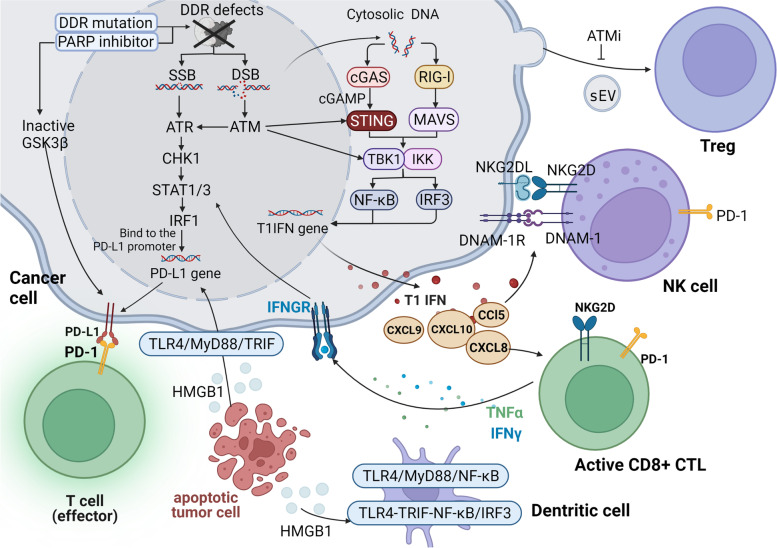
“The release of the HMGB1 protein from dying tumor cells can bind TLR-4 on the surface of both DCs and macrophages in order to induce INF-β (TRIF) signal transduction, which subsequently activates IRF3 and NF-κB pathways.”
BackgroundResultInfluentialNovel Approaches to Improve the Efficacy of Immuno-Radiotherapy
Shevtsov, M., Sato, H., Multhoff, G., & Shibata, A. (2019) · Frontiers in Oncology · doi:10.3389/fonc.2019.00156 · Cited by 173
Butyrophilins: an emerging family of immune regulators
Abeler‐Dörner, L., Swamy, M., Williams, G. H., Hayday, A., & Bas, A. (2011) · Trends in Immunology · doi:10.1016/j.it.2011.09.007 · Cited by 172 · cited 1×
“In previous studies, in addition to promoting T-cell homing to the epithelium, ATR mutant pigmented nevi also demonstrated a specific CD4 down-regulation effect [204, 231, 232].”
BackgroundGenomic instability, inflammatory signaling and response to cancer immunotherapy
Chen, M., Linstra, R., & van Vugt, M. A. T. M. (2022) · Biochimica et Biophysica Acta (BBA) - Reviews on Cancer · doi:10.1016/j.bbcan.2021.188661 · Cited by 166 · cited 1×
“The interaction between the two pathways has been described in research [217].”
BackgroundGenomics of response to immune checkpoint therapies for cancer: implications for precision medicine
Conway, J. R., Kofman, E., Mo, S. S., Elmarakeby, H., & Van Allen, E. (2018) · Genome Medicine · doi:10.1186/s13073-018-0605-7 · Cited by 165 · cited 3×
“On the one hand, IFN-γ displays the positive anti-tumor immune effect of up-regulating the MHC, which in turn contributes to antigen presentation [52].”
BackgroundMolecular determinants of response to PD-L1 blockade across tumor types
Banchereau, R., Leng, N., Zill, O., Sokol, E., Liu, G., Pavlick, D., Maund, S., Liu, L.-F., Kadel, E., Baldwin, N., et al. (2021) · Nature Communications · doi:10.1038/s41467-021-24112-w · Cited by 164
Skint-1 is a highly specific, unique selecting component for epidermal T cells
Barbee, S. D., Woodward, M. J., Turchinovich, G., Mention, J.-J., Lewis, J. M., Boyden, L. M., Lifton, R. P., Tigelaar, R., & Hayday, A. C. (2011) · Proceedings of the National Academy of Sciences · doi:10.1073/pnas.1010890108 · Cited by 162 · cited 1×
“In previous studies, in addition to promoting T-cell homing to the epithelium, ATR mutant pigmented nevi also demonstrated a specific CD4 down-regulation effect [204, 231, 232].”
BackgroundIFNγ induces PD-L1 overexpression by JAK2/STAT1/IRF-1 signaling in EBV-positive gastric carcinoma
Moon, J. W., Kong, S.-K., Kim, B. S., Kim, H. J., Lim, H., Noh, K., Kim, Y., Choi, J.-W., Lee, J.-H., & Kim, Y.-S. (2017) · Scientific Reports · doi:10.1038/s41598-017-18132-0 · Cited by 162 · cited 1×
“On the other hand, IFN-γ exposure increases PD-L1 expression through the JAK-STAT pathway, thus inducing negative feedback and adaptive resistance [52, 176].”
BackgroundUpdate on Tumor Neoantigens and Their Utility: Why It Is Good to Be Different
Lee, C.-H., Yelensky, R., Jooss, K., & Chan, T. A. (2018) · Trends in Immunology · doi:10.1016/j.it.2018.04.005 · Cited by 162 · cited 1×
“This evasive ability may be attributed to the fact that mutation accumulation caused by DDR defects can also increase the level of PD-L 1[160, 161].”
BackgroundSubudhi, S. K., Vence, L., Zhao, H., Blando, J., Yadav, S. S., Xiong, Q., Reuben, A., Aparicio, A., Corn, P. G., Chapin, B. F., et al. (2020) · Science Translational Medicine · doi:10.1126/scitranslmed.aaz3577 · Cited by 158
Self-citationHuang, J., Wang, L., Cong, Z., Amoozgar, Z., Kiner, E., Xing, D., Oršulić, S., Matulonis, U. A., & Goldberg, M. S. (2015) · Biochemical and Biophysical Research Communications · doi:10.1016/j.bbrc.2015.05.083 · Cited by 155
Dancing with the DNA damage response: next-generation anti-cancer therapeutic strategies
Minchom, A. R., Aversa, C., & Lopez, J. S. (2018) · Therapeutic Advances in Medical Oncology · doi:10.1177/1758835918786658 · Cited by 152 · cited 3×
“The expression of BER/SSBR has been shown to be negatively correlated with the level of PD-L1 observed in cancer cells [150, 235].”
BackgroundRicciuti, B., Recondo, G., Spurr, L. F., Li, Y. Y., Lamberti, G., Venkatraman, D., Umeton, R., Cherniack, A. D., Nishino, M., Sholl, L. M., et al. (2020) · Clinical Cancer Research · doi:10.1158/1078-0432.ccr-19-3529 · Cited by 151 · cited 2×
“Meanwhile, the role of the DDR pathway in immunotherapy is being evidenced in increasing tumor types [39].”
BackgroundTargeting DNA repair pathway in cancer: Mechanisms and clinical application
Wang, M., Chen, S., & Ao, D. (2021) · MedComm · doi:10.1002/mco2.103 · Cited by 151 · cited 8×
“NCT04633902 Metastatic Melanoma Olaparib Pembrolizumab PARP+PD-1 Phase 2 ORR, PFS, OS, Safety and Toxicity Recruiting [90]”
BackgroundInfluentialFeng, X., Tubbs, A., Zhang, C., Tang, M., Sridharan, S., Wang, C., Jiang, D., Su, D., Zhang, H., Chen, Z., et al. (2020) · The EMBO Journal · doi:10.15252/embj.2019104036 · Cited by 145
Wen, W. X., & Leong, C. (2019) · PLoS ONE · doi:10.1371/journal.pone.0215381 · Cited by 143 · cited 2×
“In breast cancer, BRCA1 inactivation is accompanied by an increase of T cells [4, 147, 152, 163].”
BackgroundProspects for combining immune checkpoint blockade with PARP inhibition
Li, A., Yi, M., Qin, S., Chu, Q., Luo, S., & Wu, K. (2019) · Journal of Hematology & Oncology · doi:10.1186/s13045-019-0784-8 · Cited by 143 · cited 11×
“It is generally understood that PARPi functions by blocking the BER pathway, or other repair factors, through its inhibition of the core DNA damage sensors and signal transducers, PARP1/2 enzymes [84, 116].”
BackgroundInfluentialProgress towards a clinically-successful ATR inhibitor for cancer therapy
Barnieh, F. M., Loadman, P. M., & Falconer, R. A. (2021) · Current Research in Pharmacology and Drug Discovery · doi:10.1016/j.crphar.2021.100017 · Cited by 143 · cited 9×
“ID Cancer type DDRtargeted inhibitor ICI Targets Phase Clinical endpoint Status Refs NCT04334941 SCLC Talazoparib Atezolizumab PARP+PD-L1 Phase 2 PFS, OS Recruiting [81] NCT04068831 Renal Cell Carcinoma Talazoparib Avelumab PARP+PD-L1 Phase 2 ORR, PFS Recruiting [16] NCT03964532 Advanced Breast Cancer Talazoparib Avel…”
BackgroundInfluentialInhibition of ATR downregulates PD-L1 and sensitizes tumor cells to T cell-mediated killing.
Sun, L., Yang, R., Li, C.-W., Chen, M., Shao, B., Hsu, J.-M., Chan, L.-C., Yang, Y., Hsu, J. L., Lai, Y., et al. (2018) · Europe PMC (PubMed Central) · Cited by 141
Heijink, A. M., Talens, F., Jae, L. T., van Gijn, S. E., Fehrmann, R. S. N., Brummelkamp, T. R., & van Vugt, M. A. T. M. (2019) · Nature Communications · doi:10.1038/s41467-018-07927-y · Cited by 140 · cited 16×
“For example, PARPi promotes CAR-T infiltration in the TME via the cGAS-STING pathway.”
BackgroundInfluentialSun, R., Luo, H., Su, J., Di, S., Zhou, M., Shi, B., Sun, Y., Du, G., Zhang, H., Jiang, H., et al. (2020) · Molecular Therapy · doi:10.1016/j.ymthe.2020.09.034 · Cited by 137 · cited 20×
“As the anti-tumor benefits generated by DDR functional deficiency are deserving of greater research attention, we have put forward here several research directions and suggestions regarding the application of the DDR pathway in ICB.”
BackgroundInfluentialATR Inhibition Induces CDK1–SPOP Signaling and Enhances Anti–PD-L1 Cytotoxicity in Prostate Cancer
Tang, Z., Pilié, P. G., Geng, C., Manyam, G. C., Yang, G., Park, S., Wang, D., Peng, S., Wu, C., Peng, G., et al. (2021) · Clinical Cancer Research · doi:10.1158/1078-0432.ccr-21-1010 · Cited by 135 · cited 1×
“ATRi/ATR siRNA treatment led to the downregulation of PD-L1 protein expression, while, conversely, olaparib increased the expression of the PD-L1 protein [10, 122].”
BackgroundUnboxing the molecular modalities of mutagens in cancer
Kumari, S., Sharma, S., Advani, D., Khosla, A., Kumar, P., & Ambasta, R. K. (2021) · Environmental Science and Pollution Research · doi:10.1007/s11356-021-16726-w · Cited by 124
Replicative DNA polymerase mutations in cancer
Heitzer, E., & Tomlinson, I. (2014) · Current Opinion in Genetics & Development · doi:10.1016/j.gde.2013.12.005 · Cited by 121 · cited 1×
“Tumors with POLE/POLD mutation have shown higher TMB and NAL, alongside improved responses to ICIs [59, 148, 149], while the DDR pathway characteristics established by Lou et al.”
BackgroundEmerging CAR-T Cell Therapy for the Treatment of Triple-Negative Breast Cancer
Dees, S., Ganesan, R., Singh, S., & Grewal, I. S. (2020) · Molecular Cancer Therapeutics · doi:10.1158/1535-7163.mct-20-0385 · Cited by 118 · cited 1×
“NKG2DCAR-T cell therapy targeting NKG2D ligands is at an early clinical stage [187].”
BackgroundThe role of tumor-associated macrophages in osteosarcoma progression – therapeutic implications
Huang, Q., Liang, X., Ren, T., Huang, Y., Zhang, H., Yu, Y., Chen, C., Wang, W., Niu, J., Lou, J., et al. (2021) · Cellular Oncology · doi:10.1007/s13402-021-00598-w · Cited by 118 · cited 2×
“ID Cancer type DDRtargeted inhibitor ICI Targets Phase Clinical endpoint Status Refs NCT02935634 Advanced Gastric Cancer Rucaparib Nivolumab Ipilimumab PARP+PD-1 + CTLA-4 Phase 2 ORR, DOR, AEs Active, not recruiting [16] NCT03869190 Urothelial Cancer Niraparib Atezolizumab PARP+PD-L1 Phase 1 Phase 2 ORR, pCR, PFS, OS…”
BackgroundFriedlander, M., Meniawy, T., Markman, B., Mileshkin, L., Harnett, P., Millward, M., Lundy, J., Freimund, A., Norris, C., Mu, S., et al. (2019) · The Lancet Oncology · doi:10.1016/s1470-2045(19)30396-1 · Cited by 116 · cited 1×
“Further, the 1a/b Phase trial of oral PARPis, pamiparib and tislelizumab, demonstrated good tolerance [126].”
BackgroundTargeting DNA repair in cancer: current state and novel approaches
Klinakis, A., Karagiannis, D., & Rampias, T. N. (2019) · Cellular and Molecular Life Sciences · doi:10.1007/s00018-019-03299-8 · Cited by 114 · cited 1×
“NCT03834519 Prostate Cancer Olaparib Pembrolizumab PARP+PD-1 Phase 3 OS, rPFS Active, not recruiting [107]”
BackgroundThe role of toll‐like receptor 4 (TLR4) in cancer progression: A possible therapeutic target?
Kashani, B., Zandi, Z., Pourbagheri‐Sigaroodi, A., Bashash, D., & Ghaffari, S. H. (2020) · Journal of Cellular Physiology · doi:10.1002/jcp.30166 · Cited by 114
Classical pathology and mutational load of breast cancer – integration of two worlds
Budczies, J., Bockmayr, M., Denkert, C., Klauschen, F., Lennerz, J. K., Györffy, B., Dietel, M., Loibl, S., Weichert, W., & Stenzinger, A. (2015) · The Journal of Pathology: Clinical Research · doi:10.1002/cjp2.25 · Cited by 113
DDR-mediated crosstalk between DNA-damaged cells and their microenvironment
Malaquin, N., Carrier-Leclerc, A., Dessureault, M., & Rodier, F. (2015) · Frontiers in Genetics · doi:10.3389/fgene.2015.00094 · Cited by 113
Base excision repair regulates PD-L1 expression in cancer cells
Permata, T. B. M., Hagiwara, Y., Sato, H., Yasuhara, T., Oike, T., Gondhowiardjo, S. A., Held, K. D., Nakano, T., & Shibata, A. (2019) · Oncogene · doi:10.1038/s41388-019-0733-6 · Cited by 109 · cited 2×
“The expression of BER/SSBR has been shown to be negatively correlated with the level of PD-L1 observed in cancer cells [150, 235].”
BackgroundRegulation of murine NK cell exhaustion through the activation of the DNA damage repair pathway
Álvarez, M., Simonetta, F., Baker, J. B., Pierini, A., Wenokur, A. S., Morrison, A. R., Murphy, W. J., & Negrin, R. S. (2019) · JCI Insight · doi:10.1172/jci.insight.127729 · Cited by 106
Ji, F., Zhang, F., Zhang, M., Long, K., Xia, M., Lu, F., Li, E., Chen, J., Li, J., Chen, Z., et al. (2021) · Journal of Hematology & Oncology · doi:10.1186/s13045-021-01168-1 · Cited by 105 · cited 3×
“Specifically, PARPi promotes the upregulation of both IFN-β expression and chemokines via the STING-TBK1-IRF3 pathway, leading to CD8+ CAR-T cell recruitment and the secretion of large amounts of granzyme B [129].”
BackgroundVarayathu, H., Sarathy, V., Thomas, B. E., Mufti, S. S., & Naik, R. (2021) · Frontiers in Oncology · doi:10.3389/fonc.2021.559161 · Cited by 104 · cited 1×
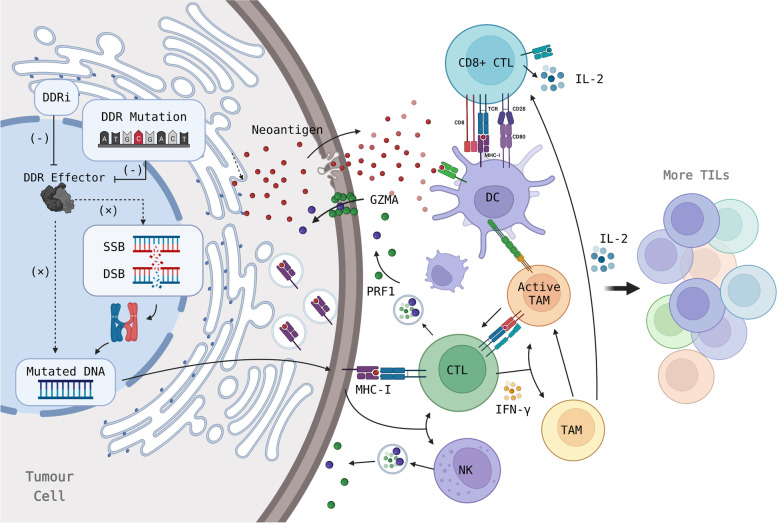
“The primary mechanisms involved can be described as follows: (1) increasing the level of neoantigen and tumor immunogenicity, which is beneficial to the immune recognition process in antigen presentation; (2) the activated cyclic GMP-AMP synthase (cGAS) stimulator of interferon genes (STING) pathway triggers innate im…”
BackgroundSystemic Therapy for Metastatic Pancreatic Cancer
Ettrich, T. J., & Seufferlein, T. T. W. (2021) · Current Treatment Options in Oncology · doi:10.1007/s11864-021-00895-4 · Cited by 103
Parikh, A. R., He, Y., Hong, T. S., Corcoran, R. B., Clark, J. W., Ryan, D. P., Zou, L., Ting, D. T., Catenacci, D. V. T., Chao, J., et al. (2019) · The Oncologist · doi:10.1634/theoncologist.2019-0034 · Cited by 99
De Bono, J. S., Goh, J. C., Ojamaa, K., Piulats Rodriguez, J. M., Drake, C. G., Hoimes, C. J., Wu, H., Poehlein, C. H., & Antonarakis, E. S. (2018) · Journal of Clinical Oncology · doi:10.1200/jco.2018.36.15_suppl.5007 · Cited by 96 · cited 3×
“Apart from the disadvantages associated with the heterogeneity of expression and the uniformities of test platforms [20], evidence has shown that patients may present insensitivity to immunotherapy when PD-L1 expression is high [14, 21, 22].”
BackgroundMcGrail, D. J., Federico, L., Li, Y., Dai, H., Lu, Y., Mills, G. B., Yi, S., Lin, S.-Y., & Sahni, N. (2018) · Nature Communications · doi:10.1038/s41467-018-03730-x · Cited by 95 · cited 4×
“A non-neoantigen-dependent increase in CTL infiltration may be associated with the activation of the ATM gene [178].”
BackgroundInfluentialInterfaces between cellular responses to DNA damage and cancer immunotherapy
Pilger, D., Seymour, L. W., & Jackson, S. P. (2021) · Genes & Development · doi:10.1101/gad.348314.121 · Cited by 95 · cited 9×
“NCT04483544 Cervical Cancer Olaparib Pembrolizumab PARP+PD-1 Phase 2 irORR, PFS, TEAEs, DOR Recruiting [44]”
BackgroundInfluentialOvarian Cancer in the Era of Immune Checkpoint Inhibitors: State of the Art and Future Perspectives
Maiorano, B. A., Maiorano, M. F. P., Lorusso, D., & Maiello, E. (2021) · Cancers · doi:10.3390/cancers13174438 · Cited by 95 · cited 4×
“ID Cancer type DDRtargeted inhibitor ICI Targets Phase Clinical endpoint Status Refs NCT04178460 Gastric Cancer, TNBC, Biliary Tract Carcinoma and Endometrial Carcinoma Niraparib MGD013(Tebotelimab) PARP+ PD-1 + LAG-3 Phase 1 Safety and Validity profiles Terminated [97] NCT02657889 TNBC or Ovarian Cancer Niraparib Pem…”
BackgroundInfluentialCurrent status and perspectives in immunotherapy for metastatic melanoma
Marconcini, R., (IMI), F. T. I. M. I., Spagnolo, F., Stucci, L. S., Ribero, S., Marra, E., Rosa, F. D., Picasso, V., Guardo, L. D., Cimminiello, C., et al. (2018) · Oncotarget · doi:10.18632/oncotarget.23746 · Cited by 91
Svrcek, M., El-Bchiri, J., Chalastanis, A., Capel, É., Dumont, S., Buhard, O., Oliveíra, C., Seruca, R., Bossard, C., Mosnier, J., et al. (2007) · Journal of Clinical Oncology · doi:10.1200/jco.2007.10.9744 · Cited by 88 · cited 1×
“A well-established close positive relationship between MMR defects and MSI exists [54, 55].”
BackgroundKim, S. T., Smith, S. A., Mortimer, P. G. S., Loembé, A., Cho, H., Kim, K., Smith, C. L., Willis, S. E., Irurzun‐Arana, I., Berges, A., et al. (2021) · Clinical Cancer Research · doi:10.1158/1078-0432.ccr-21-0251 · Cited by 88 · cited 1×
“In a Phase I trial of ceralasertib combined with paclitaxel, 11 out of 33 patients with melanoma experienced a reversal of the drug resistance to PD-1 therapy [205].”
BackgroundAlterations of DNA damage repair in cancer: from mechanisms to applications
Jiang, M., Jia, K., Wang, L., Li, W., Chen, B., Liu, Y., Wang, H., Zhao, S., He, Y., & Zhou, C. (2020) · Annals of Translational Medicine · doi:10.21037/atm-20-2920 · Cited by 87 · cited 1×
“NCT03016338 Endometrial Cancer Niraparib Dostarlimab PARP+PD-1 Phase 2 CBR, ORR, DOR, PFS Active, not recruiting [92]”
BackgroundVidotto, T., Nersesian, S., Graham, C. H., Siemens, D. R., & Koti, M. (2019) · Journal for ImmunoTherapy of Cancer · doi:10.1186/s40425-019-0619-8 · Cited by 85 · cited 8×
“Abnormal DDR pathway and immune checkpoint molecules The mutation of the DDR gene in cancer cells is usually associated with the increased expression of PD-1/ PD-L1 genes within the TME [56, 64, 233, 234], such as the DSB repair gene [221], MMR gene [146, 235, 236] and RB1 [171, 237].”
BackgroundResultInfluentialChen, Y., Chen, G., Li, J., Huang, Y., Li, Y., Lin, J., Chen, L., Lu, J., Wang, Y., Wang, C., et al. (2019) · JAMA Network Open · doi:10.1001/jamanetworkopen.2019.11895 · Cited by 84 · cited 1×
“Lastly, ataxiatelangiectasia mutated (ATM) protein kinase is known to improve the ORR of patients, although it may be related to a shorter OS [22, 49], and combined mutation of TP53 and ATM also constitutes a potential biomarker [67].”
BackgroundZhu, L., Liu, J., Chen, J., & Zhou, Q. (2021) · Journal of Hematology & Oncology · doi:10.1186/s13045-021-01218-8 · Cited by 84 · cited 1×
“DDR displays great potential in this regard [249], as the alteration of the DDR pathway in tumors as a predictive marker of ICB presents many advantages [20, 249, 250].”
BackgroundThe Synergistic Effect of PARP Inhibitors and Immune Checkpoint Inhibitors
Wu, Z., Cui, P., Tao, H., Zhang, S., Ma, J., Liu, Z., Wang, J., Qian, Y., Chen, S., Huang, Z., et al. (2021) · Clinical Medicine Insights Oncology · doi:10.1177/1179554921996288 · Cited by 81 · cited 2×
“NCT02546661 Bladder Cancer Adavosertib Durvalumab WEE1 + PD-L1 Phase 1 AEs, ORR, DCR, PFS, OS, DOR Active, not recruiting [114]”
BackgroundSelf-citationCross-platform pathway-based analysis identifies markers of response to the PARP inhibitor olaparib
Daemen, A., Wolf, D. M., Korkola, J. E., Griffith, O. L., Frankum, J. R., Brough, R., Jakkula, L. R., Wang, N. J., Natrajan, R., Reis-Filho, J. S., et al. (2012) · Breast Cancer Research and Treatment · doi:10.1007/s10549-012-2188-0 · Cited by 76 · cited 17×
“For example, PARPi promotes CAR-T infiltration in the TME via the cGAS-STING pathway.”
BackgroundInfluentialPARP Inhibitors in Small-Cell Lung Cancer: Rational Combinations to Improve Responses
Knelson, E. H., Patel, S. A., & Sands, J. M. (2021) · Cancers · doi:10.3390/cancers13040727 · Cited by 75
Single-Strand Break End Resection in Genome Integrity: Mechanism and Regulation by APE2
Hossain, M. A., Lin, Y., & Yan, S. (2018) · International Journal of Molecular Sciences · doi:10.3390/ijms19082389 · Cited by 74
Immunomodulatory Roles of PARP-1 and PARP-2: Impact on PARP-Centered Cancer Therapies
Yélamos, J., Moreno-Lama, L., Jimeno, J., & Ali, S. O. (2020) · Cancers · doi:10.3390/cancers12020392 · Cited by 74
PARP mediated DNA damage response, genomic stability and immune responses
Zong, C., Zhu, T., He, J., Huang, R., Jia, R., & Shen, J. (2022) · International Journal of Cancer · doi:10.1002/ijc.33918 · Cited by 74 · cited 5×
“Ultimately, more randomized clinical trials are required to determine whether these combined treatments are superior to ICI alone, which must also be verified in larger clinical cohorts [58, 115].”
BackgroundInfluentialATM regulation of IL-8 links oxidative stress to cancer cell migration and invasion
Chen, W.-T., Ebelt, N. D., Stracker, T. H., Xhemalce, B., Van Den Berg, C. L., & Miller, K. M. (2015) · eLife · doi:10.7554/elife.07270 · Cited by 73 · cited 1×
“Furthermore, ATM can promote cancer cell migration by regulating the expression of IL-8 independent of its role in the repair of DNA double-strand breaks [229].”
BackgroundRecent advancements of antiangiogenic combination therapies in ovarian cancer
An, D., Banerjee, S. N., & Lee, J. (2021) · Cancer Treatment Reviews · doi:10.1016/j.ctrv.2021.102224 · Cited by 71 · cited 17×
“For example, PARPi promotes CAR-T infiltration in the TME via the cGAS-STING pathway.”
BackgroundInfluentialSun, W., Zhang, Q., Wang, R., Yang, L., Sun, Y., & Yang, L. (2021) · Frontiers in Oncology · doi:10.3389/fonc.2021.648687 · Cited by 71 · cited 13×
“NCT02617277 Solid Tumors Adavosertib Durvalumab WEE1 + PD-L1 Phase 1 DLTs, TEAEs, ORR, PFS Active, not recruiting [51]”
BackgroundInfluentialKlein, O., Kee, D., Markman, B., Carlino, M. S., Underhill, C. R., Palmer, J., Power, D., Cebon, J. S., & Behren, A. (2021) · Cancer Cell · doi:10.1016/j.ccell.2021.04.005 · Cited by 70
Role of DNA repair defects in predicting immunotherapy response
Zhang, J., Shih, D. J. H., & Lin, S.-Y. (2020) · Biomarker Research · doi:10.1186/s40364-020-00202-7 · Cited by 69 · cited 4×
“Patients with a co-mutation in multiple DDR pathways demonstrate a good response to ICIs [59, 74].”
BackgroundResultInfluentialSelf-citationPARP inhibitors in gastric cancer: beacon of hope
Wang, Y., Zheng, K., Huang, Y., Xiong, H., Su, J., Chen, R., & Zou, Y. (2021) · Journal of Experimental & Clinical Cancer Research · doi:10.1186/s13046-021-02005-6 · Cited by 66 · cited 5×
“NCT04178460 Gastric Cancer, TNBC, Biliary Tract Carcinoma and Endometrial Carcinoma Niraparib MGD013(Tebotelimab) PARP+ PD-1 + LAG-3 Phase 1 Safety and Validity profiles Terminated [97]”
BackgroundInfluentialCriscuolo, D., Morra, F., Giannella, R., Visconti, R., Cerrato, A., & Celetti, A. (2019) · Journal of Experimental & Clinical Cancer Research · doi:10.1186/s13046-019-1089-z · Cited by 64 · cited 4×
“ID Cancer type DDRtargeted inhibitor ICI Targets Phase Clinical endpoint Status Refs NCT04178460 Gastric Cancer, TNBC, Biliary Tract Carcinoma and Endometrial Carcinoma Niraparib MGD013(Tebotelimab) PARP+ PD-1 + LAG-3 Phase 1 Safety and Validity profiles Terminated [97] NCT02657889 TNBC or Ovarian Cancer Niraparib Pem…”
BackgroundInfluentialLi, X., Yang, M., Yu, Z., Tang, S., Wang, L., Cao, X., & Chen, T. (2017) · Science Signaling · doi:10.1126/scisignal.aae0435 · Cited by 63 · cited 1×
“Specifically, ATM may inhibit SRC tyrosine kinase activity, while related ATM defects up-regulate SRC-promoted TBK1-PRR complex formation and type I interferon production independent of the cGAS/STING pathway [227, 228].”
BackgroundClinical Impact of Tumor DNA Repair Expression and T-cell Infiltration in Breast Cancers
Green, A. R., Aleskandarany, M. A., Ali, R., Hodgson, E. G., Atabani, S., DeSouza, K., Rakha, E. A., Ellis, I. O., & Madhusudan, S. (2017) · Cancer Immunology Research · doi:10.1158/2326-6066.cir-16-0195 · Cited by 62 · cited 1×
“XRCC1 gene expression can be used to divide PD-L1+ and PD-1+ breast cancer patients into groups with different prognoses [63].”
BackgroundEmerging biomarkers for the combination of radiotherapy and immune checkpoint blockers
Lhuillier, C., Vanpouille-Box, C., Galluzzi, L., Formenti, S. C., & Demaria, S. (2018) · Seminars in Cancer Biology · doi:10.1016/j.semcancer.2017.12.007 · Cited by 62 · cited 20×
“CD8+ T cell DDR inhibition enhances CTL function.”
BackgroundInfluentialLin, A., Zhang, H., Hu, X., Chen, X., Wu, G., Luo, P., & Zhang, J. (2020) · Pharmacological Research · doi:10.1016/j.phrs.2020.105028 · Cited by 62
Self-citationHigh tumor mutation burden is associated with DNA damage repair gene mutation in breast carcinomas
Mei, P., Freitag, C. E., Wei, L., Zhang, Y., Parwani, A. V., & Li, Z. (2020) · Diagnostic Pathology · doi:10.1186/s13000-020-00971-7 · Cited by 59 · cited 1×
“1) [69, 101, 144], and the intracellular accumulation of DNA fragments furthers induces innate and adaptive immune activation [78].”
BackgroundPARP Inhibitors in Pancreatic Cancer
Brown, T. J., & Reiss, K. A. (2021) · The Cancer Journal · doi:10.1097/ppo.0000000000000554 · Cited by 59 · cited 7×
“NCT04666740 Metastatic Pancreatic Ductal Adenocarcinoma Olaparib Pembrolizumab PARP+PD-1 Phase 2 PFS, OS Recruiting [108]”
BackgroundInfluentialSato, H., Jeggo, P. A., & Shibata, A. (2019) · Cancer Science · doi:10.1111/cas.14197 · Cited by 57
The BRCA2 mutation status shapes the immune phenotype of prostate cancer
Jenzer, M., Keß, P., Nientiedt, C., Endris, V., Kippenberger, M., Leichsenring, J., Stögbauer, F., Haimes, J., Mishkin, S., Kudlow, B., et al. (2019) · Cancer Immunology, Immunotherapy · doi:10.1007/s00262-019-02393-x · Cited by 53 · cited 2×
“In breast cancer, BRCA1 inactivation is accompanied by an increase of T cells [4, 147, 152, 163].”
BackgroundAnalysis of a novel immune checkpoint, Siglec‐15, in pancreatic ductal adenocarcinoma
Chen, X., Mo, S., Zhang, Y., Ma, H., Lu, Z., Yu, S., & Chen, J. (2022) · The Journal of Pathology Clinical Research · doi:10.1002/cjp2.260 · Cited by 52 · cited 2×
“The high expression of BRCA1 in tumor cells is significantly related to the positive expression of the new target Siglec-15 and a favorable prognosis [247, 248].”
BackgroundATM: Translating the DNA Damage Response to Adaptive Immunity
Weitering, T. J., Takada, S., Weemaes, C. M. R., van Schouwenburg, P. A., & van der Burg, M. (2021) · Trends in Immunology · doi:10.1016/j.it.2021.02.001 · Cited by 50
Chen, Y., Wang, X., Deng, X., Zhang, Y., Liao, R., Li, Y., Yang, H., & Chen, K. (2021) · Frontiers in Immunology · doi:10.3389/fimmu.2021.676922 · Cited by 50 · cited 5×
“The subtype of activated DDR has demonstrated significantly increased expression of the immune checkpoint, and its immune score was significantly higher than that of the low expression group [72].”
BackgroundInfluentialTherapeutic Co-targeting of WEE1 and ATM Downregulates PD-L1 Expression in Pancreatic Cancer
Jin, M. H., Nam, A., Park, J. E., Bang, J., Bang, Y., & Oh, D. (2019) · Cancer Research and Treatment · doi:10.4143/crt.2019.183 · Cited by 48 · cited 3×
“Co-inhibition of WEE1 combined with ATM reduced the expression of MMP-9, IL-8, CXCL1, CCL2, and CCL5, thus achieving an anti-migration effect in pancreatic cancer (PC) [230].”
BackgroundPatel, P., Sun, L., Robbins, Y. L., Clavijo, P. E., Friedman, J., Silvin, C. J., Waes, C. V., Cook, J. A., Mitchell, J. B., & Allen, C. T. (2019) · OncoImmunology · doi:10.1080/2162402x.2019.1638207 · Cited by 48 · cited 1×
“The WEE1 inhibitor, when combined with both radiation and a PD-1 blockade, can enhance the cytotoxic activity mediated by CD8 + T cells [132].”
BackgroundPARP inhibitors in head and neck cancer: Molecular mechanisms, preclinical and clinical data
Moutafi, M. K., Economopoulou, P., Rimm, D. L., & Psyrri, A. K. (2021) · Oral Oncology · doi:10.1016/j.oraloncology.2021.105292 · Cited by 48 · cited 8×
“NCT04313504 Head and Neck Cancer Niraparib Dostarlimab PARP+PD-1 Phase 2 ORR, AEs, PFS, OS Recruiting [86]”
BackgroundInfluentialMouw, K. W., & Konstantinopoulos, P. A. (2018) · British Journal of Cancer · doi:10.1038/s41416-018-0017-x · Cited by 47
Luo, P., Lin, A., Li, K., Wei, T., & Zhang, J. (2019) · Journal of Thoracic Oncology · doi:10.1016/j.jtho.2019.08.2509 · Cited by 46
Self-citationA Tale of Two Checkpoints: ATR Inhibition and PD-(L)1 Blockade
Ngoi, N. Y. L., Peng, G., & Yap, T. A. (2021) · Annual Review of Medicine · doi:10.1146/annurev-med-042320-025136 · Cited by 46 · cited 7×
“In addition, to further aggravate DNA damage and other mechanisms affiliated with the killing of tumor cells, some clinical trials have investigated triple therapy of two DDR inhibitors combined with ICIs, which have also yielded positive results [112, 133].”
BackgroundResultInfluentialLi, C., Shen, Q., Zhang, P., Wang, T., Liu, W., Li, R., Ma, X., Zeng, X., Yin, Y., & Tao, K. (2021) · Journal of Experimental & Clinical Cancer Research · doi:10.1186/s13046-021-02120-4 · Cited by 45 · cited 2×
“Moreover, the synergistic association of DDR inhibitors with certain defects may achieve more effective and accurate immunomodulation [213].”
BackgroundDiverse immune response of DNA damage repair-deficient tumors
Qing, T., Jun, T. W., Lindblad, K. E., Lujambio, A., Marczyk, M., Pusztai, L., & Huang, K. (2021) · Cell Reports Medicine · doi:10.1016/j.xcrm.2021.100276 · Cited by 44 · cited 2×
“An increase in neoantigen accumulation and induction of the anti-tumor immune response, initiated through the enlargement of somatic mutations and intracellular DNA fragment accumulation, have been recognized to play an active role in DDR dysfunction [35].”
BackgroundAlerting the immune system to DNA damage: micronuclei as mediators
MacDonald, K. M., Benguerfi, S., & Harding, S. M. (2020) · Essays in Biochemistry · doi:10.1042/ebc20200016 · Cited by 43 · cited 1×
“This evasive ability may be attributed to the fact that mutation accumulation caused by DDR defects can also increase the level of PD-L 1[160, 161].”
BackgroundPARP Inhibitors in Biliary Tract Cancer: A New Kid on the Block?
Ricci, A. D., Rizzo, A., Bonucci, C., Tober, N., Palloni, A., Mollica, V., Maggio, I., Deserti, M., Tavolari, S., & Brandi, G. (2020) · Medicines · doi:10.3390/medicines7090054 · Cited by 43 · cited 7×
“ID Cancer type DDRtargeted inhibitor ICI Targets Phase Clinical endpoint Status Refs NCT04334941 SCLC Talazoparib Atezolizumab PARP+PD-L1 Phase 2 PFS, OS Recruiting [81] NCT04068831 Renal Cell Carcinoma Talazoparib Avelumab PARP+PD-L1 Phase 2 ORR, PFS Recruiting [16] NCT03964532 Advanced Breast Cancer Talazoparib Avel…”
BackgroundInfluentialTian, W., Shan, B., Zhang, Y., Ren, Y., Liang, S., Zhao, J., Zhao, Z., Wang, G., Zhao, X., Peng, D., et al. (2020) · Cancer Medicine · doi:10.1002/cam4.2849 · Cited by 42
DNA Repair and Signaling in Immune-Related Cancer Therapy
Kakoti, S., Sato, H., Laskar, S. S., Yasuhara, T., & Shibata, A. (2020) · Frontiers in Molecular Biosciences · doi:10.3389/fmolb.2020.00205 · Cited by 42 · cited 7×
“2), PARP1, DNA sensor (or DNA binding protein) IFI16, and Tp53 can also activate the STING pathway signal [76, 208, 216].”
BackgroundInfluentialZhou, C., Lin, A., Cao, M., Ding, W., Mou, W., Guo, N., Chen, Z., Zhang, J., & Luo, P. (2021) · Frontiers in Immunology · doi:10.3389/fimmu.2021.634741 · Cited by 42 · cited 3×
“The level of DDR mutation and activation is related to enrichment of various immune features [34, 56].”
BackgroundSelf-citationPrincipe, D. R. (2022) · Cancers · doi:10.3390/cancers14040897 · Cited by 42 · cited 1×
“NCT05093231 Pancreatic Cancer Olaparib Pembrolizumab PARP+PD-1 Phase 2 ORR, Safety and Toxicity, PFS, DOR, OS Not yet recruiting [109]”
BackgroundTargeting DNA Damage Response and Immune Checkpoint for Anticancer Therapy
Huang, J.-L., Chang, Y.-T., Hong, Z.-Y., & Lin, C.-S. (2022) · International Journal of Molecular Sciences · doi:10.3390/ijms23063238 · Cited by 42
Singh, R., Goldberg, J., Varghese, A. M., Yu, K. H., Park, W., & O'Reilly, E. M. (2019) · Cancer Treatment Reviews · doi:10.1016/j.ctrv.2019.03.003 · Cited by 40 · cited 4×
“Abnormal DDR pathway and immune checkpoint molecules The mutation of the DDR gene in cancer cells is usually associated with the increased expression of PD-1/ PD-L1 genes within the TME [56, 64, 233, 234], such as the DSB repair gene [221], MMR gene [146, 235, 236] and RB1 [171, 237].”
BackgroundInfluentialDo, K. T., Manuszak, C., Thrash, E. M., Giobbie‐Hurder, A., Hu, J., Kelland, S., Powers, A., de Jonge, A., Shapiro, G. I., & Severgnini, M. (2021) · Cancer Immunology Immunotherapy · doi:10.1007/s00262-021-02910-x · Cited by 38 · cited 5×
“NCT03495323 Advanced Solid Tumors Prexasertib LY3300054 CHK1 + PD-L1 Phase 1 Toxicity Completed [113]”
BackgroundInfluentialPermata, T. B. M., Sato, H., Gu, W., Kakoti, S., Uchihara, Y., YOSHIMATSU, Y., Sato, I., Kato, R., Yamauchi, M., Suzuki, K., et al. (2021) · Journal of Radiation Research · doi:10.1093/jrr/rrab050 · Cited by 38 · cited 1×
“DDR displays great potential in this regard [249], as the alteration of the DDR pathway in tumors as a predictive marker of ICB presents many advantages [20, 249, 250].”
BackgroundATR Mutations Promote the Growth of Melanoma Tumors by Modulating the Immune Microenvironment
Chen, C.-F., Ruiz-Vega, R., Vasudeva, P., Espitia, F., Krasieva, T. B., de Feraudy, S., Tromberg, B. J., Huang, S., Garner, C. P., Wu, J., et al. (2017) · Cell Reports · doi:10.1016/j.celrep.2017.02.040 · Cited by 37 · cited 5×
“Compared to the ATR wild-type subjects, the number of macrophages and B cells increased noticeably, and the number of CD3+ T cells decreased in the immune infiltration of ATR mutant melanomas [204].”
BackgroundResultInfluentialChen, Y., Li, Y., Guan, Y., Huang, Y., Lin, J., Chen, L., Li, J., Chen, G., Pan, L. K., Xia, X., et al. (2020) · Molecular Oncology · doi:10.1002/1878-0261.12739 · Cited by 37
Song, Y., Huang, J., Liang, D., Hu, Y., Mao, B., Li, Q., Sun, H., Yang, Y., Zhang, J., Zhang, H., et al. (2021) · Frontiers in Oncology · doi:10.3389/fonc.2020.549777 · Cited by 37 · cited 9×
“Interestingly, DDR mutations have also been identified in microsatellite stable (MSS) patients [56, 57].”
BackgroundResultInfluentialSelf-citationMacchini, M., Centonze, F., Peretti, U., Orsi, G., Militello, A. M., Valente, M. M., Cascinu, S., & Reni, M. (2021) · Cancer Treatment Reviews · doi:10.1016/j.ctrv.2021.102262 · Cited by 37 · cited 9×
“NCT04548752 Pancreatic Cancer Olaparib Pembrolizumab PARP+PD-1 Phase 2 PFS, OS, ORR, AEs Recruiting [89]”
BackgroundInfluentialLamberti, G., Andrini, E., Sisi, M., Federico, A. D., & Ricciuti, B. (2020) · Future Oncology · doi:10.2217/fon-2020-0215 · Cited by 36 · cited 10×
“NCT03801369 mTNBC Olaparib Durvalumab PARP+PD-L1 Phase 2 ORR, OS Recruiting [16]”
BackgroundInfluentialEvolving Role of Immunotherapy in Advanced Biliary Tract Cancers
Kang, S., El‐Rayes, B. F., & Akce, M. (2022) · Cancers · doi:10.3390/cancers14071748 · Cited by 36
Shen, T., Jia, S., Ding, G., Ping, D., Zhou, L., Zhou, S., & Cao, L. (2020) · iScience · doi:10.1016/j.isci.2020.101431 · Cited by 35
Targeting DNA Repair, Cell Cycle, and Tumor Microenvironment in B Cell Lymphoma
Bröckelmann, P. J., de Jong, M. R. W., & Jachimowicz, R. D. (2020) · Cells · doi:10.3390/cells9102287 · Cited by 34 · cited 2×
“Also, targeting cytotoxic T-lymphocyte-associated protein 4 (CTLA-4), PARPi combined with anti-CTLA-4 antibodies has demonstrated similar effects [127, 128].”
BackgroundThe Interplay Between the DNA Damage Response, RNA Processing and Extracellular Vesicles
Meng, X., Yang, S., & Camp, V. J. A. (2020) · Frontiers in Oncology · doi:10.3389/fonc.2019.01538 · Cited by 33 · cited 2×
“2), PARP1, DNA sensor (or DNA binding protein) IFI16, and Tp53 can also activate the STING pathway signal [76, 208, 216].”
Background
Research works printed but not linked: 1
- Ahrum M Kyung-Hun L Seock-Ah I Dong-Young N Wonshik H Masakazu T DNA damage repair inhibitor for breast cancer treatment Translational research in breast cancer advances in experimental medicine and biology 2019 163 176
Cited by
Immune checkpoint therapy for solid tumours: clinical dilemmas and future trends
Sun, Q., Hong, Z., Zhang, C., Wang, L., Han, Z., & Ma, D. (2023) · Signal Transduction and Targeted Therapy · doi:10.1038/s41392-023-01522-4 · Cited by 598
“113,114 Ataxia telangiectasia mutated (ATM) protein participates in Fig.”
BackgroundLin, A., Xiong, M., Jiang, A., Huang, L., Wong, H. Z. H., Feng, S., Zhang, C., Yu, H., Chen, L., Chi, H., et al. (2025) · iMeta · doi:10.1002/imt2.70070 · Cited by 108
Self-citationYap, T. A., Tolcher, A. W., Plummer, R., Mukker, J. K., Enderlin, M., Hicking, C., Grombacher, T., Locatelli, G., Szűcs, Z., Gounaris, I., et al. (2024) · Clinical Cancer Research · doi:10.1158/1078-0432.ccr-23-2409 · Cited by 65
“The DNA damage caused by DDR inhibition results in DNA fragmentation and micronucleation, increasing the expression of neoantigens on the cell surface (45).”
BackgroundCancer Vulnerabilities Through Targeting the ATR/Chk1 and ATM/Chk2 Axes in the Context of DNA Damage
Fernandez, A., Artola, M., Leon, S., Otegui, N., Jimeno, A., Serrano, D., & Calvo, A. (2025) · Cells · doi:10.3390/cells14100748 · Cited by 53
“This activation triggers type I interferon responses and upregulation of inflammatory cytokines and chemokines, enhancing recruitment and activation of immune cells, particularly cytotoxic T cells [140].”
Su, X., Li, J., Xu, X., Ye, Y., Wang, C., Pang, G., Liu, W., Liu, A., Zhao, C., & Hao, X. (2024) · Journal of Translational Medicine · doi:10.1186/s12967-024-05552-6 · Cited by 49
“The ATM/ATR/CHK1 pathway is involved in regulating the cell cycle and could repair cellular damage [391].”
BackgroundInfluential
Metadata
- Authors
- Shi, C., Qin, K., Lin, A., Jiang, A., Cheng, Q., Liu, Z., Zhang, J., & Luo, P.
- Affiliations
- Zhujiang Hospital (CN)
- Second Military Medical University (CN)
- Central South University (CN)
- First Affiliated Hospital of Zhengzhou University (CN)
- Corresponding author
- Zhang, Jian
- Luo, Peng
- Venue
- Journal of Experimental & Clinical Cancer Research
- Published
- 2022-09-07
- Volume
- 41
- Issue
- 1
- Pages
- 268-268
- ISSN
- 0392-9078 (ISSN-L)
- 1756-9966
- PMC
- PMC9450390
- OpenAlex
- W4294991252
- Semantic Scholar
- ca5ccb87af57b388b5d4235e15093eafa3aa4978
- Cited by
- 85
- References
- 254
- Citations by year
- 2026: 20 · 2025: 30 · 2024: 22 · 2023: 12 · 2022: 1
- FWCI
- 1.99
- Type
- journal article
- Language
- en
- Open access
- gold
- doi.org
- Licence
- cc-by
- creativecommons.org/licenses/by/4.0 (tdm)
- creativecommons.org/licenses/by/4.0 (vor)
- Locations
- Journal of Experimental & Clinical Cancer Research (publishedVersion, cc-by)
- PubMed Central (publishedVersion, cc-by)
- PubMed (publishedVersion)
- DOAJ (DOAJ: Directory of Open Access Journals) (submittedVersion, cc-by-sa)
- Funders
- Natural Science Foundation of Guangdong Province (2018A030313846, 2021A1515012593)
- Innovative Research Group Project of the National Natural Science Foundation of China (81802257, 81871859, 81772457, 82172811, 82172750)
- Science and Technology Planning Project of Guangdong Province (2019A030317020)
- Topics
- Health Sciences › Medicine › Oncology › Cancer Immunotherapy and Biomarkers
- Life Sciences › Biochemistry, Genetics and Molecular Biology › Molecular Biology › DNA Repair Mechanisms
- Health Sciences › Medicine › Oncology › PARP inhibition in cancer therapy
- Keywords
- DNA repair, immune checkpoint inhibitors, immune checkpoint blockade, DDR inhibitors, combination therapy, predictive biomarkers, tumor immune microenvironment, immunogenicity, cancer immunotherapy response
- MeSH terms
- Immune Checkpoint Inhibitors, DNA Damage, DNA Repair, Humans, Neoplasms, Tumor Microenvironment
About these checks
Registry, retraction, Cites and statistics results are computed, not judged, with one exception: a printed reference that no index lists is read once by a model before it counts as a citation error. Claims are extracted by a model and kept only when their quote appears verbatim in the text; each cited source is then checked, with a model’s help, for whether it says what the claim relies on. Those verdicts can be wrong — read the claim’s quote and the cited source before relying on one.
Statistics and arithmetic are recomputed, not judged.
Confidence bands are shown only for fields calibrated on our annotated test set. None is calibrated yet, so no band is shown.
What counts as a claim ›How we measure confidence ›How we check this ›
Are you an author, or do you see a problem with this page? Request a review
Data sources
Bibliographic data: Semantic Scholar, OpenAlex, Crossref.
Contains information from the Semantic Scholar Academic Graph Datasets, made available under the ODC Attribution License (ODC-BY 1.0).
Semantic Scholar’s data is described in: Kinney, R., et al. (2023). The Semantic Scholar Open Data Platform. arXiv:2301.10140.
