

Novel cancer treatment paradigm targeting hypoxia-induced factor in conjunction with current therapies to overcome resistance
Open accessThe DOI matches its Crossref record; 171 of the 171 references it cites were found in a registry or an index.
Abstract
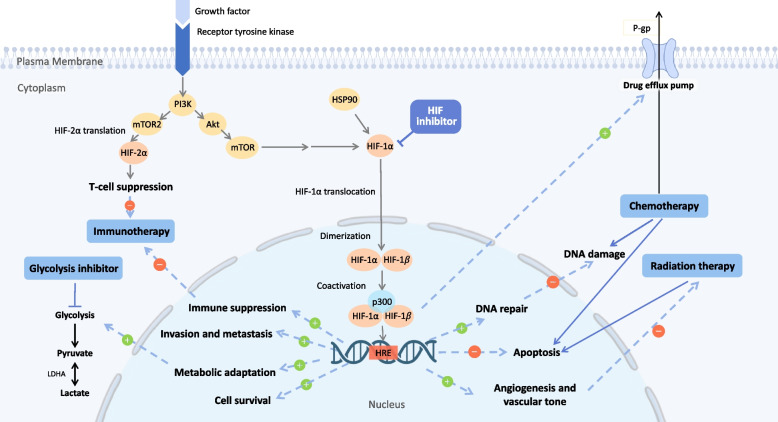
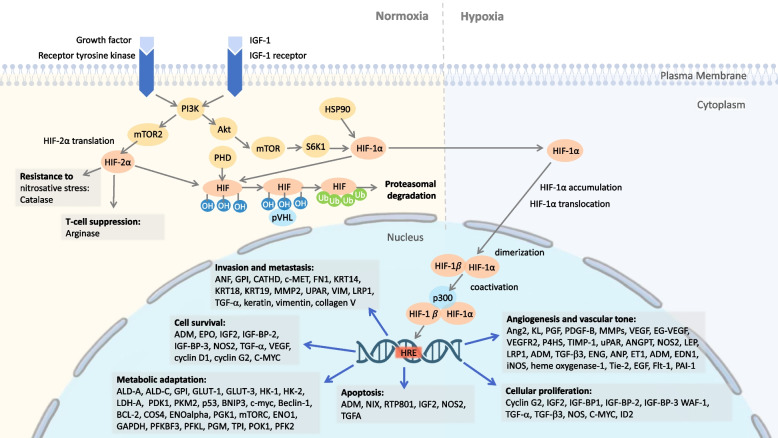
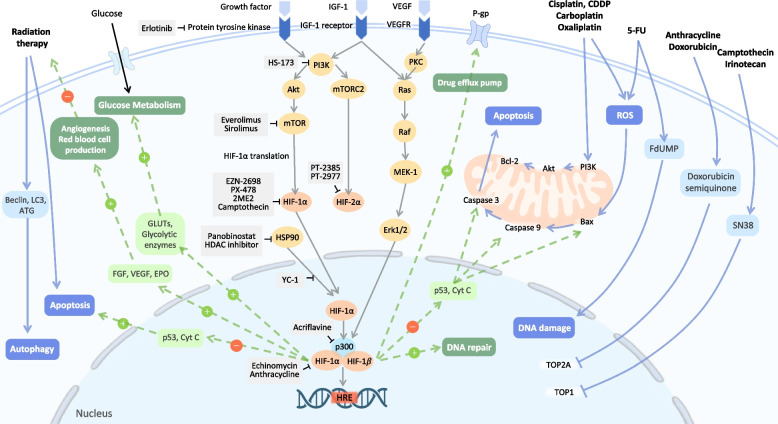
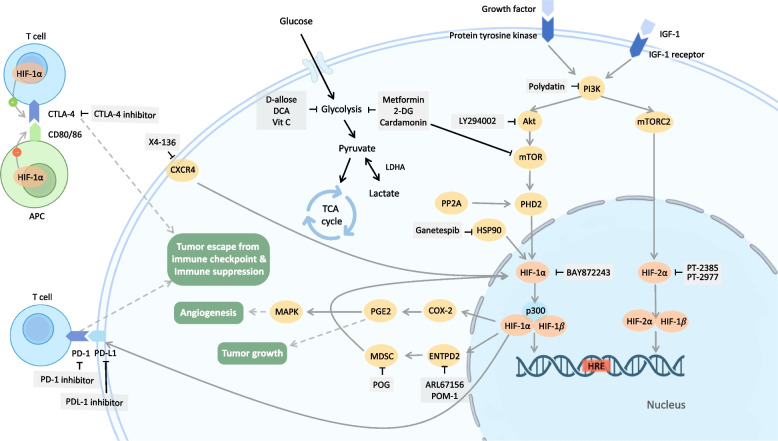
Chemotherapy, radiotherapy, targeted therapy, and immunotherapy are established cancer treatment modalities that are widely used due to their demonstrated efficacy against tumors and favorable safety profiles or tolerability. Nevertheless, treatment resistance continues to be one of the most pressing unsolved conundrums in cancer treatment. Hypoxia-inducible factors (HIFs) are a family of transcription factors that regulate cellular responses to hypoxia by activating genes involved in various adaptations, including erythropoiesis, glucose metabolism, angiogenesis, cell proliferation, and apoptosis. Despite this critical function, overexpression of HIFs has been observed in numerous cancers, leading to resistance to therapy and disease progression. In recent years, much effort has been poured into developing innovative cancer treatments that target the HIF pathway. Combining HIF inhibitors with current cancer therapies to increase anti-tumor activity and diminish treatment resistance is one strategy for combating therapeutic resistance. This review focuses on how HIF inhibitors could be applied in conjunction with current cancer treatments, including those now being evaluated in clinical trials, to usher in a new era of cancer therapy.
Overview
The claims and statistics of this paper haven’t been checked yet.
Free: it reads the open-access text and checks the first 5 claims that cite a source we can check. Create a free account to check every claim.
Integrity signals
Registry
Cites
Statistics
Figures
Verification
Claims the paper makes
The claims and statistics of this paper haven’t been checked yet.
Free: it reads the open-access text and checks the first 5 claims that cite a source we can check. Create a free account to check every claim.
Claims other papers make about this one
Each is checked against this paper’s own text: does it say what the citing paper says it does?
The cited source says what the claim attributes to it.
In the citing paper
“as hypoxia is known to contribute to immunosuppression and ICI resistance, targeting hypoxia may also enhance the effectiveness of immunotherapies [215].”
From Mechanisms and Strategies to Overcome Drug Resistance in Colorectal Cancer (2025) · cites this paper as [215]
Self-check
Percentages, sums and reported differences re-computed from the paper’s own numbers.
The self-check needs the paper’s full text.
Citations
Cites
Targeting Hypoxia-Inducible Factors for the Treatment of Anemia in Chronic Kidney Disease Patients
Locatelli, F., Fishbane, S., Block, G. A., & Macdougall, I. C. (2017) · American Journal of Nephrology · doi:10.1159/000455166 · Cited by 4,813
Kim, J.-W., Tchernyshyov, I., Semenza, G. L., & Dang, C. V. (2006) · Cell Metabolism · doi:10.1016/j.cmet.2006.02.002 · Cited by 3,905
Targeting hypoxia in cancer therapy
Wilson, W. R., & Hay, M. P. (2011) · Nature Reviews Cancer · doi:10.1038/nrc3064 · Cited by 3,172 · cited 1×
“In cancer biology, hypoxia confers increased propensity of chemoresistance, radioresistance, disease relapse, and potentiates cancer metastasis [3].”
BackgroundThe mechanisms of action of metformin
Rena, G., Hardie, D. G., & Pearson, E. R. (2017) · Diabetologia · doi:10.1007/s00125-017-4342-z · Cited by 2,287
Gray, L. H., Conger, A. D., Ebert, M., Hornsey, S., & Scott, O. C. A. (1953) · The British Journal of Radiology · doi:10.1259/0007-1285-26-312-638 · Cited by 2,158 · cited 1×
“first described the negative association between hypoxia and the success of radiotherapy [4].”
BackgroundDefining the role of hypoxia-inducible factor 1 in cancer biology and therapeutics
Semenza, G. L. (2010) · Oncogene · doi:10.1038/onc.2009.441 · Cited by 1,712
HIF1α and HIF2α: sibling rivalry in hypoxic tumour growth and progression
Keith, B., Johnson, R. S., & Simon, M. C. (2012) · Nature Reviews Cancer · doi:10.1038/nrc3183 · Cited by 1,693 · cited 1×
“Despite HIF-1α and HIF-2α sharing similar abilities to dimerize with HIF-β, bind to genes whose promoters containing the HRE motif, and activate downstream expression of hypoxia-inducible genes, they differ in expression levels during different timings in cancer progression [24].”
BackgroundHIF-1 mediates metabolic responses to intratumoral hypoxia and oncogenic mutations
Semenza, G. L. (2013) · Journal of Clinical Investigation · doi:10.1172/jci67230 · Cited by 1,335 · cited 5×
“G HNSCC Squamous cell carcinoma of the head and neck HRE Hypoxia responsive element Hsp90 Heat shock protein‑90 ICB Immune checkpoint blockade IL‑1β Interleukin‑1β MDR1 Multidrug resistant protein 1 MDSC Myeloid‑derived suppressor cells MHC Major histocompatibility complex MMP Matrix metalloproteinase MTD Maximum tole…”
BackgroundInfluentialHudson, C. C., Liu, M., Chiang, G. G., Otterness, D. M., Loomis, D. C., Kaper, F., Giaccia, A. J., & Abraham, R. T. (2002) · Molecular and Cellular Biology · doi:10.1128/mcb.22.20.7004-7014.2002 · Cited by 1,186
Radiation activates HIF-1 to regulate vascular radiosensitivity in tumors
Moeller, B. J., Cao, Y., Li, C. Y., & Dewhirst, M. W. (2004) · Cancer Cell · doi:10.1016/s1535-6108(04)00115-1 · Cited by 996 · cited 1×
“Moreover, the reoxygenation of hypoxic tumor cells produces oxidative stress and leads to the upregulation of HIF-1, which stimulates the expression of VEGF and other proangiogenic factors that protect tumor cells from radiologic insults [84, 85].”
Background
Research works printed but not linked: 5
- Fallah J Rini BI HIF inhibitors: status of current clinical development Curr Oncol Rep 2019 21 1 6 10.1007/s11912-019-0752-z 30671662 · DOI · Paper page
- Sun Y Guan Z Liang L Cheng Y Zhou J Li J HIF-1alpha/MDR1 pathway confers chemoresistance to cisplatin in bladder cancer Oncol Rep 2016 35 3 1549 1556 10.3892/or.2015.4536 26717965 · DOI
- Noman MZ Hasmim M Lequeux A Xiao M Duhem C Chouaib S Improving Cancer Immunotherapy by Targeting the Hypoxic Tumor Microenvironment: New Opportunities and Challenges Cells 2019 8 9 1083 10.3390/cells8091083 31540045 PMC6770817 · DOI · Paper page
- Martínez-Sáez O Gajate Borau P Alonso-Gordoa T Molina-Cerrillo J Grande E Targeting HIF-2 α in clear cell renal cell carcinoma: A promising therapeutic strategy Crit Rev Oncol Hematol 2017 111 117 123 10.1016/j.critrevonc.2017.01.013 28259286 · DOI
- Zhang T Zhu X Wu H Jiang K Zhao G Shaukat A Targeting the ROS/PI3K/AKT/HIF-1alpha/HK2 axis of breast cancer cells: Combined administration of Polydatin and 2-Deoxy-d-glucose J Cell Mol Med 2019 23 5 3711 3723 10.1111/jcmm.14276 30920152 PMC6484306 · DOI · Paper page
Cited by
Tumor hypoxia and radiotherapy: A major driver of resistance even for novel radiotherapy modalities
Beckers, C., Pruschy, M., & Vetrugno, I. (2024) · Seminars in Cancer Biology · doi:10.1016/j.semcancer.2023.11.006 · Cited by 167
Mechanisms and Strategies to Overcome Drug Resistance in Colorectal Cancer
Haynes, J., & Manogaran, P. (2025) · International Journal of Molecular Sciences · doi:10.3390/ijms26051988 · Cited by 82
“Additionally, as hypoxia is known to contribute to immunosuppression and ICI resistance, targeting hypoxia may also enhance the effectiveness of immunotherapies [215].”
Tumor dormancy and relapse: understanding the molecular mechanisms of cancer recurrence
Tufail, M., Jiang, C., & Li, N. (2025) · Military Medical Research · doi:10.1186/s40779-025-00595-2 · Cited by 97
Natural products reverse cisplatin resistance in the hypoxic tumor microenvironment
Yang, C., Deng, X., Tang, Y., Tang, H., & Xia, C. (2024) · Cancer Letters · doi:10.1016/j.canlet.2024.217116 · Cited by 70
Chen, Y., Bai, M., Liu, M., Zhang, Z., Jiang, C., Li, K., Chen, Y., Xu, Y., & Wu, L. (2025) · Cancer Medicine · doi:10.1002/cam4.71317 · Cited by 73
“For instance, PX-478, a HIF-1α inhibitor, has completed a Phase I trial, demonstrating limited efficacy but acceptable tolerability in NSCLC patients [70].”
Elsayad, K. A., Elmasry, G. F., Mahmoud, S. T., & Awadallah, F. M. (2024) · Bioorganic Chemistry · doi:10.1016/j.bioorg.2024.107409 · Cited by 69
Therapeutic Targeting of Hypoxia-Inducible Factors in Cancer
Din, S. M. U., Streit, S., Huynh, B., Hana, C., Abraham, A., & Hussein, A. (2024) · International Journal of Molecular Sciences · doi:10.3390/ijms25042060 · Cited by 60
Zhou, K., Liu, X., & Zhu, H. (2025) · Journal of Hematology & Oncology · doi:10.1186/s13045-025-01752-9 · Cited by 64
González-Ávila, G., Sommer, B., Flores‐Soto, E., & Aquino‐Gálvez, A. (2023) · International Journal of Molecular Sciences · doi:10.3390/ijms242316887 · Cited by 53
“Cancer treatments include chemotherapy, target therapy, immunotherapy, and radiotherapy, which lose effectiveness in a hypoxic environment [119].”
BackgroundAhn, D. H., Ridinger, M., Cannon, T. L., Mendelsohn, L., Starr, J. S., Hubbard, J. M., Kasi, A., Barzi, A., Samuëlsz, E., Karki, A., et al. (2024) · Journal of Clinical Oncology · doi:10.1200/jco-24-01266 · Cited by 43
Shaikat, A. H., Azad, S. M. A. K., Tamim, M. A. R., Ullah, M. S., Amin, M. N., Sabbir, M. K., Tarun, M. T. I., Mostaq, M. S., Sabrin, S., Mahmud, M. Z., et al. (2025) · Cancer Pathogenesis and Therapy · doi:10.1016/j.cpt.2025.07.003 · Cited by 44
Lee, P. W. T., Koseki, L. R., Haitani, T., Harada, H., & Kobayashi, M. (2024) · Cancers · doi:10.3390/cancers16091729 · Cited by 42
Jiménez‐Santos, M. J., García‐Martín, S., Rubio‐Fernández, M., Goméz-López, G., & Al‐Shahrour, F. (2024) · NAR Cancer · doi:10.1093/narcan/zcae046 · Cited by 42
Hypoxic tumor microenvironment: Destroyer of natural killer cell function
Zhang, Y., Guo, F., & Wang, Y. (2024) · Chinese Journal of Cancer Research · doi:10.21147/j.issn.1000-9604.2024.02.04 · Cited by 36
Targeting metastasis in paediatric bone sarcomas
Bull, E. C., Singh, A., Harden, A. M., Soanes, K., Habash, H., Toracchio, L., Carrabotta, M., Schreck, C., Shah, K. M., Riestra, P. V., et al. (2025) · Molecular Cancer · doi:10.1186/s12943-025-02365-z · Cited by 42
“Ongoing trials are exploring PDGF/PDGFR or HIF inhibitors combined with existing agents in solid and soft tissue sarcomas with promising results [258, 265].”
Zhang, D., Tian, X., Wang, Y., Liu, F., Zhang, J., Wang, H., Zhang, N., Yan, T., Lin, C., Shi, Z., et al. (2024) · Phytomedicine · doi:10.1016/j.phymed.2024.155690 · Cited by 31
Self-citationPotential Roles of Hypoxia-Inducible Factor-1 in Alzheimer’s Disease: Beneficial or Detrimental?
Lin, T., Huang, C.-R., Lin, K.-J., Hsieh, Y.-H., Chen, S., Lin, Y., Chao, A., & Yang, D. (2024) · Antioxidants · doi:10.3390/antiox13111378 · Cited by 34
“…the fi rst HIF prolyl hydroxylase Activation of cancer therapies anti-tumor activity is one strategy for combating therapeutic resistance [44]. inevitably to an important question as to whether HIF inhibitors used in cancer Mounting evidence supports the pivotal role of HIF-1 in tumor…”
Yang, J., Chuang, Y.-C., Tseng, J., Liu, Y., Lai, C.-Y., Lee, A. Y., Huang, C. F., Hong, Y., & Chuang, T. (2024) · Journal of Experimental & Clinical Cancer Research · doi:10.1186/s13046-024-03094-9 · Cited by 31
“Despite challenges, ongoing efforts continue, with a particular focus on combination therapy and the application of HIF-1 inhibitors to specific types of cancers, such as drug-resistant cancers [82–84].”
BackgroundZhang, C., Han, Z.-Y., Chen, K.-W., Wang, Y.-Z., Yan, X., & Zhang, X. (2024) · Materials Today · doi:10.1016/j.mattod.2024.04.001 · Cited by 28
Jiang, L., Fu, Z., Ye, B., Feng, X., Chen, Z., Chen, Q., Long, Y., Wang, S., & Deng, G. (2025) · Drug Delivery · doi:10.1080/10717544.2025.2565480 · Cited by 23
“…the other hand, the hypoxic microenvironment characteristic of solid tumors, resulting from the rapid proliferation of tumor cells and a disorganized vascular network, significantly enhances tumor cell resistance to chemotherapeutic drugs (Yeldag et al. 2018; Kao et al. 2023; li, Jin, et al. 2024).”
Berrell, N., Monkman, J. H., Donovan, M. L., Blick, T., O'Byrne, K. J., Ladwa, R., Tan, C. W., & Kulasinghe, A. (2024) · Immunology and Cell Biology · doi:10.1111/imcb.12811 · Cited by 21
“28 The GSEA of the tumor regions found a cluster of gene sets associated with hypoxia, and HIF-1 and HIF-2 expression upregulated among patients who did not respond to immunotherapy.”
Agarwal, N., Brugarolas, J., Ghatalia, P., George, S., Haanen, J. B. A. G., Gurney, H., Ravilla, R., Veldt, A. A. M. V. D., Beuselinck, B., Покатаев, И. А., et al. (2024) · Annals of Oncology · doi:10.1016/j.annonc.2024.08.2338 · Cited by 21
Qing, L., Li, Q., Yang, Y., Xu, W., Wang, Y., Li, R., You, C., & Dong, Z. (2024) · Molecular Carcinogenesis · doi:10.1002/mc.23725 · Cited by 18
“42 Possible explanations include the presence of gemcitabine analogs in hypoxia ‐ induced anaerobic glycolytic by ‐ products, which exert antagonistic effects on gemcitabine.”
BackgroundŠpiljak, B., Poposki, B., & Lešić, S. (2025) · Oncology Research Featuring Preclinical and Clinical Cancer Therapeutics · doi:10.32604/or.2025.068395 · Cited by 18
“Therefore, reoxygenating tumors or disrupting hypoxia-adaptive pathways may sensitize tumors to existing treatments and enhance therapeutic efficacy [86,100].”
Tumor Microenvironment: Cellular Interaction and Metabolic Adaptations
Benvenuto, M., & Focaccetti, C. (2024) · International Journal of Molecular Sciences · doi:10.3390/ijms25073642 · Cited by 16
“Although many inhibitors were investigated, interfering with mRNA expression, protein synthesis and degradation, none of these agents were approved for the treatment of cancer patients, and the therapeutic efficacy of HIF inhibitors needs to be improved [12].”
BackgroundZhang, Z., Wang, D., Xu, R., Li, X., Wang, Z., & Zhang, Y. (2024) · Biomolecules · doi:10.3390/biom14121592 · Cited by 16
Clinical Potential of YY1-Hypoxia Axis for Vascular Normalization and to Improve Immunotherapy
Meo, C., & de Nigris, F. (2024) · Cancers · doi:10.3390/cancers16030491 · Cited by 14
Xiang, Y., Tang, L. C., Pang, H., Han, X., He, Y., Feng, Y., Ju, L., Zhang, L., & Wang, D. (2024) · International Journal of Nanomedicine · doi:10.2147/ijn.s464830 · Cited by 13
Metabolic T-cell phenotypes: from bioenergetics to function
Jantz-Naeem, N., Guvencli, N., Loschinski, R., Böttcher, M., Mougiakakos, D., & Kahlfuß, S. (2025) · American Journal of Physiology-Cell Physiology · doi:10.1152/ajpcell.00478.2024 · Cited by 14
Nazemiyeh, A., Mahari, S., Nazemiyeh, N., Abdolmohammadzadeh, H., Farshbaf, Z., Rajabzadeh, A., Vandghanooni, S., Nazemiyeh, H., & Eskandani, M. (2025) · Biomedicine & Pharmacotherapy · doi:10.1016/j.biopha.2025.118589 · Cited by 13
Hypoxic microenvironment in cancer: role in metabolic reprogramming
Sureka, N., Maheshwari, R., Agravat, A., Singhal, S., Zaman, S., Rishi, B., Siraj, F., Zaheer, S., & Misra, A. (2026) · Frontiers in Oncology · doi:10.3389/fonc.2026.1771365 · Cited by 11
“For instance, hypoxia-induced immunosuppression could potentially be reversed through co-administration of immune checkpoint inhibitors (313), while radiotherapy, which is less effective in hypoxic regions, may regain potency when combined with agents that reoxygenate tumors or sensitize hypoxic…”
The glioma microenvironment and its impact on antitumor immunity
Hansen, L. J., & Jackson, C. M. (2025) · Neuro-Oncology Advances · doi:10.1093/noajnl/vdae204 · Cited by 13
Role of flavonoids in inhibiting triple-negative breast cancer
Wang, S., Wang, K., Li, C., Chen, J., & Kong, X. (2024) · Frontiers in Pharmacology · doi:10.3389/fphar.2024.1411059 · Cited by 13
Geetha, A. V. S., Harithpriya, K., Ganesan, K., & Ramkumar, K. M. (2025) · Current Oncology · doi:10.3390/curroncol32020106 · Cited by 10
“Ultimately, effective targeting of HIF-1 α , along with other potential biomarkers, may enhance patient outcomes, reduce mortality, and alleviate the socioe-Curr”
Ferroptosis: The dawn of reversing drug resistance in digestive cancers
Chen, W., Han, L., Wang, J., & Song, L. (2025) · Genes & Diseases · doi:10.1016/j.gendis.2025.101873 · Cited by 14
“4 As a result, it is crucial to develop innovative approaches to treating cancers of the digestive system.”
InfluentialUti, D. E., Omang, W. A., Alum, E. U., Bawa, I., Ugwu, O. P.-C., Idowu, A. O., Atangwho, I. J., & Egbung, G. E. (2026) · Cancer Medicine · doi:10.1002/cam4.71519 · Cited by 10
“Two Forms of HIF-1α Inhibition Exist Directly and Indirectly Through Targeting Methods [162, 163].”
Exploring the prognostic and therapeutic value of HIF1A in lung adenocarcinoma
Lu, Z., Bi, Y., Jiang, J., Yao, X., & Hou, G. (2024) · Heliyon · doi:10.1016/j.heliyon.2024.e37739 · Cited by 9
Myriad factors and pathways influencing tumor radiotherapy resistance
Mi, L., & Zhang, H. (2024) · Open Life Sciences · doi:10.1515/biol-2022-0992 · Cited by 11
“Despite extensive clinical trials conducted to date [98 – 101], no speci fi c HIF1 inhibitors have been adopted in general clinical practice [74,102].”
Du, J., Chu-ting, Z., Li, T., & Li, Y. (2024) · World Journal of Hepatology · doi:10.4254/wjh.v16.i12.1371 · Cited by 9
Non-oncogene dependencies: Novel opportunities for cancer therapy
Marco, T. D., Mazzoni, M., Greco, A., & Cassinelli, G. (2024) · Biochemical Pharmacology · doi:10.1016/j.bcp.2024.116254 · Cited by 11
Bacterial therapy: a promising strategy for cancer immunotherapy
Wang, Y. (2023) · Cancer Biology and Medicine · doi:10.20892/j.issn.2095-3941.2023.0292 · Cited by 8
“Thus far, targeting hypoxia remains a great challenge for cancer therapy 13 ; however, the hypoxic regions of tumors provide an appropriate environment for anaerobic bacteria to colonize and proliferate.”
BackgroundFGF21 affects the glycolysis process via mTOR-HIF1α axis in hepatocellular carcinoma
Khan, W., Zeb, A., Malik, M. F. A., Wahid, M., Mandal, R. K., Babegi, A. S., Mathkor, D. M., Haque, S., & Haq, F. U. (2024) · Cellular Signalling · doi:10.1016/j.cellsig.2024.111522 · Cited by 8
Swain, S., Narayan, R. K., & Mishra, P. (2024) · Frontiers in Cell and Developmental Biology · doi:10.3389/fcell.2024.1461278 · Cited by 8
Huang, Y., Ma, W., Guo, C., & Su, X. (2025) · Frontiers in Pharmacology · doi:10.3389/fphar.2025.1596767 · Cited by 6
Gao, X., Bu, T., Wang, W., & Xu, Y. (2024) · Breast Cancer Targets and Therapy · doi:10.2147/bctt.s480796 · Cited by 6
“26,27 Inhibitors like PX-478 disrupt these pathways, thereby reducing the tumor’s ability to thrive in hypoxic conditions.”
BackgroundHypoxia, Stem Cells and Cancer Stem Cells
Manian, M., Taherian, M., Nickho, H., Nejad, A. E., & Shaverdi, S. (2024) · Stem cell biology and regenerative medicine · doi:10.1007/978-3-031-74842-4_3 · Cited by 8
Current landscape of hypoxia in thyroid cancer pathogenesis and treatment
Ye, J., & Chen, L. (2025) · Critical Reviews in Oncology/Hematology · doi:10.1016/j.critrevonc.2025.104719 · Cited by 6
Uchihara, M., Tanabe, A., Kojima, Y., Shimoi, T., Maeshima, A. M., Umamoto, K., Shimomura, A., Shimizu, C., Yamazaki, Y., Nakamura, E., et al. (2024) · Cancers · doi:10.3390/cancers16122191 · Cited by 6
Talebian, S., Shahnavaz, B., Shakiba, M., & Rassouli, F. B. (2024) · Heliyon · doi:10.1016/j.heliyon.2024.e31414 · Cited by 5
“…inhibits hydroxylation of HIF-1 α , allowing its accumulation and translocation to the nucleus where it forms a heterodimer with HIF-1 β and activates the transcription of several genes involved in angiogenesis, metastasis, immunosuppression, and the development of therapeutic resistance [12,13].”
The role of hypoxia-inducible factor-1α on colon cancer progression and metastasis
Saadh, M. J., Ahmed, M. H., Albadr, R. J., Sanghvi, G. V., Roopashree, R., Kashyap, A., Sabarivani, A., Rizaev, J. A., Taher, W. M., Alwan, M., et al. (2025) · International Journal of Clinical Oncology · doi:10.1007/s10147-025-02906-y · Cited by 7
Targeting HIF‐2α in renal cell carcinoma: Expanding upon belzutifan
Rodríguez-Alvarado, M., Qin, Q., Tambar, U. K., & Brugarolas, J. (2026) · Cancer · doi:10.1002/cncr.70239 · Cited by 6
“99,100”
Gerken, L. R. H., Schaller, L. G. S., Nißler, R., Habermann, S., Beckers, C., Dommke, M., Heinze, S., Pruschy, M. N., Plaßwilm, L., & Herrmann, I. K. (2025) · Nano Letters · doi:10.1021/acs.nanolett.5c02080 · Cited by 4
Elian, V., Popovici, V., Nicolescu, M. I., Nicolescu, A. M., Aurelian, S. M., & Ozon, E. A. (2025) · Current Issues in Molecular Biology · doi:10.3390/cimb47110929 · Cited by 4
Fallah, A., Zgheib, A., Zilinski, R., Danalache, B. A., Eliopoulos, N., & Annabi, B. (2025) · Biochemical and Biophysical Research Communications · doi:10.1016/j.bbrc.2025.153050 · Cited by 5
Tatavarthi, S., Vanos, V., Combs, A. L., Pan, A., Saini, M., & Borahay, M. A. (2026) · Oxygen · doi:10.3390/oxygen6020009 · Cited by 4
“This therapeutic logic mirrors approaches used in hormone-responsive malignancies, where receptor-directed interventions indirectly suppress hypoxia-associated transcriptional programs and improve disease control [104,105].”
Li, H., Liu, K., Yang, Z., Sun, Q., Shang, W., Li, Y., Wang, M., Yang, Y., Liu, H., Yin, D., et al. (2025) · International Journal of Pharmaceutics · doi:10.1016/j.ijpharm.2025.125438 · Cited by 3
Sano, C. D., D’Anna, C., Montalbano, A. M., Gjomarkaj, M., & Profita, M. (2025) · International Journal of Molecular Sciences · doi:10.3390/ijms26167679 · Cited by 3
“HIF-1 activation generates oxygen-deprived cells less sensitive to chemotherapeutic agents, reducing the effectiveness of tumour treatments [43,44].”
Role of natural secondary metabolites as HIF-1 inhibitors in cancer therapy
Mishra, P. S., Mishra, R., Patil, V. M., & Dewangan, S. (2024) · Medicinal Chemistry Research · doi:10.1007/s00044-024-03219-x · Cited by 4
Kim, S.-Y. (2025) · Biomolecules & Therapeutics · doi:10.4062/biomolther.2025.247 · Cited by 3
“Downstream of HIF-1 α regulation lie angiogenesis, alongside factors related to cell survival such as c-Myc, cyclin D1, VEGF, Insulin-like growth factor 2 (IGF-2), TGF-α , and metabolic processes including glucose transport and glycolysis (Kao et al ., 2023).”
Doğan, H. T., Doğan, M., Kahraman, S., Çanakçı, D., Şendur, M. A. N., Tahtacı, M., & Erdoğan, F. (2025) · Diagnostics · doi:10.3390/diagnostics15020184 · Cited by 3
“Further preclinical and clinical studies are warranted in order to determine the most promising HIF-1 inhibitors for combination therapies [17,48].”
Peng, T., Weng, Y., Wu, T., Wu, C., Hsu, C.-L., & Hsu, C.-S. (2025) · Cancers · doi:10.3390/cancers17132110 · Cited by 2
“Similarly, tumor cells may develop escape mechanisms to minimize the effects of hypoxia-induced factors (such as HIF-1 α , fibroblast growth factor, or mesenchymal– epithelial transition signaling pathways) [38].”
Nanodynamic Therapy in Colorectal Cancer: Engineering Precision Immunotherapy and Multimodal Synergy
Wang, F., Zhang, Z., Chen, J., Qian, L., Chen, B., Zhai, L., Zhao, J., Chen, T., Zhou, J., Gou, K., et al. (2026) · International Journal of Nanomedicine · doi:10.2147/ijn.s598076 · Cited by 4
Peng, X., Ma, L., & Chang, W. (2026) · Biomedicines · doi:10.3390/biomedicines14051126 · Cited by 2
Metabolic Reprogramming in Kidney Cancer: Implications for Therapy
Edo, E. T. (2025) · annals of urologic oncology · doi:10.32948/auo.2025.06.02 · Cited by 2
Deureh, S., Alghamdi, A. M., Latif, A., Williams, K. J., Gieling, R. G., & Aojula, H. S. (2025) · International Journal of Molecular Sciences · doi:10.3390/ijms262110786 · Cited by 1
Liu, Z., Qiu, Y., Chen, J., Li, J., Zhuang, C., Feng, Q., Huang, J., Xiao, C., Zheng, X., Luo, K., et al. (2026) · Theranostics · doi:10.7150/thno.132916 · Cited by 1
“Moreover, it is challenging to deliver molecular inhibitors targeting hypoxia and DDR signaling in a coordinated and co-localized manner into the same tumor cell population when they are administered separately [13, 17].”
Jiang, H., Cai, S., Zhang, X., Chen, S., Yue, C., Yin, W., & Hu, Y. (2026) · Drugs in R&D · doi:10.1007/s40268-025-00534-5 · Cited by 1
Neutrophil extracellular traps in tumor microenvironment for radiotherapy: friend or foe?
Luo, X., Qi, X., Chang, X., Wang, Z., Liu, R., & Zhao, H. (2026) · Frontiers in Immunology · doi:10.3389/fimmu.2026.1638314 · Cited by 1
Sharma, N., Yadav, V., Sinha, S., Kumari, L., Sethi, A., Marcus, S., Singh, M., Kaur, S., Garg, N., Pathak, A., et al. (2026) · Molecular Aspects of Medicine · doi:10.1016/j.mam.2026.101486 · Cited by 1
Du, H., Wang, Y., Lin, R., Yu, J., & Zhu, K. (2026) · Frontiers in Immunology · doi:10.3389/fimmu.2026.1850654 · Cited by 1
“The iden-ti fi ed biomarkers could potentially be developed into diagnostic assays that predict tumor hypoxic status, enabling clinicians to select patients who might bene fi t from hypoxia-targeted therapies or modi fi ed radiation protocols (18, 20).”
InfluentialPharmacological Regulation Possibilities of HIF for Its’ Mediated Pathologies in Clinical Practice
Novikov, V. E., & Левченкова, О. С. (2024) · Annals of the Russian academy of medical sciences · doi:10.15690/vramn17946 · Cited by 1
Hypoxia-Induced DNA Damage Response and Genomic Instability Dictate Cancer Treatment Response
Ahuja, S., Gupta, P., Ajay, G., & Ghorai, A. (2025) · Springer eBooks · doi:10.1007/978-981-96-1016-7_4 · Cited by 1
Macnamara, C. K., Ramis-Conde, I., Lorenzi, T., & Caiazzo, A. (2024) · SSRN Electronic Journal · doi:10.1101/2024.05.30.596685 · Cited by 2
Hypoxia and Parkinson’s Disease: A Dangerous Oversimplification Based on a Subpar Mouse Model
Yarmush, M. L. (2025) · Nano LIFE · doi:10.1142/s1793984425750017 · Cited by 1
Energy Metabolism Pathways in Stem Cell Fate RegulationPreprint
Wang, M., Yang, X., & Cao, H. (2024) · Preprints.org · doi:10.20944/preprints202405.0923.v1
Shanmugam, G. (2024) · Oral Oncology Reports · doi:10.1016/j.oor.2024.100551
Decoding Metabolic Changes in Cancer Cells Resistant to Therapy
Noor, S., Ali, S., Summer, M., & Khan, K. (2025) · Interdisciplinary cancer research · doi:10.1007/16833_2025_496
Advances in Radiotherapy of Gastrointestinal Cancers
Taj, T., Beegum, F., Ameen, M. P. M., Debnath, B., Ashique, S., Dewan, D., Das, R., Hossain, C. M., Nezhad, S. R., & Mishra, N. (2025) · Springer eBooks · doi:10.1007/978-3-031-95724-6_9
Nanotechnology for combating chemoresistance in peripheral cancers
DCruz, C. E. M., Dhiman, A., Karmakar, A., Shirodkar, R. K., & Kumar, L. (2025) · Elsevier eBooks · doi:10.1016/b978-0-443-33343-9.00005-3
Kamińska, D., Skrzycki, M., & Kiprian, D. (2026) · Oncology in Clinical Practice · doi:10.5603/ocp.108134
Yang, J.-X., Chuang, Y.-C., Tseng, J.-C., Liu, Y.-L., Lai, C.-Y., Lee, A. Y., Huang, C.-Y. F., Hong, Y.-R., & Chuang, T.-H. (2024) · Figshare · doi:10.6084/m9.figshare.26047017
Identification of novel HIF2α inhibitors: a structure‐based virtual screening approach
Zhou, S., Yin, S., Yang, S., Wang, Y., & Feng, P. (2026) · Journal of Enzyme Inhibition and Medicinal Chemistry · doi:10.1080/14756366.2025.2606435
“…served as the control in this study 24 . the development of hiF2α inhibitors is primarily constrained by off-target effects, and low efficacy 25 . therefore, it is necessary to find hiF2α inhibitors with high affinity for cancer treatment. caDD (computer-aided drug design) integrates…”
Zhang, Y., Huang, Q., Zhao, L., & Zhang, T. (2026) · Journal of Ultrasound in Medicine · doi:10.1002/jum.70174
Fang, X., Tang, H., Sun, K., Lv, Z., Liu, X., Meng, X., & Li, Y. (2026) · Translational Cancer Research · doi:10.21037/tcr-2025-2013
“Shared regulators like HIF-1 α reinforce this link by co-activating CCRGs and immunosuppressive pathways, suggesting a bidirectional metabolic-immune axis that our signature captures (27,29).”
Razavi, A., Mojtahedi, H., Aghakhani, F., Khani, H. H. K., Rezaei, R., & Amani, D. (2026) · PubMed Central · doi:10.22038/ijbms.2025.90209.19446 · Cited by 1
“In fact, co-administering HIF blockade with immune checkpoint inhibitors could be a “game changer”, as it may suppress tumor plasticity and overcome resistance (189).”
Phosphorylation at S345 Converts HIF-2α from a Transcription Factor to an RNA binding proteinPreprint
Albanese, A., Daly, L. A., Prost-Fingerle, K., Elliott, L. G., Oswald, S. O., Ecclestone, G. B., Bell, G. M., Batie, M., Rigden, D. J., Eyers, C. E., et al. (2026) · bioRxiv (Cold Spring Harbor Laboratory) · doi:10.64898/2026.04.28.721420
Chen, C., Liu, X., Xu, A., Jiang, N., Wang, P., Liu, Y., Cheng, J., Wang, W., Liu, C., & Xu, P. (2026) · BMC Cancer · doi:10.1186/s12885-026-16165-1
“The HIF signaling pathway plays a crucial role in the etiology of several malignancies, and overexpression of HIFs has been proven to be an important cause of poor therapeutic responses in a wide range of cancers, including bladder cancer [30, 31].”
Therapeutic implications of targeting lipid metabolism and mitochondrial function: A review
Chowdhury, D., Sahu, R., Rao, M. M., Ghosh, A., Garai, S., & Bodakhe, S. H. (2026) · Next research. · doi:10.1016/j.nexres.2026.101954
Alfawaz, M. S., Elmorsy, E. M., Doghaither, H. A. A., Al-Ghafari, A. B., Mansour, A. A., Alshammari, A. N., Fawzy, M. S., & Elghareeb, M. M. (2026) · BMC Cancer · doi:10.1186/s12885-026-16275-w
Koukourakis, I. M., Platoni, K., Kouloulias, V., Yfanti, C., Arelaki, S., Kalaitzis, C., Zygogianni, A. G., Koukourakis, M. I., & Giatromanolaki, A. N. (2026) · Cancers · doi:10.3390/cancers18132149
“Policies to inhibit LDH5 expression with HIF-inhibitors or LDHA blockers could be tested in this patient subgroup [45,46].”
Bao, Y., Chen, S., Ge, Y., Zhang, Q., Wang, F., Jiang, B., & Zhou, L. (2026) · Molecular Biology Reports · doi:10.1007/s11033-026-12314-8
Boulis, M., Tawfik, F., & Shenoy, A. K. (2026) · Cells · doi:10.3390/cells15141295
“Other HIF-2 α antagonists are in development, while HIF-1 α inhibitors like PX-478 and IDF-11774 remain in preclinical or early-phase testing with limited translation so far [164–166].”
From ROS to Cuproptosis: The molecular evolution of copper nanotherapeutics
Turovsky, E. A. (2026) · Biochemical and Biophysical Research Communications · doi:10.1016/j.bbrc.2026.154323
CLINICAL SIGNIFICANCE OF TUMOR HYPOXIA IN PREDICTING CHEMOTHERAPY RESISTANCE
Hussain, A., & Saleem, N. (2026) · Trends in Biosciences Research · doi:10.64037/tbr.01.2026.27
Advances in understanding the tumor microenvironment of neuroendocrine prostate cancer
Yao, N., Yang, Q., Chang, P., Wang, Y., Li, H., Wu, R., Zheng, J., & Fu, W. (2026) · Frontiers in Oncology · doi:10.3389/fonc.2026.1928713
Carrero, Y. N., & Mosquera, J. A. (2026) · Frontiers in Oncology · doi:10.3389/fonc.2026.1922814
“…limit tumor progression (128) and combined strategies of HIF-1 a inhibitors with immunological therapies (Programmed Death-1 (PD-1) blockers) to improve the antitumor response in the hypoxic microenvironment characteristic of cervical cancer (170) have been used in the treatment of cervical cancer.”
InfluentialZhu, T., Liu, Y., Hu, W., Tang, J., Song, S., Li, K., Zhan, Y., Liu, C., Feng, Y., Zhou, Y., et al. (2026) · ACS Biomaterials Science & Engineering · doi:10.1021/acsbiomaterials.6c00686
Hypoxia-induced GP73 promotes the Warburg effect in hepatocellular carcinoma via HIF-1α
Abudureheman, M., Zhu, D., & Ren, W. (2026) · Molecular Biology Reports · doi:10.1007/s11033-026-12991-5
“For instance, the combination of HIF-1α inhibitors or glycolysis inhibitors with TACE may enhance therapeutic efficacy and delay disease progression [ 23–24].”
Metadata
- Authors
- Kao, T.-W., Bai, G.-H., Wang, T.-L., Shih, I.-M., Chuang, C.-M., Lo, C.-L., Tsai, M.-C., Chiu, L.-Y., Lin, C.-C., & Shen, Y.-A.
- Affiliations
- Taipei Medical University (TW)
- National Taiwan University (TW)
- Johns Hopkins University (US)
- National Yang Ming Chiao Tung University (TW)
- Taipei Medical University Hospital (TW)
- Mackay Memorial Hospital (TW)
- Corresponding author
- Shen, Yao-An
- ORCID
- Venue
- Journal of Experimental & Clinical Cancer Research
- Published
- 2023-07-18
- Volume
- 42
- Issue
- 1
- Pages
- 171-171
- ISSN
- 0392-9078 (ISSN-L)
- 1756-9966
- PMC
- PMC10353250
- OpenAlex
- W4384627173
- Cited by
- 89
- References
- 171
- Citations by year
- 2026: 20 · 2025: 30 · 2024: 36 · 2023: 3
- FWCI
- 2.81
- Type
- journal article
- Language
- en
- Open access
- gold
- doi.org
- Licence
- cc-by
- creativecommons.org/licenses/by/4.0 (tdm)
- creativecommons.org/licenses/by/4.0 (vor)
- Locations
- Journal of Experimental & Clinical Cancer Research (publishedVersion, cc-by)
- PubMed Central (publishedVersion, cc-by)
- PubMed (publishedVersion)
- DOAJ (DOAJ: Directory of Open Access Journals) (submittedVersion, cc-by-sa)
- Funders
- Taipei Medical University (TMU108-AE1-B12)
- Ministry of Science and Technology, Taiwan (MOST 109-2314-B-038-021-MY3)
- National Science and Technology Council, Taiwan (NSTC 111-2622-B-038-008, NSTC 112-2823-8-038-001)
- Topics
- Life Sciences › Biochemistry, Genetics and Molecular Biology › Cancer Research › Cancer, Hypoxia, and Metabolism
- Life Sciences › Biochemistry, Genetics and Molecular Biology › Molecular Biology › Angiogenesis and VEGF in Cancer
- Health Sciences › Medicine › Hepatology › Hepatocellular Carcinoma Treatment and Prognosis
- Keywords
- hypoxia-inducible factor, HIF inhibitors, cancer therapy resistance, combination therapy, tumor hypoxia, angiogenesis, glucose metabolism, erythropoiesis, apoptosis, chemoresistance, radiotherapy resistance, targeted therapy, immunotherapy
- MeSH terms
- Hypoxia, Humans, Neoplasms, Cell Hypoxia, Hypoxia-Inducible Factor 1, alpha Subunit
About these checks
Registry, retraction, Cites and statistics results are computed, not judged, with one exception: a printed reference that no index lists is read once by a model before it counts as a citation error. Claims are extracted by a model and kept only when their quote appears verbatim in the text; each cited source is then checked, with a model’s help, for whether it says what the claim relies on. Those verdicts can be wrong — read the claim’s quote and the cited source before relying on one.
Statistics and arithmetic are recomputed, not judged.
Confidence bands are shown only for fields calibrated on our annotated test set. None is calibrated yet, so no band is shown.
What counts as a claim ›How we measure confidence ›How we check this ›
Are you an author, or do you see a problem with this page? Request a review
Data sources
Bibliographic data: Semantic Scholar, OpenAlex, Crossref.
Contains information from the Semantic Scholar Academic Graph Datasets, made available under the ODC Attribution License (ODC-BY 1.0).
Semantic Scholar’s data is described in: Kinney, R., et al. (2023). The Semantic Scholar Open Data Platform. arXiv:2301.10140.
