

Sleep habits and pattern in 1-14 years old children and relationship with video devices use and evening and night child activities
Open accessThe DOI matches its Crossref record; 33 of the 33 references it cites were found in a registry or an index.
Abstract
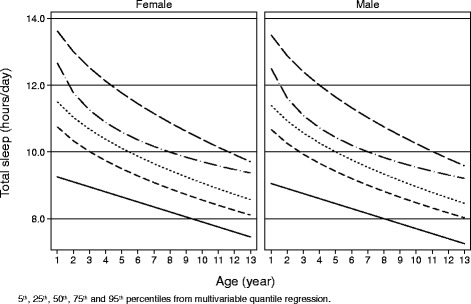
BACKGROUND: Sleep in childhood and adolescence is crucial for mental and physical health; however several researches reported an increasing trend towards a sleep deprivation in this age. Due to the lack of recent epidemiological studies in Italy, the aim of our study was to depict sleep habits and patterns in Italian children aged 1-14 years and to evaluate their relationships with video devices use (TV, tablet, smartphone, PC) and evening/night child activities. METHODS: A structured interview was conducted during 2015 by 72 Family Pediatricians in 2030 healthy children aged 1-14 years by a cross-sectional survey named "Ci piace sognare". Total sleep duration was calculated, 2015 National Sleep Foundation Recommendations were used as reference. Optimal sleepers were defined children sleeping in own bed all night without awakenings. Multivariable median regression was performed to identify predictors of sleep duration and multivariable logistic regression for predictors of optimal sleep. RESULTS: Total sleep duration and numbers of awakenings decreased with age. Only 66.9% of children had sleep duration in agreement with Recommendations (50% in 10-14 years group). Before sleeping 63.5% of children used video devices (39.6% at 1-3 years), 39.1% read, 27.5% drank and 19.5% ate. Bottle users at bedtime were 30.8% at 1-3 years, 16.6% at 3-5 years and 4.9% at 5-7 years. Overall, 23.4% of children changed sleeping place during the night, 22.4% referred sleeping problems in the first year of life. Video devices use was negative predictor of sleep duration (-0.25 h [95%CI:-0.35,-0.14], p < 0.001). Optimal sleep was inversely related with bedroom TV (OR 0.63 [0.50,0.79], p < 0.001), with sleeping disorders in the first year (OR 0.62 [0.48,0.80], p < 0.001)), with bottle use (OR 0.64 [0.44,0.94], p < 0.05) and posivively related with high mother's education level (OR 1.44 [1.11,1.88], p < 0.01). CONCLUSIONS: About one third of 1 to 14 year Italian children sleep less than recommended, one half in teenage. Modifiable risk factors for sleep abnormalities such as video devices use, bedroom TV and bottle use should be target of preventive strategies for a correct sleep. Pediatricians should give priority to the identification of sleep disorders early in life.
Overview
The claims and statistics of this paper haven’t been checked yet.
Free: it reads the open-access text and checks the first 5 claims that cite a source we can check. Create a free account to check every claim.
Integrity signals
Registry
Cites
Statistics
Figures
Verification
Claims the paper makes
The claims and statistics of this paper haven’t been checked yet.
Free: it reads the open-access text and checks the first 5 claims that cite a source we can check. Create a free account to check every claim.
Claims other papers make about this one
Each is checked against this paper’s own text: does it say what the citing paper says it does?
The source backs part of the claim, not all of it — or backs it for a different population, condition or comparison.
In the citing paper
“Brambilla et al find that 25% of 1- to 3-year-olds and nearly 75% of children and teens have devices in the bedroom and/or use them prior to bedtime.220”
From Digital Ecosystems, Children, and Adolescents: Technical Report (2026) · cites this paper as [220]
Experimental — accuracy not yet measuredThe source backs part of the claim, not all of it — or backs it for a different population, condition or comparison.
In the citing paper
“Although several studies have reported that many adolescents use MTSDs frequently [2, 3, 5, 6], and commonly at night or before sleeping [19, 20], little is known about adolescents’ daily routines of using these devices, which can be affected by different types of day (e.g. weekdays versus weekend, school days versus holidays) or settings (e.g. home versus school).”
From “From the moment I wake up I will use it…every day, very hour”: a qualitative study on the patterns of adolescents’ mobile touch screen device use from adolescent and parent perspectives (2019) · cites this paper as [19]
Experimental — accuracy not yet measured
Self-check
Percentages, sums and reported differences re-computed from the paper’s own numbers.
The self-check needs the paper’s full text.
Citations
Cites
(1990) · Choice Reviews Online · doi:10.5860/choice.27-3338 · Cited by 35,305
Hosmer, D. W., Lemeshow, S., & Sturdivant, R. X. (2013) · Wiley Series in Probability and Statistics · doi:10.1002/9781118548387 · Cited by 13,861
Koenker, R. (2005) · Cambridge University Press eBooks · doi:10.1017/cbo9780511754098 · Cited by 4,551
National Sleep Foundation's sleep time duration recommendations: methodology and results summary.
Hirshkowitz, M., Whiton, K., Albert, S. M., Alessi, C., Bruni, O., DonCarlos, L., Hazen, N., Herman, J., Katz, E. S., Kheirandish-Gozal, L., et al. (2015) · Sleep Health · doi:10.1016/j.sleh.2014.12.010 · Cited by 4,404 · cited 1×
“Adequacy of total sleep duration was assessed by comparison with age-specific recommendations [15].”
MethodSelf-citationAnthropometric Standardization Reference Manual
Lohman, T. J., Roache, A. F., & Martorell, R. (1992) · Medicine & Science in Sports & Exercise · doi:10.1249/00005768-199208000-00020 · Cited by 2,764 · cited 1×
“Child data Pediatricians measured child weight and height (length up to 2 years of age) in the same day in which the interview was administered, using standard anthropometric procedures [16].”
MethodSleep Health: Can We Define It? Does It Matter?
Buysse, D. J. (2014) · Sleep · doi:10.5665/sleep.3298 · Cited by 2,536
Owens, J. A., Spirito, A., & McGuinn, M. (2000) · Sleep · doi:10.1093/sleep/23.8.1d · Cited by 2,535 · cited 1×
“Structured interview The structured interview was elaborated by the Working Group (by adapting other existing and validated questionnaires) [13, 14] and contains questions on:”
MethodMeta-Analysis of Short Sleep Duration and Obesity in Children and Adults
Cappuccio, F. P., Taggart, F. M., Kandala, N.-B., Currie, A., Peile, E., Stranges, S., & Miller, M. A. (2008) · Sleep · doi:10.1093/sleep/31.5.619 · Cited by 2,076
BRUNI, O., OTTAVIANO, S., GUIDETTI, V., ROMOLI, M., INNOCENZI, M., CORTESI, F., & GIANNOTTI, F. (1996) · Journal of Sleep Research · doi:10.1111/j.1365-2869.1996.00251.x · Cited by 1,380 · cited 1×
“Structured interview The structured interview was elaborated by the Working Group (by adapting other existing and validated questionnaires) [13, 14] and contains questions on:”
MethodSelf-citationElectronic media use and sleep in school-aged children and adolescents: A review
Cain, N., & Gradisar, M. (2010) · Sleep Medicine · doi:10.1016/j.sleep.2010.02.006 · Cited by 1,376 · cited 2×
“TV viewing may directly displace bedtime or increase child emotional arousal and light exposure, all these mechanisms affecting sleep onset and duration [12].”
Background
Cited by
Lissak, G. (2018) · Environmental Research · doi:10.1016/j.envres.2018.01.015 · Cited by 1,024
Daily energy expenditure through the human life course
Pontzer, H., Yamada, Y., Sagayama, H., Ainslie, P. N., Andersen, L. F., Anderson, L. J., Arab, L., Baddou, I., Bedu-Addo, K., Blaak, E. E., et al. (2021) · Science · doi:10.1126/science.abe5017 · Cited by 583
Pediatric sleep health: It matters, and so does how we define it
Meltzer, L. J., Williamson, A. A., & Mindell, J. A. (2021) · Sleep Medicine Reviews · doi:10.1016/j.smrv.2021.101425 · Cited by 337
Rhodes, R. E., Guerrero, M. D., Vanderloo, L. M., Barbeau, K., Birken, C. S., Chaput, J.-P., Faulkner, G., Janssen, I., Madigan, S., Mâsse, L. C., et al. (2020) · International Journal of Behavioral Nutrition and Physical Activity · doi:10.1186/s12966-020-00973-0 · Cited by 334
Yildiz Durak, H. (2019) · The Social Science Journal · doi:10.1016/j.soscij.2018.09.003 · Cited by 249
Li, C., Cheng, G., Sha, T., Cheng, W., & Yan, Y. (2020) · International Journal of Environmental Research and Public Health · doi:10.3390/ijerph17197324 · Cited by 214
Electronic media use and sleep in children and adolescents in western countries: a systematic review
Lund, L., Sølvhøj, I. N., Danielsen, D., & Andersen, S. (2021) · BMC Public Health · doi:10.1186/s12889-021-11640-9 · Cited by 188
Socioeconomic status and sleep health: a narrative synthesis of 3 decades of empirical research
Papadopoulos, D., & Sosso, F. A. E. (2022) · Journal of Clinical Sleep Medicine · doi:10.5664/jcsm.10336 · Cited by 165
Nakshine, V. S., Thute, P., Khatib, M. N., & Sarkar, B. (2022) · Cureus · doi:10.7759/cureus.30051 · Cited by 144
“In contrast, a relationship between inadequate sleep and emotional involvement on the internet, specifically social media, would imply that an individual's difficulty unwinding before the night is caused by anxiety over missing out on fresh information and their inability to relax and calm down [6].”
BackgroundSleep and new media usage in toddlers
Chindamo, S., Buja, A., DeBattisti, E., Terraneo, A., Marini, E., Pérez, L. J. G., Marconi, L., Baldo, V., Chiamenti, G., Doria, M., et al. (2019) · European Journal of Pediatrics · doi:10.1007/s00431-019-03318-7 · Cited by 109
Lee, E., Hesketh, K. D., Hunter, S., Kuzik, N., Rhodes, R. E., Rinaldi, C. M., Spence, J. C., & Carson, V. (2017) · BMC Public Health · doi:10.1186/s12889-017-4855-x · Cited by 110
“2% of 523 Italian toddlers [28], and 85.”
BackgroundToh, S. H., Howie, E. K., Coenen, P., & Straker, L. M. (2019) · BMC Pediatrics · doi:10.1186/s12887-019-1399-5 · Cited by 85
“Although several studies have reported that many adolescents use MTSDs frequently [2, 3, 5, 6], and commonly at night or before sleeping [19, 20], little is known about adolescents’ daily routines of using these devices, which can be affected by different types of day (e.”
BackgroundWhat does sleep hygiene have to offer children’s sleep problems?
Hall, W. A., & Nethery, E. (2018) · Paediatric Respiratory Reviews · doi:10.1016/j.prrv.2018.10.005 · Cited by 76
Hesketh, K. D., Downing, K. L., Campbell, K. J., Crawford, D. A., Salmon, J., & Hnatiuk, J. A. (2017) · BMC Public Health · doi:10.1186/s12889-017-4856-9 · Cited by 72
“One of those studies was conducted with a sample of 1–3 year olds in Italy and found that 66% of toddlers achieved the duration of sleep consistent with the new guidelines described above [17].”
ResultTsang, S. M. H., Cheing, G. L. Y., Lam, A. K. C., Siu, A. M. H., Pang, P. C. K., Yip, K.-C., Chan, J. W. K., & Jensen, M. P. (2023) · Frontiers in Public Health · doi:10.3389/fpubh.2023.1178769 · Cited by 70
Karabey, S. Ç., Palancı, A., & Turan, Z. (2023) · Psychology Health & Medicine · doi:10.1080/13548506.2023.2229241 · Cited by 62
“In line with this finding, the studies in the literature have demonstrated sleep problems, other sleep-related factors (Brambilla et al., 2017; Lapointe et al., 2013), social media use, depressed mood, and academic achievement (Hong et al., 2020) are highly correlated.”
BackgroundResultPaduano, S., Greco, A., Borsari, L., Salvia, C., Tancredi, S., Pinca, J., Midili, S., Tripodi, A., Borella, P., & Marchesi, I. (2021) · International Journal of Environmental Research and Public Health · doi:10.3390/ijerph18063221 · Cited by 62
Lollies, F., Schnatschmidt, M., Schlarb, A. A., & Genuneit, J. (2022) · Nature and Science of Sleep · doi:10.2147/nss.s329503 · Cited by 57
Transitions in smartphone addiction proneness among children: The effect of gender and use patterns
Chiang, J.-T., Chang, F.-C., Lee, K.-W., & Hsu, S.-Y. (2019) · PLOS ONE · doi:10.1371/journal.pone.0217235 · Cited by 45
Qiu, J., & Morales‐Muñoz, I. (2022) · International Journal of Environmental Research and Public Health · doi:10.3390/ijerph19031868 · Cited by 49
“First, although we controlled for relevant confounding factors such as gender, how close is the cohort member with mother/father, general health level, and alcohol consumption in the last four weeks, there are still other environmental, developmental and parental factors that may have contributed to the associations b…”
BackgroundMerín, L., Toledano-González, A., Fernández‐Aguilar, L., Nieto, M., Olmo, N. D., & Latorre, J. M. (2024) · European Child & Adolescent Psychiatry · doi:10.1007/s00787-024-02430-w · Cited by 68
Carrillo‐Diaz, M., Martínez, A. R. O., Romero‐Maroto, M., & González‐Olmo, M. J. (2021) · International Journal of Paediatric Dentistry · doi:10.1111/ipd.12843 · Cited by 54
Saunders, T. J., McIsaac, T., Campbell, J., Douillette, K., Janssen, I., Tomasone, J. R., Ross‐White, A., Prince, S. A., & Chaput, J. (2022) · Health Promotion and Chronic Disease Prevention in Canada · doi:10.24095/hpcdp.42.4.03 · Cited by 52
Parental socioeconomic status and childhood sleep: A systematic review and meta-analysis
Cameron, E. E., Watts, D., Silang, K., Dhillon, A. K., Sohal, P. R., MacKinnon, A., Roos, L. E., & Tomfohr‐Madsen, L. M. (2022) · Sleep Epidemiology · doi:10.1016/j.sleepe.2022.100047 · Cited by 47
How Infant and Toddlers’ Media Use Is Related to Sleeping Habits in Everyday Life in Italy
Bellagamba, F., Presaghi, F., Marco, M. D., D’Abundo, E., Blanchfield, O. A., & Barr, R. (2021) · Frontiers in Psychology · doi:10.3389/fpsyg.2021.589664 · Cited by 42
Why won’t she sleep? Screen exposure and sleep patterns in young infants
Ribner, A., & McHarg, G. (2019) · Infant Behavior and Development · doi:10.1016/j.infbeh.2019.101334 · Cited by 39
Egan, S., Moloney, M., Pope, J., Breatnach, D., & Hoyne, C. (2022) · Journal of Early Childhood Literacy · doi:10.1177/14687984221123710 · Cited by 36
“For instance, Brambilla et al. (2017) found that over 60% of children used video devices before bedtime (e.g., ranging from 50% for 1 – 3-year olds to 80% for 10 – 13-year olds) in comparison to 39% reading before bedtime (i.e. 49% aged 3 – 5 with a gradual decrease as children got older).”
Sosso, F. A. E., & Khoury, T. (2021) · PubMed Central · doi:10.5935/1984-0063.20200082 · Cited by 37
“Optimal sleep was positively associated with a high maternal educational level 75 .”
BackgroundMethodSleep habits and sleep disorders in Italian children and adolescents: a cross-sectional survey
Breda, M., Belli, A., Esposito, D., Pilla, A. D., Melegari, M. G., DelRosso, L. M., Malorgio, E., Doria, M., Ferri, R., & Bruni, O. (2023) · Journal of Clinical Sleep Medicine · doi:10.5664/jcsm.10400 · Cited by 35
Self-citationSmartphone addiction and victimization predicts sleep problems and depression among children
Chang, F., Chiu, C., Chen, P.-H., Chiang, J., Miao, N., Chuang, H., Huang, W.-Q., & Tseng, C.-C. (2022) · Journal of Pediatric Nursing · doi:10.1016/j.pedn.2022.01.009 · Cited by 35
Sleep behaviors in children with different frequencies of parental-reported sleep bruxism
Restrepo, C., Manfredini, D., & Lobbezoo, F. (2017) · Journal of Dentistry · doi:10.1016/j.jdent.2017.08.005 · Cited by 30
Moorman, J. D., Morgan, P., & Adams, T. (2019) · Current Sleep Medicine Reports · doi:10.1007/s40675-019-00151-0 · Cited by 26
“…consumption of laptop, smartphone, tablet, TV, video iPod, and handheld videogames Bedtime and wake time Duration of total sleep, nightly sleep, and daily nap Sleep consolidation Brambilla 2017 Italy 1–14 years 2030 Cross-sectional Consumption of desktop computer, smartphone, TV, tablet before bed.”
Schultz, L. F., Kroll, C., Constantino, B., Trombelli, M. C. M. C., Rafihi‐Ferreira, R. E., & Mastroeni, M. F. (2019) · Maternal and Child Health Journal · doi:10.1007/s10995-019-02843-z · Cited by 23
de Almondes, K. M., & Leonardo, M. E. M. (2018) · Frontiers in Psychology · doi:10.3389/fpsyg.2018.01016 · Cited by 20
Different healthy habits between northern and southern Spanish school children
Alsina, D. A., Knox, E. C. L., Zabala, M., Ortega, F. Z., Dalmau, J. M., & Muros, J. J. (2017) · Journal of Public Health · doi:10.1007/s10389-017-0823-2 · Cited by 15
Digital Ecosystems, Children, and Adolescents: Technical Report
Munzer, T., Milkovich, L. M., Madigan, S., Tomopoulos, S., Parga-Belinkie, J., Ajumobi, T., Cross, C., Gerwin, R., Council on Communications and Media, Radesky, J., et al. (2026) · Pediatrics · doi:10.1542/peds.2025-075321 · Cited by 14
Lower physical activity is associated with daytime sleepiness in children aged 9–12 years
Isa, T., Sugimoto, T., Murata, S., Tsuboi, Y., Ebina, A., Kondo, Y., Torizawa, K., Okumura, M., Shigemoto, C., Matsuda, N., et al. (2019) · Journal of Child Health Care · doi:10.1177/1367493519864756 · Cited by 13
Sleep Characteristics in the Italian Pediatric Population: A Systematic Review.
Bacaro, V., Gavriloff, D., Lombardo, C., & Baglioni, C. (2021) · PubMed Central · doi:10.36131/cnfioritieditore20210302 · Cited by 13
“- TST: Italian preschoolers and school-aged children were reported from their parents in questionnaire and structured interview to have an average TST of 9.4 hours (averaged from Ficca et al., 2011; Brambilla et al., 2017, Bruni et al., 2020).”
BackgroundMethodInfluentialNosetti, L. M., Paglietti, M. G., Brunetti, L. M., Masini, L., Grutta, S. L., Cilluffo, G., Ferrante, G., Zaffanello, M., Verrillo, E., Pavone, M., et al. (2020) · PLoS ONE · doi:10.1371/journal.pone.0228377 · Cited by 14
“[37] In addition, FCPs involved in the present study were those more frequently reporting parental awareness of potential serious complications of SDB.”
BackgroundWu, H. T., Li, J., & Tsurumi, A. (2024) · Child and Adolescent Psychiatry and Mental Health · doi:10.1186/s13034-023-00688-7 · Cited by 12
“…and skeletal problems [2], biochemical imbalances [2], depression and inattention problems, depression, anxiety, and poor self-esteem [7, 9, 10, 35–38]; and on cognitive functioning, including language development [39], executive and academic performance [9, 33], attention span [40], and…”
BackgroundOstrzyżek-Przeździecka, K., Smeding, C., Bronikowski, M., Pańczyk, M., & Feleszko, W. (2019) · International Journal of Environmental Research and Public Health · doi:10.3390/ijerph16091496 · Cited by 12
“Alarmingly, one third of 1–14-year-old Italian children sleep less than recommended and similarly one half of teenagers are sleep-deprived [11].”
BackgroundFoo, N., Ismail, N. B., & Arshat, Z. (2022) · Journal of Educational and Developmental Psychology · doi:10.5539/jedp.v12n2p94 · Cited by 9
Association of digital media use with sleep habits in school children: A cross-sectional study
Chandranaik, D., Goyal, J. P., Singh, K., & Kumar, P. (2024) · Sleep Medicine X · doi:10.1016/j.sleepx.2024.100117 · Cited by 12
“They also noted that video device was a negative predictor of sleep duration [43].”
BackgroundImpact of different recommendations on adequacy rate for sleep duration in children
Bruni, O., & Brambilla, P. (2017) · The Italian Journal of Pediatrics/Italian journal of pediatrics · doi:10.1186/s13052-017-0329-0 · Cited by 8
Self-citationScreen use in children – two sides of the coin: a critical narrative review
de Souza, E. F., Lacerda, R. A. V., Desio, J. A. F., Kammers, C. M., Henkes, S. F. C., Ribeiro, N. F. D. P., de Sá, M. F., da Silva, D. M., Teixeira, A. C. D. O. R., & dos Santos, J. C. C. (2025) · Dementia & Neuropsychologia · doi:10.1590/1980-5764-dn-2024-0173 · Cited by 12
“The underlying mechanisms of screen impact on sleep include exposure to blue light, which increases alertness and suppresses melatonin production, delaying sleep onset 66,67,73,75,76 .”
Altay, G., & YAVUZ, A. Y. (2024) · Chronobiology International · doi:10.1080/07420528.2024.2419865 · Cited by 7
“In a study including school-age children, 63.5% of participants used electronic devices before bedtime, and 22.4% of them reported having sleep problems as a result (Brambilla et al. 2017).”
InfluentialRicci, C., Poulain, T., Rothenbacher, D., & Genuneit, J. (2021) · Nature and Science of Sleep · doi:10.2147/nss.s307821 · Cited by 6
Sleep patterns, problems, and habits in a sample of Egyptian preschoolers
Abou-Khadra, M. K., Ahmed, D. A. M., Sadek, S. A., & Mansour, H. H. (2022) · Sleep Science · doi:10.5935/1984-0063.20220016 · Cited by 6
“9 We compared the results of our study to studies that used CSHQ in detecting sleep disorders among preschoolers because of deficiency in studies that used BEARS to detect sleep disturbances among this age group.”
ResultInfant sleep time: A comparative analysis of assessment methods
Bastianello, T., Nascimben, C., Loschiavo, A. G.-M. A., Reoyo‐Serrano, N., Dassie, F., & Benavides‐Varela, S. (2025) · Sleep Medicine · doi:10.1016/j.sleep.2025.106838 · Cited by 5
Safaria, T., Arini, D. P., Saputra, N. E., & Suyono, H. (2025) · Journal of Technology in Behavioral Science · doi:10.1007/s41347-025-00510-5 · Cited by 5
“Poor sleep is also associated with risky behavior and mental health problems (Mazza et al., 2024), leading to cognitive deficits, mood disturbances, and behavioral issues (Brambilla et al., 2017; Greydanus, 2018; Thomas et al., 2015).”
Çöl, N., Karuserci, Ö. K., & Demirel, C. (2021) · Turkish Archives of Pediatrics · doi:10.5152/turkarchpediatr.2020.20138 · Cited by 6
“Using a video device near bedtime in childhood was associated with short sleep duration (30).”
BackgroundSleep habits and weight status in Brazilian children aged 4–6 years of age: the PREDI study
Schultz, L. F., Mastroeni, S. S. D. B. S., Rafihi‐Ferreira, R. E., & Mastroeni, M. F. (2021) · Sleep Medicine · doi:10.1016/j.sleep.2021.08.020 · Cited by 7
Prevalence of Sleep Disorders in Primary School Children and its Relationship with Obesity
Durmuş, H., Solak, Y., Kaya, E., & Canbolat, H. (2021) · Güncel Pediatri · doi:10.4274/jcp.2021.38980 · Cited by 8
“(41) da yaptığı çalışmada yatmadan önce yiyecek ve içecek tüketiminin uykuya etkisini saptayamamıştır.”
Daytime Sleepiness from Preschool Children’s and Parents’ Perspectives: Is There a Difference?
Marušić, E., Kalcina, L. L., Dodig, I. P., Đogaš, Z., Valić, M., & Pecotić, R. (2024) · Children · doi:10.3390/children11050568 · Cited by 4
Segre, G., Clavenna, A., Roberti, E., Campi, R., Rapisardi, G., & Bonati, M. R. (2024) · Sleep Medicine · doi:10.1016/j.sleep.2024.06.027 · Cited by 5
Caffarelli, C., Santamaria, F., Mauro, D. D., Mastrorilli, C., Montella, S., Tchana, B., Valerio, G., Verrotti, A., Valenzise, M., Bernasconi, S., et al. (2018) · The Italian Journal of Pediatrics/Italian journal of pediatrics · doi:10.1186/s13052-018-0524-7 · Cited by 3
Lollies, F., Brandhorst, I., & Schlarb, A. A. (2021) · Advances in Health and Behavior · doi:10.25082/ahb.2021.01.001 · Cited by 3
Elder, D. E., Miller, J., Douglas, B., Stanley, J., McDowall, P. S., & Campbell, A. J. (2022) · Journal of Clinical Sleep Medicine · doi:10.5664/jcsm.10264 · Cited by 3
How family sports behavior shapes adolescent sleep: mediating effects in causation
Wu, W., Xie, A., Li, X., & Xun, Y. F. (2025) · Frontiers in Public Health · doi:10.3389/fpubh.2024.1518960 · Cited by 2
Prolonged screen time is associated with increased prevalence of sleep disorders in children
Ramos, B. L. M., dos Santos, T. G., de Menezes, J. V. N. B., & de Souza, J. F. (2026) · European Journal of Pediatrics · doi:10.1007/s00431-026-07284-9 · Cited by 2
“These findings are consistent with previous studies reporting that electronic media use is linked to poorer sleep quality in children and adolescents [1, 5, 23, 27, 28, 29].”
ŻOŁNIEREK, M., Gacoń, E., KOTUSIEWICZ, W., Barwinek, K., Kucharski, J. M., Zapała, B., Ząber, A., Kodym, K., Darwish, D. N., & ŚWIĘTOCHOWSKI, J. (2023) · Environmental Medicine · doi:10.26444/ms/172890 · Cited by 4
“Ostatnie badanie wykazało taki sam całkowity czas snu dla tej samej grupy wiekowej w innej włoskiej próbie, podczas gdy badanie porównujące włoskie dzieci w wieku od 0 do 6 lat z dziećmi z innych krajów wykazało, że włoskie dzieci kładły się spać później i ogólnie spały krócej [52].”
Behavioral and sociodemographic correlates of sleep duration among children in Samoa
von Ash, T., Choy, C. C., DUNSIGER, S. I., Soti‐Ulberg, C., Wang, D., Reupena, M. S., Duckham, R. L., Naseri, T. K., & Hawley, N. L. (2025) · Sleep Health · doi:10.1016/j.sleh.2024.10.009 · Cited by 2
Adormecer a Ver Televisão como Fator de Risco para Perturbação do Sono na Idade Escolar
Afonso, S., Silva, F. G., Silva, C. R., & Neto, A. S. (2019) · Gazeta Médica · doi:10.29315/gm.v6i2.263 · Cited by 2
Rafihi‐Ferreira, R. E., Pires, M. L. N., & Silvares, E. F. D. M. (2020) · Psico · doi:10.15448/1980-8623.2020.4.34034 · Cited by 4
Kumari, D. I. H., Gunasekara, A. L., Silva, D. C. S., D.P.L.I.U.L., L., Senanayake, K. I. D. F., & Munidasa, K. G. P. K. (2025) · Journal of Health Sciences and Innovative Research · doi:10.31357/jhsir.v6i01.8593 · Cited by 1
Al‐Shammary, A. A., Aldawsari, N. F., Alharfi, R. A., Almujil, A. A. I., Alanazi, Y. A., Ahmad, M. S., & Orfali, H. A. (2026) · Public Health Challenges · doi:10.1002/puh2.70300 · Cited by 1
Saunders, T. J., McIsaac, T., Campbell, J., Douillette, K., Janssen, I., Tomasone, J. R., Ross‐White, A., Prince, S. A., & Chaput, J. (2022) · Promotion de la santé et prévention des maladies chroniques au Canada · doi:10.24095/hpcdp.42.4.03f · Cited by 2
Effect of Radio Frequency Electromagnetic Field on Cognitive Function of Children and Adolescents
Xu, Y. (2022) · International Conference on Biotechnology, Life Science and Medical Engineering (BLSME) · doi:10.23977/blsme.2022061 · Cited by 1
Segre, G., Clavenna, A., Roberti, E., Campi, R., Rapisardi, G., & Bonati, M. R. (2024) · Medico e Bambino · doi:10.53126/meb43365 · Cited by 1
Sleep Hygiene – Health Promotion within Primary Schools using Modern Mobile Technology
Gaigalova, V. (2020) · Theseus (Ammattikorkeakoulujen)
Taylor, A. (2020) · eSource (Dublin Business School) · Cited by 1
Reimagining Children's Spaces in the Urban Nightlife: Lessons and Challenges From the Literature
Andal, A. G. (2021) · Advances in civil and industrial engineering book series · doi:10.4018/978-1-7998-7004-3.ch006
Toward a Sustainable City: A Paradigm Shift in Children’s Modern Recreational Opportunities
Sultana, R., & Huda, R. B. (2021) · Springer eBooks · doi:10.1007/978-3-030-51812-7_289-1
Adolescents’ Smartphone Use in the Sleeping Environment: Parents’ Attitudes and Involvement
Dor, A., & Tzischinsky, O. (2022) · Information Technology Education and Society · doi:10.7459/ites/18.1.03
Toward a Sustainable City: A Paradigm Shift in Children’s Modern Recreational Opportunities
Sultana, R., & Huda, R. B. (2022) · Springer eBooks · doi:10.1007/978-3-030-87745-3_289
Internet Use and Psychological Well-Being Among Children and Adolescents
(2024) · Frontiers research topics · doi:10.3389/978-2-8325-4323-8
Introductory Chapter: Research on Sleep
Carotenuto, M. (2025) · IntechOpen eBooks · doi:10.5772/intechopen.1007759
The effect of sleeping habits and problems at 4 and at 7 years of age on cardiometabolic health
Guedes, R. R. L. (2020) · Portuguese National Funding Agency for Science, Research and Technology (RCAAP Project by FCT) · doi:10.34626/5rtm-th66
Lund, L., Sølvhøj, I. N., Danielsen, D., & Andersen, S. (2021) · Figshare · doi:10.6084/m9.figshare.16703188
Wu, H. T., Li, J., & Tsurumi, A. (2024) · Figshare · doi:10.6084/m9.figshare.26667421
Jarron, A. (2021) · Skemman
Barış, H. E. (2024) · Dspace Repository (Marmara Üniversitesi)
Yıldırım, K., Öksüz, H. İ., Gök, S., Güneş, İ., Yasak, M., Ceylan, Y., & ÖZÜNEL, Y. (2026) · International Journal of Early Years Education · doi:10.1080/09669760.2026.2673833
“However, another study by Brambilla et al. (2017) revealed that at least 50% of children used video devices before bed, with this percentage increasing with age.”
Önder, İ., Önder, A. N., & Yıldırım, E. G. (2026) · BMC Psychology · doi:10.1186/s40359-026-04823-9
“Brambilla et al. [26] found that only 50% of children aged 10–14 adhered to recommended sleep durations, and 79.5% of children in this age group used screen devices before bed.”
InfluentialVincens, N., Waye, K. P., Smith, M. G., Lercher, P., Dzhambov, A. M., Klatte, M., Leist, L., Lachmann, T., Spilski, J., Schreckenberg, D., et al. (2026) · Archives of Public Health · doi:10.1186/s13690-026-02016-9
“…findings suggest that electronic media use, specifically daytime and pre-bedtime screen time, as well as having bedroom access to electronic media, predicted shorter sleep duration, delayed sleep phasing, sleep disturbance, and poorer sleep quality in children and adolescents [72, 73, 76, 78–81].”
Hubungan Durasi Penggunaan Gadget Dengan Gangguan Pola Tidur Pada Anak di SD Negri 1 Karanganyar
Lestari, P. B., Triana, N. Y., & Suryani, R. L. (2022) · Seminar Nasional Penelitian dan Pengabdian Kepada Masyarakat 2025 · doi:10.35960/snppkm.v2i1.1089 · Cited by 2
The Smartphone—Not So ‘Smart’ for Teenagers’ Health
Balas, R. B., Meliţ, L. E., Balint, D. S., Ghiga, D., Balas, A., Finta, H., & Mărginean, C. O. (2026) · Children · doi:10.3390/children13101402
“In addition, a recent study proved that teenagers are not the only ones who are affected by excessive smartphone use, but in fact these devices might also impact the sleep quality of children aged between 1 and 14 years [27,28].”
Balatacı, E. S., Gökdemir, Ö., Limnili, G., Balatacı, T., & Özçakar, N. (2026) · Clinical Pediatrics · doi:10.1177/00099228261493826
Metadata
- Authors
- on behalf of the “Ci piace sognare” Study Group, Brambilla, P., Giussani, M., Pasinato, A., Venturelli, L., Privitera, F., Miraglia del Giudice, E., Sollai, S., Picca, M., Di Mauro, G., Bruni, O., & Chiappini, E.
- Affiliations
- University of Campania "Luigi Vanvitelli" (IT)
- Meyer Children's Hospital (IT)
- Corresponding author
- Brambilla, Paolo
- Venue
- Italian Journal of Pediatrics
- Published
- 2017-01-13
- Volume
- 43
- Issue
- 1
- Pages
- 7-7
- ISSN
- 1720-8424 (ISSN-L)
- 1824-7288
- PMC
- PMC5347825
- OpenAlex
- W2574848177
- Semantic Scholar
- bff8418957d9cd23f97067a72efab45213aec677
- Cited by
- 77
- References
- 32
- Citations by year
- 2026: 5 · 2025: 6 · 2024: 8 · 2023: 4 · 2022: 14 · 2021: 17 · 2020: 4 · 2019: 9 · 2018: 5 · 2017: 5
- FWCI
- 8.19
- Type
- journal article
- Language
- en
- Open access
- gold
- doi.org
- Licence
- cc-by
- Locations
- The Italian Journal of Pediatrics/Italian journal of pediatrics (publishedVersion, cc-by)
- PubMed Central (publishedVersion, cc-by)
- PubMed (publishedVersion)
- Florence Research (University of Florence) (submittedVersion, cc-by)
- IRIS UNIMORE (University of Modena and Reggio Emilia) (submittedVersion, cc-by)
- Archivio Istituzionale della Ricerca - Università degli Studi della Campania "Luigi Vanvitelli" (submittedVersion)
- IRIS Research product catalog (Sapienza University of Rome) (submittedVersion)
- Topics
- Social Sciences › Psychology › Experimental and Cognitive Psychology › Sleep and related disorders
- Social Sciences › Education › Child Development and Digital Technology
- Life Sciences › Neuroscience › Endocrine and Autonomic Systems › Circadian rhythm and melatonin
- Keywords
- sleep duration, screen time, sleep deprivation, bottle feeding, nocturnal awakenings, sleep environment, maternal education, Italian children
- MeSH terms
- Sleep Hygiene, Adolescent, Child, Child Behavior, Child, Preschool, Cross-Sectional Studies, Female, Habits, Health Promotion, Humans, Infant, Italy, Male, Parents, Surveys and Questionnaires, Risk Factors, Sleep Wake Disorders, Television, Body Mass Index, Prevalence, Video Games
About these checks
Registry, retraction, Cites and statistics results are computed, not judged, with one exception: a printed reference that no index lists is read once by a model before it counts as a citation error. Claims are extracted by a model and kept only when their quote appears verbatim in the text; each cited source is then checked, with a model’s help, for whether it says what the claim relies on. Those verdicts can be wrong — read the claim’s quote and the cited source before relying on one.
Statistics and arithmetic are recomputed, not judged.
Confidence bands are shown only for fields calibrated on our annotated test set. None is calibrated yet, so no band is shown.
What counts as a claim ›How we measure confidence ›How we check this ›
Are you an author, or do you see a problem with this page? Request a review
Data sources
Bibliographic data: Semantic Scholar, OpenAlex, Crossref.
Contains information from the Semantic Scholar Academic Graph Datasets, made available under the ODC Attribution License (ODC-BY 1.0).
Semantic Scholar’s data is described in: Kinney, R., et al. (2023). The Semantic Scholar Open Data Platform. arXiv:2301.10140.
