

Pharmacokinetics-pharmacodynamics issues relevant for the clinical use of beta-lactam antibiotics in critically ill patients.
Open accessThe DOI matches its Crossref record; 212 of the 216 references it cites were found in a registry or an index.
Abstract
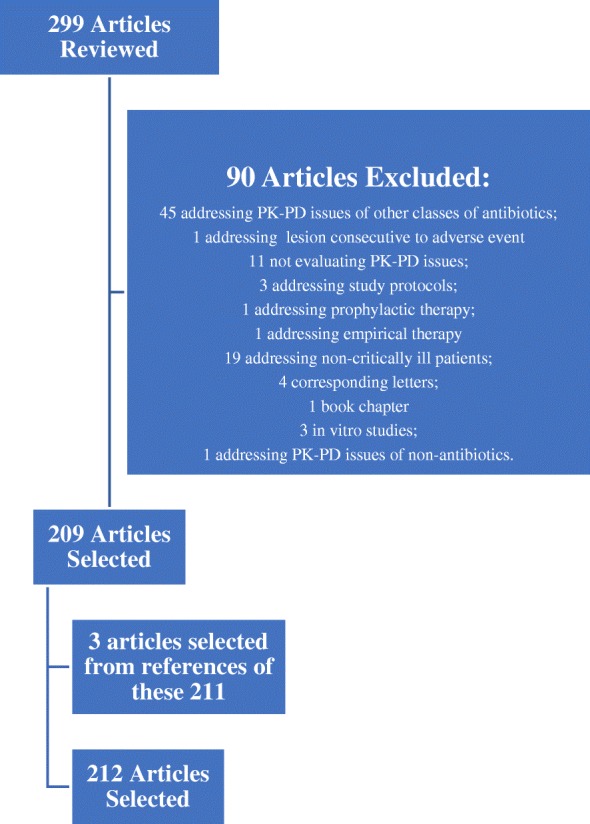
Antimicrobials are among the most important and commonly prescribed drugs in the management of critically ill patients and beta-lactams are the most common antibiotic class used. Critically ill patient's pathophysiological factors lead to altered pharmacokinetics and pharmacodynamics of beta-lactams.A comprehensive bibliographic search in PubMed database of all English language articles published from January 2000 to December 2017 was performed, allowing the selection of articles addressing the pharmacokinetics or pharmacodynamics of beta-lactam antibiotics in critically ill patients.In critically ill patients, several factors may increase volume of distribution and enhance renal clearance, inducing high intra- and inter-patient variability in beta-lactam concentration and promoting the risk of antibiotic underdosing. The duration of infusion of beta-lactams has been shown to influence the fT > minimal inhibitory concentration and an improved beta-lactam pharmacodynamics profile may be obtained by longer exposure with more frequent dosing, extended infusions, or continuous infusions.The use of extracorporeal support techniques in the critically ill may further contribute to this problem and we recommend not reducing standard antibiotic dosage since no drug accumulation was found in the available literature and to maintain continuous or prolonged infusion, especially for the treatment of infections caused by multidrug-resistant bacteria.Prediction of outcome based on concentrations in plasma results in overestimation of antimicrobial activity at the site of infection, namely in cerebrospinal fluid and the lung. Therefore, although no studies have assessed clinical outcome, we recommend using higher than standard dosing, preferably with continuous or prolonged infusions, especially when treating less susceptible bacterial strains at these sites, as the pharmacodynamics profile may improve with no apparent increase in toxicity.A therapeutic drug monitoring-guided approach could be particularly useful in critically ill patients in whom achieving target concentrations is more difficult, such as obese patients, immunocompromised patients, those infected by highly resistant bacterial strains, patients with augmented renal clearance, and those undergoing extracorporeal support techniques.
Overview
The claims and statistics of this paper haven’t been checked yet.
Free: it reads the open-access text and checks the first 5 claims that cite a source we can check. Create a free account to check every claim.
Integrity signals
Registry
Cites
Statistics
Figures
Verification
Claims the paper makes
The claims and statistics of this paper haven’t been checked yet.
Free: it reads the open-access text and checks the first 5 claims that cite a source we can check. Create a free account to check every claim.
Claims other papers make about this one
Each is checked against this paper’s own text: does it say what the citing paper says it does?
The cited source says what the claim attributes to it.
In the citing paper
“Antibiotics are subject to changes in PK/PD parameters in sepsis and septic shock where resultant concentrations may be too low risking clinical failure, or too high leading to toxicity (Table 3) [237–239].”
From Surviving sepsis campaign: international guidelines for management of sepsis and septic shock 2021 (2021) · cites this paper as [239]
The check wasn’t confident either way, so it gives no verdict — never disputed.
In the citing paper
“Some observational studies suggested that prompt initiation of appropriate empiric antifungal therapy may be associated with a reduction in mortality, however these studies do not prove a causal relationship between antifungal therapy and outcome, nor do they clarify the role of timing of treatment, and some other studies have failed to show this association (167,(171)(172)(173).”
From Surviving Sepsis Campaign: International Guidelines for Management of Sepsis and Septic Shock 2021. (2021) · cites this paper as [172]
Experimental — accuracy not yet measured
Self-check
Percentages, sums and reported differences re-computed from the paper’s own numbers.
The self-check needs the paper’s full text.
Citations
Cites
Surviving Sepsis Campaign: International Guidelines for Management of Severe Sepsis and Septic Shock
Dellinger, R. P., Levy, M. M., Rhodes, A., Annane, D., Gerlach, H., Opal, S. M., Sevransky, J. E., Sprung, C. L., Douglas, I. S., Jaeschke, R., et al. (2013) · Critical Care Medicine · doi:10.1097/ccm.0b013e31827e83af · Cited by 9,694
Surviving Sepsis Campaign: International guidelines for management of sepsis and septic shock: 2016.
Rhodes, A., Evans, L. E., Alhazzani, W., Levy, M. M., Antonelli, M., Ferrer, R., Kumar, A., Sevransky, J. E., Sprung, C. L., Nunnally, M. E., et al. (2017) · Intensive Care Medicine · doi:10.1007/s00134-017-4683-6 · Cited by 6,621
Kumar, A., Roberts, D., Wood, K. E., Light, B., Parrillo, J. E., Sharma, S., Suppes, R., Feinstein, D., Zanotti, S., Taiberg, L., et al. (2006) · Critical Care Medicine · doi:10.1097/01.ccm.0000217961.75225.e9 · Cited by 6,109
Roberts, J. A., Paul, S. K., Akova, M., Bassetti, M., De Waele, J. J., Dimopoulos, G., Kaukonen, K.-M., Koulenti, D., Martin, C., Montravers, P., et al. (2014) · Clinical Infectious Diseases · doi:10.1093/cid/ciu027 · Cited by 1,090
Pharmacokinetic issues for antibiotics in the critically ill patient
Roberts, J. A., & Lipman, J. (2009) · Critical Care Medicine · doi:10.1097/ccm.0b013e3181961bff · Cited by 862
van Duin, D., & Bonomo, R. A. (2016) · Clinical Infectious Diseases · doi:10.1093/cid/ciw243 · Cited by 549 · cited 1×
“The currently approved dosages for adult patients with an estimated ClCr > 50 mL/minute are ceftolozane 1 g with tazobactam 500 mg every 8 h and ceftazidime 2 g with avibactam 500 mg every 8 h for complicated urinary tract infections and intra-abdominal infections [172] and ceftolozane 2 g with tazobactam 1 g every 8…”
Lodise, T. P., Lomaestro, B., & Drusano, G. L. (2007) · Clinical Infectious Diseases · doi:10.1086/510590 · Cited by 527
McKinnon, P. S., Paladino, J. A., & Schentag, J. J. (2008) · International Journal of Antimicrobial Agents · doi:10.1016/j.ijantimicag.2007.12.009 · Cited by 464
Blot, S. I., Pea, F., & Lipman, J. (2014) · Advanced Drug Delivery Reviews · doi:10.1016/j.addr.2014.07.006 · Cited by 444
Subtherapeutic Initial β-Lactam Concentrations in Select Critically Ill Patients
Udy, A. A., Varghese, J. M., Altukroni, M., Briscoe, S., McWhinney, B. C., Ungerer, J. P., Lipman, J., & Roberts, J. A. (2012) · Chest · doi:10.1378/chest.11-1671 · Cited by 414
Research works printed but not linked: 3
- Bloos F Rüdde H Thomas-Rüddel D Schwarzkopf D Pausch C Harbarth S Schreiber T Gründling M Marshall J Simon P Levy MM Weiss M Weyland A Gerlach H Schürholz T Engel C Matth C Scheer C Bach F Riessen R Poidinger B Dey K Weiler N Meier-Hellmann A Häberle HH Wöbker G Kaisers UX Reinhart K for the MEDUSA study group Effect of a multifaceted educational intervention for anti-infectious measures on sepsis mortality: a cluster randomized trial Intensive Care Med 2017 43 1602 1612 10.1007/s00134-017-4782-4 28466151 · DOI · Paper page
- Morabito S Guzzo I Vitaliano E Muzi L Solazzo A Pistolesi V Pierucci A Farmacocinetica degli Antibiotici nelle Terapie Sostitutive Renali Continue (CRRT) Gionale Italiano di Nefrologia 2012 29 425 444 22843155
- Langgartner J Vasold A Glück T Reng M Kees F Pharmacokinetics of meropenem during intermittent and continuous intravenous application in patients treated by continuous renal replacement therapy Intens Care Med 2008 34 1091 1096 10.1007/s00134-008-1034-7 18297267 · DOI
Cited by
Surviving sepsis campaign: international guidelines for management of sepsis and septic shock 2021
Evans, L., Rhodes, A., Alhazzani, W., Antonelli, M., Coopersmith, C. M., French, C., Machado, F. R., Mcintyre, L., Ostermann, M., Prescott, H. C., et al. (2021) · Intensive Care Medicine · doi:10.1007/s00134-021-06506-y · Cited by 5,082
Surviving Sepsis Campaign: International Guidelines for Management of Sepsis and Septic Shock 2021.
Evans, L., Rhodes, A., Alhazzani, W., Antonelli, M., Coopersmith, C. M., French, C., Machado, F. R., Mcintyre, L., Ostermann, M., Prescott, H. C., et al. (2021) · Critical Care Medicine · doi:10.1097/ccm.0000000000005337 · Cited by 2,935
The Minimum Inhibitory Concentration of Antibiotics: Methods, Interpretation, Clinical Relevance
Kowalska-Krochmal, B., & Dudek-Wicher, R. (2021) · Pathogens · doi:10.3390/pathogens10020165 · Cited by 1,039
Guilhaumou, R., Benaboud, S., Bennis, Y., Dahyot-Fizelier, C., Dailly, E., Gandia, P., Goutelle, S., Lefeuvre, S., Mongardon, N., Roger, C., et al. (2019) · Critical Care · doi:10.1186/s13054-019-2378-9 · Cited by 543
New β-Lactam–β-Lactamase Inhibitor Combinations
Yahav, D., Giske, C. G., Grāmatniece, A., Abodakpi, H., Tam, V. H., & Leibovici, L. (2020) · Clinical Microbiology Reviews · doi:10.1128/cmr.00115-20 · Cited by 521
“As hydrophilic drugs, -lactams and -lactamase inhibitors have a characteristically low volume of distribution (V), akin to extracellular water, and are predominantly renally excreted (17).”
BackgroundEgi, M., Ogura, H., Yatabe, T., Atagi, K., Inoue, S., Iba, T., Kakihana, Y., Kawasaki, T., Kushimoto, S., Kuroda, Y., et al. (2021) · Journal of Intensive Care · doi:10.1186/s40560-021-00555-7 · Cited by 224
Kollef, M. H., Torres, A., Shorr, A. F., Martin-Loeches, I., & Micek, S. T. (2021) · Critical Care Medicine · doi:10.1097/ccm.0000000000004783 · Cited by 217
Extracorporeal Blood Purification Therapies for Sepsis
Monard, C., Rimmelé, T., & Ronco, C. (2019) · Blood Purification · doi:10.1159/000499520 · Cited by 208
Timing of antibiotic therapy in the ICU
Kollef, M. H., Shorr, A. F., Bassetti, M., Timsit, J.-F., Micek, S. T., Michelson, A. P., & Garnacho-Montero, J. (2021) · Critical Care · doi:10.1186/s13054-021-03787-z · Cited by 161
“Hypoalbuminemia, large-volume crystalloid administration, large pleural effusions or abdominal ascites that increase the volume of distribution for hydrophilic drugs, catecholamines, and renal replacement therapies can all significantly alter infection site concentrations of administered antibiotics [54].”
BackgroundSurviving Sepsis Campaign: International Guidelines for Management of Sepsis and Septic Shock 2026
Prescott, H. C., Antonelli, M., Alhazzani, W., Møller, M. H., Alshamsi, F., Azevedo, L. C. P., Belley-Cote, E., De Waele, J., Derde, L., Dionne, J. C., et al. (2026) · Intensive Care Medicine · doi:10.1007/s00134-026-08361-1 · Cited by 141
Surviving Sepsis campaign: international guidelines for Management of Sepsis and Septic Shock 2026
Prescott, H. C., Antonelli, M., Alhazzani, W., Møller, M. H., Alshamsi, F., Azevedo, L. C. P., Belley-Cote, E., De Waele, J., Derde, L., Dionne, J. C., et al. (2026) · Critical Care Medicine · doi:10.1097/ccm.0000000000007075 · Cited by 117
Antibiotic therapy as personalized medicine – general considerations and complicating factors
Moser, C. E., Lerche, C. J., Thomsen, K., Hartvig, T., Schierbeck, J., Jensen, P. Ø., Ciofu, O., & Høiby, N. (2019) · Apmis · doi:10.1111/apm.12951 · Cited by 134
“against “one size fits all” and indicate needs for more individualized and thereby personalized antibiotic regimens (11,12).”
BackgroundAn approach to antibiotic treatment in patients with sepsis
Martínez, M. L., Plata-Menchaca, E. P., Ruiz‐Rodríguez, J. C., & Ferrer, R. (2020) · Journal of Thoracic Disease · doi:10.21037/jtd.2020.01.47 · Cited by 136
“The higher efficacy of betalactam antibiotics for targeting MDR microorganisms have been observed with prolonged infusions (127,137-140).”
BackgroundInfluentialAugmented renal clearance in pediatric intensive care: are we undertreating our sickest patients?
Dhont, E., Heggen, T. V. D., Jaeger, A. D., Walle, J. V., Paepe, P. D., & Cock, P. A. J. G. D. (2018) · Pediatric Nephrology · doi:10.1007/s00467-018-4120-2 · Cited by 97
Wong, H. R., Caldwell, J. T., Cvijanovich, N. Z., Weiss, S. L., Fitzgerald, J. C., Bigham, M. T., Jain, P., Schwarz, A. J., Lutfi, R., Nowak, J. E., et al. (2019) · Science Translational Medicine · doi:10.1126/scitranslmed.aax9000 · Cited by 88
“Formal therapeutic drug monitoring programs for patients with septic shock and other forms of critical illness (21, 22) are being implemented to address this challenge, but the resources required for such programs are considerable.”
BackgroundEgi, M., Ogura, H., Yatabe, T., Atagi, K., Inoue, S., Iba, T., Kakihana, Y., Kawasaki, T., Kushimoto, S., Kuroda, Y., et al. (2021) · Acute Medicine & Surgery · doi:10.1002/ams2.659 · Cited by 96
Guerci, P., Bellut, H., Mokhtari, M., Gaudefroy, J., Mongardon, N., Charpentier, C., Louis, G., Tashk, P., Dubost, C., Ledochowski, S., et al. (2019) · Critical Care · doi:10.1186/s13054-019-2649-5 · Cited by 91
“Augmented renal clearance can alter the pharmacokinetics and pharmacodynamics (PK/PD) of several antimicrobial agents, mainly ß-lactams [49] .”
Haddad, N., Carr, M., Balian, S., Lannin, J., Kim, Y., Toth, C., & Jarvis, J. (2022) · Antibiotics · doi:10.3390/antibiotics11121843 · Cited by 96
Gatti, M., Cojutti, P. G., Pascale, R., Tonetti, T., Laici, C., Dell’Olio, A., Siniscalchi, A., Giannella, M., Viale, P., & Pea, F. (2021) · Antibiotics · doi:10.3390/antibiotics10111311 · Cited by 89
Emerging Electrochemical Sensors for Real-Time Detection of Tetracyclines in Milk
Raykova, M. R., Corrigan, D. K., Holdsworth, M., Henriquez, F. L., & Ward, A. C. (2021) · Biosensors · doi:10.3390/bios11070232 · Cited by 74
“[30,32,33] chlortetracycline benzylpenicillin 1 amoxicillin 2 sulfadimethoxine 3 ciprofloxacin 4”
BackgroundScharf, C., Liebchen, U., Paal, M., Taubert, M., Vogeser, M., Irlbeck, M., Zöller, M., & Schroeder, I. (2020) · Journal of Intensive Care · doi:10.1186/s40560-020-00504-w · Cited by 65
Mangalore, R. P., Peel, T. N., Udy, A. A., & Peleg, A. Y. (2023) · Journal of Antimicrobial Chemotherapy · doi:10.1093/jac/dkad223 · Cited by 59
Therapeutic Targeting of Apoptosis Inhibitor of Macrophage/CD5L in Sepsis
Gao, X., Yan, X., Yin, Y., Lin, X., Zhang, Q., Xia, Y., & Cao, J. (2018) · American Journal of Respiratory Cell and Molecular Biology · doi:10.1165/rcmb.2018-0272oc · Cited by 48
Therapeutic drug monitoring of β-lactam antibiotics in the ICU
Dhaese, S. A. M., Vooren, S. V., Boelens, J., & Waele, J. J. D. (2020) · Expert Review of Anti-infective Therapy · doi:10.1080/14787210.2020.1788387 · Cited by 56
Selvaraj, R. C. A., Mala, R., & Prasath, N. H. (2019) · Molecules · doi:10.3390/molecules24173055 · Cited by 47
The Japanese Clinical Practice Guidelines for Management of Sepsis and Septic Shock 2024
Shime, N., Nakada, T.-A., Yatabe, T., Yamakawa, K., Aoki, Y., Inoue, S., Iba, T., Ogura, H., Kawai, Y., Kawaguchi, A., et al. (2025) · Journal of Intensive Care · doi:10.1186/s40560-025-00776-0 · Cited by 52
Pillinger, K. E., Bouchard, J. L., Withers, S. T., Mediwala, K. N., McGee, E.-A. U., Gibson, G., Bland, C. M., & Bookstaver, P. B. (2019) · Annals of Pharmacotherapy · doi:10.1177/1060028019890886 · Cited by 46
Roger, C. (2024) · Journal of Intensive Medicine · doi:10.1016/j.jointm.2023.12.007 · Cited by 57
Sandaradura, I., Alffenaar, J. C., Cotta, M. O., Daveson, K., Day, R. O., van Hal, S. J., Lau, C., Marriott, D. J. E., Penm, J. H.-D., Roberts, J. A., et al. (2021) · British Journal of Clinical Pharmacology · doi:10.1111/bcp.14995 · Cited by 42
“Additionally, a consensus on appropriate sampling methods, pharmacodynamic targets and dose adjustment strategies relevant to each anti-infective agent is required but often not available.(2,21) Currently, literature attempting to formally evaluate barriers to TDM for anti-infective agents remains scarce.”
BackgroundLu, W., Pan, M., Ke, H., Liang, J. S., Liang, W., Yu, P., Zhang, P., & Wang, Q. (2022) · Frontiers in Pharmacology · doi:10.3389/fphar.2022.1044234 · Cited by 44
Rosa, S. D., Marengo, M., Fiorentino, M., Fanelli, V., Brienza, N., Fiaccadori, E., Grasselli, G., Morabito, S., Pota, V., Romagnoli, S., et al. (2023) · Journal of Nephrology · doi:10.1007/s40620-023-01637-5 · Cited by 41
“On the other hand, a dose reduction should be considered for lower effluent rate or pre-dilution mode [61].”
Abdul-Aziz, M. H., Portunato, F., & Roberts, J. A. (2020) · Current Opinion in Infectious Diseases · doi:10.1097/qco.0000000000000681 · Cited by 38
“volume of distribution and drug clearance changes) and consequently, reduced drug concentrations [17].”
BackgroundFu, J., Cai, W., Pan, S., Chen, L., Fang, X., Shang, Y., & Xu, J. (2024) · ACS Nano · doi:10.1021/acsnano.3c10458 · Cited by 38
Stašek, J., Keller, F., Kočí, V., Klučka, J., Klabusayová, E., Wiewiorka, O., Strašilová, Z., Beňovská, M., Škardová, M., & Maláska, J. (2023) · Antibiotics · doi:10.3390/antibiotics12030568 · Cited by 42
“In septic shock, microvascular failure may decrease antibiotic concentrations at the infection site [29].”
BackgroundLazzaro, A., Girolamo, G. D., Filippi, V., Innocenti, G. P., Santinelli, L., Ceccarelli, G., Trecarichi, E. M., Torti, C., Mastroianni, C. M., d’Ettorre, G., et al. (2022) · International Journal of Molecular Sciences · doi:10.3390/ijms23020803 · Cited by 38
Caro, Y. S., Cámara, M. S., & Zan, M. M. D. (2019) · Talanta · doi:10.1016/j.talanta.2019.120619 · Cited by 33
König, C., Both, A., Rohde, H., Kluge, S., Frey, O. R., Röhr, A. C., & Wichmann, D. (2021) · Antibiotics · doi:10.3390/antibiotics10060649 · Cited by 30
Liu, C., Rosen, E. A., Stohs, E. J., Imlay, H. N., Nigo, M., Gottesdiener, L. S., So, M., Tverdek, F. P., Dadwal, S., Gudiol, C., et al. (2025) · The Lancet Infectious Diseases · doi:10.1016/s1473-3099(25)00311-1 · Cited by 31
Suboptimal Beta-Lactam Therapy in Critically Ill Children: Risk Factors and Outcome*
Heggen, T. V. D., Dhont, E., Willems, J., Herck, I., Delanghe, J., Stove, V. V., Verstraete, A., Vanhaesebrouck, S., Paepe, P. D., & Cock, P. A. J. G. D. (2022) · Pediatric Critical Care Medicine · doi:10.1097/pcc.0000000000002951 · Cited by 26
“As an example, fluid shifts caused by capillary leak syndrome and hypoalbuminemia or following fluid resuscitation contribute to alterations in Vd (3).”
BackgroundKubin, C. J., Loo, A. S., Cheng, J., Nelson, B. C., Mehta, M., Mazur, S., So, W., Calfee, D. P., Singh, H. K., Greendyke, W. G., et al. (2021) · American Journal of Health-System Pharmacy · doi:10.1093/ajhp/zxaa419 · Cited by 26
Bjergum, M. W., Barreto, E. F., Scheetz, M. H., Rule, A. D., & Jannetto, P. J. (2021) · The Journal of Applied Laboratory Medicine · doi:10.1093/jalm/jfab036 · Cited by 27
“As hydrophilic small molecules with predominant renal elimination, they exhibit wide intra- and interindividual pharmacokinetic (PK) variability (3).”
BackgroundPharmacokinetics of Non-β-Lactam β-Lactamase Inhibitors
Luci, G., Mattioli, F., Falcone, M., & Paolo, A. D. (2021) · Antibiotics · doi:10.3390/antibiotics10070769 · Cited by 24
Qi, Y., & Liu, G. (2022) · Journal of Pharmaceutical and Biomedical Analysis · doi:10.1016/j.jpba.2022.114964 · Cited by 24
Lodise, T. P., O’Donnell, J. N., Balevic, S. J., Liu, X., Gu, K., George, J. M., Raja, S. M., Guptill, J. T., Zaharoff, S., Schwager, N., et al. (2022) · Antimicrobial Agents and Chemotherapy · doi:10.1128/aac.00936-22 · Cited by 28
“drugs between body size descriptors and V1 were physiologically consistent with drugs that are largely distributed in extracellular fluid (25, 26).”
BackgroundInfluentialBusto-Iglesias, M., Martinez, L. J. R., Rodríguez-Fernández, C. A., González-López, J., González‐Barcia, M., de Domingo, B., Rodríguez‐Rodríguez, L., Fernández‐Ferreiro, A., & Mondelo‐García, C. (2023) · Pharmaceutics · doi:10.3390/pharmaceutics15030766 · Cited by 25
A Review: Antimicrobial Therapy for Human Pythiosis
Medhasi, S., Chindamporn, A., & Worasilchai, N. (2022) · Antibiotics · doi:10.3390/antibiotics11040450 · Cited by 24
Zhao, Y., Zou, Y., Xiao, Y., Wang, F., Zhang, B., Xiang, D., Yu, F., Luo, H., Sandaradura, I., & Yan, M. (2021) · Infectious Diseases and Therapy · doi:10.1007/s40121-021-00551-2 · Cited by 24
Cattaneo, D., Corona, A., Rosa, F. G. D., Gervasoni, C., Kocic, D., & Marriott, D. J. E. (2020) · Expert Review of Clinical Pharmacology · doi:10.1080/17512433.2020.1759413 · Cited by 21
“Similar findings have been reported for other antimicrobial agents as reviewed in [28,29].”
ResultGijsen, M., Dreesen, E., Daele, R. V., Annaert, P., Debaveye, Y. A., Wauters, J., & Spriet, I. (2021) · Antibiotics · doi:10.3390/antibiotics10050557 · Cited by 22
Therapeutic Target Attainment of 3-Hour Extended Infusion of Meropenem in Patients With Septic Burns
Messiano, C. G., Morales, R., Pereira, G. O., da Silva, É. M., Gomez, D. D. S., & Santos, S. R. C. J. (2022) · Clinical Therapeutics · doi:10.1016/j.clinthera.2022.02.007 · Cited by 19
β-lactam precision dosing in critically ill children: Current state and knowledge gaps
Girdwood, S. T., Pavia, K. E., Paice, K. M., Hambrick, H. R., Kaplan, J. M., & Vinks, A. A. T. M. M. (2022) · Frontiers in Pharmacology · doi:10.3389/fphar.2022.1044683 · Cited by 21
“In addition, the need for more stringent PD targets may be necessary since concentrations at the site of infection may be lower than plasma concentrations (Roberts et al., 2009a; Roberts et al., 2009b; Felton et al., 2014; Veiga and Paiva, 2018).”
BackgroundThe Japanese Clinical Practice Guidelines for Management of Sepsis and Septic Shock 2024
Shime, N., Nakada, T., Yatabe, T., Yamakawa, K., Aoki, Y., Inoue, S., Iba, T., Ogura, H., Kawai, Y., Kawaguchi, A., et al. (2025) · Acute Medicine & Surgery · doi:10.1002/ams2.70037 · Cited by 27
Martinez, M. N., Greene, J. M., Kenna, L. A., Kissell, L. W., & Kuhn, M. (2020) · Drug Metabolism and Disposition · doi:10.1124/dmd.120.090704 · Cited by 21
“Amultitude of factors may lead to this variability, including the nature and magnitude of cytokine release, severity of infection, individual expression of organ-associated responses to disease, nutrition, and others (e.g., Rubino et al., 2009; Veiga and Paiva, 2018).”
BackgroundAntibiotic treatment in patients with sepsis: a narrative review
Plata-Menchaca, E. P., Ferrer, R., Ruiz‐Rodríguez, J. C., Morais, R., & Póvoa, P. M. S. R. (2020) · Hospital Practice · doi:10.1080/21548331.2020.1791541 · Cited by 19
“However, recent evidence suggests TDM as a sound strategy for beta-lactams optimization [149].”
BackgroundChua, H. C., Tse, A. H. W., Smith, N. M., Mergenhagen, K. A., Cha, R., & Tsuji, B. T. (2020) · International Journal of Antimicrobial Agents · doi:10.1016/j.ijantimicag.2020.106269 · Cited by 20
Why We May Need Higher Doses of Beta-Lactam Antibiotics: Introducing the ‘Maximum Tolerable Dose’
Dhaese, S. A. M., Hoste, E. A. J., & Waele, J. J. D. (2022) · Antibiotics · doi:10.3390/antibiotics11070889 · Cited by 17
Jouffroy, R., Djossou, F., Nevière, R., Jaber, S., Vivien, B., Heming, N., & Guèye, P. (2024) · Annals of Intensive Care · doi:10.1186/s13613-024-01282-6 · Cited by 18
“…of renal clearance alteration [78, 79] and/or extracorporeal supports [80], may reducing blood concentrations leading to failure, or increasing drug toxicity [81, 82], therefore, guidelines recommend optimizing dosing antibiotic therapy based on PK/PD principles and specific drug properties [28].”
BackgroundZimmer, J., Röhr, A. C., Kluge, S., Faller, J., Frey, O. R., Wichmann, D., & König, C. (2021) · Antibiotics · doi:10.3390/antibiotics10030242 · Cited by 17
Luxton, T., King, N. V., Wälti, C., Jeuken, L. J. C., & Sandoe, J. A. T. (2022) · Journal of Antimicrobial Chemotherapy · doi:10.1093/jac/dkac101 · Cited by 18
C/MIC > 4: A Potential Instrument to Predict the Efficacy of Meropenem
Zhao, Y., Xiao, C., Hou, J., Wu, J., Xiao, Y., Zhang, B., Sandaradura, I., Luo, H., Li, J., & Yan, M. (2022) · Antibiotics · doi:10.3390/antibiotics11050670 · Cited by 15
Thémans, P., Marquet, P., Winkin, J. J., & Musuamba, F. T. (2019) · Drugs in R&D · doi:10.1007/s40268-019-0268-x · Cited by 15
Antibiotic therapy in sepsis: No next time for a second chance!
Shahrami, B., Sharif, M., Forough, A. S., Najmeddin, F., Arabzadeh, A., & Mojtahedzadeh, M. (2021) · Journal of Clinical Pharmacy and Therapeutics · doi:10.1111/jcpt.13403 · Cited by 19
Li, X., Long, Y., Wu, G., Li, R., Zhou, M., He, A., & Jiang, Z. (2023) · Annals of Intensive Care · doi:10.1186/s13613-023-01222-w · Cited by 19
“In addition, in theory, prolonged infusion is more likely to achieve pharmacokinetic/pharmacodynamic targets than intermittent infusion [8].”
Aardema, H., Bult, W., van Hateren, K., Dieperink, W., Touw, D. J., Alffenaar, J. C., & Zijlstra, J. G. (2019) · Journal of Antimicrobial Chemotherapy · doi:10.1093/jac/dkz463 · Cited by 19
Chaijamorn, W., Rungkitwattanakul, D. “., Pattharachayakul, S., Singhan, W., Charoensareerat, T., & Srisawat, N. (2020) · Journal of Critical Care · doi:10.1016/j.jcrc.2020.09.001 · Cited by 19
Imaging Technologies for Cerebral Pharmacokinetic Studies: Progress and Perspectives
Ban, W., You, Y., & Yang, Z. (2022) · Biomedicines · doi:10.3390/biomedicines10102447 · Cited by 16
Wiesner, A., Zagrodzki, P., & Paśko, P. (2024) · Journal of Antimicrobial Chemotherapy · doi:10.1093/jac/dkae028 · Cited by 14
Kidd, J. M., Stein, G. E., Nicolau, D. P., & Kuti, J. L. (2019) · The Journal of Clinical Pharmacology · doi:10.1002/jcph.1510 · Cited by 14
Eisert, A., Lanckohr, C., Frey, J., Frey, O. R., Wicha, S. G., Horn, D., Ellger, B., Schuerholz, T., Marx, G., & Simon, T.-P. (2021) · International Journal of Antimicrobial Agents · doi:10.1016/j.ijantimicag.2021.106289 · Cited by 15
Richter, D., Dietrich, M., Lalev, L. D., Schmitt, F. C. F., Fiedler, M. O., Bruckner, T. M., Störzinger, D., Chiriac, U., Klein, S., Hackert, T., et al. (2021) · Antibiotics · doi:10.3390/antibiotics10060687 · Cited by 16
“Overall, 48.8% of patients achieved 50% f T>4MIC and only 35% attained a target of 100% fT>4MIC.”
BackgroundInfluentialMartín‐Loeches, I., Shorr, A. F., Wunderink, R. G., Kollef, M. H., Timsit, J., Yu, B., Huntington, J. A., Jensen, E. H., & Bruno, C. J. (2023) · Annals of Intensive Care · doi:10.1186/s13613-022-01084-8 · Cited by 15
“Critically ill patients have altered antibacterial pharmacokinetics (PK) and pharmacodynamics (PD) [21], which may result in the inability to achieve optimal PK/ PD targets for β-lactams, negatively impacting treatment outcomes [22, 23].”
BackgroundCeftobiprole for the treatment of pneumonia.
Cillóniz, C., Dominedò, C., García‐Vidal, C., & Torres, A. (2019) · PubMed Central · Cited by 16
Yin, T., Lai, J.-J., Huang, W., Kuo, S., Chiang, T.-T., Yang, Y., & the ACTION study group (2021) · Journal of Chemotherapy · doi:10.1080/1120009x.2021.2005755 · Cited by 12
“Furthermore, the hypermetabolic state that develops during sepsis may also alter the concentration of antibiotics and influence the clinical treatment outcomes [33,34].”
BackgroundDebray, A., Callot, D., Hirt, D., Bille, E., Renolleau, S., Chouchana, L., Tréluyer, J., Oualha, M., & Béranger, A. (2022) · European Journal of Pediatrics · doi:10.1007/s00431-022-04716-0 · Cited by 14
Li, S., & Xie, F. (2022) · British Journal of Clinical Pharmacology · doi:10.1111/bcp.15589 · Cited by 13
“A 50% T > MIC is generally considered a standard bactericidal target for ampicillin, while a higher %T > MIC (typical 75% or 100%) is advocated for immunocompromised patients (eg, neonates and critically ill populations) to ensure adequate drug exposure.(51,52) Using an intermediate criterion of 75% T > MIC, 50 mg/kg…”
BackgroundPokem, P. N., Vanneste, D., Schouwenburg, S., Abdulla, A., Gijsen, M., Dhont, E., der Linden, D. V., Spriet, I., Cock, P. A. J. G. D., Koch, B. C. P., et al. (2024) · Expert Opinion on Drug Metabolism & Toxicology · doi:10.1080/17425255.2024.2385403 · Cited by 14
“Nevertheless, some specific β-lactam agents do exert relatively high protein binding rates (e.g. ceftriax-one, flucloxacillin, ticarcillin, temocillin, cloxacillin, oxacillin, cefazolin, cefoxitin, cefamandole, ertapenem) [8,9].”
Wei, C., He, J., Zhang, J., Shan, H., Jiang, A., Liu, Y., Chen, G., Xu, C., Wang, L., Shao, X. H., et al. (2024) · Frontiers in Pharmacology · doi:10.3389/fphar.2024.1439145 · Cited by 12
“Conventional doses of drugs may not be suf fi cient for these patients, as they could be either too high or too low (Roberts and Hall, 2013; Veiga and Paiva, 2018).”
Chen, J., Li, S., Wang, Q., Wang, C., Qiu, Y., Yang, L., Han, R., Du, Q., Chen, L., Dong, Y., et al. (2022) · Pharmaceutics · doi:10.3390/pharmaceutics14040842 · Cited by 13
Roelofsen, E. E., Abdulla, A., Muller, A. E., Endeman, H., Gommers, D. A. M. P. J., Dijkstra, A., Hunfeld, N., de Winter, B. C. M., & Koch, B. C. P. (2022) · British Journal of Clinical Pharmacology · doi:10.1111/bcp.15487 · Cited by 11
Evaluation of continuous ampicillin/sulbactam infusion in critically ill patients
Passon, S. G., Schmidt, A. R., Wittmann, M., Velten, M., & Baehner, T. (2023) · Life Sciences · doi:10.1016/j.lfs.2023.121567 · Cited by 12
Target-Controlled Infusion of Cefepime in Critically Ill Patients
Jonckheere, S., Neve, N. D., Verbeke, J., Decker, K. D., Brandt, I., Boel, A., Bocxlaer, J. V., Struys, M. M. R. F., & Colin, P. J. (2019) · Antimicrobial Agents and Chemotherapy · doi:10.1128/aac.01552-19 · Cited by 13
Han, Y., Zhu, J., Liu, J., Zheng, Y., Liang, G., Yang, Y., Yu, L., Yu, Z., & Han, G. (2024) · Infection and Drug Resistance · doi:10.2147/idr.s469313 · Cited by 10
“Moreover, patients who require ceftazidime/avibactam for the treatment of drug-resistant bacterial infections are usually critically ill. 11,32 33–35 Differences in drug concentrations would lead to underexposure or overexposure to patients, even induce drug resistance.”
BackgroundMatusik, É., Lemtiri, J., Wabont, G., & Lambiotte, F. (2022) · BMC Nephrology · doi:10.1186/s12882-022-02678-x · Cited by 11
“For how many years have you worked in an ICU (years, median [IQR]) 10 [4-18] In which type of institution do you work? University hospital 78/157 (50) Public-sector general hospital 71/157 (45) Private-sector for-profit or non-profit hospital 8/157 (5) CRRT practices Which RRT modality do you most commonly use? Contin…”
BackgroundKang, S., Jang, J. Y., Hahn, J., Kim, D., Lee, J. Y., Min, K. L., Yang, S., Wi, J. H., & Chang, M. J. (2020) · Antimicrobial Agents and Chemotherapy · doi:10.1128/aac.00249-20 · Cited by 10
“Beta-lactam antibiotics are relatively hydrophilic with varying protein binding ratios; therefore, ECMO-associated PK changes in beta-lactams also vary (9, 14, 15).”
BackgroundAbouelhassan, Y., & Nicolau, D. P. (2022) · Seminars in Respiratory and Critical Care Medicine · doi:10.1055/s-0041-1742105 · Cited by 10
Kadivarian, S., Heydarpour, F., Karimpour, H., & Shahbazi, F. (2022) · Acute and Critical Care · doi:10.4266/acc.2021.01256 · Cited by 10
“In addition, hypervolemia, hypoalbuminemia, and augmented renal clearance affect the efficacy and toxicity of antibiotics in patients with AKI [7].”
BackgroundLombardi, A., Alagna, L., Palomba, E., Viero, G., Tonizzo, A., Mangioni, D., & Bandera, A. (2024) · Transplant International · doi:10.3389/ti.2024.11692 · Cited by 10
“They all demonstrate time-dependent killing with the PK/PD parameter of ef fi cacy related to the amount of time that the unbound drug concentration remains above the MIC of the infecting organism ( f T > MIC ) [91].”
BackgroundTotal and Unbound Pharmacokinetics of Cefiderocol in Critically Ill Patients
Zahr, N., Urien, S., Llopis, B., Noé, G., Tissot, N., Bihan, K., Junot, H., Marin, C., Mansour, B., Luyt, C. E., et al. (2022) · Pharmaceutics · doi:10.3390/pharmaceutics14122786 · Cited by 11
Ghazi, I. M., Nekidy, W. S. E., Asay, R., Fingmori, P., Knarr, A., & Awad, M. (2020) · PLoS ONE · doi:10.1371/journal.pone.0233335 · Cited by 9
“Intravenous (IV) antimicrobials should be infused through separate peripheral lines, different central line lumens, or staggered based on priority, infusion time, and dosing intervals to attain the PK/PD outcomes [5].”
BackgroundGras-Martín, L., Plaza‐Díaz, A., Tamames, B. Z., Vera, P., Torres, O. H., Bastida, C., Soy, D., & Ramos, J. R. (2024) · Antibiotics · doi:10.3390/antibiotics13090801 · Cited by 10
Quickfall, D., La, A. M., Pisano, J. C., Costello, P., Gunning, S., & Koyner, J. L. (2025) · BMC Nephrology · doi:10.1186/s12882-025-04272-3 · Cited by 8
Luque, S., Benítez-Cano, A., Larrañaga, L., Sorlí, L., Navarrete-Rouco, M. E., Campillo, N., Carazo, J., Ramos, I., Adàlia, R., & Grau, S. (2021) · Antibiotics · doi:10.3390/antibiotics10060666 · Cited by 10
Early Empirical Use of Broad-Spectrum Antibiotics in Sepsis
Chang, J. L., Pearson, J. C., & Rhee, C. (2022) · Current Infectious Disease Reports · doi:10.1007/s11908-022-00777-2 · Cited by 13
Girdwood, S. T., Tang, P., Fenchel, M. C., Dong, M., Stoneman, E. M., Jones, R. L., Ostermeier, A., Curry, C., Forton, M., Hail, T., et al. (2023) · Pharmacotherapy The Journal of Human Pharmacology and Drug Therapy · doi:10.1002/phar.2774 · Cited by 8
“73 m2 (based on bedside Schwartz equation),26,27 or (3) lowest creatinine during hospitalization.”
Reeder, J. A., O’Sullivan, C. T., Xu, M., Wu, N., İnce, D., Rogers, W. K., & An, G. (2023) · Antimicrobial Agents and Chemotherapy · doi:10.1128/aac.01248-22 · Cited by 8
“MIC has also been proposed to improve the clinical efficacy of ampicillin (10).”
BackgroundTebano, G., la Martire, G., Raumer, L., Cricca, M., Melandri, D., Pea, F., & Cristini, F. (2023) · Antibiotics · doi:10.3390/antibiotics12121737 · Cited by 8
“Beta-lactams have a wide therapeutic window, with high concentration thresholds for toxicity [21], and this approach has already been suggested for the overall population of critically ill patients [52,53,55–57].”
BackgroundMethodFuentes, Y. V., Blanco, J., Díaz-Quijano, D. M., Lechtig, S., Liebisch-Rey, H., Díaz-Pinilla, N., Vergara-Ramirez, P., & Bustos, R. (2021) · Pharmaceutics · doi:10.3390/pharmaceutics13101577 · Cited by 9
Ceftazidime dosing in obese patients: is it time for more?
d'Andon, C. F., Correia, P. A., Rigaill, J., Kably, B., Périnel, S., & Launay, M. (2022) · Expert Opinion on Drug Metabolism & Toxicology · doi:10.1080/17425255.2022.2080052 · Cited by 8
“A TDM-guided approach could be particularly useful in patients in whom achieving target concentrations is more difficult, such as obese patients [95,96].”
BackgroundPopulation pharmacokinetics and pharmacodynamics of imipenem in neutropenic adult patients
Lafaurie, M., Burdet, C., Hammas, K., Goldwirt, L., Berçot, B., Sauvageon, H., Houzé, P., Fourmont, M., Mentré, F., & Molina, J. (2022) · Infectious Diseases Now · doi:10.1016/j.idnow.2022.09.020 · Cited by 7
Gonçalves-Pereira, J., Fernandes, J., Mendes, T. F., Gonzalez, F. A., & Fernandes, S. M. (2024) · Antibiotics · doi:10.3390/antibiotics13090853 · Cited by 10
“Knowledge of PK/PD targets is poor and mostly based on observational data. misleading since infection occurs in tissues [27,28].”
Background
Metadata
- Authors
- Veiga, R. P., & Paiva, J.-A.
- Affiliations
- Universidade do Porto (PT)
- Corresponding author
- Veiga, Rui Pedro
- ORCID
- Veiga, Rui Pedro
- Venue
- Critical Care
- Published
- 2018-09-24
- Volume
- 22
- Issue
- 1
- Pages
- 233-233
- ISSN
- 1364-8535 (ISSN-L)
- PMC
- PMC6151903
- OpenAlex
- W2889630471
- Cited by
- 203
- References
- 216
- Citations by year
- 2026: 21 · 2025: 23 · 2024: 33 · 2023: 20 · 2022: 36 · 2021: 28 · 2020: 22 · 2019: 18 · 2018: 2
- FWCI
- 2.04
- Type
- journal article
- Language
- en
- Open access
- gold
- doi.org
- Licence
- cc-by
- creativecommons.org/licenses/by/4.0/ (tdm)
- Locations
- Critical Care (publishedVersion, cc-by)
- Europe PMC (PubMed Central) (publishedVersion, other-oa)
- PubMed Central (publishedVersion, cc-by)
- PubMed (publishedVersion)
- DOAJ (DOAJ: Directory of Open Access Journals) (submittedVersion, cc-by-sa)
- Topics
- Health Sciences › Medicine › Pharmacology (medical) › Antibiotics Pharmacokinetics and Efficacy
- Health Sciences › Medicine › Microbiology (medical) › Antibiotic Resistance in Bacteria
- Health Sciences › Medicine › Infectious Diseases › Antibiotic Use and Resistance
- Keywords
- beta-lactam antibiotics, pharmacokinetics, pharmacodynamics, critically ill patients, antibiotic dosing, prolonged infusion, continuous infusion, therapeutic drug monitoring, volume of distribution, renal clearance, extracorporeal support, multidrug-resistant bacteria, cerebrospinal fluid penetration, pulmonary infection, obesity, immunocompromised patients
- MeSH terms
- Anti-Bacterial Agents, Humans, Infusions, Intravenous, Critical Illness, Drug Monitoring, Drug Utilization Review, beta-Lactams
About these checks
Registry, retraction, Cites and statistics results are computed, not judged, with one exception: a printed reference that no index lists is read once by a model before it counts as a citation error. Claims are extracted by a model and kept only when their quote appears verbatim in the text; each cited source is then checked, with a model’s help, for whether it says what the claim relies on. Those verdicts can be wrong — read the claim’s quote and the cited source before relying on one.
Statistics and arithmetic are recomputed, not judged.
Confidence bands are shown only for fields calibrated on our annotated test set. None is calibrated yet, so no band is shown.
What counts as a claim ›How we measure confidence ›How we check this ›
Are you an author, or do you see a problem with this page? Request a review
Data sources
Bibliographic data: Semantic Scholar, OpenAlex, Crossref.
Contains information from the Semantic Scholar Academic Graph Datasets, made available under the ODC Attribution License (ODC-BY 1.0).
Semantic Scholar’s data is described in: Kinney, R., et al. (2023). The Semantic Scholar Open Data Platform. arXiv:2301.10140.
