

COVID-19: ICU delirium management during SARS-CoV-2 pandemic
Open accessThe DOI matches its Crossref record; 87 of the 88 references it cites were found in a registry or an index.
Abstract
The novel coronavirus, SARS-CoV-2-causing Coronavirus Disease 19 (COVID-19), emerged as a public health threat in December 2019 and was declared a pandemic by the World Health Organization in March 2020. Delirium, a dangerous untoward prognostic development, serves as a barometer of systemic injury in critical illness. The early reports of 25% encephalopathy from China are likely a gross underestimation, which we know occurs whenever delirium is not monitored with a valid tool. Indeed, patients with COVID-19 are at accelerated risk for delirium due to at least seven factors including (1) direct central nervous system (CNS) invasion, (2) induction of CNS inflammatory mediators, (3) secondary effect of other organ system failure, (4) effect of sedative strategies, (5) prolonged mechanical ventilation time, (6) immobilization, and (7) other needed but unfortunate environmental factors including social isolation and quarantine without family. Given early insights into the pathobiology of the virus, as well as the emerging interventions utilized to treat the critically ill patients, delirium prevention and management will prove exceedingly challenging, especially in the intensive care unit (ICU). The main focus during the COVID-19 pandemic lies within organizational issues, i.e., lack of ventilators, shortage of personal protection equipment, resource allocation, prioritization of limited mechanical ventilation options, and end-of-life care. However, the standard of care for ICU patients, including delirium management, must remain the highest quality possible with an eye towards long-term survival and minimization of issues related to post-intensive care syndrome (PICS). This article discusses how ICU professionals (e.g., physicians, nurses, physiotherapists, pharmacologists) can use our knowledge and resources to limit the burden of delirium on patients by reducing modifiable risk factors despite the imposed heavy workload and difficult clinical challenges posed by the pandemic.
Overview
The claims and statistics of this paper haven’t been checked yet.
Free: it reads the open-access text and checks the first 5 claims that cite a source we can check. Create a free account to check every claim.
Integrity signals
Registry
Cites
Statistics
Figures
Verification
Claims the paper makes
The claims and statistics of this paper haven’t been checked yet.
Free: it reads the open-access text and checks the first 5 claims that cite a source we can check. Create a free account to check every claim.
Claims other papers make about this one
Each is checked against this paper’s own text: does it say what the citing paper says it does?
The source backs part of the claim, not all of it — or backs it for a different population, condition or comparison.
In the citing paper
“In ICU patients, COVID-19 and its care increase delirium and post-intensive care syndrome, impacting recovery [46].”
From Overview of sleep management during COVID-19. (2022) · cites this paper as [46]
Experimental — accuracy not yet measured
Self-check
Percentages, sums and reported differences re-computed from the paper’s own numbers.
The self-check needs the paper’s full text.
Citations
Cites
Diagnostic and Statistical Manual of Mental Disorders
American Psychiatric Association (2013) · doi:10.1176/appi.books.9780890425596 · Cited by 116,369
Clinical features of patients infected with 2019 novel coronavirus in Wuhan, China
Huang, C., Wang, Y., Li, X., Ren, L., Zhao, J., Hu, Y., Zhang, L., Fan, G., Xu, J., Gu, X., et al. (2020) · The Lancet · doi:10.1016/s0140-6736(20)30183-5 · Cited by 48,884
A novel coronavirus from patients with pneumonia in China, 2019
Zhu, N., Zhang, D., Wang, W., Li, X., Yang, B., Song, J., Zhao, X., Huang, B., Shi, W., Lu, R., et al. (2020) · New England Journal of Medicine · doi:10.1056/nejmoa2001017 · Cited by 28,244
Early transmission dynamics in Wuhan, China, of novel coronavirus-infected pneumonia
Li, Q., Guan, X., Wu, P., Wang, X., Zhou, L., Tong, Y., Ren, R., Leung, K. S. M., Lau, E. H. Y., Wong, J. Y., et al. (2020) · New England Journal of Medicine · doi:10.1056/nejmoa2001316 · Cited by 16,575
Neurologic manifestations of hospitalized patients with coronavirus disease 2019 in Wuhan, China
Mao, L., Jin, H., Wang, M., Hu, Y., Chen, S., He, Q., Chang, J., Hong, C., Zhou, Y., Wang, D., et al. (2020) · JAMA Neurology · doi:10.1001/jamaneurol.2020.1127 · Cited by 7,166 · cited 2×
“, reporting data from 214 COVID-19 patients, showed that neurological symptoms were present in 45% of severely ill patients, with symptoms including both acute cerebrovascular disease and impaired consciousness [8].”
BackgroundMethodBarr, J., Fraser, G. L., Puntillo, K., Ely, E. W., Gélinas, C., Dasta, J. F., Davidson, J. E., Devlin, J. W., Kress, J. P., Joffe, A. M., et al. (2013) · Critical Care Medicine · doi:10.1097/ccm.0b013e3182783b72 · Cited by 3,765
Self-citationEly, E. W., Inouye, S. K., Bernard, G. R., Gordon, S., Francis, J., May, L., Truman, B., Speroff, T., Gautam, S., Margolin, R., et al. (2001) · JAMA · doi:10.1001/jama.286.21.2703 · Cited by 3,210
Self-citationFair Allocation of Scarce Medical Resources in the Time of Covid-19
Emanuel, E. J., Persad, G., Upshur, R., Thome, B., Parker, M., Glickman, A., Zhang, C., Boyle, C., Smith, M., & Phillips, J. P. (2020) · New England Journal of Medicine · doi:10.1056/nejmsb2005114 · Cited by 3,137 · cited 1×
“Currently, due to the reports of increased aerosolization of the viral load, NIV is not recommended yet still being used when ICU resources become limited [34].”
BackgroundDelirium as a Predictor of Mortality in Mechanically Ventilated Patients in the Intensive Care Unit
Ely, E. W. (2004) · JAMA · doi:10.1001/jama.291.14.1753 · Cited by 3,073
Self-citationLong-term cognitive impairment after critical illness
Pandharipande, P. P., Girard, T. D., Jackson, J. C., Morandi, A., Thompson, J. L., Pun, B. T., Brummel, N. E., Hughes, C. G., Vasilevskis, E. E., Shintani, A. K., et al. (2013) · New England Journal of Medicine · doi:10.1056/nejmoa1301372 · Cited by 2,842
Self-citation
Research works printed but not linked: 3
- Qiu HB, Li XY, Du B, HYJ K, Wang YS, Wang F, Sun B, Tong ZH. The keypoints in treatment of the critical novel coronavirus pneumonia patient. Zhonghua jie he he hu xi za zhi. 2020;43(0):E022.
- Caridi-Scheible M. Clinical and team management in the COVID-ICU: successful strategies from the first week. In: COVID-19 Clinical Rounds. Atlanta: Emory Critical Care Center; 2019.
- Balas M, Olsen K, Gannon D, Sisson J, Sullivan J, Stothert J, Jawa R, Vasilevskis E, Burke W, Ely W. Safety and efficacy of the Abcde bundle in critically-ill patients receiving mechanical ventilation. Crit Care Med. 2012;40(12):U18.
Cited by
Items 401–500 of 514
Fadhli, M. N., Hanafi, A., & Yuliani, Y. (2023) · International Journal of Social Science Research and Review · doi:10.47814/ijssrr.v6i3.1096 · Cited by 1
Commentary: Special care considerations in older adults hospitalized with COVID-19
Zietlow, K. E., Wiggins, J. E., Jenq, G. Y., Patel, P., Mody, L., & Dewar, S. (2021) · Aging and Health Research · doi:10.1016/j.ahr.2021.100023 · Cited by 2
Parisi, N., Janier-Dubry, A., Ponzetto, E., Pavlopoulos, C., Bakalli, G., Molinari, R., Guerrier, S., & Mili, N. (2020) · Research Square · doi:10.21203/rs.3.rs-115068/v1 · Cited by 1
Evaluation of the mental health of COVID-19 patients discharged from the intensive care unit
Saraç, E. (2024) · World Journal of Clinical Cases · doi:10.12998/wjcc.v12.i33.6587 · Cited by 1
“Preventative measures to reduce the incidence and severity of PICS are being implemented, such as orientation and communication strategies, early mobilization, and rehabilitation programs[15,16].”
A Campanha COVID-19 na Unidade de Cuidados Intensivos Polivalente do Hospital CUF Infante Santo
Ponce, P., Mendes, J. J., Branco, J. E. B., & Cruz, J. (2020) · Gazeta Médica · doi:10.29315/gm.v7i2.350
Manifestaciones sintomáticas en la infección por COVID-19
Varela-Cerdeira, M., Porres, L. D., Candalija, A. C., Pérez-Manrique, T., & Díaz‐Almirón, M. (2020) · Medicina Paliativa · doi:10.20986/medpal.2020.1176/2020 · Cited by 1
COVID-19 and Hospital-Acquired Delirium
Pooja, N., Aileen, N., Nishita, N., & Abraham, K. (2020) · Journal of Geriatric Medicine and Gerontology · doi:10.23937/2469-5858/1510096
Milla, J., Mata, K. M., Sánchez, C. M., & León, M. V. (2020) · Medicina Paliativa · doi:10.20986/medpal.2020.1182/2020
Abstract Book of the 34° Congresso Nazionale SIGOT - Live streaming, 22-23 settembre 2020
Pilotto, A. (2020) · Geriatric Care · doi:10.4081/gc.2020.9363
Strategies to humanize the medical treatments and mourning in COVID-19 Intensive Care UnitsPreprint
Melegari, G., Rivi, V., Barbieri, L., Bertellini, E., & Blom, J. (2020) · doi:10.22541/au.159534706.61141856
The Ties That Bind: A Coronavirus Disease Journey
Jackson, C. T., & Checchia, P. A. (2020) · Critical Care Explorations · doi:10.1097/cce.0000000000000250
A Case Report of Delirium and Literature Review of Dementia in COVID-19 Process
Sönmez, M. T., Aktürk, T., & Saçmacı, H. (2020) · Düzce Tıp Fakültesi Dergisi · doi:10.18678/dtfd.782594
“However, in patients with COVID-19, the risk of delirium was found to be high due to direct invasion of central nervous system, induction of inflammatory cytokines, the effect of sedative drugs, prolonged mechanical ventilation duration, sedentary life, social isolation and the secondary effects of other accompanying…”
BackgroundAl-Saifi, S., Boskandar, A., Alkhaldi, S., Khaja, A., & Alhadhoud, M. (2020) · International Journal of Innovative Research in Medical Science · doi:10.23958/ijirms/vol05-i12/995
“This led many countries to apply drastic curfews and total lockdowns ([9-10]).”
BackgroundLiterature review: manifestation of skin lesion on COVID-19
Firmansyah, Y., Tan, S. T., Elizabeth, J., & Lauren, C. (2021) · International Journal of Research in Dermatology · doi:10.18203/issn.2455-4529.intjresdermatol20210589 · Cited by 1
“7 (7-13) days after the appearance of clinical symptoms of COVID-19.”
Hematological Findings in COVID-19 and Insights to Stem Cell Therapy: From Bench to Practice
Mohamed, S. A. A., Gohary, G. E., AlGahtani, F. H., Alayoubi, F., & El-Aziz, N. A. (2021) · Journal of Skin and Stem Cell · doi:10.5812/jssc.107133
The risk of post-intensive care syndrome among patients hospitalised in the intensive care unit
Białek, K. I. (2021) · Medical Studies · doi:10.5114/ms.2021.105004
“Moreover, ICU patients with COVID-19 also have a high incidence of delirium due to the presence of encephalopathy, sepsis, and the need for intubation [51].”
BackgroundDelirium is one of the many faces of COVID-19. Literature review
Bagdonaitė, A., Tumas, D., Griškevičiūtė, E., & Svirskytė, A. (2020) · Neurologijos seminarai · doi:10.29014/ns.2020.40
Serin, E. K., & Bülbüloğlu, S. (2021) · International Journal of Health Services Research and Policy · doi:10.33457/ijhsrp.845184
COVID-19, the Immune System, and Neurological Damage
Azizi, S. A. (2021) · Journal of Cellular Immunology · doi:10.33696/immunology.3.072
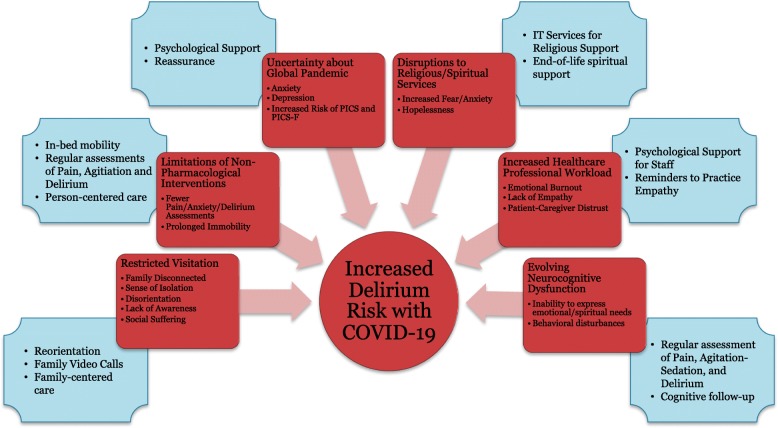
“Encephalopathy in acute and convalescent COVDID-19 patients [50] is multifactorial and likely secondary to hypoxia as well as metabolic and immunological abnormalities (Figure 2).”
BackgroundLiu, K., Nakamura, K., Katsukawa, H., Elhadi, M. K., Nydahl, P., Ely, E. W., Kudchadkar, S. R., Takahashi, K., Inoue, S., Lefor, A. K., et al. (2020) · Research Square · doi:10.21203/rs.3.rs-89768/v1
Self-citationPsychological needs of patients attending a post Covid-19 multidisciplinary clinic
Miller, V., Chancellor, A., & Baker, C. (2021) · Clinical Psychology Forum · doi:10.53841/bpscpf.2021.1.338.24
Neurological Consequences of COVID-19 InfectionPreprint
Tang, J., Patel, S., Gentleman, S., & Matthews, P. M. (2021) · arXiv (Cornell University) · doi:10.48550/arxiv.2106.05388 · Cited by 1
Intensivists Perspectives on COVID-19
Kerai, S. (2020) · Indian Journal of Medical Biochemistry · doi:10.5005/jp-journals-10054-0144
Muñoz, D. L., Grandjean, J., Olivares, F., León, P., & Álvarez, I. (2021) · Revista médica de Chile · doi:10.4067/s0034-98872021000400559
LeWitt, T. M., Kopinsky, H., & LeWitt, P. A. (2021) · Elsevier eBooks · doi:10.1016/b978-0-323-82691-4.00003-0
ICU Delirium in the Era of the COVID-19 Pandemic
Kotfis, K., Wilson, J. E., & Ely, E. W. (2021) · Annual update in intensive care and emergency medicine · doi:10.1007/978-3-030-73231-8_23
Self-citationPost COVID 19 Neuro-Psychiatric complication: persistent delirium: A Case Report
Dhankikar, S., & Arewar, A. (2021) · International Journal of Advanced Research in Medicine · doi:10.22271/27069567.2021.v3.i2c.227
“Underreporting of delirium may be common because it is hard to screen delirium and other mental illness under a heavy workload and epidemiologic precautions during this pandemic ([6]).”
BackgroundML-Enabled Informed Intervention for Crowdsourcing-Based Optimization of Medical Resources
Siddavatam, I. N. A., Dalvi, A., Patel, A., Panchal, A., Vedpathak, A., & Thakkar, V. (2021) · Advances in healthcare information systems and administration book series · doi:10.4018/978-1-7998-7709-7.ch017
Izzivi pri predpisovanju psihofarmakoterapije bolnikom s covidom-19
Čelofiga, A., & Smogavc, Ž. (2021) · Slovenian Medical Journal · doi:10.6016/zdravvestn.3186
COVID-19 related Psychotic Disorder: Symptomatology in Infected and Uninfected Patients
Mohan, A., & Lahiri, D. (2021) · Integrative Journal of Medical Sciences · doi:10.15342/ijms.2021.489
“Although transient disorientation and perceptual disturbances can occur in both [60,61], unlike psychosis, delirium has underlying factors, increasing in ICU patients with COVID-19 [62].”
BackgroundVogel, G. (2021) · Figshare
Contributions to Critical Care from Psychological Science and Practice
Merbitz, N. H., Fleishman, J., Kamsky, H., Sundborg, S. A., Tingey, J. L., Ciccolella, N., & Warren, A. M. (2021) · Oxford University Press eBooks · doi:10.1093/oso/9780190077013.003.0004
P.0811 Factors and outcomes associated with delirium in critically ill COVID-19 patients
Martins, S. P. V., Ferreira, A. R., Fernandes, J., Vieira, T., Fontes, L. C. D. S. F., Coimbra, I. M. M., Paiva, J. A., & Fernandes, L. P. N. S. (2021) · European Neuropsychopharmacology · doi:10.1016/j.euroneuro.2021.10.671
Covid-19 : alerte sur notre cerveau
Marshall, M. (2021) · Cerveau & Psycho · doi:10.3917/cerpsy.128.0020
Delirium in Patients with Covid-19
Madhusudhan, S., Shreekara, Chandrashekar, H., Sharma, P., Amit, A., Jeevan, & Anjana, R. M. (2022) · Acta Scientific Neurology · doi:10.31080/asne.2022.05.0476
Delirium in Patients with Severe COVID-19: Preliminary Results of the MAPA Longitudinal Study
Martins, S. P. V., Ferreira, A. R., Fernandes, J., Vieira, T., Fontes, L. C. D. S. F., Coimbra, I. M. M., Paiva, J. A., & Fernandes, L. P. N. S. (2022) · Acta Médica Portuguesa · doi:10.20344/amp.17522
Cognitive and Functional Abilities in an Older Adult Veteran Before and After Contracting COVID-19
Okolichany, R., Padala, P. R., & Mooney, S. (2022) · Journal of Alzheimer s Disease Reports · doi:10.3233/adr-210055
“Individuals with COVID-19 are at increased risk for delirium due to factors such as direct CNS invasion, CNS inflammatory mediators, organ failure, sedative administration, prolonged mechanical ventilation, immobilization, and social isolation [6].”
BackgroundNeuroimmunology and Neurological Manifestations of COVID-19
Weissert, R. (2022) · IntechOpen eBooks · doi:10.5772/intechopen.103026
Neurological Evaluation of Geriatric Patients Being Treated for COVID-19
Adiguzel, A., & Öztürk, Ü. (2022) · Eurasian Journal of Medicine · doi:10.5152/eurasianjmed.2022.21099
Parsekar, S. S., Dhyani, V. S., Rajwar, E., Krishnan, J. B., Venkatesh, B. T., Saravu, K., & Brand, H. (2022) · F1000Research · doi:10.12688/f1000research.74273.1
Neurological Deficits of Coronavirus Disease-19: A Systematic Literature Review
Al‐Hussain, F., Ghouri, M. H., Sarfraz, Z., Falah, N. U., Tabassum, S., Anjum, A., & Rukh, M. (2022) · Pakistan Journal of Medical and Health Sciences · doi:10.53350/pjmhs221637
NEUROPSYCHOLOGICAL CHANGES IN PERSONS WHO HAVE RECOVERED COVID-19
Miliutina, K. L., & Mamai, Y. V. (2022) · Habitus · doi:10.32843/2663-5208.2022.38.30
Predictors of severity and mortality in hospitalized patients with COVID-19 in northeastern Taiwan
Huang, C., Yu, C.-C., Wu, H.-P., Chu, C., Liu, P., & Li-Fu, L. (2022) · Pulmonary and Critical Care Medicine · doi:10.15761/pccm.1000170
Tatlisuluoglu, D., Alay, G. H., Bulut, K., Demir, N. S., & Turan, G. (2023) · Brazilian Journal of Psychiatry · doi:10.47626/1516-4446-2022-2700 · Cited by 2
Küçükkarapınar, M., Ünal, B., & Candansayar, S. (2022) · Psychiatric Annals · doi:10.3928/00485713-20220516-01
Covid 19 Pandemisi ve Deliryum
Biricik, E., & Güneş, Y. (2022) · Arşiv Kaynak Tarama Dergisi · doi:10.17827/aktd.1055896
Plan de Atención de Enfermería (PAE) en personas con infección por SARS-COV-2: revisión narrativa
Silva, R. P., Munoz, L. G., Sánchez-García, P. E., Sarmiento-Hernández, C. A., Jiménez-Beltrán, E. C., Prieto-Silva, F., & Lizcano, K. T. R. (2020) · Investigaciones en Seguridad Social y Salud · doi:10.56085/20277970.332
Como o SARS-CoV-2 afeta a memória do paciente pós COVID-19: uma revisão integrativa
Prado, Y. L., Dias, A. E. N. D. R., de Souza, P. A. N., de Menezes, R. R., & Rodrigues, I. G. (2022) · Revista Master Ensino Pesquisa e Extensão · doi:10.47224/revistamaster.v7i14.352 · Cited by 3
Secuelas neurológicas crónicas post-sars-cov-2
Landa, K. E. T., & Castillo, Y. M. C. (2023) · Ciencia Latina Revista Científica Multidisciplinar · doi:10.37811/cl_rcm.v7i1.4849 · Cited by 2
A dimensional approach to assessing delirium in COVID-19 in the elderly
Pashkovskiy, V. E., Петрова, Н. Н., Sivashova, M. S., Vuks, A. J., & Прокопович, Г. А. (2023) · V M BEKHTEREV REVIEW OF PSYCHIATRY AND MEDICAL PSYCHOLOGY · doi:10.31363/2313-7053-2023-738
Neurological symptoms in patient with COVID-19: a case report
Cao, X. (2022) · American Journal of BioMedicine · doi:10.18081/2333-5106/2022.10/185
Bhagora, R. J., Chaudhary, P., Ramar, D., & Mehta, P. (2023) · Taiwanese Journal of Psychiatry · doi:10.4103/tpsy.tpsy_4_23
Is COVID-19 a risk for postoperative delirium and death in elderly patients after emergency surgery?
Çınar, F. (2023) · The Annals of Clinical and Analytical Medicine · doi:10.4328/acam.21552
Miura, A., Otani, K., Miyai, H., Fukushima, H., & Matsuishi, K. (2023) · Neuropsychopharmacology Reports · doi:10.1002/npr2.12343
RetractedMailhot, T., Crump, L., Leblanc, M., Sanzone, L., Alfonso, L. V., Laughrea, E., Oliver, C., Bitzas, V. B., Clausen, C., & Lavoie, P. (2023) · Science of Nursing and Health Practices · doi:10.7202/1102062ar · Cited by 1
Fili, M., Mohammadiarvejeh, P., & Hu, G. (2023) · Research Square · doi:10.21203/rs.3.rs-3204454/v1
Alberdi, A. (2023) · UVaDOC UVaDOC University of Valladolid Documentary Repository (University of Valladolid) · doi:10.35376/10324/61128
Peters, C., Jenkins, K., & Paskell, R. (2023) · The Cognitive Behaviour Therapist · doi:10.1017/s1754470x2300017x
“During altered physiological states, patients are at greater risk of delirium, including experiences of confusion, hallucinations, and delusions (Kotfis et al., 2020).”
BackgroundPamuk, K., Turan, N., & Aydın, G. Ö. (2023) · Ordu Üniversitesi Hemşirelik Çalışmaları Dergisi · doi:10.38108/ouhcd.1170229
Nishihara, T., Shibata, M., Ohashi, A., Hiyama, K., Yamashita, T., Kuroiwa, M., & Sudo, N. (2023) · BioPsychoSocial Medicine · doi:10.1186/s13030-023-00296-z
“In addition, altered cognition has been seen in patients hospitalized with severe illness and in others without respiratory failure [3, 12].”
BackgroundSaltanat, S., ORMANOV, N., ORMANOV, T., Ishigov, I., Zhunussov, M., KAYSHİBAYEVA, G., & Yücel, F. (2023) · Bütünleyici ve Anadolu Tıbbı Dergisi · doi:10.53445/batd.1277497
“This issue was not been fully investigated yet, although there were reported in multiple cases (Paterson et al., 2020; Kotfis et al., 2020; Moriguchi et al., 2020; Varatharaj et al., 2020; Meier et al., 2021).”
BackgroundThe Effect of Symptoms on Mental Health in COVID-19 Patients
Karaoğullarından, A., Erkan, S. O., Tuhanioğlu, B., Kurt, M., & Sümbül, H. E. (2023) · JEURMEDS · doi:10.5578/jeurmeds.20239701
Besonderheiten der einzelnen Fachrichtungen
(2023) · Elsevier eBooks · doi:10.1016/b978-3-437-45422-6.00008-4
Villegas, M., Angulo, G. F. O., Lastra-Terán, K. P., Severino, L. E., Castaño, J. A., Chams, M. M., & Llanos, R. A. (2024) · Salud Uninorte · doi:10.14482/sun.40.01.519.515
“ICU admission for COVID -19 results in family isolation, uncertainty, and restricted human interaction, factors that predict long-term psychological harm to ICU patients and their families (12).”
COVID-19 and the Impact on Delirium Care of Hospitalized Older Adults
Byrnes, T., Pate, K., Belin, L., Weaver, K., & Cochran, A. R. (2024) · Journal of Nursing Care Quality · doi:10.1097/ncq.0000000000000764
Al‐Hindawi, A., Rogers, E., & Vizcaychipi, M. P. (2023) · Oxford University Press eBooks · doi:10.1093/med/9780198766438.003.0029
Kang, Y., & Hwang, H. (2024) · Applied Nursing Research · doi:10.1016/j.apnr.2024.151790 · Cited by 1
Helms, J., Kremer, S., Merdji, H., Schenck, M., Séverac, F., Clère-Jehl, R., Studer, A., Radosavljevic, M., Kummerlen, C., Monnier, A., et al. (2020) · Figshare · doi:10.6084/m9.figshare.12781386
Key Role of Anesthesia Nurses in the Treatment and Management of Patients with COVID-19
Sinitha, K. B. (2024) · Springer eBooks · doi:10.1007/978-3-031-52110-2_11
Glushakov, A. V., Vittor, A. Y., Lewis, L. M., House, S. L., Bartlett, M. L., Glushakova, O. Y., Urbine, D., Smith, D. R., & Hayes, R. L. (2024) · medRxiv · doi:10.1101/2024.05.02.24306477
Moulani, S., Rasouli, J., Asghari, R., & Alinejad, V. (2023) · Studies in Medical Sciences · doi:10.61186/umj.34.10.598
New initiation of opioids, benzodiazepines and antipsychotics following hospitalization for COVID‐19
Harrison, S., Capers, K., Chen, G., Liu, J. T., Pannu, A., Banner‐Goodspeed, V., Leibowitz, A., & Bose, S. (2024) · Journal of Hospital Medicine · doi:10.1002/jhm.13408
Beach, S. R., Newhouse, A. L., Evanoff, A. B., Probert, J. M., & Chemali, Z. N. (2024) · Elsevier eBooks · doi:10.1016/b978-0-443-11844-9.00045-x
Ilg, A. M., Beltran, C. P., Shih, J. A., Yankama, T. T., Hayes, M. M., & Moskowitz, A. L. (2024) · Therapeutics and Clinical Risk Management · doi:10.2147/tcrm.s462760 · Cited by 2
“17 Given the distinct rise in patient volume, we aimed to understand whether experience with ketamine specifically would translate into providers’ perceptions of comfort and competence.”
BackgroundFactor, S. J., Ly-Uson, J. T., Aligam, K. J., & Gelvezon, M. A. (2024) · BJPsych Open · doi:10.1192/bjo.2024.700
Kanat, B. B., Avcı, G. U., Bayramlar, O. F., Suzan, V., Can, G., Balkan, İ. İ., Börekçi, Ş., Korkmazer, B., Dikmen, Y., Aygün, G., et al. (2024) · Biomarkers in Medicine · doi:10.1080/17520363.2024.2352416
Kchaou, K., Barkous, B., Rejeb, H., Chakroun, S., Chaker, A., & Jameleddine, S. B. K. (2024) · Current Respiratory Medicine Reviews · doi:10.2174/011573398x308876240919114641
Covid longa: indicadores de impacto cognitivo e os desafios para a neuropsicologia
Serafim, A. D. P. (2023) · Digital Library of Theses and Dissertations (Universidade de São Paulo) · doi:10.11606/t.47.2023.tde-09102024-133112
Hashemi, S., Jahani, S., Sayadi, N., Maraghi, E., & Yaghoubi, S. (2024) · Iranian Journal of Nursing and Midwifery Research · doi:10.4103/ijnmr.ijnmr_59_23
Белобородов, В. А., Stepanov, I. A., Арнольдовна, К. Е., Vorobev, V., Frolov, A. P., Kozhevnikov, M. A., Tukhiev, A. R., Borisov, V. E., & Saakyan, Z. S. (2024) · Бюллетень Восточно-Сибирского научного центра Сибирского отделения Российской академии медицинских наук · doi:10.29413/abs.2024-9.5.18
Reny, J., SIDDIQUI, U., Cox, A., Hennawi, H. A., Swanson, J., Siegel, A., & Goldberg, T. H. (2024) · Cureus · doi:10.7759/cureus.76005
Suspicious Object Monitoring System Based on Multiview Model from Smart-camera
Huu, P. N., Nam, K. N. H., Dang, D. D., Thi, T. N., Manh, H. T., Minh, Q. T., & Minh, Q. T. (2024) · International Conference on Advanced Technologies for Communications · doi:10.1109/atc63255.2024.10908264
Chea, M., de Langavant, L. C., Delorme, C., Corvol, J., Delemazure, J., Morawiec, É., Faure, M., Pichon, B., Bayen, É., & Stefanescu, F. (2025) · Annals of Physical and Rehabilitation Medicine · doi:10.1016/j.rehab.2025.101970
Kahraman, E. G., Akay, S., Pala, E. E., Özdemir, T. R., & Ünal, O. Ü. (2025) · Journal of Oncological Sciences · doi:10.37047/jos.galenos.2024.2024.105033
Anlacan, V. M. M., Gabriel, F., Jamora, R. D. G., Villanueva, E. Q., Sy, M. C. C., Yu, M. H. L. L., & Espiritu, A. I. (2025) · Neurología (English Edition) · doi:10.1016/j.nrleng.2025.06.009 · Cited by 1
Sate, M. R., Vivas, A. M. V., & Ribas, J. M. B. I. (2025) · LATAM Revista Latinoamericana de Ciencias Sociales y Humanidades · doi:10.56712/latam.v6i4.4313
Biopsihosocijalne odrednice post-COVID sindroma
Filozofski fakultet Sveučilišta u Zagrebu, Z., Korajlija, A. L., Jokić‐Begić, N., Filozofski fakultet Sveučilišta u Zagrebu, Z., Jurin, T., Filozofski fakultet Sveučilišta u Zagrebu, Z., Šoštarić, M., & Filozofski fakultet Sveučilišta u Zagrebu, Z. (2025) · Socijalna psihijatrija · doi:10.24869/spsih.2025.99
“Individuals who survived severe or critical COVID-19 that required hospitalization are at a high risk of developing PICS (112-115).”
A perfect storm for medical PTSD: Isolation, intensive care and the coronavirus pandemic
Flaum, M., & Hall, S. (2020) · The Conversation · doi:10.64628/aai.vpuejqhwf
Abuhammad, S., Alzoubi, K., Khabour, O., Hamaideh, S., Khassawneh, B., & Mehrass, A. (2025) · Future Science OA · doi:10.1080/20565623.2025.2559553
“…developed severe complications, including hypoxia and multiorgan failure. these critical cases led to increased demand on many types of technology [4,5]. the mortality rate among patients admitted to intensive care units (icU) was approximately 30%, while those with mild symptoms experienced much…”
Abordaje Integral de Enfermería Crítica en UCI
Sánchez, K. J. A., Solis, J. D. A., Rubio, K. E. B., Chávez, M. A. C., Cuascota, S. L. C., Chala-Minda, T. R., Sánchez, M. B. C., González, Y. E., Valencia, K. Y. E., Asadovay, M. Y. G., et al. (2025) · doi:10.56470/978-9942-568-84-7
PASCALE, G. D., Maio, F. D., Carelli, S., Angelis, G. D., Cacaci, M., Montini, L., Bello, G., Cutuli, S. L., Pintaudi, G., Tanzarella, E. S., et al. (2021) · Figshare · doi:10.6084/m9.figshare.14746425
Additional file 1 of Why and how to open intensive care units to family visits during the pandemic
Mistraletti, G., Giannini, A., Gristina, G. R., Malacarne, P., Mazzon, D., Cerutti, E., Galazzi, A., Giubbilo, I., Vergano, M., Zagrebelsky, V., et al. (2021) · Figshare · doi:10.6084/m9.figshare.14721783
PASCALE, G. D., Maio, F. D., Carelli, S., Angelis, G. D., Cacaci, M., Montini, L., Bello, G., Cutuli, S. L., Pintaudi, G., Tanzarella, E. S., et al. (2021) · Figshare · doi:10.6084/m9.figshare.14746428
Polilli, E., Frattari, A., Esposito, J. E., D’Amato, M., Rapacchiale, G., D’Intino, A., Albani, A., Iorio, G. D., Carinci, F., & Parruti, G. (2022) · Figshare · doi:10.6084/m9.figshare.20521147
Nishihara, T., Shibata, M., Ohashi, A., Hiyama, K., Yamashita, T., Kuroiwa, M., & Sudo, N. (2024) · Figshare · doi:10.6084/m9.figshare.26640496
Metadata
- Authors
- Kotfis, K., Williams Roberson, S., Wilson, J. E., Dabrowski, W., Pun, B. T., & Ely, E. W.
- Affiliations
- Pomeranian Medical University (PL)
- VA Tennessee Valley Healthcare System (US)
- Vanderbilt University Medical Center (US)
- Corresponding author
- Kotfis, Katarzyna
- Venue
- Critical Care
- Published
- 2020-04-28
- Volume
- 24
- Issue
- 1
- Pages
- 176-176
- ISSN
- 1364-8535 (ISSN-L)
- PMC
- PMC7186945
- OpenAlex
- W3020561822
- Cited by
- 506
- References
- 88
- Citations by year
- 2026: 8 · 2025: 21 · 2024: 34 · 2023: 49 · 2022: 83 · 2021: 168 · 2020: 142
- FWCI
- 19.43
- Type
- journal article
- Language
- en
- Open access
- gold
- doi.org
- Licence
- cc-by
- creativecommons.org/licenses/by/4.0/ (tdm)
- creativecommons.org/licenses/by/4.0/ (vor)
- Locations
- Critical Care (publishedVersion, cc-by)
- PubMed Central (publishedVersion, cc-by)
- PubMed (publishedVersion)
- DOAJ (DOAJ: Directory of Open Access Journals) (submittedVersion, cc-by-sa)
- Informationszentrum Lebenswissenschaften (ZB MED) (submittedVersion, cc-by)
- Funders
- Eli Lilly and Company
- Pfizer
- Vanderbilt University
- Vanderbilt University Medical Center
- National Institutes of Health (KL2TR002245)
- National Institute on Aging (R01AG058639)
- National Heart, Lung, and Blood Institute (R01HL14678-01, R01HL146781)
- National Institute of General Medical Sciences (R01GM120484)
- National Center for Advancing Translational Sciences
- Topics
- Health Sciences › Medicine › Critical Care and Intensive Care Medicine › Intensive Care Unit Cognitive Disorders
- Social Sciences › Psychology › Clinical Psychology › COVID-19 and Mental Health
- Health Sciences › Medicine › Critical Care and Intensive Care Medicine › Nosocomial Infections in ICU
- Keywords
- COVID-19 pandemic, SARS-CoV-2, ICU delirium, delirium management, delirium prevention, encephalopathy, critical illness, sedation, mechanical ventilation, post-intensive care syndrome, risk factors, intensive care unit, resource allocation
- MeSH terms
- Betacoronavirus, COVID-19, SARS-CoV-2, Delirium, Humans, Intensive Care Units, Pneumonia, Viral, Safety, Coronavirus Infections, Pandemics
About these checks
Registry, retraction, Cites and statistics results are computed, not judged, with one exception: a printed reference that no index lists is read once by a model before it counts as a citation error. Claims are extracted by a model and kept only when their quote appears verbatim in the text; each cited source is then checked, with a model’s help, for whether it says what the claim relies on. Those verdicts can be wrong — read the claim’s quote and the cited source before relying on one.
Statistics and arithmetic are recomputed, not judged.
Confidence bands are shown only for fields calibrated on our annotated test set. None is calibrated yet, so no band is shown.
What counts as a claim ›How we measure confidence ›How we check this ›
Are you an author, or do you see a problem with this page? Request a review
Data sources
Bibliographic data: Semantic Scholar, OpenAlex, Crossref.
Contains information from the Semantic Scholar Academic Graph Datasets, made available under the ODC Attribution License (ODC-BY 1.0).
Semantic Scholar’s data is described in: Kinney, R., et al. (2023). The Semantic Scholar Open Data Platform. arXiv:2301.10140.
