

Virtual and augmented reality in critical care medicine: the patient’s, clinician’s, and researcher’s perspective
Open accessThe DOI matches its Crossref record; 70 of the 71 references it cites were found in a registry or an index.
Abstract
Virtual reality (VR) and augmented reality (AR) are aspiring, new technologies with increasing use in critical care medicine. While VR fully immerses the user into a virtual three-dimensional space, AR adds overlaid virtual elements into a real-world environment. VR and AR offer great potential to improve critical care medicine for patients, relatives and health care providers. VR may help to ameliorate anxiety, stress, fear, and pain for the patient. It may assist patients in mobilisation and rehabilitation and can improve communication between all those involved in the patient’s care. AR can be an effective tool to support continuous education of intensive care medicine providers, and may complement traditional learning methods to acquire key practical competences such as central venous line placement, cardiopulmonary resuscitation, extracorporeal membrane oxygenation device management or endotracheal intubation. Currently, technical, human, and ethical challenges remain. The adaptation and integration of VR/AR modalities into useful clinical applications that can be used routinely on the ICU is challenging. Users may experience unwanted side effects (so-called “cybersickness”) during VR/AR sessions, which may limit its applicability. Furthermore, critically ill patients are one of the most vulnerable patient groups and warrant special ethical considerations if new technologies are to be introduced into their daily care. To date, most studies involving AR/VR in critical care medicine provide only a low level of evidence due to their research design. Here we summarise background information, current developments, and key considerations that should be taken into account for future scientific investigations in this field. Graphical abstract:
Overview
The claims and statistics of this paper haven’t been checked yet.
Free: it reads the open-access text and checks the first 5 claims that cite a source we can check. Create a free account to check every claim.
Integrity signals
Registry
Cites
Statistics
Figures
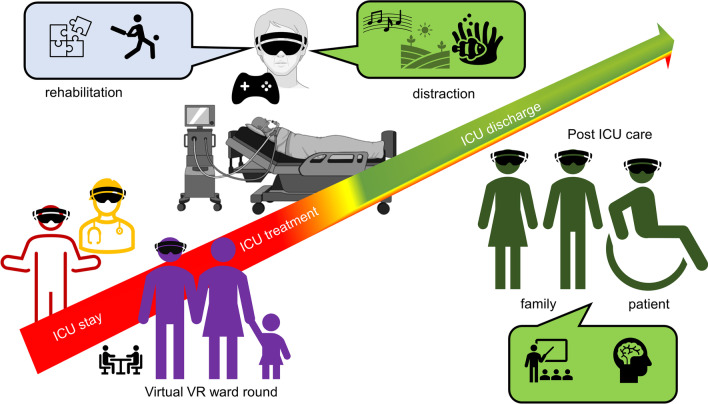
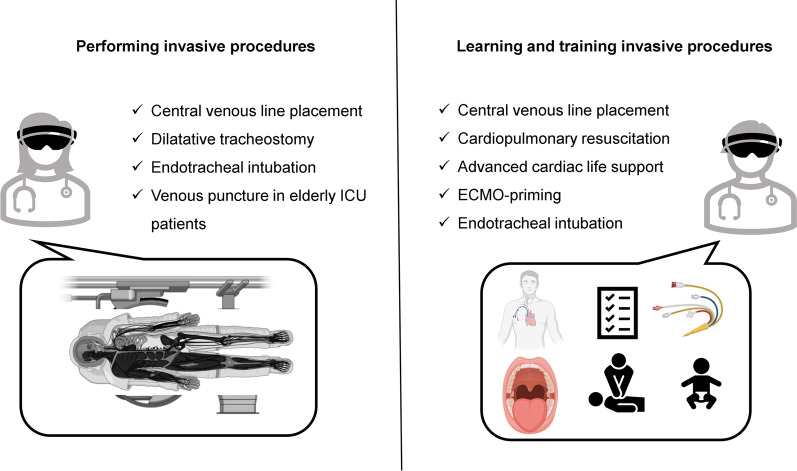
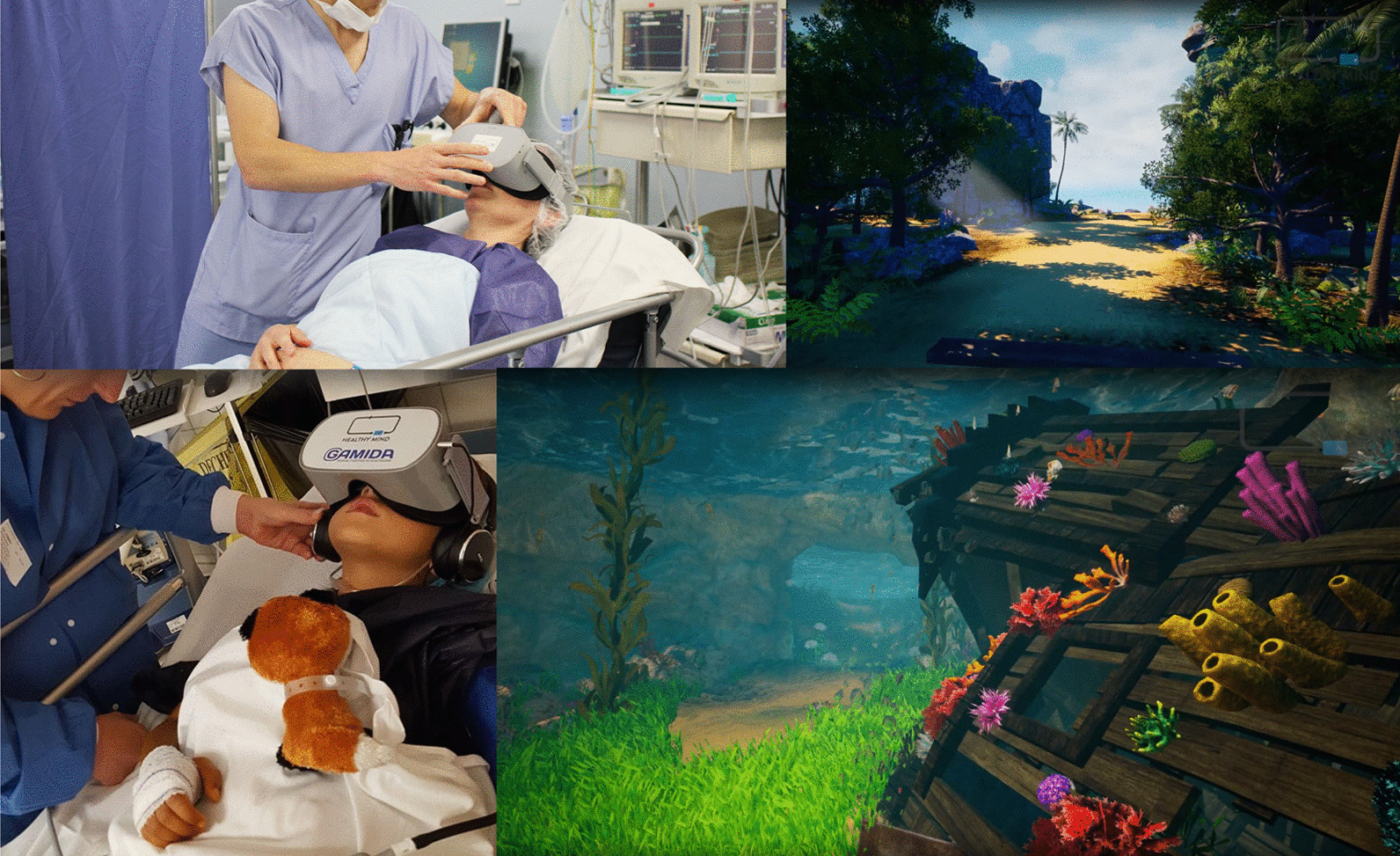
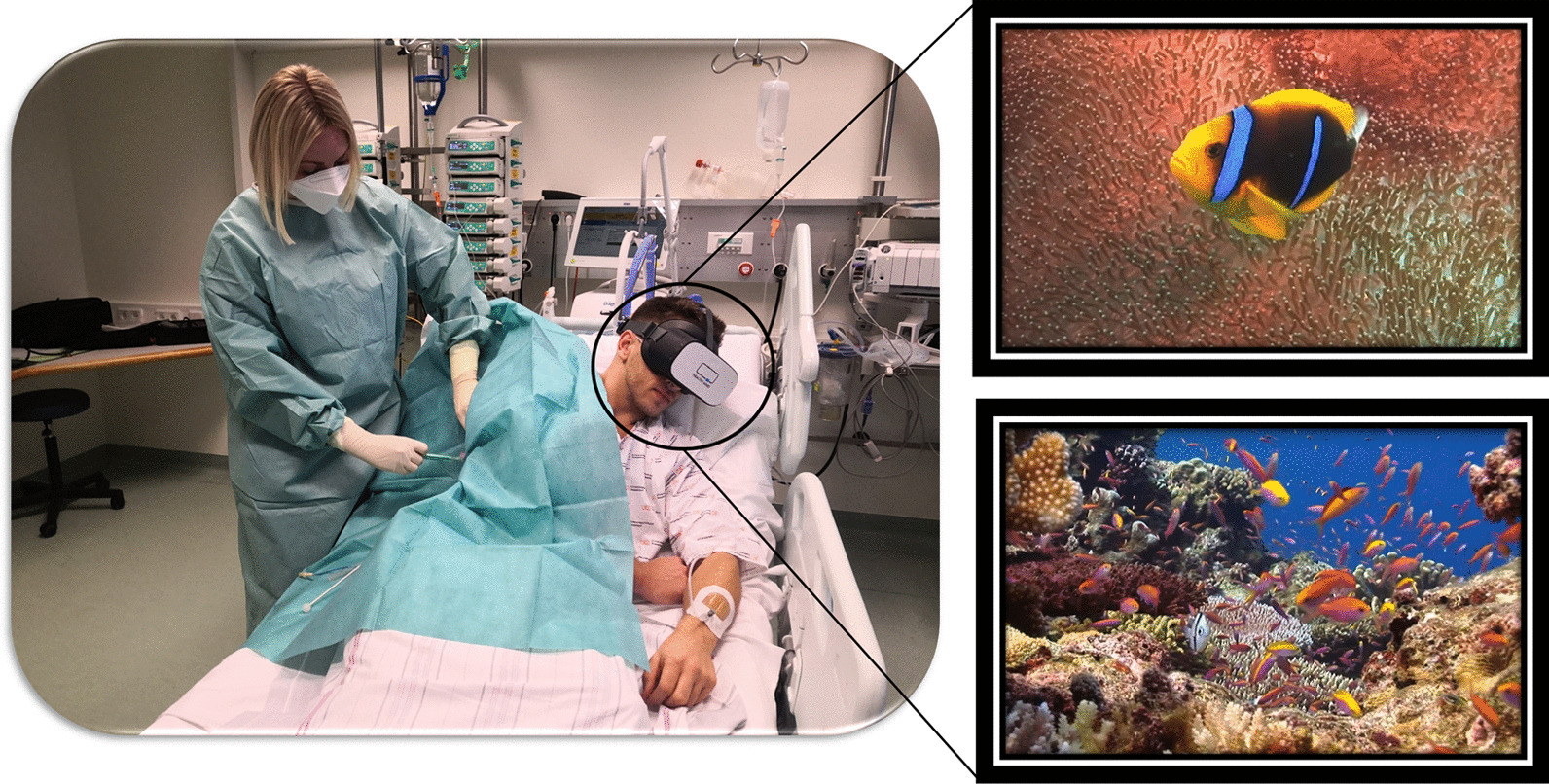
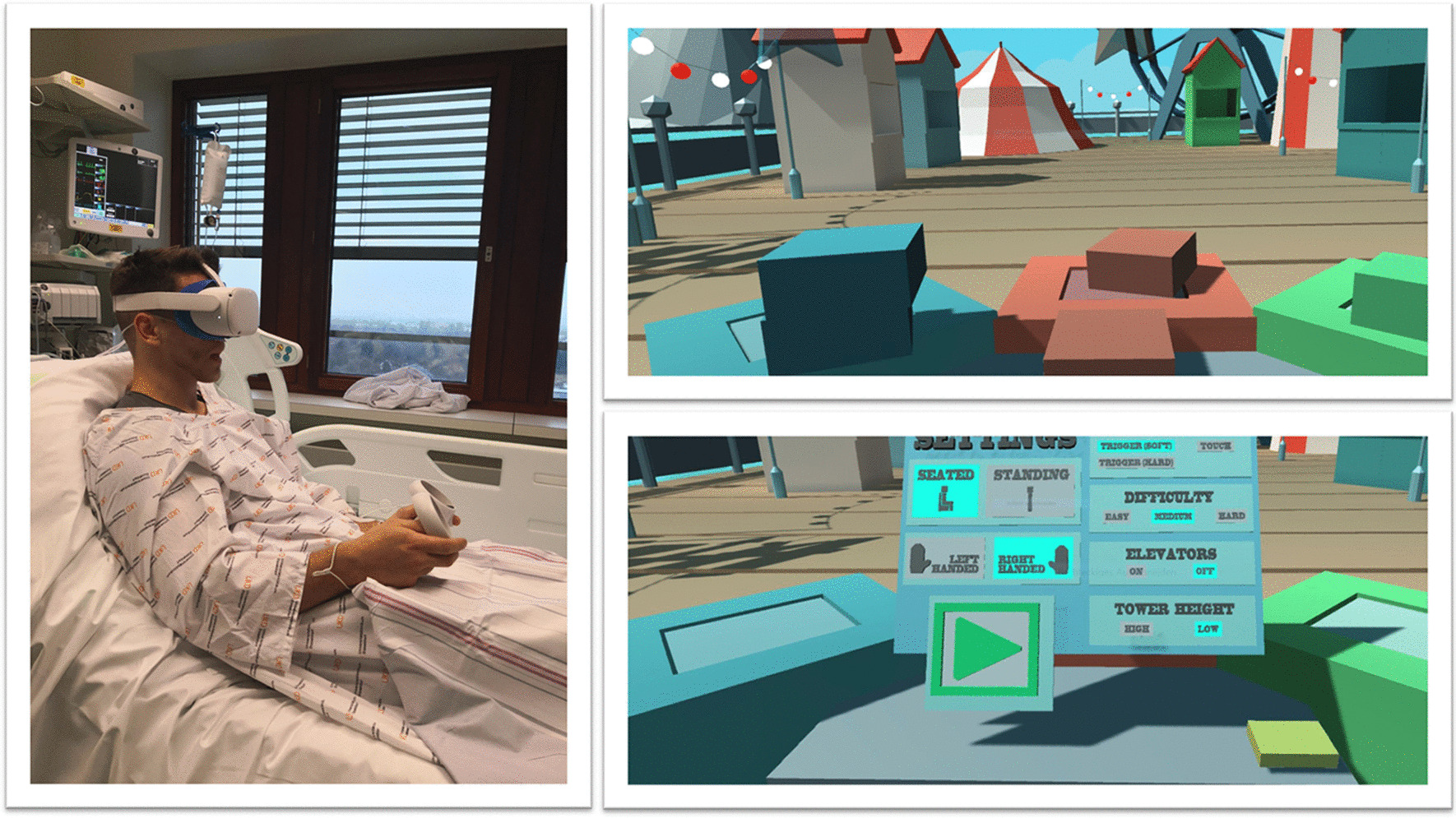
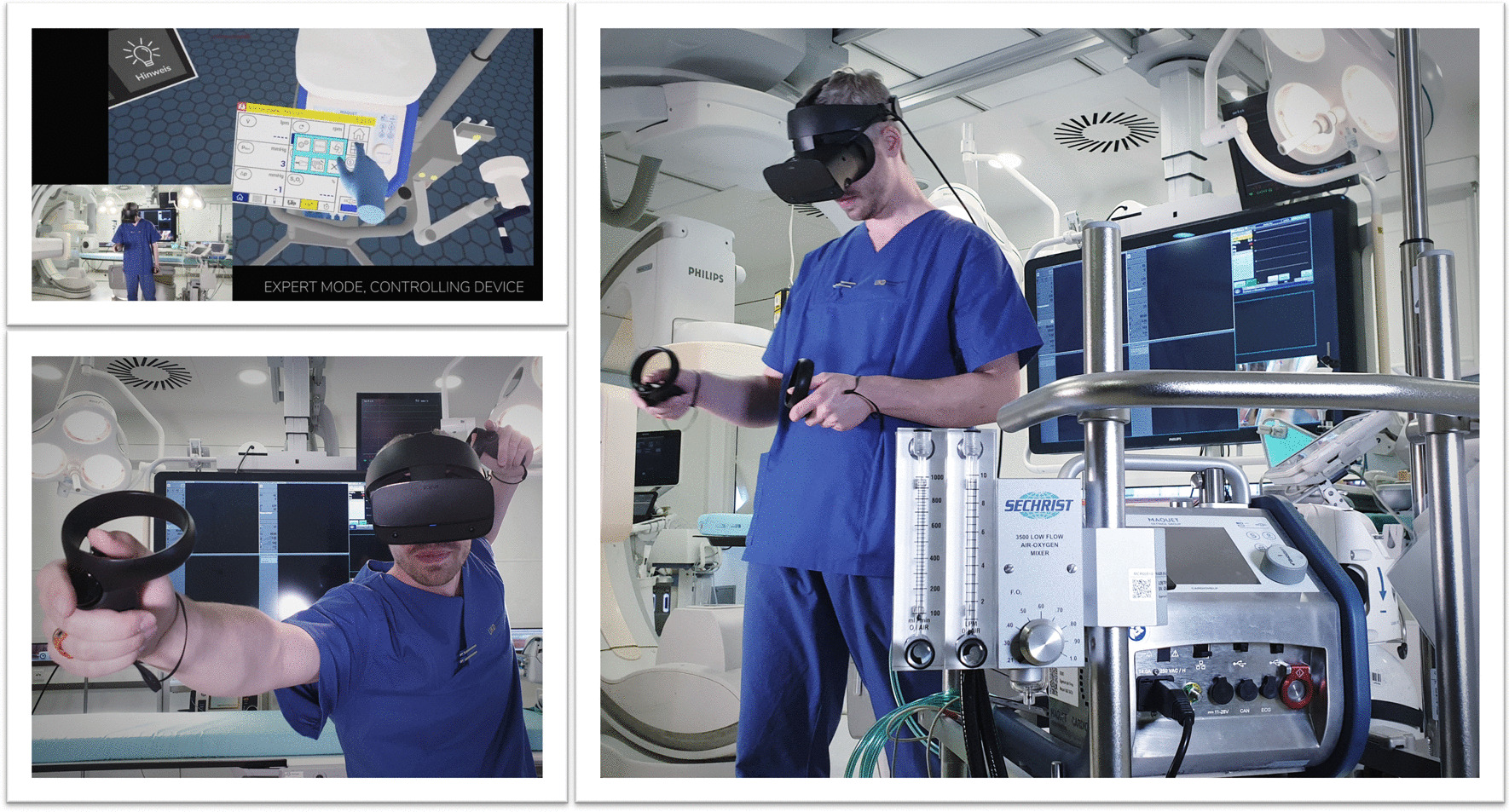
Verification
Claims the paper makes
The claims and statistics of this paper haven’t been checked yet.
Free: it reads the open-access text and checks the first 5 claims that cite a source we can check. Create a free account to check every claim.
Claims other papers make about this one
Each is checked against this paper’s own text: does it say what the citing paper says it does?
The check wasn’t confident either way, so it gives no verdict — never disputed.
In the citing paper
“Correspondingly, prior work has highlighted that fixed virtual cases often lack interactivity and adaptive feedback15,19.”
From A large language model digital patient system enhances ophthalmology history taking skills (2025) · cites this paper as [15]
Experimental — accuracy not yet measured
Self-check
Percentages, sums and reported differences re-computed from the paper’s own numbers.
The self-check needs the paper’s full text.
Citations
Cites
(1992) · Applied Ergonomics · doi:10.1016/0003-6870(92)90318-p · Cited by 5,737
How does burnout affect physician productivity? A systematic literature review
Dewa, C. S., Loong, D., Bonato, S., Thanh, N. X., & Jacobs, P. (2014) · BMC Health Services Research · doi:10.1186/1472-6963-14-325 · Cited by 622
Virtual and augmented reality applications in medicine: analysis of the scientific literature
Yeung, A. W. K., Tosevska, A., Klager, E., Eibensteiner, F., Laxar, D., Stoyanov, J., Glisic, M., Zeiner, S., Kulnik, S. T., Crutzen, R., et al. (2021) · Journal of Medical Internet Research · doi:10.2196/25499 · Cited by 428
Resolving the Vergence-Accommodation Conflict in Head-Mounted Displays
Kramida, G. (2016) · IEEE Transactions on Visualization and Computer Graphics · doi:10.1109/tvcg.2015.2473855 · Cited by 379
Virtual reality pain control during burn wound debridement in the hydrotank
Hoffman, H. G., Patterson, D. R., Seibel, E., Soltani, M., Jewett-Leahy, L., & Sharar, S. R. (2008) · The Clinical Journal of Pain · doi:10.1097/ajp.0b013e318164d2cc · Cited by 352 · cited 1×
“in 11 burn victims, there is a correlation between the “immersive strength” (degree of immersion) of VR and its analgesic effects [23].”
BackgroundDelirium in the ICU: an overview
Cavallazzi, R., Saad, M., & Marik, P. E. (2012) · Annals of Intensive Care · doi:10.1186/2110-5820-2-49 · Cited by 275 · cited 1×
“Since pharmacological interventions often have unwanted, and severe side effects, non-pharmacologic options are of utmost importance to treat, and potentially prevent delirium [8].”
BackgroundVirtual Reality Bronchoscopy Simulation
Colt, H. G., Crawford, S. W., & Galbraith, O. (2001) · Chest · doi:10.1378/chest.120.4.1333 · Cited by 270
The Impact of Virtual Reality on Chronic Pain
Jones, T., Moore, T., & Choo, J. (2016) · PLOS ONE · doi:10.1371/journal.pone.0167523 · Cited by 236
Muscle Weakness and 5-Year Survival in Acute Respiratory Distress Syndrome Survivors*
Dinglas, V. D., Aronson Friedman, L., Colantuoni, E., Mendez-Tellez, P. A., Shanholtz, C. B., Ciesla, N. D., Pronovost, P. J., & Needham, D. M. (2017) · Critical Care Medicine · doi:10.1097/ccm.0000000000002208 · Cited by 210
Voiriot, G., Oualha, M., Pierre, A., Salmon-Gandonnière, C., Gaudet, A., Jouan, Y., Kallel, H., Radermacher, P., Vodovar, D., Sarton, B., et al. (2022) · Annals of Intensive Care · doi:10.1186/s13613-022-01038-0 · Cited by 207
Cognitive impairment after intensive care unit admission: a systematic review
Wolters, A. E., Slooter, A. J. C., van der Kooi, A. W., & van Dijk, D. (2013) · Intensive Care Medicine · doi:10.1007/s00134-012-2784-9 · Cited by 195
Simulator Sickness in Augmented Reality Training Using the Microsoft HoloLens
Vovk, A., Wild, F., Guest, W., & Kuula, T. (2018) · CHI Conference on Human Factors in Computing Systems · doi:10.1145/3173574.3173783 · Cited by 177
Virtual and Augmented Reality in Cardiovascular Care
Jung, C., Wolff, G., Wernly, B., Bruno, R. R., Franz, M., Schulze, P. C., Silva, J. N. A., Silva, J. R., Bhatt, D. L., & Kelm, M. (2021) · JACC. Cardiovascular imaging · doi:10.1016/j.jcmg.2021.08.017 · Cited by 169
Self-citationMazloumi Gavgani, A., Walker, F. R., Hodgson, D. M., & Nalivaiko, E. (2018) · Journal of Applied Physiology · doi:10.1152/japplphysiol.00338.2018 · Cited by 167
Hoffman, H. G., Rodriguez, R. A., Gonzalez, M., Bernardy, M., Peña, R., Beck, W., Patterson, D. R., & Meyer, W. J. (2019) · Frontiers in Human Neuroscience · doi:10.3389/fnhum.2019.00262 · Cited by 164
Gerber, S. M., Jeitziner, M.-M., Wyss, P., Chesham, A., Urwyler, P., Müri, R. M., Jakob, S. M., & Nef, T. (2017) · Scientific Reports · doi:10.1038/s41598-017-13153-1 · Cited by 151 · cited 1×
“These results were supported by a decrease in respiratory rate during VR sessions [12, 13].”
ResultFaber, A. W., Patterson, D. R., & Bremer, M. (2013) · Journal of Burn Care & Research · doi:10.1097/bcr.0b013e3182777904 · Cited by 138
"Wii-Hab" in critically ill children: A pilot trial
Abdulsatar, F., Walker, R. G., Timmons, B. W., & Choong, K. L. M. (2013) · Journal of Pediatric Rehabilitation Medicine · doi:10.3233/prm-130260 · Cited by 134
Ding, L., Hua, H., Zhu, H., Zhu, S., Lu, J., Zhao, K., & Xu, Q. (2020) · International Journal of Surgery · doi:10.1016/j.ijsu.2020.08.033 · Cited by 133
Rousseaux, F., Dardenne, N., Massion, P. B., Ledoux, D., Bicego, A., Donneau, A.-F., Faymonville, M.-E., Nyssen, A.-S., & Vanhaudenhuyse, A. (2022) · European Journal of Anaesthesiology · doi:10.1097/eja.0000000000001633 · Cited by 127 · cited 2×
“However, there were no significant differences in the pre-defined outcome measures (anxiety, pain, fatigue, relaxation, physiological parameters, and opioid use) [11].”
BackgroundViewpoint: Virtual and Augmented Reality in Basic and Advanced Life Support Training
Ricci, S., Calandrino, A., Borgonovo, G., Chirico, M., & Casadio, M. (2022) · JMIR Serious Games · doi:10.2196/28595 · Cited by 115
Lee, S. Y., & Kang, J. (2020) · Intensive and Critical Care Nursing · doi:10.1016/j.iccn.2020.102849 · Cited by 114
Virtual reality for pain management in cardiac surgery
Mosso-Vázquez, J. L., Gao, K., Wiederhold, B. K., & Wiederhold, M. D. (2014) · Cyberpsychology, Behavior, and Social Networking · doi:10.1089/cyber.2014.0198 · Cited by 107 · cited 1×
“Their VR intervention consisted of different immersive environments [18].”
BackgroundYu, M., Yang, M., Ku, B., & Mann, J. S. (2021) · Asian Nursing Research · doi:10.1016/j.anr.2021.03.002 · Cited by 102
Chow, H., Hon, J., Chua, W., & Chuan, A. (2021) · Journal of Pain and Symptom Management · doi:10.1016/j.jpainsymman.2020.08.016 · Cited by 98 · cited 1×
“Unfortunately, the degree of immersion and occurrence of cybersickness are rarely measured or reported, although the effect of VR crucially depends on it [66].”
BackgroundChanques, G., Ely, E. W., Garnier, O., Perrigault, F., Eloi, A., Carr, J., Rowan, C. M., Prades, A., JONG, A. D., Moritz‐Gasser, S., et al. (2018) · Annals of Intensive Care · doi:10.1186/s13613-018-0377-7 · Cited by 91
Nijland, J. W. H. M., Veling, W., Lestestuiver, B. P., & Van Driel, C. M. G. (2021) · Frontiers in Psychology · doi:10.3389/fpsyg.2021.706527 · Cited by 88
Vlake, J. H., van Bommel, J., Wils, E.-J., Bienvenu, J., Hellemons, M. E., Korevaar, T. I., Schut, A. F., Labout, J. A., Schreuder, L. L., van Bavel, M. P., et al. (2022) · Journal of Medical Internet Research · doi:10.2196/32368 · Cited by 84
Chiang, D.-H., Huang, C.-C., Cheng, S.-C., Cheng, J.-C., Wu, C.-H., Huang, S.-S., Yang, Y.-Y., Yang, L.-Y., Kao, S.-Y., Chen, C.-H., et al. (2022) · Medicine · doi:10.1097/md.0000000000028570 · Cited by 78
Rousseaux, F., Bicego, A., Ledoux, D., Massion, P., Nyssen, A.-S., Faymonville, M.-E., Laureys, S., & Vanhaudenhuyse, A. (2020) · Journal of Pain Research · doi:10.2147/jpr.s231737 · Cited by 77
Huang, C. Y., Thomas, J. B., Alismail, A., Cohen, A., Almutairi, W., Daher, N. S., Terry, M. H., & Tan, L. D. (2018) · Advances in Medical Education and Practice · doi:10.2147/amep.s160704 · Cited by 75
Bruno, R. R., Lin, Y., Wolff, G., Polzin, A., Veulemans, V., Klein, K., Westenfeld, R., Zeus, T., Kelm, M., & Jung, C. (2020) · EuroIntervention · doi:10.4244/eij-d-20-00269 · Cited by 73
Self-citationVlake, J. H., van Genderen, M. E., Schut, A., Verkade, M., Wils, E.-J., Gommers, D., & van Bommel, J. (2020) · Journal of Intensive Care · doi:10.1186/s40560-019-0422-0 · Cited by 67
Ethical tensions of virtual reality treatment in vulnerable patients
Kellmeyer, P., Biller‐Andorno, N., & Meynen, G. (2019) · Nature Medicine · doi:10.1038/s41591-019-0543-y · Cited by 66
Rousseaux, F., Faymonville, M.-E., Nyssen, A.-S., Dardenne, N., Ledoux, D., Massion, P. B., & Vanhaudenhuyse, A. (2020) · Trials · doi:10.1186/s13063-020-4222-6 · Cited by 66
Virtual reality: Feasibility of implementation in a regional burn center
Markus, L., Willems, K. E., Maruna, C. C., Schmitz, C. L., Pellino, T., Wish, J. R., Faucher, L. D., & Schurr, M. J. (2009) · Burns · doi:10.1016/j.burns.2009.01.013 · Cited by 61
Gerber, S. M., Jeitziner, M.-M., Knobel, S. E. J., Mosimann, U. P., Müri, R. M., Jakob, S. M., & Nef, T. (2019) · Frontiers in Medicine · doi:10.3389/fmed.2019.00287 · Cited by 59 · cited 1×
“These results were supported by a decrease in respiratory rate during VR sessions [12, 13].”
ResultGerber, S. M., Jeitziner, M., Sänger, S. D., Knobel, S. E. J., Marchal–Crespo, L., Müri, R. M., Schefold, J. C., Jakob, S. M., & Nef, T. (2019) · JMIR Perioperative Medicine · doi:10.2196/15579 · Cited by 58
Merliot‐Gailhoustet, L., Raimbert, C., Garnier, O., Carr, J., JONG, A. D., Molinari, N., Jaber, S., & Chanques, G. (2022) · Critical Care · doi:10.1186/s13054-022-04136-4 · Cited by 57
Turon, M., Fernandez-Gonzalo, S., Jodar, M., Gomà, G., Montanya, J., Hernando, D., Bailón, R., de Haro, C., Gomez-Simon, V., Lopez-Aguilar, J., et al. (2017) · Annals of Intensive Care · doi:10.1186/s13613-017-0303-4 · Cited by 56 · cited 1×
“However, there was no control group, and no follow-up data were available [31].”
BackgroundGomes, T. T., Schujmann, D. S., & Fu, C. (2019) · Revista Brasileira de Terapia Intensiva · doi:10.5935/0103-507x.20190078 · Cited by 56
Laghlam, D., Naudin, C., Coroyer, L., Aïdan, V., Malvy, J., Rahoual, G., Estagnasié, P., & Squara, P. (2021) · Annals of Intensive Care · doi:10.1186/s13613-021-00866-w · Cited by 56
Effects of Virtual Reality Simulation on Worker Emergency Evacuation of Neonates
Farra, S. L., Hodgson, E., Miller, E., Timm, N. L., Brady, W., Gneuhs, M., Ying, J., Hausfeld, J., Cosgrove, E., Simon, A., et al. (2018) · Disaster Medicine and Public Health Preparedness · doi:10.1017/dmp.2018.58 · Cited by 52
Disorientation and postural ataxia following flight simulation.
Kennedy, R. S., Berbaum, K. S., & Lilienthal, M. G. (1997) · PubMed · Cited by 50
Bodet-Contentin, L., Letourneur, M., & Ehrmann, S. (2022) · Australian Critical Care · doi:10.1016/j.aucc.2022.01.009 · Cited by 48
Augmented reality glasses improve adherence to evidence-based intubation practice
Alismail, A., Thomas, J. B., Daher, N. S., Cohen, A., Almutairi, W., Terry, M. H., Huang, C. Y., & Tan, L. D. (2019) · Advances in Medical Education and Practice · doi:10.2147/amep.s201640 · Cited by 46
Holographically-Guided Endovascular Aneurysm Repair
Rynio, P., Witowski, J. S., Kamiński, J., Serafin, J., Kazimierczak, A., & Gutowski, P. (2019) · Journal of Endovascular Therapy · doi:10.1177/1526602819854468 · Cited by 46
A new supplement to gross anatomy dissection: HoloAnatomy
Wish‐Baratz, S., Gubatina, A., Enterline, R., & Griswold, M. A. (2019) · Medical Education · doi:10.1111/medu.13845 · Cited by 41
Madder, R. D., VanOosterhout, S., Mulder, A., Bush, J. D., Martin, S., Rash, A., Tan, J. M., Parker, J., Li, Y., Kottenstette, N., et al. (2019) · EuroIntervention · doi:10.4244/eij-d-19-00106 · Cited by 41
Vlake, J. H., Van Bommel, J., Wils, E.-J., Korevaar, T. I. M., Bienvenu, O. J., Klijn, E., Gommers, D., & van Genderen, M. E. (2021) · Critical Care Explorations · doi:10.1097/cce.0000000000000538 · Cited by 41
Augmented Reality–Assisted Video Laryngoscopy and Simulated Neonatal Intubations: A Pilot Study
Dias, P. L., Greenberg, R. G., Goldberg, R. N., Fisher, K. A., & Tanaka, D. T. (2021) · PEDIATRICS · doi:10.1542/peds.2020-005009 · Cited by 39
Use of Virtual Reality for Pediatric Cardiac Critical Care Simulation
Ralston, B. H., Willett, R. C., Namperumal, S., Brown, N. M., Walsh, H. A., Munoz, R. A., del Castillo, S., Chang, T. P., & Yurasek, G. K. (2021) · Cureus · doi:10.7759/cureus.15856 · Cited by 35
Virtual reality in intensive care
Bruno, R. R., Bruining, N., Jung, C., the VR-ICU Study group, Kelm, M., Wolff, G., & Wernly, B. (2022) · Intensive Care Medicine · doi:10.1007/s00134-022-06792-0 · Cited by 35
Self-citationVlake, J. H., van Bommel, J., Wils, E., Korevaar, T. I. M., Hellemons, M. E., Schut, A. F., Labout, J. A. M., Schreuder, L. L., Gommers, D. A. M. P. J., & van Genderen, M. E. (2021) · Trials · doi:10.1186/s13063-021-05271-z · Cited by 34
Virtual reality device training for extracorporeal membrane oxygenation
Wolff, G., Bruno, R. R., Reiter, M., Kantzow, B., Kelm, M., & Jung, C. (2020) · Critical Care · doi:10.1186/s13054-020-03095-y · Cited by 28
Self-citationWhat place for virtual reality in the intensive care unit during medical procedures?
Puel, F., Minville, V., & Bounes, F. V. (2021) · Journal of Intensive Care · doi:10.1186/s40560-021-00545-9 · Cited by 28
Virtual Reality Simulation for Pediatric Airway Intubation Readiness Education
Agasthya, N., Penfil, S., & Slamon, N. B. (2020) · Cureus · doi:10.7759/cureus.12059 · Cited by 26
Virtual Reality in the Pediatric Intensive Care Unit: Patient Emotional and Physiologic Responses
Badke, C. M., Krogh‐Jespersen, S., Flynn, R. M., Shukla, A., Essner, B. S., & Malakooti, M. (2022) · Frontiers in Digital Health · doi:10.3389/fdgth.2022.867961 · Cited by 25
An Augmented Reality–Based Guide for Mechanical Ventilator Setup: Prospective Randomized Pilot Trial
Heo, S., Moon, S., Kim, M., Park, M., Cha, W. C., & Son, M. H. (2022) · JMIR Serious Games · doi:10.2196/38433 · Cited by 25
Use of Augmented Reality to Assist Teaching for Future Perfusionists in Extracorporeal Technology
Yamada, Y., Nakamura, T., Yamada, M., Maruyama, J., Maruyama, K., & Azuma, E. (2019) · Journal of ExtraCorporeal Technology · doi:10.1051/ject/201951244 · Cited by 23
Fumagalli, S., Torricelli, G., Massi, M., Calvani, S., Boni, S., Roberts, A. T., Accarigi, E., Manetti, S., & Marchionni, N. (2016) · Aging Clinical and Experimental Research · doi:10.1007/s40520-016-0547-0 · Cited by 21
The Feasibility and Acceptability of Virtual Therapy Environments for Early ICU Mobilization
Parke, S. C., Hough, C. L., & Bunnell, A. E. (2020) · PM&R · doi:10.1002/pmrj.12352 · Cited by 21
Tallent, S. L., Turi, J. L., Thompson, J. A., Allareddy, V., & Hueckel, R. M. (2021) · Journal of the American Association of Nurse Practitioners · doi:10.1097/jxx.0000000000000610 · Cited by 20
Gan, A., Cohen, A., & Tan, L. D. (2018) · Journal of Intensive Care Medicine · doi:10.1177/0885066618791952 · Cited by 17
Vlake, J. H., van Bommel, J., Wils, E., Korevaar, T. I. M., Hellemons, M. E., Klijn, E., Schut, A. F., Labout, J. A. M., van Bavel, M. P., van Mol, M. M. C., et al. (2021) · BMJ Open · doi:10.1136/bmjopen-2021-049704 · Cited by 17
An Innovative Virtual Reality Experience in the PICU: A Pilot Study*
Badke, C. M., Essner, B. S., O’Connell, M., & Malakooti, M. (2019) · Pediatric Critical Care Medicine · doi:10.1097/pcc.0000000000001917 · Cited by 16
Development of a Virtual Reality System for Early Mobilization of Critically Ill Patients
Jiani, W., Zhang, C., Jia, Y., Shi, C., Thomas, C., & Xiao, Q. (2019) · Studies in health technology and informatics · doi:10.3233/shti190657 · Cited by 15
Oran, D. P., & Topol, E. J. (2019) · The Lancet · doi:10.1016/s0140-6736(19)31498-9 · Cited by 12
Use of Augmented Reality to Assist Teaching for Future Perfusionists in Extracorporeal Technology.
Yamada, Y., Nakamura, T., Yamada, M., et al. (2019) · PubMed · doi:10.1182/ject-1900025 · Cited by 12
Scquizzato, T., Landoni, G., Carenzo, L., Forti, A., & Zangrillo, A. (2019) · Resuscitation · doi:10.1016/j.resuscitation.2019.03.033 · Cited by 7
Cited by
Iqbal, A., Aamir, A., Hammad, A., Hafsa, H., Basit, A., Oduoye, M. O., Anis, M. W., Ahmed, S., Younus, M. I., & Jabeen, S. (2024) · Journal of Primary Care & Community Health · doi:10.1177/21501319241293311 · Cited by 194
Reviewing the current state of virtual reality integration in medical education - a scoping review
Mergen, M., Graf, N., & Meyerheim, M. (2024) · BMC Medical Education · doi:10.1186/s12909-024-05777-5 · Cited by 177
“…it is strongly recommended to not consider VR as a completely independent stand-alone solu-tion replacing already established learning formats but to consider it as a potential additionally supporting tool to existing learning programmes [17, 35, 51, 60, 63–67] closing gaps of traditional methods.”
BackgroundMethodVirtual and augmented reality in intensive care medicine: a systematic review
Kanschik, D., Bruno, R. R., Wolff, G., Kelm, M., & Jung, C. (2023) · Annals of Intensive Care · doi:10.1186/s13613-023-01176-z · Cited by 152
Self-citationVirtual reality for pain management: an umbrella review
Viderman, D., Tapinova, K., Dossov, M., Seitenov, S., & Abdildin, Y. G. (2023) · Frontiers in Medicine · doi:10.3389/fmed.2023.1203670 · Cited by 142
Journal for Specialists in Pediatric Nursing
Society of Pediatric Nurses (2010) · Journal for Specialists in Pediatric Nursing · doi:10.1111/(issn)1744-6155 · Cited by 88
Metadata
- Authors
- Bruno, R. R., Wolff, G., Wernly, B., Masyuk, M., Piayda, K., Leaver, S., Erkens, R., Oehler, D., Afzal, S., Heidari, H., Kelm, M., & Jung, C.
- Affiliations
- Düsseldorf University Hospital (DE)
- Paracelsus Medical University (AT)
- Universitätsklinikum Gießen und Marburg (DE)
- St George’s University Hospitals NHS Foundation Trust (GB)
- Corresponding author
- Jung, Christian
- ORCID
- Venue
- Critical Care
- Published
- 2022-10-25
- Volume
- 26
- Issue
- 1
- Pages
- 326-326
- ISSN
- 1364-8535 (ISSN-L)
- PMC
- PMC9593998
- OpenAlex
- W4307201126
- Cited by
- 242
- References
- 71
- Citations by year
- 2026: 43 · 2025: 79 · 2024: 87 · 2023: 33
- FWCI
- 5.14
- Type
- journal article
- Language
- en
- Open access
- gold
- doi.org
- Licence
- cc-by
- creativecommons.org/licenses/by/4.0 (tdm)
- creativecommons.org/licenses/by/4.0 (vor)
- Locations
- Critical Care (publishedVersion, cc-by)
- PubMed Central (publishedVersion, cc-by)
- PubMed (publishedVersion)
- Informationszentrum Lebenswissenschaften (ZB MED) (submittedVersion, cc-by)
- DOAJ (DOAJ: Directory of Open Access Journals) (submittedVersion, cc-by-sa)
- Funders
- Universitätsklinikum Düsseldorf. Anstalt öffentlichen Rechts
- Topics
- Physical Sciences › Computer Science › Human-Computer Interaction › Virtual Reality Applications and Impacts
- Physical Sciences › Computer Science › Computer Vision and Pattern Recognition › Augmented Reality Applications
- Social Sciences › Education › Simulation-Based Education in Healthcare
- Keywords
- virtual reality, augmented reality, intensive care, intensive care unit, rehabilitation, clinician training, cybersickness, ethics of emerging technologies, patient-family communication
- MeSH terms
- Virtual Reality, Augmented Reality, Critical Care, Humans
About these checks
Registry, retraction, Cites and statistics results are computed, not judged, with one exception: a printed reference that no index lists is read once by a model before it counts as a citation error. Claims are extracted by a model and kept only when their quote appears verbatim in the text; each cited source is then checked, with a model’s help, for whether it says what the claim relies on. Those verdicts can be wrong — read the claim’s quote and the cited source before relying on one.
Statistics and arithmetic are recomputed, not judged.
Confidence bands are shown only for fields calibrated on our annotated test set. None is calibrated yet, so no band is shown.
What counts as a claim ›How we measure confidence ›How we check this ›
Are you an author, or do you see a problem with this page? Request a review
Data sources
Bibliographic data: Semantic Scholar, OpenAlex, Crossref.
Contains information from the Semantic Scholar Academic Graph Datasets, made available under the ODC Attribution License (ODC-BY 1.0).
Semantic Scholar’s data is described in: Kinney, R., et al. (2023). The Semantic Scholar Open Data Platform. arXiv:2301.10140.
