

Updated overall survival from the MONALEESA-3 trial in postmenopausal women with HR+/HER2- advanced breast cancer receiving first-line ribociclib plus fulvestrant.
Open accessThe DOI matches its Crossref record; 26 of the 32 references it cites were found in a registry or an index; 11 of the 15 sources its claims cite were checked for support.
Abstract
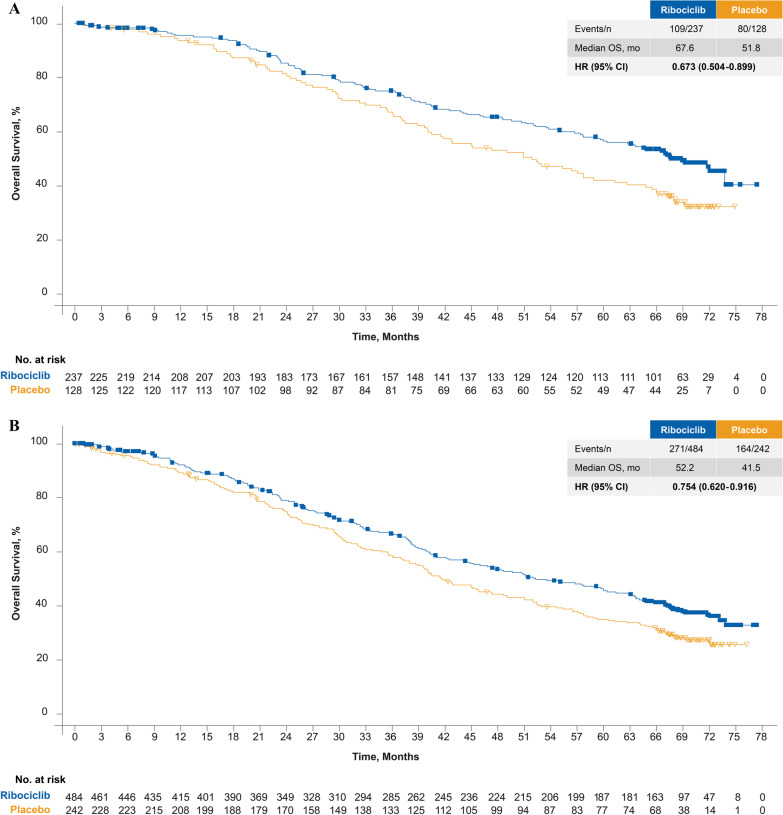
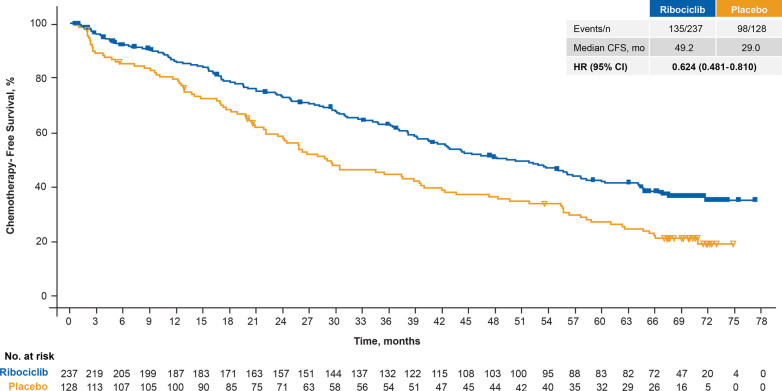
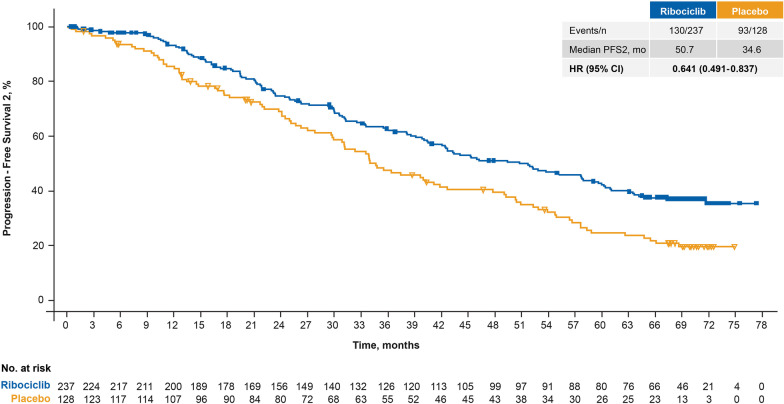
BACKGROUND: The phase III MONALEESA-3 trial included first- (1L) and second-line (2L) patients and demonstrated a significant overall survival (OS) benefit for ribociclib + fulvestrant in patients with hormone receptor-positive, human epidermal growth factor receptor 2-negative (HR+/HER2-) advanced breast cancer (ABC) in the final protocol-specified and exploratory (longer follow-up) OS analyses. At the time of these analyses, the full OS benefit of 1L ribociclib was not completely characterized because the median OS (mOS) was not reached. As CDK4/6 inhibitor (CDK4/6i) + endocrine therapy (ET) is now a preferred option for 1L HR+/HER2- ABC, we report an exploratory analysis (median follow-up, 70.8 months; 14.5 months longer than the prior analysis) to fully elucidate the OS benefit in the MONALEESA-3 1L population. METHODS: Postmenopausal patients with HR+/HER2- ABC were randomized 2:1 to 1L/2L fulvestrant + ribociclib or placebo. OS in 1L patients (de novo disease or relapse > 12 months from completion of [neo]adjuvant ET) was assessed by Cox proportional hazards model and Kaplan-Meier methods. Progression-free survival 2 (PFS2) and chemotherapy-free survival (CFS) were analyzed. MONALEESA-3 is registered with ClinicalTrials.gov (NCT02422615). RESULTS: At data cutoff (January 12, 2022; median follow-up time, 70.8 months), mOS was 67.6 versus 51.8 months with 1L ribociclib versus placebo (hazard ratio (HR) 0.67; 95% CI 0.50-0.90); 16.5% and 8.6% of ribociclib and placebo patients, respectively, were still receiving treatment. PFS2 (HR 0.64) and CFS (HR 0.62) favored ribociclib versus placebo. Among those who discontinued treatment, 16.7% and 35.0% on ribociclib or placebo, respectively, received a subsequent CDK4/6i. No new safety signals were observed. CONCLUSIONS: This analysis of MONALEESA-3 reports the longest mOS thus far (67.6 months) for 1L patients in a phase III ABC trial. These results in a 1L population show that the OS benefit of ribociclib was maintained through extended follow-up, further supporting its use in HR+/HER2- ABC.
Overview
CoChat Summary
## TL;DR
In the MONALEESA-3 exploratory follow-up analysis (median 70.8 months), first-line ribociclib plus fulvestrant prolonged overall survival versus fulvestrant alone in postmenopausal women with HR+/HER2− advanced breast cancer. The benefit was maintained despite substantial subsequent CDK4/6 inhibitor use after discontinuation.
## Key findings
- In the first-line subgroup (de novo or late relapse), median overall survival was 67.6 months with ribociclib plus fulvestrant versus 51.8 months with placebo plus fulvestrant (HR 0.67; 95% CI 0.50–0.90).
- The 5-year survival rate in the first-line population was 56.5% with ribociclib versus 42.1% with placebo.
- In the first-line subgroup, PFS2 was 50.7 months with ribociclib versus 34.6 months with placebo (HR 0.64; 95% CI 0.49–0.84), and CFS was 49.2 vs 29.0 months (HR 0.62; 95% CI 0.48–0.81).
- Among first-line patients who discontinued study treatment, 16.7% on ribociclib and 35.0% on placebo received a subsequent CDK4/6 inhibitor; after adjustment for this crossover/subsequent CDK4/6i use, the placebo-arm mOS was estimated at 50.4 months (HR 0.62; 95% CI 0.43–0.88).
## Methods
- Phase III MONALEESA-3 randomized postmenopausal patients with HR+/HER2− advanced breast cancer 2:1 to ribociclib plus fulvestrant or placebo plus fulvestrant; treatment was blinded and stratified by liver/lung metastases and prior endocrine therapy.
- This report is an exploratory extended follow-up analysis with data cutoff January 12, 2022 and median follow-up 70.8 months; the first-line subgroup included de novo disease or relapse >12 months after (neo)adjuvant endocrine therapy.
- Overall survival was analyzed with Kaplan–Meier and Cox proportional hazards models; first-line CFS, TTC, and PFS2 were also assessed, and a rank-preserving structural-failure time model was used as a sensitivity analysis for placebo crossover/subsequent CDK4/6i use.
## Limitations
- The paper states this was an exploratory analysis, so the extended follow-up results are not described as the protocol-specified final analysis.
- The text notes cross-trial comparisons should be interpreted with caution (stated in the discussion).
- Evident from the text: crossover/subsequent CDK4/6 inhibitor use after discontinuation complicates interpretation of the observed treatment effect, although the authors performed a sensitivity analysis to address it.
Model-written summary. Check it against the paper before relying on it.
Integrity signals
Registry
Cites
Statistics
Figures
Verification
Claims the paper makes
9 Valid · 0 Not valid · 2 Not checked · 25 Own results and interpretations
The cited sources support only part of this claim — read each source’s verdict below.
In the paper
“This is the third pivotal trial to demonstrate a significant improvement in OS with ribociclib in a first-line setting”
- Also stated in: § Conclusions · boosted
“This is the third phase III study of ribociclib demonstrating a significant OS advantage in first-line treatment of patients with HR+/HER2− ABC.”
§ Updated overall survival from the MONALEESA-3 trial in postmenopausal women with HR+/HER2− advanced breast cancer receiving first-line ribociclib plus fulvestrant > Discussion
What the sources say
- Supportedcites [14] Hortobagyi GN Stemmer SM Burris HA Overall survival with ribociclib plus letrozole in advanced breast cancer N Engl J Med 2022 386 10 942 950 10.1056/NEJMoa2114663 35263519 source
The introductory passage labeled ABSTRACT (p. 3) identifies two earlier ribociclib trials that included patients receiving first-line therapy and found a significant overall-survival benefit. The Conclusions (p. 2) report a significant overall-survival benefit in this trial, which tested ribociclib plus letrozole as first-line therapy. The earlier trials were not exclusively first-line trials, but the claim does not say they were. (LLM, conf=0.89)
- Partly supportedcites [16] Lu YS Im SA Colleoni M Updated overall survival of ribociclib plus endocrine therapy versus endocrine therapy alone in pre- and perimenopausal patients with HR+/HER2− advanced breast cancer in MONALEESA-7: a phase III randomized clinical trial Clin Cancer Res 2022 28 5 851 859 10.1158/1078-0432.CCR-21-3032 34965945 PMC9377723 sourceExperimental — accuracy not yet measured
The Introduction and Discussion report a significant overall-survival benefit with first-line ribociclib in MONALEESA-7. They do not establish that the trial described in the citing sentence was the third pivotal trial to show this benefit; the Discussion instead describes MONALEESA-7 as the first CDK4/6-inhibitor trial to demonstrate a statistically significant overall-survival benefit. Page numbers were not available in our copy. (LLM, conf=0.86)
boostedstates a cause- Asserted: passes — The authors put it forward as true.
- Checkable: passes — It can be checked against evidence.
- Load-bearing: passes — The paper’s conclusions depend on it.
- Based: passes — The paper gives a reason why it holds.
- Also stated in: § Conclusions · boosted
The cited sources support only part of this claim — read each source’s verdict below.
In the paper
“As CDK4/6 inhibitor (CDK4/6i) + endocrine therapy (ET) is now a preferred option for 1L HR+/HER2− ABC”
- Also stated in: § Introduction · plain
“CDK4/6i + ET is now considered a preferred first-line treatment option [2, 3].”
§ Updated overall survival from the MONALEESA-3 trial in postmenopausal women with HR+/HER2− advanced breast cancer receiving first-line ribociclib plus fulvestrant > Abstract > Background
What the sources say
- Not matchedcites [2] National Comprehensive Cancer Network: Clinical Practice Guidelines in Oncology: Breast Cancer (Version 2.2022).
Its entry has no title and year that we can search by.
- Supportedcites [3] Cardoso F Paluch-Shimon S Senkus E 5th ESO-ESMO international consensus guidelines for advanced breast cancer (ABC 5) Ann Oncol 2020 31 12 1623 1649 10.1016/j.annonc.2020.09.010 32979513 PMC7510449 source
In the discussion of ER-positive/HER2-negative advanced breast cancer (indexed under Methodology; page unavailable), the ABC panel says its preferred treatment sequence starts with a CDK4/6 inhibitor plus endocrine therapy. This directly supports the first-line claim. (LLM, conf=0.93)
plain- Asserted: passes — The authors put it forward as true.
- Checkable: passes — It can be checked against evidence.
- Load-bearing: passes — The paper’s conclusions depend on it.
- Based: passes — The paper gives a reason why it holds.
- Also stated in: § Introduction · plain
Every source the paper cites for this claim was checked and supports it.
In the paper
“These extended follow-up results clearly demonstrate the magnitude of survival benefit with ribociclib in the first-line setting, which was not fully revealed in the prior exploratory OS analysis of MONALEESA-3 for this subgroup [18].”
§ Updated overall survival from the MONALEESA-3 trial in postmenopausal women with HR+/HER2− advanced breast cancer receiving first-line ribociclib plus fulvestrant > Discussion
What the sources say
- Supportedcites [18] Slamon DJ Neven P Chia S Ribociclib plus fulvestrant for postmenopausal women with hormone receptor-positive, human epidermal growth factor receptor 2-negative advanced breast cancer in the phase III randomized MONALEESA-3 trial: updated overall survival Ann Oncol 2021 32 8 1015 1024 10.1016/j.annonc.2021.05.353 34102253 source
The first-line subgroup results (p. 5) show an overall-survival benefit with ribociclib after extended follow-up: HR 0.64, with estimated five-year survival of 54% versus 36% for placebo. The Discussion (p. 9) says MONALEESA-3 demonstrated a larger benefit over the extended-follow-up period, including in the first-line subgroup, supporting the comparison with the earlier analysis. (LLM, conf=0.90)
boostedstates a cause- Asserted: passes — The authors put it forward as true.
- Checkable: passes — It can be checked against evidence.
- Load-bearing: passes — The paper’s conclusions depend on it.
- Based: passes — The paper gives a reason why it holds.
- Supported
A result the paper reports from its own data — it cites no other source for it, so there is none to check. The quote shows it is in the paper.
In the paper
“TTC was also delayed in patients receiving ribociclib versus placebo (mOS, NR vs. 42.0 months [HR 0.57; 95% CI 0.42–0.79]).”
§ Updated overall survival from the MONALEESA-3 trial in postmenopausal women with HR+/HER2− advanced breast cancer receiving first-line ribociclib plus fulvestrant > Results > Subsequent therapy in patients in the first-line subgroup
plainstates a cause- Asserted: passes — The authors put it forward as true.
- Checkable: passes — It can be checked against evidence.
- Load-bearing: unclear — It is unclear whether the paper’s conclusions depend on it.
- Based: passes — The paper gives a reason why it holds.
A result the paper reports from its own data — it cites no other source for it, so there is none to check. The quote shows it is in the paper.
In the paper
“The most common grade 3/4 AE observed in the first-line patients (de novo or late relapse) was neutropenia (60.3% vs. 1.6% for ribociclib vs. placebo)”
§ Updated overall survival from the MONALEESA-3 trial in postmenopausal women with HR+/HER2− advanced breast cancer receiving first-line ribociclib plus fulvestrant > Results > Safety
plain- Asserted: passes — The authors put it forward as true.
- Checkable: passes — It can be checked against evidence.
- Load-bearing: unclear — It is unclear whether the paper’s conclusions depend on it.
- Based: passes — The paper gives a reason why it holds.
10 more claims
Create a free account to see all 36 claims and to verify the 1 reference still open.
- It may state two separate claims as one. 15
- The quote only partly states this claim. 1
- Probably not a substantial claim. 7
Citations
Cites
Palbociclib and letrozole in advanced breast cancer
Finn, R. S., Martin, M., Rugo, H. S., Jones, S., Im, S.-A., Gelmon, K., Harbeck, N., Lipatov, O. N., Walshe, J. M., Moulder, S., et al. (2016) · New England Journal of Medicine · doi:10.1056/nejmoa1607303 · Cited by 3,007 · cited 1×
“All three approved CDK4/6is (ribociclib, palbociclib, and abemaciclib) have demonstrated a significant progression-free survival (PFS) benefit compared with ET alone when used in the first-line setting [4–8].”
MethodSelf-citationRibociclib as first-line therapy for HR-positive, advanced breast cancer
Hortobagyi, G. N., Stemmer, S. M., Burris, H. A., Yap, Y.-S., Sonke, G. S., Paluch-Shimon, S., Campone, M., Blackwell, K. L., André, F., Winer, E. P., et al. (2016) · New England Journal of Medicine · doi:10.1056/nejmoa1609709 · Cited by 2,039
Self-citation3rd ESO–ESMO International Consensus Guidelines for Advanced Breast Cancer (ABC 3)
Cardoso, F., Costa, A., Senkus, E., Aapro, M., André, F., Barrios, C. H., Bergh, J., Bhattacharyya, G., Biganzoli, L., Cardoso, M. J., et al. (2017) · Annals of Oncology · doi:10.1093/annonc/mdw544 · Cited by 2,033
MONARCH 3: Abemaciclib As Initial Therapy for Advanced Breast Cancer
Goetz, M. P., Toi, M., Campone, M., Sohn, J., Paluch-Shimon, S., Huober, J., Park, I. H., Trédan, O., Chen, S.-C., Manso, L., et al. (2017) · Journal of Clinical Oncology · doi:10.1200/jco.2017.75.6155 · Cited by 1,744
5th ESO-ESMO international consensus guidelines for advanced breast cancer (ABC 5)
Cardoso, F., Paluch-Shimon, S., Senkus, E., Curigliano, G., Aapro, M. S., André, F., Barrios, C. H., Bergh, J., Bhattacharyya, G. S., Biganzoli, L., et al. (2020) · Annals of Oncology · doi:10.1016/j.annonc.2020.09.010 · Cited by 1,369 · cited 1×
“Accordingly, CDK4/6i + ET is now considered a preferred firstline treatment option [2, 3].”
BackgroundOverall Survival with Palbociclib and Fulvestrant in Advanced Breast Cancer
Turner, N. C., Slamon, D. J., Ro, J., Bondarenko, I., Im, S.-A., Masuda, N., Colleoni, M., DeMichele, A., Loi, S., Verma, S., et al. (2018) · New England Journal of Medicine · doi:10.1056/nejmoa1810527 · Cited by 1,276 · cited 2×
“In PALOMA-3, palbociclib + fulvestrant did not demonstrate a statistically significant improvement in OS versus fulvestrant alone (HR 0.81; 95% CI 0.64–1.03; P = 0.09) in the final prespecified analysis or in an extended follow-up exploratory analysis (HR 0.81; 95% CI 0.65–0.99) [11, 12].”
BackgroundResultInfluentialSelf-citationSlamon, D. J., Neven, P., Chia, S., Fasching, P. A., De Laurentiis, M., Im, S.-A., Petrakova, K., Bianchi, G. V., Esteva, F. J., Martín, M., et al. (2018) · Journal of Clinical Oncology · doi:10.1200/jco.2018.78.9909 · Cited by 1,121 · cited 7×
“Details of the MONALEESA-3 trial have been described previously [8, 17].”
BackgroundMethodResultInfluentialSelf-citationTripathy, D., Im, S.-A., Colleoni, M., Franke, F., Bardia, A., Harbeck, N., Hurvitz, S. A., Chow, L., Sohn, J., Lee, K. S., et al. (2018) · The Lancet Oncology · doi:10.1016/s1470-2045(18)30292-4 · Cited by 1,025
Self-citationJohnston, S. R. D., Harbeck, N., Hegg, R., Toi, M., Martin, M., Shao, Z. M., Zhang, Q. Y., Martinez Rodriguez, J. L., Campone, M., Hamilton, E., et al. (2020) · Journal of Clinical Oncology · doi:10.1200/jco.20.02514 · Cited by 1,022
Self-citationOverall survival with ribociclib plus endocrine therapy in breast cancer
Im, S.-A., Lu, Y.-S., Bardia, A., Harbeck, N., Colleoni, M., Franke, F., Chow, L., Sohn, J., Lee, K.-S., Campos-Gomez, S., et al. (2019) · New England Journal of Medicine · doi:10.1056/nejmoa1903765 · Cited by 1,001 · cited 1×
“…+ NSAI versus NSAI alone (mOS, not reached [NR] vs. 40.7 months [HR 0.70; 95% CI 0.50–0.98]) in pre/perimenopausal women; in addition, an exploratory analysis with extended follow-up reported an mOS of 58.7 versus 47.7 for ribociclib + NSAI versus NSAI alone (HR 0.798; 95% CI 0.62–1.04) [15, 16].”
InfluentialSelf-citation
Cited by
Targeting CDK4/6 in breast cancer
Shanabag, A., Armand, J., Son, E., & Yang, H. W. (2025) · Experimental & Molecular Medicine · doi:10.1038/s12276-025-01395-3 · Cited by 81
“Compared with endocrine monotherapy, the PALOMA-3, MONARCH-2 and MONALEESA-3 trials assessed CDK4/6 inhibitors in combination with endocrine therapy in endocrine therapy-resistant populations and demonstrated signi fi cant improvements in median PFS and objective response rates 10,12,59 .”
Rej, R. K., Roy, J., & Allu, S. R. (2024) · Cancers · doi:10.3390/cancers16030552 · Cited by 71
Ramani, A., Pasquini, G., Gerkau, N. J., Jadhav, V., Vinchure, O. S., Altinisik, N., Windoffer, H., Muller, S. M., Rothenaigner, I., Lin, S., et al. (2024) · Nature Communications · doi:10.1038/s41467-024-55226-6 · Cited by 61
“After four days, the neurosphere medium was switched to the brain organoid differentiation medium.”
Ferro, A., Campora, M., Caldara, A., Lisi, D. D., Lorenzi, M., Monteverdi, S., Mihai, R., Bisio, A., Dipasquale, M., Caffo, O., et al. (2024) · Journal of Clinical Medicine · doi:10.3390/jcm13123611 · Cited by 32
Wekking, D., Leoni, V. P., Lambertini, M., Dessì, M., Pretta, A., Cadoni, A., Atzori, L., Scartozzi, M., & Solinas, C. (2023) · Cytokine & Growth Factor Reviews · doi:10.1016/j.cytogfr.2023.10.001 · Cited by 28
CDK Inhibitors and FDA: Approved and Orphan
Cicenas, J., & Simkus, J. (2024) · Cancers · doi:10.3390/cancers16081555 · Cited by 24
Efficacy and Safety of CDK4/6 Inhibitors: A Focus on HR+/HER2− Early Breast Cancer
Klocker, E. V., Egle, D., Bartsch, R., Rinnerthaler, G., & Gnant, M. (2025) · Drugs · doi:10.1007/s40265-024-02144-y · Cited by 25
Giachetti, P. P. M. B., Morganti, S., Gandini, S., Giudici, F., Marra, A., Nicolò, E., Zattarin, E., Corti, C., Boldrini, L., Verrazzo, A., et al. (2025) · JAMA Network Open · doi:10.1001/jamanetworkopen.2024.61067 · Cited by 22
Self-citationBreast Cancer: Molecular Pathogenesis and Targeted Therapy
Samad, M. A., Ahmad, I., Khan, M. R., Suhail, M., Zughaibi, T. A., Al-Abbasi, F. A., Alhosaini, K. A., Khan, M. S., Kumer, A., & Tabrez, S. S. M. (2025) · MedComm · doi:10.1002/mco2.70404 · Cited by 34
Ferrari, P., Schiavone, M. L., Scatena, C., & Nicolini, A. (2025) · International Journal of Molecular Sciences · doi:10.3390/ijms26073438 · Cited by 18
Saha, T., & Lukong, K. E. (2025) · Frontiers in Oncology · doi:10.3389/fonc.2025.1513225 · Cited by 23
Ahn, H. K., Kim, J., Lee, K.-H., Kim, G. M., Kang, S. Y., Lee, K. S., Kim, J. H., Lee, K. E., Lee, M. H., Kim, H. J., et al. (2025) · The Lancet Oncology · doi:10.1016/s1470-2045(25)00006-3 · Cited by 22
Self-citationBreast Cancer: Molecular Pathogenesis, Targeted Therapy, Screening, and Prevention
Lei, H., Fu, J., Gu, W., Qiao, H., Guo, H., Chen, Z., Wang, S. M., & Chen, T. (2026) · MedComm · doi:10.1002/mco2.70560 · Cited by 24
Grammoustianou, Μ., Dimitrakopoulos, F.-I. D., & Koutras, A. K. (2024) · Cancers · doi:10.3390/cancers16101801 · Cited by 13
Luo, C., Yu, K., Luo, X., Lian, T., Liu, X., Wang, X., & Jin, Z. (2024) · BMC Cancer · doi:10.1186/s12885-024-12782-w · Cited by 12
“Furthermore, the analysis also confirmed that combined medication can increase the clinical benefit rate, with statistically significant differences observed [26, 32].”
BackgroundResultAstore, S., Oneda, E., & Zaniboni, A. (2024) · Critical Reviews in Oncology/Hematology · doi:10.1016/j.critrevonc.2024.104535 · Cited by 13
Turner, N. C., Mayer, E. L., Park, Y. H., Janni, W., Ma, C., Cristofanilli, M., Bianchini, G., Kalinsky, K. M., Iwata, H., Chia, S., et al. (2026) · The Lancet Oncology · doi:10.1016/s1470-2045(26)00287-1 · Cited by 23
Self-citationCui, J., Sun, J., Zhou, X., Li, Y., Zhao, J., & Shen, G. (2024) · iScience · doi:10.1016/j.isci.2024.111370 · Cited by 13
Drug treatment of breast cancer brain metastases: progress and challenges
Luo, J., Ren, A., Si, D., Yang, J., Xu, D., & Li, N. (2025) · Discover Oncology · doi:10.1007/s12672-025-02820-9 · Cited by 9
Renal adverse events associated with cyclin-dependent kinase 4/6 inhibitors
Izzedine, H., Wanchoo, R., Sharma, R., & Jhaveri, K. D. (2025) · Cancer Treatment Reviews · doi:10.1016/j.ctrv.2025.103060 · Cited by 12
Novel targeted therapies and immunological strategies for breast cancer treatment
Mussa, A., Hamid, M. A. M., Talib, M., Ehinnou, I. B., Bragoli, A. J., Hajissa, K., Mokhtar, N. F., Mohamud, R., Al-Hatamleh, M. A. I., & Hassan, R. (2026) · Biochemical Pharmacology · doi:10.1016/j.bcp.2026.117929 · Cited by 11
Tolunay, P. K., İnci, B. K., Usta, Ş., Topkaç, A., Karabuğa, B., Aydemir, E., Öner, İ., Hacan, B. A., Ateş, Ö., Karaçin, C., et al. (2024) · Current Oncology · doi:10.3390/curroncol31120548 · Cited by 8
Ravani, L. V., Bagheri, Z., Brufsky, A., Michelon, I. F., O'Regan, R. M., Lustberg, M. B., Han, H. S., Wang, M., & Wander, S. A. (2025) · Breast Cancer Research · doi:10.1186/s13058-025-02095-6 · Cited by 7
Cardoso, F., Jacot, W., Küemmel, S., Gupta, S., Cruz, F. M., Balaraman, R., Ferreira, A. F., Ahola, T. M., Станиславовна, Ч. Я., Zhukova, L., et al. (2025) · JAMA Oncology · doi:10.1001/jamaoncol.2025.3687 · Cited by 11
Gullick, G., Owen, C. N., Watkins, W. J., Cook, S., Helbrow, J., Reed, H., Squires, R., PARK, S. W., Weir, E., Aquilina, F., et al. (2024) · ESMO Real World Data and Digital Oncology · doi:10.1016/j.esmorw.2024.100064 · Cited by 12
Baird, R. D., Bermejo, B., Ruíz-Borrego, M., Vaklavas, C., Moreno, I., Oliveira, M., Armstrong, A. C., Turner, N. C., Incorvati, J., Twelves, C. J., et al. (2025) · Clinical Cancer Research · doi:10.1158/1078-0432.ccr-25-1198 · Cited by 8
Liu, Y., Ren, T., Xu, C., He, Q., Wang, X., & Tang, L. (2025) · BMC Cancer · doi:10.1186/s12885-025-14841-2 · Cited by 6
Zhang, J., Xu, X., Zhou, Y., Su, J., & Wang, J. (2025) · Frontiers in Oncology · doi:10.3389/fonc.2025.1472407 · Cited by 6
Wang, X., Li, C., Li, C., Qin, M., Wu, J., Qin, Y., Zou, Y., Zeng, H., Li, C., Huang, X., et al. (2025) · Frontiers in Pharmacology · doi:10.3389/fphar.2025.1600892 · Cited by 5
Qureshi, Z. A., Altaf, F., Safi, A., Khanzada, M., Ghazanfar, A., & Shah, S. (2024) · Annals of Medicine and Surgery · doi:10.1097/ms9.0000000000002730 · Cited by 4
Novel Estrogen Receptor – Targeted Therapies in Hormone-Receptor Positive Breast Cancer
Neill, N. E., Mauro, L. A., & Pennisi, A. (2025) · Current Treatment Options in Oncology · doi:10.1007/s11864-025-01310-y · Cited by 6
Ng, R. A., Barratt, S. A., Parisian, A. D., Palanisamy, G. S., Phukan, S., Sun, R., Robello, B., Peña, G., Sapugay, J. L., Yeghikyan, D., et al. (2025) · ACS Omega · doi:10.1021/acsomega.4c11023 · Cited by 5
Self-citationLi, Y., Chen, S., Ran, R., Zhao, S., Huang, J., & Yang, J. (2025) · Frontiers in Oncology · doi:10.3389/fonc.2025.1585574 · Cited by 6
Filis, P., FİLİS, N., Foukakis, T., & Matikas, A. (2026) · ESMO Open · doi:10.1016/j.esmoop.2026.106062 · Cited by 3
Valencia, G., Rioja, P., Chirito, M., Peralta, O., Sánchez, J., Rabanal, C., Mantilla, R., Morante, Z., Fuentes, H. A., Castaneda, C., et al. (2024) · Current Oncology · doi:10.3390/curroncol31120581 · Cited by 4
Advancements in Dalpiciclib for the Treatment of Breast Cancer Patients: A Review
Chen, Z., Xie, P., Chen, Q., & Ouyang, J. (2025) · Breast Cancer Targets and Therapy · doi:10.2147/bctt.s529794 · Cited by 3
Progress in Clinical Trials of CDK4/6 Inhibitors
Mizukami, T., & Montero, A. J. (2025) · Current Breast Cancer Reports · doi:10.1007/s12609-025-00606-0 · Cited by 2
Kiener, T., Li, K. H., Chiang, E., & Le, Q. A. (2025) · Journal of Managed Care & Specialty Pharmacy · doi:10.18553/jmcp.2025.31.12.1285 · Cited by 5
Liao, Y., Tan, Y., Li, Y., Ma, F., Wang, J., Zhang, P., Li, Q., Li, Q., Luo, Y., Lan, B., et al. (2024) · Heliyon · doi:10.1016/j.heliyon.2024.e38147 · Cited by 3
Almekinders, C. A., Lin, L., Beijnen, J. H., Sonke, G. S., Huitema, A. D. R., & Dezentjé, V. O. (2024) · Breast Cancer Research and Treatment · doi:10.1007/s10549-024-07542-0 · Cited by 5
Self-citationCeylan, F., Efil, S. C., Şener, D., Tenekeci, A. K., Bilgin, B., Yücel, Ş., Ceylan, E. G., Hızal, M., Şendur, M. A. N., Akıncı, M. B., et al. (2025) · Expert Review of Anticancer Therapy · doi:10.1080/14737140.2025.2490289 · Cited by 3
Yang, P., Zhang, H., Wu, M., Zhao, F., Wang, M., Zhao, J., & Zhao, Y. (2024) · European Journal of Clinical Pharmacology · doi:10.1007/s00228-024-03757-8 · Cited by 3
“Four CDK4/6 inhibitor drugs, dalpiciclib ( n = 2) [18, 26], ribociclib ( n = 4) [16, 19, 27, 28], palbociclib ( n = 5) [15, 29–32], and abe-maciclib ( n = 2) [17, 33], were included in the 13 studies (Table 1).”
CDK4/6 Inhibition in the Metastatic Setting: Where Are We Headed?
Sakach, E. A., Keskinkılıç, M., Wood, S. J., Canning, M. T., & Kalinsky, K. M. (2023) · Current Treatment Options in Oncology · doi:10.1007/s11864-023-01109-9 · Cited by 1
Kubeczko, M., Gabryś, D., Polakiewicz-Gilowska, A., Bobek‐Billewicz, B., & Jarząb, M. (2024) · Pharmaceuticals · doi:10.3390/ph17070927 · Cited by 1
Li, X., Song, Y., Lv, M., Wang, Y., Gao, X., Ma, T., Ma, T., Liu, C., Sun, X., Wang, H., et al. (2025) · Frontiers in Oncology · doi:10.3389/fonc.2025.1512496 · Cited by 2
Self-citationHuang, X. Y., Harada, S., Wei, S., Siegal, G. P., Anderson, S. A., Şahin, A. A., Khoury, K. E., & Yalnız, C. (2025) · Human Pathology · doi:10.1016/j.humpath.2025.105905 · Cited by 1
Chávez‐MacGregor, M., Gligorov, J., Mouta, J., Meerveld, M. V., Wolkensdorfer, Z., Attfield, G., Lewis, A., & Cardoso, F. (2025) · The Breast · doi:10.1016/j.breast.2025.104607 · Cited by 1
Cardiovascular risk in the aging cancer survivor population
Dent, S. F., Moore, H., & Guha, A. (2025) · JNCI Journal of the National Cancer Institute · doi:10.1093/jnci/djaf299 · Cited by 1
Dhungana, R., Prasai, P., Paudel, B., Ranabhat, K., Sapkota, S., & Shrestha, S. (2025) · Clinical Medicine Insights Oncology · doi:10.1177/11795549251402955 · Cited by 1
“17,19,20,23 The hazard ratio (HR) for OS was 0.76 (95% CI [0.68, 0.85]) favoring Ribociclib plus ET compared with ET alone ( P .001).”
InfluentialGraziosi, A., Pane, R., Tinazzo, E., Basso, M., Avantaggiato, M., Schianchi, A., Canella, M., Melis, M., Nani, A., Re, M. D., et al. (2025) · Systematic Reviews · doi:10.1186/s13643-025-03046-0 · Cited by 1
CDK4/6-targeted therapy: From clinical inhibitors to emerging strategies to overcome resistance
Sha, W., Feng, D., Yan, Z., Chen, Z., & Lu, Y. (2026) · Bioorganic & Medicinal Chemistry · doi:10.1016/j.bmc.2026.118736 · Cited by 2
Sharaf, B., Omari, Z., Alzoubi, Q., et al. (2026) · Cancers · doi:10.3390/cancers18172894 · Cited by 1
Real-world effectiveness of palbociclib in HR+/HER2- metastatic breast cancer: a literature review
Christiansen, E. A., & Kümler, I. (2024) · Future Science OA · doi:10.2144/fsoa-2023-0074 · Cited by 1
CDK4/6 inhibition in early and advanced hormone receptor-positive, HER2-negative breast cancer
Yarlagadda, S. R., Andrade, M. D. O., & Nanda, R. (2025) · Expert Review of Anticancer Therapy · doi:10.1080/14737140.2025.2498994 · Cited by 1
“Both MONALEESA 3 [8,11,42] and MONARCH 2 [10,13] have demonstrated mOS benefit with ribociclib and fulvestrant and abemaciclib and fulvestrant versus placebo plus fulvestrant, respectively.”
CYPD limits HR+ mammary carcinogenesis in mice
Buqué, A., Beltrán‐Visiedo, M., Sato, A., Galassi, C., Petroni, G., & Galluzzi, L. (2025) · Cell Death Discovery · doi:10.1038/s41420-025-02555-0 · Cited by 1
Ramani, A., Pasquini, G., Gerkau, N. J., Altinisk, N., Vinchure, O. S., Gabriel, E., Rothenaigner, I., Lin, S., Mariappan, A., Rathinam, D., et al. (2023) · SSRN Electronic Journal · doi:10.2139/ssrn.4627469 · Cited by 1
Ramani, A., Pasquini, G., Gerkau, N. J., Vinchure, O. S., Gabriel, E., Rothenaigner, I., Lin, S., Altinisk, N., Rathinam, D., Mirsaidi, A., et al. (2023) · bioRxiv (Cold Spring Harbor Laboratory) · doi:10.1101/2023.10.29.564523 · Cited by 1
Liao, Y., Tan, Y., Li, Y., et al. (2024) · SSRN Electronic Journal · doi:10.2139/ssrn.4891187
Management of Metastatic Breast Cancer (MBC): Tailoring of Systemic Therapy in HR Positive MBC
Bhatia, K. P., Fernandes, S., & Kumar, A. (2024) · Springer eBooks · doi:10.1007/978-981-97-7755-6_28
Research Progress on CDK4/6 Inhibitors Combined with Endocrine Therapy for Advanced Breast Cancer
Wu, Q., Xu, L., & Gan, L. (2024) · Journal of Contemporary Medical Practice · doi:10.53469/jcmp.2024.06(12).27
Arpino, G., Angelis, C. D., Gerratana, L., Lambertini, M., Igidbashian, S., Gramigna, R., & Guillaume, X. (2025) · BMC Cancer · doi:10.1186/s12885-025-14308-4
Tarantino, P., Sammons, S. L., Gadi, V. K., Pathak, P., Sopher, G. M., Delea, T. E., & Stellato, D. (2025) · Journal of Medical Economics · doi:10.1080/13696998.2025.2594951
“For both treatments, dosage adjustments to manage toxicities were assumed consistent with the protocols of MONALEESA-2 and MONARCH 3 5,7 .”
Avcı, T., Altunbaş, A. A., Şahbazlar, M., Ekinci, F., & Erdoğan, A. P. (2026) · Therapeutic Advances in Medical Oncology · doi:10.1177/17588359251411133 · Cited by 1
Analysis of Risk Factors for Abemaciclib-Induced Diarrhea
Takeuchi, K., & Murakami, A. (2026) · Iryo Yakugaku (Japanese Journal of Pharmaceutical Health Care and Sciences) · doi:10.5649/jjphcs.52.10 · Cited by 1
Park, E., Park, J. H., Lee, H. K., & Kwon, M. J. (2026) · Asia-Pacific Journal of Clinical Oncology · doi:10.1111/ajco.70082 · Cited by 1
Kubeczko, M., Polakiewicz-Gilowska, A., Swiderska, K., Mianowska-Malec, M., Leśniak, A., Łanoszka, B., Chomik, K., Grandys, B., Lisovska, N., Woźniak, G., et al. (2026) · BMC Cancer · doi:10.1186/s12885-026-15594-2
Deng, Y., Huang, W., Zeng, T., & Gao, Y. (2026) · BMC Cancer · doi:10.1186/s12885-026-15713-z
Cherradi, S., Roux, S., Bailleux, C., Devic, C., Debaigt, C., Guerda, K., Luciano, S., Dalle, M., & Duong, H. T. (2026) · Frontiers in Toxicology · doi:10.3389/ftox.2026.1740791
“Ribociclib (Kisqali ® ) is a targeted therapy drug that has shown significant overall survival benefit in advanced breast cancer estrogen-receptor positive (ER positive) and human epidermal growth factor receptor 2 (HER2 negative) patients (Neven et al., 2023).”
Rugo, H. S., Brufsky, A., Layman, R. M., Liu, X., Li, B., McRoy, L., Cohen, A. B., Estévez, M., Lynce, F. C., Cottu, P. H., et al. (2026) · The Breast · doi:10.1016/j.breast.2026.104780
Хатьков, И. Е., Andreyashkina, I. I., Дмитриевич, Т. И., Matveeva, O. N., & Reznikov, V. (2026) · Real-World Data & Evidence · doi:10.37489/2782-3784-myrwd-098
Liang, X., Malone, D. C., & Tan, C. J. (2026) · Journal of Medical Economics · doi:10.1080/13696998.2026.2656072
Fernández-Ferreira, R., Bautista‐Piña, V., Barragán‐Dessavre, M., Cruz-Morales, G., Montaño-Hernández, J., Salas-Pérez, A., Vicuña-González, R. M., Jimenez, R. A., Moreno-López, R., García-López, S.-M., et al. (2026) · Cureus · doi:10.7759/cureus.108234
Freitas, R., Barroso, T., Braga, S. A., Santos, C. C., Batista, M., Chaves, A. F., Cabral, S. C. M., Fortuna, A., Patel, V., Araújo, J., et al. (2026) · Cureus · doi:10.7759/cureus.109017
Dhanoa, R. K., Thapa, S., Kancharla, P., & Kurian, S. (2026) · Cancers · doi:10.3390/cancers18111714
CDK4/6 Inhibitor-Induced Senescence in Cancer: Mechanisms and Therapeutic Implications
Türker, S. E., Demaria, M., & Wang, B. (2026) · Cancers · doi:10.3390/cancers18142192 · Cited by 1
Upadhyay, S., Khan, S., Bhardwaj, M., & Hassan, M. I. (2026) · Biochimica et Biophysica Acta (BBA) - Molecular Basis of Disease · doi:10.1016/j.bbadis.2026.168364
Targeting Estrogen Receptor for Breast Cancer
Yiannakopoulou, E. (2026) · Current Issues in Molecular Biology · doi:10.3390/cimb48070715
“…cyclin-dependent kinase (CDK) 4/6 inhibitors such as palbociclib [88,89], and abemaciclib (MONARCH 2 trial) [13] as the second-line therapy and ribociclib (MONALEESA-3) [15,90] as the first-or second-line therapy in metastatic estrogen receptor positive breast cancer compared to fulvestrant alone.”
Economic value of ribociclib in early breast cancer in the United States
Brufsky, A., Tolaney, S. M., Gadi, V. K., Chai, X., Yang, F., Chen, W., Ma, W., Zhou, Z., Ganapathy, V., Patel, A., et al. (2026) · Journal of Managed Care & Specialty Pharmacy · doi:10.18553/jmcp.2026.32.8.911
Владимирович, С. А., & Кононенко, И. Б. (2026) · Journal of Modern Oncology · doi:10.26442/18151434.2026.2.203708
CDK4/6 inhibitors: Clinical status, patent review, and recent updates
Khan, M. A., Dhiman, R., Sharma, V., Sharma, C., & Dar, A. I. (2026) · Elsevier eBooks · doi:10.1016/b978-0-443-44611-5.00006-7
Market potential, postmarketing safety challenges, and treatment cost of CDK4/6 inhibitors
Jaiswal, S., Tripathi, S., Sethi, M., Sonone, P. R., Rana, R., Singh, Y., & Chourasia, M. K. (2026) · Elsevier eBooks · doi:10.1016/b978-0-443-44611-5.00003-1
O’Shaughnessy, J., Rehnquist, M. K., Sadetsky, N., Verret, W. J., Cinar, P., Sjekloca, N., Nguyen, L., Nanda, R., & Sharma, P. (2026) · Breast Cancer Research and Treatment · doi:10.1007/s10549-026-08075-4
Metadata
- Authors
- Neven, P., Fasching, P. A., Chia, S., Jerusalem, G., De Laurentiis, M., Im, S.-A., Petrakova, K., Bianchi, G. V., Martín, M., Nusch, A., Sonke, G. S., De la Cruz-Merino, L., Beck, J. T., Zarate, J. P., Wang, Y., Chakravartty, A., Wang, C., & Slamon, D. J.
- Affiliations
- Universitair Ziekenhuis Leuven (BE)
- Friedrich-Alexander-Universität Erlangen-Nürnberg (DE)
- BC Cancer Agency (CA)
- Seoul National University (KR)
- Fondazione IRCCS Istituto Nazionale dei Tumori (IT)
- Universidad Complutense de Madrid (ES)
- The Netherlands Cancer Institute (NL)
- Highlands Oncology Group (US)
- Novartis (Switzerland) (CH)
- University of California, Los Angeles (US)
- Corresponding author
- Neven, P.
- ORCID
- Venue
- Breast Cancer Research
- Published
- 2023-08-31
- Volume
- 25
- Issue
- 1
- Pages
- 103-103
- ISSN
- 1465-5411 (ISSN-L)
- 1465-542X
- PMC
- PMC10469877
- OpenAlex
- W4386329445
- Semantic Scholar
- 81e03adc2feccd25298e4ddc766d559cbb37a15d
- Cited by
- 83
- References
- 32
- Citations by year
- 2026: 28 · 2025: 32 · 2024: 19 · 2023: 4
- FWCI
- 15.22
- Type
- journal article
- Language
- en
- Open access
- gold
- doi.org
- Licence
- cc-by
- creativecommons.org/licenses/by/4.0 (tdm)
- creativecommons.org/licenses/by/4.0 (vor)
- Locations
- Breast Cancer Research (publishedVersion, cc-by)
- PubMed Central (publishedVersion, cc-by)
- PubMed (publishedVersion)
- Lirias (KU Leuven) (submittedVersion, other-oa)
- Open Repository and Bibliography (University of Liège) (submittedVersion, other-oa)
- Seoul National University Open Repository (Seoul National University) (submittedVersion, other-oa)
- DOAJ (DOAJ: Directory of Open Access Journals) (submittedVersion, cc-by-sa)
- Seoul National University Open Repository (Seoul National University) (submittedVersion)
- Funders
- Novartis Pharmaceuticals Corporation
- Topics
- Health Sciences › Medicine › Oncology › Advanced Breast Cancer Therapies
- Life Sciences › Biochemistry, Genetics and Molecular Biology › Cancer Research › Breast Cancer Treatment Studies
- Health Sciences › Medicine › Oncology › PARP inhibition in cancer therapy
- Keywords
- ribociclib, fulvestrant, HR+/HER2- advanced breast cancer, postmenopausal women, first-line therapy, CDK4/6 inhibitors, endocrine therapy, overall survival, progression-free survival, long-term follow-up, treatment discontinuation, treatment-related adverse events, drug safety and tolerability
- MeSH terms
- Fulvestrant, Aminopyridines, Breast Neoplasms, Female, Humans, Purines, Proportional Hazards Models, Postmenopause
About these checks
Registry, retraction, Cites and statistics results are computed, not judged, with one exception: a printed reference that no index lists is read once by a model before it counts as a citation error. Claims are extracted by a model and kept only when their quote appears verbatim in the text; each cited source is then checked, with a model’s help, for whether it says what the claim relies on. Those verdicts can be wrong — read the claim’s quote and the cited source before relying on one.
The claim verdicts this report counts are experimental: their accuracy is not yet measured.
A language model drew the claims from the paper on 2026-10-10, under version 3 of the claim definition (model deepseek-v4.1-flash, prompt extract-v3).
A second model labelled each claim on 2026-10-10 (model jev-1.13-20260917, definition revision gold-guideline-v0.2).
Cited sources are checked with a language model’s help (gpt-6-sol).
Statistics and arithmetic are recomputed, not judged.
Confidence bands are shown only for fields calibrated on our annotated test set. None is calibrated yet, so no band is shown.
What counts as a claim ›How we measure confidence ›How we check this ›
Are you an author, or do you see a problem with this page? Request a review
Data sources
Bibliographic data: Semantic Scholar, OpenAlex, Crossref.
Contains information from the Semantic Scholar Academic Graph Datasets, made available under the ODC Attribution License (ODC-BY 1.0).
Semantic Scholar’s data is described in: Kinney, R., et al. (2023). The Semantic Scholar Open Data Platform. arXiv:2301.10140.
