

Deletions of chromosomal regulatory boundaries are associated with congenital disease
Open accessThe DOI matches its Crossref record; 71 of the 71 references it cites were found in a registry or an index.
Abstract
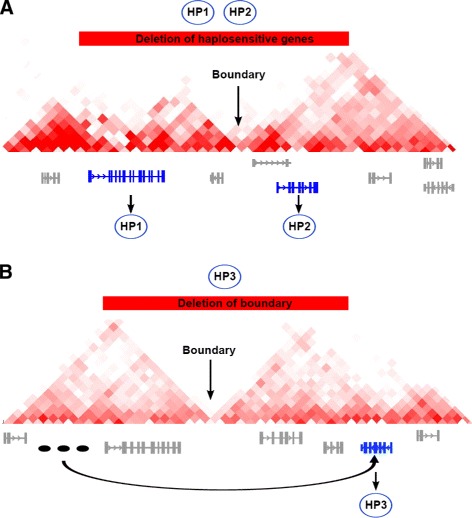
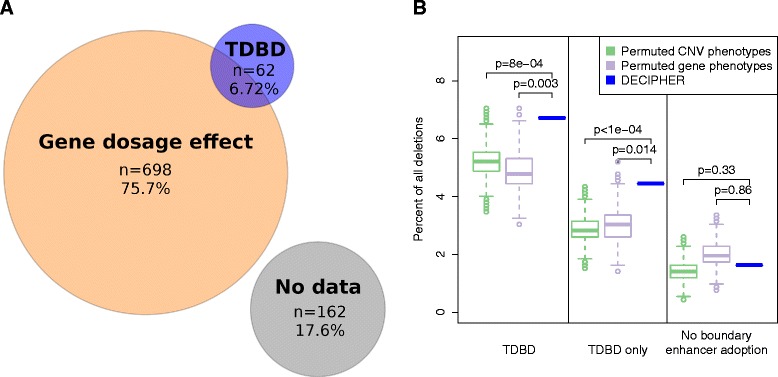
Background: Recent data from genome-wide chromosome conformation capture analysis indicate that the human genome is divided into conserved megabase-sized self-interacting regions called topological domains. These topological domains form the regulatory backbone of the genome and are separated by regulatory boundary elements or barriers. Copy-number variations can potentially alter the topological domain architecture by deleting or duplicating the barriers and thereby allowing enhancers from neighboring domains to ectopically activate genes causing misexpression and disease, a mutational mechanism that has recently been termed enhancer adoption. Results: We use the Human Phenotype Ontology database to relate the phenotypes of 922 deletion cases recorded in the DECIPHER database to monogenic diseases associated with genes in or adjacent to the deletions. We identify combinations of tissue-specific enhancers and genes adjacent to the deletion and associated with phenotypes in the corresponding tissue, whereby the phenotype matched that observed in the deletion. We compare this computationally with a gene-dosage pathomechanism that attempts to explain the deletion phenotype based on haploinsufficiency of genes located within the deletions. Up to 11.8% of the deletions could be best explained by enhancer adoption or a combination of enhancer adoption and gene-dosage effects. Conclusions: Our results suggest that enhancer adoption caused by deletions of regulatory boundaries may contribute to a substantial minority of copy-number variation phenotypes and should thus be taken into account in their medical interpretation.
Overview
The claims and statistics of this paper haven’t been checked yet.
Free: it reads the open-access text and checks the first 5 claims that cite a source we can check. Create a free account to check every claim.
Integrity signals
Registry
Cites
Statistics
Figures
Verification
Claims the paper makes
The claims and statistics of this paper haven’t been checked yet.
Free: it reads the open-access text and checks the first 5 claims that cite a source we can check. Create a free account to check every claim.
Claims other papers make about this one
Each is checked against this paper’s own text: does it say what the citing paper says it does?
The cited source says what the claim attributes to it.
In the citing paper
“Alterations in the topological structure of chromosomal bands have been associated with changes in gene expression and thus with phenotypes (292–294).”
From Epigenetic Modifications in Stress Response Genes Associated With Childhood Trauma (2019) · cites this paper as [294]
The cited source says what the claim attributes to it.
In the citing paper
“Therefore, the integrity of the domain structures is important for the proper regulation of genes8–12.”
From Disruption of chromatin folding domains by somatic genomic rearrangements in human cancer (2020) · cites this paper as [8]
Self-check
Percentages, sums and reported differences re-computed from the paper’s own numbers.
The self-check needs the paper’s full text.
Citations
Cites
BEDTools: a flexible suite of utilities for comparing genomic features
Quinlan, A. R., & Hall, I. M. (2010) · Bioinformatics · doi:10.1093/bioinformatics/btq033 · Cited by 27,437
An integrated encyclopedia of DNA elements in the human genome
The ENCODE Project Consortium (2012) · Nature · doi:10.1038/nature11247 · Cited by 18,072 · cited 1×
“The human genome is thought to harbor at least 400,000 enhancers [26], many of which exhibit tissue or developmental-stage specificity [27].”
BackgroundComprehensive Mapping of Long-Range Interactions Reveals Folding Principles of the Human Genome
Lieberman-Aiden, E., van Berkum, N. L., Williams, L., Imakaev, M., Ragoczy, T., Telling, A., Amit, I., Lajoie, B. R., Sabo, P. J., Dorschner, M. O., et al. (2009) · Science · doi:10.1126/science.1181369 · Cited by 8,898 · cited 1×
“Hi-C is a method that probes the threedimensional architecture of whole genomes by coupling proximity-based ligation with massively parallel, nextgeneration sequencing [11].”
MethodTopological domains in mammalian genomes identified by analysis of chromatin interactions
Dixon, J. R., Selvaraj, S., Yue, F., Kim, A., Li, Y., Shen, Y., Hu, M., Liu, J. S., & Ren, B. (2012) · Nature · doi:10.1038/nature11082 · Cited by 6,829 · cited 3×
“Recently, Hi-C was used to identify megabase-sized local chromatin interaction regions termed ‘topological domains’; the domains represent highly self-interacting regions bounded by narrow segments where the chromatin interactions appear to end abruptly [12].”
BackgroundMethodSystematic Localization of Common Disease-Associated Variation in Regulatory DNA
Maurano, M. T., Humbert, R., Rynes, E., Thurman, R. E., Haugen, E., Wang, H., Reynolds, A. P., Sandstrom, R., Qu, H., Brody, J., et al. (2012) · Science · doi:10.1126/science.1222794 · Cited by 3,716 · cited 1×
“While cell-type-specific DNase I hypersensitive sites (CTS-DHSs) have been identified by the Roadmap consortium [28], this previous method did not attempt to”
MethodDiagnosis of multiple cancer types by shrunken centroids of gene expression
Tibshirani, R., Hastie, T., Narasimhan, B., & Chu, G. (2002) · Proceedings of the National Academy of Sciences · doi:10.1073/pnas.082099299 · Cited by 2,930 · cited 1×
“where s0 is the mean of s over all windows to prevent division by small within-cell-type variance estimates [56].”
BackgroundMapping and analysis of chromatin state dynamics in nine human cell types
Ernst, J., Kheradpour, P., Mikkelsen, T. S., Shoresh, N., Ward, L. D., Epstein, C. B., Zhang, X., Wang, L., Issner, R., Coyne, M., et al. (2011) · Nature · doi:10.1038/nature09906 · Cited by 2,898
Resnik, P. (1999) · Journal of Artificial Intelligence Research · doi:10.1613/jair.514 · Cited by 2,047 · cited 1×
“For each HPO term t, the information content IC(t) is calculated as the negative logarithm of the frequency of annotations to the term [60]:”
MethodDECIPHER: Database of Chromosomal Imbalance and Phenotype in Humans Using Ensembl Resources
Firth, H. V., Richards, S. M., Bevan, A. P., Clayton, S., Corpas, M., Rajan, D., Vooren, S. V., Moreau, Y., Pettett, R. M., & Carter, N. P. (2009) · The American Journal of Human Genetics · doi:10.1016/j.ajhg.2009.03.010 · Cited by 1,990
The NIH Roadmap Epigenomics Mapping Consortium
Bernstein, B. E., Stamatoyannopoulos, J. A., Costello, J. F., Ren, B., Milosavljevic, A., Meissner, A., Kellis, M., Marra, M. A., Beaudet, A. L., Ecker, J. R., et al. (2010) · Nature Biotechnology · doi:10.1038/nbt1010-1045 · Cited by 1,892 · cited 1×
“DNase-seq reads from the NIH REMC [54] were counted in 200-bp windows covering the human genome.”
MethodThe UCSC Genome Browser database: update 2011
Fujita, P. A., Rhead, B., Zweig, A. S., Hinrichs, A. S., Karolchik, D., Cline, M. S., Goldman, M., Barber, G. P., Clawson, H., Coelho, A., et al. (2011) · Nucleic Acids Research · doi:10.1093/nar/gkq963 · Cited by 1,811
The UCSC Genome Browser Database: update 2006
Hinrichs, A. S. (2006) · Nucleic Acids Research · doi:10.1093/nar/gkj144 · Cited by 1,646
ChIP-seq accurately predicts tissue-specific activity of enhancers
Visel, A., Blow, M. J., Li, Z., Zhang, T., Akiyama, J. A., Holt, A., Plajzer-Frick, I., Shoukry, M., Wright, C., Chen, F., et al. (2009) · Nature · doi:10.1038/nature07730 · Cited by 1,639 · cited 1×
“The human genome is thought to harbor at least 400,000 enhancers [26], many of which exhibit tissue or developmental-stage specificity [27].”
BackgroundHigh-Resolution Mapping and Characterization of Open Chromatin across the Genome
Boyle, A. P., Davis, S., Shulha, H. P., Meltzer, P., Margulies, E. H., Weng, Z., Furey, T. S., & Crawford, G. E. (2008) · Cell · doi:10.1016/j.cell.2007.12.014 · Cited by 1,415
Looping and Interaction between Hypersensitive Sites in the Active β-globin Locus
Tolhuis, B., Palstra, R.-J., Splinter, E., Grosveld, F., & de Laat, W. (2002) · Molecular Cell · doi:10.1016/s1097-2765(02)00781-5 · Cited by 1,344 · cited 1×
“Long-range looping interactions over tens or even hundreds of kilobases together with three-dimensional nuclear organization, involving the positioning of genes, regulatory sequences and DNA binding proteins, help determine which genes are transcribed at any given time [9,10].”
BackgroundVISTA Enhancer Browser—a database of tissue-specific human enhancers
Visel, A., Minovitsky, S., Dubchak, I., & Pennacchio, L. A. (2007) · Nucleic Acids Research · doi:10.1093/nar/gkl822 · Cited by 1,080 · cited 1×
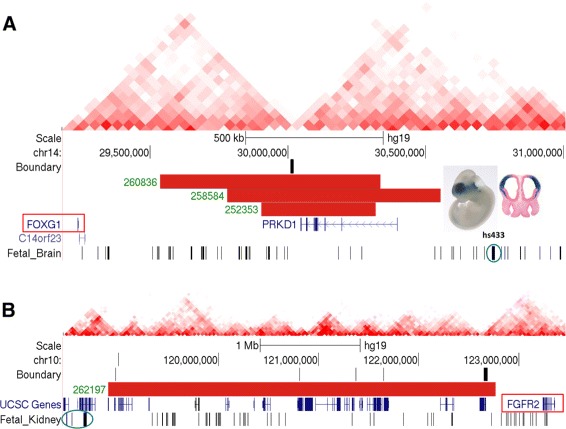
“Human element hs433 is shown as an image from the VISTA enhancer browser [37].”
Exploring the three-dimensional organization of genomes: Interpreting chromatin interaction data
Dekker, J., Marti-Renom, M. A., & Mirny, L. A. (2013) · Nature Reviews Genetics · doi:10.1038/nrg3454 · Cited by 1,068 · cited 1×
“Therefore, it remains unclear whether the observed topological domains are the cause of genomic interaction or a consequence [15], but the boundaries between the domains might function as regulatory barriers by inhibiting the interaction of enhancers/silencers in one domain with genes in the adjacent domain [16].”
BackgroundMeasuring reproducibility of high-throughput experiments
Li, Q., Brown, J. B., Huang, H., & Bickel, P. J. (2011) · The Annals of Applied Statistics · doi:10.1214/11-aoas466 · Cited by 1,009 · cited 1×
“Looking at reproducible ranks (correspondence at the top plots) helps to determine at what cutoff the ranks transition from consistent ones into lower ranks dominated by noise [57,58].”
BackgroundMeasuring reproducibility of high-throughput experiments
Li, Q., Brown, J. B., Huang, H., & Bickel, P. J. (2010) · UC Berkeley · Cited by 915
Multiple-laboratory comparison of microarray platforms
Irizarry, R. A., Warren, D., Spencer, F., Kim, I. F., Biswal, S., Frank, B. C., Gabrielson, E., Garcia, J. G. N., Geoghegan, J., Germino, G., et al. (2005) · Nature Methods · doi:10.1038/nmeth756 · Cited by 862 · cited 1×
“Looking at reproducible ranks (correspondence at the top plots) helps to determine at what cutoff the ranks transition from consistent ones into lower ranks dominated by noise [57,58].”
BackgroundPober, B. R. (2010) · New England Journal of Medicine · doi:10.1056/nejmra0903074 · Cited by 848
The Human Phenotype Ontology project: linking molecular biology and disease through phenotype data
Köhler, S., Doelken, S. C., Mungall, C. J., Bauer, S., Firth, H. V., Bailleul-Forestier, I., Black, G. C. M., Brown, D. L., Brudno, M., Campbell, J., et al. (2014) · Nucleic Acids Research · doi:10.1093/nar/gkt1026 · Cited by 799 · cited 1×
“For these calculations, the frequencies pt were calculated based on HPO project annotations for human diseases [65].”
MethodSelf-citationCohesin and CTCF differentially affect chromatin architecture and gene expression in human cells
Zuin, J., Dixon, J. R., van der Reijden, M. I. J. A., Ye, Z., Kolovos, P., Brouwer, R. W. W., van de Corput, M. P. C., van de Werken, H. J. G., Knoch, T. A., van IJcken, W. F. J., et al. (2014) · Proceedings of the National Academy of Sciences · doi:10.1073/pnas.1317788111 · Cited by 779 · cited 1×
“Recent knock-down experiments suggest that CTCF and cohesin contribute differentially to chromatin organization and gene regulation, but surprisingly depletion of both was not accompanied by disruption of topological domain organization [14].”
BackgroundThe UCSC Genome Browser database: 2014 update
Karolchik, D., Barber, G. P., Casper, J., Clawson, H., Cline, M. S., Diekhans, M., Dreszer, T. R., Fujita, P. A., Guruvadoo, L., Haeussler, M., et al. (2014) · Nucleic Acids Research · doi:10.1093/nar/gkt1168 · Cited by 670 · cited 1×
“It is also possible to visualize individual deletions in the UCSC Genome Browser [69].”
BackgroundCharacterising and Predicting Haploinsufficiency in the Human Genome
Huang, N., Lee, I., Marcotte, E. M., & Hurles, M. E. (2010) · PLoS Genetics · doi:10.1371/journal.pgen.1001154 · Cited by 647 · cited 6×
“These CNVs are listed in table S2.”
MethodInfluentialSelf-citationSong, L., & Crawford, G. E. (2010) · Cold Spring Harbor Protocols · doi:10.1101/pdb.prot5384 · Cited by 623
LIM-kinase1 Hemizygosity Implicated in Impaired Visuospatial Constructive Cognition
Frangiskakis, J. M., Ewart, A. K., Morris, C. A., Mervis, C. B., Bertrand, J., Robinson, B. F., Klein, B. P., Ensing, G. J., Everett, L. A., Green, E. D., et al. (1996) · Cell · doi:10.1016/s0092-8674(00)80077-x · Cited by 558
Luiselli, J., Happé, F., Hurst, H., Freeman, S., Goldstein, G., Mazefsky, C., Carter, A. S., Kaufman, A. S., Simmons, E. S., Eernisse, E. R., et al. (2013) · Encyclopedia of Autism Spectrum Disorders · doi:10.1007/978-1-4419-1698-3_101563 · Cited by 540
Topology of mammalian developmental enhancers and their regulatory landscapes
de Laat, W., & Duboule, D. (2013) · Nature · doi:10.1038/nature12753 · Cited by 521 · cited 1×
“Therefore, it remains unclear whether the observed topological domains are the cause of genomic interaction or a consequence [15], but the boundaries between the domains might function as regulatory barriers by inhibiting the interaction of enhancers/silencers in one domain with genes in the adjacent domain [16].”
BackgroundSong, L., Zhang, Z., Grasfeder, L. L., Boyle, A. P., Giresi, P. G., Lee, B.-K., Sheffield, N. C., Gräf, S., Huss, M., Keefe, D., et al. (2011) · Genome Research · doi:10.1101/gr.121541.111 · Cited by 505 · cited 2×
“DNase I hypersensitivity, as measured by DNase-seq, has been used previously to characterize human cell lines, revealing cell-type-specific promoters and enhancers [23-25].”
BackgroundMethodFacioscapulohumeral Dystrophy: Incomplete Suppression of a Retrotransposed Gene
Snider, L., Geng, L. N., Lemmers, R. J. L. F., Kyba, M., Ware, C. B., Nelson, A. M., Tawil, R., Filippova, G. N., van der Maarel, S. M., Tapscott, S. J., et al. (2010) · PLoS Genetics · doi:10.1371/journal.pgen.1001181 · Cited by 503 · cited 1×
“The resulting misexpression of DUX4 in skeletal muscle may be associated with apoptosis of muscle cells [43,44].”
BackgroundFOXG1 Is Responsible for the Congenital Variant of Rett Syndrome
Ariani, F., Hayek, G., Rondinella, D., Artuso, R., Mencarelli, M. A., Spanhol-Rosseto, A., Pollazzon, M., Buoni, S., Spiga, O., Ricciardi, S., et al. (2008) · The American Journal of Human Genetics · doi:10.1016/j.ajhg.2008.05.015 · Cited by 432 · cited 2×
“Mutations in FOXG1 itself cause a congenital variant of Rett syndrome [32,33].”
BackgroundThe elastin gene is disrupted by a translocation associated with supravalvular aortic stenosis
Curran, M. (1993) · Cell · doi:10.1016/0092-8674(93)90168-p · Cited by 424
Cabianca, D. S., Casa, V., Bodega, B., Xynos, A., Ginelli, E., Tanaka, Y., & Gabellini, D. (2012) · Cell · doi:10.1016/j.cell.2012.03.035 · Cited by 392 · cited 3×
“The reduction in D4Z4 copy number leads to reduced polycomb silencing and production of a chromatin-associated non-coding RNA that coordinates derepression of 4q35 genes including the transcription factor DUX4 [42].”
BackgroundInfluentialKortüm, F., Das, S., Flindt, M., Morris-Rosendahl, D. J., Stefanova, I., Goldstein, A., Horn, D., Klopocki, E., Kluger, G., Martin, P., et al. (2011) · Journal of Medical Genetics · doi:10.1136/jmg.2010.087528 · Cited by 239 · cited 1×
“Mutations in FOXG1 itself cause a congenital variant of Rett syndrome [32,33].”
BackgroundLanctôt, C., Lamolet, B., & Drouin, J. (1997) · Development · doi:10.1242/dev.124.14.2807 · Cited by 220
Xi, H., Shulha, H. P., Lin, J. M., Vales, T. R., Fu, Y., Bodine, D. M., McKay, R. D. G., Chenoweth, J. G., Tesar, P. J., Furey, T. S., et al. (2007) · PLoS Genetics · doi:10.1371/journal.pgen.0030136 · Cited by 216
Morris, C. A., Mervis, C. B., Hobart, H. H., Gregg, R. G., Bertrand, J., Ensing, G. J., Sommer, A., Moore, C. A., Hopkin, R. J., Spallone, P. A., et al. (2003) · American Journal of Medical Genetics Part A · doi:10.1002/ajmg.a.20496 · Cited by 184
Differential DNase I hypersensitivity reveals factor-dependent chromatin dynamics
He, H. H., Meyer, C. A., Chen, M. W., Jordan, V. C., Brown, M., & Liu, X. S. (2012) · Genome Research · doi:10.1101/gr.133280.111 · Cited by 177
Asymmetric Lower-Limb Malformations in Individuals with Homeobox PITX1 Gene Mutation
Gurnett, C. A., Alaee, F., Kruse, L. M., Desruisseau, D. M., Hecht, J. T., Wise, C. A., Bowcock, A. M., & Dobbs, M. B. (2008) · The American Journal of Human Genetics · doi:10.1016/j.ajhg.2008.10.004 · Cited by 161 · cited 1×
“Both a missense mutation in the highly conserved homeodomain of PITX1 as well as a 241-kb chromosome 5q31 microdeletion have been shown to result in clubfoot in humans [63,64], allowing PITX1 to be assigned to the top-level category of genes with phenotypic relevance for the skeleton.”
BackgroundHomeotic Arm-to-Leg Transformation Associated with Genomic Rearrangements at the PITX1 Locus
Spielmann, M., Brancati, F., Krawitz, P. M., Robinson, P. N., Ibrahim, D. M., Franke, M., Hecht, J., Lohan, S. B., Dathe, K., Nardone, A. M., et al. (2012) · The American Journal of Human Genetics · doi:10.1016/j.ajhg.2012.08.014 · Cited by 134 · cited 4×
“In contrast, the deletions we identified in two individuals with Liebenberg syndrome were only 134 kb and 107 kb in size [20].”
BackgroundMethodInfluentialSelf-citationChromosome organization: new facts, new models
Branco, M. R., & Pombo, A. (2007) · Trends in Cell Biology · doi:10.1016/j.tcb.2006.12.006 · Cited by 127 · cited 1×
“Long-range looping interactions over tens or even hundreds of kilobases together with three-dimensional nuclear organization, involving the positioning of genes, regulatory sequences and DNA binding proteins, help determine which genes are transcribed at any given time [9,10].”
BackgroundKlopocki, E., Ott, C.-E., Benatar, N., Ullmann, R., Mundlos, S., & Lehmann, K. (2008) · Journal of Medical Genetics · doi:10.1136/jmg.2007.055699 · Cited by 119 · cited 1×
“These changes in the regulatory environment of genes can result in misexpression and subsequent deregulation of signaling [6-8].”
BackgroundSelf-citationLi, H., Müller, M., Bahechar, I. A., Kyrchanova, O., Ohno, K., Georgiev, P. G., & Pirrotta, V. (2010) · Molecular and Cellular Biology · doi:10.1128/mcb.00849-10 · Cited by 118 · cited 1×
“It was also shown that insulators can organize and support very long-range functional interactions between regulatory elements at distances of up to several megabases [18,19].”
BackgroundClinical Significance of De Novo and Inherited Copy-Number Variation
Vulto-van Silfhout, A. T., Hehir-Kwa, J. Y., van Bon, B. W. M., Schuurs-Hoeijmakers, J. H. M., Meader, S., Hellebrekers, C. J. M., Thoonen, I. J. M., de Brouwer, A. P. M., Brunner, H. G., Webber, C., et al. (2013) · Human Mutation · doi:10.1002/humu.22442 · Cited by 115
Enhancer-adoption as a mechanism of human developmental disease
Lettice, L. A., Daniels, S., Sweeney, E., Venkataraman, S., Devenney, P. S., Gautier, P., Morrison, H., Fantes, J., Hill, R. E., & FitzPatrick, D. R. (2011) · Human Mutation · doi:10.1002/humu.21615 · Cited by 107 · cited 1×
“This mutation mechanism has also been described as enhancer adoption [36] and transgenic studies show that individual enhancer elements cloned in front of their ectopic target genes are able to recapitulate disease phenotypes in mice [20].”
BackgroundRole of fibroblast growth factor receptor signaling in kidney development
Bates, C. M. (2011) · American Journal of Physiology-Renal Physiology · doi:10.1152/ajprenal.00186.2011 · Cited by 107
Wnt/β-catenin signaling suppresses DUX4 expression and prevents apoptosis of FSHD muscle cells
Block, G. J., Narayanan, D., Amell, A. M., Petek, L. M., Davidson, K. C., Bird, T. D., Tawil, R., Moon, R. T., & Miller, D. G. (2013) · Human Molecular Genetics · doi:10.1093/hmg/ddt314 · Cited by 104 · cited 1×
“The resulting misexpression of DUX4 in skeletal muscle may be associated with apoptosis of muscle cells [43,44].”
BackgroundVerdin, H., D′haene, B., Beysen, D., Novikova, Y., Menten, B., Sante, T., Lapunzina, P. D., Nevado, J., Carvalho, C. M. B., Lupski, J. R., et al. (2013) · PLoS Genetics · doi:10.1371/journal.pgen.1003358 · Cited by 99
Pitx1 haploinsufficiency causes clubfoot in humans and a clubfoot-like phenotype in mice
Alvarado, D. M., McCall, K., Aferol, H., Silva, M. J., Garbow, J. R., Spees, W. M., Patel, T. K., Siegel, M. J., Dobbs, M. B., & Gurnett, C. A. (2011) · Human Molecular Genetics · doi:10.1093/hmg/ddr313 · Cited by 93 · cited 1×
“Both a missense mutation in the highly conserved homeodomain of PITX1 as well as a 241-kb chromosome 5q31 microdeletion have been shown to result in clubfoot in humans [63,64], allowing PITX1 to be assigned to the top-level category of genes with phenotypic relevance for the skeleton.”
BackgroundChromatin insulators and long‐distance interactions in Drosophila
Kyrchanova, O., & Georgiev, P. (2014) · FEBS Letters · doi:10.1016/j.febslet.2013.10.039 · Cited by 89 · cited 2×
“Recent studies in Drosophila suggest that insulator proteins are frequently found at topological domain boundaries (TDBs) [17].”
BackgroundAllou, L., Lambert, L., Amsallem, D., Bieth, É., Edery, P., Destrèe, A., Rivier, F., Amor, D. J., Thompson, E. M., Nicholl, J., et al. (2012) · European Journal of Human Genetics · doi:10.1038/ejhg.2012.127 · Cited by 85 · cited 1×
“As shown in Figure 5A, several brain enhancers, including the enhancer element hs433, are located close to the breakpoint and are now free to act on FOXG1 to cause misexpression in the brain of the affected individuals [35].”
BackgroundSwaminathan, G. J., Bragin, E., Chatzimichali, E. A., Corpas, M., Bevan, A. P., Wright, C. F., Carter, N. P., Hurles, M. E., & Firth, H. V. (2012) · Human Molecular Genetics · doi:10.1093/hmg/dds362 · Cited by 80 · cited 4×
“Here, we perform a systematic computational analysis of phenotypes of patients in the DECIPHER database [22].”
BackgroundMethodInfluentialSelf-citationPhenotype Ontologies and Cross-Species Analysis for Translational Research
Robinson, P. N., & Webber, C. (2014) · PLoS Genetics · doi:10.1371/journal.pgen.1004268 · Cited by 77 · cited 1×
“Since there are considerably more mouse and zebrafish mutants with monogenic defects than the number of currently characterized Mendelian diseases of humans [30], we asked whether cross-species analysis would increase the percentage of CNVs that could be classified with our algorithm.”
BackgroundSelf-citation14q12 microdeletions excluding FOXG1 give rise to a congenital variant Rett syndrome-like phenotype
Ellaway, C., Ho, G., Bettella, E., Knapman, A., Collins, F. A., Hackett, A., McKenzie, F., Darmanian, A., Peters, G. B., Fagan, K., et al. (2012) · European Journal of Human Genetics · doi:10.1038/ejhg.2012.208 · Cited by 77 · cited 1×
“A recent study [34] showed misregulation of FOXG1 in cell lines derived from patients with such deletions and proposed misregulation of FOXG1 rather than haploinsufficiency of the gene contained within the deletion (PRKD1) as the primary pathomechanism.”
BackgroundKöhler, S., Doelken, S. C., Ruef, B. J., Bauer, S., Washington, N., Westerfield, M., Gkoutos, G., Schofield, P., Smedley, D., Lewis, S. E., et al. (2014) · F1000Research · doi:10.12688/f1000research.2-30.v2 · Cited by 75 · cited 2×
“However, here, we used the cross-species ontology Uberpheno [31] to exploit mouse and zebrafish annotations for these genes.”
MethodSelf-citationAccurate Distinction of Pathogenic from Benign CNVs in Mental Retardation
Hehir‐Kwa, J. Y., Wieskamp, N., Webber, C., Pfundt, R., Brunner, H. G., Gilissen, C., Vries, B. B. A. D., Ponting, C. P., & Veltman, J. A. (2010) · PLoS Computational Biology · doi:10.1371/journal.pcbi.1000752 · Cited by 69 · cited 5×
“These CNVs are listed in table S2.”
InfluentialIntroduction to Bio-Ontologies
Robinson, P. N., & Bauer, S. (2011) · Chapman & Hall/CRC eBooks · doi:10.1201/b10967 · Cited by 68 · cited 1×
“Note that the annotation propagation rule applies here [61], i.”
BackgroundSelf-citationStructural variations, the regulatory landscape of the genome and their alteration in human disease
Spielmann, M., & Mundlos, S. (2013) · BioEssays · doi:10.1002/bies.201200178 · Cited by 64 · cited 3×
“These observations suggested that the pathomechanism of Liebenberg syndrome can best be explained by a topological domain boundary disruption (TDBD) between an enhancer with activity in the forelimb and a gene that is phenotypically related to the clinical manifestations observed in individuals with Liebenberg syndrom…”
BackgroundSelf-citationKravchenko, E., Savitskaya, E. E., Кравчук, О. И., Parshikov, A., Georgiev, P. G., & Savitsky, M. (2005) · Molecular and Cellular Biology · doi:10.1128/mcb.25.21.9283-9291.2005 · Cited by 58 · cited 1×
“It was also shown that insulators can organize and support very long-range functional interactions between regulatory elements at distances of up to several megabases [18,19].”
BackgroundKöhler, S., Doelken, S. C., Ruef, B. J., Bauer, S., Washington, N., Westerfield, M., Gkoutos, G., Schofield, P., Smedley, D., Lewis, S. E., et al. (2013) · F1000Research · doi:10.12688/f1000research.2-30.v1 · Cited by 56
Self-citationRole of fibroblast growth factor receptor signaling in kidney development
Bates, C. M. (2011) · Pediatric Nephrology · doi:10.1007/s00467-010-1747-z · Cited by 55 · cited 1×
“In humans, activating and loss-of-function mutations in FGFRs cause syndromes that are sometimes associated with urogenital anomalies [39], including lacrimo-auriculo-dento-digital syndrome and Antley–Bixler syndrome, both of which can be caused by FGFR2 mutations and in some cases are associated with severe congenita…”
BackgroundDoelken, S. C., Köhler, S., Mungall, C., Gkoutos, G. V., Ruef, B. J., Smith, C. L., Smedley, D. P., Bauer, S., Klopocki, E., Schofield, P. N., et al. (2013) · Disease Models & Mechanisms · doi:10.1242/dmm.010322 · Cited by 53 · cited 4×
“We note that in our previous work [29], we used a scoring scheme designed to identify all genes within the CNVs that were good candidates for contributing to the phenotypic spectrum of the CNV.”
MethodInfluentialSelf-citationIdentical cells with different 3D genomes; cause and consequences?
Krijger, P. H. L., & de Laat, W. L. (2013) · Current Opinion in Genetics & Development · doi:10.1016/j.gde.2012.12.010 · Cited by 49 · cited 1×
“Topological domains were suggested to represent chromosomal units that serve to spatially accommodate enhancer–promoter interactions and control gene expression levels across cell populations [13].”
BackgroundShaikh, T. H., Haldeman‐Englert, C. R., Geiger, E. A., Ponting, C. P., & Webber, C. (2010) · Human Molecular Genetics · doi:10.1093/hmg/ddq527 · Cited by 27 · cited 5×
“These CNVs are listed in table S2.”
InfluentialNovel cystogenic role of basic fibroblast growth factor in developing rodent kidneys
Li, Z., Jerebtsova, M., Liu, X., Tang, P., & Ray, P. E. (2006) · American Journal of Physiology-Renal Physiology · doi:10.1152/ajprenal.00382.2005 · Cited by 24 · cited 1×
“Many fibroblast growth factors (FGF) and all of their receptors (FGFR) are expressed in the developing kidney, and overexpression of basic fibroblast growth factor in developing rodent kidneys can induce the formation of renal cysts in vivo [38].”
BackgroundMicroduplications upstream of MSX2 are associated with a phenocopy of cleidocranial dysplasia
Ott, C., Hein, H., Lohan, S. B., Hoogeboom, J. A. M., Foulds, N. C., Grünhagen, J., Stricker, S., Villavicencio‐Lorini, P., Klopocki, E., & Mundlos, S. (2012) · Journal of Medical Genetics · doi:10.1136/jmedgenet-2012-100825 · Cited by 23 · cited 1×
“These changes in the regulatory environment of genes can result in misexpression and subsequent deregulation of signaling [6-8].”
BackgroundSelf-citationLacrimo‐auriculo‐dento‐digital (LADD) syndrome with renal and foot anomalies
Roodhooft, A. M., Brussaard, C. C., Elst, E. F., & Acker, K. J. V. (1990) · Clinical Genetics · doi:10.1111/j.1399-0004.1990.tb03574.x · Cited by 20 · cited 1×
“In humans, activating and loss-of-function mutations in FGFRs cause syndromes that are sometimes associated with urogenital anomalies [39], including lacrimo-auriculo-dento-digital syndrome and Antley–Bixler syndrome, both of which can be caused by FGFR2 mutations and in some cases are associated with severe congenita…”
BackgroundBoulding, H., & Webber, C. (2012) · Human Mutation · doi:10.1002/humu.22069 · Cited by 20 · cited 5×
“These CNVs are listed in table S2.”
InfluentialThe Antley-Bixler syndrome: Report of two familial cases with severe renal and anal anomalies
Leheup, B., Masutti, J.-P., Droullé, P., & Tisserand, J. (1995) · European Journal of Pediatrics · doi:10.1007/bf01991916 · Cited by 19 · cited 1×
“In humans, activating and loss-of-function mutations in FGFRs cause syndromes that are sometimes associated with urogenital anomalies [39], including lacrimo-auriculo-dento-digital syndrome and Antley–Bixler syndrome, both of which can be caused by FGFR2 mutations and in some cases are associated with severe congenita…”
BackgroundInterpretation of Genomic Copy Number Variants Using DECIPHER
Corpas, M., Bragin, E., Clayton, S., Bevan, A. P., & Firth, H. V. (2012) · Current Protocols in Human Genetics · doi:10.1002/0471142905.hg0814s72 · Cited by 16 · cited 1×
“However, we speculate that there may be a bias to submit cases with large CNVs to databases such as DECIPHER, because previous paradigms of CNV interpretation focused on a potential phenotypic relevance of genes located within the CNV itself, not on adjacent genes [49].”
Background
Cited by
Disruptions of Topological Chromatin Domains Cause Pathogenic Rewiring of Gene-Enhancer Interactions
Lupiáñez, D. G., Kraft, K., Heinrich, V., Krawitz, P., Brancati, F., Klopocki, E., Horn, D., Kayserili, H., Opitz, J. M., Laxova, R., et al. (2015) · Cell · doi:10.1016/j.cell.2015.04.004 · Cited by 2,132
“Our results reinforce the notion that the pathogenicity of a substantial proportion of human disease-associated deletions results from ectopic enhancer-promoter interaction causing gene misexpression due to the elimination of annotated boundaries (Ibn-Salem et al., 2014).”
ResultSelf-citationStructural variation in the 3D genome
Spielmann, M., Lupiáñez, D. G., & Mundlos, S. (2018) · Nature Reviews Genetics · doi:10.1038/s41576-018-0007-0 · Cited by 726
Self-citationThe role of 3D genome organization in development and cell differentiation
Zheng, H., & Xie, W. (2019) · Nature Reviews Molecular Cell Biology · doi:10.1038/s41580-019-0132-4 · Cited by 719
Breaking TADs: How Alterations of Chromatin Domains Result in Disease
Lupiáñez, D. G., Spielmann, M., & Mundlos, S. (2016) · Trends in Genetics · doi:10.1016/j.tig.2016.01.003 · Cited by 439
“So far the only study to investigate the role of deletions involving TAD boundaries in congenital disease on a larger scale used a bioinformatic approach [73].”
Self-citationThe Role of Chromosome Domains in Shaping the Functional Genome
Sexton, T., & Cavalli, G. (2015) · Cell · doi:10.1016/j.cell.2015.02.040 · Cited by 405
“Although it has yet to be demonstrated experimentally, disease phenotype association studies have also suggested that around one tenth of human pathologies caused by genomic deletions could involve perturbed topological domain function (Ibn-Salem et al., 2014).”
Metadata
- Authors
- Ibn-Salem, J., Köhler, S., Love, M. I., Chung, H.-R., Huang, N., Hurles, M. E., Haendel, M., Washington, N. L., Smedley, D., Mungall, C. J., Lewis, S. E., Ott, C.-E., Bauer, S., Schofield, P. N., Mundlos, S., Spielmann, M., & Robinson, P. N.
- Affiliations
- Max Planck Society (DE)
- Charité – Universitätsmedizin Berlin (DE)
- Max Planck Institute for Molecular Genetics (DE)
- Wellcome Sanger Institute (GB)
- Oregon Health & Science University (US)
- Lawrence Berkeley National Laboratory (US)
- University of Cambridge (GB)
- Berlin-Brandenburger Centrum für Regenerative Therapien (DE)
- Corresponding author
- Spielmann, Malte
- Robinson, Peter N
- ORCID
- Venue
- Genome Biology
- Published
- 2014-09-04
- Volume
- 15
- Issue
- 9
- Pages
- 423-423
- ISSN
- 1465-6906 (ISSN-L)
- 1474-760X
- PMC
- PMC4180961
- OpenAlex
- W2169500338
- Cited by
- 143
- References
- 71
- Citations by year
- 2026: 5 · 2025: 10 · 2024: 5 · 2023: 7 · 2022: 8 · 2021: 13 · 2020: 16 · 2019: 16 · 2018: 14 · 2017: 17 · 2016: 18 · 2015: 12 · 2014: 1
- FWCI
- 10.48
- Type
- journal article
- Language
- en
- Open access
- gold
- doi.org
- Licence
- cc-by
- creativecommons.org/licenses/by/4.0 (tdm)
- creativecommons.org/licenses/by/4.0 (vor)
- Locations
- Genome biology (publishedVersion, cc-by)
- PubMed Central (publishedVersion, cc-by)
- PubMed (publishedVersion)
- OSTI OAI (U.S. Department of Energy Office of Scientific and Technical Information) (submittedVersion)
- MPG.PuRe (Max Planck Society) (submittedVersion, cc-by)
- Funders
- Max-Planck-Förderstiftung
- European Commission (602300)
- Bundesministerium für Bildung und Forschung (0313911)
- Berlin-Brandenburg School for Regenerative Therapies
- National Institutes of Health (R24OD011883)
- NIH Office of the Director (5R24 OD011883)
- National Cancer Institute (T32CA009337)
- Topics
- Life Sciences › Biochemistry, Genetics and Molecular Biology › Genetics › Genomic variations and chromosomal abnormalities
- Life Sciences › Biochemistry, Genetics and Molecular Biology › Molecular Biology › Genomics and Chromatin Dynamics
- Life Sciences › Biochemistry, Genetics and Molecular Biology › Genetics › Genomics and Rare Diseases
- Keywords
- regulatory boundaries, copy number variation, topological domains, chromatin looping, gene dosage, haploinsufficiency, congenital diseases, phenotype prediction, tissue-specific enhancers, Human Phenotype Ontology, DECIPHER, chromosomal deletion
- MeSH terms
- Chromosomes, Human, Humans, Models, Genetic, Phenotype, Genome, Human, Sequence Deletion, Gene Dosage, Genomics, Genetic Diseases, Inborn, Databases, Genetic, DNA Copy Number Variations, Haploinsufficiency, Molecular Sequence Annotation, Gene Ontology
About these checks
Registry, retraction, Cites and statistics results are computed, not judged, with one exception: a printed reference that no index lists is read once by a model before it counts as a citation error. Claims are extracted by a model and kept only when their quote appears verbatim in the text; each cited source is then checked, with a model’s help, for whether it says what the claim relies on. Those verdicts can be wrong — read the claim’s quote and the cited source before relying on one.
Statistics and arithmetic are recomputed, not judged.
Confidence bands are shown only for fields calibrated on our annotated test set. None is calibrated yet, so no band is shown.
What counts as a claim ›How we measure confidence ›How we check this ›
Are you an author, or do you see a problem with this page? Request a review
Data sources
Bibliographic data: Semantic Scholar, OpenAlex, Crossref.
Contains information from the Semantic Scholar Academic Graph Datasets, made available under the ODC Attribution License (ODC-BY 1.0).
Semantic Scholar’s data is described in: Kinney, R., et al. (2023). The Semantic Scholar Open Data Platform. arXiv:2301.10140.
