

Deletions of chromosomal regulatory boundaries are associated with congenital disease
Open accessThe DOI matches its Crossref record; 71 of the 71 references it cites were found in a registry or an index.
Abstract
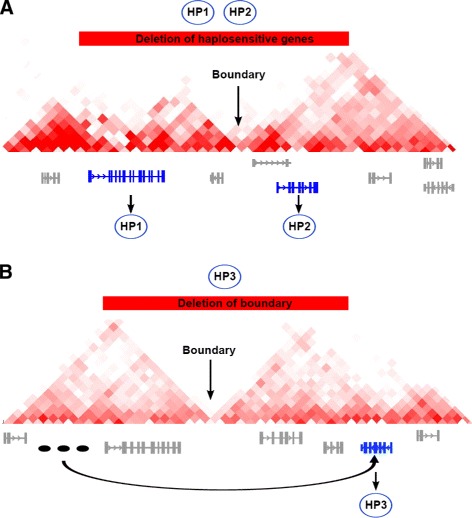
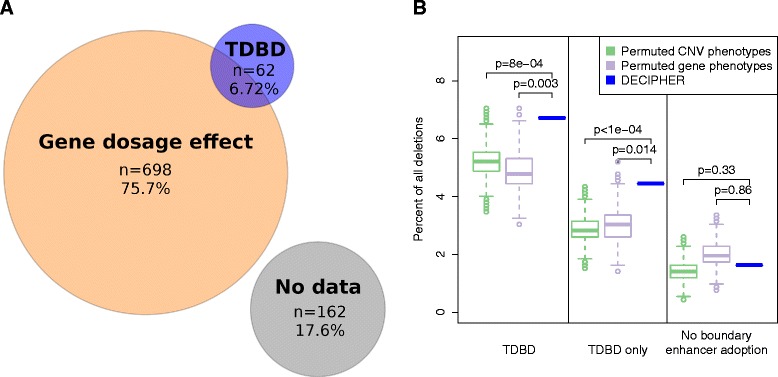
Background: Recent data from genome-wide chromosome conformation capture analysis indicate that the human genome is divided into conserved megabase-sized self-interacting regions called topological domains. These topological domains form the regulatory backbone of the genome and are separated by regulatory boundary elements or barriers. Copy-number variations can potentially alter the topological domain architecture by deleting or duplicating the barriers and thereby allowing enhancers from neighboring domains to ectopically activate genes causing misexpression and disease, a mutational mechanism that has recently been termed enhancer adoption. Results: We use the Human Phenotype Ontology database to relate the phenotypes of 922 deletion cases recorded in the DECIPHER database to monogenic diseases associated with genes in or adjacent to the deletions. We identify combinations of tissue-specific enhancers and genes adjacent to the deletion and associated with phenotypes in the corresponding tissue, whereby the phenotype matched that observed in the deletion. We compare this computationally with a gene-dosage pathomechanism that attempts to explain the deletion phenotype based on haploinsufficiency of genes located within the deletions. Up to 11.8% of the deletions could be best explained by enhancer adoption or a combination of enhancer adoption and gene-dosage effects. Conclusions: Our results suggest that enhancer adoption caused by deletions of regulatory boundaries may contribute to a substantial minority of copy-number variation phenotypes and should thus be taken into account in their medical interpretation.
Overview
The claims and statistics of this paper haven’t been checked yet.
Free: it reads the open-access text and checks the first 5 claims that cite a source we can check. Create a free account to check every claim.
Integrity signals
Registry
Cites
Statistics
Figures
Verification
Claims the paper makes
The claims and statistics of this paper haven’t been checked yet.
Free: it reads the open-access text and checks the first 5 claims that cite a source we can check. Create a free account to check every claim.
Claims other papers make about this one
Each is checked against this paper’s own text: does it say what the citing paper says it does?
The cited source says what the claim attributes to it.
In the citing paper
“Alterations in the topological structure of chromosomal bands have been associated with changes in gene expression and thus with phenotypes (292–294).”
From Epigenetic Modifications in Stress Response Genes Associated With Childhood Trauma (2019) · cites this paper as [294]
The cited source says what the claim attributes to it.
In the citing paper
“Therefore, the integrity of the domain structures is important for the proper regulation of genes8–12.”
From Disruption of chromatin folding domains by somatic genomic rearrangements in human cancer (2020) · cites this paper as [8]
Self-check
Percentages, sums and reported differences re-computed from the paper’s own numbers.
The self-check needs the paper’s full text.
Citations
Cites
BEDTools: a flexible suite of utilities for comparing genomic features
Quinlan, A. R., & Hall, I. M. (2010) · Bioinformatics · doi:10.1093/bioinformatics/btq033 · Cited by 27,437
An integrated encyclopedia of DNA elements in the human genome
The ENCODE Project Consortium (2012) · Nature · doi:10.1038/nature11247 · Cited by 18,072 · cited 1×
“The human genome is thought to harbor at least 400,000 enhancers [26], many of which exhibit tissue or developmental-stage specificity [27].”
BackgroundComprehensive Mapping of Long-Range Interactions Reveals Folding Principles of the Human Genome
Lieberman-Aiden, E., van Berkum, N. L., Williams, L., Imakaev, M., Ragoczy, T., Telling, A., Amit, I., Lajoie, B. R., Sabo, P. J., Dorschner, M. O., et al. (2009) · Science · doi:10.1126/science.1181369 · Cited by 8,898 · cited 1×
“Hi-C is a method that probes the threedimensional architecture of whole genomes by coupling proximity-based ligation with massively parallel, nextgeneration sequencing [11].”
MethodTopological domains in mammalian genomes identified by analysis of chromatin interactions
Dixon, J. R., Selvaraj, S., Yue, F., Kim, A., Li, Y., Shen, Y., Hu, M., Liu, J. S., & Ren, B. (2012) · Nature · doi:10.1038/nature11082 · Cited by 6,829 · cited 3×
“Recently, Hi-C was used to identify megabase-sized local chromatin interaction regions termed ‘topological domains’; the domains represent highly self-interacting regions bounded by narrow segments where the chromatin interactions appear to end abruptly [12].”
BackgroundMethodSystematic Localization of Common Disease-Associated Variation in Regulatory DNA
Maurano, M. T., Humbert, R., Rynes, E., Thurman, R. E., Haugen, E., Wang, H., Reynolds, A. P., Sandstrom, R., Qu, H., Brody, J., et al. (2012) · Science · doi:10.1126/science.1222794 · Cited by 3,716 · cited 1×
“While cell-type-specific DNase I hypersensitive sites (CTS-DHSs) have been identified by the Roadmap consortium [28], this previous method did not attempt to”
MethodDiagnosis of multiple cancer types by shrunken centroids of gene expression
Tibshirani, R., Hastie, T., Narasimhan, B., & Chu, G. (2002) · Proceedings of the National Academy of Sciences · doi:10.1073/pnas.082099299 · Cited by 2,930 · cited 1×
“where s0 is the mean of s over all windows to prevent division by small within-cell-type variance estimates [56].”
BackgroundMapping and analysis of chromatin state dynamics in nine human cell types
Ernst, J., Kheradpour, P., Mikkelsen, T. S., Shoresh, N., Ward, L. D., Epstein, C. B., Zhang, X., Wang, L., Issner, R., Coyne, M., et al. (2011) · Nature · doi:10.1038/nature09906 · Cited by 2,898
Resnik, P. (1999) · Journal of Artificial Intelligence Research · doi:10.1613/jair.514 · Cited by 2,047 · cited 1×
“For each HPO term t, the information content IC(t) is calculated as the negative logarithm of the frequency of annotations to the term [60]:”
MethodDECIPHER: Database of Chromosomal Imbalance and Phenotype in Humans Using Ensembl Resources
Firth, H. V., Richards, S. M., Bevan, A. P., Clayton, S., Corpas, M., Rajan, D., Vooren, S. V., Moreau, Y., Pettett, R. M., & Carter, N. P. (2009) · The American Journal of Human Genetics · doi:10.1016/j.ajhg.2009.03.010 · Cited by 1,990
The NIH Roadmap Epigenomics Mapping Consortium
Bernstein, B. E., Stamatoyannopoulos, J. A., Costello, J. F., Ren, B., Milosavljevic, A., Meissner, A., Kellis, M., Marra, M. A., Beaudet, A. L., Ecker, J. R., et al. (2010) · Nature Biotechnology · doi:10.1038/nbt1010-1045 · Cited by 1,892 · cited 1×
“DNase-seq reads from the NIH REMC [54] were counted in 200-bp windows covering the human genome.”
Method
Cited by
Disruptions of Topological Chromatin Domains Cause Pathogenic Rewiring of Gene-Enhancer Interactions
Lupiáñez, D. G., Kraft, K., Heinrich, V., Krawitz, P., Brancati, F., Klopocki, E., Horn, D., Kayserili, H., Opitz, J. M., Laxova, R., et al. (2015) · Cell · doi:10.1016/j.cell.2015.04.004 · Cited by 2,132
“Our results reinforce the notion that the pathogenicity of a substantial proportion of human disease-associated deletions results from ectopic enhancer-promoter interaction causing gene misexpression due to the elimination of annotated boundaries (Ibn-Salem et al., 2014).”
ResultSelf-citationStructural variation in the 3D genome
Spielmann, M., Lupiáñez, D. G., & Mundlos, S. (2018) · Nature Reviews Genetics · doi:10.1038/s41576-018-0007-0 · Cited by 726
Self-citationThe role of 3D genome organization in development and cell differentiation
Zheng, H., & Xie, W. (2019) · Nature Reviews Molecular Cell Biology · doi:10.1038/s41580-019-0132-4 · Cited by 719
Breaking TADs: How Alterations of Chromatin Domains Result in Disease
Lupiáñez, D. G., Spielmann, M., & Mundlos, S. (2016) · Trends in Genetics · doi:10.1016/j.tig.2016.01.003 · Cited by 439
“So far the only study to investigate the role of deletions involving TAD boundaries in congenital disease on a larger scale used a bioinformatic approach [73].”
Self-citationThe Role of Chromosome Domains in Shaping the Functional Genome
Sexton, T., & Cavalli, G. (2015) · Cell · doi:10.1016/j.cell.2015.02.040 · Cited by 405
“Although it has yet to be demonstrated experimentally, disease phenotype association studies have also suggested that around one tenth of human pathologies caused by genomic deletions could involve perturbed topological domain function (Ibn-Salem et al., 2014).”
Zhang, Y., Li, T., Preissl, S., Amaral, M. L., Grinstein, J. D., Farah, E. N., Destici, E., Qiu, Y., Hu, R., Lee, A. Y., et al. (2019) · Nature Genetics · doi:10.1038/s41588-019-0479-7 · Cited by 376
The Three-Dimensional Organization of Mammalian Genomes
Yu, M., & Ren, B. (2017) · Annual Review of Cell and Developmental Biology · doi:10.1146/annurev-cellbio-100616-060531 · Cited by 376
“From this analysis, disruption of TAD boundary and subsequent enhancer misuse contribute to a substantial portion of copynumber variation–associated phenotypes (Ibn-Salem et al. 2014).”
Genetic, environmental, and epigenetic factors involved in CAKUT
Nicolaou, N., Renkema, K. Y., Bongers, E. M. H. F., Giles, R. H., & Knoers, N. V. A. M. (2015) · Nature Reviews Nephrology · doi:10.1038/nrneph.2015.140 · Cited by 344
“A systematic analysis of CNVs recorded in the DECIPHER database showed that CNV-associated phenotypes overlap more frequently than expected by chance with those of Mendelian diseases caused by single genes that are located within or adjacent to the reported CNVs. 66 In cases where identified CNVs have not been associa…”
InfluentialRedin, C., Brand, H., Collins, R. L., Kammin, T., Mitchell, E., Hodge, J. C., Hanscom, C., Pillalamarri, V., Seabra, C. M., Abbott, M.-A., et al. (2017) · Nature Genetics · doi:10.1038/ng.3720 · Cited by 334
Taberlay, P. C., Achinger-Kawecka, J., Lun, A. T. L., Buske, F. A., Sabir, K., Gould, C. M., Zotenko, E., Bert, S. A., Giles, K. A., Bauer, D. C., et al. (2016) · Genome Research · doi:10.1101/gr.201517.115 · Cited by 333
“boundaries (Nora et al. 2012; Ibn-Salem et al. 2014).”
Epigenetic Modifications in Stress Response Genes Associated With Childhood Trauma
Jiang, S., Postovit, L., Cattaneo, A., Binder, E. B., & Aitchison, K. J. (2019) · Frontiers in Psychiatry · doi:10.3389/fpsyt.2019.00808 · Cited by 288
Disruption of chromatin folding domains by somatic genomic rearrangements in human cancer
Akdemir, K. C., Le, V. T., Chandran, S., Li, Y., Verhaak, R. G., Beroukhim, R., Campbell, P. J., Chin, L., Dixon, J. R., Futreal, P. A., et al. (2020) · Nature Genetics · doi:10.1038/s41588-019-0564-y · Cited by 283
Smedley, D., Schubach, M., Jacobsen, J. O. B., Köhler, S., Zemojtel, T., Spielmann, M., Jäger, M., Hochheiser, H., Washington, N. L., McMurry, J. A., et al. (2016) · The American Journal of Human Genetics · doi:10.1016/j.ajhg.2016.07.005 · Cited by 283
“65 After this, any common variants ( > 1% MAF by default) are removed and, optionally, the known/suspected inheritance model used to remove any variants that don’t fit the expected pattern.”
MethodSelf-citationHiCPlotter integrates genomic data with interaction matrices
Akdemir, K. C., & Chin, L. (2015) · Genome Biology · doi:10.1186/s13059-015-0767-1 · Cited by 211
“, copy number alterations and translocation events) can affect chromosomal domain integrity and therefore could alter proper regulation of transcription [16–20].”
BackgroundKrefting, J., Andrade-Navarro, M. A., & Ibn-Salem, J. (2018) · BMC Biology · doi:10.1186/s12915-018-0556-x · Cited by 168
“There are also incidences where pathogenic phenotypes could be specifically attributed to enhancers establishing contacts to promoters that were formerly out of reach because of intervening TAD boundaries [8, 9, 36].”
BackgroundSelf-citationIndependence of chromatin conformation and gene regulation during Drosophila dorsoventral patterning
Ing-Simmons, E., Vaid, R., Bing, X. Y., Levine, M., Mannervik, M., & Vaquerizas, J. M. (2021) · Nature Genetics · doi:10.1038/s41588-021-00799-x · Cited by 159
Looking beyond the genes: the role of non-coding variants in human disease
Spielmann, M., & Mundlos, S. (2016) · Human Molecular Genetics · doi:10.1093/hmg/ddw205 · Cited by 150
Self-citationAdvances in understanding – genetic basis of intellectual disability
Chiurazzi, P., & Pirozzi, F. (2016) · F1000Research · doi:10.12688/f1000research.7134.1 · Cited by 146
Giorgio, E., Robyr, D., Spielmann, M., Ferrero, E., Gregorio, E. D., Imperiale, D., Vaula, G., Stamoulis, G., Santoni, F. A., Atzori, C., et al. (2015) · Human Molecular Genetics · doi:10.1093/hmg/ddv065 · Cited by 167
“following mutation, a gene acquires a non-physiological enhancer that drives ectopic expression of the gene (31).”
BackgroundSelf-citationThe preconception environment and sperm epigenetics
Marcho, C., Oluwayiose, O. A., & Pilsner, J. R. (2020) · Andrology · doi:10.1111/andr.12753 · Cited by 178
Amaral, P. P., Leonardi, T., Han, N., Viré, E., Gascoigne, D. K., Arias-Carrasco, R., Büscher, M., Pandolfini, L., Zhang, A., Pluchino, S., et al. (2018) · Genome Biology · doi:10.1186/s13059-018-1405-5 · Cited by 136
Dosage-sensitive genes in evolution and disease
Rice, A. M., & McLysaght, A. (2017) · BMC Biology · doi:10.1186/s12915-017-0418-y · Cited by 172
Electron transfer flavoprotein and its role in mitochondrial energy metabolism in health and disease
Henriques, B. J., Olsen, R. K. J., Gomes, C. M., & Bross, P. (2021) · Gene · doi:10.1016/j.gene.2021.145407 · Cited by 143
Hi-C Identifies Complex Genomic Rearrangements and TAD-Shuffling in Developmental Diseases
Melo, U. S., Schöpflin, R., Acuna-Hidalgo, R., Mensah, M. A., Fischer-Zirnsak, B., Holtgrewe, M., Klever, M.-K., Türkmen, S., Heinrich, V., Pluym, I. D., et al. (2020) · The American Journal of Human Genetics · doi:10.1016/j.ajhg.2020.04.016 · Cited by 125
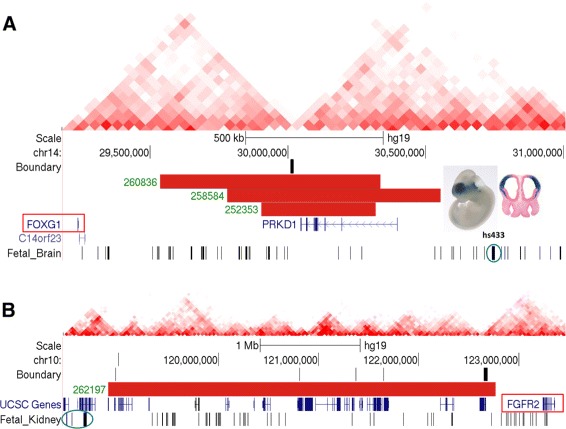
“In brief, the translocation in DD5 disrupts the FOXG1 TAD on 14q12, separating this gene from several of its known brain enhancers (Figure S8).(37,38) FOXG1 haploinsufficiency is associated with the congenital variant of Rett syndrome (MIM: 613454), and several non-coding SVs that disrupt FOXG1 downstream enhancers ha…”
BackgroundSelf-citationPoot, M., & Haaf, T. (2015) · Molecular Syndromology · doi:10.1159/000438812 · Cited by 119
“H3K4Me1, H3K27Ac), and adoption of enhancers or insulators have to be taken into consideration [Reymond et al., 2007; Hehir-Kwa et al., 2010; Spielmann and Mundlos, 2013; Ibn-Salem et al., 2014].”
BackgroundClustered CTCF binding is an evolutionary mechanism to maintain topologically associating domains
Kentepozidou, E., Aitken, S. J., Feig, C., Stefflova, K., Ibarra-Soria, X., Odom, D. T., Roller, M., & Flicek, P. (2020) · Genome Biology · doi:10.1186/s13059-019-1894-x · Cited by 114
Three-dimensional genome rewiring in loci with human accelerated regions
Keough, K. C., Whalen, S., Inoue, F., Przytycki, P. F., Fair, T., Deng, C., Steyert, M., Ryu, H., Lindblad-Toh, K., Karlsson, E., et al. (2023) · Science · doi:10.1126/science.abm1696 · Cited by 113
Chromatin features constrain structural variation across evolutionary timescales
Fudenberg, G., & Pollard, K. S. (2019) · Proceedings of the National Academy of Sciences · doi:10.1073/pnas.1808631116 · Cited by 110
“We focus on deletions, as duplications can either be in tandem, adjacent to the original copy, or elsewhere in the genome, adding additional complexity to interpreting their effects on chromatin structure (Ibn-Salem et al., 2014).”
BackgroundConserved non-coding elements: developmental gene regulation meets genome organization
Polychronopoulos, D., King, J. W. D., Nash, A. J., Tan, G., & Lenhard, B. (2017) · Nucleic Acids Research · doi:10.1093/nar/gkx1074 · Cited by 124
Co-regulation of paralog genes in the three-dimensional chromatin architecture
Ibn-Salem, J., Muro, E. M., & Andrade-Navarro, M. A. (2016) · Nucleic Acids Research · doi:10.1093/nar/gkw813 · Cited by 119
“Furthermore, disruption of TAD boundaries is associated to genetic diseases (17,18).”
BackgroundSelf-citationTADCompare: An R Package for Differential and Temporal Analysis of Topologically Associated Domains
Cresswell, K. G., & Dozmorov, M. G. (2020) · Frontiers in Genetics · doi:10.3389/fgene.2020.00158 · Cited by 93
Increased enhancer–promoter interactions during developmental enhancer activation in mammals
Chen, Z., Snetkova, V., Bower, G., Jacinto, S. H., Clock, B., Dizehchi, A., Barozzi, I., Mannion, B. J., Alcaina‐Caro, A., López-Ríos, J., et al. (2024) · Nature Genetics · doi:10.1038/s41588-024-01681-2 · Cited by 104
Understanding the 3D genome: Emerging impacts on human disease
Krumm, A., & Duan, Z. (2018) · Seminars in Cell and Developmental Biology · doi:10.1016/j.semcdb.2018.07.004 · Cited by 85
Guo, Y., Perez, A. A., Hazelett, D. J., Coetzee, G. A., Rhie, S. K., & Farnham, P. (2018) · Genome biology · doi:10.1186/s13059-018-1531-0 · Cited by 75
“They predicted that 11% of the phenotype effects of the deletions could be best explained by enhancer adoption that occurs upon removal of TAD boundary [45].”
BackgroundA TAD Skeptic: Is 3D Genome Topology Conserved?
Eres, I. E., & Gilad, Y. (2021) · Trends in Genetics · doi:10.1016/j.tig.2020.10.009 · Cited by 66
When TADs go bad: Chromatin structure and nuclear organisation in human disease
Kaiser, V. B., & Semple, C. A. (2017) · F1000Research · doi:10.12688/f1000research.10792.1 · Cited by 64
Crossed wires: 3D genome misfolding in human disease
Norton, H. K., & Phillips-Cremins, J. E. (2017) · Journal of Cell Biology · doi:10.1083/jcb.201611001 · Cited by 57
“Emerging evidence suggests that disruption of TAD boundaries and concomitant aberrant enhancer-promoter contact is a pathological mechanism implicated in several different human diseases, including cancer and congenital diseases such as aberrant limb development (Ibn-Salem et al., 2014; Lupiáñez et al., 2015; Hnisz et…”
InfluentialTopologically Associating Domains and Regulatory Landscapes in Development, Evolution and Disease
Tena, J. J., & Santos-Pereira, J. M. (2021) · Frontiers in Cell and Developmental Biology · doi:10.3389/fcell.2021.702787 · Cited by 71
Noncoding copy-number variations are associated with congenital limb malformation
Flöttmann, R., Kragesteen, B. K., Geuer, S., Socha, M., Allou, L., Sowińska‐Seidler, A., de Jarcy, L. B., Wagner, J., Jamsheer, A., Oehl‐Jaschkowitz, B., et al. (2017) · Genetics in Medicine · doi:10.1038/gim.2017.154 · Cited by 60
Self-citationDeregulated Regulators: Disease-Causing cis Variants in Transcription Factor Genes
van der Lee, R., Correard, S., & Wasserman, W. W. (2020) · Trends in Genetics · doi:10.1016/j.tig.2020.04.006 · Cited by 51
A Census of Disease Ontologies
Haendel, M. A., McMurry, J. A., Relevo, R., Mungall, C. J., Robinson, P. N., & Chute, C. G. (2018) · Annual Review of Biomedical Data Science · doi:10.1146/annurev-biodatasci-080917-013459 · Cited by 49
“For instance, phenotypic analysis was used to classify the pathomechanism of chromosomal deletions as either enhancer adoption or gene dosage based on an analysis of tissue-specific enhancers and genes adjacent to the deletions as compared to the phenotypic features of the patients (111).”
MethodSelf-citationComputational Prediction of Position Effects of Apparently Balanced Human Chromosomal Rearrangements
Zepeda‐Mendoza, C. J., Ibn-Salem, J., Kammin, T., Harris, D. J., Rita, D., Gripp, K. W., MacKenzie, J. J., Gropman, A. L., Graham, B. H., Shaheen, R., et al. (2017) · The American Journal of Human Genetics · doi:10.1016/j.ajhg.2017.06.011 · Cited by 50
“…by converting the phenotypes of the 17 subjects to Human Phenotype Ontology (HPO)74 terms and calculating their phenomatch score as described in Ibn-Salem et al., 2014.48 The phenomatch score quantifies the information content of the most specific HPO term that is part of or a common ancestor…”
MethodInfluentialSelf-citationBiamino, E., Gregorio, E. D., Belligni, E. F., Keller, R., Riberi, E., Gandione, M., Calcia, A., Mancini, C., Giorgio, E., Cavalieri, S., et al. (2015) · American Journal of Medical Genetics Part B Neuropsychiatric Genetics · doi:10.1002/ajmg.b.32406 · Cited by 51
“can take into consideration that the two nearby deletions in 3q29 may share a common genetic mechanism as recently demonstrated for other copy number variations [Ibn-Salem et al., 2014].”
BackgroundDeciphering the pathogenic consequences of chromosomal aberrations in human genetic disease
Kloosterman, W. P., & Hochstenbach, R. (2014) · Molecular Cytogenetics · doi:10.1186/s13039-014-0100-9 · Cited by 42
“8% of patient phenotypes could best be explained by enhancer adoption rather than mere dosage effects of genes within the deletion interval [80].”
BackgroundWilli, M., Yoo, K. H., Reinisch, F., Kuhns, T. M., Lee, H., Wang, C., & Hennighausen, L. G. (2017) · Nature Communications · doi:10.1038/ncomms16069 · Cited by 37
Robin, J. D., & Magdinier, F. (2016) · Frontiers in Genetics · doi:10.3389/fgene.2016.00153 · Cited by 36
Alterations in Three-Dimensional Organization of the Cancer Genome and Epigenome
Achinger-Kawecka, J., Taberlay, P. C., & Clark, S. J. (2016) · Cold Spring Harbor Symposia on Quantitative Biology · doi:10.1101/sqb.2016.81.031013 · Cited by 38
“Consistent with this finding, previous reports suggested that genomic deletions at TAD borders in normal cells result in a change in local chromatin organization and in a formation of new domain boundaries (Nora et al. 2012; Ibn-Salem et al. 2014).”
ResultTowards a Better Vision of Retinoic Acid Signaling during Eye Development
Duester, G. (2022) · Cells · doi:10.3390/cells11030322 · Cited by 41
“TAD locations are conserved across cell types and mammalian species [46] and they are required for normal gene-enhancer interactions [47,48].”
BackgroundStructural variants in the 3D genome as drivers of disease
Sreenivasan, V. K. A., Yumiceba, V., & Spielmann, M. (2025) · Nature Reviews Genetics · doi:10.1038/s41576-025-00862-x · Cited by 53
“However, when the identified variant does not cause obvious disruptions to known disease-associated functional elements, 3D genome architecture must be taken into account 30,91–94 .”
Self-citationPaul, M. R., Markowitz, T. E., Hochwagen, A., & Ercan, S. (2018) · Genetics · doi:10.1534/genetics.118.301217 · Cited by 33
Iyer, J. S., & Girirajan, S. (2015) · Briefings in Functional Genomics · doi:10.1093/bfgp/elv018 · Cited by 35
Microdeletions on 6p22.3 are associated with mesomelic dysplasia Savarirayan type
Flöttmann, R., Wagner, J., Kobus, K., Curry, C. J., Savarirayan, R., Nishimura, G., Yasui, N., Spranger, J., Esch, H. V., Lyons, M. J., et al. (2015) · Journal of Medical Genetics · doi:10.1136/jmedgenet-2015-103108 · Cited by 35
Self-citationNavigating the non-coding genome in heart development and Congenital Heart Disease
Chahal, G., Tyagi, S., & Ramialison, M. (2019) · Differentiation · doi:10.1016/j.diff.2019.05.001 · Cited by 31
Developmentally regulated higher-order chromatin interactions orchestrate B cell fate commitment
Boya, R., Yadavalli, A. D., Nikhat, S., Kurukuti, S., Palakodeti, D., & Pongubala, J. M. R. (2017) · Nucleic Acids Research · doi:10.1093/nar/gkx722 · Cited by 37
“The deletion of boundary regions results in an increase in inter-domain interactions indicating the structural and functional role of insulators in maintenance of discrete, functional chromatin domains (11,12).”
BackgroundChromosomes in the genomic age. Preserving cytogenomic competence of diagnostic genome laboratories
Hochstenbach, R., Liehr, T., & Hastings, R. J. (2020) · European Journal of Human Genetics · doi:10.1038/s41431-020-00780-y · Cited by 30
Regulatory variants of FOXG1 in the context of its topological domain organisation
Mehrjouy, M. M., Fonseca, A. C., Ehmke, N., Paskulin, G. A., Novelli, A., Benedicenti, F., Mencarelli, M. A., Renieri, A., Busa, T., Missirian, C., et al. (2017) · European Journal of Human Genetics · doi:10.1038/s41431-017-0011-4 · Cited by 28
Middelkamp, S., Vlaar, J. M., Giltay, J. C., Korzelius, J., Besselink, N. J. M., Boymans, S., Janssen, R., de la Fonteijne, L., van Binsbergen, E., van Roosmalen, M. J., et al. (2019) · Genome Medicine · doi:10.1186/s13073-019-0692-0 · Cited by 27
“The 460 HPO terms linked to these genes in the HPO database [19–21] were matched to each 461 individual HPO term assigned to the patient and to the combination of the patient’s HPO terms 462 using Phenomatch [16,17].”
BackgroundMethodInfluentialDbx2 regulation in limbs suggests inter TAD sharing of enhancers
Beccari, L. L., Jaquier, G., Lopez‐Delisle, L., Rodríguez-Carballo, E., Mascrez, B., Gitto, S., Woltering, J. M., & Duboule, D. (2021) · Developmental Dynamics · doi:10.1002/dvdy.303 · Cited by 26
Spector, J. D., & Wiita, A. P. (2019) · Journal of Human Genetics · doi:10.1038/s10038-019-0573-9 · Cited by 23
The 3D genome and its impacts on human health and disease
Wang, S., Luo, Z., Liu, W., Hu, T., Zhao, Z., Rosenfeld, M. G., & Song, X. (2023) · Life Medicine · doi:10.1093/lifemedi/lnad012 · Cited by 23
“There is also a case of TAD boundary disruption in Liebenberg syndrome, a congenital autosomal dominant upper extremity mal-formation that results in ectopic activation of enhancers and mis-expression of the PITX1 gene [165].”
POSTRE: a tool to predict the pathological effects of human structural variants
Sánchez-Gaya, V., & Rada-Iglesias, Á. (2023) · Nucleic Acids Research · doi:10.1093/nar/gkad225 · Cited by 25
“In general, pathogenic SVs tend to be larger and, consequently, affect a higher number of genes than non-pathogenic ones (Rodriguez-Revenga et al., 2007; Ibn-Salem et al., 2014).”
BackgroundInfluentialGhavi-Helm, Y. (2019) · Journal of Molecular Biology · doi:10.1016/j.jmb.2019.09.010 · Cited by 24
Disruption of the topologically associated domain at Xp21.2 is related to 46,XY gonadal dysgenesis
Meinel, J. A., Yumiceba, V., Künstner, A., Schultz, K., Kruse, N., Kaiser, F. J., Holterhus, P., Claviez, A., Hiort, O., Busch, H. S., et al. (2022) · Journal of Medical Genetics · doi:10.1136/jmg-2022-108635 · Cited by 22
Self-citationClinical and molecular characterization of an emerging chromosome 22q13.31 microdeletion syndrome
Palumbo, P., Accadia, M., Leone, M. P., Palladino, T., Stallone, R., Carella, M., & Palumbo, O. (2017) · American Journal of Medical Genetics Part A · doi:10.1002/ajmg.a.38559 · Cited by 21
“…theexistenceofapositioneffecton the genes located in the neighboring regions, as already reported for others copy number variations (Ibn-Salem et al., 2014; Kleinjan & van Heyningen, 1998; Palumbo et al., 2015), or the influence of polymorphisms external to the deleted region that…”
BackgroundRare or Overlooked? Structural Disruption of Regulatory Domains in Human Neurocristopathies
Sánchez-Gaya, V., Mariner-Faulí, M., & Rada-Iglesias, Á. (2020) · Frontiers in Genetics · doi:10.3389/fgene.2020.00688 · Cited by 18
Novel PITX 2 gene mutations in patients with Axenfeld‐Rieger syndrome
Seifi, M., Footz, T. K., Taylor, S. A. M., Elhady, G. M., Abdalla, E. M., & Walter, M. A. (2016) · Acta Ophthalmologica · doi:10.1111/aos.13030 · Cited by 21
Ferrari, L., Scuvera, G., Tucci, A., Bianchessi, D., Rusconi, F., Menni, F., Battaglioli, E., Milani, D., & Riva, P. (2017) · Human Genetics · doi:10.1007/s00439-017-1832-5 · Cited by 19
Reyes‐Palomares, A., Bueno, A., Rodríguez-López, R., Medina, M. Á., Sánchez‐Jiménez, F., Corpas, M., & Ranea, J. A. G. (2016) · BMC Genomics · doi:10.1186/s12864-016-2569-6 · Cited by 19
“Although the discovery of CNVs was relatively recent, a plethora of genetic association studies have been carried out to understand their evolutionary [5], functional [6] and phenotypic effects [4].”
BackgroundChromatin organization modulates the origin of heritable structural variations in human genome
Roychowdhury, T., & Abyzov, A. S. (2019) · Nucleic Acids Research · doi:10.1093/nar/gkz103 · Cited by 16
“Such events were reported for ensemble of diseases such as cancer (36), neurological (37) and congenital diseases (38).”
BackgroundDelta: a new web-based 3D genome visualization and analysis platform
Tang, B., Li, F., Li, J., Zhao, W., & Zhang, Z. (2017) · Bioinformatics · doi:10.1093/bioinformatics/btx805 · Cited by 18
Epigenetics and Heart Development
George, R. M., & Firulli, A. B. (2021) · Frontiers in Cell and Developmental Biology · doi:10.3389/fcell.2021.637996 · Cited by 17
“Various combinations of these posttranslational modifications make up the epigenetic code or histone code that marks regions of open or closed chromatin (Karlic et al., 2010).”
BackgroundTopologically-associating domains: gene warehouses adapted to serve transcriptional regulation
Razin, S. V., Gavrilov, A. A., Vassetzky, Y. S., & Ulianov, S. V. (2016) · Transcription · doi:10.1080/21541264.2016.1181489 · Cited by 19
“These structural-functional domains are evolutionarily conserved, and their disruption may cause a severe deregulation of numerous genes, resulting in the development of various diseases.(29,37) It is clear that studies of eukaryotic genome structuralfunctional domains are important for both basic science and practica…”
Background3D genomics imposes evolution of the domain model of eukaryotic genome organization
Razin, S. V., & Vassetzky, Y. S. (2016) · Chromosoma · doi:10.1007/s00412-016-0604-7 · Cited by 16
Poszewiecka, B., Pienkowski, V. M., Nowosad, K., Robin, J. D., Gogolewski, K., & Gambin, A. (2022) · Nucleic Acids Research · doi:10.1093/nar/gkac318 · Cited by 15
“Salem et al. (25) based on the DECIPHER database (containing nearly one thousand deletions) (26) showed that only 4.5% of analyzed deletions can disrupt TAD boundaries leading to the gene misexpression due to enhancer adoption.”
MethodInfluentialA genomic view on epilepsy and autism candidate genes
Jabbari, K., & Nürnberg, P. (2016) · Genomics · doi:10.1016/j.ygeno.2016.01.001 · Cited by 18
Visualising three-dimensional genome organisation in two dimensions
Ing‐Simmons, E., & Vaquerizas, J. M. (2019) · Development · doi:10.1242/dev.177162 · Cited by 13
Modeling three-dimensional genomic organization in evolution and pathogenesis
Diament, A., & Tuller, T. (2018) · Seminars in Cell and Developmental Biology · doi:10.1016/j.semcdb.2018.07.008 · Cited by 11
Zepeda‐Mendoza, C. J., Bardon, A. G., Kammin, T., Harris, D. J., Cox, H., Redin, C. E., Ordulu, Z., Talkowski, M. E., & Morton, C. C. (2018) · European Journal of Human Genetics · doi:10.1038/s41431-017-0068-0 · Cited by 13
coTRaCTE predicts co-occurring transcription factors within cell-type specific enhancers
van Bömmel, A., Love, M. I., Chung, H., & Vingron, M. (2018) · PLoS Computational Biology · doi:10.1371/journal.pcbi.1006372 · Cited by 12
Self-citationNovel MYT1 variants expose the complexity of oculo‐auriculo‐vertebral spectrum genetic mechanisms
Zamariolli, M., Burssed, B., Moysés‐Oliveira, M., Colovati, M. E. S., Bellucco, F. T. D. S., Santos, L. C., Pérez, A. B. A., Bragagnolo, S., & Melaragno, M. I. (2021) · American Journal of Medical Genetics Part A · doi:10.1002/ajmg.a.62217 · Cited by 10
“To date, MYT1 (myelin transcription factor 1, OMIM 600379) gene, which encodes a zinc finger transcription factor that is expressed in developing mammalian neural tissues (Kim et al., 1997), remains the most important candidate gene confirmed as involved in the OAVS pathogenesis.”
BackgroundLocation, location, location: nuclear structure regulates gene expression in neurons
Brookes, E., & Riccio, A. (2019) · Current Opinion in Neurobiology · doi:10.1016/j.conb.2019.03.009 · Cited by 10
Lowther, C., Mehrjouy, M. M., Collins, R. L., Bak, M., Dudchenko, O., Brand, H., Dong, Z., Rasmussen, M. B., Gu, H., Weisz, D., et al. (2022) · medRxiv · doi:10.1101/2022.02.15.22270795 · Cited by 8
Self-citationRadke, D. W., Sul, J. H., Balick, D. J., Akle, S., Initiative, A. D. N., Green, R. C., & Sunyaev, S. R. (2021) · Genome Research · doi:10.1101/gr.275263.121 · Cited by 9
“We do not require the removal of an entire regulatory element for the horizontal count because even a partial deletion of a regulatory element might render it inoperable (Ibn-Salem et al. 2014).”
Dimartino, P., Zadorozhna, M., Yumiceba, V., Basile, A., Cani, I., Melo, U. S., Henck, J., Breur, M., Tonon, C., Lodi, R., et al. (2024) · Annals of Neurology · doi:10.1002/ana.27038 · Cited by 12
Self-citationThe distributions of protein coding genes within chromatin domains in relation to human disease
Muro, E. M., Ibn-Salem, J., & Andrade-Navarro, M. A. (2019) · Epigenetics & Chromatin · doi:10.1186/s13072-019-0317-2 · Cited by 10
“More specifically, structural variations affecting TAD borders can cause an ectopic reorganization leading to gene aberrant misexpression, and therefore to disease [23, 24].”
BackgroundSelf-citationOrellana, C., Rosello, M., Sanchís, A., Pedrola, L., Grau, C. M., Gabaldón-Albero, A., Senent, M. L., Such, E., García-Ruiz, C., Avetisyan, G., et al. (2025) · International Journal of Molecular Sciences · doi:10.3390/ijms26031244 · Cited by 7
“Our results reinforce the notion that the pathogenicity of some human disease-associated deletions results from ectopic enhancer–promoter interactions causing ectopic/dysregulated genic expression due to the elimination of annotated boundaries [19].”
Wallis, M., Pope-Couston, R., Mansour, J., Amor, D. J., Tang, P., & Stock-Myer, S. E. (2020) · American Journal of Medical Genetics Part A · doi:10.1002/ajmg.a.61935 · Cited by 8
Hu, X., Liu, J., Guo, R., Guo, J. F., Zhao, Z., Li, W., Xu, B., & Hao, C. (2019) · Molecular Cytogenetics · doi:10.1186/s13039-019-0463-z · Cited by 7
Robin, J. D., & Magdinier, F. (2017) · Elsevier eBooks · doi:10.1016/b978-0-12-805388-1.00006-7 · Cited by 7
Linking DNA-packing density distribution and TAD boundary locations
Meng, L., Sheong, F. K., & Luo, Q. (2025) · Proceedings of the National Academy of Sciences · doi:10.1073/pnas.2418456122 · Cited by 7
The haplolethality paradox of the wupA gene in Drosophila
Casas‐Tintó, S., & Ferrús, A. (2021) · PLoS Genetics · doi:10.1371/journal.pgen.1009108 · Cited by 7
“Genomes differ in their DNA content, both between cells and between individuals, and this variation is thought to contribute to adaptation and evolution [62–65].”
BackgroundÉpigénétique, principes et exemples d’applications
Dion, C., Laberthonnìère, C., & Magdinier, F. (2023) · La Revue de Médecine Interne · doi:10.1016/j.revmed.2023.06.011 · Cited by 7
TADMaster: a comprehensive web-based tool for the analysis of topologically associated domains
Higgins, S., Akpokiro, V., Westcott, A., & Oluwadare, O. (2022) · BMC Bioinformatics · doi:10.1186/s12859-022-05020-2 · Cited by 5
Conte, M., Abraham, A., Esposito, A., Yang, L., Gibcus, J. H., Parsi, K. M., Vercellone, F., Fontana, A., Pierno, F. D., Dekker, J., et al. (2024) · International Journal of Molecular Sciences · doi:10.3390/ijms251810215 · Cited by 6
Prioritizing long range interactions in noncoding regions using GWAS and deletions perturbed TADs
Liu, X., Xu, W., Leng, F., Hao, C., Kolora, S. R. R., & Li, W. (2020) · Computational and Structural Biotechnology Journal · doi:10.1016/j.csbj.2020.10.014 · Cited by 4
“Furthermore, our work on the analysis of high con-fident SE-Gs uncovered that target genes were enriched in several developmental processes, leukemia and morphogenesis in line with previous studies that explored both structural changes and long range interactions [14,37–40].”
ResultOpportunity to improve livestock traits using 3D genomics
MacPhillamy, C., Pitchford, W. S., Alinejad‐Rokny, H., & Low, W. Y. (2021) · Animal Genetics · doi:10.1111/age.13135 · Cited by 6
Afanasyev, A. Y., Kim, Y., Tolokh, I. S., Sharakhov, I. V., & Onufriev, A. V. (2024) · Epigenetics & Chromatin · doi:10.1186/s13072-024-00528-8 · Cited by 5
Making chromosome abnormalities treatable conditions
Cody, J. D., & Hale, D. E. (2015) · American Journal of Medical Genetics Part C Seminars in Medical Genetics · doi:10.1002/ajmg.c.31447 · Cited by 4
Hamerlinck, L., D’haene, E., Loon, N. V., Vaughan, M., Baca, M. D. R. P., Leimbacher, S., Colombo, L., Vantomme, L., Daal, E., Dheedene, A., et al. (2025) · medRxiv · doi:10.1101/2025.03.10.25323301 · Cited by 4
Cellamare, A., Coccaro, N., Nuzzi, M. C., Casieri, P., Tampoia, M., Maggiolini, F. A. M., Gentile, M., Ficarella, R., Ponzi, E., Conserva, M. R., et al. (2021) · Genes · doi:10.3390/genes12060877 · Cited by 3
“Although PIK3R1 is not deleted in our patient, the deletion might change the regulatory context of the gene, resulting in misexpression and subsequent deregulation of signaling, as previously described for other structural variants [22].”
Background
Metadata
- Authors
- Ibn-Salem, J., Köhler, S., Love, M. I., Chung, H.-R., Huang, N., Hurles, M. E., Haendel, M., Washington, N. L., Smedley, D., Mungall, C. J., Lewis, S. E., Ott, C.-E., Bauer, S., Schofield, P. N., Mundlos, S., Spielmann, M., & Robinson, P. N.
- Affiliations
- Max Planck Society (DE)
- Charité – Universitätsmedizin Berlin (DE)
- Max Planck Institute for Molecular Genetics (DE)
- Wellcome Sanger Institute (GB)
- Oregon Health & Science University (US)
- Lawrence Berkeley National Laboratory (US)
- University of Cambridge (GB)
- Berlin-Brandenburger Centrum für Regenerative Therapien (DE)
- Corresponding author
- Spielmann, Malte
- Robinson, Peter N
- ORCID
- Venue
- Genome Biology
- Published
- 2014-09-04
- Volume
- 15
- Issue
- 9
- Pages
- 423-423
- ISSN
- 1465-6906 (ISSN-L)
- 1474-760X
- PMC
- PMC4180961
- OpenAlex
- W2169500338
- Cited by
- 143
- References
- 71
- Citations by year
- 2026: 5 · 2025: 10 · 2024: 5 · 2023: 7 · 2022: 8 · 2021: 13 · 2020: 16 · 2019: 16 · 2018: 14 · 2017: 17 · 2016: 18 · 2015: 12 · 2014: 1
- FWCI
- 10.48
- Type
- journal article
- Language
- en
- Open access
- gold
- doi.org
- Licence
- cc-by
- creativecommons.org/licenses/by/4.0 (tdm)
- creativecommons.org/licenses/by/4.0 (vor)
- Locations
- Genome biology (publishedVersion, cc-by)
- PubMed Central (publishedVersion, cc-by)
- PubMed (publishedVersion)
- OSTI OAI (U.S. Department of Energy Office of Scientific and Technical Information) (submittedVersion)
- MPG.PuRe (Max Planck Society) (submittedVersion, cc-by)
- Funders
- Max-Planck-Förderstiftung
- European Commission (602300)
- Bundesministerium für Bildung und Forschung (0313911)
- Berlin-Brandenburg School for Regenerative Therapies
- National Institutes of Health (R24OD011883)
- NIH Office of the Director (5R24 OD011883)
- National Cancer Institute (T32CA009337)
- Topics
- Life Sciences › Biochemistry, Genetics and Molecular Biology › Genetics › Genomic variations and chromosomal abnormalities
- Life Sciences › Biochemistry, Genetics and Molecular Biology › Molecular Biology › Genomics and Chromatin Dynamics
- Life Sciences › Biochemistry, Genetics and Molecular Biology › Genetics › Genomics and Rare Diseases
- Keywords
- regulatory boundaries, copy number variation, topological domains, chromatin looping, gene dosage, haploinsufficiency, congenital diseases, phenotype prediction, tissue-specific enhancers, Human Phenotype Ontology, DECIPHER, chromosomal deletion
- MeSH terms
- Chromosomes, Human, Humans, Models, Genetic, Phenotype, Genome, Human, Sequence Deletion, Gene Dosage, Genomics, Genetic Diseases, Inborn, Databases, Genetic, DNA Copy Number Variations, Haploinsufficiency, Molecular Sequence Annotation, Gene Ontology
About these checks
Registry, retraction, Cites and statistics results are computed, not judged, with one exception: a printed reference that no index lists is read once by a model before it counts as a citation error. Claims are extracted by a model and kept only when their quote appears verbatim in the text; each cited source is then checked, with a model’s help, for whether it says what the claim relies on. Those verdicts can be wrong — read the claim’s quote and the cited source before relying on one.
Statistics and arithmetic are recomputed, not judged.
Confidence bands are shown only for fields calibrated on our annotated test set. None is calibrated yet, so no band is shown.
What counts as a claim ›How we measure confidence ›How we check this ›
Are you an author, or do you see a problem with this page? Request a review
Data sources
Bibliographic data: Semantic Scholar, OpenAlex, Crossref.
Contains information from the Semantic Scholar Academic Graph Datasets, made available under the ODC Attribution License (ODC-BY 1.0).
Semantic Scholar’s data is described in: Kinney, R., et al. (2023). The Semantic Scholar Open Data Platform. arXiv:2301.10140.
