

Expression of multiple horizontally acquired genes is a hallmark of both vertebrate and invertebrate genomes
Open accessThe DOI matches its Crossref record; 49 of the 49 references it cites were found in a registry or an index.
Abstract
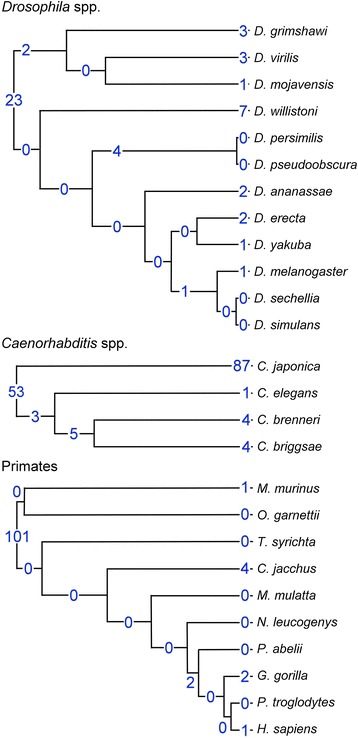
Background: A fundamental concept in biology is that heritable material, DNA, is passed from parent to offspring, a process called vertical gene transfer. An alternative mechanism of gene acquisition is through horizontal gene transfer (HGT), which involves movement of genetic material between different species. HGT is well-known in single-celled organisms such as bacteria, but its existence in higher organisms, including animals, is less well established, and is controversial in humans. Results: We have taken advantage of the recent availability of a sufficient number of high-quality genomes and associated transcriptomes to carry out a detailed examination of HGT in 26 animal species (10 primates, 12 flies and four nematodes) and a simplified analysis in a further 14 vertebrates. Genome-wide comparative and phylogenetic analyses show that HGT in animals typically gives rise to tens or hundreds of active ‘foreign’ genes, largely concerned with metabolism. Our analyses suggest that while fruit flies and nematodes have continued to acquire foreign genes throughout their evolution, humans and other primates have gained relatively few since their common ancestor. We also resolve the controversy surrounding previous evidence of HGT in humans and provide at least 33 new examples of horizontally acquired genes. Conclusions: We argue that HGT has occurred, and continues to occur, on a previously unsuspected scale in metazoans and is likely to have contributed to biochemical diversification during animal evolution.
Overview
The claims and statistics of this paper haven’t been checked yet.
Free: it reads the open-access text and checks the first 5 claims that cite a source we can check. Create a free account to check every claim.
Integrity signals
Registry
Cites
Statistics
Figures
Verification
Claims the paper makes
The claims and statistics of this paper haven’t been checked yet.
Free: it reads the open-access text and checks the first 5 claims that cite a source we can check. Create a free account to check every claim.
Claims other papers make about this one
Each is checked against this paper’s own text: does it say what the citing paper says it does?
The source backs part of the claim, not all of it — or backs it for a different population, condition or comparison.
In the citing paper
“Indeed, previous phylogenetic analyses validated only an average of 55% of the genes with a high HGT index (≥30) as foreign origin39.”
From Extremotolerant tardigrade genome and improved radiotolerance of human cultured cells by tardigrade-unique protein (2016) · cites this paper as [39]
Experimental — accuracy not yet measuredThe source backs part of the claim, not all of it — or backs it for a different population, condition or comparison.
In the citing paper
“The number of putative HGT genes (234) in our assembly is in the range of those in nematodes (129–241) estimated with the same criterion39 and we therefore concluded that R. varieornatus contains only a moderate number of HGT genes.”
From Extremotolerant tardigrade genome and improved radiotolerance of human cultured cells by tardigrade-unique protein (2016) · cites this paper as [39]
Experimental — accuracy not yet measuredThe source backs part of the claim, not all of it — or backs it for a different population, condition or comparison.
In the citing paper
“In multicellular lineages, convincing cases of HGT are rarer but include gene acquisitions in bdelloid rotifers, fungi, and even vertebrate genomes [33,34].”
From Origin and Evolution of Genes in Eukaryotes: Mechanisms, Dynamics, and Functional Implications (2025) · cites this paper as [34]
Experimental — accuracy not yet measuredThe cited source says what the claim attributes to it.
In the citing paper
“The HGT index is a useful indicator for the possibility of HGT, but is not a sufficient criterion to guarantee true HGT.”
From Extremotolerant tardigrade genome and improved radiotolerance of human cultured cells by tardigrade-unique protein (2016) · cites this paper as [39]
The check wasn’t confident either way, so it gives no verdict — never disputed.
In the citing paper
“most instances of glycan molecular mimicry by pathogens seem to involve convergent evolution of pre-existing pathogen biosynthetic pathways, or de novo generation of functional genes.”
From Biological roles of glycans (2017) · cites this paper as [986]
Experimental — accuracy not yet measured
Self-check
Percentages, sums and reported differences re-computed from the paper’s own numbers.
The self-check needs the paper’s full text.
Citations
Cites
Gene Ontology: tool for the unification of biology
Ashburner, M., Ball, C. A., Blake, J. A., Botstein, D., Butler, H., Cherry, J. M., Davis, A. P., Dolinski, K., Dwight, S. S., Eppig, J. T., et al. (2000) · Nature Genetics · doi:10.1038/75556 · Cited by 43,206 · cited 1×
“To determine whether horizontally transferred genes encode enzymes, we examined GO annotation [52].”
BackgroundInitial sequencing and analysis of the human genome
International Human Genome Sequencing Consortium, Whitehead Institute for Biomedical Research, C. F. G. R., Lander, E. S., Linton, L. M., Birren, B., Nusbaum, C., Zody, M. C., Baldwin, J., Devon, K., Dewar, K., et al. (2001) · Nature · doi:10.1038/35057062 · Cited by 24,216 · cited 8×
“Furthermore, there are concerns over the validity of the examples of HGT reported in humans [19-22].”
InfluentialBLAST+: architecture and applications
Camacho, C., Coulouris, G., Avagyan, V., Ma, N., Papadopoulos, J., Bealer, K., & Madden, T. L. (2009) · BMC Bioinformatics · doi:10.1186/1471-2105-10-421 · Cited by 22,074 · cited 2×
“27+) [47] against the complete proteomes on UniProt.”
Database resources of the National Center for Biotechnology Information: update
Wheeler, D. L. (2004) · Nucleic Acids Research · doi:10.1093/nar/gkh073 · Cited by 10,641
An efficient algorithm for large-scale detection of protein families
Enright, A. J. (2002) · Nucleic Acids Research · doi:10.1093/nar/30.7.1575 · Cited by 3,588 · cited 1×
“Ortholog groups were determined from this alignment using MCL with I = 15 [48].”
Horizontal gene transfer in eukaryotic evolution
Keeling, P. J., & Palmer, J. D. (2008) · Nature Reviews Genetics · doi:10.1038/nrg2386 · Cited by 1,355 · cited 1×
“However, relatively few cases have been documented in multicellular organisms [3-7].”
Crowe, J. H., Hoekstra, F. A., & Crowe, L. M. (1992) · Annual Review of Physiology · doi:10.1146/annurev.ph.54.030192.003051 · Cited by 1,253
Flicek, P., Amode, M. R., Barrell, D., Beal, K., Billis, K., Brent, S., Carvalho-Silva, D., Clapham, P., Coates, G., Fitzgerald, S., et al. (2014) · Nucleic Acids Research · doi:10.1093/nar/gkt1196 · Cited by 1,214
Horizontal gene transfer among genomes: The complexity hypothesis
Jain, R., Rivera, M. C., & Lake, J. A. (1999) · Proceedings of the National Academy of Sciences · doi:10.1073/pnas.96.7.3801 · Cited by 1,165 · cited 1×
“In prokaryotes, horizontally acquired genes tend to be operational, typically encoding enzymes, rather than informational, that is, genes involved in transcription and translation [31].”
OrthoMCL-DB: querying a comprehensive multi-species collection of ortholog groups
Chen, F. (2006) · Nucleic Acids Research · doi:10.1093/nar/gkj123 · Cited by 884 · cited 1×
“All data on Caenorhabditis species were obtained from WormBase [41,42], while data on primate and chordate species were obtained from Ensembl [43,44], with the exception of ortholog groups which were obtained from OrthoMCL [45,46].”
Research works printed but not linked: 1
- NCBI [ http://www.ncbi.nlm.nih.gov/]
Cited by
Items 101–200 of 271
Richards, T. A., & Monier, A. (2016) · Proceedings of the National Academy of Sciences · doi:10.1073/pnas.1603862113 · Cited by 29
Detection of dietary DNA, protein, and glyphosate in meat, milk, and eggs
Eenennaam, A. L. V., & Young, A. E. (2017) · Journal of Animal Science · doi:10.2527/jas.2016.1346 · Cited by 32
“It accounts for less than 10% of the few examples proposed as evidence of horizontal gene transfer gain in humans and other primates since their common evolutionary ancestor (Crisp et al., 2015).”
BackgroundA quantitative risk assessment method for synthetic biology products in the environment
Rycroft, T., Hamilton, K. A., Haas, C. N., & Linkov, I. (2019) · The Science of The Total Environment · doi:10.1016/j.scitotenv.2019.133940 · Cited by 26
Chen, D., Wu, Y., Zhang, W., Jiang, S., & Chen, S.-Z. (2016) · Scientific Reports · doi:10.1038/srep26934 · Cited by 31
Pereira, C. (2015) · NeuroQuantology · doi:10.14704/nq.2016.14.1.874 · Cited by 24
“…cannot be falsely determined by the brain size or its capacity, as organisms much smaller have demonstrated capabilities which cannot be matched to human intelligence, especially when the human genome has almost 150 genes that have originated from microorganisms and viruses (Crisp et al., 2015).”
BackgroundImpact of Lateral Transfers on the Genomes of Lepidoptera
Drezen, J., Josse, T., Bézier, A., Gauthier, J., Huguet, E., & Herniou, E. A. (2017) · Genes · doi:10.3390/genes8110315 · Cited by 26
“Besides selfish and pathogenic DNA, HGTs have mediated the acquisition of several genes conferring new functions to vertebrates and invertebrates [2].”
BackgroundGarrido, D., Kabeya, N., Hontoria, F., Navarro, J. C., Reis, D. B., Martín, M. V., Rodríguez, C., Almansa, E., & Monroig, Ó. (2019) · Biochimica et Biophysica Acta (BBA) - Molecular and Cell Biology of Lipids · doi:10.1016/j.bbalip.2019.04.012 · Cited by 24
“elegans (Fat-1 and Fat-2) and the whitefly Bemisia tabaci were hypothesised to derive from horizontal gene transfer (HGT) [18,47], and this phenomenon”
BackgroundHorizontally acquired antibacterial genes associated with adaptive radiation of ladybird beetles
Li, H., Tang, X., Huang, Y., Xu, Z.-Y., Chen, M., Du, X., Qiu, B.-Y., Chen, P., Zhang, W., Ślipiński, A., et al. (2021) · BMC Biology · doi:10.1186/s12915-020-00945-7 · Cited by 25
“For example, deer ticks have genes encoding prokaryotic type VI secretion amidases that degrade bacterial cell walls [23], peptidoglycandegrading bacterial lysozymes have been detected in insects [24, 25] and nematodes [5], and fruit flies have genes related to phagocytosis of bacteria [5].”
BackgroundCo-Opted Genes of Algal Origin Protect C. Elegans Against Cyanogenic Toxins
Wang, B., Pandey, T., Long, Y., Delgado-Rodriguez, S. E., Daugherty, M. D., & Ma, D. K. (2022) · Current Biology · doi:10.1016/j.cub.2022.09.041 · Cited by 21
Evaluation of the mechanisms of intron loss and gain in the social amoebae Dictyostelium
Ma, M.-Y., Che, X.-R., Porceddu, A., & Niu, D. (2015) · BMC Evolutionary Biology · doi:10.1186/s12862-015-0567-y · Cited by 21
“Evidence also suggests that eukaryotic genes transferred from organelles or prokaryotes have generally experienced a high rate of intron insertion subsequent to the transfer [2–7].”
BackgroundTeleonomy in Evolution: “The Ghost in the Machine”
Corning, P. A. (2023) · The MIT Press eBooks · doi:10.7551/mitpress/14642.003.0005 · Cited by 22
Horizontal gene transfer and genome evolution in Methanosarcina
Garushyants, S. K., Kazanov, M. D., & Gelfand, M. S. (2015) · BMC Evolutionary Biology · doi:10.1186/s12862-015-0393-2 · Cited by 25
“HGT rates for a variety of prokaryotic and eukaryotic [55] species were estimated.”
BackgroundRaghuram, G. V., Gupta, D., Subramaniam, S., Gaikwad, A., Khare, N. K., Nobre, M., Nair, N. K., & Mittra, I. (2017) · BMC Molecular Biology · doi:10.1186/s12867-017-0098-8 · Cited by 23
“A recent study has, however, provided evidence that for HGT in vertebrate and invertebrate genomes has also occurred in a large scale [35].”
BackgroundRomano, M. (2017) · Frontiers in Microbiology · doi:10.3389/fmicb.2017.00721 · Cited by 20
“Crisp et al. (2015) reached the conclusion that HGT “occurred, and continues to occur, on a previously unsuspected scale in metazoans and is likely to have contributed to biochemical diversification during animal evolution.””
BackgroundThe Phylogeny of Osteopontin—Analysis of the Protein Sequence
Weber, G. F. (2018) · International Journal of Molecular Sciences · doi:10.3390/ijms19092557 · Cited by 22
“In repetitive stretches of DNA, DNA polymerases are subject to slippage, which may increase the mutation rate during reduplication.”
BackgroundInfluentialRetroviral DNA Sequences as a Means for Determining Ancient Diets
Rivera-Pérez, J. I., Cano, R. J., Narganes-Storde, Y. M., Chanlatte-Baik, L., & Toranzos, G. A. (2015) · PLoS ONE · doi:10.1371/journal.pone.0144951 · Cited by 21
“Furthermore, the presence and expression of horizontally-acquired genes are now known to be common in hostparasite interactions involving vertebrates and invertebrates [30,31].”
BackgroundMolecular evolution and diversification of phytoene synthase (PSY) gene family
Lisbôa, M. P., Canal, D., Filgueiras, J. P. C., & Turchetto‐Zolet, A. C. (2022) · Genetics and Molecular Biology · doi:10.1590/1678-4685-gmb-2021-0411 · Cited by 18
“Horizontal gene transfer is the acquisition of genes from organisms other than a direct ancestor (Crisp et al ., 2015).”
Language follows a distinct mode of extra-genomic evolution
Bickel, B., Giraud, A., Zuberbühler, K., & van Schaik, C. P. (2024) · Physics of Life Reviews · doi:10.1016/j.plrev.2024.08.003 · Cited by 27
Zhu, Y., Wang, M., Xiang, Y., Qiu, L., Hu, S., Zhang, Z., Mattjus, P., Zhu, X., & Zhang, Y. (2018) · International Journal of Molecular Sciences · doi:10.3390/ijms19102927 · Cited by 19
“This leads to a claim that not a viral bZIP gene is determined to be horizontally acquired in 16 distinct animal genomes, albeit thousands of horizontally-transferred genes including those derived from distinct lineages of viruses and bacteria were identified [57].”
BackgroundGrafting or pruning in the animal tree: lateral gene transfer and gene loss?
Hotopp, J. C. D. (2018) · BMC Genomics · doi:10.1186/s12864-018-4832-5 · Cited by 18
“conducted a detailed examination of 26 animal genomes in order to identify putative LGTs in invertebrate and vertebrate genomes, including the human genome [36].”
BackgroundResultInfluentialOrigin and Evolution of Genes in Eukaryotes: Mechanisms, Dynamics, and Functional Implications
Saccone, S., Brancato, D., Bruno, F., Coniglio, E., Sturiale, V., & Federico, C. (2025) · Genes · doi:10.3390/genes16060702 · Cited by 17
“In multicellular lineages, convincing cases of HGT are rarer but include gene acquisitions in bdelloid rotifers, fungi, and even vertebrate genomes [33,34].”
Brückner, A., Barnett, A. A., Bhat, P., Antoshechkin, I. A., & Kitchen, S. A. (2022) · Acarologia · doi:10.24349/pjye-gkeo · Cited by 14
Bacterial origin of a key innovation in the evolution of the vertebrate eye
Kalluraya, C. A., Weitzel, A. J., Tsu, B. V., & Daugherty, M. D. (2023) · Proceedings of the National Academy of Sciences · doi:10.1073/pnas.2214815120 · Cited by 16
“In fact, IRBP was one among 223 iHGT candidates upon initial sequencing of the human genome (11) and in a subsequent list of 128 putative iHGT candidates in humans (12).”
Circulating nucleic acids: a new class of physiological mobile genetic elements
Mittra, I. (2015) · F1000Research · doi:10.12688/f1000research.7095.1 · Cited by 18
Horizontal functional gene transfer from bacteria to fishes
Sun, B., Li, T., Xiao, J., Jia, L.-Y., Liu, L., Zhang, P., Murphy, R. W., He, S., & Huang, D. (2015) · Scientific Reports · doi:10.1038/srep18676 · Cited by 21
van Wyk, S., Wingfield, B. D., Vos, L. D., Santana, Q. C., van der Merwe, N. A., & Steenkamp, E. T. (2018) · IMA Fungus · doi:10.5598/imafungus.2018.09.01.03 · Cited by 17
“Compared to other eukaryotes, and some prokaryotes (Nelson et al. 1999, Crisp et al. 2015), this form of gene gains is relatively high in fungi (Gardiner et al. 2013, Glenn et al. 2016).”
BackgroundBiochemical pathways supporting beta-lactam biosynthesis in the springtail Folsomia candida
Suring, W., Mariën, J., Broekman, R., van Straalen, N. M., & Roelofs, D. (2016) · Biology Open · doi:10.1242/bio.019620 · Cited by 16
“As a result of the increased number of sequenced genomes, it has become clear that horizontal gene transfer has contributed to the biochemical diversification of many eukaryotic species (Boschetti B io lo g y O p en et al., 2012; Crisp et al., 2015).”
BackgroundEvolutionarily related host and microbial pathways regulate fat desaturation in C. elegans
Fox, B. W., Helf, M. J., Burkhardt, R. N., Artyukhin, A. B., Curtis, B. J., Palomino, D. F., Schroeder, A. F., Chaturbedi, A., Tauffenberger, A., Wrobel, C. J. J., et al. (2024) · Nature Communications · doi:10.1038/s41467-024-45782-2 · Cited by 20
Piergiorge, R. M., de Miranda, A. B., Guimarães, A. C. R., & Catanho, M. (2017) · Genome Biology and Evolution · doi:10.1093/gbe/evx119 · Cited by 18
“Interestingly, Crisp et al. (2015) showed considerable evidence that genes NT5C and NT5M had been horizontally acquired in the human lineage (possibly from bacterial genomes), therefore contributing to biochemical diversification of 50-nucleotidases during animal evolution.”
BackgroundMenzel, R., von Chrzanowski, H., Tonat, T., van Riswyck, K., Schliesser, P., & Rueß, L. (2019) · Biochimica et Biophysica Acta (BBA) - Molecular and Cell Biology of Lipids · doi:10.1016/j.bbalip.2019.05.001 · Cited by 17
Herbivore Adaptations to Plant Cyanide Defenses
van Ohlen, M., Herfurth, A.-M., & Wittstock, U. (2017) · InTech eBooks · doi:10.5772/66277 · Cited by 19
“Its remnants besides the β-cyanoalanine synthases can be found in tens to hundreds of examples in nematodes, arthropods and chordates and are involved in main metabolic pathways and responses to environmental influences [113].”
Ciancio, A. (2016) · Springer eBooks · doi:10.1007/978-94-024-0884-3_8 · Cited by 16
Speciation through the looking-glass
Vaux, F., Trewick, S. A., & Morgan‐Richards, M. (2016) · Biological Journal of the Linnean Society · doi:10.1111/bij.12872 · Cited by 15
“…genes (Mallet et al., 2004; Nikolaidis et al., 2014), and associated traits often have the potential to be significantly advantageous and are of clear taxonomic interest (Bock, 2010; Moran & Jarvik, 2010; Herniou et al., 2013; Nikolaidis et al., 2014; Crisp et al., 2015; Gasmi et al., 2015).”
BackgroundThe Immune System and Responses to Cancer: Coordinated Evolution
Coventry, B. J., Ashdown, M., Henneberg, M., & Davies, P. C. W. (2015) · F1000Research · doi:10.12688/f1000research.6718.3 · Cited by 22
Colinet, D., Haon, M., Drula, É., Boyer, M., Grisel, S., Belliardo, C., Koutsovoulos, G., Berrin, J., & Danchin, É. (2025) · Genome Biology and Evolution · doi:10.1093/gbe/evaf012 · Cited by 13
Викторовна, Е. Е., Ramanaiah, S. V., Prisyazhnaya, N. V., Shumkova, E. S., Плотникова, Е. Г., Wu, Y., & Solyanikova, I. P. (2023) · Microorganisms · doi:10.3390/microorganisms11010141 · Cited by 12
“Such exchange of information can occur even among microorganisms belonging to different taxonomic groups [5,6].”
BackgroundThe hologenome concept of evolution: do mothers matter most?
ROSENBERG, E. B., & Zilber‐Rosenberg, I. (2019) · BJOG An International Journal of Obstetrics & Gynaecology · doi:10.1111/1471-0528.15882 · Cited by 12
Zarlenga, D. S., Mitreva, M., Thompson, P. C., Tyagi, R., Tuo, W., & Hoberg, E. P. (2018) · Parasitology · doi:10.1017/s0031182018001701 · Cited by 12
“Crisp et al .”
Lassalle, D., Tetreau, G., Pinaud, S., Galinier, R., Crickmore, N., Gourbal, B., & DUVAL, D. T. (2020) · Genes · doi:10.3390/genes11010065 · Cited by 12
“Their acquisition and domestication could therefore be older than the acquisition of Biomphalysin [80].”
BackgroundLi, X., Fang, C., Zhao, J.-P., Zhou, X., Ni, Z., & Niu, D. (2020) · BMC Genomics · doi:10.1186/s12864-020-06865-8 · Cited by 12
“[15] confirmed 17 previously reported foreign genes and found 128 additional foreign genes in the human genome in a large-scale comparative study; however, their conclusion was refuted by a case-by-case re-analysis of the 145 genes [16].”
ResultGenome sequencing of a predominant clonal lineage of the grain aphid Sitobion avenae
Villarroel, C. A., González‐González, A., Alvarez-Baca, J. K., Villarreal, P. D., Ballesteros, G., Figueroa, C. C., Cubillos, F. A., & Ramírez, C. C. (2022) · Insect Biochemistry and Molecular Biology · doi:10.1016/j.ibmb.2022.103742 · Cited by 11
Solyanikova, I. P., Borzova, O. V., Викторовна, Е. Е., Shumkova, E. S., Prisyazhnaya, N. V., Плотникова, Е. Г., & Golovleva, L. A. (2016) · Biochemistry (Moscow) · doi:10.1134/s000629791609008x · Cited by 11
Chapard, C., Meneu, L., Serizay, J., Westbrook, A., Routhier, E., Ruault, M., Bignaud, A., Thierry, A., Gourgues, G., Lartigue, C., et al. (2022) · bioRxiv (Cold Spring Harbor Laboratory) · doi:10.1101/2022.12.21.520625 · Cited by 15
Klimov, P. B., Hubert, J., Erban, T., Perotti, M. A., Braig, H. R., Flynt, A. S., He, Q., & Cui, Y. (2024) · International Journal for Parasitology · doi:10.1016/j.ijpara.2024.07.001 · Cited by 12
Armijos‐Jaramillo, V., Santander‐Gordón, D., Soria, R. I., Betancourth, M. P., & Echeverría, M. C. (2016) · Molecular Phylogenetics and Evolution · doi:10.1016/j.ympev.2016.08.006 · Cited by 11
Horizontal Gene Transfer in Metazoa: Examples and Methods
Yoshida, Y., Nowell, R. W., Arakawa, K., & Blaxter, M. (2019) · Springer eBooks · doi:10.1007/978-3-030-21862-1_7 · Cited by 11
Protein intrinsic disorder negatively associates with gene age in different eukaryotic lineages
Banerjee, S., & Chakraborty, S. (2017) · Molecular BioSystems · doi:10.1039/c7mb00230k · Cited by 11
Daugavet, M., Shabelnikov, S., Shumeev, A. N., Shaposhnikova, T., Adonin, L., & Podgornaya, O. I. (2019) · Mobile DNA · doi:10.1186/s13100-019-0146-7 · Cited by 8
Culture–gene co-evolution: Darwin’s other theory comes into view
Corning, P. A. (2022) · Biological Journal of the Linnean Society · doi:10.1093/biolinnean/blac048 · Cited by 11
The Genome Of The Tardigrade Hypsibius Dujardini
Koutsovoulos, G., Kumar, S., Laetsch, D. R., Stevens, L., Daub, J., Conlon, C., Maroon, H., Thomas, F., Aboobaker, A. A., & Blaxter, M. (2015) · Zenodo (CERN European Organization for Nuclear Research) · doi:10.5281/zenodo.45162 · Cited by 10
“Surveys of published genomes have revealed many cases of HGT [28], including several where HGT brought important new functions to the host.”
BackgroundBoothby, T. C., & Goldstein, B. (2016) · Proceedings of the National Academy of Sciences · doi:10.1073/pnas.1601149113 · Cited by 9
Acquired stress resilience through bacteria‐to‐nematode interdomain horizontal gene transfer
Pandey, T., Kalluraya, C. A., Wang, B., Xu, T., Huang, X., Guang, S., Daugherty, M. D., & Ma, D. K. (2023) · The EMBO Journal · doi:10.15252/embj.2023114835 · Cited by 6
“Despite this expected rarity, cases of iHGT have been strongly suggested by phylogenetic analysis for several lineage-specific metazoan functions (Dunning Hotopp, 2011; Zhaxybayeva & Doolittle, 2011; Crisp et al , 2015; Husnik & McCutcheon, 2018).”
BackgroundAssessing the effects of a sequestered germline on interdomain lateral gene transfer in Metazoa
Jensen, L., Grant, J. R., Laughinghouse, H. D., & Katz, L. A. (2016) · Evolution · doi:10.1111/evo.12935 · Cited by 11
Horizontal Transfer and Gene Loss Shaped the Evolution of Alpha-Amylases in Bilaterians
Desiderato, A., Barbeitos, M. S., Gilbert, C., & Lage, J. D. (2020) · G3 Genes Genomes Genetics · doi:10.1534/g3.119.400826 · Cited by 9
Daugavet, M., Shabelnikov, S., & Podgornaya, O. I. (2020) · BMC Bioinformatics · doi:10.1186/s12859-020-03599-y · Cited by 6
Rapid acquisition of microorganisms and microbial genes can help explain punctuated evolution
ROSENBERG, E. B. (2022) · Frontiers in Ecology and Evolution · doi:10.3389/fevo.2022.957708 · Cited by 8
“For example, the genomes of 12 Drosophila species showed, on average, 40 foreign genes that had been horizontally transferred from bacteria and fungi (Crisp et al., 2015).”
BackgroundNonribosomal Peptide Synthetases in Animals
Suring, W., Hoogduin, D., Le, N. G., Brouwer, A., van Straalen, N. M., & Roelofs, D. (2023) · Genes · doi:10.3390/genes14091741 · Cited by 8
“5%) [30], and many horizontally transferred genes have been acquired recently [33].”
BackgroundThe Immune Syntax Revisited: Opening New Windows on Language Evolution
Benítez‐Burraco, A., & Uriagereka, J. (2016) · Frontiers in Molecular Neuroscience · doi:10.3389/fnmol.2015.00084 · Cited by 10
“Similarly, two human-specific conserved deletions (hCONDELs; although shared with Neanderthals) exist upstream YES1 and downstream GPX1, respectively (McLean et al., 2011)—which are two of the genes highlighted by Crisp et al. (2015).”
BackgroundInfluentialBiological Anthropology in 2015: Open Access, Biocultural Interactions, and Social Change
Willermet, C. M. (2016) · American Anthropologist · doi:10.1111/aman.12529 · Cited by 10
Evolutionary Cell Biology of Proteins from Protists to Humans and Plants
Plattner, H. (2017) · Journal of Eukaryotic Microbiology · doi:10.1111/jeu.12449 · Cited by 10
“Moreover, gene transfer occurs frequently between different levels of evolution (Soucy et al. 2015), and this is an ongoing process up to vertebrates (Crisp et al. 2015).”
BackgroundOptimized detection of bacteria in bloodstream infections
Song, Y., & Gyarmati, P. (2019) · PLoS ONE · doi:10.1371/journal.pone.0219086 · Cited by 8
“However, there is a large amount of host DNA present in blood samples, which hampers the sensitivity and specificity of molecular BSI diagnosis [3, 4], due to the similarity between bacterial and human genomes [5, 6].”
Meanings, measurements, and musings on the significance of patterns in human microbiome variation
Schnorr, S. L. (2018) · Current Opinion in Genetics & Development · doi:10.1016/j.gde.2018.06.014 · Cited by 9
Computational determination of gene age and characterization of evolutionary dynamics in human
Yin, H., Li, M., Xia, L., He, C., & Zhang, Z. (2018) · Briefings in Bioinformatics · doi:10.1093/bib/bby074 · Cited by 8
Evolutionary Overview of Aquaporin Superfamily
Ishibashi, K., Tanaka, Y., & Morishita, Y. (2023) · Advances in experimental medicine and biology · doi:10.1007/978-981-19-7415-1_6 · Cited by 10
Horizontal gene transfer into the genomes of insects
Zakharov, I. A. (2016) · Russian Journal of Genetics · doi:10.1134/s1022795416070115 · Cited by 7
“However, there is a growing body of evidence that the chromosomes of very different organisms, including humans, contain a considerable number of integrated foreign genes of different origin [26, 27].”
BackgroundClasen, F., Pierneef, R., Slippers, B., & Reva, O. N. (2018) · BMC Genomics · doi:10.1186/s12864-018-4724-8 · Cited by 7
“Several of these functions have been shown in other studies to be associated with HGTs [10, 21, 23].”
BackgroundResultLanthanides‐based catalysis in eukaryotes
Simone, G. D., Polticelli, F., Aime, S., & Ascenzi, P. (2018) · IUBMB Life · doi:10.1002/iub.1933 · Cited by 7
“Interestingly, it is well known that hundreds of genes appear to have jumped from simpler organisms to Man (38).”
BackgroundDetecting Bacterial–Human Lateral Gene Transfer in Chronic Lymphocytic Leukemia
Akimova, E., Gassner, F. J., Greil, R., Zaborsky, N., & Geisberger, R. (2022) · International Journal of Molecular Sciences · doi:10.3390/ijms23031094 · Cited by 11
“Lateral gene transfer in the opposite direction as an evolutionarily relevant event is evident as well, considering that many genes within the human genome seem to originate from bacterial genomes [24,25].”
BackgroundHorizontal gene transfer in schistosomes: A critical assessment
Wijayawardena, B. K., Minchella, D. J., & DeWoody, J. A. (2015) · Molecular and Biochemical Parasitology · doi:10.1016/j.molbiopara.2015.05.008 · Cited by 6
A mborella– Bearing Witness to the Past?
Poncet, V., Birnbaum, P., Sarramégna, V., de Kochko, A., Fogliani, B., Gâteblé, G., Isnard, S., Jaffré, T., Job, D., Munoz, F., et al. (2019) · Annual Plant Reviews online · doi:10.1002/9781119312994.apr0689 · Cited by 7
“Hence, HGT involves gene transfer across species limits (Crisp et al., 2015; Soltis et al., 2011).”
BackgroundAre Viruses Taxonomic Units? A Protein Domain and Loop-Centric Phylogenomic Assessment
Caetano‐Anollés, G. (2024) · Viruses · doi:10.3390/v16071061 · Cited by 7
“In fact, a ToL that includes viruses reconstructed from structural domain counts in proteomes challenges the separate origin of realms [23].”
BackgroundEvolution and the Fate of Humankind
Corning, P. A. (2025) · Cambridge University Press eBooks · doi:10.1017/9781009613835 · Cited by 5
Park, J. C., Kim, D., Kim, M., Hagiwara, A., & Lee, J. (2021) · Comparative Biochemistry and Physiology Part D Genomics and Proteomics · doi:10.1016/j.cbd.2021.100836 · Cited by 6
Multi-species dementia studies: Contours, contributions and controversies
Jenkins, N., Gorman, R., Douglas, C., Ashall, V., Ritchie, L., & Jack-Waugh, A. (2021) · Journal of Aging Studies · doi:10.1016/j.jaging.2021.100975 · Cited by 9
(2024) · doi:10.1016/j.isci.2024.109584 · Cited by 6
Biological Classification: A Philosophical Introduction
Richards, R. A. (2016) · Cited by 6
The Semiosis of “Side Effects” in Genetic Interventions
Affifi, R. (2016) · Biosemiotics · doi:10.1007/s12304-016-9274-3 · Cited by 6
Cepon‐Robins, T. J. (2015) · Scholars' Bank (University of Oregon) · Cited by 6
Managing variation in the investigation of organismal development: problems and opportunities
Lowe, J. (2015) · History & Philosophy of the Life Sciences · doi:10.1007/s40656-015-0089-3 · Cited by 5
“Genomic evidence indicates that as well as historically shaping genomes in at least some metazoans, this continues to take place today, and that the transferred genes are expressed (Crisp et al. 2015).”
BackgroundTartik, M. (2024) · Molecular Biology Reports · doi:10.1007/s11033-023-09058-0 · Cited by 4
“Comparative genomics involves comparing the genomes of different organisms to identify genes that have been acquired through HGT [14, 15].”
Probability, Populations, Phylogenetics, and Hominin Speciation
Caldararo (2018) · Human Biology · doi:10.13110/humanbiology.90.2.04 · Cited by 6
Assessment of the Environmental and Health Impacts of Genetically Modified Crops
Agarwal, A. V., & Singh, R. P. (2021) · Elsevier eBooks · doi:10.1016/b978-0-12-820780-2.00015-7 · Cited by 4
Le, N. G., van Ulsen, P., van Spanning, R. J. M., Brouwer, A., van Straalen, N. M., & Roelofs, D. (2022) · Genes · doi:10.3390/genes13081402 · Cited by 8
“Additional phylogenetic analysis can provide further evidence to ascertain HGT cases [11].”
Background‘Synergistic selection’: a cooperative model of evolution
Corning, P. A. (2023) · Biological Journal of the Linnean Society · doi:10.1093/biolinnean/blad025 · Cited by 4
Targeting mitochondrial phenotypes for non-communicable diseases
Qi, Z., & Ding, S. (2016) · Journal of sport and health science/Journal of Sport and Health Science · doi:10.1016/j.jshs.2016.04.002 · Cited by 4
“Moreover, humans and other primates have acquired hundreds of active “foreign” genes concerned with metabolism through horizontal gene transfer (HGT).(29) HGT is an important driving force to induce mitochondrial intron diversity, promote intron mobility and consequently shape mitochondrial genome architecture.”
BackgroundLang, S. A., & Shain, D. H. (2018) · Evolutionary Bioinformatics · doi:10.1177/1176934318788076 · Cited by 4
A systemic approach for modeling biological evolution using Parallel DEVS
Heredia, D., Sanz, V., Urquía, A., & Sandín, M. (2015) · Biosystems · doi:10.1016/j.biosystems.2015.06.002 · Cited by 4
Acytota – associated kingdom of neglected life
Trifonov, E. N., & Kejnovský, E. (2016) · Journal of Biomolecular Structure and Dynamics · doi:10.1080/07391102.2015.1086959 · Cited by 4
Abril, A. G., Lanzi, P. G., & Notario, V. (2019) · Springer eBooks · doi:10.1007/978-3-030-21862-1_16 · Cited by 4
Sulaiman, S., Yusoff, N. S., Mun, N. S., Makmur, H., & Firdaus‐Raih, M. (2018) · Elsevier eBooks · doi:10.1016/b978-0-12-809633-8.20173-8 · Cited by 5
Widespread of horizontal gene transfer events in eukaryotesPreprint
Li, K., Yan, F., Duan, Z., Adelson, D. L., & Wei, C. (2022) · bioRxiv (Cold Spring Harbor Laboratory) · doi:10.1101/2022.07.26.501571 · Cited by 5
“5 unknown compared with reported HGT regions[10, 18-25].”
Vidal‐Quist, J. C., Ortego, F., Lambrecht, B. N., Rombauts, S., & Hernández‐Crespo, P. (2025) · BMC Genomics · doi:10.1186/s12864-025-11703-w · Cited by 8
“Herein, we searched our annotated genome for previously HGT genes identified in mites according to the literature and extended this list by conducting a mining approach based on the h -index metric to detect new HGT candidates in our assembly [57] (see Methods section).”
Forms of life: a literary formalist view on biological individuality
Brandt, T. J. (2025) · History & Philosophy of the Life Sciences · doi:10.1007/s40656-025-00671-9 · Cited by 6
“The horizontal gene transfer that accompanies processes such as endosymbiosis fundamentally challenges individuality based on (genetic) distinctiveness, resulting in multispecies genomes within complex multispecies bodies (Crisp et al., 2015; Reynoso-García et al., 2022).”
Lyfe: learning to learn better
Bartlett, S., & Wong, M. L. (2025) · Interface Focus · doi:10.1098/rsfs.2025.0019 · Cited by 3
Liu, C., Liu, B., Zhang, Y., Jiang, F., Ren, Y., Li, S., Wang, H., & Fan, W. (2018) · Gene · doi:10.1016/j.gene.2018.05.013 · Cited by 3
The impact of drought stress on soil microbial community, enzyme activities, and microbial diversity
Garg, N., Lather, S., Rani, R., & Bisht, A. (2024) · Elsevier eBooks · doi:10.1016/b978-0-443-23956-4.00017-x · Cited by 4
A functional difference between native and horizontally acquired genes in bdelloid rotifers
Barbosa, E. G. G., Crisp, A., Broadbent, S. E., Carrillo, M., Boschetti, C., & Tunnacliffe, A. (2016) · Gene · doi:10.1016/j.gene.2016.06.019 · Cited by 3
Self-citationОБОЛОЧНИКИ – НАШИ БЛИЖАЙШИЕ БЕСПОЗВОНОЧНЫЕ РОДСТВЕННИКИ
Isaeva, V. V., & Голубев, А. Г. (2017) · Биосфера · doi:10.24855/biosfera.v9i3.374 · Cited by 4
Exploring the unmapped DNA and RNA reads in a songbird genomePreprint
Laine, V. N., Gossmann, T. I., van Oers, K., Visser, M. E., & Groenen, M. A. M. (2018) · bioRxiv (Cold Spring Harbor Laboratory) · doi:10.1101/371963 · Cited by 3
Horizontal Gene Transfer in Evolution
Boto, L. (2015) · Wiley eBooks · doi:10.1002/9780470015902.a0022835.pub2 · Cited by 4
Metadata
- Authors
- Crisp, A., Boschetti, C., Perry, M., Tunnacliffe, A., & Micklem, G.
- Affiliations
- University of Cambridge (GB)
- Corresponding author
- Tunnacliffe, Alan
- Micklem, Gos
- Venue
- Genome Biology
- Published
- 2015-03-13
- Volume
- 16
- Issue
- 1
- Pages
- 50-50
- ISSN
- 1465-6906 (ISSN-L)
- PMC
- PMC4358723
- OpenAlex
- W1998787456
- Cited by
- 268
- References
- 49
- Citations by year
- 2026: 16 · 2025: 10 · 2024: 14 · 2023: 11 · 2022: 23 · 2021: 19 · 2020: 13 · 2019: 34 · 2018: 34 · 2017: 27 · 2016: 41 · 2015: 26
- FWCI
- 52.03
- Type
- journal article
- Language
- en
- Open access
- gold
- doi.org
- Licence
- cc-by
- creativecommons.org/licenses/by/4.0 (tdm)
- creativecommons.org/licenses/by/4.0 (vor)
- Locations
- Genome biology (publishedVersion, cc-by)
- Europe PMC (PubMed Central) (publishedVersion, cc-by)
- PubMed Central (publishedVersion, cc-by)
- PubMed (publishedVersion)
- PEARL (University of Plymouth) (submittedVersion)
- Figshare (submittedVersion, cc-by)
- Spiral (Imperial College London) (submittedVersion, cc-by)
- Apollo (University of Cambridge) (submittedVersion, cc-by)
- Figshare (cc-by)
- Funders
- FP7 Ideas: European Research Council (233232)
- Topics
- Life Sciences › Biochemistry, Genetics and Molecular Biology › Genetics › Chromosomal and Genetic Variations
- Life Sciences › Biochemistry, Genetics and Molecular Biology › Molecular Biology › Genomics and Phylogenetic Studies
- Life Sciences › Biochemistry, Genetics and Molecular Biology › Genetics › Genome Rearrangement Algorithms
- Keywords
- horizontal gene transfer, metazoan genomes, gene expression, primates, Drosophila, nematodes, human genome, comparative genomics, phylogenetic analysis, metabolic genes, animal evolution
- MeSH terms
- Animals, Bacteria, Humans, Invertebrates, Nematoda, Phylogeny, Vertebrates, Gene Expression, Genome, Evolution, Molecular, Gene Transfer, Horizontal
About these checks
Registry, retraction, Cites and statistics results are computed, not judged, with one exception: a printed reference that no index lists is read once by a model before it counts as a citation error. Claims are extracted by a model and kept only when their quote appears verbatim in the text; each cited source is then checked, with a model’s help, for whether it says what the claim relies on. Those verdicts can be wrong — read the claim’s quote and the cited source before relying on one.
Statistics and arithmetic are recomputed, not judged.
Confidence bands are shown only for fields calibrated on our annotated test set. None is calibrated yet, so no band is shown.
What counts as a claim ›How we measure confidence ›How we check this ›
Are you an author, or do you see a problem with this page? Request a review
Data sources
Bibliographic data: Semantic Scholar, OpenAlex, Crossref.
Contains information from the Semantic Scholar Academic Graph Datasets, made available under the ODC Attribution License (ODC-BY 1.0).
Semantic Scholar’s data is described in: Kinney, R., et al. (2023). The Semantic Scholar Open Data Platform. arXiv:2301.10140.
