

Expression of multiple horizontally acquired genes is a hallmark of both vertebrate and invertebrate genomes
Open accessThe DOI matches its Crossref record; 49 of the 49 references it cites were found in a registry or an index.
Abstract
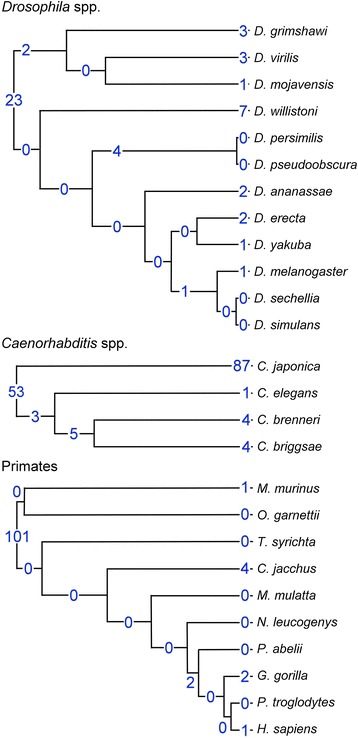
Background: A fundamental concept in biology is that heritable material, DNA, is passed from parent to offspring, a process called vertical gene transfer. An alternative mechanism of gene acquisition is through horizontal gene transfer (HGT), which involves movement of genetic material between different species. HGT is well-known in single-celled organisms such as bacteria, but its existence in higher organisms, including animals, is less well established, and is controversial in humans. Results: We have taken advantage of the recent availability of a sufficient number of high-quality genomes and associated transcriptomes to carry out a detailed examination of HGT in 26 animal species (10 primates, 12 flies and four nematodes) and a simplified analysis in a further 14 vertebrates. Genome-wide comparative and phylogenetic analyses show that HGT in animals typically gives rise to tens or hundreds of active ‘foreign’ genes, largely concerned with metabolism. Our analyses suggest that while fruit flies and nematodes have continued to acquire foreign genes throughout their evolution, humans and other primates have gained relatively few since their common ancestor. We also resolve the controversy surrounding previous evidence of HGT in humans and provide at least 33 new examples of horizontally acquired genes. Conclusions: We argue that HGT has occurred, and continues to occur, on a previously unsuspected scale in metazoans and is likely to have contributed to biochemical diversification during animal evolution.
Overview
The claims and statistics of this paper haven’t been checked yet.
Free: it reads the open-access text and checks the first 5 claims that cite a source we can check. Create a free account to check every claim.
Integrity signals
Registry
Cites
Statistics
Figures
Verification
Claims the paper makes
The claims and statistics of this paper haven’t been checked yet.
Free: it reads the open-access text and checks the first 5 claims that cite a source we can check. Create a free account to check every claim.
Claims other papers make about this one
Each is checked against this paper’s own text: does it say what the citing paper says it does?
The source backs part of the claim, not all of it — or backs it for a different population, condition or comparison.
In the citing paper
“Indeed, previous phylogenetic analyses validated only an average of 55% of the genes with a high HGT index (≥30) as foreign origin39.”
From Extremotolerant tardigrade genome and improved radiotolerance of human cultured cells by tardigrade-unique protein (2016) · cites this paper as [39]
Experimental — accuracy not yet measuredThe source backs part of the claim, not all of it — or backs it for a different population, condition or comparison.
In the citing paper
“The number of putative HGT genes (234) in our assembly is in the range of those in nematodes (129–241) estimated with the same criterion39 and we therefore concluded that R. varieornatus contains only a moderate number of HGT genes.”
From Extremotolerant tardigrade genome and improved radiotolerance of human cultured cells by tardigrade-unique protein (2016) · cites this paper as [39]
Experimental — accuracy not yet measuredThe source backs part of the claim, not all of it — or backs it for a different population, condition or comparison.
In the citing paper
“In multicellular lineages, convincing cases of HGT are rarer but include gene acquisitions in bdelloid rotifers, fungi, and even vertebrate genomes [33,34].”
From Origin and Evolution of Genes in Eukaryotes: Mechanisms, Dynamics, and Functional Implications (2025) · cites this paper as [34]
Experimental — accuracy not yet measuredThe cited source says what the claim attributes to it.
In the citing paper
“The HGT index is a useful indicator for the possibility of HGT, but is not a sufficient criterion to guarantee true HGT.”
From Extremotolerant tardigrade genome and improved radiotolerance of human cultured cells by tardigrade-unique protein (2016) · cites this paper as [39]
The check wasn’t confident either way, so it gives no verdict — never disputed.
In the citing paper
“most instances of glycan molecular mimicry by pathogens seem to involve convergent evolution of pre-existing pathogen biosynthetic pathways, or de novo generation of functional genes.”
From Biological roles of glycans (2017) · cites this paper as [986]
Experimental — accuracy not yet measured
Self-check
Percentages, sums and reported differences re-computed from the paper’s own numbers.
The self-check needs the paper’s full text.
Citations
Cites
Gene Ontology: tool for the unification of biology
Ashburner, M., Ball, C. A., Blake, J. A., Botstein, D., Butler, H., Cherry, J. M., Davis, A. P., Dolinski, K., Dwight, S. S., Eppig, J. T., et al. (2000) · Nature Genetics · doi:10.1038/75556 · Cited by 43,206 · cited 1×
“To determine whether horizontally transferred genes encode enzymes, we examined GO annotation [52].”
BackgroundInitial sequencing and analysis of the human genome
International Human Genome Sequencing Consortium, Whitehead Institute for Biomedical Research, C. F. G. R., Lander, E. S., Linton, L. M., Birren, B., Nusbaum, C., Zody, M. C., Baldwin, J., Devon, K., Dewar, K., et al. (2001) · Nature · doi:10.1038/35057062 · Cited by 24,216 · cited 8×
“Furthermore, there are concerns over the validity of the examples of HGT reported in humans [19-22].”
InfluentialBLAST+: architecture and applications
Camacho, C., Coulouris, G., Avagyan, V., Ma, N., Papadopoulos, J., Bealer, K., & Madden, T. L. (2009) · BMC Bioinformatics · doi:10.1186/1471-2105-10-421 · Cited by 22,074 · cited 2×
“27+) [47] against the complete proteomes on UniProt.”
Database resources of the National Center for Biotechnology Information: update
Wheeler, D. L. (2004) · Nucleic Acids Research · doi:10.1093/nar/gkh073 · Cited by 10,641
An efficient algorithm for large-scale detection of protein families
Enright, A. J. (2002) · Nucleic Acids Research · doi:10.1093/nar/30.7.1575 · Cited by 3,588 · cited 1×
“Ortholog groups were determined from this alignment using MCL with I = 15 [48].”
Horizontal gene transfer in eukaryotic evolution
Keeling, P. J., & Palmer, J. D. (2008) · Nature Reviews Genetics · doi:10.1038/nrg2386 · Cited by 1,355 · cited 1×
“However, relatively few cases have been documented in multicellular organisms [3-7].”
Crowe, J. H., Hoekstra, F. A., & Crowe, L. M. (1992) · Annual Review of Physiology · doi:10.1146/annurev.ph.54.030192.003051 · Cited by 1,253
Flicek, P., Amode, M. R., Barrell, D., Beal, K., Billis, K., Brent, S., Carvalho-Silva, D., Clapham, P., Coates, G., Fitzgerald, S., et al. (2014) · Nucleic Acids Research · doi:10.1093/nar/gkt1196 · Cited by 1,214
Horizontal gene transfer among genomes: The complexity hypothesis
Jain, R., Rivera, M. C., & Lake, J. A. (1999) · Proceedings of the National Academy of Sciences · doi:10.1073/pnas.96.7.3801 · Cited by 1,165 · cited 1×
“In prokaryotes, horizontally acquired genes tend to be operational, typically encoding enzymes, rather than informational, that is, genes involved in transcription and translation [31].”
OrthoMCL-DB: querying a comprehensive multi-species collection of ortholog groups
Chen, F. (2006) · Nucleic Acids Research · doi:10.1093/nar/gkj123 · Cited by 884 · cited 1×
“All data on Caenorhabditis species were obtained from WormBase [41,42], while data on primate and chordate species were obtained from Ensembl [43,44], with the exception of ortholog groups which were obtained from OrthoMCL [45,46].”
Database resources of the National Center for Biotechnology Information
Coordinators, N. R. (2012) · Nucleic Acids Research · doi:10.1093/nar/gks1189 · Cited by 854
Widespread Lateral Gene Transfer from Intracellular Bacteria to Multicellular Eukaryotes
Hotopp, J. C. D., Clark, M. E., Oliveira, D. C. S. G., Foster, J. M., Fischer, P., Torres, M. C. M., Giebel, J. D., Kumar, N., Ishmael, N., Wang, S., et al. (2007) · Science · doi:10.1126/science.1142490 · Cited by 817 · cited 3×
“Genes from Wolbachia are frequently transferred to invertebrates [17,18], probably because the long-term association (either parasitic or mutualistic) between the bacterium and its hosts maintains their genomes in close proximity.”
BackgroundChapman, J. A., Kirkness, E. F., Simakov, O., Hampson, S. E., Mitros, T., Weinmaier, T., Rattei, T., Balasubramanian, P. G., Borman, J., Busam, D., et al. (2010) · Nature · doi:10.1038/nature08830 · Cited by 810 · cited 1×
“The problem (the availability of a limited number of eukaryotic genomes for comparison in studies of HGT) has lessened in the intervening decade; thousands of proteomes (including several primates) are now available in UniProt, allowing prediction of HGT using alignment to hundreds of species and subsequent phylogenet…”
Mattimore, V, & Battista, J. R. (1996) · Journal of Bacteriology · doi:10.1128/jb.178.3.633-637.1996 · Cited by 687 · cited 1×
“Desiccation results in both DNA breakage [14,15] and loss of membrane integrity (reviewed in [16]), both of which may potentiate HGT.”
Lateral Transfer of Genes from Fungi Underlies Carotenoid Production in Aphids
Moran, N. A., & Jarvik, T. (2010) · Science · doi:10.1126/science.1187113 · Cited by 645 · cited 1×
“Examples include the transfer of fungal genes for carotenoid biosynthesis to the pea aphid, which results in a red pigmentation and is thought to be beneficial to the aphid [8] and the transfer of a cysteine synthase from a bacterium into the arthropod lineage (likely two independent transfers into a phytophagous mite…”
Genes Lost and Genes Found: Evolution of Bacterial Pathogenesis and Symbiosis
Ochman, H., & Moran, N. A. (2001) · Science · doi:10.1126/science.1058543 · Cited by 566 · cited 1×
“Furthermore, published estimates of the rate of gene loss typically treat all genes as equal, but the actual rate varies between types of genes and types of organisms (for example, parasites have higher loss rates [25,26]).”
Horizontal gene transfer and the evolution of bacterial and archaeal population structure
Polz, M. F., Alm, E. J., & Hanage, W. P. (2013) · Trends in Genetics · doi:10.1016/j.tig.2012.12.006 · Cited by 425 · cited 1×
“Background The acquisition of genes from an organism other than a direct ancestor (that is, horizontal gene transfer (HGT) also called lateral gene transfer) is well known in bacteria and unicellular eukaryotes, where it plays an important role in evolution [1], with recent estimates suggesting that on average 81% of…”
Modular networks and cumulative impact of lateral transfer in prokaryote genome evolution
Dagan, T., Artzy-Randrup, Y., & Martin, W. (2008) · Proceedings of the National Academy of Sciences · doi:10.1073/pnas.0800679105 · Cited by 409
Genomic evidence for ameiotic evolution in the bdelloid rotifer Adineta vaga
Flot, J.-F., Hespeels, B., Li, X., Noel, B., Arkhipova, I., Danchin, E. G. J., Hejnol, A., Henrissat, B., Koszul, R., Aury, J.-M., et al. (2013) · Nature · doi:10.1038/nature12326 · Cited by 384 · cited 1×
“For example, in bdelloid rotifers, which are desiccation-tolerant asexuals, up to approximately 10% of transcripts derive from horizontally acquired genes [11-13].”
Fredriksson, R., Hägglund, M., Olszewski, P. K., Stephansson, O., Jacobsson, J. A., Olszewska, A. M., Levine, A. S., Lindblom, J., & Schiöth, H. B. (2008) · Endocrinology · doi:10.1210/en.2007-1457 · Cited by 379
FlyMine: an integrated database for Drosophila and Anopheles genomics
Lyne, R., Smith, R., Rutherford, K., Wakeling, M., Varley, A., Guillier, F., Janssens, H., Ji, W., Mclaren, P., North, P., et al. (2007) · Genome Biology · doi:10.1186/gb-2007-8-7-r129 · Cited by 377 · cited 1×
“Additional annotation was obtained from FlyMine [39,40].”
Self-citationHohmann, S. (2003) · Springer eBooks · Cited by 357
Horizontal gene transfer between bacteria and animals
Dunning Hotopp, J. C. (2011) · Trends in Genetics · doi:10.1016/j.tig.2011.01.005 · Cited by 341 · cited 2×
“These studies have led to the perception that HGT occurs very infrequently in most animals, especially in vertebrates [5,6].”
BackgroundGenome fragment of Wolbachia endosymbiont transferred to X chromosome of host insect
Kondo, N., Nikoh, N., Ijichi, N., Shimada, M., & Fukatsu, T. (2002) · Proceedings of the National Academy of Sciences · doi:10.1073/pnas.222228199 · Cited by 333 · cited 1×
“Genes from Wolbachia are frequently transferred to invertebrates [17,18], probably because the long-term association (either parasitic or mutualistic) between the bacterium and its hosts maintains their genomes in close proximity.”
The draft genome of the parasitic nematode Trichinella spiralis
Mitreva, M., Jasmer, D. P., Zarlenga, D. S., Wang, Z., Abubucker, S., Martin, J., Taylor, C. M., Yin, Y., Fulton, L., Minx, P., et al. (2011) · Nature Genetics · doi:10.1038/ng.769 · Cited by 328 · cited 1×
“Furthermore, published estimates of the rate of gene loss typically treat all genes as equal, but the actual rate varies between types of genes and types of organisms (for example, parasites have higher loss rates [25,26]).”
Microbial Genes in the Human Genome: Lateral Transfer or Gene Loss?
Salzberg, S. L., White, O., Peterson, J., & Eisen, J. A. (2001) · Science · doi:10.1126/science.1061036 · Cited by 326 · cited 7×
“Furthermore, there are concerns over the validity of the examples of HGT reported in humans [19-22].”
InfluentialFlyBase 102—advanced approaches to interrogating FlyBase
St. Pierre, S. E., Ponting, L., Stefancsik, R., McQuilton, P., & the FlyBase Consortium (2014) · Nucleic Acids Research · doi:10.1093/nar/gkt1092 · Cited by 314
Phylogenetic analyses do not support horizontal gene transfers from bacteria to vertebrates
Stanhope, M. J., Lupas, A., Italia, M. J., Koretke, K. K., Volker, C., & Brown, J. R. (2001) · Nature · doi:10.1038/35082058 · Cited by 226 · cited 4×
“some of these genes were later confirmed as foreign, many were rejected [20-22].”
InfluentialAdaptive horizontal transfer of a bacterial gene to an invasive insect pest of coffee
Acuña, R., Padilla, B. E., Flórez-Ramos, C. P., Rubio, J. D., Herrera, J. C., Benavides, P., Lee, S.-J., Yeats, T. H., Egan, A. N., Doyle, J. J., et al. (2012) · Proceedings of the National Academy of Sciences · doi:10.1073/pnas.1121190109 · Cited by 213 · cited 1×
“Other examples of putatively adaptive HGT have been characterised in plant-parasitic nematodes, which produce cell-wall degrading enzymes from a number of horizontally transferred genes [3], and the coffee berry borer beetle, where a mannanase has been transferred from bacteria allowing the hydrolysation of coffee ber…”
Evolutionary Implications of Horizontal Gene Transfer
Syvanen, M. (2012) · Annual Review of Genetics · doi:10.1146/annurev-genet-110711-155529 · Cited by 210 · cited 2×
“These studies have led to the perception that HGT occurs very infrequently in most animals, especially in vertebrates [5,6].”
Horizontal gene transfer in the acquisition of novel traits by metazoans
Boto, L. (2014) · Proceedings of the Royal Society B: Biological Sciences · doi:10.1098/rspb.2013.2450 · Cited by 204 · cited 1×
“However, relatively few cases have been documented in multicellular organisms [3-7].”
Cohen, O., Gophna, U., & Pupko, T. (2011) · Molecular Biology and Evolution · doi:10.1093/molbev/msq333 · Cited by 192 · cited 1×
“work connectivity is a more important consideration than function [32], but nevertheless most identified foreign genes are concerned with metabolism.”
WormBase 2012: more genomes, more data, new website
Yook, K., Harris, T. W., Bieri, T., Cabunoc, A., Chan, J., Chen, W. J., Davis, P., de la Cruz, N., Duong, A., Fang, R., et al. (2012) · Nucleic Acids Research · doi:10.1093/nar/gkr954 · Cited by 184 · cited 1×
“All data on Caenorhabditis species were obtained from WormBase [41,42], while data on primate and chordate species were obtained from Ensembl [43,44], with the exception of ortholog groups which were obtained from OrthoMCL [45,46].”
Trehalose Renders the Dauer Larva of Caenorhabditis elegans Resistant to Extreme Desiccation
Erkut, C., Penkov, S., Khesbak, H., Vorkel, D., Verbavatz, J.-M., Fahmy, K., & Kurzchalia, T. V. (2011) · Current Biology · doi:10.1016/j.cub.2011.06.064 · Cited by 182
Dormancy and Resistance in Harsh Environments
(2010) · Topics in Current Genetics · doi:10.1007/978-3-642-12422-8 · Cited by 177
Biochemical Diversification through Foreign Gene Expression in Bdelloid Rotifers
Boschetti, C., Carr, A., Crisp, A., Eyres, I., Wang-Koh, Y., Lubzens, E., Barraclough, T. G., Micklem, G., & Tunnacliffe, A. (2012) · PLoS Genetics · doi:10.1371/journal.pgen.1003035 · Cited by 171 · cited 9×
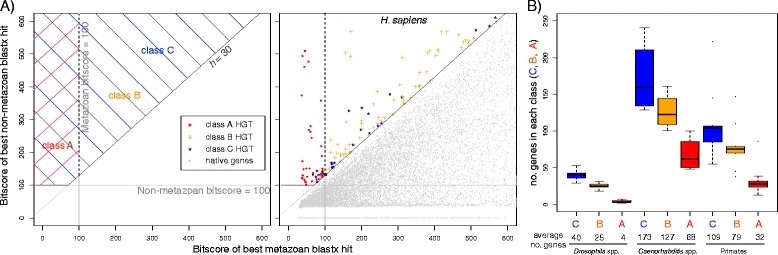
“the bitscore of the best metazoan match from that of the best non-metazoan match [12].”
InfluentialSelf-citationHorizontally transferred genes in plant-parasitic nematodes: a high-throughput genomic approach
Scholl, E. H., Thorne, J. L., McCarter, J. P., & Bird, D. M. (2003) · Genome biology · doi:10.1186/gb-2003-4-6-r39 · Cited by 170 · cited 3×
“HGT also occurs in a number of other nematodes, in particular the parasitic root-knot nematodes, in which as many as approximately 3% of all genes may be horizontally acquired [3,24].”
A gene horizontally transferred from bacteria protects arthropods from host plant cyanide poisoning
Wybouw, N., Dermauw, W., Tirry, L., Stevens, C., Grbić, M., Feyereisen, R., & Van Leeuwen, T. (2014) · eLife · doi:10.7554/elife.02365 · Cited by 164
LEA Proteins: Versatility of Form and Function
Tunnacliffe, A., Hincha, D. K., Leprince, O., & Macherel, D. (2010) · Topics in current genetics · doi:10.1007/978-3-642-12422-8_6 · Cited by 157 · cited 1×
“Trehalose production allows C. elegans dauer larvae to survive extreme desiccation [33], while LEA proteins are also linked to tolerance of water stress in C. elegans [34] and other invertebrates, as well as plants and microorganisms (reviewed in [35]).”
Self-citationMolecular Strategies of the Caenorhabditis elegans Dauer Larva to Survive Extreme Desiccation
Erkut, C., Vasilj, A., Boland, S., Habermann, B. H., Shevchenko, A., & Kurzchalia, T. V. (2013) · PLoS ONE · doi:10.1371/journal.pone.0082473 · Cited by 135 · cited 1×
“elegans [34] and other invertebrates, as well as plants and microorganisms (reviewed in [35]).”
DNA damage in storage cells of anhydrobiotic tardigrades
Neumann, S., Reuner, A., Brümmer, F., & Schill, R. O. (2009) · Comparative Biochemistry and Physiology Part A Molecular & Integrative Physiology · doi:10.1016/j.cbpa.2009.04.611 · Cited by 85 · cited 1×
“Desiccation results in both DNA breakage [14,15] and loss of membrane integrity (reviewed in [16]), both of which may potentiate HGT.”
Paganini, J., Campan-Fournier, A., Rocha, M. D., Gouret, P., Pontarotti, P., Wajnberg, É., Abad, P., & Danchin, É. (2012) · PLoS ONE · doi:10.1371/journal.pone.0050875 · Cited by 80 · cited 2×
“HGT also occurs in a number of other nematodes, in particular the parasitic root-knot nematodes, in which as many as approximately 3% of all genes may be horizontally acquired [3,24].”
The FTO Gene, Implicated in Human Obesity, Is Found Only in Vertebrates and Marine Algae
Robbens, S., Rouzé, P., Cock, J. M., Spring, J., Worden, A. Z., & de Peer, Y. V. (2007) · Journal of Molecular Evolution · doi:10.1007/s00239-007-9059-z · Cited by 78 · cited 1×
“For example, the fat mass and obesity associated gene (FTO, in Additional file 5: Figure S1A) seems to be present only in marine algae and vertebrates [27,28], which is a highly unusual distribution.”
Hosts, parasites, and horizontal gene transfer
Wijayawardena, B. K., Minchella, D. J., & DeWoody, J. A. (2013) · Trends in Parasitology · doi:10.1016/j.pt.2013.05.001 · Cited by 77 · cited 1×
“Second, although hard to detect with available data, metazoan-to-metazoan HGT remains plausible and is known for some host-parasite relationships [36].”
Boschetti, C., Pouchkina-Stantcheva, N., Hoffmann, P., & Tunnacliffe, A. (2011) · Journal of Experimental Biology · doi:10.1242/jeb.050328 · Cited by 67 · cited 1×
“horizontally acquired genes [11-13].”
Self-citationSimiTri—visualizing similarity relationships for groups of sequences
Parkinson, J., & Blaxter, M. (2003) · Bioinformatics · doi:10.1093/bioinformatics/btf870 · Cited by 66 · cited 6×
“This discrepancy with Parkinson and Blaxter [30] arises largely because these authors aligned C.”
InfluentialMuch ado about bacteria-to-vertebrate lateral gene transfer
Genereux, D. P., & Logsdon, J. M., Jr. (2003) · Trends in Genetics · doi:10.1016/s0168-9525(03)00055-6 · Cited by 52 · cited 5×
“Furthermore, there are concerns over the validity of the examples of HGT reported in humans [19-22].”
InfluentialBrew, K., Tumbale, P. P., & Acharya, K. R. (2010) · Journal of Biological Chemistry · doi:10.1074/jbc.r110.176248 · Cited by 26 · cited 1×
“Another gene proposed to have been horizontally transferred is the ABO blood group gene (ABO, in Additional file 5: Figure S1B), which is suggested to enhance mutualism between vertebrates A) B) and bacteria [29].”
Crisp, A. (2015) · Figshare · doi:10.6084/m9.figshare.1304479 · Cited by 1
Self-citation
Research works printed but not linked: 1
- NCBI [ http://www.ncbi.nlm.nih.gov/]
Cited by
Varki, A. (2017) · Glycobiology · doi:10.1093/glycob/cww086 · Cited by 2,635
“While there is continued controversy about the extent of horizontal gene transfer between prokaryotes and eukaryotes (986), most instances of glycan molecular mimicry by pathogens seem to involve convergent evolution of pre-existing pathogen biosynthetic pathways, or de novo generation of functional genes.”
BackgroundHorizontal gene transfer: building the web of life
Soucy, S. M., Huang, J., & Gogarten, J. P. (2015) · Nature Reviews Genetics · doi:10.1038/nrg3962 · Cited by 1,449
Mallet, J., Besansky, N., & Hahn, M. W. (2016) · BioEssays · doi:10.1002/bies.201500149 · Cited by 586
The hologenome concept of evolution after 10 years
Rosenberg, E., & Zilber-Rosenberg, I. (2018) · Microbiome · doi:10.1186/s40168-018-0457-9 · Cited by 537
“However, an examination of the recent availability of a large number of highquality genomes has led to the conclusion that HGT in animals and plants typically results in tens or even hundreds of active foreign genes [168].”
BackgroundInfluentialMicrobes Drive Evolution of Animals and Plants: the Hologenome Concept
Rosenberg, E., & Zilber-Rosenberg, I. (2016) · mBio · doi:10.1128/mbio.01395-15 · Cited by 499
Metadata
- Authors
- Crisp, A., Boschetti, C., Perry, M., Tunnacliffe, A., & Micklem, G.
- Affiliations
- University of Cambridge (GB)
- Corresponding author
- Tunnacliffe, Alan
- Micklem, Gos
- Venue
- Genome Biology
- Published
- 2015-03-13
- Volume
- 16
- Issue
- 1
- Pages
- 50-50
- ISSN
- 1465-6906 (ISSN-L)
- PMC
- PMC4358723
- OpenAlex
- W1998787456
- Cited by
- 268
- References
- 49
- Citations by year
- 2026: 16 · 2025: 10 · 2024: 14 · 2023: 11 · 2022: 23 · 2021: 19 · 2020: 13 · 2019: 34 · 2018: 34 · 2017: 27 · 2016: 41 · 2015: 26
- FWCI
- 52.03
- Type
- journal article
- Language
- en
- Open access
- gold
- doi.org
- Licence
- cc-by
- creativecommons.org/licenses/by/4.0 (tdm)
- creativecommons.org/licenses/by/4.0 (vor)
- Locations
- Genome biology (publishedVersion, cc-by)
- Europe PMC (PubMed Central) (publishedVersion, cc-by)
- PubMed Central (publishedVersion, cc-by)
- PubMed (publishedVersion)
- PEARL (University of Plymouth) (submittedVersion)
- Figshare (submittedVersion, cc-by)
- Spiral (Imperial College London) (submittedVersion, cc-by)
- Apollo (University of Cambridge) (submittedVersion, cc-by)
- Figshare (cc-by)
- Funders
- FP7 Ideas: European Research Council (233232)
- Topics
- Life Sciences › Biochemistry, Genetics and Molecular Biology › Genetics › Chromosomal and Genetic Variations
- Life Sciences › Biochemistry, Genetics and Molecular Biology › Molecular Biology › Genomics and Phylogenetic Studies
- Life Sciences › Biochemistry, Genetics and Molecular Biology › Genetics › Genome Rearrangement Algorithms
- Keywords
- horizontal gene transfer, metazoan genomes, gene expression, primates, Drosophila, nematodes, human genome, comparative genomics, phylogenetic analysis, metabolic genes, animal evolution
- MeSH terms
- Animals, Bacteria, Humans, Invertebrates, Nematoda, Phylogeny, Vertebrates, Gene Expression, Genome, Evolution, Molecular, Gene Transfer, Horizontal
About these checks
Registry, retraction, Cites and statistics results are computed, not judged, with one exception: a printed reference that no index lists is read once by a model before it counts as a citation error. Claims are extracted by a model and kept only when their quote appears verbatim in the text; each cited source is then checked, with a model’s help, for whether it says what the claim relies on. Those verdicts can be wrong — read the claim’s quote and the cited source before relying on one.
Statistics and arithmetic are recomputed, not judged.
Confidence bands are shown only for fields calibrated on our annotated test set. None is calibrated yet, so no band is shown.
What counts as a claim ›How we measure confidence ›How we check this ›
Are you an author, or do you see a problem with this page? Request a review
Data sources
Bibliographic data: Semantic Scholar, OpenAlex, Crossref.
Contains information from the Semantic Scholar Academic Graph Datasets, made available under the ODC Attribution License (ODC-BY 1.0).
Semantic Scholar’s data is described in: Kinney, R., et al. (2023). The Semantic Scholar Open Data Platform. arXiv:2301.10140.
