

Expression of multiple horizontally acquired genes is a hallmark of both vertebrate and invertebrate genomes
Open accessThe DOI matches its Crossref record; 49 of the 49 references it cites were found in a registry or an index.
Abstract
Background: A fundamental concept in biology is that heritable material, DNA, is passed from parent to offspring, a process called vertical gene transfer. An alternative mechanism of gene acquisition is through horizontal gene transfer (HGT), which involves movement of genetic material between different species. HGT is well-known in single-celled organisms such as bacteria, but its existence in higher organisms, including animals, is less well established, and is controversial in humans. Results: We have taken advantage of the recent availability of a sufficient number of high-quality genomes and associated transcriptomes to carry out a detailed examination of HGT in 26 animal species (10 primates, 12 flies and four nematodes) and a simplified analysis in a further 14 vertebrates. Genome-wide comparative and phylogenetic analyses show that HGT in animals typically gives rise to tens or hundreds of active ‘foreign’ genes, largely concerned with metabolism. Our analyses suggest that while fruit flies and nematodes have continued to acquire foreign genes throughout their evolution, humans and other primates have gained relatively few since their common ancestor. We also resolve the controversy surrounding previous evidence of HGT in humans and provide at least 33 new examples of horizontally acquired genes. Conclusions: We argue that HGT has occurred, and continues to occur, on a previously unsuspected scale in metazoans and is likely to have contributed to biochemical diversification during animal evolution.
Overview
The claims and statistics of this paper haven’t been checked yet.
Free: it reads the open-access text and checks the first 5 claims that cite a source we can check. Create a free account to check every claim.
Integrity signals
Registry
Cites
Statistics
Figures
Verification
Claims the paper makes
The claims and statistics of this paper haven’t been checked yet.
Free: it reads the open-access text and checks the first 5 claims that cite a source we can check. Create a free account to check every claim.
Claims other papers make about this one
Each is checked against this paper’s own text: does it say what the citing paper says it does?
The source backs part of the claim, not all of it — or backs it for a different population, condition or comparison.
In the citing paper
“Indeed, previous phylogenetic analyses validated only an average of 55% of the genes with a high HGT index (≥30) as foreign origin39.”
From Extremotolerant tardigrade genome and improved radiotolerance of human cultured cells by tardigrade-unique protein (2016) · cites this paper as [39]
Experimental — accuracy not yet measuredThe source backs part of the claim, not all of it — or backs it for a different population, condition or comparison.
In the citing paper
“The number of putative HGT genes (234) in our assembly is in the range of those in nematodes (129–241) estimated with the same criterion39 and we therefore concluded that R. varieornatus contains only a moderate number of HGT genes.”
From Extremotolerant tardigrade genome and improved radiotolerance of human cultured cells by tardigrade-unique protein (2016) · cites this paper as [39]
Experimental — accuracy not yet measuredThe source backs part of the claim, not all of it — or backs it for a different population, condition or comparison.
In the citing paper
“In multicellular lineages, convincing cases of HGT are rarer but include gene acquisitions in bdelloid rotifers, fungi, and even vertebrate genomes [33,34].”
From Origin and Evolution of Genes in Eukaryotes: Mechanisms, Dynamics, and Functional Implications (2025) · cites this paper as [34]
Experimental — accuracy not yet measuredThe cited source says what the claim attributes to it.
In the citing paper
“The HGT index is a useful indicator for the possibility of HGT, but is not a sufficient criterion to guarantee true HGT.”
From Extremotolerant tardigrade genome and improved radiotolerance of human cultured cells by tardigrade-unique protein (2016) · cites this paper as [39]
The check wasn’t confident either way, so it gives no verdict — never disputed.
In the citing paper
“most instances of glycan molecular mimicry by pathogens seem to involve convergent evolution of pre-existing pathogen biosynthetic pathways, or de novo generation of functional genes.”
From Biological roles of glycans (2017) · cites this paper as [986]
Experimental — accuracy not yet measured
Self-check
Percentages, sums and reported differences re-computed from the paper’s own numbers.
The self-check needs the paper’s full text.
Citations
Cites
Gene Ontology: tool for the unification of biology
Ashburner, M., Ball, C. A., Blake, J. A., Botstein, D., Butler, H., Cherry, J. M., Davis, A. P., Dolinski, K., Dwight, S. S., Eppig, J. T., et al. (2000) · Nature Genetics · doi:10.1038/75556 · Cited by 43,206 · cited 1×
“To determine whether horizontally transferred genes encode enzymes, we examined GO annotation [52].”
BackgroundInitial sequencing and analysis of the human genome
International Human Genome Sequencing Consortium, Whitehead Institute for Biomedical Research, C. F. G. R., Lander, E. S., Linton, L. M., Birren, B., Nusbaum, C., Zody, M. C., Baldwin, J., Devon, K., Dewar, K., et al. (2001) · Nature · doi:10.1038/35057062 · Cited by 24,216 · cited 8×
“Furthermore, there are concerns over the validity of the examples of HGT reported in humans [19-22].”
InfluentialBLAST+: architecture and applications
Camacho, C., Coulouris, G., Avagyan, V., Ma, N., Papadopoulos, J., Bealer, K., & Madden, T. L. (2009) · BMC Bioinformatics · doi:10.1186/1471-2105-10-421 · Cited by 22,074 · cited 2×
“27+) [47] against the complete proteomes on UniProt.”
Database resources of the National Center for Biotechnology Information: update
Wheeler, D. L. (2004) · Nucleic Acids Research · doi:10.1093/nar/gkh073 · Cited by 10,641
An efficient algorithm for large-scale detection of protein families
Enright, A. J. (2002) · Nucleic Acids Research · doi:10.1093/nar/30.7.1575 · Cited by 3,588 · cited 1×
“Ortholog groups were determined from this alignment using MCL with I = 15 [48].”
Horizontal gene transfer in eukaryotic evolution
Keeling, P. J., & Palmer, J. D. (2008) · Nature Reviews Genetics · doi:10.1038/nrg2386 · Cited by 1,355 · cited 1×
“However, relatively few cases have been documented in multicellular organisms [3-7].”
Crowe, J. H., Hoekstra, F. A., & Crowe, L. M. (1992) · Annual Review of Physiology · doi:10.1146/annurev.ph.54.030192.003051 · Cited by 1,253
Flicek, P., Amode, M. R., Barrell, D., Beal, K., Billis, K., Brent, S., Carvalho-Silva, D., Clapham, P., Coates, G., Fitzgerald, S., et al. (2014) · Nucleic Acids Research · doi:10.1093/nar/gkt1196 · Cited by 1,214
Horizontal gene transfer among genomes: The complexity hypothesis
Jain, R., Rivera, M. C., & Lake, J. A. (1999) · Proceedings of the National Academy of Sciences · doi:10.1073/pnas.96.7.3801 · Cited by 1,165 · cited 1×
“In prokaryotes, horizontally acquired genes tend to be operational, typically encoding enzymes, rather than informational, that is, genes involved in transcription and translation [31].”
OrthoMCL-DB: querying a comprehensive multi-species collection of ortholog groups
Chen, F. (2006) · Nucleic Acids Research · doi:10.1093/nar/gkj123 · Cited by 884 · cited 1×
“All data on Caenorhabditis species were obtained from WormBase [41,42], while data on primate and chordate species were obtained from Ensembl [43,44], with the exception of ortholog groups which were obtained from OrthoMCL [45,46].”
Research works printed but not linked: 1
- NCBI [ http://www.ncbi.nlm.nih.gov/]
Cited by
Varki, A. (2017) · Glycobiology · doi:10.1093/glycob/cww086 · Cited by 2,635
“While there is continued controversy about the extent of horizontal gene transfer between prokaryotes and eukaryotes (986), most instances of glycan molecular mimicry by pathogens seem to involve convergent evolution of pre-existing pathogen biosynthetic pathways, or de novo generation of functional genes.”
BackgroundHorizontal gene transfer: building the web of life
Soucy, S. M., Huang, J., & Gogarten, J. P. (2015) · Nature Reviews Genetics · doi:10.1038/nrg3962 · Cited by 1,449
Mallet, J., Besansky, N., & Hahn, M. W. (2016) · BioEssays · doi:10.1002/bies.201500149 · Cited by 586
The hologenome concept of evolution after 10 years
Rosenberg, E., & Zilber-Rosenberg, I. (2018) · Microbiome · doi:10.1186/s40168-018-0457-9 · Cited by 537
“However, an examination of the recent availability of a large number of highquality genomes has led to the conclusion that HGT in animals and plants typically results in tens or even hundreds of active foreign genes [168].”
BackgroundInfluentialMicrobes Drive Evolution of Animals and Plants: the Hologenome Concept
Rosenberg, E., & Zilber-Rosenberg, I. (2016) · mBio · doi:10.1128/mbio.01395-15 · Cited by 499
Functional horizontal gene transfer from bacteria to eukaryotes
Husnik, F., & McCutcheon, J. P. (2018) · Nature Reviews Microbiology · doi:10.1038/nrmicro.2017.137 · Cited by 480
Mitochondria Know No Boundaries: Mechanisms and Functions of Intercellular Mitochondrial Transfer
Torralba, D., Baixauli, F., & Sánchez-Madrid, F. (2016) · Frontiers in Cell and Developmental Biology · doi:10.3389/fcell.2016.00107 · Cited by 440
“Frontiers in Cell and Developmental Biology | www.frontiersin.org 5 September 2016 | Volume 4 | Article 107 However, HGT in eukaryotes might be less rare than previously anticipated (Crisp et al., 2015), and it has likely contributed to biochemical diversification during animal evolution.”
Hashimoto, T., Horikawa, D. D., Saito, Y., Kuwahara, H., Kozuka-Hata, H., Shin-I, T., Minakuchi, Y., Ohishi, K., Motoyama, A., Aizu, T., et al. (2016) · Nature Communications · doi:10.1038/ncomms12808 · Cited by 394
The Impact of Drought Stress on Soil Microbial Community, Enzyme Activities and Plants
Bogati, K., & Walczak, M. (2022) · Agronomy · doi:10.3390/agronomy12010189 · Cited by 391
Genes for de novo biosynthesis of omega-3 polyunsaturated fatty acids are widespread in animals
Kabeya, N., Fonseca, M. M., Ferrier, D. E. K., Navarro, J. C., Bay, L. K., Francis, D. S., Tocher, D. R., Castro, L. F. C., & Monroig, Ó. (2018) · Science Advances · doi:10.1126/sciadv.aar6849 · Cited by 365
“elegans (15–17), with protists postulated as probable “donor taxa” (22).”
BackgroundChen, W., Hasegawa, D. K., Kaur, N., Kliot, A., Pinheiro, P. V., Luan, J., Stensmyr, M. C., Zheng, Y., Liu, W., Sun, H., et al. (2016) · BMC Biology · doi:10.1186/s12915-016-0321-y · Cited by 350
“The recent rapid accumulation of genomic data has facilitated the identification of increasing numbers of horizontally acquired exogenous DNA sequences in the genomes of animals, including insects [46].”
BackgroundEndosymbiotic origin and differential loss of eukaryotic genes
Ku, C., Nelson-Sathi, S., Roettger, M., Sousa, F. L., Lockhart, P. J., Bryant, D., Hazkani-Covo, E., McInerney, J. O., Landan, G., & Martin, W. F. (2015) · Nature · doi:10.1038/nature14963 · Cited by 347
Computational pan-genomics: status, promises and challenges
(2016) · Briefings in Bioinformatics · doi:10.1093/bib/bbw089 · Cited by 287
Evolution, human-microbe interactions, and life history plasticity
Rook, G., Bäckhed, F., Levin, B. R., McFall-Ngai, M. J., & McLean, A. R. (2017) · The Lancet · doi:10.1016/s0140-6736(17)30566-4 · Cited by 246
“35) There is some controversial evidence that HGT from bacteria and protists to vertebrates has also occurred, usually involving genes encoding metabolic enzymes.((36))”
BackgroundKoutsovoulos, G., Kumar, S., Laetsch, D. R., Stevens, L., Daub, J., Conlon, C., Maroon, H., Thomas, F., Aboobaker, A. A., & Blaxter, M. (2016) · Proceedings of the National Academy of Sciences · doi:10.1073/pnas.1600338113 · Cited by 226
“Surveys of published genomes have revealed many cases of HGT (40), but the degree of fHGT claimed for H.”
BackgroundMitochondria, energy, and metabolism in neuronal health and disease
Trigo, D., Avelar, C., Fernandes, M., Sá, J., & da Cruz e Silva, O. (2022) · FEBS Letters · doi:10.1002/1873-3468.14298 · Cited by 211
Convergent evolution of defensin sequence, structure and function
Shafee, T. M. A., Lay, F. T., Phan, T. K., Anderson, M. A., & Hulett, M. D. (2017) · Cellular and Molecular Life Sciences · doi:10.1007/s00018-016-2344-5 · Cited by 201
“This broad and patchy distribution of defensins may be the result of repeated gene loss in multiple lineages [31] or extensive horizontal gene transfer between phyla, as has been documented for other host defence genes [32, 33].”
BackgroundPotential Effects of Horizontal Gene Exchange in the Human Gut
Lerner, A., Matthias, T., & Aminov, R. (2017) · Frontiers in Immunology · doi:10.3389/fimmu.2017.01630 · Cited by 198
“Crisp and others (25) have recently described between ten and hundreds of potentially foreign genes that are expressed in primates, flies, nematodes, and humans.”
BackgroundHorizontal Gene Transfer: From Evolutionary Flexibility to Disease Progression
Emamalipour, M., Seidi, K., Zununi Vahed, S., Jahanban-Esfahlan, A., Jaymand, M., Majdi, H., Amoozgar, Z., Chitkushev, L. T., Javaheri, T., Jahanban-Esfahlan, R., et al. (2020) · Frontiers in Cell and Developmental Biology · doi:10.3389/fcell.2020.00229 · Cited by 198
Metabolic Coevolution in the Bacterial Symbiosis of Whiteflies and Related Plant Sap-Feeding Insects
Luan, J.-B., Chen, W., Hasegawa, D. K., Simmons, A. M., Wintermantel, W. M., Ling, K.-S., Fei, Z., Liu, S.-S., & Douglas, A. E. (2015) · Genome Biology and Evolution · doi:10.1093/gbe/evv170 · Cited by 189
“Identification of Genes with Bacterial Origin To identify HTGs, we adopted the pipelines used previously (Husnik et al. 2013; Sloan et al. 2014; Crisp et al. 2015) with slight modification.”
MethodHGT is widespread in insects and contributes to male courtship in lepidopterans
Li, Y., Liu, Z., Liu, C., Shi, Z., Pang, L., Chen, C., Chen, Y., Pan, R., Zhou, W., Chen, X.-X., et al. (2022) · Cell · doi:10.1016/j.cell.2022.06.014 · Cited by 162
Ku, C., & Martin, W. F. (2016) · BMC Biology · doi:10.1186/s12915-016-0315-9 · Cited by 149
“Some reports suggest that prokaryote-to-eukaryote LGT frequently occurs in phagotrophic, unicellular eukaryotes [45], that there is continuous LGT from prokaryotes to vertebrates and other animals [9] as well as to plants [46] and to algae [47].”
BackgroundMethodHuman contamination in bacterial genomes has created thousands of spurious proteins
Breitwieser, F. P., Pertea, M., Zimin, A. V., & Salzberg, S. L. (2019) · Genome Research · doi:10.1101/gr.245373.118 · Cited by 146
“When fragments of the wrong species appear in a genome, they can be mistaken for genuine horizontal gene transfer, leading to claims (e.g., Boothby et al. 2015; Crisp et al. 2015) thatmay later be shown to be incorrect once the contamination is discovered (Arakawa 2016; Salzberg 2017).”
BackgroundComputational Pan-Genomics: Status, Promises and Challenges
The Computational Pan-Genomics Consortium, Marschall, T., Marz, M., Abeel, T., Dijkstra, L., Dutilh, B. E., Ghaffaari, A., Kersey, P., Kloosterman, W. P., Mäkinen, V., et al. (2016) · bioRxiv (Cold Spring Harbor Laboratory) · doi:10.1101/043430 · Cited by 144
State of the Art of Bacterial Chemotaxis
Karmakar, R. (2021) · Journal of Basic Microbiology · doi:10.1002/jobm.202000661 · Cited by 134
Advances in Genomics of Entomopathogenic Fungi
Wang, J. B., Leger, R. J. S., & Wang, C. (2016) · Advances in genetics · doi:10.1016/bs.adgen.2016.01.002 · Cited by 155
Lateral transfers of large DNA fragments spread functional genes among grasses
Dunning, L. T., Olofsson, J. K., Parisod, C., Choudhury, R. R., Moreno-Villena, J. J., Yang, Y., Dionora, J., Quick, W. P., Park, M., Bennetzen, J. L., et al. (2019) · Proceedings of the National Academy of Sciences · doi:10.1073/pnas.1810031116 · Cited by 133
Coping with living in the soil: the genome of the parthenogenetic springtail Folsomia candida
Faddeeva‐Vakhrusheva, A., Kraaijeveld, K., Derks, M. F. L., Anvar, S. Y., Agamennone, V., Suring, W., Kampfraath, A. A., Ellers, J., Le, N. G., van Gestel, C. A. M., et al. (2017) · BMC Genomics · doi:10.1186/s12864-017-3852-x · Cited by 131
“This number is among the highest found in metazoan genomes, being only exceeded in rotifers and some nematode species [34, 36].”
BackgroundMethodEyres, I., Boschetti, C., Crisp, A., Smith, T. P., Fontaneto, D., Tunnacliffe, A., & Barraclough, T. G. (2015) · BMC Biology · doi:10.1186/s12915-015-0202-9 · Cited by 115
“Recent estimates indicate that, although occurring at a lower frequency than in prokaryotes, HGT in eukaryotes might be less rare than previously thought [9], and among metazoans there are now several well-documented cases of the horizontal transfer of single genes or small sets of genes from non-metazoan donors.”
Self-citationComparative genomics of bdelloid rotifers: Insights from desiccating and nondesiccating species
Nowell, R. W., Almeida, P., Wilson, C. G., Smith, T., Fontaneto, D., Crisp, A., Micklem, G., Tunnacliffe, A., Boschetti, C., & Barraclough, T. G. (2018) · PLoS Biology · doi:10.1371/journal.pbio.2004830 · Cited by 118
Self-citationEvolution of genetic networks for human creativity
Zwir, I. J. S., del Val, C., Hintsanen, M., Cloninger, K. M., Romero‐Zaliz, R., Mesa, A., Arnedo, J., Salas, R., Poblete, G. F., Raitoharju, E., et al. (2021) · Molecular Psychiatry · doi:10.1038/s41380-021-01097-y · Cited by 186
“ble new pathways, and express new functions [139].”
BackgroundGene Family Evolution in the Pea Aphid Based on Chromosome-Level Genome Assembly
Li, Y., Park, H.-J., Smith, T. E., & Moran, N. A. (2019) · Molecular Biology and Evolution · doi:10.1093/molbev/msz138 · Cited by 128
“2018) as well as acquisition of horizontally transferred genes (Moran and Jarvik 2010; Moran et al. 2012; Crisp et al. 2015; Peccoud et al. 2017).”
BackgroundHorizontal gene transfer in eukaryotes: aligning theory with data
Keeling, P. J. (2024) · Nature Reviews Genetics · doi:10.1038/s41576-023-00688-5 · Cited by 128
“The first example comes from the human genome, which was remarkably twice claimed to encode scores of foreign genes 51,210 , and in both cases this conclusion was quickly demonstrated to be the result of methodological artefacts 211,212 .”
Biological information systems: Evolution as cognition-based information management
Miller, W. B. (2017) · Progress in Biophysics and Molecular Biology · doi:10.1016/j.pbiomolbio.2017.11.005 · Cited by 109
Genome sequence of the corn leaf aphid ( Rhopalosiphum maidis Fitch)
Chen, W., Shakir, S., Bigham, M., Richter, A., Fei, Z., & Jander, G. (2019) · GigaScience · doi:10.1093/gigascience/giz033 · Cited by 113
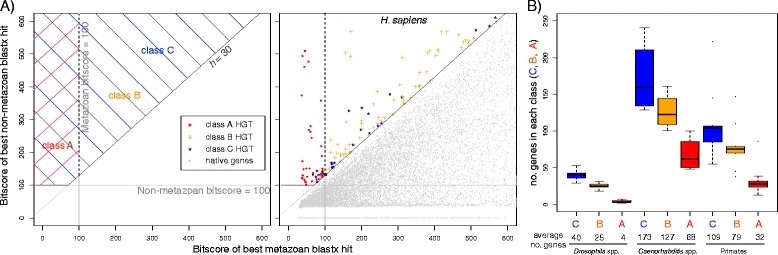
“The index of horizontal genetransfer(HGT),h,wascalculatedbysubtractingthebitscore of the best metazoan match from that of the best non-metazoan match [77].”
Rossoni, A. W., Price, D. C., Seger, M., Lyska, D., Lammers, P., Bhattacharya, D., & Weber, A. P. (2019) · eLife · doi:10.7554/elife.45017 · Cited by 89
“11 Gene co-localization on raw sequence reads 203 One major issue associated with previous HGT studies is the incorporation of contaminant 204 DNA into the genome assembly, leading to incorrect results [37-40].”
BackgroundMurphy, C. L., Youssef, N. H., Hanafy, R. A., Couger, M. B., Stajich, J., Wang, Y., Baker, K., Dagar, S. S., Griffith, G. W., Farag, I., et al. (2019) · Applied and Environmental Microbiology · doi:10.1128/aem.00988-19 · Cited by 95
“We chose an hU value of 30 (a difference of bit-score of at least 30 between the best nonfungal hit and the best fungal hit to an AGF sequence) previously suggested and validated (88, 89) as the best trade-off between sensitivity and specificity.”
MethodLi, M., Zhao, J., Tang, N., Sun, H., & Huang, J. (2018) · Frontiers in Plant Science · doi:10.3389/fpls.2018.00701 · Cited by 91
“HGT index has been recently reported to be a successor to alien index because it would not be affected by the size of BLAST database (Crisp et al., 2015).”
BackgroundInferring Orthologs: Open Questions and Perspectives
Tekaia, F. (2016) · Genomics Insights · doi:10.4137/gei.s37925 · Cited by 97
Lateral gene transfer between prokaryotes and eukaryotes
Sieber, K. B., Bromley, R. E., & Hotopp, J. C. D. (2017) · Experimental Cell Research · doi:10.1016/j.yexcr.2017.02.009 · Cited by 102
“More than a decade later, a subsequent examination of LGT in the human genome concluded that not only were some of the previously reported LGT genes likely true LGT, but that there are an additional 128 putative LGTs [29].”
BackgroundMurray, G. G. R., Weinert, L. A., Rhule, E., & Welch, J. J. (2015) · Systematic Biology · doi:10.1093/sysbio/syv084 · Cited by 95
“Similar caveats must apply to studies testing for horizontal gene transfer across distantly related organisms, particularly when considering deep nodes or sparsely sampled lineages of a phylogeny, and therefore especially across different domains of life (Gladyshev et al. 2008; Puigbò et al. 2009; e.g. Boschetti et al…”
BackgroundRecurrent Domestication by Lepidoptera of Genes from Their Parasites Mediated by Bracoviruses
Gasmi, L., Boulain, H., Gauthier, J., Hua‐Van, A., Musset, K., Jakubowska, A. K., Aury, J., Volkoff, A., Huguet, E., Herrero, S., et al. (2015) · PLoS Genetics · doi:10.1371/journal.pgen.1005470 · Cited by 89
Not So Simple After All: Bacteria, Their Population Genetics, and Recombination
Hanage, W. P. (2016) · Cold Spring Harbor Perspectives in Biology · doi:10.1101/cshperspect.a018069 · Cited by 85
“2015), and a suggestion that more than 100 human genes may have originated in other species (Crisp et al. 2015), it seems that horizontal transfer is not just for bacteria.”
BackgroundLiving Organisms Author Their Read-Write Genomes in Evolution
Shapiro, J. A. (2017) · Biology · doi:10.3390/biology6040042 · Cited by 73
Alienness: Rapid Detection of Candidate Horizontal Gene Transfers across the Tree of Life
Rancurel, C., Legrand, L., & Danchin, É. (2017) · Genes · doi:10.3390/genes8100248 · Cited by 76
“The HGT index method was first used to determine genes of non-metazoan origin in the transcriptome of the bdelloid rotifer Adineta ricciae [28] and later used to infer the contribution of HGT to the transcriptomes of several different metazoan species, including vertebrates [11].”
MethodA Novel AT-Rich DNA Recognition Mechanism for Bacterial Xenogeneic Silencer MvaT
Ding, P., McFarland, K. A., Jin, S., Tong, G., Duan, B., Yang, A. W. H., Hughes, T. R., Liu, J., Dove, S. L., Navarre, W. W., et al. (2015) · PLoS Pathogens · doi:10.1371/journal.ppat.1004967 · Cited by 72
“It is a major evolutionary force in bacteria and unicellular eukaryotes [1], and a recent study even suggests that horizontal gene transfer may also contribute to animal evolution [2].”
BackgroundShelomi, M., Danchin, É., Heckel, D. G., Wipfler, B., Bradler, S., Zhou, X. Y., & Pauchet, Y. (2016) · Scientific Reports · doi:10.1038/srep26388 · Cited by 65
Faddeeva‐Vakhrusheva, A., Derks, M. F. L., Anvar, S. Y., Agamennone, V., Suring, W., Smit, S., van Straalen, N. M., & Roelofs, D. (2016) · Genome Biology and Evolution · doi:10.1093/gbe/evw134 · Cited by 79
Horizontal gene transfer is not a hallmark of the human genome
Salzberg, S. L. (2017) · Genome Biology · doi:10.1186/s13059-017-1214-2 · Cited by 64
“[1] claim are true examples of HGT, my analysis finds that 12 genes fail to pass the authors' own BLAST-based test for HGT, because their closest metazoan match has a bitscore that is greater than the best nonmetazoan match (Table 1).”
InfluentialFour domains: The fundamental unicell and Post-Darwinian Cognition-Based Evolution
Miller, W. B., & Torday, J. S. (2018) · Progress in Biophysics and Molecular Biology · doi:10.1016/j.pbiomolbio.2018.04.006 · Cited by 69
Nawaz, M. A., Mesnage, R., Tsatsakis, A. M., Golokhvast, K. S., Yang, S. H., Antoniou, M. N., & Chung, G. (2018) · Food and Chemical Toxicology · doi:10.1016/j.fct.2018.12.030 · Cited by 71
Mandal, A., Sarkar, B., Owens, G., Thakur, J. K., Manna, M. C., Niazi, N. K., Jayaraman, S., & Patra, A. K. (2020) · Applied Soil Ecology · doi:10.1016/j.apsoil.2019.103492 · Cited by 62
Dynamic and reversible RNA N6‐methyladenosine methylation
Duan, H., Wang, Y., & Jia, G. (2018) · Wiley Interdisciplinary Reviews - RNA · doi:10.1002/wrna.1507 · Cited by 65
“…RRACH (R = A or G; H = A, U, or C) (Liu et al., 2013); note that this sequence was identified much earlier as an m6A consensus sequence in mRNA (Csepany et al., 1990; Narayan et al., 1994; Narayan & Rottman, 1988). m6A writer complexes are essential for viability, as the knockout of METTL3 was…”
BackgroundGlobal survey of mobile DNA horizontal transfer in arthropods reveals Lepidoptera as a prime hotspot
Reiss, D., Mialdea, G., Miele, V., de Vienne, D. M., Peccoud, J., Gilbert, C., Duret, L., & Charlat, S. (2019) · PLoS Genetics · doi:10.1371/journal.pgen.1007965 · Cited by 59
Biological action in Read–Write genome evolution
Shapiro, J. A. (2017) · Interface Focus · doi:10.1098/rsfs.2016.0115 · Cited by 57
Kabeya, N., Ogino, M., Ushio, H., Haga, Y., Satoh, S., Navarro, J. C., & Monroig, Ó. (2021) · Open Biology · doi:10.1098/rsob.200402 · Cited by 61
“Such diversity can be partly accounted for phenomena such as horizontal gene transfer (HGT), an evolutionary mechanism that has been proposed to explain the presence of ωx desaturases [18,61] and other desaturases [62] in animals.”
BackgroundWybouw, N., Leeuwen, T. V., & Dermauw, W. (2018) · Insect Molecular Biology · doi:10.1111/imb.12374 · Cited by 59
“In contrast to prokaryotes, the functional impact of an HGT event into an animal recipient on its subsequent evolutionary trajectory generally remains unclear (Crisp et al., 2015).”
BackgroundMethodInfluentialHorizontal gene transfer from genetically modified plants - Regulatory considerations
Philips, J. G., Avila, E. M., & Robold, A. V. (2022) · Frontiers in Bioengineering and Biotechnology · doi:10.3389/fbioe.2022.971402 · Cited by 64
“Despite the fact that all organisms have a history of HGT (Keese, 2008; Crisp et al., 2015; Fournier et al., 2015), the phylogenetic distance between non-related organisms increases the possibilities of genetic incompatibility, making them less likely to undergo HGT when compared with closely related organisms with co…”
BackgroundWilson, C. G., Nowell, R. W., & Barraclough, T. G. (2018) · Current Biology · doi:10.1016/j.cub.2018.05.070 · Cited by 53
Beyond the modern synthesis: A framework for a more inclusive biological synthesis
Corning, P. A. (2020) · Progress in Biophysics and Molecular Biology · doi:10.1016/j.pbiomolbio.2020.02.002 · Cited by 52
Unraveling the mechanisms of extreme radioresistance in prokaryotes: Lessons from nature
Pavlopoulou, A., Savva, G. D., Louka, M. A., Bagos, P. G., Vorgias, C. E., Michalopoulos, I., & Georgakilas, A. G. (2015) · Mutation Research/Reviews in Mutation Research · doi:10.1016/j.mrrev.2015.10.001 · Cited by 57
“Some of these proteincoding genes were probably acquired by humans through horizontal gene transfer [69], like in the case of the DNA repair protein DR0689-uracil-DNA glycosylase (Ung, Table 2) [70].”
BackgroundDong, X., Chaisiri, K., Xia, D., Armstrong, S. D., Fang, Y., Donnelly, M. J., Kadowaki, T., McGarry, J. W., Darby, A. C., & Makepeace, B. L. (2018) · GigaScience · doi:10.1093/gigascience/giy127 · Cited by 53
“[6] criteria for lateral gene transfer.”
InfluentialDealing with water stress and microbial preservation
Manzanera, M. (2020) · Environmental Microbiology · doi:10.1111/1462-2920.15096 · Cited by 52
“In fact, a high capacity for horizontal gene transfer has been observed in desiccationtolerant microorganisms (Crisp et al., 2015) and it may explain the wide variety of mechanisms associated with drying tolerance.”
BackgroundYeast metabolic innovations emerged via expanded metabolic network and gene positive selection
Lu, H., Li, F., Yuan, L., Domenzain, I., Yu, R., Wang, H., Li, G., Chen, Y., Ji, B., Kerkhoven, E. J., et al. (2021) · Molecular Systems Biology · doi:10.15252/msb.202110427 · Cited by 44
Hara, Y., Shibahara, R., Kondo, K., Abe, W., & Kunieda, T. (2021) · Open Biology · doi:10.1098/rsob.200413 · Cited by 52
“Several studies have suggested that in metazoans, these trehalose synthesis genes were acquired via horizontal gene transfer, which was mainly proposed based on their sequence similarity to non-metazoan homologues [16,18,19].”
BackgroundHorizontally transferred genes as RNA interference targets for aphid and whitefly control
Feng, H., Chen, W., Hussain, S., Shakir, S., Tzin, V., Adegbayi, F., Ugine, T. A., Fei, Z., & Jander, G. (2022) · Plant Biotechnology Journal · doi:10.1111/pbi.13992 · Cited by 51
Exploring the unmapped DNA and RNA reads in a songbird genome
Laine, V. N., Gossmann, T. I., van Oers, K., Visser, M. E., & Groenen, M. A. M. (2019) · BMC Genomics · doi:10.1186/s12864-018-5378-2 · Cited by 50
“ome studies, are several misattributions of horizontal gene transfer events [40, 41].”
BackgroundThe virtues and vices of protein citrullination
Christophorou, M. A. (2022) · Royal Society Open Science · doi:10.1098/rsos.220125 · Cited by 44
Evolution of an insect immune barrier through horizontal gene transfer mediated by a parasitic wasp
Lelio, I. D., Illiano, A., Astarita, F., Gianfranceschi, L., Horner, D. S., Varricchio, P., Amoresano, A., Pucci, P., Pennacchio, F., & Caccia, S. (2019) · PLoS Genetics · doi:10.1371/journal.pgen.1007998 · Cited by 46
Detecting horizontal gene transfer by mapping sequencing reads across species boundaries
Trappe, K., Marschall, T., & Renard, B. Y. (2016) · Bioinformatics · doi:10.1093/bioinformatics/btw423 · Cited by 44
Use of transgenicAedes aegyptiin Brazil: risk perception and assessment
Andrade, P., Aragão, F. J. L., Colli, W., Dellagostin, O. A., Finardi-Filho, F., Hirata, M. H., Lira-Neto, A. D. C., de Melo, M. A., Nepomuceno, A. L., Nóbrega, F. G., et al. (2016) · Bulletin of the World Health Organization · doi:10.2471/blt.16.173377 · Cited by 40
Uncontainable Life : A Biophilosophy of Bioart
Radomska, M. (2016) · Linköping University Electronic Press eBooks · doi:10.3384/diss.diva-126670 · Cited by 73
Bdelloid rotifers: ‘sleeping beauties’ and ‘evolutionary scandals’, but not only
Ricci, C. N. (2016) · Hydrobiologia · doi:10.1007/s10750-016-2919-z · Cited by 37
“The presence of nonmetazoan genes in the genomes of Adineta and Rotaria is relevant, about 8–10% of their genome (Gladyshev et al., 2008; Flot et al., 2013; Eyres et al., 2015; Crisp et al., 2015; Debortoli et al., 2016).”
BackgroundForeign DNA acquisition by invertebrate genomes
Drezen, J., Gauthier, J., Josse, T., Bézier, A., Herniou, E. A., & Huguet, E. (2016) · Journal of Invertebrate Pathology · doi:10.1016/j.jip.2016.09.004 · Cited by 41
Horizontal Gene Transfer in Vertebrates: A Fishy Tale
Graham, L. A., & Davies, P. L. (2021) · Trends in Genetics · doi:10.1016/j.tig.2021.02.006 · Cited by 37
Xiong, Q., Wan, A. T., Liu, X., Fung, C. S., Xiao, X., Malainual, N., Hou, J., Wang, L., Wang, M., Yang, Y., et al. (2022) · Molecular Biology and Evolution · doi:10.1093/molbev/msac097 · Cited by 42
Mach, N., Moroldo, M., Rau, A., Lecardonnel, J., Moyec, L. L., Robert, C., & Barrey, É. (2021) · Frontiers in Molecular Biosciences · doi:10.3389/fmolb.2021.656204 · Cited by 58
“This was also the case for the methionine sulfoxide reductase A (MSRA) and NAD(P)H dehydrogenase quinone 1 (NQO1) (Crisp et al., 2015), consistent with a vertical origin in the mitochondrial endosymbiont.”
BackgroundMicrobial-driven genetic variation in holobionts
Zilber‐Rosenberg, I., & ROSENBERG, E. B. (2021) · FEMS Microbiology Reviews · doi:10.1093/femsre/fuab022 · Cited by 40
Sequence-dependent activity and compartmentalization of foreign DNA in a eukaryotic nucleus
Meneu, L., Chapard, C., Serizay, J., Westbrook, A., Routhier, E., Ruault, M., Perrot, M., Minakakis, A., Girard, F., Bignaud, A., et al. (2025) · Science · doi:10.1126/science.adm9466 · Cited by 38
Diversity and Persistence of the Gut Microbiome of the Giant Neotropical Bullet Ant
Moreau, C. S., & Rubin, B. E. R. (2017) · Integrative and Comparative Biology · doi:10.1093/icb/icx037 · Cited by 43
“2016), frequency of horizontally acquired bacterial genes in eukaryotic genomes (Crisp et al. 2015), and the unintended impact antibiotics may have on human health (Manichanh et al.”
BackgroundFrancois, C. M., Durand, F., Figuet, E., & Galtier, N. (2019) · G3 Genes Genomes Genetics · doi:10.1534/g3.119.400758 · Cited by 37
“…in genomic sciences, namely, the development of automated approaches to the detection and processing of errors (e.g., Andorf et al. 2007; Schmieder and Edwards 2011; Parks et al. 2015; Delmont and Eren 2016; Drăgan et al. 2016; Tennessen et al. 2016; Laetsch and Blaxter 2017; Lee et al. 2017).”
MethodAlvarado, G., Holland, S. R., DePerez-Rasmussen, J., Jarvis, B. A., Telander, T., Wagner, N., Waring, A. L., Anast, A., Davis, B., Frank, A., et al. (2019) · Genomics · doi:10.1016/j.ygeno.2019.06.022 · Cited by 34
Propagation, detection and correction of errors using the sequence database network
Goudey, B., Geard, N. L., Verspoor, K. M., & Zobel, J. (2022) · Briefings in Bioinformatics · doi:10.1093/bib/bbac416 · Cited by 43
AvP: A software package for automatic phylogenetic detection of candidate horizontal gene transfers
Koutsovoulos, G., Noriot, S. G., Bailly‐Bechet, M., Danchin, É., & Rancurel, C. (2022) · PLoS Computational Biology · doi:10.1371/journal.pcbi.1010686 · Cited by 34
“, [20] with the results obtained by AvP (see S1 File for full results of the comparison).”
Widespread of horizontal gene transfer in the human genome
Huang, W., Tsai, L., Li, Y., Hua, N., Sun, C., & Wei, C. (2017) · BMC Genomics · doi:10.1186/s12864-017-3649-y · Cited by 39
“This analyses suggest that while fruit flies and nematodes have continued to acquire foreign genes throughout their evolution, humans and other primates have gained relatively few since their common ancestor [10].”
Yuan, L., Lu, H., Li, F., Nielsen, J., & Kerkhoven, E. J. (2023) · Briefings in Bioinformatics · doi:10.1093/bib/bbad035 · Cited by 33
Detection of Prokaryotic Genes in the Amphimedon queenslandica Genome
Conaco, C., Tsoulfas, P., Sakarya, O., Dolan, A., Werren, J. H., & Kosik, K. S. (2016) · PLoS ONE · doi:10.1371/journal.pone.0151092 · Cited by 32
“Although HGT is rare, the discovery of HGT events in metazoan genomes suggests that acquisition of novel genes from the environment may contribute to biochemical diversification during animal evolution [8].”
BackgroundEvolutionary ecology of beta‐lactam gene clusters in animals
Suring, W., Meusemann, K., Blanke, A., Mariën, J., Schol, T., Agamennone, V., Faddeeva‐Vakhrusheva, A., Berg, M. P., Brouwer, A., van Straalen, N. M., et al. (2017) · Molecular Ecology · doi:10.1111/mec.14109 · Cited by 29
“developed a method to systematically detect HGT in a genome-wide context, including BLAST information, phylogeny and a physical genome linkage test (Crisp et al. 2015).”
MethodBoto, L., Pineda, M., & Pineda, R. (2019) · FEBS Journal · doi:10.1111/febs.15054 · Cited by 31
Meel, S., & Saharan, B. S. (2024) · Discover Agriculture · doi:10.1007/s44279-024-00131-1 · Cited by 38
“In dry environments, non-synthesizing bacteria can also absorb these compounds [95].”
Horizontal Transfer of Small RNAs to and from Plants
Han, L., & Luan, Y. (2015) · Frontiers in Plant Science · doi:10.3389/fpls.2015.01113 · Cited by 34
“Recently, studies have indicated that genes from viruses, prokaryotes and fungi can be transferred to higher species, a phenomenon that has received a great attention (Yue et al., 2012; Crisp et al., 2015).”
BackgroundWhitacre, L. K., Tizioto, P. C., Kim, J., Sonstegard, T. S., Schroeder, S., Alexander, L. J., Medrano, J. F. F., Schnabel, R. D., Taylor, J. F., & Decker, J. E. (2015) · BMC Genomics · doi:10.1186/s12864-015-2313-7 · Cited by 35
“Recently, horizontal gene transfer has been reported to occur at a low level in many animal species [27–29].”
BackgroundWhat viruses tell us about evolution and immunity: beyond Darwin?
Broecker, F., & Moelling, K. (2019) · Annals of the New York Academy of Sciences · doi:10.1111/nyas.14097 · Cited by 34
Decontaminating eukaryotic genome assemblies with machine learning
Fierst, J. L., & Murdock, D. A. (2017) · BMC Bioinformatics · doi:10.1186/s12859-017-1941-0 · Cited by 29
“Contamination errors are frequent in public databases [9–11].”
BackgroundYoungblood, M., Baraghith, K., & Savage, P. E. (2021) · Evolution and Human Behavior · doi:10.1016/j.evolhumbehav.2021.06.002 · Cited by 32
“Horizontal transmission is for instance the primary mechanism for the spread of antibiotic resistance in bacteria [8], but it also occurs in vertebrates, invertebrates, and plants [9, 10].”
BackgroundGuillory, W. X., Onyshchenko, A., Ruck, E. C., Parks, M., Nakov, T., Wickett, N. J., & Alverson, A. J. (2018) · Genome Biology and Evolution · doi:10.1093/gbe/evy103 · Cited by 28
The Hologenome Concept of Evolution: Medical Implications
ROSENBERG, E. B., & Zilber‐Rosenberg, I. (2019) · Rambam Maimonides Medical Journal · doi:10.5041/rmmj.10359 · Cited by 30
Taming, Domestication and Exaptation: Trajectories of Transposable Elements in Genomes
Capy, P. (2021) · Cells · doi:10.3390/cells10123590 · Cited by 32
Beyond Agrobacterium-Mediated Transformation: Horizontal Gene Transfer from Bacteria to Eukaryotes
Lacroix, B., & Citovsky, V. (2018) · Current topics in microbiology and immunology · doi:10.1007/82_2018_82 · Cited by 43
Citrullination Was Introduced into Animals by Horizontal Gene Transfer from Cyanobacteria
Cummings, T., Gori, K. C., Sánchez‐Pulido, L., Gavriilidis, G., Moi, D., Wilson, A., Murchison, E. P., Dessimoz, C., Ponting, C. P., & Christophorou, M. A. (2021) · Molecular Biology and Evolution · doi:10.1093/molbev/msab317 · Cited by 26
“These few accounts of bacteria-to-animal HGT have been the topic of intense debate (Stanhope et al. 2001; Crisp et al. 2015; Martin 2017; Salzberg 2017; Husnik and McCutcheon 2018; Leger et al. 2018).”
Background
Metadata
- Authors
- Crisp, A., Boschetti, C., Perry, M., Tunnacliffe, A., & Micklem, G.
- Affiliations
- University of Cambridge (GB)
- Corresponding author
- Tunnacliffe, Alan
- Micklem, Gos
- Venue
- Genome Biology
- Published
- 2015-03-13
- Volume
- 16
- Issue
- 1
- Pages
- 50-50
- ISSN
- 1465-6906 (ISSN-L)
- PMC
- PMC4358723
- OpenAlex
- W1998787456
- Cited by
- 268
- References
- 49
- Citations by year
- 2026: 16 · 2025: 10 · 2024: 14 · 2023: 11 · 2022: 23 · 2021: 19 · 2020: 13 · 2019: 34 · 2018: 34 · 2017: 27 · 2016: 41 · 2015: 26
- FWCI
- 52.03
- Type
- journal article
- Language
- en
- Open access
- gold
- doi.org
- Licence
- cc-by
- creativecommons.org/licenses/by/4.0 (tdm)
- creativecommons.org/licenses/by/4.0 (vor)
- Locations
- Genome biology (publishedVersion, cc-by)
- Europe PMC (PubMed Central) (publishedVersion, cc-by)
- PubMed Central (publishedVersion, cc-by)
- PubMed (publishedVersion)
- PEARL (University of Plymouth) (submittedVersion)
- Figshare (submittedVersion, cc-by)
- Spiral (Imperial College London) (submittedVersion, cc-by)
- Apollo (University of Cambridge) (submittedVersion, cc-by)
- Figshare (cc-by)
- Funders
- FP7 Ideas: European Research Council (233232)
- Topics
- Life Sciences › Biochemistry, Genetics and Molecular Biology › Genetics › Chromosomal and Genetic Variations
- Life Sciences › Biochemistry, Genetics and Molecular Biology › Molecular Biology › Genomics and Phylogenetic Studies
- Life Sciences › Biochemistry, Genetics and Molecular Biology › Genetics › Genome Rearrangement Algorithms
- Keywords
- horizontal gene transfer, metazoan genomes, gene expression, primates, Drosophila, nematodes, human genome, comparative genomics, phylogenetic analysis, metabolic genes, animal evolution
- MeSH terms
- Animals, Bacteria, Humans, Invertebrates, Nematoda, Phylogeny, Vertebrates, Gene Expression, Genome, Evolution, Molecular, Gene Transfer, Horizontal
About these checks
Registry, retraction, Cites and statistics results are computed, not judged, with one exception: a printed reference that no index lists is read once by a model before it counts as a citation error. Claims are extracted by a model and kept only when their quote appears verbatim in the text; each cited source is then checked, with a model’s help, for whether it says what the claim relies on. Those verdicts can be wrong — read the claim’s quote and the cited source before relying on one.
Statistics and arithmetic are recomputed, not judged.
Confidence bands are shown only for fields calibrated on our annotated test set. None is calibrated yet, so no band is shown.
What counts as a claim ›How we measure confidence ›How we check this ›
Are you an author, or do you see a problem with this page? Request a review
Data sources
Bibliographic data: Semantic Scholar, OpenAlex, Crossref.
Contains information from the Semantic Scholar Academic Graph Datasets, made available under the ODC Attribution License (ODC-BY 1.0).
Semantic Scholar’s data is described in: Kinney, R., et al. (2023). The Semantic Scholar Open Data Platform. arXiv:2301.10140.
