

Hidden genes in birds
Open accessThe DOI matches its Crossref record; 17 of the 17 references it cites were found in a registry or an index.
Abstract
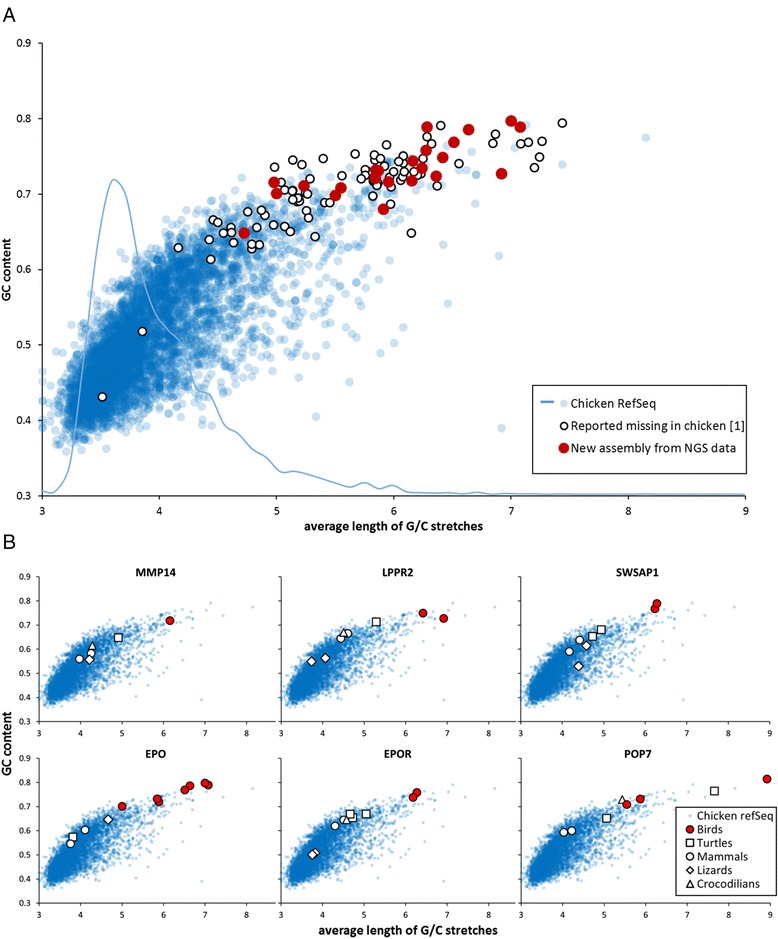
We report that a subset of avian genes is characterized by very high GC content and long G/C stretches. These sequence characteristics correlate with the frequent absence of these genes from genomic databases. We provide several examples where genes in this subset are mistakenly reported as missing in birds. www.dx.doi.org/10.1186/s13059-015-0725-y
Overview
The claims and statistics of this paper haven’t been checked yet.
Free: it reads the open-access text and checks the first 5 claims that cite a source we can check. Create a free account to check every claim.
Integrity signals
Registry
Cites
Statistics
Figures
Verification
Claims the paper makes
The claims and statistics of this paper haven’t been checked yet.
Free: it reads the open-access text and checks the first 5 claims that cite a source we can check. Create a free account to check every claim.
Claims other papers make about this one
Each is checked against this paper’s own text: does it say what the citing paper says it does?
The cited source says what the claim attributes to it.
In the citing paper
“Additionally, stretches of high GC content sequences within a fragment can have an influence on whether a fragment will be amplified and sequenced 23.”
From Modeling of RNA-seq fragment sequence bias reduces systematic errors in transcript abundance estimation (2016) · cites this paper as [23]
Self-check
Percentages, sums and reported differences re-computed from the paper’s own numbers.
The self-check needs the paper’s full text.
Citations
Cites
International Chicken Genome Sequencing Consortium (2004) · Nature · doi:10.1038/nature03154 · Cited by 2,750
Analyzing and minimizing PCR amplification bias in Illumina sequencing libraries
Aird, D., Ross, M. G., Chen, W.-S., Danielsson, M., Fennell, T., Russ, C., Jaffe, D. B., Nusbaum, C., & Gnirke, A. (2011) · Genome Biology · doi:10.1186/gb-2011-12-2-r18 · Cited by 1,174 · cited 1×
“GC-rich genes are extremely hard to amplify by PCR, a key step in NGS library preparation [7, 8].”
Characterizing and measuring bias in sequence data
Ross, M. G., Russ, C., Costello, M., Hollinger, A., Lennon, N. J., Hegarty, R., Nusbaum, C., & Jaffe, D. B. (2013) · Genome Biology · doi:10.1186/gb-2013-14-5-r51 · Cited by 909 · cited 1×
“GC-rich genes are extremely hard to amplify by PCR, a key step in NGS library preparation [7, 8].”
The UCSC Genome Browser database: 2015 update
Rosenbloom, K. R., Armstrong, J., Barber, G. P., Casper, J., Clawson, H., Diekhans, M., Dreszer, T. R., Fujita, P. A., Guruvadoo, L., Haeussler, M., et al. (2015) · Nucleic Acids Research · doi:10.1093/nar/gku1177 · Cited by 874 · cited 1×
“The complete set of approximately six thousand chicken RefSeq genes from the UCSC genome browser database [17] is depicted”
Shang, W.-H., Hori, T., Toyoda, A., Kato, J., Popendorf, K., Sakakibara, Y., Fujiyama, A., & Fukagawa, T. (2010) · Genome Research · doi:10.1101/gr.106245.110 · Cited by 183 · cited 1×
“In addition, avian microchromosomes contain various types of short microsatellite repeats [13–16].”
Conserved syntenic clusters of protein coding genes are missing in birds
Lovell, P. V., Wirthlin, M., Wilhelm, L., Minx, P., Lazar, N. H., Carbone, L., Warren, W. C., & Mello, C. V. (2014) · Genome Biology · doi:10.1186/s13059-014-0565-1 · Cited by 139 · cited 9×
“phylogenetic analysis (Additional file 2) confirms that they are correctly placed with orthologous genes – not with Main text A recent paper reported 274 genes as missing in birds but present in the genomes of most other vertebrate lineages [1].”
InfluentialDolznig, H., Bartůněk, P., Nasmyth, K., Müllner, E. W., & Beug, H. (1995) · PubMed · Cited by 93
Self-citationGenome sequence of ground tit Pseudopodoces humilis and its adaptation to high altitude
Cai, Q., Qian, X., Lang, Y., Luo, Y., Xu, J., Pan, S., Hui, Y., Gou, C., Cai, Y., Hao, M., et al. (2013) · Genome Biology · doi:10.1186/gb-2013-14-3-r29 · Cited by 85
Hayman, M. J., MEYER, S. R., Martin, F., Steinlein, P., & Beug, H. (1993) · Cell · doi:10.1016/0092-8674(93)90303-8 · Cited by 82 · cited 1×
“dependent [3–6].”
Schroeder, C., Gibson, L., Nordström, C., & Beug, H. (1993) · The EMBO Journal · doi:10.1002/j.1460-2075.1993.tb05736.x · Cited by 71 · cited 1×
“dependent [3–6].”
Cited by
Love, M. I., Hogenesch, J. B., & Irizarry, R. A. (2016) · Nature Biotechnology · doi:10.1038/nbt.3682 · Cited by 186
Peona, V., Blom, M. P. K., Xu, L., Burri, R., Sullivan, S. T., Bunikis, I., Liachko, I., Haryoko, T., Jønsson, K. A., Zhou, Q., et al. (2020) · Molecular Ecology Resources · doi:10.1111/1755-0998.13252 · Cited by 178
“For example, GC-skewed coverage is particularly important in birds, where ~15% of genes are so GC-rich that they are often not represented in Illumina-based genome assemblies (Botero-Castro et al., 2017; Hron et al., 2015).”
How complete are “complete” genome assemblies?—An avian perspective
Peona, V., Weissensteiner, M. H., & Suh, A. (2018) · Molecular Ecology Resources · doi:10.1111/1755-0998.12933 · Cited by 139
Avian Genomes Revisited: Hidden Genes Uncovered and the Rates versus Traits Paradox in Birds
Botero-Castro, F., Figuet, E., Tilak, M.-K., Nabholz, B., & Galtier, N. (2017) · Molecular Biology and Evolution · doi:10.1093/molbev/msx236 · Cited by 97
Characterization of Chicken Tumor Necrosis Factor-α, a Long Missed Cytokine in Birds
Rohde, F., Schusser, B., Hron, T., Farkašová, H., Plachý, J., Härtle, S., Hejnar, J., Elleder, D., & Kaspers, B. (2018) · Frontiers in Immunology · doi:10.3389/fimmu.2018.00605 · Cited by 91
“Recently, other “missing” genes were identified in the chicken genome including cytokines, such as erythropoietin (30) and leptin (31, 32) by making use of the increasing number of avian genome sequences and advanced data mining technologies.”
BackgroundSelf-citationFalse gene and chromosome losses in genome assemblies caused by GC content variation and repeats
Kim, J., Lee, C., Ko, B. J., Yoo, D. A., Won, S., Phillippy, A. M., Fedrigo, O., Zhang, G., Howe, K., Wood, J., et al. (2022) · Genome Biology · doi:10.1186/s13059-022-02765-0 · Cited by 71
“We also discovered completely missing genes, many of which were considered lost or “hidden genes” not assembled in birds [50, 51].”
BackgroundIdentification of evolutionary and kinetic drivers of NAD-dependent signaling
Bockwoldt, M., Houry, D., Niere, M., Gossmann, T. I., Reinartz, I., Schug, A. H., Ziegler, M., & Heiland, I. (2019) · Proceedings of the National Academy of Sciences · doi:10.1073/pnas.1902346116 · Cited by 70
Avian Leptin: Bird’s-Eye View of the Evolution of Vertebrate Energy-Balance Control
Friedman‐Einat, M., & Seroussi, E. (2019) · Trends in Endocrinology and Metabolism · doi:10.1016/j.tem.2019.07.007 · Cited by 66
Corticotropin-releasing hormone family evolution: five ancestral genes remain in some lineages
Cardoso, J. C. R., Bergqvist, C. A., Félix, R. C., & Larhammar, D. (2016) · Journal of Molecular Endocrinology · doi:10.1530/jme-16-0051 · Cited by 66
Campbell, L. K., & Magor, K. E. (2020) · Frontiers in Cellular and Infection Microbiology · doi:10.3389/fcimb.2020.00209 · Cited by 57
“Because bird genomes contain many GC rich areas (Hron et al., 2015), they are notoriously hard to amplify using PCR based methods.”
MethodBornelöv, S., Seroussi, E., Yosefi, S., Pendavis, K., Burgess, S. C., Grabherr, M. G., Friedman‐Einat, M., & Andersson, L. (2017) · Genome biology · doi:10.1186/s13059-017-1231-1 · Cited by 61
“However, our recent discovery of leptin genes with ~70% GC content in chicken and duck [3], and the new identification of 89 GC-rich genes [4], suggested an alternative hypothesis of a technical barrier to explain the ‘missing genes’.”
Fourth Report on Chicken Genes and Chromosomes 2022
Smith, J., Alfieri, J. M., Anthony, N., Arensburger, P., Athrey, G., Balacco, J., Balic, A., Bardou, P., Barela, P., Bigot, Y., et al. (2022) · Cytogenetic and Genome Research · doi:10.1159/000529376 · Cited by 66
The Discovery of Chicken Foxp3 Demands Redefinition of Avian Regulatory T Cells
Burkhardt, N., Elleder, D., Schusser, B., Krchlíková, V., Göbel, T., Härtle, S., & Kaspers, B. (2022) · The Journal of Immunology · doi:10.4049/jimmunol.2000301 · Cited by 59
Self-citationDeutekom, E. S., Vosseberg, J., van Dam, T. J. P., & Snel, B. (2019) · PLOS Computational Biology · doi:10.1371/journal.pcbi.1007301 · Cited by 54
Evolution of the growth hormone, prolactin, prolactin 2 and somatolactin family
Daza, D. O., & Larhammar, D. (2018) · General and Comparative Endocrinology · doi:10.1016/j.ygcen.2018.01.007 · Cited by 53
Revisiting avian ‘missing’ genes from de novo assembled transcripts
Yin, Z.-T., Zhu, F., Lin, F.-B., Jia, T., Wang, Z., Sun, D.-T., Li, G.-S., Zhang, C.-L., Smith, J., Yang, N., et al. (2019) · BMC Genomics · doi:10.1186/s12864-018-5407-1 · Cited by 50
Exploring the unmapped DNA and RNA reads in a songbird genome
Laine, V. N., Gossmann, T. I., van Oers, K., Visser, M. E., & Groenen, M. A. M. (2019) · BMC Genomics · doi:10.1186/s12864-018-5378-2 · Cited by 50
“Another study highlighted that some of these 274 missing genes could be assembled from bird sequence data deposited at public databases ([15, 16], see also [17–19]).”
BackgroundIncreased taxon sampling reveals thousands of hidden orthologs in flatworms
Martín-Durán, J. M., Ryan, J. F., Vellutini, B. C., Pang, K., & Hejnol, A. (2017) · Genome Research · doi:10.1101/gr.216226.116 · Cited by 45
“A recent report showed that very high GC content and long G/C stretches characterize genes mistakenly assigned as lost in bird genomes (Hron et al. 2015).”
Illumina Library Preparation for Sequencing the GC-Rich Fraction of Heterogeneous Genomic DNA
Tilak, M., Botero-Castro, F., Galtier, N., & Nabholz, B. (2018) · Genome Biology and Evolution · doi:10.1093/gbe/evy022 · Cited by 43
“The unas-sembled GC-rich regions actually contain a substantial portion—probably (cid:4) 15%—of the bird gene complement, which is currently missing from genome annotation databases, as we recently demonstrated from transcriptome analyses (Botero-Castro et al. 2017, see also Hron et al. 2015).”
Hargreaves, A. D., Zhou, L., Christensen, J., Marlétaz, F., Liu, S., Li, F., Jansen, P. G., Spiga, E., Hansen, M. T., Pedersen, S. V. H., et al. (2017) · Proceedings of the National Academy of Sciences · doi:10.1073/pnas.1702930114 · Cited by 39
“Indeed, GC-rich genes are also missing from the chicken genome assembly (28, 29).”
BackgroundMapping of leptin and its syntenic genes to chicken chromosome 1p
Seroussi, E., Frédérique Pitel, A., Leroux, S., Morisson, M., Bornelöv, S., Miyara, S., Yosefi, S., Cogburn, L. A., Burt, D. W., Anderson, L., et al. (2017) · BMC Genetics · doi:10.1186/s12863-017-0543-1 · Cited by 40
Characterization of Chicken Thyroid Hormone Transporters
Bourgeois, N. M. A., Herck, S. L. J. V., Vancamp, P., Delbaere, J., Zevenbergen, C., Kersseboom, S., Darras, V., & Visser, T. J. (2016) · Endocrinology · doi:10.1210/en.2015-2025 · Cited by 38
Daza, D. O., & Larhammar, D. (2017) · General and Comparative Endocrinology · doi:10.1016/j.ygcen.2017.06.021 · Cited by 38
Recurrent DCC gene losses during bird evolution
Friocourt, F., Lafont, A.-G., Kress, C., Pain, B., Manceau, M., Dufour, S., & Chédotal, A. (2017) · Scientific Reports · doi:10.1038/srep37569 · Cited by 31
Beauclair, L., Ramé, C., Arensburger, P., Piégu, B., Guillou, F., Dupont, J., & Bigot, Y. (2019) · BMC Genomics · doi:10.1186/s12864-019-6131-1 · Cited by 34
“…PacBio reads (even with a learning algorithm since the datasets for the learning are not available) we investigated orphan cDNAs manually for four cDNAs, chosen among Hron’s RJF cDNA (Hron et al. 2015) that were found not to be highly conserved in DNA sequence in other avian species [5, 20].”
BackgroundInfluentialGuizard, S., Piégu, B., Arensburger, P., Guillou, F., & Bigot, Y. (2016) · BMC Genomics · doi:10.1186/s12864-016-3015-5 · Cited by 25
“1) are smaller than those of the RJF genome [54], and probably for the fact that avian genomes lack at least some of the ~6000 protein-coding genes that are present in all mammals [32, 55 – 57].”
BackgroundMissed, Not Missing: Phylogenomic Evidence for the Existence of Avian FoxP3
Denyer, M., Pinheiro, D., Garden, O. A., & Shepherd, A. J. (2016) · PLoS ONE · doi:10.1371/journal.pone.0150988 · Cited by 24
“In addition, primer failure rates as high as 17% are not uncommon [50], and amplification is known to be challenging when the sequence is G/C-rich [48].”
Identification of a GC-rich leptin gene in chicken
Farkašová, H., Hron, T., Pačes, J., Pajer, P., & Elleder, D. (2016) · Agri Gene · doi:10.1016/j.aggene.2016.04.001 · Cited by 23
Self-citationGC Content Across Insect Genomes: Phylogenetic Patterns, Causes and Consequences
Kyriacou, R. G., Mulhair, P. O., & Holland, P. W. H. (2024) · Journal of Molecular Evolution · doi:10.1007/s00239-024-10160-5 · Cited by 22
“In the most extreme cases, documented in gerbils and in birds, GC-rich regions of the genome have affected the ability to accurately sequence DNA, leading to erroneous reports of missing genes (Benjamini and Speed 2012; Hargreaves et al. 2017; Hron et al. 2015).”
BackgroundPiégu, B., Arensburger, P., Beauclair, L., Chabault, M., Raynaud, É., Coustham, V., Brard‐Fudulea, S., Guizard, S., Burlot, T., Bihan-Duval, É. L., et al. (2019) · Genomics · doi:10.1016/j.ygeno.2019.10.004 · Cited by 23
Dynamic Evolution of Avian RNA Virus Sensors: Repeated Loss of RIG-I and RIPLET
Krchlíková, V., Hron, T., Těšičký, M., Li, T., Ungrová, L., Hejnar, J., Vinkler, M., & Elleder, D. (2022) · Viruses · doi:10.3390/v15010003 · Cited by 29
“that are difficult to identify due to technical reasons [60].”
Self-citationden Berge, K. V., Chou, H.-J., de Bézieux, H. R., Street, K., Risso, D., Ngai, J., & Dudoit, S. (2022) · Cell Reports Methods · doi:10.1016/j.crmeth.2022.100321 · Cited by 22
“Furthermore, it has been shown that stretches of high GC-content within a fragment can influence whether the fragment will be amplified, and thus sequenced (Hron et al., 2015).”
BackgroundLovell, P. V., Wirthlin, M. E., Carbone, L., Warren, W. C., & Mello, C. V. (2015) · Genome biology · doi:10.1186/s13059-015-0725-y · Cited by 19
“[2] do not clarify the full extent of their raw read searches, and do not comment on whether they also failed to uncover evidence for other missing genes.”
InfluentialSequencing refractory regions in bird genomes are hotspots for accelerated protein evolution
Huttener, R., Thorrez, L., Veld, T. I., Granvik, M., Lommel, L. V., Waelkens, E., Derua, R., Lemaire, K., Goyvaerts, L., Coster, S. D., et al. (2021) · BMC Ecology and Evolution · doi:10.1186/s12862-021-01905-7 · Cited by 18
“This fits with the notion that many of the "missing" bird genes must be present as they are needed for crucial vertebrate body functions [12, 17, 52].”
BackgroundCraig, R. J., Suh, A., Mi, W., & Ellegren, H. (2018) · Molecular Ecology · doi:10.1111/mec.14462 · Cited by 21
Evolution of RNA sensing receptors in birds
Magor, K. E. (2022) · Immunogenetics · doi:10.1007/s00251-021-01238-1 · Cited by 17
Cheng, Y., & Burt, D. W. (2018) · The International Journal of Developmental Biology · doi:10.1387/ijdb.170276yc · Cited by 17
“Similarly, due to the lack of chromosomelevel assemblies, the full scale of chromosomal rearrangements (Farré et al., 2016) and gene gains and losses (Hron et al., 2015; Korlach et al., 2017) during avian evolution is yet to be revealed.”
BackgroundInfluentialAvian genomics lends insights into endocrine function in birds
Mello, C. V., & Lovell, P. V. (2017) · General and Comparative Endocrinology · doi:10.1016/j.ygcen.2017.05.023 · Cited by 15
“Some reports have recently called attention to the possibility that particularly high GC content may have severely limited the ability to sequence and/or correctly assemble a significant number of genes in avian genomes (Hron et al., 2015; Lovell et al., 2015b).”
Davis, A. C., Greenwold, M. J., & Sawyer, R. H. (2019) · Genome Biology and Evolution · doi:10.1093/gbe/evz054 · Cited by 14
“3) analyses were performed using MrBayes v. 3.2 (Huelsenbeck and Ronquist 2001; Ronquist and Huelsenbeck 2003) and RAxML v. 8.0.0 (Stamatakis 2014).”
MethodInfluentialEvolution of an Epidermal Differentiation Complex (EDC) Gene Family in Birds
Davis, A., & Greenwold, M. J. (2021) · Genes · doi:10.3390/genes12050767 · Cited by 13
“Alternatively, and more likely, the EDMTFH gene is present within the genomes of passerine birds but due to problems with genomic library preparation and sequencing associated with EDC genes EDMTFH could not be identified in these genome assemblies [22,49].”
BackgroundBrekke, T. D., Papadopulos, A. S. T., Julià, E., Fornas, Ò., Fu, B., Yang, F., de la Fuente, R., Page, J., Baril, T., Hayward, A., et al. (2023) · Molecular Biology and Evolution · doi:10.1093/molbev/msad115 · Cited by 12
“A particularly important issue was the difficulties that short read-based genome sequencing approaches face regarding the assembly of GC%-rich regions (Hron et al. 2015; Bornelöv et al. 2017; Botero-Castro et al. 2017; Tilak et al. 2018; Yin et al. 2019).”
BackgroundEvolution of the functionally conserved DCC gene in birds
Patthey, C., Tong, Y. G., Tait, C. M., & Wilson, S. I. (2017) · Scientific Reports · doi:10.1038/srep42029 · Cited by 13
“Avian genomes are known to be compact, have a relatively high rate of chromosomal rearrangement and are missing a number of genes 1,39,44,45 .”
Avian interferon regulatory factor (IRF) family reunion: IRF3 and IRF9 found
Ungrová, L., Geryk, J., Kohn, M., Kučerová, D., Krchlíková, V., Hron, T., Pečenka, V., Pajer, P., Gáliková, E., Pecnová, Ľ., et al. (2025) · BMC Biology · doi:10.1186/s12915-025-02261-4 · Cited by 12
“Therefore, their delayed identification is in line with the previous cases of “hidden genes” described by us and by others [25, 26].”
Self-citationOrgeur, M., Martens, M., Börno, S. T., Timmermann, B., Duprez, D., & Stricker, S. (2017) · Biology Open · doi:10.1242/bio.028498 · Cited by 12
β2 adrenergic receptors and leptin interplay to decrease food intake in chicken
Zendehdel, M., Khodadadi, M., Vosoughi, A., Mokhtarpouriani, K., & Baghbanzadeh, A. (2020) · British Poultry Science · doi:10.1080/00071668.2019.1704687 · Cited by 10
“However, in the past decade there is remained controversy (Lovell et al. 2014, 2015; Hron et al. 2015) regarding the existence of cLEP sequence in the chicken genome.”
BackgroundAntiviral Activity and Adaptive Evolution of Avian Tetherins
Krchlíková, V., Fábryová, H., Hron, T., Young, J. M., Koslová, A., Hejnar, J., Strebel, K., & Elleder, D. (2020) · Journal of Virology · doi:10.1128/jvi.00416-20 · Cited by 10
“As some avian genes are extremely difficult to identify by sequencing due to their high GC content (36), it remains possible that avian ISG15 will be found or that another ubiquitin homolog may substitute for its role in birds.”
BackgroundSelf-citationEvidence for the loss of plasminogen receptor KT gene in chicken
Sharma, S., Shinde, S. S., Teekas, L., & Vijay, N. (2020) · Immunogenetics · doi:10.1007/s00251-020-01186-2 · Cited by 9
Wang, Y., Wang, C.-W., Lin, W., Tsai, Y., Chang, C.-P., Lee, Y., Lin, M., & Li, C. (2017) · PLoS ONE · doi:10.1371/journal.pone.0185042 · Cited by 10
Coelho, L. A., Musher, L. J., & Cracraft, J. L. (2019) · Diversity · doi:10.3390/d11090144 · Cited by 10
Scanes, C. G. (2021) · Elsevier eBooks · doi:10.1016/b978-0-12-819770-7.00044-x · Cited by 9
Wu, S., Dou, T., Yuan, S., Yan, S., Xu, Z., Liu, Y., Jian, Z., Zhao, J., Zhao, R., Zi, X., et al. (2024) · BMC Genomics · doi:10.1186/s12864-024-10316-z · Cited by 8
“On the other hand, dozens to hundreds of genes that are essential in other tet-rapods are believed simply missing in chickens and other birds’ genomes due to their incomplete assemblies, in particular, the micro-chromosomes where both gene density and G/C contents are higher [8, 9].”
BackgroundEvidence for Strong Fixation Bias at 4-fold Degenerate Sites Across Genes in the Great Tit Genome
Gossmann, T. I., Bockwoldt, M., Diringer, L., Schwarz, F., & Schumann, V.-F. (2018) · Frontiers in Ecology and Evolution · doi:10.3389/fevo.2018.00203 · Cited by 8
“might miss genes of extreme GC composition in our dataset– a relatively large number of genes are not annotated in many bird genomes (Lovell et al., 2014; Hron et al., 2015; BoteroCastro et al., 2017), and this is likely to be an artifact of technical difficulties to sequence genomic reads with extreme nucleotide comp…”
BackgroundAfter TNF-α, still playing hide-and-seek with chicken genes
Elleder, D., & Kaspers, B. (2019) · Poultry Science · doi:10.3382/ps/pez307 · Cited by 7
Self-citationDeep proteomic analysis of chicken erythropoiesisPreprint
Leduc, M., Gautier, E., Guillemin, A., Broussard, C., Salnot, V., Lacombe, C., Gandrillon, O., Guillonneau, F., & Mayeux, P. (2018) · bioRxiv (Cold Spring Harbor Laboratory) · doi:10.1101/289728 · Cited by 7
“Interestingly, we similarly did not detect the putative EpoR that has been recently identified in the chicken genome (Hron et al., 2015).”
BackgroundHron, T., Miklík, D., Pačes, J., Pajer, P., Pečenka, V., Hejnar, J., Nehyba, J., & Elleder, D. (2026) · Genome Biology and Evolution · doi:10.1093/gbe/evag038 · Cited by 8
“Positional relocations of the ohnolog IRF9 into six different non-syntenic positions, each in a different avian order, were described previously (Ungrová et al. 2025).”
InfluentialSelf-citationBrun, A., Gutiérrez‐Guerrero, Y. T., Magallanes, M. E., Caviedes‐Vidal, E., Karasov, W. H., & del Rio, C. M. (2022) · Physiological and Biochemical Zoology · doi:10.1086/720232 · Cited by 6
“This appears to be especially the case for genes in sections of the genomewith higher guaninecytosine compositionandguaninecytosine repeats (Hron et al. 2015).”
BackgroundIdentification of GC-rich LAT genes in birds
Janusova, S., Krchlíková, V., Hron, T., Elleder, D., & Štěpánek, O. (2023) · PLoS ONE · doi:10.1371/journal.pone.0283431 · Cited by 4
“These characteristics are the main cause of their resistance to PCR amplification [18].”
BackgroundMethodInfluentialSelf-citationEvolution and expression of the duck TRIM gene repertoire
Campbell, L. K., Peery, R. M., & Magor, K. E. (2023) · Frontiers in Immunology · doi:10.3389/fimmu.2023.1220081 · Cited by 5
Fang, Y., Li, M., Li, X., & Yang, Y. (2021) · BMC Genomics · doi:10.1186/s12864-021-08070-7 · Cited by 4
“For example, When genome sequencing, there had many technical difficulties in it [46], using faulty protein predictions [47], there had some bias when we detecting sequence similarity [48].”
MethodCorrespondence on Lovell et al.: response to Bornelöv et al.
Lovell, P. V., & Mello, C. V. (2017) · Genome biology · doi:10.1186/s13059-017-1234-y · Cited by 4
“Indeed, gene reconstructions from chicken SRA transcriptome databases [2], and/or National Center for Biotechnology Information (NCBI) Gnomon gene predictions in the latest chicken genome assembly ([3], Galgal5) have recently provided evidence for 240 genes that were previously missing in the chicken genome (Table S5…”
InfluentialWhy sequence the genome of every species? A view from evolutionary biology
Holland, P. W. H. (2025) · Journal of the Marine Biological Association of the United Kingdom · doi:10.1017/s0025315425100556 · Cited by 4
“The most extreme examples known come from birds and a group of mammals, the gerbils (Hargreaves et al. 2017; Hron et al. 2015); no comparable cases have been found so far in marine animals.”
Increased taxon sampling reveals thousands of hidden orthologs in flatwormsPreprint
Martín-Durán, J. M., Ryan, J. F., Vellutini, B. C., Pang, K., & Hejnol, A. (2016) · bioRxiv (Cold Spring Harbor Laboratory) · doi:10.1101/050724 · Cited by 3
Salve, B. G., Sharma, S., & Vijay, N. (2024) · Immunogenetics · doi:10.1007/s00251-024-01357-5 · Cited by 3
“Distinguishing gene loss from “missing genes” remains a challenge, especially in bird genomes, due to the challenges of sequencing and assembly of GC-rich regions and those with repetitive content (for example, telomeres) (Hron et al. 2015; Rohde et al. 2018; Janusova et al. 2023).”
Chromosomal rearrangements and segmental deletions contribute to gene loss in squamates
Salve, B. G., Sonal, H., & Vijay, N. (2026) · BMC Biology · doi:10.1186/s12915-026-02540-8 · Cited by 1
“Previous studies [38, 56, 57, 65] have shown that some genes initially reported as ‘missing’ in birds were later recovered using transcriptomic data [50], with their absence attributed to high GC content and limitations in earlier genome assemblies [49].”
InfluentialThe Current View of Retroviruses as Seen from the Shoulders of a Giant
Hejnar, J., & Ruml, T. (2019) · Viruses · doi:10.3390/v11090828 · Cited by 1
“The up-dated chicken genome assembly and RNAseq databases have enabled us to identify genes in GC-rich regions, which used to be declared as missing in the chicken genome [45].”
BackgroundChanneling Vision: Voltage-Gated Calcium Channels of Rods and Cones
Waldner, D. M. (2018) · Libraries and Cultural Resources (University of Calgary) · doi:10.11575/prism/34540
Davis, A. (2020) · Scholar Commons (University of South Carolina)
Yang, Y., Meng, Y., Chen, L., Dong, M., Zhang, H., Wu, J., Hao, X., He, S., Tian, Y., Gong, Z., et al. (2022) · Heliyon · doi:10.1016/j.heliyon.2022.e12446
Wang, Y.-C., Chang, C.-P., Lai, Y.-C., Chan, C., Ou, S.-C., Wang, S., & Li, C. (2023) · Gene · doi:10.1016/j.gene.2023.147345
Yang, F., Li, M., Li, X., & Yang, Y. (2021) · Figshare · doi:10.6084/m9.figshare.16907453
Huttener, R., Thorrez, L., Veld, T. I., Granvik, M., Lommel, L. V., Waelkens, E., Derua, R., Lemaire, K., Goyvaerts, L., De Coster, S., et al. (2021) · Figshare · doi:10.6084/m9.figshare.16640808
Wu, S., 豆腾飞, Yuan, S., Yan, S., Xu, Z., Liu, Y., Jian, Z., Zhao, J., Zhao, R., Zi, X., et al. (2024) · Figshare · doi:10.6084/m9.figshare.25734650
Huttener, R., Thorrez, L., Veld, T. I., Granvik, M., Lommel, L. V., Waelkens, E., Derua, R., Lemaire, K., Goyvaerts, L., De Coster, S., et al. (2021) · Figshare · doi:10.6084/m9.figshare.16640799
Huttener, R., Thorrez, L., Veld, T. I., Granvik, M., Lommel, L. V., Waelkens, E., Derua, R., Lemaire, K., Goyvaerts, L., De Coster, S., et al. (2021) · Figshare · doi:10.6084/m9.figshare.16640811
Fang, Y., Li, M., Li, X., & Yang, Y. (2021) · Figshare · doi:10.6084/m9.figshare.16907450
Huttener, R., Thorrez, L., Veld, T. I., Granvik, M., Lommel, L. V., Waelkens, E., Derua, R., Lemaire, K., Goyvaerts, L., De Coster, S., et al. (2021) · Figshare · doi:10.6084/m9.figshare.16640823
Huttener, R., Thorrez, L., Veld, T. I., Granvik, M., Lommel, L. V., Waelkens, E., Derua, R., Lemaire, K., Goyvaerts, L., De Coster, S., et al. (2021) · Figshare · doi:10.6084/m9.figshare.16640805
Huttener, R., Thorrez, L., Veld, T. I., Granvik, M., Lommel, L. V., Waelkens, E., Derua, R., Lemaire, K., Goyvaerts, L., De Coster, S., et al. (2021) · Figshare · doi:10.6084/m9.figshare.16640817
Wu, S., 豆腾飞, Yuan, S., Yan, S., Xu, Z., Liu, Y., Jian, Z., Zhao, J., Zhao, R., Zi, X., et al. (2024) · Figshare · doi:10.6084/m9.figshare.25734512
Etude de l'organisation du génome de poulet à travers les séquences répétées
Guizard, S. (2016) · theses.fr (ABES) · doi:10.70675/2733f2acz4b03z432az9994z9a4ce02f7e9b · Cited by 1
Athrey, G., Asiamah, M. K., Burch, H., Brummond, R., Green, N., Mattine, M. A., Okuku, T., Ratnayeke, J., Renteria, A., Witherspoon, K., et al. (2026) · Genome Biology and Evolution · doi:10.1093/gbe/evag272
Metadata
- Authors
- Hron, T., Pajer, P., Pačes, J., Bartůněk, P., & Elleder, D.
- Affiliations
- Czech Academy of Sciences (CZ)
- Corresponding author
- Bartůněk, Petr
- Elleder, Daniel
- Venue
- Genome Biology
- Published
- 2015-08-18
- Volume
- 16
- Issue
- 1
- Pages
- 164-164
- ISSN
- 1465-6906 (ISSN-L)
- 1474-760X
- PMC
- PMC4539667
- OpenAlex
- W1847769736
- Semantic Scholar
- c48c7ac8cd7d42672ad4f76ef27acb935144b1e9
- Cited by
- 79
- References
- 17
- Citations by year
- 2026: 2 · 2025: 2 · 2024: 5 · 2023: 4 · 2022: 10 · 2021: 11 · 2020: 4 · 2019: 12 · 2018: 8 · 2017: 13 · 2016: 7 · 2015: 1
- FWCI
- 4.20
- Type
- journal article
- Language
- en
- Open access
- gold
- doi.org
- Licence
- cc-by
- creativecommons.org/licenses/by/4.0 (tdm)
- creativecommons.org/licenses/by/4.0 (vor)
- Locations
- Genome biology (publishedVersion, cc-by)
- Europe PMC (PubMed Central) (publishedVersion, cc-by)
- PubMed Central (publishedVersion, cc-by)
- PubMed (publishedVersion)
- ASEP (submittedVersion, public-domain)
- Funders
- Czech Ministry of Education, Youth and Sports (LK11215, LO1419)
- Topics
- Life Sciences › Biochemistry, Genetics and Molecular Biology › Molecular Biology › Genomics and Phylogenetic Studies
- Life Sciences › Biochemistry, Genetics and Molecular Biology › Genetics › Chromosomal and Genetic Variations
- Life Sciences › Biochemistry, Genetics and Molecular Biology › Molecular Biology › Fractal and DNA sequence analysis
- Keywords
- GC content, GC-rich sequences, genome annotation, genomic databases, gene absence, birds
- MeSH terms
- Animals, Birds, Humans, Genomics, Avian Proteins
About these checks
Registry, retraction, Cites and statistics results are computed, not judged, with one exception: a printed reference that no index lists is read once by a model before it counts as a citation error. Claims are extracted by a model and kept only when their quote appears verbatim in the text; each cited source is then checked, with a model’s help, for whether it says what the claim relies on. Those verdicts can be wrong — read the claim’s quote and the cited source before relying on one.
Statistics and arithmetic are recomputed, not judged.
Confidence bands are shown only for fields calibrated on our annotated test set. None is calibrated yet, so no band is shown.
What counts as a claim ›How we measure confidence ›How we check this ›
Are you an author, or do you see a problem with this page? Request a review
Data sources
Bibliographic data: Semantic Scholar, OpenAlex, Crossref.
Contains information from the Semantic Scholar Academic Graph Datasets, made available under the ODC Attribution License (ODC-BY 1.0).
Semantic Scholar’s data is described in: Kinney, R., et al. (2023). The Semantic Scholar Open Data Platform. arXiv:2301.10140.
