

Towards a new era in medicine: therapeutic genome editing
Open accessThe DOI matches its Crossref record; 123 of the 123 references it cites were found in a registry or an index.
Abstract
Genome editing is the process of precisely modifying the nucleotide sequence of the genome. It has provided a powerful approach to research questions but, with the development of a new set of tools, it is now possible to achieve frequencies of genome editing that are high enough to be useful therapeutically. Genome editing is being developed to treat not only monogenic diseases but also infectious diseases and diseases that have both a genetic and an environmental component.
Overview
The claims and statistics of this paper haven’t been checked yet.
Free: it reads the open-access text and checks the first 5 claims that cite a source we can check. Create a free account to check every claim.
Integrity signals
Registry
Cites
Statistics
Figures
Verification
Claims the paper makes
The claims and statistics of this paper haven’t been checked yet.
Free: it reads the open-access text and checks the first 5 claims that cite a source we can check. Create a free account to check every claim.
Claims other papers make about this one
Each is checked against this paper’s own text: does it say what the citing paper says it does?
The cited source says what the claim attributes to it.
In the citing paper
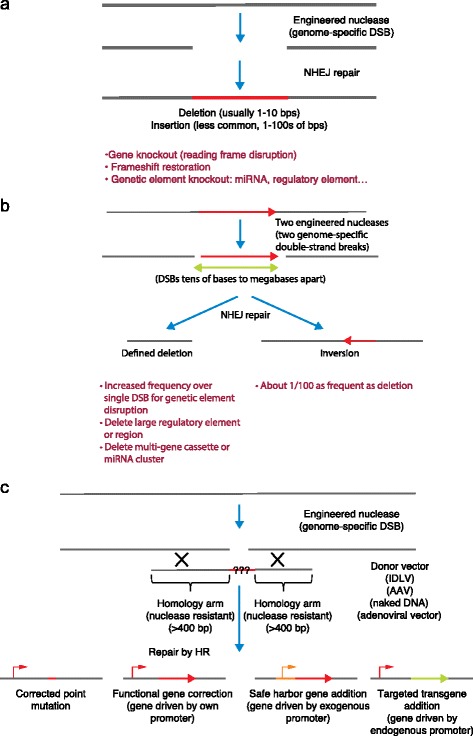
“If a homologous donor DNA template is provided during the DSB repair, the homologous recombination (HR) repair pathway can generate more precise changes to the target DNA, including single nucleotide changes to insertion of large gene cassettes8,9.”
From A high-fidelity Cas9 mutant delivered as a ribonucleoprotein complex enables efficient gene editing in human hematopoietic stem and progenitor cells (2018) · cites this paper as [8]
Self-check
Percentages, sums and reported differences re-computed from the paper’s own numbers.
The self-check needs the paper’s full text.
Citations
Cites
A Programmable Dual-RNA–Guided DNA Endonuclease in Adaptive Bacterial Immunity
Jinek, M., Chylinski, K., Fonfara, I., Hauer, M., Doudna, J. A., & Charpentier, E. (2012) · Science · doi:10.1126/science.1225829 · Cited by 17,116 · cited 1×
“In the past 5 years, however, the development of TAL effector nucleases (TALENs) [35–37], CRISPR/Cas9 nucleases [38–40], and hybrid nuclease platforms [41–43] have dramatically expanded the engineered nuclease toolbox.”
BackgroundMultiplex Genome Engineering Using CRISPR/Cas Systems
Cong, L., Ran, F. A., Cox, D., Lin, S., Barretto, R., Habib, N., Hsu, P. D., Wu, X., Jiang, W., Marraffini, L. A., et al. (2013) · Science · doi:10.1126/science.1231143 · Cited by 15,339 · cited 1×
“For all of the platforms, specificity is increased by limiting the duration of expression of the nuclease, the pharmacologic equivalent of decreasing the AUC (‘area under the curve’) of nuclease exposure [39, 95, 96].”
BackgroundRNA-Guided Human Genome Engineering via Cas9
Mali, P., Yang, L., Esvelt, K. M., Aach, J., Guell, M., DiCarlo, J. E., Norville, J. E., & Church, G. M. (2013) · Science · doi:10.1126/science.1232033 · Cited by 9,210 · cited 1×
“In the past 5 years, however, the development of TAL effector nucleases (TALENs) [35–37], CRISPR/Cas9 nucleases [38–40], and hybrid nuclease platforms [41–43] have dramatically expanded the engineered nuclease toolbox.”
BackgroundThe new frontier of genome engineering with CRISPR-Cas9
Doudna, J. A., & Charpentier, E. (2014) · Science · doi:10.1126/science.1258096 · Cited by 7,062
Development and Applications of CRISPR-Cas9 for Genome Engineering
Hsu, P. D., Lander, E. S., & Zhang, F. (2014) · Cell · doi:10.1016/j.cell.2014.05.010 · Cited by 5,762 · cited 1×
“‘Clustered Regularly Interspaced Short Palindromic Repeats’) are derived from a bacteria-based adaptive immune system [114, 115].”
BackgroundFriedberg, E. C., Walker, G. C., Siede, W., Wood, R. D., Schultz, R. A., & Ellenberger, T. (2005) · doi:10.1128/9781555816704 · Cited by 5,683
DNA targeting specificity of RNA-guided Cas9 nucleases
Hsu, P. D., Scott, D. A., Weinstein, J. A., Ran, F. A., Konermann, S., Agarwala, V., Li, Y., Fine, E. J., Wu, X., Shalem, O., et al. (2013) · Nature Biotechnology · doi:10.1038/nbt.2647 · Cited by 4,741 · cited 1×
“whether the guide strand is sufficiently identical to the target site (small mismatches and bulges are tolerated [92, 116–119]) and then to”
BackgroundDouble nicking by RNA-guided CRISPR Cas9 for enhanced genome editing specificity
Ran, F. A., Hsu, P. D., Lin, C.-Y., Gootenberg, J. S., Konermann, S., Trevino, A. E., Scott, D. A., Inoue, A., Matoba, S., Zhang, Y., et al. (2013) · Cell · doi:10.1016/j.cell.2013.08.021 · Cited by 3,299 · cited 1×
“For CRISPR/Cas9 nucleases, improved design might entail testing a different guide sequence, or using a truncated guide sequence [92] or a paired-nickase approach [93, 94].”
BackgroundIn vivo genome editing using Staphylococcus aureus Cas9
Ran, F. A., Cong, L., Yan, W. X., Scott, D. A., Gootenberg, J. S., Kriz, A. J., Zetsche, B., Shalem, O., Wu, X., Makarova, K. S., et al. (2015) · Nature · doi:10.1038/nature14299 · Cited by 2,687
Breaking the Code of DNA Binding Specificity of TAL-Type III Effectors
Boch, J., Scholze, H., Schornack, S., Landgraf, A., Hahn, S., Kay, S., Lahaye, T., Nickstadt, A., & Bonas, U. (2009) · Science · doi:10.1126/science.1178811 · Cited by 2,470 · cited 1×
“be described by a simple code [112, 113].”
Cited by
CRISPR/Cas9 β-globin gene targeting in human haematopoietic stem cells
Dever, D. P., Bak, R. O., Reinisch, A., Camarena, J., Washington, G., Nicolas, C. E., Pavel-Dinu, M., Saxena, N., Wilkens, A. B., Mantri, S., et al. (2016) · Nature · doi:10.1038/nature20134 · Cited by 864
Self-citationVakulskas, C. A., Dever, D. P., Rettig, G. R., Turk, R., Jacobi, A. M., Collingwood, M. A., Bode, N. M., McNeill, M. S., Yan, S., Camarena, J., et al. (2018) · Nature Medicine · doi:10.1038/s41591-018-0137-0 · Cited by 782
Self-citationGenome-Editing Technologies: Principles and Applications
Gaj, T., Sirk, S. J., Shui, S.-L., & Liu, J. (2016) · Cold Spring Harbor Perspectives in Biology · doi:10.1101/cshperspect.a023754 · Cited by 381
CRISPR/Cas9 genome editing in human hematopoietic stem cells.
Bak, R. O., Dever, D. P., & Porteus, M. H. (2018) · Nature Protocols · doi:10.1038/nprot.2017.143 · Cited by 319
Self-citationNiederberger, C., Pellicer, A., Cohen, J., Gardner, D. K., Palermo, G. D., O’Neill, C. L., Chow, S., Rosenwaks, Z., Cobo, A., Swain, J. E., et al. (2018) · Fertility and Sterility · doi:10.1016/j.fertnstert.2018.06.005 · Cited by 301
SNPs in microRNA target sites and their potential role in human disease
Moszyńska, A., Gebert, M., Collawn, J. F., & Bartoszewski, R. (2017) · Open Biology · doi:10.1098/rsob.170019 · Cited by 192
Development of CRISPR-Cas systems for genome editing and beyond
Zhang, F. (2019) · Quarterly Reviews of Biophysics · doi:10.1017/s0033583519000052 · Cited by 181
“In early 2013, using this mutant version of Cas9, termed dead Cas9 (dCas9), it was shown that dCas9 could achieve programmable gene repression in bacteria and mammalian cells by simply binding to the genome and blocking transcription (Qi et al., 2013).”
BackgroundGenerating mouse models for biomedical research: technological advances
Gurumurthy, C. B., & Lloyd, K. C. K. (2019) · Disease Models & Mechanisms · doi:10.1242/dmm.029462 · Cited by 182
“A direct comparison of the RNA-guided Cas9 nuclease system with the previous nuclease-based platforms (HEs, ZFNs and TALENs) clearly shows that it has several advantages (Sander and Joung, 2014; Porteus, 2015; Woolf et al., 2017).”
Engineering HIV-Resistant, Anti-HIV Chimeric Antigen Receptor T Cells
Hale, M., Mesojednik, T., Romano Ibarra, G. S., Sahni, J., Bernard, A., Sommer, K., Scharenberg, A. M., Rawlings, D. J., & Wagner, T. A. (2017) · Molecular Therapy · doi:10.1016/j.ymthe.2016.12.023 · Cited by 166
Lattanzi, A., Meneghini, V., Pavani, G., Amor, F., Ramadier, S., Felix, T., Antoniani, C., Masson, C., Alibeu, O., Lee, C., et al. (2019) · Molecular Therapy · doi:10.1016/j.ymthe.2018.10.008 · Cited by 135
Self-citationProgrammable Genome Editing Tools and their Regulation for Efficient Genome Engineering
Guha, T. K., Wai, A., & Hausner, G. (2017) · Computational and Structural Biotechnology Journal · doi:10.1016/j.csbj.2016.12.006 · Cited by 133
“cells [80], Immunogenicity [77], Vector packaging [86], Size of mRNA transcripts [80], Mode of ex vivo delivery in animal cells [77,87].”
BackgroundPriming Human Repopulating Hematopoietic Stem and Progenitor Cells for Cas9/sgRNA Gene Targeting
Charlesworth, C. T., Camarena, J., Cromer, M. K., Vaidyanathan, S., Bak, R. O., Carte, J. M., Potter, J., Dever, D. P., & Porteus, M. H. (2018) · Molecular Therapy — Nucleic Acids · doi:10.1016/j.omtn.2018.04.017 · Cited by 109
“By contrast, when a cell repairs a DSB through HR, it uses donor DNA homologous to the site of the DSB as a template for precise repair.(8)”
MethodSelf-citationTimed inhibition of CDC7 increases CRISPR-Cas9 mediated templated repair
Wienert, B., Nguyen, D. N., Guenther, A., Feng, S. J., Locke, M. N., Wyman, S. K., Shin, J., Kazane, K. R., Gregory, G. L., Carter, M. A. M., et al. (2020) · Nature Communications · doi:10.1038/s41467-020-15845-1 · Cited by 108
Króliczewski, J., Sobolewska, A., Lejnowski, D., Collawn, J. F., & Bartoszewski, R. (2017) · Gene · doi:10.1016/j.gene.2017.10.021 · Cited by 95
CRISPR-Cas9 technology: applications and human disease modelling
Torres-Ruiz, R., & Rodríguez, S. (2016) · Briefings in Functional Genomics · doi:10.1093/bfgp/elw025 · Cited by 88
“In vivo edition has been achieved through the use of viral vectors, mainly adeno-associated viruses (AAVs), with defined tissuespecific tropism [61, 62].”
BackgroundX-Linked Lymphoproliferative Disease Type 1: A Clinical and Molecular Perspective
Panchal, N., Booth, C., Cannons, J. L., & Schwartzberg, P. L. (2018) · Frontiers in Immunology · doi:10.3389/fimmu.2018.00666 · Cited by 84
Homology-Directed Recombination for Enhanced Engineering of Chimeric Antigen Receptor T Cells
Hale, M., Lee, B., Honaker, Y., Leung, W.-H., Grier, A. E., Jacobs, H. M., Sommer, K., Sahni, J., Jackson, S. W., Scharenberg, A. M., et al. (2017) · Molecular Therapy - Methods & Clinical Development · doi:10.1016/j.omtm.2016.12.008 · Cited by 70
“4 March 201 This is an open access article under the CC BY-NC-ND license (http:// Recent advances in gene editing techniques allow highly efficient modifications of specific genetic loci in primary human cells, expanding the options for engineering cellular therapeutics.(14,15) We and others have previously shown a me…”
BackgroundStouffer, R. L., & Woodruff, T. K. (2017) · ILAR Journal · doi:10.1093/ilar/ilx027 · Cited by 71
Gene Editing of Human Hematopoietic Stem and Progenitor Cells: Promise and Potential Hurdles
Yu, K., Natanson, H., & Dunbar, C. E. (2016) · Human Gene Therapy · doi:10.1089/hum.2016.107 · Cited by 62
“However, convincing evidence for the significant expansion of actual long-term engrafting HSPCs in vitro is currently lacking, and the mutational burden associated with in vitro expansion could itself be oncogenic.(67) Almost every study reporting on genome editing of HSPCs to date has studied edited cells in vitro, o…”
BackgroundNorouzi‐Barough, L., Sarookhani, M. R., Salehi, R., Sharifi, M., & Moghbelinejad, S. (2018) · PubMed Central · doi:10.22038/ijbms.2017.25145.6230 · Cited by 64
“Fortunately, development of Cas9-based tools has provided a suitable tool for precise modification of the target sites in the desired gene (37).”
MethodKotagama, O. W., Jayasinghe, C. D., & Abeysinghe, T. (2019) · BioMed Research International · doi:10.1155/2019/1369682 · Cited by 48
“e advent of gene-editing tools shows great therapeutic promise against monogenetic disorders [5].”
BackgroundInfluentialKhademi, Z., Ramezani, M., Alibolandi, M., Zirak, M. R., Salmasi, Z., Abnous, K., & Taghdisi, S. M. (2022) · Carbohydrate Polymers · doi:10.1016/j.carbpol.2022.119691 · Cited by 45
Myoediting: Toward Prevention of Muscular Dystrophy by Therapeutic Genome Editing
Zhang, Y., Long, C., Bassel‐Duby, R., & Olson, E. N. (2018) · Physiological Reviews · doi:10.1152/physrev.00046.2017 · Cited by 45
“The discovery and application of programmable nucleases for genome editing paves the way for permanent correction of these genetic diseases (79, 318, 320).”
BackgroundGlobal Governance of Human Genome Editing: What Are the Rules?
Marchant, G. E. (2021) · Annual Review of Genomics and Human Genetics · doi:10.1146/annurev-genom-111320-091930 · Cited by 42
CRISPR–Cas9 gene editing induced complex on-target outcomes in human cells
Wen, W., & Zhang, X. (2022) · Experimental Hematology · doi:10.1016/j.exphem.2022.03.002 · Cited by 42
On-Target CRISPR/Cas9 Activity Can Cause Undesigned Large Deletion in Mouse Zygotes
Korablev, A. N., Lukyanchikova, V., Serova, I. A., & Баттулин, Н. Р. (2020) · International Journal of Molecular Sciences · doi:10.3390/ijms21103604 · Cited by 40
“Additionally, CRISPR/Cas9 technology has given rise to high expectations as a new approach for developing treatment strategies against a spectrum of genetic diseases [19,20]”
BackgroundPipe, S. W. (2017) · Pediatric Blood & Cancer · doi:10.1002/pbc.26865 · Cited by 37
Tutar, Y. (2020) · IntechOpen eBooks · doi:10.5772/intechopen.87364 · Cited by 31
Therapeutic editing of hepatocyte genome in vivo
de Galarreta, M. R., & Lujambio, A. (2017) · Journal of Hepatology · doi:10.1016/j.jhep.2017.05.012 · Cited by 28
“On the other hand, DSBs can increase the generation of mutations at the site of the DSB up to nine orders of magnitude [12, 15, 16].”
BackgroundInfluentialAdvancements in genome editing tools for genetic studies and crop improvement
Ahmadikhah, A., Zarabizadeh, H., Nayeri, S., & Abbasi, M. S. (2025) · Frontiers in Plant Science · doi:10.3389/fpls.2024.1370675 · Cited by 27
Nasrallah, A., Sulpice, E., Kobaisi, F., Gidrol, X., & Rachidi, W. (2022) · Cells · doi:10.3390/cells11223615 · Cited by 27
Genome editing: the end of the beginning
Doudna, J. A., & Gersbach, C. A. (2015) · Genome biology · doi:10.1186/s13059-015-0860-5 · Cited by 26
“ment cell therapies that are designed to attack cancers or regenerate diseased or damaged tissue [25].”
BackgroundThe path to successful commercialization of cell and gene therapies: empowering patient advocates
Bauer, G., Abou‐El‐Enein, M., Kent, A., Poole, B. R., & Forte, M. (2016) · Cytotherapy · doi:10.1016/j.jcyt.2016.10.017 · Cited by 24
Is Malaysia Ready for Human Gene Editing: A Regulatory, Biosafety and Biosecurity Perspective
Kalidasan, V., & Das, K. T. (2021) · Frontiers in Bioengineering and Biotechnology · doi:10.3389/fbioe.2021.649203 · Cited by 21
“…APPLICATIONS Gene editing involves creating a specific double-stranded break (DSB) in the genome, followed by cellular repair mechanisms (Porteus, 2015; Mandip and Steer Clifford, 2019), either through non-homologous end-joining (NHEJ) where indels are created at the break site or…”
BackgroundPlacenta-directed gene therapy for fetal growth restriction
Krishnan, T., & David, A. L. (2017) · Seminars in Fetal and Neonatal Medicine · doi:10.1016/j.siny.2017.04.005 · Cited by 21
“More recently gene editing has emerged as a potentially more targeted form of gene therapy whereby a nuclease cuts the DNA helix to create a specific double-stranded break, which is then repaired using template DNA to enable the production of a therapeutic protein(12).”
BackgroundBarazesh, M., Mohammadi, S., Bahrami, Y., Mokarram, P., Morowvat, M. H., Saidijam, M., Karimipoor, M., Kavousipour, S., Vosoughi, A. R., & Khanaki, K. (2020) · Current Gene Therapy · doi:10.2174/1566523220666201214115024 · Cited by 18
Generation of TALE-Based Designer Epigenome Modifiers
Nitsch, S., & Mussolino, C. (2018) · Methods in molecular biology · doi:10.1007/978-1-4939-7774-1_4 · Cited by 12
Evolution of the Pharmacy Profession and Public Health
Khakurel, B., Shrestha, R., Joshi, S., & Thomas, D. (2019) · Elsevier eBooks · doi:10.1016/b978-0-12-814276-9.00002-7 · Cited by 8
Novel Approaches to Inhibition of HBsAg Expression from cccDNA and Chromosomal Integrants: A Review
Abdelwahed, A. H., Heineman, B. D., & Wu, G. Y. (2023) · Journal of Clinical and Translational Hepatology · doi:10.14218/jcth.2023.00067 · Cited by 8
“88 DNA is typically repaired through two major pathways, nonhomologous end joining (NHEJ) or homology directed breaks.”
BackgroundEthics and Genetics: Examining a Crossroads in Nursing Through a Case Study
Beamer, L. C. (2017) · Clinical journal of oncology nursing · doi:10.1188/17.cjon.730-737 · Cited by 7
“Genome editing is the process of precisely removing an undesirable sequence of DNA, often using an enzyme (e.g., Cas9 endonuclease) and a guiding RNA, and replacing it with a more desirable sequence of DNA (Genome Editing Core, n.d.; Porteus, 2015).”
BackgroundInfluentialModern Tools of Genome Engineering and Their Applications
Kaur, R., Singh, A. K., Singh, D. K., & Singh, S. (2023) · Springer eBooks · doi:10.1007/978-981-99-3126-2_9 · Cited by 7
Genome editing for blood disorders: state of the art and recent advances
Romito, M., Rai, R., Thrasher, A. J., & Cavazza, A. (2019) · Emerging Topics in Life Sciences · doi:10.1042/etls20180147 · Cited by 7
The case for germline gene correction: state of the science
Amato, P., Mikhalchenko, A. E., & Mitalipov, S. M. (2025) · Fertility and Sterility · doi:10.1016/j.fertnstert.2025.04.039 · Cited by 5
Halim, S. N. A. A., Feizal, N. N., Najmi, A. S. A., Omar, R. N. C., & Hatta, F. H. M. (2022) · Current Applied Science and Technology · doi:10.55003/cast.2022.06.22.014 · Cited by 5
Genome Editing and the Law: Some Remarks on Current Legal Challenges of CRISPR-Cas9
Rixen, S. (2018) · Technikzukünfte, Wissenschaft und Gesellschaft · doi:10.1007/978-3-658-22660-2_2 · Cited by 4
The impact of genomic distance on enhancer‐promoter interactions at the CFTR locus
Kerschner, J. L., Meckler, F., Coatti, G. C., Vaghela, N., Paranjapye, A., & Harris, A. (2024) · Journal of Cellular and Molecular Medicine · doi:10.1111/jcmm.18142 · Cited by 4
“for the development of therapies for monogenic diseases (reviewed in 1,2,7 ), including by correction of pathogenic sequence variants or through gene inactivation.”
BackgroundTreating primary immunodeficiencies with defects in NK cells: from stem cell therapy to gene editing
Eguizábal, C., Herrera, L., Inglés‐Ferrándiz, M., & Belmonte, J. C. I. (2020) · Stem Cell Research & Therapy · doi:10.1186/s13287-020-01964-5 · Cited by 4
Clinical implementation of genome editing for correction of human diseases
Popova, M. O., Lepik, K. V., Sergeev, V. S., Shakirova, A. I., Potter, A. Y., Muslimov, A. R., Barkhatov, I., & Afanasyev, B. V. (2017) · Cellular Therapy and Transplantation · doi:10.18620/ctt-1866-8836-2017-6-1-37-43 · Cited by 3
Nemirovich-Danchenko, N. M., & Khodanovich, M. Y. (2020) · Russian Journal of Genetics · doi:10.1134/s1022795420040092 · Cited by 3
“The enzyme CRISPR/Cas9 obtained from the bacterium Streptococcus pyogenes is more often used, but the size of its gene is too large for insertion into an adeno-associated virus [155].”
BackgroundMethodInfluentialMolecular Medicines for Parasitic Diseases
Singh, B. (2021) · IntechOpen eBooks · doi:10.5772/intechopen.91956 · Cited by 3
Edição de genoma com nuclease "Zinc Finger".
de Vasconcelos, M. J. V., & Figueiredo, J. E. F. (2016) · infoteca-e (Brazilian Agricultural Research Corporation) · Cited by 2
Alnefaie, G., Alsayed, O., Alsalmi, Y. I., Algethami, D. S., Alshehri, M. K., & Aljaid, M. S. (2026) · Journal of Community Genetics · doi:10.1007/s12687-026-00927-2 · Cited by 1
“Archibald Garrod was the first physician to introduce the term “genetic disease” and to link alkaptonuria to specific mutations in DNA (Porteus 2015).”
The Eternal Fight against Cancer
Georges, R. B. (2016) · Journal of Medical Toxicology and Clinical Forensic Medicine · doi:10.21767/2471-9641.100013 · Cited by 1
Solomon, E. D., Chin, E. G., Baldwin, K. A., Baker, L. L., & DuBois, J. M. (2026) · Journal of Community Genetics · doi:10.1007/s12687-026-00898-4 · Cited by 1
“This is in con - trast to somatic gene editing, in which the gene editing only affects the individual being treated, and would not be passed to future generations (i.e., non-heritable; Evans 2020; Porteus 2015).”
A Therapeutic Genome Editing Primer for Cardiologists
Caiazza, M., Masarone, D., & Limongelli, G. (2018) · Cardiogenetics · doi:10.4081/cardiogenetics.2018.7262 · Cited by 1
Application of Gene-Editing Technologies in Embryos and Their Potential for Gene Therapy
Eguizábal, C., Montserrat, N., & Belmonte, J. C. I. (2018) · Elsevier eBooks · doi:10.1016/b978-0-12-813570-9.00030-9 · Cited by 2
megaTAL-mediated Gene Editing at the CCR5 locus
Paul, B. (2016) · ResearchWorks at the University of Washington (University of Washington)
Genome Editing: Innovation in Molecular Biology
Khan, N. T. (2017) · Hereditary Genetics · doi:10.4172/2161-1041.1000185
“As a result a gene may either become nonfunctional or doesn’t function properly [4,5].”
BackgroundGene Editing Nuclear and Mitochondrial DNA
Eguizábal, C., Montserrat, N., & Belmonte, J. C. I. (2017) · Elsevier eBooks · doi:10.1016/b978-0-12-801238-3.64914-0
Poyo, C. C. (2017) · Tesis Doctorals en Xarxa (Consorci de Serveis Universitaris de Catalunya)
Sykes, T. (2017) · Repository for Publications and Research Data (ETH Zurich) · doi:10.3929/ethz-b-000273860
Futuristic Medicine and its Applications in the Field of Medical Science
Sengupta, P. (2018) · Global Journal of Endocrinological Metabolism · doi:10.31031/gjem.2018.02.000545
“Applications of genomic and molecular medicine can be also very handy and resourceful in epideomoglical and public health studies [27].”
BackgroundGirard, L. (2019) · Constellation (Université du Québec à Chicoutimi)
Strategies for exploiting immune-response genes to impart disease resistance to livestock
Pal, A., & CHAKRAVARTY, A. K. (2019) · Elsevier eBooks · doi:10.1016/b978-0-12-816406-8.00015-2
Empowering Genome Editing Through Standards
Maragh, S. (2019) · The Bridge
Herramientas moleculares para el desarrollo de tratamientos basados en la terapia génica
Fernández, M. T. (2017) · Docta Complutense (Universidad Complutense de Madrid)
Application of Genome Editing Technologies for Disease Treatment: Review
Belachew, G. T., Paramesh, H., & Tekelemariam, B. A. (2021) · Journal of Pharmaceutical Research International · doi:10.9734/jpri/2021/v33i19a31320 · Cited by 1
“Genome editing itself likewise holds huge potential for treating the fundamental hereditary causes for specific infections [66-68].”
BackgroundFaltus, T. (2021) · Loyola of Los Angeles international & comparative law review
SUBSTRATE DEPENDENT ACTIVATION OF CAS9 ENDONUCLEASE
Dagdas, Y. S. (2017) · eScholarship (California Digital Library)
Rao, J. V., Naik, R. R., Venkanna, S., & Kumar, N. (2022) · BENTHAM SCIENCE PUBLISHERS eBooks · doi:10.2174/9789815050837122010008
Hatta, F. H. M., Othman, A. A., Yusoff, R. M., Azam, S. N. N., & Hassan, A. Z. A. (2022) · ASM Science Journal · doi:10.32802/asmscj.2022.999
Biorisk Management, Laboratory Acquired Infections and Clinical Containment
Kabir, F., Ali, K., & Faisal, A. (2023) · Frontiers research topics · doi:10.3389/978-2-8325-1509-9
Application of new technologies in embryos: From gene editing to synthetic embryos
Martin‐Inaraja, M., Romayor, I., Herrera, L., Montserrat, N., & Eguizábal, C. (2023) · Elsevier eBooks · doi:10.1016/b978-0-323-91380-5.00032-0
Ricroch, A. (2018) · doi:10.3917/mines.regna.2018.03.0093
Interleukin-2 Receptor Alpha Chain (CD25) Deficiency
Pellerin, L., & Bacchetta, R. (2024) · Springer eBooks · doi:10.1007/978-3-319-66816-1_25-1
Gene Editing Nuclear and Mitochondrial DNA
RTreff, N., Eguizábal, C., Montserrat, N., & Belmonte, J. C. I. (2025) · Elsevier eBooks · doi:10.1016/b978-0-443-21477-6.00389-8
Keimbahntherapie durch CRISPR/Cas9
Hummel, N. R. (2020) · Digital Library of the University of Innsbruck (University of Innsbruck)
Puna, W. (2025) · Tuwhera (Auckland University of Technology)
Pasiana, A. D. (., Rohmah, D. I. (., Batmomolin, A. (., Purnamasari, I. (., Lefta, Y. (., Putri, S. P. (., Yulyani, S. R. (., Jannah, S. N. (., Maulina, N. T. (., Kumalasari, D. P. (., et al. (2025) · Neliti
Park, S. C. (2026) · International journal of high school research · doi:10.36838/ijhsr817.4
Zhang, H.-X., Duan, J., Qiubing, C., 林, 磊., Zhang, Y., Duan, M., Chen, D., Liu, X., Wu, L., Wang, G., et al. (2026) · Vita · doi:10.15302/vita.2026.09.0074
Metadata
- Authors
- Porteus, M. H.
- Affiliations
- Stanford Medicine (US)
- Corresponding author
- Porteus, Matthew H.
- ORCID
- Porteus, Matthew H.
- Venue
- Genome Biology
- Published
- 2015-12
- Volume
- 16
- Issue
- 1
- Pages
- 286-286
- ISSN
- 1465-6906 (ISSN-L)
- 1474-760X
- PMC
- PMC4699361
- OpenAlex
- W2206690149
- Semantic Scholar
- 919c2281ff7c32379c1385cddb7e0cfdbf5dfb61
- Cited by
- 69
- References
- 123
- Citations by year
- 2026: 4 · 2025: 3 · 2024: 2 · 2023: 3 · 2022: 6 · 2021: 3 · 2020: 6 · 2019: 7 · 2018: 13 · 2017: 15 · 2016: 6 · 2015: 1
- FWCI
- 1.13
- Type
- journal article
- Language
- en
- Open access
- gold
- doi.org
- Licence
- cc-by
- creativecommons.org/licenses/by/4.0/ (tdm)
- Locations
- Genome biology (publishedVersion, cc-by)
- PubMed Central (publishedVersion, cc-by)
- PubMed (publishedVersion)
- Funders
- Amon G. Carter Foundation
- National Institutes of Health (5r01ai120766-02)
- National Eye Institute (PN2EY018244)
- National Institute of Allergy and Infectious Diseases (R01-AI120766, R01AI097320)
- Topics
- Life Sciences › Biochemistry, Genetics and Molecular Biology › Molecular Biology › CRISPR and Genetic Engineering
- Life Sciences › Biochemistry, Genetics and Molecular Biology › Molecular Biology › RNA regulation and disease
- Life Sciences › Biochemistry, Genetics and Molecular Biology › Genetics › Virus-based gene therapy research
- Keywords
- therapeutic genome editing, genome editing, gene therapy, monogenic disorders, infectious diseases, precision medicine, genome modification
- MeSH terms
- Animals, Humans, Genetic Therapy, Genome, Gene Targeting
About these checks
Registry, retraction, Cites and statistics results are computed, not judged, with one exception: a printed reference that no index lists is read once by a model before it counts as a citation error. Claims are extracted by a model and kept only when their quote appears verbatim in the text; each cited source is then checked, with a model’s help, for whether it says what the claim relies on. Those verdicts can be wrong — read the claim’s quote and the cited source before relying on one.
Statistics and arithmetic are recomputed, not judged.
Confidence bands are shown only for fields calibrated on our annotated test set. None is calibrated yet, so no band is shown.
What counts as a claim ›How we measure confidence ›How we check this ›
Are you an author, or do you see a problem with this page? Request a review
Data sources
Bibliographic data: Semantic Scholar, OpenAlex, Crossref.
Contains information from the Semantic Scholar Academic Graph Datasets, made available under the ODC Attribution License (ODC-BY 1.0).
Semantic Scholar’s data is described in: Kinney, R., et al. (2023). The Semantic Scholar Open Data Platform. arXiv:2301.10140.
