

Towards a new era in medicine: therapeutic genome editing
Open accessThe DOI matches its Crossref record; 123 of the 123 references it cites were found in a registry or an index.
Abstract
Genome editing is the process of precisely modifying the nucleotide sequence of the genome. It has provided a powerful approach to research questions but, with the development of a new set of tools, it is now possible to achieve frequencies of genome editing that are high enough to be useful therapeutically. Genome editing is being developed to treat not only monogenic diseases but also infectious diseases and diseases that have both a genetic and an environmental component.
Overview
The claims and statistics of this paper haven’t been checked yet.
Free: it reads the open-access text and checks the first 5 claims that cite a source we can check. Create a free account to check every claim.
Integrity signals
Registry
Cites
Statistics
Figures
Verification
Claims the paper makes
The claims and statistics of this paper haven’t been checked yet.
Free: it reads the open-access text and checks the first 5 claims that cite a source we can check. Create a free account to check every claim.
Claims other papers make about this one
Each is checked against this paper’s own text: does it say what the citing paper says it does?
The cited source says what the claim attributes to it.
In the citing paper
“If a homologous donor DNA template is provided during the DSB repair, the homologous recombination (HR) repair pathway can generate more precise changes to the target DNA, including single nucleotide changes to insertion of large gene cassettes8,9.”
From A high-fidelity Cas9 mutant delivered as a ribonucleoprotein complex enables efficient gene editing in human hematopoietic stem and progenitor cells (2018) · cites this paper as [8]
Self-check
Percentages, sums and reported differences re-computed from the paper’s own numbers.
The self-check needs the paper’s full text.
Citations
Cites
A Programmable Dual-RNA–Guided DNA Endonuclease in Adaptive Bacterial Immunity
Jinek, M., Chylinski, K., Fonfara, I., Hauer, M., Doudna, J. A., & Charpentier, E. (2012) · Science · doi:10.1126/science.1225829 · Cited by 17,116 · cited 1×
“In the past 5 years, however, the development of TAL effector nucleases (TALENs) [35–37], CRISPR/Cas9 nucleases [38–40], and hybrid nuclease platforms [41–43] have dramatically expanded the engineered nuclease toolbox.”
BackgroundMultiplex Genome Engineering Using CRISPR/Cas Systems
Cong, L., Ran, F. A., Cox, D., Lin, S., Barretto, R., Habib, N., Hsu, P. D., Wu, X., Jiang, W., Marraffini, L. A., et al. (2013) · Science · doi:10.1126/science.1231143 · Cited by 15,339 · cited 1×
“For all of the platforms, specificity is increased by limiting the duration of expression of the nuclease, the pharmacologic equivalent of decreasing the AUC (‘area under the curve’) of nuclease exposure [39, 95, 96].”
BackgroundRNA-Guided Human Genome Engineering via Cas9
Mali, P., Yang, L., Esvelt, K. M., Aach, J., Guell, M., DiCarlo, J. E., Norville, J. E., & Church, G. M. (2013) · Science · doi:10.1126/science.1232033 · Cited by 9,210 · cited 1×
“In the past 5 years, however, the development of TAL effector nucleases (TALENs) [35–37], CRISPR/Cas9 nucleases [38–40], and hybrid nuclease platforms [41–43] have dramatically expanded the engineered nuclease toolbox.”
BackgroundThe new frontier of genome engineering with CRISPR-Cas9
Doudna, J. A., & Charpentier, E. (2014) · Science · doi:10.1126/science.1258096 · Cited by 7,062
Development and Applications of CRISPR-Cas9 for Genome Engineering
Hsu, P. D., Lander, E. S., & Zhang, F. (2014) · Cell · doi:10.1016/j.cell.2014.05.010 · Cited by 5,762 · cited 1×
“‘Clustered Regularly Interspaced Short Palindromic Repeats’) are derived from a bacteria-based adaptive immune system [114, 115].”
BackgroundFriedberg, E. C., Walker, G. C., Siede, W., Wood, R. D., Schultz, R. A., & Ellenberger, T. (2005) · doi:10.1128/9781555816704 · Cited by 5,683
DNA targeting specificity of RNA-guided Cas9 nucleases
Hsu, P. D., Scott, D. A., Weinstein, J. A., Ran, F. A., Konermann, S., Agarwala, V., Li, Y., Fine, E. J., Wu, X., Shalem, O., et al. (2013) · Nature Biotechnology · doi:10.1038/nbt.2647 · Cited by 4,741 · cited 1×
“whether the guide strand is sufficiently identical to the target site (small mismatches and bulges are tolerated [92, 116–119]) and then to”
BackgroundDouble nicking by RNA-guided CRISPR Cas9 for enhanced genome editing specificity
Ran, F. A., Hsu, P. D., Lin, C.-Y., Gootenberg, J. S., Konermann, S., Trevino, A. E., Scott, D. A., Inoue, A., Matoba, S., Zhang, Y., et al. (2013) · Cell · doi:10.1016/j.cell.2013.08.021 · Cited by 3,299 · cited 1×
“For CRISPR/Cas9 nucleases, improved design might entail testing a different guide sequence, or using a truncated guide sequence [92] or a paired-nickase approach [93, 94].”
BackgroundIn vivo genome editing using Staphylococcus aureus Cas9
Ran, F. A., Cong, L., Yan, W. X., Scott, D. A., Gootenberg, J. S., Kriz, A. J., Zetsche, B., Shalem, O., Wu, X., Makarova, K. S., et al. (2015) · Nature · doi:10.1038/nature14299 · Cited by 2,687
Breaking the Code of DNA Binding Specificity of TAL-Type III Effectors
Boch, J., Scholze, H., Schornack, S., Landgraf, A., Hahn, S., Kay, S., Lahaye, T., Nickstadt, A., & Bonas, U. (2009) · Science · doi:10.1126/science.1178811 · Cited by 2,470 · cited 1×
“be described by a simple code [112, 113].”
Site-directed mutagenesis by gene targeting in mouse embryo-derived stem cells
Thomas, K. R., & Capecchi, M. R. (1987) · Cell · doi:10.1016/0092-8674(87)90646-5 · Cited by 2,355 · cited 1×
“their subsequent precise genetic engineering of mice—a transformational advance in understanding human pathophysiology [5, 6].”
BackgroundGenome editing with engineered zinc finger nucleases
Urnov, F. D., Rebar, E. J., Holmes, M. C., Zhang, H. S., & Gregory, P. D. (2010) · Nature Reviews Genetics · doi:10.1038/nrg2842 · Cited by 2,285 · cited 20×
“There are subtle differences between each of these nuclease platforms—for example, the type of break that is created is different: meganucleases and mega-TALs generate breaks with 3′ overhangs; ZFNs create breaks with 5′ overhangs; TALENs create breaks that are variable in position that are usually (but not always) 5′…”
BackgroundInfluentialBootsma, D., & Hoeijmakers, J. H. J. (1996) · Trends in Genetics · doi:10.1016/0168-9525(96)81408-9 · Cited by 2,282
GUIDE-seq enables genome-wide profiling of off-target cleavage by CRISPR-Cas nucleases
Tsai, S. Q., Zheng, Z., Nguyen, N. T., Liebers, M., Topkar, V. V., Thapar, V., Wyvekens, N., Khayter, C., Iafrate, A. J., Le, L. P., et al. (2015) · Nature Biotechnology · doi:10.1038/nbt.3117 · Cited by 2,268 · cited 1×
“To complement the biased approach using bioinformatics, there are newly developed unbiased tools, including break Guide-seq [85], HTGTS [86], BLESS [70], and Digenome-seq [87].”
MethodMultiple Pathways of Recombination Induced by Double-Strand Breaks in Saccharomyces cerevisiae
Pâques, F., & Haber, J. E. (1999) · Microbiology and Molecular Biology Reviews · doi:10.1128/mmbr.63.2.349-404.1999 · Cited by 2,120 · cited 1×
“(HR) [15, 102, 103] (Fig.”
A TALE nuclease architecture for efficient genome editing
Miller, J. C., Tan, S., Qiao, G., Barlow, K. A., Wang, J., Xia, D. F., Meng, X., Paschon, D. E., Leung, E., Hinkley, S. J., et al. (2011) · Nature Biotechnology · doi:10.1038/nbt.1755 · Cited by 2,098 · cited 1×
“In the past 5 years, however, the development of TAL effector nucleases (TALENs) [35–37], CRISPR/Cas9 nucleases [38–40], and hybrid nuclease platforms [41–43] have dramatically expanded the engineered nuclease toolbox.”
BackgroundImproving CRISPR-Cas nuclease specificity using truncated guide RNAs
Fu, Y., Sander, J. D., Reyon, D., Cascio, V. M., & Joung, J. K. (2014) · Nature Biotechnology · doi:10.1038/nbt.2808 · Cited by 1,993 · cited 1×
“For CRISPR/Cas9 nucleases, improved design might entail testing a different guide sequence, or using a truncated guide sequence [92] or a paired-nickase approach [93, 94].”
BackgroundA Simple Cipher Governs DNA Recognition by TAL Effectors
Moscou, M. J., & Bogdanove, A. J. (2009) · Science · doi:10.1126/science.1178817 · Cited by 1,988 · cited 1×
“be described by a simple code [112, 113].”
Hybrid restriction enzymes: zinc finger fusions to Fok I cleavage domain.
Kim, Y. G., Cha, J., & Chandrasegaran, S. (1996) · Proceedings of the National Academy of Sciences · doi:10.1073/pnas.93.3.1156 · Cited by 1,889 · cited 1×
“The first solution to this problem was the development of zinc-finger nucleases (ZFNs) (originally called ‘chimeric restriction enzymes’, then called ‘chimeric nucleases’) [26–28].”
BackgroundTargeting DNA Double-Strand Breaks with TAL Effector Nucleases
Christian, M., Cermak, T., Doyle, E. L., Schmidt, C., Zhang, F., Hummel, A., Bogdanove, A. J., & Voytas, D. F. (2010) · Genetics · doi:10.1534/genetics.110.120717 · Cited by 1,869 · cited 1×
“In the past 5 years, however, the development of TAL effector nucleases (TALENs) [35–37], CRISPR/Cas9 nucleases [38–40], and hybrid nuclease platforms [41–43] have dramatically expanded the engineered nuclease toolbox.”
BackgroundLong-Term Control of HIV by CCR5 Delta32/Delta32 Stem-Cell Transplantation
Hütter, G., Nowak, D., Mossner, M., Ganepola, S., Müßig, A., Allers, K., Schneider, T., Hofmann, J., Kücherer, C., Blau, O., et al. (2009) · New England Journal of Medicine · doi:10.1056/nejmoa0802905 · Cited by 1,837
Mali, P., Aach, J., Stranges, P. B., Esvelt, K. M., Moosburner, M., Kosuri, S., Yang, L., & Church, G. M. (2013) · Nature Biotechnology · doi:10.1038/nbt.2675 · Cited by 1,752
Highly efficient endogenous human gene correction using designed zinc-finger nucleases
Urnov, F. D., Miller, J. C., Lee, Y.-L., Beausejour, C. M., Rock, J. M., Augustus, S., Jamieson, A. C., Porteus, M. H., Gregory, P. D., & Holmes, M. C. (2005) · Nature · doi:10.1038/nature03556 · Cited by 1,641 · cited 1×
“Then, because the zinc-finger DNA binding domain can be engineered to recognize new target sites, ZFN-based protocols became the first method used to stimulate genome editing in human somatic cells to frequencies that are therapeutically relevant [9, 29, 30].”
BackgroundSelf-citationAnalysis of AAV Serotypes 1–9 Mediated Gene Expression and Tropism in Mice After Systemic Injection
Zincarelli, C., Soltys, S., Rengo, G., & Rabinowitz, J. E. (2008) · Molecular Therapy · doi:10.1038/mt.2008.76 · Cited by 1,490 · cited 1×
“Nonetheless, with the development of multiple different serotypes of AAV that preferentially transduce different cell types in vivo [51, 52], the development of new methods of delivering mRNAs to cells, and the increasing sophistication of nanoparticles (both lipid and nonlipid based) to deliver to specific tissues, t…”
BackgroundGene Editing of CCR5 in Autologous CD4 T Cells of Persons Infected with HIV
Tebas, P., Stein, D., Tang, W. W., Frank, I., Wang, S. Q., Lee, G., Spratt, S. K., Surosky, R. T., Giedlin, M. A., Nichol, G., et al. (2014) · New England Journal of Medicine · doi:10.1056/nejmoa1300662 · Cited by 1,357 · cited 2×
“ZFNs have entered clinical trials in which the engineered T cells have been shown to be safe [65].”
BackgroundCRISPR/Cas9-mediated gene editing in human tripronuclear zygotes
Liang, P., Xu, Y., Zhang, X., Ding, C., Huang, R., Zhang, Z., Lv, J., Xie, X., Chen, Y., Li, Y., et al. (2015) · Protein & Cell · doi:10.1007/s13238-015-0153-5 · Cited by 1,135
Chemically modified guide RNAs enhance CRISPR-Cas genome editing in human primary cells
Hendel, A., Bak, R. O., Clark, J. T., Kennedy, A. B., Ryan, D. E., Roy, S., Steinfeld, I., Lunstad, B. D., Kaiser, R. J., Wilkens, A. B., et al. (2015) · Nature Biotechnology · doi:10.1038/nbt.3290 · Cited by 1,090 · cited 1×
“For all of the platforms, specificity is increased by limiting the duration of expression of the nuclease, the pharmacologic equivalent of decreasing the AUC (‘area under the curve’) of nuclease exposure [39, 95, 96].”
BackgroundSelf-citationEstablishment of HIV-1 resistance in CD4+ T cells by genome editing using zinc-finger nucleases
Perez, E. E., Wang, J., Miller, J. C., Jouvenot, Y., Kim, K. A., Liu, O., Wang, N., Lee, G., Bartsevich, V. V., Lee, Y.-L., et al. (2008) · Nature Biotechnology · doi:10.1038/nbt1410 · Cited by 999 · cited 1×
“Sangamo Biosciences and their collaborators have engineered ZFNs to target the CCR5 gene, and then used these ZFNs to mutate the CCR5 gene in primary T cells derived from patients already infected with HIV [63–65].”
MethodDigenome-seq: Genome-wide profiling of CRISPR-cas9 off-target effects in human cells
Kim, D., Bae, S., Park, J., Kim, E., Kim, S., Yu, H. R., Hwang, J., Kim, J.-I., & Kim, J.-S. (2015) · Nature Methods · doi:10.1038/nmeth.3284 · Cited by 992
TAL effectors: customizable proteins for DNA targeting
Bogdanove, A. J., & Voytas, D. F. (2011) · Science · doi:10.1126/science.1204094 · Cited by 984
Insertion of DNA sequences into the human chromosomal β-globin locus by homologous recombination
Smithies, O., Gregg, R. G., Boggs, S. S., Koralewski, M. A., & Kucherlapati, R. S. (1985) · Nature · doi:10.1038/317230a0 · Cited by 977 · cited 1×
“Even in the earliest days of gene therapy, it was recognized that genome editing might be the ideal approach for curing genetic diseases, but the earliest studies were stymied by the low absolute frequency of gene correction by homologous recombination in human somatic cells (10) [7–9].”
BackgroundDimeric CRISPR RNA-guided FokI nucleases for highly specific genome editing
Tsai, S. Q., Wyvekens, N., Khayter, C., Foden, J. A., Thapar, V., Reyon, D., Goodwin, M. J., Aryee, M. J., & Joung, J. K. (2014) · Nature Biotechnology · doi:10.1038/nbt.2908 · Cited by 952 · cited 1×
“In Cas9-Fn fusions, a nuclease inactive Cas9 protein is fused to the FokI nuclease (Fn) domain [42, 43, 93].”
Genome editing with Cas9 in adult mice corrects a disease mutation and phenotype
Yin, H., Xue, W., Chen, S., Bogorad, R. L., Benedetti, E., Grompe, M., Koteliansky, V., Sharp, P. A., Jacks, T., & Anderson, D. G. (2014) · Nature Biotechnology · doi:10.1038/nbt.2884 · Cited by 951 · cited 1×
“Proof-of-concept studies for in vivo HR-mediated genome editing have been described in which either the underlying mutant gene was directly corrected or a transgene was integrated into a specific location such that it would be expressed at sufficient levels to rescue the underlying defect [76].”
BackgroundAdeno-associated Virus Serotypes: Vector Toolkit for Human Gene Therapy
Wu, Z., Asokan, A., & Samulski, R. J. (2006) · Molecular Therapy · doi:10.1016/j.ymthe.2006.05.009 · Cited by 922 · cited 1×
“Nonetheless, with the development of multiple different serotypes of AAV that preferentially transduce different cell types in vivo [51, 52], the development of new methods of delivering mRNAs to cells, and the increasing sophistication of nanoparticles (both lipid and nonlipid based) to deliver to specific tissues, t…”
BackgroundHuman Fetal Hemoglobin Expression Is Regulated by the Developmental Stage-Specific Repressor BCL11A
Sankaran, V. G., Menne, T. F., Xu, J., Akie, T. E., Lettre, G., Van Handel, B., Mikkola, H. K. A., Hirschhorn, J. N., Cantor, A. B., & Orkin, S. H. (2008) · Science · doi:10.1126/science.1165409 · Cited by 919
BCL11A enhancer dissection by Cas9-mediated in situ saturating mutagenesis
Canver, M. C., Smith, E. C., Sher, F., Pinello, L., Sanjana, N. E., Shalem, O., Chen, D. D., Schupp, P. G., Vinjamur, D. S., Garcia, S. P., et al. (2015) · Nature · doi:10.1038/nature15521 · Cited by 886 · cited 1×
“One example of this approach is to delete the erythroid enhancer for Bcl11A in hematopoietic stem/progenitor cells (HSPCs) in order to upregulate γ-globin to treat sickle cell disease and β-thalassemia [53–55].”
Targeted Chromosomal Cleavage and Mutagenesis in Drosophila Using Zinc-Finger Nucleases
Bibikova, M., Golic, M., Golic, K. G., & Carroll, D. (2002) · Genetics · doi:10.1093/genetics/161.3.1169 · Cited by 860
Guilinger, J. P., Thompson, D. B., & Liu, D. R. (2014) · Nature Biotechnology · doi:10.1038/nbt.2909 · Cited by 836 · cited 1×
“In Cas9-Fn fusions, a nuclease inactive Cas9 protein is fused to the FokI nuclease (Fn) domain [42, 43, 93].”
Enhancing Gene Targeting with Designed Zinc Finger Nucleases
Bibikova, M., Beumer, K., Trautman, J. K., & Carroll, D. (2003) · Science · doi:10.1126/science.1079512 · Cited by 823 · cited 2×
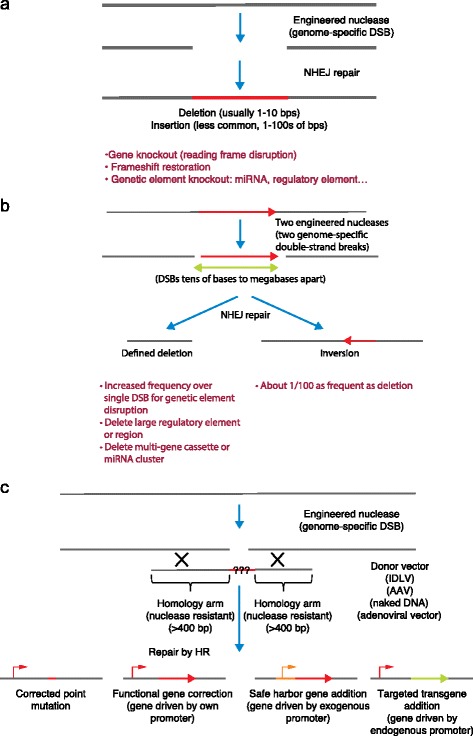
“When the editing of a single break occurs by NHEJ, insertions/deletions are created at the site of the break [17] (Fig.”
BackgroundDNA Double-Strand Break Repair: All's Well that Ends Well
Wyman, C., & Kanaar, R. (2006) · Annual Review of Genetics · doi:10.1146/annurev.genet.40.110405.090451 · Cited by 803 · cited 2×
“(HR) [15, 102, 103] (Fig.”
Rouet, P., Smih, F., & Jasin, M. (1994) · Molecular and Cellular Biology · doi:10.1128/mcb.14.12.8096 · Cited by 791
Targetted correction of a mutant HPRT gene in mouse embryonic stem cells
Doetschman, T., Gregg, R. G., Maeda, N., Hooper, M. L., Melton, D. W., Thompson, S., & Smithies, O. (1987) · Nature · doi:10.1038/330576a0 · Cited by 786 · cited 1×
“their subsequent precise genetic engineering of mice—a transformational advance in understanding human pathophysiology [5, 6].”
BackgroundChimeric nucleases stimulate gene targeting in human cells
Porteus, M. H., & Baltimore, D. (2003) · Science · doi:10.1126/science.1078395 · Cited by 741 · cited 1×
“Then, because the zinc-finger DNA binding domain can be engineered to recognize new target sites, ZFN-based protocols became the first method used to stimulate genome editing in human somatic cells to frequencies that are therapeutically relevant [9, 29, 30].”
BackgroundSelf-citationA prudent path forward for genomic engineering and germline gene modification
Baltimore, D., Berg, P., Botchan, M., Carroll, D., Charo, R. A., Church, G., Corn, J. E., Daley, G. Q., Doudna, J. A., Fenner, M., et al. (2015) · Science · doi:10.1126/science.aab1028 · Cited by 733
Holt, N., Wang, J., Kim, K., Friedman, G., Wang, X., Taupin, V., Crooks, G. M., Kohn, D. B., Gregory, P. D., Holmes, M. C., et al. (2010) · Nature Biotechnology · doi:10.1038/nbt.1663 · Cited by 677 · cited 1×
“Sangamo Biosciences and their collaborators have engineered ZFNs to target the CCR5 gene, and then used these ZFNs to mutate the CCR5 gene in primary T cells derived from patients already infected with HIV [63–65].”
MethodGenome-wide detection of DNA double-stranded breaks induced by engineered nucleases
Frock, R. L., Hu, J., Meyers, R. M., Ho, Y.-J., Kii, E., & Alt, F. W. (2015) · Nature Biotechnology · doi:10.1038/nbt.3101 · Cited by 673 · cited 1×
“To complement the biased approach using bioinformatics, there are newly developed unbiased tools, including break Guide-seq [85], HTGTS [86], BLESS [70], and Digenome-seq [87].”
MethodAn Erythroid Enhancer of BCL11A Subject to Genetic Variation Determines Fetal Hemoglobin Level
Bauer, D. E., Kamran, S. C., Lessard, S., Xu, J., Fujiwara, Y., Lin, C., Shao, Z., Canver, M. C., Smith, E. C., Pinello, L., et al. (2013) · Science · doi:10.1126/science.1242088 · Cited by 653
Self-citationGene targeting using zinc finger nucleases
Porteus, M. H., & Carroll, D. (2005) · Nature Biotechnology · doi:10.1038/nbt1125 · Cited by 641 · cited 20×
“There are subtle differences between each of these nuclease platforms—for example, the type of break that is created is different: meganucleases and mega-TALs generate breaks with 3′ overhangs; ZFNs create breaks with 5′ overhangs; TALENs create breaks that are variable in position that are usually (but not always) 5′…”
BackgroundInfluentialSelf-citationLin, Y., Cradick, T. J., Brown, M. T., Deshmukh, H., Ranjan, P., Sarode, N., Wile, B. M., Vertino, P. M., Stewart, F. J., & Bao, G. (2014) · Nucleic Acids Research · doi:10.1093/nar/gku402 · Cited by 634
CRISPR/Cas9 systems targeting β-globin and CCR5 genes have substantial off-target activity
Cradick, T. J., Fine, E. J., Antico, C. J., & Bao, G. (2013) · Nucleic Acids Research · doi:10.1093/nar/gkt714 · Cited by 590
Expression of a site-specific endonuclease stimulates homologous recombination in mammalian cells.
Rouet, P., Smih, F., & Jasin, M. (1994) · Proceedings of the National Academy of Sciences · doi:10.1073/pnas.91.13.6064 · Cited by 570 · cited 1×
“In seminal studies of the importance of DSBs, researchers used an artificial system in which the target site for a natural homing endonuclease (also sometimes called a ‘meganuclease’), I-SceI, was engineered into the genome of somatic cells; the frequency of genome editing was measured at that engineered I-SceI site […”
BackgroundGenome Engineering with Targetable Nucleases
Carroll, D. (2014) · Annual Review of Biochemistry · doi:10.1146/annurev-biochem-060713-035418 · Cited by 568 · cited 1×
“The development of a powerful genome-editing toolbox, combined with the use of this toolbox to create a wide variety of genetically modified species by zygote injection [16], has raised the possibility that someone might use genome editing in human zygotes to create human beings [99, 100].”
BackgroundHarnessing the CRISPR/Cas9 system to disrupt latent HIV-1 provirus
Ebina, H., Misawa, N., Kanemura, Y., & Koyanagi, Y. (2013) · Scientific Reports · doi:10.1038/srep02510 · Cited by 565
Targeted genome editing in human repopulating haematopoietic stem cells
Genovese, P., Schiroli, G., Escobar, G., Di Tomaso, T., Firrito, C., Calabria, A., Moi, D., Mazzieri, R., Bonini, C., Holmes, M. C., et al. (2014) · Nature · doi:10.1038/nature13420 · Cited by 555 · cited 1×
“An alternative approach, however, is to design the donor vector such that, after HR, the integrated transgene would functionally correct all (or most) of the disease-causing mutations [74, 75].”
BackgroundIn vivo genome editing restores haemostasis in a mouse model of haemophilia
Li, H., Haurigot, V., Doyon, Y., Li, T., Wong, S. Y., Bhagwat, A. S., Malani, N., Anguela, X. M., Sharma, R., Ivanciu, L., et al. (2011) · Nature · doi:10.1038/nature10177 · Cited by 548 · cited 1×
“In the transgene-targeting strategy, nucleases were used to stimulate the targeted introduction of a therapeutic transgene (either Factor IX or lysosomal storage enzymes) into a locus that drove high levels of expression from hepatocytes [77–79].”
MethodAn unbiased genome-wide analysis of zinc-finger nuclease specificity
Gabriel, R., Lombardo, A., Arens, A., Miller, J. C., Genovese, P., Kaeppel, C., Nowrouzi, A., Bartholomae, C. C., Wang, J., Friedman, G., et al. (2011) · Nature Biotechnology · doi:10.1038/nbt.1948 · Cited by 526 · cited 1×
“Other assays use extrachromosomal DNA, including AAV [88], naked DNA plasmids [19], and integration-defective lentiviral vectors [89], to capture breaks and to help assess the specificity of a nuclease.”
MethodMolecular mechanisms of DNA double-strand break repair
Kanaar, R., Hoeijmakers, J. H. J., & van Gent, D. C. (1998) · Trends in Cell Biology · doi:10.1016/s0962-8924(98)01383-x · Cited by 525 · cited 1×
“(HR) [15, 102, 103] (Fig.”
Permanent Alteration of PCSK9 With In Vivo CRISPR-Cas9 Genome Editing
Ding, Q., Strong, A., Patel, K. M., Ng, S.-L., Gosis, B. S., Regan, S. N., Cowan, C. A., Rader, D. J., & Musunuru, K. (2014) · Circulation Research · doi:10.1161/circresaha.115.304351 · Cited by 522 · cited 1×
“In vivo nuclease-mediated genome editing has been used to mutate the PCSK9 gene in livers, with a resultant drop in cholesterol levels [69, 70].”
MethodDurai, S. (2005) · Nucleic Acids Research · doi:10.1093/nar/gki912 · Cited by 522 · cited 2×
“The first solution to this problem was the development of zinc-finger nucleases (ZFNs) (originally called ‘chimeric restriction enzymes’, then called ‘chimeric nucleases’) [26–28].”
BackgroundFrequent chromosomal translocations induced by DNA double-strand breaks
Richardson, C., & Jasin, M. (2000) · Nature · doi:10.1038/35015097 · Cited by 517 · cited 1×
“chromosomal translocations can be created [106, 107].”
Homing endonucleases: structural and functional insight into the catalysts of intron/intein mobility
Chevalier, B. S. (2001) · Nucleic Acids Research · doi:10.1093/nar/29.18.3757 · Cited by 483 · cited 1×
“Engineered meganucleases are derived from the large family of natural homing endonucleases (hundreds of members) [109].”
BackgroundEfficient ablation of genes in human hematopoietic stem and effector cells using CRISPR/Cas9
Mandal, P. K., Ferreira, L. M. R., Collins, R., Meissner, T. B., Boutwell, C. L., Friesen, M., Vrbanac, V., Garrison, B. S., Stortchevoi, A., Bryder, D., et al. (2014) · Cell stem cell · doi:10.1016/j.stem.2014.10.004 · Cited by 475 · cited 1×
“The use of two DSBs can increase the frequency of inactivating a genetic element [104] or can be used to delete large”
BackgroundHigh-frequency genome editing using ssDNA oligonucleotides with zinc-finger nucleases
Chen, F., Pruett-Miller, S. M., Huang, Y., Gjoka, M., Duda, K., Taunton, J., Collingwood, T. N., Frodin, M., & Davis, G. D. (2011) · Nature Methods · doi:10.1038/nmeth.1653 · Cited by 474
Ousterout, D. G., Kabadi, A. M., Thakore, P. I., Majoros, W. H., Reddy, T. E., & Gersbach, C. A. (2015) · Nature Communications · doi:10.1038/ncomms7244 · Cited by 470 · cited 1×
“genomic regions for therapeutic purposes [57].”
Choulika, A., Perrin, A., Dujon, B., & Nicolas, J.-F. (1995) · Molecular and Cellular Biology · doi:10.1128/mcb.15.4.1968 · Cited by 460
Wang, X., Wang, Y., Wu, X., Wang, J., Wang, Y., Qiu, Z., Chang, T., Huang, H., Lin, R.-J., & Yee, J.-K. (2015) · Nature Biotechnology · doi:10.1038/nbt.3127 · Cited by 442 · cited 1×
“whether the guide strand is sufficiently identical to the target site (small mismatches and bulges are tolerated [92, 116–119]) and then to”
BackgroundSafe harbours for the integration of new DNA in the human genome
Sadelain, M., Papapetrou, E. P., & Bushman, F. D. (2012) · Nature Reviews Cancer · doi:10.1038/nrc3179 · Cited by 441 · cited 1×
“This can be done either by directly correcting the defective gene [46] or by using HR-mediated genome editing to target the therapeutic transgene to a ‘safe harbor’ [72]—a genomic site in which the transgene would be expressed at the needed levels without causing dysfunction or transformation of the modified cell [73].”
BackgroundSmith, J. (2000) · Nucleic Acids Research · doi:10.1093/nar/28.17.3361 · Cited by 424 · cited 1×
“The first solution to this problem was the development of zinc-finger nucleases (ZFNs) (originally called ‘chimeric restriction enzymes’, then called ‘chimeric nucleases’) [26–28].”
BackgroundSilva, G., Poirot, L., Galetto, R., Smith, J., Montoya, G., Duchateau, P., & Paques, F. (2011) · Current Gene Therapy · doi:10.2174/156652311794520111 · Cited by 410 · cited 2×
“including structure-based design and yeast surface display [34, 110].”
BackgroundCOSMID: A Web-based Tool for Identifying and Validating CRISPR/Cas Off-target Sites
Cradick, T. J., Qiu, P., Lee, C. M., Fine, E. J., & Bao, G. (2014) · Molecular Therapy - Nucleic Acids · doi:10.1038/mtna.2014.64 · Cited by 408 · cited 1×
“There are biased and unbiased approaches to assessing the specificity of a nuclease [83, 84].”
BackgroundEnhancing zinc-finger-nuclease activity with improved obligate heterodimeric architectures
Doyon, Y., Vo, T. D., Mendel, M. C., Greenberg, S. G., Wang, J., Xia, D. F., Miller, J. C., Urnov, F. D., Gregory, P. D., & Holmes, M. C. (2011) · Nature Methods · doi:10.1038/nmeth.1539 · Cited by 402 · cited 1×
“For ZFNs, this might entail using the obligate heterodimer structure for the nuclease domain or exploring specific alterations in the amino acids that mediate recognition of the target sequence [90].”
BackgroundGenetic manipulation of genomes with rare-cutting endonucleases
Jasin, M. (1996) · Trends in Genetics · doi:10.1016/0168-9525(96)10019-6 · Cited by 389 · cited 1×
“A critical breakthrough was the discovery that by creating a site-specific DNA doublestranded break (DSB) in the target gene it is possible to stimulate genome editing by homologous recombination by 2–5 orders of magnitude, providing overall frequencies of 5 % or more [10–13].”
BackgroundMoehle, E. A., Rock, J. M., Lee, Y.-L., Jouvenot, Y., DeKelver, R. C., Gregory, P. D., Urnov, F. D., & Holmes, M. C. (2007) · Proceedings of the National Academy of Sciences · doi:10.1073/pnas.0611478104 · Cited by 371 · cited 1×
“1c) [20, 21].”
Impact of the KU80 Pathway on NHEJ-Induced Genome Rearrangements in Mammalian Cells
Guirouilh-Barbat, J., Huck, S., Bertrand, P., Pirzio, L., Desmaze, C., Sabatier, L., & Lopez, B. S. (2004) · Molecular Cell · doi:10.1016/j.molcel.2004.05.008 · Cited by 335 · cited 1×
“and nonmutagenic fashion [104, 105].”
Correction of the sickle cell disease mutation in human hematopoietic stem/progenitor cells
Hoban, M. D., Cost, G. J., Mendel, M. C., Romero, Z., Kaufman, M. L., Joglekar, A. V., Ho, M., Lumaquin, D., Gray, D., Lill, G. R., et al. (2015) · Blood · doi:10.1182/blood-2014-12-615948 · Cited by 320 · cited 1×
“This can be done either by directly correcting the defective gene [46] or by using HR-mediated genome editing to target the therapeutic transgene to a ‘safe harbor’ [72]—a genomic site in which the transgene would be expressed at the needed levels without causing dysfunction or transformation of the modified cell [73].”
BackgroundTracking genome engineering outcome at individual DNA breakpoints
Certo, M. T., Ryu, B. Y., Annis, J. E., Garibov, M., Jarjour, J., Rawlings, D. J., & Scharenberg, A. M. (2011) · Nature Methods · doi:10.1038/nmeth.1648 · Cited by 318 · cited 1×
“off-target genomic instability and may not be therapeutically useful [108].”
BackgroundIn vivo genome editing of the albumin locus as a platform for protein replacement therapy
Sharma, R., Anguela, X. M., Doyon, Y., Wechsler, T., DeKelver, R. C., Sproul, S., Paschon, D. E., Miller, J. C., Davidson, R. J., Shivak, D., et al. (2015) · Blood · doi:10.1182/blood-2014-12-615492 · Cited by 297 · cited 1×
“In the transgene-targeting strategy, nucleases were used to stimulate the targeted introduction of a therapeutic transgene (either Factor IX or lysosomal storage enzymes) into a locus that drove high levels of expression from hepatocytes [77–79].”
MethodSargent, R. G., Brenneman, M. A., & Wilson, J. H. (1997) · Molecular and Cellular Biology · doi:10.1128/mcb.17.1.267 · Cited by 271 · cited 1×
“In seminal studies of the importance of DSBs, researchers used an artificial system in which the target site for a natural homing endonuclease (also sometimes called a ‘meganuclease’), I-SceI, was engineered into the genome of somatic cells; the frequency of genome editing was measured at that engineered I-SceI site […”
BackgroundAdeno-associated virus vectors integrate at chromosome breakage sites
Miller, D. G., Petek, L. M., & Russell, D. W. (2004) · Nature Genetics · doi:10.1038/ng1380 · Cited by 266 · cited 9×
“For example, recombinant adeno-associated virus (AAV) has a packaging limit of 4.7 kilobases which is too small to package a pair of TALENs or the Cas9 cDNA of S. pyogenes, but not of Staphylococcus aureus [70]. not been determined.”
MethodInfluentialWang, J., Exline, C. M., DeClercq, J. J., Llewellyn, G. N., Hayward, S. B., Li, P. W.-L., Shivak, D. A., Surosky, R. T., Gregory, P. D., Holmes, M. C., et al. (2015) · Nature Biotechnology · doi:10.1038/nbt.3408 · Cited by 261
Promoterless gene targeting without nucleases ameliorates haemophilia B in mice
Barzel, A., Paulk, N. K., Shi, Y., Huang, Y., Chu, K., Zhang, F., Valdmanis, P. N., Spector, L. P., Porteus, M. H., Gaensler, K. M., et al. (2015) · Nature · doi:10.1038/nature13864 · Cited by 257 · cited 1×
“In the transgene-targeting strategy, nucleases were used to stimulate the targeted introduction of a therapeutic transgene (either Factor IX or lysosomal storage enzymes) into a locus that drove high levels of expression from hepatocytes [77–79].”
MethodSelf-citationTargeted chromosomal deletions in human cells using zinc finger nucleases
Lee, H. J., Kim, E., & Kim, J.-S. (2010) · Genome Research · doi:10.1101/gr.099747.109 · Cited by 252 · cited 2×
“sites [22].”
Lee, G. S., Neiditch, M. B., Salus, S. S., & Roth, D. B. (2004) · Cell · doi:10.1016/s0092-8674(04)00301-0 · Cited by 237 · cited 1×
“concept work of Roth and co-workers [120] showed that nickases could stimulate gene targeting, and so nickase versions of the nuclease”
BackgroundSather, B. D., Romano Ibarra, G. S., Sommer, K., Curinga, G., Hale, M., Khan, I. F., Singh, S., Song, Y., Gwiazda, K., Sahni, J., et al. (2015) · Science Translational Medicine · doi:10.1126/scitranslmed.aac5530 · Cited by 223
Double-strand breaks at the target locus stimulate gene targeting in embryonic stem cells
Smih, F., Rouet, P., Romanienko, P. J., & Jasin, M. (1995) · Nucleic Acids Research · doi:10.1093/nar/23.24.5012 · Cited by 220 · cited 1×
“A critical breakthrough was the discovery that by creating a site-specific DNA doublestranded break (DSB) in the target gene it is possible to stimulate genome editing by homologous recombination by 2–5 orders of magnitude, providing overall frequencies of 5 % or more [10–13].”
BackgroundPetes, T. D. (1980) · Annual Review of Biochemistry · doi:10.1146/annurev.bi.49.070180.004213 · Cited by 219 · cited 1×
“In particular, the ease of gene targeting in yeast was one factor that made yeast such an important model organism in studies of the pathophysiology of human disease [3, 4].”
BackgroundCurrent issues of RNAi therapeutics delivery and development
Haussecker, D. (2014) · Journal of Controlled Release · doi:10.1016/j.jconrel.2014.07.056 · Cited by 217 · cited 1×
“In addition, as a general principle, any disease that might be treated by RNA interference (RNAi)-mediated knockdown of a gene [60, 61] might be more definitively treated by genome editing.”
BackgroundZinc-finger nucleases as a novel therapeutic strategy for targeting hepatitis B virus DNAs
Cradick, T. J., Keck, K., Bradshaw, S., Jamieson, A. C., & McCaffrey, A. P. (2010) · Molecular Therapy · doi:10.1038/mt.2010.20 · Cited by 184 · cited 1×
“In multiple proof-of-concept studies, nucleases have been engineered to recognize key elements of viral genomes (including those of HIV and hepatitis B) in order to create mutations that will inactivate the virus [66–68].”
BackgroundOusterout, D. G., Perez-Pinera, P., Thakore, P. I., Kabadi, A. M., Brown, M. T., Qin, X., Fedrigo, O., Mouly, V., Tremblay, J. P., & Gersbach, C. A. (2013) · Molecular Therapy · doi:10.1038/mt.2013.111 · Cited by 181 · cited 1×
“Proof-of-concept studies have been published for both of these strategies, but the challenge that remains is to achieve the desired editing in a fraction of muscle fibers, including the heart and diaphragm tissues, large enough to alter the clinical course of the disease significantly [57–59].”
BackgroundMammalian gene targeting with designed zinc finger nucleases
Porteus, M. H. (2006) · Molecular Therapy · doi:10.1016/j.ymthe.2005.08.003 · Cited by 180 · cited 1×
“Then, because the zinc-finger DNA binding domain can be engineered to recognize new target sites, ZFN-based protocols became the first method used to stimulate genome editing in human somatic cells to frequencies that are therapeutically relevant [9, 29, 30].”
BackgroundSelf-citationmegaTALs: a rare-cleaving nuclease architecture for therapeutic genome engineering
Boissel, S., Jarjour, J., Astrakhan, A., Adey, A., Gouble, A., Duchateau, P., Shendure, J., Stoddard, B. L., Certo, M. T., Baker, D., et al. (2014) · Nucleic Acids Research · doi:10.1093/nar/gkt1224 · Cited by 173 · cited 2×
“In the past 5 years, however, the development of TAL effector nucleases (TALENs) [35–37], CRISPR/Cas9 nucleases [38–40], and hybrid nuclease platforms [41–43] have dramatically expanded the engineered nuclease toolbox.”
BackgroundChromosomal Double-Strand Breaks Induce Gene Conversion at High Frequency in Mammalian Cells
Taghian, D. G., & Nickoloff, J. A. (1997) · Molecular and Cellular Biology · doi:10.1128/mcb.17.11.6386 · Cited by 171 · cited 1×
“In seminal studies of the importance of DSBs, researchers used an artificial system in which the target site for a natural homing endonuclease (also sometimes called a ‘meganuclease’), I-SceI, was engineered into the genome of somatic cells; the frequency of genome editing was measured at that engineered I-SceI site […”
BackgroundWeinstock, D. M., Richardson, C. A., Elliott, B., & Jasin, M. (2006) · DNA Repair · doi:10.1016/j.dnarep.2006.05.028 · Cited by 167 · cited 1×
“Nevertheless, the induction of a DSB through a site-specific engineered nuclease is a critical aspect of gene editing and it is well known that DSBs can generate genomic instability, including chromosomal translocations, chromosome loss and aneuploidy [81].”
BackgroundEfficient Gene Targeting Mediated by Adeno-Associated Virus and DNA Double-Strand Breaks
Porteus, M. H., Cathomen, T., Weitzman, M. D., & Baltimore, D. (2003) · Molecular and Cellular Biology · doi:10.1128/mcb.23.10.3558-3565.2003 · Cited by 159 · cited 1×
“Using adeno-associated virus (AAV) to deliver the donor template into cells may be a solution to this problem because AAV, like many viruses, has evolved to escape recognition by the innate intracellular immune response [47–50].”
MethodSelf-citationQuantifying on- and off-target genome editing
Hendel, A., Fine, E. J., Bao, G., & Porteus, M. H. (2015) · Trends in Biotechnology · doi:10.1016/j.tibtech.2014.12.001 · Cited by 151 · cited 1×
“There are biased and unbiased approaches to assessing the specificity of a nuclease [83, 84].”
BackgroundSelf-citationAttenuation of Zinc Finger Nuclease Toxicity by Small-Molecule Regulation of Protein Levels
Pruett-Miller, S. M., Reading, D. W., Porter, S. N., & Porteus, M. H. (2009) · PLoS Genetics · doi:10.1371/journal.pgen.1000376 · Cited by 137 · cited 1×
“For all of the platforms, specificity is increased by limiting the duration of expression of the nuclease, the pharmacologic equivalent of decreasing the AUC (‘area under the curve’) of nuclease exposure [39, 95, 96].”
BackgroundSelf-citationFunctional footprinting of regulatory DNA
Vierstra, J., Reik, A., Chang, K.-H., Stehling-Sun, S., Zhou, Y., Hinkley, S. J., Paschon, D. E., Zhang, L., Psatha, N., Bendana, Y. R., et al. (2015) · Nature Methods · doi:10.1038/nmeth.3554 · Cited by 133 · cited 1×
“One example of this approach is to delete the erythroid enhancer for Bcl11A in hematopoietic stem/progenitor cells (HSPCs) in order to upregulate γ-globin to treat sickle cell disease and β-thalassemia [53–55].”
MethodHuman Gene Targeting by Adeno-Associated Virus Vectors Is Enhanced by DNA Double-Strand Breaks
Miller, D. G., Petek, L. M., & Russell, D. W. (2003) · Molecular and Cellular Biology · doi:10.1128/mcb.23.10.3550-3557.2003 · Cited by 128
Quantifying Genome-Editing Outcomes at Endogenous Loci with SMRT Sequencing
Hendel, A., Kildebeck, E. J., Fine, E. J., Clark, J. T., Punjya, N., Sebastiano, V., Bao, G., & Porteus, M. H. (2014) · Cell Reports · doi:10.1016/j.celrep.2014.02.040 · Cited by 124 · cited 4×
“can be much larger; insertions often incorporate random pieces of DNA that are present in the nucleus [18, 19].”
BackgroundInfluentialSelf-citationGene targeting and somatic cell genetics: a rebirth or a coming of age?
Sedivy, J. M., & Dutriaux, A. (1999) · Trends in Genetics · doi:10.1016/s0168-9525(98)01689-8 · Cited by 123 · cited 1×
“Even in the earliest days of gene therapy, it was recognized that genome editing might be the ideal approach for curing genetic diseases, but the earliest studies were stymied by the low absolute frequency of gene correction by homologous recombination in human somatic cells (10) [7–9].”
BackgroundComprehensive DNA Recognition through Concerted Interactions from Adjacent Zinc Fingers
Isalan, M., Klug, A., & Choo, Y. (1998) · Biochemistry · doi:10.1021/bi981358z · Cited by 120 · cited 1×
“combination of phage display and modular display first developed by Klug and his co-workers [111] followed by rational design.”
BackgroundOusterout, D. G., Kabadi, A. M., Thakore, P. I., Perez-Pinera, P., Brown, M. T., Majoros, W. H., Reddy, T. E., & Gersbach, C. A. (2015) · Molecular Therapy · doi:10.1038/mt.2014.234 · Cited by 118 · cited 1×
“Proof-of-concept studies have been published for both of these strategies, but the challenge that remains is to achieve the desired editing in a fraction of muscle fibers, including the heart and diaphragm tissues, large enough to alter the clinical course of the disease significantly [57–59].”
BackgroundCapture of DNA Sequences at Double-Strand Breaks in Mammalian Chromosomes
Lin, Y., & Waldman, A. S. (2001) · Genetics · doi:10.1093/genetics/158.4.1665 · Cited by 113
Targeted DNA Mutagenesis for the Cure of Chronic Viral Infections
Schiffer, J. T., Aubert, M., Weber, N. D., Mintzer, E., Stone, D., & Jerome, K. R. (2012) · Journal of Virology · doi:10.1128/jvi.00052-12 · Cited by 112 · cited 1×
“In multiple proof-of-concept studies, nucleases have been engineered to recognize key elements of viral genomes (including those of HIV and hepatitis B) in order to create mutations that will inactivate the virus [66–68].”
BackgroundImproved specificity of TALE-based genome editing using an expanded RVD repertoire
Miller, J. C., Zhang, L., Xia, D. F., Campo, J. J., Ankoudinova, I., Guschin, D. Y., Babiarz, J., Meng, X., Hinkley, S. J., Lam, S. C., et al. (2015) · Nature Methods · doi:10.1038/nmeth.3330 · Cited by 112 · cited 16×
“There are subtle differences between each of these nuclease platforms—for example, the type of break that is created is different: meganucleases and mega-TALs generate breaks with 3′ overhangs; ZFNs create breaks with 5′ overhangs; TALENs create breaks that are variable in position that are usually (but not always) 5′…”
MethodInfluentialGenome Editing Technologies: Defining a Path to Clinic
Corrigan-Curay, J., O'Reilly, M., Kohn, D. B., Cannon, P. M., Bao, G., Bushman, F. D., Carroll, D., Cathomen, T., Joung, J. K., Roth, D., et al. (2015) · Molecular Therapy · doi:10.1038/mt.2015.54 · Cited by 100
Self-citationNuclease-mediated gene editing by homologous recombination of the human globin locus
Voit, R. A., Hendel, A., Pruett-Miller, S. M., & Porteus, M. H. (2014) · Nucleic Acids Research · doi:10.1093/nar/gkt947 · Cited by 91 · cited 1×
“An alternative approach, however, is to design the donor vector such that, after HR, the integrated transgene would functionally correct all (or most) of the disease-causing mutations [74, 75].”
BackgroundSelf-citationZinc-finger nuclease-mediated correction of α-thalassemia in iPS cells
Chang, C.-J., & Bouhassira, E. E. (2012) · Blood · doi:10.1182/blood-2012-03-420703 · Cited by 84
Haussecker, D., & Kay, M. A. (2015) · Science · doi:10.1126/science.1252967 · Cited by 80
Generation of an HIV resistant T-cell line by targeted “stacking” of restriction factors
Voit, R. A., McMahon, M. A., Sawyer, S. L., & Porteus, M. H. (2013) · Molecular Therapy · doi:10.1038/mt.2012.284 · Cited by 74 · cited 1×
“Ex vivo HR-mediated genome editing is also being developed as a method to create an HIV-resistant immune system [20].”
MethodSelf-citationIndividualized Iterative Phenotyping for Genome-wide Analysis of Loss-of-Function Mutations
Johnston, J. J., Lewis, K. L., Ng, D., Singh, L. N., Wynter, J., Brewer, C., Brooks, B. P., Brownell, I., Candotti, F., Gonsalves, S. G., et al. (2015) · The American Journal of Human Genetics · doi:10.1016/j.ajhg.2015.04.013 · Cited by 67 · cited 1×
“Today, we recognize that there are at least 8000 human diseases that are caused by mutations in single genes (monogenic diseases); the number increases almost every day [1, 2].”
BackgroundJarjour, J., West‐Foyle, H., Certo, M. T., Hubert, C. G., Doyle, L., Getz, M. M., Stoddard, B. L., & Scharenberg, A. M. (2009) · Nucleic Acids Research · doi:10.1093/nar/gkp726 · Cited by 67 · cited 1×
“including structure-based design and yeast surface display [34, 110].”
BackgroundGene Conversion Adjacent to Regions of Double-Strand Break Repair
Orr‐Weaver, T. L., Nicolas, A. G., & Szostak, J. W. (1988) · Molecular and Cellular Biology · doi:10.1128/mcb.8.12.5292-5298.1988 · Cited by 60 · cited 1×
“In particular, the ease of gene targeting in yeast was one factor that made yeast such an important model organism in studies of the pathophysiology of human disease [3, 4].”
BackgroundDNA Damage and Repair: Volume 2: DNA Repair in Higher Eukaryotes
(1998) · Humana Press eBooks · doi:10.1007/978-1-59259-455-9 · Cited by 47
Genome Editing of the Germline: Broadening the Discussion
Porteus, M. H., & Dann, C. T. (2015) · Molecular Therapy · doi:10.1038/mt.2015.83 · Cited by 40 · cited 1×
“The development of a powerful genome-editing toolbox, combined with the use of this toolbox to create a wide variety of genetically modified species by zygote injection [16], has raised the possibility that someone might use genome editing in human zygotes to create human beings [99, 100].”
BackgroundSelf-citation(2013) · Molecular Therapy · doi:10.1038/mt.2013.229 · Cited by 27
Breese, E. H., Buechele, C., Dawson, C., Cleary, M. L., & Porteus, M. H. (2015) · PLoS ONE · doi:10.1371/journal.pone.0136644 · Cited by 26 · cited 1×
“chromosomal translocations can be created [106, 107].”
Self-citationLegacies of Garrod's brilliance. One hundred years—and counting
Rosenberg, L. (2008) · Journal of Inherited Metabolic Disease · doi:10.1007/s10545-008-0985-8 · Cited by 24 · cited 1×
“Today, we recognize that there are at least 8000 human diseases that are caused by mutations in single genes (monogenic diseases); the number increases almost every day [1, 2].”
BackgroundRecovery of cell cycle delay following targeted gene repair by oligonucleotides
Ferrara, L., Engstrom, J. U., Schwartz, T. R., Parekh‐Olmedo, H., & Kmiec, E. B. (2007) · DNA repair · doi:10.1016/j.dnarep.2007.04.007 · Cited by 24 · cited 1×
“Moreover, ssODNs induce a replication and cell cycle arrest even in cancer cell lines [45] and would probably be even more problematic in primary therapeutically relevant human cell types, as demonstrated in part by the work of Hoban et al.”
Nickoloff, J. A., & Hoekstra, M. F. (1998) · Humana Press eBooks · doi:10.1385/089603500x · Cited by 23
Allogeneic Cellular Gene Therapy for Hemoglobinopathies
Gaziev, J., & Lucarelli, G. (2010) · Hematology/Oncology Clinics of North America · doi:10.1016/j.hoc.2010.08.004 · Cited by 20 · cited 1×
“In allo-HSCT for these types, the hematopoietic system is replaced by cells containing at least one wild-type version of the gene and, for this reason, some have called it ‘allogeneic gene therapy’ [71].”
BackgroundDouble-strand Break Repair in Human Cells
WEST, S. C., CHAPPELL, C., HANAKAHI, L. A., MASSON, J.-Y., MCILWRAITH, M. J., & VAN DYCK, E. (2000) · Cold Spring Harbor Symposia on Quantitative Biology · doi:10.1101/sqb.2000.65.315 · Cited by 18 · cited 1×
“1) [14–17].”
Barker, J. C., Barker, A. D., Bills, J. D., Huang, J., Wight‐Carter, M., Delgado, I., Noble, D. L., Huang, L. J.-S., Porteus, M. H., & Davis, K. E. (2014) · Plastic & Reconstructive Surgery · doi:10.1097/prs.0000000000000427 · Cited by 17 · cited 1×
“In these experiments, fibroblasts were engineered by HR to secrete a wound-healing growth factor [80].”
MethodSelf-citation
Cited by
CRISPR/Cas9 β-globin gene targeting in human haematopoietic stem cells
Dever, D. P., Bak, R. O., Reinisch, A., Camarena, J., Washington, G., Nicolas, C. E., Pavel-Dinu, M., Saxena, N., Wilkens, A. B., Mantri, S., et al. (2016) · Nature · doi:10.1038/nature20134 · Cited by 864
Self-citationVakulskas, C. A., Dever, D. P., Rettig, G. R., Turk, R., Jacobi, A. M., Collingwood, M. A., Bode, N. M., McNeill, M. S., Yan, S., Camarena, J., et al. (2018) · Nature Medicine · doi:10.1038/s41591-018-0137-0 · Cited by 782
Self-citationGenome-Editing Technologies: Principles and Applications
Gaj, T., Sirk, S. J., Shui, S.-L., & Liu, J. (2016) · Cold Spring Harbor Perspectives in Biology · doi:10.1101/cshperspect.a023754 · Cited by 381
CRISPR/Cas9 genome editing in human hematopoietic stem cells.
Bak, R. O., Dever, D. P., & Porteus, M. H. (2018) · Nature Protocols · doi:10.1038/nprot.2017.143 · Cited by 319
Self-citationNiederberger, C., Pellicer, A., Cohen, J., Gardner, D. K., Palermo, G. D., O’Neill, C. L., Chow, S., Rosenwaks, Z., Cobo, A., Swain, J. E., et al. (2018) · Fertility and Sterility · doi:10.1016/j.fertnstert.2018.06.005 · Cited by 301
Metadata
- Authors
- Porteus, M. H.
- Affiliations
- Stanford Medicine (US)
- Corresponding author
- Porteus, Matthew H.
- ORCID
- Porteus, Matthew H.
- Venue
- Genome Biology
- Published
- 2015-12
- Volume
- 16
- Issue
- 1
- Pages
- 286-286
- ISSN
- 1465-6906 (ISSN-L)
- 1474-760X
- PMC
- PMC4699361
- OpenAlex
- W2206690149
- Semantic Scholar
- 919c2281ff7c32379c1385cddb7e0cfdbf5dfb61
- Cited by
- 69
- References
- 123
- Citations by year
- 2026: 4 · 2025: 3 · 2024: 2 · 2023: 3 · 2022: 6 · 2021: 3 · 2020: 6 · 2019: 7 · 2018: 13 · 2017: 15 · 2016: 6 · 2015: 1
- FWCI
- 1.13
- Type
- journal article
- Language
- en
- Open access
- gold
- doi.org
- Licence
- cc-by
- creativecommons.org/licenses/by/4.0/ (tdm)
- Locations
- Genome biology (publishedVersion, cc-by)
- PubMed Central (publishedVersion, cc-by)
- PubMed (publishedVersion)
- Funders
- Amon G. Carter Foundation
- National Institutes of Health (5r01ai120766-02)
- National Eye Institute (PN2EY018244)
- National Institute of Allergy and Infectious Diseases (R01-AI120766, R01AI097320)
- Topics
- Life Sciences › Biochemistry, Genetics and Molecular Biology › Molecular Biology › CRISPR and Genetic Engineering
- Life Sciences › Biochemistry, Genetics and Molecular Biology › Molecular Biology › RNA regulation and disease
- Life Sciences › Biochemistry, Genetics and Molecular Biology › Genetics › Virus-based gene therapy research
- Keywords
- therapeutic genome editing, genome editing, gene therapy, monogenic disorders, infectious diseases, precision medicine, genome modification
- MeSH terms
- Animals, Humans, Genetic Therapy, Genome, Gene Targeting
About these checks
Registry, retraction, Cites and statistics results are computed, not judged, with one exception: a printed reference that no index lists is read once by a model before it counts as a citation error. Claims are extracted by a model and kept only when their quote appears verbatim in the text; each cited source is then checked, with a model’s help, for whether it says what the claim relies on. Those verdicts can be wrong — read the claim’s quote and the cited source before relying on one.
Statistics and arithmetic are recomputed, not judged.
Confidence bands are shown only for fields calibrated on our annotated test set. None is calibrated yet, so no band is shown.
What counts as a claim ›How we measure confidence ›How we check this ›
Are you an author, or do you see a problem with this page? Request a review
Data sources
Bibliographic data: Semantic Scholar, OpenAlex, Crossref.
Contains information from the Semantic Scholar Academic Graph Datasets, made available under the ODC Attribution License (ODC-BY 1.0).
Semantic Scholar’s data is described in: Kinney, R., et al. (2023). The Semantic Scholar Open Data Platform. arXiv:2301.10140.
