

The DOI matches its Crossref record; 69 of the 69 references it cites were found in a registry or an index.
GATA3-dependent cellular reprogramming requires activation-domain dependent recruitment of a chromatin remodeler
Open accessAbstract
BACKGROUND: Transcription factor-dependent cellular reprogramming is integral to normal development and is central to production of induced pluripotent stem cells. This process typically requires pioneer transcription factors (TFs) to induce de novo formation of enhancers at previously closed chromatin. Mechanistic information on this process is currently sparse. RESULTS: Here we explore the mechanistic basis by which GATA3 functions as a pioneer TF in a cellular reprogramming event relevant to breast cancer, the mesenchymal to epithelial transition (MET). In some instances, GATA3 binds previously inaccessible chromatin, characterized by stable, positioned nucleosomes where it induces nucleosome eviction, alters local histone modifications, and remodels local chromatin architecture. At other loci, GATA3 binding induces nucleosome sliding without concomitant generation of accessible chromatin. Deletion of the transactivation domain retains the chromatin binding ability of GATA3 but cripples chromatin reprogramming ability, resulting in failure to induce MET. CONCLUSIONS: These data provide mechanistic insights into GATA3-mediated chromatin reprogramming during MET, and suggest unexpected complexity to TF pioneering. Successful reprogramming requires stable binding to a nucleosomal site; activation domain-dependent recruitment of co-factors including BRG1, the ATPase subunit of the SWI/SNF chromatin remodeling complex; and appropriate genomic context. The resulting model provides a new conceptual framework for de novo enhancer establishment by a pioneer TF.
Overview
The claims and statistics of this paper haven’t been checked yet.
Run the check — free, no account needed. It reads the open-access text and checks the sources it cites.
Integrity signals
Registry
Cites
Statistics
Figures
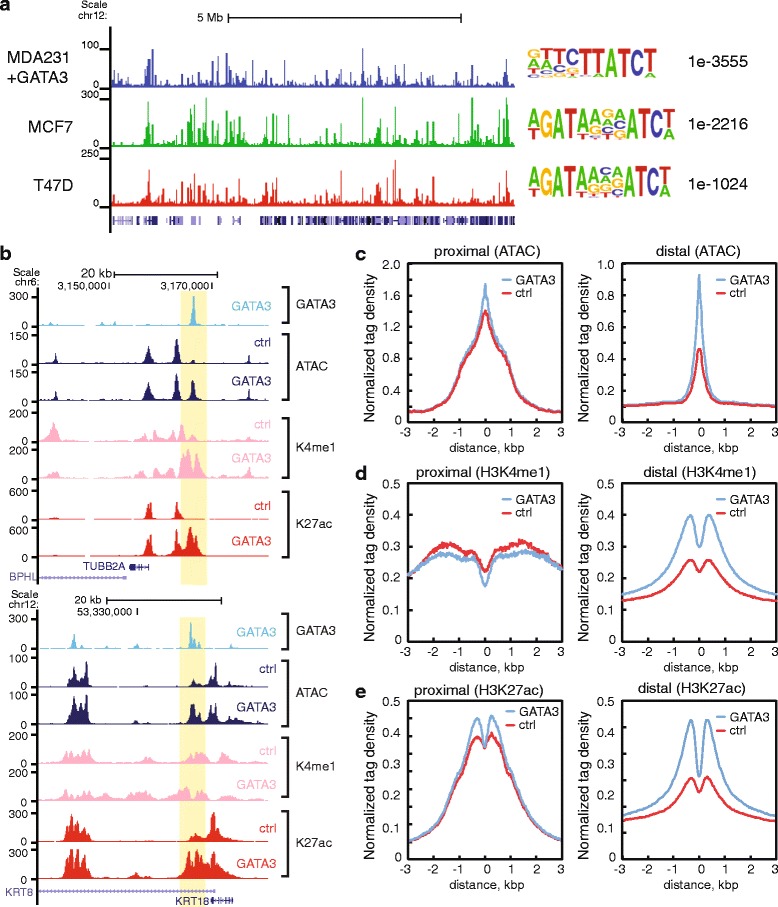
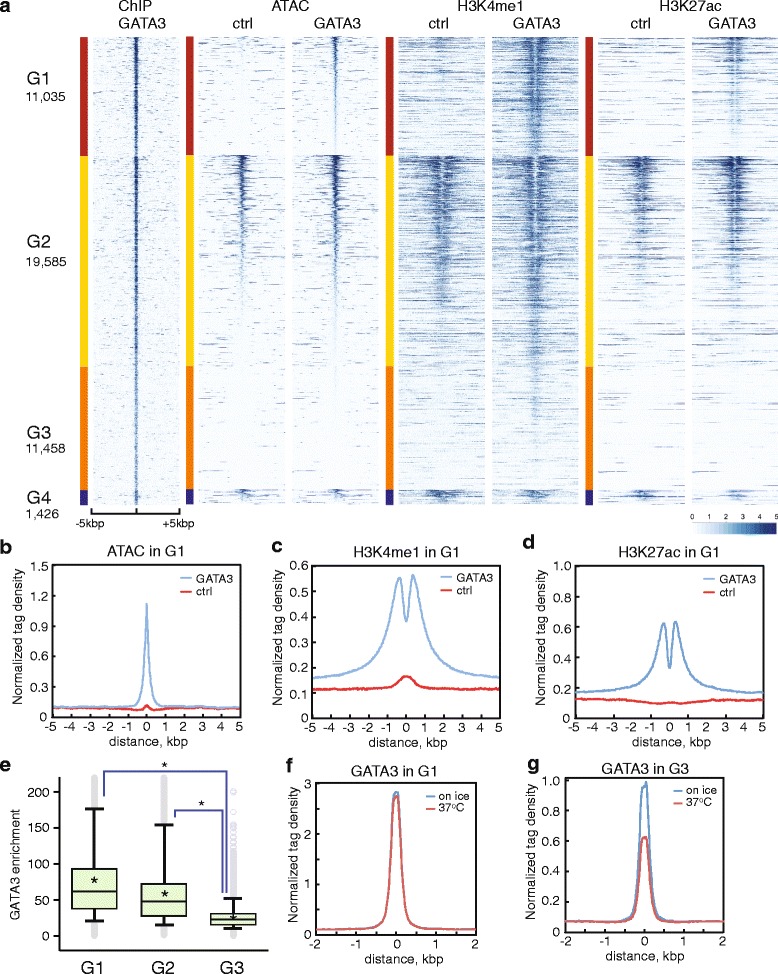
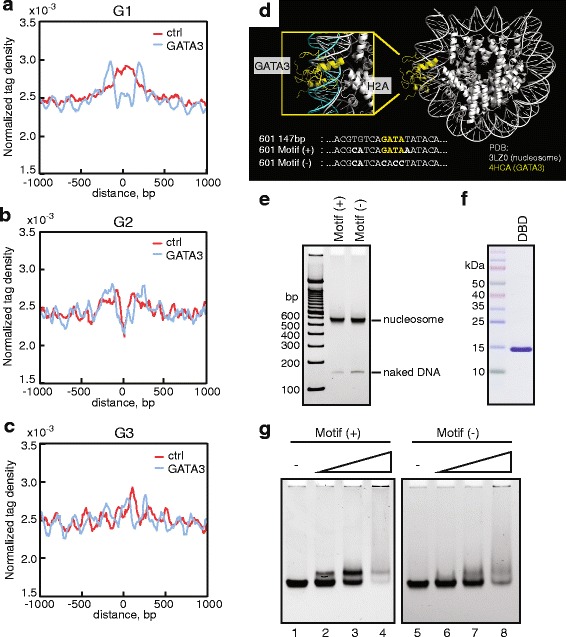
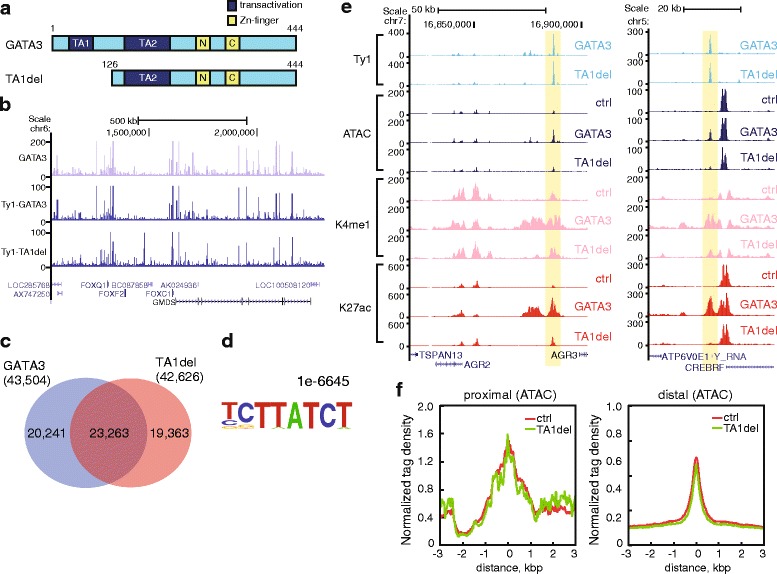
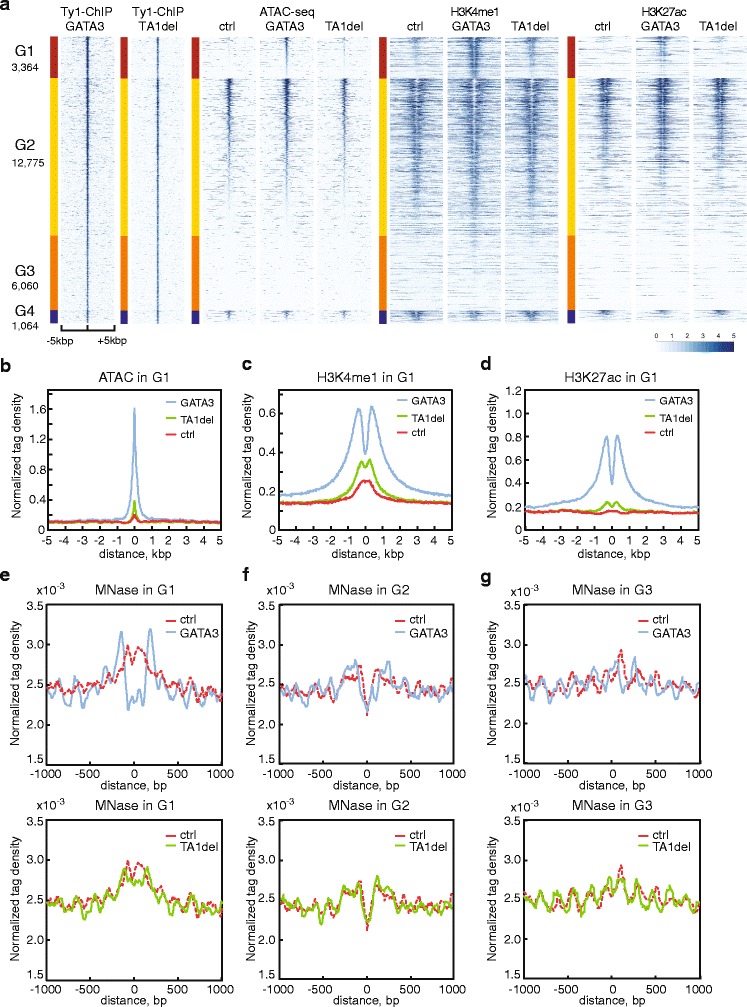
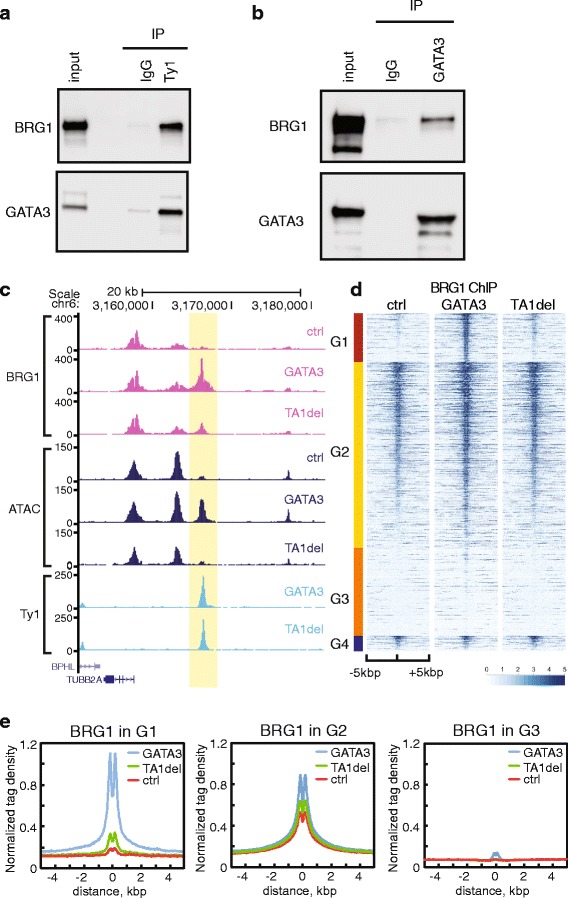
Verification
Claims the paper makes
The claims and statistics of this paper haven’t been checked yet.
Run the check — free, no account needed. It reads the open-access text and checks the sources it cites.
Claims other papers make about this one
Each is checked against this paper’s own text: does it say what the citing paper says it does?
The cited source says what the claim attributes to it.
In the citing paper
“Our results suggests that SOX9 harbours this ability but, as observed with other pioneer TFs (47,69,70), not all SOX9 binding events result in opening of chromatin.”
From SOX9 reprograms endothelial cells by altering the chromatin landscape (2022) · cites this paper as [69]
The cited source says what the claim attributes to it.
In the citing paper
“The mechanisms of pioneer factor action are still being established [37], but at least some of them (such as FOXA, OCT4 and SOX2/SOX11) have been shown to initiate chromatin opening by direct displacement of histones [38–41], whilst many others recruit chromatin remodelers [42–50].”
From Transcriptional enhancers and their communication with gene promoters (2021) · cites this paper as [49]
Self-check
Percentages, sums and reported differences re-computed from the paper’s own numbers.
The self-check needs the paper’s full text.
Citations
Cites
Robinson, M. D., McCarthy, D. J., & Smyth, G. K. (2010) · Bioinformatics · doi:10.1093/bioinformatics/btp616 · Cited by 41,364
PD-1 and PD-L1 Immune Checkpoint Blockade to Treat Breast Cancer
Hartkopf, A. D., Taran, F., Wallwiener, M., Walter, C. B., Krämer, B., Grischke, E., & Brucker, S. Y. (2016) · Breast Care · doi:10.1159/000453569 · Cited by 30,989
Ultrafast and memory-efficient alignment of short DNA sequences to the human genome.
Langmead, B., Trapnell, C., Pop, M., & Salzberg, S. L. (2009) · Genome Biology · doi:10.1186/gb-2009-10-3-r25 · Cited by 21,849
An integrated encyclopedia of DNA elements in the human genome
The ENCODE Project Consortium (2012) · Nature · doi:10.1038/nature11247 · Cited by 18,072
Heinz, S., Benner, C., Spann, N., Bertolino, E., Lin, Y. C., Laslo, P., Cheng, J. X., Murre, C., Singh, H., & Glass, C. K. (2010) · Molecular Cell · doi:10.1016/j.molcel.2010.05.004 · Cited by 13,382
Gene Expression Omnibus: NCBI gene expression and hybridization array data repository
Edgar, R. (2002) · Nucleic Acids Research · doi:10.1093/nar/30.1.207 · Cited by 13,288
Nishimura, R., Osako, T., Nishiyama, Y., Tashima, R., Nakano, M., Fujisue, M., Toyozumi, Y., & Arima, N. (2013) · Oncology · doi:10.1159/000353099 · Cited by 13,239
Comprehensive molecular portraits of human breast tumours
The Cancer Genome Atlas Network (2012) · Nature · doi:10.1038/nature11412 · Cited by 12,129
Buenrostro, J. D., Giresi, P. G., Zaba, L. C., Chang, H. Y., & Greenleaf, W. J. (2013) · Nature Methods · doi:10.1038/nmeth.2688 · Cited by 6,422
Lowary, P. T., & Widom, J. (1998) · Journal of Molecular Biology · doi:10.1006/jmbi.1997.1494 · Cited by 1,782
Cited by
Sorted by citations
Chromatin accessibility profiling by ATAC-seq
Grandi, F. C., Modi, H., Kampman, L., & Corces, M. R. (2022) · Nature Protocols · doi:10.1038/s41596-022-00692-9 · Cited by 557
King, H. W., & Klose, R. J. (2017) · eLife · doi:10.7554/elife.22631 · Cited by 270
A Systematic Review of miR-29 in Cancer
Kwon, J. J., Factora, T. D., Dey, S., & Kota, J. (2018) · Molecular Therapy — Oncolytics · doi:10.1016/j.omto.2018.12.011 · Cited by 268
Pioneer factors as master regulators of the epigenome and cell fate
Balsalobre, A., & Drouin, J. (2022) · Nature Reviews Molecular Cell Biology · doi:10.1038/s41580-022-00464-z · Cited by 251
Pioneer transcription factors shape the epigenetic landscape
Mayran, A., & Drouin, J. (2018) · Journal of Biological Chemistry · doi:10.1074/jbc.r117.001232 · Cited by 249
Metadata
- Authors
- Takaku, M., Grimm, S. A., Shimbo, T., Perera, L., Menafra, R., Stunnenberg, H. G., Archer, T. K., Machida, S., Kurumizaka, H., & Wade, P. A.
- Affiliations
- National Institutes of Health (US)
- National Institute of Environmental Health Sciences (US)
- Radboud University Nijmegen (NL)
- Waseda University (JP)
- Corresponding author
- Wade, Paul A.
- ORCID
- Venue
- Genome Biology
- Published
- 2016-02-27
- Volume
- 17
- Issue
- 1
- Pages
- 36-36
- ISSN
- 1465-6906 (ISSN-L)
- 1474-760X
- PMC
- PMC4769547
- OpenAlex
- W2281053309
- Cited by
- 151
- References
- 69
- Citations by year
- 2026: 6 · 2025: 11 · 2024: 18 · 2023: 22 · 2022: 14 · 2021: 16 · 2020: 16 · 2019: 18 · 2018: 20 · 2017: 6 · 2016: 4
- FWCI
- 8.32
- Type
- journal article
- Language
- en
- Open access
- gold
- doi.org
- Locations
- Genome biology (publishedVersion, cc-by)
- Europe PMC (PubMed Central) (publishedVersion, cc-by)
- PubMed Central (publishedVersion, cc-by)
- PubMed (publishedVersion)
- Radboud Repository (Radboud University) (submittedVersion)
- Radboud Repository (Radboud University) (submittedVersion, other-oa)
- Funders
- National Institute of Environmental Health Sciences (ES101965, ES071006, ES043010)
- Ministry of Education, Culture, Sports, Science, and Technology (25116002)
- Japan Society for the Promotion of Science
- Topics
- Life Sciences › Biochemistry, Genetics and Molecular Biology › Molecular Biology › Genomics and Chromatin Dynamics
- Life Sciences › Biochemistry, Genetics and Molecular Biology › Molecular Biology › Chromatin Remodeling and Cancer
- Life Sciences › Biochemistry, Genetics and Molecular Biology › Molecular Biology › Epigenetics and DNA Methylation
- Keywords
- GATA3, pioneer transcription factors, cellular reprogramming, mesenchymal-epithelial transition, chromatin remodeling, SWI/SNF complex, SMARCA4, nucleosome eviction, nucleosome sliding, histone modifications, transactivation domain, breast cancer, chromatin accessibility
- MeSH terms
- Breast Neoplasms, Chromatin, Chromosomal Proteins, Non-Histone, Female, Humans, Nucleosomes, Transcription Factors, Chromatin Assembly and Disassembly, GATA3 Transcription Factor, Induced Pluripotent Stem Cells, Epithelial-Mesenchymal Transition, Cellular Reprogramming
About these checks
Registry, retraction, Cites and statistics results are computed, not judged, with one exception: a printed reference that no index lists is read once by a model before it counts as a citation error. Claims are extracted by a model and kept only when their quote appears verbatim in the text; each cited source is then checked, with a model’s help, for whether it says what the claim relies on. Those verdicts can be wrong — read the claim’s quote and the cited source before relying on one.
Statistics and arithmetic are recomputed, not judged.
Confidence bands are shown only for fields calibrated on our annotated test set. None is calibrated yet, so no band is shown.
What counts as a claim ›How we measure confidence ›How we check this ›
Are you an author, or do you see a problem with this page? Request a review
