

Simultaneous profiling of transcriptome and DNA methylome from a single cell
Open accessThe DOI matches its Crossref record; 44 of the 44 references it cites were found in a registry or an index.
Abstract
BACKGROUND: Single-cell transcriptome and single-cell methylome technologies have become powerful tools to study RNA and DNA methylation profiles of single cells at a genome-wide scale. A major challenge has been to understand the direct correlation of DNA methylation and gene expression within single-cells. Due to large cell-to-cell variability and the lack of direct measurements of transcriptome and methylome of the same cell, the association is still unclear. RESULTS: Here, we describe a novel method (scMT-seq) that simultaneously profiles both DNA methylome and transcriptome from the same cell. In sensory neurons, we consistently identify transcriptome and methylome heterogeneity among single cells but the majority of the expression variance is not explained by proximal promoter methylation, with the exception of genes that do not contain CpG islands. By contrast, gene body methylation is positively associated with gene expression for only those genes that contain a CpG island promoter. Furthermore, using single nucleotide polymorphism patterns from our hybrid mouse model, we also find positive correlation of allelic gene body methylation with allelic expression. CONCLUSIONS: Our method can be used to detect transcriptome, methylome, and single nucleotide polymorphism information within single cells to dissect the mechanisms of epigenetic gene regulation.
Overview
The claims and statistics of this paper haven’t been checked yet.
Free: it reads the open-access text and checks the first 5 claims that cite a source we can check. Create a free account to check every claim.
Integrity signals
Registry
Cites
Statistics
Figures
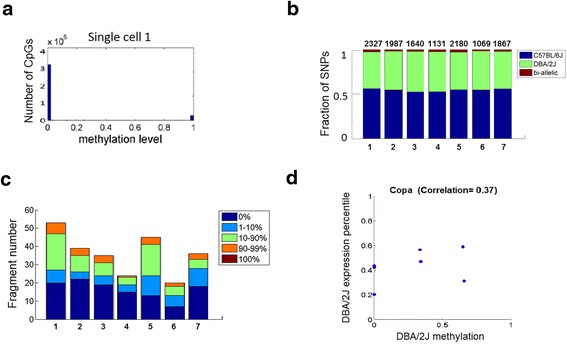
Verification
Claims the paper makes
The claims and statistics of this paper haven’t been checked yet.
Free: it reads the open-access text and checks the first 5 claims that cite a source we can check. Create a free account to check every claim.
Claims other papers make about this one
Each is checked against this paper’s own text: does it say what the citing paper says it does?
The source backs part of the claim, not all of it — or backs it for a different population, condition or comparison.
In the citing paper
“In contrast, scMT-seq [83] and scTrio-seq [84] use scRRBS-seq (for single-cell methylome profiling), after a mild ligation protocol that leaves the nuclear membrane intact so that the cytosolic fraction can be separated from the nucleus.”
From Mapping gene regulatory networks from single-cell omics data (2018) · cites this paper as [83]
Experimental — accuracy not yet measuredThe cited source says what the claim attributes to it.
In the citing paper
“Several other methods have been published to simultaneously measure several omics features from one cell (all of them including DNA methylation).”
From Mapping gene regulatory networks from single-cell omics data (2018) · cites this paper as [83]
In the citing paper
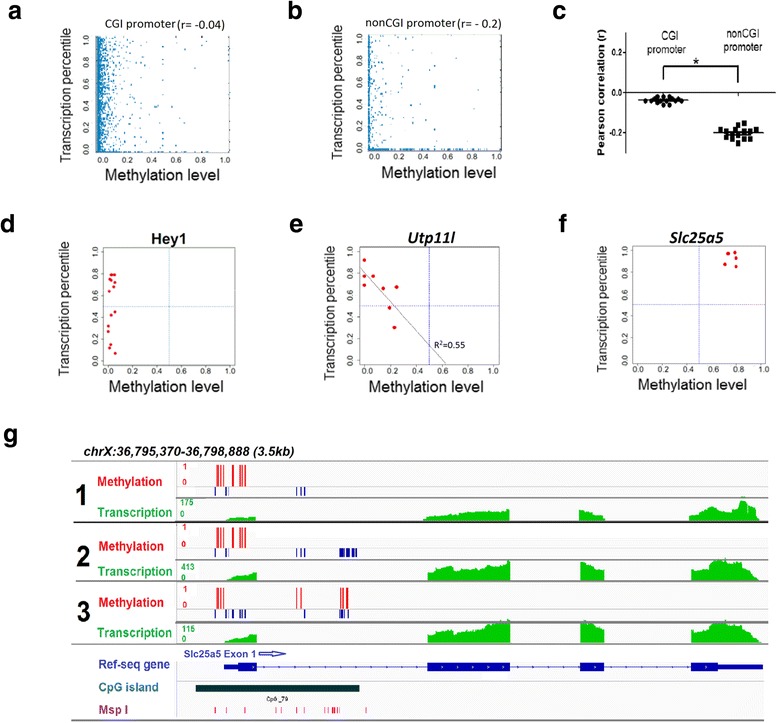
“Negative correlations were predominantly found for non-CGI promotors, as expected from literature [72] and matching the findings from scMT-seq [83], but distal regulatory elements showed a more even distribution of positive and negative associations.”
From Mapping gene regulatory networks from single-cell omics data (2018) · cites this paper as [83]
Self-check
Percentages, sums and reported differences re-computed from the paper’s own numbers.
The self-check needs the paper’s full text.
Citations
Cites
STAR: ultrafast universal RNA-seq aligner
Dobin, A., Davis, C. A., Schlesinger, F., Drenkow, J., Zaleski, C., Jha, S., Batut, P., Chaisson, M., & Gingeras, T. R. (2013) · Bioinformatics · doi:10.1093/bioinformatics/bts635 · Cited by 51,709 · cited 1×
“Raw reads from library sequencing were mapped to the mouse (mm10) genome using default parameters in STAR aligner [30].”
MethodDifferential expression analysis for sequence count data
Anders, S., & Huber, W. (2010) · Genome Biology · doi:10.1186/gb-2010-11-10-r106 · Cited by 15,581
DNA methylation patterns and epigenetic memory
Bird, A. (2002) · Genes & Development · doi:10.1101/gad.947102 · Cited by 7,124 · cited 1×
“The current model suggests that promoter methylation stably silences gene expression, particularly in the regulation of developmental and tissue-specific gene expression [4].”
BackgroundBismark: a flexible aligner and methylation caller for Bisulfite-Seq applications
Krueger, F., & Andrews, S. R. (2011) · Bioinformatics · doi:10.1093/bioinformatics/btr167 · Cited by 5,297
Single-cell RNA-seq highlights intratumoral heterogeneity in primary glioblastoma
Patel, A. P., Tirosh, I., Trombetta, J. J., Shalek, A. K., Gillespie, S. M., Wakimoto, H., Cahill, D. P., Nahed, B. V., Curry, W. T., Martuza, R. L., et al. (2014) · Science · doi:10.1126/science.1254257 · Cited by 5,063
Human DNA methylomes at base resolution show widespread epigenomic differences
Lister, R., Pelizzola, M., Dowen, R. H., Hawkins, R. D., Hon, G., Tonti-Filippini, J., Nery, J. R., Lee, L., Ye, Z., Ngo, Q.-M., et al. (2009) · Nature · doi:10.1038/nature08514 · Cited by 4,673
Full-length RNA-seq from single cells using Smart-seq2
Picelli, S., Faridani, O. R., Björklund, Å. K., Winberg, G., Sagasser, S., & Sandberg, R. (2014) · Nature Protocols · doi:10.1038/nprot.2014.006 · Cited by 4,137 · cited 1×
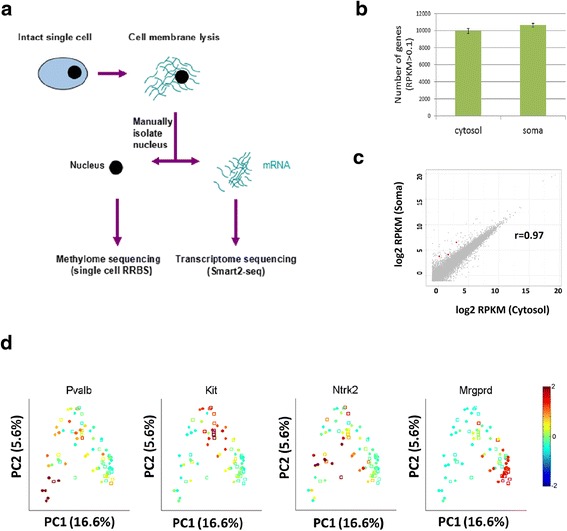
“The cytosolic fraction was then subjected to transcriptome profiling via the Smart2-seq protocol [18], while the isolated nucleus was subjected to methylome analysis by using a modified single-cell RRBS protocol [19] (Fig.”
MethodCell types in the mouse cortex and hippocampus revealed by single-cell RNA-seq
Zeisel, A., Muñoz-Manchado, A. B., Codeluppi, S., Lönnerberg, P., La Manno, G., Juréus, A., Marques, S., Munguba, H., He, L., Betsholtz, C., et al. (2015) · Science · doi:10.1126/science.aaa1934 · Cited by 3,124
DNA methylation: roles in mammalian development
Smith, Z. D., & Meissner, A. (2013) · Nature Reviews Genetics · doi:10.1038/nrg3354 · Cited by 3,045
DNA methylation and human disease
Robertson, K. D. (2005) · Nature Reviews Genetics · doi:10.1038/nrg1655 · Cited by 2,864
Cited by
Items 301–314 of 314
Bhuyan, G. S. (2025) · UNSWorks (University of New South Wales, Sydney, Australia) · doi:10.26190/unsworks/31517
Single-Cell Triomics Analysis of Tumor Cells Infiltrating Patient-Derived Breast Cancer Scaffolds
Filges, S., Jonasson, E., Arrabal, M. D. C. L., Andersson, L., Gustafsson, A., Dhingra, D. M., Méndez, P., Ooi, A. T., Sciambi, A., Landberg, G., et al. (2026) · American Journal Of Pathology · doi:10.1016/j.ajpath.2025.12.013
“The number of established multi-omics approaches is continuously increasing 13 and includes strategies to assess DNA and RNA, 14,15 RNA and protein, 16,17 RNA and DNA methylation, 18,19 and DNA, RNA, and DNA methylation.”
Advances in Transcriptomic Technologies and Their Applications in Fisheries Science
Pande, A., Bhat, R. A. H., Lohumi, Y., Tripathi, A. H., & Upadhyay, S. K. (2025) · Genetics of Aquatic Organisms · doi:10.4194/ga882
“However, the DNA isolated in this way may not provide as uniform coverage of the genome, which can compromise the accuracy of copy number analysis in specific genomic regions (Hu et al., 2016; Stuart & Satija, 2019).”
InfluentialEarly-life factors and epigenetic precursors of childhood leukemia
Novoloaca, A. (2020) · theses.fr (ABES) · doi:10.70675/4286201fz357fz4b0ez8dbfzdc0b44a46cae
Développement d'un système de microfluidique de gouttes pour l'analyse d'échantillons complexes
Richerd, M. (2021) · theses.fr (ABES) · doi:10.70675/502160d7z5a1dz4178zbebfz3424707cda14
From Function to Single Cells: Analytical Innovations in Islet Biology and Diabetes Research
Roper, M. G., Edwards, J. L., & Wang, Y. J. (2026) · Annual Review of Analytical Chemistry · doi:10.1146/annurev-anchem-082024-121650
A Region-Aware Structured Framework Improves Prediction of Gene Expression from DNA Methylation
Zhong, Z., & Hu, J. (2026) · Computational and Structural Biotechnology Journal · doi:10.34133/csbj.0138
“In the context of multi-omics research, the joint profiling of DNA methylation and transcriptomic data provides valuable insights into epigenetic gene regulatory mechanisms across multiple molecular layers [ 7 ].”
Methods toward Single-Cell Total-Analysis
Zhang, Q., Liao, W., Lin, L., Li, X. J., Lin, J., Song, Y., Hou, Y., & Lin, J. (2026) · Chemical Reviews · doi:10.1021/acs.chemrev.5c01127
DNA methylation in glioblastoma: insights from single-cell epigenomics
Zohreh, R., Rezaei, N., & Amirifar, P. (2026) · Epigenomics · doi:10.1080/17501911.2026.2682246
Using lncRNAs and circRNAs as Biomarkers in Triple Negative Breast Cancer
McKenzie, C. (2018) · Otago University Research Archive (University of Otago)
Menéndez-Pedriza, A., Gawra, J., Kamstra, J. H., Faria, M., Bellot, M., Gómez‐Canela, C., Raldúa, D., Legler, J., Jaumot, J., Piña, B., et al. (2026) · Current Zoology · doi:10.1093/eep/dvag031
“Single-cell methylome and transcriptome sequencing (scMT-seq), simultaneously profiles DNA methylation and gene expression at the individual cell level [ 79 ], while transgenic zebrafish lines with fluores-cently labeled cell populations could enable tissue-or organ-specific analyses.”
Cai, Y., He, S., Zeng, F., & Liu, C. (2026) · Frontiers in Endocrinology · doi:10.3389/fendo.2026.1954392 · Cited by 1
“Joint RNA – chromatin pro fi ling can reveal cells whose basal transcriptome appears normalized while enhancers remain primed (120), and single-cell methylome approaches can link methylation to transcription within the same lineage (121).”
Single-cell approaches for mapping cell-type-specific epigenetic regulation
Nagamatsu, S. T., Rivera-Hernández, M., & Montalvo‐Ortiz, J. L. (2026) · Handbook of clinical neurology · doi:10.1016/b978-0-443-19043-8.00017-7
Kong, S., Li, R., Tian, Y., Zhang, Y., Lu, Y., Ou, Q., Gao, P., Li, K., & Zhang, Y. (2023) · doi:10.3389/fgene.2022.1100016.s001
Metadata
- Authors
- Hu, Y., Huang, K., An, Q., Du, G., Hu, G., Xue, J., Zhu, X., Wang, C.-Y., Xue, Z., & Fan, G.
- Affiliations
- Tongji University (CN)
- University of California, Los Angeles (US)
- Corresponding author
- Xue, Zhigang
- Fan, Guoping
- Venue
- Genome Biology
- Published
- 2016-05-05
- Volume
- 17
- Issue
- 1
- Pages
- 88-88
- ISSN
- 1465-6906 (ISSN-L)
- 1474-760X
- PMC
- PMC4858893
- OpenAlex
- W2346483050
- Semantic Scholar
- f7fd0b00c40286dc19a57835e238c9fd649045c1
- Cited by
- 300
- References
- 44
- Citations by year
- 2026: 14 · 2025: 18 · 2024: 28 · 2023: 32 · 2022: 31 · 2021: 43 · 2020: 31 · 2019: 31 · 2018: 38 · 2017: 28 · 2016: 4
- FWCI
- 17.49
- Type
- journal article
- Language
- en
- Open access
- gold
- doi.org
- Licence
- cc-by
- creativecommons.org/licenses/by/4.0/ (tdm)
- creativecommons.org/licenses/by/4.0/ (vor)
- Locations
- Genome biology (publishedVersion, cc-by)
- PubMed Central (publishedVersion, cc-by)
- PubMed (publishedVersion)
- eScholarship (California Digital Library) (submittedVersion)
- eScholarship (California Digital Library) (submittedVersion, cc-by)
- The HKU Scholars Hub (University of Hong Kong) (submittedVersion)
- Funders
- National Program on Key Basic Research Project (2015CB964702, 9732015CB964601)
- Joint Research Fund for Overseas Chinese, Hong Kong and Macao Young Scholars (31428016)
- National Natural Science Foundation of China (Key Program 81430026)
- Experimental Animal Research Fund, Science and Technology Commission of Shanghai Municipality (15140903900)
- Shanghai Municipal Commission of Health and Family Planning (XBR2013094)
- Jiangsu Science and Technology Planning Project (BM2014052)
- Chinese National Overseas Postdoc Scholarship (2013-057)
- National Institute of Arthritis and Musculoskeletal and Skin Diseases training grant (T32AR059033)
- National Institutes of Health (UL1-TR000124, SPORE Prostate Cancer Development grant)
- California Institute for Regenerative Medicine (CESCG CRP Grant Program)
- Topics
- Life Sciences › Biochemistry, Genetics and Molecular Biology › Molecular Biology › Epigenetics and DNA Methylation
- Life Sciences › Biochemistry, Genetics and Molecular Biology › Molecular Biology › Single-cell and spatial transcriptomics
- Life Sciences › Biochemistry, Genetics and Molecular Biology › Molecular Biology › Genomics and Chromatin Dynamics
- Keywords
- single-cell transcriptome, DNA methylation, sensory neurons, gene body methylation, promoter methylation, CpG islands, allelic expression, single nucleotide polymorphisms, epigenetic regulation, cellular heterogeneity
- MeSH terms
- Animals, Cells, Cultured, Mice, Inbred C57BL, Neurons, Promoter Regions, Genetic, Sequence Analysis, DNA, Sequence Analysis, RNA, CpG Islands, DNA Methylation, Polymorphism, Single Nucleotide, Gene Expression Profiling, Mice, Single-Cell Analysis, Transcriptome
About these checks
Registry, retraction, Cites and statistics results are computed, not judged, with one exception: a printed reference that no index lists is read once by a model before it counts as a citation error. Claims are extracted by a model and kept only when their quote appears verbatim in the text; each cited source is then checked, with a model’s help, for whether it says what the claim relies on. Those verdicts can be wrong — read the claim’s quote and the cited source before relying on one.
Statistics and arithmetic are recomputed, not judged.
Confidence bands are shown only for fields calibrated on our annotated test set. None is calibrated yet, so no band is shown.
What counts as a claim ›How we measure confidence ›How we check this ›
Are you an author, or do you see a problem with this page? Request a review
Data sources
Bibliographic data: Semantic Scholar, OpenAlex, Crossref.
Contains information from the Semantic Scholar Academic Graph Datasets, made available under the ODC Attribution License (ODC-BY 1.0).
Semantic Scholar’s data is described in: Kinney, R., et al. (2023). The Semantic Scholar Open Data Platform. arXiv:2301.10140.
