

Structural variant calling: the long and the short of it
Open accessThe DOI matches its Crossref record; 106 of the 106 references it cites were found in a registry or an index.
Abstract
Recent research into structural variants (SVs) has established their importance to medicine and molecular biology, elucidating their role in various diseases, regulation of gene expression, ethnic diversity, and large-scale chromosome evolution—giving rise to the differences within populations and among species. Nevertheless, characterizing SVs and determining the optimal approach for a given experimental design remains a computational and scientific challenge. Multiple approaches have emerged to target various SV classes, zygosities, and size ranges. Here, we review these approaches with respect to their ability to infer SVs across the full spectrum of large, complex variations and present computational methods for each approach.
Overview
The claims and statistics of this paper haven’t been checked yet.
Free: it reads the open-access text and checks the first 5 claims that cite a source we can check. Create a free account to check every claim.
Integrity signals
Registry
Cites
Statistics
Figures
Verification
Claims the paper makes
The claims and statistics of this paper haven’t been checked yet.
Free: it reads the open-access text and checks the first 5 claims that cite a source we can check. Create a free account to check every claim.
Claims other papers make about this one
Each is checked against this paper’s own text: does it say what the citing paper says it does?
The source backs part of the claim, not all of it — or backs it for a different population, condition or comparison.
In the citing paper
“This follows the expected distributions of insertions being the most frequent variant type, which is typically not observed by other Illumina-based methods7.”
From Comprehensive genome analysis and variant detection at scale using DRAGEN (2025) · cites this paper as [7]
Experimental — accuracy not yet measuredThe check wasn’t confident either way, so it gives no verdict — never disputed.
In the citing paper
“We showcased the speed and scalability of DRAGEN across multiple human populations7.”
From Comprehensive genome analysis and variant detection at scale using DRAGEN (2025) · cites this paper as [7]
Experimental — accuracy not yet measured
Self-check
Percentages, sums and reported differences re-computed from the paper’s own numbers.
The self-check needs the paper’s full text.
Citations
Cites
STAR: ultrafast universal RNA-seq aligner
Dobin, A., Davis, C. A., Schlesinger, F., Drenkow, J., Zaleski, C., Jha, S., Batut, P., Chaisson, M., & Gingeras, T. R. (2013) · Bioinformatics · doi:10.1093/bioinformatics/bts635 · Cited by 51,709
HISAT: a fast spliced aligner with low memory requirements
Kim, D., Langmead, B., & Salzberg, S. L. (2015) · Nature Methods · doi:10.1038/nmeth.3317 · Cited by 24,112
Ultrafast and memory-efficient alignment of short DNA sequences to the human genome.
Langmead, B., Trapnell, C., Pop, M., & Salzberg, S. L. (2009) · Genome Biology · doi:10.1186/gb-2009-10-3-r25 · Cited by 21,849 · cited 1×
“FusionCatcher is designed to identify somatic fusion genes, by aligning reads to a transcriptome using Bowtie [89] guided by Ensembl annotation.”
MethodMinimap2: Pairwise alignment for nucleotide sequences
Li, H. (2018) · Bioinformatics · doi:10.1093/bioinformatics/bty191 · Cited by 14,807 · cited 3×
“Thus, specialized methods to align long reads such as BLASR [76], Minimap2 [35], and NGMLR [5] were recently developed.”
MethodTopHat: discovering splice junctions with RNA-Seq
Trapnell, C., Pachter, L., & Salzberg, S. L. (2009) · Bioinformatics · doi:10.1093/bioinformatics/btp120 · Cited by 11,617
Analysis of protein-coding genetic variation in 60,706 humans
Exome Aggregation Consortium, Lek, M., Karczewski, K. J., Minikel, E. V., Samocha, K. E., Banks, E., Fennell, T., O’Donnell-Luria, A. H., Ware, J. S., Hill, A. J., et al. (2016) · Nature · doi:10.1038/nature19057 · Cited by 9,587 · cited 2×
“Databases of allele frequencies such as gnomAD [104] are available for SNVs, but we completely lack them for SVs.”
BackgroundComing of age: ten years of next-generation sequencing technologies
Goodwin, S., McPherson, J. D., & McCombie, W. R. (2016) · Nature Reviews Genetics · doi:10.1038/nrg.2016.49 · Cited by 4,352 · cited 2×
“[95] has to be considered for both alignment and SV calling steps.”
BackgroundMethodIdentification of the breast cancer susceptibility gene BRCA2
Wooster, R., Bignell, G., Lancaster, J., Swift, S., Seal, S., Mangion, J., Collins, N., Gregory, S., Gumbs, C., Micklem, G., et al. (1995) · Nature · doi:10.1038/378789a0 · Cited by 3,645
GENCODE reference annotation for the human and mouse genomes
Frankish, A., Diekhans, M., Ferreira, A.-M., Johnson, R., Jungreis, I., Loveland, J., Mudge, J. M., Sisu, C., Wright, J., Armstrong, J., et al. (2019) · Nucleic Acids Research · doi:10.1093/nar/gky955 · Cited by 3,040
DELLY: structural variant discovery by integrated paired-end and split-read analysis
Rausch, T., Zichner, T., Schlattl, A., Stütz, A. M., Benes, V., & Korbel, J. O. (2012) · Bioinformatics · doi:10.1093/bioinformatics/bts378 · Cited by 2,459
Cited by
Items 201–300 of 781
Genomic variations and epigenomic landscape of the Medaka Inbred Kiyosu-Karlsruhe (MIKK) panel
Léger, A., Brettell, I., Monahan, J., Barton, C., Wolf, N., Kusminski, N., Herder, C., Aadepu, N., Becker, C., Gierten, J., et al. (2022) · Genome biology · doi:10.1186/s13059-022-02602-4 · Cited by 17
Niu, J., Wang, W., Wang, Z., Chen, Z., Zhang, X., Qin, Z., Miao, L., Yang, Z., Xie, C., Xin, M., et al. (2024) · Genome biology · doi:10.1186/s13059-024-03315-6 · Cited by 16
“Current main strategies include directly comparing genome assemblies and inferring SVs from the mapping of high-coverage resequencing data against the reference genome [22, 23].”
BackgroundSmeds, L., Huson, L. S. A., & Ellegren, H. (2024) · Evolutionary Applications · doi:10.1111/eva.13652 · Cited by 24
“Some authors have defined SVs as variants at least 50 bp in length (Mahmoud et al., 2019 ).”
BackgroundDodge, T. O., Kim, B. Y., Baczenas, J. J., Banerjee, S. M., Gunn, T. R., Donny, A. E., Given, L. A., Rice, A., Cox, S. K. H., Weinstein, M. L., et al. (2024) · Current Biology · doi:10.1016/j.cub.2024.08.053 · Cited by 17
“57 We produced a PacBio HiFi assembly for the false gravid spot haplotype and generated a pairwise alignment between this sequence and the non-false gravid spot haplotype with MUMmer4.”
pycoMeth: a toolbox for differential methylation testing from Nanopore methylation calls
Snajder, R., Léger, A., Stegle, O., & Bonder, M. J. (2023) · Genome biology · doi:10.1186/s13059-023-02917-w · Cited by 17
“…molecules can aide in problems that are difficult to resolve with short-read sequencing, such as the reliable detection of structural variations [6], phasing of variants into paternal and maternal haplotype [7], as well as the assembly of an entire human genome including low-complexity regions…”
BackgroundUltra-accurate Microbial Amplicon Sequencing Directly from Complex Samples with Synthetic Long ReadsPreprint
Callahan, B. J., Grinevich, D. O., Thakur, S., Balamotis, M. A., & Yehezkel, T. B. (2020) · bioRxiv (Cold Spring Harbor Laboratory) · doi:10.1101/2020.07.07.192286 · Cited by 17
Meredith, M., Daida, K., Moller, A., Jerez, P. Á., Negi, S., Malik, L., Genner, R. M., Zheng, X., Gibson, S. B., Mastoras, M., et al. (2024) · bioRxiv (Cold Spring Harbor Laboratory) · doi:10.1101/2024.12.16.628723 · Cited by 22
“Despite their importance, conventional short-read sequencing (SRS) methods, while useful for many applications, are limited in their ability to accurately detect and genotype SVs 13 .”
Self-citationJensen, T. D., Ni, B., Reuter, C. M., Gorzynski, J. E., Fazal, S., Bonner, D. E., Ungar, R. A., Goddard, P. C., Raja, A. N., Ashley, E. A., et al. (2025) · Genome Research · doi:10.1101/gr.279323.124 · Cited by 20
“Long-read sequencing technology has improved in recent years in terms of accuracy and throughput (Mahmoud et al. 2019; Kovaka et al. 2023).”
Spealman, P., De, T., Chuong, J. N., & Gresham, D. (2023) · Journal of Molecular Evolution · doi:10.1007/s00239-023-10102-7 · Cited by 17
Riquin, K., Isidor, B., Mercier, S., Nizon, M., Colin, E., Bonneau, D., Pasquier, L., Odent, S., Horn, X. L. G., Guyader, G. L., et al. (2023) · Journal of Medical Genetics · doi:10.1136/jmg-2023-109263 · Cited by 20
Klever, M.-K., Sträng, E., Hetzel, S., Jungnitsch, J., Dolnik, A., Schöpflin, R., Schrezenmeier, J., Schick, F., Blau, O., Westermann, J., et al. (2023) · Blood Advances · doi:10.1182/bloodadvances.2023010887 · Cited by 19
“8,41,42 In our data set, 58% of all found break-points in the chromothripsis cases and 43% of all breakpoints in the cases with chromocataclysm were located in repetitive regions.”
BackgroundBjørnstad, P. M., Aaløkken, R., Åsheim, J., Sundaram, A. Y. M., Felde, C. N., Østby, G. H., Dalland, M., Sjursen, W., Carrizosa, C., Vigeland, M. D., et al. (2023) · European Journal of Human Genetics · doi:10.1038/s41431-023-01494-7 · Cited by 17
“In contrast, detection of SV is challenging with short-read technology, and may suffer from low sensitivity and a high false-positive rate [2].”
Hi-C as a molecular rangefinder to examine genomic rearrangements
Kim, K., Kim, M., Kim, Y., Lee, D.-S., & Jung, I. (2021) · Seminars in Cell and Developmental Biology · doi:10.1016/j.semcdb.2021.04.024 · Cited by 17
RBCeq: A robust and scalable algorithm for accurate genetic blood typing
Jadhao, S., Davison, C. L., Roulis, E. V., Schoeman, E. M., Divate, M. D., Haring, M., Williams, C., Shankar, A. J., Lee, S., Pecheniuk, N. M., et al. (2022) · EBioMedicine · doi:10.1016/j.ebiom.2021.103759 · Cited by 15
Mariya, T., Kato, T., Sugimoto, T., Miyai, S., Inagaki, H., Ohye, T., Sugihara, E., Muramatsu, Y., Mizuno, S., & Kurahashi, H. (2022) · Journal of Human Genetics · doi:10.1038/s10038-021-01004-x · Cited by 16
“INTRODUCTION Structural analysis of the human genome has become more accessible due to large-scale and reduced cost next generation sequencing (NGS) technologies [1, 2].”
BackgroundIntegrating Genetic Structural Variations and Whole-Genome Sequencing Into Clinical Neurology
Lin, X., Yang, Y., Melton, P. E., Singh, V., Simpson, S., Burdon, K. P., Taylor, B. V., & Zhou, Y. (2022) · Neurology Genetics · doi:10.1212/nxg.0000000000200005 · Cited by 19
“Complementing DNA sequencing, RNA-seq is an emerging approach to facilitate prioritisation of SVs that alter gene structures in transcribed genomic regions with potential functional implications.(43) There is increasing evidence that SVs such as transposable elements are associated with gene expression and splicing al…”
Weisweiler, M., Arlt, C., Wu, P., Inghelandt, D. V., Hartwig, T., & Stich, B. (2022) · Theoretical and Applied Genetics · doi:10.1007/s00122-022-04197-7 · Cited by 14
“Three different approaches have been proposed to detect SV based on NGS data: assembling, long-read sequencing, and short-read sequencing (Mahmoud et al., 2019).”
BackgroundUnraveling the hidden complexity of cancer through long-read sequencing
Li, Q., Keşküş, A. G., Wagner, J., Izydorczyk, M., Timp, W., Sedlazeck, F. J., Klein, A. P., Zook, J. M., Kolmogorov, M., & Schatz, M. C. (2025) · Genome Research · doi:10.1101/gr.280041.124 · Cited by 20
“In addition, short-read somatic SV calls do not always achieve sequence-level resolution of breakpoints and insertions and typically produce more false-positive calls (Keskus et al. 2024), which might impact the interpretation (Mahmoud et al. 2019).”
Self-citationPopulation-scale genotyping of structural variation in the era of long-read sequencing
Quan, C., Lu, H. X., Lu, Y., & Zhou, G. (2022) · Computational and Structural Biotechnology Journal · doi:10.1016/j.csbj.2022.05.047 · Cited by 16
“However, during the rapid development phase of short-read sequencing (SRS) with high base accuracy and relatively low cost, the study of SVs lagged far behind SNVs or indels [2,3].”
BackgroundOrantes-Bonilla, M., Makhoul, M., Lee, H., Chawla, H. S., Vollrath, P., Langstroff, A., Sedlazeck, F. J., Zou, J., & Snowdon, R. J. (2022) · Frontiers in Plant Science · doi:10.3389/fpls.2022.1057953 · Cited by 12
Self-citationLost genome segments associate with trait diversity during rice domestication
Zheng, X., Zhong, L., Pang, H., Wen, S., Li, F., Lou, D., Ge, J., Fan, W., Wang, T., Han, Z., et al. (2023) · BMC Biology · doi:10.1186/s12915-023-01512-6 · Cited by 15
“An SV may span a large portion of a read or even be longer than the read; thus, it is obviously that the low detection rate of long insertions caused by tandem duplications in the identification of SVs using short sequencing reads, and multiple SVs can sometimes overlap or be nested [10].”
BackgroundHow structural variants shape avian phenotypes: Lessons from model systems
Recuerda, M., & Campagna, L. (2024) · Molecular Ecology · doi:10.1111/mec.17364 · Cited by 17
“Most of the articles that informed this review (except one, Zhu et al., 2021) relied primarily on short-read sequencing, which introduces a bias towards short SV detection due to the challenges in identifying long SVs from short reads (Mahmoud et al., 2019 ).”
BackgroundCan long-read sequencing tackle the barriers, which the next-generation could not? A review
Szakállas, N., Barták, B. K., Valcz, G., Nagy, Z. B., Takács, I., & Molnar, B. A. (2024) · Pathology & Oncology Research · doi:10.3389/pore.2024.1611676 · Cited by 27
SVHunter: long-read-based structural variation detection through the transformer model
Gao, R., Hu, H. K., Jiang, Z., Cao, S., Wang, G., Zhao, Y., & Jiang, T. (2025) · Briefings in Bioinformatics · doi:10.1093/bib/bbaf203 · Cited by 16
Saitou, M., Masuda, N., & Gökçümen, Ö. (2021) · Molecular Biology and Evolution · doi:10.1093/molbev/msab313 · Cited by 16
Chander, V., Mahmoud, M., Hu, J., Dardas, Z., Grochowski, C. M., Dawood, M., Khayat, M. M., Li, H., Li, S., Jhangiani, S. N., et al. (2022) · Human Mutation · doi:10.1002/humu.24461 · Cited by 15
“Low copy repeats or complex rearrangements and an inability to phase the haplotypes containing the deletions over long distances also complicate these studies (Mahmoud et al., 2019).”
BackgroundSelf-citationWold, J., Guhlin, J. G., Dearden, P. K., Santure, A. W., & Steeves, T. E. (2023) · Molecular Ecology Resources · doi:10.1111/1755-0998.13783 · Cited by 24
“The significantly lower frequency of inversions in both long-read data sets is notable as long-read data should better resolve more complex variants like duplications, insertions and inversions (Alkan et al., 2011; Chaisson et al., 2019; Mahmoud et al., 2019; Mérot et al., 2022).”
InfluentialLi, R., Gong, M., Zhang, X., Wang, F., Liu, Z., Zhang, L., Xu, M., Zhang, Y. F., Dai, X., Zhang, Z., et al. (2021) · bioRxiv (Cold Spring Harbor Laboratory) · doi:10.1101/2021.12.22.472709 · Cited by 19
“815 [3] Mahmoud M, Gobet N, Cruz-Dávalos D I, Mounier N, Dessimoz C, Sedlazeck F 816 J.”
BackgroundSchneller, N. M., Strugnell, J. M., Field, M. A., Johannesson, K., & Cooke, I. (2025) · Molecular Ecology · doi:10.1111/mec.17776 · Cited by 16
Francis, B. A., Gozashti, L., Costello, K. R., Kasahara, T., Harringmeyer, O. S., Lilue, J., Wu, T., Zoltowska, K. M., Helmy, M., Kato, T., et al. (2025) · Nature Genetics · doi:10.1038/s41588-025-02367-z · Cited by 30
Gene disruption by structural mutations drives selection in US rice breeding over the last century
Vaughn, J. N., Korani, W., Stein, J. C., Edwards, J. D., Peterson, D. G., Simpson, S., Youngblood, R. C., Grimwood, J., Chougule, K. M., Ware, D., et al. (2021) · PLoS Genetics · doi:10.1371/journal.pgen.1009389 · Cited by 14
“Though this work used an extensive SV-calling pipeline, false-positive and false-negative rates were still in excess of 10% and often much greater for tandem duplications and inversions [7,8].”
MethodOtsuki, A., Okamura, Y., Ishida, N., Tadaka, S., Takayama, J., Kumada, K., Kawashima, J., Taguchi, K., Minegishi, N., Kuriyama, S., et al. (2022) · Communications Biology · doi:10.1038/s42003-022-03953-1 · Cited by 16
Comprehensive analysis of structural variants in chickens using PacBio sequencing
Zhang, J., Nie, C., Li, X., Zhao, X., Jia, Y., Han, J., Chen, Y., Wang, L., Lv, X., Yang, W., et al. (2022) · Frontiers in Genetics · doi:10.3389/fgene.2022.971588 · Cited by 12
“High-throughput sequencing technology is the mainstream method for SV detection and is considered the gold standard in SV research (Mahmoud et al., 2019; Ho et al., 2020).”
BackgroundIdentification of structural variations related to drought tolerance in wheat (Triticum aestivum L.)
Zhao, J., Li, X., Qiao, L., Zheng, X., Wu, B., Guo, M., Feng, M., Qi, Z., Yang, W., & Zheng, J. (2023) · Theoretical and Applied Genetics · doi:10.1007/s00122-023-04283-4 · Cited by 18
Yildiz, G., Zanini, S. F., Afsharyan, N. P., Obermeier, C., Snowdon, R. J., & Golicz, A. A. (2023) · The Plant Genome · doi:10.1002/tpg2.20314 · Cited by 11
“…for SV discovery from long-reads including Sniffles (Sedlazeck et al., 2018b), NanoVar (Tham et al., 2019), SVIM (Heller & Vingron, 2019), cuteSV (Jiang et al., 2020), and dysgu (Cleal & Baird, 2022), which have been comprehensively reviewed recently (Mahmoud et al., 2019; Yuan et al., 2021).”
BackgroundOrantes-Bonilla, M., Wang, H., Lee, H., Golicz, A. A., Hu, D., Li, W., Zou, J., & Snowdon, R. J. (2023) · Theoretical and Applied Genetics · doi:10.1007/s00122-023-04345-7 · Cited by 16
Human Pangenomics: Promises and Challenges of a Distributed Genomic Reference
Abondio, P., Cilli, E., & Luiselli, D. (2023) · Life · doi:10.3390/life13061360 · Cited by 19
“The study of structural variation has been greatly facilitated by the development of high-throughput sequencing technologies, as these allow for the detection of such events at a much higher resolution and in larger numbers than previously possible [76,80].”
BackgroundLi, X., Liu, Q., Fu, C., Li, M., Li, C., Li, X., Zhao, S., & Zheng, Z. (2023) · Journal of genetics and genomics/Journal of Genetics and Genomics · doi:10.1016/j.jgg.2023.11.005 · Cited by 14
Orteu, A., Kučka, M., Katili, E., Ngumbao, C., Gordon, I. J., Ng’iru, I., van der Heijden, E. S. M., Talavera, G., Warren, I. A., Collins, S. C., et al. (2024) · Molecular Biology and Evolution · doi:10.1093/molbev/msae041 · Cited by 15
“Despite the importance of SVs in phenotypic variation, their study is limited by the difficulty of detecting them using high throughput “short-read” DNA sequencing (Mahmoud et al. 2019).”
Li, W., Miller, D., Liu, X., Tosi, L., Chkaiban, L., Han, M., Hung, P.-H., Parekkadan, B., Sherlock, G., & Levy, S. F. (2024) · Nucleic Acids Research · doi:10.1093/nar/gkae332 · Cited by 17
“Illumina provides the high throughput and accuracy at low cost, but maximum read lengths of 125–300 bp make barcoding and read assembly schemes more challenging and can miss some common plasmid features such as long repeated elements, structural variation, or plasmid multimers ( 8 ,9 ).”
BackgroundErdoğan, S. (2024) · Balkan Medical Journal · doi:10.4274/balkanmedj.galenos.2024.2024-080824 · Cited by 13
Canaguier, A., Guilbaud, R., Denis, E., Magdelenat, G., Belser, C., Istace, B., Cruaud, C., Wincker, P., Paslier, M. L., Rampant, P. F., et al. (2022) · BMC Genomics · doi:10.1186/s12864-022-08499-4 · Cited by 14
“One approach is based on linked short reads, as in 10x Genomics and Hi-C approaches [30], and the second by generating long reads, as proposed by Pacific Biosciences [31] and Oxford Nanopore Technologies (ONT) [32, 33].”
Scalable approaches for functional analyses of whole-genome sequencing non-coding variants
Kuksa, P. P., Greenfest‐Allen, E., Cifello, J., Ionita, M., Wang, H., Nicaretta, H. I., Cheng, P., Lee, W., Wang, L., & Leung, Y. Y. (2022) · Human Molecular Genetics · doi:10.1093/hmg/ddac191 · Cited by 17
The peptide woods are lovely, dark and deep: Hunting for novel cancer antigens
Oreper, D., Klaeger, S., Jhunjhunwala, S., & Delamarre, L. (2023) · Seminars in Immunology · doi:10.1016/j.smim.2023.101758 · Cited by 14
Searching thousands of genomes to classify somatic and novel structural variants using STIX
Chowdhury, M., Pedersen, B. S., Sedlazeck, F. J., Quinlan, A. R., & Layer, R. M. (2022) · Nature Methods · doi:10.1038/s41592-022-01423-4 · Cited by 14
“Additionally, with STIX, and all alignment-based short-read SV methods, it is difficult to determine whether two discordant alignments support the same SV or similar SVs. Discordant paired-end reads provide indirect evidence of an SV, which leads to breakpoint location ambiguity that can affect STIX’s resolution (Supp…”
InfluentialSelf-citationThe rate and spectrum of new mutations in mice inferred by long-read sequencing
López‐Cortegano, E., Chebib, J., Jonas, A., Vock, A., Künzel, S., Keightley, P. D., & Tautz, D. (2024) · Genome Research · doi:10.1101/gr.279982.124 · Cited by 14
The impact of long-read sequencing on human population-scale genomics
Rausch, T., Marschall, T., & Korbel, J. O. (2025) · Genome Research · doi:10.1101/gr.280120.124 · Cited by 16
“Current population-scale reference catalogs for SVs remain incomplete, primarily because short reads — commonly employed in openly accessible cohorts like the 1000 Genomes Project — fail to fully resolve insertions, inversions, and SVs in repeat-rich regions (Mahmoud et al. 2019).”
Skowronek, D., Pilz, R. A., Bonde, L. D., Schamuhn, O. J., Feldmann, J. L., Hoffjan, S., Much, C. D., Felbor, U., & Rath, M. (2022) · International Journal of Molecular Sciences · doi:10.3390/ijms232415639 · Cited by 10
“Long-read based sequencing platforms like PacBio or Oxford Nanopore have also emerged as reliable tools for identifying SVs [10].”
INSnet: a method for detecting insertions based on deep learning network
Gao, R., Luo, J., Ding, H., & Zhai, H. (2023) · BMC Bioinformatics · doi:10.1186/s12859-023-05216-0 · Cited by 14
“And, none of these advanced tools fully solve the problem of large insertions [28].”
BackgroundDe Novo Structural Variations of Escherichia coli Detected by Nanopore Long-Read Sequencing
Zhou, X., Pan, J., Wang, Y., Lynch, M., Long, H., & Zhang, Y. (2023) · Genome Biology and Evolution · doi:10.1093/gbe/evad106 · Cited by 14
Romain, S. J., & Lemaitre, C. (2023) · Bioinformatics · doi:10.1093/bioinformatics/btad237 · Cited by 19
“Indeed, because of their large size and frequent localization in repeated regions, SVs were very challenging variants to identify with short reads (Mahmoud et al. 2019; Delage et al. 2020).”
A Bioinformatics Toolkit for Next-Generation Sequencing in Clinical Oncology
Cabello‐Aguilar, S., Vendrell, J. A., & Solassol, J. (2023) · Current Issues in Molecular Biology · doi:10.3390/cimb45120608 · Cited by 19
“The use of NGS-based applications for MSI determination is increasingly being adopted in clinical practice due to their improved performance and convenience.”
MethodNavigating the CRISPR/Cas Landscape for Enhanced Diagnosis and Treatment of Wilson’s Disease
Choi, W., Cha, S., & Kim, K. (2024) · Cells · doi:10.3390/cells13141214 · Cited by 16
Blommaert, J., Sandoval‐Castillo, J., Beheregaray, L. B., & Wellenreuther, M. (2024) · Genomics · doi:10.1016/j.ygeno.2024.110929 · Cited by 13
Impact and characterization of serial structural variations across humans and great apes
Höps, W., Rausch, T., Jendrusch, M., Ashraf, H., Audano, P. A., Austine, O., Basile, A. O., Beck, C. R., Bonder, M. J., Byrska-Bishop, M., et al. (2024) · Nature Communications · doi:10.1038/s41467-024-52027-9 · Cited by 15
Self-citationCogan, G., Daida, K., Blauwendraat, C., Billingsley, K. J., & Brice, A. (2025) · Movement Disorders · doi:10.1002/mds.30151 · Cited by 12
“4,13 14-16 LRS technologies can be used for whole-genome sequencing or in more targeted approaches, which allow for focused examination of speci fi c regions across many samples at a lower cost.”
Haplotype-resolved assemblies and variant benchmark of a Chinese Quartet
Jia, P., Dong, L., Yang, X., Wang, B., Bush, S. J., Wang, T., Lin, J., Wang, S., Zhao, X., Xu, T., et al. (2023) · Genome biology · doi:10.1186/s13059-023-03116-3 · Cited by 16
“In variant detection pipelines, complex regions like SD, SR, VNTR, and STR usually result in sequencing errors and multiple read alignments, particularly when using short read sequencing [65].”
BackgroundWildlife Population Genomics: Applications and Approaches
Barbosa, S., Hendricks, S. A., Funk, W. C., Rajora, O. P., & Hohenlohe, P. A. (2020) · Population genomics · doi:10.1007/13836_2020_83 · Cited by 14
Lomov, N. A., Zerkalenkova, E., Lebedeva, S., Viushkov, V. S., & Rubtsov, M. A. (2020) · Critical Reviews in Clinical Laboratory Sciences · doi:10.1080/10408363.2020.1844135 · Cited by 16
“Discordant paired reads refer to those reads that do not map as expected [114].”
BackgroundClosing the gap: Solving complex medically relevant genes at scalePreprint
Mahmoud, M., Harting, J., Corbitt, H., Chen, X., Jhangiani, S. N., Doddapaneni, H., Meng, Q., Lambert, C. C., Zhang, S., Baybayan, P. A., et al. (2024) · medRxiv · doi:10.1101/2024.03.14.24304179 · Cited by 13
Self-citationDynamics of genome evolution in the era of pangenome analysis
Loegler, V., Friedrich, A., & Schacherer, J. (2025) · Cell Genomics · doi:10.1016/j.xgen.2025.101067 · Cited by 24
“16 Pangenomes, which are references constructed from the chromosome-scale genomes of multiple individuals, provide a framework to capture the full spectrum of genetic diversity within a population.”
Yi, D., Nam, J., & Jeong, H. (2023) · Briefings in Bioinformatics · doi:10.1093/bib/bbad297 · Cited by 15
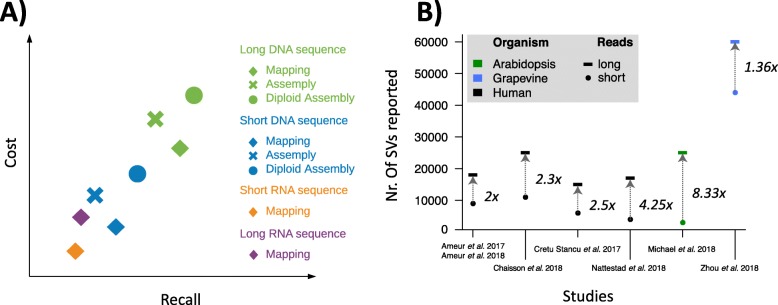
“Previous studies based on long-read sequencing have shown that healthy individuals can have as many as 20 000 SVs on average compared with the reference genome [12–15], which is double the number detected by short-read sequencing [16].”
BackgroundApplications of advanced technologies for detecting genomic structural variation
Laufer, V. A., Glover, T. W., & Wilson, T. E. (2023) · Mutation Research/Reviews in Mutation Research · doi:10.1016/j.mrrev.2023.108475 · Cited by 12
Gjoni, K., & Pollard, K. S. (2024) · Bioinformatics · doi:10.1093/bioinformatics/btae340 · Cited by 11
“Datasets are WGS/ WES from healthy and disease individuals: a reference cancer cell line (Talsania et al. 2022), a reference genome (Zook et al. 2020), neurodegenerative disease gene sequences (Kaivola et al. 2023), and the 1K Genome Project (Mahmoud et al. 2019).”
BackgroundThe Landscape of Structural Variation in Aye-Ayes (Daubentonia madagascariensis)
Versoza, C. J., Jensen, J. D., & Pfeifer, S. P. (2025) · Genome Biology and Evolution · doi:10.1093/gbe/evaf167 · Cited by 12
“…stochasticity induced by the considerable size reductions characterizing the population history of aye-ayes (Terbot et al. 2025b) and the relatedness of individuals included in this study, many SVs with predicted major effects were observed to segregate at relatively high frequencies (Table 1).”
Leung, H. C. M., Yu, H., Zhang, Y., Leung, W. S., Lo, I. F. M., Luk, H., Law, W.-C., Kui, K., Wong, C.-L., Wong, Y. S., et al. (2022) · Scientific Reports · doi:10.1038/s41598-022-08576-4 · Cited by 13
“4 M Long deletion Y (17,209) N (3692) N (1375) Y- (17,783) N (834)”
Improvement of large copy number variant detection by whole genome nanopore sequencing
Cuenca-Guardiola, J., de la Morena‐Barrio, B., García, J. L., Sanchis‐Juan, A., Corral, J., & Fernández‐Breis, J. T. (2022) · Journal of Advanced Research · doi:10.1016/j.jare.2022.10.012 · Cited by 11
“Next-generation sequencing (NGS) also detects SVs; however, it lacks sensitivity and fails to detect 30%–90% of the SVs, while still producing high false positive rates [11,12], despite recent applications reporting 86% sensitivity for CNVs and 100% for > 10-kb CNVs [12].”
BackgroundBenchmarking long-read genome sequence alignment tools for human genomics applications
LoTempio, J. E., Délot, E. C., & Vilain, E. J. N. (2023) · PeerJ · doi:10.7717/peerj.16515 · Cited by 15
“Each of these platforms has different utilities and available tools, which contributes to the diversity of projects enabled by these technologies ( Ho, Urban & Mills, 2020 ; Mahmoud et al., 2019 ).”
BackgroundCharacterization of the poll allele in Brahman cattle using long-read Oxford Nanopore sequencing
Lamb, H. J., Ross, E. M., Nguyen, L. T., Lyons, R. E., Moore, S. S., & Hayes, B. J. (2020) · Journal of Animal Science · doi:10.1093/jas/skaa127 · Cited by 15
A variant selection framework for genome graphs
Jain, C., Tavakoli, N., & Aluru, S. (2021) · Bioinformatics · doi:10.1093/bioinformatics/btab302 · Cited by 14
“Currently, frequency assessment remains challenging in case of SVs due to the lack of appropriate tools as well as data (Mahmoud et al., 2019).”
BackgroundThe hidden structural variability in avian genomesPreprint
Peona, V., Blom, M. P. K., Frankl‐Vilches, C., Milá, B., Ashari, H., Thébaud, C., Benz, B. W., Christidis, L., Gahr, M. L., Irestedt, M., et al. (2022) · bioRxiv (Cold Spring Harbor Laboratory) · doi:10.1101/2021.12.31.473444 · Cited by 13
Li, Y., Cao, J., & Wang, J. (2023) · iMeta · doi:10.1002/imt2.139 · Cited by 11
“Despite all this evidence supporting the importance of SVs, identification of metagenomic SVs is mostly performed by short ‐ read ‐ based metagenomic profiling, which limits their detection accuracy [15].”
BackgroundBudurlean, L., Tukaramrao, D. B., Zhang, L., Dovat, S., & Broach, J. R. (2024) · Journal of Personalized Medicine · doi:10.3390/jpm14030291 · Cited by 12
“The studies comparing OGM to current long-read next-generation sequencing (NGS) technologies highlighted the differences between these two orthogonal methods [9,12,14,15].”
BackgroundCalling Structural Variants with Confidence from Short-Read Data in Wild Bird Populations
David, G., Bertolotti, A., Layer, R. M., Scofield, D. G., Hayward, A., Baril, T., Burnett, H. A., Gudmunds, E., Jensen, H., & Husby, A. (2024) · Genome Biology and Evolution · doi:10.1093/gbe/evae049 · Cited by 13
“…calls from multiple programs, which has been shown to result in the retention of a substantial proportion of false positives (Cameron et al. 2019; Mahmoud et al. 2019; Wold et al. 2021), we instead used the generalist SV caller LUMPY (Layer et al. 2014) to call larger ( > 20 bp) SVs…”
BackgroundMethodResultInfluentialStructural variation discovery in wheat using PacBio high‐fidelity sequencing
Zhang, Z., Zhang, J., Kang, L., Qiu, X., Xu, S., Xu, J. Q., Guo, Y., Niu, Z., Niu, B., Bi, A., et al. (2024) · The Plant Journal · doi:10.1111/tpj.17011 · Cited by 16
ONT in Clinical Diagnostics of Repeat Expansion Disorders: Detection and Reporting Challenges
Kaplun, L., Krautz‐Peterson, G., Neerman, N., Schindler, Y. L., Dehan, E., Huettner, C. S., Baumgartner, B. K., Stanley, C. M., & Kaplun, A. (2025) · International Journal of Molecular Sciences · doi:10.3390/ijms26062725 · Cited by 10
“Those shortcomings are due to read length constraints that prevent the spanning of larger variants and may cause ambiguous mapping within repetitive genomic regions [4,6,7].”
Gundappa, M. K., Robledo, D., Hamilton, A., Houston, R. D., Prendergast, J. G. D., & Macqueen, D. J. (2025) · Genetics Selection Evolution · doi:10.1186/s12711-025-00962-6 · Cited by 14
“WGS also enhances scope to directly identify and genotype other classes of variation, such as larger structural variants (SVs) [4], although the accuracy of such calls is generally substantially lower than for SNVs when using the most common short-read sequencing approaches.”
Intraspecific Variation in the Rates of Mutations Causing Structural Variation in Daphnia magna
Ho, E. K. H., & Schaack, S. (2021) · Genome Biology and Evolution · doi:10.1093/gbe/evab241 · Cited by 11
Comparison of structural variants detected by PacBio-CLR and ONT sequencing in pear
Liu, Y., Zhang, M., Wang, R., Li, B., Jiang, Y., Sun, M., Chang, Y., & Wu, J. (2022) · BMC Genomics · doi:10.1186/s12864-022-09074-7 · Cited by 10
“Pacific Biosciences ® SMRT Sequencing (PacBio) [13] and Oxford Nanopore sequencing (ONT) [14] can both produce long reads (> 10 kb), giving them an advantage in comprehensive detection of SVs because they can span repetitive or other faulty regions [15].”
A History of Genomics across Species, Communities and Projects
García-Sancho, M., & Lowe, J. (2023) · Medicine and biomedical sciences in modern history · doi:10.1007/978-3-031-06130-1 · Cited by 18
Streamline unsupervised machine learning to survey and graph indel-based haplotypes from pan-genomes
Zhang, B., Huang, H., Tibbs‐Cortes, L. E., Vanous, A. E., Zhang, Z., Sanguinet, K. A., Garland-Campbell, K. A., Yu, J., & Li, X. (2023) · Molecular Plant · doi:10.1016/j.molp.2023.05.005 · Cited by 11
Long-Read Sequencing in Blood Group Genetics
Thun, G. A., Gueuning, M., & Mattle‐Greminger, M. P. (2023) · Transfusion Medicine and Hemotherapy · doi:10.1159/000530652 · Cited by 13
“Resolving Other SVs Long-read sequencing holds great potential for the iden-ti fi cation and characterization of SVs which have remained hidden by traditional Sanger and short-read sequencing [53].”
Reference-free structural variant detection in microbiomes via long-read co-assembly graphs
Curry, K. D., Yu, F. B., Vance, S. E., Segarra, S., Bhaya, D., Chikhi, R., Rocha, E. P. C., & Treangen, T. J. (2024) · Bioinformatics · doi:10.1093/bioinformatics/btae224 · Cited by 11
“Structural variants (SVs), loosely defined as genomic alterations that are 50 base pairs (bps) or longer (Mahmoud et al. 2019), play an important role in driving both evolutionary adaptation and heterogeneity in bacterial genomes (Rocha 2018).”
BackgroundPersonalized genome structure via single gamete sequencing
Lyu, R., Tsui, V., McCarthy, D. J., & Crismani, W. (2021) · Genome biology · doi:10.1186/s13059-021-02327-w · Cited by 12
“However, advances in high-throughput sequencing and computational methods are improving detection and breakpoint resolution [28].”
BackgroundAdvances and challenges in quantitative delineation of the genetic architecture of complex traits
Tang, H., & He, Z. (2021) · Quantitative Biology · doi:10.15302/j-qb-021-0249 · Cited by 10
Advances in forensic genetics: Exploring the potential of long read sequencing
Ferreira, M. R., Carratto, T. M. T., Recalde, T. S. F., Bonadio, R. S., Jain, M., de Oliveira, S. F., Castelli, E. C., & Mendes‐Junior, C. T. (2024) · Forensic Science International Genetics · doi:10.1016/j.fsigen.2024.103156 · Cited by 17
K-mer analysis of long-read alignment pileups for structural variant genotyping
English, A. C., Cunial, F., Metcalf, G., Gibbs, R. A., & Sedlazeck, F. J. (2025) · Nature Communications · doi:10.1038/s41467-025-58577-w · Cited by 20
Self-citationLähteenoja, L., Ohtonen, P. P., Falck, A. A. K., & Rahikkala, E. (2025) · British Journal of Ophthalmology · doi:10.1136/bjo-2025-327427 · Cited by 9
A Pangenome Approach to Detect and Genotype TE Insertion Polymorphisms
Groza, C., Bourque, G., & Goubert, C. (2022) · Methods in molecular biology · doi:10.1007/978-1-0716-2883-6_5 · Cited by 8
Copy Number Variation and Osteoporosis
Lovšin, N. (2023) · Current Osteoporosis Reports · doi:10.1007/s11914-023-00773-y · Cited by 10
van den Akker, J., Hon, L., Ondov, A., Mahkovec, Z., O'Connor, R., Chan, R. C., Lock, J., Zimmer, A. D., Rostamianfar, A., Ginsberg, J., et al. (2021) · Journal of Molecular Diagnostics · doi:10.1016/j.jmoldx.2021.01.015 · Cited by 12
Nicholas, T. J., Al‐Sweel, N., Farrell, A., Mao, R., Bayrak‐Toydemir, P., Miller, C. E., Bentley, D., Palmquist, R. N., Moore, B., Hernandez, E. J., et al. (2022) · Molecular Genetics & Genomic Medicine · doi:10.1002/mgg3.1888 · Cited by 12
Innovative Advances in Plant Genotyping
Thomas, W. J. W., Zhang, Y., Amas, J. C., Cantila, A. Y., Zandberg, J., Harvie, S., & Batley, J. (2023) · Methods in molecular biology · doi:10.1007/978-1-0716-3024-2_32 · Cited by 12
Chaudhry, A., Trinder, M., Vesely, K., Cermakova, L., Jackson, L. M., Wang, J., Hegele, R. A., & Brunham, L. R. (2023) · Circulation Genomic and Precision Medicine · doi:10.1161/circgen.122.003887 · Cited by 9
A unifying model that explains the origins of human inverted copy number variants
Brewer, B. J., Dunham, M. J., & Raghuraman, M. K. (2024) · PLoS Genetics · doi:10.1371/journal.pgen.1011091 · Cited by 10
“They are also a challenge for Nanopore sequencing [30], but as long-read sequencing technologies improve, and optical mapping and DNA combing become more widely used, we anticipate that the frequency of inverted CNV discovery is likely to increase.”
BackgroundOptimized sample selection for cost-efficient long-read population sequencing
Ranallo-Benavidez, T. R., Lemmon, Z. H., Soyk, S., Aganezov, S. S., Salerno, W. J., McCoy, R. C., Lippman, Z. B., Schatz, M. C., & Sedlazeck, F. J. (2021) · Genome Research · doi:10.1101/gr.264879.120 · Cited by 14
“Thus, these methods are often limited to hundreds of SVs that can be validated out of an average of 20,000–23,000 SVs present in a healthy individual (Mahmoud et al. 2019).”
BackgroundSelf-citationTransposable element-mediated rearrangements are prevalent in human genomesPreprint
Balachandran, P., Walawalkar, I. A., Flores, J. I., Dayton, J. N., Audano, P. A., & Beck, C. R. (2022) · bioRxiv (Cold Spring Harbor Laboratory) · doi:10.1101/2022.06.16.496479 · Cited by 9
Closing the gaps, and improving somatic structural variant analysis and benchmarking using CHM13-T2T
Paulin, L. F., Fan, J., O’Neill, K., Pleasance, E., Porter, V., Jones, S. J. M., & Sedlazeck, F. J. (2025) · Genome Research · doi:10.1101/gr.279352.124 · Cited by 15
“Even worse, short-read sequencing reports a high proportion of falsely identified SVs, which can be misleading (e.g., repeat expansions as translocations) (Sedlazeck et al. 2018; Mahmoud et al. 2019, 2024; Thibodeau et al. 2020).”
InfluentialSelf-citationTechnological and computational approaches to detect somatic mosaicism in epilepsy
Boßelmann, C. M., Leu, C., & Lal, D. (2023) · Neurobiology of Disease · doi:10.1016/j.nbd.2023.106208 · Cited by 11
“An overview of commonly used tools is shown in Table 3, while Mahmoud et al. offers a comprehensive list (Mahmoud et al., 2019).”
김도영, Shin, J.-I., Yoo, I. Y., Jo, S. J., Chu, J., Cho, W. Y., Shin, S., Chung, Y., Park, Y.-J., & Jung, S. (2024) · BMC Genomics · doi:10.1186/s12864-024-10320-3 · Cited by 8
“Large deletions were defined as regions encompassing at least 50 bp with a sequencing depth of less than three standard deviations from the mean or less than ten mapped reads [34].”
Background
Metadata
- Authors
- Mahmoud, M., Gobet, N., Cruz-Dávalos, D. I., Mounier, N., Dessimoz, C., & Sedlazeck, F. J.
- Affiliations
- Baylor College of Medicine (US)
- SIB Swiss Institute of Bioinformatics (CH)
- Corresponding author
- Dessimoz, Christophe
- Sedlazeck, Fritz J.
- Venue
- Genome Biology
- Published
- 2019-11-20
- Volume
- 20
- Issue
- 1
- Pages
- 246-246
- ISSN
- 1465-6906 (ISSN-L)
- 1474-760X
- PMC
- PMC6868818
- OpenAlex
- W2990344913
- Semantic Scholar
- b9e8ed710a4be1df8dcfbdb9570ec842e6a3065f
- Cited by
- 725
- References
- 104
- Citations by year
- 2026: 80 · 2025: 111 · 2024: 136 · 2023: 150 · 2022: 114 · 2021: 94 · 2020: 40
- FWCI
- 8.89
- Type
- journal article
- Language
- en
- Open access
- gold
- doi.org
- Licence
- cc-by
- creativecommons.org/licenses/by/4.0/ (tdm)
- creativecommons.org/licenses/by/4.0/ (vor)
- Locations
- Genome biology (publishedVersion, cc-by)
- PubMed Central (publishedVersion, cc-by)
- PubMed (publishedVersion)
- SERVAL (Université de Lausanne) (publishedVersion, cc-by)
- IRIS (submittedVersion, cc-by)
- DOAJ (DOAJ: Directory of Open Access Journals) (submittedVersion)
- UCL Discovery (University College London) (submittedVersion)
- Funders
- Foundation for the National Institutes of Health (UM1 HG008898)
- Schweizerischer Nationalfonds zur Förderung der Wissenschaftlichen Forschung (31003A_173182, 31003A-143914, 150654)
- H2020 European Research Council (CAMERA)
- Topics
- Life Sciences › Biochemistry, Genetics and Molecular Biology › Genetics › Genomic variations and chromosomal abnormalities
- Life Sciences › Biochemistry, Genetics and Molecular Biology › Molecular Biology › Genomics and Phylogenetic Studies
- Life Sciences › Biochemistry, Genetics and Molecular Biology › Genetics › Genome Rearrangement Algorithms
- Keywords
- structural variant calling, structural variants, computational methods, zygosity, karyotype evolution, gene expression regulation, population genetic variation
- MeSH terms
- Animals, Humans, Genomics, Genomic Structural Variation
About these checks
Registry, retraction, Cites and statistics results are computed, not judged, with one exception: a printed reference that no index lists is read once by a model before it counts as a citation error. Claims are extracted by a model and kept only when their quote appears verbatim in the text; each cited source is then checked, with a model’s help, for whether it says what the claim relies on. Those verdicts can be wrong — read the claim’s quote and the cited source before relying on one.
Statistics and arithmetic are recomputed, not judged.
Confidence bands are shown only for fields calibrated on our annotated test set. None is calibrated yet, so no band is shown.
What counts as a claim ›How we measure confidence ›How we check this ›
Are you an author, or do you see a problem with this page? Request a review
Data sources
Bibliographic data: Semantic Scholar, OpenAlex, Crossref.
Contains information from the Semantic Scholar Academic Graph Datasets, made available under the ODC Attribution License (ODC-BY 1.0).
Semantic Scholar’s data is described in: Kinney, R., et al. (2023). The Semantic Scholar Open Data Platform. arXiv:2301.10140.
