

The multiple evolutionary origins of the eukaryotic N-glycosylation pathway
Open accessThe DOI matches its Crossref record; 123 of the 127 references it cites were found in a registry or an index.
Abstract
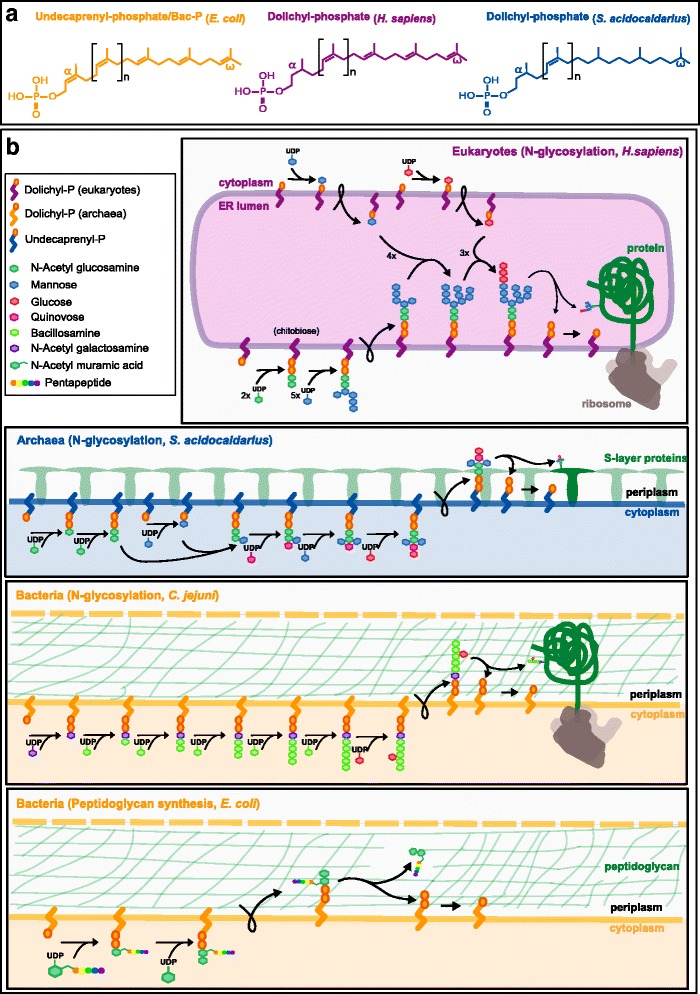
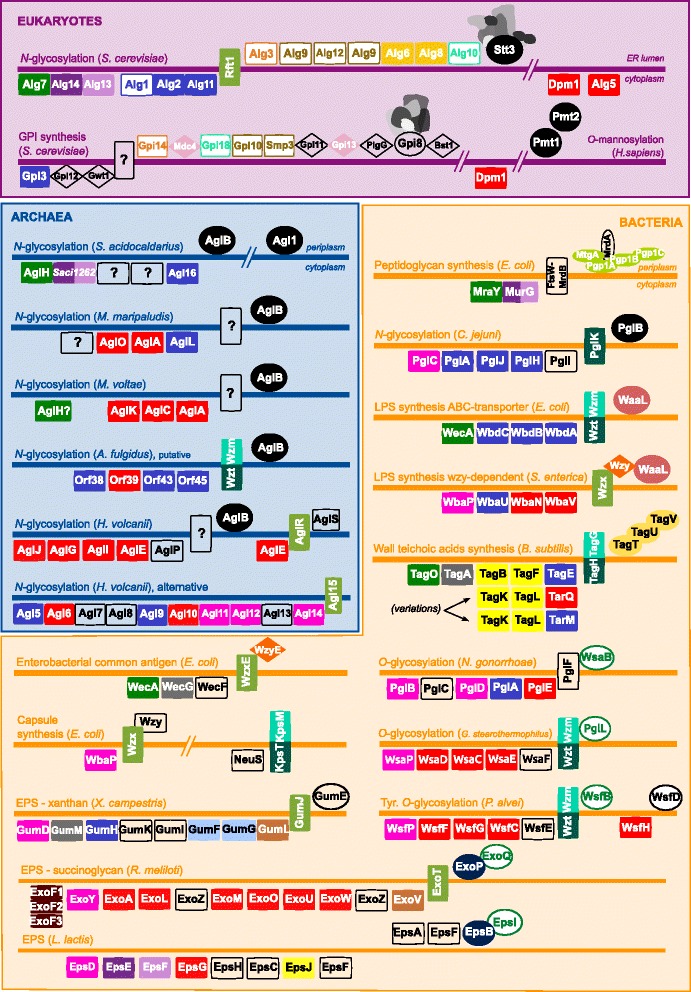
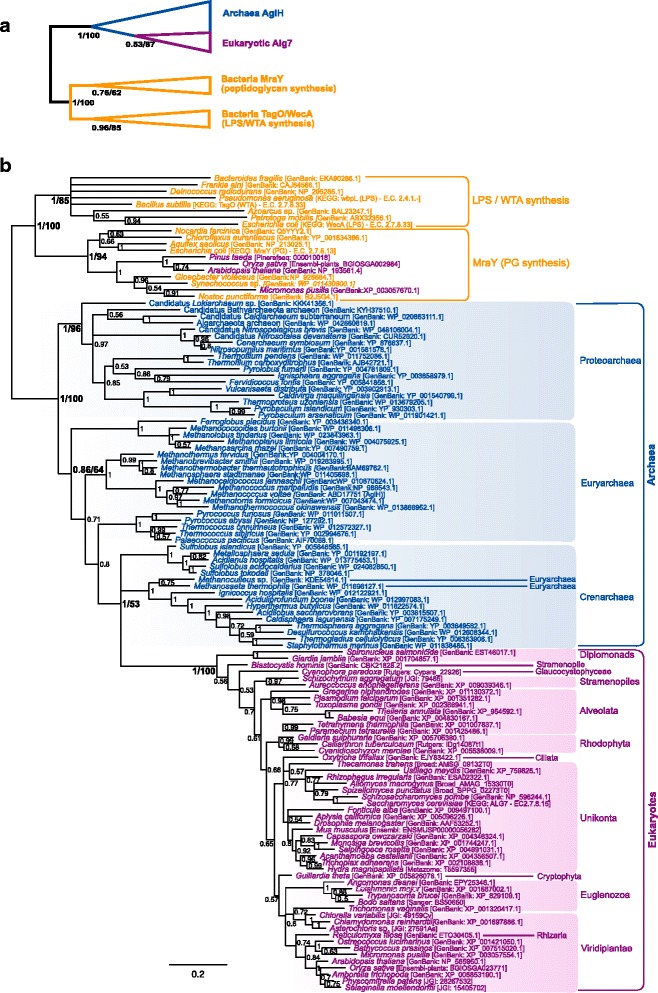
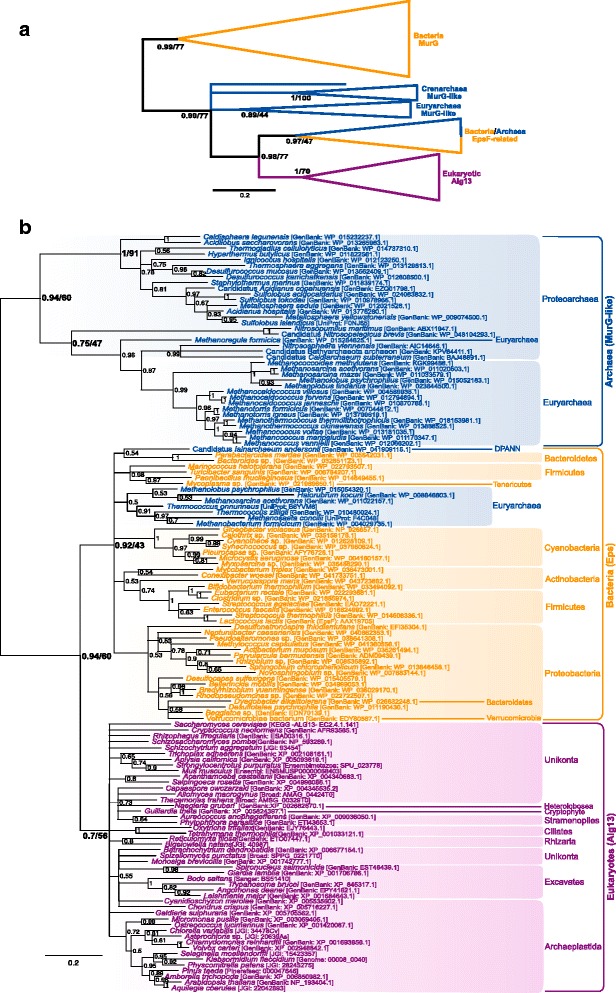
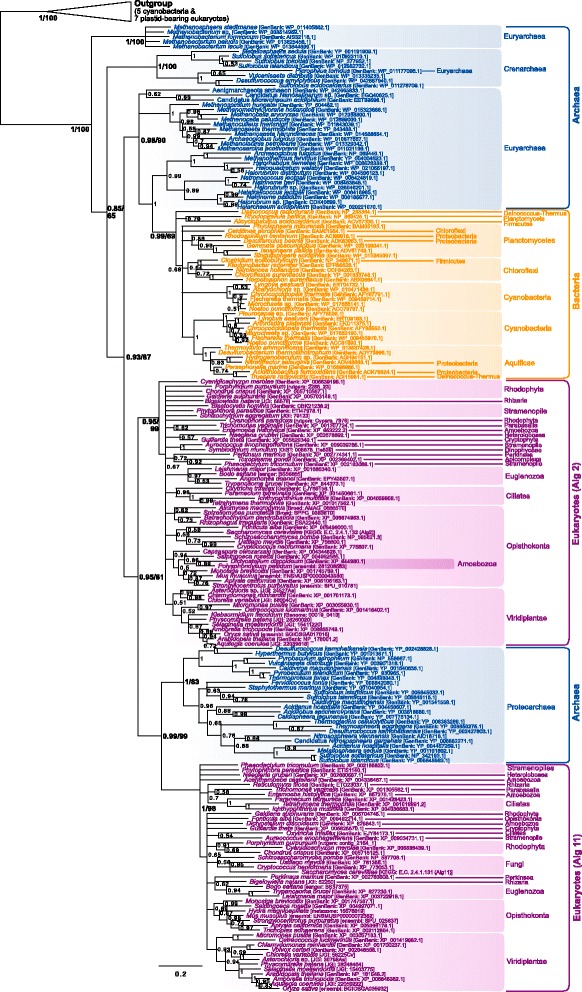
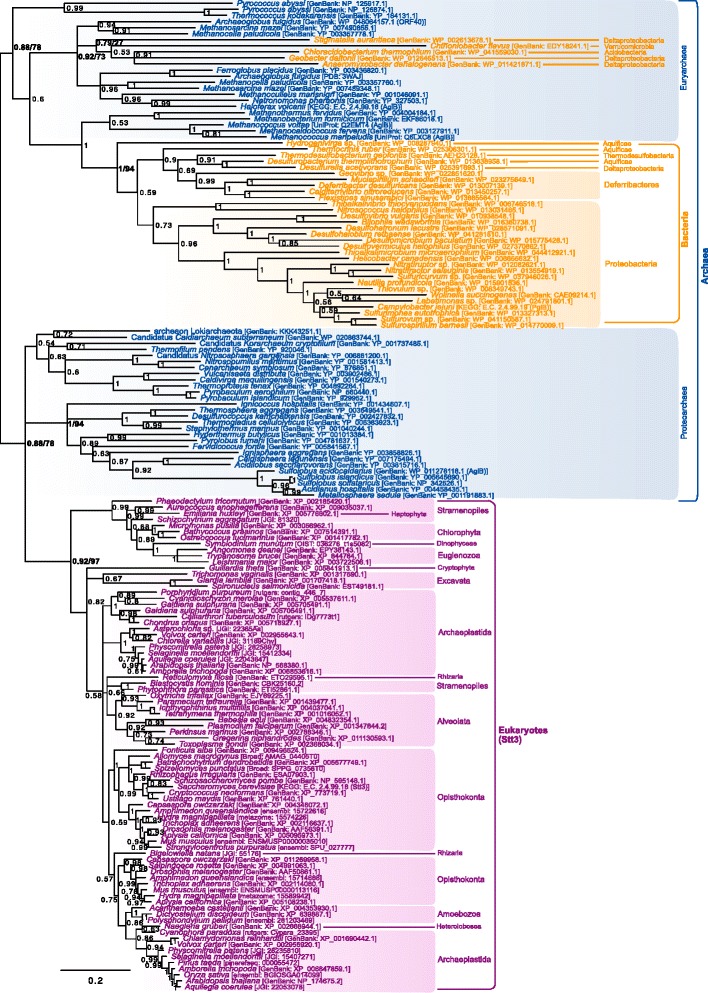
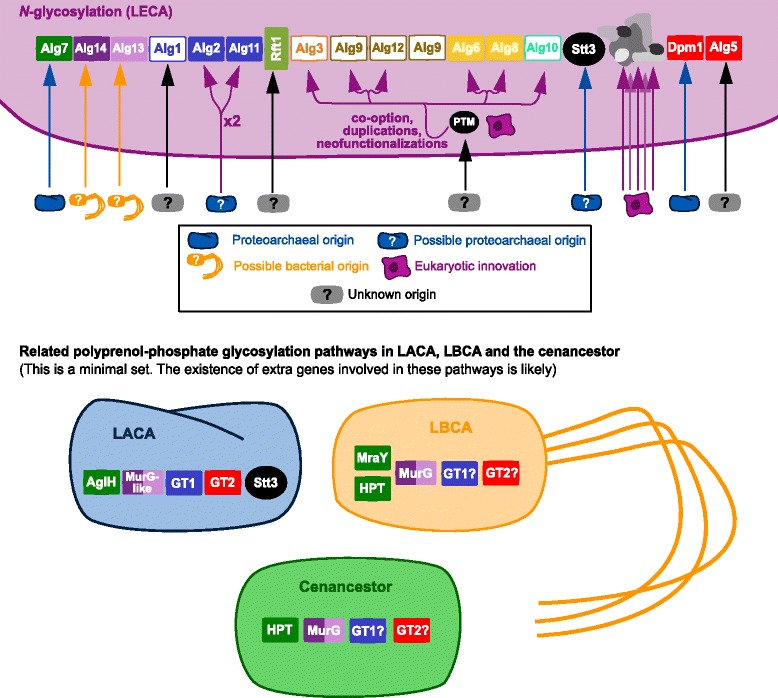
BACKGROUND: The N-glycosylation is an essential protein modification taking place in the membranes of the endoplasmic reticulum (ER) in eukaryotes and the plasma membranes in archaea. It shares mechanistic similarities based on the use of polyisoprenol lipid carriers with other glycosylation pathways involved in the synthesis of bacterial cell wall components (e.g. peptidoglycan and teichoic acids). Here, a phylogenomic analysis was carried out to examine the validity of rival hypotheses suggesting alternative archaeal or bacterial origins to the eukaryotic N-glycosylation pathway. RESULTS: The comparison of several polyisoprenol-based glycosylation pathways from the three domains of life shows that most of the implicated proteins belong to a limited number of superfamilies. The N-glycosylation pathway enzymes are ancestral to the eukaryotes, but their origins are mixed: Alg7, Dpm and maybe also one gene of the glycosyltransferase 1 (GT1) superfamily and Stt3 have proteoarchaeal (TACK superphylum) origins; alg2/alg11 may have resulted from the duplication of the original GT1 gene; the lumen glycosyltransferases were probably co-opted and multiplied through several gene duplications during eukaryogenesis; Alg13/Alg14 are more similar to their bacterial homologues; and Alg1, Alg5 and a putative flippase have unknown origins. CONCLUSIONS: The origin of the eukaryotic N-glycosylation pathway is not unique and less straightforward than previously thought: some basic components likely have proteoarchaeal origins, but the pathway was extensively developed before the eukaryotic diversification through multiple gene duplications, protein co-options, neofunctionalizations and even possible horizontal gene transfers from bacteria. These results may have important implications for our understanding of the ER evolution and eukaryogenesis. REVIEWERS: This article was reviewed by Pr. Patrick Forterre and Dr. Sergei Mekhedov (nominated by Editorial Board member Michael Galperin).
Overview
The claims and statistics of this paper haven’t been checked yet.
Free: it reads the open-access text and checks the first 5 claims that cite a source we can check. Create a free account to check every claim.
Integrity signals
Registry
Cites
Statistics
Figures
Verification
Claims the paper makes
The claims and statistics of this paper haven’t been checked yet.
Free: it reads the open-access text and checks the first 5 claims that cite a source we can check. Create a free account to check every claim.
Self-check
Percentages, sums and reported differences re-computed from the paper’s own numbers.
The self-check needs the paper’s full text.
Citations
Cites
Basic local alignment search tool
Altschul, S. F., Gish, W., Miller, W., Myers, E. W., & Lipman, D. J. (1990) · Journal of Molecular Biology · doi:10.1006/jmbi.1990.9999 · Cited by 98,669 · cited 1×
“all reciprocal BLASTp searches were carried out [60].”
BackgroundGapped BLAST and PSI-BLAST: a new generation of protein database search programs
Altschul, S. (1997) · Nucleic Acids Research · doi:10.1093/nar/25.17.3389 · Cited by 73,302
MUSCLE: multiple sequence alignment with high accuracy and high throughput
Edgar, R. C. (2004) · Nucleic Acids Research · doi:10.1093/nar/gkh340 · Cited by 44,662 · cited 1×
“31 [104], sequences were trimmed using the program NET of the MUST package [105] and preliminary phylogenies were reconstructed using FastTree v.”
MethodRAxML version 8: a tool for phylogenetic analysis and post-analysis of large phylogenies
Stamatakis, A. (2014) · Bioinformatics · doi:10.1093/bioinformatics/btu033 · Cited by 32,291
MrBayes 3.2: Efficient Bayesian Phylogenetic Inference and Model Choice Across a Large Model Space
Ronquist, F., Teslenko, M., van der Mark, P., Ayres, D. L., Darling, A., Höhna, S., Larget, B., Liu, L., Suchard, M. A., & Huelsenbeck, J. P. (2012) · Systematic Biology · doi:10.1093/sysbio/sys029 · Cited by 27,843
FastTree 2 – Approximately Maximum-Likelihood Trees for Large Alignments
Price, M. N., Dehal, P. S., & Arkin, A. P. (2010) · PLoS ONE · doi:10.1371/journal.pone.0009490 · Cited by 14,894
Creating the CIPRES Science Gateway for inference of large phylogenetic trees
Miller, M. A., Pfeiffer, W., & Schwartz, T. (2010) · 2010 Gateway Computing Environments Workshop (GCE) · doi:10.1109/gce.2010.5676129 · Cited by 11,228 · cited 3×
“plemented in the CIPRES Science Gateway [110].”
InfluentialTowards a natural system of organisms: proposal for the domains Archaea, Bacteria, and Eucarya.
Woese, C. R., Kandler, O., & Wheelis, M. L. (1990) · Proceedings of the National Academy of Sciences · doi:10.1073/pnas.87.12.4576 · Cited by 6,128
Raetz, C. R. H., & Whitfield, C. (2002) · Annual Review of Biochemistry · doi:10.1146/annurev.biochem.71.110601.135414 · Cited by 4,404
An Improved General Amino Acid Replacement Matrix
Le, S. Q., & Gascuel, O. (2008) · Molecular Biology and Evolution · doi:10.1093/molbev/msn067 · Cited by 3,127 · cited 1×
“The MrBayes analysis used a LG substitution model [111] and”
Method
Cited by
Varki, A. (2017) · Glycobiology · doi:10.1093/glycob/cww086 · Cited by 2,635
“The last two examples highlight the realization that many glycosylation types once thought to be unique to eukaryotes in fact have their origins in earlier evolved pathways in bacteria and archea (221, 222) (176).”
BackgroundExtracellular membrane vesicles in the three domains of life and beyond
Gill, S., Catchpole, R., & Forterre, P. (2019) · FEMS Microbiology Reviews · doi:10.1093/femsre/fuy042 · Cited by 500
“Phylogenomic analyses also predict that LUCA had unsaturated polyisoprenols (Lombard 2016).”
BackgroundThe Syntrophy hypothesis for the origin of eukaryotes revisited
López-García, P., & Moreira, D. (2020) · Nature Microbiology · doi:10.1038/s41564-020-0710-4 · Cited by 201
Deep evolutionary analysis reveals the design principles of fold A glycosyltransferases
Taujale, R., Venkat, A., Huang, L.-C., Zhou, Z., Yeung, W., Rasheed, K. M., Li, S., Edison, A. S., Moremen, K. W., & Kannan, N. (2020) · eLife · doi:10.7554/elife.54532 · Cited by 99
“Previous efforts to investigate GT evolution have largely focused on individual families or pathways (Taujale and Yin, 2015; Lombard, 2016) and have not explicitly addressed the challenge of mapping the evolution of functional diversity across families.”
BackgroundProtein Glycosylation Investigated by Mass Spectrometry: An Overview
Illiano, A., Pinto, G., Melchiorre, C., Carpentieri, A., Faraco, V., & Amoresano, A. (2020) · Cells · doi:10.3390/cells9091986 · Cited by 93
“The functional role of N-glycans dictated from the specific folding of glycoproteins drives the evolutionary changes in the precise signaling of folding control in eukaryotes [12] so that N-glycan synthesis has been demonstrated to be conserved among eukaryotic lineages [13] while its processing or O-glycan biosynthes…”
BackgroundDeep-Learning Resources for Studying Glycan-Mediated Host-Microbe Interactions
Bojar, D., Powers, R. K., Camacho, D. M., & Collins, J. J. (2021) · Cell Host & Microbe · doi:10.1016/j.chom.2020.10.004 · Cited by 79
Towards understanding the extensive diversity of protein N ‐glycan structures in eukaryotes
Toustou, C., Walet-Balieu, M.-L., Kiefer‐Meyer, M., Houdou, M., Lerouge, P., Foulquier, F., & Bardor, M. (2021) · Biological reviews/Biological reviews of the Cambridge Philosophical Society · doi:10.1111/brv.12820 · Cited by 75
“The main N-glycan of T. vaginalis is a linear Man5GlcNAc2 oligomannoside that results from the transfer in the ER of a truncated precursor Glc3Man5GlcNAc2-P-P-Dol on the N-glycosylation site of the protein (Samuelson et al., 2005; Paschinger et al., 2012; Lombard, 2016).”
BackgroundCavalier‐Smith, T., & Chao, E. E. Y. (2020) · PROTOPLASMA · doi:10.1007/s00709-019-01442-7 · Cited by 74
“…character distributions across the three domains, including the origins of archaebacterial and eukaryote N-linked glycoprotein synthesis machinery than previous interpretations (Cavalier-Smith 1987c; Lombard 2016), as we shall explain in a new synthesis of the transitions between the three domains.”
BackgroundResultInfluentialEndosymbiotic selective pressure at the origin of eukaryotic cell biology
Raval, P. K., Garg, S. G., & Gould, S. B. (2022) · eLife · doi:10.7554/elife.81033 · Cited by 65
“…eukaryotic traits evolving in the FECA to LECA transition, but the majority of protein families involved in eukaryotic cellular complexity are absent across the entire realm of prokaryotic diversity (Brunk and Martin, 2019; Dell et al., 2010; Knopp et al., 2021; Liu et al., 2021; Lombard, 2016).”
Structure of the eukaryotic protein O-mannosyltransferase Pmt1−Pmt2 complex
Bai, L., Kovach, A., You, Q., Kenny, A., & Li, H. (2019) · Nature Structural & Molecular Biology · doi:10.1038/s41594-019-0262-6 · Cited by 61
Human protein paucimannosylation: cues from the eukaryotic kingdoms
Tjondro, H. C., Loke, I., Chatterjee, S., & Thaysen‐Andersen, M. (2019) · Biological reviews/Biological reviews of the Cambridge Philosophical Society · doi:10.1111/brv.12548 · Cited by 53
“3a), this parasitic amoeba lacks several anabolic glycosylation enzymes (ALG3, ALG6, ALG8, ALG9, ALG10, and ALG12) necessary to form full-length LLO precursors (Samuelson et al., 2005; Lombard, 2016).”
BackgroundInfluentialN-glycosylation as a eukaryotic protective mechanism against protein aggregation
Duran-Romaña, R., Houben, B., De Vleeschouwer, M., Louros, N., Wilson, M. P., Matthijs, G., Schymkowitz, J., & Rousseau, F. (2024) · Science Advances · doi:10.1126/sciadv.adk8173 · Cited by 52
Wang, P., Wang, H., Gai, J., Tian, X., Zhang, X., Lv, Y., & Jian, Y. (2017) · Scientific Reports · doi:10.1038/srep40301 · Cited by 51
Four billion years of microbial terpenome evolution
Hoshino, Y., & Villanueva, L. (2023) · FEMS Microbiology Reviews · doi:10.1093/femsre/fuad008 · Cited by 48
Sweet Modifications Modulate Plant Development
Coninck, T. D., Gistelinck, K., van Rensburg, H. C. J., den Ende, W. V., & Damme, E. J. M. V. (2021) · Biomolecules · doi:10.3390/biom11050756 · Cited by 46
“The ubiquity and importance of protein glycosylation is demonstrated by its wide evolutionary distribution across all kingdoms of life [51,52].”
BackgroundGlycomics in Human Diseases and Its Emerging Role in Biomarker Discovery
Onigbinde, S. B., Adeniyi, M., Daramola, O. E., Chukwubueze, F. M., Bhuiyan, M. M. A. A., Nwaiwu, J. I., Bhattacharjee, T., & Mechref, Y. S. (2025) · Biomedicines · doi:10.3390/biomedicines13082034 · Cited by 45
Elton, C. M., Rodriguez, M., Mamoun, C. B., Lobo, C. A., & Wright, G. J. (2018) · International Journal for Parasitology · doi:10.1016/j.ijpara.2018.10.003 · Cited by 42
“Babesia, similar to Plasmodium spp. parasites, appear to lack the full complement of enzymes required for N-linked glycosylation, and so all potential N-linked glycosylation consensus sequences were mutated to prevent the addition of large glycans when expressed in mammalian cells (Lombard, 2016).”
BackgroundN‐glycosylation in Archaea—New roles for an ancient posttranslational modification
Eichler, J. (2020) · Molecular Microbiology · doi:10.1111/mmi.14569 · Cited by 36
Cao, X., Shao, Y., Meng, P., Cao, Z., Yan, G., Yao, J. H., Zhou, X., Liu, C., Zhang, L., Shu, H., et al. (2022) · Phenomics · doi:10.1007/s43657-022-00050-5 · Cited by 33
“2017; Lombard 2016; Ramirez et al.”
BackgroundBai, L., & Li, H. (2019) · Worldwide Protein Data Bank · doi:10.2210/pdb6p25/pdb · Cited by 28
Structure of human endo-α-1,2-mannosidase (MANEA), an antiviral host-glycosylation target
Sobala, L. F., Fernandes, P. Z., Hakki, Z., Thompson, A. J., Howe, J. D., Hill, M. L., Zitzmann, N., Davies, S. P., Stamataki, Z., Butters, T. D., et al. (2020) · Proceedings of the National Academy of Sciences · doi:10.1073/pnas.2013620117 · Cited by 26
Muleya, V., Lois, L. M., Chahtane, H., Thomas, L. A., Chiapello, M., & Marondedze, C. (2022) · Life · doi:10.3390/life12020324 · Cited by 23
“However, evolutionary origins of N-glycosylation occurring in the endoplasmic reticulum (ER) are highly conserved among eukaryotic lineages [39].”
BackgroundTretina, K., Pellé, R., Orvis, J., Gotia, H. T., Ifeonu, O. O., Kumari, P., Palmateer, N. C., Iqbal, S. B., Fry, L. M., Nene, V. M., et al. (2020) · BMC Genomics · doi:10.1186/s12864-020-6683-0 · Cited by 23
“While Nglycosylation is often touted as an ‘essential’ protein modification in eukaryotes [58], the absence of an STT3 ortholog”
BackgroundEvolution of factors shaping the endoplasmic reticulum
Kontou, A., Herman, E. K., Field, M. C., Dacks, J. B., & Koumandou, V. L. (2022) · Traffic · doi:10.1111/tra.12863 · Cited by 22
“VAP and Caspr1 are not shown in panel A. Arl6IP1, ADP-ribosylation factor-like 6 interacting protein 1; Caspr1, contactin-associated protein 1; CLIMP-63, cytoskeleton-linking membrane protein 63; Dsl1p, depends on SLY1-20; NogoR, Nogo receptor; p180,180 kDa ribosome receptor; REEP, receptor expressionenhancing protein…”
BackgroundInfluentialRuíz-May, E., Sørensen, I., Fei, Z., Zhang, S., Domozych, D. S., & Rose, J. K. C. (2018) · Proteomes · doi:10.3390/proteomes6020014 · Cited by 22
Alzan, H. F., Bastos, R. G., Ueti, M. W., Laughery, J. M., Rathinasamy, V., Cooke, B. M., & Suarez, C. E. (2021) · Parasites & Vectors · doi:10.1186/s13071-021-04712-7 · Cited by 21
Rft1 catalyzes lipid-linked oligosaccharide translocation across the ER membrane
Chen, S., Pei, C., Xu, S., Li, H., Liu, Y., Wang, Y., Jin, C., Dean, N., & Gao, X. (2024) · Nature Communications · doi:10.1038/s41467-024-48999-3 · Cited by 20
“In addition to its strong conservation among eukaryotes, Rft1 orthologuesarefoundinallmajorarchaealgenomes 3 .”
Recognition of Fungal Components by the Host Immune System
García-Carnero, L. C., Martínez-Álvarez, J. A., Salazar-García, L. M., Lozoya‐Pérez, N. E., González-Hernández, S. E., & Tamez-Castrellón, A. K. (2019) · Current Protein and Peptide Science · doi:10.2174/1389203721666191231105546 · Cited by 20
Fujinami, D., Taguchi, Y., & Kohda, D. (2017) · Glycobiology · doi:10.1093/glycob/cwx044 · Cited by 19
“This conclusion is consistent with a recent phylogenetic analysis (Lombard 2016), which suggested that the Alg7 and Alg2/11 glycosyltransferases in eukaryotic LLO biosynthesis have origins in the AglH and glycosyltransferase 1 superfamilies, respectively, in the TACK (Thaum-, Aig-, Cren- and Korarchaeota) superphylum.”
ResultFerreira, L. T., Rodrigues, J., Cassiano, G. C., Tavella, T. A., Tomaz, K. C. P., Baía-da-Silva, D. C., Souza, M. F., Lima, M. N. D. N., Mottin, M., Almeida, L. D., et al. (2020) · Antimicrobial Agents and Chemotherapy · doi:10.1128/aac.02041-19 · Cited by 18
“falciparum has an Alg7 ortholog (60, 61) whose product is responsible for the synthesis of glycans bound to dolichol (58), a class of isoprenoids that participate in the biosynthesis of N-linked oligosaccharides (62).”
MacCain, W. J., Kannan, S., Jameel, D. Z., Troutman, J. M., & Young, K. D. (2018) · Journal of Bacteriology · doi:10.1128/jb.00255-18 · Cited by 15
“coli, these products end up in the periplasm or on the exterior of the outer membrane, while in Gram-positive bacteria and in eukaryotic cells, analogous products are shuttled to the external milieu or across the endoplasmic reticulum (14, 15).”
BackgroundShah, R., Eklund, E. A., Radenkovic, S., Sadek, M., Shammas, I., Verberkmoes, S., Ng, B. G., Freeze, H. H., Edmondson, A. C., He, M., et al. (2024) · Molecular Genetics and Metabolism · doi:10.1016/j.ymgme.2024.108472 · Cited by 14
Agl24 is an ancient archaeal homolog of the eukaryotic N-glycan chitobiose synthesis enzymes
Meyer, B. H., Adam, P. S., Wagstaff, B. A., Kolyfetis, G. E., Probst, A. J., Albers, S. V., & Dorfmueller, H. C. (2022) · eLife · doi:10.7554/elife.67448 · Cited by 12
“One possibility is that they were present in the last eukaryotic common ancestor (LECA), as proposed in Lombard, 2016.”
BackgroundMethodInfluentialGandini, R., Reichenbach, T., Oliver Spadiut, A., Tan, T.-C., Kalyani, D. C., & Divne, C. (2020) · Journal of Molecular Biology · doi:10.1016/j.jmb.2020.06.016 · Cited by 12
“machineries appear more closely related to the eukaryotic systems [6], albeit highly blended with distinct traits of both bacteria and eukarya [7].”
BackgroundEarly evolution of polyisoprenol biosynthesis and the origin of cell walls
Lombard, J. (2016) · PeerJ · doi:10.7717/peerj.2626 · Cited by 12
“The protein N glycosylation oligosaccharyltransferases and O-mannosylation transferases responsible for S-layer protein glycosylation are indeed probably ancestral to eukaryotes and archaea, but their ancestral presence in bacteria is uncertain (Lombard, 2016).”
BackgroundMethodSelf-citationVirus-encoded glycosyltransferases hypermodify DNA with diverse glycans
Pyle, J. D., Lund, S. R., O’Toole, K. H., & Saleh, L. (2024) · Cell Reports · doi:10.1016/j.celrep.2024.114631 · Cited by 11
The impact of glycosylation on the structure, function, and interactions of CD14
Quintana, J. I., Delgado, S., Rábano, M., Azkargorta, M., Florencio-Zabaleta, M., Unione, L., Vivanco, M. D., Elortza, F., Jiménez‐Barbero, J., & Ardá, A. (2024) · Glycobiology · doi:10.1093/glycob/cwae002 · Cited by 11
“It has been demonstrated (Aebi 2013; Lombard 2016 ) that protein N-glycosylation is a highly conserved process in eukaryotes, consisting of two phases that occur in two different cell compartments.”
BackgroundConcerted Regulation of Glycosylation Factors Sustains Tissue Identity and Function
Sobral, D., Francisco, R., Duro, L. R., Videira, P. A., & Grosso, A. R. (2022) · Biomedicines · doi:10.3390/biomedicines10081805 · Cited by 11
Biomimetic Principles to Develop Blood Compatible Surfaces
Semak, V., Fischer, M., & Weber, V. (2017) · International Journal of Artificial Organs · doi:10.5301/ijao.5000559 · Cited by 10
“The enzymatic process of glycosylation, where carbohydrates are covalently attached to proteins or lipids, is one of the most complex posttranslational modifications involving a number of enzymatic steps in different cellular compartments (98-103).”
BackgroundVirus-encoded glycosyltransferases hypermodify DNA with diverse glycans
(2023) · doi:10.1101/2023.12.21.572611 · Cited by 11
An updated view of the oligosaccharyltransferase complex in Plasmodium
Tamana, S., & Promponas, V. J. (2019) · Glycobiology · doi:10.1093/glycob/cwz011 · Cited by 10
Quantifying the evolutionary paths to endomembranes
Schavemaker, P. E., & Lynch, M. (2025) · Cell Reports · doi:10.1016/j.celrep.2025.115533 · Cited by 9
Advances in Fragmentation Techniques for Glycomics and Glycoproteomics
Sandilya, V., Sahioun, S., Suma, T. A., Adewolu, A., Koraich, A., Nishe, S. S., Oji, E., Reyes, C. D. G., & Mechref, Y. S. (2025) · Mass Spectrometry Reviews · doi:10.1002/mas.70011 · Cited by 9
“This modification generates a diverse repertoire of glycoconjugates that are essential for regulating numerous critical cellular functions (Lombard 2016).”
ALG13-Related Epilepsy: Current Insights and Future Research Directions
Gao, P., Chen, H., Sun, Y., Qian, X., Sun, T., Fan, Y., & Zhang, J. (2024) · Neurochemical Research · doi:10.1007/s11064-024-04300-y · Cited by 8
“N-glycosylation occurs in two primary stages: the synthesis of a lipid-linked oligosaccharide (LLO) and the transfer of this oligosaccharide to specific asparagine residues within polypeptide chains [45, 46 ].”
N-glycans in lung tissue specimens: a prospective target for enhanced cancer diagnosis and prognosis
Lattová, E., Skřičková, J., Hausnerová, J., Kryštofová, K., Zdráhal, Z., Křen, L., & Popovič, M. (2025) · Journal of Translational Medicine · doi:10.1186/s12967-025-06904-6 · Cited by 5
Wen, X., Liu, C., Yang, F., Wei, Z., Li, L., Chen, H., Han, X., Jiao, C., & Sha, A. (2024) · International Journal of Molecular Sciences · doi:10.3390/ijms25168875 · Cited by 5
“Protein N-glycosylation involves the dolichol-linked oligosaccharide (DLO) precursor synthesis, the final oligosaccharide transferring, and the protein N-glycans modification steps [47,48].”
BackgroundLLP1 is a pyrophosphatase involved in homeostasis/quality control of dolichol-linked oligosaccharide
Li, S.-T., Kamada, K., Honda, A., Seino, J., Matsuda, T., Suzuki, T., Dohmae, N., Shichino, Y., Iwasaki, S., Noda, Y., et al. (2025) · The Journal of Cell Biology · doi:10.1083/jcb.202501239 · Cited by 5
Burchill, L., Males, A., Kaur, A., Davies, G. J., & Williams, S. J. (2022) · Israel Journal of Chemistry · doi:10.1002/ijch.202200067 · Cited by 4
Contrasting Macroevolutionary Patterns in the Human N-Glycosylation Pathway
Kifer, D., Čorak, N., Domazet-Lošo, M., Kasalo, N., Lauc, G., Klobučar, G. I. V., & Domazet‐Lošo, T. (2025) · Engineering · doi:10.1016/j.eng.2025.06.039 · Cited by 3
Computational analysis reveals non-consensus N-glycosylation sequons in antibody Fab region
Qiu, B., Chen, E., Flick, T. G., & Letarte, S. (2025) · mAbs · doi:10.1080/19420862.2025.2574406 · Cited by 3
“13 The eukaryotic OST has two distinct forms (OST-A and OST-B) and modifies glycosylation sites co-translationally or post-translationally.”
A first look at the N- and O-glycosylation landscape in anuran skin secretions
Barbosa, É. A., Alves, G. S. C., Coura, M. D. M. A., Silva, H. D. L. E., da Rocha, F. S., Nunes, J. B., Watanabe, M. D. S., Andrade, A. C., & Brand, G. D. (2022) · Biochimie · doi:10.1016/j.biochi.2022.01.008 · Cited by 3
Zhang, L.-B., Li, Y.-T., Yang, Z., Zhou, C., Guan, Y., & Liu, G. (2025) · Pesticide Biochemistry and Physiology · doi:10.1016/j.pestbp.2025.106846 · Cited by 2
Prados, M. B., Sica, M. P., & Miranda, S. E. (2020) · Archives of Biochemistry and Biophysics · doi:10.1016/j.abb.2020.108538 · Cited by 2
Basic Knowledge of Glycobiology
Gerwig, G. J. (2021) · Techniques in life science and biomedicine for the non-expert · doi:10.1007/978-3-030-77791-3_2 · Cited by 2
High ALG1 Expression Is Correlated With Poor Prognosis and the Immune Microenvironment in Glioma
Li, S., Xia, Y., Liu, Q., Qian, X., Liu, A. J., Wang, J., Wang, X., Zuo, D., Zhang, J., Ma, J., et al. (2026) · Journal of Cellular and Molecular Medicine · doi:10.1111/jcmm.71142 · Cited by 1
“ALG1 contributes to the early stages of protein glycosylation [37, 38].”
Flack, E. K. P. (2019) · White Rose eTheses Online (University of Leeds, The University of Sheffield, University of York) · Cited by 1
Concanavalin A as a pan-eukaryotic nuclear envelope marker for expansion microscopyPreprint
Hoogenberg, B., Mikus, F., Parihar, P. S., VERBANAC, I., Beltrame, D., Olivetta, M., Richards, T. A., Dey, G., & Dudin, O. (2026) · bioRxiv (Cold Spring Harbor Laboratory) · doi:10.64898/2026.09.08.750128 · Cited by 1
“T. gondii which is known to have a reduced glycosylation machinery and may therefore not produce ConA-reactive glycans across all life stages (Bandini et al., 2019; Lombard, 2016; Tomita et al., 2017).”
Investigation of CHO cell surface glycosylation using lectin probes.
Cawley, J. (2017) · Dublin City University Open Access Institutional Repository (Dublin City University)
Corrêa, P. C. (2021) · Digital Library of Theses and Dissertations (Universidade de São Paulo) · doi:10.11606/d.17.2021.tde-11062021-074015
Computationally guided insights into substrate recognition and specificity of Alg1Preprint
Yu, C., Long, F., Li, R., & Ding, Y. (2023) · bioRxiv (Cold Spring Harbor Laboratory) · doi:10.1101/2023.12.27.573458
Feng, Z., He, X., Lin, H.-T., Zhao, H., Chen, Y., Chen, J., Li, Z., Shen, Y., Chen, J., Yang, X., et al. (2025) · International Journal of Biological Macromolecules · doi:10.1016/j.ijbiomac.2025.148770
Alzan, H. F., Bastos, R. G., Ueti, M. W., Laughery, J. M., Rathinasamy, V., Cooke, B. M., & Suarez, C. E. (2021) · Figshare · doi:10.6084/m9.figshare.14456913
Alzan, H. F., Bastos, R. G., Ueti, M. W., Laughery, J. M., Rathinasamy, V., Cooke, B. M., & Suarez, C. E. (2021) · Figshare · doi:10.6084/m9.figshare.14456901
Alzan, H. F., Bastos, R. G., Ueti, M. W., Laughery, J. M., Rathinasamy, V., Cooke, B. M., & Suarez, C. E. (2021) · Figshare · doi:10.6084/m9.figshare.14456922
Alzan, H. F., Bastos, R. G., Ueti, M. W., Laughery, J. M., Rathinasamy, V., Cooke, B. M., & Suarez, C. E. (2021) · Figshare · doi:10.6084/m9.figshare.14456919
Alzan, H. F., Bastos, R. G., Ueti, M. W., Laughery, J. M., Rathinasamy, V., Cooke, B. M., & Suarez, C. E. (2021) · Figshare · doi:10.6084/m9.figshare.14456907
Alzan, H. F., Bastos, R. G., Ueti, M. W., Laughery, J. M., Rathinasamy, V., Cooke, B. M., & Suarez, C. E. (2021) · Figshare · doi:10.6084/m9.figshare.14456928
Alzan, H. F., Bastos, R. G., Ueti, M. W., Laughery, J. M., Rathinasamy, V., Cooke, B. M., & Suarez, C. E. (2021) · Figshare · doi:10.6084/m9.figshare.14456904
Tretina, K., Pelle, R., Orvis, J., Gotia, H. T., Ifeonu, O. O., Kumari, P., Palmateer, N. C., Iqbal, S. B. A., Fry, L. M., Nene, V. M., et al. (2020) · Figshare · doi:10.6084/m9.figshare.12082434
Alzan, H. F., Bastos, R. G., Ueti, M. W., Laughery, J. M., Rathinasamy, V., Cooke, B. M., & Suarez, C. E. (2021) · Figshare · doi:10.6084/m9.figshare.14456916
Alzan, H. F., Bastos, R. G., Ueti, M. W., Laughery, J. M., Rathinasamy, V., Cooke, B. M., & Suarez, C. E. (2021) · Figshare · doi:10.6084/m9.figshare.14456925
Alzan, H. F., Bastos, R. G., Ueti, M. W., Laughery, J. M., Rathinasamy, V., Cooke, B. M., & Suarez, C. E. (2021) · Figshare · doi:10.6084/m9.figshare.14456910
Centone, A. (2021) · Touro Scholar (Touro College)
The Complexity of Glycan Structures, Functions, and Origins
Carlson, R. W. (2024) · BioCosmos · doi:10.2478/biocosmos-2024-0005
“Alg5 has no clear prokaryotic homolog nor does Alg3, 9 and 12 (all are mannosyl transferases) or Alg6, 8 and 10 (glucosyl transferases), all of which have been suggested to be unique to eukaryotes (93).”
InfluentialFujinami, D. (2017) · Institutional Repositories DataBase (IRDB)
Xu, S., Chen, S., Gu, Y.-H., Huang, Y., Nakanishi, H., & Gao, X. (2026) · Glycobiology · doi:10.1093/glycob/cwag027
Luo, W., & Tian, Z. (2026) · Analytica Chimica Acta · doi:10.1016/j.aca.2026.345588
Metadata
- Authors
- Lombard, J.
- Affiliations
- University of Exeter (GB)
- Corresponding author
- Lombard, Jonathan
- Venue
- Biology Direct
- Published
- 2016-08-04
- Volume
- 11
- Issue
- 1
- Pages
- 36-36
- ISSN
- 1745-6150 (ISSN-L)
- PMC
- PMC4973528
- OpenAlex
- W2494943657
- Cited by
- 70
- References
- 127
- Citations by year
- 2026: 2 · 2025: 10 · 2024: 8 · 2023: 2 · 2022: 8 · 2021: 15 · 2020: 12 · 2019: 4 · 2018: 4 · 2017: 3 · 2016: 2
- FWCI
- 2.42
- Type
- journal article
- Language
- en
- Open access
- gold
- doi.org
- Licence
- cc-by
- creativecommons.org/licenses/by/4.0/ (tdm)
- creativecommons.org/licenses/by/4.0/ (vor)
- Locations
- Biology Direct (publishedVersion, cc-by)
- PubMed Central (publishedVersion, cc-by)
- PubMed (publishedVersion)
- Funders
- National Science Foundation (NSF #EF-0905606)
- Topics
- Life Sciences › Biochemistry, Genetics and Molecular Biology › Molecular Biology › Glycosylation and Glycoproteins Research
- Life Sciences › Biochemistry, Genetics and Molecular Biology › Cell Biology › Cellular transport and secretion
- Life Sciences › Biochemistry, Genetics and Molecular Biology › Molecular Biology › Genomics and Phylogenetic Studies
- Keywords
- N-glycosylation, eukaryotic origin, gene duplication, horizontal gene transfer, flippase, neofunctionalization
- MeSH terms
- Glycosylation, Phylogeny, Evolution, Molecular, Metabolic Networks and Pathways, Eukaryota
About these checks
Registry, retraction, Cites and statistics results are computed, not judged, with one exception: a printed reference that no index lists is read once by a model before it counts as a citation error. Claims are extracted by a model and kept only when their quote appears verbatim in the text; each cited source is then checked, with a model’s help, for whether it says what the claim relies on. Those verdicts can be wrong — read the claim’s quote and the cited source before relying on one.
Statistics and arithmetic are recomputed, not judged.
Confidence bands are shown only for fields calibrated on our annotated test set. None is calibrated yet, so no band is shown.
What counts as a claim ›How we measure confidence ›How we check this ›
Are you an author, or do you see a problem with this page? Request a review
Data sources
Bibliographic data: Semantic Scholar, OpenAlex, Crossref.
Contains information from the Semantic Scholar Academic Graph Datasets, made available under the ODC Attribution License (ODC-BY 1.0).
Semantic Scholar’s data is described in: Kinney, R., et al. (2023). The Semantic Scholar Open Data Platform. arXiv:2301.10140.
