

Identifying the participant characteristics that predict recruitment and retention of participants to randomised controlled trials involving children: a systematic review
Open accessThe DOI matches its Crossref record; 67 of the 67 references it cites were found in a registry or an index.
Abstract
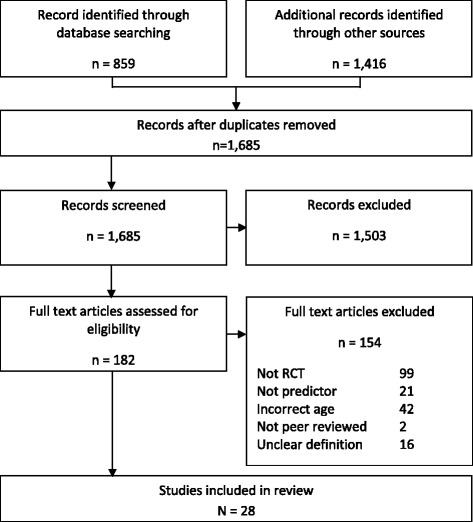
BACKGROUND: Randomised controlled trials (RCTs) are recommended as the 'gold standard' in evaluating health care interventions. The conduct of RCTs is often impacted by difficulties surrounding recruitment and retention of participants in both adult and child populations. Factors influencing recruitment and retention of children to RCTs can be more complex than in adults. There is little synthesised evidence of what influences participation in research involving parents and children. AIM: To identify predictors of recruitment and retention in RCTs involving children. METHODS: A systematic review of RCTs was conducted to synthesise the available evidence. An electronic search strategy was applied to four databases and restricted to English language publications. Quantitative studies reporting participant predictors of recruitment and retention in RCTs involving children aged 0-12 were identified. Data was extracted and synthesised narratively. Quality assessment of articles was conducted using a structured tool developed from two existing quality evaluation checklists. RESULTS: Twenty-eight studies were included in the review. Of the 154 participant factors reported, 66 were found to be significant predictors of recruitment and retention in at least one study. These were classified as parent, child, family and neighbourhood characteristics. Parent characteristics (e.g. ethnicity, age, education, socioeconomic status (SES)) were the most commonly reported predictors of participation for both recruitment and retention. Being young, less educated, of an ethnic minority and having low SES appear to be barriers to participation in RCTs although there was little agreement between studies. When analysed according to setting and severity of the child's illness there appeared to be little variation between groups. The quality of the studies varied. Articles adhered well to reporting guidelines around provision of a scientific rationale for the study and background information as well as displaying good internal consistency of results. However, few studies discussed the external validity of the results or provided recommendations for future research. CONCLUSION: Parent characteristics may predict participation of children and their families to RCTs; however, there was a lack of consensus. Whilst sociodemographic variables may be useful in identifying which groups are least likely to participate they do not provide insight into the processes and barriers to participation for children and families. Further studies that explore variables that can be influenced are warranted. Reporting of studies in this field need greater clarity as well as agreed definitions of what is meant by retention.
Overview
The claims and statistics of this paper haven’t been checked yet.
Free: it reads the open-access text and checks the first 5 claims that cite a source we can check. Create a free account to check every claim.
Integrity signals
Registry
Cites
Statistics
Figures
Verification
Claims the paper makes
The claims and statistics of this paper haven’t been checked yet.
Free: it reads the open-access text and checks the first 5 claims that cite a source we can check. Create a free account to check every claim.
Claims other papers make about this one
Each is checked against this paper’s own text: does it say what the citing paper says it does?
The source backs part of the claim, not all of it — or backs it for a different population, condition or comparison.
In the citing paper
“It has been claimed that racial and ethnic minorities, especially in the USA, are less willing than non-minority individuals to participate in health research but these assumptions generally appear to be on the basis of analysis of single trial datasets [12].”
From Parental attitudes to randomised controlled trials in primary dental care: A qualitative study (2026) · cites this paper as [12]
Experimental — accuracy not yet measuredThe source backs part of the claim, not all of it — or backs it for a different population, condition or comparison.
In the citing paper
“Children living in the most deprived areas are disproportionately affected by dental caries, however they are a cohort less likely to be recruited into research [34].”
From Is it feasible to conduct a randomised controlled trial of silver diamine fluoride compared to usual care for the management of caries in children's primary teeth in UK primary dental care? A randomised feasibility study. (2026) · cites this paper as [34]
Experimental — accuracy not yet measuredThe cited source says what the claim attributes to it.
In the citing paper
“it is commonly suggested that ethnic minorities, as well as lower income, poorly educated or lower socioeconomic status groups are less likely to participate in research and therefore are under-represented [12].”
From Parental attitudes to randomised controlled trials in primary dental care: A qualitative study (2026) · cites this paper as [12]
Self-check
Percentages, sums and reported differences re-computed from the paper’s own numbers.
The self-check needs the paper’s full text.
Citations
Cites
Preferred Reporting Items for Systematic Reviews and Meta-Analyses: the PRISMA statement
Moher, D., Liberati, A., Tetzlaff, J., Altman, D. G., & for the PRISMA Group (2009) · BMJ · doi:10.1136/bmj.b2535 · Cited by 83,823
Preferred reporting items for systematic reviews and meta-analyses: the PRISMA Statement.
(2009) · PubMed Central · Cited by 44,859
Preferred reporting items for systematic reviews and meta-analyses: The PRISMA statement
Moher, D., Liberati, A., Tetzlaff, J., Altman, D. G., & the PRISMA Group* (2009) · Annals of Internal Medicine · doi:10.7326/0003-4819-151-4-200908180-00135 · Cited by 37,554
von Elm, E., Altman, D. G., Egger, M., Pocock, S. J., Gøtzsche, P. C., Vandenbroucke, J. P., & Initiative, F. T. S. (2007) · PLoS Medicine · doi:10.1371/journal.pmed.0040296 · Cited by 23,020
Preferred Reporting Items for Systematic Reviews and Meta-Analyses: The PRISMA Statement
Moher, D., Liberati, A., Tetzlaff, J., & Altman, D. G. (2009) · Journal of Clinical Epidemiology · doi:10.1016/j.jclinepi.2009.06.005 · Cited by 19,575
(1991) · Medical Entomology and Zoology · Cited by 8,071
von Elm, E., Altman, D. G., Egger, M., Pocock, S. J., Gøtzsche, P. C., & Vandenbroucke, J. P. (2007) · Preventive Medicine · doi:10.1016/j.ypmed.2007.08.012 · Cited by 2,698
Thomas, B. H., Ciliska, D., Dobbins, M., & Micucci, S. (2004) · Worldviews on Evidence-Based Nursing · doi:10.1111/j.1524-475x.2004.04006.x · Cited by 2,118 · cited 1×
“The use of a 3 point rating scale was based on methods used in similar studies [16, 20].”
MethodBarriers to recruiting underrepresented populations to cancer clinical trials: a systematic review
Ford, J. G., Howerton, M. W., Lai, G. Y., Gary, T. L., Bolen, S., Gibbons, M. C., Tilburt, J., Baffi, C., Tanpitukpongse, T. P., Wilson, R. F., et al. (2008) · Cancer · doi:10.1002/cncr.23157 · Cited by 1,083 · cited 3×
“recruitment and retention where ethnic minority groups were found to be less likely to agree to participate in trials [16].”
BackgroundMethodInfluentialAttitudes and beliefs of african americans toward participation in medical research
Corbie-Smith, G., Thomas, S. B., Williams, M. V., & Moody-Ayers, S. (1999) · Journal of General Internal Medicine · doi:10.1046/j.1525-1497.1999.07048.x · Cited by 1,021 · cited 1×
“The literature reports specific reasons for ethnic minorities being excluded from research as mistrust due to events in history [50-52], language needs or discrimination [23], suspicion of intervention providers and perceived racism and stigmatisation [47].”
Background
Research works printed but not linked: 1
- Sullivan J Subject recruitment and retention: barriers to success 2004
Cited by
Reporting of Sociodemographic Variables in Randomized Clinical Trials, 2014-2020
Orkin, A. M., Nicoll, G., Persaud, N., & Pinto, A. D. (2021) · JAMA Network Open · doi:10.1001/jamanetworkopen.2021.10700 · Cited by 63
Guagliano, J. M., Armitage, S. M., Brown, H. E., Coombes, E., Fusco, F., Hughes, C., Jones, A. P., Morton, K. L., & van Sluijs, E. M. F. (2020) · International Journal of Behavioral Nutrition and Physical Activity · doi:10.1186/s12966-020-01025-3 · Cited by 56
Measuring retention within the adolescent brain cognitive development (ABCD)SM study
Ewing, S. W. F., Dash, G. F., Thompson, W. K., Reuter, C., Diaz, V. G., Anokhin, A. P., Chang, L., Cottler, L. B., Dowling, G. J., LeBlanc, K. H., et al. (2022) · Developmental Cognitive Neuroscience · doi:10.1016/j.dcn.2022.101081 · Cited by 55
“Consistent with past research on retention in studies with parents and children (Robinson et al., 2016), parental education level and employment status emerged as the most consistent and potentially useful indicators of participants at risk for late visits, missed visits, and study withdrawal.”
BackgroundInfluentialBencheva, V., Mann, N., Rombey, T., Pieper, D., & Schmiedl, S. (2024) · Systematic Reviews · doi:10.1186/s13643-024-02698-8 · Cited by 52
“Robinson et al. (2016) conducted a broad analysis that encompassed all randomized clinical trials (RCTs) involving pediatric populations, differentiating between medical and non-medical studies without further categorization into drug-related or non-drug-related studies [26].”
InfluentialLove, P., Laws, R., Litterbach, E., & Campbell, K. J. (2018) · Nutrients · doi:10.3390/nu10040509 · Cited by 44
van der Wurff, I. S. M., Meyer, B. J., & de Groot, R. H. M. (2017) · Nutrients · doi:10.3390/nu9050474 · Cited by 38
“However, in the limited number of studies on recruitment in children, no association between age or sex has been seen, although the education level of parents was associated with higher enrolment rates [5].”
BackgroundReflection on modern methods: planned missing data designs for epidemiological research
Rioux, C., Lewin, A., Odejimi, O. A., & Little, T. D. (2020) · International Journal of Epidemiology · doi:10.1093/ije/dyaa042 · Cited by 37
Determinants of fathers’ and mothers’ involvement in a parenting intervention.
McKee, K., Cabrera, N., Alonso, A., Turcios, M., & Reich, S. M. (2020) · Psychology of Men & Masculinity · doi:10.1037/men0000320 · Cited by 33
“In contrast to previous studies, we did not find evidence that financial strain was an important barrier to participation (Coatsworth et al., 2006a; Heinrichs et al., 2005; Robinson et al., 2016; Wong et al., 2013).”
BackgroundResultInfluentialClayton, P., Connelly, J., Ellington, M., Rojas, V., Lorenzo, Y., Trak‐Fellermeier, M. A., & Palacios, C. S. (2021) · Obesity Reviews · doi:10.1111/obr.13335 · Cited by 31
“To our knowledge, only one systematic review conducted by Robinson et al.(17) evaluated the barriers and facilitators of child recruitment for clinical trials addressing a wide range of medical conditions.”
BackgroundOptimizing Recruitment of Black Adolescents into Behavioral Research: A Multi-Center Study
Ellis, D. A., Rhind, J., Carcone, A. I., Evans, M. A., Weissberg-Benchell, J. A., Buggs‐Saxton, C., Boucher‐Berry, C., Miller, J. L., Wazeer, M. A., Drossos, T., et al. (2021) · Journal of Pediatric Psychology · doi:10.1093/jpepsy/jsab008 · Cited by 27
Wu, K.-C., Su, Y. A., Chu, F., Chen, A., & Zaslavsky, O. (2022) · Journal of Medical Internet Research · doi:10.2196/38595 · Cited by 24
“Some other studies also reported being young [23,24], less educated [22-24], race of people of color [22,23], or person with a lower socioeconomic status [24] were factors associated with lower retention rate in the intervention.”
Sarkadi, A., Thell, M., Fängström, K., Dahlberg, A., Fäldt, A. E., Pérez‐Aronsson, A., Warner, G., & Eriksson, M. (2023) · Clinical Child and Family Psychology Review · doi:10.1007/s10567-023-00453-4 · Cited by 20
“Child, parent, family and neighborhood characteristics have all been posited as factors affecting children’s involvement in research (Robinson et al., 2016).”
BackgroundInfluentialWali, N., Huda, M. N., Gill, T. P., Green, J. B., & Renzaho, A. M. N. (2024) · International Journal of Obesity · doi:10.1038/s41366-024-01545-z · Cited by 18
“This study de fi ned recruitment as a process of fi nding and enrolling eligible participants in an RCT. Retention is de fi ned as an RCT ’ s capacity to keep participants enrolled and engaged during its entire duration [21].”
MethodGamble, E., Linehan, C., & Heavin, C. (2023) · Journal of Medical Internet Research · doi:10.2196/38159 · Cited by 18
“…reviews examining recruitment and retention strategies in mental health trials [31], reviews identifying the characteristics of participants that might predict retention in trials involving children [32], and a review analyzing the use of patient incentivization to improve retention rates [33].”
Mutisya, E. M., Mutua, G. N., Nyasani, D. K., Nduta, H., Kabuti, R., Muturi‐Kioi, V., Omosa-Manyonyi, G., Abaasa, A. M., Lindan, K., Price, M. A., et al. (2020) · PLoS ONE · doi:10.1371/journal.pone.0238028 · Cited by 16
“SiVETs enable researchers to gauge important elements in clinical trials including; recruitment, enrolment, retention of the suitable population, participant compliance with protocol procedures, willingness to participate in the trials and evaluate potential barriers to participation [17, 18].”
BackgroundSasaki, T. G., Hashimoto, K., Niitsu, T., Hosoda, Y., Oda, Y., Shiko, Y., Ozawa, Y., Kawasaki, Y., Kanahara, N., Shiina, A., et al. (2022) · Psychiatry Research · doi:10.1016/j.psychres.2022.114486 · Cited by 15
“A systematic review showed that the commonly assessed predictors of recruitment and retention can be categorised into parent characteristics, child characteristics, family characteristics and neighbourhood characteristics (Robinson et al., 2016).”
BackgroundYusuf, A., Peltekova, I. T., Savion‐Lemieux, T., Frei, J., Joober, R., Howe, J., Scherer, S. W., & Elsabbagh, M. (2020) · Journal of Genetic Counseling · doi:10.1002/jgc4.1323 · Cited by 17
Uncovering key clinical trial features influencing recruitment
Idnay, B., Fang, Y., Butler, A. M., Moran, J. A., Li, Z., Lee, J., Ta, C., Liu, C., Yuan, C., Chen, H., et al. (2023) · Journal of Clinical and Translational Science · doi:10.1017/cts.2023.623 · Cited by 35
Consent Rates Reported in Published Pediatric Randomized Controlled Trials
Lonhart, J. A., Edwards, A. R., Agarwal, S., Lucas, B., & Schroeder, A. R. (2020) · The Journal of Pediatrics · doi:10.1016/j.jpeds.2020.06.058 · Cited by 15
Hsu, M. S. H., Harper, C., Gibson, A. A., Sweeting, A., McBride, J., Markovic, T., Caterson, I. D., Byrne, N. M., Sainsbury, A., & Seimon, R. V. (2018) · Healthcare · doi:10.3390/healthcare6030076 · Cited by 13
Policy solutions to recruiting and retaining minority children in research
Raphael, J. L., Lion, K. C., & Bearer, C. F. (2017) · Pediatric Research · doi:10.1038/pr.2017.119 · Cited by 11
Lohner, S., Gryaznov, D., von Niederhäusern, B., Speich, B., Kasenda, B., Ojeda–Ruiz, E., Schandelmaier, S., Mertz, D., Odutayo, A., Tomonaga, Y., et al. (2021) · Journal of Clinical Epidemiology · doi:10.1016/j.jclinepi.2021.05.011 · Cited by 12
Jungmann, S. M., Grebinyk, G., & Witthöft, M. (2023) · PLoS ONE · doi:10.1371/journal.pone.0287339 · Cited by 10
“These aims seem relevant to promote (international) comparability of the investigation and results of the parents’ perceived barriers and benefits for psychological studies, to reduce potential study limitations, and to promote improvements for the recruitment/retention of participants [7, 10, 21].”
BackgroundInfluentialKick, K., Assfalg, R., Aydin, S., Pozza, S. B., Böcker, D., Braig, S., Bunk, M., Dunstheimer, D., Durmashkina, A., Ermer, U., et al. (2018) · Contemporary Clinical Trials Communications · doi:10.1016/j.conctc.2018.08.004 · Cited by 11
Gamble, A., Beech, B. M., Blackshear, C. T., Cranston, K. L., Herring, S. J., Moore, J. B., & Welsch, M. A. (2021) · Contemporary Clinical Trials · doi:10.1016/j.cct.2021.106363 · Cited by 10
“Reported barriers to research participation include limited financial resources [16–18], lack of transportation and child care [17,18], low literacy [18], mistrust [16,17], and among researchers, difficulties establishing community partnerships and connecting with participants [5].”
BackgroundFeasibility Study of the Enhancing Parenting Skills Programme
Williams, M. E., Hoare, Z., Owen, D. A., & Hutchings, J. (2019) · Journal of Child and Family Studies · doi:10.1007/s10826-019-01581-8 · Cited by 9
Sisk, B. A., Keenan, M., Goodman, M. S., Servin, A. E., Yaeger, L., Mack, J. W., & DuBois, J. M. (2021) · Patient Education and Counseling · doi:10.1016/j.pec.2021.12.016 · Cited by 9
Rabie, S., Bantjes, J. R., Gordon, S. L., Almirol, E. A., Stewart, J., Tomlinson, M., & Rotheram‐Borus, M. J. (2020) · BMC Public Health · doi:10.1186/s12889-020-8357-x · Cited by 10
“Our finding that intervention adherence and engagement was predicted by more years of schooling is consistent with previous research [2, 13, 34].”
BackgroundResultGaunt, D., Brooks, C. P., Pedder, H., Crawley, E. M., Horwood, J. P., & Metcalfe, C. (2023) · Trials · doi:10.1186/s13063-023-07333-w · Cited by 8
“Robinson et. al. found four RCTs in their systematic review [19] (28 RCTs, children from infancy to twelve years of age) that investigated the association between age and retention to final assessment, with only two trials showing evidence that younger children were less likely to be retained.”
BackgroundPower, T. G., Baker, S., Barale, K. V., Aragón, M. C., Lanigan, J. D., Parker, L. A., García, K. S., Auld, G., Micheli, N. E., & Hughes, S. O. (2024) · Prevention Science · doi:10.1007/s11121-023-01637-8 · Cited by 8
“Previous work on in-person parenting programs shows lower levels of attendance and/or higher rates of attrition for younger parents, single parents, and for parents with lower incomes, lower education levels, or larger families (Robinson et al., 2016).”
BackgroundResultInfluentialFaltyn, M., Cresswell, L., & Lieshout, R. J. V. (2020) · Psychology Health & Medicine · doi:10.1080/13548506.2020.1778756 · Cited by 8
Thorslund, K., Alfredsson, E. K., & Axberg, U. (2018) · Scandinavian Journal of Psychology · doi:10.1111/sjop.12498 · Cited by 10
Donnelly, S., Buchan, D. S., McLellan, G., Roberts, R., & Arthur, R. (2023) · Journal of Sports Sciences · doi:10.1080/02640414.2023.2300562 · Cited by 8
“Our recruitment strategy seems to have been appropriate in the recruitment and retention of families from low SES with 43.5% of participants from SIMD ≤ 4 being retained in this study which many studies struggle to achieve (Robinson et al., 2016).”
InfluentialEnrollment challenges in multicenter, international studies: The example of the GAS trial
Gentry, K. R., Arnup, S. J., Disma, N. M., Dorris, L., de Graaff, J. C., Hunyady, A. I., Morton, N. S., Withington, D. E., McCann, M. E., Davidson, A. J., et al. (2018) · Pediatric Anesthesia · doi:10.1111/pan.13522 · Cited by 8
Factors Associated with Attrition in a Longitudinal Cohort of Older Adults in the Community
Katsuno, N., Li, P. Z., Bourbeau, J., Aaron, S. D., Maltais, F., Hernandez, P., Chapman, K. R., Walker, B., Marciniuk, D. D., ODonnell, D. D., et al. (2023) · Chronic Obstructive Pulmonary Diseases Journal of the COPD Foundation · doi:10.15326/jcopdf.2022.0380 · Cited by 8
Exploring Factors Associated With Accelerometer Validity Among Ethnically Diverse Toddlers
Crumbley, C., Cepni, A. B., Taylor, A., Thompson, D. I., Moran, N. E., Olvera, N. E., O’Connor, D. P., Johnston, C. A., & Ledoux, T. A. (2023) · Pediatric Exercise Science · doi:10.1123/pes.2022-0114 · Cited by 6
Hutchings, K., Radford, K., Spencer, N., Harris, N., McMillan, S. S., Slattery, M., Wheeler, A., & Roche, E. (2023) · Equality Diversity and Inclusion An International Journal · doi:10.1108/edi-12-2022-0351 · Cited by 6
Donnelly, S., Buchan, D. S., Gibson, A., McLellan, G., & Arthur, R. (2019) · Health Education & Behavior · doi:10.1177/1090198119871329 · Cited by 8
Morawska, A., Mitchell, A. E., & Lohan, A. (2019) · Journal of Child and Family Studies · doi:10.1007/s10826-019-01648-6 · Cited by 6
Idnay, B., Butler, A. M., Fang, Y., Li, Z., Lee, J., Ta, C., Liu, C., Ruotolo, B., Yuan, C., Chen, H., et al. (2023) · PubMed Central · Cited by 10
Testing Facial Recognition Software for Young Adults and Adolescents: An Integrative Review
Roundtree, A. K. (2021) · Lecture notes in computer science · doi:10.1007/978-3-030-77392-2_4 · Cited by 6
van Sluijs, E. M. F., Brown, H. E., Coombes, E. G., Hughes, C. H., Jones, A., Morton, K., & Guagliano, J. M. (2021) · Public Health Research · doi:10.3310/phr09090 · Cited by 9
Frohlich, K. L., Thompson, J. A., Fraser, S. L., Dupéré, V., & Beauregard, N. (2022) · Canadian Journal of Public Health · doi:10.17269/s41997-022-00703-y · Cited by 6
“It is well known that socially advantaged people are more prone, however, to respond to research opportunities, so the over-representation of more privileged participants is not entirely surprising (Galea & Tracy, 2007; Robinson et al., 2016).”
BackgroundLeung, C. Y. Y., Trinidad, J. E., & Suskind, D. L. (2022) · Parenting · doi:10.1080/15295192.2022.2115912 · Cited by 6
“…and/or retention rates among participants who have lower education levels, experience more depressive symptoms, or face more adverse family circumstances (Baucom et al., 2018; Gorman-Smith et al., 2002; Kersten-Alvarez, Hosman, RiksenWalraven, Van Doesum, & Hoefnagels, 2010; Robinson et al., 2016).”
BackgroundResultMelin, J., Lynch, K. F., Lundgren, M., Aronsson, C. A., Larsson, H. E., & Johnson, S. B. (2023) · European journal of medical research · doi:10.1186/s40001-023-01563-z · Cited by 5
“A systematic literature review found mixed findings with regard to maternal depression; some studies found mother’s level of depression was associated with study withdrawal, but others did not find that association [27].”
ResultTiong, K., Palmer, G. M., & Jaaniste, T. (2024) · Children · doi:10.3390/children11010126 · Cited by 5
“Although most journals mandate that treatment studies give accurate and detailed reporting of patient enrolment and treatment completion rates [9,23], relatively little is known about attrition from face-to-face pediatric outpatient chronic pain interventions and factors associated with this…”
BackgroundGang Violence Prevention Efforts
McDaniel, D., & Sayegh, C. S. (2020) · Wiley eBooks · doi:10.1002/9781119315933.ch13 · Cited by 5
Palacios, C. S., Leone, J., Clayton, P., Hernández, J., Trak‐Fellermeier, M. A., Macchi, A. K., Ramírez-Roggio, D., Cobo, Y., Bautista, S., Connelly, J., et al. (2024) · Contemporary Clinical Trials · doi:10.1016/j.cct.2024.107715 · Cited by 4
Sherratt, F. C., Biggs, K., Green, H. R., Bishop, L., de Barros, C. M., & Treweek, S. P. (2026) · Trials · doi:10.1186/s13063-026-09448-2 · Cited by 4
“People experiencing socioeconomic disadvantage experience a higher burden of disease and early mortality than patients who are not experiencing socioeconomic disadvantage [17–20], yet they are underrepresented in clinical research and are less likely to be retained in research studies [21–23].”
Calidad percibida en población hiperfrecuentadora infantil: una aproximación cualitativa
Simón-Gozalbo, A., Parrado, C. L., Redondo, A. D., Cerro, C. I., López, P. V., & Capín, A. M. (2020) · Journal of Healthcare Quality Research · doi:10.1016/j.jhqr.2019.08.005 · Cited by 4
Rentschler, J. K., Behrendt, M. C., Hoyt, D. R., & Whitbeck, L. B. (2023) · Transcultural Psychiatry · doi:10.1177/13634615231213836 · Cited by 4
“…barriers such as mistrust of researchers and/or providers (Brannon et al., 2013; Kennedy et al., 2010), perceived differences in cultural backgrounds including language barriers (Cooney et al., 2007), and perceived racism or stigmatization (L. Robinson et al., 2016; Winslow et al., 2009).”
Hutchison, E. R., Zhang, Y., Nampally, S., Neelufer, I. K. A., Malkov, V., Weatherall, J., Khan, F., & Shameer, K. (2021) · medRxiv · doi:10.1101/2021.11.12.21266277 · Cited by 6
“…by our present dataset that have been demonstrated to predict dropout, such as treatment failure in COPD or age of caregiver in pediatric asthma trials, our model demonstrates good performance across respiratory cohorts (Musuamba et al., 2015; Robinson, Adair, Coffey, Harris, & Burnside, 2016).”
ResultMultiple Imputation When Variables Exceed Observations: An Overview of Challenges and Solutions
Chaput‐Langlois, S., Stickley, Z. L., Little, T. D., & Rioux, C. (2024) · Collabra Psychology · doi:10.1525/collabra.92993 · Cited by 3
Social marketing and the challenges of participant recruitment
Baranowski, T., O’Connor, T. M., Jimenez-Garcia, J. A., Radhakrishnan, K., Arredondo, E. M., & Thompson, D. I. (2024) · Translational Behavioral Medicine · doi:10.1093/tbm/ibae028 · Cited by 3
Campisi, S. C., Liang, M., Anthony, S. J., Dettmer, E. L., & Korczak, D. J. (2024) · British Journal Of Nutrition · doi:10.1017/s0007114524001338 · Cited by 3
Bosire, J. P. O., Daro, A. M., Gallagher, K. C., & Caddell, K. D. (2024) · Children and Youth Services Review · doi:10.1016/j.childyouth.2024.108056 · Cited by 3
Recruiting Adolescents from Medicaid Enrollment Files into a Neighborhood Oral Health Study
Basson, A. A., Yoo, M., & Chi, D. L. (2019) · JDR Clinical & Translational Research · doi:10.1177/2380084419828726 · Cited by 3
“Other studies found that neighborhood characteristics, such as unemployment, high school dropout rates, and neighborhood density, correlate with lower levels of participation in clinical research (Byrnes et al. 2012; Robinson et al. 2016).”
BackgroundSullivan, J. A., Wiese, A. M., Boone, K. M., Rausch, J. R., & Keim, S. A. (2020) · Clinical Trials · doi:10.1177/1740774519893307 · Cited by 3
“non-completion and incomplete diaries that was consistent with previous findings.(19,33,35) However, studyspecific features such as design demands or relevance to the participant are sometimes more indicative of attrition.”
MethodHow to improve participant compliance and retention in clinical trials:A Scoping ReviewPreprint
Yu, M., Lin, Z., Liang, C., Li, C., Zhang, Z., Liu, K., Li, X., Liu, J., & Fei, Y. (2020) · Research Square · doi:10.21203/rs.3.rs-52627/v2 · Cited by 3
“[26,34,54,63,65,125,131,146,147,152,189] 11/182 Insurance P r Memory People who have good memory may have higher compliance and retention[32,62,66,78,92,107,115,119,144,189] 10/182 The level of pressure T”
BackgroundMethodInfluentialChapagain, R. H., Adhikari, S., Kunwar, K., Thapa, P., Maharjan, J., Giri, B. R., Shrestha, N. J., Shrestha, A. K., Shrestha, S. K., Tamang, S. M., et al. (2024) · Vaccine X · doi:10.1016/j.jvacx.2024.100585 · Cited by 2
Krølner, R. F., Brautsch, L. A. S., Vilhelmsen, M., Hoeeg, D., Pedersen, N. H., Thomsen, L. T., Nielsen, G., Toft, U., Larsen, M. N., Damsgaard, C. T., et al. (2026) · Trials · doi:10.1186/s13063-026-09635-1 · Cited by 2
“High involvement of parents in school-based interventions is hard to achieve, especially among parents with low SEP [55–57].”
Practices to Enhance the Diversity of Pediatric Participants Consented into Orthopaedic Research
Tennermann, N., Tartarilla, A. B., Bauer, A. S., & Ward, V. L. (2021) · Journal of the Pediatric Orthopaedic Society of North America · doi:10.55275/jposna-2021-251 · Cited by 2
Rodriguez, A., Korzeniowska, K., Szarejko, K., Borowski, H., Brzeziński, M., Myśliwiec, M., Czupryniak, L., Berggren, P., Radziwiłł, M., & Soszynski, P. A. (2022) · Obesity Research & Clinical Practice · doi:10.1016/j.orcp.2022.11.002 · Cited by 2
Feasibility of conducting HIV prevention trials among key populations in Nairobi, Kenya
Mutisya, E. M., Muturi‐Kioi, V., Abaasa, A. M., Nyasani, D. K., Kabuti, R., Lunani, L. L., Kotikot, T., Muriuki, M., Mutua, G. N., Ombati, G., et al. (2022) · BMC Public Health · doi:10.1186/s12889-022-14875-2 · Cited by 2
Temrikar, Z. H., Muensterman, E. T., Engelhardt, B., & Mohamed, M. F. (2023) · The Journal of Clinical Pharmacology · doi:10.1002/jcph.2236 · Cited by 2
The role of patient ergonomics in improving health research participation
Zayas‐Cabán, T., & Rogers, C. C. (2024) · Applied Ergonomics · doi:10.1016/j.apergo.2024.104458 · Cited by 2
Nădășan, V., Ferencz, L. I., Ábrám, Z., & Foley, K. L. (2019) · Tobacco Use Insights · doi:10.1177/1179173x19845337 · Cited by 2
Chen, Y., Canfield, C. F., Finegood, E. D., Gutiérrez, J., Milton, A., Loney, K., O’Connell, L. K., & Mendelsohn, A. L. (2026) · Prevention Science · doi:10.1007/s11121-025-01873-0 · Cited by 1
Chen, Y., Canfield, C. F., Roby, E., Weisleder, A., Farinelli, M. N., Cates, C. B., & Mendelsohn, A. L. (2026) · The Journal of Pediatrics · doi:10.1016/j.jpeds.2026.115038 · Cited by 2
Vaughn, A. M., Gale, M., Kulbeth, D., Featherman, N., Craig, H., Kardel, S., Windebank, B. M., Webb, C., Adgate, J. L., Wilkening, G., et al. (2026) · Journal of Public Health Management and Practice · doi:10.1097/phh.0000000000002374 · Cited by 1
“In a review article on child participation in research studies, which can be extrapolated to family dynamics within a community, Robinson et al 32 observed that higher parental educational attainment likely in fl uences work schedule control and fl exibility, increased interest and comprehension of study goals, and beli…”
Contemporary communication in a clinical trial
Mikhail, M., Shirley, R., Jain, A., & Wormald, J. C. R. (2019) · BMJ Evidence-Based Medicine · doi:10.1136/bmjebm-2019-111196 · Cited by 1
The Impact of Child Life Intervention on a Clinical Vaccine Trial
Wright, H. E., Gerson, J. S., & Staab, J. H. (2023) · The Journal of Child Life Psychosocial Theory and Practice · doi:10.55591/001c.74160 · Cited by 1
Foster, C., Mamaeva, O. A., Shrestha, S., & Hidalgo, B. (2023) · Health Science Reports · doi:10.1002/hsr2.1747 · Cited by 1
“9,26 Limitations of this study include the fact that recruitment efforts were focused on initial contact with families who were coming for scheduled appointments, given the availability of the recruitment team.”
BackgroundDyason, K. M., Farrell, L. J., Pham, P., Wilson, S., Champion, S. M., Grisham, J. R., & Perkes, I. E. (2026) · Research Square · doi:10.21203/rs.3.rs-10109405/v1 · Cited by 1
Parental attitudes to randomised controlled trials in primary dental care: A qualitative study
Coventry, H., Maguire, A., McColl, E., & Haighton, C. (2026) · PLoS ONE · doi:10.1371/journal.pone.0330055
“More generally, it is commonly suggested that ethnic minorities, as well as lower income, poorly educated or lower socioeconomic status groups are less likely to participate in research and therefore are under-represented [12].”
Timms, L., Rodd, H., Brocklehurst, P., Deery, C., & Marshman, Z. (2026) · BMC Oral Health · doi:10.1186/s12903-026-08442-z
“Children living in the most deprived areas are disproportionately affected by dental caries, however they are a cohort less likely to be recruited into research [34].”
Diversity Issues in Pediatric Behavioral Health Care
Valenzuela, J. M., Tatum, K. L., & Lui, J. H. L. (2019) · Autism and child psychopathology series · doi:10.1007/978-3-030-21683-2_3
How to improve participant compliance in clinical trials: A Scoping Review of process factorsPreprint
Yu, M., Lin, Z., Liang, C., Li, C., Zhang, Z., Liu, K., Li, X., Liu, J., & Fei, Y. (2020) · Research Square · doi:10.21203/rs.3.rs-52627/v1
“51/181 Lost contact Lost contact (moving, jailing, death, etc) will reduce the compliance[38,54,65].”
BackgroundInfluentialFinding Success in Clinical Trial Recruitment: A Trial Registry AnalysisPreprint
Butler, A. M., Li, Z., Liu, C., Ta, C., Yuan, C., Chen, H., Levin, B., Hripcsak, G. M., & Weng, C. (2019) · doi:10.21203/rs.2.19499/v1
Who stays engaged in long term follow up studies? A study of adolescent retention across 7 years.Preprint
Furneaux-Bate, A., Bryant, Z., Newton, N. C., Slade, T. N., Teesson, M., Chapman, C., Mewton, L. R., Ellem, R., Catakovic, A., Hides, L. M., et al. (2023) · Research Square · doi:10.21203/rs.3.rs-3144447/v1
Milovanov, S. S. (2024) · Kachestvennaya Klinicheskaya Praktika = Good Clinical Practice · doi:10.37489/2588-0519-2023-4-52-57
Gaunt, D., Brooks, C. P., Pedder, H., Crawley, E. M., Horwood, J. P., & Metcalfe, C. (2023) · Figshare · doi:10.6084/m9.figshare.23519963
Sarkadi, A., Thell, M., Fängström, K., Dahlberg, A., Fäldt, A. E., Pérez‐Aronsson, A., Warner, G., & Eriksson, M. (2024) · Gezinstherapie Wereldwijd · doi:10.1007/s12440-024-00232-9
“Deze groep is doorgaans minder bij onderzoek betrokken (Robinson et al. 2016).”
InfluentialEsperanza, C., Ocegueda, A. S., García, A. R. R., Contreras-Muñoz, J., & Rodríguez, E. M. (2024) · Hispanic Health Care International · doi:10.1177/15404153241296498
“To date, the literature on youth engagement in research has concentrated on parents/caregivers rather than youth or families as a whole (Robinson et al., 2016).”
Gaunt, D., Brooks, C. P., Pedder, H., Crawley, E. M., Horwood, J., & Metcalfe, C. (2023) · Figshare · doi:10.6084/m9.figshare.23519960
Harris, J. (2025) · PEARL (University of Plymouth) · doi:10.24382/1r7t-2w24
Meine, L. E. (2021) · Gutenberg Open Science · doi:10.25358/openscience-6468
Melin, J., Lynch, K. F., Lundgren, M., Aronsson, C. A., Larsson, H. E., & Johnson, S. B. (2024) · Figshare · doi:10.6084/m9.figshare.26654974
Roy, R. (2023) · Mspace (University of Manitoba)
Poulain, T., Kieß, W., Team Drahtseil, & Meigen, C. (2025) · Pediatric Reports · doi:10.3390/pediatric18010004
“Also, children from families with a low socio-economic status, a known risk factor for child media use [20] but also for study recruitment and retention [21], can be reached more easily within the school context.”
Nanavati, J. D., Martinez, D. M., Ryan, G. W., Goulding, M., Radu, S., Spano, M. A., Kremer, T. M., Pereira, K., Almeida, J., Frisard, C., et al. (2026) · Contemporary Clinical Trials Communications · doi:10.1016/j.conctc.2026.101607
“Clinical trials are the gold standard for generating safe and effective health interventions for children and families [1,2].”
Innussa, M., Maliwichi, P., & Nyirenda, C. (2026) · Lecture notes in networks and systems · doi:10.1007/978-3-032-36005-2_28
Killion, K. E., Corcoran, A. E., Caspi, C. E., Chun, O. K., Duffy, V. B., & Waring, M. E. (2026) · American Journal of Health Promotion · doi:10.1177/08901171261459216
Hensley, A. (2026) · VTechWorks (Virginia Tech)
The role of CGM sensor wear-time on the relationship between time-in-range and HbA1c
Johnson, A., Straton, E., Maya, G., WHITE, S., Barber, J., Majidi, S., Perkins, A., & Streisand, R. M. (2026) · Journal of Diabetes and its Complications · doi:10.1016/j.jdiacomp.2026.109378
Palacios, C. S., Gatto, A. M., Reingevurts, G., Leon, M., Acosta, S., & Sloan, C. (2026) · Clinical Trials · doi:10.1177/17407745261463614
Paediatric Regulation in the European Union: an overview
Caferra, P., Fraisse, T., Baffa, V., Kalfon, E., Salzano, A., Trincavelli, M. L., Marchetti, L., & Piras, A. M. (2026) · Drug Discovery Today · doi:10.1016/j.drudis.2026.104777
Methodologies for Doing Research with Children on Sleep
Scherer, L. (2026) · Springer eBooks · doi:10.1007/978-3-032-25793-2_3
Recommendations for Reporting Cognitive Training Trials (RCTT): A Delphi consensus study
Nejati, V., Khorrami, A. S., Ball, K., BELL, M., Band, G. P. H., Bikic, A., Fathabadi, J., Feinstein, A., Hildebrandt, H., Jansen, P., et al. (2026) · Neuropsychological Rehabilitation · doi:10.1080/09602011.2026.2729732
Dinnissen, M. (2026) · University of Groningen research database (University of Groningen / Centre for Information Technology) · doi:10.33612/diss.1572255838
Metadata
- Authors
- Robinson, L., Adair, P., Coffey, M., Harris, R., & Burnside, G.
- Affiliations
- University of Liverpool (GB)
- University of Strathclyde (GB)
- University of Salford (GB)
- Corresponding author
- Robinson, Louise
- Venue
- Trials
- Published
- 2016-06-22
- Volume
- 17
- Issue
- 1
- Pages
- 294-294
- ISSN
- 1745-6215 (ISSN-L)
- PMC
- PMC4918126
- OpenAlex
- W2469221593
- Semantic Scholar
- 130bef4c2a3cb83ac36762b91033ea98fec3f0f2
- Cited by
- 92
- References
- 67
- Citations by year
- 2026: 13 · 2025: 1 · 2024: 14 · 2023: 17 · 2022: 9 · 2021: 10 · 2020: 13 · 2019: 8 · 2018: 5 · 2017: 2
- FWCI
- 0.75
- Type
- journal article
- Language
- en
- Open access
- gold
- doi.org
- Licence
- cc-by
- Locations
- Trials (publishedVersion, cc-by)
- Europe PMC (PubMed Central) (publishedVersion, cc-by)
- PubMed Central (publishedVersion, cc-by)
- PubMed (publishedVersion)
- Strathprints: The University of Strathclyde institutional repository (University of Strathclyde) (acceptedVersion)
- University of Salford Institutional Repository (University of Salford) (submittedVersion, cc-by)
- Research Portal (Queen's University Belfast) (submittedVersion, cc-by)
- Topics
- Health Sciences › Medicine › Public Health, Environmental and Occupational Health › Ethics in Clinical Research
- Physical Sciences › Mathematics › Statistics and Probability › Statistical Methods in Clinical Trials
- Social Sciences › Sociology and Political Science › Children's Rights and Participation
- Keywords
- participant recruitment, participant retention, research with children, randomized controlled trials, parental characteristics, socioeconomic status, ethnic minorities, barriers to research participation, family involvement, sociodemographic predictors, reporting quality
- MeSH terms
- Age Factors, Child, Child Behavior, Child, Preschool, Family Characteristics, Female, Humans, Health Knowledge, Attitudes, Practice, Male, Parents, Patient Dropouts, Pediatrics, Risk Factors, Socioeconomic Factors, Health Behavior, Odds Ratio, Randomized Controlled Trials as Topic, Sample Size, Patient Selection, Research Subjects
About these checks
Registry, retraction, Cites and statistics results are computed, not judged, with one exception: a printed reference that no index lists is read once by a model before it counts as a citation error. Claims are extracted by a model and kept only when their quote appears verbatim in the text; each cited source is then checked, with a model’s help, for whether it says what the claim relies on. Those verdicts can be wrong — read the claim’s quote and the cited source before relying on one.
Statistics and arithmetic are recomputed, not judged.
Confidence bands are shown only for fields calibrated on our annotated test set. None is calibrated yet, so no band is shown.
What counts as a claim ›How we measure confidence ›How we check this ›
Are you an author, or do you see a problem with this page? Request a review
Data sources
Bibliographic data: Semantic Scholar, OpenAlex, Crossref.
Contains information from the Semantic Scholar Academic Graph Datasets, made available under the ODC Attribution License (ODC-BY 1.0).
Semantic Scholar’s data is described in: Kinney, R., et al. (2023). The Semantic Scholar Open Data Platform. arXiv:2301.10140.
