

Identifying the participant characteristics that predict recruitment and retention of participants to randomised controlled trials involving children: a systematic review
Open accessThe DOI matches its Crossref record; 67 of the 67 references it cites were found in a registry or an index.
Abstract
BACKGROUND: Randomised controlled trials (RCTs) are recommended as the 'gold standard' in evaluating health care interventions. The conduct of RCTs is often impacted by difficulties surrounding recruitment and retention of participants in both adult and child populations. Factors influencing recruitment and retention of children to RCTs can be more complex than in adults. There is little synthesised evidence of what influences participation in research involving parents and children. AIM: To identify predictors of recruitment and retention in RCTs involving children. METHODS: A systematic review of RCTs was conducted to synthesise the available evidence. An electronic search strategy was applied to four databases and restricted to English language publications. Quantitative studies reporting participant predictors of recruitment and retention in RCTs involving children aged 0-12 were identified. Data was extracted and synthesised narratively. Quality assessment of articles was conducted using a structured tool developed from two existing quality evaluation checklists. RESULTS: Twenty-eight studies were included in the review. Of the 154 participant factors reported, 66 were found to be significant predictors of recruitment and retention in at least one study. These were classified as parent, child, family and neighbourhood characteristics. Parent characteristics (e.g. ethnicity, age, education, socioeconomic status (SES)) were the most commonly reported predictors of participation for both recruitment and retention. Being young, less educated, of an ethnic minority and having low SES appear to be barriers to participation in RCTs although there was little agreement between studies. When analysed according to setting and severity of the child's illness there appeared to be little variation between groups. The quality of the studies varied. Articles adhered well to reporting guidelines around provision of a scientific rationale for the study and background information as well as displaying good internal consistency of results. However, few studies discussed the external validity of the results or provided recommendations for future research. CONCLUSION: Parent characteristics may predict participation of children and their families to RCTs; however, there was a lack of consensus. Whilst sociodemographic variables may be useful in identifying which groups are least likely to participate they do not provide insight into the processes and barriers to participation for children and families. Further studies that explore variables that can be influenced are warranted. Reporting of studies in this field need greater clarity as well as agreed definitions of what is meant by retention.
Overview
The claims and statistics of this paper haven’t been checked yet.
Free: it reads the open-access text and checks the first 5 claims that cite a source we can check. Create a free account to check every claim.
Integrity signals
Registry
Cites
Statistics
Figures
Verification
Claims the paper makes
The claims and statistics of this paper haven’t been checked yet.
Free: it reads the open-access text and checks the first 5 claims that cite a source we can check. Create a free account to check every claim.
Claims other papers make about this one
Each is checked against this paper’s own text: does it say what the citing paper says it does?
The source backs part of the claim, not all of it — or backs it for a different population, condition or comparison.
In the citing paper
“It has been claimed that racial and ethnic minorities, especially in the USA, are less willing than non-minority individuals to participate in health research but these assumptions generally appear to be on the basis of analysis of single trial datasets [12].”
From Parental attitudes to randomised controlled trials in primary dental care: A qualitative study (2026) · cites this paper as [12]
Experimental — accuracy not yet measuredThe source backs part of the claim, not all of it — or backs it for a different population, condition or comparison.
In the citing paper
“Children living in the most deprived areas are disproportionately affected by dental caries, however they are a cohort less likely to be recruited into research [34].”
From Is it feasible to conduct a randomised controlled trial of silver diamine fluoride compared to usual care for the management of caries in children's primary teeth in UK primary dental care? A randomised feasibility study. (2026) · cites this paper as [34]
Experimental — accuracy not yet measuredThe cited source says what the claim attributes to it.
In the citing paper
“it is commonly suggested that ethnic minorities, as well as lower income, poorly educated or lower socioeconomic status groups are less likely to participate in research and therefore are under-represented [12].”
From Parental attitudes to randomised controlled trials in primary dental care: A qualitative study (2026) · cites this paper as [12]
Self-check
Percentages, sums and reported differences re-computed from the paper’s own numbers.
The self-check needs the paper’s full text.
Citations
Cites
Preferred Reporting Items for Systematic Reviews and Meta-Analyses: the PRISMA statement
Moher, D., Liberati, A., Tetzlaff, J., Altman, D. G., & for the PRISMA Group (2009) · BMJ · doi:10.1136/bmj.b2535 · Cited by 83,823
Preferred reporting items for systematic reviews and meta-analyses: the PRISMA Statement.
(2009) · PubMed Central · Cited by 44,859
Preferred reporting items for systematic reviews and meta-analyses: The PRISMA statement
Moher, D., Liberati, A., Tetzlaff, J., Altman, D. G., & the PRISMA Group* (2009) · Annals of Internal Medicine · doi:10.7326/0003-4819-151-4-200908180-00135 · Cited by 37,554
von Elm, E., Altman, D. G., Egger, M., Pocock, S. J., Gøtzsche, P. C., Vandenbroucke, J. P., & Initiative, F. T. S. (2007) · PLoS Medicine · doi:10.1371/journal.pmed.0040296 · Cited by 23,020
Preferred Reporting Items for Systematic Reviews and Meta-Analyses: The PRISMA Statement
Moher, D., Liberati, A., Tetzlaff, J., & Altman, D. G. (2009) · Journal of Clinical Epidemiology · doi:10.1016/j.jclinepi.2009.06.005 · Cited by 19,575
(1991) · Medical Entomology and Zoology · Cited by 8,071
von Elm, E., Altman, D. G., Egger, M., Pocock, S. J., Gøtzsche, P. C., & Vandenbroucke, J. P. (2007) · Preventive Medicine · doi:10.1016/j.ypmed.2007.08.012 · Cited by 2,698
Thomas, B. H., Ciliska, D., Dobbins, M., & Micucci, S. (2004) · Worldviews on Evidence-Based Nursing · doi:10.1111/j.1524-475x.2004.04006.x · Cited by 2,118 · cited 1×
“The use of a 3 point rating scale was based on methods used in similar studies [16, 20].”
MethodBarriers to recruiting underrepresented populations to cancer clinical trials: a systematic review
Ford, J. G., Howerton, M. W., Lai, G. Y., Gary, T. L., Bolen, S., Gibbons, M. C., Tilburt, J., Baffi, C., Tanpitukpongse, T. P., Wilson, R. F., et al. (2008) · Cancer · doi:10.1002/cncr.23157 · Cited by 1,083 · cited 3×
“recruitment and retention where ethnic minority groups were found to be less likely to agree to participate in trials [16].”
BackgroundMethodInfluentialAttitudes and beliefs of african americans toward participation in medical research
Corbie-Smith, G., Thomas, S. B., Williams, M. V., & Moody-Ayers, S. (1999) · Journal of General Internal Medicine · doi:10.1046/j.1525-1497.1999.07048.x · Cited by 1,021 · cited 1×
“The literature reports specific reasons for ethnic minorities being excluded from research as mistrust due to events in history [50-52], language needs or discrimination [23], suspicion of intervention providers and perceived racism and stigmatisation [47].”
BackgroundMcDonald, A. M., Knight, R. C., Campbell, M. K., Entwistle, V. A., Grant, A. M., Cook, J. A., Elbourne, D. R., Francis, D., Garcia, J., Roberts, I., et al. (2006) · Trials · doi:10.1186/1745-6215-7-9 · Cited by 946
Challenges in recruitment of research participants
Patel, M. X., Doku, V., & Tennakoon, L. (2003) · Advances in Psychiatric Treatment · doi:10.1192/apt.9.3.229 · Cited by 465 · cited 1×
“traditionally underrepresented [12-15].”
Understanding randomised controlled trials
Akobeng, A. K. (2005) · Archives of Disease in Childhood · doi:10.1136/adc.2004.058222 · Cited by 458 · cited 1×
“nised as the ‘gold standard’ in evaluating the effectiveness of health care interventions [1].”
BackgroundClinical trials: The challenge of recruitment and retention of participants
Gul, R. B., & Ali, P. A. (2010) · Journal of Clinical Nursing · doi:10.1111/j.1365-2702.2009.03041.x · Cited by 449 · cited 1×
“traditionally underrepresented [12-15].”
Why ethnic minority groups are under-represented in clinical trials: A review of the literature
Hussain-Gambles, M., Atkin, K., & Leese, B. (2004) · Health and Social Care in the Community · doi:10.1111/j.1365-2524.2004.00507.x · Cited by 447 · cited 1×
“The literature reports specific reasons for ethnic minorities being excluded from research as mistrust due to events in history [50-52], language needs or discrimination [23], suspicion of intervention providers and perceived racism and stigmatisation [47].”
BackgroundHeinrichs, N., Bertram, H., Kuschel, A., & Hahlweg, K. (2005) · Prevention Science · doi:10.1007/s11121-005-0006-1 · Cited by 446 · cited 8×
“Heinrichs N, Bertram H, Kuschel A and Hahlweg K (2005) [35] 2005 Parenting intervention Enrolment RCT cluster Recruitment Germany 186/282 enrolled, test group only Community schools Prevention of emotional and behaviour problems, parent training Non medical 3-6 year olds”
BackgroundInfluentialCunningham, C. E., Bremner, R., & Boyle, M. (1995) · Journal of Child Psychology and Psychiatry · doi:10.1111/j.1469-7610.1995.tb01362.x · Cited by 436 · cited 3×
“Cunningham CE, Bremner R and Boyle M (1995) [27] 1995 Parenting intervention Longitudinal RCT individual Retention Canada 150 Community communitybased neighbourhood schools and community centres Children at risk of disruptive behaviour disorder parent training Non medical Junior kindergarten school children with probl…”
BackgroundInfluentialAdolescent decision-making: the development of competence
Mann, L., Harmoni, R., & Power, C. (1989) · Journal of Adolescence · doi:10.1016/0140-1971(89)90077-8 · Cited by 355 · cited 1×
“over their own decision to take part [21].”
BackgroundIncreasing recruitment to randomised trials: a review of randomised controlled trials
Watson, J. M., & Torgerson, D. J. (2006) · BMC Medical Research Methodology · doi:10.1186/1471-2288-6-34 · Cited by 332
A systematic review of the effect of retention methods in population-based cohort studies
Booker, C. L., Harding, S., & Benzeval, M. (2011) · BMC Public Health · doi:10.1186/1471-2458-11-249 · Cited by 300 · cited 1×
“Several recruitment and retention strategies have been identified as successful in systematic reviews, however the focus has been on adult populations [58-61] or disease-specific areas of children’s research [62, 63].”
BackgroundBaquet, C. R., Commiskey, P., Daniel Mullins, C., & Mishra, S. I. (2006) · Cancer Detection and Prevention · doi:10.1016/j.cdp.2005.12.001 · Cited by 289 · cited 1×
“since the introduction of the National Institute of Health Revitalization Act in 1993, increased efforts have been employed to involve minorities in research including ethnic minority populations [16, 53].”
MethodEnrollment and Attendance in a Parent Training Prevention Program for Conduct Problems
Baker, C. N., Arnold, D. H., & Meagher, S. (2011) · Prevention Science · doi:10.1007/s11121-010-0187-0 · Cited by 241 · cited 10×
“Baker CN, Arnold DH and Meagher S (2011) [23] 2011 Parenting intervention 8 weeks RCT cluster Recruitment USA 106 Community childcare centres Parent training for preventing conduct problems Non medical Families of preschoolers mean age of child 4.”
BackgroundMethodInfluentialPredicting Treatment and Follow-up Attrition in Parent–Child Interaction Therapy
Fernandez, M. A., & Eyberg, S. M. (2009) · Journal of Abnormal Child Psychology · doi:10.1007/s10802-008-9281-1 · Cited by 226 · cited 4×
“Two studies [22, 32] both found that low SES predicted drop out from their studies, two other studies found SES to be a non-significant predictor of retention.”
BackgroundResultInfluentialSystematic review identifies number of strategies important for retaining study participants
Robinson, K. A., Dennison, C. R., Wayman, D. M., Pronovost, P. J., & Needham, D. M. (2007) · Journal of Clinical Epidemiology · doi:10.1016/j.jclinepi.2006.11.023 · Cited by 222 · cited 1×
“Several recruitment and retention strategies have been identified as successful in systematic reviews, however the focus has been on adult populations [58-61] or disease-specific areas of children’s research [62, 63].”
BackgroundGross, D., Julion, W., & Fogg, L. (2001) · Family Relations · doi:10.1111/j.1741-3729.2001.00246.x · Cited by 213 · cited 4×
“Similarly, one retention-focussed study found that parents in partnered relationships were significantly more likely to drop out of the prevention programme trial than parents who were married, single or foster parents [34].”
BackgroundInfluentialBoggs, S. R., Eyberg, S. M., Edwards, D. L., Rayfield, A., Jacobs, J., Bagner, D., & Hood, K. K. (2005) · Child & Family Behavior Therapy · doi:10.1300/j019v26n04_01 · Cited by 210 · cited 2×
“asthma severity [48], parent stress [24]), predictors of participation in their analysis, the variation in measures used was”
BackgroundParents' attitudes to children's participation in randomized controlled trials
Caldwell, P. H. Y., Butow, P. N., & Craig, J. C. (2003) · The Journal of Pediatrics · doi:10.1067/mpd.2003.192 · Cited by 187 · cited 1×
“Decision making on behalf of a child is recognised to be a different experience to the adult making a decision for themselves [8, 9].”
BackgroundMeasuring participation in a prevention trial with parents of young children
Garvey, C., Julion, W., Fogg, L., Kratovil, A., & Gross, D. (2006) · Research in Nursing & Health · doi:10.1002/nur.20127 · Cited by 178 · cited 1×
“Explanations focus on the demands placed on families in lower SES categories and their having less time to devote to research given that they are struggling with immediate problems such as childcare and insufficient financial support [55], lack of time or family commitments [23], and fewer resources for daycare and tr…”
BackgroundPredicting Outcome in Parent-Child Interaction Therapy: Success and Attrition
Werba, B. E., Eyberg, S. M., Boggs, S. R., & Algina, J. (2006) · Behavior Modification · doi:10.1177/0145445504272977 · Cited by 173 · cited 3×
“interaction therapy [46].”
BackgroundAttrition in Randomized Controlled Trials for Pediatric Chronic Conditions
Karlson, C. W., & Rapoff, M. A. (2009) · Journal of Pediatric Psychology · doi:10.1093/jpepsy/jsn122 · Cited by 162 · cited 1×
“However, the reliability of results can be compromised when non-random subsets of participants who enrol or remain on a study are significantly different from those who choose not to take part or subsequently drop out [2].”
BackgroundPredictors of Client Engagement and Attrition in Home-Based Child Maltreatment Prevention Services
Damashek, A. L., Doughty, D. E., Ware, L. M., & Silovsky, J. F. (2010) · Child Maltreatment · doi:10.1177/1077559510388507 · Cited by 151 · cited 3×
“…Health Non- medical ✔ ✔ ✔ X ✔ Constantine et al., 1993 [26] Recruitment Mixed Non- medical ✔ Cunningham et al., 2000 [28] Recruitment Community Non- medical ✔ X X ✔ ✔ X Damashek et al., 2011 [29] Recruitment Community Non- medical X X X X ✔ Daniels et al., 2012 [30] Recruitment Community…”
BackgroundInfluentialEngagement of families in treatment for childhood conduct problems
Miller, G. E., & Prinz, R. J. (2003) · Behavior Therapy · doi:10.1016/s0005-7894(03)80033-3 · Cited by 149 · cited 3×
“Miller and Prinz, 2003 [40] 2 2 2 2 2 1 1 1 1 1 1 0 0 2 64 %”
BackgroundInfluentialMaximizing Retention in Community‐based Clinical Trials
Davis, L. L., Broome, M. E., & Cox, R. P. (2002) · Journal of Nursing Scholarship · doi:10.1111/j.1547-5069.2002.00047.x · Cited by 133 · cited 1×
“Several recruitment and retention strategies have been identified as successful in systematic reviews, however the focus has been on adult populations [58-61] or disease-specific areas of children’s research [62, 63].”
BackgroundCOX, K., & MCGARRY, J. (2003) · European Journal of Cancer Care · doi:10.1046/j.1365-2354.2003.00396.x · Cited by 130
How do parents experience being asked to enter a child in a randomised controlled trial?
Shilling, V., & Young, B. (2009) · BMC Medical Ethics · doi:10.1186/1472-6939-10-1 · Cited by 130 · cited 1×
“Decision making on behalf of a child is recognised to be a different experience to the adult making a decision for themselves [8, 9].”
BackgroundTri-ministry study: Correlates of school-based parenting course utilization.
Cunningham, C. E., Boyle, M., Offord, D., Racine, Y., Hundert, J., Secord, M., & McDonald, J. (2000) · Journal of Consulting and Clinical Psychology · doi:10.1037//0022-006x.68.5.928 · Cited by 119 · cited 9×
“…Community Non- medical ✔ ✔ X X Byrnes et al., 2012 [25] Recruitment Health Non- medical ✔ ✔ ✔ X ✔ Constantine et al., 1993 [26] Recruitment Mixed Non- medical ✔ Cunningham et al., 2000 [28] Recruitment Community Non- medical ✔ X X ✔ ✔ X Damashek et al., 2011 [29] Recruitment Community…”
BackgroundInfluentialJanson, S. L., Alioto, M., & Boushey, H. A. (2001) · Controlled Clinical Trials · doi:10.1016/s0197-2456(01)00171-4 · Cited by 115 · cited 2×
“placed on families in lower SES categories and having less time to devote to research given that they are struggling with immediate problems such as childcare and insufficient financial support [55], lack of time or family commitments [23], and fewer resources for daycare and transport [50].”
BackgroundA thematic analysis of factors influencing recruitment to maternal and perinatal trials
Tooher, R. L., Middleton, P., & Crowther, C. A. (2008) · BMC Pregnancy and Childbirth · doi:10.1186/1471-2393-8-36 · Cited by 114 · cited 1×
“sues surrounding recruitment and retention [4].”
Aylward, G. P., Hatcher, R. P., STRIPP, B., Gustafson, N., & Leavitt, L. A. (1985) · Journal of Developmental & Behavioral Pediatrics · doi:10.1097/00004703-198502000-00003 · Cited by 109 · cited 5×
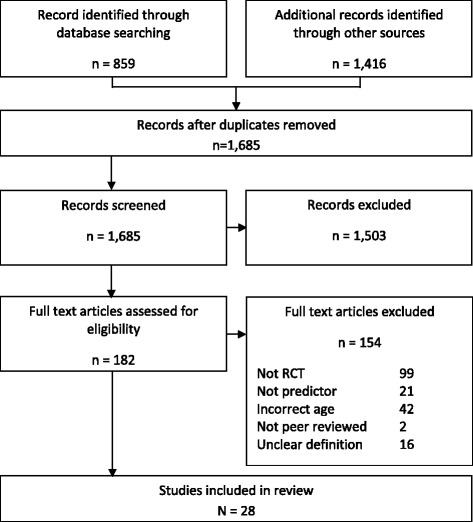
“Twenty-eight studies met the inclusion criteria [22-48].”
ResultInfluentialWho Drops Out of Early Head Start Home Visiting Programs?
Roggman, L. A., Cook, G. A., Peterson, C. A., & Raikes, H. H. (2008) · Early Education and Development · doi:10.1080/10409280701681870 · Cited by 109 · cited 6×
“ing a single parent is indicative of higher levels of stress and differing priorities because of this [43].”
BackgroundInfluentialStages of Parental Engagement in a Universal Parent Training Program
Eisner, M., & Meidert, U. (2011) · The Journal of Primary Prevention · doi:10.1007/s10935-011-0238-8 · Cited by 108 · cited 9×
“Twenty-eight studies met the inclusion criteria [22-48].”
BackgroundMethodInfluentialCui, Z., Seburg, E. M., Sherwood, N. E., Faith, M. S., & Ward, D. S. (2015) · Trials · doi:10.1186/s13063-015-1089-z · Cited by 108
Retention of Low Income Mothers in a Parenting Intervention Study
Katz, K. S., El-Mohandes, A. A. E., Johnson, D. M., Jarrett, M. H., Rose, A., & Cober, M. (2001) · Journal of Community Health · doi:10.1023/a:1010373113060 · Cited by 105 · cited 4×
“Katz KS, El-Mohandes PA, Johnson DM, Jarrett PM, Rose A and Cober M (2001) [37] 2001 Parenting intervention 12 months RCT individual Recruitment and retention USA 286 Community Home visits Parenting intervention to increase use of healthcare and to increase skills in providing safe and structured child rearing Non med…”
BackgroundInfluentialFirestone, P., & Witt, J. E. (1982) · Journal of Pediatric Psychology · doi:10.1093/jpepsy/7.2.209 · Cited by 94 · cited 9×
“Firestone and Witt, 1982 [33] 1 1 2 1 1 1 1 1 2 1 1 2 0 1 57 %”
BackgroundInfluentialDimensions of Parental Engagement in Home Visiting Programs: Exploratory Study
Wagner, M., Spiker, D., Inman Linn, M., & Hernandez, F. (2003) · Topics in Early Childhood Special Education · doi:10.1177/02711214030230040101 · Cited by 87 · cited 6×
“problems with childcare, lack of transportation, less regular work schedules [47] and more challenges than affluent families [45].”
BackgroundInfluentialCommittee on Pediatric Research (2000) · Pediatrics · doi:10.1542/peds.105.6.1349 · Cited by 82
Recruitment and Retention of Children in Behavioral Health Risk Factor Studies: REACH Strategies
Schöeppe, S., Oliver, M., Badland, H. M., Burke, M., & Duncan, M. J. (2013) · International Journal of Behavioral Medicine · doi:10.1007/s12529-013-9347-5 · Cited by 78
Shilling, V. M., Williamson, P. R., Hickey, H., Sowden, E., Beresford, M. W., Smyth, R. L., & Young, B. (2011) · PLoS ONE · doi:10.1371/journal.pone.0021604 · Cited by 78 · cited 1×
“Despite this, the majority of studies into recruitment and retention in RCTs are focussed on adult populations [10, 11].”
BackgroundImproving recruitment in clinical trials: why eligible participants decline
Brintnall-Karabelas, J., Sung, S., Cadman, M. E., Squires, C., Whorton, K., & Pao, M. (2011) · Journal of Empirical Research on Human Research Ethics · doi:10.1525/jer.2011.6.1.69 · Cited by 73 · cited 1×
“Previous studies have suggested that a greater understanding of who is more likely to decline trial participation could help to identify factors that are amenable to change and provide solutions for improving recruitment and retention [6].”
BackgroundPredictors of Enrollment and Retention in a Preventive Parenting Intervention for Divorced Families
Winslow, E. B., Bonds, D., Wolchik, S., Sandler, I., & Braver, S. (2009) · The Journal of Primary Prevention · doi:10.1007/s10935-009-0170-3 · Cited by 70 · cited 11×
“, 2009 [47] 2 2 2 1 2 1 Na 2 2 2 2 2 0 2 85 %”
BackgroundInfluentialFactors Differentiating Dropouts from Completers in a Longitudinal, Multicenter Clinical Trial
Moser, D. K., Dracup, K., & Doering, L. V. (2000) · Nursing Research · doi:10.1097/00006199-200003000-00008 · Cited by 69 · cited 4×
“, 2000 [41] Retention Unclear Medical X X X X ✔ X X”
BackgroundMethodInfluentialChecklist for the evaluation of research articles
DuRant, R. H. (1994) · Journal of Adolescent Health · doi:10.1016/1054-139x(94)90381-6 · Cited by 69 · cited 2×
“The literature reports specific reasons for ethnic minorities being excluded from research as mistrust due to events in history [50–52], language needs or discrimination [23], suspicion of intervention providers and Table 4 Quality assessment of articles (adapted from Durant [19] and von Elm et al.”
BackgroundMethodDaniels, L., Wilson, J. L., Mallan, K. M., Mihrshahi, S., Perry, R. A., Nicholson, J. M., & Magarey, A. (2012) · International Journal of Behavioral Nutrition and Physical Activity · doi:10.1186/1479-5868-9-129 · Cited by 68 · cited 10×
“Whilst the studies measured different levels of education including college [25], high school [28], university [30] and tertiary education Fig.”
BackgroundInfluentialRecruitment and Retention in a Clinical Trial for Low Birth Weight, Premature Infants
CONSTANTINE, W. L., HAYNES, C. W., Spiker, D., Kendall-Tackett, K. A., & Constantine, N. A. (1993) · Journal of Developmental & Behavioral Pediatrics · doi:10.1097/00004703-199302000-00001 · Cited by 49 · cited 10×
“Constantine WL, Haynes CW, Spiker D, Kendall-Tackett K and Constantine NA (1993) [26] 1993 3 year home visits, parent support groups and education program v normal care 3 years RCT individual Retention USA 885/1302 eligible Mixed - large urban tertiary care centres and satellite clinics for hard to reach Low birth wei…”
BackgroundResultInfluentialEiser, C., Davies, H., Jenney, M., & Glaser, A. (2005) · Child: Care, Health and Development · doi:10.1111/j.1365-2214.2005.00538.x · Cited by 45 · cited 1×
“Despite this, the majority of studies into recruitment and retention in RCTs are focussed on adult populations [10, 11].”
BackgroundChantler, T., Lees, A., Moxon, E. R., Mant, D., Pollard, A. J., & Fiztpatrick, R. (2007) · Qualitative Health Research · doi:10.1177/1049732306298561 · Cited by 41 · cited 1×
“Similarly, a qualitative vaccine research study found that parent’s decision making was impacted by how much experience a parent has in science and medicine, and therefore those with experience of research through education would be more likely to take part [56].”
BackgroundAre you busy for the next 5 years? Recruitment in the Childhood Asthma Prevention Study (CAPS)
Mihrshahi, S., Vukasin, N., FORBES, S., Wainwright, C., KRAUSE, W., Ampon, R. D., Mellis, C., Marks, G. B., & Peat, J. K. (2002) · Respirology · doi:10.1046/j.1440-1843.2002.00384.x · Cited by 37 · cited 7×
“, 2002 [39] Recruitment Community Medical X ✔ X X”
BackgroundInfluentialMEDICAL RESEARCH COUNCIL MULTICENTRE OTITIS MEDIA STUDY GROUP (2001) · Clinical Otolaryngology · doi:10.1046/j.1365-2273.2001.00495.x · Cited by 37
Predicting Attrition in a Pediatric Asthma Intervention Study
Zebracki, K. (2003) · Journal of Pediatric Psychology · doi:10.1093/jpepsy/jsg042 · Cited by 36 · cited 10×
“, 2003 [48] Recruitment Health Medical X X ✔ X X X X”
BackgroundMethodInfluentialDriscoll, K. A., Killian, M., Johnson, S. B., Silverstein, J. H., & Deeb, L. C. (2009) · Contemporary Clinical Trials · doi:10.1016/j.cct.2009.01.008 · Cited by 30 · cited 2×
“Thus, trials involving children and families can potentially have a greater number of complexities influencing recruitment and retention than adult populations [7].”
BackgroundRamos‐Gomez, F., Chung, L. H., Beristain, R. G., Santo, W., Jue, B., Weintraub, J. A., & Gansky, S. A. (2008) · Clinical Trials · doi:10.1177/1740774508093980 · Cited by 24 · cited 2×
“[42] reported that Mexican Americans were more likely to remain on their practice based dental prevention trial than other Hispanic or nonHispanic populations.”
BackgroundStrategies to reduce attrition in randomised trials
Brueton, V., Tierney, J., Stenning, S., Nazareth, I., Meredith, S., Harding, S., & Rait, G. (2011) · Trials · doi:10.1186/1745-6215-12-s1-a128 · Cited by 24 · cited 1×
“Several recruitment and retention strategies have been identified as successful in systematic reviews, however the focus has been on adult populations [58-61] or disease-specific areas of children’s research [62, 63].”
BackgroundVermaire, J. H., van Loveren, C., Poorterman, J. H. G., & Hoogstraten, J. (2011) · Caries Research · doi:10.1159/000325742 · Cited by 19 · cited 6×
“Ethnic minorities were less likely to enrol in five of the six studies that found it to be a significant predictor [23, 25, 31, 36, 49].”
BackgroundInfluentialWho joins a preventive intervention? How risk status predicts enrollment
Ireys, H. T., DeVet, K. A., & Chernoff, R. G. (2001) · Journal of Community Psychology · doi:10.1002/jcop.1026 · Cited by 18 · cited 7×
“…Community Non- medical X ✔ ✔ ✔ Eisner M and Meidert U, 2011 [31] Recruitment Community Non- medical ✔ ✔ ✔ X ✔ Heinrichs et al., 2005 [35] Recruitment Community Non- medical X ✔ ✔ X Ireys et al., 2001 [36] Recruitment Mixed Medical ✔ ✔ X Mihrshahi et al., 2002 [39] Recruitment…”
BackgroundInfluentialByrnes, H. F., Miller, B. A., Aalborg, A. E., & Keagy, C. D. (2011) · The Journal of Behavioral Health Services & Research · doi:10.1007/s11414-011-9260-0 · Cited by 15 · cited 4×
“…of family members Number of children N'hood high school drop out Density of n'hood networks Baker et al., 2011 [23] Recruitment Community Non- medical ✔ ✔ X X Byrnes et al., 2012 [25] Recruitment Health Non- medical ✔ ✔ ✔ X ✔ Constantine et al., 1993 [26] Recruitment Mixed Non- medical…”
BackgroundInfluentialRepresentativeness of Trial Populations: An Example from a Trial of Adenotonsillectomy in Children
van den Akker, E. H., Rovers, M. M., van Staaij, B. K., Hoes, A. W., & Schilder, A. G. (2003) · Acta Oto-Laryngologica · doi:10.1080/0036554021000028096 · Cited by 10
Strategies to reduce attrition from randomised trials: A systematic review.
Brueton, V. C., Rait, G., Tierney, J. F., et al. (2010) · Research Portal (King's College London) · Cited by 3
Research works printed but not linked: 1
- Sullivan J Subject recruitment and retention: barriers to success 2004
Cited by
Reporting of Sociodemographic Variables in Randomized Clinical Trials, 2014-2020
Orkin, A. M., Nicoll, G., Persaud, N., & Pinto, A. D. (2021) · JAMA Network Open · doi:10.1001/jamanetworkopen.2021.10700 · Cited by 63
Guagliano, J. M., Armitage, S. M., Brown, H. E., Coombes, E., Fusco, F., Hughes, C., Jones, A. P., Morton, K. L., & van Sluijs, E. M. F. (2020) · International Journal of Behavioral Nutrition and Physical Activity · doi:10.1186/s12966-020-01025-3 · Cited by 56
Measuring retention within the adolescent brain cognitive development (ABCD)SM study
Ewing, S. W. F., Dash, G. F., Thompson, W. K., Reuter, C., Diaz, V. G., Anokhin, A. P., Chang, L., Cottler, L. B., Dowling, G. J., LeBlanc, K. H., et al. (2022) · Developmental Cognitive Neuroscience · doi:10.1016/j.dcn.2022.101081 · Cited by 55
“Consistent with past research on retention in studies with parents and children (Robinson et al., 2016), parental education level and employment status emerged as the most consistent and potentially useful indicators of participants at risk for late visits, missed visits, and study withdrawal.”
BackgroundInfluentialBencheva, V., Mann, N., Rombey, T., Pieper, D., & Schmiedl, S. (2024) · Systematic Reviews · doi:10.1186/s13643-024-02698-8 · Cited by 52
“Robinson et al. (2016) conducted a broad analysis that encompassed all randomized clinical trials (RCTs) involving pediatric populations, differentiating between medical and non-medical studies without further categorization into drug-related or non-drug-related studies [26].”
InfluentialLove, P., Laws, R., Litterbach, E., & Campbell, K. J. (2018) · Nutrients · doi:10.3390/nu10040509 · Cited by 44
Metadata
- Authors
- Robinson, L., Adair, P., Coffey, M., Harris, R., & Burnside, G.
- Affiliations
- University of Liverpool (GB)
- University of Strathclyde (GB)
- University of Salford (GB)
- Corresponding author
- Robinson, Louise
- Venue
- Trials
- Published
- 2016-06-22
- Volume
- 17
- Issue
- 1
- Pages
- 294-294
- ISSN
- 1745-6215 (ISSN-L)
- PMC
- PMC4918126
- OpenAlex
- W2469221593
- Semantic Scholar
- 130bef4c2a3cb83ac36762b91033ea98fec3f0f2
- Cited by
- 92
- References
- 67
- Citations by year
- 2026: 13 · 2025: 1 · 2024: 14 · 2023: 17 · 2022: 9 · 2021: 10 · 2020: 13 · 2019: 8 · 2018: 5 · 2017: 2
- FWCI
- 0.75
- Type
- journal article
- Language
- en
- Open access
- gold
- doi.org
- Licence
- cc-by
- Locations
- Trials (publishedVersion, cc-by)
- Europe PMC (PubMed Central) (publishedVersion, cc-by)
- PubMed Central (publishedVersion, cc-by)
- PubMed (publishedVersion)
- Strathprints: The University of Strathclyde institutional repository (University of Strathclyde) (acceptedVersion)
- University of Salford Institutional Repository (University of Salford) (submittedVersion, cc-by)
- Research Portal (Queen's University Belfast) (submittedVersion, cc-by)
- Topics
- Health Sciences › Medicine › Public Health, Environmental and Occupational Health › Ethics in Clinical Research
- Physical Sciences › Mathematics › Statistics and Probability › Statistical Methods in Clinical Trials
- Social Sciences › Sociology and Political Science › Children's Rights and Participation
- Keywords
- participant recruitment, participant retention, research with children, randomized controlled trials, parental characteristics, socioeconomic status, ethnic minorities, barriers to research participation, family involvement, sociodemographic predictors, reporting quality
- MeSH terms
- Age Factors, Child, Child Behavior, Child, Preschool, Family Characteristics, Female, Humans, Health Knowledge, Attitudes, Practice, Male, Parents, Patient Dropouts, Pediatrics, Risk Factors, Socioeconomic Factors, Health Behavior, Odds Ratio, Randomized Controlled Trials as Topic, Sample Size, Patient Selection, Research Subjects
About these checks
Registry, retraction, Cites and statistics results are computed, not judged, with one exception: a printed reference that no index lists is read once by a model before it counts as a citation error. Claims are extracted by a model and kept only when their quote appears verbatim in the text; each cited source is then checked, with a model’s help, for whether it says what the claim relies on. Those verdicts can be wrong — read the claim’s quote and the cited source before relying on one.
Statistics and arithmetic are recomputed, not judged.
Confidence bands are shown only for fields calibrated on our annotated test set. None is calibrated yet, so no band is shown.
What counts as a claim ›How we measure confidence ›How we check this ›
Are you an author, or do you see a problem with this page? Request a review
Data sources
Bibliographic data: Semantic Scholar, OpenAlex, Crossref.
Contains information from the Semantic Scholar Academic Graph Datasets, made available under the ODC Attribution License (ODC-BY 1.0).
Semantic Scholar’s data is described in: Kinney, R., et al. (2023). The Semantic Scholar Open Data Platform. arXiv:2301.10140.
