

Blinding outcome assessors in randomised controlled trials of psychological interventions: how is it done? A narrative review
Open accessThe DOI matches its Crossref record; 81 of the 82 references it cites were found in a registry or an index; 20 of the 39 sources its claims cite were checked for support.
Abstract
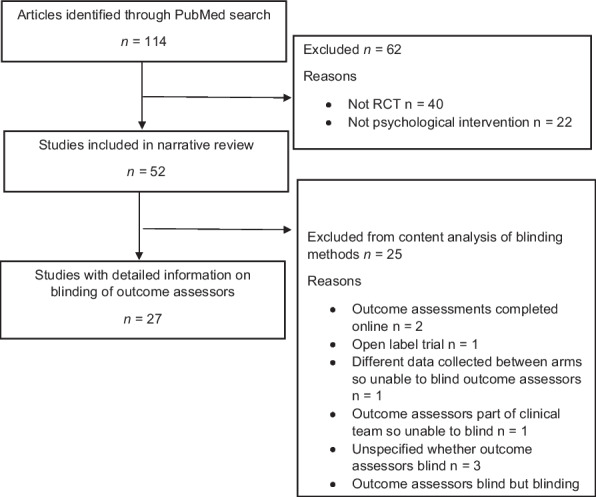
Background Blinding of patients, clinicians and outcome assessors is a key measure for minimising bias in randomised controlled trials (RCTs). In trials of psychological interventions, where outcome measures often use subjective measures, the blinding of outcome assessors is particularly important. However, there are few guidelines on how blinding of outcome assessors can be achieved in practice. The aim of this study was to identify procedures used for blinding outcome assessors in RCTs of psychological interventions. Methods A narrative review was conducted through a PubMed database search covering the period from January 2023 to December 2024, restricted to studies published in the six highest impact factor journals in the field of psychiatry and mental health. Studies were included if they were (1) an RCT and (2) focused on psychological intervention(s). Descriptive statistics were used to summarise the study characteristics, and content analysis of the published reports was conducted to describe the methods used to maintain blinding of outcome assessors. Results Fifty-two eligible studies were identified which reported on RCTs of psychological interventions. Of those, the majority reported that outcome assessors were blinded to participants’ treatment allocation ( n = 44, 85%). Of the studies with blinded outcome assessors, 27 reported information on the procedures used to maintain blinding (61%). Methods for maintaining blinding were avoiding unblinding by participants…
Overview
CoChat Summary
## TL;DR
This narrative review examined how outcome assessor blinding was reported in 52 RCTs of psychological interventions published in six high-impact psychiatry and mental health journals from January 2023 to December 2024. Most studies reported blinded outcome assessors (44/52, 85%), but 39% of studies did not provide sufficient detail on how blinding was maintained in practice.
## Key findings
- The review included 52 eligible RCTs; 44/52 (85%) reported that outcome assessors were blind to participants’ treatment allocation.
- Of the 44 blinded studies, only 27 (61%) reported any procedures used to maintain blinding.
- The most commonly reported blinding procedures were:
- avoiding unblinding by participants (n = 16),
- tracking and assessing blinding efficacy (n = 12),
- replacing unblinded assessors (n = 11),
- managing communication within the team (n = 9),
- clear designation of blind/unblind staff roles (n = 8),
- and management of records (n = 6).
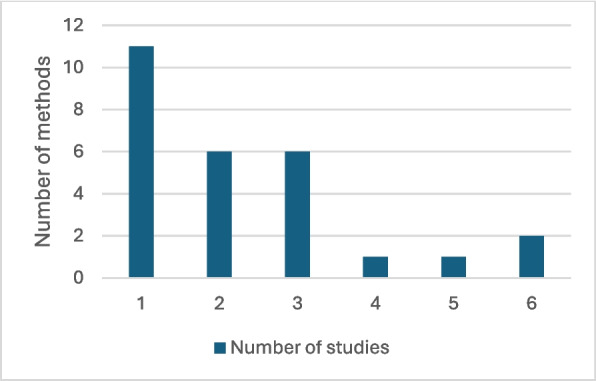
- Most studies reported a single blinding method (n = 11, 41%); only 2 studies reported using all six blinding methods identified.
## Methods
- Narrative review using a PubMed search covering January 2023 to December 2024, restricted to studies in six high-impact psychiatry/mental health journals.
- Included studies had to be RCTs focused on psychological interventions; 52 studies met criteria after screening 114 potentially relevant articles.
- The authors used descriptive statistics to summarize reporting of blinded outcome assessors and conventional content analysis to classify blinding procedures reported in full texts and supplementary materials.
## Limitations
- The paper states the review was restricted to RCTs in high-impact journals, so it does not provide a comprehensive review of all relevant studies.
- The authors note it is unknown how representative these findings are of RCTs published in lower-ranking journals.
- The review examined only published RCT reports and supplementary materials; it is possible additional blinding methods were described elsewhere, such as in trial protocols or could have been learned by contacting corresponding authors.
Model-written summary. Check it against the paper before relying on it.
Integrity signals
Registry
Cites
Statistics
Figures
Verification
Claims the paper makes
13 Valid · 0 Not valid · 5 Not checked · 25 Own results and interpretations
The cited sources support only part of this claim — read each source’s verdict below.
In the paper
“only two studies reported using all six blinding methods identified in the content analysis [52, 69].”
§ Blinding outcome assessors in randomised controlled trials of psychological interventions: how is it done? A narrative review > Results > Number of blinding methods reported per study
What the sources say
- Partly supportedcites [52] Lincoln TM, Schlier B, Müller R, Hayward M, Fladung AK, Bergmann N, et al. Reducing distress from auditory verbal hallucinations: a multicenter, parallel, single-blind, randomized controlled feasibility trial of relating therapy. Psychother Psychosom. 2024;93(5):328–39. 39168112 PMC11469652 sourceExperimental — accuracy not yet measured
The Methods section (Randomization and Masking; page unavailable) reports several masking measures: restricted access to allocation information, blinded assessors, and reassignment to another assessor after unblinding. It does not identify six blinding methods or establish that this trial used all six. As one of two cited studies, it also cannot establish the total count. (LLM, conf=0.76)
- Partly supportedcites [69] Waite F, Černis E, Kabir T, Iredale E, Johns L, Maughan D, et al. A targeted psychological treatment for sleep problems in young people at ultra-high risk of psychosis in England (SleepWell): a parallel group, single-blind, randomised controlled feasibility trial. Lancet Psychiatry. 2023;10(9):706–18. 37562423 sourceExperimental — accuracy not yet measured
The Randomisation and masking section (page not available) reports that trial assessors were masked, that the coordinator informed patients of their allocation, and that another masked assessor completed an assessment if allocation was revealed. It does not identify six blinding methods or establish the citing paper’s count of two studies. (LLM, conf=0.80)
plain- Asserted: passes — The authors put it forward as true.
- Checkable: passes — It can be checked against evidence.
- Load-bearing: unclear — It is unclear whether the paper’s conclusions depend on it.
- Based: passes — The paper gives a reason why it holds.
- Partly supported
The sources with a verdict support this claim; the rest weren’t checked yet, have no full text we could read, or their verdicts aren’t rated yet.
In the paper
“Of the remaining eight studies, two collected primary outcome data online which meant blinded outcome assessors were not needed [25, 66].”
§ Blinding outcome assessors in randomised controlled trials of psychological interventions: how is it done? A narrative review > Results > Blinding of outcome assessors
What the sources say
- Not checked — no full text of the sourcecites [25] Babiy Z, Layton H, Savoy CD, Xie F, Brown JSL, Bieling PJ, et al. One-day peer-delivered cognitive behavioral therapy-based workshops for postpartum depression: a randomized controlled trial. Psychother Psychosom. 2024;93(2):129–40. 38272007 source
- Supportedcites [66] Slade M, Rennick-Egglestone S, Elliott RA, Newby C, Robinson C, Gavan SP, et al. Effectiveness and cost-effectiveness of online recorded recovery narratives in improving quality of life for people with non-psychotic mental health problems: a pragmatic randomized controlled trial. World Psychiatry. 2024;23(1):101–12. 38214639 PMC10785987 source
The Follow-up and usage data collection section states that participants completed web-based questionnaires for the primary outcome at week 52. This supports citing the trial as one of the studies that collected primary-outcome data online, without an outcome assessor administering the questionnaire; the paper does not establish the citing review’s count of eight studies. (LLM, conf=0.88)
plainstates a cause- Asserted: passes — The authors put it forward as true.
- Checkable: passes — It can be checked against evidence.
- Load-bearing: unclear — It is unclear whether the paper’s conclusions depend on it.
- Based: passes — The paper gives a reason why it holds.
The sources with a verdict support this claim; the rest weren’t checked yet, have no full text we could read, or their verdicts aren’t rated yet.
In the paper
“Three studies reported that outcome assessors were unblinded (reasons were open-label trial [41], differences in the data collected between arms [34] and outcome assessors part of the clinical team [70]).”
§ Blinding outcome assessors in randomised controlled trials of psychological interventions: how is it done? A narrative review > Results > Blinding of outcome assessors
What the sources say
- Not checked — no full text of the sourcecites [41] Gardner DM, Turner JP, Magalhaes S, Rajda M, Murphy AL. Patient self-guided interventions to reduce sedative use and improve sleep: the YAWNS NB randomized clinical trial. JAMA Psychiatr. 2024;81(12):1187–97. PMC11411453 39292452 source
- Supportedcites [34] Creswell C, Taylor L, Giles S, Howitt S, Radley L, Whitaker E, et al. Digitally augmented, parent-led CBT versus treatment as usual for child anxiety problems in child mental health services in England and Northern Ireland: a pragmatic, non-inferiority, clinical effectiveness and cost-effectiveness randomised controlled trial. Lancet Psychiatry. 2024;11(3):193–209. 38335987 source
The limitations discussion states that researchers collecting data were not blind to treatment arm because some therapist-reported data differed between arms. This supports the part of the citing sentence attributed to this study [34]; the other two studies are not attributed to this source. (LLM, conf=0.91)
- Supportedcites [70] Walburg FS, van Meijel B, Hoekstra T, Kol J, Pape LM, de Joode JW, et al. Effectiveness of a lifestyle intervention for people with a severe mental illness in Dutch outpatient mental health care: a randomized clinical trial. JAMA Psychiat. 2023;80(9):886–94. PMC10285675 37342055 source
The Methods > Assessments section says trained FACT team staff conducted assessments. The Discussion > Strengths and Limitations section says blinding measurement assessors was not feasible. Together, these support the part of the citing sentence attributed to this study: its assessors were unblinded and were members of the clinical team. (LLM, conf=0.93)
plainn = 3- Asserted: passes — The authors put it forward as true.
- Checkable: passes — It can be checked against evidence.
- Load-bearing: unclear — It is unclear whether the paper’s conclusions depend on it.
- Based: passes — The paper gives a reason why it holds.
The cited sources support only part of this claim — read each source’s verdict below.
In the paper
“Studies that provided extensive detail about all blinding methods strengthen confidence in the validity of findings [52, 69].”
§ Blinding outcome assessors in randomised controlled trials of psychological interventions: how is it done? A narrative review > Discussion
What the sources say
- Partly supportedcites [52] Lincoln TM, Schlier B, Müller R, Hayward M, Fladung AK, Bergmann N, et al. Reducing distress from auditory verbal hallucinations: a multicenter, parallel, single-blind, randomized controlled feasibility trial of relating therapy. Psychother Psychosom. 2024;93(5):328–39. 39168112 PMC11469652 sourceExperimental — accuracy not yet measured
The Methods > Randomization and Masking section (page unavailable) describes assessor blinding, ten instances of unblinding, and how subsequent assessments were remasked. It does not say that detailing all blinding methods strengthens confidence in the validity of findings; that broader judgment is not supported by this paper. (LLM, conf=0.78)
- Partly supportedcites [69] Waite F, Černis E, Kabir T, Iredale E, Johns L, Maughan D, et al. A targeted psychological treatment for sleep problems in young people at ultra-high risk of psychosis in England (SleepWell): a parallel group, single-blind, randomised controlled feasibility trial. Lancet Psychiatry. 2023;10(9):706–18. 37562423 sourceExperimental — accuracy not yet measured
The Randomisation and masking section describes how assessors were kept masked, what happened when allocation was revealed, and three occasions of unmasking. It does not address all blinding methods or state that detailed reporting of blinding strengthens confidence in the validity of findings. (LLM, conf=0.78)
boostedstates a cause- Asserted: passes — The authors put it forward as true.
- Checkable: passes — It can be checked against evidence.
- Load-bearing: passes — The paper’s conclusions depend on it.
- Based: passes — The paper gives a reason why it holds.
- Partly supported
The sources with a verdict support this claim; the rest weren’t checked yet, have no full text we could read, or their verdicts aren’t rated yet.
In the paper
“Three studies did not specify whether outcome assessors were blinded [28, 46, 63].”
§ Blinding outcome assessors in randomised controlled trials of psychological interventions: how is it done? A narrative review > Results > Blinding of outcome assessors
What the sources say
- Not checked — no full text of the sourcecites [28] Boudreaux ED, Larkin C, Vallejo Sefair A, Ma Y, Li YF, Ibrahim AF, et al. Effect of an emergency department process improvement package on suicide prevention: the ED-SAFE 2 cluster randomized clinical trial. JAMA Psychiat. 2023;80(7):665–74. PMC10193260 37195676 source
- Not checked — no full text of the sourcecites [46] Hertenstein E, Trinca E, Schneider CL, Fehér KD, Johann AF, Nissen C. Acceptance and commitment therapy, combined with bedtime restriction, versus cognitive behavioral therapy for insomnia: a randomized controlled pilot trial. Psychother Psychosom. 2024;93(2):114–28. 38417415 source
- Supportedcites [63] Seinsche RJ, Fricke S, Neudert MK, Zimmer RI, Stark R, Hermann A. Emotional changes during imagery rescripting of aversive social memories in social anxiety disorder: a randomized controlled trial. Psychother Psychosom. 2024;93(4):264–70. 38934153 PMC11332311 source
The Materials and Methods (Participants; page unavailable) state that participants were blind to treatment assignment, but do not specify whether outcome assessors were blinded. This supports the claim as it applies to this cited study; the other two studies are outside the scope of this citation. (LLM, conf=0.88)
plainn = 3- Asserted: passes — The authors put it forward as true.
- Checkable: passes — It can be checked against evidence.
- Load-bearing: unclear — It is unclear whether the paper’s conclusions depend on it.
- Based: passes — The paper gives a reason why it holds.
19 more claims · 2 with their cited sources checked
Create a free account to see all 43 claims and to verify the 1 reference still open.
- It may state two separate claims as one. 7
- Probably not a substantial claim. 13
- The quote only partly states this claim. 1
Citations
Cites
Graneheim, U. H., & Lundman, B. (2004) · Nurse Education Today · doi:10.1016/j.nedt.2003.10.001 · Cited by 20,772
CONSORT 2010 statement: Updated guidelines for reporting parallel group randomised trials
Schulz, K. F., Altman, D. G., & Moher, D. (2010) · Journal of Pharmacology and Pharmacotherapeutics · doi:10.4103/0976-500x.72352 · Cited by 2,165
Hariton, E., & Locascio, J. J. (2018) · BJOG: An International Journal of Obstetrics & Gynaecology · doi:10.1111/1471-0528.15199 · Cited by 1,604
Blinding in randomised trials: hiding who got what
Schulz, K. F., & Grimes, D. A. (2002) · The Lancet · doi:10.1016/s0140-6736(02)07816-9 · Cited by 952 · cited 1×
“It assumes that outcome assessors’ guesses of treatment allocation should be equivalent to those that would be found by chance if blinding efforts have been successful [20].”
Assessment of blinding in clinical trials
Bang, H., Ni, L., & Davis, C. E. (2004) · Controlled Clinical Trials · doi:10.1016/j.cct.2003.10.016 · Cited by 682 · cited 1×
“Successful blinding in RCTs ensures the validity and credibility of results from RCTs [4, 5].”
Hróbjartsson, A., Thomsen, A. S. S., Emanuelsson, F., Tendal, B., Hilden, J., Boutron, I., Ravaud, P., & Brorson, S. (2013) · Canadian Medical Association Journal · doi:10.1503/cmaj.120744 · Cited by 527 · cited 2×
“Given exaggerated treatment effects when outcome assessors are unblinded [6, 7], it is crucial that sufficient detail on blinding methods is reported in RCTs so that conclusions drawn from these studies can be made with confidence [14].”
CONSORT 2025 statement: updated guideline for reporting randomised trials
Hopewell, S., Chan, A.-W., Collins, G. S., Hróbjartsson, A., Moher, D., Schulz, K. F., Tunn, R., Aggarwal, R., Berkwits, M., Berlin, J. A., et al. (2025) · The Lancet · doi:10.1016/s0140-6736(25)00672-5 · Cited by 510 · cited 2×
“The Consolidated Standards of Reporting Trials (CON-SORT) statement defines a minimum set of items to be included in the reporting of RCTs, and is endorsed globally by hundreds of journals, and has been associated with improvements in the reporting of RCTs [10].”
Hrobjartsson, A., Thomsen, A. S. S., Emanuelsson, F., Tendal, B., Hilden, J., Boutron, I., Ravaud, P., & Brorson, S. (2012) · BMJ · doi:10.1136/bmj.e1119 · Cited by 483 · cited 3×
“Given exaggerated treatment effects when outcome assessors are unblinded [6, 7], it is crucial that sufficient detail on blinding methods is reported in RCTs so that conclusions drawn from these studies can be made with confidence [14].”
Reporting methods of blinding in randomized trials assessing nonpharmacological treatments
Boutron, I., Guittet, L., Estellat, C., Moher, D., Hróbjartsson, A., & Ravaud, P. (2007) · PLoS Medicine · doi:10.1371/journal.pmed.0040061 · Cited by 389 · cited 4×
“In pharmaceutical research, blinding is relatively straightforward, as the interventions are indistinguishable [5, 8].”
InfluentialSavović, J., Turner, R. M., Mawdsley, D., Jones, H. E., Beynon, R., Higgins, J. P. T., & Sterne, J. A. C. (2018) · American Journal of Epidemiology · doi:10.1093/aje/kwx344 · Cited by 382
Strategies to improve retention in randomised trials: a Cochrane systematic review and meta-analysis
Brueton, V. C., Tierney, J. F., Stenning, S., Meredith, S., Harding, S., Nazareth, I., & Rait, G. (2014) · BMJ Open · doi:10.1136/bmjopen-2013-003821 · Cited by 253 · cited 1×
“It is, however, important to consider the potential impact on retention rates, which often presents a significant challenge in RCTs [81].”
Mills, E. J., Wu, P., Gagnier, J., & Devereaux, P. J. (2005) · Contemporary Clinical Trials · doi:10.1016/j.cct.2005.02.008 · Cited by 216
Devereaux, P. J., Choi, P. T.-L., El-Dika, S., Bhandari, M., Montori, V. M., Schünemann, H. J., Garg, A. X., Busse, J. W., Heels-Ansdell, D., Ghali, W. A., et al. (2004) · Journal of Clinical Epidemiology · doi:10.1016/j.jclinepi.2004.03.017 · Cited by 209 · cited 1×
“Blinding procedures are not always reported even when procedures have been adequately implemented [83, 84].”
Hoge, E. A., Bui, E., Mete, M., Dutton, M. A., Baker, A. W., & Simon, N. M. (2023) · JAMA Psychiatry · doi:10.1001/jamapsychiatry.2022.3679 · Cited by 182
Who is blinded in randomized clinical trials? A study of 200 trials and a survey of authors
Haahr, M. T., & Hróbjartsson, A. (2006) · Clinical Trials · doi:10.1177/1740774506069153 · Cited by 150 · cited 1×
“While the importance of blinding in psychological interventions is undisputed, research has found poor reporting of blinding, which compromises critical assessment of the quality of RCTs [12].”
Commentary: Measuring the success of blinding in RCTs: don't, must, can't or needn't?
Sackett, D. L. (2007) · International Journal of Epidemiology · doi:10.1093/ije/dym088 · Cited by 150 · cited 2×
“However, such assessments cannot distinguish between blindness and hunches about the efficacy of the intervention [21].”
Recruitment, Retention, and Blinding in Clinical Trials
Page, S. J., & Persch, A. C. (2013) · American Journal of Occupational Therapy · doi:10.5014/ajot.2013.006197 · Cited by 148 · cited 6×
“This is where outcomes are influenced by the assessors’ conscious or unconscious bias, which often favours the experimental intervention [6–8].”
InfluentialJuul, S., Gluud, C., Simonsen, S., Frandsen, F. W., Kirsch, I., & Jakobsen, J. C. (2021) · BMJ Evidence-Based Medicine · doi:10.1136/bmjebm-2020-111407 · Cited by 135 · cited 10×
“Given exaggerated treatment effects when outcome assessors are unblinded [6, 7], it is crucial that sufficient detail on blinding methods is reported in RCTs so that conclusions drawn from these studies can be made with confidence [14].”
InfluentialEvidence-based recommendations for blinding in surgical trials
Probst, P., Zaschke, S., Heger, P., Harnoss, J. C., Hüttner, F. J., Mihaljevic, A. L., Knebel, P., & Diener, M. K. (2019) · Langenbeck's Archives of Surgery · doi:10.1007/s00423-019-01761-6 · Cited by 121 · cited 1×
“Bias is a systematic error in the conduct of a trial that leads to deviation of the measured effect from the true effect of an intervention [2].”
Baethge, C., Assall, O. P., & Baldessarini, R. J. (2013) · Psychotherapy and Psychosomatics · doi:10.1159/000346144 · Cited by 85 · cited 1×
“A systematic review of RCTs published between 2000 and 2010 of interventions for schizophrenia and affective disorders found blinding was rarely reported or assessed [13].”
Friedberg, J. P., Lipsitz, S. R., & Natarajan, S. (2010) · Patient Education and Counseling · doi:10.1016/j.pec.2009.04.009 · Cited by 82 · cited 6×
“…assessors who are not part of the research team [19], physical separation of outcome assessors and clinicians delivering the intervention [8, 14, 18, 19], or where this is not possible, ensuring vigilance in what is discussed when clinicians and outcome assessors are working in shared spaces…”
InfluentialSloan, D. M., Marx, B. P., Acierno, R., Messina, M., Muzzy, W., Gallagher, M. W., Litwack, S., & Sloan, C. (2023) · JAMA Psychiatry · doi:10.1001/jamapsychiatry.2023.2810 · Cited by 80 · cited 3×
“Most commonly, studies reported locating outcome assessors and clinicians at different locations [35, 40, 42, 52, 62, 67, 69] and asked clinicians to refrain from discussing details of individual treatments with outcome assessors [35, 52, 62, 72].”
Effect of Brief Interpersonal Therapy on Depression During Pregnancy: A Randomized Clinical Trial
Hankin, B. L., Demers, C. H., Hennessey, E. P., Perzow, S. E. D., Curran, M. C., Gallop, R., Hoffman, M. C., & Davis, E. P. (2023) · JAMA Psychiatry · doi:10.1001/jamapsychiatry.2023.0702 · Cited by 78
Brief Cognitive Behavioral Therapy for Suicidal Inpatients: A Randomized Clinical Trial
Diefenbach, G. J., Lord, K. A., Stubbing, J., Rudd, M. D., Levy, H. C., Worden, B. L., Sain, K. S., Bimstein, J. G., Rice, T. B., Everhardt, K., et al. (2024) · JAMA Psychiatry · doi:10.1001/jamapsychiatry.2024.2349 · Cited by 77 · cited 2×
“This was done through outcome assessors recording when they were unblinded [36, 40, 56, 60, 69], through them guessing the allocation of participants [30, 31, 35, 71] or both [27, 37, 52].”
Ehlers, A., Wild, J., Warnock-Parkes, E., Grey, N., Murray, H., Kerr, A., Rozental, A., Thew, G., Janecka, M., Beierl, E. T., et al. (2023) · The Lancet Psychiatry · doi:10.1016/s2215-0366(23)00181-5 · Cited by 68
Bryant, R. A., Dawson, K. S., Azevedo, S., Yadav, S., Cahill, C., Kenny, L., Maccallum, F., Tran, J., Rawson, N., Tockar, J., et al. (2023) · The Lancet Psychiatry · doi:10.1016/s2215-0366(22)00368-6 · Cited by 59 · cited 5×
“Several studies tested the efficacy of blinding through asking outcome assessors to guess the allocation of participants [27, 30, 31, 35, 37, 52, 71].”
InfluentialQualitative Methods and Process Evaluation in Clinical Trials Context: Where to Head to?
Cheng, K. K. F., & Metcalfe, A. (2018) · International Journal of Qualitative Methods · doi:10.1177/1609406918774212 · Cited by 57 · cited 1×
“Similarly, qualitative process evaluations are now commonplace within RCTs of psychological interventions [79], typically involving in-depth interviews with trial participants which are then transcribed.”
Hróbjartsson, A., Pildal, J., Chan, A.-W., Haahr, M. T., Altman, D. G., & Gøtzsche, P. C. (2009) · Journal of Clinical Epidemiology · doi:10.1016/j.jclinepi.2009.04.003 · Cited by 56 · cited 1×
“Blinding procedures are not always reported even when procedures have been adequately implemented [83, 84].”
Lowe, C. M., Wilson, M., Sackley, C., & Barker, K. (2011) · Clinical Rehabilitation · doi:10.1177/0269215510380824 · Cited by 50 · cited 5×
“These approaches overlap with those reported in previous studies [8, 14, 18, 19, 23] and reflect the many considerations required to ensure blinding of outcome assessors.”
InfluentialMcGorry, P. D., Mei, C., Amminger, G. P., Yuen, H. P., Kerr, M., Spark, J., Wallis, N., Polari, A., Baird, S., Buccilli, K., et al. (2023) · JAMA Psychiatry · doi:10.1001/jamapsychiatry.2023.1947 · Cited by 48 · cited 2×
“This was done through outcome assessors recording when they were unblinded [36, 40, 56, 60, 69], through them guessing the allocation of participants [30, 31, 35, 71] or both [27, 37, 52].”
Dialectical Behavior Therapy for Adolescents With Bipolar Disorder: A Randomized Clinical Trial
Goldstein, T. R., Merranko, J., Rode, N., Sylvester, R., Hotkowski, N., Fersch-Podrat, R., Hafeman, D. M., Diler, R., Sakolsky, D., Franzen, P., et al. (2024) · JAMA Psychiatry · doi:10.1001/jamapsychiatry.2023.3399 · Cited by 48 · cited 3×
“Most commonly, studies reported locating outcome assessors and clinicians at different locations [35, 40, 42, 52, 62, 67, 69] and asked clinicians to refrain from discussing details of individual treatments with outcome assessors [35, 52, 62, 72].”
Wong, S. Y. S., Chan, S. K. C., Yip, B. H. K., Wang, W., Lo, H. H. M., Zhang, D., & Bögels, S. M. (2023) · Psychotherapy and Psychosomatics · doi:10.1159/000534962 · Cited by 47
Boudreaux, E. D., Larkin, C., Vallejo Sefair, A., Ma, Y., Li, Y. F., Ibrahim, A. F., Zeger, W., Brown, G. K., Pelletier, L., Miller, I., et al. (2023) · JAMA Psychiatry · doi:10.1001/jamapsychiatry.2023.1304 · Cited by 46 · cited 1×
“Three studies did not specify whether outcome assessors were blinded [28, 46, 63].”
Miller, M. B., Carpenter, R. W., Freeman, L. K., DUNSIGER, S. I., McGeary, J. E., Borsari, B. E., McCrae, C. S., Arnedt, J. T., Korte, P. T., Merrill, J. E., et al. (2023) · JAMA Psychiatry · doi:10.1001/jamapsychiatry.2023.1971 · Cited by 46
Strauss, C., Bibby-Jones, A.-M., Jones, F., Byford, S., Heslin, M., Parry, G., Barkham, M., Lea, L., Crane, R., de Visser, R., et al. (2023) · JAMA Psychiatry · doi:10.1001/jamapsychiatry.2023.0222 · Cited by 45
Creswell, C., Taylor, L., Giles, S., Howitt, S., Radley, L., Whitaker, E., Brooks, E., Knight, F., Raymont, V., Hill, C., et al. (2024) · The Lancet Psychiatry · doi:10.1016/s2215-0366(23)00429-7 · Cited by 45 · cited 2×
“For instance, if measures are used that are only applicable to the experimental arm [34] or measures that ask about treatment, such as measures of healthcare use for economic evaluations [80].”
Cooperman, N. A., Lu, S.-E., Hanley, A. W., Puvananayagam, T., Dooley-Budsock, P., Kline, A., & Garland, E. L. (2024) · JAMA Psychiatry · doi:10.1001/jamapsychiatry.2023.5138 · Cited by 44 · cited 2×
“…that tasks were assigned according to blinding status, such as having an unblinded team member notify participants of their randomisation outcome [33, 68, 69], clinicians O u t c o m e a ss e ss o r u n b l i n d e d b y h a v i n g d u t i e s r e l a t i n g t o t r e a t m e n t • O u t c o m…”
Assmann, N., Schaich, A., Arntz, A. R., Wagner, T., Herzog, P., Alvarez‐Fischer, D., Sipos, V., Jauch‐Chara, K., Klein, J. P., Hüppe, M., et al. (2024) · Psychotherapy and Psychosomatics · doi:10.1159/000538404 · Cited by 44
Blom, K., Forsell, E., Hellberg, M., Svanborg, C., Jernelöv, S., & Kaldo, V. (2024) · Psychotherapy and Psychosomatics · doi:10.1159/000536063 · Cited by 43
Bryant, R. A., Azevedo, S., Yadav, S., Cahill, C., Kenny, L., Maccallum, F., Tran, J., Choi-Christou, J., Rawson, N., Tockar, J., et al. (2024) · JAMA Psychiatry · doi:10.1001/jamapsychiatry.2024.0432 · Cited by 41 · cited 3×
“This was done through outcome assessors recording when they were unblinded [36, 40, 56, 60, 69], through them guessing the allocation of participants [30, 31, 35, 71] or both [27, 37, 52].”
Watkins, E., Newbold, A., Tester-Jones, M., Collins, L. M., & Mostazir, M. (2023) · JAMA Psychiatry · doi:10.1001/jamapsychiatry.2023.1937 · Cited by 40 · cited 4×
“…outcome assessors with access to electronic records that would unblind them or having separate databases from unblinded team members [42, 52, 71], not providing access to clinical notes to outcome assessors [40, 69] and storing documents at a separate physical location from outcome…”
InfluentialFreeman, D., Lister, R., Waite, F., Galal, U., Yu, L.-M., Lambe, S., Beckley, A., Bold, E., Jenner, L., Diamond, R., et al. (2023) · The Lancet Psychiatry · doi:10.1016/s2215-0366(23)00257-2 · Cited by 40 · cited 5×
“When unblinding occurred, it was often reported that a different outcome assessor who was blinded collected subsequent data [40, 51, 52, 60, 67–69, 72, 74, 75].”
InfluentialWaite, F., Černis, E., Kabir, T., Iredale, E., Johns, L., Maughan, D., Diamond, R., Seddon, R., Williams, N., Yu, L.-M., et al. (2023) · The Lancet Psychiatry · doi:10.1016/s2215-0366(23)00203-1 · Cited by 37 · cited 10×
“Few studies reported four or more methods, and only two studies reported using all six blinding methods identified in the content analysis [52, 69].”
InfluentialGoulding, E. H., Dopke, C. A., Rossom, R. C., Jonathan, G., Mohr, D. C., & Kwasny, M. (2022) · JAMA Psychiatry · doi:10.1001/jamapsychiatry.2022.4304 · Cited by 37 · cited 2×
“One study had a separate unblinded researcher who collected data on one measure which would have unblinded the outcome assessors [43].”
Schramm, E., Elsaesser, M., Jenkner, C., Hautzinger, M., & Herpertz, S. C. (2024) · World Psychiatry · doi:10.1002/wps.21204 · Cited by 34 · cited 3×
“Most commonly, studies reported locating outcome assessors and clinicians at different locations [35, 40, 42, 52, 62, 67, 69] and asked clinicians to refrain from discussing details of individual treatments with outcome assessors [35, 52, 62, 72].”
Karatzias, T., Shevlin, M. E., Cloître, M., Busuttil, W., Graham, K., Hendrikx, L. J., Hyland, P., Biscoe, N., & Murphy, D. (2024) · Psychotherapy and Psychosomatics · doi:10.1159/000538428 · Cited by 33
Slade, M., Rennick‐Egglestone, S., Elliott, R. A., Newby, C., Robinson, C., Gavan, S. P., Paterson, L., Ali, Y., Yeo, C., Glover, T., et al. (2024) · World Psychiatry · doi:10.1002/wps.21176 · Cited by 32
Castro-Camacho, L., Barlow, D. H., Mejía, N. G., Farchione, T. J., Idrobo, F., Rattner, M., Quant, D. M., González, L., & Moreno-Villamizar, J. D. (2023) · JAMA Psychiatry · doi:10.1001/jamapsychiatry.2023.2392 · Cited by 32
Dafsari, F. S., Bewernick, B., Böhringer, S., Domschke, K., Elsaesser, M., Löbner, M., Luppa, M., Preis, L., Püsken, J., Schmitt, S., et al. (2023) · Psychotherapy and Psychosomatics · doi:10.1159/000529445 · Cited by 30 · cited 5×
“Several studies tested the efficacy of blinding through asking outcome assessors to guess the allocation of participants [27, 30, 31, 35, 37, 52, 71].”
InfluentialJuul, S., Jakobsen, J. C., Hestbaek, E., Jørgensen, C. K., Olsen, M. H., Rishede, M., Frandsen, F. W., Bo, S., Lunn, S., Poulsen, S., et al. (2023) · Psychotherapy and Psychosomatics · doi:10.1159/000534289 · Cited by 30 · cited 1×
“This often involved informing participants not to notify outcome assessors about their allocation and reminding them of this at each research assessment [29, 35, 36, 38, 45, 49, 52, 62, 67, 69, 71, 72].”
Kopf-Beck, J., Müller, C. L., Tamm, J., Fietz, J., Rek, N., Just, L., Spock, Z. I., Weweck, K., Takano, K., Rein, M., et al. (2024) · Psychotherapy and Psychosomatics · doi:10.1159/000535492 · Cited by 30 · cited 1×
“When unblinding occurred, it was often reported that a different outcome assessor who was blinded collected subsequent data [40, 51, 52, 60, 67–69, 72, 74, 75].”
Reininghaus, U., Daemen, M., Postma, M. R., Schick, A., Hoes-van der Meulen, I., Volbragt, N., Nieman, D., Delespaul, P., de Haan, L., van der Pluijm, M., et al. (2024) · JAMA Psychiatry · doi:10.1001/jamapsychiatry.2023.4590 · Cited by 28
Testing for the Integrity of Blinding in Clinical Trials: How Valid Are Forced Choice Paradigms?
Sharpe, L., Ryan, B. C., Allard, S., & Sensky, T. (2003) · Psychotherapy and Psychosomatics · doi:10.1159/000069736 · Cited by 27 · cited 1×
“For instance, outcome assessors may assume that participants with favourable outcomes received the experimental intervention [22].”
Walburg, F. S., van Meijel, B., Hoekstra, T., Kol, J., Pape, L. M., de Joode, J. W., van Tulder, M., & Adriaanse, M. (2023) · JAMA Psychiatry · doi:10.1001/jamapsychiatry.2023.1566 · Cited by 27 · cited 1×
“Three studies reported that outcome assessors were unblinded (reasons were open-label trial [41], differences in the data collected between arms [34] and outcome assessors part of the clinical team [70]).”
Sharpe, M., Walker, J., van Niekerk, M., Toynbee, M., Magill, N., Frost, C. D., White, I. R., Walker, S., Duarte, A., Owens, C., et al. (2024) · The Lancet Psychiatry · doi:10.1016/s2215-0366(24)00188-3 · Cited by 25
Mental Health Care Support in Rural India: A Cluster Randomized Clinical Trial
Maulik, P. K., Daniel, M., Devarapalli, S., Kallakuri, S., Kaur, A., Ghosh, A., Billot, L., Mukherjee, A., Sagar, R., Kant, S., et al. (2024) · JAMA Psychiatry · doi:10.1001/jamapsychiatry.2024.2305 · Cited by 24
Ten Practical Recommendations for Improving Blinding Integrity and Reporting in Psychotherapy Trials
Mataix-Cols, D., & Andersson, E. (2021) · JAMA Psychiatry · doi:10.1001/jamapsychiatry.2021.1419 · Cited by 23 · cited 6×
“Previous studies have frequently reported replacing outcome assessors in the event they become unblinded [14, 19], an approach that was frequently reported in studies in the present review.”
InfluentialJanssen, N. P., Lucassen, P. L., Huibers, M. J. H., Ekers, D., Broekman, T. G., Bosmans, J. E., van Marwijk, H., Spijker, J., Voshaar, R. C. O., & Hendriks, G. (2023) · Psychotherapy and Psychosomatics · doi:10.1159/000531201 · Cited by 23
Masking in Pragmatic Trials: Who, What, and When to Blind
Christian, J. B., Brouwer, E., Girman, C. J., Bennett, D., Davis, K. J., & Dreyer, N. A. (2019) · Therapeutic Innovation & Regulatory Science · doi:10.1007/s43441-019-00073-7 · Cited by 22 · cited 1×
“…is that such studies often use subjective primary outcomes, such as clinical rating scales that rely on the judgement of an outcome assessor, compared with studies with more objective outcome measures where blinding is less of an issue (e.g. mortality, body weight or blood test results) [17].”
Brown, J., James, K., Lisk, S., Shearer, J., Byford, S., Stallard, P., Deighton, J., Saunders, D., Yarrum, J., Fonagy, P., et al. (2024) · The Lancet Psychiatry · doi:10.1016/s2215-0366(24)00101-9 · Cited by 21 · cited 1×
“This often involved informing participants not to notify outcome assessors about their allocation and reminding them of this at each research assessment [29, 35, 36, 38, 45, 49, 52, 62, 67, 69, 71, 72].”
Hertenstein, E., Trinca, E., Schneider, C. L., Fehér, K. D., Johann, A. F., & Nissen, C. (2024) · Psychotherapy and Psychosomatics · doi:10.1159/000535834 · Cited by 19 · cited 1×
“Three studies did not specify whether outcome assessors were blinded [28, 46, 63].”
Löwe, B., Scherer, M., Braunschneider, L., Marx, G., Eisele, M., Mallon, T., Schneider, A., Linde, K., Allwang, C., Joos, S., et al. (2024) · The Lancet Psychiatry · doi:10.1016/s2215-0366(24)00035-x · Cited by 19 · cited 2×
“…u a l i t a t i v e i n t e r v i e w s a n d fi d e l i t y a ss e ss m e n t s ) • N o t i n v o l v i n g c l i n i c i a n s i n o u t c o m e a ss e ss m e n t s not conducting outcome assessments [52], and outcome assessors not being involved in intervention delivery [36] or recruitment [54].”
Gardner, D. M., Turner, J. P., Magalhaes, S., Rajda, M., & Murphy, A. L. (2024) · JAMA Psychiatry · doi:10.1001/jamapsychiatry.2024.2731 · Cited by 19 · cited 1×
“Three studies reported that outcome assessors were unblinded (reasons were open-label trial [41], differences in the data collected between arms [34] and outcome assessors part of the clinical team [70]).”
Lowe, R., Barlow, C., Lloyd, B., Latchem-Hastings, J., Poile, V., Scoble, C., Dean-Young, A., Button, K., Playle, R., & Busse, M. (2021) · Trials · doi:10.1186/s13063-021-05245-1 · Cited by 19 · cited 1×
“The conduct of RCTs has changed with the increase in remote working, with study documentation such as the trial master file and investigator site files now often being electronic [82].”
Lincoln, T. M., Schlier, B., Müller, R., Hayward, M., Fladung, A.-K., Bergmann, N., Böge, K., Gallinat, J., Mahlke, C., Gonther, U., et al. (2024) · Psychotherapy and Psychosomatics · doi:10.1159/000539809 · Cited by 18 · cited 9×
“When unblinding occurred, it was often reported that a different outcome assessor who was blinded collected subsequent data [40, 51, 52, 60, 67–69, 72, 74, 75].”
InfluentialBabiy, Z., Layton, H., Savoy, C. D., Xie, F., Brown, J. S. L., Bieling, P. J., Streiner, D. L., Ferro, M. A., & Van Lieshout, R. J. (2024) · Psychotherapy and Psychosomatics · doi:10.1159/000536040 · Cited by 17 · cited 1×
“Of the remaining eight studies, two collected primary outcome data online which meant blinded outcome assessors were not needed [25, 66].”
Wolf, N., van Oppen, P., Hoogendoorn, A. W., van den Heuvel, O. A., van Megen, H. J. G. M., Broekhuizen, A., Kampman, M., Cath, D. C., Schruers, K. R. J., van Es, S. M., et al. (2024) · Psychotherapy and Psychosomatics · doi:10.1159/000541508 · Cited by 15 · cited 3×
“Most commonly, studies reported locating outcome assessors and clinicians at different locations [35, 40, 42, 52, 62, 67, 69] and asked clinicians to refrain from discussing details of individual treatments with outcome assessors [35, 52, 62, 72].”
Binder, F., Koenig, J., Resch, F., & Kaess, M. (2024) · Psychotherapy and Psychosomatics · doi:10.1159/000537934 · Cited by 14
Daumit, G. L., Evins, A. E., Cather, C., Dalcin, A. T., Dickerson, F. B., Miller, E. R., Appel, L. J., Jerome, G. J., McCann, U., Ford, D. E., et al. (2023) · JAMA Psychiatry · doi:10.1001/jamapsychiatry.2023.1691 · Cited by 13 · cited 5×
“…u a l i t a t i v e i n t e r v i e w s a n d fi d e l i t y a ss e ss m e n t s ) • N o t i n v o l v i n g c l i n i c i a n s i n o u t c o m e a ss e ss m e n t s not conducting outcome assessments [52], and outcome assessors not being involved in intervention delivery [36] or recruitment [54].”
InfluentialZarski, A.-C., Weisel, K. K., Berger, T., Krieger, T., Schaub, M. P., Berking, M., Görlich, D., Jacobi, C., & Ebert, D. D. (2024) · Psychotherapy and Psychosomatics · doi:10.1159/000536149 · Cited by 13 · cited 3×
“Some studies reported the use of independent fidelity raters [30] and outcome assessors [74], who were not otherwise involved in the study.”
Meganck, R., Desmet, M., Nieuwenhove, K. V., Smet, M. M. D., Hennissen, V., Truijens, F. L., Geest, R. D., Hermans, G., Bockting, C., Norman, U. A., et al. (2023) · Psychotherapy and Psychosomatics · doi:10.1159/000531643 · Cited by 12
Zuccolo, P. F., Brunoni, A. R., Borja, T., Matijasevich, A., Polanczyk, G. V., & Fatori, D. (2024) · Psychotherapy and Psychosomatics · doi:10.1159/000541311 · Cited by 11 · cited 3×
“Some studies further specified that participants were asked not to comment on specific aspects of the interventions that may unblind the outcome assessors [62, 75].”
Adjuvant Psychotherapies to Prevent Relapse in Bipolar Disorder: A Randomized Clinical Trial
Hautzinger, M., & A2 BipoLife Consortium (2024) · JAMA Psychiatry · doi:10.1001/jamapsychiatry.2024.1310 · Cited by 10 · cited 1×
“This often involved informing participants not to notify outcome assessors about their allocation and reminding them of this at each research assessment [29, 35, 36, 38, 45, 49, 52, 62, 67, 69, 71, 72].”
Fink, G., Melero‐Dominguez, M., Chembe, M., de Vernisy-Romero, D., Tembo, T., Bilima-Mulenga, T., Paul, R., Alegria, M. M., Parkerson, D., Rockers, P. C., et al. (2024) · The Lancet Psychiatry · doi:10.1016/s2215-0366(24)00256-6 · Cited by 8
Schaich, A., Outzen, J., Assmann, N., Gebauer, C., Jauch‐Chara, K., Alvarez‐Fischer, D., Hüppe, M., Wells, A., Schweiger, U., Klein, J. P., et al. (2022) · Psychotherapy and Psychosomatics · doi:10.1159/000527482 · Cited by 8
Sharifi, V., Shahrivar, Z., Zarafshan, H., Ashezary, S. B., Arabgol, F., Khademi, M., Jafarinia, M., Hajebi, A., Abolhassani, F., Emami, S., et al. (2022) · JAMA Psychiatry · doi:10.1001/jamapsychiatry.2022.3989 · Cited by 7
Mueller-Weinitschke, C., Bengel, J., Baumeister, H., & Krämer, L. V. (2023) · Psychotherapy and Psychosomatics · doi:10.1159/000533679 · Cited by 7
Liu, X., Song, P., Yin, L., Wang, K., Zhu, B., Huang, X., Niu, Y., Leng, H., Xue, Q., Mao, P., et al. (2024) · Psychotherapy and Psychosomatics · doi:10.1159/000540924 · Cited by 6
Watanabe, N., Furukawa, T. A., Shimodera, S., Katsuki, F., Fujita, H., Sasaki, M., Suga, Y., Kakeda, K., & Perlis, M. L. (2013) · Psychotherapy and Psychosomatics · doi:10.1159/000353174 · Cited by 6 · cited 3×
“Blinding involves significant planning and efforts to maintain in RCTs of psychological interventions [16], yet few studies have reported on how this can be achieved in practice.”
Not All Masks Are Created Equal: Masking Success in Clinical Trials of Children and Adolescents
Jones, L. S., Black, S. R., Arnold, L. E., & Fristad, M. A. (2017) · Journal of Clinical Child & Adolescent Psychology · doi:10.1080/15374416.2017.1342547 · Cited by 6 · cited 2×
“While participants may be asked not to share their treatment allocation with outcome assessors, they may still do so inadvertently such as by referring to concepts they have learned in therapy [15, 16].”
Seinsche, R. J., Fricke, S., Neudert, M. K., Zimmer, R. I., Stark, R., & Hermann, A. (2024) · Psychotherapy and Psychosomatics · doi:10.1159/000539402 · Cited by 6 · cited 1×
“Three studies did not specify whether outcome assessors were blinded [28, 46, 63].”
Ethical Issues in Clinical Research
Penson, D. F. (2007) · Humana Press eBooks · doi:10.1007/978-1-59745-230-4_2 · Cited by 1
Research works printed but not linked: 2
- Penson DF, Wei JT. Clinical research methods for surgeons. Springer; 2006.
- Beecham J, Knapp M. Costing psychiatric interventions. Measuring mental health needs. 2001;2:200–24.
Metadata
- Authors
- O’Keeffe, S.
- Affiliations
- Newcastle University (GB)
- Corresponding author
- O’Keeffe, Sally
- ORCID
- O’Keeffe, Sally
- Venue
- Trials
- Published
- 2026-06-09
- Volume
- 27
- Issue
- 1
- ISSN
- 1745-6215 (ISSN-L)
- PMC
- PMC13474860
- OpenAlex
- W7163984030
- Semantic Scholar
- e428378f20917701ea235fa095fab2ddf32702a8
- Cited by
- 0
- References
- 81
- FWCI
- 0.00
- Type
- journal article
- Language
- en
- Open access
- gold
- doi.org
- Licence
- cc-by
- creativecommons.org/licenses/by/4.0 (tdm)
- creativecommons.org/licenses/by/4.0 (vor, 66 d)
- Locations
- Trials (publishedVersion, cc-by)
- PubMed (publishedVersion)
- PubMed Central (publishedVersion, cc-by)
- DOAJ (DOAJ: Directory of Open Access Journals) (submittedVersion)
- Funders
- National Institute for Health and Care Research (NIHR200173)
- Topics
- Social Sciences › Decision Sciences › Statistics, Probability and Uncertainty › Meta-analysis and systematic reviews
- Physical Sciences › Mathematics › Statistics and Probability › Statistical Methods in Clinical Trials
- Social Sciences › Psychology › Clinical Psychology › Psychotherapy Techniques and Applications
- Keywords
- randomized controlled trials, psychological intervention, bias mitigation, unblinding, mental health research
- MeSH terms
- Psychosocial Intervention, Humans, Psychotherapy, Research Design, Randomized Controlled Trials as Topic, Treatment Outcome
About these checks
Registry, retraction, Cites and statistics results are computed, not judged, with one exception: a printed reference that no index lists is read once by a model before it counts as a citation error. Claims are extracted by a model and kept only when their quote appears verbatim in the text; each cited source is then checked, with a model’s help, for whether it says what the claim relies on. Those verdicts can be wrong — read the claim’s quote and the cited source before relying on one.
The claim verdicts this report counts are experimental: their accuracy is not yet measured.
A language model drew the claims from the paper on 2026-10-09, under version 3 of the claim definition (model deepseek-v4.1-flash, prompt extract-v3).
A second model labelled each claim on 2026-10-09 (model jev-1.13-20260917, definition revision gold-guideline-v0.2).
Cited sources are checked with a language model’s help (gpt-6-sol).
Statistics and arithmetic are recomputed, not judged.
Confidence bands are shown only for fields calibrated on our annotated test set. None is calibrated yet, so no band is shown.
What counts as a claim ›How we measure confidence ›How we check this ›
Are you an author, or do you see a problem with this page? Request a review
Data sources
Bibliographic data: Semantic Scholar, OpenAlex, Crossref.
Contains information from the Semantic Scholar Academic Graph Datasets, made available under the ODC Attribution License (ODC-BY 1.0).
Semantic Scholar’s data is described in: Kinney, R., et al. (2023). The Semantic Scholar Open Data Platform. arXiv:2301.10140.
