

Insecticide susceptibility of Anopheles stephensi to DDT and current insecticides in an elimination area in Iran
Open accessThe DOI matches its Crossref record; 28 of the 28 references it cites were found in a registry or an index.
Abstract
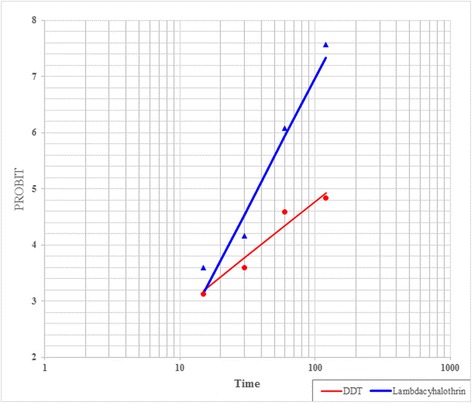
BACKGROUND: Iran has recently initiated a malaria elimination program with emphasis on vector control strategies which are heavily reliant on indoor residual spraying and long-lasting insecticidal nets. Insecticide resistance seriously threatens the efficacy of vector control strategies. This study was conducted to determine the insecticide susceptibility of Anopheles stephensi to DDT and current insecticides in Jask county as an active malaria focus in southeastern Iran. METHODS: In this study, the anopheline larvae were collected from different aquatic habitats in Jask county and transported to insectarium, fed with sugar and then 3-day-old adults were used for susceptibility tests. WHO insecticide susceptibility tests were performed with DDT (4 %), malathion (5 %), lambda-cyhalothrin (0.05 %), deltamethrin (0.05 %) and permethrin (0.75 %). RESULTS: values for DDT and lambda-cyhalothrin in this species were 130.25, and 37.71 min, respectively. Moreover, An. stephensi was completely susceptible to malathion and permethrin and tolerant to deltamethrin. CONCLUSION: The present study results confirm the resistance of the major malaria vector, An. stephensi, to DDT and lambda-cyhalothrin, and tolerance to deltamethrin, which could gradually increase and spread into other malaria endemic areas. Thus, there is a need for regular monitoring of insecticide resistance in order to select suitable insecticides for vector control interventions towards malaria elimination.
Overview
The claims and statistics of this paper haven’t been checked yet.
Free: it reads the open-access text and checks the first 5 claims that cite a source we can check. Create a free account to check every claim.
Integrity signals
Registry
Cites
Statistics
Figures
Verification
Claims the paper makes
The claims and statistics of this paper haven’t been checked yet.
Free: it reads the open-access text and checks the first 5 claims that cite a source we can check. Create a free account to check every claim.
Claims other papers make about this one
Each is checked against this paper’s own text: does it say what the citing paper says it does?
The source backs part of the claim, not all of it — or backs it for a different population, condition or comparison.
In the citing paper
“However, from 2010, susceptibility of An. stephensi to DDT and dieldrin decreased, may be due to the emergence of resistance to pyrethroid insecticides [65–71].”
From Evolution of insecticide resistance and its mechanisms in Anopheles stephensi in the WHO Eastern Mediterranean Region (2020) · cites this paper as [71]
Experimental — accuracy not yet measuredThe source backs part of the claim, not all of it — or backs it for a different population, condition or comparison.
In the citing paper
“Regardless of a couple of instances of mortality of less than 95% in 2011 [64] and 90% in 2015 [72], the species proved to be susceptible to malathion-discriminating concentration since 1982 in its entire range in southern Iran [19, 59–62, 65, 66, 68, 69, 71].”
From Evolution of insecticide resistance and its mechanisms in Anopheles stephensi in the WHO Eastern Mediterranean Region (2020) · cites this paper as [71]
Experimental — accuracy not yet measuredThe cited source says what the claim attributes to it.
In the citing paper
“Despite the results of a couple of studies in 2014 and 2015 showing complete susceptibility of An. stephensi to deltamethrin [69, 72], decreased susceptibility to pyrethroid insecticides were observed in later years [70–72, 75, 78].”
From Evolution of insecticide resistance and its mechanisms in Anopheles stephensi in the WHO Eastern Mediterranean Region (2020) · cites this paper as [71]
Self-check
Percentages, sums and reported differences re-computed from the paper’s own numbers.
The self-check needs the paper’s full text.
Citations
Cites
A Method of Computing the Effectiveness of an Insecticide
Abbott, W. S. (1925) · Journal of Economic Entomology · doi:10.1093/jee/18.2.265a · Cited by 16,134 · cited 1×
“The mortality then was corrected by applying Abbott’s formula when control mortality was recorded between 5 and 20 %, while tests with > 20 % control mortality were discarded and repeated [18].”
MethodSafety of pyrethroid‐treated mosquito nets
Zaim, M., Aitio, A., & Nakashima, N. (2000) · Medical and Veterinary Entomology · doi:10.1046/j.1365-2915.2000.00211.x · Cited by 366 · cited 1×
“These insecticides are the only class approved for use on LLINs and they are being increasingly used in IRS because of their low human toxicity, excito-repellent properties, rapid rate of knock-down and killing effects [10].”
BackgroundTrape, J.-F., Tall, A., Diagne, N., Ndiath, O., Ly, A. B., Faye, J., Dieye-Ba, F., Roucher, C., Bouganali, C., Badiane, A., et al. (2011) · The Lancet Infectious Diseases · doi:10.1016/s1473-3099(11)70194-3 · Cited by 328
Costs and cost-effectiveness of malaria control interventions - a systematic review
White, M. T., Conteh, L., Cibulskis, R., & Ghani, A. C. (2011) · Malaria Journal · doi:10.1186/1475-2875-10-337 · Cited by 310
Malaria vector control: from past to future
Raghavendra, K., Barik, T. K., Reddy, B. P. N., Sharma, P., & Dash, A. P. (2011) · Parasitology Research · doi:10.1007/s00436-010-2232-0 · Cited by 252 · cited 2×
“Vector control for malaria is mainly composed of long-lasting insecticidal nets (LLINs) and indoor residual spraying (IRS) programmes which are highly dependent on pyrethroid insecticides [9].”
BackgroundSantolamazza, F., Calzetta, M., Etang, J., Barrese, E., Dia, I., Caccone, A., Donnelly, M. J., Petrarca, V., Simard, F., Pinto, J., et al. (2008) · Malaria Journal · doi:10.1186/1475-2875-7-74 · Cited by 231
(1992) · PubMed · Cited by 190
Keys to the adult females and fourth-instar larvae of the mosquitoes of Iran (Diptera: Culicidae)
AZARI-HAMIDIAN, S., & HARBACH, R. E. (2009) · Zootaxa · doi:10.11646/zootaxa.2078.1.1 · Cited by 176 · cited 1×
“Mosquitoes were identified morphologically using standard keys used for the identification of anopheles of Iran [16].”
MethodSokhna, C., Ndiath, M. O., & Rogier, C. (2013) · Clinical Microbiology and Infection · doi:10.1111/1469-0691.12314 · Cited by 172
Knox, T. B., Juma, E. O., Ochomo, E. O., Pates Jamet, H., Ndungo, L., Chege, P., Bayoh, N. M., N’Guessan, R., Christian, R. N., Hunt, R. H., et al. (2014) · Parasites & Vectors · doi:10.1186/1756-3305-7-76 · Cited by 146
Czeher, C., Labbo, R., Arzika, I., & Duchemin, J.-B. (2008) · Malaria Journal · doi:10.1186/1475-2875-7-189 · Cited by 134
Indication of pyrethroid resistance in the main malaria vector, Anopheles stephensi from Iran
Vatandoost, H., & Hanafi-Bojd, A. A. (2012) · Asian Pacific Journal of Tropical Medicine · doi:10.1016/s1995-7645(12)60114-x · Cited by 69 · cited 4×
“It has been reported that rapid emergence and geographical spread of insecticide resistance among malaria vectors has threatened the intervention programmes in many endemic Afro-Asian countries [5, 9, 13].”
BackgroundInfluentialKabula, B., Tungu, P., Matowo, J., Kitau, J., Mweya, C., Emidi, B., Masue, D., Sindato, C., Malima, R., Minja, J., et al. (2012) · Tropical Medicine & International Health · doi:10.1111/j.1365-3156.2012.02986.x · Cited by 64 · cited 1×
“Vector control is the main component of the malaria control strategy, which aims to prevent parasite transmission through interventions targeting anopheline vectors [7].”
BackgroundVerhaeghen, K., Van Bortel, W., Trung, H. D., Sochantha, T., Keokenchanh, K., & Coosemans, M. (2010) · Parasites & Vectors · doi:10.1186/1756-3305-3-59 · Cited by 63 · cited 1×
“However, in the recent years the efficacy of these insecticides against potential malaria vectors has been found to be reduced in endemic areas [24, 25].”
BackgroundSoleimani-Ahmadi, M., Vatandoost, H., Hanafi-Bojd, A.-A., Zare, M., Safari, R., Mojahedi, A., & Poorahmad-Garbandi, F. (2013) · Asian Pacific Journal of Tropical Medicine · doi:10.1016/s1995-7645(13)60087-5 · Cited by 61
Self-citationSoleimani-Ahmadi, M., Vatandoost, H., Shaeghi, M., Raeisi, A., Abedi, F., Eshraghian, M. R., Madani, A., Safari, R., Oshaghi, M. A., Abtahi, S. M., et al. (2012) · Acta Tropica · doi:10.1016/j.actatropica.2012.04.004 · Cited by 55 · cited 2×
“stephensi to DDT and malathion has been reported from the southeast areas, where the first indication of this species resistance to pyrethroid insecticides was reported in 2012 [13, 14].”
BackgroundSelf-citationSoleimani-Ahmadi, M., Vatandoost, H., & Zare, M. (2014) · Asian Pacific Journal of Tropical Biomedicine · doi:10.12980/apjtb.4.2014c899 · Cited by 50
Self-citationSoleimani-Ahmadi, M., Vatandoost, H., Zare, M., Alizadeh, A., & Salehi, M. (2014) · Malaria Journal · doi:10.1186/1475-2875-13-511 · Cited by 45 · cited 1×
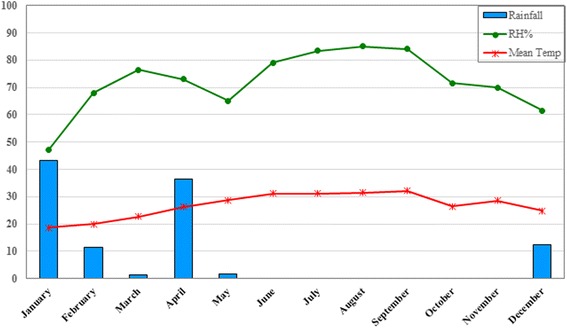
“This area has two seasonal peaks in spring and autumn [1, 6].”
BackgroundSelf-citationSoleimani-Ahmadi, M., Vatandoost, H., Zare, M., Turki, H., & Alizadeh, A. (2015) · Malaria Journal · doi:10.1186/s12936-015-0771-7 · Cited by 38 · cited 4×
“stephensi is the most prevalent endophilic species and has been confirmed as the main malaria vector in the south of Iran [1], this study conducted to evaluate insecticide susceptibility status of this species against DDT and current insecticides which have been Fig.”
BackgroundSelf-citation(2016) · PubMed Central · Cited by 36
Vector ecology and susceptibility in a malariaendemic focus in southern Islamic Republic of Iran
Soleimani-Ahmadi, M., Vatandoost, H., Shaeghi, M., Raeisi, A., Abedi, F., Eshraghian, M. R., Madani, A., Safari, R., Shahi, M., Mojahedi, A., et al. (2012) · Eastern Mediterranean Health Journal · doi:10.26719/2012.18.10.1034 · Cited by 34 · cited 3×
“This finding is in agreement with previous studies conducted in the malarious areas of southern Iran [20].”
BackgroundResultSelf-citationSangba, M. L. O., Deketramete, T., Wango, S. P., Kazanji, M., Akogbeto, M. C., & Ndiath, M. O. (2016) · Parasites & Vectors · doi:10.1186/s13071-016-1510-9 · Cited by 32 · cited 6×
“In this regard, resistance of the malaria vectors to pyrethroids have been reported from some Afrotropical regions including Mozambique, Uganda, southern Africa, Benin and Ghana [26].”
BackgroundInfluentialBio-ecology of malaria vectors in an endemic area, Southeast of Iran
Yeryan, M., Basseri, H. R., Hanafi-Bojd, A. A., Raeisi, A., Edalat, H., & Safari, R. (2016) · Asian Pacific Journal of Tropical Medicine · doi:10.1016/j.apjtm.2015.12.007 · Cited by 28 · cited 1×
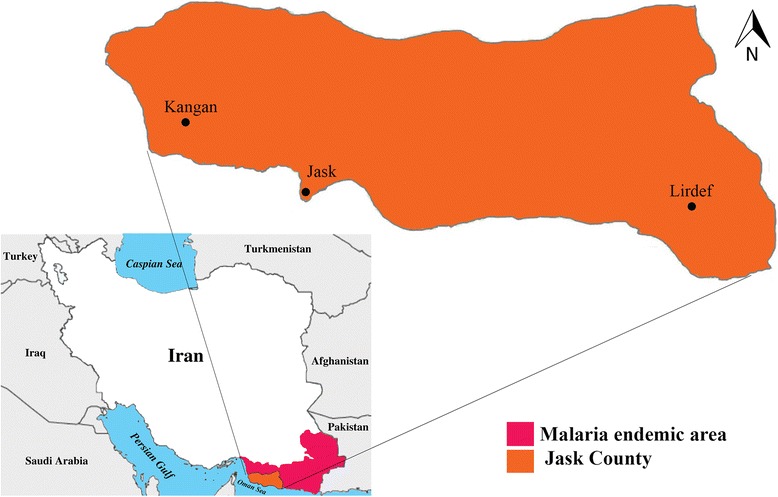
“Jask conty is one of the most active malaria foci in the southeast of Iran and malaria cases are reported in this area year-round with peaks after the two annual rainy seasons (April-June and September-December) [15].”
BackgroundStatus of insecticide resistance in high-risk malaria provinces in Afghanistan
Ahmad, M., Buhler, C., Pignatelli, P., Ranson, H., Nahzat, S. M., Naseem, M., Sabawoon, M. F., Siddiqi, A. M., & Vink, M. (2016) · Malaria Journal · doi:10.1186/s12936-016-1149-1 · Cited by 27 · cited 4×
“Moreover, susceptibility tests in neighbouring countries including Afghanistan, Pakistan, Iraq, Oman, United Arab Emirates, and Saudi Arabia have shown resistance of An. stephensi to DDT [21].”
ResultInfluentialDhiman, S., Yadav, K., Rabha, B., Goswami, D., Hazarika, S., & Tyagi, V. (2016) · PLoS ONE · doi:10.1371/journal.pone.0151786 · Cited by 26 · cited 2×
“Similar trends have been reported from Middle East different regions, Indian subcontinent, and many African malaria endemic countries [23, 24, 27].”
BackgroundResultEvaluation of biological control agents for mosquitoes control in artificial breeding places
Abadi, Y. S., Vatandoost, H., Rassi, Y., Reza, A. M., Sanei-Dehkordi, A., & Paksa, A. (2010) · Asian Pacific Journal of Tropical Medicine · doi:10.1016/s1995-7645(10)60067-3 · Cited by 13 · cited 1×
“Discussion The Iran national malaria control programme has implemented indoor residual spraying with lambdacyhalothrin and deltamethrin insecticides, distribution of long-lasting insecticidal nets and application of larvicides as the main malaria vector control strategies [1, 14, 19].”
BackgroundSelf-citationDjadid, N. D., Forouzesh, F., Karimi, M., Raeisi, A., Hasanzehi, A., & Zakeri, S. (2007) · PubMed · Cited by 13
Evaluation of biological control agents for mosquitoes control in artificial breeding places
Salim, S., Abadi, A., Yaser, Vatandoost, Hassan, Rassi, Yavar, Abai, M. R., Mohammad, M., Reza, et al. (2010) · Acta Scientiarum Naturalium Universitatis Sunyatseni · Cited by 3
Cited by
Insecticide resistance in Anopheles stephensi in Somali Region, eastern Ethiopia
Yared, S., Gebressielasie, A., Damodaran, L., Bonnell, V., Lopez, K., Janies, D., & Carter, T. E. (2020) · Malaria Journal · doi:10.1186/s12936-020-03252-2 · Cited by 111
Abbasi, E., Vahedi, M., Bagheri, M., Gholizadeh, S., Alipour, H., & Moemenbellah‐Fard, M. D. (2022) · Heliyon · doi:10.1016/j.heliyon.2022.e08830 · Cited by 72
Enayati, A., Hanafi-Bojd, A. A., Sedaghat, M. M., Zaim, M., & Hemingway, J. (2020) · Malaria Journal · doi:10.1186/s12936-020-03335-0 · Cited by 62
Raghavendra, K., Prasad, K., Verma, V., Velamuri, P., & Pande, V. (2017) · Journal of Vector Borne Diseases · doi:10.4103/0972-9062.217613 · Cited by 35
Possible potential spread of Anopheles stephensi, the Asian malaria vector
Liu, Q., Wang, M., Du, Y.-T., Xie, J., Yin, Z.-G., Cai, J.-H., Zhao, T., & Zhang, H.-D. (2024) · BMC Infectious Diseases · doi:10.1186/s12879-024-09213-3 · Cited by 37
“The development of resistance in malaria vectors is one of the serious limitations to effective vector control strategies that rely on chemical insecticides [65], and the resistance shown by An. stephensi to insecticides in these areas poses an additional challenge to its control.”
Background
Metadata
- Authors
- Zare, M., Soleimani-Ahmadi, M., Davoodi, S. H., & Sanei-Dehkordi, A.
- Affiliations
- Hormozgan University of Medical Sciences (IR)
- National Nutrition and Food Technology Research Institute (IR)
- Corresponding author
- Soleimani-Ahmadi, Moussa
- Venue
- Parasites & Vectors
- Published
- 2016-11-04
- Volume
- 9
- Issue
- 1
- Pages
- 571-571
- ISSN
- 1756-3305 (ISSN-L)
- PMC
- PMC5096305
- OpenAlex
- W2547210606
- Cited by
- 20
- References
- 28
- Citations by year
- 2025: 1 · 2024: 4 · 2023: 1 · 2022: 1 · 2021: 3 · 2020: 4 · 2019: 1 · 2018: 1 · 2017: 4
- FWCI
- 1.98
- Type
- journal article
- Language
- en
- Open access
- gold
- doi.org
- Licence
- cc-by
- Locations
- Parasites & Vectors (publishedVersion, cc-by)
- PubMed Central (publishedVersion, cc-by)
- PubMed (publishedVersion)
- DOAJ (DOAJ: Directory of Open Access Journals) (submittedVersion, cc-by-sa)
- Funders
- Hormozgan University of Medical Sciences
- Topics
- Health Sciences › Medicine › Public Health, Environmental and Occupational Health › Malaria Research and Control
- Life Sciences › Biochemistry, Genetics and Molecular Biology › Molecular Biology › Insect Resistance and Genetics
- Health Sciences › Medicine › Public Health, Environmental and Occupational Health › Dengue and Mosquito Control Research
- Keywords
- Anopheles stephensi, insecticide resistance, DDT, lambda-cyhalothrin, deltamethrin, permethrin, malathion, malaria vector control, malaria elimination, indoor residual spraying, long-lasting insecticidal nets, insecticide susceptibility testing
- MeSH terms
- Mosquito Vectors, Animals, Anopheles, DDT, Insecticide Resistance, Insecticides, Iran, Larva, Malaria, Malathion, Mosquito Control, Nitriles, Pyrethrins, Permethrin
About these checks
Registry, retraction, Cites and statistics results are computed, not judged, with one exception: a printed reference that no index lists is read once by a model before it counts as a citation error. Claims are extracted by a model and kept only when their quote appears verbatim in the text; each cited source is then checked, with a model’s help, for whether it says what the claim relies on. Those verdicts can be wrong — read the claim’s quote and the cited source before relying on one.
Statistics and arithmetic are recomputed, not judged.
Confidence bands are shown only for fields calibrated on our annotated test set. None is calibrated yet, so no band is shown.
What counts as a claim ›How we measure confidence ›How we check this ›
Are you an author, or do you see a problem with this page? Request a review
Data sources
Bibliographic data: Semantic Scholar, OpenAlex, Crossref.
Contains information from the Semantic Scholar Academic Graph Datasets, made available under the ODC Attribution License (ODC-BY 1.0).
Semantic Scholar’s data is described in: Kinney, R., et al. (2023). The Semantic Scholar Open Data Platform. arXiv:2301.10140.
