

Using low-cost drones to map malaria vector habitats
Open accessThe DOI matches its Crossref record; 67 of the 67 references it cites were found in a registry or an index.
Abstract
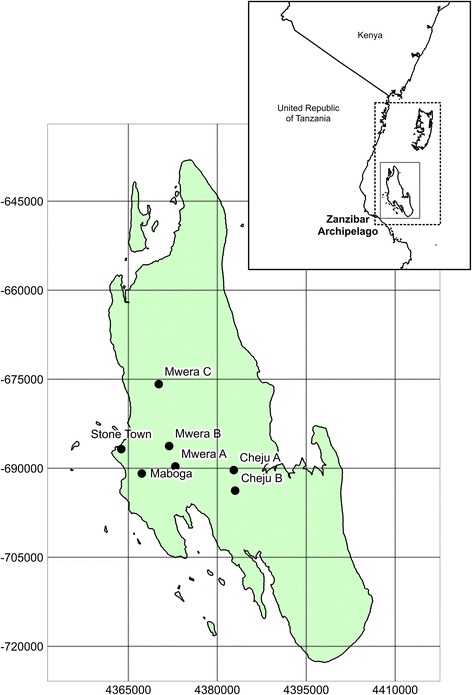
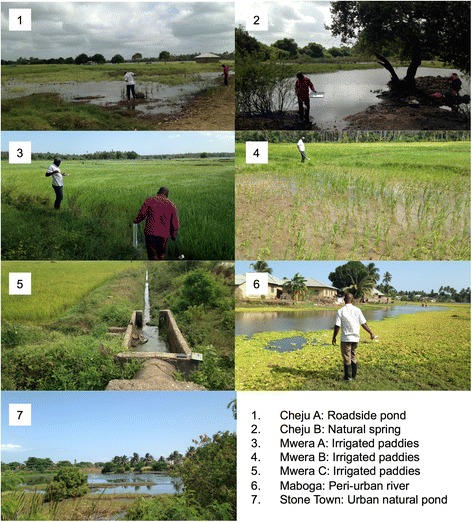
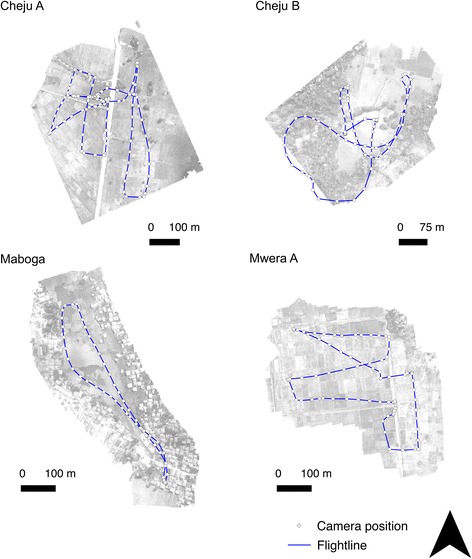
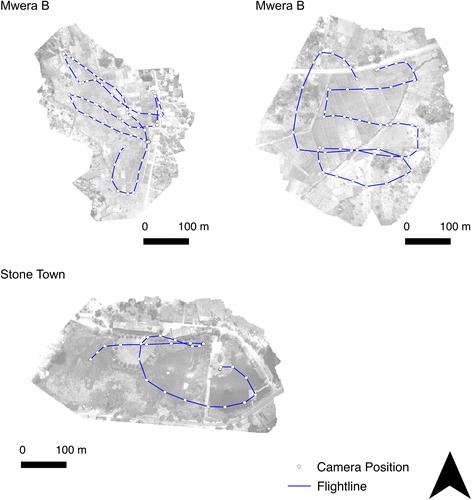
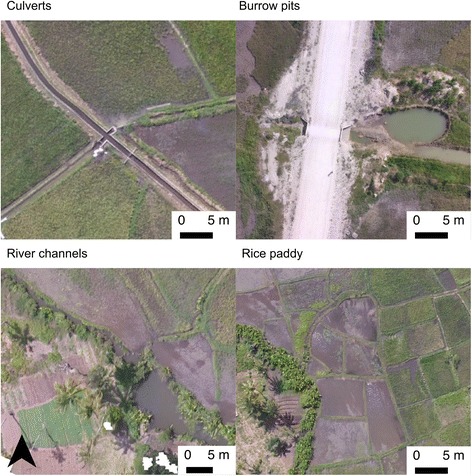
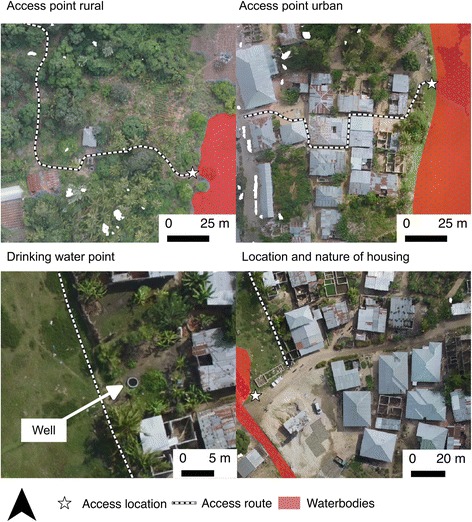
BACKGROUND: There is a growing awareness that if we are to achieve the ambitious goal of malaria elimination, we must compliment indoor-based vector control interventions (such as bednets and indoor spraying) with outdoor-based interventions such as larval source management (LSM). The effectiveness of LSM is limited by our capacity to identify and map mosquito aquatic habitats. This study provides a proof of concept for the use of a low-cost (< $1000) drone (DJI Phantom) for mapping water bodies in seven sites across Zanzibar including natural water bodies, irrigated and non-irrigated rice paddies, peri-urban and urban locations. RESULTS: With flying times of less than 30 min for each site, high-resolution (7 cm) georeferenced images were successfully generated for each of the seven sites, covering areas up to 30 ha. Water bodies were readily identifiable in the imagery, as well as ancillary information for planning LSM activities (access routes to water bodies by road and foot) and public health management (e.g. identification of drinking water sources, mapping individual households and the nature of their construction). CONCLUSION: The drone-based surveys carried out in this study provide a low-cost and flexible solution to mapping water bodies for operational dissemination of LSM initiatives in mosquito vector-borne disease elimination campaigns. Generated orthomosaics can also be used to provide vital information for other public health planning activities.
Overview
The claims and statistics of this paper haven’t been checked yet.
Free: it reads the open-access text and checks the first 5 claims that cite a source we can check. Create a free account to check every claim.
Integrity signals
Registry
Cites
Statistics
Figures
Verification
Claims the paper makes
The claims and statistics of this paper haven’t been checked yet.
Free: it reads the open-access text and checks the first 5 claims that cite a source we can check. Create a free account to check every claim.
Claims other papers make about this one
Each is checked against this paper’s own text: does it say what the citing paper says it does?
The source backs part of the claim, not all of it — or backs it for a different population, condition or comparison.
In the citing paper
“Low-cost drones (unmanned aerial vehicles or UAVs) have also been utilized by malaria programmes in diverse ecological contexts including Malaysia, Tanzania and Peru [100–102].”
From Achieving global malaria eradication in changing landscapes (2021) · cites this paper as [102]
Experimental — accuracy not yet measured
Self-check
Percentages, sums and reported differences re-computed from the paper’s own numbers.
The self-check needs the paper’s full text.
Citations
Cites
BEVEN, K. J., & KIRKBY, M. J. (1979) · Hydrological Sciences Bulletin · doi:10.1080/02626667909491834 · Cited by 6,670
A physically based, variable contributing area model of basin hydrology
Kirkby, M. J., & Beven, K. (1979) · Lancaster EPrints (Lancaster University) · Cited by 3,962
Ranson, H., N’Guessan, R., Lines, J., Moiroux, N., Nkuni, Z., & Corbel, V. (2011) · Trends in Parasitology · doi:10.1016/j.pt.2010.08.004 · Cited by 1,142 · cited 1×
“Of greater concern, a growing body of evidence has identified the emergence of pyrethroid resistance in key vector species making them less susceptible to indoor-based interventions that mainly rely on this class of insecticide [5, 9, 10].”
James, M. R., & Robson, S. (2012) · Journal of Geophysical Research: Earth Surface · doi:10.1029/2011jf002289 · Cited by 1,116
Unhealthy Landscapes: Policy Recommendations on Land Use Change and Infectious Disease Emergence
Patz, J. A., Daszak, P., Tabor, G. M., Aguirre, A. A., Pearl, M., Epstein, J., Wolfe, N. D., Kilpatrick, A. M., Foufopoulos, J., Molyneux, D., et al. (2004) · Environmental Health Perspectives · doi:10.1289/ehp.6877 · Cited by 975 · cited 1×
“Additionally, imagery can be used to establish and monitor links between environmental factors and disease transmission, such as changes in land cover and the emergence of new vector habitats [37, 38].”
A global map of dominant malaria vectors
Sinka, M. E., Bangs, M. J., Manguin, S., Rubio-Palis, Y., Chareonviriyaphap, T., Coetzee, M., Mbogo, C. M., Hemingway, J., Patil, A. P., Temperley, W. H., et al. (2012) · Parasites & Vectors · doi:10.1186/1756-3305-5-69 · Cited by 747
Russell, T. L., Govella, N. J., Azizi, S., Drakeley, C. J., Kachur, S. P., & Killeen, G. F. (2011) · Malaria Journal · doi:10.1186/1475-2875-10-80 · Cited by 698
Bayoh, M. N., Mathias, D. K., Odiere, M. R., Mutuku, F. M., Kamau, L., Gimnig, J. E., Vulule, J. M., Hawley, W. A., Hamel, M. J., & Walker, E. D. (2010) · Malaria Journal · doi:10.1186/1475-2875-9-62 · Cited by 482
Otranto, D., Brianti, E., Latrofa, M. S., Annoscia, G., Weigl, S., Lia, R. P., Gaglio, G., Napoli, E., Giannetto, S., Papadopoulos, E., et al. (2012) · Parasites & Vectors · doi:10.1186/1756-3305-5-1 · Cited by 456
Ecology: A Prerequisite for Malaria Elimination and Eradication
Ferguson, H. M., Dornhaus, A., Beeche, A., Borgemeister, C., Gottlieb, M., Mulla, M. S., Gimnig, J. E., Fish, D., & Killeen, G. F. (2010) · PLoS Medicine · doi:10.1371/journal.pmed.1000303 · Cited by 374
Characteristics of larval anopheline (Diptera: Culicidae) habitats in Western Kenya
Gimnig, J. E., Ombok, M., Kamau, L., & Hawley, W. A. (2001) · Journal of Medical Entomology · doi:10.1603/0022-2585-38.2.282 · Cited by 354
Acute Human Lethal Toxicity of Agricultural Pesticides: A Prospective Cohort Study
Dawson, A. H., Eddleston, M., Senarathna, L., Mohamed, F., Gawarammana, I., Bowe, S. J., Manuweera, G., & Buckley, N. A. (2010) · PLoS Medicine · doi:10.1371/journal.pmed.1000357 · Cited by 332
IMPACT OF DEFORESTATION AND AGRICULTURAL DEVELOPMENT ON ANOPHELINE ECOLOGY AND MALARIA EPIDEMIOLOGY
YASUOKA, J., & LEVINS, R. (2007) · The American Journal of Tropical Medicine and Hygiene · doi:10.4269/ajtmh.2007.76.450 · Cited by 323 · cited 1×
“Additionally, imagery can be used to establish and monitor links between environmental factors and disease transmission, such as changes in land cover and the emergence of new vector habitats [37, 38].”
Smith, M. W., & Vericat, D. (2015) · Earth Surface Processes and Landforms · doi:10.1002/esp.3747 · Cited by 313
Spatial distribution and habitat characterization of anopheline mosquito larvae in Western Kenya.
Minakawa, N., Mutero, C. M., Githure, J. I., Beier, J. C., & Yan, G. (1999) · The American journal of tropical medicine and hygiene · doi:10.4269/ajtmh.1999.61.1010 · Cited by 305
Ferreira, I. D., do Rosário, V. E., & Cravo, P. V. (2006) · Malaria Journal · doi:10.1186/1475-2875-5-1 · Cited by 250
Fillinger, U., & Lindsay, S. W. (2006) · Tropical Medicine & International Health · doi:10.1111/j.1365-3156.2006.01733.x · Cited by 242 · cited 1×
“The survey design followed ZAMEP standard operating procedures in which the fringes of water bodies identified at the survey site are walked with larval samples being taken using a standard 350 ml dipper following a purposive dipping strategy [17].”
Ouédraogo, M. M., Degré, A., Debouche, C., & Lisein, J. (2014) · Geomorphology · doi:10.1016/j.geomorph.2014.02.016 · Cited by 237
Russell, T. L., Lwetoijera, D. W., Maliti, D., Chipwaza, B., Kihonda, J., Charlwood, J. D., Smith, T. A., Lengeler, C., Mwanyangala, M. A., Nathan, R., et al. (2010) · Malaria Journal · doi:10.1186/1475-2875-9-187 · Cited by 194
Minakawa, N., Seda, P., & Yan, G. (2002) · The American journal of tropical medicine and hygiene · doi:10.4269/ajtmh.2002.67.32 · Cited by 192
Combining Indoor Residual Spraying and Insecticide-Treated Net Interventions
Kleinschmidt, I., Schwabe, C., Shiva, M., Segura, J. L., Sima, V., Mabunda, S. J. A., & Coleman, M. (2009) · The American Journal of Tropical Medicine and Hygiene · doi:10.4269/ajtmh.2009.81.519 · Cited by 184
Lwetoijera, D. W., Harris, C., Kiware, S. S., Dongus, S., Devine, G. J., McCall, P. J., & Majambere, S. (2014) · Malaria Journal · doi:10.1186/1475-2875-13-331 · Cited by 175 · cited 2×
“The effective implementation of larviciding techniques relies upon our capacity to target interventions at productive mosquito aquatic habitats [5, 21].”
Self-citationMINAKAWA, N., MUNGA, S., ATIELI, F., MUSHINZIMANA, E., ZHOU, G., GITHEKO, A. K., & YAN, G. (2005) · The American Journal of Tropical Medicine and Hygiene · doi:10.4269/ajtmh.2005.73.157 · Cited by 171
Using a Dynamic Hydrology Model To Predict Mosquito Abundances in Flood and Swamp Water
Shaman, J., Stieglitz, M., Stark, C., Le Blancq, S., & Cane, M. (2002) · Emerging Infectious Diseases · doi:10.3201/eid0801.010049 · Cited by 170
Mapping infectious disease landscapes: unmanned aerial vehicles and epidemiology
Fornace, K. M., Drakeley, C. J., William, T., Espino, F., & Cox, J. (2014) · Trends in Parasitology · doi:10.1016/j.pt.2014.09.001 · Cited by 167 · cited 3×
“Although drones cannot be flown in the rain, they are not reliant on clear sky conditions (as they are flown at low altitudes, below clouds, unlike optical satellites) and the timing of satellite overpasses and they can therefore be flown at times convenient for field teams, making them an ideal tool for supporting LS…”
InfluentialMushinzimana, E., Munga, S., Minakawa, N., Li, L., Feng, C.-C., Bian, L., Kitron, U., Schmidt, C., Beck, L., Zhou, G., et al. (2006) · Malaria Journal · doi:10.1186/1475-2875-5-13 · Cited by 158
Tonkin, T. N., Midgley, N. G., Graham, D. J., & Labadz, J. C. (2014) · Geomorphology · doi:10.1016/j.geomorph.2014.07.021 · Cited by 158
Zhou, G., Munga, S., Minakawa, N., Githeko, A. K., & Yan, G. (2007) · The American Journal of Tropical Medicine and Hygiene · doi:10.4269/ajtmh.2007.77.29 · Cited by 158
Dry season refugia of malaria-transmitting mosquitoes in a dry savannah zone of east Africa.
Charlwood, J. D., Vij, R., & Billingsley, P. F. (2000) · The American journal of tropical medicine and hygiene · doi:10.4269/ajtmh.2000.62.726 · Cited by 148 · cited 1×
“However, it would be preferable to carry out LSM interventions during the dry season during which the number of aquatic habitats are relatively limited, following the dry season refugia concept [49].”
Impact of insecticide-treated bed nets on malaria transmission indices on the south coast of Kenya
Mutuku, F. M., King, C. H., Mungai, P., Mbogo, C., Mwangangi, J., Muchiri, E. M., Walker, E. D., & Kitron, U. (2011) · Malaria Journal · doi:10.1186/1475-2875-10-356 · Cited by 146
Casado, M. R., Ballesteros, R., Kriechbaumer, T., & Veal, A. J. (2015) · Sensors · doi:10.3390/s151127969 · Cited by 140
Hydrology of malaria: Model development and application to a Sahelian village
Bomblies, A., Duchemin, J., & Eltahir, E. A. B. (2008) · Water Resources Research · doi:10.1029/2008wr006917 · Cited by 138
Thomas, C. J., & Lindsay, S. W. (2000) · Transactions of the Royal Society of Tropical Medicine and Hygiene · doi:10.1016/s0035-9203(00)90257-8 · Cited by 128
The use of remotely sensed environmental data in the study of malaria
Machault, V., Vignolles, C., Borchi, F., Vounatsou, P., Pages, F., Briolant, S., Lacaux, J.-P., & Rogier, C. (2011) · Geospatial health · doi:10.4081/gh.2011.167 · Cited by 121
Beck, L. R., Rodriguez, M. H., Dister, S. W., Rodriguez, A. D., Washino, R. K., Roberts, D. R., & Spanner, M. A. (1997) · The American Journal of Tropical Medicine and Hygiene · doi:10.4269/ajtmh.1997.56.99 · Cited by 116
MOSQUITO HABITATS, LAND USE, AND MALARIA RISK IN BELIZE FROM SATELLITE IMAGERY
POPE, K. O., Masuoka, P. M., Rejmánková, E., Grieco, J. P., Johnson, S., & Roberts, D. R. (2005) · Ecological Applications · doi:10.1890/04-0934 · Cited by 111
Productivity of Malaria Vectors from Different Habitat Types in the Western Kenya Highlands
Ndenga, B. A., Simbauni, J. A., Mbugi, J. P., Githeko, A. K., & Fillinger, U. (2011) · PLoS ONE · doi:10.1371/journal.pone.0019473 · Cited by 107
KILLEEN, G. F., SEYOUM, A., & KNOLS, B. G. J. (2004) · The American Journal of Tropical Medicine and Hygiene · doi:10.4269/ajtmh.2004.71.2_suppl.0700087 · Cited by 106
Arme, C. (2015) · Parasites & Vectors · doi:10.1186/s13071-015-0810-9 · Cited by 98
BØGH, C., LINDSAY, S. W., CLARKE, S. E., DEAN, A., JAWARA, M., PINDER, M., & THOMAS, C. J. (2007) · The American Journal of Tropical Medicine and Hygiene · doi:10.4269/ajtmh.2007.76.875 · Cited by 93
Dambach, P., Machault, V., Lacaux, J.-P., Vignolles, C., Sié, A., & Sauerborn, R. (2012) · International Journal of Health Geographics · doi:10.1186/1476-072x-11-8 · Cited by 89
Rejmankova, E., Roberts, D. R., Pawley, A., Manguin, S., & Polanco, J. (1995) · The American Journal of Tropical Medicine and Hygiene · doi:10.4269/ajtmh.1995.53.482 · Cited by 88
Atieli, H. E., Zhou, G., Lee, M.-C., Kweka, E. J., Afrane, Y., Mwanzo, I., Githeko, A. K., & Yan, G. (2011) · Parasites & Vectors · doi:10.1186/1756-3305-4-241 · Cited by 81
Haji, K. A., Khatib, B. O., Smith, S., Ali, A., Devine, G. J., Coetzee, M., & Majambere, S. (2013) · Parasites & Vectors · doi:10.1186/1756-3305-6-82 · Cited by 81
Self-citationGlunt, K. D., Abílio, A. P., Bassat, Q., Bulo, H., Gilbert, A., Huijben, S., Manaca, M. N., Macete, E., Alonso, P. L., & Paaijmans, K. P. (2015) · Malaria Journal · doi:10.1186/s12936-015-0807-z · Cited by 80
Dong, J., Xiao, X., Sheldon, S., Biradar, Ç., Zhang, G., Duong, N. D., Hazarika, M. K., Wikantika, K., Takeuhci, W., & Moore, B. (2014) · PLoS ONE · doi:10.1371/journal.pone.0085801 · Cited by 80 · cited 1×
“Radar systems are not reliant on clear-sky conditions, offering an exciting alternative to optical imagery [34] but this approach is limited by a coarser spatial resolution and the lack of contextual information that is provided by visual analysis of optical imagery.”
Cohen, J. M., Ernst, K. C., Lindblade, K. A., Vulule, J. M., John, C. C., & Wilson, M. L. (2008) · Malaria Journal · doi:10.1186/1475-2875-7-40 · Cited by 79
Mutuku, F., Bayoh, M., Hightower, A., Vulule, J., Gimnig, J., Mueke, J., Amimo, F., & Walker, E. (2009) · International Journal of Health Geographics · doi:10.1186/1476-072x-8-19 · Cited by 79
Hydrological and geomorphological controls of malaria transmission
Smith, M. W., Macklin, M. G., & Thomas, C. J. (2013) · Earth-Science Reviews · doi:10.1016/j.earscirev.2012.11.004 · Cited by 64 · cited 1×
“To make LSM feasible, tools are needed to identify water bodies at a community scale to target resources [50].”
Oviposition Site Preference and Egg Hatchability of Anopheles gambiae: Effects of Land Cover Types
Munga, S., Minakawa, N., Zhou, G., Barrack, O.-O. J., Githeko, A. K., & Yan, G. (2005) · Journal of Medical Entomology · doi:10.1093/jmedent/42.6.993 · Cited by 64
Mosquito Population Regulation and Larval Source Management in Heterogeneous Environments
Smith, D. L., Perkins, T. A., Tusting, L. S., Scott, T. W., & Lindsay, S. W. (2013) · PLoS ONE · doi:10.1371/journal.pone.0071247 · Cited by 62 · cited 1×
“The effective implementation of larviciding techniques relies upon our capacity to target interventions at productive mosquito aquatic habitats [5, 21].”
Vector abundance and malaria transmission in rice growing villages in Mali
DIUK-WASSER, M. A., TOURE, M. B., DOLO, G., BAGAYOKO, M., SOGOBA, N., TRAORE, S. F., MANOUKIS, N., & TAYLOR, C. E. (2005) · The American Journal of Tropical Medicine and Hygiene · doi:10.4269/ajtmh.2005.72.725 · Cited by 62
Imbahale, S. S., Githeko, A., Mukabana, W. R., & Takken, W. (2012) · BMC Public Health · doi:10.1186/1471-2458-12-362 · Cited by 58
Gouagna, L. C., Rakotondranary, M., Boyer, S., Lempérière, G., Dehecq, J.-S., & Fontenille, D. (2012) · Parasites & Vectors · doi:10.1186/1756-3305-5-96 · Cited by 55
Hardy, A. J., Mageni, Z. D., Dongus, S., Killeen, G. F., Macklin, M. G., Majambare, S., Ali, A., Msellem, M. I., Al-mafazy, A.-W. H., Smith, M. W., et al. (2015) · Parasites & Vectors · doi:10.1186/s13071-015-0652-5 · Cited by 53 · cited 4×
“Although DEMs can provide a great deal of information regarding the likely location of water bodies in areas where hydrology is mainly a function of topography, this is not the case in Zanzibar due to the islands’ geology [41].”
InfluentialSelf-citationA hydrologically driven model of swamp water mosquito population dynamics
Shaman, J. L., Spiegelman, M. W., Cane, M. A., & Stieglitz, M. (2005) · Ecological Modelling · doi:10.1016/j.ecolmodel.2005.10.037 · Cited by 52
Ecology of the Zanzibar Red Colobus Monkey: Demographic Variability and Habitat Stability
Siex, K. S., & Struhsaker, T. T. (1999) · International Journal of Primatology · doi:10.1023/a:1020558702199 · Cited by 44 · cited 2×
“Rainfall is strongly seasonal, typically with dry and hot weather during January and February, heavy rains from March to May, a dry season during June to September and light rains during October to December [40].”
Kweka, E. J., Munga, S., Himeidan, Y., Githeko, A. K., & Yan, G. (2015) · Parasites & Vectors · doi:10.1186/s13071-015-0968-1 · Cited by 42
Nmor, J. C., Sunahara, T., Goto, K., Futami, K., Sonye, G., Akweywa, P., Dida, G., & Minakawa, N. (2013) · Parasites & Vectors · doi:10.1186/1756-3305-6-14 · Cited by 41
Conn, J. E., Norris, D. E., Donnelly, M. J., Beebe, N. W., Burkot, T. R., Coulibaly, M. B., Chery, L., Eapen, A. K., Keven, J. B., Kilama, M., et al. (2015) · American Journal of Tropical Medicine and Hygiene · doi:10.4269/ajtmh.15-0009 · Cited by 31
Amenyo, J.-T., Phelps, D., Oladipo, O. S., Sewovoe-Ekuoe, F., Jadoonanan, S., Jadoonanan, S., Tabassum, T., Gnabode, S., Sherpa, T. D., Falzone, M., et al. (2014) · IEEE Global Humanitarian Technology Conference (GHTC) · doi:10.1109/ghtc.2014.6970343 · Cited by 29 · cited 1×
“into the potential for drone technology to disseminate larvicide using heavy lift and long endurance drones [39].”
Mbare, O., Lindsay, S. W., & Fillinger, U. (2014) · Parasites & Vectors · doi:10.1186/1756-3305-7-438 · Cited by 28
Earth observation in support of malaria control and epidemiology: MALAREO monitoring approaches
Franke, J., Gebreslasie, M. T., Bauwens, I., Deleu, J., & Siegert, F. (2015) · Geospatial health · doi:10.4081/gh.2015.335 · Cited by 24
Oviposition Site Preference and Egg Hatchability of Anopheles gambiae: Effects of Land Cover Types
Munga, S., Minakawa, N., Zhou, G., et al. (2005) · Journal of Medical Entomology · doi:10.1603/0022-2585(2005)042[0993:ospaeh]2.0.co;2 · Cited by 19
Charoenpanyanet, A., & Chen, X. (2008) · Annals of GIS · doi:10.1080/10824000809480635 · Cited by 14
Research works printed but not linked: 2
- Programme Zanzibar Malaria Control Zanzibar Malaria Epidemic Early Detection System Biannual Report 2011 Zanzibar Malaria Elimination Programme Stone Town
- Gillies MT De Meillon B The anophelinae of Africa south of the Sahara 1968 Johannesburg South African Institute for Medical Research
Cited by
Drones for Conservation in Protected Areas: Present and Future
Jiménez López, J., & Mulero-Pázmány, M. (2019) · Drones · doi:10.3390/drones3010010 · Cited by 300
Public acceptance of drones: Knowledge, attitudes, and practice
Aydin, B. (2019) · Technology in Society · doi:10.1016/j.techsoc.2019.101180 · Cited by 215
Unmanned Aerial Vehicle Communications for Civil Applications: A Review
Ghamari, M., Rangel, P., Mehrübeoğlu, M., Tewolde, G., & Sherratt, R. S. (2022) · IEEE Access · doi:10.1109/access.2022.3208571 · Cited by 192
“According to scientists [437], [438], the battery life of low-cost drones is typically limited to less than 30 minutes.”
BackgroundDerua, Y. A., Kweka, E. J., Kisinza, W. N., Githeko, A. K., & Mosha, F. W. (2019) · Parasites & Vectors · doi:10.1186/s13071-019-3683-5 · Cited by 156
High-accuracy detection of malaria vector larval habitats using drone-based multispectral imagery
Carrasco-Escobar, G., Manrique, E., Ruiz-Cabrejos, J., Saavedra, M., Alava, F., Bickersmith, S., Prussing, C., Vinetz, J. M., Conn, J. E., Moreno, M., et al. (2019) · PLOS Neglected Tropical Diseases · doi:10.1371/journal.pntd.0007105 · Cited by 126
Metadata
- Authors
- Hardy, A., Makame, M., Cross, D., Majambere, S., & Msellem, M.
- Affiliations
- Aberystwyth University (GB)
- Government of Tanzania (TZ)
- Liverpool School of Tropical Medicine (GB)
- Corresponding author
- Hardy, Andy
- Venue
- Parasites & Vectors
- Published
- 2017-01-14
- Volume
- 10
- Issue
- 1
- Pages
- 29-29
- ISSN
- 1756-3305 (ISSN-L)
- PMC
- PMC5237572
- OpenAlex
- W2579558620
- Cited by
- 129
- References
- 66
- Citations by year
- 2026: 11 · 2025: 8 · 2024: 18 · 2023: 18 · 2022: 13 · 2021: 33 · 2020: 9 · 2019: 14 · 2018: 3 · 2017: 2
- FWCI
- 7.18
- Type
- journal article
- Language
- en
- Open access
- gold
- doi.org
- Licence
- cc-by
- Locations
- Parasites & Vectors (publishedVersion, cc-by)
- Europe PMC (PubMed Central) (publishedVersion, cc-by)
- PubMed Central (publishedVersion, cc-by)
- PubMed (publishedVersion)
- LSTM Online Archive (Liverpool School of Tropical Medicine) (acceptedVersion)
- Funders
- Royal Geographical Society
- Aberystwyth University
- Topics
- Health Sciences › Medicine › Public Health, Environmental and Occupational Health › Malaria Research and Control
- Health Sciences › Medicine › Public Health, Environmental and Occupational Health › Mosquito-borne diseases and control
- Health Sciences › Medicine › Public Health, Environmental and Occupational Health › Dengue and Mosquito Control Research
- Keywords
- larval source management, drone mapping, low-cost drones, water body mapping, orthomosaic, paddy fields, malaria elimination, Zanzibar, public health planning
- MeSH terms
- Animals, Humans, Insect Vectors, Malaria, Mosquito Control, Culicidae, Ecosystem, Geographic Mapping, Animal Distribution
About these checks
Registry, retraction, Cites and statistics results are computed, not judged, with one exception: a printed reference that no index lists is read once by a model before it counts as a citation error. Claims are extracted by a model and kept only when their quote appears verbatim in the text; each cited source is then checked, with a model’s help, for whether it says what the claim relies on. Those verdicts can be wrong — read the claim’s quote and the cited source before relying on one.
Statistics and arithmetic are recomputed, not judged.
Confidence bands are shown only for fields calibrated on our annotated test set. None is calibrated yet, so no band is shown.
What counts as a claim ›How we measure confidence ›How we check this ›
Are you an author, or do you see a problem with this page? Request a review
Data sources
Bibliographic data: Semantic Scholar, OpenAlex, Crossref.
Contains information from the Semantic Scholar Academic Graph Datasets, made available under the ODC Attribution License (ODC-BY 1.0).
Semantic Scholar’s data is described in: Kinney, R., et al. (2023). The Semantic Scholar Open Data Platform. arXiv:2301.10140.
