

Relating the gut metagenome and metatranscriptome to immunotherapy responses in melanoma patients
Open accessThe DOI matches its Crossref record; 46 of the 49 references it cites were found in a registry or an index; 15 of the 19 sources its claims cite were checked for support.
Abstract
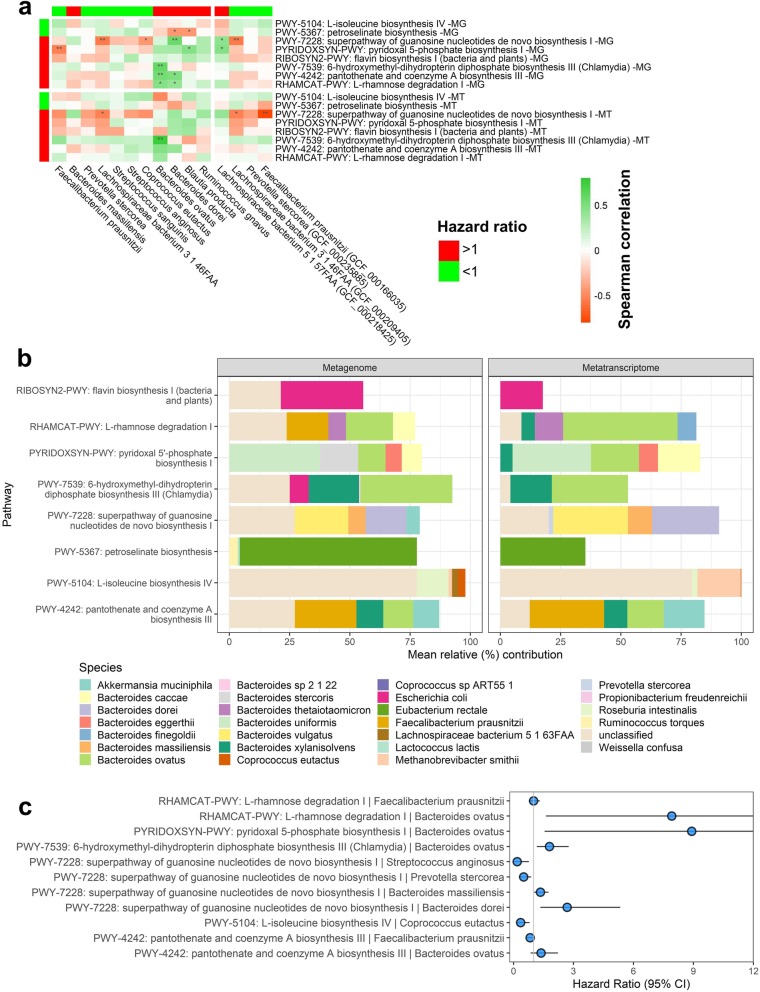
BACKGROUND: Recent evidence suggests that immunotherapy efficacy in melanoma is modulated by gut microbiota. Few studies have examined this phenomenon in humans, and none have incorporated metatranscriptomics, important for determining expression of metagenomic functions in the microbial community. METHODS: In melanoma patients undergoing immunotherapy, gut microbiome was characterized in pre-treatment stool using 16S rRNA gene and shotgun metagenome sequencing (n = 27). Transcriptional expression of metagenomic pathways was confirmed with metatranscriptome sequencing in a subset of 17. We examined associations of taxa and metagenomic pathways with progression-free survival (PFS) using 500 × 10-fold cross-validated elastic-net penalized Cox regression. RESULTS: Higher microbial community richness was associated with longer PFS in 16S and shotgun data (p < 0.05). Clustering based on overall microbiome composition divided patients into three groups with differing PFS; the low-risk group had 99% lower risk of progression than the high-risk group at any time during follow-up (p = 0.002). Among the species selected in regression, abundance of Bacteroides ovatus, Bacteroides dorei, Bacteroides massiliensis, Ruminococcus gnavus, and Blautia producta were related to shorter PFS, and Faecalibacterium prausnitzii, Coprococcus eutactus, Prevotella stercorea, Streptococcus sanguinis, Streptococcus anginosus, and Lachnospiraceae bacterium 3 1 46FAA to longer PFS. Metagenomic functions related to PFS that had correlated metatranscriptomic expression included risk-associated pathways of L-rhamnose degradation, guanosine nucleotide biosynthesis, and B vitamin biosynthesis. CONCLUSIONS: This work adds to the growing evidence that gut microbiota are related to immunotherapy outcomes, and identifies, for the first time, transcriptionally expressed metagenomic pathways related to PFS. Further research is warranted on microbial therapeutic targets to improve immunotherapy outcomes.
Overview
CoChat Summary
TL;DR
In a pilot study of 27 melanoma patients receiving immunotherapy, pre-treatment gut microbiome richness and composition were associated with progression-free survival (PFS), and metatranscriptomics identified expressed microbial pathways related to PFS. The work adds evidence that gut microbiota are related to immunotherapy outcomes and identifies transcriptionally expressed metagenomic pathways associated with PFS.
Key findings
- Higher microbial community richness was associated with longer PFS: 16S s-OTUs HR [95% CI] = 0.97 [0.95, 1.00], p = 0.02; shotgun subspecies HR [95% CI] = 0.89 [0.79, 0.99], p = 0.03.
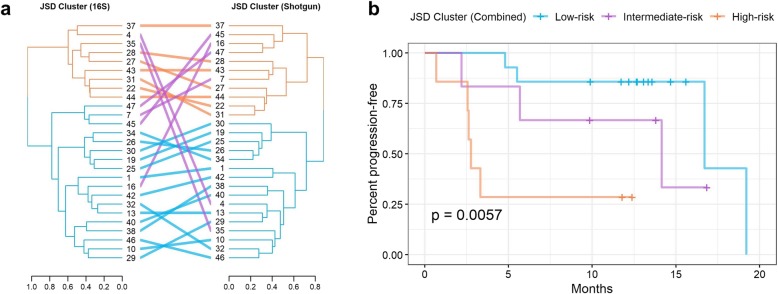
- Clustering by overall microbiome composition divided patients into three groups with differing PFS; the low-risk group had 99% lower risk of progression than the high-risk group at any time during follow-up (HR [95% CI] = 0.01 [0.001, 0.20], p = 0.002), while the intermediate-risk group had non-significantly lower risk (HR [95% CI] = 0.10 [0.005, 2.17], p = 0.14).
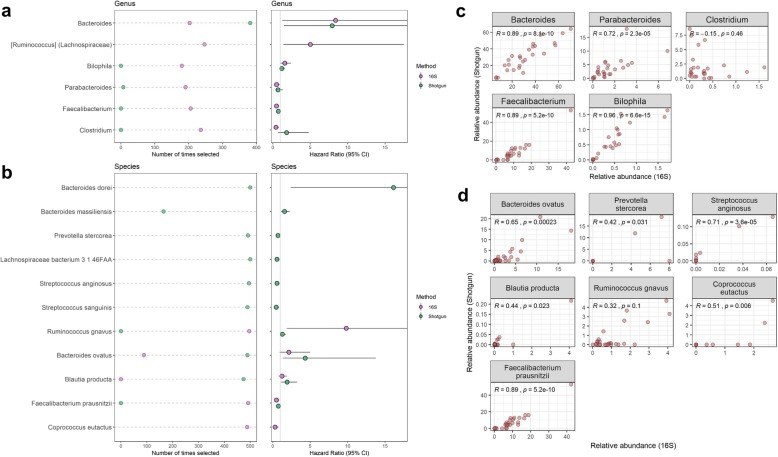
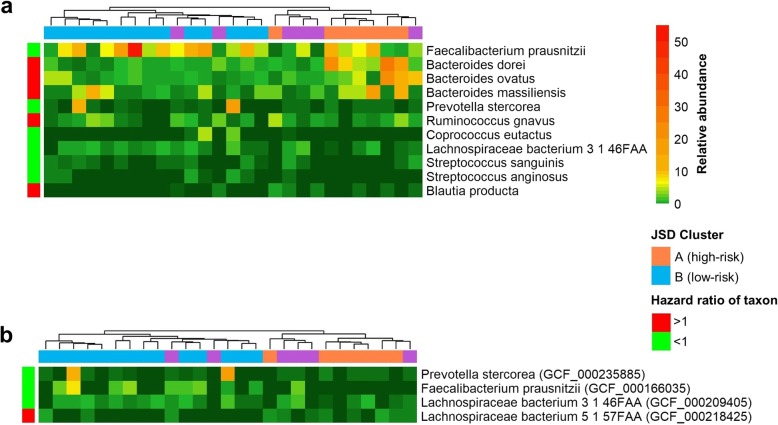
- Species related to shorter PFS included Bacteroides ovatus, Bacteroides dorei, Bacteroides massiliensis, Ruminococcus gnavus, and Blautia producta; species related to longer PFS included Faecalibacterium prausnitzii, Coprococcus eutactus, Prevotella stercorea, Streptococcus sanguinis, Streptococcus anginosus, and Lachnospiraceae bacterium 3 1 46FAA.
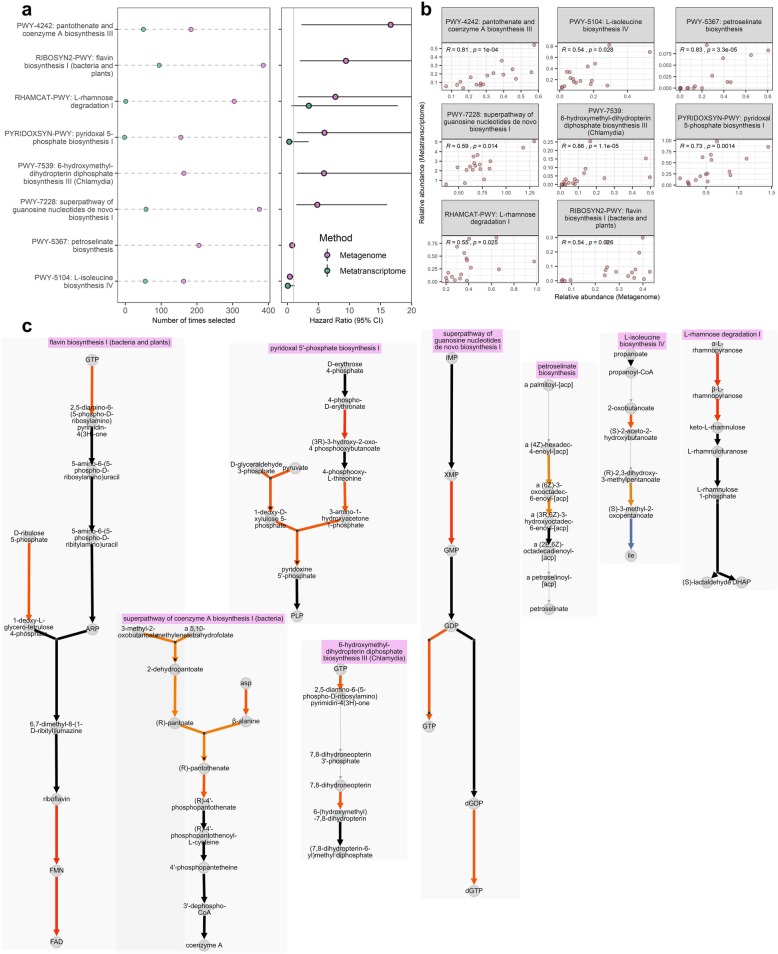
- Metagenomic functions with correlated metatranscriptomic expression included risk-associated pathways of l-rhamnose degradation, guanosine nucleotide biosynthesis, and B vitamin biosynthesis, and protective pathways of l-isoleucine and petroselinate biosynthesis.
Methods
- Pre-treatment stool samples from 27 patients with metastatic melanoma scheduled to receive immunotherapy at NYU Langone Health from September 2016 to November 2017, with follow-up through September 2018; samples underwent 16S rRNA gene and shotgun metagenome sequencing, and a subset of 17 underwent shotgun metatranscriptome sequencing after 10 samples failed library preparation due to poor RNA quality.
- The primary endpoint was PFS, defined as disease progression or death from any cause; associations of taxa and metagenomic pathways with PFS were assessed using 500 × 10-fold cross-validated elastic-net penalized Cox regression, adjusting for age, sex, BMI, stage, number of sites of metastases, and antibiotic use in the last 6 months.
- α-diversity and β-diversity were tested with Cox proportional hazards models, MiRKAT-S, OMiSA, and clustering with log-rank tests; functional features were filtered by prevalence, abundance, and variance, and metatranscriptomic correlations were examined with Spearman’s correlation, focusing on features selected ≥ 25% of 500 times, FDR-adjusted q < 0.20, and correlated metatranscriptomic expression p < 0.05.
Limitations
- The paper states that the study is limited by its small sample size, had insufficient sample size to analyze adjuvant and metastatic patient groups separately, and could not analyze patient groups separately by immunotherapy treatment regimen.
- The paper states that metatranscriptome sequencing data were available for only a subset of 17 patients, limiting power to assess relationships of metatranscriptomic expression and relative expression with PFS.
- Evident from the text: this is a single-center pilot study with no independent validation cohort, and the observational design cannot establish causality.
Model-written summary. Check it against the paper before relying on it.
Integrity signals
Registry
Cites
Statistics
Figures
Verification
Claims the paper makes
9 Valid · 1 Not valid · 5 Not checked · 89 Own results and interpretations
The cited sources support only part of this claim — read each source’s verdict below.
In the paper
“Treatment with immunotherapy targeting checkpoint inhibitors PD-1 or CTLA-4 significantly increases survival in patients with metastatic melanoma over other standards of care [1, 2]”
§ Relating the gut metagenome and metatranscriptome to immunotherapy responses in melanoma patients > Background
What the sources say
- Partly supportedcites [1] Robert C Long GV Brady B Dutriaux C Maio M Mortier L Nivolumab in previously untreated melanoma without BRAF mutation N Engl J Med 2015 372 4 320 330 10.1056/NEJMoa1412082 25399552 sourceExperimental — accuracy not yet measured
The Results and Conclusions report significantly better survival with the PD-1 inhibitor nivolumab than with dacarbazine, but the trial was limited to previously untreated patients with metastatic melanoma without a BRAF mutation. The Conclusions and Discussion also report survival benefits for ipilimumab in other trials. The claim omits those population and comparator limits and implies a broader benefit over standards of care than this paper establishes. (LLM, conf=0.85)
- Partly supportedcites [2] Hodi FS O'Day SJ McDermott DF Weber RW Sosman JA Haanen JB Improved survival with ipilimumab in patients with metastatic melanoma N Engl J Med 2010 363 8 711 723 10.1056/NEJMoa1003466 20525992 PMC3549297 sourceExperimental — accuracy not yet measured
The Abstract Conclusions and Discussion report improved overall survival with the CTLA-4 blocker ipilimumab in previously treated patients with metastatic melanoma. This study did not test PD-1 blockade, and its comparator was the gp100 vaccine, not other standards of care generally. (LLM, conf=0.88)
plainstates a cause- Asserted: passes — The authors put it forward as true.
- Checkable: passes — It can be checked against evidence.
- Load-bearing: passes — The paper’s conclusions depend on it.
- Based: passes — The paper gives a reason why it holds.
- Partly supported
The sources with a verdict support this claim; the rest weren’t checked yet, have no full text we could read, or their verdicts aren’t rated yet.
In the paper
“In human melanoma patients undergoing immunotherapy, gut microbiome composition has been significantly associated with clinical response [9–12]”
§ Relating the gut metagenome and metatranscriptome to immunotherapy responses in melanoma patients > Background
What the sources say
- Supportedcites [9] Gopalakrishnan V Spencer CN Nezi L Reuben A Andrews MC Karpinets TV Gut microbiome modulates response to anti-PD-1 immunotherapy in melanoma patients Science (New York, NY) 2018 359 6371 97 103 10.1126/science.aan4236 PMC5827966 29097493 source
The paper’s opening summary reports significant differences in gut microbiome diversity and composition between melanoma patients who responded to anti-PD-1 immunotherapy and those who did not. The study findings also link distinct gut microbial communities to treatment outcome. Page numbers are not provided in our copy. (LLM, conf=0.94)
- Supportedcites [10] Matson V Fessler J Bao R Chongsuwat T Zha Y Alegre ML The commensal microbiome is associated with anti-PD-1 efficacy in metastatic melanoma patients Science (New York, NY) 2018 359 6371 104 108 10.1126/science.aao3290 PMC6707353 29302014 source
The paper reports analyzing pretreatment stool samples from patients with metastatic melanoma receiving immunotherapy. It states that commensal microbial composition was significantly associated with clinical response (Abstract; no page provided). (LLM, conf=0.94)
- Supportedcites [11] Frankel AE Coughlin LA Kim J Froehlich TW Xie Y Frenkel EP Metagenomic Shotgun Sequencing and Unbiased Metabolomic Profiling Identify Specific Human Gut Microbiota and Metabolites Associated with Immune Checkpoint Therapy Efficacy in Melanoma Patients Neoplasia (New York, NY) 2017 19 10 848 855 10.1016/j.neo.2017.08.004 PMC5602478 28923537 source
The Results report significant differences in the abundance of specific gut bacterial species between responders and other patients with metastatic melanoma receiving immune checkpoint therapy (P = .032–.046). This supports the claimed association between gut microbiome composition and clinical response; the Results separately note that overall microbiome diversity was not significantly different. (LLM, conf=0.93)
- Not checked — no full text of the sourcecites [12] Chaput N Lepage P Coutzac C Soularue E Le Roux K Monot C Baseline gut microbiota predicts clinical response and colitis in metastatic melanoma patients treated with ipilimumab Ann Oncol 2017 28 6 1368 1379 10.1093/annonc/mdx108 28368458 source
plainstates an association- Asserted: passes — The authors put it forward as true.
- Checkable: passes — It can be checked against evidence.
- Load-bearing: passes — The paper’s conclusions depend on it.
- Based: passes — The paper gives a reason why it holds.
- Supported
Every source the paper cites for this claim was checked and supports it.
In the paper
“Human gut microbiota may modulate the effectiveness of immunotherapy, and anticancer immunosurveillance in general, by shaping both effector and suppressor immune cell populations through pathogen-associated molecular patterns (PAMPs), antigens, and metabolites [40].”
§ Relating the gut metagenome and metatranscriptome to immunotherapy responses in melanoma patients > Discussion
What the sources say
- Supportedcites [40] Zitvogel L Ayyoub M Routy B Kroemer G Microbiome and Anticancer Immunosurveillance Cell. 2016 165 2 276 287 10.1016/j.cell.2016.03.001 27058662 source
Split into 2 atoms — 2 confirmed, 0 partially supported, 0 disputed, 0 misattributed, 0 unverifiable. Expand the claim to see per-atom verdicts.
hedgedstates a possible cause- Asserted: passes — The authors put it forward as true.
- Checkable: passes — It can be checked against evidence.
- Load-bearing: passes — The paper’s conclusions depend on it.
- Based: passes — The paper gives a reason why it holds.
- Supported
A result the paper reports from its own data — it cites no other source for it, so there is none to check. The quote shows it is in the paper.
In the paper
“Among the species selected in regression, abundance of Bacteroides ovatus, Bacteroides dorei, Bacteroides massiliensis, Ruminococcus gnavus, and Blautia producta were related to shorter PFS, and Faecalibacterium prausnitzii, Coprococcus eutactus, Prevotella stercorea, Streptococcus sanguinis, Streptococcus anginosus, and Lachnospiraceae bacterium 3 1 46FAA to longer PFS.”
§ Relating the gut metagenome and metatranscriptome to immunotherapy responses in melanoma patients > Abstract > Results
plainstates an association- Asserted: passes — The authors put it forward as true.
- Checkable: passes — It can be checked against evidence.
- Load-bearing: passes — The paper’s conclusions depend on it.
- Based: passes — The paper gives a reason why it holds.
70 more claims
Create a free account to see all 104 claims and to verify the 2 references still open.
- Probably not a substantial claim. 20
- It may state two separate claims as one. 13
- Borderline: one of the tests for a substantial claim is unclear. 1
Claims other papers make about this one
Each is checked against this paper’s own text: does it say what the citing paper says it does?
The source backs part of the claim, not all of it — or backs it for a different population, condition or comparison.
In the citing paper
“Data from the Peters et al. study had indicated the riboflavin (vitamin B2), pantothenate (vitamin B5), pyroxidal 5-phosphate (vitamin B6), and folate (vitamin B9) biosynthesis pathways as being predominantly present in NR (18)”
From Meta-analysis of the gut microbiota in predicting response to cancer immunotherapy in metastatic melanoma (2020) · cites this paper as [18]
Experimental — accuracy not yet measuredThe source backs part of the claim, not all of it — or backs it for a different population, condition or comparison.
In the citing paper
“A meta-analysis found that high abundance of Faecalibacterium genus was the strongest signal associated with response to ICI, using either anti-PD-1 or anti-CTLA-4 antibodies.5–7,12,13”
From Faecalibacterium prausnitzii strain EXL01 boosts efficacy of immune checkpoint inhibitors (2024) · cites this paper as [13]
Experimental — accuracy not yet measuredThe source backs part of the claim, not all of it — or backs it for a different population, condition or comparison.
In the citing paper
“Similarly, Bacteroides ovatus, Prevotella copri (renamed Segatella copri), Ruminococcus gnavus (renamed Mediterraneibacter gnavus), and Clostridiumsymbiosum are negatively correlated with ICB efficacy in certain contexts, despite associations with positive outcomes with chemotherapy or other monoclonal antibody therapies in other studies (Di Luccia et al., 2024; Peters et al., 2019; Routy et al.,”
From Microbiota-centered interventions to boost immune checkpoint blockade therapies (2025) · cites this paper as Peters et al., 2019
Experimental — accuracy not yet measuredThe cited source says what the claim attributes to it.
In the citing paper
“Recently, the gut microbiota has emerged as a potent new factor associated with the efficacy of anti–CTLA4, anti–PD-1, and anti–PD-L1 treatment (8-14).”
From Enterococcus peptidoglycan remodeling promotes checkpoint inhibitor cancer immunotherapy (2021) · cites this paper as [14]
The cited source says what the claim attributes to it.
In the citing paper
“Gut bacteria modulate the response to immune checkpoint blockade (ICB) treatment in cancer”
From Dietary fiber and probiotics influence the gut microbiome and melanoma immunotherapy response (2021) · cites this paper as [6]
6 more claims about this paper
Create a free account to see every claim other papers make about this one.
Self-check
Percentages, sums and reported differences re-computed from the paper’s own numbers.
Rated minor: it would not touch a result — a value no result rests on, a p-value that stays on the same side of the significance level, or a conflict that is clerical, resolved elsewhere in the paper, or outside its own findings.
In the paper
“Each 25 μL PCR reaction contained 9.5 μL of Mo Bio PCR Water (Certified DNA-Free), 12.5 μL of QuantaBio’s AccuStart II PCR ToughMix (2× concentration, 1× final), 1 μL Golay barcode tagged Forward Primer (5 μM concentration, 200 pM final), 1 μL Reverse Primer (5 μM concentration, 200 pM final), and 1 μL of template DNA.”
§ Relating the gut metagenome and metatranscriptome to immunotherapy responses in melanoma patients > Methods > 16S rRNA gene sequencing
Reported 200 · recomputed 0.2
Citations
Cites
Controlling the False Discovery Rate: A Practical and Powerful Approach to Multiple Testing
Benjamini, Y., & Hochberg, Y. (1995) · Journal of the Royal Statistical Society Series B: Statistical Methodology · doi:10.1111/j.2517-6161.1995.tb02031.x · Cited by 109,482
Trimmomatic: a flexible trimmer for Illumina sequence data
Bolger, A. M., Lohse, M., & Usadel, B. (2014) · Bioinformatics · doi:10.1093/bioinformatics/btu170 · Cited by 65,548
Fast gapped-read alignment with Bowtie 2
Langmead, B., & Salzberg, S. L. (2012) · Nature Methods · doi:10.1038/nmeth.1923 · Cited by 56,400
QIIME allows analysis of high-throughput community sequencing data
Caporaso, J. G., Kuczynski, J., Stombaugh, J., Bittinger, K., Bushman, F. D., Costello, E. K., Fierer, N., Peña, A. G., Goodrich, J. K., Gordon, J. I., et al. (2010) · Nature Methods · doi:10.1038/nmeth.f.303 · Cited by 34,887 · cited 1×
“Sequence reads were processed using QIIME 2 [17].”
MethodPD-1 and PD-L1 Immune Checkpoint Blockade to Treat Breast Cancer
Hartkopf, A. D., Taran, F.-A., Wallwiener, M., Walter, C. B., Krämer, B., Grischke, E.-M., & Brucker, S. Y. (2016) · Breast Care · doi:10.1159/000453569 · Cited by 30,845
Regularization Paths for Generalized Linear Models via Coordinate Descent
Friedman, J., Hastie, T., & Tibshirani, R. (2010) · Journal of Statistical Software · doi:10.18637/jss.v033.i01 · Cited by 19,927
MAFFT: a novel method for rapid multiple sequence alignment based on fast Fourier transform
Katoh, K. (2002) · Nucleic Acids Research · doi:10.1093/nar/gkf436 · Cited by 17,027 · cited 3×
“structed via sequence alignment with MAFFT [21], fil-”
MethodInfluentialImproved Survival with Ipilimumab in Patients with Metastatic Melanoma
Hodi, F. S., O'Day, S. J., McDermott, D. F., Weber, R. W., Sosman, J. A., Haanen, J. B., Gonzalez, R., Robert, C., Schadendorf, D., Hassel, J. C., et al. (2010) · New England Journal of Medicine · doi:10.1056/nejmoa1003466 · Cited by 15,155
Self-citationThe blockade of immune checkpoints in cancer immunotherapy
Pardoll, D. M. (2012) · Nature Reviews Cancer · doi:10.1038/nrc3239 · Cited by 13,838
Greengenes, a Chimera-Checked 16S rRNA Gene Database and Workbench Compatible with ARB
DeSantis, T. Z., Hugenholtz, P., Larsen, N., Rojas, M., Brodie, E. L., Keller, K., Huber, T., Dalevi, D., Hu, P., & Andersen, G. L. (2006) · Applied and Environmental Microbiology · doi:10.1128/aem.03006-05 · Cited by 10,891
Research works printed but not linked: 1
- Peters BA Wilson M Moran U Pavlick A Izsak A Wechter T Relating the gut metagenome and metatranscriptome to immunotherapy responses in melanoma patients datasets 2019 PMC6785875 31597568
Cited by
Items 101–200 of 260
Yang, S., Zhao, S., Ye, Y., Jia, L., & Lou, Y. (2022) · Frontiers in Immunology · doi:10.3389/fimmu.2022.952546 · Cited by 35
Gut Microbiome in Patients With Early-Stage and Late-Stage Melanoma
Witt, R. G., Cass, S. H., Tran, T., Damania, A. V., Nelson, E. E., Sirmans, E., Burton, E. M., Chelvanambi, M., Johnson, S. B., Tawbi, H. A., et al. (2023) · JAMA Dermatology · doi:10.1001/jamadermatol.2023.2955 · Cited by 29
Current clinical translation of microbiome medicines
McCoubrey, L. E., Elbadawi, M., & Basit, A. W. (2022) · Trends in Pharmacological Sciences · doi:10.1016/j.tips.2022.02.001 · Cited by 29
Huang, J., Gong, C., & Zhou, A. (2023) · Therapeutic Advances in Medical Oncology · doi:10.1177/17588359231204854 · Cited by 33
Tomela, K., Pietrzak, B., SCHMIDT, M. T., & Mackiewicz, A. A. (2020) · Life · doi:10.3390/life10100219 · Cited by 26
Zhang, R., Zheng, S., Guo, Z., Wang, Y., Yang, G., Yin, Z., & Luo, L. (2021) · European Journal of Nutrition · doi:10.1007/s00394-021-02677-y · Cited by 26
Gut dysbiosis in cancer immunotherapy: microbiota-mediated resistance and emerging treatments
Eiman, L., Moazzam, K., Anjum, S., Kausar, H., Sharif, E. A. M., & Ibrahim, W. N. (2025) · Frontiers in Immunology · doi:10.3389/fimmu.2025.1575452 · Cited by 32
Consistent Stool Metagenomic Biomarkers Associated with the Response To Melanoma Immunotherapy
Olekhnovich, E. I., Ivanov, A. B., Babkina, A. A., Sokolov, A. A., Игоревич, У. В., Fedorov, D. E., & Ilina, E. N. (2023) · mSystems · doi:10.1128/msystems.01023-22 · Cited by 21
Ajab, S., Zoughbor, S. H., Labania, L., Östlundh, L., Orsud, H., Olanda, M., Alkaabi, O., Alkuwaiti, S. H., Alnuaimi, S., & Rasbi, Z. A. (2024) · PLoS ONE · doi:10.1371/journal.pone.0307639 · Cited by 26
Gut microbiota: a potential target for improved cancer therapy
Zhao, M., Jiang, G., Zhou, H., Li, J., Xiang, W., Li, S., Wang, H., & Zhou, J. (2022) · Journal of Cancer Research and Clinical Oncology · doi:10.1007/s00432-022-04546-5 · Cited by 20
Microbiota-centered interventions to boost immune checkpoint blockade therapies
Almonte, A. A., Thomas, S., & Zitvogel, L. (2025) · Journal of Experimental Medicine · doi:10.1084/jem.20250378 · Cited by 19
Xin, Y., Peng, G., Song, W., Zhou, X., Huang, X., & Cao, X. (2024) · Frontiers in Genetics · doi:10.3389/fgene.2024.1366131 · Cited by 25
Lim, M. Y., Hong, S., & Nam, Y. (2025) · Frontiers in Immunology · doi:10.3389/fimmu.2024.1512683 · Cited by 27
Oh, M., & Zhang, L. (2023) · Scientific Reports · doi:10.1038/s41598-023-31210-w · Cited by 24
MicrobiomeStatPlots: Microbiome statistics plotting gallery for meta‐omics and bioinformatics
Bai, D., Ma, C., Xun, J., Luo, H., Yang, H., Lyu, H., Zhu, Z., Gai, A., Yousuf, S., Peng, K., et al. (2025) · iMeta · doi:10.1002/imt2.70002 · Cited by 23
Austin, G. I., Kav, A. B., ElNaggar, S., Park, H., Biermann, J., Uhlemann, A., Pe’er, I., & Korem, T. (2025) · Nature Microbiology · doi:10.1038/s41564-025-01954-4 · Cited by 30
‘Know thyself’ – host factors influencing cancer response to immune checkpoint inhibitors
Gunjur, A., Manrique-Rincón, A., Klein, O., Behren, A., Lawley, T. D., Welsh, S. J., & Adams, D. J. (2022) · The Journal of Pathology · doi:10.1002/path.5907 · Cited by 20
The Emerging Roles of Human Gut Microbiota in Gastrointestinal Cancer
Guo, Q., Qin, H., Liu, X., Zhang, X., Chen, Z., Qin, T., Chang, L., & Zhang, W. (2022) · Frontiers in Immunology · doi:10.3389/fimmu.2022.915047 · Cited by 25
Golčić, M., Simetić, L., Herceg, D., Blažičević, K., Jovanović, G. K., Dražić, I., Belančić, A., Skočibušić, N., Palčevski, D., Rubinić, I., et al. (2023) · Cancers · doi:10.3390/cancers15113052 · Cited by 18
Oey, O., Liu, Y.-Y., Sunjaya, A. F., Simadibrata, D. M., Khattak, M. A., & Gray, E. (2022) · World Journal of Clinical Oncology · doi:10.5306/wjco.v13.i11.929 · Cited by 15
Luo, Z., Hao, S., Li, Y., Cheng, L., Zhou, X., Gunes, E. G., Liu, S., & Chen, J. (2022) · Frontiers in Immunology · doi:10.3389/fimmu.2022.1065004 · Cited by 19
Cai, X., Cho, J. Y., Chen, L., Liu, Y., Ji, F., Salgado, K., Ge, S., Yang, D., Yu, H., Shao, J., et al. (2025) · iScience · doi:10.1016/j.isci.2025.112162 · Cited by 21
Dóra, D., Kiraly, P., Somodi, C., Ligeti, B., Dulka, E., Gálffy, G., & Lohinai, Z. (2024) · Journal of Translational Medicine · doi:10.1186/s12967-024-05835-y · Cited by 18
The Microbiome in Advanced Melanoma: Where Are We Now?
Fortman, D. D., Hurd, D. E., & Davar, D. (2023) · Current Oncology Reports · doi:10.1007/s11912-023-01431-3 · Cited by 14
The Microbiome and Liver Cancer
Myojin, Y., & Greten, T. F. (2023) · The Cancer Journal · doi:10.1097/ppo.0000000000000646 · Cited by 13
Cannarile, M. A., Gomes, B., Cañamero, M., Reis, B., Byrd, A. L., Charo, J., Yadav, M., & Karanikas, V. (2021) · Clinical Cancer Research · doi:10.1158/1078-0432.ccr-20-2345 · Cited by 14
Reens, A. L., Cabral, D. J., Liang, X., Norton, J. E., Therien, A. G., Hazuda, D. J., & Swaminathan, G. (2021) · Frontiers in Immunology · doi:10.3389/fimmu.2021.643255 · Cited by 17
Poletto, S., Paruzzo, L., Nepote, A., Caravelli, D., Sangiolo, D., & Carnevale‐Schianca, F. (2023) · Cancers · doi:10.3390/cancers16010101 · Cited by 15
Dóra, D., Weiss, G. J., Megyesfalvi, Z., Gálffy, G., Dulka, E., Kerpel-Fronius, A., Berta, J., Moldvay, J., Döme, B., & Lohinai, Z. (2023) · Cancers · doi:10.3390/cancers15205091 · Cited by 15
Systemic metabolic depletion of gut microbiome undermines responsiveness to melanoma immunotherapy
Zakharevich, N. V., Morozov, M. D., Kanaeva, V. A., Filippov, M. S., Zyubko, T., Ivanov, A. B., Игоревич, У. В., Klimina, K. M., & Olekhnovich, E. I. (2024) · Life Science Alliance · doi:10.26508/lsa.202302480 · Cited by 12
Vogrig, A., Dentoni, M., Florean, I., Cellante, G., Domenis, R., Iacono, D., Pelizzari, G., Rossi, S., Damato, V., Fabris, M., et al. (2025) · Frontiers in Immunology · doi:10.3389/fimmu.2025.1548897 · Cited by 23
Tertiary lymphoid structures: exploring opportunities to improve immunotherapy in ovarian cancer
Varghese, A., Hess, S. M., Chilakapati, S. R., Conejo-Garcia, J. R., McGray, A. R., & Zsíros, E. (2025) · Frontiers in Immunology · doi:10.3389/fimmu.2025.1473969 · Cited by 17
The role of intestinal flora on tumor immunotherapy: recent progress and treatment implications
Zhou, Y., Liu, X., Gao, W., Luo, X., Lv, J., Wang, Y., & Liu, D. (2023) · Heliyon · doi:10.1016/j.heliyon.2023.e23919 · Cited by 13
Lou, J., Xiang, Z., Zhu, X., Fan, Y., Li, J., Jin, G., Cui, S., Huang, N., & Le, X. (2024) · Medicine · doi:10.1097/md.0000000000040432 · Cited by 15
Limeta, A., Gatto, F., Herrgård, M. J., Ji, B., & Nielsen, J. (2023) · Computational and Structural Biotechnology Journal · doi:10.1016/j.csbj.2023.07.032 · Cited by 9
Jaeghere, E. A. D., Hamerlinck, H., Tuyaerts, S., Lippens, L., Nuffel, A. M. T. V., Baiden-Amissah, R. E. M., Vuylsteke, P., Henry, S., Trinh, X. B., van Dam, P. A., et al. (2024) · Gynecologic Oncology · doi:10.1016/j.ygyno.2024.10.020 · Cited by 13
Robinson, I., Hochmair, M. J., Schmidinger, M., Absenger, G., Pichler, M., Nguyen, V. A., Richtig, E., Rainer, B. M., Ay, L., Jansen, C., et al. (2023) · Cancers · doi:10.3390/cancers15133268 · Cited by 12
(2022) · doi:10.20944/preprints202210.0009.v1 · Cited by 36
Fuochi, V., Spampinato, M., Distefano, A., Palmigiano, A., Garozzo, D., Zagni, C., Rescifina, A., Volti, G. L., & Furneri, P. M. (2023) · Frontiers in Molecular Biosciences · doi:10.3389/fmolb.2023.1082526 · Cited by 14
Guo, J., Wang, C., Li, H., & Ding, C. (2025) · Journal of Ovarian Research · doi:10.1186/s13048-025-01610-9 · Cited by 12
Leveraging Scheme for Cross-Study Microbiome Machine Learning Prediction and Feature Evaluations
Song, K., & Zhou, Y. (2023) · Bioengineering · doi:10.3390/bioengineering10020231 · Cited by 9
Tong, T., Huang, X., Li, L., Hu, M., Zhu, X., Zhu, B., Ma, Y., Ning, L., Jiang, Y., Zhang, Y., et al. (2026) · Cell Metabolism · doi:10.1016/j.cmet.2025.12.012 · Cited by 14
Gao, X., & Jiang, J. (2024) · Frontiers in Immunology · doi:10.3389/fimmu.2024.1359029 · Cited by 12
Block, M. S., Nelson, G. D., Chen, J., Johnson, S. P., Yang, L., Flotte, T. J., Grewal, E. P., McWilliams, R. R., Kottschade, L. A., Domingo‐Musibay, E., et al. (2025) · Journal for ImmunoTherapy of Cancer · doi:10.1136/jitc-2025-011706 · Cited by 11
A conserved pilin from uncultured gut bacterial clade TANB77 enhances cancer immunotherapy
Kim, C. Y., Park, D. J., Ahn, B., Baek, S., Hong, M. H., Nguyen, L. T., Hwang, S. H., Kim, N., Podlesny, D., Orakov, A. N., et al. (2024) · Nature Communications · doi:10.1038/s41467-024-55388-3 · Cited by 12
Guardamagna, M., Berciano‐Guerrero, M., Lavado-Valenzuela, R., Auclin, É., Onieva-Zafra, J. L., Plaza-Andrades, I. J., Oliver, J., Garrido-Aranda, A., Pérez-Ruiz, E., Álvarez, M., et al. (2025) · Scientific Reports · doi:10.1038/s41598-025-11054-2 · Cited by 10
Tavano, F., Napoli, A., Gioffreda, D., Palmieri, O., Latiano, T. P., Tardio, M., di Mola, F. F., Grottola, T., Büchler, M. W., Gentile, M., et al. (2025) · Microorganisms · doi:10.3390/microorganisms13020452 · Cited by 10
MiCloud: A unified web platform for comprehensive microbiome data analysis
Gu, W., Moon, J., Chisina, C., Kang, B., Park, T., & Koh, H. (2022) · PLoS ONE · doi:10.1371/journal.pone.0272354 · Cited by 10
Mismatches in 16S rRNA Gene Primers: An Area Worth Further Exploring
Ren, W.-T., Zhong, Y.-W., Ding, Y., Wu, Y., Xu, X., & Zhou, P. (2022) · Frontiers in Microbiology · doi:10.3389/fmicb.2022.888803 · Cited by 13
Hossain, S. M., Ly, K., Sung, Y. J., Braithwaite, A. W., & Li, K. (2024) · International Journal of Molecular Sciences · doi:10.3390/ijms251810120 · Cited by 13
Hasuda, H., Ikeda, T., Makizaki, Y., Yokota, H., Tanaka, Y., Ohno, H., Shimokawa, M., Matsuoka, H., Kimura, Y., Oki, E., et al. (2022) · Surgery Today · doi:10.1007/s00595-022-02607-3 · Cited by 10
Ascierto, P. A., Puzanov, I. J., Agarwala, S. S., Blank, C. U., Carvajal, R. D., Demaria, S., Dummer, R., Ernstoff, M. S., Ferrone, S., Fox, B. A., et al. (2020) · Journal of Translational Medicine · doi:10.1186/s12967-020-02482-x · Cited by 8
Self-citationPotential role of gut microbes in the efficacy and toxicity of immune checkpoints inhibitors
Ma, J., Wei, Q., Cheng, X. M., Zhang, J., Zhang, Z., & Su, J. (2023) · Frontiers in Pharmacology · doi:10.3389/fphar.2023.1170591 · Cited by 9
Wang, W. “., Pang, W., Yan, S., Zheng, X., Han, Q., Yao, Y., Jin, L., & Zhang, C. (2023) · Frontiers in Pharmacology · doi:10.3389/fphar.2023.1165584 · Cited by 9
Wang, Y.-W., Yao, T., Lin, Y., Ge, H., Huang, B., Gao, Y., & Wu, J. (2024) · Frontiers in Cellular and Infection Microbiology · doi:10.3389/fcimb.2024.1327083 · Cited by 10
Myron Gordon Award paper: Microbes, T‐cell diversity and pigmentation
Poole, I. C. L. (2021) · Pigment Cell & Melanoma Research · doi:10.1111/pcmr.12957 · Cited by 5
Microbiota and cancer immunotherapy: Mechanisms, clinical implications, and precision therapeutics
Wei, D., Sun, Y., Han, J., & Liu, J. (2025) · Seminars in Cancer Biology · doi:10.1016/j.semcancer.2025.12.002 · Cited by 9
Lobel, L., Fonseca‐Pereira, D., Nakatsu, G., Michaud, M., Cao, Y. G., Bae, S., Krabak, C., Oren, Y., Clay, S. L., Tekle, G. E., et al. (2026) · Immunity · doi:10.1016/j.immuni.2026.05.001 · Cited by 6
Mirabile, A., Rivoltini, L., Daveri, E., Vernieri, C., Mele, R., Porcu, L., Lazzari, C., Bulotta, A., Viganò, M. G., Cascinu, S., et al. (2020) · Cancers · doi:10.3390/cancers12051153 · Cited by 6
Causal associations between gut microbiota and cutaneous melanoma: a Mendelian randomization study
Bao, Y.-Q., Zhang, Y., & Li, Z.-N. (2024) · Frontiers in Microbiology · doi:10.3389/fmicb.2024.1339621 · Cited by 6
Li, Y., Feng, Z., Liang, C., Lu, S., Wang, G., & Meng, G. (2025) · BMC Gastroenterology · doi:10.1186/s12876-025-03819-w · Cited by 9
Fortman, D. D., Avellan, M. G. P., Hurd, D. E., Schwartz, M. B., Dubner, H. M., Hewitt, C., Berton, S., Ernst, S. J., Rose, A. E., Wangd, H. Z. H., et al. (2023) · Melanoma Research · doi:10.1097/cmr.0000000000000871 · Cited by 6
Wojciechowski, S., Majchrzak-Gorecka, M., Biernat, P., Odrzywołek, K., Pruss, Ł., Zych, K., Majta, J., & Milanowska, K. (2022) · International Journal of Medical Microbiology · doi:10.1016/j.ijmm.2022.151560 · Cited by 6
The Intestinal Microbiota and Therapeutic Responses to Immunotherapy
Herrera, P. S., & van den Brink, M. R. M. (2024) · Annual Review of Cancer Biology · doi:10.1146/annurev-cancerbio-062722-035210 · Cited by 6
Liu, Z., Wang, Q., Ma, A., Feng, S., Chung, D., Zhao, J., Ma, Q., & Liu, B. (2023) · Computers in Biology and Medicine · doi:10.1016/j.compbiomed.2023.107458 · Cited by 4
Qiao, T., & Zhu, Z. (2025) · Microorganisms · doi:10.3390/microorganisms13112595 · Cited by 9
Gut Bacteria Provide Genetic and Molecular Reporter Systems to Identify Specific Diseases
Dicks, L. M. T. (2024) · International Journal of Molecular Sciences · doi:10.3390/ijms25084431 · Cited by 5
Ferreira, A., Neves, M. T., Baleiras, A., Malheiro, M., & Martins, A. (2022) · Cureus · doi:10.7759/cureus.32586 · Cited by 7
Dravillas, C. E., Williams, N. F., Husain, M., Hoyd, R., Hussein, A., Meara, A. S., Lynn, M., Bibi, A., Conrad, B., Lepola, N., et al. (2025) · medRxiv · doi:10.1101/2025.01.30.25321413 · Cited by 5
Dóra, D., Revisnyei, P., Mihucz, A., Kiraly, P., Szklenárik, G., Dulka, E., Gálffy, G., & Lohinai, Z. (2024) · Frontiers in Cellular and Infection Microbiology · doi:10.3389/fcimb.2024.1381170 · Cited by 5
Usyk, M., Hayes, R. B., Knight, R. D., González, A., Li, H., Osman, I., Weber, J. S., & Ahn, J. (2024) · bioRxiv (Cold Spring Harbor Laboratory) · doi:10.1101/2024.04.16.589761 · Cited by 4
Self-citationTargeting the microbiota‐ miRNA ‐protease axis: A new therapeutic avenue in melanoma
Katsoulieris, E. N., Ioannou, P., & Afratis, N. A. (2026) · FEBS Journal · doi:10.1111/febs.70386 · Cited by 4
Oh, M., & Zhang, L. (2021) · bioRxiv (Cold Spring Harbor Laboratory) · doi:10.1101/2021.05.06.443032 · Cited by 2
Zhang, L., Zhou, D., Feng, J., Liao, Z.-J., Shu, X.-L., Yang, R., Gao, Y., Zhou, H., Zhang, W., Zou, Y. F., et al. (2025) · npj Biofilms and Microbiomes · doi:10.1038/s41522-025-00827-2 · Cited by 8
Zhang, L., Li, D., Zhang, Y., Hu, W., Lv, H., Zhang, X., & Zhang, H. Y. (2024) · Frontiers in Oncology · doi:10.3389/fonc.2024.1366975 · Cited by 4
Role of the microbiota in oncogenesis
Grigorievskaya, Z. V., Николаевна, П. И., Bagirova, N. S., Агинова, В. В., & Kononets, P. V. (2023) · Siberian Journal of Oncology · doi:10.21294/1814-4861-2023-22-2-129-142 · Cited by 3
Usyk, M., Hayes, R. B., Knight, R. D., Gonzalez, A., Huilin, L. I., Osman, I., Weber, J. S., & Ahn, J. (2026) · Cell · doi:10.1016/j.cell.2026.03.041 · Cited by 8
Self-citationMicrobiome data integration via shared dictionary learning
Yuan, B., & Wang, S. (2025) · Nature Communications · doi:10.1038/s41467-025-63425-y · Cited by 8
Zhang, F., Hu, K., Sun, C., Chen, R., Ni, G., Liu, X., Wei, L., & Su, R. (2026) · Gut Microbes · doi:10.1080/19490976.2026.2662690 · Cited by 4
Zhao, B., Zhou, B., Li, Q., Su, C., Ma, J., & Yang, L. (2024) · MedComm – Future Medicine · doi:10.1002/mef2.70006 · Cited by 3
Desîlets, A., & Elkrief, A. (2023) · Current Opinion in Oncology · doi:10.1097/cco.0000000000000957 · Cited by 5
Role of Human Microbiome in Development and Management of Head and Neck Squamous Cell Carcinoma
Palkovský, M., Modráčková, N., Bunešová, V., Liberko, M., Hlodáková, A., & Soumarová, R. (2025) · Cancers · doi:10.3390/cancers17132238 · Cited by 2
Nagasaka, M., Al-Share, B. A., Shao, Y. F., Sexton, R. E., Hallak, M. N. A., Azmi, A. S., & Sukari, A. W. (2021) · Elsevier eBooks · doi:10.1016/b978-0-12-819265-8.00047-4 · Cited by 3
Gut microbiota and risk of cervical cancer: a Mendelian multivariable randomization study
Lu, L., Li, Z., Qiang, P., & Shao, Y. (2025) · Discover Oncology · doi:10.1007/s12672-025-03717-3 · Cited by 3
Emerging insights into bioactivities of umami and umami-enhancing compounds: A review
Huang, P., Wang, Z., & Cui, C. (2026) · Journal of Future Foods · doi:10.1016/j.jfutfo.2026.01.018 · Cited by 3
Tanaka, Y., Miki, D., Hayes, C. N., Kawahara, M., Sueda, S., Emori, T., Hashimoto, K., Mitamura, Y., Tanaka, A., Hiraoka, K., et al. (2026) · Microorganisms · doi:10.3390/microorganisms14040867 · Cited by 3
Drymel, B., Tomela, K., Galus, Ł., Olejnik‐Schmidt, A., Mackiewicz, J., Kaczmarek, M., Mackiewicz, A. A., & SCHMIDT, M. T. (2024) · International Journal of Molecular Sciences · doi:10.3390/ijms252312982 · Cited by 3
Recent Advances in Bacterium‐Based Therapeutic Modalities for Melanoma Treatment
Khan, M., Dong, Y., Ullah, R., Li, M., Huang, Q., Hu, Y., Li, Y., & Luo, Z. Y. (2024) · Advanced Healthcare Materials · doi:10.1002/adhm.202401076 · Cited by 2
Ji, S., Liu, Y., Xu, Y., Gao, J., Jin, J., Jiang, P., Li, Y. K., Su, D., Zhao, Y., Yang, S., et al. (2026) · Nature Microbiology · doi:10.1038/s41564-026-02326-2 · Cited by 6
Huang, C.-L., Li, M., Liu, B., Zhu, H., Dai, Q., Fan, X., Mehta, K. D., Huang, C. H., Neupane, P. R., Wang, F., et al. (2020) · Research Square · doi:10.21203/rs.3.rs-73124/v1 · Cited by 2
Drymel, B., Tomela, K., Galus, Ł., Olejnik‐Schmidt, A., Mackiewicz, J., Kaczmarek, M., Mackiewicz, A. A., & SCHMIDT, M. T. (2025) · International Journal of Molecular Sciences · doi:10.3390/ijms26168063 · Cited by 3
An overview of the role of the gut microbiota in rheumatoid arthritis
Poznyak, A. V., Vatlin, A. A., Pavshintsev, V. V., Mitkin, N. A., Maltseva, O. N., Utkina, A. S., & Orekhov, A. N. (2026) · Microbiome Research Reports · doi:10.20517/mrr.2025.69 · Cited by 4
Lucas, A., Schäffer, D. E., Wickramasinghe, J. M., & Auslander, N. (2025) · PLoS Computational Biology · doi:10.1371/journal.pcbi.1013470 · Cited by 3
Peng, Y., Wang, Y., Liu, L., Liu, Y., Yu, Y., Sun, R., & Yu, Z. (2026) · Infectious Medicine · doi:10.1016/j.imj.2026.100254 · Cited by 4
Integration of donor microbiota following FMT correlates with anti-PD-1 response in melanoma
Fessler, J. L., Olm, M. R., Engleman, E. G., & Sonnenburg, J. L. (2026) · Nature Communications · doi:10.1038/s41467-026-73465-7 · Cited by 7
Neoadjuvant Vidutolimod and Nivolumab in High-Risk Resectable MelanomaPreprint
Davar, D., Morrison, R. M., Dzutsev, A., Karunamurthy, A., Chauvin, J.-M., Amatore, F., Stein, J. E., das Neves, R. X., Rodrigues, R. R., McCulloch, J. A., et al. (2022) · Research Square · doi:10.21203/rs.3.rs-2235839/v1 · Cited by 1
Metadata
- Authors
- Peters, B. A., Wilson, M., Moran, U., Pavlick, A., Izsak, A., Wechter, T., Weber, J. S., Osman, I., & Ahn, J.
- Affiliations
- NYU Langone Health (US)
- Thomas Jefferson University (US)
- Corresponding author
- Ahn, Jiyoung
- ORCID
- Venue
- Genome Medicine
- Published
- 2019-10-09
- Volume
- 11
- Issue
- 1
- Pages
- 61-61
- ISSN
- 1756-994X (ISSN-L)
- PMC
- PMC6785875
- OpenAlex
- W2979785336
- Cited by
- 263
- References
- 49
- Citations by year
- 2026: 34 · 2025: 40 · 2024: 56 · 2023: 47 · 2022: 38 · 2021: 33 · 2020: 12 · 2019: 2
- FWCI
- 7.19
- Type
- journal article
- Language
- en
- Open access
- gold
- doi.org
- Licence
- cc-by
- creativecommons.org/licenses/by/4.0/ (tdm)
- creativecommons.org/licenses/by/4.0/ (vor)
- Locations
- Genome Medicine (publishedVersion, cc-by)
- PubMed Central (publishedVersion, cc-by)
- PubMed (publishedVersion)
- The Medicine Forum (submittedVersion, cc-by)
- DOAJ (DOAJ: Directory of Open Access Journals) (submittedVersion, cc-by-sa)
- Funders
- National Cancer Institute (P50CA225450, P30CA016087, R01CA164964)
- Topics
- Life Sciences › Biochemistry, Genetics and Molecular Biology › Molecular Biology › Gut microbiota and health
- Health Sciences › Medicine › Oncology › Cancer Immunotherapy and Biomarkers
- Health Sciences › Dentistry › Periodontics › Oral microbiology and periodontitis research
- Keywords
- melanoma, immunotherapy response, gut microbiota, gut metagenome, metatranscriptome, progression-free survival, Bacteroides, Faecalibacterium prausnitzii, B vitamin biosynthesis, microbial metabolic pathways
- MeSH terms
- Gastrointestinal Microbiome, Aged, Feces, Female, Humans, Immunotherapy, Male, Melanoma, RNA, Ribosomal, 16S, Metagenome, Transcriptome, Microbiota
About these checks
Registry, retraction, Cites and statistics results are computed, not judged, with one exception: a printed reference that no index lists is read once by a model before it counts as a citation error. Claims are extracted by a model and kept only when their quote appears verbatim in the text; each cited source is then checked, with a model’s help, for whether it says what the claim relies on. Those verdicts can be wrong — read the claim’s quote and the cited source before relying on one.
The claim verdicts this report counts are experimental: their accuracy is not yet measured.
A language model drew the claims from the paper on 2026-10-10, under version 3 of the claim definition (model deepseek-v4.1-flash, prompt extract-v3).
A second model labelled each claim on 2026-10-10 (model jev-1.13-20260917, definition revision gold-guideline-v0.2).
Cited sources are checked with a language model’s help (gpt-6-sol).
Statistics and arithmetic are recomputed, not judged.
Confidence bands are shown only for fields calibrated on our annotated test set. None is calibrated yet, so no band is shown.
What counts as a claim ›How we measure confidence ›How we check this ›
Are you an author, or do you see a problem with this page? Request a review
Data sources
Bibliographic data: Semantic Scholar, OpenAlex, Crossref.
Contains information from the Semantic Scholar Academic Graph Datasets, made available under the ODC Attribution License (ODC-BY 1.0).
Semantic Scholar’s data is described in: Kinney, R., et al. (2023). The Semantic Scholar Open Data Platform. arXiv:2301.10140.
