

Acute ischemia induces spatially and transcriptionally distinct microglial subclusters
Open accessThe DOI matches its Crossref record; 54 of the 56 references it cites were found in a registry or an index.
Abstract
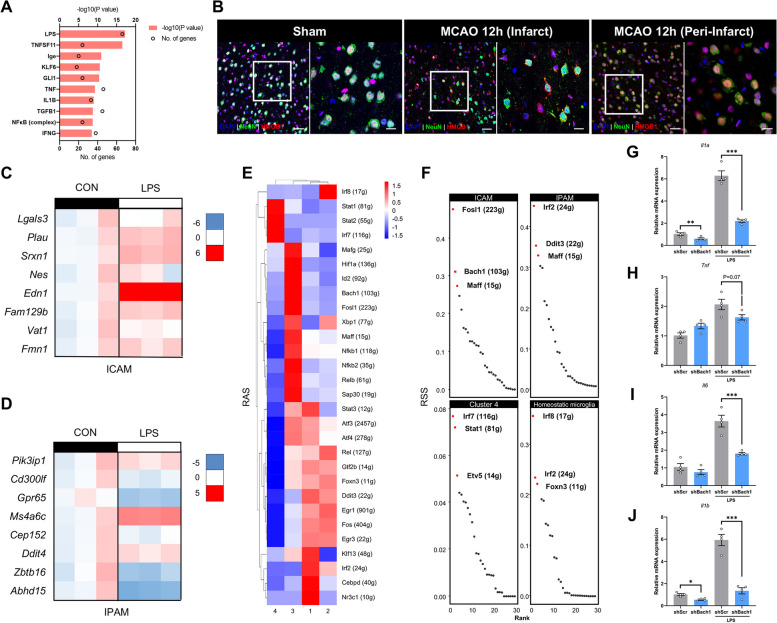
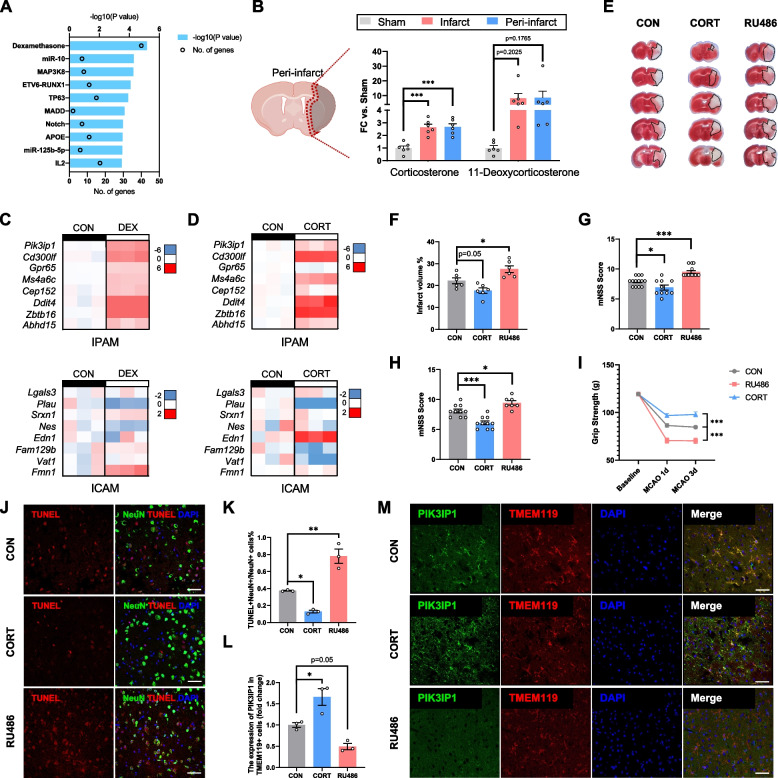
Background: Damage in the ischemic core and penumbra after stroke affects patient prognosis. Microglia immediately respond to ischemic insult and initiate immune inflammation, playing an important role in the cellular injury after stroke. However, the microglial heterogeneity and the mechanisms involved remain unclear. Methods: We first performed single-cell RNA-sequencing (scRNA-seq) and spatial transcriptomics (ST) on middle cerebral artery occlusion (MCAO) mice from three time points to determine stroke-associated microglial subclusters and their spatial distributions. Furthermore, the expression of microglial subcluster-specific marker genes and the localization of different microglial subclusters were verified on MCAO mice through RNAscope and immunofluorescence. Gene set variation analysis (GSVA) was performed to reveal functional characteristics of microglia sub-clusters. Additionally, ingenuity pathway analysis (IPA) was used to explore upstream regulators of microglial subclusters, which was confirmed by immunofluorescence, RT-qPCR, shRNA-mediated knockdown, and targeted metabolomics. Finally, the infarct size, neurological deficits, and neuronal apoptosis were evaluated in MCAO mice after manipulation of specific microglial subcluster. Results: We discovered stroke-associated microglial subclusters in the brains of MCAO mice. We also identified novel marker genes of these microglial subclusters and defined these cells as ischemic core-associated (ICAM) and ischemic penumbra-associated (IPAM) microglia, according to their spatial distribution. ICAM, induced by damage-associated molecular patterns, are probably fueled by glycolysis, and exhibit increased pro-inflammatory cytokines and chemokines production. BACH1 is a key transcription factor driving ICAM generation. In contrast, glucocorticoids, which are enriched in the penumbra, likely trigger IPAM formation, which are presumably powered by the citrate cycle and oxidative phosphorylation and are characterized by moderate pro-inflammatory responses, inflammation-alleviating metabolic features, and myelinotrophic properties. Conclusions: ICAM could induce excessive neuroinflammation, aggravating brain injury, whereas IPAM probably exhibit neuroprotective features, which could be essential for the homeostasis and survival of cells in the penumbra. Our findings provide a biological basis for targeting specific microglial subclusters as a potential therapeutic strategy for ischemic stroke.
Overview
The claims and statistics of this paper haven’t been checked yet.
Free: it reads the open-access text and checks the first 5 claims that cite a source we can check. Create a free account to check every claim.
Integrity signals
Registry
Cites
Statistics
Figures
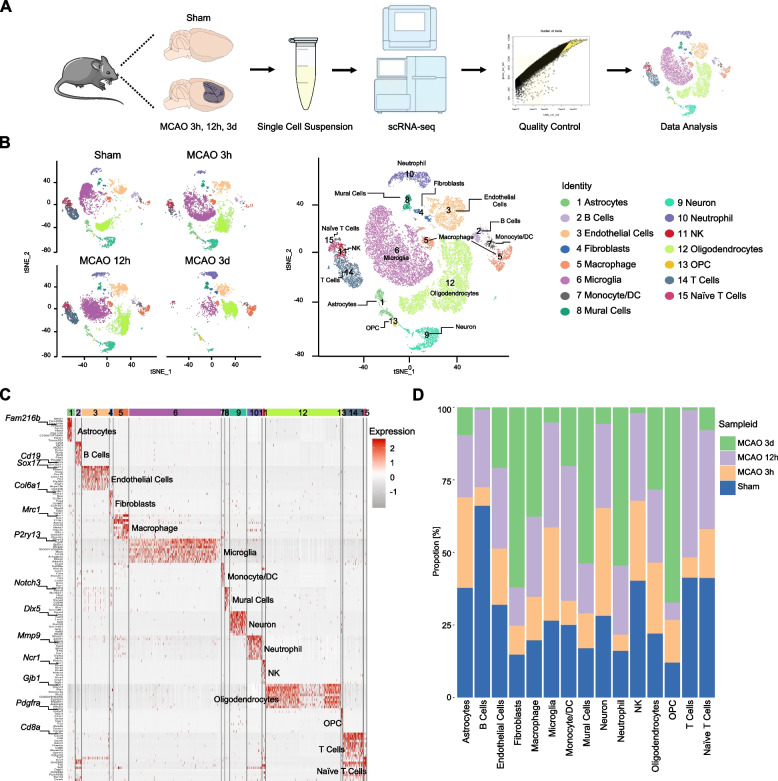
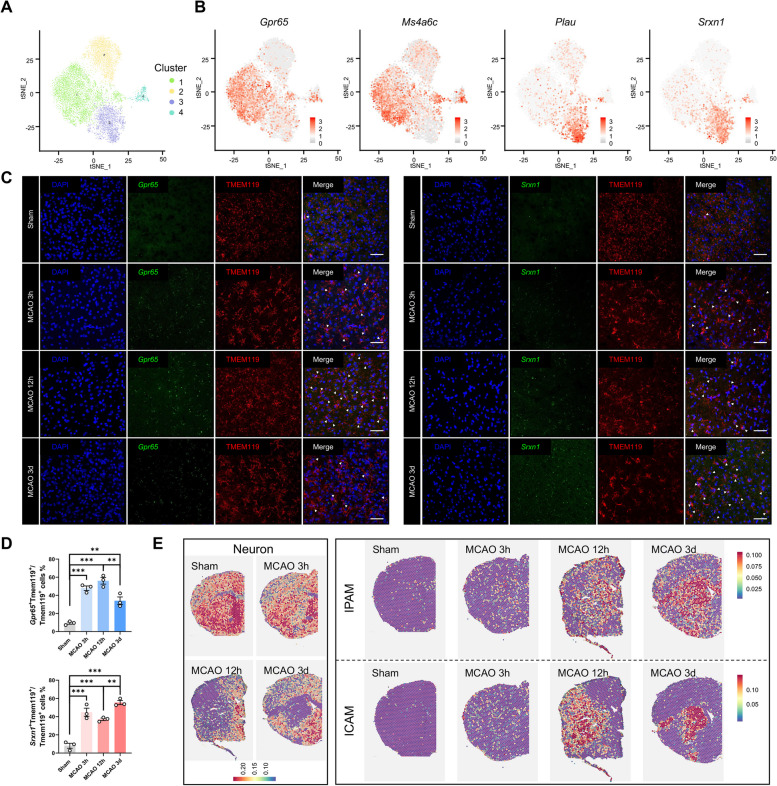
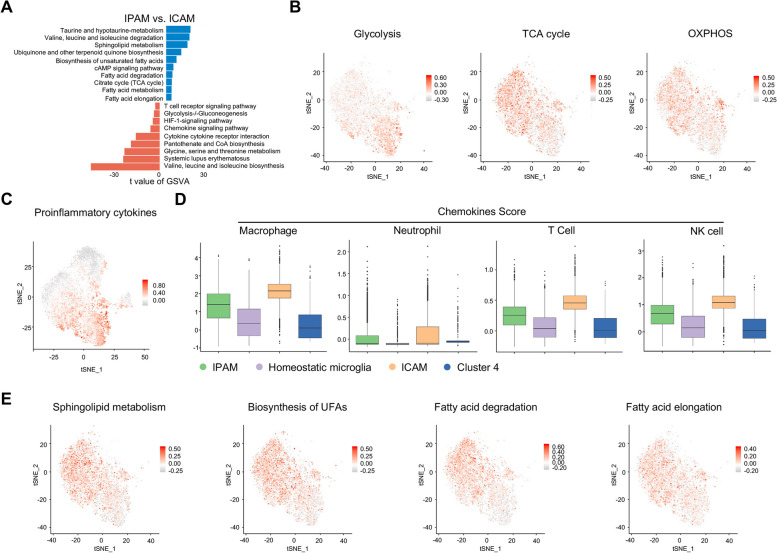
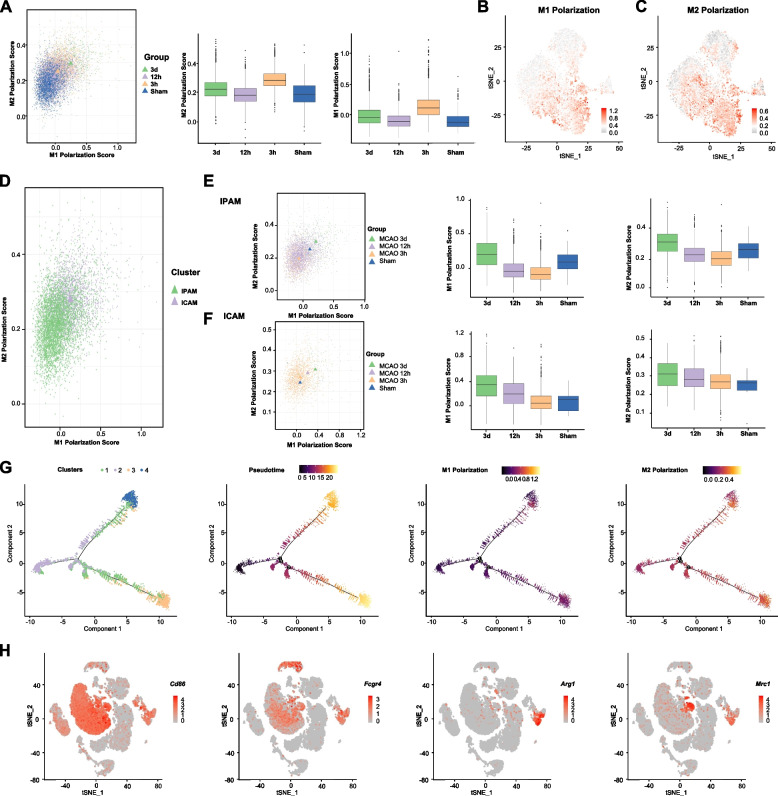
Verification
Claims the paper makes
The claims and statistics of this paper haven’t been checked yet.
Free: it reads the open-access text and checks the first 5 claims that cite a source we can check. Create a free account to check every claim.
Claims other papers make about this one
Each is checked against this paper’s own text: does it say what the citing paper says it does?
The source backs part of the claim, not all of it — or backs it for a different population, condition or comparison.
In the citing paper
“In contrast, IPAM, associated with the ischemic penumbra, with inflammation-alleviating and neuroprotective features.”
From Single-cell sequencing to multi-omics: technologies and applications (2024) · cites this paper as [24]
Experimental — accuracy not yet measuredThe cited source says what the claim attributes to it.
In the citing paper
“Thus, they reported that targeting specific microglial subclusters is a promising therapeutic strategy for ischemic stroke [24].”
From Single-cell sequencing to multi-omics: technologies and applications (2024) · cites this paper as [24]
The cited source says what the claim attributes to it.
In the citing paper
“ICAM was related to ischemia, exhibiting pro-inflammatory characteristics.”
From Single-cell sequencing to multi-omics: technologies and applications (2024) · cites this paper as [24]
The cited source says what the claim attributes to it.
In the citing paper
“Li et al. employed scRNA-seq and spatial transcriptomics to identify two distinct microglial subclusters (ICAM and IPAM).”
From Single-cell sequencing to multi-omics: technologies and applications (2024) · cites this paper as [24]
Self-check
Percentages, sums and reported differences re-computed from the paper’s own numbers.
The self-check needs the paper’s full text.
Citations
Cites
STAR: ultrafast universal RNA-seq aligner
Dobin, A., Davis, C. A., Schlesinger, F., Drenkow, J., Zaleski, C., Jha, S., Batut, P., Chaisson, M., & Gingeras, T. R. (2013) · Bioinformatics · doi:10.1093/bioinformatics/bts635 · Cited by 51,709
Comprehensive Integration of Single-Cell Data
Stuart, T., Butler, A., Hoffman, P., Hafemeister, C., Papalexi, E., Mauck, W. M., Hao, Y., Stoeckius, M., Smibert, P., & Satija, R. (2019) · Cell · doi:10.1016/j.cell.2019.05.031 · Cited by 15,453
Integrating single-cell transcriptomic data across different conditions, technologies, and species
Butler, A., Hoffman, P., Smibert, P., Papalexi, E., & Satija, R. (2018) · Nature Biotechnology · doi:10.1038/nbt.4096 · Cited by 13,174 · cited 1×
“Differentially-expressed genes (DEGs) were identified using the FindMarkers function (test, use = MAST) in Seurat [15].”
MethodScenic: single-cell regulatory network inference and clustering.
Aibar, S., González-Blas, C. B., Moerman, T., Huynh-Thu, V. A., Imrichova, H., Hulselmans, G., Rambow, F., Marine, J.-C., Geurts, P., Aerts, J., et al. (2017) · Nature Methods · doi:10.1038/nmeth.4463 · Cited by 6,520 · cited 2×
“SCENIC analysis was run using the motifs database for RcisTarget and GRNboost (SCENIC version 1.1.2.2, corresponding to RcisTarget 1.2.1 and AUCell 1.4.1) with the default parameters [16].”
MethodInfluentialA Unique Microglia Type Associated with Restricting Development of Alzheimer’s Disease
Keren-Shaul, H., Spinrad, A., Weiner, A., Matcovitch-Natan, O., Dvir-Szternfeld, R., Ulland, T. K., David, E., Baruch, K., Lara-Astaiso, D., Toth, B., et al. (2017) · Cell · doi:10.1016/j.cell.2017.05.018 · Cited by 5,493 · cited 2×
“Additionally, disease-associated microglia (DAM) were previously identified as a unique microglial subtype associated with Alzheimer’s disease (AD) [30].”
BackgroundAran, D., Looney, A. P., Liu, L., Wu, E., Fong, V., Hsu, A., Chak, S., Naikawadi, R. P., Wolters, P. J., Abate, A. R., et al. (2019) · Nature Immunology · doi:10.1038/s41590-018-0276-y · Cited by 4,984 · cited 1×
“To optimize clustering, unsupervised clustering according to gene expression and dispersion using the shared nearest neighbor algorithm was used [14].”
MethodEfremova, M., Vento-Tormo, M., Teichmann, S. A., & Vento-Tormo, R. (2020) · Nature Protocols · doi:10.1038/s41596-020-0292-x · Cited by 3,449
A polarizing question: do M1 and M2 microglia exist?
Ransohoff, R. M. (2016) · Nature Neuroscience · doi:10.1038/nn.4338 · Cited by 1,573 · cited 2×
“This dichotomous categorization was established based on the inflammatory states of in vitro cultured microglia [8].”
BackgroundLi, Q., Cheng, Z., Zhou, L., Darmanis, S., Neff, N. F., Okamoto, J., Gulati, G., Bennett, M. L., Sun, L. O., Clarke, L. E., et al. (2019) · Neuron · doi:10.1016/j.neuron.2018.12.006 · Cited by 1,129
Cole, T. J., Blendy, J. A., Monaghan, A. P., Krieglstein, K., Schmid, W., Aguzzi, A., Fantuzzi, G., Hummler, E., Unsicker, K., & Schütz, G. (1995) · Genes & Development · doi:10.1101/gad.9.13.1608 · Cited by 946 · cited 1×
“Moreover, homozygous null mutants for Nr3c1, which encodes a glucocorticoid receptor, was reported to result in perinatal lethality [59], which limits our ability to perform an in vivo study on the capacity of glucocorticoids for triggering IPAM formation.”
Background
Research works printed but not linked: 5
- Li H, Liu P, Zhang B, et al. Acute ischemia induces spatially and transcriptionally distinct microglial subclusters. PRJNA912889, NCBI Sequence Read Archive. 2023. https://www.ncbi.nlm.nih.gov/bioproject/PRJNA912889. PMC10712107 38082331
- Zheng K Lin L Jiang W Chen L Zhang X Zhang Q Ren Y Hao J Single-cell RNA-seq reveals the transcriptional landscape in ischemic stroke J Cereb Blood Flow Metab 2022 42 56 73 10.1177/0271678X211026770 34496660 PMC8721774 · DOI · Paper page
- Kim S Lee W Jo H Sonn SK Jeong SJ Seo S Suh J Jin J Kweon HY Kim TK The antioxidant enzyme Peroxiredoxin-1 controls stroke-associated microglia against acute ischemic stroke Redox Biol 2022 54 102347 10.1016/j.redox.2022.102347 35688114 PMC9184746 · DOI · Paper page
- Zeng F Cao J Hong Z Liu Y Hao J Qin Z Zou X Tao T Single-cell analyses reveal the dynamic functions of Itgb2(+) microglia subclusters at different stages of cerebral ischemia-reperfusion injury in transient middle cerebral occlusion mice model Front Immunol 2023 14 1114663 10.3389/fimmu.2023.1114663 37063847 PMC10098327 · DOI
- Li H, Liu P, Zhang B, et al. Acute ischemia induces spatially and transcriptionally distinct microglial subclusters. PRJNA912890, NCBI Sequence Read Archive. 2023. https://www.ncbi.nlm.nih.gov/bioproject/PRJNA912890. PMC10712107 38082331
Cited by
Single-cell sequencing to multi-omics: technologies and applications
Wu, X., Yang, X., Dai, Y., Zhao, Z., Zhu, J., Guo, H., & Yang, R. (2024) · Biomarker Research · doi:10.1186/s40364-024-00643-4 · Cited by 222
“Thus, they reported that targeting specific microglial subclusters is a promising therapeutic strategy for ischemic stroke [24].”
BackgroundSRGN amplifies microglia-mediated neuroinflammation and exacerbates ischemic brain injury
Qian, Y., Yang, L., Chen, J., Zhou, C., Zong, N., Geng, Y., Xia, S., Yang, H., Bao, X., Chen, Y., et al. (2024) · Journal of Neuroinflammation · doi:10.1186/s12974-024-03026-6 · Cited by 107
“To discover new molecules in controlling microglia-mediated proinflammatory response after ischemic stroke, we screened all genes encoding secretory proteins in microglia from our single-cell RNA sequencing (scRNA-seq) data in a murine model of ischemic stroke [11].”
BackgroundSelf-citationHe, Y., Wang, J., Ying, C., Xu, K. L., Luo, J., Wang, B., Gao, J., Yin, Z., & Zhang, Y. (2024) · Frontiers in Immunology · doi:10.3389/fimmu.2024.1482386 · Cited by 82
“Cellular injury from ischemic hypoxia instigates an in fl ammatory response; injured neurons release pro-in fl ammatory cytokines and chemokines that draw immune cells, such as microglia and neutrophils, to the injury site (15, 16).”
Spatiotemporal transcriptomic map of glial cell response in a mouse model of acute brain ischemia
Žucha, D., Abaffy, P., Kirdajová, D., Jirák, D., Kubista, M., Anděrová, M., & Valihrach, L. (2024) · Proceedings of the National Academy of Sciences · doi:10.1073/pnas.2404203121 · Cited by 63
“Microglia have been observed to acquire four distinct states during early insult phases, characterized by increased phagocytosis ( 6 – 12 ), chemokine expression ( 6 , 8 , 11 , 13 ), interferon response ( 6 , 11 – 14 ), or proliferation ( 6 , 11 , 12 , 15 ).”
Spatiotemporal transcriptomic maps of mouse intracerebral hemorrhage at single-cell resolution
Xiang, R., Wang, J., Chen, Z., Tao, J. Z., Peng, Q., Ding, R., Zhou, T., Tu, Z., Wang, S., Yang, T., et al. (2025) · Neuron · doi:10.1016/j.neuron.2025.04.026 · Cited by 54
The immunology of stroke and dementia
Iadecola, C., & Anrather, J. (2025) · Immunity · doi:10.1016/j.immuni.2024.12.008 · Cited by 44
β2 integrin regulates neutrophil trans endothelial migration following traumatic brain injury
Li, L., Peng, R., Wang, C., Chen, X., Gheyret, D., Guan, S., Chen, B., Liu, Y., Liu, X., Cao, Y., et al. (2025) · Cell Communication and Signaling · doi:10.1186/s12964-025-02071-9 · Cited by 31
“Studies have shown that ICAM1 is expressed on microglia, astrocytes and endotheliocytes in response to inflammatory stimuli [71–73].”
C5aR1+ microglia exacerbate neuroinflammation and cerebral edema in acute brain injury
Zhou, J., Ma, S., Feng, D., Tian, Y., Li, L., Guo, H., Shi, Y., Cui, W., Dong, J., Hao, S., et al. (2025) · Neuron · doi:10.1016/j.neuron.2025.10.022 · Cited by 42
Wei, X., He, Y., Yu, Y., Tang, S., Liu, R., Guo, J., Jiang, Q., Zhi, X., Wang, X., & Meng, D. (2025) · Advanced Science · doi:10.1002/advs.202412850 · Cited by 42
Microglial intervention in ischemic stroke: Roles and intervention strategies
Ji, C., Sheng, L., Han, K., Yuan, P., Li, W., Chen, L., & Gao, Y. (2025) · Neural Regeneration Research · doi:10.4103/nrr.nrr-d-24-01166 · Cited by 32
Guo, H., Tang, X., He, X., Weng, Y., Zhang, Q., Fang, Q., & Zhang, L. (2025) · Biomolecules · doi:10.3390/biom15070920 · Cited by 31
“Notably, a recent single-cell RNA sequencing study revealed two distinct microglial subclusters that exhibit differential activation patterns under MCAO-induced ischemic conditions [30].”
Glycolytic reprogramming in microglia: A potential therapeutic target for ischemic stroke
Zhang, G., Zhao, A., Zhang, X., Zeng, M., Wei, H., Xu, Y., Wang, J., Jiang, X., & Dai, Y. (2024) · Cellular Signalling · doi:10.1016/j.cellsig.2024.111466 · Cited by 24
Self-citationCheng, B., Liu, S., Gao, L., Xin, N., Shang, Z., Zhu, Z., Yang, Y., Ma, R., Xu, Z., Liu, J., et al. (2025) · CNS Neuroscience & Therapeutics · doi:10.1111/cns.70328 · Cited by 22
“Recent studies have shown that minocycline can inhibit microglial activation [10, 57].”
New insights into acute ischemic stroke from the perspective of spatial omics
Deng, X., Zhao, M., Zhang, E., Wei, L., Gao, X., Zhang, D., & Huang, Y. (2025) · Theranostics · doi:10.7150/thno.113396 · Cited by 31
“These microglia typically exhibit a moderate pro-inflammatory response and possess metabolic features that alleviate inflammation and promote myelination [38].”
InfluentialZhang, Z., Ji, R., Liu, Z., Jiang, Z., Chu, M., Wang, Y., & Zhao, J. (2025) · Journal of Nanobiotechnology · doi:10.1186/s12951-025-03652-z · Cited by 31
“For instance, single-cell RNA-seq has revealed spatially and transcriptionally distinct microglial subclusters following acute ischemia, shedding light on their diverse roles in injury response [18].”
InfluentialYang, H., Xia, Y., Ma, Y., Gao, M., Hou, S., Xu, S., & Wang, Y. (2024) · Neural Regeneration Research · doi:10.4103/nrr.nrr-d-24-00015 · Cited by 26
Shi, R., Chen, H., Zhang, W., Leak, R. K., Lou, D., Chen, K., & Chen, J. (2024) · Journal of Cerebral Blood Flow & Metabolism · doi:10.1177/0271678x241305914 · Cited by 24
“73,79,122,123 Different dissociation methods may influence the types and proportions of cells identified, which can impact data interpretations.”
Gao, R., Gao, Y., Su, W., & Wang, R. (2025) · Aging and Disease · doi:10.14336/ad.2024.1629 · Cited by 36
Jiang, Y., Wang, N., Liu, J., Li, J., Chang, L., Yang, C., Chen, Z., Huang, W., Wang, J., Lang, X., et al. (2025) · Molecular Medicine · doi:10.1186/s10020-025-01203-8 · Cited by 20
“BTK, a member of the Tec family of protein tyrosine kinases, is integral to the signaling pathway of the B cell antigen receptor, playing a crucial role in the growth and development of B cells (Liu et al. 2023).”
Self-citationTang, Y., Zhang, Q., Qu, Y., Yi, L., Li, F., Qu, C., Shi, S., Pan, B., Wen, S., Sun, R., et al. (2025) · Journal of Inflammation Research · doi:10.2147/jir.s539404 · Cited by 15
“35 Variations in cell-type proportions across studies may reflect differences in experimental models, subpopulation classification strategies, tissue sampling locations, enzymatic dissociation protocols, and whether samples were pooled during library construction.”
Guo, H., Liu, W.-C., Sun, Y., Jin, X., & Geng, P. (2025) · Acta Pharmacologica Sinica · doi:10.1038/s41401-025-01640-5 · Cited by 19
“…studies have found that further recolonization of microglia from the middle cerebral artery occlusion (MCAO) and Sham groups using single-cell transcriptomics identi fi ed additional subpopulations of microglia, and none of the subpopulations fully expressed markers of the M1 or M2 microglia [39].”
Glial ‘omics in ischemia: Acute stroke and chronic cerebral small vessel disease
McDonough, A., & Weinstein, J. R. (2024) · Glia · doi:10.1002/glia.24634 · Cited by 16
“…times (2 days post-stroke) there is significant induction of transcripts related to proliferation, phagocytosis, a type I interferon response, and downregulation of canonical homeostatic markers (Androvic et al., 2020; McDonough et al., 2020; McDonough, Lee, Noor, et al., 2017; Zhang et al., 2023).”
Xia, M., Liu, Q., Zhang, W., Ge, J., & Mei, Z. (2025) · MedComm · doi:10.1002/mco2.70328 · Cited by 16
“In an exper-iment combining scRNA-seq and ST to sequence microglia in the ischemic hemisphere of middle cerebral artery occlusion (MCAO) mice, researchers identified two spatially specific sub-populations as ischemic core-associated microglia (ICAM) and ischemic penumbra-associated microglia [99].”
The molecular mechanisms and therapeutic implications of PANoptosis in ischemic diseases
Wu, J., Wang, X., Jin, P., Liang, J., Lyu, J., Huang, L., Wu, S., Yao, C., Jin, G., & Deng, T. (2025) · APOPTOSIS · doi:10.1007/s10495-025-02157-2 · Cited by 16
Natural products: A potential immunomodulators against inflammatory-related diseases
Priya, T. S., Ramalingam, V., & Babu, K. S. (2024) · Inflammopharmacology · doi:10.1007/s10787-024-01562-4 · Cited by 15
“The transcriptional activation and secretion of pro-inflammatory cytokines by transcription factor nuclear factor-κB (NF-κB) is associated with the pathogenic conditions of liver diseases such as NAFLD, NASH, etc. (L. Li et al. 2023a, b, c, d, e).”
InfluentialLi, P. L., Tang, J., Li, X. T., Zhao, S. R., Xu, R. X., Zhao, Z. D., Zhong, L., Li, Z. L., Yin, B. F., Yu, F., et al. (2025) · Science Advances · doi:10.1126/sciadv.adu2294 · Cited by 26
Neuroprotective effects of Aucubin against cerebral ischemia–reperfusion injury
Liang, Y., Chen, L., Huang, J. Z., Lan, Z., Xia, S., Yang, H., Bao, X., Yu, X., Fan, Y., Xu, Y., et al. (2024) · International Immunopharmacology · doi:10.1016/j.intimp.2024.111648 · Cited by 12
Self-citationBST2 expression at astrocyte borders promotes microglial recruitment via the C3/C3aR signaling
Zhang, S., Yuan, M., Zhou, J., Yuan, Z. K., Wang, L., Gong, C., Lu, H., Cheng, X., Wang, X., He, Q., et al. (2025) · Neuron · doi:10.1016/j.neuron.2025.09.038 · Cited by 17
Self-citationCheng, Z., Zhu, H., Feng, S., Zhang, Y., & Xiong, X. (2025) · Frontiers in Bioscience-Landmark · doi:10.31083/fbl37429 · Cited by 15
Transcriptional and neuroprotective effects of hexokinase-2 inhibitors administered after stroke
Won, S. J., Uruk, G., Mai, N., Tu, C., Ogut, D., Asatryan, S., Mocanu, E., Shon, R., Kim, K. S., Awakoaiye, K., et al. (2025) · Journal of Neuroinflammation · doi:10.1186/s12974-025-03594-1 · Cited by 12
“The resulting libraries were purified with AMPure XP beads, and then sequenced at 2 × 27 base pairs on a NovaSeq X Plus sequencer (Illumina).”
Lan, Z., Qu, L., Liang, Y., Chen, L., Xu, S., Ge, J., Xue, Z., Bao, X., Xia, S., Yang, H., et al. (2024) · CNS Neuroscience & Therapeutics · doi:10.1111/cns.14696 · Cited by 9
“16 Here, in this study, we have showed that AZD1390 inhibited the microglia activation and reduced the level of pro-inflammatory cytokines, which rescued the brain damage after ischemic stroke.”
BackgroundSelf-citationNeuroprotective Effects of Eugenol Acetate Against Ischemic Stroke
Chen, L., Zhang, R., Xiao, J. Z., Liang, Y., Lan, Z., Fan, Y., Yu, X., Xia, S., Yang, H., Bao, X., et al. (2025) · Journal of Inflammation Research · doi:10.2147/jir.s487482 · Cited by 8
Self-citationLi, Y., Qiu, Y., Yang, Y., Wei, Y., Peng, H., Zeng, L., Li, P., Bi, R., & Hu, B. (2025) · Advanced Science · doi:10.1002/advs.202512499 · Cited by 11
Cellular Communication Networks Mediated by Microglia in Ischemic Stroke
Ma, F., Bai, Y., Li, N., Cai, X., Xu, R., & Cao, X. (2025) · CNS Neuroscience & Therapeutics · doi:10.1002/cns.70687 · Cited by 10
Self-citationKim, D., Morikawa, S., Nakagawa, T., Okano, H., & Kase, Y. (2025) · Experimental Neurology · doi:10.1016/j.expneurol.2025.115177 · Cited by 9
Hu, S., Tang, Z., Sun, S., Liu, L., Wang, Y., Xu, L., Yuan, J., Chen, Y., Sun, M., & Zhao, L. (2025) · Biomolecules · doi:10.3390/biom15070942 · Cited by 11
Repopulating Microglia Suppress Peripheral Immune Cell Infiltration to Promote Poststroke Recovery
Shi, L., Lu, L., Hu, J., Chen, J., Zhang, Q., Jin, Z., Wang, Z., Zheng, Z., & Zhang, J. (2025) · CNS Neuroscience & Therapeutics · doi:10.1111/cns.70565 · Cited by 6
“All these noxious stimulations propagate microglial activation and disturb their homeostasis [61].”
Zhang, N., Tian, T., Wang, Z., He, X., Cao, W., Zhang, W., Xing, Y., & Yang, N. (2025) · Frontiers in Immunology · doi:10.3389/fimmu.2025.1671204 · Cited by 10
Characterizing stroke-related cellular changes in the surviving neurons of mouse ischemic stroke
Ikegami, T., Sasaki, T., Shimbo, T., Kitayama, T., Yamamoto, Y., Ouchi, Y., Yamazaki, S., Sugiyama, S., Nishiyama, K., Gon, Y., et al. (2025) · Neurochemistry International · doi:10.1016/j.neuint.2025.106086 · Cited by 7
Mo, J., Liu, X., Zhang, H., Liu, Z., Luo, T., Yang, X., Tu, J., & Kuang, J. (2025) · European Journal of Neurology · doi:10.1111/ene.70242 · Cited by 6
Zhang, Y., Long, X., Yao, B.-F., Tian, J., Peng, J., & Luo, X. (2025) · Free Radical Biology and Medicine · doi:10.1016/j.freeradbiomed.2025.09.026 · Cited by 7
Post-cerebral ischemia energy crisis: the role of glucose metabolism in the energetic crisis
Li, J.-T., Ou, D., Shi, Y., Bao, L., Li, Y.-L., Xiong, T., Bai, Y., & Huang, D. (2025) · Brain Injury · doi:10.1080/02699052.2025.2492751 · Cited by 7
“Based on in vitro ischemia simulation conditions, they are further refined into two subsets: ICAM (ischemic core-associated) and IPAM (ischemic penumbra-associated), which provide a more precise depiction of the heterogeneity of microglia under ischemic conditions (54).”
Loss of Plxdc2 exacerbates microglia-mediated neuroinflammation and ischemic brain injury
Yang, L., Geng, Y., Qian, Y., Zong, N., Xia, S., Yang, H., Bao, X., Chen, J., & Xu, Y. (2025) · Experimental Neurology · doi:10.1016/j.expneurol.2025.115302 · Cited by 7
Self-citationSun, L., Wang, X., Guan, S., Zhang, P., Chen, D., & Luo, T. (2025) · The FASEB Journal · doi:10.1096/fj.202402271rrr · Cited by 7
“They exhibit various activation states in response to brain injury, involving multifaceted functions and metabolic states [3].”
Miyamoto, T., Kuboyama, K., Honda, M., Ohkawa, Y., Oki, S., & Sawamoto, K. (2025) · Frontiers in Neuroscience · doi:10.3389/fnins.2024.1504047 · Cited by 7
Zhang, R., Guo, S., Zhou, J., Lin, X., Wang, Y., Wang, Y., Li, M., Zhao, K., Bao, W., Shui, K., et al. (2025) · Scientific Data · doi:10.1038/s41597-025-04367-4 · Cited by 7
“3a and 3b), including Astrocytes (AST, marker gene: Aqp4 and Fgfr3 ), Endothelial cells (EC, marker gene: Pecam1 and Cldn5 ) 29,30 , Fibroblast (FB, marker gene: Col1a2 and Dcn ), Microglia (MG, marker gene: P2ry12 and Cx3cr1 ), Oligodendrocytes (OL, marker gene: Plp1 and Mag ), Oligodendrocyte…”
Zhou, X., Yang, P., Dong, C., Chang, H., Zhang, F., Shu, Q., Wei, N., Zhang, B., Wu, Y. T., Shao, W., et al. (2025) · CNS Neuroscience & Therapeutics · doi:10.1111/cns.70595 · Cited by 5
Self-citationZhang, Y., Long, J., Xu, J., Zhong, P., & Wang, B. (2025) · Progress in Neurobiology · doi:10.1016/j.pneurobio.2025.102730 · Cited by 6
Shen, B., Chen, J., Liu, N., Hou, J., & Dai, Y. (2025) · Neural Regeneration Research · doi:10.4103/nrr.nrr-d-24-01219 · Cited by 8
Hao, P., Liu, S., Wang, Y. L., Xu, J., Ma, R., Mai, D., Chen, R., Tang, S., Huo, S., Li, R., et al. (2026) · Journal of Translational Medicine · doi:10.1186/s12967-025-07675-w · Cited by 4
“1A) [30].”
Applications of Spatial Transcriptomics in Ischemic Stroke Research
Stacho, R., Žucha, D., Kirdajová, D., & Valihrach, L. (2026) · American Journal Of Pathology · doi:10.1016/j.ajpath.2026.01.008 · Cited by 7
Li, Z., Xu, W., Ren, S., Zheng, Q., & Xing, J. (2026) · Phytomedicine · doi:10.1016/j.phymed.2026.158035 · Cited by 4
Multiple organ dysfunction syndrome: molecular mechanisms and therapeutic strategies
Xu, X., Chen, J., Feng, Y., Zou, C., Peng, X., Wang, Z., Ma, Y. X., Xie, Y., Li, H., & Zhang, D. (2026) · Signal Transduction and Targeted Therapy · doi:10.1038/s41392-026-02782-6 · Cited by 6
Self-citationMicroglial CARD19 ameliorates post-stroke neuroinflammation by stabilizing mitochondrial cristae
Hu, Y., Zhu, L., Zhou, C., Li, Q., Li, H., Deng, S., Xia, S., Yang, H., Bao, X., Liu, P., et al. (2025) · Neural Regeneration Research · doi:10.4103/nrr.nrr-d-24-00923 · Cited by 9
Self-citationInjury to repair: Functions of microglia and monocyte-derived cells in ischemic stroke
Martynowicz, R., Sullivan, D. P., & Batra, A. (2025) · Journal of Stroke and Cerebrovascular Diseases · doi:10.1016/j.jstrokecerebrovasdis.2025.108422 · Cited by 6
Bai, W., Jiang, H., Zhou, G., Li, X., & Shao, J. (2025) · Mediators of Inflammation · doi:10.1155/mi/5828665 · Cited by 5
Wang, J., Sun, Z., Zhou, Y., Wang, L., & Liu, J. (2026) · Stem Cell Research & Therapy · doi:10.1186/s13287-025-04885-3 · Cited by 3
Zha, M., Jander, A., Cai, H., Piepke, M., Degenhardt, K., Winter, L., Magnus, T., & Gelderblom, M. (2026) · Journal of Neuroinflammation · doi:10.1186/s12974-026-03794-3 · Cited by 3
“Brain scRNAseq data at 3 h, 12 h, and 3 days post-tMCAO and sham status were extracted from Li et al. [19].”
Lan, Z., Liu, H., Huang, C., Li, J. R., Dai, Z., Yuan, Y. Z., He, C., Qin, S., & Su, Z. (2026) · Neurochemistry International · doi:10.1016/j.neuint.2026.106170 · Cited by 4
Immune cell reprogramming after ischemic stroke: From damage control to functional restoration
Luo, J., Zhao, Y., Zheng, Y., Wu, X., Shen, J., Jiang, N., Luo, Y., Wang, M., & Li, W. (2026) · Genes & Diseases · doi:10.1016/j.gendis.2026.102267 · Cited by 3
Ubiquitination in ischemic stroke: Molecular mechanisms and therapeutic implications
Zhang, K., Ruan, X., Chen, Z., Wang, S., Hu, B., Wen, Z., & Wang, H. (2026) · Brain Research Bulletin · doi:10.1016/j.brainresbull.2026.112028 · Cited by 3
Zhu, W., Wu, X., Zhao, Z., Zhou, M. R., Zhang, T., Zhao, D., Jiang, N., Yang, X., Guo, H., Fang, N., et al. (2025) · Analytical Chemistry · doi:10.1021/acs.analchem.4c05648 · Cited by 6
Single-cell omics: moving towards a new era in ischemic stroke research
Zeng, J., Zhou, H., Wan, H., & Yang, J. (2025) · European Journal of Pharmacology · doi:10.1016/j.ejphar.2025.177725 · Cited by 3
Qin, R., Xu, W., Qin, Q., Liang, X., Lai, X., Xie, M., & Chen, L. (2025) · Mammalian Genome · doi:10.1007/s00335-025-10117-z · Cited by 4
“Sham and MCAO groups were removed, rinsed with a 0.9% saline solution to eliminate blood and debris, and then processed for further analysis (Li et al. 2023).”
InfluentialMicroglial Regulation of Neural Networks in Neuropsychiatric Disorders
Cao, Z.-L., Zhu, L., Wang, H., & Zhu, L. (2025) · The Neuroscientist · doi:10.1177/10738584251316558 · Cited by 2
Self-citationZhao, Y., Xing, W., Chen, W., & Wang, Y. (2025) · Frontiers in Immunology · doi:10.3389/fimmu.2025.1560438 · Cited by 4
Csf1+ AD-MSCs promote stroke repair by activating the resident microglia
Hou, J., Zhang, S., Luo, S., Zuo, X., Ma, F., Wang, H., Han, P., Zhu, P., Wang, N., Hou, X., et al. (2025) · Experimental Biology and Medicine · doi:10.3389/ebm.2025.10611 · Cited by 2
“It has been proved that there are active microglia with anti-in fl ammatory and pro-in fl ammatory phenotypes in injured brain tissue [30].”
Tian, D., Yang, J., Wang, Z., Lan, J., Shi, T., Xu, S., Zhao, M., He, P., Wang, J., & Xing, L. (2026) · Journal of Central Nervous System Disease · doi:10.1177/11795735261452744 · Cited by 3
“48 In contrast, IPAM aggregates in the ischemic penumbra, where its differentiation is triggered by glucocorticoids.”
InfluentialZhuang, H., Tang, X., Zhang, Y., Yang, H., Huang, Z., Xin, J., & Yu, H. (2026) · Journal of Cerebral Blood Flow & Metabolism · doi:10.1177/0271678x261458133 · Cited by 4
Yang, W., Yang, Q., Wang, Z., Zhao, X., Deng, J., Xia, X., Wang, J., Xia, L., Wang, Y., Cui, F., et al. (2026) · Chinese Medical Journal · doi:10.1097/cm9.0000000000004179 · Cited by 7
“[15] At the same time, reduced expression of tight junction proteins, damage to the blood-brain barrier (BBB) structure, and increased permeability allow harmful substances to easily enter the brain parenchyma, causing persistent chronic damage.”
Ou, D., Li, J., Shi, Y., Liu, X., Deng, N., Peng, L., Li, Y., Xiong, T., Bai, Y., Zhang, W., et al. (2025) · Neurochemical Research · doi:10.1007/s11064-025-04459-y · Cited by 2
“…reprogramming: ischemia core-associated microglia rely on glycolysis to secrete pro-inflammatory cytokines, whereas ischemia penumbra-associated microglia utilize oxidative phosphorylation, exhibiting metabolic features of reduced inflammation and trophic properties for the myelin sheath [4].”
Sun, L., Yang, F., Wang, S., Du, J., Yuan, R., Qiao, B., Wu, Y., & Li, X. (2025) · Molecular Nutrition & Food Research · doi:10.1002/mnfr.70216 · Cited by 2
Li, Y., Li, P., Zhou, Y., Yan, Y., Jiang, J., & Luo, Y. (2025) · Brain Research Bulletin · doi:10.1016/j.brainresbull.2025.111467 · Cited by 2
Zhao, J., Fu, R., Chu, L., & Yang, Z. (2025) · Journal of Radiation Research and Applied Sciences · doi:10.1016/j.jrras.2025.101937 · Cited by 2
Zhou, H., Wang, L., Yang, Y., Ye, F., Zhao, X., Zhu, K., Huang, Z., Lv, W., & Yu, H. (2025) · Brain Behavior and Immunity · doi:10.1016/j.bbi.2025.106188 · Cited by 5
Liu, J., Huang, N., Zhang, Y., Sun, X., Jiang, H., Li, Y., Sun, Y., Yang, J., & Zhao, Y. (2026) · BMC Pregnancy and Childbirth · doi:10.1186/s12884-026-08727-9 · Cited by 1
“Preclinical studies demonstrated that an intact citrate cycle is crucial for maintaining microglial homeostasis and suppressing overactive inflammation to reduce neuronal damage and exert neuroprotective effects [54].”
Zhou, G., Hu, F., Gao, J., Wang, L., Wu, X., Tian, Y., Zhang, P., Xia, G., Wan, F., & Wang, J. (2026) · CNS Neuroscience & Therapeutics · doi:10.1002/cns.70818 · Cited by 1
“Transcriptomic and molecular analyses have revealed altered Cstb gene expression following CIRI, suggesting its potential role in modulating cellular responses during reperfusion [19, 20].”
InfluentialInsights gained from single-cell sequencing analysis of ischemic stroke
梅艳琴, Guan, T., Fu, L., Kong, J., & Lv, Y. (2026) · Frontiers in Cell and Developmental Biology · doi:10.3389/fcell.2026.1784660 · Cited by 1
“Also, ischemic core-associated microglia show higher expression of pro-inflammatory/responsive genes ( Il1a ) and chemokine genes ( Ccl2 ) compared to ischemic penumbra-associated microglia (Li et al., 2023).”
Zhou, K., Zhu, H., Li, L., & Li, Q. (2026) · Ecotoxicology and Environmental Safety · doi:10.1016/j.ecoenv.2026.120195 · Cited by 1
Caffeic Acid and Its Derivatives as Potential Therapies for Neurological Disorders
Nasrullah, M. Z. (2026) · Current Neuropharmacology · doi:10.2174/011570159x433688260331181025 · Cited by 1
Wang, Z., Hao, Z., Xu, S., Wu, H., Wu, J., Zhao, M., Wang, R., Xing, L., & Wang, J. (2026) · Experimental Neurology · doi:10.1016/j.expneurol.2026.115901 · Cited by 3
Mu, C., Ding, Y., Weiss, A., Rosenfeld, S., Li, F., & Geng, X. (2026) · Biomolecules · doi:10.3390/biom16071054 · Cited by 1
“…cuproptosis [118], disulfidptosis [119], pyroptosis and necroptosis scores [120], glycolysis, oxidative phosphorylation, and oxidative stress [121–123], cellular senescence [124], and SASP [125] Metabolic Pathway Inference Assessment of metabolic pathway activity or flux, including fatty…”
Zhao, J., Wei, X., Li, R., Zhu, Z. G., Zhao, X., Wang, J., Liu, Z., Chen, Y., Han, T., Li, W., et al. (2026) · Acta Pharmaceutica Sinica B · doi:10.1016/j.apsb.2026.07.038 · Cited by 1
Microglial Mitochondrial Dysfunction: The Storm Center of Post‐Stroke Neuroinflammation
Fan, R., Wang, C., Lin, Z. B., Chen, S., Pan, C., Nie, H., Qin, C., Wu, X., & Tang, Z. (2026) · CNS Neuroscience & Therapeutics · doi:10.1002/cns.71060 · Cited by 1
“Li et al. employed scRNA-seq and ST technology to classify microglial populations based on their spatial localization in the mouse models of middle cerebral artery occlusion (MCAO) during the hyperacute and acute phases of stroke [35].”
Association of TAB2 gene polymorphism with endometrial cancer susceptibility and clinical analysis
Long, S., & Wang, Y. (2025) · Journal of Turkish Society of Obstetric and Gynecology · doi:10.4274/tjod.galenos.2025.24983
Qian, Y., Yang, L., Chen, J., Zhou, C., Zong, N., Geng, Y., Xia, S., Yang, H., Bao, X., Chen, Y., et al. (2024) · Figshare · doi:10.6084/m9.figshare.26674299
Self-citationQian, Y., Yang, L., Chen, J., Zhou, C., Zong, N., Geng, Y., Xia, S., Yang, H., Bao, X., Chen, Y., et al. (2024) · Figshare · doi:10.6084/m9.figshare.26674296
Self-citationQian, Y., Yang, L., Chen, J., Zhou, C., Zong, N., Geng, Y., Xia, S., Yang, H., Bao, X., Chen, Y., et al. (2024) · Figshare · doi:10.6084/m9.figshare.25107713
Self-citationQian, Y., Yang, L., Chen, J., Zhou, C., Zong, N., Geng, Y., Xia, S., Yang, H., Bao, X., Chen, Y., et al. (2024) · Figshare · doi:10.6084/m9.figshare.25107940
Self-citationQian, Y., Yang, L., Chen, J., Zhou, C., Zong, N., Geng, Y., Xia, S., Yang, H., Bao, X., Chen, Y., et al. (2024) · Figshare · doi:10.6084/m9.figshare.26674293
Self-citationQian, Y., Yang, L., Chen, J., Zhou, C., Zong, N., Geng, Y., Xia, S., Yang, H., Bao, X., Chen, Y., et al. (2024) · Figshare · doi:10.6084/m9.figshare.26674305
Self-citationQian, Y., Yang, L., Chen, J., Zhou, C., Zong, N., Geng, Y., Xia, S., Yang, H., Bao, X., Chen, Y., et al. (2024) · Figshare · doi:10.6084/m9.figshare.26674302
Self-citationQian, Y., Yang, L., Chen, J., Zhou, C., Zong, N., Geng, Y., Xia, S., Yang, H., Bao, X., Chen, Y., et al. (2024) · Figshare · doi:10.6084/m9.figshare.26674290
Self-citationSingle-Cell Network Analysis Reveals Cell-Type–Specific Pathology following Retinal Detachment
Yan, Y., Xu, Y., Ye, Z., Jin, F., Wu, H., Xi, Z., Wang, L., Lu, L., Ma, S., & Dong, K. (2026) · American Journal Of Pathology · doi:10.1016/j.ajpath.2025.12.015
Self-citationZhang, J., Niu, J., Zhao, J., Wang, L., Wang, T., & Shi, S. (2026) · Frontiers in Neuroscience · doi:10.3389/fnins.2026.1740084 · Cited by 4
Huang, J., Hu, Z., Zhang, J., Xiao, J., Zhang, R., Xia, S., Yang, H., Bao, X., Zhang, F., Xu, Y., et al. (2026) · Journal of Inflammation Research · doi:10.2147/jir.s551466
“8 Furthermore, we identified several chemicals, including AZD1390 and Imperatorin, that attenuate neuroinflammation and ischemic injury in MCAO mice.”
Self-citationYuan, Z., Liu, Y., Duan, R., Zhang, X., Hu, L., Song, F., Jing, L. I. U., Meng, Y., Ke, P., & Xiao, F. (2026) · International Immunopharmacology · doi:10.1016/j.intimp.2026.116579
Self-citationIschemic Penumbra: Scoping Review with ☸️SAIMSARA
SAIMSARA (2026) · SAIMSARA Journal · doi:10.62487/saimsara6f777af3
Peng, L., Chen, M., Zuo, X., Wu, X., Gong, M., Qin, Z., Sun, W., & Xu, E. (2026) · Journal of Neuroinflammation · doi:10.1186/s12974-026-03822-2
“Li et al. identified distinct ischemia core-and penumbra-associ-ated microglial subpopulations in the ischemic cortex at 3 days after MCAO [52].”
Time matters: Circadian effects on stroke pathophysiology
Licastro, E., Patil, R. M., Eshraghi, Y., García‐Culebras, A., Mandeville, E. T., Alzamora, L., Li, W., Lizasoaín, I., Esposito, E., Moro, M. Á., et al. (2026) · Journal of Cerebral Blood Flow & Metabolism · doi:10.1177/0271678x261444200
Metadata
- Authors
- Li, H., Liu, P., Zhang, B., Yuan, Z., Guo, M., Zou, X., Qian, Y., Deng, S., Zhu, L., Cao, X., Tao, T., Xia, S., Bao, X., & Xu, Y.
- Affiliations
- Nanjing Drum Tower Hospital (CN)
- Institute of Basic Medical Sciences of the Chinese Academy of Medical Sciences (CN)
- Corresponding author
- Xu, Yun
- ORCID
- Venue
- Genome Medicine
- Published
- 2023-12-11
- Volume
- 15
- Issue
- 1
- Pages
- 109-109
- ISSN
- 1756-994X (ISSN-L)
- PMC
- PMC10712107
- OpenAlex
- W4389564290
- Semantic Scholar
- c6d55c4a0935971ffb2215d5187ccfa653829baf
- Cited by
- 129
- References
- 56
- Citations by year
- 2026: 56 · 2025: 53 · 2024: 19 · 2023: 1
- FWCI
- 13.25
- Type
- journal article
- Language
- en
- Open access
- gold
- doi.org
- Licence
- cc-by
- creativecommons.org/licenses/by/4.0 (tdm)
- creativecommons.org/licenses/by/4.0 (vor)
- Locations
- Genome Medicine (publishedVersion, cc-by)
- PubMed Central (publishedVersion, cc-by)
- PubMed (publishedVersion)
- DOAJ (DOAJ: Directory of Open Access Journals) (submittedVersion, cc-by-sa)
- Funders
- National Natural Science Foundation of China (82130036, 81920108017)
- Jiangsu Provincial Key Research and Development Program (BE2020620)
- Jiangsu Province Key Medical Discipline (ZDXKA2016020)
- National Science and Technology Innovation 2030 (2022ZD0211800)
- Natural Science Foundation of Jiangsu Province (BK20220180)
- Topics
- Life Sciences › Neuroscience › Neurology › Neuroinflammation and Neurodegeneration Mechanisms
- Life Sciences › Neuroscience › Neurology › Neurological Disease Mechanisms and Treatments
- Health Sciences › Medicine › Clinical Neurology › Acute Ischemic Stroke Management
- Keywords
- microglial heterogeneity, ischemic stroke, ischemic penumbra, ischemic core, middle cerebral artery occlusion, BACH1, glucocorticoids, microglial metabolism, glycolysis, TCA cycle, oxidative phosphorylation, damage-associated molecular patterns, neuroinflammation, neuroprotection, single-cell RNA sequencing, spatial transcriptomics
- MeSH terms
- Animals, Brain Ischemia, Humans, Inflammation, Microglia, Infarction, Middle Cerebral Artery, Stroke, Mice
About these checks
Registry, retraction, Cites and statistics results are computed, not judged, with one exception: a printed reference that no index lists is read once by a model before it counts as a citation error. Claims are extracted by a model and kept only when their quote appears verbatim in the text; each cited source is then checked, with a model’s help, for whether it says what the claim relies on. Those verdicts can be wrong — read the claim’s quote and the cited source before relying on one.
Statistics and arithmetic are recomputed, not judged.
Confidence bands are shown only for fields calibrated on our annotated test set. None is calibrated yet, so no band is shown.
What counts as a claim ›How we measure confidence ›How we check this ›
Are you an author, or do you see a problem with this page? Request a review
Data sources
Bibliographic data: Semantic Scholar, OpenAlex, Crossref.
Contains information from the Semantic Scholar Academic Graph Datasets, made available under the ODC Attribution License (ODC-BY 1.0).
Semantic Scholar’s data is described in: Kinney, R., et al. (2023). The Semantic Scholar Open Data Platform. arXiv:2301.10140.
