

Gene expression changes reflect clinical response in a placebo-controlled randomized trial of abatacept in patients with diffuse cutaneous systemic sclerosis
Open accessThe DOI matches its Crossref record; 27 of the 27 references it cites were found in a registry or an index.
Abstract
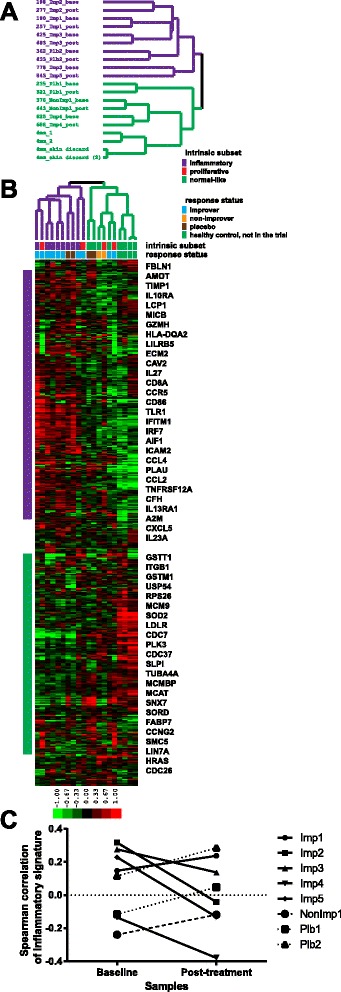
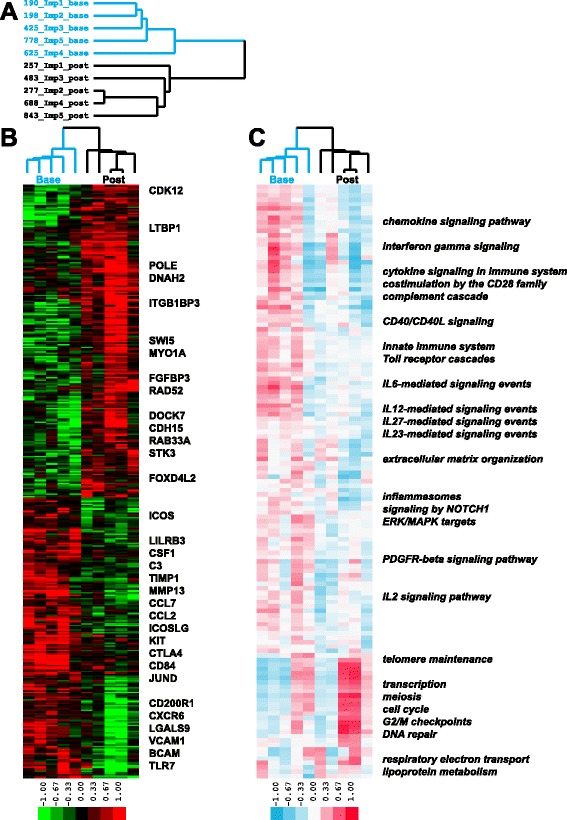
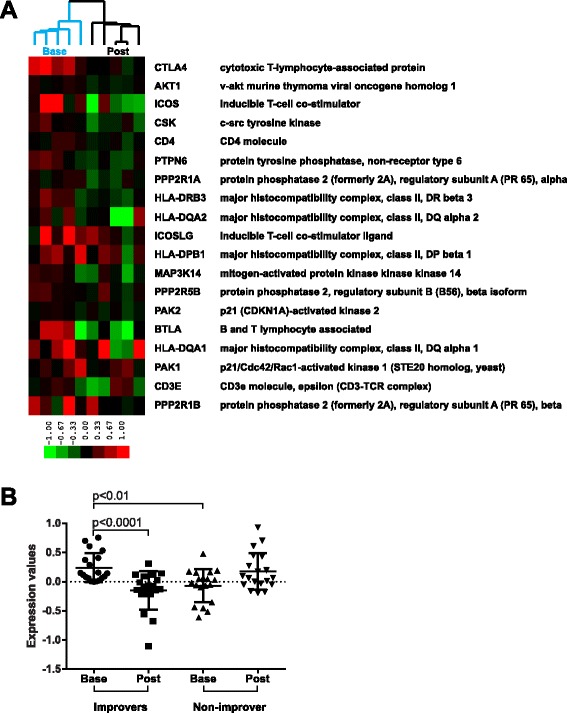
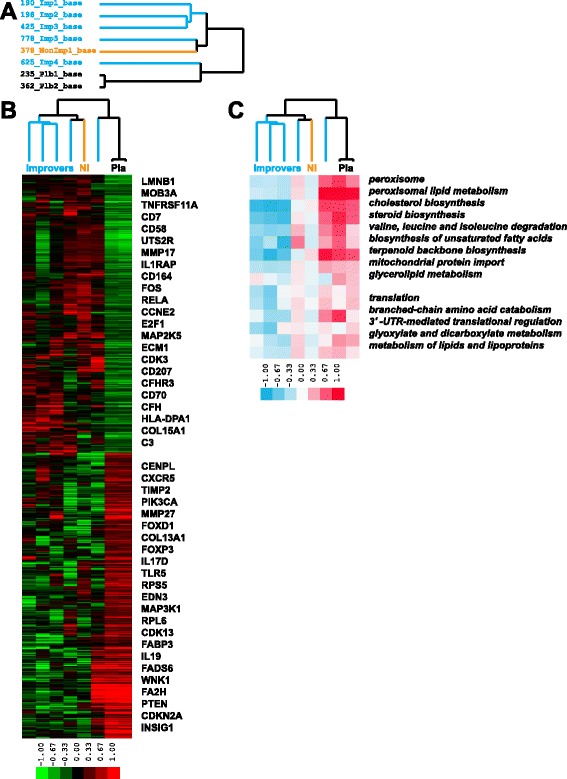
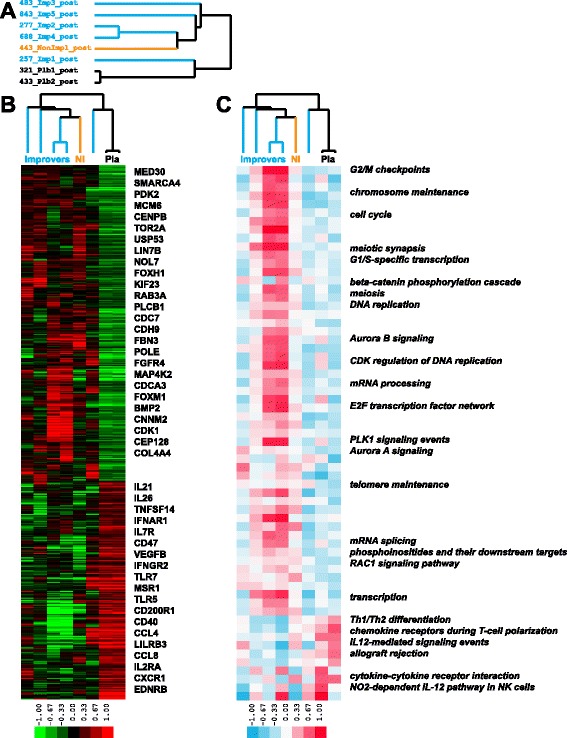
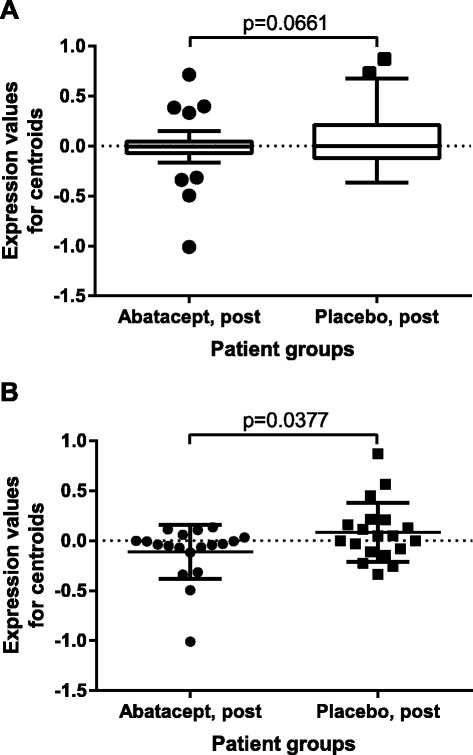
Introduction: Systemic sclerosis is an autoimmune disease characterized by inflammation and fibrosis of the skin and internal organs. We sought to assess the clinical and molecular effects associated with response to intravenous abatacept in patients with diffuse cutaneous systemic. Methods: Adult diffuse cutaneous systemic sclerosis patients were randomized in a 2:1 double-blinded fashion to receive abatacept or placebo over 24 weeks. Primary outcomes were safety and the change in modified Rodnan Skin Score (mRSS) at week 24 compared with baseline. Improvers were defined as patients with a decrease in mRSS of ≥30 % post-treatment compared to baseline. Skin biopsies were obtained for differential gene expression and pathway enrichment analyses and intrinsic gene expression subset assignment. Results: Ten subjects were randomized to abatacept (n = 7) or placebo (n = 3). Disease duration from first non-Raynaud’s symptom was significantly longer (8.8 ± 3.8 years vs. 2.4 ± 1.6 years, p = 0.004) and median mRSS was higher (30 vs. 22, p = 0.05) in the placebo compared to abatacept group. Adverse events were similar in the two groups. Five out of seven patients (71 %) randomized to abatacept and one out of three patients (33 %) randomized to placebo experienced ≥30 % improvement in skin score. Subjects receiving abatacept showed a trend toward improvement in mRSS at week 24 (−8.6 ± 7.5, p = 0.0625) while those in the placebo group did not (−2.3 ± 15, p = 0.75). After adjusting for disease duration, mRSS significantly improved in the abatacept compared with the placebo group (abatacept vs. placebo mRSS decrease estimate −9.8, 95 % confidence interval −16.7 to −3.0, p = 0.0114). In the abatacept group, the patients in the inflammatory intrinsic subset showed a trend toward greater improvement in skin score at 24 weeks compared with the patients in the normal-like intrinsic subset (−13.5 ± 3.1 vs. −4.5 ± 6.4, p = 0.067). Abatacept resulted in decreased CD28 co-stimulatory gene expression in improvers consistent with its mechanism of action. Improvers mapped to the inflammatory intrinsic subset and showed decreased gene expression in inflammatory pathways, while non-improver and placebos showed stable or reverse gene expression over 24 weeks. Conclusions: Clinical improvement following abatacept therapy was associated with modulation of inflammatory pathways in skin. Trial registration: ClinicalTrials.gov NCT00442611 . Registered 1 March 2007.
Overview
The claims and statistics of this paper haven’t been checked yet.
Free: it reads the open-access text and checks the first 5 claims that cite a source we can check. Create a free account to check every claim.
Integrity signals
Registry
Cites
Statistics
Figures
Verification
Claims the paper makes
The claims and statistics of this paper haven’t been checked yet.
Free: it reads the open-access text and checks the first 5 claims that cite a source we can check. Create a free account to check every claim.
Claims other papers make about this one
Each is checked against this paper’s own text: does it say what the citing paper says it does?
The cited source says what the claim attributes to it.
In the citing paper
“In a very small double-blind placebo controlled trial of 10 patients, abatacept improved the mRSS of patients.”
From Unraveling SSc Pathophysiology; The Myofibroblast (2018) · cites this paper as [176]
In the citing paper
“Especially patients with an inflammatory gene expression profile in their blood responded well to abatacept (176).”
From Unraveling SSc Pathophysiology; The Myofibroblast (2018) · cites this paper as [176]
Self-check
Percentages, sums and reported differences re-computed from the paper’s own numbers.
The self-check needs the paper’s full text.
Citations
Cites
Subramanian, A., Tamayo, P., Mootha, V. K., Mukherjee, S., Ebert, B. L., Gillette, M. A., Paulovich, A., Pomeroy, S. L., Golub, T. R., Lander, E. S., et al. (2005) · Proceedings of the National Academy of Sciences · doi:10.1073/pnas.0506580102 · Cited by 53,625 · cited 17×
“We then looked exclusively at the 19 genes that formed a core enrichment group of this pathway based on the GSEA results for improvers (Fig.”
MethodInfluentialKEGG: Kyoto Encyclopedia of Genes and Genomes
Ogata, H., Goto, S., Sato, K., Fujibuchi, W., Bono, H., & Kanehisa, M. (1999) · Nucleic Acids Research · doi:10.1093/nar/27.1.29 · Cited by 31,232 · cited 1×
“GSEA was run versus canonical pathway gene sets curated from several databases, including Kyoto Encyclopedia of Genes and Genomes (KEGG) [19] and Reactome [20].”
MethodMootha, V. K., Lindgren, C. M., Eriksson, K.-F., Subramanian, A., Sihag, S., Lehar, J., Puigserver, P., Carlsson, E., Ridderstråle, M., Laurila, E., et al. (2003) · Nature Genetics · doi:10.1038/ng1180 · Cited by 10,197
Systematic RNA interference reveals that oncogenic KRAS-driven cancers require TBK1
Barbie, D. A., Tamayo, P., Boehm, J. S., Kim, S. Y., Moody, S. E., Dunn, I. F., Schinzel, A. C., Sandy, P., Meylan, E., Scholl, C., et al. (2009) · Nature · doi:10.1038/nature08460 · Cited by 3,890 · cited 3×
“Abbreviations AE: Adverse event; APC: Antigen-presenting cell; dcSSc: Diffuse cutaneous systemic sclerosis; DLCO: Diffusing capacity of the lung for carbon monoxide; ESR: Erythrocyte sedimentation rate; EULAR: European League Against Rheumatism; EUSTAR: EULAR Scleroderma Trials and Research; FDR: False discovery rate;…”
MethodOpen source clustering software
de Hoon, M. J. L., Imoto, S., Nolan, J., & Miyano, S. (2004) · Bioinformatics · doi:10.1093/bioinformatics/bth078 · Cited by 3,043
Java Treeview—extensible visualization of microarray data
Saldanha, A. J. (2004) · Bioinformatics · doi:10.1093/bioinformatics/bth349 · Cited by 2,991 · cited 2×
“Expression data for significant genes (p 0.05) were clustered in Cluster 3.0 [14] and visualized in TreeView [15].”
InfluentialReich, M., Liefeld, T., Gould, J., Lerner, J., Tamayo, P., & Mesirov, J. P. (2006) · Nature Genetics · doi:10.1038/ng0506-500 · Cited by 2,032
Reactome: a database of reactions, pathways and biological processes
Croft, D., O'Kelly, G., Wu, G., Haw, R., Gillespie, M., Matthews, L., Caudy, M., Garapati, P., Gopinath, G., Jassal, B., et al. (2011) · Nucleic Acids Research · doi:10.1093/nar/gkq1018 · Cited by 1,751 · cited 4×
“GSEA was run versus canonical pathway gene sets curated from several databases, including Kyoto Encyclopedia of Genes and Genomes (KEGG) [19] and Reactome [20].”
MethodInfluentialg:Profiler—a web-based toolset for functional profiling of gene lists from large-scale experiments
Reimand, J., Kull, M., Peterson, H., Hansen, J., & Vilo, J. (2007) · Nucleic Acids Research · doi:10.1093/nar/gkm226 · Cited by 1,545 · cited 1×
“Differentially expressed gene signatures were analyzed for functional enrichment via g:Profiler [16] and were annotated with significantly enriched functional terms (false discovery rate (FDR) <5 %).”
MethodClements, P. J., Lachenbruch, P. A., Siebold, J., White, B., Weiner, S. J., Martin, R. W., Weinstein, A., Weisman, M. H., Mayes, M. D., & Collier, D. H. (1995) · PubMed · Cited by 874
Cited by
Denton, C. P., & Khanna, D. (2017) · The Lancet · doi:10.1016/s0140-6736(17)30933-9 · Cited by 2,212
Shared and distinct mechanisms of fibrosis
Distler, J. H. W., Györfi, A.-H., Ramanujam, M., Whitfield, M. L., Königshoff, M., & Lafyatis, R. (2019) · Nature Reviews Rheumatology · doi:10.1038/s41584-019-0322-7 · Cited by 637
Self-citationKhanna, D., Spino, C., Johnson, S., Chung, L., Whitfield, M. L., Denton, C. P., Berrocal, V., Franks, J., Mehta, B., Molitor, J., et al. (2020) · Arthritis & Rheumatology · doi:10.1002/art.41055 · Cited by 225
“expression data obtained from skin (9), 4 of 5 patients who showed improvement with abatacept (as determined by change in MRSS) were in the inflammatory subset, and the remaining patient who”
BackgroundResultInfluentialSelf-citationCurrent Concepts on the Pathogenesis of Systemic Sclerosis
Truchetet, M. E., Brembilla, N. C., & Chizzolini, C. (2021) · Clinical Reviews in Allergy & Immunology · doi:10.1007/s12016-021-08889-8 · Cited by 170
Unraveling SSc Pathophysiology; The Myofibroblast
van Caam, A., Vonk, M., van den Hoogen, F., van Lent, P., & van der Kraan, P. (2018) · Frontiers in Immunology · doi:10.3389/fimmu.2018.02452 · Cited by 153
Immune cell dysregulation as a mediator of fibrosis in systemic sclerosis
Fang, D., Chen, B., Lescoat, A., Khanna, D., & Mu, R. (2022) · Nature Reviews Rheumatology · doi:10.1038/s41584-022-00864-7 · Cited by 84
Franks, J. M., Martyanov, V., Cai, G., Wang, Y., Li, Z., Wood, T. A., & Whitfield, M. L. (2019) · Arthritis & Rheumatology · doi:10.1002/art.40898 · Cited by 80
“The study by Chakravarty et al (12) was an investigator-initiated pilot clinical trial of abatacept and contained gene expression data (accession no.”
BackgroundMethodInfluentialSelf-citationThe promise of precision medicine in rheumatology
Guthridge, J. M., Wagner, C. A., & James, J. A. (2022) · Nature Medicine · doi:10.1038/s41591-022-01880-6 · Cited by 93
Ko, J., Noviani, M., Chellamuthu, V. R., Albani, S., & Low, A. H. L. (2023) · International Journal of Molecular Sciences · doi:10.3390/ijms241814287 · Cited by 85
“For example, in a phase II trial of abatacept, a T-cell inhibitor, whose primary endpoint of skin fibrosis improvement was not met, patients’ skin biopsies with the inflammatory gene subset showed significant improvement in mRSS compared with those of the fibro-proliferative subset [136].”
BackgroundLofgren, S., Hinchcliff, M., Carns, M. A., Wood, T. A., Aren, K., Arroyo, E., Cheung, P., Kuo, A. J., Valenzuela, A., Haemel, A. K., et al. (2016) · JCI Insight · doi:10.1172/jci.insight.89073 · Cited by 76
Self-citationMartyanov, V., Kim, G.-H. J., Hayes, W., Du, S., Ganguly, B. J., Sy, O., Lee, S. K., Bogatkevich, G. S., Schieven, G. L., Schiopu, E., et al. (2017) · PLOS ONE · doi:10.1371/journal.pone.0187580 · Cited by 71
“Differential gene expression and pathway enrichment analyses were performed as recently described [36].”
MethodResultSelf-citationSystemic sclerosis: Current concepts of skin and systemic manifestations
Pearson, D. R., Werth, V. P., & Pappas‐Taffer, L. (2018) · Clinics in Dermatology · doi:10.1016/j.clindermatol.2018.04.004 · Cited by 76
Worrell, J. C., & O’Reilly, S. (2020) · Journal of Autoimmunity · doi:10.1016/j.jaut.2020.102526 · Cited by 64
T-cell costimulation blockade is effective in experimental digestive and lung tissue fibrosis
Boleto, G., Guignabert, C., Pezet, S., Cauvet, A., Sadoine, J., Tu, L., Nicco, C., Chenevier‐Gobeaux, C., Batteux, F., Allanore, Y., et al. (2018) · Arthritis Research & Therapy · doi:10.1186/s13075-018-1694-9 · Cited by 56
Existing and novel biomarkers for precision medicine in systemic sclerosis
Wermuth, P. J., Piera-Velázquez, S., Rosenbloom, J., & Jiménez, S. A. (2018) · Nature Reviews Rheumatology · doi:10.1038/s41584-018-0021-9 · Cited by 60
Lescoat, A., Varga, J., Matucci‐Cerinic, M., & Khanna, D. (2021) · Expert Opinion on Investigational Drugs · doi:10.1080/13543784.2021.1923693 · Cited by 57
Chung, L. S., Spino, C., McLain, R. W., Johnson, S. R., Denton, C. P., Molitor, J. A., Steen, V. D., Lafyatis, R., Simms, R. W., Kafaja, S., et al. (2020) · The Lancet Rheumatology · doi:10.1016/s2665-9913(20)30237-x · Cited by 53
Self-citationMachine learning predicts stem cell transplant response in severe scleroderma
Franks, J. M., Martyanov, V., Wang, Y., Wood, T. A., Pinckney, A., Crofford, L. J., Keyes-Elstein, L., Furst, D. E., Goldmuntz, E. A., Mayes, M. D., et al. (2020) · Annals of the Rheumatic Diseases · doi:10.1136/annrheumdis-2020-217033 · Cited by 45
“SSc participants who improved with abatacept were classified in the inflammatory subset 27 and mycophenolate mofetil has been linked to decreases in the inflammatory signature coincident with MRSS improvement.”
Self-citationEmerging strategies for treatment of systemic sclerosis
Khanna, D., Distler, J. H. W., Sandner, P., & Distler, O. (2016) · Journal of Scleroderma and Related Disorders · doi:10.5301/jsrd.5000207 · Cited by 47
“Another pilot study randomized dcSSc patients to either abatacept (n = 7) or placebo (n = 3) for 24 weeks and followed them by mRSS and skin biopsy (32).”
BackgroundTargeting Costimulatory Pathways in Systemic Sclerosis
Boleto, G., Allanore, Y., & Avouac, J. (2018) · Frontiers in Immunology · doi:10.3389/fimmu.2018.02998 · Cited by 45
Updates on genetics in systemic sclerosis
Ota, Y., & Kuwana, M. (2021) · Inflammation and Regeneration · doi:10.1186/s41232-021-00167-6 · Cited by 51
Streicher, K. L., Sridhar, S., Kuziora, M., Morehouse, C. A., Higgs, B. W., Sebastian, Y., Groves, C. J., Pilataxi, F., Brohawn, P. Z., Herbst, R., et al. (2018) · Arthritis & Rheumatology · doi:10.1002/art.40656 · Cited by 45
“et al showed that 4 of 5 patients who responded to abatacept had the inflammatory intrinsic signature (44).”
BackgroundTherapeutic Approaches to Systemic Sclerosis: Recent Approvals and Future Candidate Therapies
Lescoat, A., Roofeh, D., Kuwana, M., Lafyatis, R., Allanore, Y., & Khanna, D. (2021) · Clinical Reviews in Allergy & Immunology · doi:10.1007/s12016-021-08891-0 · Cited by 41
“These results, in addition to previous reports, support the relevance and need for further assessment of the abatacept efficacy in early dcSSc [101].”
ResultRole of CD133 in human embryonic stem cell proliferation and teratoma formation
Wang, H., Gong, P., Li, J., Fu, Y., Zhou, Z., & Liu, L. (2020) · Stem Cell Research & Therapy · doi:10.1186/s13287-020-01729-0 · Cited by 52
A review on applications of abatacept in systemic rheumatic diseases
Liu, M., Yu, Y., & Hu, S. (2021) · International Immunopharmacology · doi:10.1016/j.intimp.2021.107612 · Cited by 46
Dendritic cells in systemic sclerosis: Advances from human and mice studies
Affandi, A. J., Carvalheiro, T., Radstake, T. R. D. J., & Marut, W. (2017) · Immunology Letters · doi:10.1016/j.imlet.2017.11.003 · Cited by 45
Genomics of Human Fibrotic Diseases: Disordered Wound Healing Response
Stone, R. C., Chen, V., Burgess, J. L., Pannu, S., & Tomic‐Canic, M. (2020) · International Journal of Molecular Sciences · doi:10.3390/ijms21228590 · Cited by 40
“Moreover, the genomic signatures that are used to classify patients into subsets as discussed above may have therapeutic implications, as it was observed that patients with the inflammatory subset improved more significantly when treated with mycophenolate mofetil [55] and abatacept [71] than those with fibroprolifera…”
BackgroundKhanna, D., Denton, C. P., Furst, D. E., Mayes, M. D., Matucci‐Cerinic, M., Smith, V. M., de Vries, D., Ford, P., Bauer, Y., Randall, M. J., et al. (2023) · Arthritis & Rheumatology · doi:10.1002/art.42477 · Cited by 42
“The CTLA-4 immunoglobulin fusion protein abatacept improved MRSS in patients stratified into inflammatory and normal-like intrinsic skin gene expression subsets, with no improvement in patients with the fibroproliferative intrinsic expression profile (33,34).”
BackgroundClark, K. E. N., Campochiaro, C., Csomor, E., Taylor, A. R., Nevin, K., Galwey, N. W., Morse, M. A., Singh, J., Teo, Y. V., Ong, V. H., et al. (2021) · Annals of the Rheumatic Diseases · doi:10.1136/annrheumdis-2021-220402 · Cited by 36
“Some recent studies have analysed intrinsic subset gene sets, which found patients who responded to MMF or abatacept (a CTLA4-Ig fusion protein) tended to be in the inflammatory subset [11, 23] whereas those who responded to dasatinib (a tyrosine kinase inhibitor with anti-fibrotic potential) were in the fibroprolifer…”
BackgroundUse of biologics and other novel therapies for the treatment of systemic sclerosis
Bruni, C., Praino, E., Allanore, Y., Distler, O., Gabrielli, A., Iannone, F., & Matucci‐Cerinic, M. (2016) · Expert Review of Clinical Immunology · doi:10.1080/1744666x.2017.1263153 · Cited by 32
Papadimitriou, T. I., van Caam, A., van der Kraan, P. M., & Thurlings, R. M. (2022) · Biomedicines · doi:10.3390/biomedicines10020316 · Cited by 35
“In 2015, the efficacy of abatacept in attenuating fibrosis was examined in a placebo-controlled RCT that included 10 patients with dcSSc [156].”
BackgroundTaroni, J., Martyanov, V., Mahoney, J. M., & Whitfield, M. L. (2016) · Journal of Investigative Dermatology · doi:10.1016/j.jid.2016.12.007 · Cited by 30
Self-citationManaging Systemic Sclerosis-Related Interstitial Lung Disease in the Modern Treatment Era
Volkmann, E. R., Chung, A., & Tashkin, D. P. (2017) · Journal of Scleroderma and Related Disorders · doi:10.5301/jsrd.5000237 · Cited by 30
Recent advances steer the future of systemic sclerosis toward precision medicine
Lepri, G., Hughes, M., Bruni, C., Matucci‐Cerinic, M., & Bellando-Randone, S. (2019) · Clinical Rheumatology · doi:10.1007/s10067-019-04834-5 · Cited by 28
Martyanov, V., & Whitfield, M. L. (2015) · Current Opinion in Rheumatology · doi:10.1097/bor.0000000000000237 · Cited by 26
Self-citationClark, K. E. N., Xu, S., Attah, M., Ong, V. H., Buckley, C. D., & Denton, C. P. (2023) · Annals of the Rheumatic Diseases · doi:10.1136/ard-2023-224184 · Cited by 37
Gene expression profiling offers insights into the role of innate immune signaling in SSc
Johnson, M. E., Pioli, P. A., & Whitfield, M. L. (2015) · Seminars in Immunopathology · doi:10.1007/s00281-015-0512-6 · Cited by 29
Self-citationInflammatory arthritis in systemic sclerosis: What to do?
Blank, R. B., Nwawka, O. K., Yusov, A., & Gordon, J. (2018) · Journal of Scleroderma and Related Disorders · doi:10.1177/2397198318779532 · Cited by 29
Challenges in systemic sclerosis trial design
Denton, C. P. (2019) · Seminars in Arthritis and Rheumatism · doi:10.1016/j.semarthrit.2019.09.019 · Cited by 27
“Also, gene expression in skin biopsies has been studies [5].”
BackgroundErre, G. L., Sebastiani, M., Fenu, M. A., Zinellu, A., Floris, A., Cavagna, L., Renzoni, E. A., Manfredi, A., Passiu, G., Woodman, R. J., et al. (2020) · Journal of Clinical Medicine · doi:10.3390/jcm9082560 · Cited by 25
Chihara, M., Kurita, M., Yoshihara, Y., Asahina, A., & Yanaba, K. (2018) · Journal of Immunology Research · doi:10.1155/2018/9473243 · Cited by 24
The Role of Pro-fibrotic Myofibroblasts in Systemic Sclerosis: From Origin to Therapeutic Targeting
Romano, E., Rosa, I., Fioretto, B. S., Matucci‐Cerinic, M., & Manetti, M. (2021) · Current Molecular Medicine · doi:10.2174/0929867328666210325102749 · Cited by 26
Systemic Sclerosis Associated Interstitial Lung Disease: A Comprehensive Overview
Mackintosh, J. A., Stainer, A., Barnett, J. L., & Renzoni, E. A. (2019) · Seminars in Respiratory and Critical Care Medicine · doi:10.1055/s-0039-1683431 · Cited by 25
Aberrant Expressions of Co-stimulatory and Co-inhibitory Molecules in Autoimmune Diseases
He, W., Wang, B., Li, Q., Yao, Q., Jia, X., Song, R., Li, S., & Zhang, J. (2019) · Frontiers in Immunology · doi:10.3389/fimmu.2019.00261 · Cited by 22
van den Hoogen, L. L., & van Laar, J. M. (2020) · Best Practice & Research Clinical Rheumatology · doi:10.1016/j.berh.2020.101485 · Cited by 26
Is biological therapy in systemic sclerosis the answer?
Misra, D. P., Ahmed, S., & Agarwal, V. (2020) · Rheumatology International · doi:10.1007/s00296-020-04515-6 · Cited by 20
Novel classifications for systemic sclerosis: challenging historical subsets to unlock new doors
Sobanski, V., Lescoat, A., & Launay, D. (2020) · Current Opinion in Rheumatology · doi:10.1097/bor.0000000000000747 · Cited by 23
“These results were similar to the previous data from a pilot study, which showed a trend toward greater improvement in skin score at 24 weeks in patients classified in the inflammatory subgroup [30].”
ResultClinical Phenotypes of Patients With Systemic Sclerosis With Distinct Molecular Signatures in Skin
Yang, M. M., Goh, V., Lee, J. J., Espinoza, M. E., Yuan, Y., Carns, M. A., Aren, K., Chung, L. S., Khanna, D., McMahan, Z. H., et al. (2023) · Arthritis Care & Research · doi:10.1002/acr.24998 · Cited by 19
“04‡ Scl-70 15 (27) 0 (0) 14 (19) 15 (46) 0.”
BackgroundSelf-citationSakkas, L. I., & Chikanza, I. C. (2023) · Rheumatology International · doi:10.1007/s00296-023-05446-8 · Cited by 22
Treatment of systemic sclerosis
Thoreau, B., Chaigne, B., Renaud, A., & Mouthon, L. (2021) · La Presse Médicale · doi:10.1016/j.lpm.2021.104088 · Cited by 27
Keret, S., Rimar, D., Lansiaux, P., Feldman, E., Lescoat, A., Milman, N., & Farge, D. (2023) · Autoimmunity Reviews · doi:10.1016/j.autrev.2023.103314 · Cited by 17
Immunotherapy of systemic sclerosis
Katsiari, C. G., Simopoulou, T., Alexiou, I., & Sakkas, L. I. (2018) · Human Vaccines & Immunotherapeutics · doi:10.1080/21645515.2018.1491508 · Cited by 24
Clinical Trial Design Issues in Systemic Sclerosis: an Update
Gordon, J., & Domsic, R. T. (2016) · Current Rheumatology Reports · doi:10.1007/s11926-016-0582-z · Cited by 16
TFH cells in systemic sclerosis
Beurier, P., Ricard, L., Eshagh, D., Malard, F., Siblany, L., Fain, O., Mohty, M., Gaugler, B., & MEKINIAN, A. (2021) · Journal of Translational Medicine · doi:10.1186/s12967-021-03049-0 · Cited by 17
Molecular “omic” signatures in systemic sclerosis
Mehta, B. K., Espinoza, M. E., Hinchcliff, M., & Whitfield, M. L. (2020) · European Journal of Rheumatology · doi:10.5152/eurjrheum.2020.19192 · Cited by 15
“For instance, patients with SSc classified in the inflammatory intrinsic subset are more likely to respond to mycophenolate mofetil (8) and abatacept (19), whereas patients belonging to the fibroproliferative intrinsic subset may be more likely to benefit from imatinib mesylate (35) or dasatinib (36).”
BackgroundSelf-citationChen, H. W., Zhu, J. L., Martyanov, V., Tsoi, L. C., Johnson, M. E., Barber, G., Popovich, D., O’Brien, J. C., Coias, J. L., Cyrus, N., et al. (2023) · Journal of Investigative Dermatology · doi:10.1016/j.jid.2023.02.036 · Cited by 18
Self-citationSystematic Analysis of the Literature in Search of Defining Systemic Sclerosis Subsets
Nevskaya, T., Pope, J. E., Turk, M., Shu, J., Marquardt, A., van den Hoogen, F. H. J., Khanna, D., Fransen, J., Matucci‐Cerinic, M., Baron, M. G., et al. (2021) · The Journal of Rheumatology · doi:10.3899/jrheum.201594 · Cited by 16
“Subset classification systems have relied on clinical manifestations, most commonly extent of skin involvement (n=20) (Table 1)[8-10, 20-36], molecular, genomic and cellular patterns (n=12) (Table 2)[37-48], scleroderma-specific autoantibodies (n=46, including 5 studies exploring both clinical and serological subsets[…”
Background2023 Brazilian Society of Rheumatology guidelines for the treatment of systemic sclerosis
Kayser, C., Delgado, S. M. D. O., Zimmermann, A. F., Horimoto, A. M. C., Rio, A. P. T. D., Müller, C. D. S., Camargo, C. Z., LUPO, C. M., Moraes, D. A., Souza, E. J. D. R. E., et al. (2024) · Revista Brasileira de Reumatologia · doi:10.1186/s42358-024-00392-w · Cited by 17
“Another four RCTs evaluated the use of abatacept [69, 70], nintedanib (NTD) [71] and pirfenidone (PFD) [72] for the treatment of cutaneous involvement compared with placebo, and these drugs were strongly recommended against by panelists due to a lack of clinical efficacy based on moderate to high…”
BackgroundCao, C., Zhao, W., Guo, J., Wang, Z., Lü, A., & Liang, C. C. (2025) · The Innovation Medicine · doi:10.59717/j.xinn-med.2025.100154 · Cited by 14
Targeted Therapy in Systemic Sclerosis
Baron, M. G. (2016) · Rambam Maimonides Medical Journal · doi:10.5041/rmmj.10257 · Cited by 13
Makinde, H. M., Dunn, J. L. M., Gadhvi, G. T., Carns, M. A., Aren, K., Chung, A. H., Muhammad, L. N., Song, J., Cuda, C. M., Dominguez, S. T., et al. (2023) · Arthritis & Rheumatology · doi:10.1002/art.42380 · Cited by 15
“characterized for decades, and differential gene expression has been demonstrated in fibrotic tissue; however, reproducible connections have only begun to be established between transcriptomic intrinsic subsets and clinical characteristics (53), including prognosis and response to treatment (17,18,54,55).”
BackgroundSystemic sclerosis: The need for structured care
Morrisroe, K., Frech, T., Gote-Schniering, J., Maurer, B., & Nikpour, M. (2016) · Best Practice & Research Clinical Rheumatology · doi:10.1016/j.berh.2016.04.004 · Cited by 14
Drugs in phase I and phase II clinical trials for systemic sclerosis
Chung, M. P., & Chung, L. S. (2020) · Expert Opinion on Investigational Drugs · doi:10.1080/13543784.2020.1743973 · Cited by 14
“A small pilot study showed clinical improvements with abatacept treatment among patients in the inflammatory subset [40].”
BackgroundSelf-citationEmerging drugs for the treatment of scleroderma: a review of recent phase 2 and 3 trials
Roofeh, D., Lescoat, A., & Khanna, D. (2020) · Expert Opinion on Emerging Drugs · doi:10.1080/14728214.2020.1836156 · Cited by 12
Advances in biological and targeted therapies for systemic sclerosis
Mulcaire-Jones, E., Low, A. H. L., Domsic, R. T., Whitfield, M. L., & Khanna, D. (2023) · Expert Opinion on Biological Therapy · doi:10.1080/14712598.2023.2196009 · Cited by 15
“The researchers performed skin gene expression analysis using bulk RNA sequencing [15].”
BackgroundMethodSelf-citationMehta, B. K., Espinoza, M. E., Franks, J. M., Yuan, Y., Wang, Y., Wood, T. A., Gudjonsson, J. E., Spino, C., Fox, D. A., Khanna, D., et al. (2022) · JCI Insight · doi:10.1172/jci.insight.155282 · Cited by 13
“These data are consistent with those of the pilot study, which suggested that the inflammatory subset might be most responsive to treatment, encouraging further analysis (9).”
BackgroundResultInfluentialSelf-citationDerrett‐Smith, E. C., Martyanov, V., Chighizola, C. B., Moinzadeh, P., Campochiaro, C., Khan, K., Wood, T. A., Meroni, P. L., Abraham, D., Ong, V. H., et al. (2017) · Arthritis Research & Therapy · doi:10.1186/s13075-017-1360-7 · Cited by 11
“Most current and emerging treatment strategies focus on intensive immunosuppression though greater understanding of the biology of disease outcomes, in particular mechanisms that determine improvement in skin and organ-based disease, may help to personalize treatment strategies more effectively [6].”
BackgroundSelf-citationFranks, J. M., Toledo, D. M., Martyanov, V., Wang, Y., Huang, S., Wood, T. A., Spino, C., Chung, L. S., Denton, C. P., Derrett‐Smith, E. C., et al. (2022) · Rheumatology · doi:10.1093/rheumatology/keac344 · Cited by 11
Self-citationFernández‐Lázaro, D., Iglesias-Lázaro, M., Garrosa, E., Rodríguez-García, S., Donoso, D. J., Gutiérrez‐Abejón, E., & Jorge‐Finnigan, C. (2023) · Medicina · doi:10.3390/medicina59020247 · Cited by 10
“The investigators have observed a marked clinical improvement after abatacept therapy in patients with SSc that was associated with the modulation of inflammatory pathways in the skin [53].”
BackgroundRole of rituximab in the treatment of systemic sclerosis: A literature review
Yoshifuji, H., Yomono, K., Yamano, Y., Kondoh, Y., & Yasuoka, H. (2023) · Modern Rheumatology · doi:10.1093/mr/road040 · Cited by 10
News and failures from recent treatment trials in systemic sclerosis
Denton, C. P., Yee, P., & Ong, V. H. (2020) · European Journal of Rheumatology · doi:10.5152/eurjrheum.2020.19187 · Cited by 10
“(19) suggested benefit in dcSSc and led to a larger study, Abatacept Systemic Sclerosis Trial (ASSET), which was a placebo-controlled trial in 88 patients who were without other immunosuppressive treatment (20).”
ResultXu, X., Ramanujam, M., Visvanathan, S., Assassi, S., Liu, Z., & Li, L. (2020) · PLoS ONE · doi:10.1371/journal.pone.0242863 · Cited by 11
“In addition, some of the disease samples were known to be highly similar to controls as documented by previous studies [19, 21].”
ResultGuidance for stem cell therapy for juvenile systemic sclerosis patients
Foeldvari, I., Torok, K. S., Silva, J., Denton, C. P., Henes, J., Horvei, P., Rosser, F. J., Orteu, C. H., Li, S. C., Pain, C. E., et al. (2025) · Expert Review of Clinical Immunology · doi:10.1080/1744666x.2025.2474216 · Cited by 9
“These findings connect cutaneous phenotypes, serum fibrosis markers, and disease progression to differential responses to immunomodulatory therapies [86–88], including stem cell transplantation [89].”
Toward Molecular Stratification and Precision Medicine in Systemic Sclerosis
Noviani, M., Chellamuthu, V. R., Albani, S., & Low, A. H. L. (2022) · Frontiers in Medicine · doi:10.3389/fmed.2022.911977 · Cited by 10
Quillinan, N., Clark, K. E. N., Youl, B. D., Vernes, J., McIntosh, D. P., Haq, S., & Denton, C. P. (2017) · Arthritis Research & Therapy · doi:10.1186/s13075-017-1252-x · Cited by 8
The Mechanistic Implications of Gene Expression Studies in SSc: Insights From Systems Biology
Taroni, J., Mahoney, J. M., & Whitfield, M. L. (2017) · Current Treatment Options in Rheumatology · doi:10.1007/s40674-017-0072-0 · Cited by 8
Self-citationThe immunopathology of systemic sclerosis
van Laar, J. M., & Varga, J. (2015) · Seminars in Immunopathology · doi:10.1007/s00281-015-0517-1 · Cited by 8
“A small placebo-controlled clinical trial with abatacept showed that clinical improvement was associated with modulation of inflammatory pathways in skin [9].”
BackgroundCellular and Molecular Diversity in Scleroderma
Hinchcliff, M., García-Milian, R., Donato, S. D., Dill, K. E., Bundschuh, E., & Galdo, F. D. (2021) · Seminars in Immunology · doi:10.1016/j.smim.2022.101648 · Cited by 7
Regulator combinations identify systemic sclerosis patients with more severe disease
Wang, Y., Franks, J. M., Yang, M. M., Toledo, D. M., Wood, T. A., Hinchcliff, M., & Whitfield, M. L. (2020) · JCI Insight · doi:10.1172/jci.insight.137567 · Cited by 5
“We have previously identified “intrinsic” subsets of SSc (fibroproliferative, inflammatory, limited, and normal-like) based upon skin gene expression (5–7) that may predict response to therapy (8, 9).”
BackgroundSelf-citationMast cell activation in the systemic sclerosis esophagus
Tom, K., Mehta, B. K., Hoffmann, A., Aren, K., Carns, M. A., Lee, J. J., Martyanov, V., Popovich, D., Kosarek, N. N., Wood, T. A., et al. (2020) · Journal of Scleroderma and Related Disorders · doi:10.1177/2397198320941322 · Cited by 5
Self-citationInfections and systemic sclerosis: an emerging challenge
Correa, J. E. B., la Hoz, A. D., López, M. J., Garzón, J., Allanore, Y., & Quintana‐López, G. (2020) · Revista Colombiana de Reumatología (English Edition) · doi:10.1016/j.rcreue.2019.12.004 · Cited by 8
Farina, N., Campochiaro, C., Lescoat, A., Benanti, G., Luca, G. D. D., Khanna, D., Dagna, L., & Matucci‐Cerinic, M. (2023) · Expert Review of Clinical Immunology · doi:10.1080/1744666x.2023.2230370 · Cited by 6
“In a small phase I/II trial published in 2015 abatacept resulted in a greater mRSS improvement when compared to placebo [136].”
BackgroundFallet, B., & Walker, U. A. (2020) · Expert Review of Clinical Pharmacology · doi:10.1080/17512433.2020.1832466 · Cited by 5
“with a significant improvement of mRSS compared with placebo and a modulation of inflammatory pathways in skin consistent with its mechanism of action [14].”
BackgroundZheng, L., Wu, Q., Chen, S., Wen, J., Dong, F., Meng, N., Zeng, W., Zhao, C., & Zhong, X. (2024) · Frontiers in Immunology · doi:10.3389/fimmu.2024.1273559 · Cited by 4
Epigenetics and precision medicine in skin diseases
Yi, J. Z., Friedland, M. H., & McGee, J. S. (2021) · Elsevier eBooks · doi:10.1016/b978-0-12-823008-4.00003-2 · Cited by 6
Benfaremo, D., Agarbati, S., Mozzicafreddo, M., Paolini, C., Svegliati, S., & Moroncini, G. (2023) · International Journal of Molecular Sciences · doi:10.3390/ijms241612548 · Cited by 5
“placebo, SSc patients with an inflammatory intrinsic subset showed a trend toward greater improvement in skin score at 24 weeks compared to patients in the normal-like intrinsic subset [58].”
ResultUsing Machine Learning to Molecularly Classify Systemic Sclerosis Patients
Tao, W., Radstake, T. R. D. J., & Pandit, A. (2019) · Arthritis & Rheumatology · doi:10.1002/art.40902 · Cited by 3
“Although the first 2 data sets (10,11) were from a different microarray platform, the model exhibited high performance (concordance of 83–87.5%).”
BackgroundInfluentialImmunopathogenesis and Immune-based Therapy for Selected Autoimmune Disorders
Aribi, M. (2017) · InTech eBooks · doi:10.5772/63032 · Cited by 3
Hinchcliff, M., Frech, T., Wood, T. A., Huang, C., Lee, J. J., Aren, K., Ryan, J. J., Wilson, B. D., Beussink‐Nelson, L., Whitfield, M. L., et al. (2017) · bioRxiv (Cold Spring Harbor Laboratory) · doi:10.1101/213678 · Cited by 3
Self-citationA deeper look at skin scoring in scleroderma – surrogate, outcome, neither or both?
Seibold, J. R. (2019) · Lara D. Veeken · doi:10.1093/rheumatology/kez432 · Cited by 3
Morphoea and Allied Scarring and Sclerosing Inflammatory Dermatoses
Orteu, C. H. (2024) · Wiley eBooks · doi:10.1002/9781119709268.rook055 · Cited by 3
Galectin-9: diverse roles in skin disease
Wang, L., Zhang, C., Ji, J., & Jiao, Q. (2025) · Frontiers in Allergy · doi:10.3389/falgy.2025.1614277 · Cited by 2
Hinchcliff, M., & Whitfield, M. L. (2016) · Springer eBooks · doi:10.1007/978-3-319-31407-5_49 · Cited by 2
Self-citationFibrosis and Immune Dysregulation in Systemic Sclerosis
Argobi, Y., & Smith, G. P. (2018) · Molecular and translational medicine · doi:10.1007/978-3-319-98143-7_2 · Cited by 2
Wenglén, C., Arozenius, H., Pettersson, L., & Ekström, G. M. (2019) · Annals of the Rheumatic Diseases · doi:10.1136/annrheumdis-2019-eular.6808 · Cited by 3
Orteu, C. H., & Denton, C. P. (2024) · Wiley eBooks · doi:10.1002/9781119709268.rook054 · Cited by 2
Kersten, B. E., & Vonk, M. C. (2019) · Current Treatment Options in Rheumatology · doi:10.1007/s40674-019-00119-9 · Cited by 2
Systematic Review and Model-Based Meta-Analysis of Targeted Drugs for Systemic Sclerosis
Vaskeikina, M., Ugolkov, Y., Kireev, B. N., Peskov, K. V., & Volkova, A. (2026) · Pharmaceutics · doi:10.3390/pharmaceutics18020250 · Cited by 1
Chen, X., Yuan, F., Wang, K., & Yin, J. (2026) · European Journal of Clinical Pharmacology · doi:10.1007/s00228-026-04112-9 · Cited by 1
Translating Autoimmune Pathogenesis into Targeted Therapies for Systemic Sclerosis
Russell, M., & Sofat, N. (2017) · InTech eBooks · doi:10.5772/66642
“Abatacept [67] 500/1000 mg ×7 dcSSc RCT 24 weeks 7/3 0.”
Background
Metadata
- Authors
- Chakravarty, E. F., Martyanov, V., Fiorentino, D., Wood, T. A., Haddon, D. J., Jarrell, J. A., Utz, P. J., Genovese, M. C., Whitfield, M. L., & Chung, L.
- Affiliations
- Oklahoma Medical Research Foundation (US)
- Dartmouth College (US)
- Stanford Medicine (US)
- VA Palo Alto Health Care System (US)
- Corresponding author
- Chung, Lorinda
- ORCID
- Venue
- Arthritis Research & Therapy
- Published
- 2015-06-13
- Volume
- 17
- Issue
- 1
- Pages
- 159-159
- ISSN
- 1478-6354 (ISSN-L)
- PMC
- PMC4487200
- OpenAlex
- W2119590791
- Cited by
- 117
- References
- 26
- Citations by year
- 2026: 4 · 2025: 4 · 2024: 8 · 2023: 13 · 2022: 9 · 2021: 14 · 2020: 19 · 2019: 12 · 2018: 10 · 2017: 11 · 2016: 10 · 2015: 3
- FWCI
- 8.99
- Type
- journal article
- Language
- en
- Open access
- gold
- doi.org
- Licence
- cc-by
- creativecommons.org/licenses/by/4.0 (tdm)
- creativecommons.org/licenses/by/4.0 (vor)
- Locations
- Arthritis Research & Therapy (publishedVersion, cc-by)
- Europe PMC (PubMed Central) (publishedVersion, cc-by)
- PubMed Central (publishedVersion, cc-by)
- PubMed (publishedVersion)
- Funders
- Scleroderma Research Foundation
- Bristol-Myers Squibb
- Ben May Charitable Trust
- Lupus Research Alliance
- European Commission (2007–2013, FP7 2007-2013, 261382, FP7/2007)
- National Institutes of Health (FP7/2007-2013)
- Canadian Institutes of Health Research
- National Institute of Allergy and Infectious Diseases (1 U19-AI1110491, U19AI110491)
- National Institute of Arthritis and Musculoskeletal and Skin Diseases (P30AR061271, P50AR060780)
- Topics
- Health Sciences › Medicine › Rheumatology › Systemic Sclerosis and Related Diseases
- Health Sciences › Medicine › Rheumatology › Dupuytren's Contracture and Treatments
- Life Sciences › Biochemistry, Genetics and Molecular Biology › Genetics › Connective tissue disorders research
- Keywords
- diffuse cutaneous systemic sclerosis, abatacept, gene expression, modified Rodnan skin score, skin fibrosis, CD28 costimulation, T cell exhaustion, treatment response biomarkers, autoimmune disease therapy, disease duration, CD39/CD73, CTLA-4
- MeSH terms
- Abatacept, Adult, Double-Blind Method, Female, Humans, Immunosuppressive Agents, Male, Middle Aged, Gene Expression, CD28 Antigens, Oligonucleotide Array Sequence Analysis, Scleroderma, Diffuse
About these checks
Registry, retraction, Cites and statistics results are computed, not judged, with one exception: a printed reference that no index lists is read once by a model before it counts as a citation error. Claims are extracted by a model and kept only when their quote appears verbatim in the text; each cited source is then checked, with a model’s help, for whether it says what the claim relies on. Those verdicts can be wrong — read the claim’s quote and the cited source before relying on one.
Statistics and arithmetic are recomputed, not judged.
Confidence bands are shown only for fields calibrated on our annotated test set. None is calibrated yet, so no band is shown.
What counts as a claim ›How we measure confidence ›How we check this ›
Are you an author, or do you see a problem with this page? Request a review
Data sources
Bibliographic data: Semantic Scholar, OpenAlex, Crossref.
Contains information from the Semantic Scholar Academic Graph Datasets, made available under the ODC Attribution License (ODC-BY 1.0).
Semantic Scholar’s data is described in: Kinney, R., et al. (2023). The Semantic Scholar Open Data Platform. arXiv:2301.10140.
