

Gene expression changes reflect clinical response in a placebo-controlled randomized trial of abatacept in patients with diffuse cutaneous systemic sclerosis
Open accessThe DOI matches its Crossref record; 27 of the 27 references it cites were found in a registry or an index.
Abstract
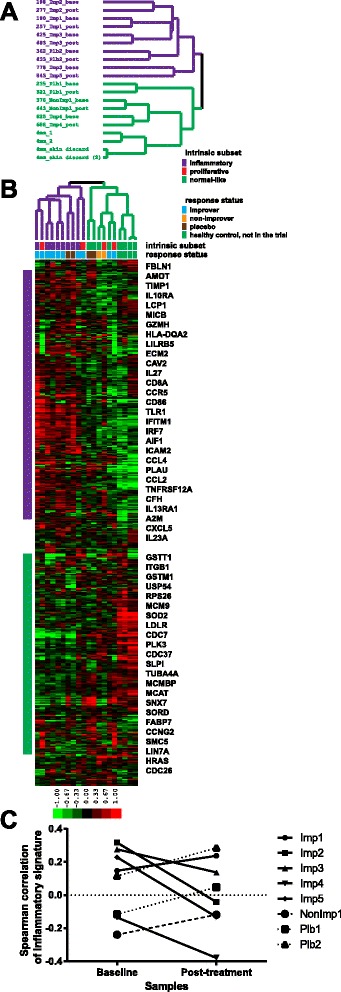
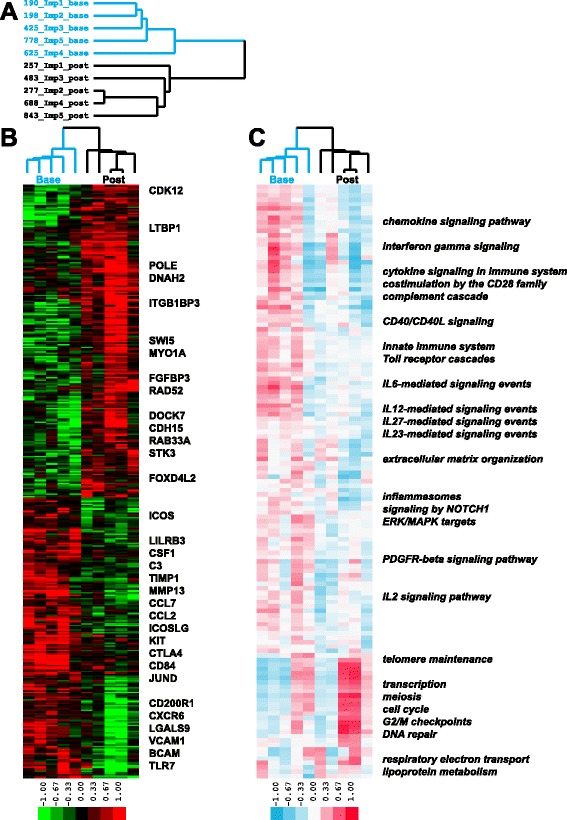
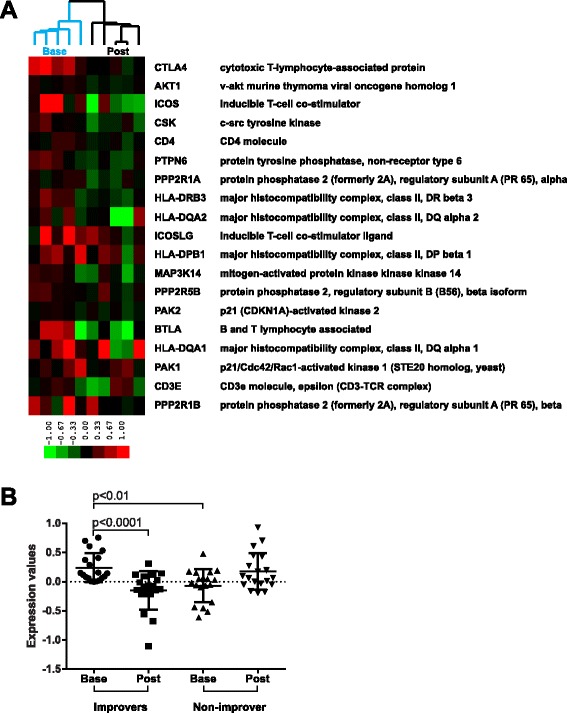
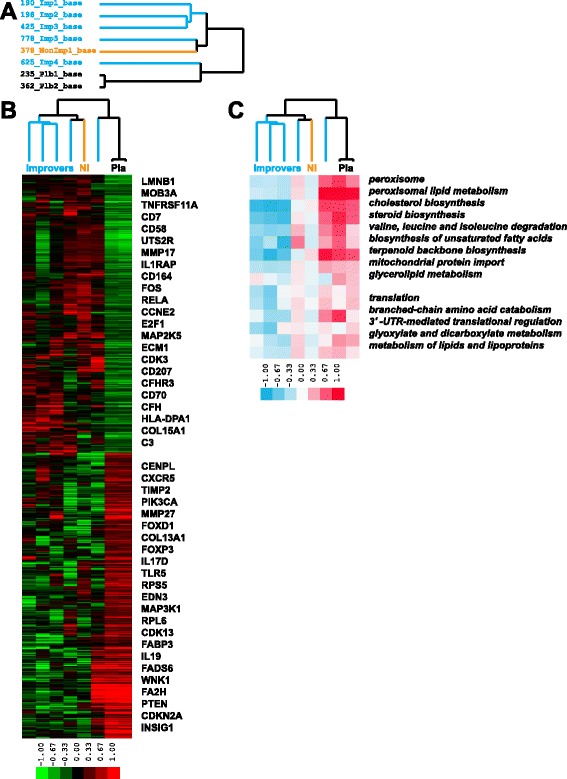
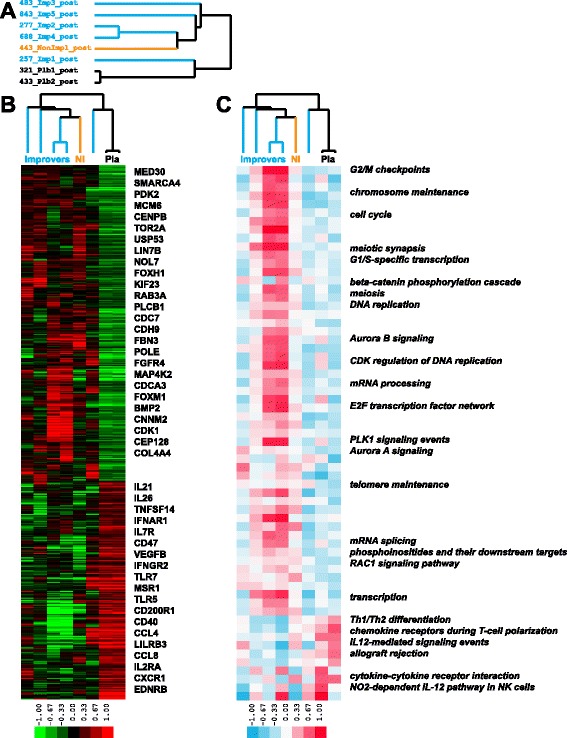
Introduction: Systemic sclerosis is an autoimmune disease characterized by inflammation and fibrosis of the skin and internal organs. We sought to assess the clinical and molecular effects associated with response to intravenous abatacept in patients with diffuse cutaneous systemic. Methods: Adult diffuse cutaneous systemic sclerosis patients were randomized in a 2:1 double-blinded fashion to receive abatacept or placebo over 24 weeks. Primary outcomes were safety and the change in modified Rodnan Skin Score (mRSS) at week 24 compared with baseline. Improvers were defined as patients with a decrease in mRSS of ≥30 % post-treatment compared to baseline. Skin biopsies were obtained for differential gene expression and pathway enrichment analyses and intrinsic gene expression subset assignment. Results: Ten subjects were randomized to abatacept (n = 7) or placebo (n = 3). Disease duration from first non-Raynaud’s symptom was significantly longer (8.8 ± 3.8 years vs. 2.4 ± 1.6 years, p = 0.004) and median mRSS was higher (30 vs. 22, p = 0.05) in the placebo compared to abatacept group. Adverse events were similar in the two groups. Five out of seven patients (71 %) randomized to abatacept and one out of three patients (33 %) randomized to placebo experienced ≥30 % improvement in skin score. Subjects receiving abatacept showed a trend toward improvement in mRSS at week 24 (−8.6 ± 7.5, p = 0.0625) while those in the placebo group did not (−2.3 ± 15, p = 0.75). After adjusting for disease duration, mRSS significantly improved in the abatacept compared with the placebo group (abatacept vs. placebo mRSS decrease estimate −9.8, 95 % confidence interval −16.7 to −3.0, p = 0.0114). In the abatacept group, the patients in the inflammatory intrinsic subset showed a trend toward greater improvement in skin score at 24 weeks compared with the patients in the normal-like intrinsic subset (−13.5 ± 3.1 vs. −4.5 ± 6.4, p = 0.067). Abatacept resulted in decreased CD28 co-stimulatory gene expression in improvers consistent with its mechanism of action. Improvers mapped to the inflammatory intrinsic subset and showed decreased gene expression in inflammatory pathways, while non-improver and placebos showed stable or reverse gene expression over 24 weeks. Conclusions: Clinical improvement following abatacept therapy was associated with modulation of inflammatory pathways in skin. Trial registration: ClinicalTrials.gov NCT00442611 . Registered 1 March 2007.
Overview
The claims and statistics of this paper haven’t been checked yet.
Free: it reads the open-access text and checks the first 5 claims that cite a source we can check. Create a free account to check every claim.
Integrity signals
Registry
Cites
Statistics
Figures
Verification
Claims the paper makes
The claims and statistics of this paper haven’t been checked yet.
Free: it reads the open-access text and checks the first 5 claims that cite a source we can check. Create a free account to check every claim.
Claims other papers make about this one
Each is checked against this paper’s own text: does it say what the citing paper says it does?
The cited source says what the claim attributes to it.
In the citing paper
“In a very small double-blind placebo controlled trial of 10 patients, abatacept improved the mRSS of patients.”
From Unraveling SSc Pathophysiology; The Myofibroblast (2018) · cites this paper as [176]
In the citing paper
“Especially patients with an inflammatory gene expression profile in their blood responded well to abatacept (176).”
From Unraveling SSc Pathophysiology; The Myofibroblast (2018) · cites this paper as [176]
Self-check
Percentages, sums and reported differences re-computed from the paper’s own numbers.
The self-check needs the paper’s full text.
Citations
Cites
Subramanian, A., Tamayo, P., Mootha, V. K., Mukherjee, S., Ebert, B. L., Gillette, M. A., Paulovich, A., Pomeroy, S. L., Golub, T. R., Lander, E. S., et al. (2005) · Proceedings of the National Academy of Sciences · doi:10.1073/pnas.0506580102 · Cited by 53,625 · cited 17×
“We then looked exclusively at the 19 genes that formed a core enrichment group of this pathway based on the GSEA results for improvers (Fig.”
MethodInfluentialKEGG: Kyoto Encyclopedia of Genes and Genomes
Ogata, H., Goto, S., Sato, K., Fujibuchi, W., Bono, H., & Kanehisa, M. (1999) · Nucleic Acids Research · doi:10.1093/nar/27.1.29 · Cited by 31,232 · cited 1×
“GSEA was run versus canonical pathway gene sets curated from several databases, including Kyoto Encyclopedia of Genes and Genomes (KEGG) [19] and Reactome [20].”
MethodMootha, V. K., Lindgren, C. M., Eriksson, K.-F., Subramanian, A., Sihag, S., Lehar, J., Puigserver, P., Carlsson, E., Ridderstråle, M., Laurila, E., et al. (2003) · Nature Genetics · doi:10.1038/ng1180 · Cited by 10,197
Systematic RNA interference reveals that oncogenic KRAS-driven cancers require TBK1
Barbie, D. A., Tamayo, P., Boehm, J. S., Kim, S. Y., Moody, S. E., Dunn, I. F., Schinzel, A. C., Sandy, P., Meylan, E., Scholl, C., et al. (2009) · Nature · doi:10.1038/nature08460 · Cited by 3,890 · cited 3×
“Abbreviations AE: Adverse event; APC: Antigen-presenting cell; dcSSc: Diffuse cutaneous systemic sclerosis; DLCO: Diffusing capacity of the lung for carbon monoxide; ESR: Erythrocyte sedimentation rate; EULAR: European League Against Rheumatism; EUSTAR: EULAR Scleroderma Trials and Research; FDR: False discovery rate;…”
MethodOpen source clustering software
de Hoon, M. J. L., Imoto, S., Nolan, J., & Miyano, S. (2004) · Bioinformatics · doi:10.1093/bioinformatics/bth078 · Cited by 3,043
Java Treeview—extensible visualization of microarray data
Saldanha, A. J. (2004) · Bioinformatics · doi:10.1093/bioinformatics/bth349 · Cited by 2,991 · cited 2×
“Expression data for significant genes (p 0.05) were clustered in Cluster 3.0 [14] and visualized in TreeView [15].”
InfluentialReich, M., Liefeld, T., Gould, J., Lerner, J., Tamayo, P., & Mesirov, J. P. (2006) · Nature Genetics · doi:10.1038/ng0506-500 · Cited by 2,032
Reactome: a database of reactions, pathways and biological processes
Croft, D., O'Kelly, G., Wu, G., Haw, R., Gillespie, M., Matthews, L., Caudy, M., Garapati, P., Gopinath, G., Jassal, B., et al. (2011) · Nucleic Acids Research · doi:10.1093/nar/gkq1018 · Cited by 1,751 · cited 4×
“GSEA was run versus canonical pathway gene sets curated from several databases, including Kyoto Encyclopedia of Genes and Genomes (KEGG) [19] and Reactome [20].”
MethodInfluentialg:Profiler—a web-based toolset for functional profiling of gene lists from large-scale experiments
Reimand, J., Kull, M., Peterson, H., Hansen, J., & Vilo, J. (2007) · Nucleic Acids Research · doi:10.1093/nar/gkm226 · Cited by 1,545 · cited 1×
“Differentially expressed gene signatures were analyzed for functional enrichment via g:Profiler [16] and were annotated with significantly enriched functional terms (false discovery rate (FDR) <5 %).”
MethodClements, P. J., Lachenbruch, P. A., Siebold, J., White, B., Weiner, S. J., Martin, R. W., Weinstein, A., Weisman, M. H., Mayes, M. D., & Collier, D. H. (1995) · PubMed · Cited by 874
Cited by
Items 101–117 of 117
Insights Into Systemic Sclerosis from Gene Expression Profiling
Franks, J. M., & Whitfield, M. L. (2021) · Current Treatment Options in Rheumatology · doi:10.1007/s40674-021-00183-0 · Cited by 1
Self-citationImmunogenomic Exploration of Cutaneous Manifestations and Therapeutic Targets in Systemic Sclerosis
Li, V. (2024) · Clinical Dermatology Open Access Journal · doi:10.23880/cdoaj-16000325
Biological Therapy in Systemic Sclerosis
Caetano, J., Oliveira, S., & Alves, J. D. (2017) · InTech eBooks · doi:10.5772/intechopen.69326 · Cited by 1
“This included biopsies from four healthy controls [51].”
Prospects for Stratified and Precision Medicine in Systemic Sclerosis Treatment
Clark, K. E. N., & Derrett‐Smith, E. C. (2019) · Current Treatment Options in Rheumatology · doi:10.1007/s40674-019-00124-y · Cited by 1
What comes before scleroderma?
Bellando-Randone, S., Suliman, Y. A., Anwar, S., & Furst, D. E. (2024) · IntechOpen eBooks · doi:10.5772/intechopen.1003994 · Cited by 1
Jacobe, H. T. (2021) · Faculty Opinions – Post-Publication Peer Review of the Biomedical Literature · doi:10.3410/f.736262479.793584739 · Cited by 1
Three Distinct Transcriptional Profiles of Monocytes Associate with Disease Activity in SSc PatientsPreprint
Makinde, H. M., Dunn, J. L. M., Gadhvi, G. T., Carns, M. A., Aren, K., Chung, A. H., Muhammad, L. N., Song, J., Cuda, C. M., Dominguez, S. T., et al. (2022) · bioRxiv (Cold Spring Harbor Laboratory) · doi:10.1101/2022.01.29.477568 · Cited by 1
“However, there were inflammatory groups of patients who were non-responders (37, 38), which suggests that an understanding of the transcriptional profile of bulk immune populations may be necessary to discern which patients are more susceptible to a particular therapy.”
BackgroundSystems Biology Approaches to Understanding the Pathogenesis of Systemic Sclerosis
Mahoney, J. M., Taroni, J., & Whitfield, M. L. (2016) · Springer eBooks · doi:10.1007/978-3-319-31407-5_10
Self-citationInfecciones y esclerosis sistémica: un desafío emergente
Correa, J. E. B., la Hoz, A. D., López, M. J., Garzón, J., Allanore, Y., & Quintana‐López, G. (2020) · Revista Colombiana de Reumatología · doi:10.1016/j.rcreu.2019.12.007 · Cited by 3
Investigative Approaches to Drug Therapy
Ong, V. H., & Denton, C. P. (2016) · Springer eBooks · doi:10.1007/978-3-319-31407-5_42
T cells in the pathogenesis of systemic sclerosis
Sakkas, L. I., & Simopoulou, T. (2023) · Elsevier eBooks · doi:10.1016/b978-0-323-85831-1.00022-x · Cited by 1
Systemic Sclerosis - Recent Advances and New Perspectives
Lakota, K., Pirkmajer, K. P., & Burja, B. (2023) · IntechOpen eBooks · doi:10.5772/intechopen.102205
Clustering and Evolving Concepts for Subclassification
Sobanski, V., & Hinchcliff, M. (2024) · Springer eBooks · doi:10.1007/978-3-031-40658-4_6
Follicular helper T cells and fibrotic diseases
Ma, Y., Zhou, Y., & Yu, M. (2025) · Cellular Immunology · doi:10.1016/j.cellimm.2025.105024
Kayser, C., de Oliveira Delgado, S. M., Zimmermann, A. F., Horimoto, A. M. C., Rio, A. P. T. D., de Souza Müller, C., Camargo, C. Z., LUPO, C. M., Moraes, D. A., Souza, E. J. D. R. E., et al. (2024) · Figshare · doi:10.6084/m9.figshare.26747762
Towards effective targeted therapies in morphea
Saracino, A., Iyengar, L., & NIKPOUR, M. (2026) · Italian Journal of Dermatology and Venereology · doi:10.23736/s2784-8671.25.08413-0
A systematic review of abatacept and belatacept in immune-mediated diseases
Krek, A. M., Arnold, D. D., Martin, A. C., & Raeber, M. E. (2026) · Journal of Autoimmunity · doi:10.1016/j.jaut.2026.103608
Metadata
- Authors
- Chakravarty, E. F., Martyanov, V., Fiorentino, D., Wood, T. A., Haddon, D. J., Jarrell, J. A., Utz, P. J., Genovese, M. C., Whitfield, M. L., & Chung, L.
- Affiliations
- Oklahoma Medical Research Foundation (US)
- Dartmouth College (US)
- Stanford Medicine (US)
- VA Palo Alto Health Care System (US)
- Corresponding author
- Chung, Lorinda
- ORCID
- Venue
- Arthritis Research & Therapy
- Published
- 2015-06-13
- Volume
- 17
- Issue
- 1
- Pages
- 159-159
- ISSN
- 1478-6354 (ISSN-L)
- PMC
- PMC4487200
- OpenAlex
- W2119590791
- Cited by
- 117
- References
- 26
- Citations by year
- 2026: 4 · 2025: 4 · 2024: 8 · 2023: 13 · 2022: 9 · 2021: 14 · 2020: 19 · 2019: 12 · 2018: 10 · 2017: 11 · 2016: 10 · 2015: 3
- FWCI
- 8.99
- Type
- journal article
- Language
- en
- Open access
- gold
- doi.org
- Licence
- cc-by
- creativecommons.org/licenses/by/4.0 (tdm)
- creativecommons.org/licenses/by/4.0 (vor)
- Locations
- Arthritis Research & Therapy (publishedVersion, cc-by)
- Europe PMC (PubMed Central) (publishedVersion, cc-by)
- PubMed Central (publishedVersion, cc-by)
- PubMed (publishedVersion)
- Funders
- Scleroderma Research Foundation
- Bristol-Myers Squibb
- Ben May Charitable Trust
- Lupus Research Alliance
- European Commission (2007–2013, FP7 2007-2013, 261382, FP7/2007)
- National Institutes of Health (FP7/2007-2013)
- Canadian Institutes of Health Research
- National Institute of Allergy and Infectious Diseases (1 U19-AI1110491, U19AI110491)
- National Institute of Arthritis and Musculoskeletal and Skin Diseases (P30AR061271, P50AR060780)
- Topics
- Health Sciences › Medicine › Rheumatology › Systemic Sclerosis and Related Diseases
- Health Sciences › Medicine › Rheumatology › Dupuytren's Contracture and Treatments
- Life Sciences › Biochemistry, Genetics and Molecular Biology › Genetics › Connective tissue disorders research
- Keywords
- diffuse cutaneous systemic sclerosis, abatacept, gene expression, modified Rodnan skin score, skin fibrosis, CD28 costimulation, T cell exhaustion, treatment response biomarkers, autoimmune disease therapy, disease duration, CD39/CD73, CTLA-4
- MeSH terms
- Abatacept, Adult, Double-Blind Method, Female, Humans, Immunosuppressive Agents, Male, Middle Aged, Gene Expression, CD28 Antigens, Oligonucleotide Array Sequence Analysis, Scleroderma, Diffuse
About these checks
Registry, retraction, Cites and statistics results are computed, not judged, with one exception: a printed reference that no index lists is read once by a model before it counts as a citation error. Claims are extracted by a model and kept only when their quote appears verbatim in the text; each cited source is then checked, with a model’s help, for whether it says what the claim relies on. Those verdicts can be wrong — read the claim’s quote and the cited source before relying on one.
Statistics and arithmetic are recomputed, not judged.
Confidence bands are shown only for fields calibrated on our annotated test set. None is calibrated yet, so no band is shown.
What counts as a claim ›How we measure confidence ›How we check this ›
Are you an author, or do you see a problem with this page? Request a review
Data sources
Bibliographic data: Semantic Scholar, OpenAlex, Crossref.
Contains information from the Semantic Scholar Academic Graph Datasets, made available under the ODC Attribution License (ODC-BY 1.0).
Semantic Scholar’s data is described in: Kinney, R., et al. (2023). The Semantic Scholar Open Data Platform. arXiv:2301.10140.
