

Resistance exercise improves muscle strength, health status and pain intensity in fibromyalgia–a randomized controlled trial
Open accessThe DOI matches its Crossref record; 62 of the 64 references it cites were found in a registry or an index.
Abstract
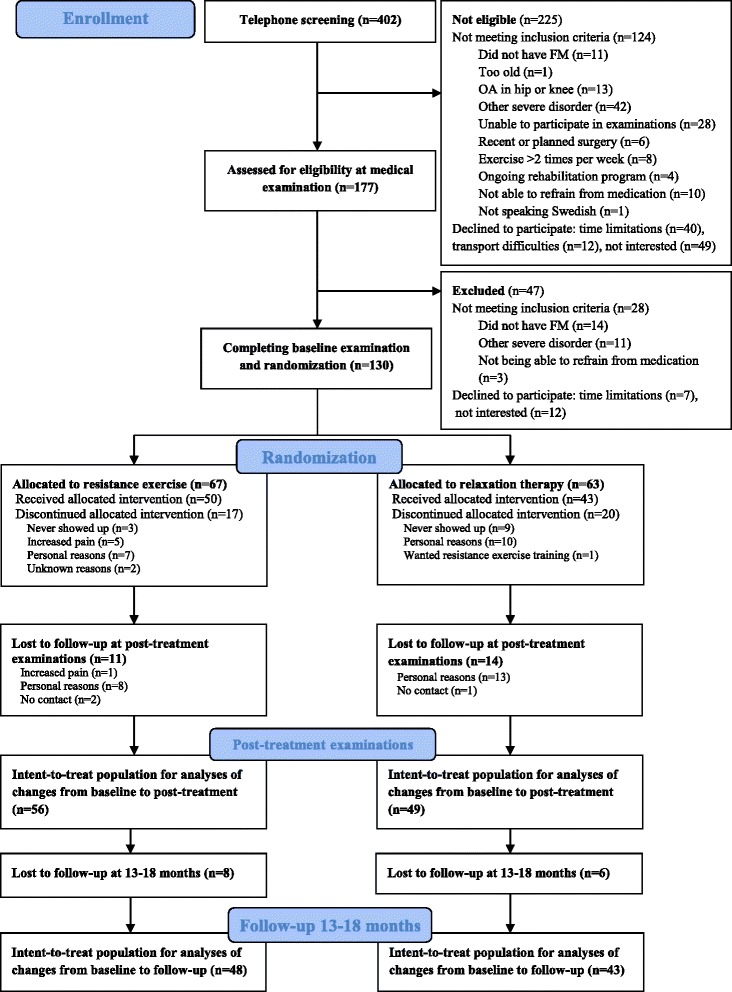
Introduction: Fibromyalgia (FM) is characterized by persistent widespread pain, increased pain sensitivity and tenderness. Muscle strength in women with FM is reduced compared to healthy women. The aim of this study was to examine the effects of a progressive resistance exercise program on muscle strength, health status, and current pain intensity in women with FM. Methods: A total of 130 women with FM (age 22–64 years, symptom duration 0–35 years) were included in this assessor-blinded randomized controlled multi-center trial examining the effects of progressive resistance group exercise compared with an active control group. A person-centred model of exercise was used to support the participants’ self-confidence for management of exercise because of known risks of activity-induced pain in FM. The intervention was performed twice a week for 15 weeks and was supervised by experienced physiotherapists. Primary outcome measure was isometric knee-extension force (Steve Strong®), secondary outcome measures were health status (FIQ total score), current pain intensity (VAS), 6MWT, isometric elbow-flexion force, hand-grip force, health related quality of life, pain disability, pain acceptance, fear avoidance beliefs, and patient global impression of change (PGIC). Outcomes were assessed at baseline and immediately after the intervention. Long-term follow up comprised the self-reported questionnaires only and was conducted after 13–18 months. Between-group and within-group differences were calculated using non-parametric statistics. Results: Significant improvements were found for isometric knee-extension force ( p = 0.010), health status ( p = 0.038), current pain intensity ( p = 0.033), 6MWT ( p = 0.003), isometric elbow flexion force ( p = 0.02), pain disability ( p = 0.005), and pain acceptance ( p = 0.043) in the resistance exercise group ( n = 56) when compared to the control group ( n = 49). PGIC differed significantly ( p = 0.001) in favor of the resistance exercise group at post-treatment examinations. No significant differences between the resistance exercise group and the active control group were found regarding change in self-reported questionnaires from baseline to 13–18 months. Conclusions: Person-centered progressive resistance exercise was found to be a feasible mode of exercise for women with FM, improving muscle strength, health status, and current pain intensity when assessed immediately after the intervention. Trial registration: ClinicalTrials.gov identification number: NCT01226784 , Oct 21, 2010.
Overview
The claims and statistics of this paper haven’t been checked yet.
Free: it reads the open-access text and checks the first 5 claims that cite a source we can check. Create a free account to check every claim.
Integrity signals
Registry
Cites
Statistics
Figures
Verification
Claims the paper makes
The claims and statistics of this paper haven’t been checked yet.
Free: it reads the open-access text and checks the first 5 claims that cite a source we can check. Create a free account to check every claim.
Claims other papers make about this one
Each is checked against this paper’s own text: does it say what the citing paper says it does?
The source backs part of the claim, not all of it — or backs it for a different population, condition or comparison.
In the citing paper
“There was contradictory evidence about the effectiveness of strengthening training and relaxation for physical function in the short term [16,49].”
From Effectiveness of non-pharmacological conservative therapies in adults with fibromyalgia: A systematic review of high-quality clinical trials (2022) · cites this paper as [49]
Experimental — accuracy not yet measuredThe source backs part of the claim, not all of it — or backs it for a different population, condition or comparison.
In the citing paper
“Regarding active therapies, there was strong evidence that showed that strengthening, swimming and other aquatic exercise therapies were effective for reducing pain intensity in the short term [11,16,49,54].”
From Effectiveness of non-pharmacological conservative therapies in adults with fibromyalgia: A systematic review of high-quality clinical trials (2022) · cites this paper as [49]
Experimental — accuracy not yet measuredThe source backs part of the claim, not all of it — or backs it for a different population, condition or comparison.
In the citing paper
“There was contradictory evidence about the effectiveness of strengthening training and relaxation for physical function in the short term [16,49].”
From Effectiveness of non-pharmacological conservative therapies in adults with fibromyalgia: A systematic review of high-quality clinical trials (2022) · cites this paper as [49]
Experimental — accuracy not yet measuredThe source backs part of the claim, not all of it — or backs it for a different population, condition or comparison.
In the citing paper
“There was contradictory evidence about the effectiveness of strengthening ET in the short term [16,49].”
From Effectiveness of non-pharmacological conservative therapies in adults with fibromyalgia: A systematic review of high-quality clinical trials (2022) · cites this paper as [49]
Experimental — accuracy not yet measured
Self-check
Percentages, sums and reported differences re-computed from the paper’s own numbers.
The self-check needs the paper’s full text.
Citations
Cites
Self-efficacy: The exercise of control
Bandura, A., Freeman, W. H., & Lightsey, R. (1999) · Journal of Cognitive Psychotherapy · doi:10.1891/0889-8391.13.2.158 · Cited by 46,835
(1992) · PubMed · Cited by 33,716
The MOS 36-ltem Short-Form Health Survey (SF-36): I. Conceptual Framework and Item Selection
Ware, J. E., & Sherbourne, C. D. (1992) · Medical Care · doi:10.1097/00005650-199206000-00002 · Cited by 30,033
Self-efficacy: the exercise of control
(1997) · Choice Reviews Online · doi:10.5860/choice.35-1826 · Cited by 24,281
SAUNDERS, J. B., AASLAND, O. G., BABOR, T. F., DE LA FUENTE, J. R., & GRANT, M. (1993) · Addiction · doi:10.1111/j.1360-0443.1993.tb02093.x · Cited by 13,597 · cited 1×
“use disorders identification test (AUDIT) score >6) [32], participation in a rehabilitation program within the past year, regular resistance exercise or relaxation exercise twice a week or more, inability to understand or speak Swedish, and not being able to refrain from analgesics, non-steroidal anti-inflammatory dru…”
BackgroundThe american college of rheumatology 1990 criteria for the classification of fibromyalgia
Wolfe, F., Smythe, H. A., Yunus, M. B., Bennett, R. M., Bombardier, C., Goldenberg, D. L., Tugwell, P., Campbell, S. M., Abeles, M., Clark, P., et al. (1990) · Arthritis & Rheumatism · doi:10.1002/art.1780330203 · Cited by 9,563
Exercise and Physical Activity for Older Adults
Chodzko-Zajko, W. J., Proctor, D. N., Fiatarone Singh, M. A., Minson, C. T., Nigg, C. R., Salem, G. J., & Skinner, J. S. (2009) · Medicine & Science in Sports & Exercise · doi:10.1249/mss.0b013e3181a0c95c · Cited by 5,153
Waddell, G., Newton, M., Henderson, I., Somerville, D., & Main, C. J. (1993) · Pain · doi:10.1016/0304-3959(93)90127-b · Cited by 3,167 · cited 1×
“A higher score represents greater fear avoidance beliefs [48]; and the patient global impression of change (PGIC), a numeric scale ranging from 1 (very much improved) to 7 (very much worse), where a lower score indicates greater improvement.”
BackgroundWolfe, F., Ross, K., Anderson, J., Russell, I. J., & Hebert, L. (1995) · Arthritis & Rheumatism · doi:10.1002/art.1780380104 · Cited by 2,416
Cited by
Items 101–195 of 195
Fors, A., Wallbing, U., Alfvén, G., Kemani, M. K., Lundberg, M., Wigert, H., & Nilsson, S. (2020) · European Journal of Pain · doi:10.1002/ejp.1614 · Cited by 11
Larsson, A., Barenfeld, E., Fors, A., Gjertsson, I., Bergenheim, A., & Mannerkorpi, K. (2022) · Disability and Rehabilitation · doi:10.1080/09638288.2022.2077992 · Cited by 10
Self-citationCosta, D. M., da Silva, R. P., da Cruz‐Filho, J., Santos, T. D. O., SANTOS, H. C. D. A., de Lucca, W., Kettelhut, Í. D. C., Navegantes, L. C. C., Souza, P., Camargo, E. A., et al. (2024) · Clinical and Experimental Pharmacology and Physiology · doi:10.1111/1440-1681.13837 · Cited by 8
“44 Moreover, FM patients treated with prednisone for 14 days did not show improvement in pain and the number of tender points, indicating that synthetic glucocorticoids are not a viable therapy for FM. 45 In fact, GRs are expressed in sensory neurons of the dorsal horn of the spinal cord, and their activation appears…”
BackgroundInfluentialChou, R., Dana, T., & Shetty, K. D. (2020) · doi:10.23970/ahrqepcmethtestingmachinelearning · Cited by 7
Arroyo-Fernández, R., Avendaño‐Coy, J., Velasco-Velasco, R., Palomo‐Carrión, R., Bravo-Esteban, E., & Ferri‐Morales, A. (2021) · Brain Sciences · doi:10.3390/brainsci11101335 · Cited by 8
Klaps, S., Haesevoets, S., Verbunt, J., Köke, A. J. A., Janssens, L., Timmermans, A. A. A., & Verbrugghe, J. (2022) · Sports Health A Multidisciplinary Approach · doi:10.1177/19417381221075354 · Cited by 12
“Behavioral factors were evaluated in 1 study.(45) An exercise program that progressed from LIT to HIT improved pain-related acceptance in FM.”
BackgroundMethodResultInfluentialNon‐pharmacological therapies in Fibromyalgia: New horizons for physicians, new hopes for patients
Majdoub, F., Nessib, D. B., Ferjani, H. L., Kaffel, D., Triki, W., Maatallah, K., & Hamdi, W. (2023) · Musculoskeletal Care · doi:10.1002/msc.1741 · Cited by 11
Ericsson, A., Bremell, T., Cider, Å., & Mannerkorpi, K. (2016) · BMC Sports Science Medicine and Rehabilitation · doi:10.1186/s13102-016-0054-9 · Cited by 12
“Resistance exercise has been found to improve muscle strength, overall health and current pain intensity in a recent study of women with FM [29].”
BackgroundSelf-citationBulhões, L. C. C., Filho, B. F. D. L., Fontes, F. P., Varella, L. R. D., & Brasileiro, J. S. (2018) · Revista Brasileira de Ciência e Movimento · doi:10.31501/rbcm.v26i2.7255 · Cited by 8
Chiapeta, A. V., de Oliveira, C. E. P., de Moraes, A. A., Moreira, O. C., Natali, A. J., & Carneiro‐Júnior, M. A. (2024) · Journal of Bodywork and Movement Therapies · doi:10.1016/j.jbmt.2024.05.014 · Cited by 10
Aquatic Exercise in Physical Therapy Treatment for Fibromyalgia: Systematic Review
Rodríguez-Huguet, M., Ayala-Martínez, C., Góngora-Rodríguez, P., Rosety, M. Á., Martín‐Valero, R., & Góngora-Rodríguez, J. (2024) · Healthcare · doi:10.3390/healthcare12060701 · Cited by 22
Lalloo, E. C., Temple, F., Berg, M., Berg, U., Alumeti, D. M., Mulunda, A., & Bogren, M. U. (2024) · Sexual & Reproductive Healthcare · doi:10.1016/j.srhc.2024.100979 · Cited by 6
General physical impairments in migraine patients beyond cervical function
Touche, R. L., García‐Pastor, T., Reina‐Varona, Á., Paris‐Alemany, A., & Grande‐Alonso, M. (2024) · Scientific Reports · doi:10.1038/s41598-024-81841-w · Cited by 5
Moreno, K. P. G., Flores-Santy, L. F., & Vinueza-Fernandez, I. (2025) · Journal of Functional Morphology and Kinesiology · doi:10.3390/jfmk10020121 · Cited by 7
“RE was the main component, lasting 30 to 60 min.”
Wang, T., Su, H., Zhou, Y., Du, L., Lv, Y., & Yu, L. (2026) · Frontiers in Medicine · doi:10.3389/fmed.2026.1782714 · Cited by 8
Yikang, P., Sun, K., Chen, J., & Wu, Z. (2026) · Pain Research and Management · doi:10.1155/prm/1767509 · Cited by 7
Corredor, F. O., Sandoval‐Salcedo, A., Soto, D., Camacho, M., Perico, H., & Gil‐Salcedo, A. (2023) · International Journal of Rheumatic Diseases · doi:10.1111/1756-185x.14715 · Cited by 9
Goldfarb, A. H., Kraemer, R. R., & Baiamonte, B. A. (2024) · Advances in neurobiology · doi:10.1007/978-3-031-45493-6_8 · Cited by 6
de Oliveira, F. S., Silva, H. J. D. A., Oliveira, J. M. D. P., da Silva, J. F. C., Gomes, V. L. S., Fonseca, D. S., Lins, C. A. D. A., & de Souza, M. C. (2016) · Manual Therapy Posturology & Rehabilitation Journal · doi:10.17784/mtprehabjournal.2016.14.386 · Cited by 5
Physical Medicine and Rehabilitation
Arora, S., Erosa, S. C., & Danesh, H. (2019) · Springer eBooks · doi:10.1007/978-3-030-18005-8_23 · Cited by 5
Physical Activity and Exercise Training for Adults with Fibromyalgia
Bidonde, J., Boden, C., Foulds, H. J. A., & Kim, S. Y. (2021) · Springer eBooks · doi:10.1007/978-3-030-78638-0_6 · Cited by 9
Ghafouri, B., Matikhan, D., Christidis, N., Ernberg, M. M., Kosek, E., Mannerkorpi, K., Gerdle, B. U. C., & Wåhlén, K. (2023) · Biomedicines · doi:10.3390/biomedicines11010206 · Cited by 5
“The resistance exercise program has, in detail, been described in our previous studies [12,29,34].”
BackgroundResultInfluentialSelf-citationHackshaw, K. V., Osuna-Diaz, M. M., Sebastian, K. R., Nuguri, S. M., Castellví, S. D. L., Mele, E. C., Yu, L., Mikulik, Z., Giusti, M. M., & RODRIGUEZ‐SAONA, L. E. (2026) · Journal of Psychosomatic Research · doi:10.1016/j.jpsychores.2026.112897 · Cited by 6
Rome, K., & Stewart, S. (2020) · Elsevier eBooks · doi:10.1016/b978-0-7020-6223-0.00009-1 · Cited by 7
Protocol of HOTFy: randomised clinical trial to hyperbaric oxygen therapy in fibromyalgia
Neto, J. D. M., Mendes, A. F., Martins, A. F. M., de Landa, A. T., Fraga, R. D. O., de Souza, V. A., & Raposo, N. R. B. (2023) · BMJ Open · doi:10.1136/bmjopen-2022-069153 · Cited by 5
Community Participation and Involvement in Rural Tourism Development Planning
Lekaota, L., & Khashane, R. S. (2025) · Sustainable development goals series · doi:10.1007/978-3-031-87337-9_8 · Cited by 3
Rodríguez‐Domínguez, Á., Jiménez‐Rejano, J., Cardellat‐González, M., Rosales‐Tristancho, A., Arana-Rodríguez, A., & Rebollo‐Salas, M. (2026) · Musculoskeletal Science and Practice · doi:10.1016/j.msksp.2026.103515 · Cited by 4
Rodríguez-Castillejo, P. M., Fernández‐de‐las‐Peñas, C., Alburquerque‐Sendín, F., & Rodrigues‐de‐Souza, D. P. (2021) · Journal of Clinical Medicine · doi:10.3390/jcm10204776 · Cited by 3
“Larsson et al., 2015 [66] Clinical: 2 Non-clinical: 7 Citation: 51 7/10 To examine the effects of a progressive resistance exercise program on muscle strength, health status, and current pain intensity in women with FM. n = 130 All women 51 years Diagnostic criteria for FM by the American College…”
BackgroundTreatment Recommendations for Fibromyalgia
Skaer, T. L. (2016) · International journal of pharma research and review · Cited by 3
Kevin, R., Feger Danielle, M., June, R. R., Sciamanna, C., & Banks Sharon, E. (2019) · International Journal of Sports and Exercise Medicine · doi:10.23937/2469-5718/1510121 · Cited by 2
“2%) patients reported at least 10 days of poor physical health per life [5-10].”
BackgroundFeldthusen, C., Bergenheim, A., Barenfeld, E., Gjertsson, I., Larsson, A., & Mannerkorpi, K. (2022) · BMJ Open · doi:10.1136/bmjopen-2021-059432 · Cited by 3
Self-citationKraus, S. I., Ferreira, J. B., França, A. P., Wippel, V. A., Leal, R. B., Oppermann, R. H., Alberton, M. D., & da Silva, M. D. (2024) · Molecular Neurobiology · doi:10.1007/s12035-024-04167-8 · Cited by 6
“These data agree with clinical evaluations, where FM patients commonly have lower strength rates, probably because of the muscle pain that accompanies the condition [ 30].”
Niemier, K., Vitt, E. M., & Brinkers, M. (2024) · Manuelle Medizin · doi:10.1007/s00337-024-01064-y · Cited by 2
Pastén-Hidalgo, W., Iglesias, D. H., Herreros, F. G., Reyes, P. M., Torres, S. R. J., & Vera‐Calzaretta, A. (2024) · Retos · doi:10.47197/retos.v58.104156 · Cited by 4
Rehab-Bot: A home-based lower-extremity rehabilitation robot for muscle recovery
Mihradi, S., Sutawika, E. B., Virdyawan, V., Goesasi, R. Z., & Masahiro Todoh, A. (2025) · Cognitive Robotics · doi:10.1016/j.cogr.2025.02.001 · Cited by 2
Mallmann, A. L. S., de Moraes, D. N., Dória, L. D., dos Santos, L. P., Pilotti, S., Antunes, M. A. D. S., Steinmetz, L. F., de Souza, T. J. S., Hax, V., Ribeiro, J. L., et al. (2025) · Revista Brasileira de Reumatologia · doi:10.1186/s42358-025-00468-1 · Cited by 4
“These findings are in line with previous literature that demonstrated signigicant improvement of muscle strength in rheumatic diseases patients who underwent RT [42] and RE [43], considering our definition of these two kinds of intervention.”
Effects of Balance Training on Nonmotor Symptoms in Individuals With Parkinson Disease
Singh, G., Jain, T. K., Liu, W., Colgrove, Y., Pahwa, R., Lyon, K., & Sharma, N. K. (2020) · Topics in Geriatric Rehabilitation · doi:10.1097/tgr.0000000000000279 · Cited by 3
Melian, N. T. D. C., Branco, J. H. L., Vilarino, G. T., Andrade, A., & Matte, D. L. (2021) · Acta Fisiátrica · doi:10.11606/issn.2317-0190.v28i2a185921 · Cited by 2
“Scientific researches have shown that muscle strength is an important component of physical fitness related to health and plays a relevant role in the physical performance of several activities of daily living, correlating with increased quality of life.(19,20) Despite evidence, studies analyzing the upper and lower l…”
BackgroundCentral sensitization in chronic lumbar spine pain – possibilities of therapeutic interventions
Kosińska, B., Turczyn, P., Wesołowski, K., Tarnacka, B., & Malec‐Milewska, M. (2020) · Ból · doi:10.5604/01.3001.0014.5098 · Cited by 1
Dahlbäck, A., Heckemann, B., Andréll, P., Åkerlund, S., & Varkey, E. (2024) · Physiotherapy Theory and Practice · doi:10.1080/09593985.2024.2351978 · Cited by 3
“However, maintaining a healthy level of PA after the end of treatment can be challenging (Larsson et al., 2015).”
Physical function estimates change in pain following IIPT among children with chronic pain
Seth, M., Bentley, K. S., Hottinger, K., Vieni, K., Reineke, A., & Dalal, P. B. (2025) · Pain Practice · doi:10.1111/papr.70009 · Cited by 1
Chiapeta, A. V., de Oliveira, L. L., Leite, L. B., da Silva, B. A. F., Costa, S. F. F., Soares, L. L., de Moraes, A. A., Drummond, L. R., Forte, P. M., Natali, A. J., et al. (2025) · Life · doi:10.3390/life15060849 · Cited by 3
Stavrou, V. T., & Zis, P. (2026) · Brain Sciences · doi:10.3390/brainsci16040365 · Cited by 1
Casanova‐Rodríguez, D., Ranchal‐Sánchez, A., Rodríguez, R. B., Perrino, F. M., Varona, A. P., & Jurado‐Castro, J. M. (2026) · Annals of Physical and Rehabilitation Medicine · doi:10.1016/j.rehab.2026.102155 · Cited by 1
Prise en charge de la douleur dans la fibromyalgie
Alibeu, J. (2018) · Pratiques en nutrition · doi:10.1016/j.pranut.2018.03.005 · Cited by 1
Santos, T. C. A., Gomes, I. A., & Menezes, P. D. P. (2022) · Research Society and Development · doi:10.33448/rsd-v11i9.31684 · Cited by 1
“Two studies evaluated the effect of exercise on quality of life in individuals with FM (Larsson et al., 2015; Wang et al., 2018).”
BackgroundResultInfluentialUmeda, M., Kim, Y., Jaén, C. R., Okifuji, A., Corbin, L. W., & Maluf, K. S. (2022) · Physiotherapy Theory and Practice · doi:10.1080/09593985.2022.2111674 · Cited by 1
“…strength training generally demonstrate that these exercise interventions reduce the severity of pain and improve physical function and quality of life in individuals with FM (Bidonde et al., 2014; Brosseau et al., 2008a, 2008b; Busch et al., 2008; Larsson et al., 2015; Thomas and Blotman, 2010).”
BackgroundEndocannabinoids and Related Lipids in Chronic Pain : Analytical and Clinical Aspects
Stensson, N. (2018) · Linköping University medical dissertations · doi:10.3384/diss.diva-147653 · Cited by 2
Persistent Pain in the Older Adult: Practical Considerations for Evaluation and Management
Hemraj, A., Malec, M., Shega, J. W., & Weiner, D. K. (2018) · Springer eBooks · doi:10.1007/978-3-319-95369-4_11 · Cited by 1
The pain profile in fibromyalgia : Painomic studies of pain characteristics and proteins in blood
Wåhlén, K. (2020) · Linköping University medical dissertations · doi:10.3384/diss.diva-170794 · Cited by 1
Dialogando sobre práticas integrativas e complementares para trabalhadores da saúde com fibromialgia
André, R. H. D. S., Valente, G. S. C., & André, K. M. (2022) · Enfermagem Brasil · doi:10.33233/eb.v21i2.4872 · Cited by 1
Bernard, A. (2015) · HAL · Cited by 1
Nongaudom, S. (2016) · International Journal of Geomate · doi:10.21660/2016.28.1354
“The previous study found that aerobic and/or resistance exercises were useful for improving body composition and physical fitness [1]-[4].”
Fibromyalgia & Movement Therapies
Granata, M. (2017) · MOJ Orthopedics & Rheumatology · doi:10.15406/mojor.2017.07.00268
Chronic Pain and Exercise : Studies on pain intensity, biochemistry, adherence and attitudes
Karlsson, L. (2017) · Linköping University medical dissertations · doi:10.3384/diss.diva-137076
“This is in line with other studies on strength exercise, which often show improvements in strength as a positive outcome of the intervention [3, 193, 216, 218].”
ResultSingh, G. (2016) · KU ScholarWorks (The University of Kansas)
Ribeiro, R. P. D. C. (2018) · Digital Library of Theses and Dissertations (Universidade de São Paulo) · doi:10.11606/t.5.2018.tde-20022018-094832
Physiotherapy approaches applied to patients with fibromyalgia: systematic review of clinical trials
Pinheiro, Y. T., de Souza, M. C., de Araújo, T. A. B., Silva, R. S., & Lins, C. A. D. A. (2018) · Manual Therapy Posturology & Rehabilitation Journal · doi:10.17784/mtprehabjournal.2018.16.615
“Additionally, Larsson et al.(23) observed that the relaxation exercise is less effective than the training of resisted exercises in the improvement of FM symptomatology.”
BackgroundInfluentialTerapia manuale del paziente fibromialgico
Nava, T. (2019) · Journal of Advanced Health Care · doi:10.36017/jahc1908-010
Exercise in older adults with rheumatoid arthritis - a person-centred approach
Lange, E. (2019) · Gothenburg University Publications Electronic Archive (Gothenburg University)
Endogenous Opiates and Exercise-Related Hypoalgesia
Goldfarb, A. H., Kraemer, R. R., & Baiamonte, B. A. (2020) · Contemporary Endocrinology · doi:10.1007/978-3-030-33376-8_2
Davergne, T., Estévez‐López, F., Carbonell‐Baeza, A., & Álvarez‐Gallardo, I. C. (2021) · Elsevier eBooks · doi:10.1016/b978-0-12-820237-1.00044-2
Nilsask, K., Fischer, M. R., & Wisén, A. G. M. (2021) · Medicine and Clinical Science · doi:10.33425/2690-5191.1040
Gesellschaftsrechtliche Veränderungssperre im Schutzschirmverfahren
Hölzle, G. (2012) · Dialnet (Universidad de la Rioja)
Ferraz, T. B. S. D. O., & Shinohara, N. K. S. (2022) · Conjecturas · doi:10.53660/conj-401-516
Gomes, M. B. D. C., Alves, H. B., Barbosa, R. M., Oliveira, Í. C. D. S., dos Santos, G. A., & Carvalho, L. P. D. C. (2022) · ABCS Health Sciences · doi:10.7322/abcshs.2020152.1604 · Cited by 4
Argüelles, J. M. G. (2022) · UPM Digital Archive (Technical University of Madrid) · doi:10.20868/upm.thesis.71735
Fibromyalgia in the light of different methods of treatment
Szota, M., Modlińska, A., Rogacka, K., & Kędziora–Kornatowska, K. (2022) · Journal of Education Health and Sport · doi:10.12775/jehs.2022.12.12.050
“Ćwiczenia oporowe są skuteczne w zmniejszaniu intensywności dolegliwości bólowych towarzyszących fibromialgii [33].”
Deng, G. (2023) · Springer eBooks · doi:10.1007/978-3-031-12998-8_9
Yang, S., Jung, J., & Lee, S. (2023) · Physical therapy rehabilitation science · doi:10.14474/ptrs.2023.12.1.62
Polat, H., Bayramlar, K., & Turhan, B. (2023) · International Journal of Therapy and Rehabilitation · doi:10.12968/ijtr.2022.0094
Albuquerque, M. L. L., Monteiro, D., Álvarez, M. C., Vilarino, G. T., Andrade, A., & Neiva, H. P. (2023) · Interciencia · doi:10.59671/uv0sq
New Mathematical Modelling on BMR and Weight Prediction for Ghanaians
Asare, I. Y., & Yeboah-Boateng, E. O. (2023) · E-Health Telecommunication Systems and Networks · doi:10.4236/etsn.2023.124006
Krawczyk-Suszek, M., Grabka, R., Babula, M., & Martowska, B. (2023) · Journal of Health Study and Medicine · doi:10.2478/jhsm-2023-0014
Rheumatology nurses’ knowledge and practices on pain management
Pehlivan, S., & Özer, S. (2024) · The European Research Journal · doi:10.18621/eurj.1448013
de Carvalho, N. M., Pernambuco, A. P., Soares, B. M., Vilela, D. L., Faria, E. C., de Lacerda, I. G., & Sales, I. D. (2024) · Conexão Ciência (Online) · doi:10.24862/cco.v19i2.1521 · Cited by 2
Reynard, F., Vuistiner, P., Carré, J. L., Léger, B., & Lüthi, F. (2024) · BMC Musculoskeletal Disorders · doi:10.1186/s12891-024-07766-7 · Cited by 3
“Our findings agree with those of Larsson et al. [42], who implemented a person-centered progressive resistance exercise program for women with fibromyalgia and showed that 13 to 18 months after the program, the effects observed immediately after the intervention had reverted to base-line levels.”
ResultMahiques, A. G., Martínez-Soler, M., Blanco-Gímenez, P., & Mampel, J. V. (2025) · Fisioterapia · doi:10.1016/j.ft.2024.11.003
Riper, S. M. V., Ninneman, J. V., Stegner, A. J., Riedner, B. A., Ellingson, L. D., Dougherty, R. J., O’Connor, P. J., Roberge, G. A., Alexander, A. L., Dean, D. C., III, et al. (2025) · Frontiers in Neuroscience · doi:10.3389/fnins.2025.1488397
Elbastı, M. Ş., & Yentür, S. B. (2025) · Medicine · doi:10.1097/md.0000000000043933
“[6,7] However, studies on muscle strengthening in FMS patients are limited.”
Effect of different types of exercise in fibromyalgia syndrome: a network meta-analysis
Yuan, W., Wan, P., Wang, H., Suo, M., & Xie, P. (2026) · BMC Sports Science Medicine and Rehabilitation · doi:10.1186/s13102-025-01432-8
“Current research indicates that FMS patients often experience a significant decline in health status [91].”
Hojda, A., Bednarek, F., Plinta, O., Nawrocka, N., Rodak, H., Małajewicz, I., Pietrzyk, M., Stępień, D., & Oskroba, K. (2026) · International Journal of Innovative Technologies in Social Science · doi:10.31435/ijitss.1(49).2026.4751
Samefors, M., Rådholm, K., Östgren, C. J., Ernberg, M. M., Mannerkorpi, K., Kosek, E., & Ghafouri, B. (2026) · Scandinavian Journal of Pain · doi:10.1515/sjpain-2025-0043
“…fi cantly improved their isometric knee-extension force, health status (according to FIQ total score) current pain intensity (according to VAS), results in 6MWT, isometric elbow fl exion force, pain disability, and pain acceptance when compared to women with FM randomised to relaxation therapy [21].”
Self-citationBañuelos-Terés, L. E., Álvarez‐Gallardo, I. C., Gavilán‐Carrera, B., Segura‐Jiménez, V., Estévez‐López, F., Acosta‐Manzano, P., Carbonell‐Baeza, A., Delgado‐Fernández, M., & Ruiz, J. R. (2026) · Archives of Physical Medicine and Rehabilitation · doi:10.1016/j.apmr.2026.04.015
Tuccella, C., Nespoli, L., Potenziani, S., Maisto, G., Zito, P., Schiavone, A., Cialone, M., Pugliese, L., Vinciguerra, G., & Bonavolontá, V. (2026) · Journal of Functional Morphology and Kinesiology · doi:10.3390/jfmk11020182
“In 2015, Larsson and colleagues [11] reported an increase in aerobic capacity and a reduction in pain intensity after a 15-week resistance training intervention in women with FS. Previous studies focused on assessing the effects of a 6-week combined exercise and educational program on physical…”
Rech, A., Casagranda, E., Radaelli, R., Weber, T. A. S., Muller, C. T., Casara, P., Bonetti, L. V., Saccani, R., Bettariga, F., & López, P. (2026) · Journal of Bodywork and Movement Therapies · doi:10.1016/j.jbmt.2026.05.010 · Cited by 1
Juhlin, S. P., Mannerkorpi, K., Larsson, A., & Bergenheim, A. (2026) · Annals of Medicine · doi:10.1080/07853890.2026.2678668 · Cited by 1
“Person-centred rehabilitation can enable persons with CWP to regularly engage in physical activity [24,25].”
Self-citationZhai, X., Xi, J., Miao, M., & Yu, D. (2026) · SLEEP · doi:10.1093/sleep/zsag196
Mounter, D., Rogerson, D., VIVO, M. D., & Thompson, S. W. (2026) · BMJ Open · doi:10.1136/bmjopen-2026-116789
“31 Some studies suggest that MSAs improve HRQoL 32 and slows down the cycle of decon-ditioning; 33 however, findings are controversial.”
Jenssen, M. D. K., Fors, E. A., Berntsen, G., Fagerlund, A. J., Bellika, J. G., & Godtliebsen, F. (2026) · Applied Sciences · doi:10.3390/app16168209
Metadata
- Authors
- Larsson, A., Palstam, A., Löfgren, M., Ernberg, M., Bjersing, J., Bileviciute-Ljungar, I., Gerdle, B., Kosek, E., & Mannerkorpi, K.
- Affiliations
- University of Gothenburg (SE)
- Danderyds sjukhus (SE)
- Karolinska Institutet (SE)
- Sahlgrenska University Hospital (SE)
- Linköping University (SE)
- Corresponding author
- Larsson, Anette
- ORCID
- Venue
- Arthritis Research & Therapy
- Published
- 2015-06-18
- Volume
- 17
- Issue
- 1
- Pages
- 161-161
- ISSN
- 1478-6354 (ISSN-L)
- PMC
- PMC4489359
- OpenAlex
- W2172080594
- Cited by
- 197
- References
- 64
- Citations by year
- 2026: 16 · 2025: 13 · 2024: 18 · 2023: 22 · 2022: 32 · 2021: 20 · 2020: 18 · 2019: 16 · 2018: 13 · 2017: 13 · 2016: 12 · 2015: 3
- FWCI
- 11.10
- Type
- journal article
- Language
- en
- Open access
- gold
- doi.org
- Licence
- cc-by
- creativecommons.org/licenses/by/4.0 (tdm)
- creativecommons.org/licenses/by/4.0 (vor)
- Locations
- Arthritis Research & Therapy (publishedVersion, cc-by)
- Europe PMC (PubMed Central) (publishedVersion, cc-by)
- PubMed Central (publishedVersion, cc-by)
- PubMed (publishedVersion)
- Diva portal (Dalarna University Library) (submittedVersion, other-oa)
- KTH Publication Database DiVA (KTH Royal Institute of Technology) (submittedVersion, other-oa)
- Funders
- Stockholms Läns Landsting
- Vetenskapsrådet
- Norrbacka-Eugeniastiftelsen
- Sahlgrenska Universitetssjukhuset
- Reumatikerförbundet
- Centrum fÖr Personcentrerad Vård
- Topics
- Health Sciences › Medicine › Psychiatry and Mental health › Fibromyalgia and Chronic Fatigue Syndrome Research
- Health Sciences › Health Professions › Physical Therapy, Sports Therapy and Rehabilitation › Musculoskeletal pain and rehabilitation
- Health Sciences › Health Professions › Physical Therapy, Sports Therapy and Rehabilitation › Myofascial pain diagnosis and treatment
- Keywords
- fibromyalgia, resistance training, muscle strength, pain intensity, health-related quality of life, pain-related disability, pain acceptance, fear-avoidance beliefs, women, knee extension force, 6-minute walk test, grip strength, exercise adherence, physiotherapy, long-term follow-up, Patient Global Impression of Change, chronic widespread pain, self-efficacy
- MeSH terms
- Adult, Exercise Therapy, Female, Fibromyalgia, Health Status, Humans, Middle Aged, Pain, Pain Measurement, Quality of Life, Relaxation Therapy, Single-Blind Method, Muscle Strength, Resistance Training, Young Adult
About these checks
Registry, retraction, Cites and statistics results are computed, not judged, with one exception: a printed reference that no index lists is read once by a model before it counts as a citation error. Claims are extracted by a model and kept only when their quote appears verbatim in the text; each cited source is then checked, with a model’s help, for whether it says what the claim relies on. Those verdicts can be wrong — read the claim’s quote and the cited source before relying on one.
Statistics and arithmetic are recomputed, not judged.
Confidence bands are shown only for fields calibrated on our annotated test set. None is calibrated yet, so no band is shown.
What counts as a claim ›How we measure confidence ›How we check this ›
Are you an author, or do you see a problem with this page? Request a review
Data sources
Bibliographic data: Semantic Scholar, OpenAlex, Crossref.
Contains information from the Semantic Scholar Academic Graph Datasets, made available under the ODC Attribution License (ODC-BY 1.0).
Semantic Scholar’s data is described in: Kinney, R., et al. (2023). The Semantic Scholar Open Data Platform. arXiv:2301.10140.
