

Resistance exercise improves muscle strength, health status and pain intensity in fibromyalgia–a randomized controlled trial
Open accessThe DOI matches its Crossref record; 64 of the 64 references it cites were found in a registry or an index.
Abstract
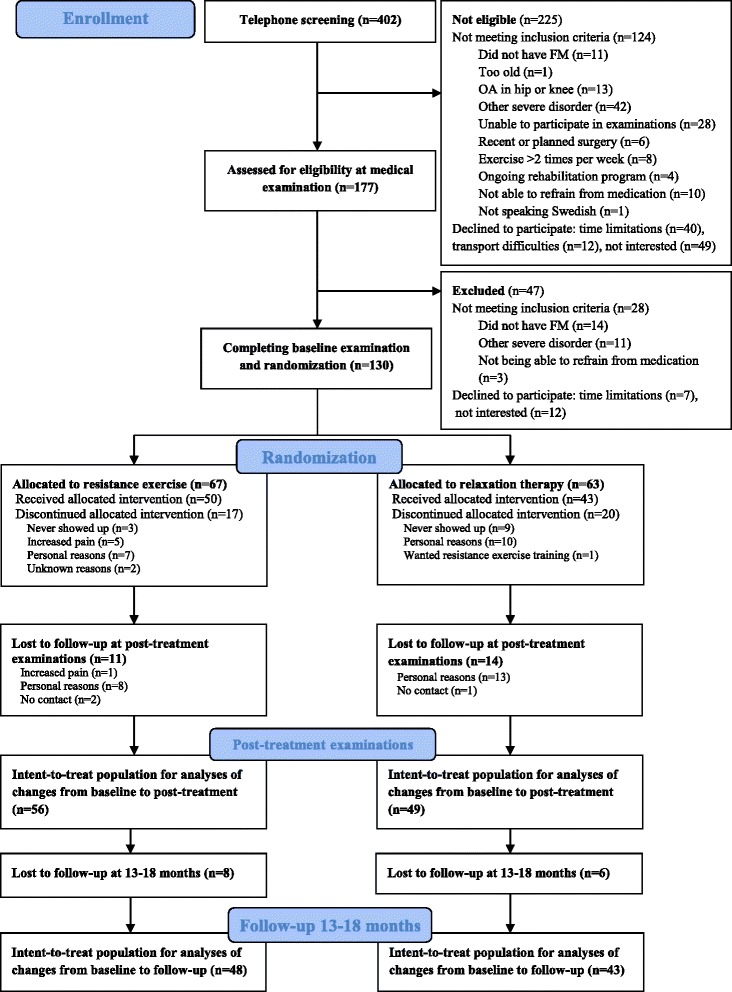
Introduction: Fibromyalgia (FM) is characterized by persistent widespread pain, increased pain sensitivity and tenderness. Muscle strength in women with FM is reduced compared to healthy women. The aim of this study was to examine the effects of a progressive resistance exercise program on muscle strength, health status, and current pain intensity in women with FM. Methods: A total of 130 women with FM (age 22–64 years, symptom duration 0–35 years) were included in this assessor-blinded randomized controlled multi-center trial examining the effects of progressive resistance group exercise compared with an active control group. A person-centred model of exercise was used to support the participants’ self-confidence for management of exercise because of known risks of activity-induced pain in FM. The intervention was performed twice a week for 15 weeks and was supervised by experienced physiotherapists. Primary outcome measure was isometric knee-extension force (Steve Strong®), secondary outcome measures were health status (FIQ total score), current pain intensity (VAS), 6MWT, isometric elbow-flexion force, hand-grip force, health related quality of life, pain disability, pain acceptance, fear avoidance beliefs, and patient global impression of change (PGIC). Outcomes were assessed at baseline and immediately after the intervention. Long-term follow up comprised the self-reported questionnaires only and was conducted after 13–18 months. Between-group and within-group differences were calculated using non-parametric statistics. Results: Significant improvements were found for isometric knee-extension force ( p = 0.010), health status ( p = 0.038), current pain intensity ( p = 0.033), 6MWT ( p = 0.003), isometric elbow flexion force ( p = 0.02), pain disability ( p = 0.005), and pain acceptance ( p = 0.043) in the resistance exercise group ( n = 56) when compared to the control group ( n = 49). PGIC differed significantly ( p = 0.001) in favor of the resistance exercise group at post-treatment examinations. No significant differences between the resistance exercise group and the active control group were found regarding change in self-reported questionnaires from baseline to 13–18 months. Conclusions: Person-centered progressive resistance exercise was found to be a feasible mode of exercise for women with FM, improving muscle strength, health status, and current pain intensity when assessed immediately after the intervention. Trial registration: ClinicalTrials.gov identification number: NCT01226784 , Oct 21, 2010.
Overview
The claims and statistics of this paper haven’t been checked yet.
Free: it reads the open-access text and checks the first 5 claims that cite a source we can check. Create a free account to check every claim.
Integrity signals
Registry
Cites
Statistics
Figures
Verification
Claims the paper makes
The claims and statistics of this paper haven’t been checked yet.
Free: it reads the open-access text and checks the first 5 claims that cite a source we can check. Create a free account to check every claim.
Claims other papers make about this one
Each is checked against this paper’s own text: does it say what the citing paper says it does?
The source backs part of the claim, not all of it — or backs it for a different population, condition or comparison.
In the citing paper
“There was contradictory evidence about the effectiveness of strengthening training and relaxation for physical function in the short term [16,49].”
From Effectiveness of non-pharmacological conservative therapies in adults with fibromyalgia: A systematic review of high-quality clinical trials (2022) · cites this paper as [49]
Experimental — accuracy not yet measuredThe source backs part of the claim, not all of it — or backs it for a different population, condition or comparison.
In the citing paper
“Regarding active therapies, there was strong evidence that showed that strengthening, swimming and other aquatic exercise therapies were effective for reducing pain intensity in the short term [11,16,49,54].”
From Effectiveness of non-pharmacological conservative therapies in adults with fibromyalgia: A systematic review of high-quality clinical trials (2022) · cites this paper as [49]
Experimental — accuracy not yet measuredThe source backs part of the claim, not all of it — or backs it for a different population, condition or comparison.
In the citing paper
“There was contradictory evidence about the effectiveness of strengthening training and relaxation for physical function in the short term [16,49].”
From Effectiveness of non-pharmacological conservative therapies in adults with fibromyalgia: A systematic review of high-quality clinical trials (2022) · cites this paper as [49]
Experimental — accuracy not yet measuredThe source backs part of the claim, not all of it — or backs it for a different population, condition or comparison.
In the citing paper
“There was contradictory evidence about the effectiveness of strengthening ET in the short term [16,49].”
From Effectiveness of non-pharmacological conservative therapies in adults with fibromyalgia: A systematic review of high-quality clinical trials (2022) · cites this paper as [49]
Experimental — accuracy not yet measured
Self-check
Percentages, sums and reported differences re-computed from the paper’s own numbers.
The self-check needs the paper’s full text.
Citations
Cites
Self-efficacy: The exercise of control
Bandura, A., Freeman, W. H., & Lightsey, R. (1999) · Journal of Cognitive Psychotherapy · doi:10.1891/0889-8391.13.2.158 · Cited by 46,835
(1992) · PubMed · Cited by 33,716
The MOS 36-ltem Short-Form Health Survey (SF-36): I. Conceptual Framework and Item Selection
Ware, J. E., & Sherbourne, C. D. (1992) · Medical Care · doi:10.1097/00005650-199206000-00002 · Cited by 30,033
Self-efficacy: the exercise of control
(1997) · Choice Reviews Online · doi:10.5860/choice.35-1826 · Cited by 24,281
SAUNDERS, J. B., AASLAND, O. G., BABOR, T. F., DE LA FUENTE, J. R., & GRANT, M. (1993) · Addiction · doi:10.1111/j.1360-0443.1993.tb02093.x · Cited by 13,597 · cited 1×
“use disorders identification test (AUDIT) score >6) [32], participation in a rehabilitation program within the past year, regular resistance exercise or relaxation exercise twice a week or more, inability to understand or speak Swedish, and not being able to refrain from analgesics, non-steroidal anti-inflammatory dru…”
BackgroundThe american college of rheumatology 1990 criteria for the classification of fibromyalgia
Wolfe, F., Smythe, H. A., Yunus, M. B., Bennett, R. M., Bombardier, C., Goldenberg, D. L., Tugwell, P., Campbell, S. M., Abeles, M., Clark, P., et al. (1990) · Arthritis & Rheumatism · doi:10.1002/art.1780330203 · Cited by 9,563
Exercise and Physical Activity for Older Adults
Chodzko-Zajko, W. J., Proctor, D. N., Fiatarone Singh, M. A., Minson, C. T., Nigg, C. R., Salem, G. J., & Skinner, J. S. (2009) · Medicine & Science in Sports & Exercise · doi:10.1249/mss.0b013e3181a0c95c · Cited by 5,153
Waddell, G., Newton, M., Henderson, I., Somerville, D., & Main, C. J. (1993) · Pain · doi:10.1016/0304-3959(93)90127-b · Cited by 3,167 · cited 1×
“A higher score represents greater fear avoidance beliefs [48]; and the patient global impression of change (PGIC), a numeric scale ranging from 1 (very much improved) to 7 (very much worse), where a lower score indicates greater improvement.”
BackgroundWolfe, F., Ross, K., Anderson, J., Russell, I. J., & Hebert, L. (1995) · Arthritis & Rheumatism · doi:10.1002/art.1780380104 · Cited by 2,416
Cited by
Aerobic exercise training for adults with fibromyalgia
Bidonde, J., Busch, A. J., Schachter, C. L., Overend, T. J., Kim, S. Y., Góes, S. M., Boden, C., & Foulds, H. J. (2017) · Cochrane Database of Systematic Reviews · doi:10.1002/14651858.cd012700 · Cited by 313
Sosa-Reina, M. D., Nunez-Nagy, S., Gallego-Izquierdo, T., Pecos-Martín, D., Monserrat, J., & Álvarez-Mon, M. (2017) · BioMed Research International · doi:10.1155/2017/2356346 · Cited by 246
Learning from Gothenburg model of person centred healthcare
Britten, N., Ekman, I., Naldemirci, Ö., Javinger, M., Hedman, H., & Wolf, A. (2020) · BMJ · doi:10.1136/bmj.m2738 · Cited by 180
Psychology of Chronic Pelvic Pain: Prevalence, Neurobiological Vulnerabilities, and Treatment
TILL, S. R., AS-SANIE, S., & SCHREPF, A. (2019) · Clinical Obstetrics & Gynecology · doi:10.1097/grf.0000000000000412 · Cited by 134
Izquierdo-Alventosa, R., Inglés, M., Cortés-Amador, S., Gimeno-Mallench, L., Chirivella-Garrido, J., Kropotov, J., & Serra-Añó, P. (2020) · International Journal of Environmental Research and Public Health · doi:10.3390/ijerph17103634 · Cited by 134
“Our improvements in objective physical conditioning are in line with those reported by several authors following the implementation of different types of exercises, such as aerobic [22] or resistance exercises [22,25], or combined training (aerobic, resistance, flexibility, and patient education) [30].”
ResultErnberg, M., Christidis, N., Ghafouri, B., Bileviciute-Ljungar, I., Löfgren, M., Bjersing, J., Palstam, A., Larsson, A., Mannerkorpi, K., Gerdle, B., et al. (2018) · Mediators of Inflammation · doi:10.1155/2018/3985154 · Cited by 90
“When a maximum pressure of 1500 kPa was reached, the application of pressure ceased [23].”
BackgroundMethodInfluentialSelf-citationAndrade, A., Steffens, R. D. A. K., Sieczkowska, S. M., Peyré‐Tartaruga, L. A., & Vilarino, G. T. (2018) · Revista Brasileira de Reumatologia · doi:10.1186/s42358-018-0033-9 · Cited by 122
Ericsson, A., Palstam, A., Larsson, A., Löfgren, M., Bileviciute-Ljungar, I., Bjersing, J., Gerdle, B., Kosek, E., & Mannerkorpi, K. (2016) · Arthritis Research & Therapy · doi:10.1186/s13075-016-1073-3 · Cited by 87
“The patients were referred to a baseline examination which included a tender-point examination [2] by a physician, performance-based tests of physical capacity conducted by physical therapists, and a battery of selfreported questionnaires [32].”
BackgroundMethodInfluentialSelf-citationCouto, N., Monteiro, D., Cid, L., & Bento, T. (2022) · Scientific Reports · doi:10.1038/s41598-022-14213-x · Cited by 138
Chronic Pain in Musculoskeletal Diseases: Do You Know Your Enemy?
Bonanni, R., Cariati, I., Tancredi, V., Iundusi, R., Gasbarra, E., & Tarantino, U. (2022) · Journal of Clinical Medicine · doi:10.3390/jcm11092609 · Cited by 115
“On the contrary, evidence has shown that more physically active individuals are less likely to develop chronic pain [46,47].”
BackgroundAlbuquerque, M. L. L., Monteiro, D., Marinho, D. A., Vilarino, G. T., Andrade, A., & Neiva, H. P. (2022) · Rheumatology International · doi:10.1007/s00296-022-05140-1 · Cited by 102
Tour, J., Löfgren, M., Mannerkorpi, K., Gerdle, B. U. C., Larsson, A., Palstam, A., Bilevičiūtė-Ljungar, I., Bjersing, J. L., Ingvar, M., Ernberg, M. M., et al. (2017) · Pain · doi:10.1097/j.pain.0000000000000896 · Cited by 86
“gov identification number: NCT01226784).(25) Baseline data from this trial are used in this study.”
MethodSelf-citationNkhoma, K. B., Cook, A., Giusti, A., Farrant, L., Petrus, R., Petersen, I., Gwyther, L., Venkatapuram, S., & Harding, R. (2022) · BMJ Open · doi:10.1136/bmjopen-2021-054386 · Cited by 89
Work Ability in Fibromyalgia: An Update in the 21st Century
Palstam, A., & Mannerkorpi, K. (2017) · Current Rheumatology Reviews · doi:10.2174/1573397113666170502152955 · Cited by 59
“A recently published RCT study investigated the effects of a person-centered program of resistance exercise in women with FM and found that, besides improvements in muscle strength, pain intensity, and disease specific health status, self-reported occupational disability (PDI occupation) also improved significantly [8…”
BackgroundSelf-citationWhole body vibration exercise training for fibromyalgia
Bidonde, J., Busch, A. J., van der Spuy, I., Tupper, S., Kim, S. Y., & Boden, C. (2017) · Cochrane Database of Systematic Reviews · doi:10.1002/14651858.cd011755.pub2 · Cited by 54
Fernandes, G., Jennings, F., Nery Cabral, M. V., Pirozzi Buosi, A. L., & Natour, J. (2016) · Archives of Physical Medicine and Rehabilitation · doi:10.1016/j.apmr.2016.01.026 · Cited by 49
Jablochkova, A., Bäckryd, E., Kosek, E., Mannerkorpi, K., Ernberg, M. M., Gerdle, B. U. C., & Ghafouri, B. (2019) · Journal of Rehabilitation Medicine · doi:10.2340/16501977-2593 · Cited by 54
“Details about the variables are presented in those studies (28, 31).”
BackgroundMethodResultInfluentialSelf-citationWåhlén, K., Ernberg, M. M., Kosek, E., Mannerkorpi, K., Gerdle, B. U. C., & Ghafouri, B. (2020) · Scientific Reports · doi:10.1038/s41598-020-69422-z · Cited by 53
Self-citationHernando-Garijo, I., Jiménez-del-Barrio, S., Mingo-Gómez, T., Medrano-de-la-Fuente, R., & Ceballos-Laita, L. (2022) · Journal of Back and Musculoskeletal Rehabilitation · doi:10.3233/bmr-200282 · Cited by 48
Andrade, A., Sieczkowska, S. M., & Vilarino, G. T. (2018) · PM&R · doi:10.1016/j.pmrj.2018.09.032 · Cited by 68
Liu, X., Gao, Y., Lu, J., Ma, Q., Shi, Y., Liu, J., Xin, S., & Su, H. (2022) · Frontiers in Physiology · doi:10.3389/fphys.2021.791999 · Cited by 47
Verdú, E., Homs, J., & Boadas‐Vaello, P. (2021) · International Journal of Environmental Research and Public Health · doi:10.3390/ijerph182413333 · Cited by 70
Kosek, E., Martinsen, S., Gerdle, B. U. C., Mannerkorpi, K., Löfgren, M., Bilevičiūtė-Ljungar, I., Fransson, P., Schalling, M., Ingvar, M., Ernberg, M. M., et al. (2016) · Brain Behavior and Immunity · doi:10.1016/j.bbi.2016.07.150 · Cited by 51
“gov identification number: NCT01226784) by newspaper advertisement, where FM patients were randomized to physical exercise or relaxation therapy (Larsson et al., 2015).”
MethodSelf-citationChristidis, N., Ghafouri, B., Larsson, A., Palstam, A., Mannerkorpi, K., Bilevičiūtė-Ljungar, I., Löfgren, M., Bjersing, J. L., Kosek, E., Gerdle, B. U. C., et al. (2015) · PLoS ONE · doi:10.1371/journal.pone.0143856 · Cited by 45
“They formed a subgroup out of 130 patients that participated in the randomized controlled trial regarding the effects of strength and relaxation exercise on FM symptoms [56].”
BackgroundSelf-citationGerdle, B. U. C., Ernberg, M. M., Mannerkorpi, K., Larsson, B. K., Kosek, E., Christidis, N., & Ghafouri, B. (2016) · PLoS ONE · doi:10.1371/journal.pone.0162010 · Cited by 51
“The exercise intervention has been describedin detail elsewhere [34]; here is given a brief description.”
Self-citationStensson, N., Ghafouri, N., Ernberg, M. M., Mannerkorpi, K., Kosek, E., Gerdle, B. U. C., & Ghafouri, B. (2018) · Journal of Pain · doi:10.1016/j.jpain.2018.05.008 · Cited by 44
Self-citationLöfgren, M., Opava, C. H., Demmelmaier, I., Fridén, C., Lundberg, I. E., Nordgren, B., & Kosek, E. (2018) · Arthritis Research & Therapy · doi:10.1186/s13075-018-1758-x · Cited by 39
Self-citationPalstam, A., Larsson, A., Löfgren, M., Ernberg, M., Bjersing, J., Bileviciute-Ljungar, I., Gerdle, B., Kosek, E., & Mannerkorpi, K. (2016) · Arthritis Research & Therapy · doi:10.1186/s13075-016-1007-0 · Cited by 38
“The trial was registered on October 21, 2010 with ClinicalTrials.gov identification number: NCT01226784.”
BackgroundMethodResultSelf-citationVieira, F. T., de Oliveira, G. S., Gonçalves, V. S. S., Neri, S. G. R., de Carvalho, K. M. B., & Dutra, E. S. (2022) · PLOS ONE · doi:10.1371/journal.pone.0269699 · Cited by 36
“Exercise interventions with a resistance training component that included manual isometric exercises were able to increase MS measured with handgrip test in different clinical populations [43, 53, 54].”
MethodChen, J., Han, B., & Wu, C. (2022) · Frontiers in Psychology · doi:10.3389/fpsyg.2022.949256 · Cited by 48
“The noticeable and common negative impact of fibromyalgia syndrome was a reduction in quality of life, mainly in the form of poor work performance, impoverished sleep quality, and increased levels of depression and anxiety (Larsson et al., 2015).”
BackgroundO’Dwyer, T., Maguire, S., Mockler, D., Durcan, L., & Wilson, F. (2019) · Rheumatology International · doi:10.1007/s00296-019-04270-3 · Cited by 43
Increased Anandamide and Decreased Pain and Depression after Exercise in Fibromyalgia
Stensson, N., Gerdle, B. U. C., Ernberg, M. M., Mannerkorpi, K., Kosek, E., & Ghafouri, B. (2020) · Medicine & Science in Sports & Exercise · doi:10.1249/mss.0000000000002293 · Cited by 39
Self-citationRodríguez‐Almagro, D., Moral‐García, M. D., López‐Ruiz, M. D. C., Cortés‐Pérez, I., Obrero‐Gaitán, E., & Lomas‐Vega, R. (2023) · Frontiers in Physiology · doi:10.3389/fphys.2023.1170621 · Cited by 45
“Forty-nine studies (Mannerkorpi et al., 2000; Mannerkorpi et al., 2009; Gowans et al., 2001; King et al., 2002; Richards, 2002; Astin et al., 2003; Schachter et al., 2003; Cedraschi, 2004; Redondo et al., 2004; Da Costa et al., 2005; Kingsley et al., 2005; Zijlstra, 2005; Hammond and Freeman, 2006; Fontaine and Haaz,…”
BackgroundInfluentialLarsson, A., Palstam, A., Bjersing, J. L., Löfgren, M., Ernberg, M. M., Kosek, E., Gerdle, B. U. C., & Mannerkorpi, K. (2018) · BMC Musculoskeletal Disorders · doi:10.1186/s12891-018-2047-1 · Cited by 42
“Abbreviations 6MWT: Six-Minute Walk Test; ACR: American College of Rheumatology; BMI: Body Mass Index; FIQ: Fibromyalgia Impact Questionnaire; FM: Fibromyalgia; LTPAI: Leisure Time Physical Activity Index; NSAID: NonSteroidal Anti-Inflammatory Drug; SD: Standard Deviation; SF36: Short-Form Health Survey 36 Acknowledgm…”
InfluentialSelf-citationSandström, A., Ellerbrock, I., Löfgren, M., Altawil, R., Bilevičiūtė-Ljungar, I., Lampa, J., & Kosek, E. (2021) · Pain · doi:10.1097/j.pain.0000000000002387 · Cited by 36
Self-citationZhang, K., Wang, L., Zhang, Z.-H., Zhang, D., Lin, X., Meng, T., & Qi, F. (2022) · Journal of Pain Research · doi:10.2147/jpr.s384215 · Cited by 47
Martinsen, S., Flodin, P., Berrebi, J., Löfgren, M., Bileviciute‐Ljungar, I., Mannerkorpi, K., Ingvar, M., Fransson, P., & Kosek, E. (2017) · Clinical Physiology and Functional Imaging · doi:10.1111/cpf.12449 · Cited by 37
“FM symptoms and have been shown to reduce pain and tenderness as well as to improve function and well-being in patients with FM (Mannerkorpi, 2005; Busch et al., 2013; Larsson et al., 2015).”
BackgroundResultInfluentialSelf-citationSantos E Campos, M. A., Párraga‐Montilla, J. A., Aragón‐Vela, J., & Latorre‐Román, P. A. (2020) · Scandinavian Journal of Medicine & Science in Sports · doi:10.1111/sms.13640 · Cited by 31
Till, S. R., Wahl, H. N., & As‐Sanie, S. (2017) · Current Opinion in Obstetrics & Gynecology · doi:10.1097/gco.0000000000000376 · Cited by 36
Grigoriou, S. S., Krase, A. A., Karatzaferi, C., Giannaki, C. D., Lavdas, E., Mitrou, G. I., Bloxham, S., Stefanidis, I., & Sakkas, G. K. (2021) · International Urology and Nephrology · doi:10.1007/s11255-020-02711-8 · Cited by 39
“Simiral changes have been observed in other patients’ populations including fibromyalgia patients [54, 55] where changes in QoL and exercise capacity were followed by improvements in pain score.”
BackgroundErnberg, M. M., Christidis, N., Ghafouri, B., Bilevičiūtė-Ljungar, I., Löfgren, M., Larsson, A., Palstam, A., Bjersing, J. L., Mannerkorpi, K., Kosek, E., et al. (2016) · Arthritis Research & Therapy · doi:10.1186/s13075-016-1041-y · Cited by 36
“In addition, even if the results from the main study of this randomized controlled trial showed a positive effect on FMS symptoms [33], the pain and fatigue as well as muscle force in the exercising leg were unaffected by the resistance exercise.”
MethodResultSelf-citationSieczkowska, S. M., Coimbra, D. R., Vilarino, G. T., & Andrade, A. (2019) · Seminars in Arthritis and Rheumatism · doi:10.1016/j.semarthrit.2019.09.006 · Cited by 36
Izquierdo-Alventosa, R., Inglés, M., Cortés‐Amador, S., Gimeno-Mallench, L., Sempere‐Rubio, N., Chirivella, J., & Serra‐Añó, P. (2020) · Therapeutic Advances in Musculoskeletal Disease · doi:10.1177/1759720x20930493 · Cited by 38
Benefits of resistance exercise in lean women with fibromyalgia: involvement of IGF-1 and leptin
Bjersing, J. L., Larsson, A., Palstam, A., Ernberg, M. M., Bilevičiūtė-Ljungar, I., Löfgren, M., Gerdle, B. U. C., Kosek, E., & Mannerkorpi, K. (2017) · BMC Musculoskeletal Disorders · doi:10.1186/s12891-017-1477-5 · Cited by 45
“This is a substudy of a previously reported randomized controlled multicenter trial [15] (ClinicalTrials.”
BackgroundMethodInfluentialSelf-citationMatias, M. G. L., Maciel, D. G., de França, I. M., Cerqueira, M. S., Silva, T. C. L. A., Okano, A. H., Pegado, R., & Vieira, W. H. D. B. (2021) · Archives of Physical Medicine and Rehabilitation · doi:10.1016/j.apmr.2021.06.029 · Cited by 35
Brusco, I., Justino, A. B., Silva, C. R., Scussel, R., Machado‐de‐Ávila, R. A., & Oliveira, S. M. (2021) · European Journal of Pharmacology · doi:10.1016/j.ejphar.2021.173870 · Cited by 31
Han, T., Xi, R., Wang, J., Yan, H., & Li, L. (2024) · Frontiers in Physiology · doi:10.3389/fphys.2024.1413038 · Cited by 30
Ceballos‐Laita, L., Mingo-Gómez, M. T., Cámara, F. J. N., Estébanez-de-Miguel, E., Caudevilla-Polo, S., Verde, Z., Araque, A. F., & Jiménez‐del‐Barrio, S. (2020) · Journal of Clinical Medicine · doi:10.3390/jcm9113564 · Cited by 37
Arroyo-Fernández, R., Avendaño‐Coy, J., Velasco-Velasco, R., Palomo‐Carrión, R., Bravo-Esteban, E., & Ferri‐Morales, A. (2022) · Archives of Physical Medicine and Rehabilitation · doi:10.1016/j.apmr.2022.02.020 · Cited by 33
Vilarino, G. T., Branco, J. H. L., de Souza, L. C., & Andrade, A. (2022) · Irish Journal of Medical Science (1971 -) · doi:10.1007/s11845-022-03205-5 · Cited by 32
Palmer, K. L., Shivgulam, M. E., Champod, A. S., Wilson, B. C., O'Brien, M. W., & Bray, N. W. (2023) · Neurobiology of Pain · doi:10.1016/j.ynpai.2023.100129 · Cited by 26
da Silva, J. M., de Barros, B. S., Almeida, G. J., O’Neil, J., & Imoto, A. M. (2021) · Rheumatology International · doi:10.1007/s00296-021-05025-9 · Cited by 34
Factors promoting physical activity in women with fibromyalgia: a qualitative interview study
Larsson, A., Feldthusen, C., & Mannerkorpi, K. (2020) · BMJ Open · doi:10.1136/bmjopen-2019-031693 · Cited by 32
Self-citationRegular Swimming Exercise Attenuated Neuroma Pain in Rats: Involvement of Leptin and Adiponectin
Sun, L., Lv, Y., Tian, J., Yu, T., Niu, F., Zhang, X., & Du, D. (2019) · Journal of Pain · doi:10.1016/j.jpain.2019.02.097 · Cited by 22
Martinez-Calderon, J., Flores-Cortes, M., Morales-Asencio, J. M., & Luque-Suarez, A. (2021) · Pain Medicine · doi:10.1093/pm/pnaa331 · Cited by 21
Reina‐Varona, Á., de Rivera-Romero, B. R., Cabrera-López, C. D., Fierro‐Marrero, J., Sánchez-Ruíz, I., & Touche, R. L. (2022) · PeerJ · doi:10.7717/peerj.14150 · Cited by 21
“Resistance training, which obtained a C grade of recommendation in favor of the intervention, achieves improvements in other chronic conditions, such as fibromyalgia and low back pain (Larsson et al., 2015;Wewege, Booth & Parmenter, 2018).”
BackgroundCampisi, L., & Motta, C. L. (2022) · Antioxidants · doi:10.3390/antiox11101969 · Cited by 27
Löfgren, M., Sandström, A., Bilevičiūtė-Ljungar, I., Mannerkorpi, K., Gerdle, B. U. C., Ernberg, M. M., Fransson, P., & Kosek, E. (2023) · Neurobiology of Pain · doi:10.1016/j.ynpai.2023.100114 · Cited by 28
“Our hypothesis was that the exercise intervention would improve EIH in FM patients, thus partly explaining the reduced pain intensity previously reported following the exercise intervention in these FM patients (Larsson et al., 2015).”
BackgroundMethodInfluentialSelf-citationMechanisms hypothesized for pain-relieving effects of exercise in fibromyalgia: a scoping review
Neelapala, Y. V. R., Mercuri, D., Macedo, L. G., Hanna, S., Kobsar, D., & Carlesso, L. C. (2023) · Therapeutic Advances in Musculoskeletal Disease · doi:10.1177/1759720x231182894 · Cited by 24
Recommendations for resistance training in patients with fibromyalgia
Jones, K. D. (2015) · Arthritis Research & Therapy · doi:10.1186/s13075-015-0782-3 · Cited by 27
“[1] report the results of a multi-”
Minali, P. A., Pimentel, C. F. M. G., de Mello, M. T., Lima, G., Dardin, L. P., Garcia, A. B. G. A. B., Goñi, T., & Trevisani, V. F. M. (2019) · Scandinavian Journal of Rheumatology · doi:10.1080/03009742.2019.1602880 · Cited by 20
“In the study by Larsson et al (37), fibromyalgic women exhibited overall improvement in the physical and mental components of the SF-36 after 15 weeks of resistance training.”
BackgroundRodríguez‐Domínguez, Á., Rebollo‐Salas, M., Chillón‐Martínez, R., Rosales‐Tristancho, A., Villa-Del-Pino, I., & Jiménez‐Rejano, J. (2025) · Brazilian Journal of Physical Therapy · doi:10.1016/j.bjpt.2025.101226 · Cited by 29
Cuenca‐Martínez, F., Suso‐Martí, L., Fernández‐Carnero, J., Muñoz-Alarcos, V., & Sempere‐Rubio, N. (2023) · Seminars in Arthritis and Rheumatism · doi:10.1016/j.semarthrit.2023.152216 · Cited by 28
Evidence-based approaches for the management of fibromyalgia syndrome: a scoping review
Adams, N., McVeigh, J. G., Vargas, A. I. C., & Abokdeer, S. A. (2023) · Physical Therapy Reviews · doi:10.1080/10833196.2022.2157945 · Cited by 24
“An assessor-blinded multi-centre randomized controlled trial of 130 women with FMS [129], concluded that resistance exercise was found to be a feasible mode of exercise for women with FMS compared with active exercise, improving muscle strength, health status, and current pain intensity.”
Rodríguez‐Domínguez, Á., Rebollo‐Salas, M., Chillón‐Martínez, R., Rosales‐Tristancho, A., & Jiménez‐Rejano, J. (2023) · European Journal of Pain · doi:10.1002/ejp.2161 · Cited by 25
“…Gavi et al., 2014; Jones et al., 2002) compared RT with flexibility exercise, four other studies (Ernberg et al., 2018; Jablochkova et al., 2019; Larsson et al., 2015; Silva et al., 2019) compared it with the relaxation group and five other studies (Assumpção et al., 2018; Glasgow et al., 2017;…”
ResultEffects of Combined Training Programs in Individuals with Fibromyalgia: A Systematic Review
Sousa, M., Oliveira, R. F. S., Brito, J. P., Martins, A. D., Moutão, J. M. R. P., & Alves, S. (2023) · Healthcare · doi:10.3390/healthcare11121708 · Cited by 23
“In this sense, aerobic exercise induces adaptations in various functional capacities such as transport, capture and the use of oxygen [22]; strength training becomes essential for increasing muscle strength [23,24]; and stretching exercises are beneficial to reduce the loss of mobility due to its constant immobilisati…”
BackgroundNiu, G., Zheng, X., Bigao, D. E. N. G., Yang, Q., & Du, Y. (2024) · Musculoskeletal Care · doi:10.1002/msc.1918 · Cited by 20
Larsson, A., Palstam, A., Löfgren, M., Ernberg, M. M., Bjersing, J. L., Bilevičiūtė-Ljungar, I., Gerdle, B. U. C., Kosek, E., & Mannerkorpi, K. (2017) · Journal of Rehabilitation Medicine · doi:10.2340/16501977-2278 · Cited by 21
Self-citationAli, L., Wallström, S., Barenfeld, E., Fors, A., Fredholm, E. M., Gyllensten, H., Swedberg, K. B., & Ekman, I. (2020) · BMJ Open · doi:10.1136/bmjopen-2019-036356 · Cited by 20
Döhmen, A., Kock, M., Fischer, F. H., Rose, M., Obbarius, A., & Klapproth, C. P. (2022) · Quality of Life Research · doi:10.1007/s11136-022-03261-5 · Cited by 17
“Remarkably, although the OMERACT recommendations have been available since 2009 [5], only eight studies referred to those recommendations in the methods section or in the discussion [30, 56, 73, 79, 80, 113, 125, 126].”
MethodFibromyalgia: Associations Between Fat Infiltration, Physical Capacity, and Clinical Variables
Gerdle, B. U. C., Leinhard, O. D., Lund, E., Bengtsson, A., Lundberg, P., Ghafouri, B., & Forsgren, M. F. (2022) · Journal of Pain Research · doi:10.2147/jpr.s376590 · Cited by 17
“Different physiological explanations for reduced strength in FM have been proposed – eg, alterations in muscle fiber, changes in neuromuscular control mechanisms, insufficient blood circulation, and alterations in energy and growth metabolism.(38) The relationship between BMI and physical activity in FM is not clear.”
BackgroundMethodSelf-citationWÅHLÉN, K., YAN, H., Welinder, C., Ernberg, M. M., Kosek, E., Mannerkorpi, K., GERDLE, B., & Ghafouri, B. (2021) · Medicine & Science in Sports & Exercise · doi:10.1249/mss.0000000000002790 · Cited by 22
“Details about the recruitment process have been well described in previous studies (11,37).”
BackgroundMethodInfluentialSelf-citationA Person-Centred Approach When Encountering Students With Recurrent Pain: School Nurses’ Experiences
Wigert, H., Fors, A., Nilsson, S., Dalenius, K., & Golsäter, M. (2019) · The Journal of School Nursing · doi:10.1177/1059840519864158 · Cited by 24
“For example, in patients with fibromyalgia, a PCC approach resulted in improvements in health status, pain intensity, pain disability, and pain acceptance (Larsson et al., 2015).”
BackgroundMethodMasmoum, M. D., Khan, S., Usmani, W. A., Chaudhry, R., Ray, R., Mahmood, A., Afzal, M., & Mirza, M. S. S. (2024) · Cureus · doi:10.7759/cureus.68928 · Cited by 26
“Eleven of the 17 included studies were RCTs [14-28], as assessed by the Cochrane risk-of-bias tool.”
BackgroundMethodFernandes, G., Nery, M., Meireles, S. M., Santos, R., Natour, J., & Jennings, F. (2024) · Revista Brasileira de Reumatologia · doi:10.1186/s42358-024-00422-7 · Cited by 23
“Jones et al. [42] and Larsson et al. [43] conducted studies with a similar design to that of the present investigation, comparing a progressive resistance exercise program to relaxation and stretching exercises in patients with FM, and found similar results, with a significant decrease in VAS pain…”
MethodResultJuhlin, S., Bergenheim, A., Gjertsson, I., Larsson, A., & Mannerkorpi, K. (2021) · Journal of Rehabilitation Medicine · doi:10.2340/16501977-2796 · Cited by 13
“A person-centred approach, in which physical activity is adjusted to the individual’s resources, can enable persons with CWP to become regularly physically active (10, 11).”
BackgroundSelf-citationEffects of a telerehabilitation-based exercise program in patients with systemic sclerosis
Sarı, F., Oskay, D., & Tufan, A. (2023) · Zeitschrift für Rheumatologie · doi:10.1007/s00393-023-01346-1 · Cited by 13
Sarmento, C. V. M., Liu, Z., Smirnova, I. V., & Liu, W. (2023) · Physiologia · doi:10.3390/physiologia3030034 · Cited by 16
How to Manage Fatigue in Fibromyalgia: Nonpharmacological Options
Ericsson, A., & Mannerkorpi, K. (2016) · Pain Management · doi:10.2217/pmt-2016-0015 · Cited by 26
Self-citationSveaas, S. H., Dagfinrud, H. S., Johansen, M. W., Pedersen, E., Wold, O.-M., & Bilberg, A. (2019) · The Journal of Rheumatology · doi:10.3899/jrheum.190317 · Cited by 13
“Three studies, one in individuals with axSpA(10), one in individuals with osteoarthritis(32) and one in individuals with fibromyalgia(33) concluded with no effect of an exercise programme on long-term activity, while a study of elderly individuals with rheumatoid arthritis(34) found a positive long-term effect on phys…”
BackgroundResultCeballos‐Laita, L., Mingo-Gómez, M. T., Estébanez-de-Miguel, E., Bueno-Gracía, E., Navas-Cámara, F. J., Verde, Z., Araque, A. F., & Jiménez‐del‐Barrio, S. (2021) · Journal of Clinical Medicine · doi:10.3390/jcm10112518 · Cited by 21
Healthcare Provider Advice to Engage in Walking Regimens and Adherence in Women With Fibromyalgia
Peñacoba, C., Pastor-Mira, M. D. L. Á., López-Roig, S., Sanz, Y., & Furlong, L. V. (2017) · Rehabilitation Nursing · doi:10.1097/rnj.0000000000000103 · Cited by 15
Timurtaş, E., Hüzmeli̇, İ., Demırbüken, İ., & Polat, M. G. (2025) · BMC Musculoskeletal Disorders · doi:10.1186/s12891-025-08377-6 · Cited by 12
Self-Selected Resistance Exercise Load: Implications for Research and Prescription
Barbosa-Netto, S., d’acelino‐e‐Porto, O. S., & de Almeida, M. B. (2017) · The Journal of Strength and Conditioning Research · doi:10.1519/jsc.0000000000002287 · Cited by 15
“One of the main reasons for the use of RT is the growing publications of the beneficial effects of training programs aimed at prevention, rehabilitation, health promotion, or improvement in sports performance (1,5,24).”
BackgroundFeldthusen, C., & Mannerkorpi, K. (2019) · BMJ Open · doi:10.1136/bmjopen-2018-028719 · Cited by 14
Self-citationVarkey, E., Dahlbäck, A., Thulin, M., Börjesson, M., Arvidsson, D., Fridolfsson, J., & Andréll, P. (2021) · Disability and Rehabilitation · doi:10.1080/09638288.2021.1971305 · Cited by 13
Maestre-Cascales, C., Castillo-Paredes, A., Romero‐Parra, N., Adsuar, J. C., & Carlos‐Vivas, J. (2022) · International Journal of Environmental Research and Public Health · doi:10.3390/ijerph192315662 · Cited by 20
Guidelines on Treating Fibromyalgia With Nonpharmacological Therapies in China
Li, X., Pan, H., Wang, L., Zhou, Q. X., Ma, Y., Wang, Q., Wang, M., Xie, Z., Li, H., Chen, Z., et al. (2025) · Journal of Evidence-Based Medicine · doi:10.1111/jebm.70044 · Cited by 18
Kim, H. J., Ban, M. G., Yoon, K. B., Jeon, W., & Kim, S. H. (2022) · Journal of Clinical Medicine · doi:10.3390/jcm11185471 · Cited by 13
Andersson, U., Åberg, A. C., von Koch, L., & Palstam, A. (2021) · International Journal of Environmental Research and Public Health · doi:10.3390/ijerph18126276 · Cited by 17
Self-citationDahlbäck, A., Andréll, P., & Varkey, E. (2021) · Physiotherapy Theory and Practice · doi:10.1080/09593985.2021.1999356 · Cited by 11
“In a study of fibromyalgia, the patients decreased their pain intensity and disability after a period of strength exercise (Larsson et al., 2015).”
BackgroundReduced immune system responsiveness in fibromyalgia - A pilot study
Björkander, S., Ernberg, M. M., & Bilevičiūtė-Ljungar, I. (2022) · Clinical Immunology Communications · doi:10.1016/j.clicom.2022.02.003 · Cited by 11
Self-citationHydroxytyrosol as a Promising Ally in the Treatment of Fibromyalgia
Ramírez‐Tejero, J. A., Martínez‐Lara, E., Peinado, M. Á., del Moral, M. L., & Siles, E. (2020) · Nutrients · doi:10.3390/nu12082386 · Cited by 12
“It has been demonstrated that thermoregulation is an inefficient process in FM patients [97].”
BackgroundDevigili, G., Stefano, G. D., Donadio, V. A., Frattale, I., Grazzi, L., Mantovani, E., Nolano, M., Provitera, V., Quitadamo, S. G., Tamburin, S., et al. (2025) · Neurological Sciences · doi:10.1007/s10072-025-08048-3 · Cited by 15
“Larsson et al. [46] investigated resistance training and found an improvement in muscle strength and pain intensity.”
InfluentialStegner, A. J., Almassi, N. E., Dougherty, R. J., Ellingson, L. D., Gretzon, N. P., Lindheimer, J. B., Ninneman, J. V., Riper, S. M. V., O’Connor, P. J., & Cook, D. B. (2021) · Life Sciences · doi:10.1016/j.lfs.2021.119810 · Cited by 12
Peinado-Rubia, A. B., Osuna‐Pérez, M. C., Cortés‐Pérez, I., Rojas-Navarrete, A., Ibancos‐Losada, M. D. R., & Lomas‐Vega, R. (2023) · Biomedicines · doi:10.3390/biomedicines11051297 · Cited by 10
Pontes‐Silva, A., Dibai‐Filho, A. V., de Melo, T. S., Santos, L. M., de Souza, M. C., DeSantana, J. M., & Ávila, M. A. (2023) · BMC Musculoskeletal Disorders · doi:10.1186/s12891-023-06952-3 · Cited by 13
“Some studies have used this strategy in patients with fibromyalgia [22, 26–28], but the results are controversial [27–32] and the comparison between groups did not control for the progression of exercise intensity [27–32].”
ResultExercise Training for Women With Fibromyalgia Syndrome: A Scoping Review
Silva, L. C., Dittgen, M., Meroni, R., Romero, E. A. S., Rossettini, G., Villafañe, J. H., & Corbellini, C. (2024) · Topics in Geriatric Rehabilitation · doi:10.1097/tgr.0000000000000435 · Cited by 12
Postural counseling represents a novel option in pain management of fibromyalgia patients
Galvani, C., Caramaschi, P., Mura, P., Paladini, A., Piroli, A., Arnaudo, E., Franceschi, L. D., Evangelista, M., Pari, A., Ongaro, G., et al. (2019) · Journal of Pain Research · doi:10.2147/jpr.s164714 · Cited by 11
“Based on previous studies, we considered FM patients as responders who experienced >30% improvement in FIQ total score compared to baseline.(30,31)”
MethodBergenheim, A., Juhlin, S., Nordeman, L., Joelsson, M., & Mannerkorpi, K. (2019) · BMC Rheumatology · doi:10.1186/s41927-019-0072-9 · Cited by 9
Self-citation
Metadata
- Authors
- Larsson, A., Palstam, A., Löfgren, M., Ernberg, M., Bjersing, J., Bileviciute-Ljungar, I., Gerdle, B., Kosek, E., & Mannerkorpi, K.
- Affiliations
- University of Gothenburg (SE)
- Danderyds sjukhus (SE)
- Karolinska Institutet (SE)
- Sahlgrenska University Hospital (SE)
- Linköping University (SE)
- Corresponding author
- Larsson, Anette
- ORCID
- Venue
- Arthritis Research & Therapy
- Published
- 2015-06-18
- Volume
- 17
- Issue
- 1
- Pages
- 161-161
- ISSN
- 1478-6354 (ISSN-L)
- PMC
- PMC4489359
- OpenAlex
- W2172080594
- Cited by
- 197
- References
- 64
- Citations by year
- 2026: 16 · 2025: 13 · 2024: 18 · 2023: 22 · 2022: 32 · 2021: 20 · 2020: 18 · 2019: 16 · 2018: 13 · 2017: 13 · 2016: 12 · 2015: 3
- FWCI
- 11.10
- Type
- journal article
- Language
- en
- Open access
- gold
- doi.org
- Licence
- cc-by
- creativecommons.org/licenses/by/4.0 (tdm)
- creativecommons.org/licenses/by/4.0 (vor)
- Locations
- Arthritis Research & Therapy (publishedVersion, cc-by)
- Europe PMC (PubMed Central) (publishedVersion, cc-by)
- PubMed Central (publishedVersion, cc-by)
- PubMed (publishedVersion)
- Diva portal (Dalarna University Library) (submittedVersion, other-oa)
- KTH Publication Database DiVA (KTH Royal Institute of Technology) (submittedVersion, other-oa)
- Funders
- Stockholms Läns Landsting
- Vetenskapsrådet
- Norrbacka-Eugeniastiftelsen
- Sahlgrenska Universitetssjukhuset
- Reumatikerförbundet
- Centrum fÖr Personcentrerad Vård
- Topics
- Health Sciences › Medicine › Psychiatry and Mental health › Fibromyalgia and Chronic Fatigue Syndrome Research
- Health Sciences › Health Professions › Physical Therapy, Sports Therapy and Rehabilitation › Musculoskeletal pain and rehabilitation
- Health Sciences › Health Professions › Physical Therapy, Sports Therapy and Rehabilitation › Myofascial pain diagnosis and treatment
- Keywords
- fibromyalgia, resistance training, muscle strength, pain intensity, health-related quality of life, pain-related disability, pain acceptance, fear-avoidance beliefs, women, knee extension force, 6-minute walk test, grip strength, exercise adherence, physiotherapy, long-term follow-up, Patient Global Impression of Change, chronic widespread pain, self-efficacy
- MeSH terms
- Adult, Exercise Therapy, Female, Fibromyalgia, Health Status, Humans, Middle Aged, Pain, Pain Measurement, Quality of Life, Relaxation Therapy, Single-Blind Method, Muscle Strength, Resistance Training, Young Adult
About these checks
Registry, retraction, Cites and statistics results are computed, not judged, with one exception: a printed reference that no index lists is read once by a model before it counts as a citation error. Claims are extracted by a model and kept only when their quote appears verbatim in the text; each cited source is then checked, with a model’s help, for whether it says what the claim relies on. Those verdicts can be wrong — read the claim’s quote and the cited source before relying on one.
Statistics and arithmetic are recomputed, not judged.
Confidence bands are shown only for fields calibrated on our annotated test set. None is calibrated yet, so no band is shown.
What counts as a claim ›How we measure confidence ›How we check this ›
Are you an author, or do you see a problem with this page? Request a review
Data sources
Bibliographic data: Semantic Scholar, OpenAlex, Crossref.
Contains information from the Semantic Scholar Academic Graph Datasets, made available under the ODC Attribution License (ODC-BY 1.0).
Semantic Scholar’s data is described in: Kinney, R., et al. (2023). The Semantic Scholar Open Data Platform. arXiv:2301.10140.
