

Inhibition of Nrf2/HO-1 signaling leads to increased activation of the NLRP3 inflammasome in osteoarthritis
Open accessThe DOI matches its Crossref record; 42 of the 42 references it cites were found in a registry or an index.
Abstract
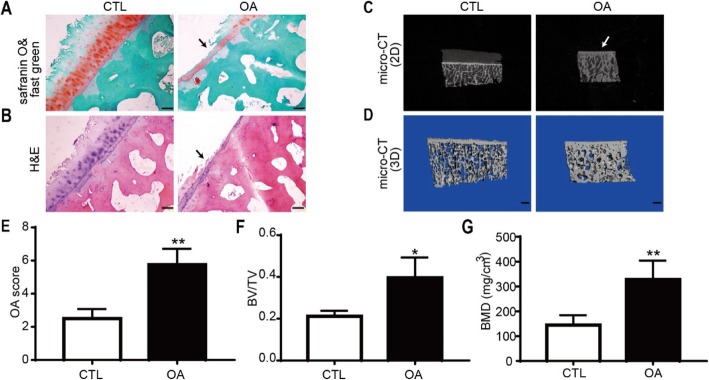
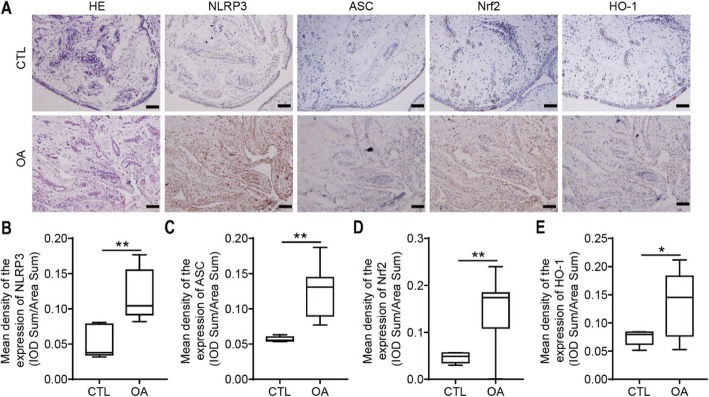
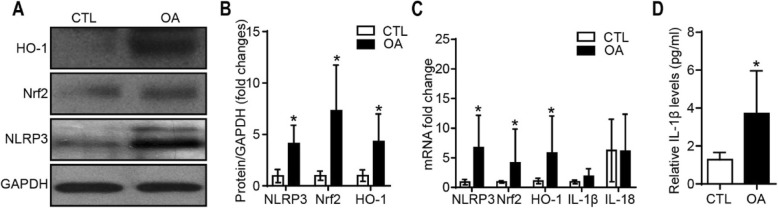
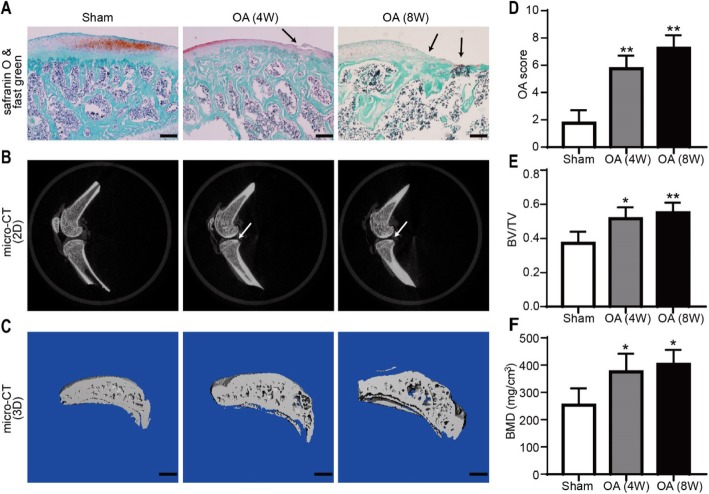
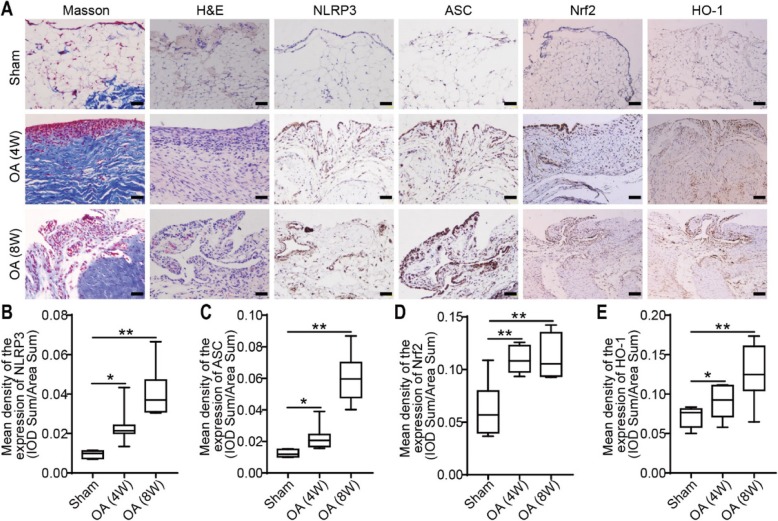
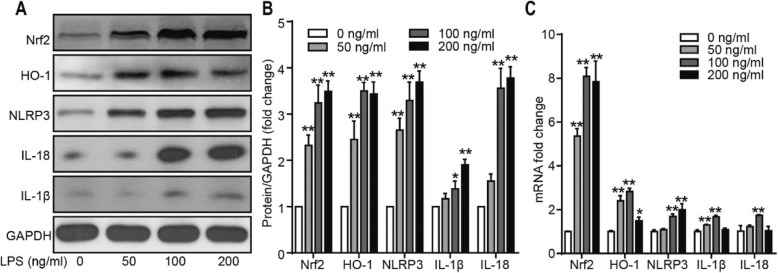
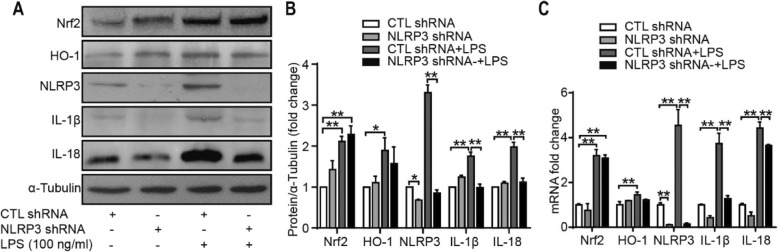
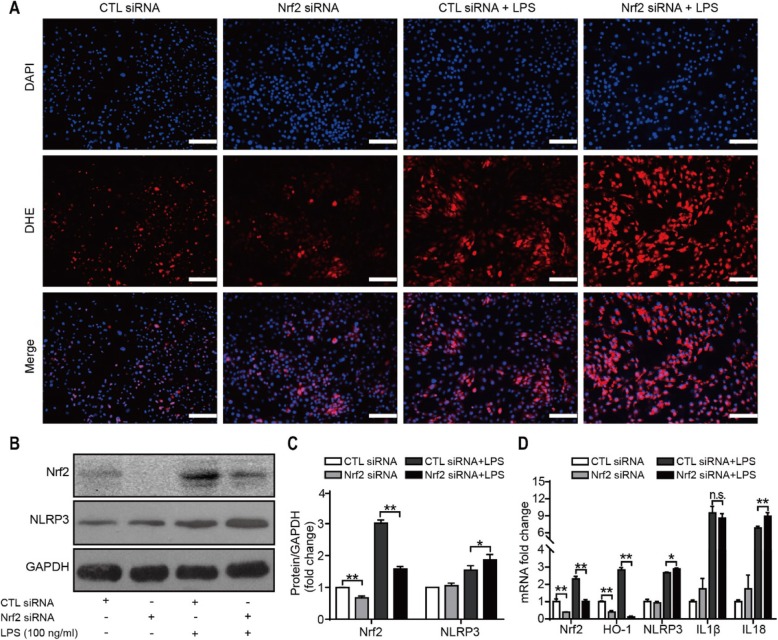
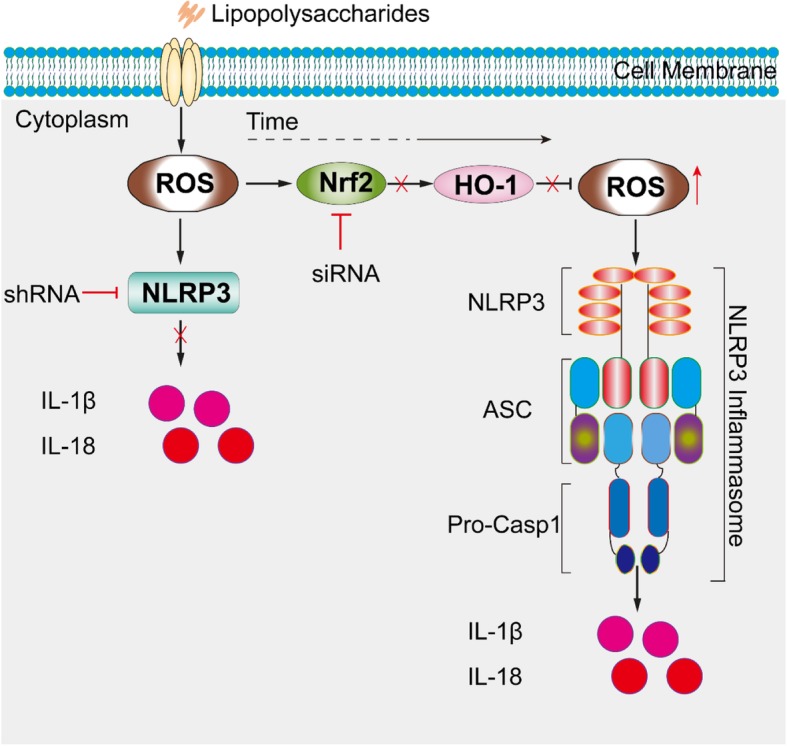
Introduction: Osteoarthritis (OA) is an inflammatory disease of the joints that causes progressive disability in the elderly. Reactive oxygen species (ROS) play an important role in OA development; they may activate the NLRP3 inflammasome, thereby inducing the secretion of proinflammatory IL-1β and IL-18, leading to the aggravation of the downstream inflammatory response. Nrf2 is a key transcription factor that regulates the expression of antioxidant enzymes that protect against oxidative stress and tissue damage. We aimed to explore the underlying mechanism of OA development by investigating NLRP3, ASC, Nrf2, and HO-1 expression in synovia and their regulatory networks in OA. Methods: Human total knee replacement samples were subjected to histology and micro-CT analysis to determine the pathological changes in the cartilage and subchondral bone and to assess the expression of inflammation-related markers in the synovial tissue by immunohistochemistry (IHC), qRT-PCR, and Western blot. To investigate these pathological changes in an OA animal model, adult Sprague-Dawley rats were subjected to anterior cruciate ligament transection and medial meniscectomy. Articular cartilage and subchondral bone changes and synovial tissue were also determined by the same methods used for the human samples. Finally, SW982 cells were stimulated with lipopolysaccharide (LPS) as an in vitro inflammatory cell model. The correlation between NLRP3 and Nrf2 expression was confirmed by knocking down NLRP3 or Nrf2. Results: Cartilage destruction and subchondral bone sclerosis were found in the OA patients and OA model rats. Significantly increased expression levels of NLRP3, ASC, Nrf2, and HO-1 were found in the synovial tissue from OA patients. NLRP3, ASC, Nrf2, and HO-1 expression in the synovium was also upregulated in the OA group compared with the sham group. Furthermore, the NLRP3, Nrf2, HO-1, IL-1β, and IL-18 expression in LPS-treated SW982 cells was increased in a dose-dependent manner. As expected, the expression of NLRP3 was upregulated, and the expression of IL-1β and IL-18 was downregulated after Nrf2 silencing. However, knocking down NLRP3 did not affect the expression of Nrf2. Conclusions: ROS-induced oxidative stress may be the main cause of NLRP3 inflammasome activation and subsequent release of downstream factors during OA development. Nrf2/HO-1 signaling could be a key pathway for the activation of the NLRP3 inflammasome, which may contribute to the progression of OA. Herein, we discovered a novel role of Nrf2/HO-1 signaling in the production of NLRP3, which may facilitate the prevention and treatment of OA.
Overview
The claims and statistics of this paper haven’t been checked yet.
Free: it reads the open-access text and checks the first 5 claims that cite a source we can check. Create a free account to check every claim.
Integrity signals
Registry
Cites
Statistics
Figures
Verification
Claims the paper makes
The claims and statistics of this paper haven’t been checked yet.
Free: it reads the open-access text and checks the first 5 claims that cite a source we can check. Create a free account to check every claim.
Claims other papers make about this one
Each is checked against this paper’s own text: does it say what the citing paper says it does?
The source backs part of the claim, not all of it — or backs it for a different population, condition or comparison.
In the citing paper
“Remarkably, the levels of NLRP3 in individuals with osteoarthritis (OA) have been detected to exceed those in healthy subjects by a factor of more than five [23,24]”
From Picroside II suppresses chondrocyte pyroptosis through MAPK/NF-κB/NLRP3 signaling pathway alleviates osteoarthritis (2024) · cites this paper as [24]
Experimental — accuracy not yet measured
Self-check
Percentages, sums and reported differences re-computed from the paper’s own numbers.
The self-check needs the paper’s full text.
Citations
Cites
1 retracted
Zhou, J., Zhao, Y., Wu, G., Lin, B., Li, Z., & Liu, X. (2018) · Molecular Medicine Reports · doi:10.3892/mmr.2018.9385 · Cited by 13
RetractedAltman, R., Asch, E., Bloch, D., Bole, G., Borenstein, D., Brandt, K., Christy, W., Cooke, T. D., Greenwald, R., Hochberg, M., et al. (1986) · Arthritis & Rheumatism · doi:10.1002/art.1780290816 · Cited by 6,777 · cited 1×
“All patients satisfied the American College of Rheumatology clinical criteria for primary knee OA [16].”
BackgroundInflammasomes: mechanism of action, role in disease, and therapeutics
Guo, H., Callaway, J. B., & Ting, J. P.-Y. (2015) · Nature Medicine · doi:10.1038/nm.3893 · Cited by 3,340
Mechanism and Regulation of NLRP3 Inflammasome Activation
He, Y., Hara, H., & Núñez, G. (2016) · Trends in Biochemical Sciences · doi:10.1016/j.tibs.2016.09.002 · Cited by 2,759
The role of synovitis in osteoarthritis pathogenesis
Scanzello, C. R., & Goldring, S. R. (2012) · Bone · doi:10.1016/j.bone.2012.02.012 · Cited by 1,302
Inflammatory caspases and inflammasomes: master switches of inflammation
Martinon, F., & Tschopp, J. (2007) · Cell Death & Differentiation · doi:10.1038/sj.cdd.4402038 · Cited by 820
Kobayashi, M., Squires, G. R., Mousa, A., Tanzer, M., Zukor, D. J., Antoniou, J., Feige, U., & Poole, A. R. (2005) · Arthritis & Rheumatism · doi:10.1002/art.20776 · Cited by 497 · cited 1×
“These play crucial roles in OA pathogenesis resulting in the release of cartilage-degrading enzymes, such as aggrecanases and metalloproteinases, from chondrocytes [11, 12].”
BackgroundCurrent research on pharmacologic and regenerative therapies for osteoarthritis
Zhang, W., Ouyang, H., Dass, C. R., & Xu, J. (2016) · Bone Research · doi:10.1038/boneres.2015.40 · Cited by 495
Suzuki, T., & Yamamoto, M. (2017) · Journal of Biological Chemistry · doi:10.1074/jbc.r117.800169 · Cited by 400
Rahmati, M., Mobasheri, A., & Mozafari, M. (2016) · Bone · doi:10.1016/j.bone.2016.01.019 · Cited by 374
Cited by
Sun, Y.-Y., Zhu, H.-J., Zhao, R.-Y., Zhou, S.-Y., Wang, M.-Q., Yang, Y., & Guo, Z.-N. (2023) · Redox Biology · doi:10.1016/j.redox.2023.102852 · Cited by 279
Lv, Z., Xu, X., Sun, Z., Yang, Y. X., Guo, H., Li, J., Sun, K., Wu, R., Xu, J., Jiang, Q., et al. (2021) · Cell Death & Disease · doi:10.1038/s41419-021-03792-8 · Cited by 253
Riegger, J., Schoppa, A., Ruths, L., Haffner-Luntzer, M., & Ignatius, A. (2023) · Cellular & Molecular Biology Letters · doi:10.1186/s11658-023-00489-y · Cited by 235
“to promote pyroptosis in OA [175], while enhanced Nrf2 signaling by the addition of the antihistamine loratadine or the flavonoid licochalcone A was described to alleviate NLRP3-related pyroptosis as well as consequent inflammation and OA progression”
BackgroundXiao, L., Dai, Z., Tang, W., Liu, C., & Tang, B. (2021) · Oxidative Medicine and Cellular Longevity · doi:10.1155/2021/9925561 · Cited by 135
“Thus far, several lines of study have shown that Nrf2 prevents NLRP3 inflammasome activation by regulating reactive oxygen species (ROS) levels, the thioredoxin system, and the glutathione protein system, decreasing the oxidative stress level [14, 15].”
BackgroundZhang, L., Xu, L.-Y., Tang, F., Liu, D., Zhao, X.-L., Zhang, J.-N., Xia, J., Wu, J.-J., Yang, Y., Peng, C. Y., et al. (2024) · Journal of Pharmaceutical Analysis · doi:10.1016/j.jpha.2023.12.020 · Cited by 157
Yan, Z., Qi, W., Zhan, J., Zeng, L., Lin, J. J., Xue, X., Pan, X., & Zhou, Y. (2020) · Journal of Cellular and Molecular Medicine · doi:10.1111/jcmm.15905 · Cited by 132
Yang, X., Liu, Y., Cao, J., Wu, C., Tang, L., Bian, W., Chen, Y., Yu, L., Wu, Y., Li, S., et al. (2025) · Cell Death Discovery · doi:10.1038/s41420-025-02491-z · Cited by 157
Liu, W., Liu, A., Li, X., Sun, Z., Sun, Z., Liu, Y., Wang, G., Huang, D., Xiong, H., Yu, S., et al. (2023) · Bioactive Materials · doi:10.1016/j.bioactmat.2023.06.012 · Cited by 107
He, Y., Sun, M., Wang, J., Yang, X., Lin, C., Ge, L., Ying, C., Xu, K., Liu, A., & Wu, L. (2022) · Acta Biomaterialia · doi:10.1016/j.actbio.2022.07.052 · Cited by 111
Liu, Y., Zhou, J., Luo, Y., Li, J., Shang, L., Zhou, F., & Yang, S. (2021) · Chinese Medicine · doi:10.1186/s13020-021-00541-z · Cited by 113
“The current study also showed that Nrf2 negatively regulated the activation of NLRP3 inflammasome [50, 51].”
BackgroundXue, C., Tian, J., Cui, Z., Liu, Y., Sun, D., Xiong, M., Yi, N., Wang, K., Li, X., Wang, Y., et al. (2024) · Bioactive Materials · doi:10.1016/j.bioactmat.2023.10.032 · Cited by 90
“It has been shown that most of OA patients suffer from synovitis often characterized by increased abundance and activation of M1 macrophages in synovium that produce reactive oxygen species (ROS) [10].”
BackgroundMelatonin: A novel candidate for the treatment of osteoarthritis
Zhang, Y., Liu, T., Yang, H., He, F., & Zhu, X. (2022) · Ageing Research Reviews · doi:10.1016/j.arr.2022.101635 · Cited by 95
HK2: a potential regulator of osteoarthritis via glycolytic and non-glycolytic pathways
Bao, C., Zhu, S., Song, K., & He, C. (2022) · Cell Communication and Signaling · doi:10.1186/s12964-022-00943-y · Cited by 104
“Cartilage destruction and subchondral osteosclerosis were found in OA patients and OA model rats, and the expression level of NLRP3 was significantly increased in synovial tissue [106], which indicates that NLRP3 inflammasome was involved in the pathogenesis of OA [107].”
BackgroundActivation and Function of NLRP3 Inflammasome in Bone and Joint-Related Diseases
Murakami, T., Nakaminami, Y., Takahata, Y., Hata, K., & Nishimura, R. (2022) · International Journal of Molecular Sciences · doi:10.3390/ijms23105365 · Cited by 95
“Furthermore, NLRP3 inflammasome activation has been detected in the synovium of OA patients and OA model animals [117].”
BackgroundNanomaterial-based reactive oxygen species scavengers for osteoarthritis therapy
Zhang, S., Wang, L., Kang, Y., Wu, J., & Zhang, Z. (2023) · Acta Biomaterialia · doi:10.1016/j.actbio.2023.03.030 · Cited by 82
Tan, S., Sun, Y., Li, S., Wu, H., & Ding, Y. (2025) · Bone Research · doi:10.1038/s41413-025-00460-x · Cited by 98
USP7 Inhibition Alleviates H2O2-Induced Injury in Chondrocytes via Inhibiting NOX4/NLRP3 Pathway
Liu, G., Liu, Q., Yan, B., Zhu, Z., & Xu, Y. (2021) · Frontiers in Pharmacology · doi:10.3389/fphar.2020.617270 · Cited by 77
“ELISA and Western blotting results indicated that USP7 overexpression significantly increased IL-1β and IL-18 levels as well as the expression of USP7, NLRP3, GSDMD-N, active caspase-1, procaspase-1, MMP1, andMMP13, which was decreased by USP7 KD or apocynin (Figures 3C,D).”
BackgroundInfluentialYuPingFengSan ameliorates LPS-induced acute lung injury and gut barrier dysfunction in mice
Wang, Y., Wang, Y., Ma, J., Li, Y., Cao, L., Zhu, T., Hu, H., & Liu, H. (2023) · Journal of Ethnopharmacology · doi:10.1016/j.jep.2023.116452 · Cited by 87
Wang, P., Zhang, Y., Lei, H., Yu, J., Zhou, Q., Shi, X., Zhu, Y., Zhang, D., Zhang, P., Wang, K., et al. (2023) · Carbohydrate Polymers · doi:10.1016/j.carbpol.2023.121018 · Cited by 72
Zhao, Z., Wang, X., Zhang, R., Ma, B., Niu, S., Di, X., Ni, L., & Liu, C. (2021) · Aging · doi:10.18632/aging.202829 · Cited by 74
“reported that suppressing Nrf2/HO-1 signaling in osteoarthritis enhances NLRP3 inflammasome signaling [40].”
BackgroundZhou, X., Zhang, Y., Hou, M., Liu, H., Yang, H., Chen, X., Liu, T., He, F., & Zhu, X. (2020) · Journal of Bone and Mineral Research · doi:10.1002/jbmr.4527 · Cited by 65
“Interestingly, the lack of HO-1 in the nucleus may cause ubiquitin-proteasomal degradation of NRF and resulted in a vicious circle of impaired antioxidant functions.((38)) Potential effects of melatonin on the NRF2 pathway have been reported in previous studies.”
ResultNLRP3-mediated pyroptosis in diabetic nephropathy
Wan, J., Liu, D., Pan, S., Zhou, S., & Liu, Z. (2022) · Frontiers in Pharmacology · doi:10.3389/fphar.2022.998574 · Cited by 75
Jeon, S., Jeon, J. H., Jeong, J., Kim, G., Lee, S., Kim, S., Maruthupandy, M., Lee, K., Yang, S. I., & Cho, W. (2023) · Journal of Hazardous Materials · doi:10.1016/j.jhazmat.2023.132295 · Cited by 69
Dinda, B., Dinda, M., Dinda, S., & De, U. C. (2023) · European Journal of Medicinal Chemistry · doi:10.1016/j.ejmech.2023.115629 · Cited by 63
Yan, Z., He, Z., Jiang, H., Zhang, Y., Xu, Y., & Zhang, Y. (2023) · International Immunopharmacology · doi:10.1016/j.intimp.2023.110651 · Cited by 67
Xie, P., Chen, L., Wang, J., Wang, X., Yang, S., & Zhu, G. (2023) · Journal of Ethnopharmacology · doi:10.1016/j.jep.2023.117165 · Cited by 68
Glycolysis: an emerging regulator of osteoarthritis
Jiang, D., Guo, J., Liu, Y., Li, W., & Lu, D. (2024) · Frontiers in Immunology · doi:10.3389/fimmu.2023.1327852 · Cited by 69
Zhou, D., Wu, Y. T., Yan, H., Shen, T., Li, S., Gong, J., Li, G., Mai, H., Wang, D., & Tan, X. (2022) · Phytomedicine · doi:10.1016/j.phymed.2022.154429 · Cited by 53
Hamidi, S. H., Kadamboor Veethil, S., & Hamidi, S. H. (2021) · Pharmacological Reports · doi:10.1007/s43440-021-00255-x · Cited by 50
“By reducing the activity of NLRP3, maturation of IL-1β is disturbed [124].”
BackgroundWang, N., Nie, H., Zhang, Y., Han, H., Wang, S., Liu, W., & Tian, K. (2021) · Inflammation Research · doi:10.1007/s00011-021-01515-5 · Cited by 47
Pyroptosis: A Novel Intervention Target in the Progression of Osteoarthritis
Chang, X., Kang, Y., Yang, Y., Chen, Y., Shen, Y., Jiang, C., & Shen, Y. (2022) · Journal of Inflammation Research · doi:10.2147/jir.s368501 · Cited by 47
“In addition, poor living habits, such as alcoholism47 and in nutrition,48 are suspected to promote the risk of OA.”
BackgroundResultInfluentialWang, H., Jiang, Z., Pang, Z., Qi, G., Hua, B., Yan, Z., & Yuan, H. (2021) · Journal of Inflammation Research · doi:10.2147/jir.s297166 · Cited by 46
Xie, Q., Xie, K., Yi, J., Song, Z., Zhang, H., & He, X. (2022) · Poultry Science · doi:10.1016/j.psj.2022.101722 · Cited by 43
“Nuclear factor erythroid 2−related factor 2 is present in the cytosol under normal conditions, and when oxidative stress occurs, Nrf2 is translocated into the nucleus and binds to the antioxidant response element to augment the expression of antioxidant genes (Chen et al., 2019c).”
BackgroundWu, D., Chen, R., Li, Q., Lai, X., Sun, L., Zhang, Z., Wen, S., Sun, S., & Cao, F. (2022) · Nutrients · doi:10.3390/nu14132666 · Cited by 43
“The data showed that the expression levels of Nrf2 and HO-1 in the model group were significantly lower than those in the control group.”
BackgroundInfluentialLu, J., Miao, Z., Jiang, Y., Xia, W., Wang, X., Shi, Y., Ni, L., Li, S., Xiao, J., Sheng, S., et al. (2022) · Biochemical Pharmacology · doi:10.1016/j.bcp.2022.115402 · Cited by 48
Feng, Z., Huang, Q., Zhang, X., Xu, P., Li, S., Ma, D., & Meng, Q. (2023) · PPAR Research · doi:10.1155/2023/2523536 · Cited by 46
“Oxidative stress induced by ROSmay be the predominant factor of NLRP3 inflammasome activation and downstream factor release in the development of OA [13, 14].”
BackgroundNrf2: A promising therapeutic target in bone-related diseases
Che, J., Yang, X., Jin, Z., & Xu, C. (2023) · Biomedicine & Pharmacotherapy · doi:10.1016/j.biopha.2023.115748 · Cited by 47
Lu, C., Day, C. H., Kuo, C., Wang, T., Ho, T., Lai, P., Chen, R., Yao, C., Viswanadha, V. P., Kuo, W., et al. (2022) · Environmental Toxicology · doi:10.1002/tox.23449 · Cited by 44
“Previously studies show that ROS regulates changes in levels of molecules involved in mediating oxidative stress via different signaling cascades, such as the Nrf2/HO-1 signaling axis.(18,44,45) Nrf2 is a transcription factor that regulates the expression of variety of cytoprotective molecules, and HO-1 protects cells…”
BackgroundJia, Z., Kang, B., Cai, Y., Chen, C., Yu, Z., Li, W., & Zhang, W. (2022) · Stem Cell Research & Therapy · doi:10.1186/s13287-022-02813-3 · Cited by 44
“radical, superoxide anion, and nitric oxide and their clearance by the antioxidant defense system including various enzymes, such as catalases (CAT), glutathione peroxidase (GPX), and superoxide dismutase (SODs) is a significant cause of chronic inflammation [17-19].”
BackgroundHong, J., & Kim, Y. (2022) · Advanced Science · doi:10.1002/advs.202203286 · Cited by 46
The regulatory role and therapeutic application of pyroptosis in musculoskeletal diseases
Wang, S., Wang, H., Feng, C., Li, C., Li, Z., He, J., & Tu, C. (2022) · Cell Death Discovery · doi:10.1038/s41420-022-01282-0 · Cited by 47
“Silence of Nrf2 enhanced ROS and NLRP3 activation [77], suggesting a pivotal role of Nrf2/HO1 signaling in ROS-induced NLRP3 activation.”
BackgroundLi, M., Zhao, Y., Dai, X., Talukder, M., & Li, J. (2023) · The Journal of Nutritional Biochemistry · doi:10.1016/j.jnutbio.2022.109266 · Cited by 44
Kong, L., Zhang, H., Lu, C., Shi, K., Huang, H., Zheng, Y., Wang, Y., Wang, D., Wang, H., & Huang, W. (2021) · Frontiers in Pharmacology · doi:10.3389/fphar.2021.724514 · Cited by 46
“Notably, several recent studies have demonstrated that Nrf2 negatively regulates the activity of the NLRP3 inflammasome, which is a central regulator of inflammation required for PALI (Hou et al., 2018; Chen et al., 2019).”
BackgroundChen, L., Huang, J., Yao, Z., Sun, X., Tong, X., Hu, M., Zhang, Y., & Dong, S. (2023) · Molecules · doi:10.3390/molecules28083582 · Cited by 40
“Nonetheless, when the ROS levels of antioxidant response elements (ARE) are elevated, Nrf2 is transferred to the nucl us to bind t ARE and regulate a y antioxidant coding genes, especially HO−1 expression [9,10].”
BackgroundTranscription Factors in Cartilage Homeostasis and Osteoarthritis
Neefjes, M., van Caam, A., & van der Kraan, P. M. (2020) · Biology · doi:10.3390/biology9090290 · Cited by 49
“The inflammasome regulates the immune response by maturation of proinflammatory cytokines such as IL1β and this process also contributes to OA development as inflammasome activation is enhanced in OA [160].”
BackgroundAndrés, C. M. C., de la Lastra, J. M. P., Andrés, C., Plou, F. J., & Pérez‐Lebeña, E. (2023) · Journal of Biochemical and Molecular Toxicology · doi:10.1002/jbt.23455 · Cited by 47
The Role of Reactive Oxygen Species (ROS) in Periodontitis: A Potential Therapeutic Target
Yang, S., & Yang, X. (2025) · Immunity Inflammation and Disease · doi:10.1002/iid3.70301 · Cited by 44
Bao, J., Yan, W., Xu, K., Chen, M., Chen, Z., Ran, J., Xiong, Y., Wu, L., & Seth, R. K. (2020) · Oxidative Medicine and Cellular Longevity · doi:10.1155/2020/7517219 · Cited by 41
“Oxidative stress and ROS have been regarded as major factors that lead to the onset and progression of OA [25].”
BackgroundSelf-citationWu, S., Xu, X.-X., Shi, Y., Chen, Y., Li, Y., Jiang, S., Wang, T., Li, P., & Li, F. (2022) · Journal of Ethnopharmacology · doi:10.1016/j.jep.2022.114969 · Cited by 42
Self-citationBai, H., Zhang, Z., Liu, L., Wang, X., Song, X., & Gao, L. (2022) · Journal of Cellular and Molecular Medicine · doi:10.1111/jcmm.17438 · Cited by 44
NRF2 in age-related musculoskeletal diseases: Role and treatment prospects
Zhang, X., Li, H., Chen, L., Wu, Y., & Li, Y. (2023) · Genes & Diseases · doi:10.1016/j.gendis.2023.101180 · Cited by 50
“163 The difference in expression in the disease may be related to age, the degree of ROS accumulation, or the disease process.”
BackgroundBusa, P., Lee, S.-O., Huang, N.-C., Kuthati, Y., & Wong, C. (2022) · Antioxidants · doi:10.3390/antiox11061209 · Cited by 38
Tabaa, M. M. E., Tabaa, M. M. E., Elgharabawy, R. M., & Abdelhamid, W. G. (2023) · Inflammopharmacology · doi:10.1007/s10787-023-01168-2 · Cited by 38
Wu, Z., Yang, Z., Liu, L., & Xiao, Y. (2023) · Frontiers in Pharmacology · doi:10.3389/fphar.2023.1188215 · Cited by 45
“Increased expression of NRF2/HO-1 and NLRP3 are also observed in rat OA models (Chen et al., 2019).”
BackgroundPyroptosis: A spoiler of peaceful coexistence between cells in degenerative bone and joint diseases
Li, Z., Cheng, W., Gao, K., Liang, S., Ke, L., Wang, M., Fan, J., Li, D., Zhang, P., Xu, Z., et al. (2024) · Journal of Advanced Research · doi:10.1016/j.jare.2024.06.010 · Cited by 41
Cui, P., Qu, F., Sreeharsha, N., Sharma, S., Mishra, A., & Gubbiyappa, K. S. (2020) · IUBMB Life · doi:10.1002/iub.2248 · Cited by 36
“However, an elevation of pro-inflammatory cytokines mainly TNF-α, IL-6, IL-1β, and metabolic enzymes such as cyclo-oxygenases (COX) and lipo-oxygenase, and a decline in anti-inflammatory cytokines mainly IL-4 and IL-6 are evidenced.(4,5) Furthermore, nuclear-factor-kappa B (NFκB) known as pro-inflammatory transcriptio…”
BackgroundNrf2 Regulates CHI3L1 to Suppress Inflammation and Improve Post-Traumatic Osteoarthritis
Song, Y., Hao, D., Jiang, H., Huang, M., Du, Q.-J., Lin, Y., Liu, F., & Chen, B. (2021) · Journal of Inflammation Research · doi:10.2147/jir.s310831 · Cited by 36
Yan, Z., Qi, Z., Yang, X., Ji, N., Wang, Y., Shi, Q. W., Li, M., Zhang, J., & Zhu, Y. (2021) · Journal of Cellular Physiology · doi:10.1002/jcp.30285 · Cited by 39
“According to current research, the primary activation pathways includes microRNAs (miRNAs), long Non- coding RNAs (lncRNAs), mitochondrial reactive oxygen species (ROS), and ions (Bhatta et al., 2020; Z. Chen et al., 2019; Wu et al., 2020; Ying et al., 2019).”
BackgroundMitoquinone alleviates osteoarthritis progress by activating the NRF2-Parkin axis
Hou, L., Wang, G., Zhang, X., Lü, F., Xu, J., Guo, Z., Lin, J., Zheng, Z., Liu, H., Hou, Y., et al. (2023) · iScience · doi:10.1016/j.isci.2023.107647 · Cited by 37
Advancing osteoarthritis therapy with GMOCS hydrogel-loaded BMSCs-exos
Zhou, R., Guo, J., & Jin, Z. (2024) · Journal of Nanobiotechnology · doi:10.1186/s12951-024-02713-z · Cited by 37
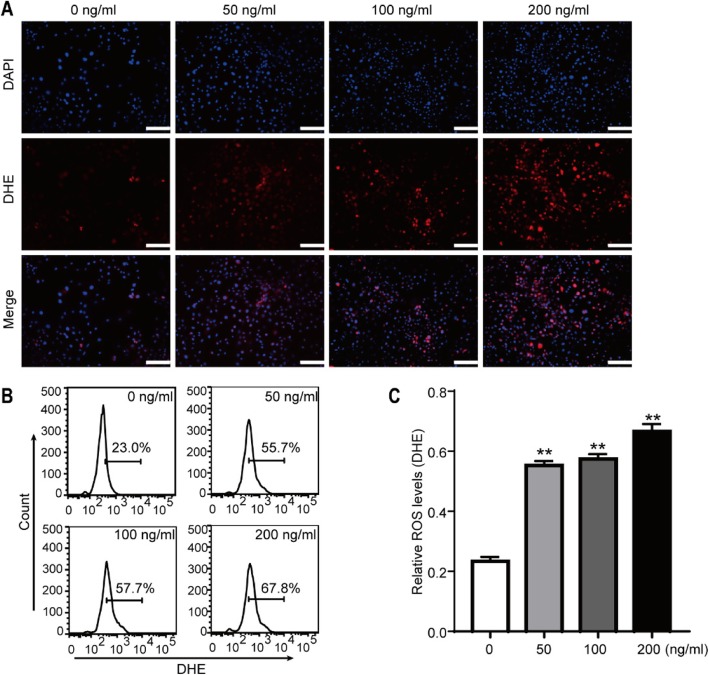
“The intracellular reactive oxygen species (ROS) level was measured using a flow cytometer with an excitation wavelength of 535 nm and an emission wavelength of 610 nm [43].”
MethodYang, M.-Y., Fan, Z., Zhang, Z., & Fan, J. (2020) · Journal of Pharmacological Sciences · doi:10.1016/j.jphs.2020.10.007 · Cited by 36
Xie, C., Ma, H., Shi, Y., Li, J., Wu, H., Wang, B., Shao, Z., Huang, C., Chen, J., Sun, L., et al. (2021) · Food & Function · doi:10.1039/d0fo03353g · Cited by 35
Pharmacological Targeting of Heme Oxygenase-1 in Osteoarthritis
Sanada, Y., Tan, S. J. O., Adachi, N., & Miyaki, S. (2021) · Antioxidants · doi:10.3390/antiox10030419 · Cited by 38
“Accumulations of ROS activate the NOD-like receptor (NLR) family pyrin domain containing 3 (NLRP3) inflammasome in synovial membrane macrophages and increases the expression of pro-inflammatory cytokines IL-18 and IL-1β [51].”
BackgroundKariagina, A., & Doseff, A. I. (2022) · International Journal of Molecular Sciences · doi:10.3390/ijms232415753 · Cited by 39
“This leads to autocatalytic activation of pro-caspase-1 into active caspase-1, which cleaves pro-IL-1β and pro-IL-18 producing immunologically active IL-1β and IL-18.”
BackgroundInfluentialAhmed, E. A., Ahmed, O. M., Fahim, H. I., Mahdi, E. A., Ali, T. M., Elesawy, B. H., & Ashour, M. B. (2021) · Evidence-based Complementary and Alternative Medicine · doi:10.1155/2021/8899143 · Cited by 35
“'ese genes play a vital role in prevention of oxidative stress and tissue damage [38, 55].”
BackgroundResveratrol inhibits MRGPRX2-mediated mast cell activation via Nrf2 pathway
Wang, J., Zhang, Y., Hu, S., Ge, S., Jia, M., & Wang, N. (2021) · International Immunopharmacology · doi:10.1016/j.intimp.2021.107426 · Cited by 35
Zhang, J., Zhao, Y., Wang, S., Li, G., & Xu, K. (2022) · Free Radical Biology and Medicine · doi:10.1016/j.freeradbiomed.2022.07.018 · Cited by 33
Mitochondria in Injury, Inflammation and Disease of Articular Skeletal Joints
Early, J. O., Fagan, L. E., Curtis, A. M., & Kennedy, O. D. (2021) · Frontiers in Immunology · doi:10.3389/fimmu.2021.695257 · Cited by 33
Toro, A. R., Ruiz, M. S., Lage-Vickers, S., Sanchis, P., Sabater, A. A., Pascual, G., Seniuk, R. A., Cascardo, F., Ledesma-Bazan, S., Vilicich, F., et al. (2022) · Antioxidants · doi:10.3390/antiox11020276 · Cited by 34
Ramírez-Pérez, S., Reyes‐Pérez, I. V., Martínez-Fernández, D. E., Hernández-Palma, L. A., & Bhattaram, P. (2022) · iScience · doi:10.1016/j.isci.2022.105548 · Cited by 34
“One of the main cytokines responsible for FLS activation is IL-1b, which is regulated by NLRP3, and studies from NLRP3 / FLS stimulated with LPS confirmed the involvement of NLRP3-dependent IL-1b and IL-18 production by FLS.(64) Increased hypoxia levels mediate HIF-1a activation in OA and other inflammatory pathologie…”
BackgroundInfluentialZhang, R., Han, L., Lin, W., Ba, X., Yan, J., Li, T., Yang, Y., Huang, Y., Huang, Y., Qin, K., et al. (2023) · Journal of Ethnopharmacology · doi:10.1016/j.jep.2023.117432 · Cited by 36
Self-citationRole of Innate Immunity in Initiation and Progression of Osteoarthritis, with Emphasis on Horses
Estrada-McDermott, J. M., Pezzanite, L. M., Goodrich, L. R., Santangelo, K. S., Chow, L., DOW, S. W., & Wheat, W. H. (2021) · Animals · doi:10.3390/ani11113247 · Cited by 38
Yao, Y., Li, R., Liu, D., Long, L., & He, N. (2022) · Ecotoxicology and Environmental Safety · doi:10.1016/j.ecoenv.2022.113773 · Cited by 31
Basak, S., Hridayanka, K. S. N., & Duttaroy, A. K. (2024) · Frontiers in Immunology · doi:10.3389/fimmu.2023.1323233 · Cited by 34
Lu, G., Wang, Q., Xie, Z.-J., Liang, S., Li, H., Shi, L., Li, Q., Shen, J., Cheng, J., & Shen, M. (2021) · Evidence-based Complementary and Alternative Medicine · doi:10.1155/2021/8817858 · Cited by 30
“Downregulation of Nrf2 increased the expression of NLRP3, so that NLRP3 inflammasome activation could be enhanced after Nrf2 silencing [11].”
BackgroundResultInfluentialHagino, T., Hamada, R., Yoshida, M., Fujimoto, E., Saeki, H., & Kanda, N. (2023) · Clinical Cosmetic and Investigational Dermatology · doi:10.2147/ccid.s439053 · Cited by 28
“…down-regulation of Nrf2/HO-1 pathway, inducing accumulation of ROS, which activates inflammasome cascade and resultant release of cytoplasmic LDH. 47,48 The reversal of IgE level after clinical improvement by upadacitinib treatment may be mediated by upadacitinib-induced inhibition of…”
BackgroundEffect of esketamine pretreatment on acute sepsis-associated encephalopathy
Wang, C., Zhang, Y., Yang, Y.-S., Lin, S., & He, H. (2023) · Experimental Neurology · doi:10.1016/j.expneurol.2023.114646 · Cited by 29
Self-citationCrăciunescu, O., Icriverzi, M., Florian, P. E., Roșeanu, A., & Trif, M. (2021) · Pharmaceutics · doi:10.3390/pharmaceutics13081108 · Cited by 29
“In OA, the reactive species of oxygen present in synovia were suggested as agents that activated NLRP3 inflammasome and IL-1 β, IL-18 cytokines, which amplified the inflammatory response [186].”
BackgroundMedicarpin Increases Antioxidant Genes by Inducing NRF2 Transcriptional Level in HeLa Cells
Kim, J.-H., Kang, D., Cho, Y., Hyun, J. W., & Ahn, M. (2022) · Antioxidants · doi:10.3390/antiox11020421 · Cited by 28
Zou, H., Zhang, M., Yang, X. F., Shou, H., Chen, Z., Zhu, Q., Luo, T., Mou, X., & Chen, X. (2024) · Journal of Zhejiang University SCIENCE B · doi:10.1631/jzus.b2300691 · Cited by 27
“Interestingly, NLRP3 activation can also influence the Nrf2 system (Chen et al., 2019; Bian et al., 2020; Zhang CY et al., 2021).”
Self-citationHuang, Y. X., Li, C., Xu, W., Li, F., Hua, Y., Xu, C., Wu, C., Wang, Y., Zhang, X., & Xia, D. (2024) · iScience · doi:10.1016/j.isci.2024.111186 · Cited by 27
Zhou, Y., Zhao, Z., Yan, L. W., & Yang, J. (2021) · Immunopharmacology and Immunotoxicology · doi:10.1080/08923973.2021.1918150 · Cited by 29
Jia, L., Hao, H., Wang, C., & Wei, J. (2021) · Experimental and Therapeutic Medicine · doi:10.3892/etm.2021.10217 · Cited by 27
“It induces the expression of multiple genes, most of which encode antioxidant/detoxification enzymes (13) and plays a key role by inducing both antioxidants and phase II enzymes [such as NAD(P)H: Quinone oxidore‐ ductase 1, Glutathione S‐transferases (GSTs)], including heme oxygenase 1 (HO‐1) (14).”
BackgroundSelf-citationZhao, W., Deng, Z., Barkema, H. W., Xu, M., Gao, J., Liu, G., Lin, Y.-S., Kastelic, J. P., & Han, B. (2022) · Free Radical Biology and Medicine · doi:10.1016/j.freeradbiomed.2022.04.005 · Cited by 26
Anti-Osteoarthritis Mechanism of the Nrf2 Signaling Pathway
Saha, S., & Rebouh, N. Y. (2023) · Biomedicines · doi:10.3390/biomedicines11123176 · Cited by 32
“Another report showed cartilage destruction and subchondral bone sclerosis in the human total knee replacement samples [124].”
BackgroundDing, D.-F., Xue, Y., Wu, X., Zhu, Z.-H., Ding, J.-Y., Song, Y.-J., Xu, X., & Xu, J. (2022) · Journal of Inflammation Research · doi:10.2147/jir.s373898 · Cited by 25
“ROS production has also been reported to stimulate NLRP3 inflammatory body assembly in a ROS-sensitive manner.(67) Accumulated ROS also activate the NLRP3 inflammasome in synovial membrane macrophages and increase the expression of the proinflammatory cytokines IL-18 and IL-1β.”
BackgroundSIRT1 is transcriptionally repressed by YY1 and suppresses ferroptosis in rheumatoid arthritis
Zhan, Y., Yang, Z., Zhan, F., Huang, Y., & Lin, S. (2023) · Revista Brasileira de Reumatologia · doi:10.1186/s42358-023-00289-0 · Cited by 25
“Lipid peroxidation and reactive oxygen species (ROS) were necessary in synovitis development [6], which have been proved contributing to the progressive disease course.”
BackgroundSelf-citationBao, L., Gong, Y., Xu, W., Dao, J., Rao, J., & Yang, H. (2025) · PLoS ONE · doi:10.1371/journal.pone.0316615 · Cited by 24
“Another study also showed that the expression of NLRP3 was upregulated after Nrf2 silencing, while knocking down NLRP3 did not affect the expression of Nrf2 [29].”
Purinergic System Signaling in Metainflammation-Associated Osteoarthritis
Gratal, P., Lamuedra, A., Medina, J. P., Bermejo-Álvarez, I., Largo, R., Herrero‐Beaumont, G., & Mediero, A. (2020) · Frontiers in Medicine · doi:10.3389/fmed.2020.00506 · Cited by 32
Ryytty, S., Modi, S., Naumenko, N. V., Shakirzyanova, A., Rahman, M. O., Vaara, M., Suomalainen, A., Tavi, P., & Hämäläinen, R. H. (2022) · Cells · doi:10.3390/cells11162593 · Cited by 30
“HMOX1 forward TTCAAGCAGCTCTACCGCTC [45]”
InfluentialBai, W., Huo, S., Zhou, G., Li, J., Yang, Y., & Shao, J. (2023) · Biomedicine & Pharmacotherapy · doi:10.1016/j.biopha.2023.115057 · Cited by 24
Lei, L., Guo, Y., Lin, J., Lin, X., Shi-ling, H., Qin, Z.-S., & Lin, Q. (2021) · Biochemical and Biophysical Research Communications · doi:10.1016/j.bbrc.2021.03.009 · Cited by 23
Lin, C., Ge, L., Tang, L., He, Y., Moqbel, S. A. A., Xu, K., Ma, D., Zhou, X., Ran, J., & Wu, L. (2022) · Frontiers in Pharmacology · doi:10.3389/fphar.2022.919940 · Cited by 28
Lai, P., Ma, Y., Sang, W., Zhou, Q., Chen, H., Wang, C., Yin, J., Wang, T., Zhu, L., Zhou, X., et al. (2025) · ACS Applied Materials & Interfaces · doi:10.1021/acsami.4c19160 · Cited by 23
Immunomodulatory Effects of Heme Oxygenase-1 in Kidney Disease
Li, Y., Ma, K., Han, Z., Chi, M., Sai, X., Zhu, P., Ding, Z., Song, L., & Liu, C. (2021) · Frontiers in Medicine · doi:10.3389/fmed.2021.708453 · Cited by 24
“Secondly, activation of the Nrf2/HO-1 pathway can reduce the activity of the NACHT, LRR, and PYD domains-containing protein 3 (NLRP3) inflammasome, which is activated by ROS that subsequently decrease the secretion of pro-inflammatory IL-1β and IL-18 (89).”
BackgroundLong Non-Coding RNAs in the Pathogenesis of Diabetic Kidney Disease
Hu, M., Ma, Q., Liu, B., Wang, Q., Zhang, T., Huang, T., & Lv, Z. (2022) · Frontiers in Cell and Developmental Biology · doi:10.3389/fcell.2022.845371 · Cited by 25
Pros and cons of NRF2 activation as adjunctive therapy in rheumatoid arthritis
Manda, G., Milanesi, E., Genç, Ş., Niculite, C. M., Neagoe, I. V., Tastan, B., Dragnea, E. M., & Cuadrado, A. (2022) · Free Radical Biology and Medicine · doi:10.1016/j.freeradbiomed.2022.08.012 · Cited by 22
Xiong, H., Li, X., Mou, X., Huang, C., Yi, S., Xiong, X., Zhou, Y., & Chen, Y. (2024) · International Immunopharmacology · doi:10.1016/j.intimp.2024.112708 · Cited by 21
Zhou, S., Wen, H., He, X., Han, X., & Li, H. (2025) · Arthritis Research & Therapy · doi:10.1186/s13075-025-03492-0 · Cited by 26
“IL-1β was used to induce an inflammatory response in chondrocytes, mimicking an arthritic condition in vitro [18].”
Management of COVID-19-induced cytokine storm by Keap1-Nrf2 system: a review
Singh, E., Matada, G. S. P., Abbas, N., Dhiwar, P. S., Ghara, A., & Das, A. (2021) · Inflammopharmacology · doi:10.1007/s10787-021-00860-5 · Cited by 22
“The inflammatory response in osteoarthritis increases when Nrf2 pathway is downregulated (Chen et al. 2019).”
Background
Metadata
- Authors
- Chen, Z., Zhong, H., Wei, J., Lin, S., Zong, Z., Gong, F., Huang, X., Sun, J., Li, P., Lin, H., Wei, B., & Chu, J.
- Affiliations
- Guangdong Medical College (CN)
- Corresponding author
- Chu, Jiaqi
- ORCID
- Venue
- Arthritis Research & Therapy
- Published
- 2019-12
- Volume
- 21
- Issue
- 1
- Pages
- 300-300
- ISSN
- 1478-6354 (ISSN-L)
- 1478-6362
- PMC
- PMC6929452
- OpenAlex
- W2995540455
- Semantic Scholar
- 160a769c04c6d9f42d432b69ef7f6a3afdec8e9c
- Cited by
- 275
- References
- 42
- Citations by year
- 2026: 31 · 2025: 47 · 2024: 57 · 2023: 52 · 2022: 44 · 2021: 32 · 2020: 11
- FWCI
- 16.50
- Type
- journal article
- Language
- en
- Open access
- gold
- doi.org
- Licence
- cc-by
- creativecommons.org/licenses/by/4.0/ (tdm)
- creativecommons.org/licenses/by/4.0/ (vor, 22 d)
- Locations
- Arthritis Research & Therapy (publishedVersion, cc-by)
- PubMed Central (publishedVersion, cc-by)
- PubMed (publishedVersion)
- DOAJ (DOAJ: Directory of Open Access Journals) (submittedVersion)
- Funders
- National Natural Science Foundation of China (81771612)
- the Affiliated Hospital of Guangdong Medical University (2018PSSC005)
- Topics
- Health Sciences › Medicine › Rheumatology › Osteoarthritis Treatment and Mechanisms
- Life Sciences › Biochemistry, Genetics and Molecular Biology › Molecular Biology › Inflammasome and immune disorders
- Health Sciences › Medicine › Rheumatology › Rheumatoid Arthritis Research and Therapies
- Keywords
- osteoarthritis, Nrf2/HO-1 pathway, NLRP3 inflammasome, reactive oxygen species, oxidative stress, synovium, IL-1β, IL-18, ASC, articular cartilage degeneration, subchondral sclerosis, lipopolysaccharide-induced inflammation
- MeSH terms
- NLR Family, Pyrin Domain-Containing 3 Protein, Adult, Aged, Animals, Cartilage, Articular, Female, Humans, Lipopolysaccharides, Male, Middle Aged, Osteoarthritis, Signal Transduction, Gene Expression, Rats, Sprague-Dawley, Interleukin-18, RNA Interference, Cell Line, Tumor, NF-E2-Related Factor 2, Heme Oxygenase-1, Interleukin-1beta, X-Ray Microtomography, Inflammasomes
About these checks
Registry, retraction, Cites and statistics results are computed, not judged, with one exception: a printed reference that no index lists is read once by a model before it counts as a citation error. Claims are extracted by a model and kept only when their quote appears verbatim in the text; each cited source is then checked, with a model’s help, for whether it says what the claim relies on. Those verdicts can be wrong — read the claim’s quote and the cited source before relying on one.
Statistics and arithmetic are recomputed, not judged.
Confidence bands are shown only for fields calibrated on our annotated test set. None is calibrated yet, so no band is shown.
What counts as a claim ›How we measure confidence ›How we check this ›
Are you an author, or do you see a problem with this page? Request a review
Data sources
Bibliographic data: Semantic Scholar, OpenAlex, Crossref.
Contains information from the Semantic Scholar Academic Graph Datasets, made available under the ODC Attribution License (ODC-BY 1.0).
Semantic Scholar’s data is described in: Kinney, R., et al. (2023). The Semantic Scholar Open Data Platform. arXiv:2301.10140.
