

Inhibition of Nrf2/HO-1 signaling leads to increased activation of the NLRP3 inflammasome in osteoarthritis
Open accessThe DOI matches its Crossref record; 42 of the 42 references it cites were found in a registry or an index.
Abstract
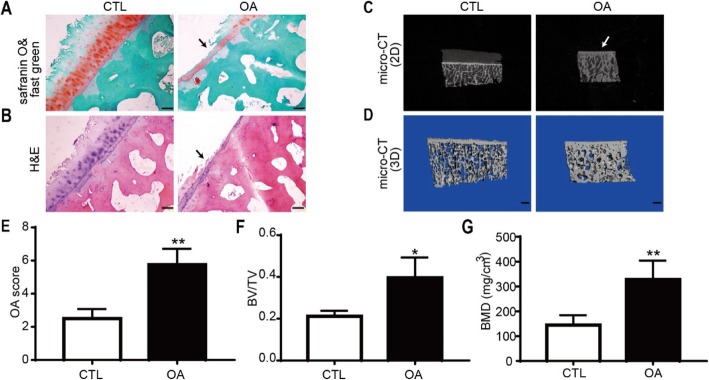
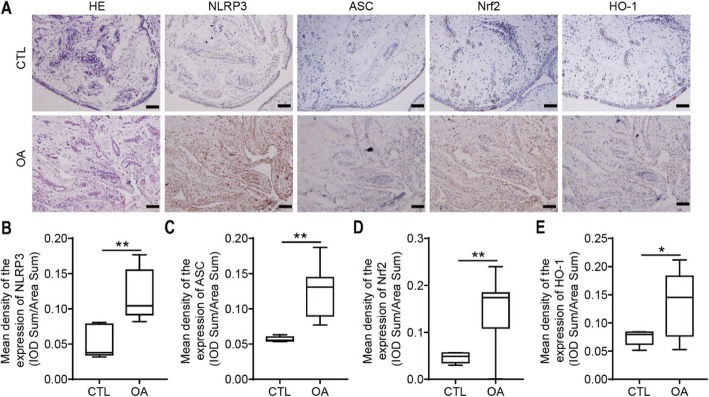
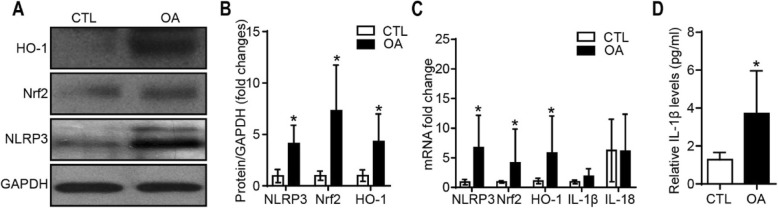
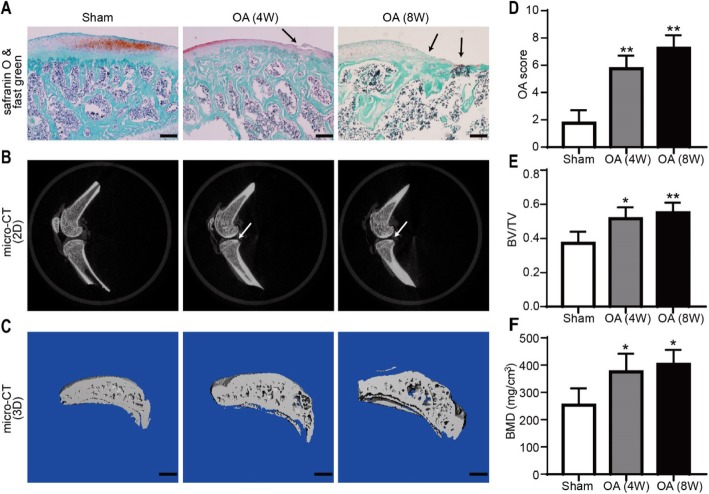
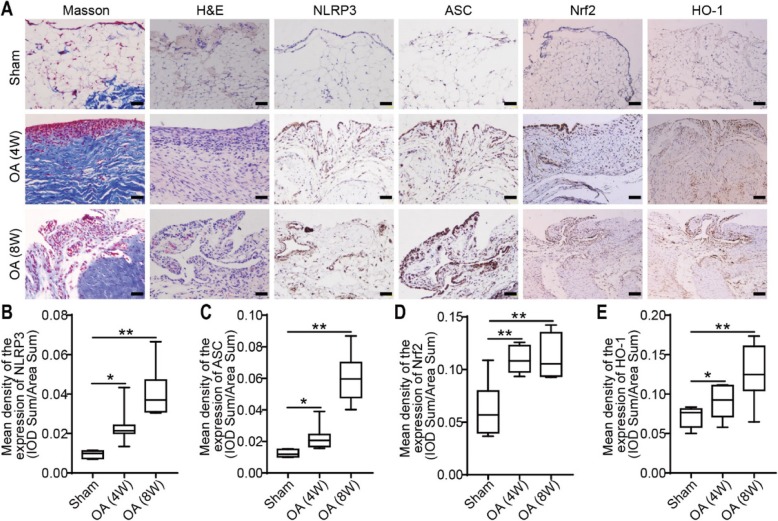
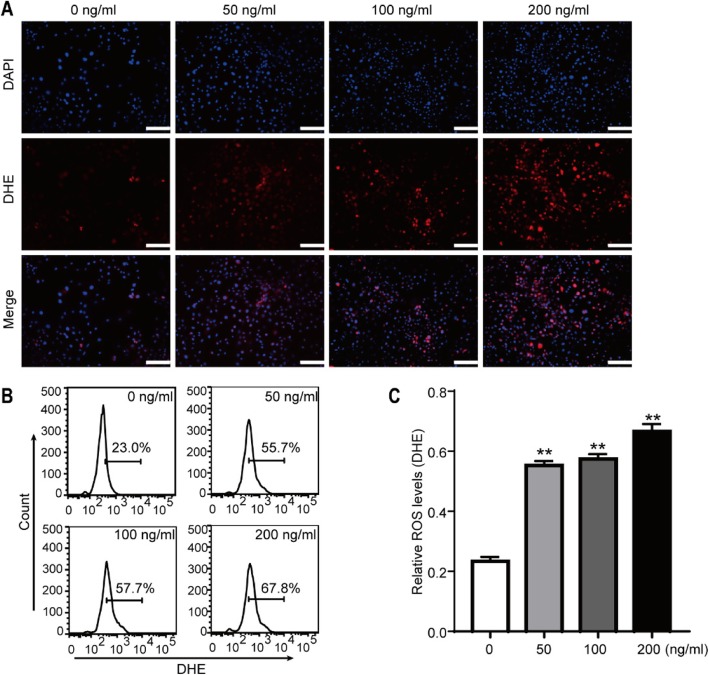
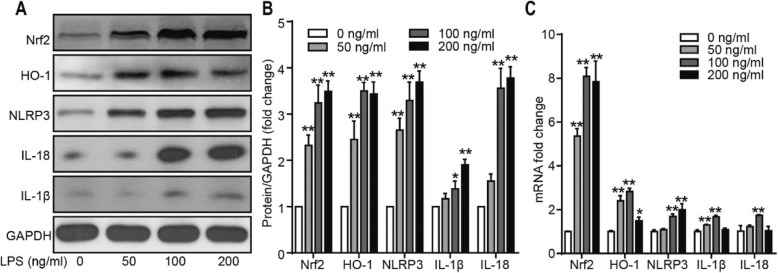
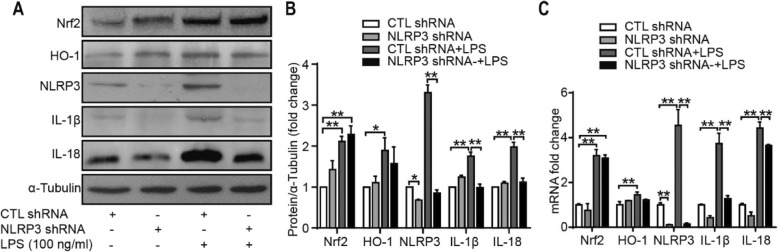
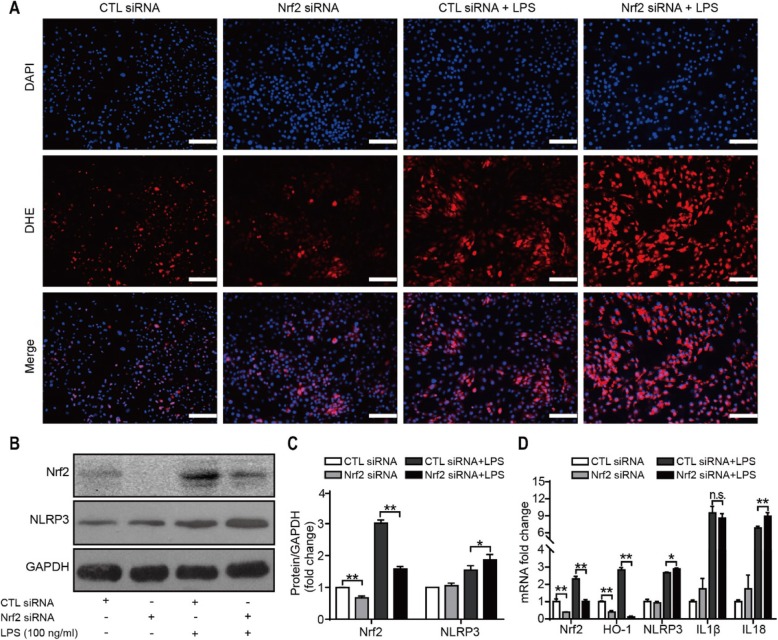
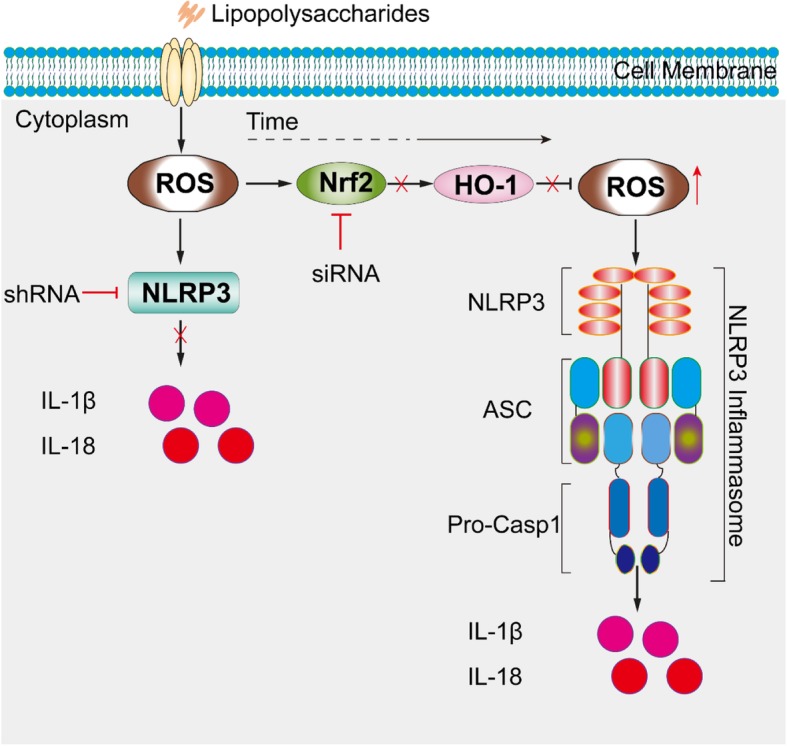
Introduction: Osteoarthritis (OA) is an inflammatory disease of the joints that causes progressive disability in the elderly. Reactive oxygen species (ROS) play an important role in OA development; they may activate the NLRP3 inflammasome, thereby inducing the secretion of proinflammatory IL-1β and IL-18, leading to the aggravation of the downstream inflammatory response. Nrf2 is a key transcription factor that regulates the expression of antioxidant enzymes that protect against oxidative stress and tissue damage. We aimed to explore the underlying mechanism of OA development by investigating NLRP3, ASC, Nrf2, and HO-1 expression in synovia and their regulatory networks in OA. Methods: Human total knee replacement samples were subjected to histology and micro-CT analysis to determine the pathological changes in the cartilage and subchondral bone and to assess the expression of inflammation-related markers in the synovial tissue by immunohistochemistry (IHC), qRT-PCR, and Western blot. To investigate these pathological changes in an OA animal model, adult Sprague-Dawley rats were subjected to anterior cruciate ligament transection and medial meniscectomy. Articular cartilage and subchondral bone changes and synovial tissue were also determined by the same methods used for the human samples. Finally, SW982 cells were stimulated with lipopolysaccharide (LPS) as an in vitro inflammatory cell model. The correlation between NLRP3 and Nrf2 expression was confirmed by knocking down NLRP3 or Nrf2. Results: Cartilage destruction and subchondral bone sclerosis were found in the OA patients and OA model rats. Significantly increased expression levels of NLRP3, ASC, Nrf2, and HO-1 were found in the synovial tissue from OA patients. NLRP3, ASC, Nrf2, and HO-1 expression in the synovium was also upregulated in the OA group compared with the sham group. Furthermore, the NLRP3, Nrf2, HO-1, IL-1β, and IL-18 expression in LPS-treated SW982 cells was increased in a dose-dependent manner. As expected, the expression of NLRP3 was upregulated, and the expression of IL-1β and IL-18 was downregulated after Nrf2 silencing. However, knocking down NLRP3 did not affect the expression of Nrf2. Conclusions: ROS-induced oxidative stress may be the main cause of NLRP3 inflammasome activation and subsequent release of downstream factors during OA development. Nrf2/HO-1 signaling could be a key pathway for the activation of the NLRP3 inflammasome, which may contribute to the progression of OA. Herein, we discovered a novel role of Nrf2/HO-1 signaling in the production of NLRP3, which may facilitate the prevention and treatment of OA.
Overview
The claims and statistics of this paper haven’t been checked yet.
Free: it reads the open-access text and checks the first 5 claims that cite a source we can check. Create a free account to check every claim.
Integrity signals
Registry
Cites
Statistics
Figures
Verification
Claims the paper makes
The claims and statistics of this paper haven’t been checked yet.
Free: it reads the open-access text and checks the first 5 claims that cite a source we can check. Create a free account to check every claim.
Claims other papers make about this one
Each is checked against this paper’s own text: does it say what the citing paper says it does?
The source backs part of the claim, not all of it — or backs it for a different population, condition or comparison.
In the citing paper
“Remarkably, the levels of NLRP3 in individuals with osteoarthritis (OA) have been detected to exceed those in healthy subjects by a factor of more than five [23,24]”
From Picroside II suppresses chondrocyte pyroptosis through MAPK/NF-κB/NLRP3 signaling pathway alleviates osteoarthritis (2024) · cites this paper as [24]
Experimental — accuracy not yet measured
Self-check
Percentages, sums and reported differences re-computed from the paper’s own numbers.
The self-check needs the paper’s full text.
Citations
Cites
1 retracted
Zhou, J., Zhao, Y., Wu, G., Lin, B., Li, Z., & Liu, X. (2018) · Molecular Medicine Reports · doi:10.3892/mmr.2018.9385 · Cited by 13
RetractedAltman, R., Asch, E., Bloch, D., Bole, G., Borenstein, D., Brandt, K., Christy, W., Cooke, T. D., Greenwald, R., Hochberg, M., et al. (1986) · Arthritis & Rheumatism · doi:10.1002/art.1780290816 · Cited by 6,777 · cited 1×
“All patients satisfied the American College of Rheumatology clinical criteria for primary knee OA [16].”
BackgroundInflammasomes: mechanism of action, role in disease, and therapeutics
Guo, H., Callaway, J. B., & Ting, J. P.-Y. (2015) · Nature Medicine · doi:10.1038/nm.3893 · Cited by 3,340
Mechanism and Regulation of NLRP3 Inflammasome Activation
He, Y., Hara, H., & Núñez, G. (2016) · Trends in Biochemical Sciences · doi:10.1016/j.tibs.2016.09.002 · Cited by 2,759
The role of synovitis in osteoarthritis pathogenesis
Scanzello, C. R., & Goldring, S. R. (2012) · Bone · doi:10.1016/j.bone.2012.02.012 · Cited by 1,302
Inflammatory caspases and inflammasomes: master switches of inflammation
Martinon, F., & Tschopp, J. (2007) · Cell Death & Differentiation · doi:10.1038/sj.cdd.4402038 · Cited by 820
Kobayashi, M., Squires, G. R., Mousa, A., Tanzer, M., Zukor, D. J., Antoniou, J., Feige, U., & Poole, A. R. (2005) · Arthritis & Rheumatism · doi:10.1002/art.20776 · Cited by 497 · cited 1×
“These play crucial roles in OA pathogenesis resulting in the release of cartilage-degrading enzymes, such as aggrecanases and metalloproteinases, from chondrocytes [11, 12].”
BackgroundCurrent research on pharmacologic and regenerative therapies for osteoarthritis
Zhang, W., Ouyang, H., Dass, C. R., & Xu, J. (2016) · Bone Research · doi:10.1038/boneres.2015.40 · Cited by 495
Suzuki, T., & Yamamoto, M. (2017) · Journal of Biological Chemistry · doi:10.1074/jbc.r117.800169 · Cited by 400
Rahmati, M., Mobasheri, A., & Mozafari, M. (2016) · Bone · doi:10.1016/j.bone.2016.01.019 · Cited by 374
Cited by
Items 101–200 of 278
Zhu, R., Mi, X., & Li, Y. (2022) · BioMed Research International · doi:10.1155/2022/7690960 · Cited by 24
“Previous studies have shown that hypoxia can regulate the NLRP3 in fl ammasome expression through TXNIP expression [16, 17].”
Han, X., Lin, D., Huang, W., Li, D., Li, N., & Xie, X. (2023) · Frontiers in Genetics · doi:10.3389/fgene.2023.1159167 · Cited by 25
“Oxidative stress induced by ROS may be the main reason for the activation of NLRP3 inflammasome and the subsequent release of downstream pro-inflammatory factors in the development of KOA (Chen et al., 2019).”
BackgroundSARS-CoV-2 infection and dysregulation of nuclear factor erythroid-2-related factor 2 (Nrf2) pathway
Hamad, R. S., Al-Kuraishy, H. M., Alexiou, A. T., Papadakis, M., Ahmed, E., Saad, H. M., & Batiha, G. E. (2023) · Cell Stress and Chaperones · doi:10.1007/s12192-023-01379-0 · Cited by 22
“It has been observed that the expression of NLRP3 was upregulated, and the expression of IL-1β and IL-18 was downregulated after Nrf2 silencing (Chen et al. 2019).”
BackgroundAlbiflorin alleviates neuroinflammation of rats after MCAO via PGK1/Nrf2/HO-1 signaling pathway
Ou, Z., Li, P., Wu, L., Wu, Y., Qin, L., Li, F., Xu, H., Pei, K., & Chen, J. (2024) · International Immunopharmacology · doi:10.1016/j.intimp.2024.112439 · Cited by 23
Self-citationZhang, Y., Wang, J., Wang, Y., & Lei, K. (2024) · Journal of Cardiothoracic Surgery · doi:10.1186/s13019-024-02530-3 · Cited by 20
“As we know, HO-1 is an important antioxidant molecule possessing anti-oxidative and anti-inflammatory functions [26].”
BackgroundAlsuhaymi, N., Alsugoor, M. H., Shokry, A. A., Fayed, H. M., Mohamed, B. M. S. A., Afifi, S. M., Esatbeyoglu, T., Korany, R. M. S., & Elbaset, M. A. (2025) · Frontiers in Pharmacology · doi:10.3389/fphar.2025.1586231 · Cited by 23
Nrf2 in the Field of Dentistry with Special Attention to NLRP3
Schieffer, L., Manzl, C., Schatz, C., Haybaeck, J., & Crismani, A. G. (2022) · Antioxidants · doi:10.3390/antiox11010149 · Cited by 22
“Osteoarthritis (OA) is an age-related inflammatory process of the joints and can affect jaw joints, too [260].”
BackgroundDifferential Metabolites in Osteoarthritis: A Systematic Review and Meta-Analysis
Liao, Z., Han, X., Wang, Y., Shi, J., Zhang, Y., Zhao, H., Zhang, L., Jiang, M., & Liu, M. (2023) · Nutrients · doi:10.3390/nu15194191 · Cited by 27
Zou, Z., Pan, S., Sun, C., Wei, J., Xu, Y., Xiao, K., Zhao, J., & Gu, R. (2025) · Molecular Medicine · doi:10.1186/s10020-024-01012-5 · Cited by 20
Self-citationZheng, Y., Gao, N., Zhang, W., Ma, R., Chi, F., Gao, Z., & Cong, N. (2022) · Molecular Neurobiology · doi:10.1007/s12035-022-03077-x · Cited by 21
“reported that suppressing Nrf2/HO-1 signaling in osteoarthritis enhances NLRP3 inflammasome signaling [35].”
BackgroundKnowledge mapping of autophagy in osteoarthritis from 2004 to 2022: A bibliometric analysis
Liao, J., Yu, X., Chen, J., Wu, Z., He, Q., Zhang, Y., Song, W., Luo, J., & Tao, Q. (2023) · Frontiers in Immunology · doi:10.3389/fimmu.2023.1063018 · Cited by 20
“Inflammasomes are inflammatory multiprotein complexes that can be assembled and activated in response to reactive oxygen species (ROS) or lysosomal destabilization, and are involved in inflammatory-based OA (23).”
BackgroundLi, G. Q., Gao, S. X., Wang, F. H., Kang, L., Tang, Z. Y., & Xiao, D. (2023) · Biomedicine & Pharmacotherapy · doi:10.1016/j.biopha.2023.115019 · Cited by 26
Sun, J., Wang, X., Song, F., Li, D., Gao, S., Zhang, L., Wu, J., Liu, D.-Q., Wang, L., Zhou, Y., et al. (2023) · British Journal of Pharmacology · doi:10.1111/bph.16195 · Cited by 22
“These results were consistent with earlier studies that treatment with JQ1 ameliorated pain-related behaviours (Borgonetti & Galeotti, 2021; Chen et al., 2019; Hsieh et al., 2017; Hua et al., 2022).”
BackgroundResultSelf-citationChen, K., Yu, Y., Wang, Y., Zhu, Y., Qin, C., Xu, J., Zou, X., Tao, T., Yang, L., & Jiang, Y. (2024) · Drug Design Development and Therapy · doi:10.2147/dddt.s441350 · Cited by 21
“27 In a study by HY Sun et al, inhibition of the p38-MAPK pathway in chondrocytes exhibited significant improvements in chondrocyte apoptosis and a reduction in the expression of inflammatory factors.”
BackgroundYan, W., Yu, H., Liu, B., Jiang, Z., Jin, H., Li, Z., Li, L., Zou, D., & Jiang, H. (2022) · Transplant Immunology · doi:10.1016/j.trim.2022.101548 · Cited by 21
Feng, G. L., Wu, Y., He, X., Ye, T., Shang, C., Ji, X., Kang, J., Xu, K., Zhou, J., Xiang, Z., et al. (2025) · Nano Today · doi:10.1016/j.nantod.2025.102688 · Cited by 18
Sun, W., Yue, M., Xi, G., Wang, K., & Sai, J. (2022) · Autoimmunity · doi:10.1080/08916934.2022.2093861 · Cited by 18
“NOD-like receptor family pyrin domain containing 3 (NLRP3) inflammasome has been widely recognized to be strongly associated with human inflammatory disease, such as inflammatory bowel disease [8], acute myocardial infarction [9], acute kidney injury [10], rheumatic disease [11,12], and osteoarthritis [13].”
BackgroundZheng, X., Qiu, J., Zhang, H., Gao, N., Jiang, T., Gong, Y., Zhang, W., Li, Z., Feng, X., & Hong, Z. (2023) · Biochemical Pharmacology · doi:10.1016/j.bcp.2023.115542 · Cited by 18
Sun, W., Yue, J., Xu, T., Cui, Y., Huang, D., Shi, H., Xiong, J., Sun, W., & Yi, Q. (2023) · Heliyon · doi:10.1016/j.heliyon.2023.e21282 · Cited by 18
Wang, Z., Chen, M., Wang, B., Kang, W., Yu, H., Li, X., Dong, B., & Yuan, P.-W. (2020) · Evidence-based Complementary and Alternative Medicine · doi:10.1155/2020/5476064 · Cited by 18
Thapa, A. K., Abdelbaset‐Ismail, A., Chumak, V., Adamiak, M., Brzeźniakiewicz‐Janus, K., Ratajczak, J., Kucia, M., & Ratajczak, M. Z. (2022) · Stem Cell Reviews and Reports · doi:10.1007/s12015-022-10417-w · Cited by 20
“1 3 to protect against oxidative damage triggered by injury and inflammation and induces HO-1 expression [11, 62], cAMP has been reported to increase expression of HO-1 in vascular cells [10] and hepatocytes [63].”
BackgroundLeptin-depended NLRP3 inflammasome activation in osteoarthritic chondrocytes is mediated by ROS
Mourmoura, E., Papathanasiou, I. V., Trachana, V., Konteles, V., Tsoumpou, A., Goutas, A., Papageorgiou, A.-A., Stefanou, N., & Tsezou, A. (2022) · Mechanisms of Ageing and Development · doi:10.1016/j.mad.2022.111730 · Cited by 22
Pan, Q., Liu, P., & Wan, M. (2023) · Folia Histochemica et Cytobiologica · doi:10.5603/fhc.a2023.0002 · Cited by 18
Rofaeil, R. R., Mohyeldin, R. H., Sharata, E. E., Attya, M. E., Essawy, H. G., Ibrahim, O. A., & Abdelzaher, W. Y. (2024) · Scientific Reports · doi:10.1038/s41598-024-69431-2 · Cited by 17
Huang, Y., Wang, A., Jin, S., Liu, F., & Xu, F. (2023) · Allergologia et Immunopathologia · doi:10.15586/aei.v51i3.668 · Cited by 17
Forsythoside B alleviates osteoarthritis through the HMGB1/TLR4/NF‐κB and Keap1/Nrf2/HO‐1 pathways
Li, S., Li, Y., Hou, L., Tang, L., & Gao, F. (2023) · Journal of Biochemical and Molecular Toxicology · doi:10.1002/jbt.23569 · Cited by 19
Shan, Q., Wang, X., Yang, H. L., Zhu, Y., Wang, J., & Yang, G. (2024) · The Science of The Total Environment · doi:10.1016/j.scitotenv.2024.173079 · Cited by 16
Kuo, P., Weng, W., Scofield, B. A., Paraiso, H. C., Yu, I.-C. I., & Yen, J.-H. J. (2024) · Frontiers in Immunology · doi:10.3389/fimmu.2024.1440592 · Cited by 20
Nrf2 Activation in Inflammatory Diseases: A Review of Natural and Synthetic Modulators
Costa, V. B., de Matos, I. A. F., Nogueira, I. R. G., de Godoi, M. A., Leite, F. R. M., & Guimarães, M. R. (2026) · Oxidative Medicine and Cellular Longevity · doi:10.1155/omcl/4538420 · Cited by 18
Shen, C., Chen, C., & Wang, L. (2022) · Neurochemical Research · doi:10.1007/s11064-022-03815-6 · Cited by 20
Sui, J., Dai, F., Shi, J., & Zhou, C. (2023) · Journal of Orthopaedic Surgery and Research · doi:10.1186/s13018-023-04083-y · Cited by 16
“For example, Chen et al. uncovered that the activation of NLRP3 inflammasome could be enhanced by inhibiting Nrf2/HO-1 in OA [15].”
BackgroundChen, X., Mu, P., Zhu, L., Mao, X., Chen, S., Zhong, H., & Deng, Y. (2021) · International Journal of Molecular Sciences · doi:10.3390/ijms22157936 · Cited by 16
“Loss of Nrf2 is associated with the increased susceptibility to an array of chemical toxicities and diseases related to oxidative stress [41,42].”
BackgroundSelf-citationIantomasi, T., Aurilia, C., Donati, S., Falsetti, I., Palmini, G., Carossino, R., Zonefrati, R., Ranaldi, F., & Brandi, M. L. (2025) · International Journal of Molecular Sciences · doi:10.3390/ijms26136428 · Cited by 17
“Furthermore, the expression of NLRP3 increases in association with the downregulation of the Nrf2/OH-1 pathway, and it is activated by H 2 O 2 in OA rat chondrocytes [131,132].”
Guo, Y., Stampoultzis, T., Nasrollahzadeh, N., Karami, P., Rana, V. K., Applegate, L., & Pioletti, D. P. (2023) · iScience · doi:10.1016/j.isci.2023.108519 · Cited by 14
Zhao, G., Yang, L., Li, L., & Fan, Z. (2021) · BioMed Research International · doi:10.1155/2021/5598869 · Cited by 14
“Nevertheless, NLRP3 silencing did not affect the expression of the Nrf2 pathway, indicating that Nrf2/HO-1 signaling could be a key pathway for activating the NLRP3 inflammasome [29].”
BackgroundEchinacoside alleviates osteoarthritis in rats by activating the Nrf2-HO-1 signaling pathway
Tan, Z., & Zhang, B. (2022) · Immunopharmacology and Immunotoxicology · doi:10.1080/08923973.2022.2088384 · Cited by 14
“For instance, the inactivation of the Nrf2/HO-1 pathway leads to elevated activation of NOD-like receptor family pyrin domain containing 3 (NLRP3) inflammasome and further aggravates OA [18]; sinomenine represses IL-1b-induced inflammatory response and cartilage destruction by activating the Nrf2/HO-1 pathway in mouse…”
BackgroundSun, H., Lu, S., Qu, G., Li, J., & Song, B. (2023) · Autoimmunity · doi:10.1080/08916934.2023.2290357 · Cited by 15
“Nrf2 is a key factor in cellular defense against various stress injuries, and it mediates cellular inflammation, oxidative stress and apoptosis by regulating downstream HO-1 [28,29].”
BackgroundThe Nrf2/HO-1 signaling pathway in arthritis: from molecular mechanisms to therapeutic potential
Zhang, L., Huang, X., Xiong, H., & Yang, L. (2026) · Frontiers in Cell and Developmental Biology · doi:10.3389/fcell.2026.1728679 · Cited by 15
Self-citationZhang, L., Yang, L., & Du, K. (2024) · Journal of Cellular and Molecular Medicine · doi:10.1111/jcmm.18209 · Cited by 17
Huang, H., Yang, L., He, H., Zhou, B., Qin, Z., Zheng, L., & Shen, C. (2024) · International Journal of Pharmaceutics · doi:10.1016/j.ijpharm.2024.124397 · Cited by 13
Ontogeny of Carbon Monoxide-Related Gene Expression in a Deep-Diving Marine Mammal
Piotrowski, E. R., Tift, M. S., Crocker, D. E., Pearson, A. B., Vázquez‐Medina, J. P., Keith, A. D., & Khudyakov, J. I. (2021) · Frontiers in Physiology · doi:10.3389/fphys.2021.762102 · Cited by 17
“Oxidative stressmediated activation of the Nod-like receptor protein 3 (NLRP3) inflammasome was also associated with increased expression of NRF2, HMOX1, and IL1B in humans with osteoarthritis (Chen et al., 2019).”
BackgroundThe Role of AIM2 Inflammasome in Knee Osteoarthritis
Yang, J., & Liu, W. (2022) · Journal of Inflammation Research · doi:10.2147/jir.s392652 · Cited by 13
Sarkar, A. K., Chakraborty, D., Malik, S., Mann, S., Agnihotri, P., Monu, M., Kumar, V. L., & Biswas, S. (2024) · Journal of Inflammation Research · doi:10.2147/jir.s465051 · Cited by 12
“56,57 The cellular ROS level was thus evaluated, and it was revealed that there is a significantly decreased level of ROS in the siTaxilin group while both α-Taxilin and TNF-α induction led to increased ROS generation in RAFLS (Figure 6F), indicating the onset of inflammation.”
Deep-insights: Nanoengineered gel-based localized drug delivery for arthritis management
Sriram, A., Ithape, H., & Singh, P. K. (2024) · Asian Journal of Pharmaceutical Sciences · doi:10.1016/j.ajps.2024.101012 · Cited by 20
Gómez-Contreras, P. C., Kluz, P., Hines, M. R., & Coleman, M. C. (2021) · Current Rheumatology Reports · doi:10.1007/s11926-021-00994-z · Cited by 16
Tan, S., Bai, J., Xu, M., Zhang, L., & Wang, Y. (2022) · Frontiers in Pharmacology · doi:10.3389/fphar.2022.841330 · Cited by 12
“NLRP3 plays an important role in inflammatory stimulation and regulation (Chen et al., 2019).”
BackgroundThe Pathophysiological Role of Mitochondrial Oxidative Stress in Rheumatic Diseases
Ma, Z., Xu, Q., & Xu, X. (2025) · Journal of Inflammation Research · doi:10.2147/jir.s534574 · Cited by 14
“16 Age-related mitochondrial dysfunction is associated with decreased superoxide dismutase 2(SOD 2 ) activity and increased mitochondria-produced ROS, partly due to the increase of ROS in chondrocytes with age.”
Sun, D., Li, X., Xu, S., Cao, S., Quan, Y. Z., Cui, S., & Xu, D. (2024) · Journal of Ethnopharmacology · doi:10.1016/j.jep.2024.118564 · Cited by 12
Novel formulations ameliorate osteoarthritis in rats by inhibiting inflammation and oxidative stress
Erten, F., Özdemir, O., Tokmak, M., Durmuş, A. S., Özercan, İ. H., Morde, A. A., Padigaru, M., & Şahin, K. (2024) · Food Science & Nutrition · doi:10.1002/fsn3.4407 · Cited by 14
Xu, X., Shi, D., Xu, L., Muhammad, A. H., Bu, T., Wang, J., Wu, L., Yang, K., & Cai, M. (2024) · Food Bioscience · doi:10.1016/j.fbio.2024.105375 · Cited by 13
PLIN5 Suppresses Lipotoxicity and Ferroptosis in Cardiomyocyte via Modulating PIR/NF-κB Axis
Shen, X., Zhang, J., Zhou, Z., & Yu, R.-Q. (2024) · International Heart Journal · doi:10.1536/ihj.24-002 · Cited by 11
“35,36) Accordingly, our study determined that IL-1 β and IL-18 levels were lessened in lipotoxic cardiomyocyte models after the overexpression of PLIN5.”
Zhou, T., Li, Z., & Chen, H. (2022) · Bioengineered · doi:10.1080/21655979.2021.2018981 · Cited by 11
“In addition, research has shown that suppressing Nrf2/HO-1 signaling in osteoarthritis enhances NLRP3 inflammasome signaling [52].”
BackgroundRetractedHe, Q., Hu, D., Zheng, F., Chen, W., Hu, K., Liu, J., Yao, C., Li, H., & Wei, Y. (2024) · Viruses · doi:10.3390/v16020213 · Cited by 12
“One of the functions of Nrf2 is to inhibit the activity of NLRP3 inflammasomes as a basic signaling complex in exacerbating inflammation [75].”
BackgroundWu, F., Du, T., Jiang, X., Liu, S., Cheng, Y., Zhang, Z., Miao, W., & Wang, T. (2024) · World Journal of Microbiology and Biotechnology · doi:10.1007/s11274-024-03947-7 · Cited by 10
“…using a chemiluminescence detection kit (Biosharp) (Gong et al. 2018). siRNA transfection MAC-T cells were genetically modified in cell culture dishes using NLRP3-specific siRNA through Lipofectamine 2000 reagent (Thermo Fisher Company), as per the manufacturer’s instructions (Chen et al. 2019).”
Loganin inhibits the ROS-NLRP3-IL-1β axis by activating the NRF2/HO-1 pathway against osteoarthritis
Miao, L. I., Xiao, J., Chen, B., Pan, Z., Wang, F., Weijian, C. H. E. N., Qi, H. E., Li, J., Li, S., Ting, W. A. N. G., et al. (2024) · Chinese Journal of Natural Medicines · doi:10.1016/s1875-5364(24)60555-8 · Cited by 18
Korovina, M. O., Рафкатовна, В. А., Akhtyamov, I. F., Brooks, W. H., Renaudineau, Y., Manukyan, G. P., & Arleevskaya, M. I. (2025) · International Journal of Molecular Sciences · doi:10.3390/ijms26178742 · Cited by 14
Targeting PI3K/Akt/Nrf2 pathway by glabridin alleviates acetaminophen-induced hepatic injury in rats
Ma, H., Ren, H., Wang, J., Yuan, X., Wu, X., & Shi, X. (2020) · Arabian Journal of Chemistry · doi:10.1016/j.arabjc.2020.102968 · Cited by 10
EuHD1 protects against inflammatory injury driven by NLRP3 inflammasome
Qiu, H., Wang, W., Hu, K., Liu, W., Pan, S., Lv, Q., Xu, G., & Yu, Q. (2023) · International Immunopharmacology · doi:10.1016/j.intimp.2023.109712 · Cited by 11
Zhang, Z., Bi, Y., Zhou, F., Zhang, D., Xu, S., Zhang, X., Fan, Z.-H., Yao, Z., & He, Y. (2024) · Journal of Diabetes Research · doi:10.1155/2024/8772009 · Cited by 10
“ROS-mediated pyroptosis is also associated with thioredoxin-interacting protein (TXNIP) [54], nuclear factor E2-related factor 2 (Nrf2) [57], and AMP-activated protein kinase (AMPK) [58].”
BackgroundWang, F., Xiao, J., Li, M., He, Q., Wang, X., Pan, Z., Li, S., Wang, H., & Zhou, C. (2024) · PLOS ONE · doi:10.1371/journal.pone.0308731 · Cited by 12
Anti-Inflammatory Effect of Chestnut Honey and Cabbage Mixtures Alleviates Gastric Mucosal Damage
Kim, H.-J., Jin, B., Lee, C.-D., Kim, D., Lee, A. Y., Lee, S., & An, H. (2024) · Nutrients · doi:10.3390/nu16030389 · Cited by 12
“…(Nrf2) serves as a key transcriptional regulator of antioxidant enzymes, including heme oxygenase 1 (HO-1), glutathione peroxidase 1 (GPx1), superoxide dismutase 1 (SOD1), and glutathione S-transferase (GST) superfamily, preserving cells from oxidative stress mediated by inflammatory signals [8,9].”
BackgroundLiu, Z., Du, J., Wang, Y., Song, H., Lu, L., Wu, R., & Jin, C. (2024) · Molecular Immunology · doi:10.1016/j.molimm.2024.02.009 · Cited by 9
Dey, H., Ali, S. S., & Sethi, V. A. (2025) · Inflammopharmacology · doi:10.1007/s10787-025-01741-x · Cited by 10
Tang, J., Li, S., Wang, Y., Yuan, M., Wan, Y., Liang, X., Guo, L., & Guo, Y. (2025) · Biomacromolecules · doi:10.1021/acs.biomac.4c01701 · Cited by 9
Du, X., Jiang, Z., Liu, R., Huang, G., Fang, G., Zhang, C., Yang, Z., Hu, S., & Zhang, Z. (2025) · Arthritis Research & Therapy · doi:10.1186/s13075-025-03573-0 · Cited by 9
“In this study, we found that the expression of NLRP3 was significantly lower in the synovium of normal controls than in that of OA patients and that the expression of NLRP3 increased after OA-FLSs were stimulated with CLs, which is consistent with the findings of a previous study [39].”
Dexmedetomidine alleviates LPS‑induced acute lung injury via regulation of the p38/HO‑1 pathway
Sun, Y., Yin, X., Liu, X., Liu, J., He, W., Ye, H., & Yuan, X. (2020) · Molecular Medicine Reports · doi:10.3892/mmr.2020.11330 · Cited by 10
“Previous studies have also reported that activation of the nrf2/Ho-1 signaling pathway inhibits the activation of nlrP3 inflammasome, thus reducing il-1 β expression and exerting anti‑inflammatory and cytoprotective effects (58-60).”
BackgroundQiu, L., Zhang, M., Li, C., Hou, Y., Liu, H., Jia, L., Yao, J., Duan, D. Z., Zhang, Y. X., Li, M., et al. (2022) · Frontiers in Pharmacology · doi:10.3389/fphar.2022.993498 · Cited by 10
“Bone volume/tissue volume (BV/TV) of tibial subchondral bone was evaluated in the Micro-CT system (Chen et al., 2019).”
MethodCoptisine mitigates diabetic nephropathy via repressing the NRLP3 inflammasome
Zhai, J., Li, Z., Zhang, H., Lu, Z., Zhang, Y., Li, M., Kang, J., Yang, Z., Ma, L., Ma, L., et al. (2023) · Open Life Sciences · doi:10.1515/biol-2022-0568 · Cited by 9
“Interestingly, inhibiting the Nrf2 signal results in NLRP3 inflammasome activation [26].”
BackgroundWang, X., Zhang, Y., Jin, T., Botchway, B. O. A., Fan, R., Wang, L., & Liu, X. (2022) · Frontiers in Aging Neuroscience · doi:10.3389/fnagi.2022.830346 · Cited by 14
Hua, S., Hua, M., Chen, X., Ying, J., Li, H., & Yi, Q. (2024) · Ecotoxicology and Environmental Safety · doi:10.1016/j.ecoenv.2024.116640 · Cited by 8
Iniguez, A. B., Sun, Q., Cui, Q., Du, ., & Zhu, M. J. (2024) · Nutrients · doi:10.3390/nu16223843 · Cited by 10
“Inhibition of these mediators increases ROS levels and promotes inflammasome activation [10].”
Nehme, R., Chervet, A., Decombat, C., Habanjar, O., Longechamp, L., Rousset, A., Chalard, P., Gainche, M., Sénéjoux, F., Fraisse, D., et al. (2025) · Nutrients · doi:10.3390/nu17030510 · Cited by 9
Yuan, T., Wang, X., Cai, D., Liao, M., Liu, R., & Qin, J. (2021) · Arabian Journal of Chemistry · doi:10.1016/j.arabjc.2021.103207 · Cited by 9
Wang, X., Wu, S., Jiang, Y., Yuan, Z., Liu, J., Jing, S., Liu, J., Sun, J., Wang, C., Wang, D., et al. (2025) · Tissue and Cell · doi:10.1016/j.tice.2025.102775 · Cited by 7
Self-citationZhu, T., Qian, Z., Liu, Z., Zhang, Q., & Li, H. (2025) · Brain Research Bulletin · doi:10.1016/j.brainresbull.2025.111618 · Cited by 7
Zheng, F., Yan, L., Ren, F., Cai, W., Lan, Y., Chen, H., Chen, Q., & Weng, G. (2025) · CNS Neuroscience & Therapeutics · doi:10.1111/cns.70661 · Cited by 7
“Notably, the Nrf2/HO-1 pathway is crucial for NLRP3 inflammasome activation [62].”
InfluentialWang, Z., Dong, Z., Li, Y., Jiao, X., Liu, Y., Chang, H., & Gan, Y. (2024) · Biomedicines · doi:10.3390/biomedicines12040904 · Cited by 9
“The Nrf2/HO-1 signaling cascade stands out as a pivotal intracellular antioxidant pathway, the activation of which serves to shield cells against the detrimental effects of heightened oxidative stress and the ensuing inflammatory response [63].”
BackgroundThe effect of N-acetylcysteine on the neurotoxicity of sevoflurane in developing hippocampus cells
Adıyeke, E., Bakan, N., Üvez, A., Arslan, D. O., Kilic, S., Koç, B., Ozer, S., Saatçi, Ö., & Armutak, E. İ. (2024) · NeuroToxicology · doi:10.1016/j.neuro.2024.05.006 · Cited by 8
Ge, X. Q., Gu, Y., Wang, W., Guo, W., Wang, P., & Du, P. (2024) · Inflammation Research · doi:10.1007/s00011-024-01949-7 · Cited by 9
Yang, T., Yang, G., Wang, G., Jia, D., Xiong, B., Lu, X., & Li, Y. (2023) · PubMed Central · doi:10.1042/bsr20230255 · Cited by 9
Schadow, J. E., Maxey, D., Smith, T. O., Finnilä, M., Manske, S. L., Segal, N. A., Wong, A. K. O., Davey, R. A., Turmezei, T. D., & Stok, K. S. (2023) · Bone · doi:10.1016/j.bone.2023.116948 · Cited by 9
Zhou, B., Yu, J., Zhou, C., Luo, Z., Lu, X., & Zhu, L. (2024) · Transplant Immunology · doi:10.1016/j.trim.2024.102083 · Cited by 9
The Protective Role of Baicalin in the Regulation of NLRP3 Inflammasome in Different Diseases
Zhang, Q., Guo, S., & Wang, H. (2024) · Cell Biochemistry and Biophysics · doi:10.1007/s12013-024-01597-y · Cited by 6
“Nrf2/HO-1 has been reported to regulate NLRP3 in fl ammasome [70].”
Li, Z., Yu, Y., Zhao, X., Qu, Y., Wang, J., & Zhang, D. (2025) · Cell Biochemistry and Biophysics · doi:10.1007/s12013-025-01677-7 · Cited by 7
“Besides, excessive oxidative stress also triggers pro-in fl ammatory pathways such as the NLRP3 in fl ammasome [10].”
LncRNA PTS-1 Protects Against Osteoarthritis Through the miR-8085/E2F2 Axis
Ma, C., Chen, Q., Wei, Y., Chen, S.-W., Liu, H., Feng, X. G., & Ren, Y. (2025) · Journal of Inflammation Research · doi:10.2147/jir.s496185 · Cited by 6
“44 A mouse OA model generated using IL-1β-induced chondrocyte apoptosis demonstrated that aucubin could protect articular cartilage in OA.”
Shi, X.-Y., Yue, X., Xu, Y., Jiang, M., & Li, R. (2023) · Frontiers in Cardiovascular Medicine · doi:10.3389/fcvm.2023.1062502 · Cited by 5
“also showed activation of the NLRP3 inflammasome can be activated by Nrf2/ HO-1 signaling (61).”
BackgroundXu, M., Fang, L., Xue, Q., Zhang, X., & He, Y. (2023) · Journal of Inflammation Research · doi:10.2147/jir.s434799 · Cited by 5
“25,32,33 Determination of the ROS content may be challenging for joint-related experiments because of the small amount of tissue available in mouse joints and the nontransparency of cartilage.”
BackgroundTANG, Y., HU, W., PENG, Y., & LING, X. (2024) · Biocell · doi:10.32604/biocell.2024.052692 · Cited by 5
“In osteoarthritis, silencing Nrf2 led to the upregulation of NLRP3 expression, while knocking down NLRP3 did not affect Nrf2 expression [13].”
Bai, H., Liu, T., Wang, H., Li, Y., & Wang, Z. (2024) · Tissue and Cell · doi:10.1016/j.tice.2024.102642 · Cited by 5
Zhang, F., Gan, Y., Xie, W., Lu, S., Zha, Y., Liang, Y., Qian, J., Duan, Y., Liao, C., Wu, Z., et al. (2025) · Life Sciences · doi:10.1016/j.lfs.2025.123475 · Cited by 7
Sun, B., Jiang, J., Zhu, X., Yang, D., Cui, Z., Zhang, Y., Zhang, M., Qian, Y., Liu, R., & Yang, W. (2021) · Experimental and Therapeutic Medicine · doi:10.3892/etm.2021.9902 · Cited by 5
“Nrf2 protected organisms from oxidative stress by regulating the expression levels of antioxi‐ dant enzymes (24).”
BackgroundHuang, Y., Li, C., Xu, W., Li, F., Xu, C., Wu, C., Wang, Y., Zhang, X., & Xia, D. (2023) · Research Square · doi:10.21203/rs.3.rs-2946547/v1 · Cited by 6
Lu, J.-S., Yang, M., Han, Z.-G., Song, C.-Y., Sarbay, N., & Wang, K. (2025) · World Journal of Orthopedics · doi:10.5312/wjo.v16.i9.108629 · Cited by 4
Du, G., Sun, X., He, S., & Mi, L. (2024) · Immunity Inflammation and Disease · doi:10.1002/iid3.1169 · Cited by 9
Chen, Q., Cai, K., Li, S., Du, X., Wang, F., Yu, Y., & Cai, M. (2024) · Journal of the American Medical Directors Association · doi:10.1016/j.jamda.2024.105269 · Cited by 4
Liu, K., Lei, S., Li, B., Huo, P., Ma, Y., Zhong, O., Li, W., Zhang, S., Chen, X., Hu, L., et al. (2025) · Reproductive BioMedicine Online · doi:10.1016/j.rbmo.2025.105025 · Cited by 4
Li, X., Huang, Z., Shu, M., Hu, G., Yi, W., Duan, Y., & Ni, S. (2025) · Mediators of Inflammation · doi:10.1155/mi/2705953 · Cited by 4
The role of Heme oxygenase-1 (HO-1) in sepsis-associated organ damage: A systematic review
Li, T., Wang, D., Xu, L., Xu, Z., Li, Z., Bai, X., Zhao, H., Yang, J., Liu, Y., & Wang, Y.-C. (2025) · Pathology - Research and Practice · doi:10.1016/j.prp.2025.156175 · Cited by 6
Galangin Alleviates Intervertebral Disc Degeneration via the Nrf2/NF-κB Pathway
Chen, L., Ying, S., Guo, Z., Tan, H., Jin, Y., Wang, X., Sun, J., Zhang, X., Zhou, C., Chen, D., et al. (2025) · Journal of Agricultural and Food Chemistry · doi:10.1021/acs.jafc.5c05650 · Cited by 5
Self-citationZhang, Q., Huang, L., Zhou, L., Fang, W., Xu, J., Ma, S., Ge, C., Sun, L., Bu, C., & Wu, W. (2025) · Molecular & Cellular Toxicology · doi:10.1007/s13273-025-00586-3 · Cited by 4
Metadata
- Authors
- Chen, Z., Zhong, H., Wei, J., Lin, S., Zong, Z., Gong, F., Huang, X., Sun, J., Li, P., Lin, H., Wei, B., & Chu, J.
- Affiliations
- Guangdong Medical College (CN)
- Corresponding author
- Chu, Jiaqi
- ORCID
- Venue
- Arthritis Research & Therapy
- Published
- 2019-12
- Volume
- 21
- Issue
- 1
- Pages
- 300-300
- ISSN
- 1478-6354 (ISSN-L)
- 1478-6362
- PMC
- PMC6929452
- OpenAlex
- W2995540455
- Semantic Scholar
- 160a769c04c6d9f42d432b69ef7f6a3afdec8e9c
- Cited by
- 275
- References
- 42
- Citations by year
- 2026: 31 · 2025: 47 · 2024: 57 · 2023: 52 · 2022: 44 · 2021: 32 · 2020: 11
- FWCI
- 16.50
- Type
- journal article
- Language
- en
- Open access
- gold
- doi.org
- Licence
- cc-by
- creativecommons.org/licenses/by/4.0/ (tdm)
- creativecommons.org/licenses/by/4.0/ (vor, 22 d)
- Locations
- Arthritis Research & Therapy (publishedVersion, cc-by)
- PubMed Central (publishedVersion, cc-by)
- PubMed (publishedVersion)
- DOAJ (DOAJ: Directory of Open Access Journals) (submittedVersion)
- Funders
- National Natural Science Foundation of China (81771612)
- the Affiliated Hospital of Guangdong Medical University (2018PSSC005)
- Topics
- Health Sciences › Medicine › Rheumatology › Osteoarthritis Treatment and Mechanisms
- Life Sciences › Biochemistry, Genetics and Molecular Biology › Molecular Biology › Inflammasome and immune disorders
- Health Sciences › Medicine › Rheumatology › Rheumatoid Arthritis Research and Therapies
- Keywords
- osteoarthritis, Nrf2/HO-1 pathway, NLRP3 inflammasome, reactive oxygen species, oxidative stress, synovium, IL-1β, IL-18, ASC, articular cartilage degeneration, subchondral sclerosis, lipopolysaccharide-induced inflammation
- MeSH terms
- NLR Family, Pyrin Domain-Containing 3 Protein, Adult, Aged, Animals, Cartilage, Articular, Female, Humans, Lipopolysaccharides, Male, Middle Aged, Osteoarthritis, Signal Transduction, Gene Expression, Rats, Sprague-Dawley, Interleukin-18, RNA Interference, Cell Line, Tumor, NF-E2-Related Factor 2, Heme Oxygenase-1, Interleukin-1beta, X-Ray Microtomography, Inflammasomes
About these checks
Registry, retraction, Cites and statistics results are computed, not judged, with one exception: a printed reference that no index lists is read once by a model before it counts as a citation error. Claims are extracted by a model and kept only when their quote appears verbatim in the text; each cited source is then checked, with a model’s help, for whether it says what the claim relies on. Those verdicts can be wrong — read the claim’s quote and the cited source before relying on one.
Statistics and arithmetic are recomputed, not judged.
Confidence bands are shown only for fields calibrated on our annotated test set. None is calibrated yet, so no band is shown.
What counts as a claim ›How we measure confidence ›How we check this ›
Are you an author, or do you see a problem with this page? Request a review
Data sources
Bibliographic data: Semantic Scholar, OpenAlex, Crossref.
Contains information from the Semantic Scholar Academic Graph Datasets, made available under the ODC Attribution License (ODC-BY 1.0).
Semantic Scholar’s data is described in: Kinney, R., et al. (2023). The Semantic Scholar Open Data Platform. arXiv:2301.10140.
