

Skin disorders in diabetes mellitus: an epidemiology and physiopathology review
Open accessThe DOI matches its Crossref record; 56 of the 58 references it cites were found in a registry or an index.
Abstract
Skin disorders, usually neglected and frequently underdiagnosed among diabetic patients, are common complications and encounter a broad spectrum of disorders in both type 1 and type 2 diabetes mellitus (DM)-e.g. cutaneous infection, dry skin, pruritus. Skin disorders are highly associated with increased risk of important outcomes, such as skin lesions, ulcerations and diabetic foot, which can lead to major complications and revolve around multifactorial factors besides hyperglycemia and advanced glycation end products. Although diabetic's skin disorders are consistent in the literature, there is limited data regarding early-stage skin disorders in DM patients. Disease control, early-stage treatment (e.g. skin hydration, orthotic devices) and awareness can reduce morbidity of DM patients. Thus, better understanding of the burden of skin disorders in DM patients may raise awareness on prevention and management. Therefore, the aim of this study is to perform a literature review to evaluate the main clinical characteristics and complications of skin disorders in diabetic's patients. Additionally, physiopathology early-stage skin disorders and dermocosmetic management were also reviewed.
Overview
The claims and statistics of this paper haven’t been checked yet.
Free: it reads the open-access text and checks the first 5 claims that cite a source we can check. Create a free account to check every claim.
Integrity signals
Registry
Cites
Statistics
Figures
Verification
Claims the paper makes
The claims and statistics of this paper haven’t been checked yet.
Free: it reads the open-access text and checks the first 5 claims that cite a source we can check. Create a free account to check every claim.
Claims other papers make about this one
Each is checked against this paper’s own text: does it say what the citing paper says it does?
In the citing paper
“The diabetic phenotype includes systemic pathology, such as in the CVS, skeletal muscle, nervous system (central and peripheral), skin, kidneys and gastrointestinal tract (GIT), which further exacerbates the disease phenotype and/or induces post-diagnosis complications.30,193–195”
From A review of current trends with type 2 diabetes epidemiology, aetiology, pathogenesis, treatments and future perspectives (2021) · cites this paper as [193]
Self-check
Percentages, sums and reported differences re-computed from the paper’s own numbers.
The self-check needs the paper’s full text.
Citations
Cites
Wound healing and its impairment in the diabetic foot
Falanga, V. (2005) · The Lancet · doi:10.1016/s0140-6736(05)67700-8 · Cited by 2,639 · cited 1×
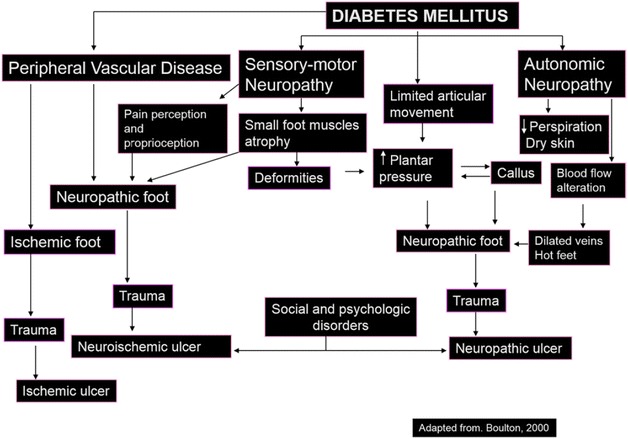
“All the neuropathies, alone or simultaneously, can lead to neuropathic foot ulcer, the most severe cutaneous lesion, in consequence of the poor healing potential of DM skin [42] that frequently become infected, thus leading to amputation [43, 44].”
BackgroundThe global burden of diabetic foot disease
Boulton, A. J., Vileikyte, L., Ragnarson-Tennvall, G., & Apelqvist, J. (2005) · The Lancet · doi:10.1016/s0140-6736(05)67698-2 · Cited by 2,566 · cited 2×
“skin hydration, orthotic devices, patient education) is highly acclaimed by medical society, once the diabetic foot brings severe economic, personal, social, and medical impact [35, 45].”
BackgroundQuantifying the Risk of Infectious Diseases for People With Diabetes
Shah, B. R., & Hux, J. E. (2003) · Diabetes Care · doi:10.2337/diacare.26.2.510 · Cited by 902 · cited 1×
“Although prior studies showed increased risk of infection in DM patients [16], little evidence is found in the literature to support increased risk for cutaneous infectious diseases [9].”
ResultDiabetic Foot Disorders: A Clinical Practice Guideline (2006 Revision)
Frykberg, R. G., Zgonis, T., Armstrong, D. G., Driver, V. R., Giurini, J. M., Kravitz, S. R., Landsman, A. S., Lavery, L. A., Moore, J. C., Schuberth, J. M., et al. (2006) · The Journal of Foot and Ankle Surgery · doi:10.1016/s1067-2516(07)60001-5 · Cited by 831
Advanced glycation end products: Key players in skin aging?
Gkogkolou, P., & Böhm, M. (2012) · Dermato-Endocrinology · doi:10.4161/derm.22028 · Cited by 584
Wound healing and diabetes mellitus
Greenhalgh, D. G. (2003) · Clinics in Plastic Surgery · doi:10.1016/s0094-1298(02)00066-4 · Cited by 510 · cited 1×
“Diabetes-related immunosuppression affects skin wounding, mainly by leukocyte impaired function and misbalanced/malfunction of growth factors [25].”
BackgroundChoosing a Practical Screening Instrument to Identify Patients at Risk for Diabetic Foot Ulceration
Armstrong, D. G., Lavery, L. A., Vela, S. A., Quebedeaux, T. L., & Fleischli, J. G. (1998) · Archives of Internal Medicine · doi:10.1001/archinte.158.3.289 · Cited by 451 · cited 1×
“• Motor neuropathy: causes toe and gait deformity, leading to foot deformity and increased plantar pressure [38, 39].”
BackgroundDiabetic foot disorders: A clinical practice guideline
Frykberg, R. G., Armstrong, D. G., Giurini, J. M., Edwards, A. L., Kravette, M. A., Kravitz, S. R., Ross, C. W., Stavosky, J. W., Stuck, R. M., & Vanore, J. (2000) · The Journal of Foot & Ankle Surgery · Cited by 396
Plantar soft tissue loading under the medial metatarsals in the standing diabetic foot
Gefen, A. (2003) · Medical Engineering & Physics · doi:10.1016/s1350-4533(03)00029-8 · Cited by 247 · cited 1×
“skin hydration, orthotic devices, patient education) is highly acclaimed by medical society, once the diabetic foot brings severe economic, personal, social, and medical impact [35, 45].”
BackgroundGlucose Effects on Skin Keratinocytes
Spravchikov, N., Sizyakov, G., Gartsbein, M., Accili, D., Tennenbaum, T., & Wertheimer, E. (2001) · Diabetes · doi:10.2337/diabetes.50.7.1627 · Cited by 241 · cited 2×
“As an example, keratinocytes, which is the predominant cell type in the epidermis, are downregulated in hyperglycemia conditions, with impairment on its proliferation [26].”
Background
Research works printed but not linked: 3
- Federation ID IDF diabetes atlas 2013 6 Brussels International Diabetes Federation 35914061
- Boulton AJM The Pathway to ulceration: aetiopathogenesis. The foot in diabetes 2002 USA Wiley 19 31
- Nunes S Mosca MM Rosa VP de Macedo GMC Uncontrolled, open-label, single center clinical study to evaluate the perceived efficacy and acceptability of Hidrastar cream and lotion for feet in diabetic patients Revista Brasileira de Medicina 2015 72 195 199
Cited by
Items 101–188 of 188
Type 1 Diabetes and Beta Cells
Owens-Collins, S. (2023) · IntechOpen eBooks · doi:10.5772/intechopen.1001513 · Cited by 4
Zhu, G., Xu, J., Guo, G., & Zhu, F. (2026) · International Journal of Surgery · doi:10.1097/js9.0000000000004905 · Cited by 2
“Sustained elevations in blood glucose levels facilitate the non-enzymatic modification of proteins, lipids, and nucleic acids, ultimately resulting in the buildup of advanced glycation end-products (AGEs) [14] .”
Epidemiology of dermatological diseases - aging, metabolic diseases and beyond
Guertin, P. A. (2016) · Global Drugs and Therapeutics · doi:10.15761/gdt.1000104 · Cited by 2
“, corticotropin-releasing hormone, transient receptor potential vanilloid-1, melanocortins, β-endorphin, vasoactive intestinal polypeptide, neuropeptide Y, substance P, and calcitonin gene-related peptide which may become dysfunctional or with altered expression levels [15,16].”
BackgroundThe role of tissue biomechanics in improving the clinical management of diabetic foot ulcers
Chatzistergos, P., Naemi, R., & Chockalingam, N. (2021) · Elsevier eBooks · doi:10.1016/b978-0-12-821070-3.00004-0 · Cited by 2
Chen, C., Liu, X., Lin, Y., Guo, M., He, Y., Yinmao, D., Meng, H., & Yi, F. (2024) · Heliyon · doi:10.1016/j.heliyon.2024.e27458 · Cited by 2
“These diabetic skin complications severely affect the quality of life of patients and are closely associated with the accumulation of large amounts of advanced glycation end products (AGEs) in the body [3].”
BackgroundKottner, J., Amin, R., Tomova‐Simitchieva, T., Hillmann, K., & Blume‐Peytavi, U. (2024) · International Wound Journal · doi:10.1111/iwj.14957 · Cited by 2
“54 In diabetes mellitus, the so called ‘ advanced glycation end-products ’ alter collagen properties makes the skin stiffer, 55,56 which might be the main reason for this difference.”
BackgroundSkin diseases in the Da Qing Diabetes Study: a cross-sectional study
Shen, C., Qian, X., Yu, R., Ji, X.-L., Shi, Y.-J., Gao, J., Li, C., Keke, L., Fei, W., Shen, X., et al. (2021) · Chinese Medical Journal · doi:10.1097/cm9.0000000000001453 · Cited by 3
“Interestingly, there are 30% to 97% of patients with DM who may have pathological lesions that arise in the skin or have concurrent dermatological disorders worldwide.([7,8]) Moreover, skin diseases found in patients with DM frequently occur before the DM diagnosis, thus playing an important role in the initial recogn…”
BackgroundFacial Abscess due to Staphylococcus aureus in Patient with Type 2 Diabetes Mellitus: Case Report
Maharani, D. G., & Novida, H. (2021) · Biomolecular and Health Science Journal · doi:10.20473/bhsj.v4i2.30029 · Cited by 2
Potential skin problems of diabetes mellitus patients: a review
Andamari, I. , Thio, H. B., & Soebono, H. (2022) · Journal of the Medical Sciences (Berkala Ilmu Kedokteran) · doi:10.19106/jmedsci005403202211 · Cited by 2
Prevalence and Associated Factors of Toenail Onychomycosis Among Patients with Diabetes in Jordan
Alrauosh, H., Ababneh, A., Bakri, F. G., Abujbara, M. A., Kanaan, H., & Younes, N. A. (2023) · Current Diabetes Reviews · doi:10.2174/1573399819666230403132241 · Cited by 2
Yesudian, P. D. (2024) · Wiley eBooks · doi:10.1002/9781119697473.ch58 · Cited by 2
The Application of 4-Hexylresorcinol for Preventing Diabetic Complications
Kim, S. (2024) · Springer eBooks · doi:10.1007/978-981-97-0637-2_8 · Cited by 2
Meng, J., Niu, X., Luo, C., Chen, Y., Li, Q., & Wei, D. (2024) · Journal of Medical Internet Research · doi:10.2196/55734 · Cited by 2
“Furthermore, some researches have indicated that diabetes is a systemic metabolic disorder often associated with various skin lesions [26,27].”
Characterization of the Skin Bacteriome and Histology Changes in Diabetic Pigs
Li, M., Yuan, J., Hou, Q., Zhao, Y., Zhong, L., Dai, X., Chen, H., & Fu, X. (2022) · The International Journal of Lower Extremity Wounds · doi:10.1177/15347346221100887 · Cited by 1
“26 In fact, skin manifestations might be the fi rst signs of DM, which might appear perhaps even years before the diagnosis.”
Miladiarsi, M., Rahman, I. W., Santi, S., & Nurfardila, N. (2023) · Jurnal BIOTEK · doi:10.24252/jb.v11i1.31707 · Cited by 1
Afroz, F., Hasan, M. R., & Yeasna, K. F. (2025) · Bangladesh Journal of Endocrinology and Metabolism · doi:10.4103/bjem.bjem_7_25 · Cited by 1
Kirsner, R. S., Andriessen, A., Berman, B., Mesinkovska, N. A., Woolery-Lloyd, H. C., & Schachner, L. A. (2025) · JEADV Clinical Practice · doi:10.1002/jvc2.70164 · Cited by 1
Chen, M., Xing, W., Feng, X., Chen, C., Zhou, L., & Wu, Y. (2025) · Optics Express · doi:10.1364/oe.577691 · Cited by 1
Wang, Y., Luo, S., Guo, X., Jin, M., Wang, X., Li, M., Jiang, S., Wei, L., Liu, M., & Song, W. (2026) · Microbial Pathogenesis · doi:10.1016/j.micpath.2026.108296 · Cited by 1
Skin-related adverse events and their associated factors among Diabetic patients on insulin therapy
Mbwambo, D. P., Mikomangwa, W. P., Mnkugwe, R. H., Mallya, B., Kilonzi, M., Kazaura, M. R., Angelus, M., Ramaiya, K. L., Mayige, M. T., Mutagonda, R. F., et al. (2026) · PLoS ONE · doi:10.1371/journal.pone.0320556 · Cited by 1
Marinescu, M., Botnariu, G. E., Mocanu, M., Vâță, D., Temelie-Olinici, D., Halip, I. A., Pătrașcu, A.-I., Popescu, I. A., Gheuca-Solovastru, D. F., & Solovăstru, L. G. (2026) · Life · doi:10.3390/life16060957 · Cited by 1
Fungal Infections in Diabetics
Bonifáz, A., Armas-Vázquez, A., & Tirado‐Sánchez, A. (2017) · Springer eBooks · doi:10.1007/978-3-319-72475-1_9 · Cited by 1
Skin Manifestations of Paediatric Metabolic Syndrome
Holzer, G., & Volc‐Platzer, B. (2019) · Wiley eBooks · doi:10.1002/9781119142812.ch72 · Cited by 2
Skin changes in diabetic patients
Piťhová, P., & Jarešová, L. R. (2020) · Dermatologie pro praxi · doi:10.36290/der.2020.025 · Cited by 2
de Freitas, S. S., Barros, A. D. C., Neves, A. D., Ramos, A. R. X., Marcolino, D. V. C., de Santana, I. M., Belo, J. N. A. D. L., Filho, J. J. D. A., da Silva, L. J., Pinho, L. R. A. D. M., et al. (2020) · doi:10.22533/at.ed.59420091110 · Cited by 1
Using emollients to promote safe and effective skin care for patients
Newton, H. (2021) · Nursing Standard · doi:10.7748/ns.2021.e11687 · Cited by 1
Skin Problems Associated with Diabetes
Buckley, D. (2021) · Springer eBooks · doi:10.1007/978-3-030-29101-3_52 · Cited by 1
Istoricul obstetrical sărac, tulburările dermatologice şi diabetul zaharat de tip 2
Beksaç, B., Dönmez, H. G., & Beksaç, M. S. (2022) · Obstetrica şi Ginecologia · doi:10.26416/obsgin.70.1.2022.6509 · Cited by 1
The skin: anatomy and pathologies in diabetes
Albastaki, U., & Pierre-Jerome, C. (2022) · Elsevier eBooks · doi:10.1016/b978-0-323-99352-4.00007-3 · Cited by 1
Diabetes mellitus and its skin manifestations - dermatology for diabetologists
Sambura, M., Rosołowska-Żak, S., Pałuchowska, J., Szymkowicz, A., Paschke, P., & Miczek, I. (2024) · Journal of Education Health and Sport · doi:10.12775/jehs.2024.62.008 · Cited by 1
Tejeda-Ramírez, S., Tardáguila‐García, A., López‐Moral, M., Sanz‐Corbalán, I., García‐Madrid, M., & Lázaro‐Martínez, J. L. (2024) · Advances in Skin & Wound Care · doi:10.1097/asw.0000000000000141 · Cited by 2
The prevalence of metabolic skin diseases in the population with Diabetes Mellitus
Leite, B., Brito, A., Kensy, C., Bosi, A. L. S., Frota, F. F., Lavoratto, J., & Chagas, E. F. B. (2024) · Concilium · doi:10.53660/clm-3414-24i30 · Cited by 1
“Um estudo demonstrou que há uma probabilidade a cerca de 70 % de pacientes diabéticos desenvolverem algum tipo de dermatose em algum momento de sua vida (De Macedo et al., 2016).”
BackgroundBroshtilova, V., & Gantcheva, M. (2024) · Springer eBooks · doi:10.1007/978-3-031-65300-1_26 · Cited by 1
Spectrum of cutaneous manifestations in patients with type 2 diabetes mellitus
Bose, R., & Kumar, S. (2024) · Asian Journal of Medical Sciences · doi:10.71152/ajms.v15i12.4231 · Cited by 1
Mizuno, S., Takabayashi, M., Makihara, H., Ogai, K., Tsukui, K., Ito, Y., Kawakami, T., Hara, Y., Fujita, A., Tokudome, Y., et al. (2024) · Journal of Pharmaceutical Health Care and Sciences · doi:10.1186/s40780-024-00402-5 · Cited by 1
Свиридов, М. В., Sulaieva, O., Голодніков, А. Є., & Огризько, Т. В. (2017) · Clinical endocrinology and endocrine surgery · doi:10.24026/1818-1384.3(59).2017.110931
“Этот факт вызывает определенную настороженность, поскольку хорошо известно о влиянии Сд на развитие патологических изменений в коже, которые регистрируются с частотой от 51,1% до 97% у пациентов как с Сд 1 типа, так и Сд 2 типа соответственно [6].”
Dermatologische Krankheitsbilder bei Diabetes mellitus
Dissemond, J. (2017) · Der Diabetologe · doi:10.1007/s11428-017-0265-z
“Ähnlich der Ne- crobiosis lipoidica zeigen sich auch hier bevorzugt an den Unterschenkeln multiple ovale, rötlich braune atrophe Areale [5, 9].”
MethodInfluentialCould Ageing-Related Chronic Skin Problems be Attributed to Neuronal and Non-Neuronal Dysfunctions?
Guertin, P. A. (2016) · Archive of Gerontology and Geriatrics Research · doi:10.17352/aggr.000001
“The ILDS has clearly reported that ageing-related skin problem is currently one of the most signifi cant challenges in global skin health [5].”
BackgroundVozianova, S. V., Дядик, О. О., Бойко, В. В., & Radkevich, Y. S. (2019) · Art of Medicine · doi:10.21802/artm.2019.1.9.32
Prevalencia de manifestaciones mucocutáneas en pacientes con diabetes mellitus tipo 2
Hernández-Pérez, I. R., & Morales-Godínez, L. C. (2020) · Revista Medicina Cutánea Ibero-Latino-Americana · doi:10.35366/93975
Cutaneous immunity and predisposition to infections in diabetic foot population
Andrei, P. M., Tănăsescu, M. D., Mincă, A., Balcangiu‐Stroescu, A.-E., Bălan, D., Mihai, A. D., Limbău, A. M., & Tîrgoviște, C. I. (2020) · Romanian Medical Journal · doi:10.37897/rmj.2020.2.1
A Study to Evaluate Therapeutic Management of Various Cutaneous Disorders in Diabetic Patients
Bharath, A., Madhuri, G. D., Ugandar, D. R. E., & Latha, D. M. M. (2021) · International Journal of Pharmaceutical Sciences Review and Research · doi:10.47583/ijpsrr.2021.v67i01.025
Skin and connective tissue disorders in diabetes
Rudy Bilous MD, F., Donnelly, R., & Iskandar Idris DM, F. (2021) · Wiley eBooks · doi:10.1002/9781118976074.ch26
Ouyang, T., Ni, J., de Quéral, D., Heusèle, C., & Schnebert, S. (2022) · Research Square · doi:10.21203/rs.3.rs-1819322/v1
Manifestaciones cutáneas en patologías endocrino-metabólicas
Tostón, N. S., Moncada-Ventura, A. M., Revelles‐Peñas, L., de Arriba, M. G., & Yuste‐Chaves, M. (2022) · Revista Medicina Cutánea Ibero-Latino-Americana · doi:10.24875/mcut.21000097
Significance of Skin Hydration
Han, S. (2023) · Springer eBooks · doi:10.1007/978-981-19-9805-8_8
Foot Skin and Nail Care For People With Diabetes: Are We Prioritizing Or Neglecting It?
Costa, I. G. (2023) · Wound Care Canada · doi:10.56885/wqaj65342
Lichen Simplex Chronic Skin Problems in Diabetes Mellitus Patient: A Case Report
Oktasari, N. A., Firdaus, N. D., & Saroso, A. F. (2023) · Archives of The Medicine and Case Reports · doi:10.37275/amcr.v4i4.361
เย็นท่าเรือ, อ. (2019) · Chula Digiverse · doi:10.58837/chula.the.2019.1012
Ivanova, Y. V., Miasoiedov, K. V., Goloborodko, M. M., Криворучко, І. А., & Gramatiuk, S. M. (2023) · PROBLEMS OF ENDOCRINE PATHOLOGY · doi:10.21856/j-pep.2023.4.12
The nurse’s role in recognizing dermatological changes in individuals with diabetes mellitus
Goleš, M., Marković, D., & Maleš, V. K. (2023) · Hrvatski časopis zdravstvenih znanosti · doi:10.48188/hczz.3.2.4
Furdela, A. M., Miroshnyk, V. A., Янчишина, М. А., & Ткачук, Н. І. (2023) · Medical Science of Ukraine (MSU) · doi:10.32345/2664-4738.4.2023.13
Structural and Functional Changes in Skin of the Diabetic Foot
Chatzipantelis, P., Valsami, E., Kafanas, A., & Veves, A. (2024) · Contemporary diabetes · doi:10.1007/978-3-031-55715-6_12
Clinical Biomarkers of Dyslipidemia in Diabetes Mellitus Type II Patients
Afzal, A., Kausar, R., Aslam, S., Shahid, N., Aman, S., Zohaib, M., Rehman, A., Afzal, N., Abbasi, M. H., Sheikh, N., et al. (2024) · BioScientific Review · doi:10.32350/bsr.62.1
Flavonoids and Nanotechnology in Insulin Resistance Diabetic Complications
Kumar, S., Singh, M., Murkute, P. S., Chakraborty, A., Farid, A., Kiani, H. S., Taghizadeh‐Hesary, F., Bhowmick, M., & Ashique, S. (2024) · Wiley eBooks · doi:10.1002/9781394238071.ch8 · Cited by 1
Sudheer, A., Sen, D., & Jadhwar, S. (2024) · International Journal of Research in Dermatology · doi:10.18203/issn.2455-4529.intjresdermatol20243760
Skin manifestation of diabetes at Benghazi Diabetic centre
Alsunousi, S. I. A., Younis, A. B. M., Mansur, H. S., Swire, A., Hussin, H., Abuamra, M., & Allashi, S. (2024) · Benghazi University Medical Journal · doi:10.37376/benunivmedj.v1i1.7142
Dharmarajan, T. S., & Vyas, D. (2025) · Springer eBooks · doi:10.1007/978-3-031-53888-9_19-1
Proporción de polineuropatía diabética y sus posibles factores asociados
Ruiz, M. Á., Cifuentes, M., Fuentes, M. A. B., Mora, J., Bohórquez-Ballén, M. C., & Silva, M. (2025) · Universitas Médica · doi:10.11144/javeriana.umed66.ppdp
Hariprasad, M. G., & Mubasheera, M. G. (2025) · Journal of Natural Remedies · doi:10.18311/jnr/2025/46263
Pinto, J. R., Silva, S. A. M. E., & Leonardi, G. R. (2025) · Dermatological Reviews · doi:10.1002/der2.70037
Tirmizi, S. S., Akhtar, S. M., Rajput, A., Anwar, A., Tariq, U., & Hashmi, A. A. (2025) · Cureus · doi:10.7759/cureus.86030
“Cutaneous infections occur in roughly 20% of people with diabetes [10].”
Research Progress of Diabetes Pruritus in Traditional Chinese and Western Medicine
徐, 雪. (2025) · Advances in Clinical Medicine · doi:10.12677/acm.2025.1592548
Yulianti, L., & Gunaidi, F. C. (2025) · Jurnal Kesehatan Amanah · doi:10.57214/jka.v9i1.926
“( de Macedo et al., 2016; Susanto et al., 2025) Namun, hubungan antara kadar hemoglobin, profil lipid, asam urat, gula darah, dan komposisi tubuh dengan tingkat kelembapan kulit masih belum banyak diteliti secara menyeluruh.”
Telaah: self-care mobile application untuk pencegahan luka diabetes
Untari, E. K. (2025) · Sasambo Journal of Pharmacy · doi:10.29303/sjp.v6i2.624
Dry skin in older care dependent people
Amin, R. (2024) · Refubium (Universitätsbibliothek der Freien Universität Berlin) · doi:10.17169/refubium-43932
Skin manifestations/skin infections in patients with diabetes mellitus and their management
Καπέτη, Ά. Κ., & Καπέτη, Ά. Κ. (2024) · University of Thessaly Institutional Repository (University of Thessaly)
Moniaga, C. S., & Santoso, A. H. (2025) · Jurnal Pengabdian West Science · doi:10.58812/jpws.v4i12.2952
“( Behm et al., 2012; Chen et al., 2023; de Macedo et al., 2016; Ebenuwa et al., 2024) Xerosis cutis, atau kondisi kulit kering, merupakan masalah kesehatan yang umum dijumpai pada populasi dewasa dan lansia di seluruh dunia, dengan prevalensi yang dilaporkan sangat bervariasi, mulai dari 29% hingga…”
Identifying multimorbidity patterns in tuberculosis patients of China: a population-based study
Tuo, B., Lin, K., Hu, A., Xiang, L., & Jiang, J. (2026) · Journal of Public Health · doi:10.1007/s10389-025-02672-1
Yudhitiara, N., Santoso, A. H., Goh, D., Bachri, F. A., & Ramadhani, K. R. (2026) · Jurnal Pengabdian Masyarakat · doi:10.59030/jpmbd.v5i1.119
Xu, M., Gao, X., Liu, Z., Zhang, L., Wang, Z., Zhuang, H., Fu, W., Yao, S., Zhang, L., Zhou, S., et al. (2026) · Scientific Reports · doi:10.1038/s41598-026-42229-0
Geriatric Dermatologic Therapy
Türsen, B., Ketenci, B. M., Sezer, S., Yazıcı, A., Kaya, K., Gevher, Ö. D., Ertürk, S., Akbay, M., Demir, G., Sengün, O. A., et al. (2026) · Akademisyen Kitabevi eBooks · doi:10.37609/akya.4051
Highsmith, M. J., Hill, O. T., Highsmith, J. T., Beachkofsky, T. M., Heckman, J. T., Ramrattan, A., Phillips, S., Russ, D. W., Teran-Wodzinski, P. C., & Paquette, R. (2026) · Technology & Innovation · doi:10.1080/19498241.2026.2648087
Soudahome, A. G. (2018) · theses.fr (ABES) · doi:10.70675/a8e7886czf1afz4beeza647z45aafd3f6103 · Cited by 1
Dharmarajan, T. S., & Vyas, D. (2026) · Springer eBooks · doi:10.1007/978-3-031-53888-9_19-2
Khan, M. M., Mou, I., & Ahsan, K. (2026) · Journal of Rangpur Medical College · doi:10.3329/jrpmc.v11i1.89946
Overview of Diabetes Mellitus and its Prevention
Metangale, S. K., Bhandurge, O. N., Nagrik, S. U., & Mhaske, S. D. (2026) · Asian Journal of Pharmaceutical Research · doi:10.52711/2231-5691.2026.00027
Dermatological lesions in diabetes
Casado-Hoces, S. V., González-Tejedor, D., & Martín-Velasco, R. (2026) · Revista Española de Sanidad Penitenciaria · doi:10.18176/resp.00126
“They also lead to the production of pro-inflammatory cytokines 11 .”
InfluentialLi, Z.-L., Li, Z.-Y., Pan, M.-M., & Liu, B.-C. (2026) · BMC Nephrology · doi:10.1186/s12882-026-05216-1
“Indeed, pruritus is one of the most common cutaneous manifestations in diabetes mellitus, particularly among the diabetic kidney disease (DKD) population [5–7].”
Glucose dysregulation presenting as psychiatric and autoimmune dysfunction: Case investigation
Warner-Palacio, J., Hunsaker, H., Small, C. A., Warner-Palacio, J., Sant, D., & Bills, K. B. (2026) · Psychiatry Research Case Reports · doi:10.1016/j.psycr.2026.100351
Diyabetes mellitus ve deri: Klinik pratik için bir derleme
Güven, T. (2026) · Ağrı Tıp Fakültesi Dergisi · doi:10.61845/agrimedical.1938217
Moniaga, C. S., Santoso, A. H., Nathaniel, F., Kurniawan, J., Wijaya, D. A., Jap, A. N., & Mashadi, F. J. (2023) · Community Development Journal Jurnal Pengabdian Masyarakat · Cited by 2
Tan, S. T., Santoso, A. H., Nathaniel, F., Mashadi, F. J., Soebrata, L., Mandalika, A., & Wijaya, D. A. (2023) · Community Development Journal Jurnal Pengabdian Masyarakat
The Role of Comorbidities in Pyoderma Among Canine and Feline Diabetic Patients
Wixon, V., Pieper, J. B., & Bachtel, J. C. (2026) · Veterinary Dermatology · doi:10.1111/vde.70131
Yosi, A., Eyanoer, P. C., Lubis, R. D., Rusda, M., & Roesyanto, I. D. (2026) · Dermatology Reports · doi:10.4081/dr.2026.10917
Yosi, A., & Dewi, M. A. (2026) · Journal of Health Science and Medical Research · doi:10.31584/jhsmr.20261502
EFFECT OF ORAL BOVINE COLLAGEN ON EPIDERMAL THICKNESS IN TYPE 1 DIABETIC RATS
Santoso, I., Harijati, E., & Wulandari, Y. (2026) · Journal of Widya Medika Junior · doi:10.33508/jwmj.v8i4.8155
Metadata
- Authors
- de Macedo, G. M. C., Nunes, S., & Barreto, T.
- Affiliations
- Sociedade Brasileira de Dermatologia (BR)
- ORCID
- Nunes, Samanta
- Venue
- Diabetology & Metabolic Syndrome
- Published
- 2016-08-30
- Volume
- 8
- Issue
- 1
- Pages
- 63-63
- ISSN
- 1758-5996 (ISSN-L)
- PMC
- PMC5006568
- OpenAlex
- W2511073480
- Semantic Scholar
- 814125046d1805572d222d89e75be0f4a5917417
- Cited by
- 176
- References
- 57
- Citations by year
- 2026: 14 · 2025: 15 · 2024: 27 · 2023: 21 · 2022: 20 · 2021: 26 · 2020: 20 · 2019: 12 · 2018: 9 · 2017: 9 · 2016: 3
- FWCI
- 1.56
- Type
- journal article
- Language
- en
- Open access
- gold
- doi.org
- Licence
- cc-by
- Locations
- Diabetology & Metabolic Syndrome (publishedVersion, cc-by)
- PubMed Central (publishedVersion, cc-by)
- PubMed (publishedVersion)
- Funders
- Sanofi
- Topics
- Health Sciences › Medicine › Dermatology › Skin Diseases and Diabetes
- Health Sciences › Medicine › Endocrinology, Diabetes and Metabolism › Diabetic Foot Ulcer Assessment and Management
- Health Sciences › Medicine › Dermatology › Dermatology and Skin Diseases
- Keywords
- skin diseases, diabetes mellitus, diabetic foot, diabetic ulcers, skin infections, dry skin, pruritus, advanced glycation end products, hyperglycemia, skin hydration, orthoses, pathophysiology, epidemiology
About these checks
Registry, retraction, Cites and statistics results are computed, not judged, with one exception: a printed reference that no index lists is read once by a model before it counts as a citation error. Claims are extracted by a model and kept only when their quote appears verbatim in the text; each cited source is then checked, with a model’s help, for whether it says what the claim relies on. Those verdicts can be wrong — read the claim’s quote and the cited source before relying on one.
Statistics and arithmetic are recomputed, not judged.
Confidence bands are shown only for fields calibrated on our annotated test set. None is calibrated yet, so no band is shown.
What counts as a claim ›How we measure confidence ›How we check this ›
Are you an author, or do you see a problem with this page? Request a review
Data sources
Bibliographic data: Semantic Scholar, OpenAlex, Crossref.
Contains information from the Semantic Scholar Academic Graph Datasets, made available under the ODC Attribution License (ODC-BY 1.0).
Semantic Scholar’s data is described in: Kinney, R., et al. (2023). The Semantic Scholar Open Data Platform. arXiv:2301.10140.
