

The effects of exercise on vascular endothelial function in type 2 diabetes: a systematic review and meta-analysis
Open accessThe DOI matches its Crossref record; 67 of the 69 references it cites were found in a registry or an index.
Abstract
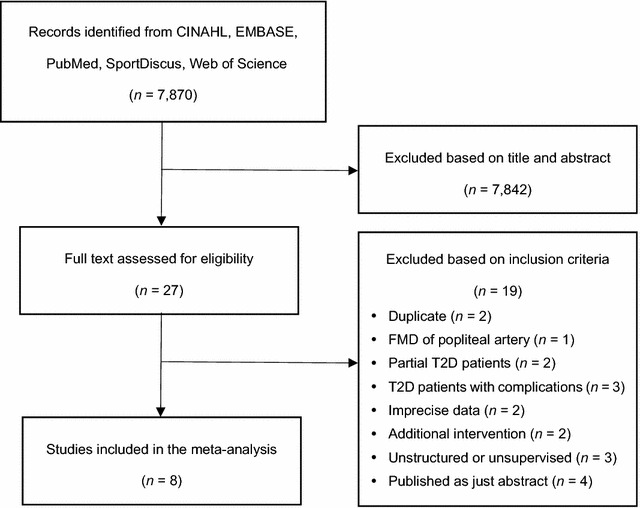
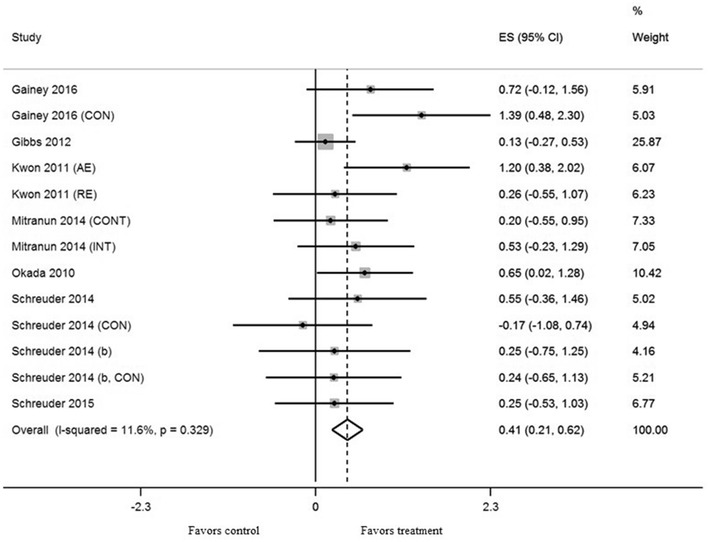
Vascular endothelial dysfunction induced by hyperglycemia and elevated insulin resistance is a potent risk factor for cardiovascular disease and likely contributes to multiple chronic disease complications associated with aging. The aim of this study was to systematically review and quantify the effects of exercise on endothelial function (EF) in type 2 diabetes (T2D). Five electronic databases were searched (until June 2017) for studies that met the following criteria: (i) randomized controlled trials; (ii) T2D aged ≥ 18 years; (iii) measured EF by brachial artery flow-mediated dilation (FMD); (iv) structured and supervised exercise intervention for ≥ 8 weeks. Thirteen cohorts, selected from eight studies (306 patients, average age 59 years), met the inclusion criteria. Exercise training significantly increased FMD (mean ES = 0.41, 95% CI 0.21–0.62, P < 0.001). Low to moderate intensity subgroups and aerobic exercise (AE) subgroups significantly increased FMD more than moderate to high intensity subgroups and combined AE and resistance exercise subgroups respectively ( P < 0.01, P < 0.05). The Grading of Recommendations Assessment, Development and Evaluation (GRADE) assessments reported that quality of evidence for all outcomes was moderate except shear rate showing low. Egger’s test showed no significant publication bias for all outcomes. Our results suggest that in patients with T2D, lower intensity exercise has physiological meaningful effects on EF, in support of the emerging concept that the lower efforts of exercise are not necessarily less cardioprotective than higher intensity training.
Overview
The claims and statistics of this paper haven’t been checked yet.
Free: it reads the open-access text and checks the first 5 claims that cite a source we can check. Create a free account to check every claim.
Integrity signals
Registry
Cites
Statistics
Figures
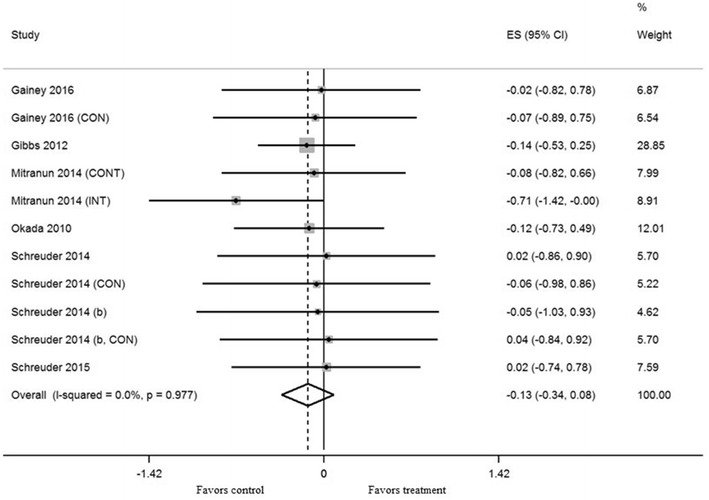
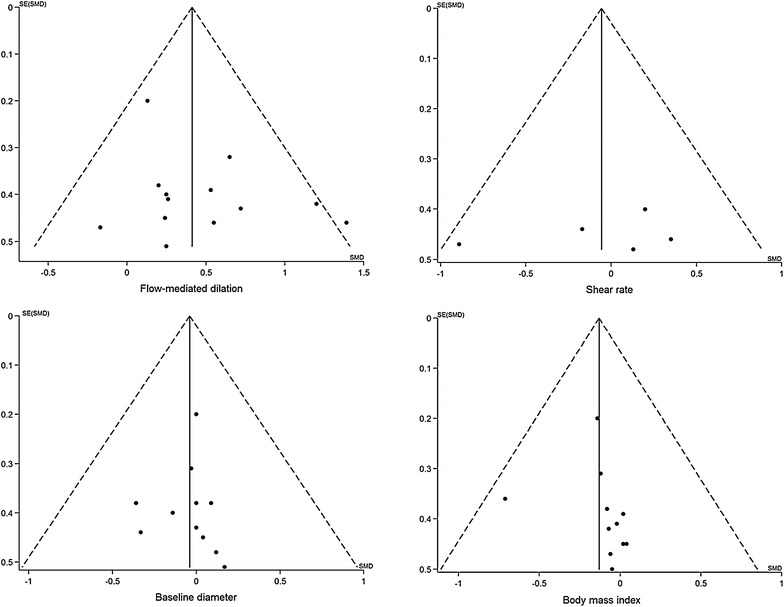
Verification
Claims the paper makes
The claims and statistics of this paper haven’t been checked yet.
Free: it reads the open-access text and checks the first 5 claims that cite a source we can check. Create a free account to check every claim.
Claims other papers make about this one
Each is checked against this paper’s own text: does it say what the citing paper says it does?
The source backs part of the claim, not all of it — or backs it for a different population, condition or comparison.
In the citing paper
“Both hyperglycemia and hyperinsulinemia alter the endothelium,27 disrupting the normal atheroprotective nitric oxide regulatory environment and encouraging a generalized proinflammatory, vasoconstrictive state predisposing to atherothrombosis.27–29”
From Clinical management of stable coronary artery disease in patients with type 2 diabetes mellitus: a scientific statement from the American Heart Association (2020) · cites this paper as [27]
Experimental — accuracy not yet measured
Self-check
Percentages, sums and reported differences re-computed from the paper’s own numbers.
The self-check needs the paper’s full text.
Citations
Cites
Measuring inconsistency in meta-analyses
Higgins, J. P. T., Thompson, S. G., Deeks, J. J., & Altman, D. G. (2003) · BMJ · doi:10.1136/bmj.327.7414.557 · Cited by 63,139 · cited 2×
“We used a fixed-effects model when homogeneity was verified or a random-effects model when heterogeneity was shown by the Q statistic [18].”
MethodBias in meta-analysis detected by a simple, graphical test
Egger, M., Smith, G. D., Schneider, M., & Minder, C. (1997) · BMJ · doi:10.1136/bmj.315.7109.629 · Cited by 56,722 · cited 1×
“Publication bias was assessed using the Egger’s regression test [21].”
MethodLiberati, A., Altman, D. G., Tetzlaff, J., Mulrow, C., Gøtzsche, P. C., Ioannidis, J. P. A., Clarke, M., Devereaux, P. J., Kleijnen, J., & Moher, D. (2009) · PLoS Medicine · doi:10.1371/journal.pmed.1000100 · Cited by 28,164 · cited 4×
“This current systematic review followed the strategy of The PRISMA Statement [13].”
MethodInfluentialGRADE: an emerging consensus on rating quality of evidence and strength of recommendations
Guyatt, G. H., Oxman, A. D., Vist, G. E., Kunz, R., Falck-Ytter, Y., Alonso-Coello, P., & Schünemann, H. J. (2008) · BMJ · doi:10.1136/bmj.39489.470347.ad · Cited by 23,305 · cited 6×
“The GRADE assessments are presented in Table 2, and quality of evidence for all outcomes was moderate except shear rate AUC showing low.”
MethodInfluential2016 Alzheimer's disease facts and figures
Alzheimer's Association (2016) · Alzheimer's & Dementia · doi:10.1016/j.jalz.2016.03.001 · Cited by 5,069
Corretti, M. C., Anderson, T. J., Benjamin, E. J., Celermajer, D., Charbonneau, F., Creager, M. A., Deanfield, J., Drexler, H., Gerhard-Herman, M., Herrington, D., et al. (2002) · Journal of the American College of Cardiology · doi:10.1016/s0735-1097(01)01746-6 · Cited by 4,604 · cited 1×
“In most clinical and physiological settings, the direct physiological or biochemical effects signaling within the endothelium are more associated with endothelial dysfunction than smooth muscle dysfunction per se [7].”
BackgroundEpidemiology of Sarcopenia among the Elderly in New Mexico
Baumgartner, R. N., Koehler, K. M., Gallagher, D., Romero, L., Heymsfield, S. B., Ross, R. R., Garry, P. J., & Lindeman, R. D. (1998) · American Journal of Epidemiology · doi:10.1093/oxfordjournals.aje.a009520 · Cited by 4,004 · cited 1×
“Furthermore, considering two facts, (1) those aged 65 and older account for the largest proportion of total T2D patients [69]; (2) muscle weakness starts at age 50 [70] and more aggravates by age 65 [71], it is certainly necessary for T2D patients, especially elderly to improve vascular function and increase muscular…”
BackgroundSome Methods for Strengthening the Common χ 2 Tests
Cochran, W. G. (1954) · Biometrics · doi:10.2307/3001616 · Cited by 3,718
2013 Alzheimer's disease facts and figures
Alzheimer's Association, Thies, W., & Bleiler, L. (2013) · Alzheimer's & Dementia · doi:10.1016/j.jalz.2013.02.003 · Cited by 3,328
Endothelial Function and Dysfunction: Testing and Clinical Relevance
Deanfield, J. E., Halcox, J. P., & Rabelink, T. J. (2007) · Circulation · doi:10.1161/circulationaha.106.652859 · Cited by 2,710
Research works printed but not linked: 2
- Cohen J Statistical power analysis for the behavioral sciences Lawrence Earlbaum Associates 1988 Hillsdale NJ 20 26
- Han KA Effects of moderate versus vigorous intensity exercise training on inflammatory markers, endothelial function, and insulin resistance in the patients with type 2 diabetes: longitudinal study in diabetes 2009 Alexandria Amer Diabetes Assoc
Cited by
Joseph, J. J., Deedwania, P., Acharya, T., Aguilar, D., Bhatt, D. L., Chyun, D. A., Di Palo, K. E., Golden, S. H., Sperling, L. S., & on behalf of the American Heart Association Diabetes Committee of the Council on Lifestyle and Cardiometabolic Health; Council on Arteriosclerosis, T. A. V. B. C. O. C. C. A. C. O. H. (2022) · Circulation · doi:10.1161/cir.0000000000001040 · Cited by 660
Arnold, S. V., Bhatt, D. L., Barsness, G. W., Beatty, A. L., Deedwania, P. C., Inzucchi, S. E., Kosiborod, M., Leiter, L. A., Lipska, K. J., Newman, J. D., et al. (2020) · Circulation · doi:10.1161/cir.0000000000000766 · Cited by 304
Man, A. W. C., Li, H., & Xia, N. (2020) · Oxidative Medicine and Cellular Longevity · doi:10.1155/2020/1496462 · Cited by 170
“In type 2 diabetic patients, lower-intensity exercise has physiological meaningful effects on endothelial function, while low to moderate intensity and aerobic exercises significantly increase flowmediated vasodilation more than moderate- to highintensity exercises and combined aerobic and resistance exercises, respec…”
BackgroundEndothelial Dysfunction and Its Clinical Implications
Poredoš, P., Visnovič-Poredoš, A., & Gregorič, I. D. (2021) · Angiology · doi:10.1177/0003319720987752 · Cited by 197
“There is clear evidence that physical activity improves EF, particularly in individuals at increased CV risk.(116,117) Physical exercise improves EF and reduces CV risk in older individuals, postmenopausal women and patients with dyslipidemia.”
BackgroundMagalhães, J. P., Melo, X., Correia, I. R., Ribeiro, R. T., Raposo, J. F., Dores, H., Bicho, M., & Sardinha, L. B. (2019) · Cardiovascular Diabetology · doi:10.1186/s12933-019-0840-2 · Cited by 84
Thompson, S., Wiebe, N., Padwal, R. S., Gyenes, G., Headley, S. A. E., Radhakrishnan, J., & Graham, M. (2019) · PLOS ONE · doi:10.1371/journal.pone.0211032 · Cited by 63
The Application of Exercise Training for Diabetic Peripheral Neuropathy
Holmes, C. J., & Hastings, M. K. (2021) · Journal of Clinical Medicine · doi:10.3390/jcm10215042 · Cited by 84
Impact of Exercise Training Interventions on Flow-Mediated Dilation in Adults: An Umbrella Review
Shivgulam, M. E., Liu, H., Schwartz, B. D., Langley, J. E., Bray, N. W., Kimmerly, D. S., & O’Brien, M. W. (2023) · Sports Medicine · doi:10.1007/s40279-023-01837-w · Cited by 42
“Three reviews determined that resistance training improved brachial artery FMD [24, 41, 42].”
BackgroundInfluentialCheng, S., Cui, Y., Fan, L., Mu, X., & Hua, Y. (2018) · Biochemical and Biophysical Research Communications · doi:10.1016/j.bbrc.2018.05.179 · Cited by 39
The Endothelium as a Therapeutic Target in Diabetes: A Narrative Review and Perspective
Adams, J. A., Uryash, A., Lopez, J. R., & Sackner, M. A. (2021) · Frontiers in Physiology · doi:10.3389/fphys.2021.638491 · Cited by 42
Physical Fitness and Cardiovascular Risk Factors in Novel Diabetes Subgroups
Saatmann, N., Zaharia, O., Straßburger, K., Pesta, D. H., Burkart, V., Szendroedi, J., Gerdes, N., Kelm, M., & Roden, M. (2021) · The Journal of Clinical Endocrinology & Metabolism · doi:10.1210/clinem/dgab810 · Cited by 36
Liang, C., Song, Z., Yao, X., Xiao, Q., Fu, H., & Tang, L. (2024) · Journal of Clinical Hypertension · doi:10.1111/jch.14818 · Cited by 52
“65,66 Endothelialshearstress(ESS)playsavitalroleinpromotingthecon-tinuous production of nitric oxide (NO) in endothelial cells, thereby maintains the balance between NO and endothelin-1 (ET-1).”
BackgroundResultGholami, F., Nazari, H., & Alimi, M. (2019) · Experimental Gerontology · doi:10.1016/j.exger.2019.110799 · Cited by 34
Rahmati-Ahmadabad, S., Shirvani, H., Ghanbari–Niaki, A., & Rostamkhani, F. (2018) · Life Sciences · doi:10.1016/j.lfs.2018.08.036 · Cited by 29
Qiu, B., Zhou, Y., Tao, X., Hou, X., Du, L., Lv, Y., & Yu, L. (2024) · Frontiers in Endocrinology · doi:10.3389/fendo.2024.1347399 · Cited by 32
Inhibition of Th17 cell differentiation by aerobic exercise improves vasodilatation in diabetic mice
Liu, X., Su, Y., Liu, J., Liu, D., & Yu, C. (2024) · Clinical and Experimental Hypertension · doi:10.1080/10641963.2024.2373467 · Cited by 30
“Studies have found that exercise can improve insulin resistance, restore vascular endothelial function and renal dopamine D 1 -mediated sodium excretion, which is involved in the regulation of atherosclerosis and hypertension (7,8).”
Benefits of exercise training on cardiovascular dysfunction: molecular and integrative
Zucker, I. H., & Musch, T. I. (2018) · American Journal of Physiology-Heart and Circulatory Physiology · doi:10.1152/ajpheart.00516.2018 · Cited by 26
“Exercise training is a cheap and effective strategy for the management of many cardiovascular and metabolic disorders, including hypertension (12, 25), heart failure (5, 6, 42, 44), stroke (22, 29), and diabetes (26, 31, 45).”
BackgroundGholami, F., Khaki, R., Mirzaei, B., & Howatson, G. (2021) · Experimental Gerontology · doi:10.1016/j.exger.2021.111481 · Cited by 27
Pordanjani, M. K., Banitalebi, E., Roghani, M., & Hemmati, R. (2022) · Food Science & Nutrition · doi:10.1002/fsn3.3105 · Cited by 25
Ryckeghem, L. V., Keytsman, C., Brandt, J. D., Verboven, K., Verbaanderd, E., Marinus, N., Franssen, W. M. A., Frederix, I., Bakelants, E., Petit, T., et al. (2022) · European Journal of Applied Physiology · doi:10.1007/s00421-022-04884-9 · Cited by 23
Cardiac Rehabilitation Improves Endothelial Function in Coronary Artery Disease Patients
Manresa‐Rocamora, A., Ribeiro, F., Casanova‐Lizón, A., Flatt, A. A., Sarabia, J. M., & Moya‐Ramón, M. (2022) · International Journal of Sports Medicine · doi:10.1055/a-1717-1798 · Cited by 24
Microvascular endothelial dysfunction in vascular senescence and disease
Kasal, D. A. B., Sena, V., Huguenin, G. V. B., Lorenzo, A. D., & Tibiriçá, E. V. (2025) · Frontiers in Cardiovascular Medicine · doi:10.3389/fcvm.2025.1505516 · Cited by 28
“…metanalysis by Lee et al. support the notion that in T2D patients (average age of 59 years), exercise has bene fi cial effects on endothelial function, with even better results in low/moderate intensity and aerobic training, when compared to moderate/high intensity and resistance subgroups (146).”
Whipple, M. O., Masters, K. S., Huebschmann, A. G., Scalzo, R. L., Reusch, J. E. B., Bergouignan, A., & Regensteiner, J. G. (2021) · Vascular Medicine · doi:10.1177/1358863x211009307 · Cited by 22
“The studies identified in this review were instrumental in laying the foundation regarding the effect of different types of breaks in prolonged SB on vascular outcomes in individuals with overweight/obesity or otherwise at an elevated risk for T2D, but extensive further research needs to be conducted in this area.”
BackgroundInfluentialExercise in the Prevention and Treatment of Type 2 Diabetes
Kirwan, J. P., Heintz, E. C., Rebello, C. J., & Axelrod, C. L. (2023) · Wiley eBooks · doi:10.1002/cphy.c220009 · Cited by 26
Gram-Kampmann, E.-M., Olesen, T. B., Hansen, C. D., Hugger, M. B., Jensen, J. M., Handberg, A., Beck‐Nielsen, H., Krag, A. A., Olsen, M. H., & Højlund, K. (2023) · Cardiovascular Diabetology · doi:10.1186/s12933-023-01956-8 · Cited by 17
“The prescribed exercise program in both groups may also have affected the outcome in these studies [22, 23], as exercise training has been demonstrated to improve endothelial function [39].”
ResultLi, Q., Qin, K., Zhang, W., Guan, X., Cheng, M., & Wang, Y. (2023) · Reviews in Cardiovascular Medicine · doi:10.31083/j.rcm2411306 · Cited by 16
“Meta-analysis also showed that long-term exercise training for more than 8 weeks significantly increased overall FMD levels in patients with type II diabetes, and low-to-moderate-intensity exercise augmented FMD levels compared with high-intensity continuous exercise [38,39].”
BackgroundPhysical Activity Participation in People With an Active Diabetic Foot Ulceration: A Scoping Review
Brousseau‐Foley, M., Blanchette, V., Trudeau, F., & Houle, J. (2021) · Canadian Journal of Diabetes · doi:10.1016/j.jcjd.2021.07.002 · Cited by 18
Leisure-time physical activity and mortality risk in type 2 diabetes: A nationwide cohort study
Yen, Y., Wang, C., Chen, Y., Hsu, L., Hung, K., Chen, L., Ku, P., Chen, C.-C., & Lai, Y. (2022) · Diabetes & Metabolism · doi:10.1016/j.diabet.2022.101378 · Cited by 15
Patoulias, D., Stavropoulos, K., Imprialos, K. P., Athyros, V. G., Doumas, M. N., & Karagiannis, A. I. (2019) · Current Vascular Pharmacology · doi:10.2174/1570161117666190426162746 · Cited by 15
Effect of High-intensity Interval Training on Endothelial Function in Type 2 Diabetic Females
Abdi, S., Tadıbı, V., & Sheikholeslami‐Vatani, D. (2021) · Asian Journal of Sports Medicine · doi:10.5812/asjsm.113566 · Cited by 12
“It is proved that lifestyle modification, such as exercise training, can improve vascular structure and function in people with T2D (20-22).”
BackgroundExercise in the Prevention and Treatment of Type 2 Diabetes
Kirwan, J. P., Heintz, E. C., Rebello, C. J., & Axelrod, C. L. (2023) · Comprehensive physiology · doi:10.1002/j.2040-4603.2023.tb00259.x · Cited by 18
“Since vascular endothelial function is highly dependent on ambient hyper-glycemia, hyperinsulinemia, and insulin resistance (190), multiple exercise models have been proposed to promote vascular health in patients with diabetes (174, 297).”
Honda, H., Igaki, M., Komatsu, M., & Tanaka, S. (2020) · Endocrinology Diabetes & Metabolism · doi:10.1002/edm2.168 · Cited by 11
Xiong, B., Wang, Y., He, J., Wang, L., He, R., Zhu, M., Wang, J., Li, Y., Liu, B., Xiao, K., et al. (2024) · Journal of Translational Medicine · doi:10.1186/s12967-024-05061-6 · Cited by 9
Vascular adaptation to exercise: a systematic review and audit of female representation
Thompson, S. L., Brade, C. J., Henley-Martin, S. R., Naylor, L. H., & Spence, A. L. (2024) · American Journal of Physiology-Heart and Circulatory Physiology · doi:10.1152/ajpheart.00788.2023 · Cited by 9
Smith, L. E., Guilder, G. P. V., Dalleck, L. C., & Harris, N. K. (2022) · Trials · doi:10.1186/s13063-022-06100-7 · Cited by 10
Zaharia, O., Schön, M., Löffler, L., Straßburger, K., Möser, C., Yurchenko, I., Bódis, K. B., Antoniou, S., Karusheva, Y., Szendroedi, J., et al. (2022) · The Journal of Clinical Endocrinology & Metabolism · doi:10.1210/clinem/dgac480 · Cited by 9
“Finally, chronic sedentary lifestyle and low physical fitness can accelerate endothelial dysfunction and cardiovascular risk (9).”
BackgroundLee, J., Zarezadehmehrizi, A., LaVoy, E. C. P., Markofski, M. M., & Park, Y. (2023) · Journal of Cardiovascular Translational Research · doi:10.1007/s12265-023-10451-0 · Cited by 8
“However, our previous meta-analysis observed similar results that EX with low–moderate intensity increased brachial artery FMD greater than EX with vigorous intensity in patients with type 2 diabetes [49].”
Self-citationLee, J., Kang, M., & Park, Y. (2025) · American Journal of Cardiovascular Drugs · doi:10.1007/s40256-024-00716-7 · Cited by 6
“Some meta-analyses indicated that higher-intensity or longer training durations better enhanced VEF [50, 51], but others reported no additional benefits from vigorous or longer training [52, 53].”
Self-citationGuo, X., Guo, S., Zhang, H., & Li, Z. (2022) · Journal of Clinical Medicine · doi:10.3390/jcm11154257 · Cited by 8
“By measuring brachial artery flow-mediated dilation, Lee found that exercise as a whole, regardless of the pattern, significantly improved vascular endothelial function [57].”
BackgroundKujala, U. M. (2021) · medRxiv · doi:10.1101/2021.02.11.21251608 · Cited by 11
“As expected, changes in cardio-metabolic risk factor levels have been studied most in patients with metabolic syndrome, type 2 diabetes (T2D), and cardio-vascular diseases; exercise-induced improvements in the risk factors have been documented, according to the meta-analyses (Table 1) [4, 11-22].”
BackgroundLi, Z., Luo, S., Bai, X., Huang, L., Guo, H., Chen, S., & Wang, D. (2025) · PeerJ · doi:10.7717/peerj.19839 · Cited by 5
“For instance, some meta-analyses have included only individuals with T2DM while excluding prediabetic populations, potentially limiting the generalizability of their findings ( Lee et al., 2018 ; Way et al., 2016 ).”
Sabino, T. B. M., Vancea, D. M. M., Costa, M. D. C., Melo, R. J. P., Dantas, I. V., & Ribeiro, J. N. D. S. (2023) · Diabetes Research and Clinical Practice · doi:10.1016/j.diabres.2023.110676 · Cited by 5
Sharma, J., Ahmad, I., & Singh, A. K. C. (2023) · International Journal of Diabetes in Developing Countries · doi:10.1007/s13410-023-01258-5 · Cited by 6
Effects of Aging and Exercise Training on Bone Vascular Function and Structural Adaptations
Park, H., Narayanan, S. A., Caldwell, J. T., Behnke, B. J., Muller‐Delp, J. M., & Delp, M. D. (2024) · Bone · doi:10.1016/j.bone.2024.117335 · Cited by 4
Choi, N. G., DiNitto, D. M., Sullivan, J. E., & Choi, B. Y. (2020) · Journal of Aging and Physical Activity · doi:10.1123/japa.2019-0338 · Cited by 5
Li, Z., Luo, S., Bai, X., Huang, L., & Wang, D. (2025) · Journal of Sports Sciences · doi:10.1080/02640414.2025.2544433 · Cited by 3
“For example (Lee et al., 2018), found that low-to-moderate-intensity exercise improved FMD more effectively than vigorous-intensity exercise in individuals with type 2 diabetes, possibly due to exacerbated oxidative stress during vigorous-intensity exercise in hyperglycaemic states.”
Meuffels, F. M., Lichtmess, C., Kreutz, T., Held, S., & Brinkmann, C. K. (2025) · Diabetology · doi:10.3390/diabetology6080077 · Cited by 4
Fundoiano-Hershcovitz, ., ASHER, I. B., Ritholz, M. D., Horwitz, D. L., Manejwala, O., Levi, C., & Goldstein, P. (2025) · JMIR Cardio · doi:10.2196/76275 · Cited by 3
“…meaningful effects on endothelial function [57], increasing both the gene and protein expressions of endothelial nitric oxide synthase and boosting nitric oxide production in patients with coronary artery disease [51, 58], which can result in arterial vasodilation and reduced peripheral resistance.”
Huai, B., Yao, D., Wang, Y., Zang, J., Huang, Z., Yang, H., Li, W., & Wang, D. (2026) · Journal of Cardiovascular Translational Research · doi:10.1007/s12265-025-10724-w · Cited by 3
“Besides reflecting long-term blood glucose levels, the increase in C-reactive protein, oxidative stress, and blood viscosity caused by free HbA1c can damage endothelial cells [21], thereby negatively affecting the coronary arteries and promoting plaque formation.”
Exercise in Metabolic Syndrome and Diabetes: A Central Role for Insulin Sensitivity
Schauer, I. E., Regensteiner, J. G., & Reusch, J. E. B. (2019) · Contemporary Endocrinology · doi:10.1007/978-3-030-25057-7_18 · Cited by 5
Karimi, A., Pezeshki, B., Bahramali, E., Ansari, A., Dehghan, A., Frajam, M., & Sabet, M. (2019) · Galen Medical Journal · doi:10.31661/gmj.v0i0.1549 · Cited by 2
Saghiv, M. S., & Sagiv, M. S. (2020) · Springer eBooks · doi:10.1007/978-3-030-48806-2_2 · Cited by 2
Zampogna, G. (2022) · Journal of Diabetes Mellitus · doi:10.4236/jdm.2022.123014 · Cited by 4
“Endothelial dysfunction caused by hyperglycemia can impair vasodilation and subsequently compromise oxygen and nutrient supplies to nerve cells, causing damage [6] [43].”
BackgroundMorais-Junior, G. S., Souza, V. C., Machado‐Silva, W., Henriques, A. D., Avelar, G. G., Pérez, D. I. V., Lima, R. M., Silva, R. J. D. S., Brito, C. J., & Nóbrega, O. D. T. (2019) · NeuroImmunoModulation · doi:10.1159/000502746 · Cited by 2
Li, D., Li, W., Yu, T., & Xu, X. (2026) · Frontiers in Cardiovascular Medicine · doi:10.3389/fcvm.2026.1916772 · Cited by 1
“Adults with obesity, diabetes, hypertension, or established cardiovascular disease often have more advanced endothelial impairment, and exercise-induced improvements may depend on both the baseline vascular state and the amount of repeated hemodynamic stimulus delivered (39, 40, 47, 48).”
Ebrahimi, Z., Farsinejad, A., Mohammadi, M. H., & Ahmadizad, S. (2022) · Clinical Hemorheology and Microcirculation · doi:10.3233/ch-221603 · Cited by 1
Impact of Exercise on Cardiovascular Risk Factors: Diabetes Mellitus
Colberg, S. R., & Niederseer, D. (2020) · Springer eBooks · doi:10.1007/978-3-030-35374-2_38 · Cited by 2
Guedes, R. D. G., de Lima, F. C. V., de Moraes, O. L., & Porto, A. L. A. (2018) · Programa de Iniciação Científica - PIC/UniCEUB - Relatórios de Pesquisa · doi:10.5102/pic.n3.2017.5843
Exercise Treadmill Test in Patients with Diabetes Mellitus Type 2
Antonijević, A., Bradić, J., & Zivkovic, V. I. (2020) · Serbian Journal of Experimental and Clinical Research · doi:10.2478/sjecr-2018-0051
“Nevertheless, long-term hyperglycemia alters structural and functional properties of the heart, with an emphasis on endothelial dysfunction (10, 11).”
BackgroundMohamadkhani, M., & Ghazalian, F. (2020) · یافته · doi:10.32592/yafteh.2021.23.2.13
do Rêgo, T. V. A. S., Sabino, T. B. M., Barbosa, N. D. S. M. A., do Nascimento, M. E. Q. H., de Andrade, A. B. D. C. P., Costa, E. P., Ribeiro, J. N. D. S., & Vancea, D. M. M. (2021) · Revista Brasileira de Ciências da Saúde · doi:10.22478/ufpb.2317-6032.2021v25n1.55108
Pezeshki, B., Bahramali, E., Ansari, A., Karimi, A., Sabet, M., Frajam, M., & Dehghan, A. (2019) · Galen Medical Journal · doi:10.31661/gmj.v8i0.1549
“This means that aerobic exercise was a better way to improve the blood flow in patients with DM [22].”
BackgroundKatsagoni, C. N., Kokkinos, P. F., & Sidossis, L. S. (2023) · Wiley eBooks · doi:10.1002/9781119833475.ch14
Lim, S., Hong, S. J., Kim, J. H., Cha, J., Joo, H. J., Park, J. H., Yu, C. W., Lim, D., Nam, C., & the COBIS III investigators (2025) · Catheterization and Cardiovascular Interventions · doi:10.1002/ccd.31476 · Cited by 1
沈, 阳. (2025) · Advances in Clinical Medicine · doi:10.12677/acm.2025.1541052
Sekundärpräventiver Nutzen körperlicher Aktivität und strukturierten Trainings
Samitz, G. (2025) · Springer eBooks · doi:10.1007/978-3-662-68883-0_3
Kibler, J. L., Owney, A., Rosado, C., Murphy, S., Llabre, M. M., Valenzuela, K. P. M., Ocholski, C., & Ma, M. (2025) · Frontiers in Psychology · doi:10.3389/fpsyg.2025.1685371
Aquatic Exercise Training in Warm versus Cold Water in Elderly Patients with Type 2 Diabetes
Suksom, D., Suntraluck, S., Panthong, S., & Tanaka, H. (2025) · Medicine & Science in Sports & Exercise · doi:10.1249/mss.0000000000003910
Xiong, B., Wang, Y., He, J., Wang, L., He, R., Zhu, M., Wang, J., Li, Y., Liu, B., Xiao, K., et al. (2024) · Figshare · doi:10.6084/m9.figshare.26691001
Gram-Kampmann, E. M., Olesen, T. B., Hansen, C. D., Hugger, M. B., Jensen, J. M., Handberg, A., Beck‐Nielsen, H., Krag, A., Olsen, M. H., & Højlund, K. (2023) · Figshare · doi:10.6084/m9.figshare.23983397
O’Gorman, S. A., Keske, M. A., Parker, L., Kaur, G., Sacre, J. W., Terada, T., & Way, K. L. (2026) · American Journal of Physiology-Heart and Circulatory Physiology · doi:10.1152/ajpheart.00787.2025
Wang, Y., Wang, Y., Zhu, J., Gao, W., Li, Z., Li, X. J., & Li, M. (2026) · Frontiers in Endocrinology · doi:10.3389/fendo.2026.1824213 · Cited by 1
“…consistently supports exercise training for improving glycaemic control and cardiometabolic risk factors (15, 16, 31), while vascular-focused syntheses suggest that endothelial outcomes are more consistently responsive than integrated central or peripheral haemodynamic indices (23, 25, 35).”
Pastor-Cisneros, R., Henriques‐Neto, D., Pereira-Payo, D., Marques, A., Ferrari, G., de Lima, A. B., & Peralta, M. (2026) · Frontiers in Endocrinology · doi:10.3389/fendo.2026.1850784
“The observed bene fi ts in these groups may re fl ect exercise-induced reductions in arterial stiffness (45), improvements in insulin sensitivity and glycemic control (46), and attenuation of endothelial dysfunction (47), which are key drivers of CVD mortality in hypertensive and diabetic populations.”
Ma, Z., Lin, Y., Zhu, Z., & Zhenbo, C. A. O. (2026) · Frontiers in Endocrinology · doi:10.3389/fendo.2026.1976870
Metadata
- Authors
- Lee, J.-H., Lee, R., Hwang, M.-H., Hamilton, M. T., & Park, Y.
- Affiliations
- Incheon National University (KR)
- University of Houston (US)
- Corresponding author
- Park, Yoonjung
- Venue
- Diabetology & Metabolic Syndrome
- Published
- 2018-03-06
- Volume
- 10
- Issue
- 1
- Pages
- 15-15
- ISSN
- 1758-5996 (ISSN-L)
- PMC
- PMC5840787
- OpenAlex
- W2797403850
- Cited by
- 74
- References
- 69
- Citations by year
- 2026: 6 · 2025: 11 · 2024: 7 · 2023: 10 · 2022: 10 · 2021: 10 · 2020: 7 · 2019: 8 · 2018: 5
- FWCI
- 1.76
- Type
- journal article
- Language
- en
- Open access
- gold
- doi.org
- Licence
- cc-by
- Locations
- Diabetology & Metabolic Syndrome (publishedVersion, cc-by)
- Europe PMC (PubMed Central) (publishedVersion, cc-by)
- PubMed Central (publishedVersion, cc-by)
- PubMed (publishedVersion)
- DOAJ (DOAJ: Directory of Open Access Journals) (submittedVersion, cc-by-sa)
- Funders
- University of Houston (US) - DOR (Small Grant Program)
- University of Houston (US)-CLASS (Research Progress Grant)
- Topics
- Health Sciences › Medicine › Physiology (medical) › Cardiovascular and exercise physiology
- Health Sciences › Medicine › Cardiology and Cardiovascular Medicine › Cardiovascular Health and Disease Prevention
- Health Sciences › Medicine › Public Health, Environmental and Occupational Health › Physical Activity and Health
- Keywords
- exercise training, endothelial function, type 2 diabetes, flow-mediated dilation, aerobic exercise, resistance training, exercise intensity, cardiovascular risk, hyperglycemia, insulin resistance
About these checks
Registry, retraction, Cites and statistics results are computed, not judged, with one exception: a printed reference that no index lists is read once by a model before it counts as a citation error. Claims are extracted by a model and kept only when their quote appears verbatim in the text; each cited source is then checked, with a model’s help, for whether it says what the claim relies on. Those verdicts can be wrong — read the claim’s quote and the cited source before relying on one.
Statistics and arithmetic are recomputed, not judged.
Confidence bands are shown only for fields calibrated on our annotated test set. None is calibrated yet, so no band is shown.
What counts as a claim ›How we measure confidence ›How we check this ›
Are you an author, or do you see a problem with this page? Request a review
Data sources
Bibliographic data: Semantic Scholar, OpenAlex, Crossref.
Contains information from the Semantic Scholar Academic Graph Datasets, made available under the ODC Attribution License (ODC-BY 1.0).
Semantic Scholar’s data is described in: Kinney, R., et al. (2023). The Semantic Scholar Open Data Platform. arXiv:2301.10140.
