

The effects of exercise on vascular endothelial function in type 2 diabetes: a systematic review and meta-analysis
Open accessThe DOI matches its Crossref record; 69 of the 69 references it cites were found in a registry or an index.
Abstract
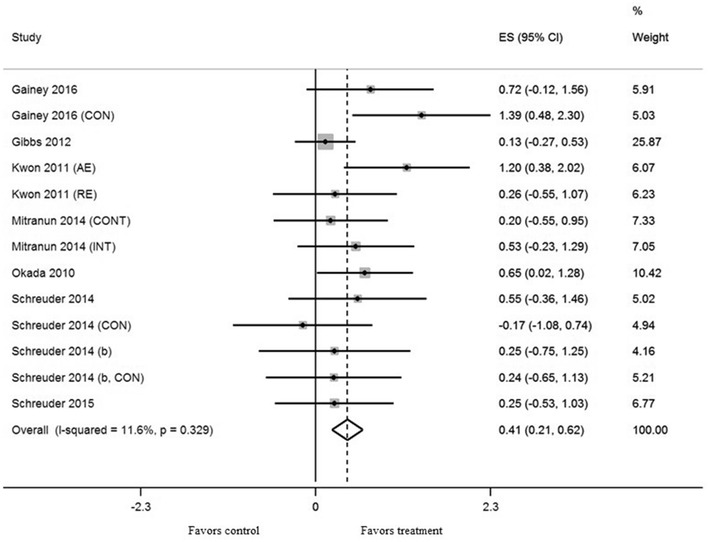
Vascular endothelial dysfunction induced by hyperglycemia and elevated insulin resistance is a potent risk factor for cardiovascular disease and likely contributes to multiple chronic disease complications associated with aging. The aim of this study was to systematically review and quantify the effects of exercise on endothelial function (EF) in type 2 diabetes (T2D). Five electronic databases were searched (until June 2017) for studies that met the following criteria: (i) randomized controlled trials; (ii) T2D aged ≥ 18 years; (iii) measured EF by brachial artery flow-mediated dilation (FMD); (iv) structured and supervised exercise intervention for ≥ 8 weeks. Thirteen cohorts, selected from eight studies (306 patients, average age 59 years), met the inclusion criteria. Exercise training significantly increased FMD (mean ES = 0.41, 95% CI 0.21–0.62, P < 0.001). Low to moderate intensity subgroups and aerobic exercise (AE) subgroups significantly increased FMD more than moderate to high intensity subgroups and combined AE and resistance exercise subgroups respectively ( P < 0.01, P < 0.05). The Grading of Recommendations Assessment, Development and Evaluation (GRADE) assessments reported that quality of evidence for all outcomes was moderate except shear rate showing low. Egger’s test showed no significant publication bias for all outcomes. Our results suggest that in patients with T2D, lower intensity exercise has physiological meaningful effects on EF, in support of the emerging concept that the lower efforts of exercise are not necessarily less cardioprotective than higher intensity training.
Overview
The claims and statistics of this paper haven’t been checked yet.
Free: it reads the open-access text and checks the first 5 claims that cite a source we can check. Create a free account to check every claim.
Integrity signals
Registry
Cites
Statistics
Figures
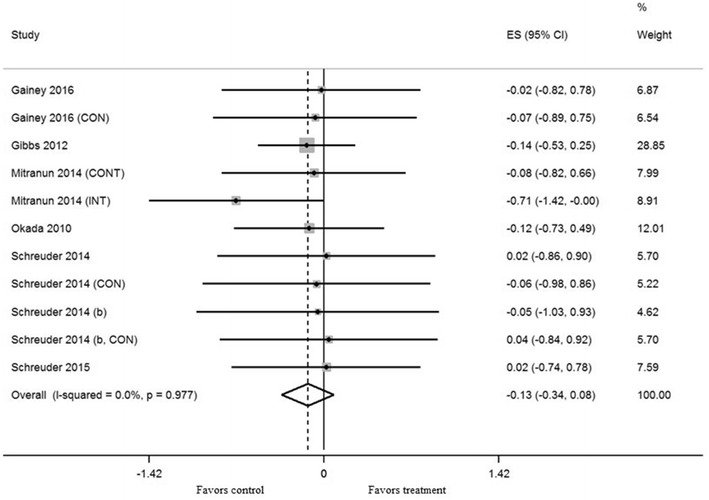
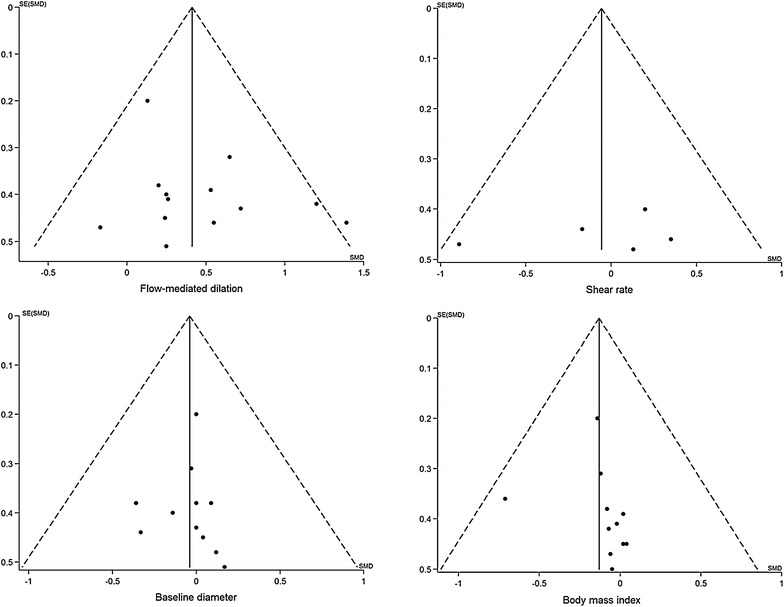
Verification
Claims the paper makes
The claims and statistics of this paper haven’t been checked yet.
Free: it reads the open-access text and checks the first 5 claims that cite a source we can check. Create a free account to check every claim.
Claims other papers make about this one
Each is checked against this paper’s own text: does it say what the citing paper says it does?
The source backs part of the claim, not all of it — or backs it for a different population, condition or comparison.
In the citing paper
“Both hyperglycemia and hyperinsulinemia alter the endothelium,27 disrupting the normal atheroprotective nitric oxide regulatory environment and encouraging a generalized proinflammatory, vasoconstrictive state predisposing to atherothrombosis.27–29”
From Clinical management of stable coronary artery disease in patients with type 2 diabetes mellitus: a scientific statement from the American Heart Association (2020) · cites this paper as [27]
Experimental — accuracy not yet measured
Self-check
Percentages, sums and reported differences re-computed from the paper’s own numbers.
The self-check needs the paper’s full text.
Citations
Cites
Measuring inconsistency in meta-analyses
Higgins, J. P. T., Thompson, S. G., Deeks, J. J., & Altman, D. G. (2003) · BMJ · doi:10.1136/bmj.327.7414.557 · Cited by 63,139 · cited 2×
“We used a fixed-effects model when homogeneity was verified or a random-effects model when heterogeneity was shown by the Q statistic [18].”
MethodBias in meta-analysis detected by a simple, graphical test
Egger, M., Smith, G. D., Schneider, M., & Minder, C. (1997) · BMJ · doi:10.1136/bmj.315.7109.629 · Cited by 56,722 · cited 1×
“Publication bias was assessed using the Egger’s regression test [21].”
MethodLiberati, A., Altman, D. G., Tetzlaff, J., Mulrow, C., Gøtzsche, P. C., Ioannidis, J. P. A., Clarke, M., Devereaux, P. J., Kleijnen, J., & Moher, D. (2009) · PLoS Medicine · doi:10.1371/journal.pmed.1000100 · Cited by 28,164 · cited 4×
“This current systematic review followed the strategy of The PRISMA Statement [13].”
MethodInfluentialGRADE: an emerging consensus on rating quality of evidence and strength of recommendations
Guyatt, G. H., Oxman, A. D., Vist, G. E., Kunz, R., Falck-Ytter, Y., Alonso-Coello, P., & Schünemann, H. J. (2008) · BMJ · doi:10.1136/bmj.39489.470347.ad · Cited by 23,305 · cited 6×
“The GRADE assessments are presented in Table 2, and quality of evidence for all outcomes was moderate except shear rate AUC showing low.”
MethodInfluential2016 Alzheimer's disease facts and figures
Alzheimer's Association (2016) · Alzheimer's & Dementia · doi:10.1016/j.jalz.2016.03.001 · Cited by 5,069
Corretti, M. C., Anderson, T. J., Benjamin, E. J., Celermajer, D., Charbonneau, F., Creager, M. A., Deanfield, J., Drexler, H., Gerhard-Herman, M., Herrington, D., et al. (2002) · Journal of the American College of Cardiology · doi:10.1016/s0735-1097(01)01746-6 · Cited by 4,604 · cited 1×
“In most clinical and physiological settings, the direct physiological or biochemical effects signaling within the endothelium are more associated with endothelial dysfunction than smooth muscle dysfunction per se [7].”
BackgroundEpidemiology of Sarcopenia among the Elderly in New Mexico
Baumgartner, R. N., Koehler, K. M., Gallagher, D., Romero, L., Heymsfield, S. B., Ross, R. R., Garry, P. J., & Lindeman, R. D. (1998) · American Journal of Epidemiology · doi:10.1093/oxfordjournals.aje.a009520 · Cited by 4,004 · cited 1×
“Furthermore, considering two facts, (1) those aged 65 and older account for the largest proportion of total T2D patients [69]; (2) muscle weakness starts at age 50 [70] and more aggravates by age 65 [71], it is certainly necessary for T2D patients, especially elderly to improve vascular function and increase muscular…”
BackgroundSome Methods for Strengthening the Common χ 2 Tests
Cochran, W. G. (1954) · Biometrics · doi:10.2307/3001616 · Cited by 3,718
2013 Alzheimer's disease facts and figures
Alzheimer's Association, Thies, W., & Bleiler, L. (2013) · Alzheimer's & Dementia · doi:10.1016/j.jalz.2013.02.003 · Cited by 3,328
Endothelial Function and Dysfunction: Testing and Clinical Relevance
Deanfield, J. E., Halcox, J. P., & Rabelink, T. J. (2007) · Circulation · doi:10.1161/circulationaha.106.652859 · Cited by 2,710
Regulatory Functions of the Vascular Endothelium
Epstein, F. H., Vane, J. R., Änggård, E. E., & Botting, R. M. (1990) · New England Journal of Medicine · doi:10.1056/nejm199007053230106 · Cited by 1,889 · cited 1×
“Vascular endothelial and smooth muscle cells release and respond to the internally generated substances including nitric oxide (NO) to regulate the vascular relaxation and tone [8].”
BackgroundAssessment of flow-mediated dilation in humans: a methodological and physiological guideline
Thijssen, D. H. J., Black, M. A., Pyke, K. E., Padilla, J., Atkinson, G., Harris, R. A., Parker, B., Widlansky, M. E., Tschakovsky, M. E., & Green, D. J. (2011) · American Journal of Physiology-Heart and Circulatory Physiology · doi:10.1152/ajpheart.00471.2010 · Cited by 1,483 · cited 11×
“Second, we performed meta-analysis based on studies targeting only T2D patients where EF is assessed by only brachial artery FMD, the major predictor for CVD and atherosclerosis, which importantly provides the validity of the results.”
BackgroundInfluentialAndrews, J., Guyatt, G., Oxman, A. D., Alderson, P., Dahm, P., Falck-Ytter, Y., Nasser, M., Meerpohl, J., Post, P. N., Kunz, R., et al. (2013) · Journal of Clinical Epidemiology · doi:10.1016/j.jclinepi.2012.03.013 · Cited by 1,416 · cited 1×
“The true effect is likely to be close to the estimate of the effect, but there is a possibility that it is substantially different; ‘low quality’—our confidence in the effect estimate is limited: the true effect may be substantially different from the estimate of the effect; ‘very low quality’—we have very little conf…”
BackgroundEffect of exercise training on endothelium‐derived nitric oxide function in humans
Green, D. J., Maiorana, A., O'Driscoll, G., & Taylor, R. (2004) · The Journal of Physiology · doi:10.1113/jphysiol.2004.068197 · Cited by 1,040
The Role of Nitric Oxide on Endothelial Function
Tousoulis, D., Kampoli, A.-M., Tentolouris Nikolaos Papageorgiou, C., & Stefanadis, C. (2012) · Current Vascular Pharmacology · doi:10.2174/157016112798829760 · Cited by 1,012 · cited 1×
“NO is a major vasodilator, and plays an additional role in inhibiting atherosclerotic inflammatory process, oxidative stress [49], and smooth muscle cell proliferation [50].”
BackgroundAge and gender comparisons of muscle strength in 654 women and men aged 20–93 yr
Lindle, R. S., Metter, E. J., Lynch, N. A., Fleg, J. L., Fozard, J. L., Tobin, J., Roy, T. A., & Hurley, B. F. (1997) · Journal of Applied Physiology · doi:10.1152/jappl.1997.83.5.1581 · Cited by 971
Inaba, Y., Chen, J. A., & Bergmann, S. R. (2010) · The International Journal of Cardiovascular Imaging · doi:10.1007/s10554-010-9616-1 · Cited by 820 · cited 1×
“EF plays a role in predicting CVD and atherosclerosis [16].”
BackgroundEndothelial Function: A Barometer for Cardiovascular Risk?
Vita, J. A., & Keaney, J. F. (2002) · Circulation · doi:10.1161/01.cir.0000028581.07992.56 · Cited by 737
Endothelial dysfunction in diabetes mellitus.
Hadi, H. A. R., & Suwaidi, J. M. S. A. (2007) · PubMed Central · Cited by 727
Vascular complications in diabetes mellitus: the role of endothelial dysfunction
Schalkwijk, C. G., & Stehouwer, C. D. A. (2005) · Clinical Science · doi:10.1042/cs20050025 · Cited by 657
Increasing Cardiovascular Disease Burden Due to Diabetes Mellitus: The Framingham Heart Study
Fox, C. S., Coady, S., Sorlie, P. D., D’Agostino, R. B., Pencina, M. J., Vasan, R. S., Meigs, J. B., Levy, D., & Savage, P. J. (2007) · Circulation · doi:10.1161/circulationaha.106.658948 · Cited by 656
Pyke, K. E., & Tschakovsky, M. E. (2005) · The Journal of Physiology · doi:10.1113/jphysiol.2005.089755 · Cited by 614 · cited 3×
“Pyke KE, Tschakovsky ME.”
MethodInfluentialShear Stress Mediates Endothelial Adaptations to Exercise Training in Humans
Tinken, T. M., Thijssen, D. H. J., Hopkins, N., Dawson, E. A., Cable, N. T., & Green, D. J. (2010) · Hypertension · doi:10.1161/hypertensionaha.109.146282 · Cited by 493
Maiorana, A., O’Driscoll, G., Cheetham, C., Dembo, L., Stanton, K., Goodman, C., Taylor, R., & Green, D. (2001) · Journal of the American College of Cardiology · doi:10.1016/s0735-1097(01)01439-5 · Cited by 488 · cited 1×
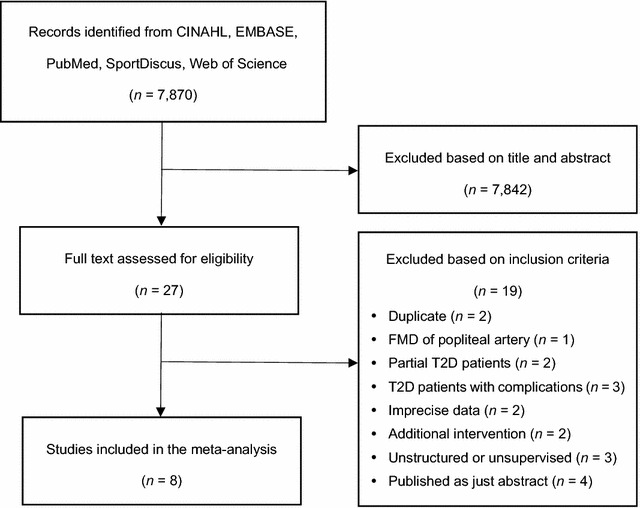
“Of these, 19 articles were excluded; two articles were duplicate [22, 23], one measured FMD of popliteal artery [24], two had patients with different kinds of diseases as well as T2D in the groups [25, 26], three had T2D patients with peripheral arterial disease or diabetic peripheral neuropathy [27–29], two did not p…”
BackgroundThe Effect of Physical Exercise on Endothelial Function
Di Francescomarino, S., Sciartilli, A., Di Valerio, V., Di Baldassarre, A., & Gallina, S. (2009) · Sports Medicine · doi:10.2165/11317750-000000000-00000 · Cited by 377 · cited 1×
“Exercise also enhances antioxidant capacity by increased expression of the antioxidant enzymes and reduced nicotinamide adenine dinucleotide oxidase activity [51], resulting in the increase in NO bioavailability [52].”
BackgroundMitranun, W., Deerochanawong, C., Tanaka, H., & Suksom, D. (2014) · Scandinavian Journal of Medicine & Science in Sports · doi:10.1111/sms.12112 · Cited by 327 · cited 11×
“Intensities ranged from low to moderate (50– 70% of HRmax [43, 45], 60–65% of VO2peak [48], and 3.”
BackgroundMethodInfluentialImpact of inactivity and exercise on the vasculature in humans
Thijssen, D. H. J., Maiorana, A. J., O’Driscoll, G., Cable, N. T., Hopman, M. T. E., & Green, D. J. (2010) · European Journal of Applied Physiology · doi:10.1007/s00421-009-1260-x · Cited by 308
Higashi, Y., & Yoshizumi, M. (2004) · Pharmacology & Therapeutics · doi:10.1016/j.pharmthera.2004.02.003 · Cited by 262 · cited 1×
“Exercise also enhances antioxidant capacity by increased expression of the antioxidant enzymes and reduced nicotinamide adenine dinucleotide oxidase activity [51], resulting in the increase in NO bioavailability [52].”
BackgroundEffects of resistance training on arterial stiffness: a meta-analysis
Miyachi, M. (2013) · British Journal of Sports Medicine · doi:10.1136/bjsports-2012-090488 · Cited by 260 · cited 3×
“Miyachi M. Effects of resistance training on arterial stiffness: a meta‑ analysis.”
BackgroundInfluentialAn Integrated View of Insulin Resistance and Endothelial Dysfunction
Muniyappa, R., Iantorno, M., & Quon, M. J. (2008) · Endocrinology and Metabolism Clinics of North America · doi:10.1016/j.ecl.2008.06.001 · Cited by 220 · cited 11×
“Second, we performed meta-analysis based on studies targeting only T2D patients where EF is assessed by only brachial artery FMD, the major predictor for CVD and atherosclerosis, which importantly provides the validity of the results.”
BackgroundInfluentialEffects of Shear Stress and Stretch on Endothelial Function
Ando, J., & Yamamoto, K. (2011) · Antioxidants & Redox Signaling · doi:10.1089/ars.2010.3361 · Cited by 200 · cited 1×
“physical activity increases local blood flow and cardiac output, which results in increased shear stress on vascular endothelium and increased NO production [9].”
BackgroundEffect of strength training on glucose tolerance and post-glucose insulin response
MILLER, W., SHERMAN, W. M., & IVY, J. L. (1984) · Medicine & Science in Sports & Exercise · doi:10.1249/00005768-198412000-00003 · Cited by 194 · cited 1×
“In particular, T2D patients should take into account that glucose uptake and glycogen storage predominantly occurred in skeletal muscle [68].”
BackgroundGreen, D. J., Walsh, J. H., Maiorana, A., Best, M. J., Taylor, R. R., & O'Driscoll, J. G. (2003) · American Journal of Physiology-Heart and Circulatory Physiology · doi:10.1152/ajpheart.00519.2003 · Cited by 178 · cited 1×
“Of these, 19 articles were excluded; two articles were duplicate [22, 23], one measured FMD of popliteal artery [24], two had patients with different kinds of diseases as well as T2D in the groups [25, 26], three had T2D patients with peripheral arterial disease or diabetic peripheral neuropathy [27–29], two did not p…”
BackgroundKim, T. N., Park, M. S., Lim, K. I., Yang, S. J., Yoo, H. J., Kang, H. J., Song, W., Seo, J. A., Kim, S. G., Kim, N. H., et al. (2011) · Diabetes Research and Clinical Practice · doi:10.1016/j.diabres.2011.06.013 · Cited by 167 · cited 1×
“Recent studies reported that low skeletal muscle mass is associated with increase in arterial stiffness [65, 66].”
BackgroundNewcomer, S. C., Thijssen, D. H. J., & GREEN, D. J. (2011) · Journal of Applied Physiology · doi:10.1152/japplphysiol.00033.2011 · Cited by 146 · cited 1×
“However, previous human studies generally reported that exercise training does not result in effects on vascular smooth muscle sensitivity to NO [55–57], and these results may be due to that almost all human studies used a single dose of vasodilator nitroglycerine for assessing vascular smooth muscle function without…”
ResultOkada, S., Hiuge, A., Makino, H., Nagumo, A., Takaki, H., Konishi, H., Goto, Y., Yoshimasa, Y., & Miyamoto, Y. (2010) · Journal of Atherosclerosis and Thrombosis · doi:10.5551/jat.3798 · Cited by 134 · cited 13×
“Intensities ranged from low to moderate (50– 70% of HRmax [43, 45], 60–65% of VO2peak [48], and 3.”
BackgroundMethodInfluentialYoshizawa, M., Maeda, S., Miyaki, A., Misono, M., Saito, Y., Tanabe, K., Kuno, S., & Ajisaka, R. (2009) · British Journal of Sports Medicine · doi:10.1136/bjsm.2008.052126 · Cited by 128 · cited 1×
“RE has been considered increasing vascular stiffness because RE can induce endothelin-1 [62], a potent vasoconstrictor.”
BackgroundGainey, A., Himathongkam, T., Tanaka, H., & Suksom, D. (2016) · Complementary Therapies in Medicine · doi:10.1016/j.ctim.2016.03.009 · Cited by 125 · cited 12×
“Intensities ranged from low to moderate (50– 70% of HRmax [43, 45], 60–65% of VO2peak [48], and 3.”
BackgroundMethodResultInfluentialWycherley, T. P., Brinkworth, G. D., Noakes, M., Buckley, J. D., & Clifton, P. M. (2008) · Diabetes, Obesity and Metabolism · doi:10.1111/j.1463-1326.2008.00863.x · Cited by 120 · cited 1×
“Of these, 19 articles were excluded; two articles were duplicate [22, 23], one measured FMD of popliteal artery [24], two had patients with different kinds of diseases as well as T2D in the groups [25, 26], three had T2D patients with peripheral arterial disease or diabetic peripheral neuropathy [27–29], two did not p…”
BackgroundKwon, H. R., Min, K. W., Ahn, H. J., Seok, H. G., Lee, J. H., Park, G. S., & Han, K. A. (2011) · Diabetes & Metabolism Journal · doi:10.4093/dmj.2011.35.4.364 · Cited by 107
Self-citationChoi, K. M., Han, K. A., Ahn, H. J., Hwang, S. Y., Hong, H. C., Choi, H. Y., Yang, S. J., Yoo, H. J., Baik, S. H., Choi, D. S., et al. (2012) · The Journal of Clinical Endocrinology & Metabolism · doi:10.1210/jc.2012-1951 · Cited by 104 · cited 1×
“Of these, 19 articles were excluded; two articles were duplicate [22, 23], one measured FMD of popliteal artery [24], two had patients with different kinds of diseases as well as T2D in the groups [25, 26], three had T2D patients with peripheral arterial disease or diabetic peripheral neuropathy [27–29], two did not p…”
BackgroundGreen, D. J., Walsh, J. H., Maiorana, A., Burke, V., Taylor, R. R., & O'Driscoll, J. G. (2004) · Journal of Applied Physiology · doi:10.1152/japplphysiol.00109.2004 · Cited by 86 · cited 1×
“Of these, 19 articles were excluded; two articles were duplicate [22, 23], one measured FMD of popliteal artery [24], two had patients with different kinds of diseases as well as T2D in the groups [25, 26], three had T2D patients with peripheral arterial disease or diabetic peripheral neuropathy [27–29], two did not p…”
BackgroundSampaio, R. A. C., Sewo Sampaio, P. Y., Yamada, M., Yukutake, T., Uchida, M. C., Tsuboyama, T., & Arai, H. (2014) · Geriatrics & Gerontology International · doi:10.1111/ggi.12206 · Cited by 84 · cited 1×
“Recent studies reported that low skeletal muscle mass is associated with increase in arterial stiffness [65, 66].”
BackgroundKluding, P. M., Pasnoor, M., Singh, R., D’Silva, L. J., Yoo, M., Billinger, S. A., LeMaster, J. W., Dimachkie, M. M., Herbelin, L. L., & Wright, D. E. (2014) · Physical Therapy · doi:10.2522/ptj.20140108 · Cited by 84
Montero, D., Walther, G., Benamo, E., Pérez‐Martin, A., & Vinet, A. (2013) · Sports Medicine · doi:10.1007/s40279-013-0085-2 · Cited by 74 · cited 1×
“[11] observed that exercise training in four studies improved EF in T2D.”
BackgroundBarone Gibbs, B., Dobrosielski, D. A., Bonekamp, S., Stewart, K. J., & Clark, J. M. (2012) · Atherosclerosis · doi:10.1016/j.atherosclerosis.2012.07.035 · Cited by 62
Joris, P. J., Zeegers, M. P., & Mensink, R. P. (2015) · Atherosclerosis · doi:10.1016/j.atherosclerosis.2014.12.056 · Cited by 56 · cited 1×
“1% increase in fasting FMD [64], our results suggest that FMD can be increased by exercise training without weight loss.”
ResultWycherley, T. P., Thompson, C. H., Buckley, J. D., Luscombe-Marsh, N. D., Noakes, M., Wittert, G. A., & Brinkworth, G. D. (2016) · Atherosclerosis · doi:10.1016/j.atherosclerosis.2016.07.908 · Cited by 51
da Silva, C. A., Ribeiro, J. P., Canto, J. C. A. U., da Silva, R. E., da Silva, G. B., Botura, E., & Malschitzky, M. A. R. (2011) · Diabetes Research and Clinical Practice · doi:10.1016/j.diabres.2011.09.034 · Cited by 51 · cited 1×
“Of these, 19 articles were excluded; two articles were duplicate [22, 23], one measured FMD of popliteal artery [24], two had patients with different kinds of diseases as well as T2D in the groups [25, 26], three had T2D patients with peripheral arterial disease or diabetic peripheral neuropathy [27–29], two did not p…”
BackgroundSchreuder, T. H. A., GREEN, D. J., Nyakayiru, J., Hopman, M. T. E., & Thijssen, D. H. J. (2014) · European Journal of Applied Physiology · doi:10.1007/s00421-014-3006-7 · Cited by 48 · cited 21×
“In particular, the combined exercise training subgroups have no high intensity RE (low: 40–50% of 1-RM [44, 47] to moderate: 12-RM [42, 46]) and moderate to high intensity AE (60% of HRmax [45], 60–90% of HRmax [47], 70–75% of HRR [41, 42, 46]).”
BackgroundMethodInfluentialType 2 Diabetes: Endothelial dysfunction and Exercise
Hwang, M.-H., & Kim, S. (2014) · Journal of Exercise Nutrition and Biochemistry · doi:10.5717/jenb.2014.18.3.239 · Cited by 44
Self-citationMadsen, S. M., Thorup, A. C. S., Overgaard, K., Bjerre, M., & Jeppesen, P. B. (2015) · Archives of Physiology and Biochemistry · doi:10.3109/13813455.2015.1087033 · Cited by 43
Allen, J. D., Stabler, T., Kenjale, A. A., Ham, K. L., Robbins, J. L., Duscha, B. D., Kraus, W. E., & Annex, B. H. (2014) · Journal of Diabetes and its Complications · doi:10.1016/j.jdiacomp.2013.08.002 · Cited by 42
Rittig, K., Hieronimus, A., Thamer, C., Machann, J., Peter, A., Stock, J., Schick, F., Fritsche, A., Stefan, N., Häring, H.-U., et al. (2010) · Atherosclerosis · doi:10.1016/j.atherosclerosis.2010.06.042 · Cited by 38
Suntraluck, S., Tanaka, H., & Suksom, D. (2017) · Journal of Aging and Physical Activity · doi:10.1123/japa.2016-0193 · Cited by 35
Way, K. L., Keating, S. E., Baker, M. K., Chuter, V., & Johnson, N. A. (2016) · Current Diabetes Reviews · doi:10.2174/1573399811666150817124601 · Cited by 33 · cited 1×
“[10] concluded that exercise training did not result in a significant effect on EF in T2D , whereas Montero et al.”
BackgroundImpact of Hypoxic Versus Normoxic Training on Physical Fitness and Vasculature in Diabetes
Schreuder, T. H. A., Nyakayiru, J., Houben, J. J. G., Thijssen, D. H. J., & Hopman, M. T. E. (2014) · High Altitude Medicine & Biology · doi:10.1089/ham.2013.1144 · Cited by 30 · cited 23×
“In particular, the combined exercise training subgroups have no high intensity RE (low: 40–50% of 1-RM [44, 47] to moderate: 12-RM [42, 46]) and moderate to high intensity AE (60% of HRmax [45], 60–90% of HRmax [47], 70–75% of HRR [41, 42, 46]).”
BackgroundMethodInfluentialEFFECT OF HIGH-INTENSITY EXERCISE ON ENDOTHELIAL FUNCTION IN PATIENTS WITH T2DM
da Silva, C. A., Vasconcelos-Filho, F. S. L., Serafim, M., Botura, E., da Rocha-e-Silva, R. C., Pacheco, C., Marques, F. A. O., & Melo, S. I. L. (2016) · Revista Brasileira de Medicina do Esporte · doi:10.1590/1517-869220162202151254 · Cited by 30
Ohara, M., Kohara, K., Tabara, Y., Ochi, M., Nagai, T., Igase, M., & Miki, T. (2014) · International Journal of Cardiology · doi:10.1016/j.ijcard.2014.03.194 · Cited by 29 · cited 1×
“[67] also reported that thigh muscle cross-sectional area in 1470 older adults significantly and independently correlated with arterial stiffness measured by brachial pulse wave velocity.”
BackgroundAerobic exercise improves measures of vascular health in diabetic peripheral neuropathy
Billinger, S. A., Sisante, J.-F. V., Alqahtani, A. S., Pasnoor, M., & Kluding, P. M. (2016) · International Journal of Neuroscience · doi:10.3109/00207454.2016.1144056 · Cited by 27
Life-long physical activity restores metabolic and cardiovascular function in type 2 diabetes
Schreuder, T. H. A., Maessen, M. F. H., Tack, C. J., Thijssen, D. H. J., & Hopman, M. T. E. (2013) · European Journal of Applied Physiology · doi:10.1007/s00421-013-2794-5 · Cited by 26
The impact of exercise training on the diameter dilator response to forearm ischaemia in healthy men
Thijssen, D. H. J., Tinken, T. M., Hopkins, N. D., Dawson, E. A., Cable, N. T., & GREEN, D. J. (2010) · Acta Physiologica · doi:10.1111/j.1748-1716.2010.02213.x · Cited by 22
Schreuder, T. H. A., Duncker, D. J., Hopman, M. T. E., & Thijssen, D. H. J. (2014) · Experimental Physiology · doi:10.1113/expphysiol.2014.081182 · Cited by 14 · cited 14×
“In particular, the combined exercise training subgroups have no high intensity RE (low: 40–50% of 1-RM [44, 47] to moderate: 12-RM [42, 46]) and moderate to high intensity AE (60% of HRmax [45], 60–90% of HRmax [47], 70–75% of HRR [41, 42, 46]).”
BackgroundMethodInfluential(2013) · Alzheimer s & Dementia · doi:10.1016/s1552-5260(13)00050-2 · Cited by 9
Scheltens, P. (2013) · Alzheimer s & Dementia · doi:10.1016/j.jalz.2013.04.007 · Cited by 5
Effect of Qigong·Baduanjin on Endothelium-dependent Arterial Dilation of Type 2 Diabetes
Li, X. (2009) · Shenyang Tiyu Xueyuan xuebao · Cited by 4
François, M. E., Durrer, C. G., & Little, J. P. (2017) · The FASEB Journal · doi:10.1096/fasebj.31.1_supplement.1035.2 · Cited by 2
EXERCISE EFFECTS ON A NOVEL MARKER OF LOCAL SHEAR STRESS AND BRACHIAL ARTERY FLOW-MEDIATED DILATION
Dhungana, R., Lima, M., Stewart, K. J., & Dobrosielski, D. A. (2012) · Journal of the American College of Cardiology · doi:10.1016/s0735-1097(12)61747-1 · Cited by 1
(2002) · PubMed
Research works printed but not linked: 2
- Cohen J Statistical power analysis for the behavioral sciences Lawrence Earlbaum Associates 1988 Hillsdale NJ 20 26
- Han KA Effects of moderate versus vigorous intensity exercise training on inflammatory markers, endothelial function, and insulin resistance in the patients with type 2 diabetes: longitudinal study in diabetes 2009 Alexandria Amer Diabetes Assoc
Cited by
Joseph, J. J., Deedwania, P., Acharya, T., Aguilar, D., Bhatt, D. L., Chyun, D. A., Di Palo, K. E., Golden, S. H., Sperling, L. S., & on behalf of the American Heart Association Diabetes Committee of the Council on Lifestyle and Cardiometabolic Health; Council on Arteriosclerosis, T. A. V. B. C. O. C. C. A. C. O. H. (2022) · Circulation · doi:10.1161/cir.0000000000001040 · Cited by 660
Arnold, S. V., Bhatt, D. L., Barsness, G. W., Beatty, A. L., Deedwania, P. C., Inzucchi, S. E., Kosiborod, M., Leiter, L. A., Lipska, K. J., Newman, J. D., et al. (2020) · Circulation · doi:10.1161/cir.0000000000000766 · Cited by 304
Man, A. W. C., Li, H., & Xia, N. (2020) · Oxidative Medicine and Cellular Longevity · doi:10.1155/2020/1496462 · Cited by 170
“In type 2 diabetic patients, lower-intensity exercise has physiological meaningful effects on endothelial function, while low to moderate intensity and aerobic exercises significantly increase flowmediated vasodilation more than moderate- to highintensity exercises and combined aerobic and resistance exercises, respec…”
BackgroundEndothelial Dysfunction and Its Clinical Implications
Poredoš, P., Visnovič-Poredoš, A., & Gregorič, I. D. (2021) · Angiology · doi:10.1177/0003319720987752 · Cited by 197
“There is clear evidence that physical activity improves EF, particularly in individuals at increased CV risk.(116,117) Physical exercise improves EF and reduces CV risk in older individuals, postmenopausal women and patients with dyslipidemia.”
BackgroundMagalhães, J. P., Melo, X., Correia, I. R., Ribeiro, R. T., Raposo, J. F., Dores, H., Bicho, M., & Sardinha, L. B. (2019) · Cardiovascular Diabetology · doi:10.1186/s12933-019-0840-2 · Cited by 84
Metadata
- Authors
- Lee, J.-H., Lee, R., Hwang, M.-H., Hamilton, M. T., & Park, Y.
- Affiliations
- Incheon National University (KR)
- University of Houston (US)
- Corresponding author
- Park, Yoonjung
- Venue
- Diabetology & Metabolic Syndrome
- Published
- 2018-03-06
- Volume
- 10
- Issue
- 1
- Pages
- 15-15
- ISSN
- 1758-5996 (ISSN-L)
- PMC
- PMC5840787
- OpenAlex
- W2797403850
- Cited by
- 74
- References
- 69
- Citations by year
- 2026: 6 · 2025: 11 · 2024: 7 · 2023: 10 · 2022: 10 · 2021: 10 · 2020: 7 · 2019: 8 · 2018: 5
- FWCI
- 1.76
- Type
- journal article
- Language
- en
- Open access
- gold
- doi.org
- Licence
- cc-by
- Locations
- Diabetology & Metabolic Syndrome (publishedVersion, cc-by)
- Europe PMC (PubMed Central) (publishedVersion, cc-by)
- PubMed Central (publishedVersion, cc-by)
- PubMed (publishedVersion)
- DOAJ (DOAJ: Directory of Open Access Journals) (submittedVersion, cc-by-sa)
- Funders
- University of Houston (US) - DOR (Small Grant Program)
- University of Houston (US)-CLASS (Research Progress Grant)
- Topics
- Health Sciences › Medicine › Physiology (medical) › Cardiovascular and exercise physiology
- Health Sciences › Medicine › Cardiology and Cardiovascular Medicine › Cardiovascular Health and Disease Prevention
- Health Sciences › Medicine › Public Health, Environmental and Occupational Health › Physical Activity and Health
- Keywords
- exercise training, endothelial function, type 2 diabetes, flow-mediated dilation, aerobic exercise, resistance training, exercise intensity, cardiovascular risk, hyperglycemia, insulin resistance
About these checks
Registry, retraction, Cites and statistics results are computed, not judged, with one exception: a printed reference that no index lists is read once by a model before it counts as a citation error. Claims are extracted by a model and kept only when their quote appears verbatim in the text; each cited source is then checked, with a model’s help, for whether it says what the claim relies on. Those verdicts can be wrong — read the claim’s quote and the cited source before relying on one.
Statistics and arithmetic are recomputed, not judged.
Confidence bands are shown only for fields calibrated on our annotated test set. None is calibrated yet, so no band is shown.
What counts as a claim ›How we measure confidence ›How we check this ›
Are you an author, or do you see a problem with this page? Request a review
Data sources
Bibliographic data: Semantic Scholar, OpenAlex, Crossref.
Contains information from the Semantic Scholar Academic Graph Datasets, made available under the ODC Attribution License (ODC-BY 1.0).
Semantic Scholar’s data is described in: Kinney, R., et al. (2023). The Semantic Scholar Open Data Platform. arXiv:2301.10140.
