

The DOI matches its Crossref record; 6 of the 6 references it cites were found in a registry or an index.
Transposable element detection from whole genome sequence data
Overview
The claims and statistics of this paper haven’t been checked yet.
Run the check — free, no account needed. It reads the open-access text and checks the sources it cites.
Integrity signals
Registry
Cites
Statistics
Figures
Verification
Claims the paper makes
The claims and statistics of this paper haven’t been checked yet.
Run the check — free, no account needed. It reads the open-access text and checks the sources it cites.
Claims other papers make about this one
Each is checked against this paper’s own text: does it say what the citing paper says it does?
In the citing paper
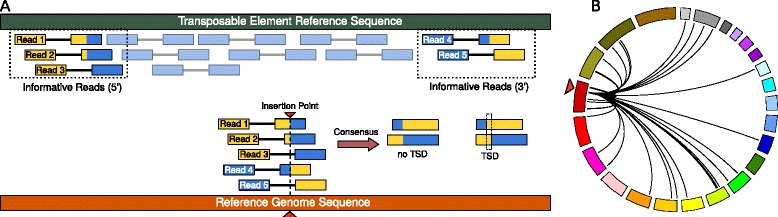
“Long read lengths also enable improved split-read mapping approaches to identify non-reference genome positions of mobile TEs [21, 34].”
From The case for not masking away repetitive DNA (2018) · cites this paper as [34]
Self-check
Percentages, sums and reported differences re-computed from the paper’s own numbers.
The self-check needs the paper’s full text.
Citations
Cites
Genome structural variation discovery and genotyping
Alkan, C., Coe, B. P., & Eichler, E. E. (2011) · Nature Reviews Genetics · doi:10.1038/nrg2958 · Cited by 1,630
Extensive sequencing of seven human genomes to characterize benchmark reference materials
Zook, J. M., Catoe, D., McDaniel, J., Vang, L., Spies, N., Sidow, A., Weng, Z., Liu, Y., Mason, C. E., Alexander, N., et al. (2016) · Scientific Data · doi:10.1038/sdata.2016.25 · Cited by 811 · cited 1×
“Establishing or extending standardised datasets such as those already developed for variant calling [72, 73] would be a further step in the right direction.”
LINE-1 elements in structural variation and disease
Beck, C. R., Garcia-Perez, J. L., Badge, R. M., & Moran, J. V. (2011) · Annual Review of Genomics and Human Genetics · doi:10.1146/annurev-genom-082509-141802 · Cited by 615
A comprehensive map of mobile element insertion polymorphisms in humans
Stewart, C., Kural, D., Strömberg, M. P., Walker, J. A., Konkel, M. K., Stütz, A. M., Urban, A. E., Grubert, F., Lam, H. Y. K., Lee, W.-P., et al. (2011) · PLoS Genetics · doi:10.1371/journal.pgen.1002236 · Cited by 307
Somatic retrotransposition in human cancer revealed by whole-genome and exome sequencing
Helman, E., Lawrence, M. S., Stewart, C., Sougnez, C., Getz, G., & Meyerson, M. (2014) · Genome Research · doi:10.1101/gr.163659.113 · Cited by 240
Molecular archeology of L1 insertions in the human genome
Szak, S. T., Pickeral, O. K., Makalowski, W., Boguski, M. S., Landsman, D., & Boeke, J. D. (2002) · Genome Biology · doi:10.1186/gb-2002-3-10-research0052 · Cited by 230 · cited 1×
“Some software tools have been developed specifically to detect TSDs [28, 29].”
Research works printed but not linked: 83
- Kazazian HH, Wong C, Youssoufian H, Scott AF, Phillips DG, Antonarakis SE. Haemophilia A resulting from de novo insertion of L1 sequences represents a novel mechanism for mutation in man. Nature. 1988;332(6160):164–6. doi: 10.1038/332164a0 . · DOI
- International Human Genome Sequencing Consortium. Initial sequencing and analysis of the human genome. Nature. 2001;409(6822):860–921. doi: 10.1038/35057062 . · DOI · Paper page
- Cordaux R, Hedges DJ, Herke SW, Batzer MA. Estimating the retrotransposition rate of human Alu elements. Gene. 2006;373:134–7. doi: 10.1016/j.gene.2006.01.019 . · DOI
- Xing J, Zhang Y, Han K, Salem AH, Sen SK, Huff CD, et al. Mobile elements create structural variation: analysis of a complete human genome. Genome Res. 2009;19(9):1516–26. doi: 10.1101/gr.091827.109 . · DOI
- Ewing AD, Kazazian HH. High-throughput sequencing reveals extensive variation in human-specific L1 content in individual human genomes. Genome Res. 2010;20(9):1262–70. doi: 10.1101/gr.106419.110 . · DOI
- Huang CRL, Schneider AM, Lu Y, Niranjan T, Shen P, Robinson MA, et al. Mobile interspersed repeats are major structural variants in the human genome. Cell. 2010;141(7):1171–82. doi: 10.1016/j.cell.2010.05.026 . · DOI
- Faulkner GJ. Retrotransposons: mobile and mutagenic from conception to death. FEBS Lett. 2011;585(11):1589–94. doi: 10.1016/j.febslet.2011.03.061 . · DOI
- Xing J, Witherspoon DJ, Jorde LB. Mobile element biology: new possibilities with high-throughput sequencing. Trends Genet. 2013;29(5):280–9. doi: 10.1016/j.tig.2012.12.002 . · DOI
- Bergman CM, Quesneville H. Discovering and detecting transposable elements in genome sequences. Brief Bioinformatics. 2007;8(6):382–92. doi: 10.1093/bib/bbm048 . · DOI
- Saha S, Bridges S, Magbanua ZV, Peterson DG. Empirical comparison of ab initio repeat finding programs. Nucleic Acids Res. 2008;36(7):2284–94. doi: 10.1093/nar/gkn064 . · DOI
- Cordaux R, Sen SK, Konkel MK, Batzer MA. Computational methods for the analysis of primate mobile elements. Methods Mol Biol. 2010;628:137–51. doi: 10.1007/978-1-60327-367-1 . · DOI
- Lerat E. Identifying repeats and transposable elements in sequenced genomes: how to find your way through the dense forest of programs. Heredity. 2010;104(6):520–33. doi: 10.1038/hdy.2009.165 . · DOI
- Hoen DR, Hickey G, Bourque G, Casacuberta J, Cordaux R, Feschotte C, et al. A call for benchmarking transposable element annotation methods. Mob DNA. 2015;6:13. doi: 10.1186/s13100-015-0044-6 . · DOI · Paper page
- Korbel JO, Urban AE, Affourtit JP, Godwin B, Grubert F, Simons JF, et al. Paired-end mapping reveals extensive structural variation in the human genome. Science. 2007;318(5849):420–6. doi: 10.1126/science.1149504 . · DOI · Paper page
- Luan DD, Korman MH, Jakubczak JL, Eickbush TH. Reverse transcription of R2bm RNA is primed by a nick at the chromosomal target site: a mechanism for non-LTR retrotransposition. Cell. 1993;72(4):595–605. doi: 10.1016/0092-8674(93)90078-5 . · DOI · Paper page
- Roy-Engel AM, Salem A-H, Oyeniran OO, Deininger L, Hedges DJ, Kilroy GE, et al. Active Alu Element “A-Tails”: Size Does Matter. Genome Res. 2002;12(9):1333–44. doi: 10.1101/gr.384802 . · DOI
- Dewannieux M, Heidmann T. Role of poly(A) tail length in Alu retrotransposition. Genomics. 2005;86(3):378–81. doi: 10.1016/j.ygeno.2005.05.009 . · DOI
- Dai L, Taylor MS, O’Donnell KA, Boeke JD. Poly(A) binding protein C1 is essential for efficient L1 retrotransposition and affects L1 RNP formation. Mol Cell Biol. 2012;32(21):4323–36. doi: 10.1128/MCB.06785-11 . · DOI
- Doucet A, Wilusz J, Miyoshi T, Liu Y, Moran J. A 3’ poly(a) tract is required for line-1 retrotransposition. Mol Cell. 2015. doi: 10.1016/j.molcel.2015.10.012 . · DOI
- Fuhrman SA, Deininger PL, LaPorte P, Friedmann T, Geiduschek EP. Analysis of transcription of the human Alu family ubiquitous repeating element by eukaryotic RNA polymerase III. Nucleic Acids Res. 1981;9(23):6439–56. doi: 10.1093/nar/9.23.6439 . · DOI
- Moran JV, Holmes SE, Naas TP, DeBerardinis RJ, Boeke JD, Kazazian HH. High frequency retrotransposition in cultured mammalian cells. Cell. 1996;87(5):917–27. · DOI · Paper page
- Esnault C, Maestre J, Heidmann T. Human LINE retrotransposons generate processed pseudogenes. Nat Gen. 2000;24(4):363–7. doi: 10.1038/74184 . · DOI
- Zhang Z, Harrison PM, Liu Y, Gerstein M. Millions of years of evolution preserved: a comprehensive catalog of the processed pseudogenes in the human genome. Genome Res. 2003;13(12):2541–58. doi: 10.1101/gr.1429003 . · DOI
- Kazazian HH, Moran JV. The impact of L1 retrotransposons on the human genome. Nat Genet. 1998;19(1):19–24. doi: 10.1038/ng0598-19 . · DOI
- Lucier J-F, Perreault J, Noël J-F, Boire G, Perreault J-P. RTAnalyzer: a web application for finding new retrotransposons and detecting L1 retrotransposition signatures. Nucleic Acids Res. 2007;35 suppl 2:269–74. doi: 10.1093/nar/gkm313 . · DOI
- Gilbert N, Lutz-Prigge S, Moran JV. Genomic deletions created upon LINE-1 retrotransposition. Cell. 2002;110(3):315–25. doi: 10.1016/S0092-8674(02)00828-0 . · DOI · Paper page
- Symer DE, Connelly C, Szak ST, Caputo EM, Cost GJ, Parmigiani G, et al. Human l1 retrotransposition is associated with genetic instability in vivo. Cell. 2002;110(3):327–38. doi: 10.1016/S0092-8674(02)00839-5 . · DOI
- Morrish TA, Garcia-Perez JL, Stamato TD, Taccioli GE, Sekiguchi J, Moran JV. Endonuclease-independent LINE-1 retrotransposition at mammalian telomeres. Nature. 2007;446(7132):208–12. doi: 10.1038/nature05560 . · DOI
- Moran JV, DeBerardinis RJ, Kazazian HH. Exon shuffling by L1 retrotransposition. Science. 1999;283(5407):1530–4. doi: 10.1126/science.283.5407.1530 . · DOI
- Goodier JL, Ostertag EM, Kazazian HH. Transduction of 3’-flanking sequences is common in L1 retrotransposition. Hum Mol Genet. 2000;9(4):653–7. doi: 10.1093/hmg/9.4.653 . · DOI
- Pickeral OK, Makalowski W, Boguski MS, Boeke JD. Frequent human genomic DNA transduction driven by LINE-1 retrotransposition. Genome Res. 2000;10(4):411–5. doi: 10.1101/gr.10.4.411 . · DOI
- Grimaldi G, Skowronski J, Singer MF. Defining the beginning and end of KpnI family segments. EMBO J. 1984;3(8):1753–9. · DOI
- Pavlı́cek A, Paces J, Zı́ka R, Hejnar J. Length distribution of long interspersed nucleotide elements (LINEs) and processed pseudogenes of human endogenous retroviruses: implications for retrotransposition and pseudogene detection. Gene. 2002;300(1-2):189–94. doi: 10.1016/S0378-1119(02)01047-8 . · DOI
- Solyom S, Ewing AD, Hancks DC, Takeshima Y, Awano H, Matsuo M, et al. Pathogenic orphan transduction created by a nonreference LINE-1 retrotransposon. Hum Mutat. 2012;33(2):369–71. doi: 10.1002/humu.21663 . · DOI
- Ostertag EM, Kazazian HH. Twin priming: a proposed mechanism for the creation of inversions in L1 retrotransposition. Genome Res. 2001;11(12):2059–65. doi: 10.1101/gr.205701 . · DOI
- Hénaff E, Zapata L, Casacuberta JM, Ossowski S. Jitterbug: somatic and germline transposon insertion detection at single-nucleotide resolution. BMC genomics. 2015;16(1):768. doi: 10.1186/s12864-015-1975-5 . · DOI
- Li H. Aligning sequence reads, clone sequences and assembly contigs with BWA-MEM. arXiv:1303.3997 [q-bio]. 2013; arXiv: 1303.3997 · arXiv
- Kent WJ. BLAT–the BLAST-like alignment tool. Genome Res. 2002;12(4):656–64. doi: 10.1101/gr.229202 . · DOI · Paper page
- Kielbasa SM, Wan R, Sato K, Horton P, Frith MC. Adaptive seeds tame genomic sequence comparison. Genome Res. 2011;21(3):487–93. doi: 10.1101/gr.113985.110 . · DOI
- Altschul SF, Gish W, Miller W, Myers EW, Lipman DJ. Basic local alignment search tool. J Mol Biol. 1990;215(3):403–10. doi: 10.1016/S0022-2836(05)80360-2 . · DOI · Paper page
- Derrien T, Estellé J, Marco Sola S, Knowles DG, Raineri E, Guigó R, et al. Fast computation and applications of genome mappability. PLoS ONE. 2012;7(1):30377. doi: 10.1371/journal.pone.003037 . · DOI
- Lee H, Schatz MC. Genomic dark matter: the reliability of short read mapping illustrated by the genome mappability score. Bioinformatics. 2012;28(16):2097–105. doi: 10.1093/bioinformatics/bts330 . · DOI
- Wang J, Song L, Grover D, Azrak S, Batzer MA, Liang P. dbRIP: a highly integrated database of retrotransposon insertion polymorphisms in humans. Hum Mutat. 2006;27(4):323–9. doi: 10.1002/humu.20307 . · DOI
- Mir AA, Philippe C, Cristofari G. euL1db: the European database of L1hs retrotransposon insertions in humans. Nucleic Acids Res. 2015;43(Database issue):43–7. doi: 10.1093/nar/gku1043 . · DOI · Paper page
- Keane TM, Wong K, Adams DJ. RetroSeq: transposable element discovery from next-generation sequencing data. Bioinformatics. 2013;29(3):389–90. doi: 10.1093/bioinformatics/bts697 . · DOI
- Nellåker C, Keane TM, Yalcin B, Wong K, Agam A, Belgard TG, et al. The genomic landscape shaped by selection on transposable elements across 18 mouse strains. Genome Biol. 2012;13(6):45. doi: 10.1186/gb-2012-13-6-r45 . · DOI
- Fiston-Lavier A-S, Carrigan M, Petrov DA, González J. T-lex: a program for fast and accurate assessment of transposable element presence using next-generation sequencing data. Nucleic Acids Res. 2011;39(6):36. doi: 10.1093/nar/gkq1291 . · DOI
- Fiston-Lavier A-S, Barrón MG, Petrov DA, González J. T-lex2: genotyping, frequency estimation and re-annotation of transposable elements using single or pooled next-generation sequencing data. Nucleic Acids Res. 2015;43(4):22. doi: 10.1093/nar/gku1250 . · DOI
- Mularoni L, Zhou Y, Bowen T, Gangadharan S, Wheelan SJ, Boeke JD. Retrotransposon Ty1 integration targets specifically positioned asymmetric nucleosomal DNA segments in tRNA hotspots. Genome Res. 2012;22(4):693–703. doi: 10.1101/gr.129460.111 . · DOI
- Guo Y, Levin HL. High-throughput sequencing of retrotransposon integration provides a saturated profile of target activity in Schizosaccharomyces pombe. Genome Res. 2010;20(2):239–48. doi: 10.1101/gr.099648.109 . · DOI
- Gangadharan S, Mularoni L, Fain-Thornton J, Wheelan SJ, Craig NL. DNA transposon Hermes inserts into DNA in nucleosome-free regions in vivo. Proc Nat Acad Sci. 2010;107(51):21966–72. doi: 10.1073/pnas.1016382107 . · DOI
- Xiong Y, Eickbush TH. The site-specific ribosomal DNA insertion element R1bm belongs to a class of non-long-terminal-repeat retrotransposons. Mol Cell Biol. 1988;8(1):114–23. doi: 10.1128/MCB.8.1.114 . · DOI
- Han M-J, Xu H-E, Zhang H-H, Feschotte C, Zhang Z. Spy: a new group of eukaryotic DNA transposons without target site duplications. Genome Biol Evol. 2014;6(7):1748–57. doi: 10.1093/gbe/evu140 . · DOI
- McClintock B. The origin and behavior of mutable loci in maize. Proc Nat Acad Sci USA. 1950;36(6):344–55. · DOI
- Sutton WD, Gerlach WL, Peacock WJ, Schwartz D. Molecular analysis of ds controlling element mutations at the adh1 locus of maize. Science (New York, NY). 1984;223(4642):1265–8. doi: 10.1126/science.223.4642.1265 . · DOI
- Döring HP, Tillmann E, Starlinger P. DNA sequence of the maize transposable element Dissociation. Nature. 1984;307(5947):127–30. doi: 10.1038/307127a0 . · DOI
- O’Rawe J, Jiang T, Sun G, Wu Y, Wang W, Hu J, et al. Low concordance of multiple variant-calling pipelines: practical implications for exome and genome sequencing. Genome Med. 2013;5(3):28. doi: 10.1186/gm432 . · DOI
- Kim SY, Speed TP. Comparing somatic mutation-callers: beyond Venn diagrams. BMC Bioinformatics. 2013;14:189. doi: 10.1186/1471-2105-14-189 . · DOI
- Ewing AD, Houlahan KE, Hu Y, Ellrott K, Caloian C, Yamaguchi TN, et al. ICGC-TCGA DREAM Somatic Mutation Calling Challenge participants, Kellen, M.R., Norman, T.C., Haussler, D., Friend, S.H., Stolovitzky, G., Margolin, A.A., Stuart, J.M., Boutros, P.C.: Combining tumor genome simulation with crowdsourcing to benchmark somatic single-nucleotide-variant detection. Nat Methods. 2015;12(7):623–30. doi: 10.1038/nmeth.3407 . · DOI
- Lee E, Iskow R, Yang L, Gokcumen O, Haseley P, Luquette LJ, et al. Cancer Genome Atlas Research Network: Landscape of somatic retrotransposition in human cancers. Science. 2012;337(6097):967–71. doi: 10.1126/science.1222077 . · DOI · Paper page
- Tubio JMC, Li Y, Ju YS, Martincorena I, Cooke SL, Tojo M, et al. Mobile DNA in cancer. Extensive transduction of nonrepetitive DNA mediated by L1 retrotransposition in cancer genomes. Science. 2014;345(6196):1251343. doi: 10.1126/science.1251343 . · DOI · Paper page
- Chaisson MJP, Huddleston J, Dennis MY, Sudmant PH, Malig M, Hormozdiari F, et al. Resolving the complexity of the human genome using single-molecule sequencing. Nature. 2015;517(7536):608–11. doi: 10.1038/nature13907 . · DOI
- Loman NJ, Quick J, Simpson JT. A complete bacterial genome assembled de novo using only nanopore sequencing data. Nat Methods. 2015;12(8):733–5. doi: 10.1038/nmeth.3444 . · DOI
- Ammar R, Paton TA, Torti D, Shlien A, Bader GD. Long read nanopore sequencing for detection of HLA and CYP2d6 variants and haplotypes. F1000Research. 2015. doi: 10.12688/f1000research.6037.2 . · DOI
- Madoui M-A, Engelen S, Cruaud C, Belser C, Bertrand L, Alberti A, et al. Genome assembly using Nanopore-guided long and error-free DNA reads. BMC Genomics. 2015;16:327. doi: 10.1186/s12864-015-1519-z . · DOI
- Jain M, Fiddes IT, Miga KH, Olsen HE, Paten B, Akeson M. Improved data analysis for the MinION nanopore sequencer. Nat Meth. 2015;12(4):351–6. doi: 10.1038/nmeth.3290 . · DOI
- Talwalkar A, Liptrap J, Newcomb J, Hartl C, Terhorst J, Curtis K, et al. SMaSH: a benchmarking toolkit for human genome variant calling. Bioinformatics. 2014;30(19):2787–95. doi: 10.1093/bioinformatics/btu345 . · DOI
- Moult J, Fidelis K, Kryshtafovych A, Schwede T, Tramontano A. Critical assessment of methods of protein structure prediction (CASP) — round x. Proteins: Struct Funct Bioinf. 2014;82:1–6. doi: 10.1002/prot.24452 . · DOI
- Wu J, Lee W-P, Ward A, Walker JA, Konkel MK, Batzer MA, et al. Tangram: a comprehensive toolbox for mobile element insertion detection. BMC Genomics. 2014;15:795. doi: 10.1186/1471-2164-15-795 . · DOI
- Hormozdiari F, Hajirasouliha I, Dao P, Hach F, Yorukoglu D, Alkan C, et al. Next-generation VariationHunter: combinatorial algorithms for transposon insertion discovery. Bioinformatics. 2010;26(12):350–7. doi: 10.1093/bioinformatics/btq216 . · DOI
- Hormozdiari F, Alkan C, Ventura M, Hajirasouliha I, Malig M, Hach F, et al. Alu repeat discovery and characterization within human genomes. Genome Res. 2011;21(6):840–9. doi: 10.1101/gr.115956.110 . · DOI
- Ewing AD, Ballinger TJ, Earl D, Broad Institute Genome Sequencing and Analysis Program and Platform, Harris CC, Ding L, et al. Retrotransposition of gene transcripts leads to structural variation in mammalian genomes. Genome Biol. 2013;14(3):22. doi: 10.1186/gb-2013-14-3-r22 . · DOI
- Quinlan AR, Clark RA, Sokolova S, Leibowitz ML, Zhang Y, Hurles ME, et al. Genome-wide mapping and assembly of structural variant breakpoints in the mouse genome. Genome Res. 2010;20(5):623–35. doi: 10.1101/gr.102970.109 . · DOI
- Robb SMC, Lu L, Valencia E, Burnette JM, Okumoto Y, Wessler SR, et al. The use of RelocaTE and unassembled short reads to produce high-resolution snapshots of transposable element generated diversity in rice. G3 (Bethesda). 2013;3(6):949–57. doi: 10.1534/g3.112.005348 . · DOI
- Jiang C, Chen C, Huang Z, Liu R, Verdier J. ITIS, a bioinformatics tool for accurate identification of transposon insertion sites using next-generation sequencing data. BMC Bioinformatics. 2015;16:72. doi: 10.1186/s12859-015-0507-2 . · DOI
- Linheiro RS, Bergman CM. Whole genome resequencing reveals natural target site preferences of transposable elements in Drosophila melanogaster. PLoS ONE. 2012;7(2):30008. doi: 10.1371/journal.pone.0030008 . · DOI
- Platzer A, Nizhynska V, Long Q. TE-Locate: A Tool to Locate and Group Transposable Element Occurrences Using Paired-End Next-Generation Sequencing Data. Biology (Basel). 2012;1(2):395–410. doi: 10.3390/biology1020395 . · DOI
- Chen K, Chen L, Fan X, Wallis J, Ding L, Weinstock G. TIGRA: a targeted iterative graph routing assembler for breakpoint assembly. Genome Res. 2014;24(2):310–7. doi: 10.1101/gr.162883.113 . · DOI
- Thung DT, de Ligt J, Vissers LEM, Steehouwer M, Kroon M, de Vries P, et al. Mobster: accurate detection of mobile element insertions in next generation sequencing data. Genome Biol. 2014;15(10):488. doi: 10.1186/s13059-014-0488-x . · DOI
- Zhuang J, Wang J, Theurkauf W, Weng Z. TEMP: a computational method for analyzing transposable element polymorphism in populations. Nucleic Acids Res. 2014;42(11):6826–38. doi: 10.1093/nar/gku323 . · DOI
- Gilly A, Etcheverry M, Madoui M-A, Guy J, Quadrana L, Alberti A, et al. TE-Tracker: systematic identification of transposition events through whole-genome resequencing. BMC Bioinformatics. 2014;15:377. doi: 10.1186/s12859-014-0377-z . · DOI
- Kroon M, Lameijer EW, Lakenberg N, Hehir-Kwa JY, Thung DT, Slagboom PE, et al. Detecting dispersed duplications in high-throughput sequencing data using a database-free approach. Bioinformatics. 2015; 621. doi: 10.1093/bioinformatics/btv621 · DOI
- Sudmant PH, Rausch T, Gardner EJ, Handsaker RE, Abyzov A, Huddleston J, et al. An integrated map of structural variation in 2,504 human genomes. Nature. 2015;526:75–81. doi: 10.1038/nature15394 . · DOI · Paper page
Cited by
Sorted by citations
Roles for retrotransposon insertions in human disease
Hancks, D. C., & Kazazian, H. H. (2016) · Mobile DNA · doi:10.1186/s13100-016-0065-9 · Cited by 670
Restricting retrotransposons: a review
Goodier, J. L. (2016) · Mobile DNA · doi:10.1186/s13100-016-0070-z · Cited by 436
The case for not masking away repetitive DNA
Slotkin, R. K. (2018) · Mobile DNA · doi:10.1186/s13100-018-0120-9 · Cited by 61
Metadata
- Authors
- Ewing, A. D.
- Venue
- Mobile DNA
- Published
- 2015-12
- Volume
- 6
- Issue
- 1
- ISSN
- 1759-8753
- PMC
- PMC4696183
- Cited by
- 155
- References
- 6
- Language
- en
- Funders
- Australian Research Council (DE150101117)
- Mater Foundation
About these checks
Registry, retraction, Cites and statistics results are computed, not judged, with one exception: a printed reference that no index lists is read once by a model before it counts as a citation error. Claims are extracted by a model and kept only when their quote appears verbatim in the text; each cited source is then checked, with a model’s help, for whether it says what the claim relies on. Those verdicts can be wrong — read the claim’s quote and the cited source before relying on one.
Statistics and arithmetic are recomputed, not judged.
Confidence bands are shown only for fields calibrated on our annotated test set. None is calibrated yet, so no band is shown.
What counts as a claim ›How we measure confidence ›How we check this ›
Are you an author, or do you see a problem with this page? Request a review
How to cite
Cite CoChat for the checks on this page, and the paper for its own findings.
- This page
- CoChat. (2026). Citation check: Transposable element detection from whole genome sequence data. https://app.cochat.ai/papers/10.1186/s13100-015-0055-3
- The paper
- Ewing, A. D. (2015). Transposable element detection from whole genome sequence data. Mobile DNA. https://doi.org/10.1186/s13100-015-0055-3
