

The feasibility of progressive resistance training in women with polycystic ovary syndrome: a pilot randomized controlled trial
Open accessThe DOI matches its Crossref record; 96 of the 98 references it cites were found in a registry or an index.
Abstract
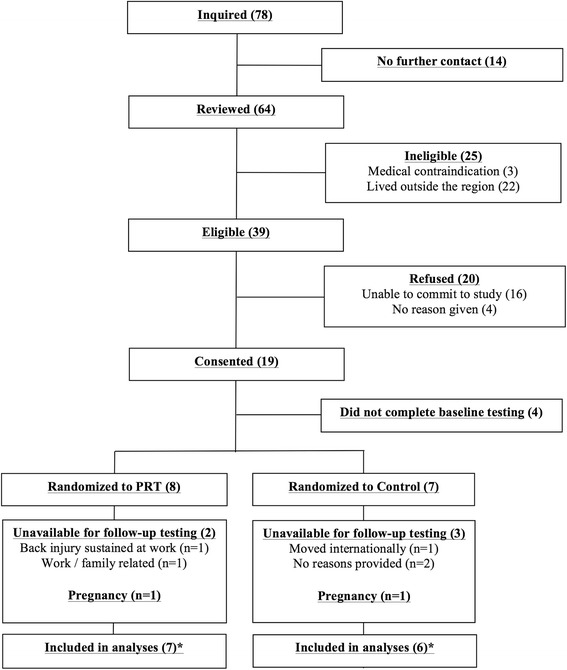
BACKGROUND: To evaluate the feasibility of executing a randomized controlled trial of progressive resistance training (PRT) in women with polycystic ovary syndrome (PCOS). METHODS: Women with PCOS were randomized to an experimental (PRT) group or a no-exercise (usual care) control group. The PRT group was prescribed two supervised and two unsupervised (home-based) training sessions per week for 12 weeks. Feasibility outcomes included recruitment and attrition, adherence, adverse events, and completion of assessments. Secondary outcomes, collected pre and post intervention, included a range of pertinent physiological, functional and psychological measures. RESULTS: Fifteen participants were randomised into the PRT group (n = 8) or control group (n = 7); five women (n = 2 in PRT group and n = 3 in control group) withdrew from the study. The most successful recruitment sources were Facebook (40 %) and online advertisement (27 %), while least successful methods were referrals by clinicians, colleagues and flyers. In the PRT group, attendance to supervised sessions was higher (95 %; standard deviation ±6 %) compared to unsupervised sessions (51 %; standard deviation ±28 %). No adverse events were attributed to PRT. Change in menstrual cycle status was not significantly different between groups over time (p = 0.503). However, the PRT group significantly increased body weight (p = 0.01), BMI (p = 0.04), lean mass (p = 0.01), fat-free mass (p = 0.005) and lower body strength (p = 0.03), while reducing waist circumference (p = 0.03) and HbA1c (p = 0.033) versus the control group. The PRT group also significantly improved across several domains of disease-specific and general health-related quality of life, depression, anxiety and exercise self-efficacy. CONCLUSION: A randomized controlled trial of PRT in PCOS would be feasible, and this mode of exercise may elicit a therapeutic effect on clinically important outcomes in this cohort. The success of a large-scale trial required to confirm these findings would be contingent on addressing the feasibility hurdles identified in this study with respect to recruitment, attrition, compliance, and collection of standardized clinical data. TRIAL REGISTRATION: Australia New Zealand Clinical Trials Registry; ACTRN12614000517673 Registered 15 May 2014.
Overview
The claims and statistics of this paper haven’t been checked yet.
Free: it reads the open-access text and checks the first 5 claims that cite a source we can check. Create a free account to check every claim.
Integrity signals
Registry
Cites
Statistics
Figures
Verification
Claims the paper makes
The claims and statistics of this paper haven’t been checked yet.
Free: it reads the open-access text and checks the first 5 claims that cite a source we can check. Create a free account to check every claim.
Claims other papers make about this one
Each is checked against this paper’s own text: does it say what the citing paper says it does?
The source backs part of the claim, not all of it — or backs it for a different population, condition or comparison.
In the citing paper
“There were insufficient data to complete sensitivity analyses; however, all three trials [108, 111, 119] were judged to have a high risk of bias in at least one domain, and only one trial had a sample size ≥ 30.”
From Exercise, or exercise and diet for the management of polycystic ovary syndrome: a systematic review and meta-analysis (2019) · cites this paper as [119]
Experimental — accuracy not yet measuredThe cited source says what the claim attributes to it.
In the citing paper
“When the greatest outliers were removed from the social functioning [119] and mental health [111] domains, both I2 values were reduced to 0%, but the effect only remained in the mental health domain (MD 17.84, 95% CI 7.33 to 28.36).”
From Exercise, or exercise and diet for the management of polycystic ovary syndrome: a systematic review and meta-analysis (2019) · cites this paper as [119]
The cited source says what the claim attributes to it.
In the citing paper
“To our knowledge, it is the first time data from 10 of the trials included in this systematic review have been meta-analysed [32, 34, 102, 104, 108–110, 117, 119] suggesting that this is the most comprehensive and up-to-date systematic review on the topic of exercise in the treatment of women with PCOS.”
From Exercise, or exercise and diet for the management of polycystic ovary syndrome: a systematic review and meta-analysis (2019) · cites this paper as [119]
Self-check
Percentages, sums and reported differences re-computed from the paper’s own numbers.
The self-check needs the paper’s full text.
Citations
Cites
(2014) · Medical Entomology and Zoology · Cited by 9,400
(2004) · Fertility and Sterility · doi:10.1016/j.fertnstert.2003.10.004 · Cited by 9,050
Progression Models in Resistance Training for Healthy Adults
(2009) · Medicine & Science in Sports & Exercise · doi:10.1249/mss.0b013e3181915670 · Cited by 4,332
The Diagnosis of Polycystic Ovary Syndrome during Adolescence
Witchel, S. F., Oberfield, S., Rosenfield, R. L., Codner, E., Bonny, A., Ibáñez, L., Pena, A., Horikawa, R., Gomez-Lobo, V., Joel, D., et al. (2015) · Hormone Research in Paediatrics · doi:10.1159/000375530 · Cited by 3,113
Progression Models in Resistance Training for Healthy Adults
(2002) · Medicine and Science in Sports and Exercise · doi:10.1097/00005768-200202000-00027 · Cited by 2,979
DONNELLY, J. E., BLAIR, S. N., JAKICIC, J. M., MANORE, M. M., RANKIN, J. W., & SMITH, B. K. (2009) · Medicine & Science in Sports & Exercise · doi:10.1249/mss.0b013e3181949333 · Cited by 2,658
Stewart, A. L. (1989) · JAMA · doi:10.1001/jama.262.7.907 · Cited by 2,085
Azziz, R., Carmina, E., Chen, Z., Dunaif, A., Laven, J. S. E., Legro, R. S., Lizneva, D., Natterson-Horowtiz, B., Teede, H. J., & Yildiz, B. O. (2016) · Nature Reviews Disease Primers · doi:10.1038/nrdp.2016.57 · Cited by 2,005
Fauser, B. C. J. M., Tarlatzis, B. C., Rebar, R. W., Legro, R. S., Balen, A. H., Lobo, R., Carmina, E., Chang, J., Yildiz, B. O., Laven, J. S. E., et al. (2012) · Fertility and Sterility · doi:10.1016/j.fertnstert.2011.09.024 · Cited by 1,976 · cited 1×
“Menstrual cycle was categorized as amenorrhea (no period for >199 days) [35], oligomenorrhea (cycle duration of 35 to 199 days) [35] or normal cycle (cycle duration of 23 to 35 days) [36].”
MethodColberg, S. R., Sigal, R. J., Fernhall, B., Regensteiner, J. G., Blissmer, B. J., Rubin, R. R., Chasan-Taber, L., Albright, A. L., & Braun, B. (2010) · Diabetes Care · doi:10.2337/dc10-9990 · Cited by 1,955
Cited by
Lifestyle changes in women with polycystic ovary syndrome
Lim, S. S., Hutchison, S. K., Van Ryswyk, E., Norman, R. J., Teede, H. J., & Moran, L. J. (2019) · Cochrane Database of Systematic Reviews · doi:10.1002/14651858.cd007506.pub4 · Cited by 725
Gordon, B. R., McDowell, C. P., Hallgren, M., Meyer, J. D., Lyons, M., & Herring, M. P. (2018) · JAMA Psychiatry · doi:10.1001/jamapsychiatry.2018.0572 · Cited by 498
Gordon, B. R., McDowell, C. P., Lyons, M., & Herring, M. P. (2017) · Sports Medicine · doi:10.1007/s40279-017-0769-0 · Cited by 306
“[44] DASS21 Moderate 12 Polycystic ovarian syndrome Usual care Female 21–32 0.”
BackgroundInfluentialKite, C., Lahart, I. M., Afzal, I., Broom, D. R., Randeva, H., Kyrou, I., & Brown, J. E. (2019) · Systematic Reviews · doi:10.1186/s13643-019-0962-3 · Cited by 155
Role of exercise training in polycystic ovary syndrome: a systematic review and meta-analysis
Benham, J. L., Yamamoto, J. M., Friedenreich, C. M., Rabi, D. M., & Sigal, R. J. (2018) · Clinical Obesity · doi:10.1111/cob.12258 · Cited by 85
“(16) 2016 PRT 60 4 Neuromuscular fatigue 12 33.”
BackgroundMethodInfluentialMoran, L. J., Tassone, E. C., Boyle, J., Brennan, L., Harrison, C. L., Hirschberg, A. L., Lim, S., Marsh, K., Misso, M. L., Redman, L., et al. (2020) · Obesity Reviews · doi:10.1111/obr.13046 · Cited by 84
Exercise and Polycystic Ovary Syndrome
Woodward, A., Klonizakis, M., & Broom, D. R. (2020) · Advances in experimental medicine and biology · doi:10.1007/978-981-15-1792-1_8 · Cited by 77
Benham, J. L., Booth, J. E., Corenblum, B., Doucette, S., Friedenreich, C. M., Rabi, D. M., & Sigal, R. J. (2021) · Clinical Endocrinology · doi:10.1111/cen.14452 · Cited by 63
dos Santos, Í. K., Ashe, M. C., Cobucci, R. N., Soares, G. M., Maranhão, T. M. D. O., & Dantas, P. M. S. (2020) · Medicine · doi:10.1097/md.0000000000019644 · Cited by 91
“Only 1 study noted changes in menstrual frequency after resistance training were reported in 3 womenwith PCOS (1 in the resistance training group and 2 in the control group)([30]) and three studies reported changes in the average menstrual cycle interval of some women participating in exercise interventions, but the r…”
BackgroundResultInfluentialO'Sullivan, D. T., Gordon, B. R., Lyons, M., Meyer, J. D., & Herring, M. P. (2023) · Psychiatry Research · doi:10.1016/j.psychres.2023.115322 · Cited by 86
“84) (Herring et al., 2011; Vizza et al., 2016), but smaller than effects found in another trial of clinically depressed young adults (Δ=1.”
Ruiz‐González, D., Cavero‐Redondo, I., Hernández‐Martínez, A., Baena‐Raya, A., Martínez-Forte, S., Altmäe, S., Fernández‐Alonso, A. M., & Soriano‐Maldonado, A. (2024) · Human Reproduction Update · doi:10.1093/humupd/dmae008 · Cited by 67
“Interventions based on resistance exercise (Almenning et al. , 2015; Vizza et al. , 2016) and its combination with aerobic exercise (Bruner et al. , 2006; Lim et al. , 2011; Curi et al. , 2012; Nybacka et al. , 2013; Share et al. , 2015; Geiker et al. , 2016) were also included.”
BackgroundAlmhmoud, H., Alatassi, L., Baddoura, M., Sandouk, J., Alkayali, M. Z., Najjar, H., & Zaino, B. (2024) · Medicine · doi:10.1097/md.0000000000038647 · Cited by 91
“[104,105] A suitably powered clinical trial is required to confirm these findings and answer novel research questions about prescribing PRT as a therapeutic intervention in PCOS.”
BackgroundExercise Recommendations for Women with Polycystic Ovary Syndrome: Is the Evidence Enough?
Stepto, N. K., Patten, R. K., Tassone, E. C., Misso, M. L., Brennan, L., Boyle, J. A., Boyle, R. A., Harrison, C. L., Hirschberg, A. L., Marsh, K. A., et al. (2019) · Sports Medicine · doi:10.1007/s40279-019-01133-6 · Cited by 55
Patten, R. K., Pascoe, M. C., Moreno‐Asso, A., Boyle, R. A., Stepto, N. K., & Parker, A. G. (2021) · BMC Public Health · doi:10.1186/s12889-021-12280-9 · Cited by 66
Alur-Gupta, S., Dokras, A., & Cooney, L. G. (2024) · Fertility and Sterility · doi:10.1016/j.fertnstert.2024.01.018 · Cited by 65
Samadi, Z., Bambaeichi, E., Valiani, M., & Shahshahan, Z. (2019) · International Journal of Preventive Medicine · doi:10.4103/ijpvm.ijpvm_360_18 · Cited by 38
“(2016).[39,40] In their study, Visa et al.”
Adherence to treatment for polycystic ovarian syndrome: A systematic review
Parker, M., Warren, A., Nair, S., & Barnard, M. (2020) · PLoS ONE · doi:10.1371/journal.pone.0228586 · Cited by 45
“2016[27] RCT • n = 15 • PCOS, age 18–42, not currently doing resistance training, not pregnant/bf, no CVD, kidney, respiratory, HT or cancer, no cigarette use for 6 months, no acute or chronic conditions that would rule out exercise, English speaking • Group 1 (n = 8): 2 supervised training sessions/week and 2 home-ba…”
BackgroundMethodResultBreyley-Smith, A., Mousa, A., Teede, H. J., Johnson, N. A., & Sabag, A. (2022) · International Journal of Environmental Research and Public Health · doi:10.3390/ijerph19031386 · Cited by 43
“Study Groups Mode Frequency(Days) Intensity Session Duration (Minutes) Intervention Duration (Weeks) Additional Intervention Bruner et al., 2006 [27] MICT + RT Treadmill walking or stationary cycling 3/7 WU: 10 min MICT: 30 min at 70–85% HRmax CD: 10 min 40 12 Participants in both groups were encouraged to attend 1 h…”
MethodInfluentialKogure, G. S., Silva, R. C., Furtado, C. L. M., Ribeiro, V. B., Pedroso, D. C. C., de Melo, A. S., Ferriani, R. A., & dos Reis, R. M. (2018) · The Journal of Strength and Conditioning Research · doi:10.1519/jsc.0000000000002714 · Cited by 39
“Although we were limited to the use anthropometry (skinfold and circumference measures), we did demonstrate that our 16-week PRT program improved body composition and hypertrophy indicators among all women in our study group, regardless of PCOS status, in agreement with other findings in PCOS, though with distinct met…”
BackgroundResultInfluentialCavero‐Redondo, I., Peleteiro, B., Álvarez‐Bueno, C., Artero, E. G., Garrido‐Miguel, M., & Martínez‐Vizcaíno, V. (2018) · Sports Medicine · doi:10.1007/s40279-018-0861-0 · Cited by 38
Cowley, E. S., & Schneider, J. (2025) · PLoS ONE · doi:10.1371/journal.pone.0316756 · Cited by 43
Marinelli, R., Parker, A. G., Levinger, I., Bourke, M., Patten, R. K., & Woessner, M. N. (2024) · Early Intervention in Psychiatry · doi:10.1111/eip.13528 · Cited by 43
“…P Herring et al., 2011; Wunram et al., 2018), two trials had participants not meeting the resistance training guidelines (Gordon et al., 2022; Vizza et al., 2016) and four trials did not report any baseline physical activity (Matthew P Herring et al., 2011; Hilyer et al., 1982; Nazari et…”
InfluentialMohamed, A. H., Albasheer, O., Ghoniem, M. A., Abdalghani, N., Ayish, F., Abdelwahab, S. İ., Abdelmageed, M. M., Hakami, A. M. S., Khormi, A. H., Altraifi, A. A. A., et al. (2025) · Medicine · doi:10.1097/md.0000000000041178 · Cited by 38
Exercise in polycystic ovarian syndrome: An evidence-based review
Chandrasekaran, B., Shetty, D. R., Singh, A., & Oliverraj, J. (2017) · Saudi Journal of Sports Medicine · doi:10.4103/sjsm.sjsm_10_17 · Cited by 28
Kite, C., Parkes, E., Taylor, S. R., Davies, R. W., Lagojda, L., Brown, J. E. P., Broom, D. R., Kyrou, I., & Randeva, H. S. (2022) · Medical Sciences · doi:10.3390/medsci10040053 · Cited by 22
“The mean age of included participants ranged from 27 ± 5 [26] to 31.”
BackgroundMethodResultInfluentialMotaharinezhad, F., Emadi, A., Hosnian, M., Kheirkhahan, A., Jayedi, A., & Ehsani, F. (2024) · BMC Women s Health · doi:10.1186/s12905-024-03297-4 · Cited by 22
“4 trials were rated to have a low risk of bias (good quality) [8, 9, 37, 41], 7 trials were rated to have fair quality (some concerns) [7, 32–34, 39, 40, 43], and the other 8 trials as high risk of bias (poor quality) [5, 6, 30, 31, 35, 36, 38, 42] (Supplementary Table S3).”
BackgroundMethodInfluentialCan resistance training improve the symptoms of polycystic ovary syndrome?
Pericleous, P., & Stephanides, S. (2018) · BMJ Open Sport & Exercise Medicine · doi:10.1136/bmjsem-2018-000372 · Cited by 23
“We also feel that more priority was given to aerobic exercise and that resistance training of two times a week was probably not enough, and this could be the reason why there are no differences between the two exercise groups, with only one exception.(38) When it comes to sit-ups, even though it is an important additi…”
BackgroundLi, Y., Peng, C., Zhang, M., Xie, L., Gao, J., Ying-ji, W., Gao, Y., & Hou, L. (2022) · Evidence-based Complementary and Alternative Medicine · doi:10.1155/2022/4291477 · Cited by 21
Speelman, D. L. (2019) · Journal of Osteopathic Medicine · doi:10.7556/jaoa.2019.006 · Cited by 20
Li, Z., Wang, X., Guan, Y., Yu, X., Liu, J., & Zhang, Z. (2017) · Experimental and Therapeutic Medicine · doi:10.3892/etm.2017.5114 · Cited by 15
“However, the blood flow parameters used in the evaluation of endometrial receptivity by vaginal color Doppler ultrasonography have not been determined (10).”
Salehpour, S., Nazari, L., Hoseini, S., Saharkhiz, N., Ghazi, F., & Sohrabi, M.-R. (2016) · International Journal of Endocrinology · doi:10.1155/2016/7493147 · Cited by 13
Kogure, G. S., Furtado, C. L. M., Pedroso, D. C. C., Ribeiro, V. B., Eiras, M. C., Silva, R. C., Caetano, L. C., Ferriani, R. A., Calado, R. T., & dos Reis, R. M. (2019) · Journal of Physical Activity and Health · doi:10.1123/jpah.2018-0256 · Cited by 14
Rao, M., Khan, A., & Adnan, Q. U. A. (2022) · Obstetrics & Gynecology Science · doi:10.5468/ogs.22002 · Cited by 20
“[22] studied the effect of progressive resistance training on PCOS symptoms.”
BackgroundPandit, U., Singh, M., Ranjan, R., & Gupta, V. (2022) · Cureus · doi:10.7759/cureus.23994 · Cited by 17
“Using the homeostatic model of assessment (HOMA), the effect of exercise on insulin sensitivity was observed in several studies, finding a significant decrease in insulin resistance in the exercise group, [19,20], and few studies finding no significant change in HOMA-IR before and after exercise and studies [21,22].”
MethodExercise and reproductive function in polycystic ovary syndrome: protocol of a systematic review
dos Santos, Í. K., Nunes, R. D. L., Soares, G. M., Maranhão, T. M. D. O., & Dantas, P. M. S. (2017) · Systematic Reviews · doi:10.1186/s13643-017-0666-5 · Cited by 9
“Background Polycystic ovarian syndrome (PCOS) is an endocrinopathy that affects women of reproductive age, whose main clinical features include menstrual dysfunction, infertility, clinical, and biochemical hyperandrogenism [1, 2].”
BackgroundProgressive Resistance Training as Complementary Therapy for Polycystic Ovarian Syndrome
Kogure, G. S., & dos Reis, R. M. (2017) · Revista Brasileira Ginecologia e Obstetrícia · doi:10.1055/s-0037-1602705 · Cited by 14
“24 There was also a signi fi cant improvement in body composition without reductions in the total weight of lean women, regardless of the type of training when high-intensity interval aerobic physical exercise and PRT were compared.”
Low, S. L. K., Cheema, B. S., Tan, H. Y., Birling, Y., & Zhu, X. (2020) · Integrative Cancer Therapies · doi:10.1177/1534735420977671 · Cited by 10
Self-citationChang, Y., Wang, H., Zhang, X., Shan, S., & Liu, H. (2025) · Frontiers in Psychology · doi:10.3389/fpsyg.2025.1655855 · Cited by 9
Resistance Training as Therapeutic Management in Women with PCOS: What is the Evidence?
Wright, P. J., Corbett, C. F., Pinto, B. M., Dawson, R. M., & Wirth, M. D. (2021) · International journal of exercise science · doi:10.70252/neex8658 · Cited by 18
“, 2016 (37) Assess feasibility of large scale PRT intervention for women w/PCOS Feasibility nonrandomi zed control PRT = 8 Control Group = 7 Age Range: 1842 3 months RT; 2 supervised sess/wk + 2 home-based sess/wk of 1hr ea recruitment, attrition, adherence, adverse events, isometric strength, cyclicity, anthropometri…”
BackgroundResultInfluentialKiel, I. A., Lionett, S., Parr, E. B., Jones, H., Røset, M. A., Salvesen, Ø. O., Hawley, J. A., Vanky, E., & Moholdt, T. T. (2022) · PubMed · doi:10.1249/mss.0000000000002849 · Cited by 15
“, strength training) on clinical outcomes among women with PCOS (22,35,41,42).”
BackgroundHu, S., Shen, Q., Li, Z., He, T., Luo, Y., Tu, P., Yan, C., & Lei, J. (2026) · Reproductive Biology and Endocrinology · doi:10.1186/s12958-026-01563-8 · Cited by 6
“Specifically, adverse events were mainly collected via self-reported structured questionnaires [42, 43, 56] or through active monitoring by the research team [52, 53], while one study did not specify its reporting methodology [69].”
Lifestyle Interventions for Sarcopenic Obesity in Polycystic Ovary Syndrome
Chilibeck, P. D., Kazemi, M., McBreairty, L. E., & Zello, G. A. (2020) · Springer eBooks · doi:10.1007/978-3-030-53370-0_67 · Cited by 5
Benham, J. L., Booth, J. E., Friedenreich, C. M., Rabi, D. M., & Sigal, R. J. (2021) · Journal of Medical Internet Research · doi:10.2196/25208 · Cited by 4
“Facebook advertisements were used successfully as a recruitment strategy in a previous trial involving women with PCOS [5], which used several recruitment strategies including Facebook advertisements, online advertisements, referrals, and flyers.”
Tan, Y., Liu, Y., Koga, A., Yuan, Y., Yu, H., & Liu, J. (2025) · Healthcare · doi:10.3390/healthcare13172132 · Cited by 7
Cavalcante, D. C. B., Scandolara, T. B., Kogure, G. S., Rodrigues, C. G., Verruma, C. G., de Moraes, M. O., dos Reis, R. M., Cavalcante, M. B., & Furtado, C. L. M. (2025) · Revista Brasileira Ginecologia e Obstetrícia · doi:10.61622/rbgo/2025rbgo56 · Cited by 7
“However, an unexpected significant increase in fasting blood glucose levels was found within the experimental group (p= 0.03) (30) .”
InfluentialWang, L., Liu, K., Wang, G. G., & Yang, L. (2025) · Nursing and Health Sciences · doi:10.1111/nhs.70209 · Cited by 4
Shah, C. S. C., & Tahakik, S. (2022) · International Journal of Health Sciences and Research · doi:10.52403/ijhsr.20220918 · Cited by 2
Khalafi, M., Fatolahi, S., Rahmatpanah, G., Symonds, M. E., Rosenkranz, S. K., Dinizadeh, F., & Batrakoulis, A. (2026) · BMC Women s Health · doi:10.1186/s12905-025-04240-x · Cited by 2
Wan, K., Dai, Z.-H., Lei, E., Wong, P.-S., Wang, Y.-Y., Yu, A. P., Lin, F., Huang, Y., Duncan, W. C., Chan, K. Y., et al. (2026) · The Lancet Obstetrics Gynaecology & Women s Health · doi:10.1016/s3050-5038(25)00219-5 · Cited by 2
Role of structured exercise programs in polycystic ovary syndrome: a systematic review
Bansal, A., Sethi, J., & Parasher, R. K. (2023) · Physical Therapy Reviews · doi:10.1080/10833196.2022.2163076 · Cited by 2
Fitness Assessments of Women with Polycystic Ovary Syndrome: A Prospective Process Feasibility Study
Wright, P. J., Corbett, C. F., Dawson, R. M., Wirth, M. D., & Pinto, B. M. (2023) · Clinical and Experimental Obstetrics & Gynecology · doi:10.31083/j.ceog5004088 · Cited by 2
“Resistance training studies for women with PCOS have resulted in improved strength measures, although core strength was not directly measured [37,38].”
BackgroundWayadande, A., & Honklas, P. (2023) · Journal of Ecophysiology and Occupational Health · doi:10.18311/jeoh/2023/35375 · Cited by 2
Santos, M. P., Azevedo‐Martins, A. K., Rodrigues, A. O., Aquino, N. S. S., & Evangelista, F. S. (2025) · Metabolism and Target Organ Damage · doi:10.20517/mtod.2024.97 · Cited by 3
Hu, R., Zhang, L., Zhu, J., Zhao, S., Yin, L., & Hu, J. (2025) · PeerJ · doi:10.7717/peerj.19238 · Cited by 4
Chen, X., Liu, Y., Chen, D., & Chen, L. (2026) · PeerJ · doi:10.7717/peerj.21507 · Cited by 1
“…2022 ; Kumari et al., 2025 ; Lopes et al., 2018 ; Mohammadi, Monazzami & Alavimilani, 2023 ; Nasiri et al., 2025 ; Philbois et al., 2022 ; Ribeiro et al., 2020 , 2021a , 2021b ; Sverrisdottir et al., 2009 ; Turan et al., 2015 ; Vigorito et al., 2007 ; Vizza et al., 2016 ; Wu et al., 2021 ) (Fig.”
Health Management Strategies for Polycystic Ovary Syndrome Patients
常, 笛. (2023) · Advances in Clinical Medicine · doi:10.12677/acm.2023.1371659 · Cited by 1
Marinelli, R., Parker, A. G., Levinger, I., & Woessner, M. N. (2024) · doi:10.22541/au.170664211.10531511/v1 · Cited by 1
Patten, R. K. (2021) · Victoria University Research Repository (Victoria University) · Cited by 5
Physical activity and cardiovascular disease risk in women with polycystic ovary syndrome
Woodward, A. (2021) · Sheffield Hallam University · doi:10.7190/shu-thesis-00398 · Cited by 2
Exercise interventions in women with Polycystic Ovary Syndrome
Moreno‐Asso, A., Patten, R. K., & McIlvenna, L. C. (2022) · Elsevier eBooks · doi:10.1016/b978-0-323-89843-0.00020-9 · Cited by 1
Mercy, S., Mathew, G., Ploriya, S., & Deepa (2022) · International Journal of Psychiatric Nursing · doi:10.37506/ijpn.v8i2.18230
常, 笛. (2023) · Advances in Clinical Medicine · doi:10.12677/acm.2023.1371569
Vizza, L. (2024) · Obstetrics and gynecology. · doi:10.5772/intechopen.113149 · Cited by 2
Self-citationKaur, A. P., Dadhich, M., & Wadhwa, D. N. (2024) · International Journal of Health Sciences and Research · doi:10.52403/ijhsr.20240531
“(16) Owing to diagnostic challenges and the absence of standardized criteria, there's a scarcity of prevalence studies within the community regarding PCOS.”
BackgroundPolycystic ovary syndrome: pathogenic mechanisms and nutritional therapeutic strategies
Zhao, Y., Liu, B., Zhao, J., Liu, Y., Pan, H., Yuan, Y., Tian, X., Qiao, W., Zhang, Z., & Chen, L. (2024) · Food Science and Human Wellness · doi:10.26599/fshw.2024.9250269 · Cited by 1
Wright, P. J., Corbett, C. F., Pinto, B. M., Wirth, M. D., & Dawson, R. M. (2025) · Women s Health · doi:10.1177/17455057251357061 · Cited by 2
“3,8 15 However, 40% of women with PCOS engage in regular PA, and about 60% are sedentary.”
Wright, P. J., Corbett, C. F., & Wang, K. (2025) · Advances in Public Health · doi:10.1155/adph/3876104
Yin, M. X. C., Huang, M.-Y., Zhao, Y.-F., & Chen, X.-Y. (2026) · Best Practice & Research Clinical Obstetrics & Gynaecology · doi:10.1016/j.bpobgyn.2026.102719 · Cited by 1
Varga, N., Kis-György, R., Ajkay-Donáth, L., Tapody, Z. I., Vágvölgyi-Sümegi, E., Körtési, T., & Nagy-Grócz, G. (2026) · Biomolecules · doi:10.3390/biom16030440 · Cited by 1
“In PCOS, exercise interventions are consistently associated with improvements in psychological outcomes, including reduced anxiety and depressive symptoms, which are highly prevalent in this population [130].”
Zou, K., Ping, Y., Wei, Q., Zhao, X., Wang, Y., Wu, D., Chen, L., Wang, S., & Feng, X. (2026) · Journal of obstetrics and gynaecology research · doi:10.1111/jog.70477
Zhang, X., Liang, Z., Sabag, A., Patten, R. K., Kang, Y., Yin, M., Xu, K., Kuang, Y., Li, M., & Li, S. (2026) · Human Reproduction Update · doi:10.1093/humupd/dmag032
Prasad, A., Kishan, A., & Keezhadath, S. (2026) · Metabolites · doi:10.3390/metabo16100758
“The primary outcome would be change in %ASMM at 6 months, with secondary outcomes of phenotype-stratified grip, all four biomarker panels, and the fibre-type panel [56,62,80].”
Influential
Metadata
- Authors
- Vizza, L., Smith, C. A., Swaraj, S., Agho, K., & Cheema, B. S.
- Affiliations
- Western Sydney University (AU)
- Concord Repatriation General Hospital (AU)
- Corresponding author
- Vizza, Lisa
- Venue
- BMC Sports Science, Medicine and Rehabilitation
- Published
- 2016-05-11
- Volume
- 8
- Issue
- 1
- Pages
- 14-14
- ISSN
- 2052-1847 (ISSN-L)
- PMC
- PMC4865007
- OpenAlex
- W2366353819
- Cited by
- 74
- References
- 98
- Citations by year
- 2026: 9 · 2025: 10 · 2024: 8 · 2023: 7 · 2022: 10 · 2021: 6 · 2020: 6 · 2019: 6 · 2018: 5 · 2017: 6 · 2016: 1
- FWCI
- 7.98
- Type
- journal article
- Language
- en
- Open access
- gold
- doi.org
- Licence
- cc-by
- Locations
- BMC Sports Science Medicine and Rehabilitation (publishedVersion, cc-by)
- PubMed Central (publishedVersion, cc-by)
- PubMed (publishedVersion)
- Funders
- University of Western Sydney
- Topics
- Health Sciences › Medicine › Reproductive Medicine › Ovarian function and disorders
- Health Sciences › Medicine › Public Health, Environmental and Occupational Health › Physical Activity and Health
- Health Sciences › Medicine › Orthopedics and Sports Medicine › Sports Performance and Training
- Keywords
- polycystic ovary syndrome, progressive resistance training, exercise intervention, trial feasibility, home-based exercise, supervised exercise, body composition, waist circumference, HbA1c, health-related quality of life, anxiety and depression, exercise self-efficacy, menstrual cycle, women's health, recruitment sources, exercise adherence, adverse events
About these checks
Registry, retraction, Cites and statistics results are computed, not judged, with one exception: a printed reference that no index lists is read once by a model before it counts as a citation error. Claims are extracted by a model and kept only when their quote appears verbatim in the text; each cited source is then checked, with a model’s help, for whether it says what the claim relies on. Those verdicts can be wrong — read the claim’s quote and the cited source before relying on one.
Statistics and arithmetic are recomputed, not judged.
Confidence bands are shown only for fields calibrated on our annotated test set. None is calibrated yet, so no band is shown.
What counts as a claim ›How we measure confidence ›How we check this ›
Are you an author, or do you see a problem with this page? Request a review
Data sources
Bibliographic data: Semantic Scholar, OpenAlex, Crossref.
Contains information from the Semantic Scholar Academic Graph Datasets, made available under the ODC Attribution License (ODC-BY 1.0).
Semantic Scholar’s data is described in: Kinney, R., et al. (2023). The Semantic Scholar Open Data Platform. arXiv:2301.10140.
