

Facebook use and its effects on the life of health science students in a private medical college of Nepal
Open accessThe DOI matches its Crossref record; 30 of the 30 references it cites were found in a registry or an index.
Abstract
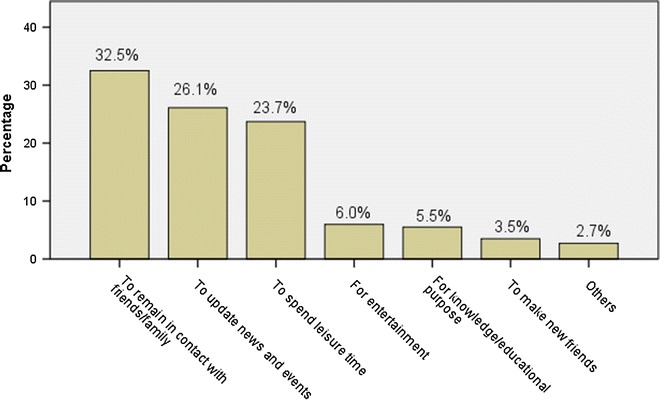
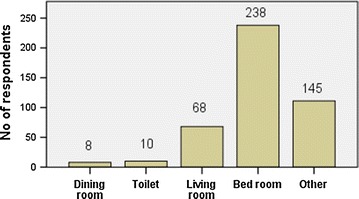
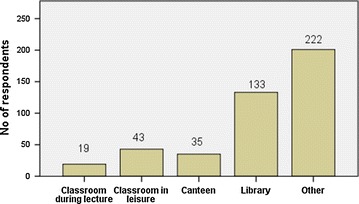
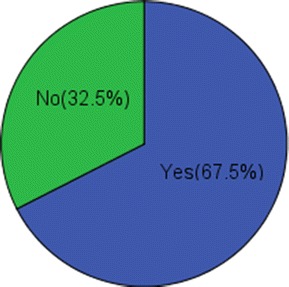
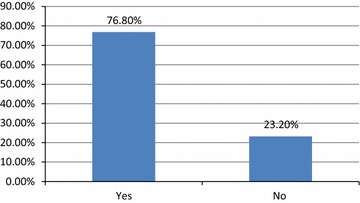
BACKGROUND: Facebook, a popular social networking site, has been used by people of different ages and professions for various purposes. Its use in the field of medical education is increasing dramatically. At the same time, the pros and cons of facebook use among the health science students has attracted the attention of educators. The data regarding its use and the effect on the life of Nepalese health science students has not yet been documented. Therefore, this study is carried out to evaluate the effect of facebook use on social interactions, behaviour, academics, and the health of students in a medical college of Nepal. RESULTS: A cross-sectional descriptive study conducted among medical, dental, nursing and allied health science students using self-administered questionnaire. The study showed that 98.2 % of participants were facebook users. Among 452 respondents, 224 and 228 were male and female respectively, with a mean age of 20.2 ± 1.2 years. The main reason for using facebook was to remain in contact with family and friend (32 %), while its use for the academic purpose was only 5 %. However, 80.8 % of students acknowledged ease in acquiring academic materials from others, through facebook. One-fourth of the students acknowledged that they are using facebook late at night on a regular basis, while surprisingly 4.2 % of the students admitted accessing facebook during the classroom lectures. Almost two-third of the users, further admitted that facebook has had a negative impact on their studies. Burning eyes (21 %), disturbed sleep (19 %), and headache (16 %) were the most common adverse health effects reported by the facebook users. Many students (71.4 %) tried and most of them (68.7 %) succeeded, in reducing time spent on facebook, to allow for increased time devoted to their studies. CONCLUSION: The widespread use of facebook among the health science students, was found to have both positive and negative effects on their academics, social life, and health.
Overview
The claims and statistics of this paper haven’t been checked yet.
Free: it reads the open-access text and checks the first 5 claims that cite a source we can check. Create a free account to check every claim.
Integrity signals
Registry
Cites
Statistics
Figures
Verification
Claims the paper makes
The claims and statistics of this paper haven’t been checked yet.
Free: it reads the open-access text and checks the first 5 claims that cite a source we can check. Create a free account to check every claim.
Self-check
Percentages, sums and reported differences re-computed from the paper’s own numbers.
The self-check needs the paper’s full text.
Citations
Cites
Ellison, N. B., Steinfield, C., & Lampe, C. (2007) · Journal of Computer-Mediated Communication · doi:10.1111/j.1083-6101.2007.00367.x · Cited by 9,939 · cited 1×
“Most of the students spent time on facebook on average, less than 1–2 h daily, which was consistent with the findings reported by others [18, 19].”
Result(2006) · BiblioBoard Library Catalog (Open Research Library) · Cited by 3,173
College students' social networking experiences on Facebook
Pempek, T. A., Yermolayeva, Y. A., & Calvert, S. L. (2009) · Journal of Applied Developmental Psychology · doi:10.1016/j.appdev.2008.12.010 · Cited by 2,081 · cited 1×
“Similar to the previous studies [2, 6, 22], a small number of students reported that relevant academic information was accessible through the facebook.”
ResultOnline Social Networking and Addiction—A Review of the Psychological Literature
Kuss, D. J., & Griffiths, M. D. (2011) · International Journal of Environmental Research and Public Health · doi:10.3390/ijerph8093528 · Cited by 2,038 · cited 1×
“It may also be associated with relationship problems, personal loneliness, and depression [23, 24].”
BackgroundDevelopment of a Facebook Addiction Scale
Andreassen, C. S., Torsheim, T., Brunborg, G. S., & Pallesen, S. (2012) · Psychological Reports · doi:10.2466/02.09.18.pr0.110.2.501-517 · Cited by 1,884 · cited 1×
“As these are some of the key components in determining the facebook addiction according to ‘Bergen Facebook Addiction Scale (BFAS)’ [26], this supports the theory that these participants possibly have some degree of facebook addiction.”
BackgroundRaacke, J., & Bonds-Raacke, J. (2008) · CyberPsychology & Behavior · doi:10.1089/cpb.2007.0056 · Cited by 1,577
Confronting the challenges of participatory cultures (media education for the 21st century)
Jenkins, H., Purushotma, R., Weigel, M., Clinton, K., & Robison, A. J. (2009) · Cited by 1,563
Internet Addiction: A New Clinical Phenomenon and Its Consequences
Young, K. S. (2004) · American Behavioral Scientist · doi:10.1177/0002764204270278 · Cited by 1,088
Kim, K., Ryu, E., Chon, M.-Y., Yeun, E.-J., Choi, S.-Y., Seo, J.-S., & Nam, B.-W. (2006) · International Journal of Nursing Studies · doi:10.1016/j.ijnurstu.2005.02.005 · Cited by 790 · cited 1×
“These effects include changes in self-esteem [8], sleep disorders, and high percentage of depression among students [9].”
BackgroundThe uses and abuses of Facebook: A review of Facebook addiction
Ryan, T., Chester, A., Reece, J., & Xenos, S. (2014) · Journal of Behavioral Addictions · doi:10.1556/jba.3.2014.016 · Cited by 714 · cited 1×
“While one-fourth of users in this study were found to be accessing facebook during leisure time, when accessed regularly, there is potential risk for developing addictive behaviours, through the development of poor self-discipline and task avoidance [16].”
Background
Research works printed but not linked: 2
- Sharifah SZS Siti ZO Jusang B Mohd NO Facebook addiction among female university students Revista de Administratie Publica si Politici Sociale 2011 2 7 95 109
- Sierra JC Martin-Ortiz JD Navarro C Calidad del suen˜o en estudiantesuniversitarios: importancia de la higienedelsuen˜o Salud Mental 2002 25 6 35 43
Cited by
Gupta, M., & Sharma, A. (2021) · World Journal of Clinical Cases · doi:10.12998/wjcc.v9.i19.4881 · Cited by 316
Azizi, S. M., Soroush, A., & Khatony, A. (2019) · BMC Psychology · doi:10.1186/s40359-019-0305-0 · Cited by 306
“The overuse of social networks has positive and negative academic, social, and health consequences for the students [35].”
BackgroundSocial media in undergraduate medical education: A systematic review
Guckian, J., Utukuri, M., Asif, A., Burton, O. E., Adeyoju, J., Oumeziane, A., Chu, T. S. M., & Rees, E. L. (2021) · Medical Education · doi:10.1111/medu.14567 · Cited by 190
Problematic internet use among students in South-East Asia: Current state of evidence
Balhara, Y. S., Mahapatra, A., Sharma, P., & Bhargava, R. (2018) · Indian Journal of Public Health · doi:10.4103/ijph.ijph_288_17 · Cited by 115
Lahiry, S., Choudhury, S., Chatterjee, S., & Hazra, A. (2019) · Journal of Education and Health Promotion · doi:10.4103/jehp.jehp_365_18 · Cited by 57
Chowdhury, A. I., Ghosh, S., Hasan, M. F., Siam, K. K. A., & Azad, F. (2020) · Journal of preventive medicine and hygiene · doi:10.15167/2421-4248/jpmh2020.61.4.1634 · Cited by 86
Swain, R. K., & Pati, A. K. (2019) · Biological Rhythm Research · doi:10.1080/09291016.2019.1620487 · Cited by 59
Salari, N., Zarei, H., Rasoulpoor, S., Ghasemi, H., Hosseinian-Far, A., & Mohammadi, M. (2025) · Public Health in Practice · doi:10.1016/j.puhip.2025.100584 · Cited by 46
“The use of these networks can have both positive and negative effects on students ’ academic performance [12].”
Undergraduate student nurses' attitudes towards using social media websites: A study from Jordan
Al‐Shdayfat, N. (2018) · Nurse Education Today · doi:10.1016/j.nedt.2018.03.017 · Cited by 46
Yadav, R. K., Baral, S., Khatri, E., Pandey, S., Pandeya, P., Neupane, R., Yadav, D. K., Marahatta, S. B., Kaphle, H. P., Poudyal, J. K., et al. (2021) · Frontiers in Public Health · doi:10.3389/fpubh.2021.580561 · Cited by 40
Stangl, F. J., Riedl, R., Kiemeswenger, R., & Montag, C. (2023) · Frontiers in Psychology · doi:10.3389/fpsyg.2023.1141663 · Cited by 22
Jalil, A., Mahmood, Q. K., & Fischer, F. (2020) · BMC Health Services Research · doi:10.1186/s12913-020-05681-w · Cited by 53
Social media usage and alexithymia in nursing students
Mersin, S., İbrahimoğlu, Ö., Kılıç, H. S., & Kahraman, B. B. (2019) · Perspectives In Psychiatric Care · doi:10.1111/ppc.12448 · Cited by 40
Ansari, S., Alzahrani, A. A., Abomelha, A., Elhalwagy, A. A., Alalawi, T. M., & Sadiq, T. M. (2020) · Journal of Family Medicine and Primary Care · doi:10.4103/jfmpc.jfmpc_442_20 · Cited by 23
Behera, N., Khuntia, S., Pandey, K., & Shankar, S. (2025) · International Journal of Behavioral Medicine · doi:10.1007/s12529-025-10411-9 · Cited by 22
Shu, J. (2023) · BMC Psychology · doi:10.1186/s40359-023-01419-5 · Cited by 31
Wang, T.-J., Kang, C.-L., Tsai, J., Song, W.-T., & Lien, A. S. (2021) · Science Progress · doi:10.1177/00368504211011878 · Cited by 22
Przepiórka, A., Błachnio, A., Sullman, M. J. M., Gorbaniuk, O., Siu, N. Y.-F., Hill, T., Pérez, M. E. G., Kagialis, A., Lisun, Y., Díaz-Peñaloza, M., et al. (2021) · Frontiers in Psychiatry · doi:10.3389/fpsyt.2021.667536 · Cited by 19
Sharma, P., Shakya, R., Singh, S., & Balhara, Y. P. S. (2020) · Neurology Psychiatry and Brain Research · doi:10.1016/j.npbr.2020.07.001 · Cited by 15
Shaheen, A. A. M., Alanazi, F. F., Alrashid, L. B., Almadani, R. A., Altamrah, S. S., Almusallam, S. Z., Buragadda, S., & Melam, G. R. (2020) · Bulletin of Faculty of Physical Therapy · doi:10.1186/s43161-020-00014-8 · Cited by 15
Alhusban, A., Mismar, T., Al Husban, A., & Alzoubi, K. H. (2022) · The Open Nursing Journal · doi:10.2174/18744346-v16-e2207050 · Cited by 13
Suliman, S., Allen, M. E., Chivese, T., de Rijk, A. E., Koopmans, R. P., & Könings, K. D. (2024) · Medical Education Online · doi:10.1080/10872981.2024.2329404 · Cited by 16
Free Open Access Medical Education (FOAMed) use in medical students: a literature review
Morgan, J. (2025) · BMC Medical Education · doi:10.1186/s12909-024-06392-0 · Cited by 12
Social media in nursing and midwifery education: A 20-year bibliometric analysis
O’Connor, S., Gagne, J. C. D., Lee, J. J. J., Harris, R., Malone, M., & Booth, R. G. (2025) · Nurse Education in Practice · doi:10.1016/j.nepr.2025.104411 · Cited by 17
Evolution in Congenital Cardiology Education: The Rise of Digital-Learning Tools
Windram, J. D., Neal, A. E., & McMahon, C. J. (2022) · CJC Pediatric and Congenital Heart Disease · doi:10.1016/j.cjcpc.2022.12.005 · Cited by 14
College Students’ Utilization of Social Networking Sites
Niraula, K. B., & Bohora, P. (2023) · International Journal of Technology in Education and Science · doi:10.46328/ijtes.472 · Cited by 16
Tereshchenko, S. Y., Каспаров, Э. В., Manchuk, V. T., Evert, L. S., Зайцева, О. И., Smolnikova, M. V., Валерьевна, Ш. М., Gorbacheva, N., Novitckii, I. A., Moskalenko, O. L., et al. (2024) · Computers in Human Behavior Reports · doi:10.1016/j.chbr.2024.100506 · Cited by 9
Secondary Students’ Learning English through Social Media: A Case Study in Nepal
Ghimire, S. P. (2022) · International Journal of Research in Education and Science · doi:10.46328/ijres.2758 · Cited by 26
Deogade, S. C., Saxena, S., & Mishra, P. (2017) · Industrial Psychiatry Journal · doi:10.4103/ipj.ipj_67_15 · Cited by 9
Social Media among Thai students: Narcissism, self-identity or empowerment?
Gulatee, Y., Combes, B., & Yoosabai, Y. (2021) · Higher Education Studies · doi:10.5539/hes.v11n1p79 · Cited by 8
Rasool, S. F., Raza, H., Zubr, V., Asghar, M. Z., & Sultana, R. (2024) · E+M Ekonomie a Management · doi:10.15240/tul/001/2024-1-005 · Cited by 11
Brony, M., Alivi, M. A., Syed, M. A. M., & Dharejo, N. (2024) · Studies in Media and Communication · doi:10.11114/smc.v12i2.6585 · Cited by 18
Problematic Internet Use– An introduction and current status in Nepal
Shakya, D. R., & Sharma, P. (2017) · Journal of Psychiatrists Association of Nepal · doi:10.3126/jpan.v4i2.18316 · Cited by 9
Hamza, S. B., Abdalla, Y. A., Hassan, T., Mustafa, A. A. M., Muhmmed, K. A. A., & Husain, N. E. (2021) · Research Square · doi:10.21203/rs.3.rs-154768/v1 · Cited by 10
Asaduzzaman, M. (2023) · Advances in Journalism and Communication · doi:10.4236/ajc.2023.114026 · Cited by 8
Impact of excessive use of internet on cognitive development of youngsters
Tripathi, G., & Ahad, M. A. (2017) · International Journal of Information Technology · doi:10.1007/s41870-017-0028-5 · Cited by 7
Almogren, A. S. (2023) · Education and Information Technologies · doi:10.1007/s10639-023-11735-3 · Cited by 9
Sharma, M., Bista, P., Khatri, B., Upadhyaya, D. P., Khanal, V. K., Sapkota, B. P., Tiwari, D. P., Jha, N., Baral, D., Gurung, G. N., et al. (2025) · PLOS Global Public Health · doi:10.1371/journal.pgph.0004083 · Cited by 4
Pharmacy Students’ Informal Use of Facebook and its Perceived Role in Pharmacy Education in Jordan
Subeh, Z. Y. A., Alali, F. Q., & Awaisu, A. (2018) · INNOVATIONS in pharmacy · doi:10.24926/iip.v9i1.951 · Cited by 4
Cross-sectional study of Facebook addiction in a sample of Nepalese population
Atreya, A., Nepal, S., & Thapa, P. (2020) · F1000Research · doi:10.12688/f1000research.26923.2 · Cited by 4
Fard, A. A. P., Nourozi, M., Hakimi, A., Shamshiri, M., Mousavi, K., & Merati, S. (2022) · Educational research in medical sciences · doi:10.5812/erms-123677 · Cited by 5
Francis, K., & Padmanathan, S. (2023) · JPI (Jurnal Pendidikan Indonesia) · doi:10.23887/jpiundiksha.v12i4.68683 · Cited by 3
An emerging issue: Social media addiction and its ill effects on medical students of Punjab
Ahuja, A., Prajapati, P., Lunagariya, R., Bhowmick, R., Jain, S., & Sidhu, T. K. (2025) · Journal of Family Medicine and Primary Care · doi:10.4103/jfmpc.jfmpc_1952_24 · Cited by 4
Redes sociales y rendimiento académico en los estudiantes de décimo año de educación básica
Peña, M. E. P., & Ávila-Mediavilla, C. M. (2022) · Pacha Revista de Estudios Contemporáneos del Sur Global · doi:10.46652/pacha.v3i9.129 · Cited by 2
Cross-sectional study of Facebook addiction in a sample of Nepalese population
Atreya, A., Nepal, S., & Thapa, P. (2020) · F1000Research · doi:10.12688/f1000research.26923.1 · Cited by 2
Mohammed Ibrahim, N., John George, T., Mundodan, J. M., & Jini, M. P. (2018) · International Journal of Community Medicine and Public Health · doi:10.18203/2394-6040.ijcmph20182627 · Cited by 3
Ghimire, S. P. (2024) · SN Social Sciences · doi:10.1007/s43545-024-00921-w · Cited by 2
The Relation between Health Status and Internet Addiction among Adolescents
Shaheen, M. E.-S. M., Gaafar, Y., Elshater, M. H., & Mokbel, R. A. (2019) · Alexandria Scientific Nursing Journal · doi:10.21608/asalexu.2019.206599 · Cited by 3
Social Media Effects on Academic Performance: Perceptions of Prospective Teachers
Zamir, S., & Mujeeb, A. (2022) · Journal of Education and Social Studies · doi:10.52223/jess.20223310 · Cited by 4
Exploring Students' Experiences of Using Facebook for Communication and Education
Parajuli, B. (2023) · Journal of NELTA Gandaki · doi:10.3126/jong.v6i1-2.59709 · Cited by 1
Development of alternative activities to animal use in pharmacology education
Haas, S. E., Ribeiro, A. C. F., Martini, E., Pereira, M. P., & Freddo, R. J. (2019) · Revista Ensino & Pesquisa · doi:10.33871/23594381.2019.17.3.2896 · Cited by 1
Goswami, R., Goswami, G., & Jaber, M. H. (2024) · Research Square · doi:10.21203/rs.3.rs-4481714/v1 · Cited by 1
Mahdy, A. Y., Arafat, M. A. S., Ali, H. A. E., & Ismael, Z. I. (2019) · International journal of nursing · doi:10.5923/j.nursing.20190902.02 · Cited by 1
Customer Satisfaction on Social Media Marketing in Malaysian Hospitality Industry
Kong, J. P. Y., & Ng, A. H. H. (2021) · Advances in e-business research series · doi:10.4018/978-1-7998-7603-8.ch014
Curriculum beyond the classroom: Exploring the use of Facebook as a learning platform
Khanal, P., & Bhattarai, D. P. (2021) · International Journal of Research Studies in Education · doi:10.5861/ijrse.2021.2
Customer Satisfaction on Social Media Marketing in Malaysian Hospitality Industry
Kong, J. P. Y., & Ng, A. H. H. (2022) · IGI Global eBooks · doi:10.4018/978-1-6684-4503-7.ch067
Salihin, M. H. B., & Raheema, C. C. Z. (2023) · Scholars Journal of Applied Medical Sciences · doi:10.36347/sjams.2023.v11i05.016 · Cited by 1
Social Media Exposure and Grammar Proficiency of Elementary-Intermediate Students
Bergula, J. D., Cabriana, J. S., Denalo, M. R., Macapanas, L. P., Ocop, A. B., Sanchez-Danday, A. S. Q., & Danday, B. A. (2023) · East Asian Journal of Multidisciplinary Research · doi:10.55927/eajmr.v2i6.4446 · Cited by 3
Niger, L. (2023) · Acta Scientific Medical Sciences · doi:10.31080/asms.2023.07.1694
Rashid, U. K., Rahman, A., Sultana, M. S., & Hridoy, A. H. (2024) · Chittagong University Journal of Biological Sciences · doi:10.3329/cujbs.v12i1.78244
Shah, D. K., Modna, Y., & Scott, B. (2025) · International Journal of Research in Medical Sciences · doi:10.18203/2320-6012.ijrms20250961
Self-citationPardal, M. P. S., Vishnuprasad, R., & Sanathalakshmi, D. (2025) · The Journal of Medical Sciences · doi:10.5005/jp-journals-10045-00351 · Cited by 1
Sherzad, A. G., Zafarzai, K., Nabizada, M. Q., Hussaini, A. S., Jabarkhil, A. N., Mawlavyzada, H., Saidy, S. N., Ameen, N., Rahime, S., & Sahak, S. (2025) · Cureus · doi:10.7759/cureus.84922
Dcruz, R., & Kaushik, P. (2026) · Cognitie, Creier, Comportament · doi:10.24193/cbb.2026.30.08
Exploring Secondary Students’ Experiences of Using Facebook for Learning English Informally in Nepal
Ghimire, S. P., & Baniya, S. (2026) · Corpus Pragmatics · doi:10.1007/s41701-026-00243-7
Sherzad, A. G., Hussainzai, A., Nabizada, M. Q., Saidy, S. E., Ameen, N., Hayatullah, A., Hadi, S., Sadat, S. A. J., & Zeng, Q. C. (2025) · Spinghar International Research Journal of Medical Sciences · doi:10.67661/sirjms.v1.i1026.013
Metadata
- Authors
- Jha, R. K., Shah, D. K., Basnet, S., Paudel, K. R., Sah, P., Sah, A. K., & Adhikari, K.
- Affiliations
- Chitwan Medical College (NP)
- Corresponding author
- Jha, Rajesh Kumar
- ORCID
- Venue
- BMC Research Notes
- Published
- 2016-08-02
- Volume
- 9
- Issue
- 1
- Pages
- 378-378
- ISSN
- 1756-0500 (ISSN-L)
- PMC
- PMC4970301
- OpenAlex
- W2504890637
- Cited by
- 68
- References
- 30
- Citations by year
- 2026: 2 · 2025: 10 · 2024: 8 · 2023: 10 · 2022: 7 · 2021: 9 · 2020: 7 · 2019: 8 · 2018: 4 · 2017: 3
- FWCI
- 14.26
- Type
- journal article
- Language
- en
- Open access
- gold
- doi.org
- Licence
- cc-by
- Locations
- BMC Research Notes (publishedVersion, cc-by)
- PubMed Central (publishedVersion, cc-by)
- PubMed (publishedVersion)
- Topics
- Social Sciences › Sociology and Political Science › Impact of Technology on Adolescents
- Social Sciences › Health › Social Media in Health Education
- Social Sciences › Business, Management and Accounting › Organizational Behavior and Human Resource Management › Cyberloafing and Workplace Behavior
- Keywords
- Facebook use, social networking sites, health sciences students, medical students, dental students, nursing students, academic performance, social interaction, sleep disorders, visual fatigue, headache, screen time, time management
- MeSH terms
- Cross-Sectional Studies, Education, Medical, Female, Headache, Humans, Sleep Initiation and Maintenance Disorders, Male, Nepal, Quality of Life, Students, Universities, Young Adult, Eye Pain, Social Networking, Social Media
About these checks
Registry, retraction, Cites and statistics results are computed, not judged, with one exception: a printed reference that no index lists is read once by a model before it counts as a citation error. Claims are extracted by a model and kept only when their quote appears verbatim in the text; each cited source is then checked, with a model’s help, for whether it says what the claim relies on. Those verdicts can be wrong — read the claim’s quote and the cited source before relying on one.
Statistics and arithmetic are recomputed, not judged.
Confidence bands are shown only for fields calibrated on our annotated test set. None is calibrated yet, so no band is shown.
What counts as a claim ›How we measure confidence ›How we check this ›
Are you an author, or do you see a problem with this page? Request a review
Data sources
Bibliographic data: Semantic Scholar, OpenAlex, Crossref.
Contains information from the Semantic Scholar Academic Graph Datasets, made available under the ODC Attribution License (ODC-BY 1.0).
Semantic Scholar’s data is described in: Kinney, R., et al. (2023). The Semantic Scholar Open Data Platform. arXiv:2301.10140.
