

A feasibility study of the clinical effectiveness and cost-effectiveness of individual cognitive behavioral therapy for panic disorder in a Japanese clinical setting: an uncontrolled pilot study
Open accessThe DOI matches its Crossref record; 53 of the 53 references it cites were found in a registry or an index; none of the 26 sources its claims cite is checked for support yet.
Abstract
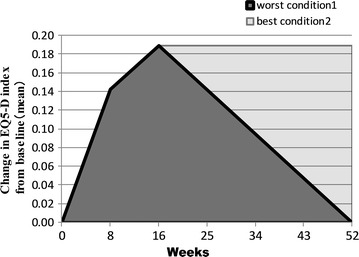
BACKGROUND: In Japan, cognitive behavioral therapy (CBT) for panic disorder (PD) is not well established. Therefore, a feasibility study of the clinical effectiveness and cost-effectiveness of CBT for PD in a Japanese clinical setting is urgently required. This was a pilot uncontrolled trial and the intervention consisted of a 16-week CBT program. The primary outcome was Panic Disorder Severity Scale (PDSS) scores. Quality of life was assessed using the EuroQol's EQ-5D questionnaire. Assessments were conducted at baseline, 8 weeks, and at the end of the study. Fifteen subjects completed outcome measures at all assessment points. RESULTS: At post-CBT, the mean reduction in PDSS scores from baseline was -6.6 (95 % CI 3.80 to -9.40, p < 0.001) with a Cohen's d = 1.77 (95 % CI 0.88-2.55). Ten (66.7 %) participants achieved a 40 % or greater reduction in PDSS. By calculating areas under the curve for EQ-5D index changes, we estimated that patients gained a minimum of 0.102 QALYs per 1 year due to the CBT. CONCLUSIONS: This study demonstrated that individual CBT for PD may be useful in Japanese clinical settings but further randomized control trials are needed. TRIAL REGISTRATION: UMIN-CTR UMIN000022693 (retrospectively registered).
Overview
CoChat Summary
## TL;DR
This uncontrolled pilot study found that a 16-week individual CBT program for panic disorder in Japan was associated with large short-term improvements in panic severity and quality of life. The authors conclude it looks feasible and potentially cost-effective, but randomized controlled trials are still needed.
## Key findings
- Among 15 participants who completed all assessments, mean PDSS scores fell from 12.1 at pre-CBT to 5.5 at post-CBT, with a significant time effect (F(2,42)=12.39, p<0.001).
- The pre-to-post CBT effect size for PDSS was Cohen’s d = 1.77; 10/15 (66.7%) met criteria for both remission (PDSS ≤7) and response (≥40% reduction).
- Secondary outcomes also improved: PAS decreased from 23.5 to 11.6, with large effect sizes reported for PAS (d=2.00), GAD-7 (d=0.95), PHQ-9 (d=0.86), and BFNE (d=0.85), though BFNE was not significantly different across time points.
- For cost-effectiveness, the estimated QALY gain was 0.0364 over 16 weeks, and based on AUC extrapolation the paper estimated 0.102 to 0.178 QALYs gained per year.
## Methods
- Design: Uncontrolled, unblinded pilot clinical trial with assessments at baseline (week 0), mid-treatment (week 8), and post-treatment (week 16).
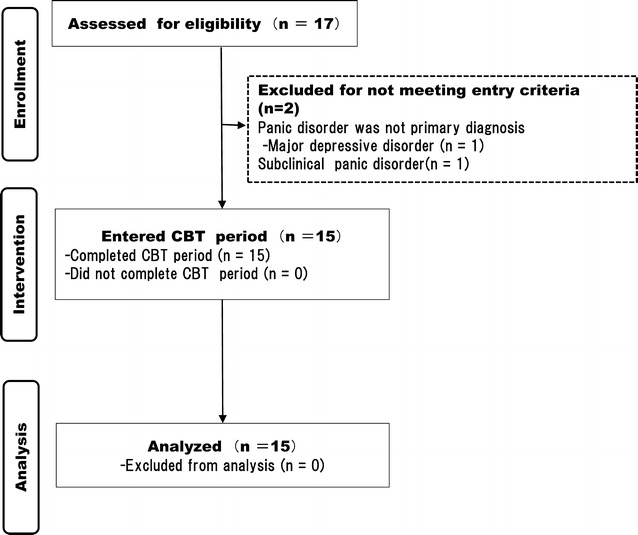
- Sample/data: 15 eligible adults recruited from three clinics in Japan between April 2014 and March 2015; all had a primary DSM-5 panic disorder diagnosis and PDSS ≥8. Mean age was 38.6 years; 80% were women; 60% were taking antidepressants.
- Analysis: Primary outcome was PDSS; the authors used repeated-measures within-subjects ANOVA, effect sizes (Cohen’s d), responder/remission thresholds, and AUC-based EQ-5D/QALY estimation for cost-effectiveness.
## Limitations
- The paper explicitly states limitations of small sample size, no control group, no controlled pharmacotherapy, and no long-term follow-up data.
- The text notes that 80% of patients were on medication, so the authors could not conclude whether CBT would be effective for patients not receiving pharmacotherapy.
- Evident from the study design (not explicitly stated as a limitation): because it was uncontrolled and unblinded, improvements cannot be confidently attributed to CBT alone.
Model-written summary. Check it against the paper before relying on it.
Integrity signals
Registry
Cites
Statistics
Figures
Verification
Claims the paper makes
0 Valid · 0 Not valid · 20 Not checked · 38 Own results and interpretations
A result the paper reports from its own data — it cites no other source for it, so there is none to check. The quote shows it is in the paper.
In the paper
“The mean total PDSS score decreased from 12.1 at pre-CBT to 5.5 at post-CBT.”
§ A feasibility study of the clinical effectiveness and cost-effectiveness of individual cognitive behavioral therapy for panic disorder in a Japanese clinical setting: an uncontrolled pilot study > Results > Primary outcome
- Asserted: passes — The authors put it forward as true.
- Checkable: passes — It can be checked against evidence.
- Load-bearing: passes — The paper’s conclusions depend on it.
- Based: passes — The paper gives a reason why it holds.
- Rests on an assumption not shown here.
A result the paper reports from its own data — it cites no other source for it, so there is none to check. The quote shows it is in the paper.
In the paper
“At post-CBT, the mean reduction in PDSS scores from baseline was −6.6 (95 % CI 3.80 to −9.40, p < 0.001)”
§ A feasibility study of the clinical effectiveness and cost-effectiveness of individual cognitive behavioral therapy for panic disorder in a Japanese clinical setting: an uncontrolled pilot study > Abstract > Results
plainstates a cause- Asserted: passes — The authors put it forward as true.
- Checkable: passes — It can be checked against evidence.
- Load-bearing: passes — The paper’s conclusions depend on it.
- Based: passes — The paper gives a reason why it holds.
- Rests on an assumption not shown here.
A result the paper reports from its own data — it cites no other source for it, so there is none to check. The quote shows it is in the paper.
In the paper
“with a Cohen’s d = 1.77 (95 % CI 0.88–2.55)”
§ A feasibility study of the clinical effectiveness and cost-effectiveness of individual cognitive behavioral therapy for panic disorder in a Japanese clinical setting: an uncontrolled pilot study > Abstract > Results
plain- Asserted: passes — The authors put it forward as true.
- Checkable: passes — It can be checked against evidence.
- Load-bearing: passes — The paper’s conclusions depend on it.
- Based: passes — The paper gives a reason why it holds.
- Rests on an assumption not shown here.
A result the paper reports from its own data — it cites no other source for it, so there is none to check. The quote shows it is in the paper.
In the paper
“Ten (66.7 %) participants achieved a 40 % or greater reduction in PDSS.”
§ A feasibility study of the clinical effectiveness and cost-effectiveness of individual cognitive behavioral therapy for panic disorder in a Japanese clinical setting: an uncontrolled pilot study > Abstract > Results
plain- Asserted: passes — The authors put it forward as true.
- Checkable: passes — It can be checked against evidence.
- Load-bearing: passes — The paper’s conclusions depend on it.
- Based: passes — The paper gives a reason why it holds.
- Rests on an assumption not shown here.
A result the paper reports from its own data — it cites no other source for it, so there is none to check. The quote shows it is in the paper.
In the paper
“The mean total score of the PAS decreased from 23.5 at pre-CBT to 11.6 at post-CBT.”
§ A feasibility study of the clinical effectiveness and cost-effectiveness of individual cognitive behavioral therapy for panic disorder in a Japanese clinical setting: an uncontrolled pilot study > Results > Secondary outcomes
plain- Asserted: passes — The authors put it forward as true.
- Checkable: passes — It can be checked against evidence.
- Load-bearing: passes — The paper’s conclusions depend on it.
- Based: passes — The paper gives a reason why it holds.
- Rests on an assumption not shown here.
26 more claims
Create a free account to see all 58 claims and to verify the 26 references still open.
- It may state two separate claims as one. 14
- Probably not a substantial claim. 18
Statistics recomputed
Every reported test result, recomputed from its test statistic and degrees of freedom. A result shows as not adding up only once an independent check has confirmed it.
- ConsistentF(2, 42) = 12.39reported p < .001 · recomputed p < .001
“F (2, 42) = 12.39, p < .001”
Self-check
Percentages, sums and reported differences re-computed from the paper’s own numbers.
Self-check results appear here once an independent check has confirmed them.
Citations
Cites
Diagnostic and Statistical Manual of Mental Disorders
American Psychiatric Association (2013) · doi:10.1176/appi.books.9780890425596 · Cited by 116,369
Diagnostic and Statistical Manual of Mental Disorders
Williams, J. B. W., & First, M. (2013) · Encyclopedia of Social Work · doi:10.1093/acrefore/9780199975839.013.104 · Cited by 109,519
Statistical Power Analysis for the Behavioral Sciences
Muller, K. (1989) · Technometrics · doi:10.1080/00401706.1989.10488618 · Cited by 99,167
A Brief Measure for Assessing Generalized Anxiety Disorder: The GAD-7
Spitzer, R. L., Kroenke, K., Williams, J. B. W., & Löwe, B. (2006) · Archives of Internal Medicine · doi:10.1001/archinte.166.10.1092 · Cited by 31,765 · cited 10×
“In order to ensure that our results are comparable with those of previous studies of CBT, patients also completed additional self-report measures of PD severity: the Panic and Agoraphobia Scale (PAS), 9-item patient health questionnaire (PHQ-9), 7-item generalized anxiety disorder scale (GAD-7), and Brief Fear of Nega…”
BackgroundInfluential(1998) · The Journal of Clinical Psychiatry · Cited by 19,139
EuroQol: a new facility for the measurement of health-related quality of life
(1990) · Health Policy · doi:10.1016/0168-8510(90)90421-9 · Cited by 15,736
(1998) · PubMed · Cited by 10,216
Spitzer, R. L. (1999) · JAMA · doi:10.1001/jama.282.18.1737 · Cited by 9,802
Measurement of social-evaluative anxiety.
Watson, D., & Friend, R. (1969) · Journal of Consulting and Clinical Psychology · doi:10.1037/h0027806 · Cited by 3,467 · cited 1×
“This was a short-form version adapted from the original 30-item scale [37].”
MethodA cognitive model of social phobia
Adrian Wells, A. (1995) · Research Explorer (The University of Manchester) · Cited by 2,701
A brief version of the Fear of Negative Evaluation Scale
Leary, M. R. (1983) · Personality and Social Psychology Bulletin · doi:10.1177/0146167283093007 · Cited by 2,178 · cited 10×
“In order to ensure that our results are comparable with those of previous studies of CBT, patients also completed additional self-report measures of PD severity: the Panic and Agoraphobia Scale (PAS), 9-item patient health questionnaire (PHQ-9), 7-item generalized anxiety disorder scale (GAD-7), and Brief Fear of Nega…”
InfluentialHoffman, S. G., & Smits, J. A. J. (2008) · The Journal of Clinical Psychiatry · doi:10.4088/jcp.v69n0415 · Cited by 1,420
Social Phobia: Diagnosis, Assessment, and Treatment
Amada, G. (1996) · American Journal of Psychotherapy · doi:10.1176/appi.psychotherapy.1996.50.3.373 · Cited by 1,248
Manca, A., Hawkins, N., & Sculpher, M. J. (2005) · Health Economics · doi:10.1002/hec.944 · Cited by 1,024 · cited 1×
“QALYs are often used in cost-utility analyses as the health outcome of choice; they are typically estimated via area-under-thecurve (AUC) analysis, which involves summing the areas of the distribution shapes for utility scores over the study period [41].”
MethodBarlow, D. H., Gorman, J. M., Shear, M. K., & Woods, S. W. (2000) · JAMA · doi:10.1001/jama.283.19.2529 · Cited by 953 · cited 1×
“Furthermore, CBT is more cost-effective for treating PD compared to the use of serotonin re-uptake inhibitors (SSRIs) only [9, 10].”
BackgroundKessler, R. C., Chiu, W. T., Jin, R., Ruscio, A. M., Shear, K., & Walters, E. E. (2006) · Archives of General Psychiatry · doi:10.1001/archpsyc.63.4.415 · Cited by 795 · cited 2×
“, social and occupational impairment [2]), low health-related quality of life, and economic burden [5, 6].”
BackgroundShiroiwa, T., Sung, Y., Fukuda, T., Lang, H., Bae, S., & Tsutani, K. (2010) · Health Economics · doi:10.1002/hec.1481 · Cited by 690 · cited 2×
“1 million (Taiwan), 23,000 UK pounds (United Kingdom), AU$ 64,000 (Australia), and US$ 62,000 (United States; [44]).”
InfluentialCalculating QALYs, comparing QALY and DALY calculations
Sassi, F. (2006) · Health Policy and Planning · doi:10.1093/heapol/czl018 · Cited by 573 · cited 1×
“An effective indicator of cost-effectiveness used in the past is the quality-adjusted life year (QALY), which combines the outcomes of duration and quality of life in the assessment of medical interventions [18].”
BackgroundThe revised cognitive therapy scale (CTS-R): psychometric properties.
Blackburn, I.-M., James, I. A., Milne, D. L., Baker, C., Standart, S., Garland, A., & Reichelt, F. K. (2001) · Behavioural and Cognitive Psychotherapy · doi:10.1017/s1352465801004040 · Cited by 568 · cited 1×
“The senior supervisor also checked the quality of the CBT delivered by therapists using the cognitive therapy scale-revised [27].”
MethodMohr, D. C., Spring, B., Freedland, K. E., Beckner, V., Arean, P., Hollon, S. D., Ockene, J., & Kaplan, R. (2009) · Psychotherapy and Psychosomatics · doi:10.1159/000228248 · Cited by 565 · cited 1×
“Because this study was the first trial employing an individual CBT intervention for PD in Japan, we believed an uncontrolled design examining the baseline predictors to be appropriate [19].”
ResultEstimating an EQ‐5D population value set: the case of Japan
Tsuchiya, A., Ikeda, S., Ikegami, N., Nishimura, S., Sakai, I., Fukuda, T., Hamashima, C., Hisashige, A., & Tamura, M. (2002) · Health Economics · doi:10.1002/hec.673 · Cited by 563
Cognitive-behavioral therapy for anxiety disorders: An update on the empirical evidence
Kaczkurkin, A. N., & Foa, E. B. (2015) · Dialogues in Clinical Neuroscience · doi:10.31887/dcns.2015.17.3/akaczkurkin · Cited by 523 · cited 2×
“As pointed out by Kaczkurkin and Foa [14], exposure and cognitive therapy are two of the most commonly used CBT methods used to treat anxiety disorders.”
MethodMuramatsu, K., Kamijima, K., Yoshida, M., Otsubo, T., Miyaoka, H., Muramatsu, Y., & Gejyo, F. (2007) · Psychological Reports · doi:10.2466/pr0.101.3.952-960 · Cited by 433
Reliability of the self-report version of the panic disorder severity scale
Houck, P. R., Spiegel, D. A., Shear, M. K., & Rucci, P. (2002) · Depression and Anxiety · doi:10.1002/da.10049 · Cited by 406 · cited 16×
“Regarding the primary outcome (the PDDS), in the acute phase after treatment, the change in PDSS score (effect size = 1.77) that we found was comparable to those that we calculated for a previous clinical trial conducted by Barlow et al.”
BackgroundInfluentialMisinterpretation of body sensations in panic disorder.
Clark, D. M., Salkovskis, P. M., Ost, L.-G., & Breitholtz, E. (1997) · Journal of Consulting and Clinical Psychology · doi:10.1037//0022-006x.65.2.203 · Cited by 373
Reliability and validity of the Panic Disorder Severity Scale: replication and extension
Shear, M. K., Rucci, P., Williams, J., Frank, E., Grochocinski, V., Vander Bilt, J., Houck, P., & Wang, T. (2001) · Journal of Psychiatric Research · doi:10.1016/s0022-3956(01)00028-0 · Cited by 360 · cited 21×
“Regarding the primary outcome (the PDDS), in the acute phase after treatment, the change in PDSS score (effect size = 1.77) that we found was comparable to those that we calculated for a previous clinical trial conducted by Barlow et al.”
BackgroundMethodInfluentialBandelow, B. (1995) · International Clinical Psychopharmacology · doi:10.1097/00004850-199506000-00003 · Cited by 314 · cited 13×
“In order to ensure that our results are comparable with those of previous studies of CBT, patients also completed additional self-report measures of PD severity: the Panic and Agoraphobia Scale (PAS), 9-item patient health questionnaire (PHQ-9), 7-item generalized anxiety disorder scale (GAD-7), and Brief Fear of Nega…”
BackgroundInfluentialMuramatsu, K. (2007) · Psychological Reports · doi:10.2466/pr0.101.7.952-960 · Cited by 277
Cost-benefit analysis of psychological therapy
Layard, R., Clark, D., Knapp, M., & Mayraz, G. (2007) · National Institute Economic Review · doi:10.1177/0027950107086171 · Cited by 229 · cited 1×
“[51] estimated that the QALYs gained would be 0.”
BackgroundMörtberg, E., Clark, D. M., Sundin, Ö., & Åberg Wistedt, A. (2007) · Acta Psychiatrica Scandinavica · doi:10.1111/j.1600-0447.2006.00839.x · Cited by 213 · cited 1×
“Furthermore, individually administered CBT appears to be more effective than group therapy [13].”
BackgroundSertraline in the Treatment of Panic Disorder: A Flexible-Dose Multicenter Trial
Pollack, M. H., Otto, M. W., Worthington, J. J., Manfro, G. G., & Wolkow, R. (1998) · Archives of General Psychiatry · doi:10.1001/archpsyc.55.11.1010 · Cited by 144
Tests of a Cognitive Theory of Panic
Clark, D. M., Salkovskis, P. M., Gelder, M., Koehler, C., Martin, M., Anastasiades, P., Hackmann, A., Middleton, H., & Jeavons, A. (1988) · Panic and Phobias 2 · doi:10.1007/978-3-642-73543-1_13 · Cited by 131 · cited 1×
“Behavioral experiments to test negative catastrophic beliefs [26]; f.”
BackgroundHeldt, E., Manfro, G. G., Kipper, L., Blaya, C., Isolan, L., & Otto, M. W. (2005) · Behaviour Research and Therapy · doi:10.1016/j.brat.2005.05.003 · Cited by 104 · cited 1×
“[45] reported that 25 patients who received 16 sessions of CBT along with medication also showed a significant improvement in PAS, decreasing from 27.”
BackgroundPollack, M. H., Lepola, U., Koponen, H., Simon, N. M., Worthington, J. J., Emilien, G., Tzanis, E., Salinas, E., Whitaker, T., & Gao, B. (2007) · Depression and Anxiety · doi:10.1002/da.20218 · Cited by 102
Roshanaei-Moghaddam, B., Pauly, M. C., Atkins, D. C., Baldwin, S. A., Stein, M. B., & Roy-Byrne, P. (2011) · Depression and Anxiety · doi:10.1002/da.20829 · Cited by 102
Cost-effectiveness of an Improving Access to Psychological Therapies service
Mukuria, C., Brazier, J., Barkham, M., Connell, J., Hardy, G., Hutten, R., Saxon, D., Dent-Brown, K., & Parry, G. (2013) · British Journal of Psychiatry · doi:10.1192/bjp.bp.111.107888 · Cited by 86 · cited 1×
“[50] reported that an “improving access to psychological therapies” service (covering effective psychological therapies for common mental health problems, such as depression and anxiety) in the United Kingdom provided an incremental gain of 0.”
BackgroundMcCrone, P., Sharpe, M., Chalder, T., Knapp, M., Johnson, A. L., Goldsmith, K. A., & White, P. D. (2012) · PLoS ONE · doi:10.1371/journal.pone.0040808 · Cited by 84 · cited 1×
“[49] reported that CBT for chronic fatigue syndrome had an incremental gain of 0.”
BackgroundPsychotherapies for Panic Disorder: A Tale of Two Sites
Milrod, B., Chambless, D. L., Gallop, R., Busch, F. N., Schwalberg, M., McCarthy, K. S., Gross, C., Sharpless, B. A., Leon†, A. C., & Barber, J. P. (2016) · The Journal of Clinical Psychiatry · doi:10.4088/jcp.14m09507 · Cited by 83 · cited 1×
“7 %) were judged to be responders [43].”
BackgroundGrochtdreis, T., Brettschneider, C., Wegener, A., Watzke, B., Riedel-Heller, S., Härter, M., & König, H.-H. (2015) · PLOS ONE · doi:10.1371/journal.pone.0123078 · Cited by 74 · cited 1×
“[48] reported that collaborative care for the treatment of depressive disorders in primary care offered a mean incremental gain of 0.”
BackgroundMichelson, D., Allgulander, C., Dantendorfer, K., Knezevic, A., Maierhofer, D., Micev, V., Paunovic, V. R., Timotijevic, I., Sarkar, N., Skoglund, L., et al. (2001) · British Journal of Psychiatry · doi:10.1192/bjp.179.6.514 · Cited by 62
Yoshinaga, N., Matsuki, S., Niitsu, T., Sato, Y., Tanaka, M., Ibuki, H., Takanashi, R., Ohshiro, K., Ohshima, F., Asano, K., et al. (2016) · Psychotherapy and Psychosomatics · doi:10.1159/000444221 · Cited by 60 · cited 6×
“Cost-effectiveness of CBT, SSRI, and CBT+ SSRI in the treatment for panic disorder.”
MethodInfluentialSelf-citationNaganuma, Y., Tachimori, H., Kawakami, N., Takeshima, T., Ono, Y., Uda, H., Hata, Y., Nakane, Y., Nakane, H., Iwata, N., et al. (2006) · Psychiatry and Clinical Neurosciences · doi:10.1111/j.1440-1819.2006.01492.x · Cited by 59
(2004) · Medical Entomology and Zoology · Cited by 54
Goorden, M., Muntingh, A., van Marwijk, H., Spinhoven, P., Adèr, H. J., van Balkom, A. J. L. M., Feltz-Cornelis, C. M. V. D., & Roijen, L. H. (2014) · Journal of Psychosomatic Research · doi:10.1016/j.jpsychores.2014.04.005 · Cited by 52 · cited 1×
“, social and occupational impairment [2]), low health-related quality of life, and economic burden [5, 6].”
BackgroundSkapinakis, P., Lewis, G., Davies, S., Brugha, T., Prince, M., & Singleton, N. (2011) · European Psychiatry · doi:10.1016/j.eurpsy.2010.06.004 · Cited by 48 · cited 1×
“, social and occupational impairment [2]), low health-related quality of life, and economic burden [5, 6].”
BackgroundEvidence-based pharmacotherapy of panic disorder
Bakker, A., van Balkom, A. J. L. M., & Stein, D. J. (2005) · The International Journal of Neuropsychopharmacology · doi:10.1017/s1461145705005201 · Cited by 44 · cited 1×
“Both pharmacotherapy and psychotherapy have been recommended as first-line treatments for PD [7].”
BackgroundPharmacotherapy of panic disorder
Pull, C. (2008) · Neuropsychiatric Disease and Treatment · doi:10.2147/ndt.s1224 · Cited by 32
Yoshinaga, N., Oshima, F., Matsuki, S., Tanaka, M., Kobayashi, T., Ibuki, H., Asano, K., Kobori, O., Shiraishi, T., Ito, E., et al. (2013) · BMC Research Notes · doi:10.1186/1756-0500-6-74 · Cited by 29 · cited 1×
“We also applied several concepts from the Clark and Wells model for social anxiety disorder [16], because in two recent studies of ours on the effectiveness of CBT for social anxiety disorder—by a single arm trial [23] and a randomized controlled trial [24, 25]—we found such concepts to be effective not only for socia…”
MethodSelf-citationYoshinaga, N., Niitsu, T., Hanaoka, H., Sato, Y., Oshima, F., Matsuki, S., Kobori, O., Nakazato, M., Nakagawa, A., Iyo, M., et al. (2013) · BMJ Open · doi:10.1136/bmjopen-2012-002242 · Cited by 21 · cited 1×
“We also applied several concepts from the Clark and Wells model for social anxiety disorder [16], because in two recent studies of ours on the effectiveness of CBT for social anxiety disorder—by a single arm trial [23] and a randomized controlled trial [24, 25]—we found such concepts to be effective not only for socia…”
MethodSelf-citationSeo, H.-J., Choi, Y., Chung, Y.-A., Rho, W., & Chae, J.-H. (2014) · Neuropsychiatric Disease and Treatment · doi:10.2147/ndt.s58660 · Cited by 20 · cited 1×
“[47] reported that CBT for pharmacotherapy-resistant patients appears to be effective in treating PD.”
BackgroundCost‐effectiveness of CBT, SSRI, and CBT+SSRI in the treatment for panic disorder
van Apeldoorn, F. J., Stant, A. D., van Hout, W. J. P. J., Mersch, P. P. A., & den Boer, J. A. (2014) · Acta Psychiatrica Scandinavica · doi:10.1111/acps.12169 · Cited by 19 · cited 1×
“In terms of cost-effectiveness, CBT and CBT combined with an SSRI are considered more cost-effective for treating PD as compared to an SSRI only [17].”
BackgroundKing, A. L. S., Valença, A. M., Neto, V. L. D. M., Freire, R. C. R., Mezzasalma, M. A., Silva, A. C. D. O. E., & Nardi, A. E. (2011) · Sao Paulo Medical Journal · doi:10.1590/s1516-31802011000500008 · Cited by 13 · cited 3×
“Seo, Chow, Chung, Rho, and Chae [46] also reported that fourteen subjects who completed a group-based CBT showed an improvement in PAS from 24.”
BackgroundInfluentialReliability and Validity of the Japanese Version of the Panic and Agoraphobia Scale (Patient)
Kaiya, H., Ishii, H., Masaki, M., Komatsu, C., Noguchi, K., 境, 洋., Yoshida, E., Kuribayashi, K., & Imaeda, T. (2017) · Anxiety Disorder Research · doi:10.14389/jsad.9.1_17 · Cited by 6
Research works printed but not linked: 5
- Ayusuo-Mateos JL Global burden of panic disorder in the year 2000 2000 Geneva World Health Organization
- van Apeldoorn FJ Stant D Hout J Mersch PP den Boer JA Cost-effectiveness of CBT, SSRI, and CBT+ SSRI in the treatment for panic disorder Acta Psychiatr Scand 2014 129 286 295 10.1111/acps.12169 23834587 · DOI · Paper page
- Sheehan DV Lecrubier Y Otsubo T Brief structured interview for psychiatric disorders: M.I.N.I. and M.I.N.I. KID Rinsho-Seishin-Igaku 2010 39 43 48
- Katagami M The self-report version of the Panic Disorder Severity Scale: reliability and validity of the Japanese version Jpn J Psychosom Med 2007 47 331 338
- Muramatsu K An up-to-date letter in the Japanese version of PHQ, PHQ-9, PHQ-15 Niigata Seiryo Daigakudaigakuin Rinshosinrigakukenkyu (Grad School Niigata Seiryo Uni Clin Psychol Res) 2014 7 35 39
Cited by
Matsumoto, K., Sutoh, C., Asano, K., Seki, Y., Urao, Y., Yokoo, M., Takanashi, R., Yoshida, T., Tanaka, M., Noguchi, R., et al. (2018) · Journal of Medical Internet Research · doi:10.2196/12091 · Cited by 83
“The modules were derived from previous studies on in-person CBT for OCD [59], PD [60], and SAD [61] in Japan and included psychoeducation, exposure exercises, behavioral experiments, and homework assignments.”
Self-citationSato, D., Yoshinaga, N., Nagai, E., Nagai, K., & Shimizu, E. (2019) · Journal of Medical Internet Research · doi:10.2196/12686 · Cited by 28
“QALYs are often used as the health outcome in cost-utility analyses and are typically estimated via an area under the curve analysis which involves summing the areas of the distribution shapes to calculate utility scores over the study period [23,24].”
MethodSelf-citationMatsumoto, K., Hamatani, S., Nagai, K., Sutoh, C., Nakagawa, A., & Shimizu, E. (2020) · JMIR Mental Health · doi:10.2196/17157 · Cited by 31
Self-citationTaguchi, K., Numata, N., Takanashi, R., Takemura, R., Yoshida, T., Kutsuzawa, K., Yoshimura, K., & Shimizu, E. (2021) · Medicine · doi:10.1097/md.0000000000023859 · Cited by 34
Self-citationNagata, S., Seki, Y., Shibuya, T., Yokoo, M., Murata, T., Hiramatsu, Y., Yamada, F., Ibuki, H., Minamitani, N., Yoshinaga, N., et al. (2018) · BMC Research Notes · doi:10.1186/s13104-018-3130-2 · Cited by 33
“These results suggest that CBT can reduce mental defeat and increase cognitive flexibility in patients with PD Trial registration The study was registered retrospectively in the national UMIN Clinical Trials Registry on June 10, 2016 (registration ID: UMIN000022693).”
MethodSelf-citation
Metadata
- Authors
- Seki, Y., Nagata, S., Shibuya, T., Yoshinaga, N., Yokoo, M., Ibuki, H., Minamitani, N., Kusunoki, M., Inada, Y., Kawasoe, N., Adachi, S., Yoshimura, K., Nakazato, M., Iyo, M., Nakagawa, A., & Shimizu, E.
- Affiliations
- Kanazawa University (JP)
- Chiba University (JP)
- University of Miyazaki (JP)
- Research Center for Child Mental Development, Chiba University (JP)
- Corresponding author
- Seki, Yoichi
- ORCID
- Venue
- BMC Research Notes
- Published
- 2016-10-07
- Volume
- 9
- Issue
- 1
- Pages
- 458-458
- ISSN
- 1756-0500 (ISSN-L)
- PMC
- PMC5055685
- OpenAlex
- W2529557452
- Cited by
- 19
- References
- 53
- Citations by year
- 2025: 1 · 2024: 2 · 2022: 1 · 2021: 3 · 2020: 2 · 2019: 3 · 2018: 5 · 2017: 2
- FWCI
- 4.73
- Type
- journal article
- Language
- en
- Update notices
- correction (2017-02-06)
- Open access
- gold
- doi.org
- Licence
- cc-by
- Locations
- BMC Research Notes (publishedVersion, cc-by)
- PubMed Central (publishedVersion, cc-by)
- PubMed (publishedVersion)
- Funders
- Ministry of Health, Labour and Welfare (22SE1P0051)
- Topics
- Social Sciences › Psychology › Experimental and Cognitive Psychology › Anxiety, Depression, Psychometrics, Treatment, Cognitive Processes
- Social Sciences › Psychology › Applied Psychology › Digital Mental Health Interventions
- Social Sciences › Economics, Econometrics and Finance › Economics and Econometrics › Health Systems, Economic Evaluations, Quality of Life
- Keywords
- cognitive behavioral therapy, panic disorder, individual psychotherapy, clinical effectiveness, cost-effectiveness, quality-adjusted life years, quality of life, Panic Disorder Severity Scale, Japanese patients
- MeSH terms
- Adult, Cost-Benefit Analysis, Feasibility Studies, Female, Humans, Japan, Male, Middle Aged, Pilot Projects, Cognitive Behavioral Therapy, Panic Disorder
About these checks
Registry, retraction, Cites and statistics results are computed, not judged, with one exception: a printed reference that no index lists is read once by a model before it counts as a citation error. Claims are extracted by a model and kept only when their quote appears verbatim in the text; each cited source is then checked, with a model’s help, for whether it says what the claim relies on. Those verdicts can be wrong — read the claim’s quote and the cited source before relying on one.
A language model drew the claims from the paper on 2026-10-11, under version 3 of the claim definition (model deepseek-v4.1-flash, prompt extract-v3).
A second model labelled each claim on 2026-10-11 (model jev-1.13-20260917, definition revision gold-guideline-v0.2).
Statistics and arithmetic are recomputed, not judged.
Confidence bands are shown only for fields calibrated on our annotated test set. None is calibrated yet, so no band is shown.
What counts as a claim ›How we measure confidence ›How we check this ›
Are you an author, or do you see a problem with this page? Request a review
Data sources
Bibliographic data: Semantic Scholar, OpenAlex, Crossref.
Contains information from the Semantic Scholar Academic Graph Datasets, made available under the ODC Attribution License (ODC-BY 1.0).
Semantic Scholar’s data is described in: Kinney, R., et al. (2023). The Semantic Scholar Open Data Platform. arXiv:2301.10140.
